
- Home
- »
- Petrochemicals
- »
-
Ultra High Purity Gas Market Size And Share Report, 2033GVR Report cover

Ultra High Purity Gas Market (2026 - 2033)
Size, Share & Trends Analysis Report By Product (Noble Gas, Atmospheric Gas), By Purity (5N, 6N), By End Use (Semiconductor & Electronics, Healthcare & Pharmaceuticals), By Region, And Segment Forecasts
Market Size, 2025
$2.5BMarket Estimate, 2026
$2.8BMarket Forecast, 2033
$6.3BCAGR, 2026–2033
13.1%Ultra High Purity Gas Market Summary
The global ultra high purity gas market size was valued at USD 2.5 billion in 2025 and is projected to grow from USD 2.8 billion in 2026 to USD 6.3 billion in 2033, at a CAGR of 13.1% from 2026 to 2033. Asia Pacific dominated the market, accounting for the largest revenue share of 36.4% in 2025. Growth is primarily driven by expanding semiconductor fabrication capacity, increasing adoption of advanced electronics, and rising demand for contamination-free gases across high-precision manufacturing and research applications.
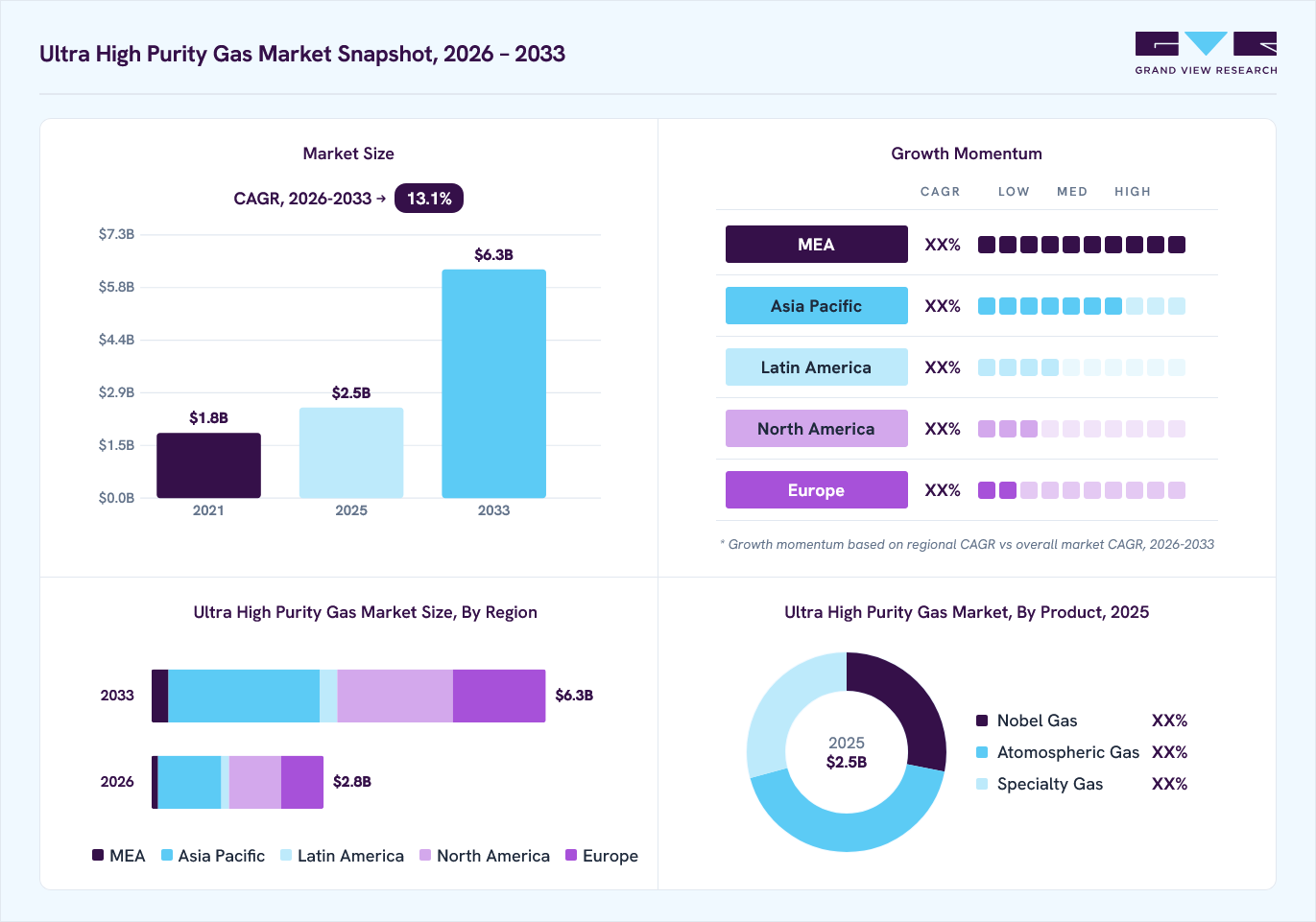 Source: Grand View Research, IR Documents, Primary Interviews, Paid DatabasesTo learn more about this report,
 Download Free Sample Report
Key Market Trends & Insights
- By product: The atmospheric gas segment held the largest revenue share of 42.7% in 2025.
- By purity: The 5N segment dominated with a share of 50.3% in 2025.
- By end use: The semiconductor & electronics segment led with a revenue share of 39.4% in 2025.
Regional Highlights
- Largest Region: Asia Pacific (36.4% revenue share, 2025)
- Fastest-growing region: Middle East & Africa (highest CAGR, 2026-2033)
- By country: China held the largest revenue share in 2025
Market Size & Forecast
- Market size in 2025: USD 2.5 Billion
- Estimated market size in 2026: USD 2.8 Billion
- Projected market size by 2033: USD 6.3 Billion
- CAGR (2026-2033): 13.1%
Prism AI by Grand View Research Free to tryAsk a question about the ultra high purity gas market✓Every figure cited from GVR research Prefer the report? Download free sample →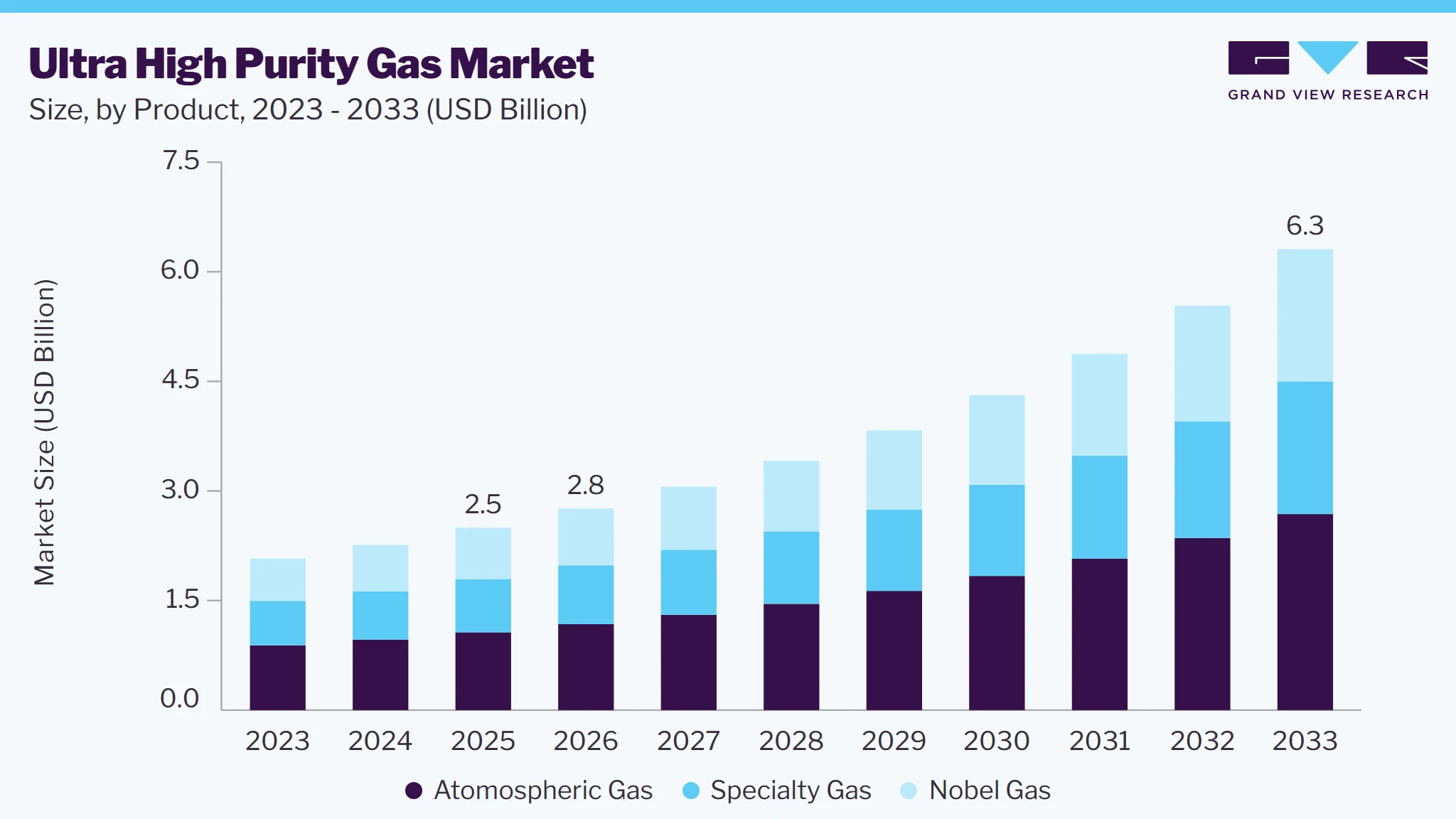 To learn more about this report, Download Free Sample Report
The industry is driven by the increasing demand for contamination-free gases in high-precision manufacturing industries. The rapid expansion of semiconductor fabrication, advanced electronics, and photovoltaic manufacturing is significantly boosting the consumption of ultra-high purity nitrogen, argon, helium, hydrogen, and specialty gases used in critical production processes.Market Dynamics
Technological advancements in integrated circuits, artificial intelligence hardware, and high-performance computing are increasing quality requirements, encouraging investments in gas purification and distribution infrastructure. At the same time, the pharmaceutical and healthcare sectors continue to generate demand in medical device manufacturing, biotechnology, and laboratory applications. However, the industry faces challenges related to supply chain disruptions, fluctuating raw material and energy costs, and the limited availability of certain noble gases such as helium and neon.
The rapid expansion of semiconductor manufacturing is the primary factor driving the industry. Products such as nitrogen, argon, helium, hydrogen, and specialty gases are indispensable throughout semiconductor fabrication, including wafer processing, deposition, etching, ion implantation, and chamber cleaning. As chip manufacturers continue to invest in advanced process nodes, contamination control has become increasingly critical, creating sustained demand for gases with purity levels of 5N, 6N, and 7N. The proliferation of artificial intelligence (AI), high-performance computing (HPC), 5G infrastructure, electric vehicles, and consumer electronics is further accelerating global semiconductor production. Governments are promoting domestic semiconductor manufacturing through funding programs, tax incentives, and strategic investments to strengthen supply chain resilience. The construction of new fabrication plants and the expansion of existing production facilities require reliable supply and sophisticated delivery systems. This continuous capacity expansion is expected to generate long-term demand for manufacturers capable of producing and meeting increasingly stringent quality standards.
The constrained availability and price volatility of noble gases, particularly helium, neon, krypton, and xenon. These gases are produced in limited quantities as by-products of natural gas processing or large-scale air separation, making their supply highly dependent on a relatively small number of production facilities and geographic regions. Unplanned plant shutdowns, geopolitical disruptions, export restrictions, and transportation bottlenecks can significantly affect global availability, resulting in sharp price fluctuations. Such instability increases procurement costs for semiconductor, electronics, and healthcare manufacturers while creating challenges for long-term supply planning. In addition, establishing new purification and production facilities requires substantial capital investment and advanced processing technologies, limiting the industry's ability to rapidly respond to supply shortages and restraining overall market expansion.
Solar photovoltaic manufacturing relies extensively on ultra-high purity gases during silicon crystal growth, wafer production, thin-film deposition, and cell fabrication. As countries continue to expand renewable energy capacity to meet carbon reduction targets and energy security objectives, investments in new solar manufacturing facilities are increasing, creating sustained demand for high-purity process gases that ensure production efficiency and product quality. Government incentives encouraging domestic clean energy manufacturing are accelerating investments in integrated solar supply chains. The increasing adoption of advanced photovoltaic technologies and next-generation solar cells requires even higher purity standards to improve conversion efficiency and reduce manufacturing defects. This evolving landscape provides growth opportunities for manufacturers to expand production capacity, develop specialized solutions, and establish long-term partnerships with renewable energy equipment manufacturers.
Market Concentration & Characteristics
The industry is characterized by a moderately consolidated competitive landscape, with a few multinational industrial gas manufacturers accounting for a significant share of global revenue. Leading companies compete through extensive production capabilities, advanced gas purification technologies, integrated supply networks, and long-term supply agreements with semiconductor, electronics, healthcare, and research institutions. Their ability to consistently deliver gases with purity levels of 5N, 6N, and 7N while maintaining stringent quality standards serves as a key competitive differentiator.
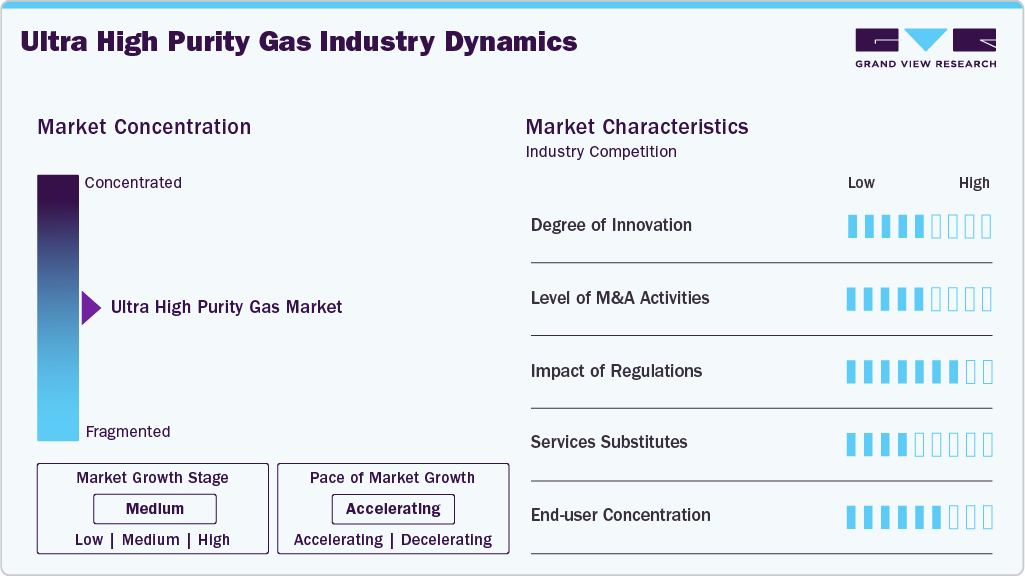 To learn more about this report, Download Free Sample Report
Participants are actively investing in production capacity expansion, air separation units, specialty gas purification facilities, and cylinder filling infrastructure to meet the growing demand from semiconductor fabrication and other high-technology industries. Strategic collaborations with chip manufacturers, renewable energy companies, and pharmaceutical producers have become increasingly common, enabling manufacturers to strengthen customer relationships and secure long-term contracts. Companies are also focusing on developing customized gas mixtures and advanced gas handling solutions that support increasingly sophisticated manufacturing processes.
Analyst Perspective
The industry is well-positioned for sustained growth as advanced manufacturing industries continue to prioritize precision and contamination-free production. The semiconductor sector will remain the primary demand driver, while increasing investments in solar photovoltaics, healthcare, and research activities will further diversify growth opportunities. Companies with strong purification capabilities, reliable supply networks, and long-term customer partnerships are expected to strengthen their competitive position. Although supply constraints for certain noble gases may create periodic challenges, continued capacity expansion and technological advancements are likely to support the market's long-term growth trajectory.
Product Insights
The atmospheric gas segment held the largest revenue share of 42.7% in 2025, due to widespread use across semiconductor manufacturing, healthcare, chemicals, and research laboratories. Ultra-high purity nitrogen, oxygen, and hydrogen are essential for wafer fabrication, inert blanketing, oxidation, and various high-precision industrial processes, resulting in consistently high consumption volumes. Their large-scale production through air separation technologies and broad applicability across multiple end-use industries.
The noble gas segment is expected to grow at the fastest CAGR of 12.8% from 2026 to 2033, owing to increasing demand from semiconductor manufacturing, electronics, and advanced healthcare applications. Gases such as argon, helium, neon, krypton, and xenon are essential for wafer fabrication, laser systems, shielding applications, and precision manufacturing processes that require ultra-high purity levels. Continued investments in semiconductor fabrication plants and high-tech manufacturing are further accelerating segment growth.
End Use Insights
The semiconductor & electronics segment held the largest revenue share of 39.4% in 2025, due to the indispensable role in wafer fabrication, thin-film deposition, etching, oxidation, ion implantation, and chamber cleaning processes. Gases such as nitrogen, argon, helium, hydrogen, and specialty gases are essential for maintaining contamination-free manufacturing environments and ensuring high production yields. The increasing demand for advanced integrated circuits, memory chips, consumer electronics, automotive semiconductors, and AI-enabled devices has significantly strengthened the consumption across semiconductor fabrication facilities worldwide.
The solar & photovoltaics segment is expected to grow at a CAGR of 12.7% during the forecast period, owing to the rapid expansion of global solar energy installations and increasing investments in photovoltaic manufacturing capacity. Ultra-high purity gases are extensively used during wafer production, thin-film deposition, and cell fabrication processes to ensure high efficiency, product quality, and manufacturing precision. Supportive government policies promoting renewable energy and the growing transition toward low-carbon power generation continue to drive demand from this application.
Purity Insights
The 5N segment held the largest revenue share of 50.3% in 2025, owing to its extensive use across semiconductor fabrication, electronics manufacturing, pharmaceuticals, research laboratories, and specialty industrial applications. It offers an ideal combination of high purity, operational reliability, and economic viability, making it suitable for a broad range of processes that require strict contamination control without the significantly higher production costs associated with higher purity grades. Its widespread availability established a supply infrastructure and compatibility with diverse end-use industries.
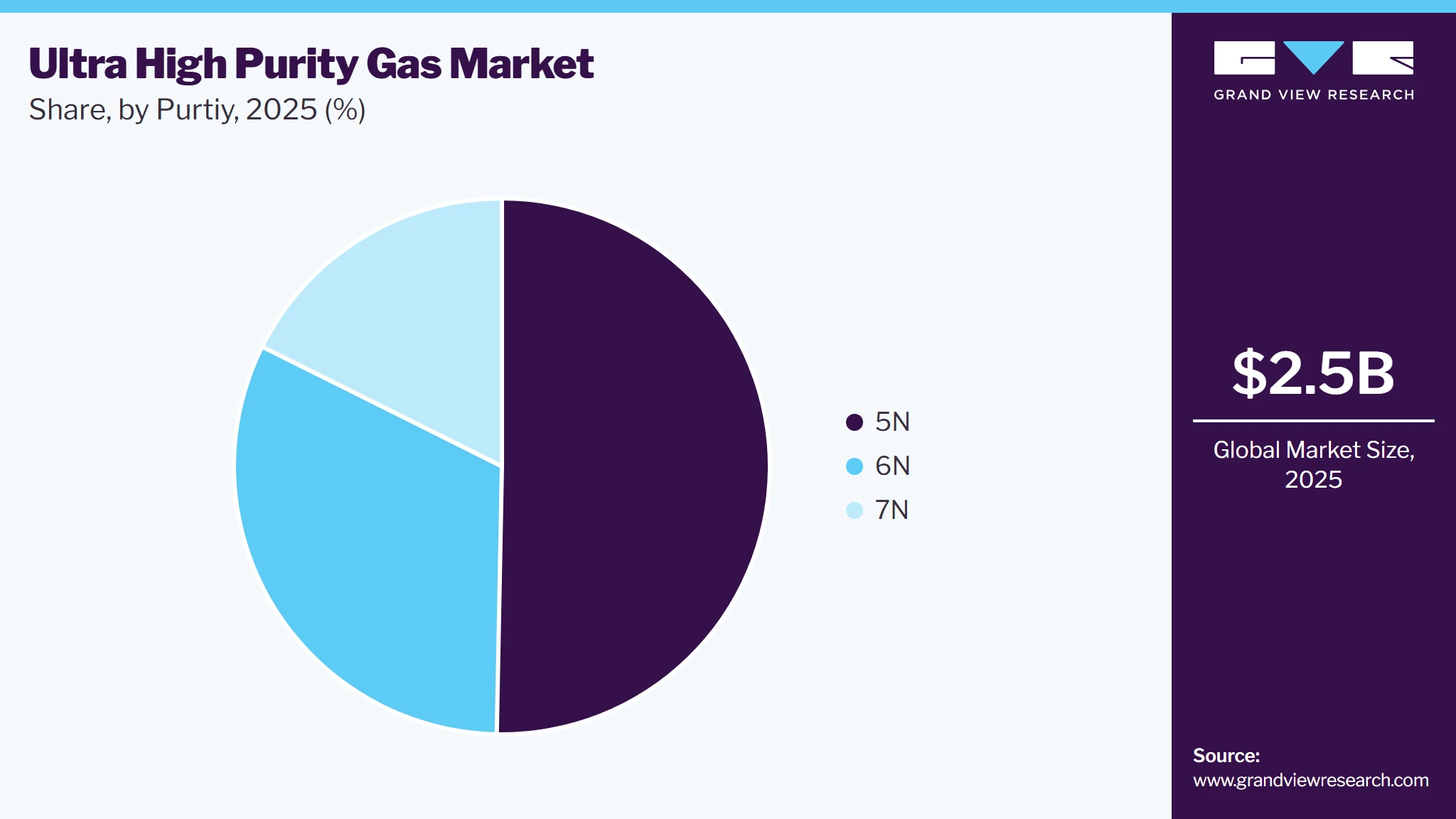 To learn more about this report, Download Free Sample Report
The 7N segment is expected to grow at the fastest CAGR of 14.4% from 2026 to 2033, primarily driven by the increasing adoption of advanced semiconductor manufacturing technologies and next-generation electronic devices. As integrated circuits become more complex and chip geometries continue to shrink, manufacturers require gases with extremely low impurity levels to maintain production precision and improve device performance. Growing investments in leading-edge semiconductor fabrication plants, quantum computing, photonics, and other high-tech applications are expected to accelerate demand.
Regional Insights
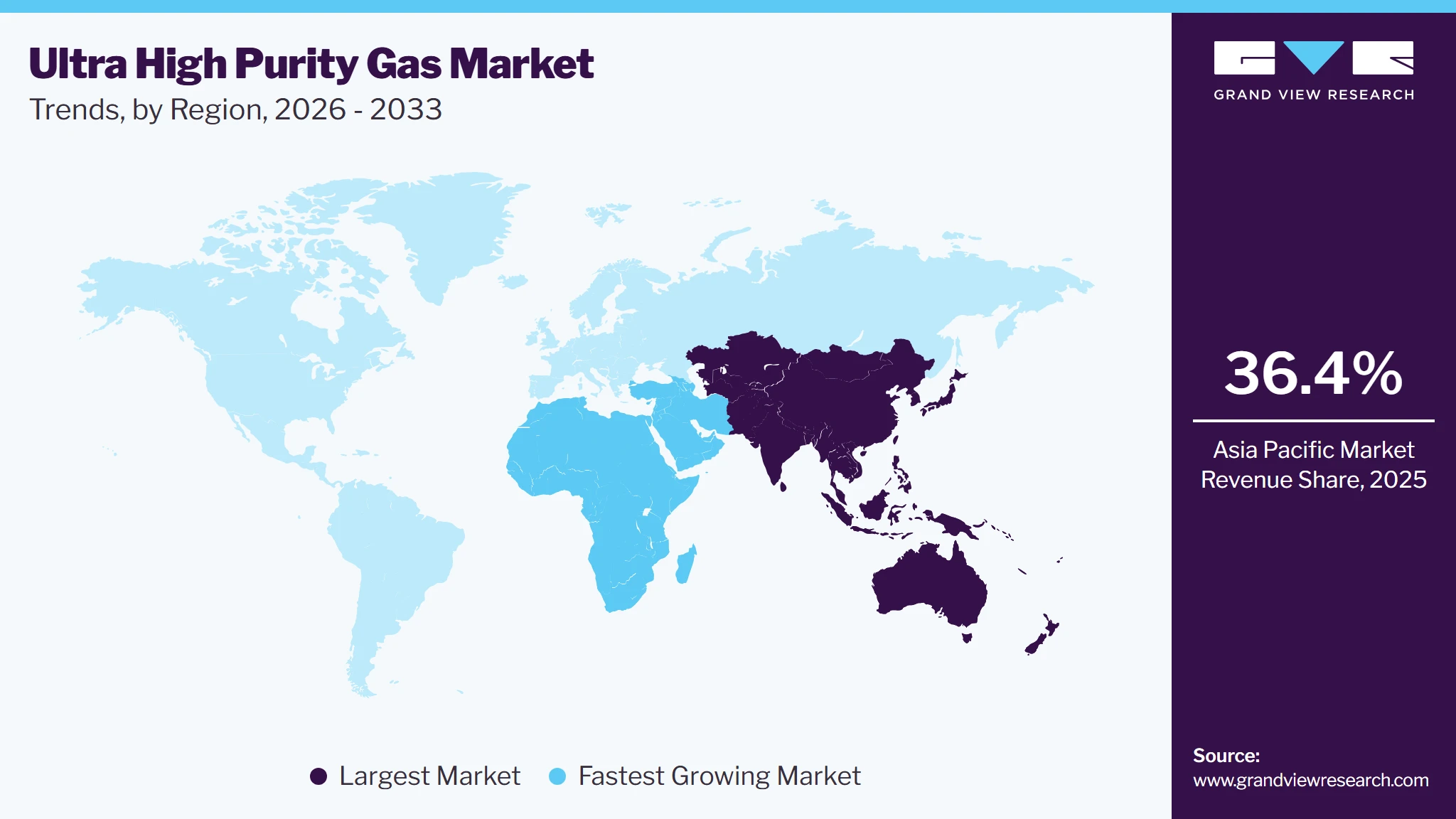
The Asia Pacific ultra-high purity gas market led with a revenue share of 36.4% in 2025. The region is home to the world's largest semiconductor manufacturing hubs, with substantial investments in integrated circuit fabrication, display manufacturing, and photovoltaic production across China, Taiwan, South Korea, and Japan. Strong government support for domestic chip production, expanding electronics exports, and the continuous establishment of advanced fabrication facilities are significantly increasing the demand for ultra-high purity gases. The rapid expansion of pharmaceutical manufacturing and research activities further supports the region’s growth.
 To learn more about this report, Download Free Sample Report
The China ultra-high purity gas market leads Asia Pacific through its extensive semiconductor, electronics, solar photovoltaic, and industrial manufacturing sectors. Significant investments under national semiconductor self-sufficiency initiatives, coupled with expanding wafer fabrication capacity and increasing production of advanced electronic components, continue to drive demand for ultra-high purity nitrogen, argon, hydrogen, and specialty gases. The country's growing pharmaceutical and chemical industries further contribute to market expansion
Europe Ultra High Purity Gas Market Trends
The ultra-high purity gas market in Europe maintains a strong position driven by its advanced industrial base, semiconductor manufacturing capabilities, and well-developed pharmaceutical sector. Increasing investments in semiconductor production, renewable energy technologies, and research infrastructure are contributing to higher demand for ultra-high purity gases. In addition, stringent environmental and product quality regulations encourage the adoption of high-performance gases across precision manufacturing industries.
The Germany ultra-high purity gas market is the leading contributor to the European region because of its robust semiconductor, automotive electronics, chemical, and industrial manufacturing sectors. The country's focus on Industry 4.0, advanced manufacturing technologies, and increasing investments in semiconductor production facilities is supporting sustained demand for ultra-high purity gases. Strong research institutions and a highly developed industrial ecosystem further reinforce its market leadership.
North America Ultra High Purity Gas Market Trends
The ultra-high purity gas market in North America is supported by its well-established semiconductor ecosystem, advanced healthcare infrastructure, and strong research and development capabilities. Increasing investments in domestic semiconductor manufacturing, rising demand for high-performance computing and artificial intelligence technologies, and the presence of leading industrial gas manufacturers continue to strengthen regional demand. The region also benefits from stringent quality standards that encourage the use of ultra-high purity gases across critical applications.
U.S. Ultra High Purity Gas Market Trends
The ultra-high-purity gas market in the U.S. dominates the regional landscape across semiconductor innovation, biotechnology, aerospace, and pharmaceutical manufacturing. Growing investments in new semiconductor fabrication plants, increasing government support for domestic chip production, and the presence of major industrial gas manufacturers are accelerating the adoption of ultra-high purity gases. Continuous advancements in research laboratories and high-technology manufacturing support growth.
Middle East & Africa Ultra High Purity Gas Market Trends
The ultra-high purity gas market in the Middle East & Africa is supported by expanding industrial gas production, investments in petrochemical facilities, and the gradual development of healthcare and research infrastructure. Countries across the Gulf region are diversifying their economies by investing in advanced manufacturing and technology-driven industries, creating new opportunities for ultra-high purity gas suppliers. Increasing laboratory activities and industrial modernization are also contributing to regional demand.
Latin America Ultra High Purity Gas Market Trends
The ultra-high purity gas market in Latin America is gradually expanding due to growing investments in pharmaceutical manufacturing, food processing, electronics assembly, and industrial production. Countries such as Brazil and Mexico are strengthening their manufacturing capabilities while increasing spending on healthcare and research infrastructure. Rising adoption of advanced production technologies and improving industrial standards are expected to support the steady demand for ultra-high purity gases across the region.
Key Ultra High Purity Gas Company Insights
Leading companies are strengthening their competitive position by expanding production capacity, establishing purification facilities closer to semiconductor manufacturing hubs, and investing in advanced gas purification and delivery technologies to ensure consistent product quality. They are also forming long-term supply agreements, strategic collaborations, and targeted acquisitions to broaden their customer base, enhance supply chain resilience, and support the growing demand from high-technology industries.
-
Messer Group GmbH is a leading industrial gas manufacturer with extensive expertise in producing high-purity atmospheric, noble, and specialty gases for semiconductor, electronics, healthcare, research, and advanced manufacturing applications. The company combines advanced air separation and purification technologies with a robust global production and distribution network to ensure consistent product quality and supply reliability. Its ongoing investments in production capabilities and customer-focused gas solutions continue to strengthen its competitive position across high-technology industries.
-
Taiyo Nippon Sanso Corporation, a core company of Nippon Sanso Holdings, is a leading producer of electronic specialty and high-purity gases supporting semiconductor and precision manufacturing industries. The company emphasizes technological innovation, stringent quality control, and integrated gas supply systems to meet the demanding requirements of advanced fabrication processes. Continuous investment in research, production capacity, and strategic customer partnerships enables the company to reinforce its global leadership in high-value industrial gas applications.
Key Ultra High Purity Gas Companies
The following key companies have been profiled for the study on the ultra high purity gas market:
-
Linde plc
-
Air Liquide
-
Air Products and Chemicals, Inc.
-
Taiyo Nippon Sanso Corporation
-
Messer Group GmbH
-
Matheson Tri-Gas, Inc.
-
INOX Air Products
-
Iwatani Corporation
-
Yingde Gases Group
-
Gulf Cryo
-
Air Water Inc.
-
Resonac Corporation (formerly Showa Denko)
-
Merck KGaA (Electronics/Versum Materials)
-
SK Specialty Co., Ltd.
Competitive Benchmarking
Operating Strategies
Competitive Edge
Weaknesses
Mature Players: Linde plc, Air Liquide, Air Products and Chemicals, Inc., Taiyo Nippon Sanso Corporation, Messer Group GmbH, Matheson Tri-Gas, Inc., Air Water Inc., Iwatani Corporation, Merck KGaA (Electronics/Versum Materials), Resonac Corporation (formerly Showa Denko)
- Expand production capacity through new air separation and gas purification facilities.
- Secure long-term supply agreements with semiconductor, electronics, and pharmaceutical manufacturers.
- Invest in advanced purification technologies and automated gas delivery systems.
- Strengthen global operations through acquisitions, strategic partnerships, and regional manufacturing expansion.
- Extensive global manufacturing footprint and well-established distribution networks.
- Broad portfolios covering atmospheric, noble, and specialty high-purity gases.
- Strong technical expertise, R&D capabilities, and stringent quality assurance systems.
- Long-standing customer relationships with leading semiconductor and industrial manufacturers.
- High capital expenditure required for production expansion and technology upgrades.
- Complex global operations can increase operational and compliance costs.
- Greater exposure to fluctuations in energy prices and raw material availability.
- Slower organizational flexibility when responding to rapidly changing niche market demands.
Emerging Players: INOX Air Products, Yingde Gases Group, Gulf Cryo, SK Specialty Co., Ltd.
- Focus on expanding manufacturing capacity in high-growth regional markets.
- Develop specialized gas offerings tailored to semiconductor and advanced manufacturing applications.
- Form strategic collaborations with regional electronics and industrial customers.
- Invest in modern purification technologies to improve product quality and operational efficiency.
- Strong regional presence with faster response to local customer requirements.
- Greater operational flexibility in addressing specialized application needs.
- Competitive pricing supported by localized manufacturing and supply chains.
- Ability to capitalize on growing domestic investments in semiconductor and electronics production.
- Limited global production footprint compared with established multinational competitors.
- Smaller product portfolios and lower manufacturing scale.
- Lower investment capacity for large-scale expansion and advanced R&D initiatives.
- Higher dependence on regional demand and fewer long-term multinational customer contracts.
Recent Developments
-
In July 2026, Linde announced a USD 1 billion investment to expand its ultra-high-purity nitrogen, oxygen, and argon production in Arizona to supply two new semiconductor fabrication facilities, strengthening its electronics business.
-
In August 2024, Taiyo Nippon Sanso Corporation completed krypton and xenon gas manufacturing equipment at the Fukuyama Plant, enhancing production capacity for high-purity noble gases used in advanced industrial and semiconductor applications.
Ultra-High Purity Gas Market Report Scope
Report Attribute
Details
Market size in 2025
USD 2.5 billion
Estimated market size in 2026
USD 2.8 billion
Projected market size by 2033
USD 6.3 billion
Growth rate
CAGR of 13.1% from 2026 to 2033
Base year for estimation
2025
Historical data
2021 - 2024
Forecast period
2026 - 2033
Quantitative units
Revenue in USD billion, and CAGR from 2026 to 2033
Report coverage
Revenue forecast, volume forecast, company ranking, competitive landscape, growth factors, and trends
Segments covered
Product, purity, end use, region
Regional scope
North America; Europe; Asia Pacific; Latin America; Middle East & Africa
Country scope
U.S.; Canada; Mexico; Germany; UK; France; Italy; Spain; China; India; Japan; South Korea; Brazil; Argentina; Saudi Arabia; South Africa.
Key companies profiled
Linde plc; Air Liquide; Air Products and Chemicals, Inc.; Taiyo Nippon Sanso Corporation; Messer Group GmbH; Matheson Tri-Gas, Inc.; INOX Air Products; Iwatani Corporation; Yingde Gases Group; Gulf Cryo; Air Water Inc.; Resonac Corporation (formerly Showa Denko); Merck KGaA (Electronics/Versum Materials); SK Specialty Co., Ltd.
Customization scope
Free report customization (equivalent up to 8 analysts’ working days) with purchase. Addition or alteration to country, regional & segment scope.
Pricing and purchase options
Avail customized purchase options to meet your exact research needs. Explore purchase options
Global Ultra High Purity Gas Market Report Segmentation
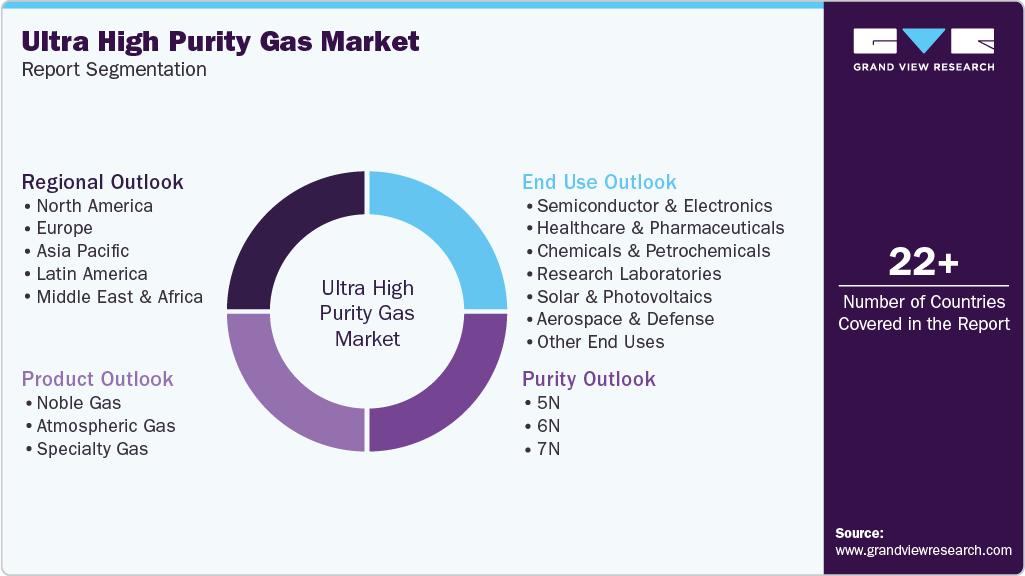
This report forecasts revenue growth at global, regional, and country levels and provides an analysis of the latest industry trends in each of the sub-segments from 2021 to 2033. For this study, Grand View Research has segmented the global ultra-high purity gas market report based on product, purity, end use and region:
 To learn more about this report, Download Free Sample Report
-
Product Outlook (Revenue, USD Billion, 2021 - 2033)
-
Noble Gas
-
Helium
-
Argon
-
Neon
-
Krypton
-
Xenon
-
-
Atmospheric Gas
-
Nitrogen
-
Oxygen
-
Hydrogen
-
-
Specialty Gas
-
Co2
-
Ammonia
-
Chlorine
-
Hydrogen Chloride
-
Silane
-
Other Specialty Gases
-
-
-
Purity Outlook (Revenue, USD Billion, 2021 - 2033)
-
5N
-
6N
-
7N
-
-
End Use Outlook (Revenue, USD Billion, 2021 - 2033)
-
Semiconductor & Electronics
-
Healthcare & Pharmaceuticals
-
Chemicals & Petrochemicals
-
Research Laboratories
-
Solar & Photovoltaics
-
Aerospace & Defense
-
Food & Beverage
-
Other End Uses
-
-
Regional Outlook (Revenue, USD Billion, 2021 - 2033)
-
North America
-
U.S.
-
Canada
-
Mexico
-
-
Europe
-
UK
-
Germany
-
France
-
Italy
-
Spain
-
-
Asia Pacific
-
China
-
Japan
-
India
-
South Korea
-
-
Latin America
-
Brazil
-
Argentina
-
-
Middle East and Africa (MEA)
-
South Africa
-
Saudi Arabia
-
-
Research Methodology
The ultra-high purity gas market figures in this report are based on a proven research process that combines executive interviews with secondary research from proprietary databases, company filings, and recognized regulatory and institutional sources. Market size is built through value-chain sizing-reconciling supply-side and demand-side estimates-and triangulated with bottom-up and top-down approaches. Every estimate passes multiple levels of expert validation before publication, with each ultra-high purity gas segment quantified using the revenue-capture definitions in the table below.
Segment Definition
Segment - Product
Revenue capture definition
Noble Gas
Commercial demand is driven by ultra-high purity helium, argon, neon, krypton, and xenon used in semiconductor fabrication, laser systems, precision optics, and advanced analytical equipment requiring contamination-free processing.
Atmospheric Gas
Market growth is supported by high-purity nitrogen, oxygen, and hydrogen utilized in wafer manufacturing, pharmaceutical production, metal processing, and laboratory operations where process consistency is critical.
Specialty Gas
Value creation is fueled by the increasing adoption of silane, hydrogen chloride, ammonia, chlorine, carbon dioxide, and other specialty gases for deposition, etching, calibration, and advanced industrial applications.
Segment - Purity
Revenue capture definition
5N
Industry demand is centered on 99.999% purity gases that deliver reliable performance across semiconductor manufacturing, healthcare, research laboratories, and precision industrial processes.
6N
Business expansion is supported by the growing requirement for enhanced purity in advanced electronics, optical fiber manufacturing, analytical testing, and high-precision production environments.
7N
Market momentum is driven by the adoption of ultra-premium purity gases in leading-edge semiconductor fabrication, quantum computing, photonics, and other highly sensitive technology applications.
Segment - End use
Revenue capture definition
Semiconductor & Electronics
Industry consumption is dominated by wafer fabrication, thin-film deposition, etching, ion implantation, and chamber cleaning processes requiring exceptionally pure process gases.
Healthcare & Pharmaceuticals
Commercial adoption continues to increase across pharmaceutical manufacturing, biotechnology, medical device production, and laboratory diagnostics that require stringent purity standards.
Chemicals & Petrochemicals
Business activity is supported by applications involving inert blanketing, catalyst protection, specialty chemical synthesis, and process optimization under controlled operating conditions.
Research Laboratories
Demand is generated by analytical instrumentation, calibration systems, scientific research, and experimental facilities where highly accurate and contamination-free environments are essential.
Solar & Photovoltaics
Growth is encouraged by the expanding use of high-purity gases in silicon crystal growth, wafer processing, thin-film deposition, and photovoltaic cell manufacturing.
Aerospace & Defense
Market adoption is strengthened by precision welding, propulsion research, aerospace component production, advanced material processing, and testing applications requiring controlled atmospheres.
Food & Beverage
Industry utilization is supported by modified atmosphere packaging, cryogenic freezing, beverage carbonation, and food preservation processes that depend on high-purity gases to maintain product quality.
Other End Uses
Business opportunities extend across additive manufacturing, metal fabrication, optical fiber production, environmental monitoring, and other specialized industrial applications requiring contamination-free gas solutions.
Estimation Model
Layer Name
Key Question
Description
Raw Material & Production Layer
What forms the supply base?
Identify the production of atmospheric gases, noble gases, and specialty gases used in ultra-high purity applications. Assess air separation technologies, gas purification processes, cryogenic distillation, specialty gas synthesis, production capacities, feedstock availability, purification infrastructure, cylinder and bulk packaging systems, and major manufacturing hubs supporting global supply.
Application Adoption Layer
Where is ultra-high purity gas utilized?
Evaluate the adoption of ultra-high purity gases across semiconductor and electronics manufacturing, healthcare and pharmaceuticals, chemicals and petrochemicals, research laboratories, solar photovoltaics, aerospace and defense, food and beverage, and other precision industries. Demand is driven by stringent contamination control requirements, increasing investments in advanced manufacturing, and the growing need for high-performance process environments.
Consumption Intensity Layer
How extensively is ultra-high purity gas consumed?
Analyze usage patterns by examining the consumption of high-purity nitrogen, argon, helium, hydrogen, oxygen, silane, hydrogen chloride, ammonia, and other specialty gases across critical industrial processes. The assessment considers manufacturing output, process gas requirements, fabrication capacity, technology adoption, and operational intensity to estimate consumption across major end-use sectors.
Revenue Layer
How is market revenue generated?
Market value is generated through the production, purification, packaging, and commercial supply of ultra-high purity gases for semiconductor fabrication, healthcare, advanced manufacturing, renewable energy, and scientific research applications. Industry expansion is supported by investments in semiconductor fabrication facilities, technological advancements in gas purification systems, increasing demand for contamination-free manufacturing, and capacity additions by leading industrial gas producers.
Delivered Customizations
This report has been delivered with the following In-depth customizations:
Client Request
Customization Delivered
Value Adds
Regional segmentation
The assessment provides country-level market size and forecasts; demand analysis by product type, purity, and end-use industry; consumption trends across semiconductor & electronics, healthcare & pharmaceuticals, chemicals & petrochemicals, research laboratories, solar photovoltaics, aerospace & defense, food & beverage, and other industrial applications. It also evaluates domestic production, import-export dynamics, manufacturing capacity, regulatory framework, competitive landscape, distribution networks, and investment trends influencing industry growth across each country.
Supports regional expansion strategies, manufacturing footprint optimization, and sourcing decisions by providing insights into production capabilities, supply chain infrastructure, pricing trends, and demand dynamics. It also enables effective capacity planning, customer targeting, and long-term investment prioritization across high-growth regions.
Opportunity Assessment
Comprehensive evaluation of emerging opportunities across advanced semiconductor manufacturing, next-generation electronics, renewable energy, biotechnology, pharmaceutical production, aerospace, and research applications. The assessment examines technological advancements in gas purification, increasing investments in fabrication facilities, government initiatives supporting domestic manufacturing, and the rising demand for contamination-free process environments across developed and emerging economies.
Enables identification of high-growth application segments and investment priorities by highlighting evolving technology trends, infrastructure development, regulatory support, and changing industry requirements. The insights support product development, business expansion, strategic partnerships, and long-term growth planning.
Competitive Benchmarking
Comparative assessment of leading manufacturers based on product portfolio, gas purification capabilities, manufacturing capacity, technological expertise, production footprint, quality standards, innovation initiatives, regional presence, strategic collaborations, and expansion activities. The benchmarking also evaluates operational efficiency, supply chain resilience, customer relationships, and application expertise across major end-use industries.
Facilitates competitive positioning by identifying strengths and improvement opportunities across production capabilities, technology leadership, operational excellence, and customer service. It supports informed decision-making related to capacity expansion, strategic alliances, portfolio enhancement, and sustainable competitive differentiation.
Frequently Asked Questions About This Report
The Middle East & Africa market is the fastest growing region in the forecast period, supported by expanding industrial gas production, investments in petrochemical facilities, and the gradual development of healthcare and research infrastructure.
Atmospheric gas accounted for the largest share of the ultra-high purity gas market in 2025, representing 42.7% of total revenue, due to its extensive use of ultra-high purity nitrogen, oxygen, and hydrogen in semiconductor fabrication, pharmaceutical manufacturing, and other precision industrial processes that require stringent contamination control and consistent process performance.
The ultra-high purity gas market size was estimated at USD 2.5 billion in 2025 and is expected to reach USD 2.8 billion in 2026.
The ultra-high purity gas market is expected to grow at a compound annual growth rate of 13.1% from 2026 to 2033 to reach USD 6.3 million by 2033.
Asia Pacific led with a revenue share of 36.4% in 2025. The region is home to the world's largest semiconductor manufacturing hubs, with substantial investments in integrated circuit fabrication, display manufacturing, and photovoltaic production across China, Taiwan, South Korea, and Japan.
The ultra-high purity gas market is primarily driven by the rapid expansion of the semiconductor and electronics industry, where ultra-high purity gases are essential for precision manufacturing processes. Growing investments in advanced chip fabrication, increasing demand for photovoltaic cells and pharmaceuticals, and stringent quality requirements across high-tech industries are further accelerating market growth.
Some of the key players operating in the ultra-high purity gas market include Linde plc; Air Liquide; Air Products and Chemicals, Inc.; Taiyo Nippon Sanso Corporation; Messer Group GmbH; Matheson Tri-Gas, Inc.; INOX Air Products; Iwatani Corporation; Yingde Gases Group.
5N held the largest revenue share of 50.3% in 2025, owing to its extensive use across semiconductor fabrication, electronics manufacturing, pharmaceuticals, research laboratories, and specialty industrial applications.
Semiconductor & electronics held the largest revenue share of 39.4% in 2025, due to the indispensable role in wafer fabrication, thin-film deposition, etching, oxidation, ion implantation, and chamber cleaning processes.
About the Author(s)
Petrochemicals Research Team
Bulk Chemicals · PetrochemicalsThis report was authored by the petrochemicals research team at Grand View Research - comprising two research analysts, one senior research analyst, and one industry expert - with specialized expertise in the petrochemicals segment of the bulk chemicals industry. All findings are based on proprietary bulk chemicals databases, executive interviews, and regulatory analysis, subject to internal peer review prior to publication.
Last Updated:
Speak to Analyst

Customize this report to your needs - add regions, segments, or data points, with 20% free customization.
Or view our licence options:


ISO 9001:2015 & 27001:2022 Certified
We are GDPR and CCPA compliant! Your transaction & personal information is safe and secure. For more details, please read our privacy policy.


