
- Home
- »
- Homecare & Decor
- »
-
U.S. Building Care Chemicals Market, Industry Report, 2033GVR Report cover

U.S. Building Care Chemicals Market (2026 - 2033) Size, Share & Trends Analysis Report By Product (Toilet Bowl Cleaners, Window & Glass Cleaners, Drain & Sink Cleaners, Power Cleaners, Washroom Cleaners), By Supply Type, By Type, By Enterprise Size, By End-user, And Segment Forecasts
Revenue, 2025 (US$B)$4.53Forecast, 2033 (US$B)$6.77CAGR, 2026 - 20335.2%U.S. Building Care Chemicals Market Summary
The U.S. building care chemicals market size was estimated at USD 4.53 billion in 2025 and is projected to reach USD 6.77 billion by 2033, growing at a CAGR of 5.2% from 2026 to 2033. The market growth is fundamentally driven by the expansion of commercial, institutional, and residential infrastructure, which directly increases the demand for cleaning, maintenance, and sanitation solutions.
Key Market Trends & Insights
- By product, the power cleaners segment held a market share of 16.2% in 2025.
- Based on supply type, the contract-based segment accounted for a market share of 70.4% in 2025.
- By type, the product-only supply contracts segment accounted for a market share of 68.0% in 2025.
Market Size & Forecast
- 2025 Market Size: USD 4.53 Billion
- 2033 Projected Market Size: USD 6.77 Billion
- CAGR (2026-2033): 5.2%
Prism AI by Grand View Research Free to tryAsk a question about the U.S. building care chemicals marketTry asking✓Every figure cited from GVR research Prefer the report? Download free sample →
Cleaning activities are integral to a wide range of facilities, including offices, healthcare settings, schools, hospitality venues, and industrial sites, all of which require regular upkeep to maintain indoor environmental quality and hygiene standards. According to the Occupational Safety and Health Administration (OSHA), cleaning services are essential across diverse facility types such as hospitals, food service operations, and office complexes, highlighting the structural dependence of modern infrastructure on cleaning chemicals and maintenance systems. The continued growth in built environments, driven by urbanization, healthcare expansion, and institutional investments, therefore acts as a primary demand driver for building care chemicals, particularly in high-frequency cleaning applications such as surface care, sanitation, and disinfection.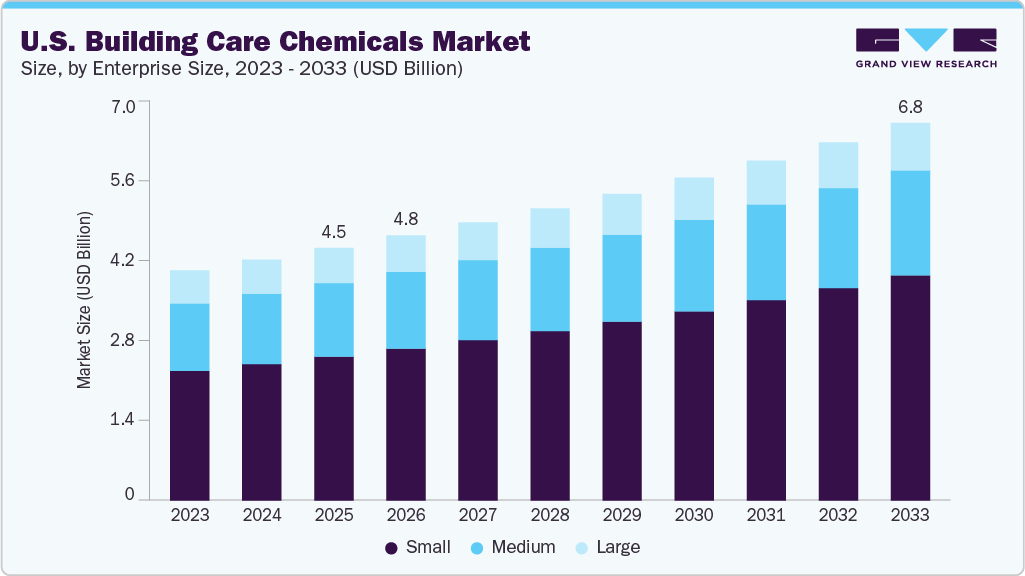 Source: Grand View Research, IR Documents, Primary Interviews, Paid DatabasesTo learn more about this report,
 Download Free Sample Report
A key growth driver shaping the U.S. building care chemicals industry is the increasing emphasis on hygiene, infection prevention, and workplace safety, particularly in the post-pandemic environment. Cleaning chemicals are no longer viewed purely as aesthetic maintenance tools but as critical components of public health infrastructure. Government agencies such as OSHA and the Centers for Disease Control and Prevention (CDC) have reinforced the importance of proper cleaning and disinfection practices in preventing the spread of infectious diseases. This has resulted in heightened cleaning frequencies, stricter sanitation protocols, and the institutionalization of cleaning practices across sectors such as healthcare, education, and transportation. Additionally, the large workforce engaged in janitorial and custodial services, running into millions across the U.S., reflects the scale and recurring nature of cleaning activities, further reinforcing steady consumption of building care chemicals across end-use environments.
The regulatory landscape in the U.S. plays a critical role in shaping product formulation, usage, labeling, and safety practices within the building care chemicals market. OSHA regulations, particularly under the Hazard Communication Standard (29 CFR 1910.1200), require that all cleaning chemicals used in workplaces are properly labeled and accompanied by Safety Data Sheets (SDS), ensuring that workers are informed about chemical hazards. Furthermore, OSHA standards under general industry regulations (29 CFR 1910) address exposure to hazardous substances, air contaminants, and workplace safety protocols, which directly influence how cleaning chemicals are manufactured, handled, and applied. Parallelly, the United States Environmental Protection Agency (EPA) regulates disinfectants and antimicrobial products, requiring registration and efficacy validation before they can be marketed, particularly for pathogen control. This dual regulatory oversight ensures both environmental safety and worker protection, creating a highly compliance-driven market environment.
Another important dimension of the regulatory and policy framework is the increasing focus on environmental sustainability and chemical safety. The EPA has been actively promoting the adoption of greener cleaning products through ecolabeling programs and procurement guidelines, encouraging the use of formulations that reduce toxicity, environmental persistence, and indoor air quality risks. Cleaning products are known to release volatile components and residues into the environment during normal use, raising concerns around human health and ecological impact. As a result, institutional buyers, including government agencies and large corporations, are increasingly shifting toward certified green cleaning products, low-VOC formulations, and biodegradable ingredients. Additionally, regulatory actions such as restrictions or bans on hazardous chemicals (e.g., solvents linked to health risks) are pushing manufacturers to reformulate products and invest in safer alternatives, accelerating the transition toward sustainable chemistry.
Key U.S. Building Care Chemicals Market Share Insights
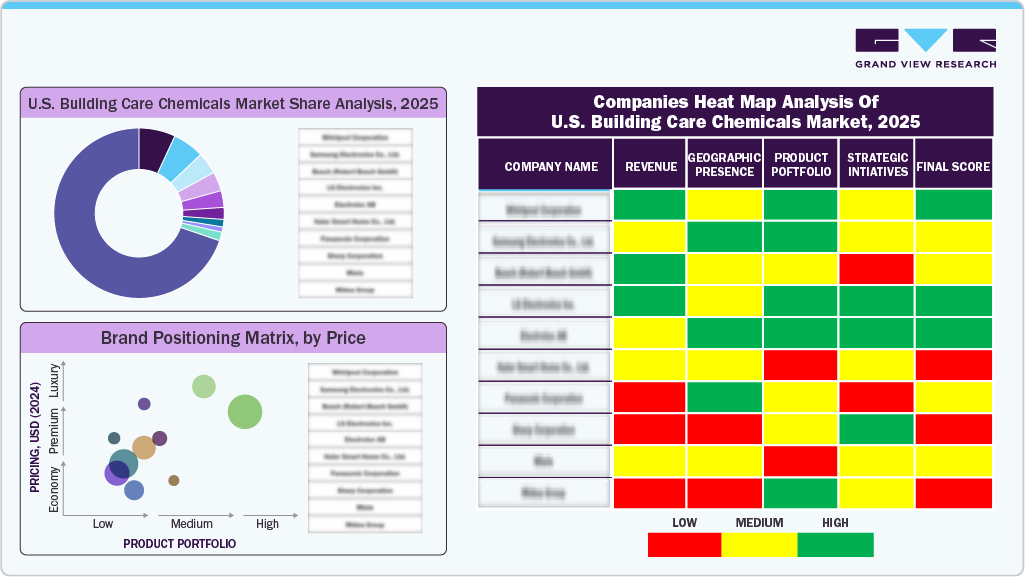
The competitive landscape of the U.S. building care chemicals market is characterized by a fragmented yet tiered structure, where large multinational corporations coexist with a wide base of mid-sized manufacturers, regional players, and specialized formulators.
At the top end of the market, large integrated players such as Ecolab and The Clorox Company maintain strong competitive positions through scale, technology integration, and service-led models. These companies differentiate themselves not only through product portfolios but also through bundled solutions that include dosing systems, infection prevention services, and water management technologies, particularly for commercial and institutional clients. Their ability to operate across multiple end-use industries, such as healthcare, foodservice, and hospitality, provides them with stable demand streams and high customer retention. Additionally, their strong regulatory compliance capabilities and R&D investments allow them to respond quickly to evolving standards related to disinfection efficacy, worker safety, and environmental sustainability.
Alongside these global leaders, a significant portion of the market is occupied by mid-sized and specialized manufacturers such as Zep, Inc., and regional players like The Bullen Companies. These companies often focus on industrial, institutional, and private-label segments, offering tailored solutions for specific applications such as floor care, degreasing, sanitation, and odor control. Their competitive advantage lies in flexibility, particularly in custom formulation, contract manufacturing, and rapid product development cycles. Many of these firms operate through distributor networks rather than direct sales, enabling them to serve localized markets efficiently while maintaining cost competitiveness.
 To learn more about this report, Download Free Sample Report
Product Insights
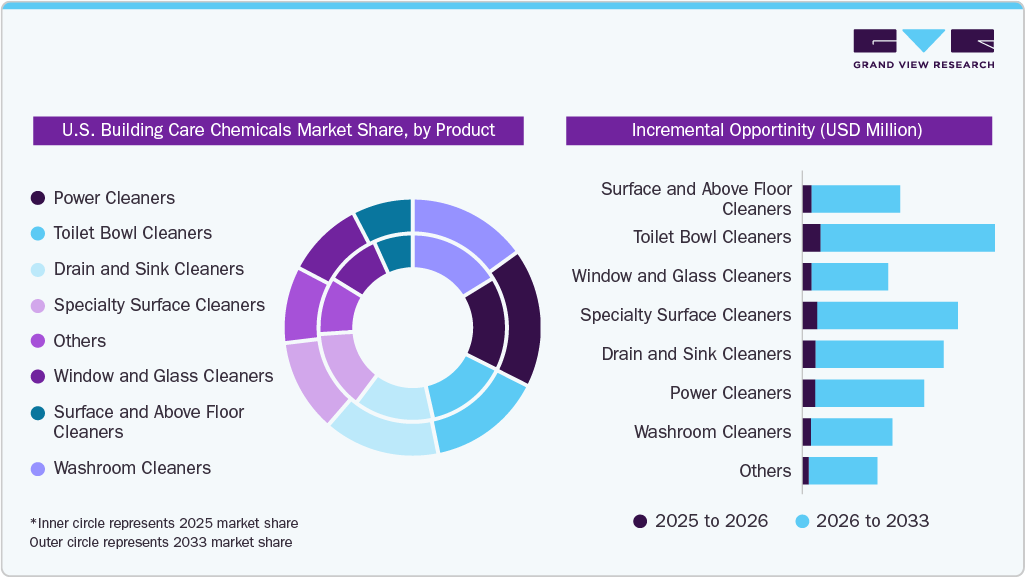
The power cleaners segment accounted for a 16.2% share of the U.S. building care chemicals industry in 2025. This segment is strongly influenced by the increasing need for heavy-duty cleaning across industrial and high-load commercial environments, where standard surface cleaners are insufficient. Facilities such as manufacturing plants, logistics warehouses, and automotive service centers require chemicals capable of removing grease, oil residues, and industrial contaminants. The rise in large-scale distribution centers and fulfillment hubs in the U.S. has further accelerated demand for such high-performance products. Additionally, the integration of mechanical cleaning systems, such as pressure washers and automated scrubbers, has created a parallel demand for compatible chemical formulations that enhance efficiency while minimizing residue. From a regulatory standpoint, workplace safety guidelines under the OSHA are pushing manufacturers to reduce worker exposure to highly corrosive or toxic substances, leading to innovation in safer yet effective formulations. There is also a visible shift toward concentrated products that reduce transportation and storage costs. While performance remains the primary purchase driver, environmental considerations such as reduced VOC emissions and wastewater impact are increasingly shaping product development strategies in this segment.
 To learn more about this report, Download Free Sample Report
The demand for washroom cleaners is expected to grow at a CAGR of 6.8% from 2026 to 2033. This growth is largely underpinned by rising hygiene expectations in shared and high-traffic sanitation facilities, including airports, shopping malls, office complexes, and healthcare institutions. Post-pandemic behavioral shifts have made visible cleanliness a critical component of user experience, particularly in restrooms, which are often perceived as indicators of overall facility hygiene. As a result, facility managers are increasing cleaning frequency and adopting specialized products designed for scale removal, odor control, and microbial disinfection. Regulatory guidance from public health bodies such as the CDC has reinforced the importance of routine cleaning and disinfection of high-touch surfaces, further driving product consumption. Additionally, innovations such as long-lasting fragrance systems, anti-limescale formulations, and touchpoint disinfectants are gaining traction. Smart washroom management systems that monitor usage and trigger cleaning cycles are also indirectly boosting demand. Sustainability is emerging as a key trend, with growing preference for non-toxic and biodegradable formulations, particularly in institutional procurement programs.
Supply Type Insights
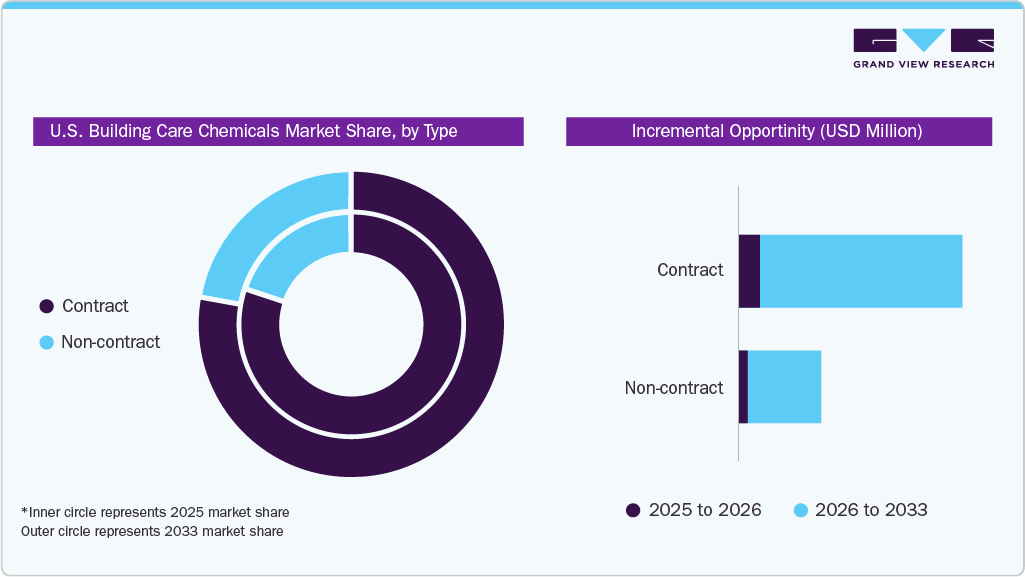
The contract-based sales of building care chemicals in the U.S. accounted for a market share of 70.4% in 2025. This dominance reflects the structural shift toward outsourced and integrated facility management services, where cleaning chemicals are procured as part of long-term service agreements rather than standalone purchases. Large institutions such as hospitals, universities, and corporate campuses increasingly rely on facility management providers to ensure consistent hygiene standards, regulatory compliance, and operational efficiency. These contracts often bundle chemical supply with dispensing equipment, staff training, and performance monitoring, creating a comprehensive service ecosystem. Regulatory requirements, including OSHA’s Hazard Communication Standard, necessitate proper handling, labeling, and usage of chemicals, which further encourages organizations to rely on professional service providers. The model also offers cost predictability and reduces procurement complexity for clients. Additionally, the rise of performance-based contracts, where service providers are evaluated on cleanliness outcomes, has increased the emphasis on high-quality and reliable chemical solutions. This segment continues to benefit from the growing professionalization of cleaning services across the U.S.
The non-contract-based sales of building care chemicals in the U.S. are expected to showcase a CAGR of 4.2% from 2026 to 2033. This segment primarily caters to small businesses and independent operators who prefer flexible and on-demand purchasing rather than long-term contractual commitments. Retail channels, including supermarkets, wholesale clubs, and increasingly e-commerce platforms, play a significant role in driving accessibility and product visibility. The growth of online marketplaces has made it easier for smaller buyers to compare products, prices, and formulations, thereby influencing purchasing behavior. Unlike contract-based procurement, this segment is highly influenced by factors such as packaging, brand perception, and immediate availability. However, it operates within a more fragmented demand structure, limiting economies of scale. Regulatory compliance still applies, particularly in terms of labeling and consumer safety under agencies such as the Environmental Protection Agency (EPA), but enforcement is less centralized compared to institutional procurement. While the segment benefits from the expansion of small enterprises and home-based businesses, its growth remains moderate due to lower purchase volumes and less standardized consumption patterns.
Type Insights
The product-only supply contracts dominated the U.S. building care chemicals market, accounting for a share of 68.0% in the overall contract-based sales. This segment reflects a hybrid procurement model, where organizations source cleaning chemicals in bulk while retaining control over in-house cleaning operations. It is particularly prevalent in sectors such as education, government buildings, and mid-to-large corporate offices, where internal housekeeping teams are well-established. These contracts focus on ensuring consistent product quality, reliable supply chains, and cost efficiency, without the added complexity of service integration. Buyers often standardize chemical usage across facilities to streamline training and compliance with safety protocols such as OSHA’s chemical handling requirements. The segment also benefits from the growing adoption of concentrated formulations and dilution control systems, which improve cost efficiency and reduce waste. However, unlike full-service contracts, it places greater responsibility on the end user for proper application and compliance. The continued preference for operational control and cost management is expected to sustain this segment’s dominance within contract-based sales.
 To learn more about this report, Download Free Sample Report
The non-contract based sales i.e. retail sales and any sales that is not governed through any type of contract, of cleaning chemicals in the U.S. is expected to showcase a CAGR of 4.2% from 2026 to 2033. This segment is primarily driven by decentralized purchasing behavior across small businesses, independent service providers, and residential users, who rely on flexible, need-based procurement rather than long-term supply agreements. Growth is supported by the continued expansion of small and medium-sized enterprises, particularly in segments such as local retail, personal services, and small-scale hospitality, where cleaning requirements are consistent but not large enough to justify contractual arrangements. The increasing penetration of e-commerce platforms and wholesale retail chains has significantly improved product accessibility, enabling buyers to source a wide range of cleaning chemicals with greater price transparency and convenience.
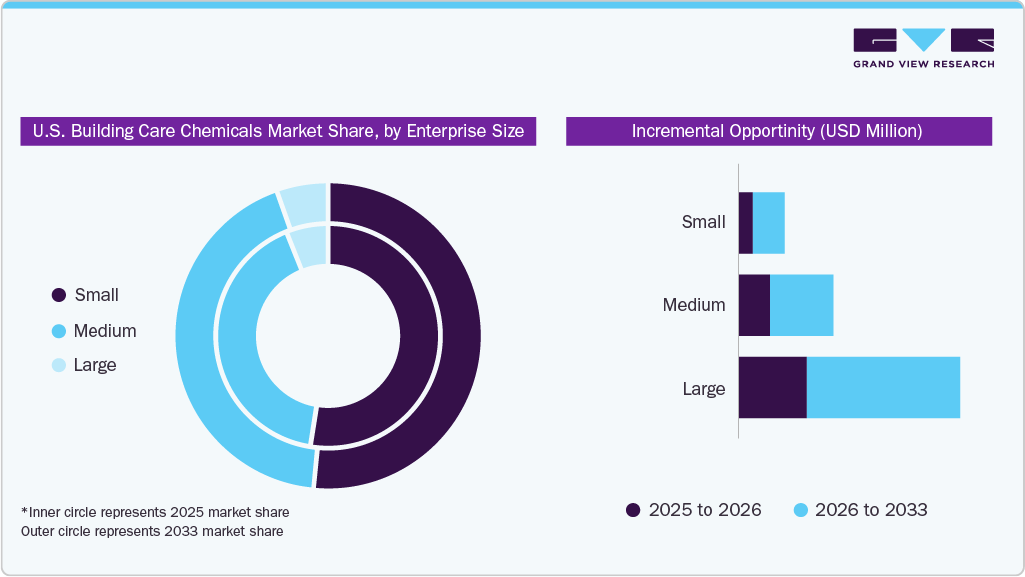
Enterprise Size Insights
The demand for building care chemicals across large enterprises accounted for a share of 57% in 2025. This segment is driven by the scale, complexity, and regulatory obligations associated with large commercial and institutional infrastructures. Enterprises operating across sectors such as healthcare, corporate offices, manufacturing, and retail chains require continuous and standardized cleaning practices to maintain operational efficiency and brand reputation. Regulatory compliance, including OSHA workplace safety standards and EPA guidelines for chemical usage, plays a critical role in shaping procurement decisions. Large enterprises often adopt centralized purchasing systems, enabling bulk procurement and long-term supplier partnerships. There is also a growing emphasis on sustainability, with many corporations aligning cleaning practices with ESG goals by adopting green-certified products. Technological integration, such as automated dispensing systems and data-driven cleaning protocols, is further enhancing efficiency. The segment’s dominance is reinforced by high consumption volumes, recurring demand cycles, and the need for consistent quality across multiple locations.
 To learn more about this report, Download Free Sample Report
The demand for building care chemicals across medium enterprises is expected to grow at a CAGR of 4.6% from 2026 to 2033. Growth in this segment is closely linked to the expansion and formalization of mid-sized businesses across sectors such as retail, hospitality, and light manufacturing. As these enterprises scale operations, there is a gradual shift from informal cleaning practices to more structured and compliant approaches. This includes increased adoption of standardized cleaning chemicals and basic safety protocols. Unlike large enterprises, procurement decisions are often decentralized, allowing flexibility but also leading to variability in product usage. Cost considerations remain a key factor, with businesses seeking a balance between performance and affordability. Distribution networks, including regional suppliers and wholesalers, play a crucial role in servicing this segment. Additionally, growing awareness around employee health and workplace cleanliness is encouraging more consistent usage of cleaning chemicals. While growth is steady, it reflects a transition phase toward more organized and compliance-driven procurement behavior.
End-user Insights
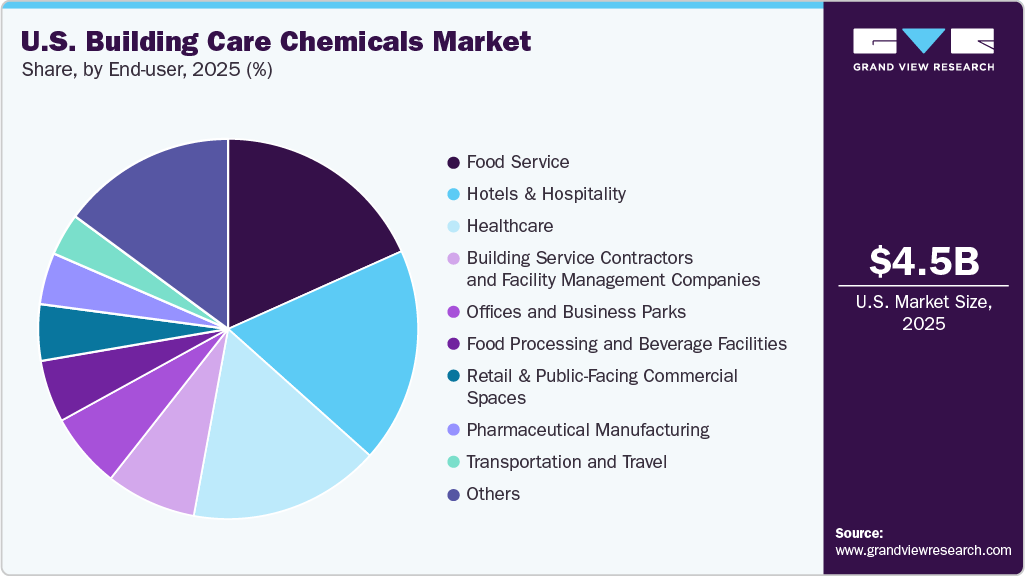
The demand for building care chemicals across the food service sector accounted for a 18.3% share of the U.S. building care chemicals industry in 2025. This segment growth is highly driven by stringent hygiene and food safety requirements, which mandate frequent and specialized cleaning practices. Restaurants, commercial kitchens, and food processing units rely on a variety of cleaning chemicals, including degreasers, sanitizers, and disinfectants, to maintain compliance with food safety standards. Regulatory frameworks enforced by agencies such as the U.S. Food and Drug Administration (FDA) and local health departments require strict sanitation protocols, directly influencing chemical consumption patterns. The rapid growth of quick-service restaurants, cloud kitchens, and food delivery platforms is further increasing demand. High turnover and continuous operations necessitate frequent cleaning cycles, resulting in consistent product usage. Additionally, there is a growing preference for food-safe and non-toxic formulations that minimize contamination risks. Operational efficiency, particularly in kitchen turnaround times, is a key factor driving product selection. This segment remains one of the most regulation-intensive and consumption-heavy end-use areas.
 To learn more about this report, Download Free Sample Report
The demand for building care chemicals across the hotels & hospitality sector is expected to showcase a CAGR of 5.8% from 2026 to 2033. Growth in this segment is closely tied to the recovery and expansion of the U.S. travel and tourism industry, which is driving higher occupancy rates and increased facility usage. Hotels require comprehensive cleaning solutions across guest rooms, lobbies, dining areas, and recreational spaces, resulting in diverse chemical requirements. Unlike other sectors, there is a strong emphasis on sensory factors such as fragrance, surface finish, and overall guest experience. Regulatory guidelines around sanitation and public health, particularly in shared spaces, are reinforcing the need for consistent cleaning practices. Additionally, premium and luxury hotel chains are increasingly adopting eco-friendly cleaning products as part of their sustainability commitments. The rise of short-term rental platforms and boutique accommodations is also contributing to market expansion. As customer expectations around cleanliness continue to rise, this segment is witnessing steady and experience-driven growth.
Key U.S. Building Care Chemicals Companies:
- Reckitt Benckiser Group plc
- The Clorox Company
- S.C. Johnson & Son, Inc.
- Henkel AG & Co. KGaA
- Ecolab Inc.
- Kao Corporation
- Zep Inc.
- 3M Company
- Solenis Group
- Procter & Gamble
- Betco Corporation
- Spartan Chemical Company, Inc.
Recent Developments
-
In April 2026, The Clorox Company completed the acquisition of GOJO Industries, significantly expanding its presence in the professional hygiene and hand sanitization segment. The acquisition adds the Purell brand and GOJO’s institutional hygiene portfolio to Clorox’s existing cleaning and disinfecting solutions, strengthening its position across healthcare, commercial, and facility management channels. The move reflects a broader industry trend toward integrated hygiene ecosystems, combining surface cleaning with hand hygiene and infection prevention solutions.
-
In January 2026, Procter & Gamble completed a significant expansion of its Lima, Ohio, manufacturing and distribution facility, investing about USD 501 million to add new warehouse modules (boosting storage capacity by ~40 %), construct a dedicated building for Downy Unstopables production, and increase overall shipping and manufacturing capabilities.
-
In November 2025, Ecolab launched its FaciliPro Fill & Clean Series, a new line of commercial‑grade cleaners that combines the simplicity of ready‑to‑use products with the cost and sustainability benefits of concentrated chemistry. Each refillable bottle uses a “just add water” design to generate the equivalent of multiple RTU bottles, simplifying training and reducing waste. The series includes multi‑purpose cleaners, bathroom and glass cleaners, an industrial degreaser, and a bio‑enzymatic odor eliminator.
U.S. Building Care Chemicals Market Report Scope
Report Attribute
Details
Market size value in 2026
USD 4.75 billion
Revenue forecast in 2033
USD 6.77 billion
Growth rate
CAGR of 5.2% from 2026 to 2033
Base year for estimation
2025
Historical data
2021 - 2025
Forecast period
2026 - 2033
Quantitative units
Revenue in USD million/billion and CAGR from 2026 to 2033
Report coverage
Revenue forecast, company ranking, competitive landscape, growth factors, and trends
Segments covered
Product, supply type, type, enterprise size, end-user
Key companies profiled
Reckitt Benckiser Group plc; The Clorox Company; S.C. Johnson & Son, Inc.; Henkel AG & Co. KGaA; Ecolab Inc.; Kao Corporation; Zep Inc.; 3M Company; Solenis Group; Procter & Gamble; Betco Corporation; Spartan Chemical Company, Inc.
Customization scope
Free report customization (equivalent up to 8 analysts working days) with purchase. Addition or alteration to country, regional & segment scope.
Pricing and purchase options
Avail customized purchase options to meet your exact research needs. Explore purchase options
U.S. Building Care Chemicals Market Report Segmentation
This report forecasts revenue growth at the country level and provides an analysis on the latest trends and opportunities in each of the sub-segment from 2021 to 2033. For this study, Grand View Research has segmented the U.S. building care chemicals market report based on product, supply type, type, enterprise size, and end-user:
-
Product Outlook (Revenue, USD Million, 2021 - 2033)
-
Surface and Above Floor Cleaners
-
Toilet Bowl Cleaners
-
Window and Glass Cleaners
-
Specialty Surface Cleaners (For Upholstery, Furniture, etc.)
-
Drain and Sink Cleaners
-
Power Cleaners
-
Washroom Cleaners
-
Others (Toilet Seat Sanitizer, Rim Cleaner, etc.)
-
-
Supply Type Outlook (Revenue, USD Million, 2021 - 2033)
-
Contract
-
Service-Led Contract Holders
-
Building Service Contractors (BSCs)
-
Facilities Management (FM) Companies
-
-
End-User-Led Contract Holders
-
Group Purchasing Organizations (GPOs)
-
-
Non-contract
-
-
Type Outlook (Revenue, USD Million, 2021 - 2033)
-
Contract
-
Product-Only Supply Contracts
-
Service Inclusive Contracts
-
Equipment Inclusive Supply Contracts
-
Training & Compliance Inclusive Contracts
-
Fully Integrated Hygiene-as-a-Service (HaaS)/Performance-Based
-
-
Non-contract
-
-
Enterprise Size (Revenue, USD Million, 2021 - 2033)
-
Small
-
Medium
-
Large
-
-
End-user Outlook (Revenue, USD Million, 2021 - 2033)
-
Healthcare
-
Hospitals
-
Senior Living and Retirement Communities
-
Medical Centers (Life Science, Biotech, Research Centers)
-
Ambulatory Surgical Centers
-
Doctor's Offices and Clinics
-
Others (Small Rehab Centers, etc.)
-
-
Food Service
-
Restaurants & Beverage Outlets
-
Cafés, Bars, and Pubs
-
Catering Establishments
-
Informal and Mobile Food Service Establishments
-
-
Hotels & Hospitality
-
Hotels & Resorts
-
Non-Hotel & Alternative Hospitality Accommodation
-
Leisure and Entertainment Parks
-
Event Venues and Recreational Facilities
-
-
Industrial and Manufacturing Facilities
-
Food Processing and Beverage Facilities
-
Pharmaceutical Manufacturing
-
Defense & Aerospace Facilities
-
Building Service Contractors and Facility Management Companies
-
Retail & Public-Facing Commercial Spaces
-
Educational Institutions
-
Transportation and Travel
-
Airports
-
Railway Stations
-
Bus Terminals and Depots
-
Metro and Subway Systems
-
-
Ports and Harbors
-
Offices and Business Parks
-
Government Offices and Buildings
-
Others (Religious Institutions, etc.)
-
Frequently Asked Questions About This Report
The U.S. building care chemicals market size was estimated at USD 4.53 billion in 2025 and is expected to reach USD 4.75 billion in 2026.
The U.S. building care chemicals market is expected to grow at a compound annual growth rate (CAGR) of 5.2% from 2026 to 2033 to reach USD 6.77 billion by 2033.
Power cleaners accounted for a market share of 16.2% in 2025. This segment is strongly influenced by the increasing need for heavy-duty cleaning across industrial and high-load commercial environments, where standard surface cleaners are insufficient.
Some key players in the U.S. building care chemicals market include Reckitt Benckiser Group plc, The Clorox Company, S.C. Johnson & Son, Inc., Henkel AG & Co. KGaA, Ecolab Inc., Kao Corporation, Zep Inc., 3M Company, Solenis Group, Procter & Gamble, Betco Corporation, and Spartan Chemical Company, Inc.
The market is fundamentally driven by the expansion of commercial and institutional infrastructure, which directly increases the demand for cleaning, maintenance, and sanitation solutions.
About the Author(s)
Homecare & Decor Research Team
Consumer Goods · Homecare & DecorThis report was authored by the homecare & decor research team at Grand View Research - comprising two research analysts, one senior research analyst, and one industry expert - with specialized expertise in the homecare & decor segment of the consumer goods industry. All findings are based on proprietary consumer goods databases, executive interviews, and regulatory analysis, subject to internal peer review prior to publication.
Last Updated:
Speak to Analyst

Customize this report to your needs - add regions, segments, or data points, with 20% free customization.
Or view our licence options:


ISO 9001:2015 & 27001:2022 Certified
We are GDPR and CCPA compliant! Your transaction & personal information is safe and secure. For more details, please read our privacy policy.


