
- Home
- »
- Medical Devices
- »
-
U.S. Cell And Gene Therapy CDMO Market Size Report, 2033GVR Report cover
![U.S. Cell And Gene Therapy CDMO Market Size, Share & Trends Report]()
U.S. Cell And Gene Therapy CDMO Market (2025 - 2033) Size, Share & Trends Analysis Report By Phase (Pre-clinical, Clinical), By Product (Gene Therapy, Cell Therapy, Gene-Modified Cell Therapy), By Indication (Oncology, Infectious Diseases), And Segment Forecasts
Market Size & Trends
The U.S. cell and gene therapy CDMO market size was estimated at USD 1.62 billion in 2024 and is projected to reach USD 10.34 billion by 2033, growing at a CAGR of 23.26% from 2025 to 2033. The market is driven by rising investments in advanced therapeutic modalities, increasing approvals of gene and CAR-T therapies, and the growing need for specialized manufacturing capacity. Pharmaceutical and biotech companies are increasingly partnering with CDMOs to overcome bottlenecks in viral vector production, cell expansion, and GMP-compliant facilities, as internal capabilities often cannot keep pace with the rapid innovation in this sector.
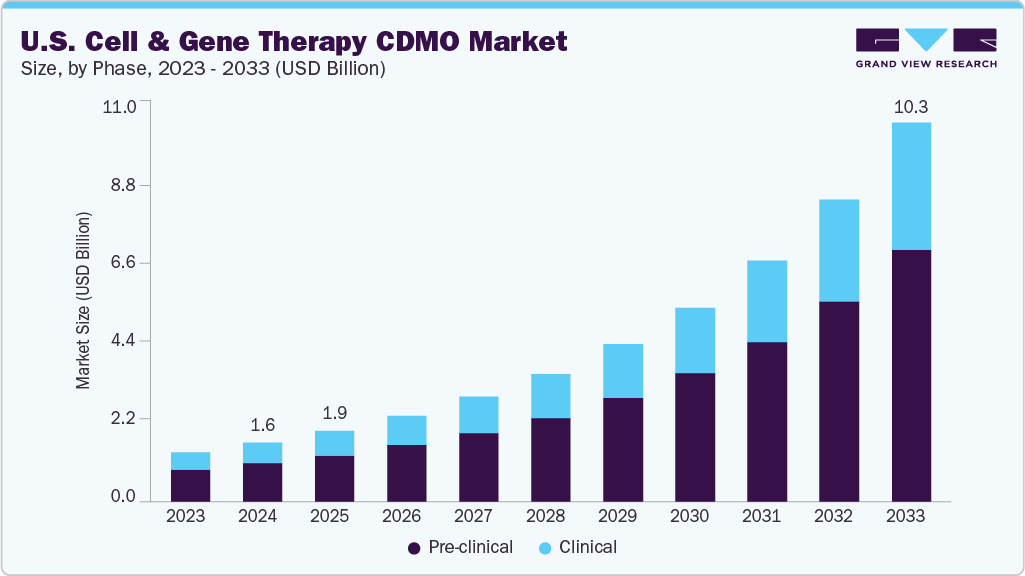
The market is primarily driven by the biotechnology and pharmaceutical industries' increased R&D funding and investments in cell and gene therapeutics (CGT). Cell and gene therapies hold significant potential in treating a wide range of diseases, including cancer, genetic disorders, and certain infectious diseases. Hence, owing to the great potential of these therapeutics, there has been a considerable increase in interest from both private and public sectors in the development and discovery of innovative cell and gene therapies. Most big pharmaceutical companies are now investing in CGT to create a strong position in the market. There has been a considerable increase in venture capital investments, especially in the life sciences sector.
Furthermore, an increased clinical pipeline and persistent reliance on outsourcing due to the specialized expertise and infrastructure required for production drive market growth. According to the data published by clinicaltrials.org, there are currently over 2,000 ongoing clinical trials in cell and gene therapies progressing through development stages, and each transition from early to late phase amplifies the demand for viral vectors, plasmids, and clinical-grade cell processing. FDA approvals of novel treatments such as Casgevy for sickle cell disease and Elevidys for Duchenne muscular dystrophy in 2023-24, alongside EMA’s approval of Roctavian for hemophilia A, highlight the growing momentum of advanced therapies entering the commercial stage.
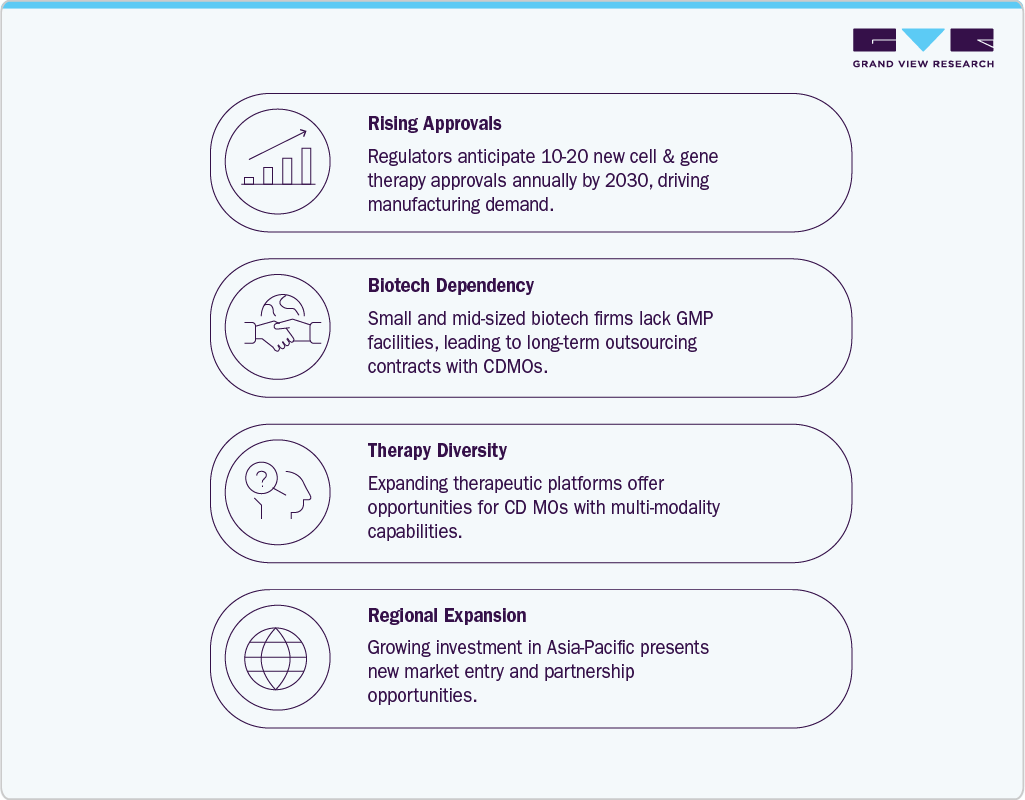
Most small and mid-sized biotech firms pioneering these innovations lack large-scale GMP facilities, making partnerships with CDMOs essential to reach patients. To meet this surge, leading players like Lonza, Catalent, WuXi Advanced Therapies, and Thermo Fisher have invested heavily in expanding viral vector and cell therapy capacity, indicating strong confidence in sustained outsourcing demand. Together, these drivers position the market for sustained high growth as approvals accelerate, pipelines deepen, and manufacturing needs outpace in-house capabilities.
Opportunity Analysis
The U.S. cell and gene therapy CDMO industry offers strong opportunities as demand for specialized manufacturing continues to outpace the in-house capabilities of most biotech firms. A growing wave of FDA and EMA approvals, supported by more than two thousand active clinical trials worldwide, ensures consistent outsourcing needs for viral vectors, plasmids, and advanced cell processing. CDMOs investing in flexible, automated, and multi-platform facilities stand to capture long-term contracts from emerging biotech developers and established pharmaceutical companies. Expanding infrastructure in regions like Asia-Pacific, alongside North America and Europe, further creates opportunities to serve a global pipeline of therapies moving rapidly toward commercialization.
Technological Advancements
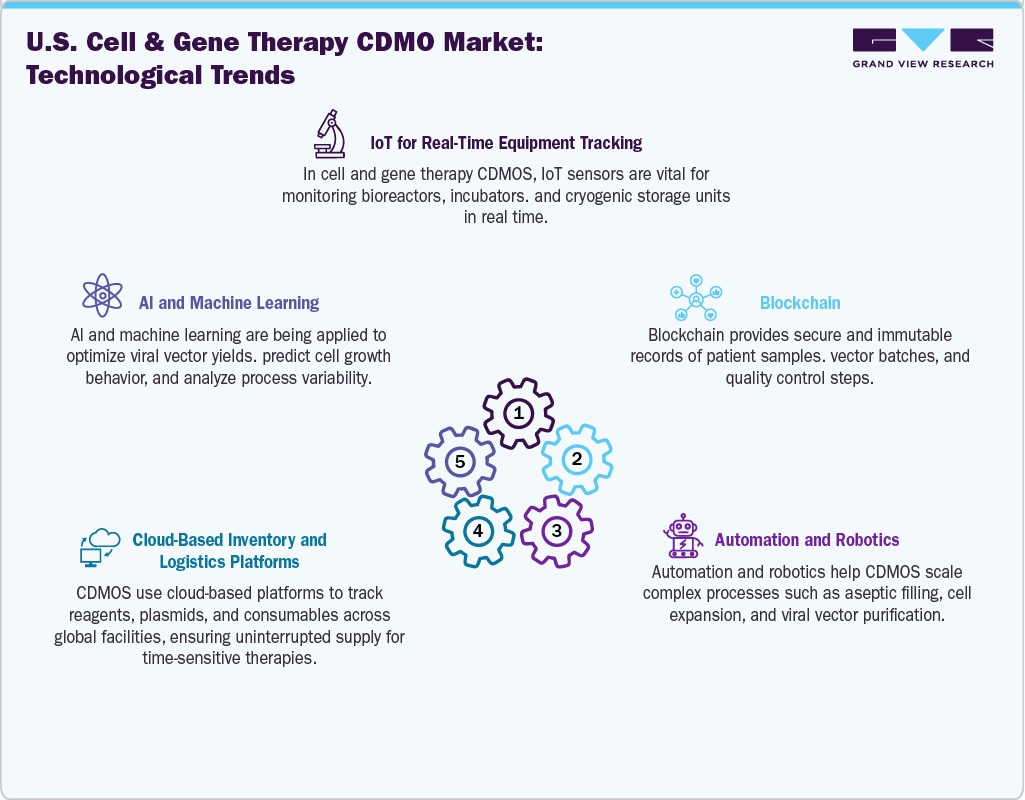
The technology landscape for U.S. cell and gene therapy CDMOs is defined by the rapid adoption of advanced platforms that enable manufacturing efficiency, scalability, and compliance. Viral vector production technologies, including AAV and lentiviral systems, remain at the core of gene therapy manufacturing, while closed-system bioreactors and automated cell processing units are increasingly used for cell therapies such as CAR-T and TILs. Single-use technologies and modular cleanrooms provide flexibility to handle diverse therapy pipelines while reducing contamination risks and turnaround times. Digital tools, including electronic batch records and real-time monitoring systems, are also being integrated to ensure quality control and regulatory compliance. Together, these innovations create a foundation for CDMOs to meet rising demand and deliver complex therapies at both clinical and commercial scale.
Pricing Analysis
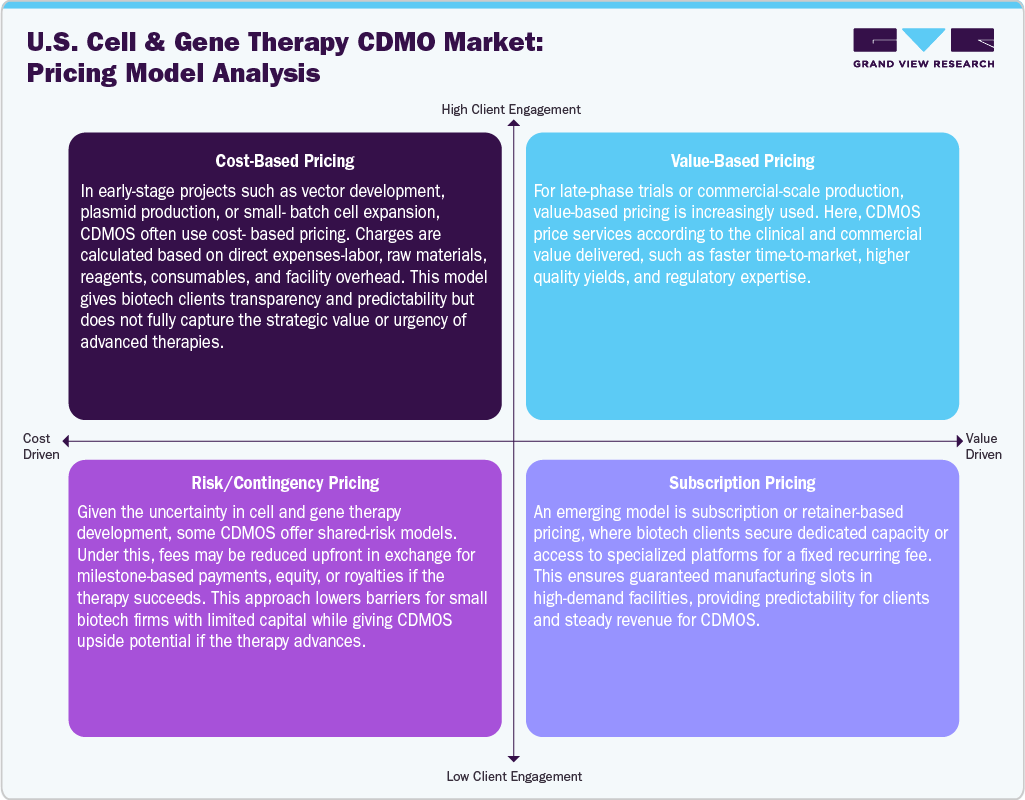
Pricing in the cell and gene therapy CDMO industry is shaped by the complexity of processes, scarcity of specialized expertise, and high capital intensity of GMP-compliant facilities. Costs typically vary across phases of development, with early-stage process development and small-batch vector or cell production priced at a premium due to customization and low throughput, while commercial-scale contracts are structured with long-term supply agreements that balance volume with lower per-unit costs. Pricing models often combine fixed fees for facility access and development services with variable charges tied to scale, vector yield, and consumables. Factors such as the type of therapy (AAV vs. lentiviral vectors, CAR-T vs. NK cells), the degree of automation, and regulatory stringency further influence contract values. Given the shortage of global capacity, CDMOs maintain strong pricing power, and sponsors often accept higher costs in exchange for faster timelines and secure supply chains, making pricing both a reflection of technical complexity and market scarcity.
Phase Insights
Based on the phase segment, the market is classified into pre-clinical and clinical. The pre-clinical segment accounted for the largest revenue share in the cell and gene therapy CDMO industry of 65.6% in 2024. The segment's growth is due to the majority of cell and gene therapy activity concentrated in discovery and early development. Thousands of therapies are still in the pipeline, requiring vector design, process development, and small-scale manufacturing services. Biotech companies, especially startups, rely heavily on CDMOs during this stage due to limited in-house expertise and infrastructure, driving strong demand for outsourced pre-clinical work.
The clinical segment is anticipated to grow at a lucrative CAGR during the forecast period. This growth is driven by advancements from early R&D into human trials. An expanding pipeline of cell and gene therapies is steadily transitioning into Phase I-III studies, requiring larger volumes of GMP-grade materials, regulatory-compliant manufacturing, and clinical trial logistics support. The increasing number of FDA and EMA designations for gene therapies and accelerated approval pathways is also intensifying outsourcing needs in clinical stages.
Product Insights
Based on product segment, the market is segregated into gene therapy, gene-modified cell therapy, and cell therapy. The cell therapy segment dominated the market with a revenue share of 64.9% in 2024. The segment's growth is due to the wide applicability of these therapies across oncology, autoimmune disorders, and rare diseases, combined with the relatively advanced stage of clinical pipelines compared to other modalities. The strong adoption of CAR-T therapies, proven efficacy in hematological malignancies, and continued expansion into solid tumors have accelerated demand for CDMO support in areas such as cell isolation, expansion, and cryopreservation.
Gene-modified cell therapy is anticipated to grow at the fastest CAGR during the forecast period. The segment growth is due to the rapid expansion of CAR-T, TCR-T, and NK cell therapies, which are demonstrating strong clinical efficacy in hematological and solid tumor indications. Growing numbers of clinical trials, coupled with FDA breakthrough and orphan designations, are accelerating the development of these therapies and creating significant demand for CDMO services in genetic engineering, viral vector supply, and large-scale GMP manufacturing.
Indication Insights
Based on the indication segment, the market is segregated into oncology, infectious diseases, neurological disorders, and rare diseases. The oncology segment held the largest market share in 2024, due to the high prevalence of cancer globally and the proven success of cell and gene therapies in treating hematologic malignancies. Therapies such as CAR-T have shown remarkable remission rates in leukemias and lymphomas, prompting accelerated approvals and strong commercial uptake. In addition, oncology dominates the clinical trial pipeline, with a majority of ongoing studies in cell and gene therapy targeting either hematological cancers or exploring applications in solid tumors.
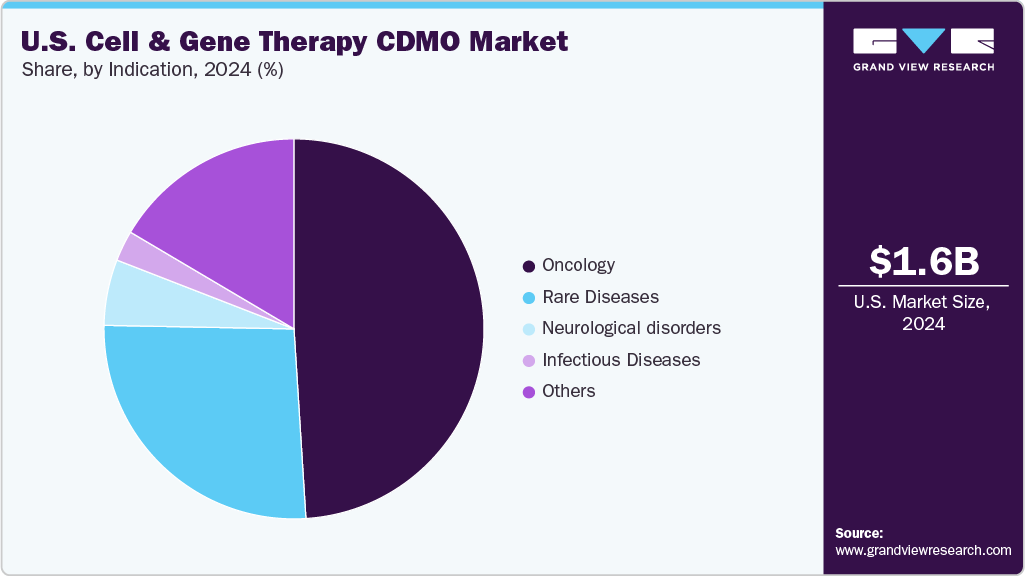
The rare diseases segment is anticipated to grow at a considerable CAGR during the forecast period. The segment growth is driven by the unique suitability of cell and gene therapies in addressing conditions with limited or no existing treatment options. Many rare diseases are monogenic in nature, making them ideal candidates for gene replacement or modification approaches. Regulatory agencies such as the FDA and EMA continue to grant orphan drug designations, priority reviews, and accelerated approvals for rare disease therapies, incentivizing development and investment in this space.
Key U.S. Cell And Gene Therapy CDMO Company Insights
The major players operating across the market are focused on adopting inorganic strategic initiatives such as mergers, partnerships, acquisitions, etc. Moreover, companies focus on technological innovations to augment their market position. For instance, in September 2023, Charles River Laboratories unveiled its new technology, the Lentivation lentiviral vector (LVV) manufacturing platform. This platform is designed to streamline the manufacturing timelines for gene and gene-modified cell therapies, potentially reducing them by up to 60%, resulting in fewer than seven months compared to conventional manufacturing workflows.
Key U.S. Cell And Gene Therapy CDMO Companies:
- Lonza
- Catalent, Inc
- Cytiva
- Samsung Biologics
- Thermo Fisher Scientific Inc.
- Novartis AG
- WuXi AppTec
- AGC Biologics
- OmniaBio
- Rentschler Biopharma SE
- Charles River Laboratories
Recent Developments
-
In August 2025, Lonza entered into a collaboration agreement with Excellos and Akadeum Life Sciences to launch an initiative to improve upstream cell therapy manufacturing by raising starting material quality and integrating modular workflows. This collaboration targets efficiencies and reproducibility across the cell and gene therapy production process.
-
In January 2025, Catalent entered a strategic collaboration with Galapagos NV to support decentralized manufacturing of GLPG5101, a CAR-T therapy for non-Hodgkin lymphoma. This partnership enhances patient access and accelerates clinical studies by leveraging local manufacturing sites.
U.S. Cell And Gene Therapy CDMO Market Report Scope
Report Attribute
Details
Market size value in 2025
USD 1.94 billion
Revenue forecast in 2033
USD 10.34 billion
Growth rate
CAGR of 23.26% from 2025 to 2033
Actual data
2018 - 2024
Forecast period
2025 - 2033
Quantitative units
Revenue in USD million and CAGR from 2025 to 2033
Report coverage
Revenue forecast, company ranking, competitive landscape, growth factors, and trends
Segments covered
Phase, product, indication
Country scope
U.S.
Key companies profiled
Lonza; Catalent, Inc; Cytiva; Samsung Biologics; Thermo Fisher Scientific Inc.; Novartis AG; WuXi AppTec; AGC Biologics; OmniaBio; Rentschler Biopharma SE; Charles River Laboratories
Customization scope
Free report customization (equivalent up to 8 analysts working days) with purchase. Addition or alteration to country, regional & segment scope.
Pricing and purchase options
Avail customized purchase options to meet your exact research needs. Explore purchase options
U.S. Cell And Gene Therapy CDMO Market Report Segmentation
This report forecasts revenue growth at country levels and provides an analysis of the latest industry trends in each of the sub-segments from 2021 to 2033. For this study, Grand View Research has segmented the U.S. cell and gene therapy CDMO market report based on phase, product, and indication.
-
Phase Outlook (Revenue, USD Million, 2021 - 2033)
-
Pre-clinical
-
Clinical
-
-
Product Outlook (Revenue, USD Million, 2021 - 2033)
-
Gene Therapy
-
Ex-vivo
-
In-vivo
-
-
Gene-Modified Cell Therapy
-
CAR T-cell therapies
-
CAR-NK cell therapy
-
TCR-T cell therapy
-
-
Cell Therapy
-
-
Indication Outlook (Revenue, USD Million, 2021 - 2033)
-
Oncology
-
Infectious Diseases
-
Neurological disorders
-
Rare Diseases
-
Others
-
Frequently Asked Questions About This Report
The U.S. cell and gene therapy CDMO market size was estimated at USD 1.62 billion in 2024 and is expected to reach USD 1.94 billion in 2025.
The U.S. cell and gene therapy CDMO market is expected to grow at a compound annual growth rate of 23.26% from 2025 to 2033 to reach USD 10.34 billion by 2033.
Pre-clinical dominated the U.S. cell and gene therapy CDMO market with a share of 65.6% in 2024. This is attributable to the majority of activity in the cell and gene therapy space is concentrated in discovery and early development.
Some key players operating in the U.S. cell and gene therapy CDMO market include Lonza; Catalent, Inc; Cytiva; Samsung Biologics; Thermo Fisher Scientific Inc.; Novartis AG; WuXi AppTec; AGC Biologics; OmniaBio; Rentschler Biopharma SE; Charles River Laboratories
Key factors that are driving the market growth include rising investments in advanced therapeutic modalities, increasing approvals of gene and CAR-T therapies, and the growing need for specialized manufacturing capacity.
About the Author(s)
Medical Devices Research Team
Healthcare · Medical DevicesThis report was authored by the medical devices research team at Grand View Research - comprising two research analysts, one senior research analyst, and one industry expert - with specialized expertise in the medical devices segment of the healthcare industry. All findings are based on proprietary healthcare databases, executive interviews, and regulatory analysis, subject to internal peer review prior to publication.
Last Updated:
Speak to Analyst


Customize this report to your needs — add regions, segments, or data points, with 20% free customization.
Or view our licence options:


ISO 9001:2015 & 27001:2022 Certified
We are GDPR and CCPA compliant! Your transaction & personal information is safe and secure. For more details, please read our privacy policy.


