
- Home
- »
- Plastics, Polymers & Resins
- »
-
U.S. Feed Packaging Market Size, Industry Report, 2033GVR Report cover

U.S. Feed Packaging Market (2025 - 2033) Size, Share & Trends Analysis Report By Material (Plastic, Paper & Paperboard), By Packaging Type (Flexible, Rigid), By End-use (Livestock Feed), By Packaging Format, By Feed Type, And Segment Forecasts
U.S. Feed Packaging Market Summary
The U.S. feed packaging market size was estimated at USD 2.95 billion in 2024 and is expected to reach USD 4.98 billion by 2033, growing at a CAGR of 6.1% from 2025 to 2033. The growing demand for high-quality and safe animal nutrition, driven by the large-scale livestock and pet food industries, is fueling the feed packaging market in the U.S. In addition, the rise in sustainable and convenient packaging formats is encouraging innovation among manufacturers.
Key Market Trends & Insights
- By material, the paper & paperboard segment is expected to grow at a considerable CAGR of 7.0% from 2025 to 2033 in terms of revenue.
- By packaging type, the flexible segment is expected to grow at a considerable CAGR of 6.4% from 2025 to 2033 in terms of revenue.
- By end use, the aquatic feed packaging segment is expected to grow at a considerable CAGR of 6.7% from 2025 to 2033 in terms of revenue.
- By packaging format, the pouches/pockets segment is expected to grow at a considerable CAGR of 6.5% from 2025 to 2033 in terms of revenue.
- By feed type, the chilled & frozen segment is expected to grow at a considerable CAGR of 6.9% from 2025 to 2033 in terms of revenue.
Market Size & Forecast
- 2024 Market Size: USD 2.95 Billion
- 2033 Projected Market Size: USD 4.98 Billion
- CAGR (2025-2033): 6.1%
Three ways to get this report
Buy it, customize it, or ask a question.Ask an Analyst
A direct answer, usually in 1 working day
- AccessReport author, directly
- Reply timeWithin 1 working day
- No sales callDirect answer only
- FormatEmail reply
- CostFree, no cost
Get the Full Report
What the study covers
- FormatsPDF · Excel · Dashboard
- Timeline2025–2033 annual, 2024 base
- Coverage20+ countries, 5 regions
- Companies10+ key players profiled
Customize the Report
20% free customization
- IncludeCountries, segments, points
- TailorTo your product definition
- ExtendDeeper competitor detail
- OrA fully bespoke study
- Turnaround5–10 working days
The surge in pet ownership continues to be a major factor behind the U.S. feed packaging market. Over 70% of U.S. households own pets, and shelter intake trends, roughly 6.5 million cats and dogs entered shelters in 2024, with 4.8 million adopted in 2023, underscore a pet boom boosting demand for pet food packaging. Brands offer consumer-friendly formats such as flexible pouches, resealable zipper bags, and portion-controlled packs to meet these needs, and packaging innovation supports both convenience and branding.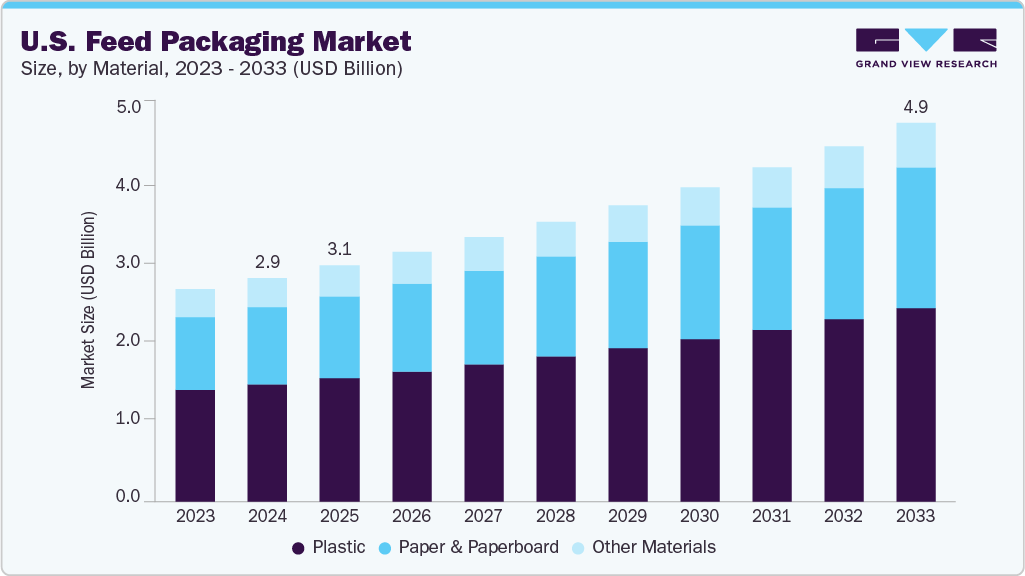 Source: Grand View Research, IR Documents, Primary Interviews, Paid DatabasesTo learn more about this report,
 Download Free Sample Report
 Rapid expansion of e-commerce channels for feed, including both small-scale pet treats and large-scale livestock feeds, has spurred demand for packaging able to endure transit. In the U.S., e‑commerce growth has driven a shift toward protective, durable packaging solutions suited to shipping logistics. Simultaneously, bulk packaging forms, such as woven polypropylene bags, HDPE sacks, and silo totes, are crucial in livestock and aquaculture feed, offering economy, automation compatibility, and moisture resistance in large-volume supply chains.
Strict regulatory compliance and environmental pressures are transforming the U.S. feed packaging industry. Authorities such as the FDA and USDA enforce strict labeling and hygiene standards, encouraging packaging designs that clearly show net content, origin, and shelf life, while also preventing tampering. Moreover, increasing consumer and institutional demand for sustainable materials is speeding up the move toward biodegradable, recyclable, and compostable packaging. Producers are adopting bioplastics, recycled paper, and mono-material flexible films to reduce waste and carbon footprint, aligning with broader food industry trends and regulatory mandates, particularly in states such as California.
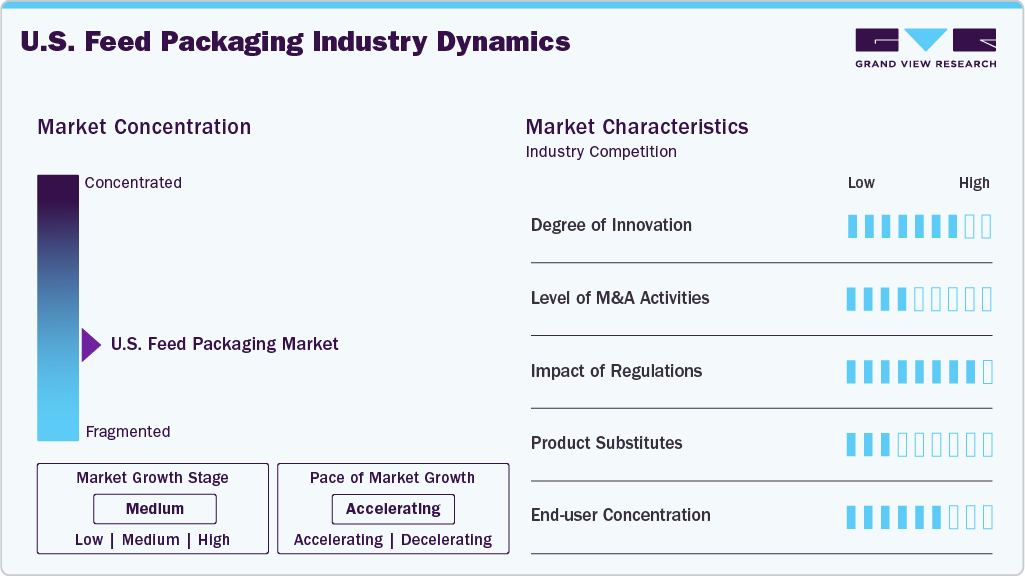
Market Concentration & Characteristics
The feed packaging market is directly influenced by trends in livestock farming, aquaculture, and pet ownership. For instance, the rise in pet humanization and premium pet foods is fueling demand for value-added, consumer-friendly packaging. Similarly, fluctuations in commodity feed prices or disease outbreaks in livestock (e.g., avian flu) impact packaging demand volumes.
 To learn more about this report, Download Free Sample Report
 Although packaging manufacturing itself requires significant investment in machinery (e.g., extruders, laminators, form-fill-seal lines), the industry is not as capital-intensive as heavy manufacturing or energy. Automation has made operations more efficient, and many contract manufacturers offer co-packing solutions, lowering barriers to entry for new brands and private labels.
Material Insights
The plastic segment recorded the largest market revenue share of over 52.0% in 2024. Plastic is the most widely used material in feed packaging due to its durability, flexibility, lightweight nature, and excellent barrier properties. It is predominantly used in the form of polyethylene (PE), polypropylene (PP), and polyethylene terephthalate (PET) in flexible and rigid formats, including bags, pouches, and containers. Plastic packaging ensures longer shelf life by protecting against moisture, contaminants, and UV rays, making it highly suitable for animal feed stored over long periods or transported across long distances.
The paper & paperboard segment is expected to grow at the fastest CAGR of 7.0% during the forecast period. Paper and paperboard are gaining popularity in U.S. feed packaging market due to their renewable and biodegradable nature. They are commonly used for small pet feed packs and bulk sacks for livestock feed, often with inner linings to improve moisture resistance. The growing consumer and regulatory push toward sustainable packaging is the primary driver for paper & paperboard feed packaging.
Packaging Type Insights
The flexible segment recorded the largest market revenue share of over 72.0% in 2024 and is expected to grow at the fastest CAGR of 6.4% during the forecast period. Flexible feed packaging includes materials such as plastic films, paper, and multi-layer laminates that can be easily shaped. Common formats include bags, pouches, and wraps. This type of packaging is widely used for dry feed, pet food, and specialty animal nutrition products due to its lightweight nature, ease of handling, and lower material usage. It offers excellent printability for branding and labeling, resealability, and is cost-effective for transportation and storage.
Rigid feed packaging includes containers such as plastic tubs, metal cans, and paperboard boxes. This packaging type offers enhanced protection and structural integrity, making it ideal for bulk feed storage, premium pet food, or liquid feed applications. It provides better barrier properties against moisture, pests, and contamination. Rigid packaging is often used in industrial-scale livestock operations and specialized animal nutrition products. Rigid packaging demand is driven by the need for product integrity and protection during transport and storage, particularly in longer supply chains and industrial-scale livestock operations.
End Use Insights
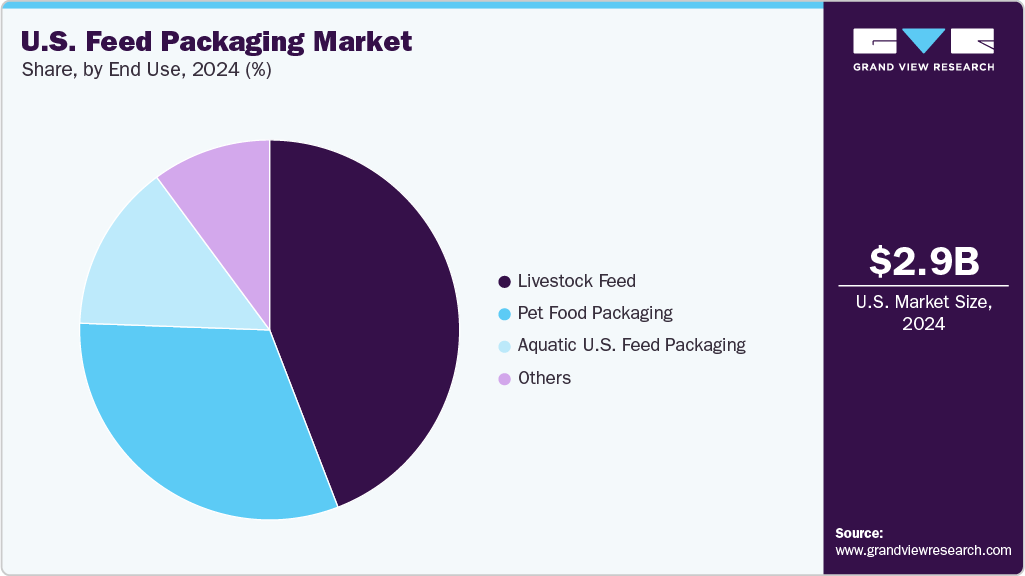
The livestock feed segment recorded the largest market share of over 44.0% in 2024. Livestock feed packaging caters to the nutritional feed requirements of farm animals such as cattle, poultry, swine, and goats. Packaging in this segment is designed for bulk transport and storage, focusing on moisture resistance, durability, and cost-efficiency. Common packaging formats include multi-wall paper bags, woven polypropylene sacks, and large flexible intermediate bulk containers (FIBCs), often tailored for large-scale farms and commercial feed producers. The growth of the segment is primarily driven by the increasing demand for animal-based products such as meat, milk, and eggs due to rising population and changing dietary preferences.
 To learn more about this report, Download Free Sample Report
 The aquatic feed packaging segment is projected to grow at the fastest CAGR of 6.7% during the forecast period. Aquatic feed packaging serves the aquaculture industry, which includes feeding fish, shrimp, and other marine life. The packaging for this segment is specialized to preserve the nutritional integrity of high-protein feeds, protect against humidity, and offer strength for marine environments. Common formats include moisture-barrier bags and HDPE woven sacks with liners. The growth of aquaculture as a sustainable source of protein is the major driver for aquatic feed packaging.
Packaging Format Insights
The bags segment recorded the largest market revenue share of over 45.0% in 2024. Bags are the most widely used packaging format for animal feed, especially bulk and dry feed products such as grains, pellets, and mash. They are typically made from polypropylene (PP), paper, or multi-layer laminates to ensure durability and moisture resistance. Bags are popular in both commercial livestock and pet feed sectors due to their cost-effectiveness and scalability. The demand for bags is driven by factors such as affordability, high-volume capacity, and ease of transportation and storage.
Pouches/Pockets segment is expected to grow at the fastest CAGR of 6.5% during the forecast period. Pouches or pockets are flexible, resealable packaging formats commonly used for premium pet food and specialty animal nutrition products. These are often designed with zippers or spouts and made from multi-layer films offering high barrier protection against oxygen, moisture, and contaminants. The growth of pouches is primarily driven by increased urban pet ownership and the demand for premium, portion-controlled packaging.
Feed Type Insights
The dry feed segment recorded the largest market revenue share of over 53.0% in 2024. Dry feed is the most common type of animal and pet feed and includes kibbles, pellets, flakes, and crumbles. It is widely used due to its longer shelf life, lower production costs, and ease of storage and transportation. Packaging for dry feed typically involves multilayer paper bags, plastic pouches, or woven polypropylene sacks to ensure protection from moisture and contamination.
The chilled & frozen segment is expected to grow at the fastest CAGR of 6.9% during the forecast period. Chilled and frozen feed includes perishable formulations such as raw meat-based diets or frozen meal packs, commonly used for high-end pet food or special livestock feeding regimens. Packaging solutions here focus on insulation, vacuum sealing, and temperature control, often using laminated films or plastic trays. The growing popularity of raw and fresh pet diets, especially among affluent urban consumers, is a key driver.
Key U.S. Feed Packaging Company Insights
The competitive environment of the feed packaging market in the U.S. is moderately fragmented, with a mix of global packaging giants and regional players vying for market share through innovation, sustainability, and cost-efficiency. Key companies such as Amcor plc, Mondi, Sonoco Products Company, Graphic Packaging International, LLC, and ProAmpac dominate the market by offering a wide range of flexible and rigid packaging solutions tailored to different feed types, including dry, moist, and medicated feed. Additionally, strategic partnerships with feed producers and distributors, as well as the growing emphasis on automation and customization, further intensify the market rivalry.
- In December 2024, Berry Global Inc. and VOID Technologies teamed up to launch a high-performance, sustainable polyethylene film for pet food packaging. The new film offers enhanced strength and recyclability, using VOID’s VO+ technology to reduce plastic use and improve opacity. This collaboration supports eco-friendly packaging solutions that meet food safety standards and help reduce environmental impact.
Key U.S. Feed Packaging Companies:
- Amcor plc
- Mondi
- Huhtamaki
- Berry Global Inc.
- UFlex Limited
- ProAmpac
- Sealed Air
- Tetra Pak
- Graphic Packaging International, LLC
- Sonoco Products Company
U.S. Feed Packaging Market Report Scope
Report Attribute
Details
Market size value in 2025
USD 3.11 billion
Revenue forecast in 2033
USD 4.98 billion
Growth rate
CAGR of 6.1% from 2025 to 2033
Historical data
2021 - 2024
Forecast period
2025 - 2033
Quantitative units
Revenue in USD million/billion, and CAGR from 2025 to 2033
Report coverage
Revenue forecast, competitive landscape, growth factors, and trends
Segments covered
Material, packaging type, end use, packaging format, feed type
Key companies profiled
Amcor plc; Mondi; Huhtamaki; Berry Global Inc.; UFlex Limited; ProAmpac; Sealed Air; Tetra Pak; Graphic Packaging International, LLC; Sonoco Products Company
Customization scope
Free report customization (equivalent up to 8 analyst’s working days) with purchase. Addition or alteration to country, regional, and segment scope.
Pricing and purchase options
Avail customized purchase options to meet your exact research needs. Explore purchase options
U.S. Feed Packaging Market Report Segmentation
This report forecasts revenue growth at a country level and provides an analysis of the latest industry trends in each of the sub-segments from 2021 to 2033. For this study, Grand View Research has segmented the U.S. feed packaging market report based on material, packaging type, end use, packaging format, and feed type:
-
Material Outlook (Revenue, USD Million, 2021 - 2033)
-
Plastic
-
Paper & Paperboard
-
Others
-
-
Packaging Type Outlook (Revenue, USD Million, 2021 - 2033)
-
Flexible
-
Rigid
-
-
End Use Outlook (Revenue, USD Million, 2021 - 2033)
-
Livestock Feed
-
Pet Food Packaging
-
Aquatic U.S. Feed Packaging
-
Others
-
-
Packaging Format Outlook (Revenue, USD Million, 2021 - 2033)
-
Bags
-
Pouches/Pockets
-
Boxes/Cartons
-
Jars/Containers
-
Others
-
-
Feed Type Outlook (Revenue, USD Million, 2021 - 2033)
-
Dry Feed
-
Pet Treats
-
Chilled & Frozen
-
Wet Feed
-
Others
-
Frequently Asked Questions About This Report
The U.S. feed packaging market was estimated at around USD 2.95 billion in the year 2024 and is expected to reach around USD 3.11 billion in 2025.
The U.S. feed packaging market is expected to grow at a compound annual growth rate of 6.1% from 2025 to 2030 to reach around USD 4.98 billion by 2033.
The livestock feed segment emerged as the dominating end use segment in the U.S. feed packaging market due to the high demand for meat, dairy, and poultry products, driving large-scale livestock farming.
The key players in the U.S. feed packaging market include Amcor plc; Mondi; Huhtamaki; Berry Global Inc.; UFlex Limited; ProAmpac; Sealed Air; Tetra Pak; Graphic Packaging International, LLC; and Sonoco Products Company
The growing demand for high-quality and safe animal nutrition, driven by the large-scale livestock and pet food industries, is fueling the feed packaging market in the U.S.
About the Author(s)
Plastics, Polymers & Resins Research Team
Bulk Chemicals · Plastics, Polymers & ResinsThis report was authored by the plastics, polymers & resins research team at Grand View Research - comprising two research analysts, one senior research analyst, and one industry expert - with specialized expertise in the plastics, polymers & resins segment of the bulk chemicals industry. All findings are based on proprietary bulk chemicals databases, executive interviews, and regulatory analysis, subject to internal peer review prior to publication.
Last Updated:
Speak to Analyst

Customize this report to your needs - add regions, segments, or data points, with 20% free customization.
Or view our licence options:


ISO 9001:2015 & 27001:2022 Certified
We are GDPR and CCPA compliant! Your transaction & personal information is safe and secure. For more details, please read our privacy policy.


