
- Home
- »
- Consumer F&B
- »
-
U.S. Frozen Fruits & Vegetables Market Size Report, 2033GVR Report cover
![U.S. Frozen Fruits & Vegetables Market Size, Share & Trend Report]()
U.S. Frozen Fruits & Vegetables Market (2026 - 2033) Size, Share & Trend Analysis Report By Product (Fruits, Vegetables), By Distribution Channel (Traditional Grocery Stores, Hypermarkets & Supermarkets, Club Stores, Discount Stores, Online), By Region, And Segment Forecasts
- Report ID: GVR-4-68040-877-5
- Number of Report Pages: 109
- Format: PDF
- Historical Range: 2021 – 2025
- Forecast Period: 2026 - 2033
- Industry: Consumer Goods
- Report Summary
- Table of Contents
- Segmentation
- Methodology
- Download FREE Sample
-
 Download Sample Report
U.S. Frozen Fruits & Vegetables Market Summary
The U.S. frozen fruits & vegetables market size was estimated at USD 9.00 billion in 2025 and is expected to reach USD 15.14 billion by 2033, growing at a CAGR of 6.7% from 2026 to 2033. The market’s growth is primarily driven by rising consumer health consciousness and increasing spending on nutritious snacking options.
Key Market Trends & Insights
- The Northeast region accounted for the largest revenue share of 15.95% in 2025.
- The South Central region is growing at the fastest CAGR of 9.3% during the forecast period.
- Based on product, the vegetables segment held the largest revenue market share of 79.03% in 2025.
- Based on the distribution channel, the online channel segment is expected to grow at a CAGR of 10.9% during the forecast period of 2026 to 2033.
Market Size & Forecast
- 2025 Market Size: USD 9.00 Billion
- 2033 Projected Market Size: USD 15.14 Billion
- CAGR (2026-2033): 6.7%
- Northeast U.S.: Largest market in 2025
- South Central U.S.: Fastest growing market
Consumers are actively seeking fresh and exotic fruits and vegetables as part of a healthier diet, reflecting a greater willingness to invest both time and money in overall well-being. Millennials remain the main consumers of fruits and vegetables in the U.S. due to their increased digital presence. Online retailers are adopting strategies such as offering large discounts and cashback, which are expected to attract this demographic over the forecast period. With more frequent snacking habits among millennials and their concerns about the costs, online stores have become an attractive alternative.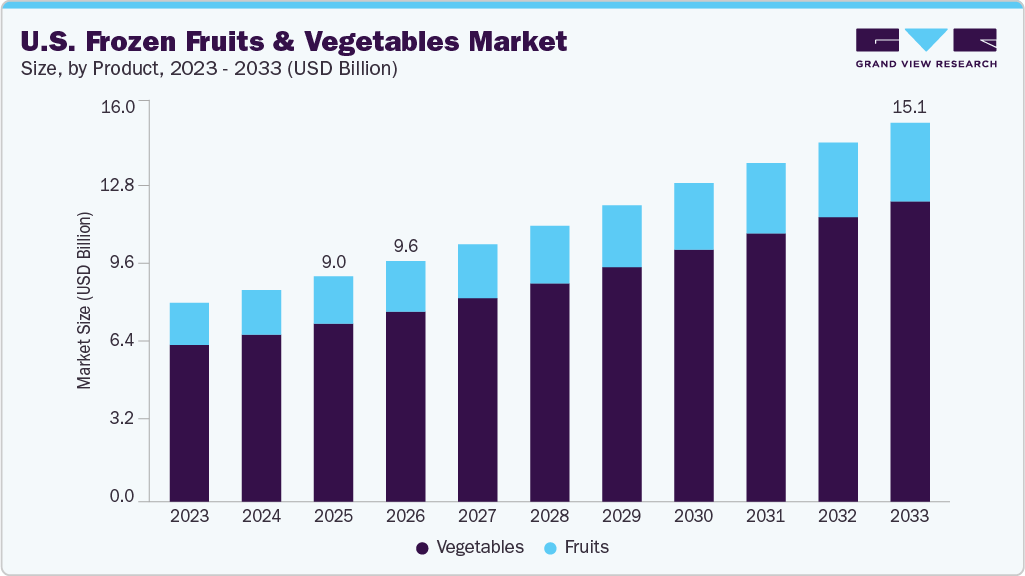
The growing popularity of online grocery shopping & delivery services is a key driver of product purchases. Meal kit delivery is another addition to grocery delivery that is gaining popularity among health-conscious consumers, as it offers many combinations of fruits & vegetables tailored the each consumer's preferences. These meal kits are popular among various groups, including millennials, Generation X, and people who do not have time to cook extravagant meals or are single. The U.S. fruit and vegetable business is driven by factors such as rising health awareness, higher disposable incomes, and growing demand for fresh, locally sourced produce.
Amazon accounts for a major portion of all online sales. However, it has experienced a decline in sales because of brick-and-mortar retailers like Target and Walmart. However, after buying ‘Whole Foods’, the company has seen an increase in its overall sales. Target has improved its online presence; sales are increasing because of the acquisition of the e-commerce service Shift, which provides same-day grocery deliveries to consumers. Similarly, Walmart has taken certain steps to keep up with the rising online buying trends. Its online inventory has increased from 10 million items to 67 million items, demonstrating a significant increase in sales.
Fruits are promoted as a healthy alternative to sweet snacks like cookies and cakes because snacking is a frequent habit among most Americans across age groups. It is also one of the main contributors to obesity in the general population, coupled with a sedentary lifestyle. In addition, as a means of maintaining their health, consumers who want to boost their nutrient consumption focus on "superfoods", which boosts the market for fruits and vegetables because items like avocados have high vitamin and fiber content. Berries, citrus fruits, apples, and pears are fruits containing high flavonoid content that aid in the improvement of heart health and cognitive function. Their hesperidin content in citrus fruits has potential anti-inflammatory properties.
Vegetarians & vegans primarily rely on the consumption of fruits and vegetables to meet their nutritional requirements. Moreover, non-vegetarians who are more inclined toward meat consumption can be encouraged to eat more vegetables and less meat overall. This strategy would help increase the consumption of fruits and vegetables, as this diet can serve the same amount of nutrients as meat. The USDA assists farmers through loan programs, disaster relief, and technical assistance. They also offer nutrition education programs and resources for consumers. Consumer demand for specialty crops is increasing due to their perceived health benefits, freshness, and unique flavors.
Vegan trends are expected to provide several growth opportunities to the U.S. fruits & vegetables industry. However, plant-based products are gaining traction in the market, and competitors are making efforts to meet the demand of customers who now prefer plant-based food items. Veganism could be the biggest opportunity for players in the market. Moreover, the USDA Dietary Guidelines recommend that adults consume 25-35 grams of dietary fiber per day. These guidelines also highlight the importance of consuming a variety of fruits and vegetables to ensure adequate fiber intake.
According to an article in Modern Restaurant Management, the popularity of plant-based foods is on the rise. This is mainly due to the increase in the vegan population, which totals around 10% in the U.S. Furthermore, due to climate change and the aftermath of the COVID-19 pandemic, the popularity of plant-based foods is expected to rise. Additionally, the published report also states that the total sales of around 17 restaurants that switched to a plant-based menu increased from 10% to 1,000%. This indicates a significant increase in demand for fresh fruits & vegetables in the U.S.
Consumer Insights for the U.S. Frozen Fruits & Vegetables Market
With the rise in obesity rates in the U.S. and growing awareness of the benefits of healthy diets, consumers have been steadily shifting toward fresh foods and healthier options over the past ten years. Younger demographics tend to be drawn to trendy diets like raw and paleo diets, which emphasize the health benefits of fresh produce. Furthermore, older adults tend to have more cautious eating habits due to health issues. The baby boomer demographic of buyers of fresh produce is equally significant. According to the International Food Information Council, around 52% of Americans reported following a diet or eating pattern. Fruits and vegetables are the most popular foods for managing weight loss, energy levels, digestive health, and heart health. Dried fruits, pumpkin seeds, spinach, kale, swiss chard, and collard greens are a few iron-rich fruits and vegetables.
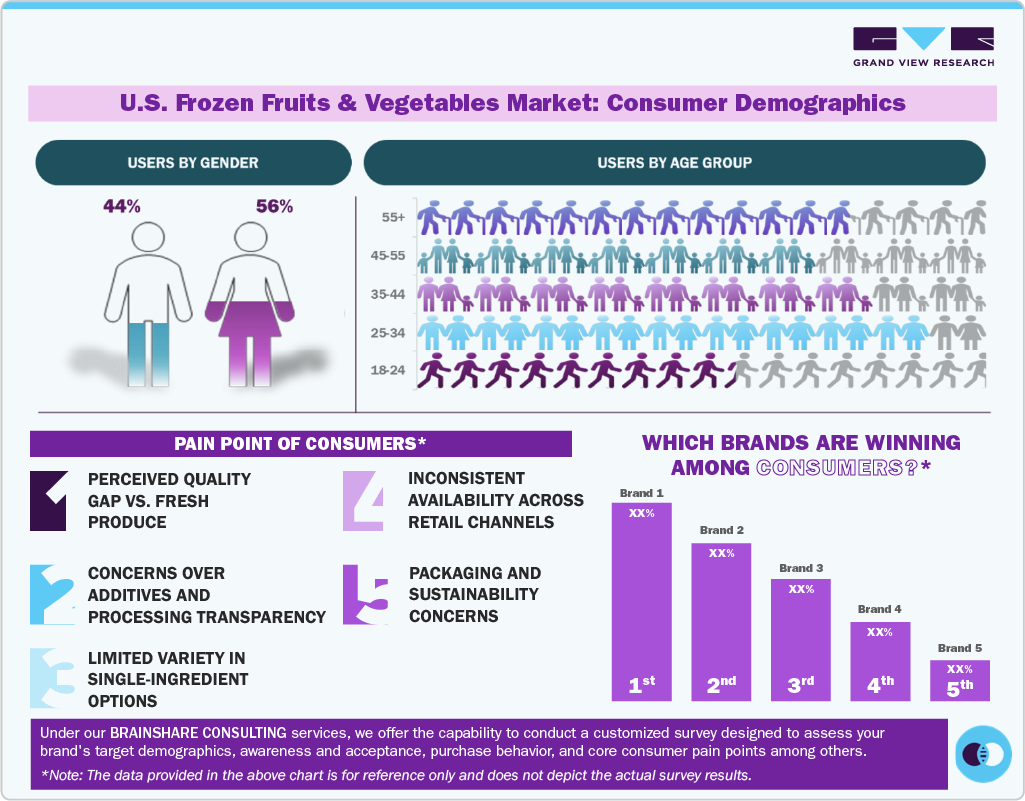
Plant-based diets have become increasingly popular in the U.S. over the past few years, which drives the demand for fruits and vegetables. In the U.S., millions of individuals currently follow a plant-based diet. 9.7 million Americans, including one million vegans, follow a vegetarian diet, according to a Vegetarian Times study. Moreover, according to an article by Healthshots, a majority of the people who become vegetarians do so for good health. Apart from this, weight management, environmental concerns, and animal welfare were the other main motivators. California, Florida, Washington, Oregon, Arizona, and Georgia are the leading fruit and vegetable-producing states in the U.S. California leads the nation in fruit and vegetable production, accounting for nearly 70% of U.S. production.
Product Insights
The frozen vegetables market accounted for a share of 79.03% of the U.S. revenue in 2025, driven by their deep integration into everyday meal preparation across U.S. households and foodservice channels. For instance, popular varieties such as mixed vegetables, peas, broccoli, corn, and spinach are widely used in everyday cooking because they reduce prep time and minimize food waste. Consistent demand has been reinforced by their role as functional cooking inputs for home-style meals, institutional catering, and quick-service restaurants, where portion control and year-round availability are prioritized. Advances in individual quick freezing (IQF) technology have improved texture retention and cooking performance, strengthening consumer confidence in frozen vegetables as a practical substitute for fresh produce. In addition, alignment with government-led dietary guidance promoting vegetable intake and reduced food waste has further sustained category penetration at scale.
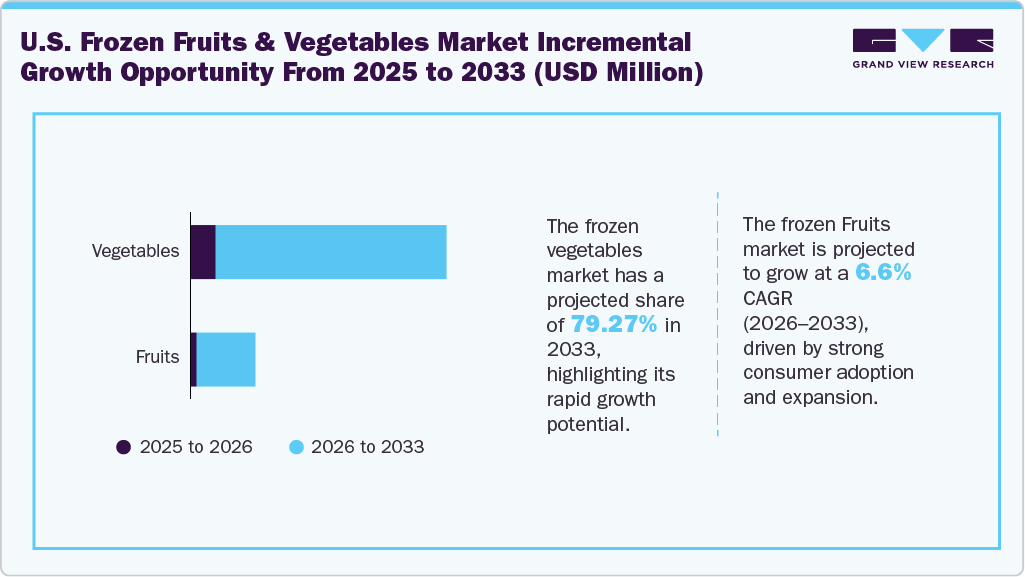
The frozen fruits market is projected to grow at a CAGR of 6.6% from 2026 to 2033. The accelerated growth of frozen fruits is driven by their increasing adoption in smoothies, functional beverages, breakfast bowls, and home baking, particularly among younger, health-focused consumers. Consumer preference for frozen fruits, particularly berries, tropical fruit blends, and ready-to-use smoothie mixes, is expanding as part of a broader shift toward convenient, health-oriented food choices. The demand has been strengthened by rising interest in plant-forward diets, natural sweetener alternatives, and clean-label snacking, where frozen fruits serve as versatile ingredients without added sugars. Expanding usage across foodservice applications such as cafés, juice bars, and wellness-focused restaurants has further supported volume growth. At the same time, innovation in organic and specialty fruit offerings has widened appeal beyond traditional household consumption.
Distribution Channel Insights
Sales of frozen fruits & vegetables through traditional grocery stores accounted for the revenue market share of 37.33% in 2025. Channel leadership of traditional grocery stores has been maintained due to their role as the primary destination for routine food purchases and freezer-stocking trips. Frozen fruits and vegetables have benefited from broad shelf assortments, private-label penetration, and frequent promotional activity, which collectively enhance price accessibility and basket inclusion. Strong in-store freezer infrastructure and predictable replenishment cycles have supported consistent product availability. At the same time, consumer trust in established grocery banners has reinforced repeat purchasing behavior for staple frozen produce categories.
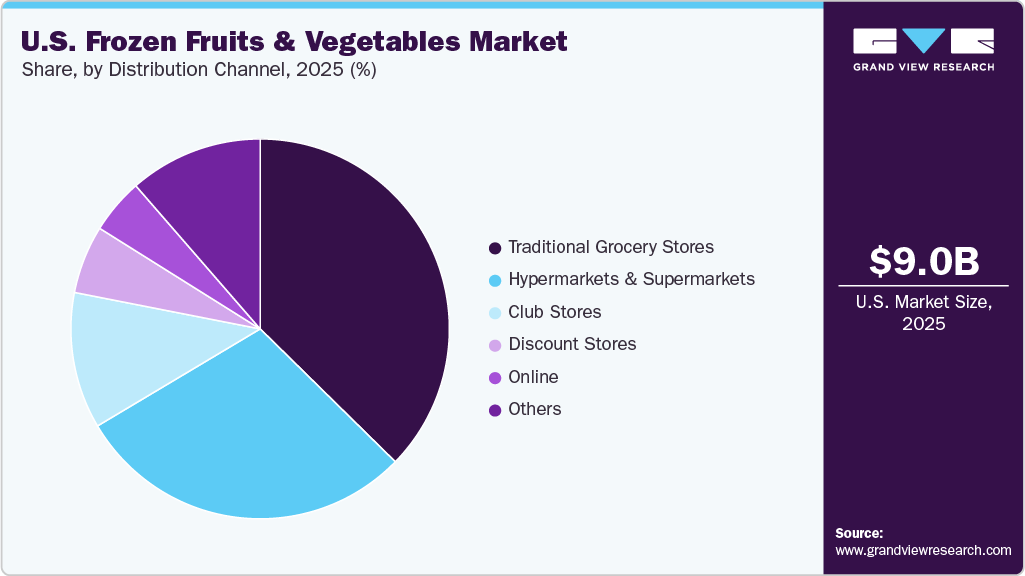
Sales of frozen fruits & vegetables through online channels are expected to grow at a CAGR of 10.9% over the forecast period. High projected growth within the online channel has been enabled by improvements in cold-chain logistics, insulated packaging, and last-mile delivery reliability, which have reduced historical barriers to frozen food e-commerce. Consumer preference for time efficiency, bulk ordering, and subscription-based replenishment has increased online engagement, particularly among urban households and digitally native consumers. The online environment has also facilitated greater visibility for organic, specialty, and niche frozen produce products that may face shelf-space limitations in physical stores, supporting faster adoption and higher growth momentum over the forecast period.
Regional Insights
Northeast U.S. Frozen Fruits & Vegetables Market Trends
The Northeast U.S. frozen fruits & vegetables industry accounted for a share of 15.95% in 2025. The Northeast U.S. frozen fruits and vegetables market benefits from high urban density and year-round nutritional demand, especially in metropolitan corridors such as New York, Boston, and Philadelphia, where consumers face limited time for fresh preparation and frequent seasonal fluctuations in fresh produce availability. In this region, frozen fruits and vegetables are frequently convenience staples for busy households, offering a reliable, nutrient-rich alternative to fresh produce that may be costly or inconsistent during winter months.
For instance, 65% of North American households regularly purchase frozen fruits and vegetables, reflecting strong baseline demand for convenient, nutritious options that fit packed lifestyles and diverse cooking routines. This trend is amplified in the Northeast, where extended winters limit the availability of fresh produce, and frozen options help maintain consistent dietary patterns year-round. Additionally, consumer awareness of the nutritional retention benefits of freezing, which can preserve up to 95% of vitamins and minerals, drives preference for frozen produce over fresh produce that may degrade during transport or storage.
South Central U.S. Frozen Fruits & Vegetables Market Trends
The South Central U.S. frozen fruits & vegetables industry is projected to grow at a CAGR of 9.3% from 2026 to 2033. Rapid population growth, hotter climates, and evolving eating habits in states such as Texas, Louisiana, and Oklahoma are driving growth in the South Central U.S. frozen fruits and vegetables market. Warmer temperatures and busy lifestyles increase the desire for quick-to-prepare, shelf-stable food options, positioning frozen produce as a practical choice for everyday meals and side dishes. The region’s strong preference for family-oriented cooking also fuels demand for versatile frozen vegetables and fruits that reduce prep time and food waste while supporting balanced diets. Broader trends in the U.S. market, where convenience drives more than 55% of households to incorporate frozen produce into daily meals, illustrate how frozen fruits and vegetables are being adopted as mainstream ingredients rather than niche alternatives. Technological advancements in freezing and packaging have further enhanced product quality and reliability, encouraging broader inclusion of frozen produce in South Central consumer shopping baskets.
Key U.S. Frozen Fruits & Vegetables Company Insights
In the U.S. market for frozen fruits & vegetables, companies are focusing on strategic acquisitions to expand their presence overseas and reinforce their position in the market. Over the next few years, internationally renowned companies are likely to acquire small- and medium-sized companies operating in the industry to facilitate regional expansion. Some large players are integrating their operations across the supply chain, potentially increasing efficiencies but also raising concerns about market dominance. The adoption of technologies such as AI-powered irrigation systems, vertical farming, and robotics is gradually impacting production and distribution processes, offering avenues for future innovation.
Stringent regulations around food safety and pesticide use can be challenging for smaller farms, but they ensure consumer protection and drive innovation in safer production methods. Global trade disruptions and transportation challenges can affect the availability and affordability of imported fruits and vegetables, impacting market stability and consumer choices. Furthermore, outbreaks of foodborne illnesses linked to fruits and vegetables can damage consumer confidence and impact market demand, requiring robust safety measures and improved traceability throughout the supply chain.
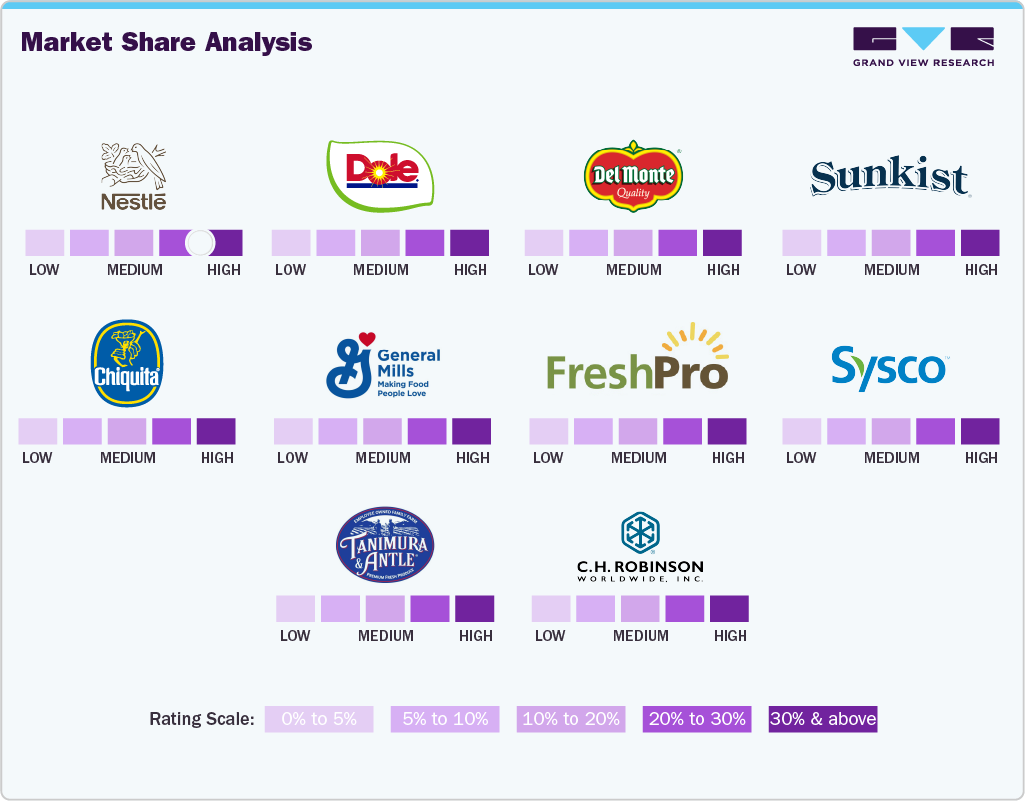
Key U.S. Frozen Fruits & Vegetables Companies:
- Nestlé
- Dole Food Company, Inc.
- Fresh Del Monte Produce, Inc.
- Sunkist Growers, Inc.
- Chiquita Brands International, Inc.
- General Mills Inc.
- Fresh Pro
- Sysco Corporation
- Tanimura & Antle Fresh Foods, Inc.
- C.H. Robinson Worldwide, Inc.
Recent Developments
-
In June 2025, Conagra Brands expanded its frozen food portfolio by launching over 50 new frozen offerings, including vegetable side dishes with enhanced formulations such as Birds Eye Ultimate Cheesy and Buttery Vegetables and premium vegetable side dishes under the Alexia brand. These products aim to provide convenient, flavorful, and better-for-you frozen vegetable options tailored to busy consumers.
-
In March 2025, WP Produce launched Desbry Frozen Hawaiian Plantains, a new frozen fruit snack product line. These frozen plantains are processed at peak ripeness and packaged in larger bags for consumer convenience, expanding non-traditional frozen fruit offerings in the U.S. market.
-
In January 2025,AJC International launched its Mity Freh Frozen Fruit lineup in the U.S. market with seven varieties, including raspberry, blueberry, blackberry, triple berry, mixed berry, strawberry, and a tropical fruit blend. This expansion reflects consumer demand for nutritious frozen fruit basics suitable for smoothies, baking, and snacking.
U.S. Frozen Fruits & Vegetables Market Report Scope
Report Attribute
Details
Market value size in 2026
USD 9.61 billion
Revenue forecast in 2033
USD 15.14 billion
Growth rate
CAGR of 6.7% from 2026 to 2033
Actuals
2021 - 2025
Forecast period
2026 - 2033
Quantitative (Revenue) units
Revenue in USD million/billion and CAGR from 2026 to 2033
Report coverage
Revenue forecast, company ranking, competitive landscape, growth factors, and trends
Segments covered
Product, distribution channel, region
Regional Scope
Southeast; Northeast; Great Lakes; Mid-South; South Central; West; California; Plains
Country scope
U.S.
Key companies profiled
Nestlé; Dole Food Company, Inc.; Fresh Del Monte Produce, Inc.; Sunkist Growers, Inc.; Chiquita Brands International, Inc.; General Mills Inc.; Fresh Pro; Sysco Corporation; Tanimura & Antle Fresh Foods, Inc.; C.H. Robinson Worldwide, Inc.
Customization scope
Free report customization (equivalent up to 8 analysts’ working days) with purchase. Addition or alteration to country, regional & segment scope.
Pricing and purchase options
Avail customized purchase options to meet your exact research needs. Explore purchase options
U.S. Frozen Fruits & Vegetables Market Report Segmentation
This report forecasts revenue growth at the regional and country levels and provides an analysis of the latest industry trends and opportunities in each of the sub-segments from 2021 to 2033. For this study, Grand View Research has segmented the U.S. frozen fruits & vegetables market report based on product, distribution channel, and region:
-
Product Outlook (Revenue, USD Million, 2021 - 2033)
-
Fruits
-
Strawberries
-
Raspberries
-
Blueberries
-
Blackberries
-
Peaches
-
Cherries
-
Apricots
-
Apples
-
Others
-
-
Vegetables
-
Mixed Vegetables
-
Broccoli
-
Beans
-
Corn
-
Peas
-
Prepared Vegetables
-
Corn on the Cob
-
Spinach
-
Onion Rings
-
Zucchini
-
Carrots
-
Onions
-
-
-
Distribution Channel Outlook (Revenue, USD Million, 2021 - 2033)
-
Traditional Grocery Stores
-
Hypermarkets & Supermarkets
-
Club Stores
-
Discount Stores
-
Online
-
Others
-
-
Regional Outlook (Revenue, USD Million, 2021 - 2033)
-
Southeast
-
Northeast
-
Great Lakes
-
Mid-South
-
South Central
-
West
-
California
-
Plains
-
Frequently Asked Questions About This Report
b. The U.S. frozen fruits & vegetables market was valued at USD 9.00 billion in 2025 and is expected to reach USD 9.61 billion by 2026.
b. The U.S. frozen fruits & vegetables market is expected to reach USD 15.14 billion by 2033, growing at a compound annual growth rate (CAGR) of 6.7% from 2026 to 2033.
b. The frozen vegetables segment accounted for a share of 79.03% of the U.S. revenue in 2025, driven by their deep integration into everyday meal preparation across U.S. households and foodservice channels.
b. Nestlé; Dole Food Company, Inc.; Fresh Del Monte Produce, Inc.; Sunkist Growers, Inc.; Chiquita Brands International, Inc.; General Mills Inc.; Fresh Pro; Sysco Corporation; Tanimura & Antle Fresh Foods, Inc.; C.H. Robinson Worldwide, Inc.
b. The growth of this market can be attributed to increasing consumer health-consciousness and spending on healthy snacking options. Customers are on the lookout for fresh & exotic fruits and vegetables for a healthy diet as they invest more time and money in their health.


Share this report with your colleague or friend.
Need a Tailored Report?
Customize this report to your needs — add regions, segments, or data points, with 20% free customization.


ISO 9001:2015 & 27001:2022 Certified
We are GDPR and CCPA compliant! Your transaction & personal information is safe and secure. For more details, please read our privacy policy.
Trusted market insights - try a free sample
See how our reports are structured and why industry leaders rely on Grand View Research. Get a free sample or ask us to tailor this report to your needs.













