
- Home
- »
- Pharmaceuticals
- »
-
U.S. Preclinical CRO Market Size And Share Report, 2033GVR Report cover

U.S. Preclinical CRO Market (2026 - 2033)
Size, Share & Trends Analysis Report By Service (Bioanalysis & DMPK studies, Toxicology Testing, Compound Management), By Development Stage, By Indication, By Model Type, By End-use, And Segment Forecasts
Market Size, 2025
$1.7BMarket Estimate, 2026
$1.8BMarket Forecast, 2033
$3.1BCAGR, 2026–2033
7.7%U.S. Preclinical CRO Market Summary
The U.S. preclinical CRO market size was valued at USD 1.7 billion in 2025 and is projected to grow from USD 1.8 billion in 2026 to USD 3.1 billion by 2033, at a CAGR of 7.7% from 2026 to 2033. The market is experiencing steady growth, driven by factors including the complexities of drug discovery, increased demand for advanced therapies, and greater outsourcing by pharmaceutical and biotechnology firms. Preclinical CROs are crucial to supporting early-stage drug development, offering services such as pharmacology, toxicology, bioanalysis, DMPK studies, safety assessment, efficacy testing, disease modeling, and IND-enabling studies.
Key Market Trends & Insights
- Based on development stage, the preclinical optimization, efficacy & PK/PD segment held the largest market share in 2025.
- Based on service, the toxicology testing segment held the largest market share in 2025.
- Based on indication, the oncology segment held the largest market share in 2025.
- Based on model type, the in vivo segment held the largest market share in 2025.
- Based on end use, the pharmaceutical and biopharmaceutical companies segment held the highest market share in 2025.
Market Size & Forecast
- Market size in 2025: USD 1.7 Billion
- Estimated market size in 2026: USD 1.8 Billion
- Projected market size by 2035: USD 3.1 Billion
- CAGR (2026-2033): 7.7%
Prism AI by Grand View Research Free to tryAsk a question about the U.S. preclinical CRO marketTry asking✓Every figure cited from GVR research Prefer the report? Download free sample →
Moreover, the U.S. preclinical CRO industry benefits from a robust biopharmaceutical sector, significant R&D investments, advanced laboratory infrastructure, and a well-defined regulatory environment. Besides, one of the key drivers of market growth is the increased focus on personalized medicine and targeted therapies. These approaches target specific patient populations, disease subtypes, or genetic profiles, necessitating thorough preclinical evaluations. Sponsors are increasingly seeking sophisticated in vitro and in vivo models to evaluate mechanisms of action, efficacy, safety, pharmacokinetics, and toxicity prior to clinical trials. This trend is fueling the requirement for specialized CRO expertise, particularly in oncology, rare diseases, neurological disorders, autoimmune diseases, and genetic disorders.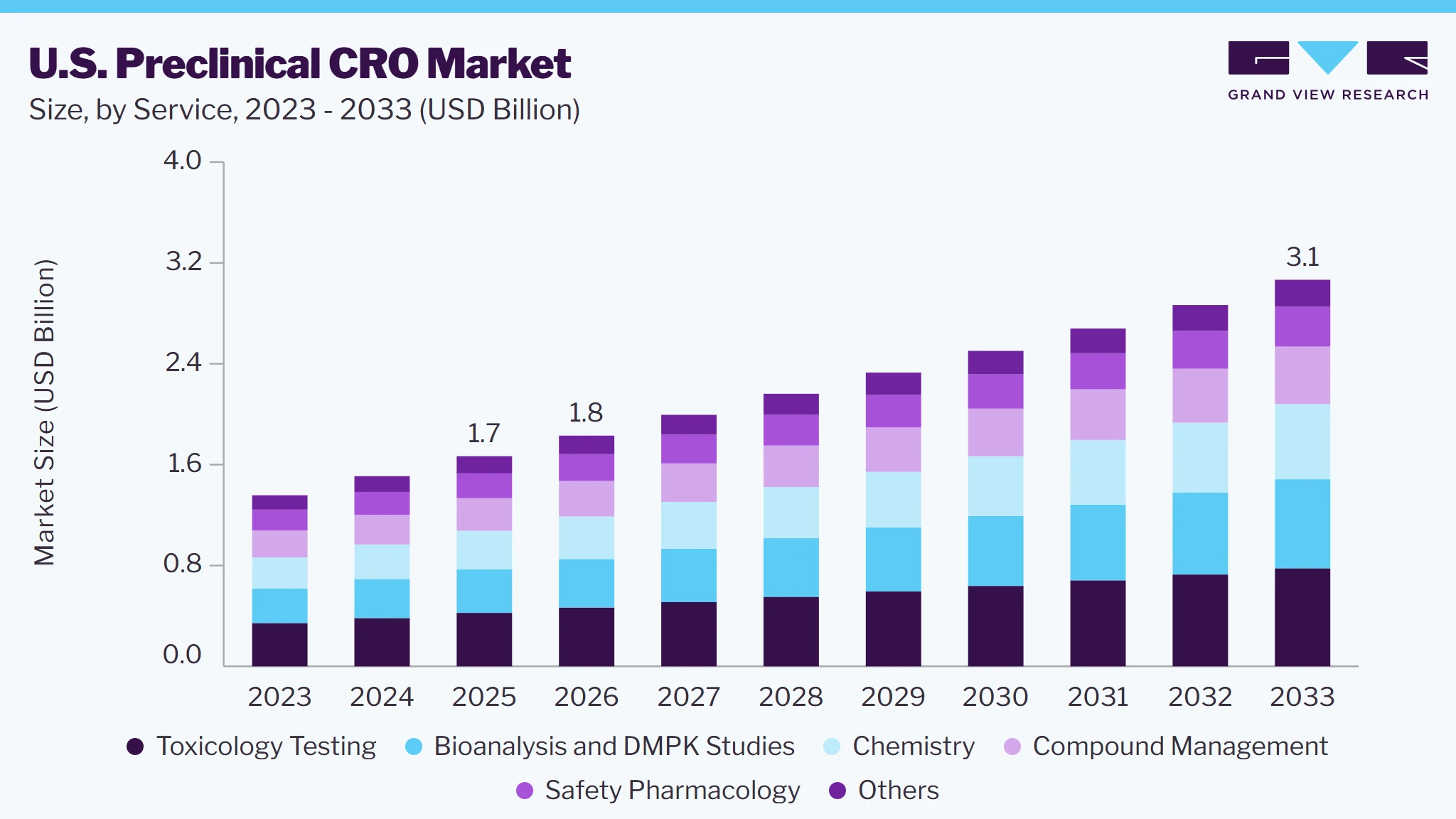 Source: Grand View Research, IR Documents, Primary Interviews, Paid DatabasesTo learn more about this report,
 Download Free Sample Report
In addition, the expanding pipeline of biologics, cell and gene therapies, radiopharmaceuticals, and other innovative modalities is further supporting the U.S. preclinical CRO market. These advanced therapies typically require more intricate testing than conventional small molecules, including biodistribution studies, immunogenicity assessment, vector safety evaluations, dose optimization, and long-term toxicology studies. Many small to mid-sized biotech firms in the U.S. lack the comprehensive in-house infrastructure for such studies, making outsourcing to CROs a viable and economical solution.
Technology adoption is one of the significant contributors to growth as U.S. preclinical CROs are increasingly employing advanced techniques, such as 3D cell culture models, organoids, patient-derived xenograft models, AI-driven data analytics, imaging platforms, high-throughput screening, and translational disease models. These innovations enhance the clinical relevance of preclinical data and enable sponsors to make more informed decisions before human trials. For instance, the use of 3D tumor models and sophisticated oncology platforms is enhancing the early assessment of cancer therapies. The market is further fueled by the rising prevalence of chronic diseases, including cancer, Alzheimer's disease, metabolic disorders, and cardiovascular conditions. As drug developers funnel more resources into therapies for these illnesses, the demand for preclinical testing continues to drive the market growth.
Furthermore, stringent U.S. FDA regulations necessitating safety, toxicity, and efficacy data prior to IND submission compel sponsors to collaborate with experienced CROs familiar with regulatory requirements. Thus, the U.S. preclinical CRO market is expected to witness new growth opportunities driven by robust drug development activities, rising outsourcing trends, an expanding array of advanced therapy pipelines, and an increasing need for specialized preclinical models.
Market Dynamics
The U.S. preclinical CRO market is experiencing steady growth, driven by the increasing demand for personalized medicine, advanced therapeutics, and complex drug discovery programs. Personalized medicine and advanced therapies often involve highly specialized treatments tailored to individual patients, disease subtypes, or specific genetic profiles. This complexity requires extensive preclinical evaluation to assess mechanisms of action, safety profiles, pharmacokinetics, toxicity, and efficacy before clinical development. As a result, pharmaceutical and biotechnology companies are increasingly relying on preclinical CROs to conduct specialized studies efficiently, reduce development timelines, and access advanced scientific capabilities.
The growing burden of cancer, neurodegenerative diseases, genetic disorders, and other chronic conditions in the U.S. is further supporting advanced preclinical research services. As the traditional one-size-fits-all treatment model gradually shifts toward targeted and patient-specific therapies, sponsors are placing greater emphasis on robust preclinical validation, translational models, and biomarker-driven research. This has increased the need for sophisticated in vitro, in vivo, and ex vivo models capable of generating clinically relevant data.
Technology adoption is also playing a critical role in shaping the U.S. preclinical CRO landscape. CROs are increasingly integrating advanced tools such as 3D tumor models, organoids, AI-enabled data analytics, high-throughput screening, and translational disease models to improve study accuracy and support better decision-making during early-stage drug development. These capabilities allow CROs to remain competitive while offering clients a broader range of integrated discovery and safety assessment solutions.
Strategic collaborations among key industry participants are further strengthening market growth. For instance, in September 2025, CPDC launched Cadena Research, a specialized preclinical CRO focused on early-stage radiopharmaceutical drug development. The new organization addresses the growing demand in the radiopharmaceutical sector by offering integrated services, including in vitro and in vivo studies, screening, lead optimization, toxicology, dosimetry, imaging, radiochemistry, and GLP capabilities for IND-enabling studies. It provides strategic advisory support and dedicated project management to ensure efficient execution and timely delivery.
In addition, the expansion of advanced therapies, including cell and gene therapies, is creating significant opportunities for preclinical CROs in the U.S. The increasing prevalence of Alzheimer’s disease, neurodegenerative disorders, and genetic diseases, along with rising investment in gene therapy research, is accelerating specialized preclinical testing. The approval of innovative therapies has also encouraged further R&D activity. Such factors are expected to drive outsourcing of preclinical studies as sponsors seek scientific expertise, regulatory readiness, and advanced testing platforms to support next-generation therapeutics.
Growth of the preclinical CRO market is restrained due to issues in the management and monitoring of trials & inability to exert complete control over trials. Sometimes, CROs are unable to deliver the efficient results expected by life sciences companies because they try to maximize profits by cutting costs. This may result in several challenges, such as trial failures and compliance issues.
Furthermore, there is a lack of standardization as not all CROs comply with international regulatory requirements such as Good Laboratory Practice (GLP) standards, which may lead to several quality issues. Therefore, biopharmaceutical and medical device companies generally outsource only lower-end functions of preclinical trials to CROs, whereas high-end tests, such as genotoxicity analysis, are generally performed in-house. However, improvements in the quality standards adopted by CROs are expected to help overcome the standardization challenge, as outsourced vendors are currently working to comply with international standards set by regulatory authorities such as the U.S. FDA. Such actions by CROs are expected to improve the standardization of preclinical activities in the long term.
One of the major opportunities in the U.S. preclinical CRO market lies in the growing demand for specialized preclinical support for advanced therapies, including cell and gene therapies, biologics, radiopharmaceuticals, RNA-based therapeutics, and targeted oncology treatments. These therapies require more complex preclinical evaluation than conventional small-molecule drugs, including biodistribution studies, immunogenicity testing, vector safety assessment, dose optimization, toxicology, imaging, and translational disease modeling. Many small and mid-sized biotechnology companies in the U.S. are actively developing advanced therapies, but often lack in-house infrastructure, specialized scientific expertise, and GLP-compliant facilities to conduct these studies independently. This creates a strong outsourcing opportunity for preclinical CROs with advanced testing platforms, regulatory knowledge, and therapeutic-area expertise. CROs that can offer integrated services from early screening and efficacy testing to IND-enabling toxicology and regulatory-ready data packages are well-positioned to become preferred development partners. The opportunity is further strengthened by increasing investment in personalized medicine, rare disease research, oncology pipelines, and genetic disorders. As sponsors aim to reduce development timelines and improve clinical success rates, demand for reliable, predictive, and specialized preclinical models is expected to increase across the U.S. market.
Market Concentration & Characteristics
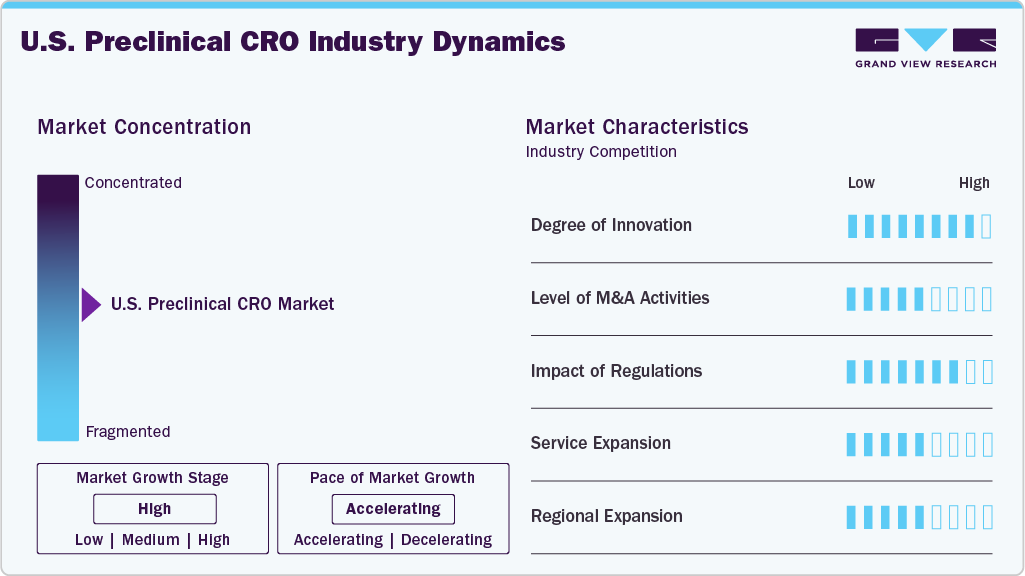
The U.S. preclinical CRO market is in the medium growth stage, with its pace of growth accelerating. The market is characterized by the degree of innovation, level of M&A activities, regulatory impact, service expansion, and regional expansion.
Innovation in the market is increasing with the adoption of AI-enabled screening, 3D cell culture models, organoids, patient-derived xenograft models, advanced imaging, digital pathology, and translational biomarkers. These technologies are improving the predictability of preclinical outcomes and supporting more efficient candidate selection. Innovation is particularly strong in oncology, rare diseases, CNS disorders, and advanced therapies, where sponsors require human-relevant models and more reliable safety, efficacy, and pharmacokinetic data before clinical development.
 To learn more about this report, Download Free Sample Report
M&A and strategic partnerships in the U.S. preclinical CRO market are driven by the need to expand specialized capabilities, geographic reach, GLP capacity, and advanced technology platforms. Larger CROs are acquiring or partnering with niche providers in toxicology, bioanalysis, oncology models, cell and gene therapy testing, and translational research. These activities help strengthen service portfolios, improve scale, and address rising sponsor demand for integrated preclinical development support from discovery through IND-enabling studies.
The market is strongly influenced by FDA requirements for safety, toxicology, pharmacology, bioanalysis, and IND-enabling data. Sponsors must generate reliable preclinical evidence before initiating human studies, thereby increasing demand for CROs with GLP-compliant facilities, validated study protocols, quality assurance systems, and expertise in regulatory documentation. Evolving requirements for biologics, cell and gene therapies, radiopharmaceuticals, and other advanced modalities are further increasing the need for specialized regulatory-ready preclinical testing capabilities.
U.S. preclinical CROs are expanding beyond traditional toxicology and pharmacology services to provide integrated support across target discovery, DMPK, bioanalysis, safety pharmacology, efficacy testing, biomarker analysis, imaging, translational models, and IND-enabling packages. This expansion is driven by the sponsor preference for fewer outsourcing partners and better project continuity. CROs offering end-to-end services can support faster decision-making, reduce operational complexity, and improve alignment between early discovery, preclinical optimization, and regulatory submission requirements.
Regional expansion in the U.S. preclinical CRO market is concentrated around major life science hubs in the country. It offers strong access to biotechnology companies, pharmaceutical sponsors, academic research centers, funding networks, and skilled scientific talent. CROs are expanding facilities and service capabilities in these hubs to improve client proximity, strengthen collaboration, reduce project turnaround time, and capture growing demand for specialized preclinical outsourcing.
Analyst Perspective
The U.S. preclinical CRO market is expected to grow steadily, supported by rising drug discovery activity, increased outsourcing, and the growing complexity of early-stage development. Strong pharmaceutical and biotechnology R&D spending, combined with demand for IND-enabling toxicology, safety, efficacy, bioanalysis, and DMPK studies, is encouraging sponsors to use specialized external partners to reduce timelines, control costs, and improve regulatory readiness. In addition, the market growth is driven by biologics, cell and gene therapies, RNA-based drugs, radiopharmaceuticals, and precision medicine, which require advanced analytical platforms, specialized models, and compliant study designs. Expanding research in oncology, CNS disorders, rare diseases, metabolic conditions, and genetic disorders is also increasing demand for translational and disease-specific models. Opportunities are emerging in GLP toxicology, organoids, 3D models, ex vivo platforms, and AI-enabled screening are expected to drive the market. Such factors are contributing to market growth
Impact of U.S. Tariffs on the Preclinical CRO market
U.S. tariffs are projected to moderately influence the preclinical CRO market through several channels, including input costs, supply chain challenges, and pricing pressures. Preclinical CROs rely on a multitude of imported products, such as laboratory equipment, reagents, chemicals, consumables, imaging systems, analytical tools, cages, and specialized components utilized in toxicology, bioanalysis, DMPK, and pharmacology studies. Increased tariffs on imported scientific equipment and lab supplies can drive up operational costs for CROs, particularly those that rely on international suppliers in countries such as China and across Europe. This impact is anticipated to be more pronounced for small and mid-sized CROs, which typically have less purchasing power and a harder time accommodating cost increases. Larger CROs may fare better due to long-term vendor contracts, extensive global procurement networks, and greater pricing flexibility. Nevertheless, even large CROs could experience margin pressure if their clients resist price hikes or if existing contracts do not allow for rapid cost adjustments. This complexity can particularly affect pricing for GLP toxicology studies, bioanalytical testing, and IND-enabling programs that require imported materials and validated equipment.
However, tariffs might disrupt project timelines as delays in acquiring essential reagents, equipment components, animal research supplies, or testing materials could prolong study initiation and completion. This is particularly critical in the U.S., where biotechnology and pharmaceutical companies must adhere to strict development milestones and investor-driven deadlines. Any setbacks in preclinical studies could potentially derail IND submission timelines and overall drug development schedules. Conversely, tariffs may open up opportunities for U.S.-based preclinical CROs. Sponsors might favor domestic CRO partners to mitigate risks associated with cross-border uncertainties, customs delays, and fluctuating trade costs. This could boost demand for U.S.-based testing, local supplier networks, and CROs with solid domestic capabilities. Those CROs that can establish diversified sourcing, maintain inventory buffers, and cultivate relationships with U.S. suppliers may secure a competitive edge.
While U.S. tariffs are not expected to diminish the demand for preclinical CRO services, which is strongly driven by ongoing drug discovery, advanced therapies, oncology research, and regulatory mandates, they may lead to increased study costs, pressure on CRO margins, extended procurement timelines, and a push toward greater domestic sourcing. The overall market impact will thus be shaped more by cost factors than demand, with well-capitalized CROs better equipped to navigate these changes.
Technological Advancements
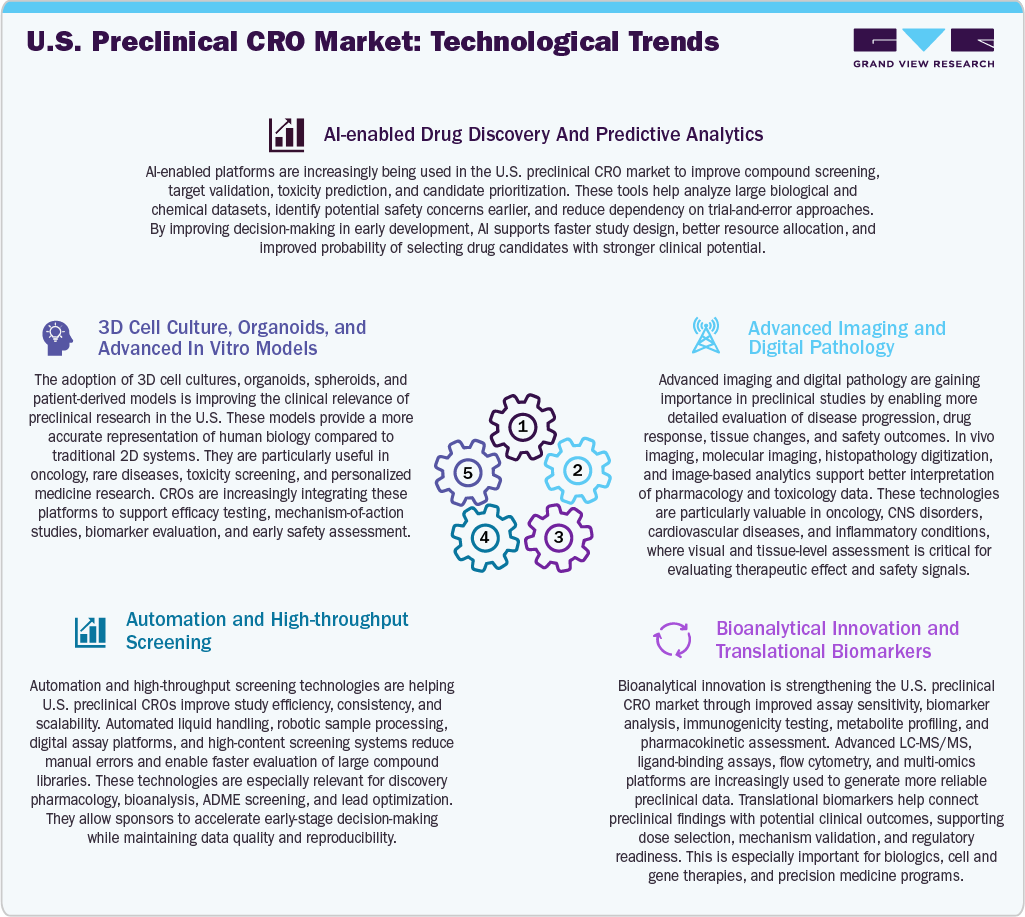
Technological advancements in the U.S. preclinical CRO market are driven by improving study efficiency, data quality, and translational relevance. The adoption of AI-enabled drug discovery and predictive analytics is helping CROs analyze large datasets, identify safety risks earlier, and prioritize drug candidates with stronger development potential. In parallel, advanced in vitro models such as 3D cell cultures, organoids, spheroids, and patient-derived models are gaining traction as sponsors seek more human-relevant platforms for oncology, rare disease, toxicity, and personalized medicine research.
 To learn more about this report, Download Free Sample Report
Automation and high-throughput screening are also becoming important as they enable faster compound evaluation, reduce manual errors, and improve reproducibility across discovery pharmacology, ADME, bioanalysis, and lead optimization workflows. Advanced imaging and digital pathology are further enhancing preclinical evaluation by supporting detailed assessment of tissue-level changes, disease progression, drug response, and safety outcomes across key therapeutic areas such as oncology, CNS, cardiovascular, and inflammatory diseases.
In addition, bioanalytical innovation and translational biomarker development are strengthening preclinical decision-making through improved assay sensitivity, pharmacokinetic profiling, immunogenicity testing, metabolite analysis, and multi-omics-based insights. These technologies are particularly relevant for complex modalities such as biologics, cell and gene therapies, RNA-based therapies, radiopharmaceuticals, and precision medicine programs. Thus, technology adoption is enabling U.S. preclinical CROs to offer more predictive, efficient, and regulatory-ready solutions, while helping sponsors reduce development risk, accelerate IND-enabling timelines, and improve early-stage candidate selection.
Pricing Model Analysis
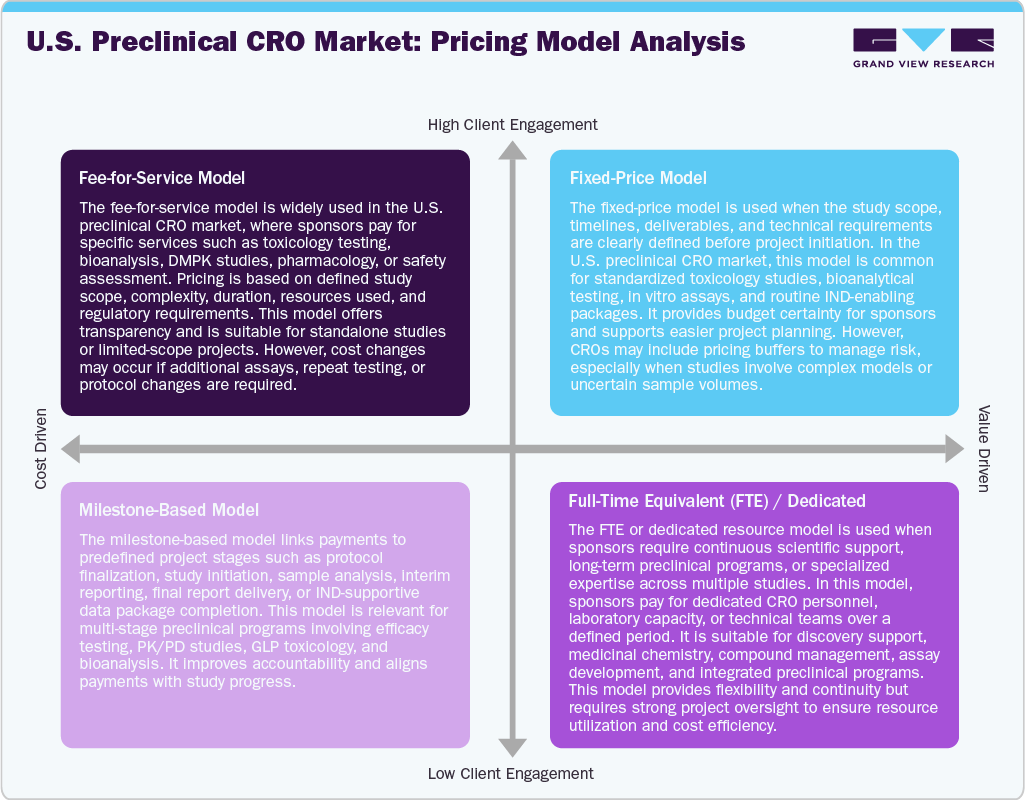
The analysis of pricing models in the U.S. preclinical CRO industry illustrates the diverse factors that influence costs associated with early-stage drug development studies. The most commonly utilized model is the fee-for-service structure, particularly for independent services such as toxicology testing, bioanalysis, DMPK studies, safety pharmacology, and in vitro assays. This model allows sponsors to pay for specified activities according to the study's scope, the resources involved, timelines, and complexity. It provides transparency and flexibility, though it can lead to higher expenses if study protocols necessitate changes or retesting.
 To learn more about this report, Download Free Sample Report
The fixed-price model is favored for standardized, well-defined studies such as routine toxicology packages, bioanalytical assays, and IND-enabling support, where deliverables and timelines are established in advance. This model offers budget certainty for sponsors, aiding in financial planning. However, CROs might incorporate risk premiums for studies with complex models, uncertain sample volumes, or unique regulatory requirements.
Milestone-based pricing is increasingly relevant for multi-stage preclinical programs, linking payments to specific project achievements such as protocol approval, study initiation, sample analysis, interim reports, final data delivery, or completion of IND-supportive reports. This approach enhances accountability and synchronizes payment schedules with project milestones, making it advantageous for longer-term development programs that involve efficacy, PK/PD, GLP toxicology, and bioanalysis.
The FTE or dedicated resource model caters to sponsors in need of ongoing scientific support, dedicated lab capacity, or sustained engagement across numerous preclinical studies. It is especially pertinent for discovery support, medicinal chemistry, compound management, assay development, and integrated preclinical programs. Thus, the pricing models in the U.S. preclinical CRO market are evolving towards greater flexibility, as sponsors increasingly demand predictability in costs, operational oversight, and technical expertise.
Service Insights
The toxicology testing segment led the market with the largest revenue share of 25.5% in 2025. The segment growth is attributed to the essential role of toxicology studies in evaluating drug safety before clinical trial initiation. Strong demand for GLP and non-GLP toxicology testing, repeat-dose studies, genotoxicity, reproductive toxicity, safety pharmacology, and IND-enabling packages continues to support segment growth. Besides, the rising development of biologics, oncology therapies, and advanced modalities is further increasing the need for regulatory-compliant toxicology assessment.
The bioanalysis and DMPK Studies segment is anticipated to grow at the fastest CAGR during the forecast period. The segment growth is driven by increasing demand for pharmacokinetic profiling, drug metabolism assessment, bioanalytical method development, and ADME studies during early drug development. Sponsors are relying more on CROs to generate accurate data on absorption, distribution, metabolism, excretion, exposure, and dose-response relationships. The rising complexity of biologics, cell and gene therapies, RNA-based drugs, and targeted therapies is further strengthening demand for advanced bioanalytical and DMPK support.
Development Stage Insights
The preclinical optimization, efficacy & PK/PD segment led the U.S. preclinical CRO industry with the largest revenue share of 34.3% in 2025. The segment growth is supported by the growing need to refine lead candidates, evaluate therapeutic efficacy, and establish exposure-response relationships before IND-enabling studies. Sponsors increasingly outsource efficacy models, disease-specific studies, dose optimization, PK/PD evaluation, and translational research to reduce development risk. Strong demand from oncology, CNS, rare disease, and metabolic disorder pipelines continues to support segment expansion.
The bioanalysis & analytics segment is expected to grow significantly over the forecast period. The segment growth is driven by rising demand for accurate and reproducible analytical data across preclinical development programs. CROs are increasingly providing assay development, sample analysis, biomarker testing, immunogenicity assessment, metabolite profiling, and pharmacokinetic measurements. The growing complexity of advanced therapies and precision medicine programs is creating demand for specialized analytical platforms. In addition, regulatory expectations for robust data quality and validated methods are strengthening the outsourcing of bioanalysis and analytics services.
Indication Insights
The oncology segment led the U.S. preclinical CRO market with the largest revenue share of 35.7% in 2025. The segment’s growth is driven by the strong oncology drug pipeline, high R&D investment, and increasing demand for predictive cancer models. Sponsors rely on CROs for xenograft models, patient-derived xenografts, 3D tumor models, immuno-oncology assays, biomarker studies, and efficacy testing. Rising focus on targeted therapies, antibody-drug conjugates, cell therapies, and personalized oncology is further in
The rare diseases segment is expected to grow significantly during the forecast period. Segment growth is driven by increasing orphan drug development, a rising focus on genetic disorders, and the expanding use of advanced therapies such as gene therapy, RNA-based therapeutics, and enzyme replacement therapies. Rare disease programs often require customized models, biomarker validation, specialized safety assessment, and translational research support. Due to limited patient populations and complex disease biology, sponsors increasingly depend on CROs to generate robust preclinical evidence and improve regulatory readiness.
Model Type Insights
The in vivo segment led the U.S. preclinical CRO industry with the largest revenue share of 56.7% in 2025. The segment growth is attributed to the continued requirement for animal-based studies in safety, efficacy, toxicology, PK, biodistribution, and IND-enabling evaluations. In vivo models remain critical for understanding systemic drug response, organ-level toxicity, pharmacological activity, and dose behavior before clinical testing. Strong use in oncology, CNS, cardiovascular, metabolic, and advanced therapy programs continues to support demand for in vivo CRO services.
The ex vivo segment is projected to grow rapidly due to its role as a link between in vitro and in vivo testing. This is attributed to the increasing use of tissue-based, organ-based, and patient-derived samples for evaluating drug response, mechanism of action, toxicity, and biomarker activity under more physiologically relevant conditions. Ex vivo models can improve translational relevance while reducing dependence on animal testing. Growing interest in precision medicine, immunology, oncology, and advanced therapies is further supporting the adoption of ex vivo platforms.
End Use Insights
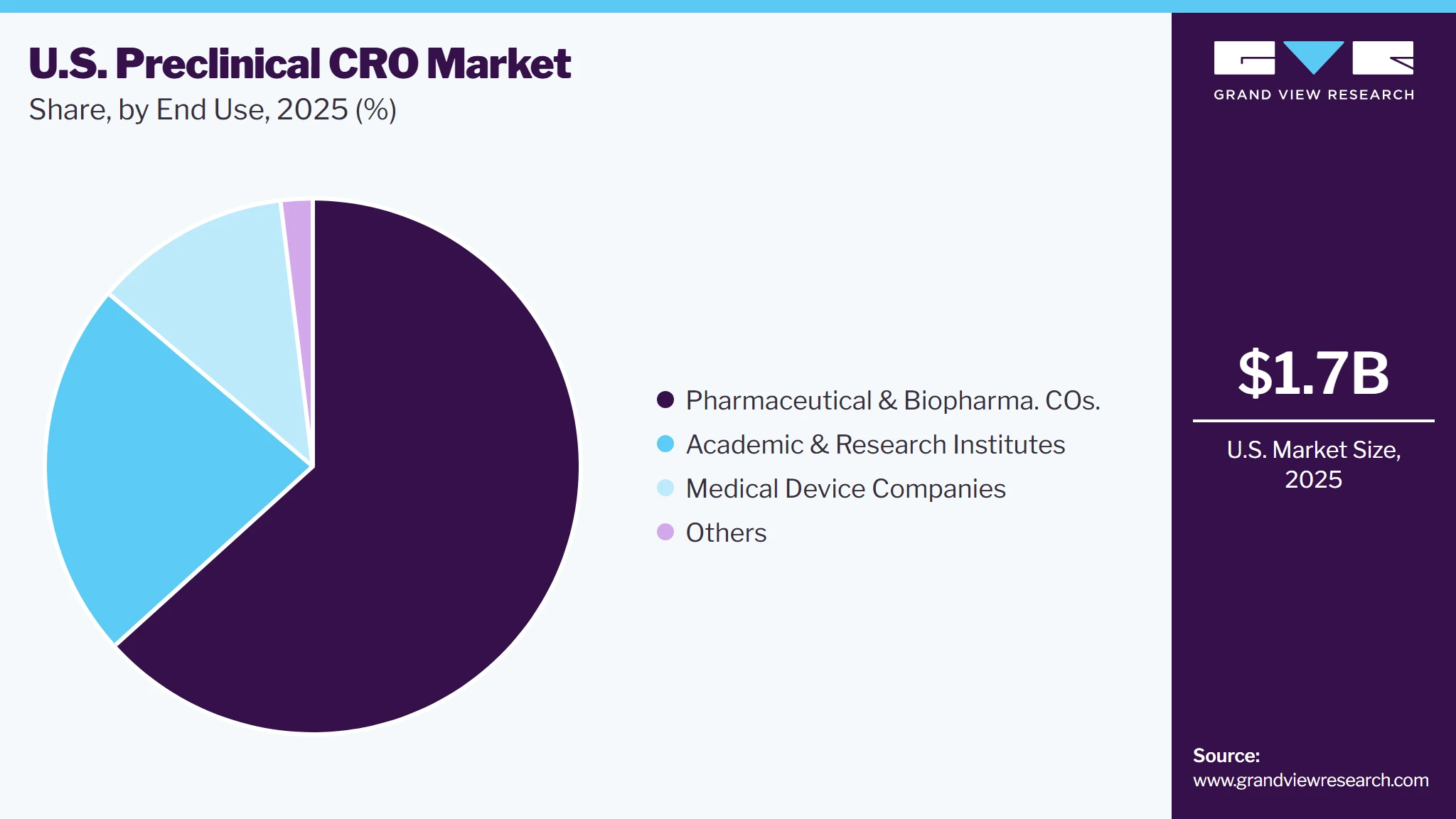
The pharmaceutical and biopharmaceutical companies segment led the U.S. preclinical CRO market with the largest revenue share of 63.3% in 2025. The growth of the segment is attributed to strong drug development pipelines, high R&D spending, and increasing outsourcing of early-stage research activities. Pharmaceutical and biopharmaceutical companies depend on CROs for toxicology, bioanalysis, DMPK, efficacy testing, safety pharmacology, and IND-enabling support. The growing complexity of biologics, cell and gene therapies, oncology drugs, and precision medicine programs is further increasing reliance on specialized preclinical CRO services.
 To learn more about this report, Download Free Sample Report
The medical device companies segment is expected to grow significantly during the forecast period. The medical device companies segment is driven by the rising need for preclinical evaluation of implantable devices, surgical instruments, diagnostic devices, combination products, and advanced materials before regulatory submission. Medical device companies increasingly outsource biocompatibility testing, toxicology, animal studies, performance assessment, histopathology, and safety evaluation to CROs to meet FDA expectations and reduce development timelines. Besides, growing innovation in minimally invasive devices, orthopedic implants, cardiovascular devices, and drug-device combinations is further supporting demand for specialized preclinical CRO services.
Key U.S. Preclinical CRO Company Insights
The key players operating across the market are adopting strategic initiatives such as service launches, mergers & acquisitions, partnerships & agreements, and expansions to gain a competitive edge in the market. For instance, in February 2026, Scantox acquired DuplexSeq's genomic safety business from TwinStrand Biosciences. Such initiatives expand advanced mutagenesis testing, strengthen regulatory-ready data generation, and position Scantox as a leader in genomic safety assessment services.
Key U.S. Preclinical CRO Companies
-
Eurofins Scientific
-
ICON plc
-
Medpace Holdings, Inc.
-
Charles River Laboratories
-
PPD (Thermo Fisher Scientific, Inc.)
-
SGS SA (SGS Société Générale de Surveillance SA.)
-
Intertek Group plc (IGP)
-
Labcorp
-
Crown Bioscience
Competitive Benchmarking
Category
Operating Strategies
Competitive Edge
Weakness
Established Players (Eurofins Scientific; ICON plc; Medpace Holdings, Inc.)
- Established players in the U.S. preclinical CRO market focus on integrated service portfolios, GLP-compliant infrastructure, geographic reach, therapeutic specialization, and long-term sponsor relationships. Their strategies include expanding toxicology, bioanalysis, DMPK, safety pharmacology, and IND-enabling capabilities while investing in automation, advanced models, regulatory expertise, and scalable laboratory capacity.
- Established players benefit from strong brand recognition, broad service coverage, validated quality systems, regulatory experience, and the ability to manage complex, multi-site preclinical programs. Their scale allows them to serve large pharmaceutical and biotechnology sponsors, support repeat outsourcing contracts, and provide end-to-end preclinical development support across multiple indications and modalities.
- Established players may face challenges such as high operating costs, capacity constraints, longer project onboarding timelines, and limited flexibility in highly customized studies. Their large organizational structures can make pricing less competitive for smaller sponsors, while rising demand for specialized models and advanced therapies may require continuous investment in niche capabilities.
Emerging Players (Crown Bioscience)
- Emerging or specialized players focus on differentiated scientific capabilities, niche therapeutic expertise, and customized study designs. In the U.S. preclinical CRO market, such players often target high-growth areas, including oncology models, patient-derived platforms, translational research, biomarker studies, and advanced in vivo or ex vivo testing, to address specific sponsor needs.
- Emerging or specialized players offer flexibility, faster decision-making, focused scientific expertise, and customized support for complex preclinical programs. Their competitive edge lies in specialized platforms, close client engagement, disease-specific models, and the ability to support early-stage biotechnology sponsors requiring tailored solutions that may not be prioritized by larger CROs.
- Emerging or specialized players may have limited scale, narrower service portfolios, lower geographic coverage, and lower ability to manage large integrated programs. They may also depend heavily on selected therapeutic areas or sponsor segments, making them more exposed to funding cycles, project delays, and competition from larger CROs expanding into niche services.
Recent Developments
-
In March 2026, Scantox integrated Gentronix under its brand as Scantox Manchester. This strengthens genetic toxicology capabilities, enhances genomic safety services, and supports end-to-end preclinical offerings, improving competitiveness in regulatory toxicology services.
-
In February 2026, Synthace collaborated with Charles River Laboratories International, Inc. to improve assay development using automation. Such initiatives enhance reproducibility, reduce delays, and accelerate drug discovery timelines, strengthening efficiency and technological advancement in the market.
-
In September 2025, Crown Bioscience opened a North Carolina model development center to expand PDX, organoid, and translational oncology model capabilities. Such initiatives propel the demand for preclinical services in the region.
U.S. Preclinical CRO Market Report Scope
Report Attribute
Details
Market size in 2025
USD 1.7 billion
Estimated market size in 2026
USD 1.8 billion
Projected market size by 2033
USD 3.1 billion
Growth rate
CAGR of 7.7% from 2026 to 2033
Historical data
2021 - 2025
Forecast period
2026 - 2033
Quantitative units
Revenue in USD million/billion and CAGR from 2026 to 2033
Report coverage
Revenue forecast, company ranking, competitive landscape, growth factors, and trends
Segments covered
Service, development stage, indication, model type, end use
Country scope
The U.S.
Key companies profiled
Eurofins Scientific; ICON plc; Medpace Holdings, Inc.; Charles River Laboratories; PPD (Thermo Fisher Scientific, Inc.); SGS SA (SGS Société Générale de Surveillance SA.); Intertek Group plc (IGP); Labcorp; Crown Bioscience
Customization scope
Free report customization (equivalent up to 8 analysts' working days) with purchase. Addition or alteration to country, regional & segment scope.
Pricing and purchase options
Avail customized purchase options to meet your exact research needs. Explore purchase options
U.S. Preclinical CRO Market Report Segmentation
This report forecasts revenue growth at the country level and provides an analysis of the latest industry trends in each of the sub-segments from 2021 to 2033. For this study, Grand View Research has segmented the U.S. preclinical CRO market report based on service, development stage, indication, model type, and end use:
-
Service Outlook (Revenue, USD Million/Billion, 2021 - 2033)
-
Bioanalysis and DMPK studies
-
In vitro ADME
-
In-vivo PK
-
-
Toxicology Testing
-
GLP
-
Non-GLP
-
-
Compound Management
-
Process R&D
-
Custom Synthesis
-
Others
-
-
Chemistry
-
Medicinal Chemistry
-
Computation Chemistry
-
-
Safety Pharmacology
-
Others
-
-
Development Stage Outlook (Revenue, USD Million/Billion, 2021 - 2033)
-
Target Discovery
-
Preclinical Optimization, Efficacy & PK/PD
-
IND-Enabling Safety (GLP)
-
Bioanalysis & Analytics
-
-
Indication Outlook (Revenue, USD Million/Billion, 2021 - 2033)
-
Oncology
-
CNS
-
Infectious Diseases
-
Cardiovascular Diseases
-
Metabolic Disorders
-
Rare Diseases
-
Others
-
-
Model Type Outlook (Revenue, USD Million/Billion, 2021 - 2033)
-
In Vitro
-
In Vivo
-
Ex Vivo
-
-
End Use Outlook (Revenue, USD Million/Billion, 2021 - 2033)
-
Pharmaceutical and Biopharmaceutical Companies
-
Medical Device Companies
-
Academic and Research Institutes
-
Others
-
Research Methodology
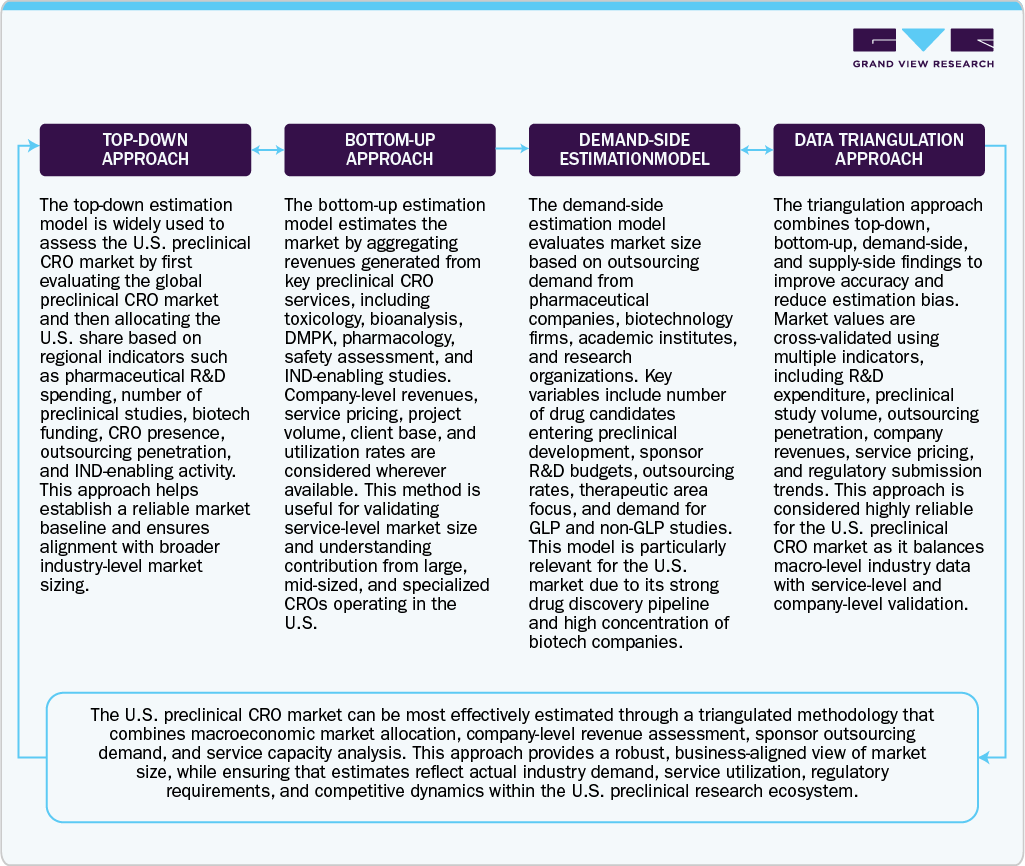
The U.S. preclinical CRO market figures in this report are based on a proven research process that combines executive interviews with secondary research from proprietary databases, company filings, and recognized regulatory and institutional sources. Market size is built through value-chain sizing-reconciling supply-side and demand-side estimates-and triangulated with bottom-up and top-down approaches. Every estimate passes multiple levels of expert validation before publication, with each U.S. preclinical CRO segment quantified using the revenue-capture definitions in the table below.
Segment Definition
Service Segment
Definition
Bioanalysis and DMPK Studies
The segment captures revenue generated by providing CRO services for preclinical bioanalysis and DMPK studies to sponsors. It includes sample analysis, drug metabolism, pharmacokinetics, bioanalytical method development, validation, metabolite identification, absorption, distribution, metabolism, and excretion assessment to support early drug development decisions.
In vitro ADME
The segment captures revenue generated by providing CRO services for preclinical in vitro ADME studies to sponsors. It includes laboratory-based assessment of absorption, distribution, metabolism, and excretion using cell-based assays, microsomes, hepatocytes, plasma protein binding, permeability studies, metabolic stability, and drug-drug interaction screening.
In-vivo PK
The segment captures revenue generated by providing CRO services for preclinical in vivo pharmacokinetic studies to sponsors. It includes animal-based evaluation of drug absorption, systemic exposure, distribution, metabolism, clearance, half-life, bioavailability, dose proportionality, and concentration-time profiling to support candidate selection and IND-enabling study planning.
Toxicology Testing
The segment captures revenue generated by providing CRO services for preclinical toxicology testing to sponsors. It includes safety evaluation of drug candidates through acute, sub-chronic, chronic, reproductive, developmental, genotoxicity, carcinogenicity, and specialty toxicity studies conducted to identify potential adverse effects before clinical trials.
GLP
The segment captures revenue generated by providing CRO services for preclinical GLP toxicology testing to sponsors. It includes regulatory-compliant safety studies performed under Good Laboratory Practice standards, including validated protocols, audited data, quality assurance oversight, dose-range finding, repeat-dose toxicity, safety endpoints, and IND-supportive toxicology packages.
Non-GLP
The segment captures revenue generated by providing CRO services for preclinical non-GLP toxicology testing to sponsors. It includes exploratory and early-stage toxicity studies, dose-range finding, tolerability assessment, pilot toxicology, mechanism-based toxicity evaluation, and study designs used to refine drug candidates before formal GLP-compliant testing.
Compound Management
The segment captures revenue generated by providing CRO services for preclinical compound management to sponsors. It includes storage, tracking, inventory control, quality checks, distribution, weighing, dissolution, formatting, sample preparation, and lifecycle management of chemical or biological compounds used in discovery and preclinical research workflows.
Process R&D
The segment captures revenue generated by providing CRO services for preclinical process R&D to sponsors. It includes development and optimization of synthetic routes, reaction conditions, purification methods, scale-up feasibility, impurity control, and process parameters required to produce research-grade compounds for preclinical testing.
Custom Synthesis
The segment captures revenue generated by providing CRO services for preclinical custom synthesis to sponsors. It includes synthesis of novel chemical entities, reference compounds, intermediates, analogs, metabolites, impurities, and research compounds according to sponsor-specific molecular design, purity, quantity, and project requirements.
Others – Compound Management
The segment captures revenue generated by providing CRO services for other preclinical compound management activities to sponsors. It includes compound logistics, assay-ready plate preparation, stability monitoring, reformatting, sample aliquoting, compound disposal, documentation, and specialized support services not classified under process R&D or custom synthesis.
Chemistry
The segment captures revenue generated by providing CRO services for preclinical chemistry to sponsors. It includes medicinal chemistry, computational chemistry, compound design, lead identification, lead optimization, structure-activity relationship analysis, synthesis support, physicochemical characterization, and chemistry-driven activities supporting preclinical drug candidate development.
Medicinal Chemistry
The segment captures revenue generated by providing CRO services for preclinical medicinal chemistry to sponsors. It includes design, synthesis, optimization, and characterization of drug-like compounds to improve potency, selectivity, solubility, metabolic stability, safety profile, and pharmacological properties during hit-to-lead and lead optimization stages.
Computational Chemistry
The segment captures revenue generated by providing CRO services for preclinical computational chemistry to sponsors. It includes molecular modeling, virtual screening, docking, structure-based drug design, ligand-based design, QSAR analysis, molecular dynamics, and predictive modeling used to prioritize compounds and improve drug discovery efficiency.
Safety Pharmacology
The segment captures revenue generated by providing CRO services for preclinical safety pharmacology to sponsors. It includes the evaluation of potential drug effects on vital organ systems, primarily the cardiovascular, respiratory, and central nervous systems, using in vitro, ex vivo, and in vivo models to support regulatory safety assessment.
Others
The segment captures revenue generated by providing CRO services for other preclinical services to sponsors. It includes specialty pharmacology, disease model development, efficacy studies, biomarker analysis, imaging, histopathology, translational research, exploratory studies, and other early-stage research services not specifically classified under the major service categories.
Development Stage Segment
Definition
Target Discovery
The segment captures revenue generated by providing CRO services for preclinical target discovery to sponsors. It includes target identification, target validation, disease pathway analysis, functional genomics, omics-based research, assay development, screening support, biomarker identification, and early biological validation to support the selection of druggable targets.
Preclinical Optimization, Efficacy & PK/PD
The segment captures revenue generated by providing CRO services for preclinical optimization, efficacy, and PK/PD studies to sponsors. It includes lead optimization, candidate profiling, in vitro and in vivo efficacy studies, disease model testing, dose-response assessment, pharmacokinetic and pharmacodynamic evaluation, exposure-response analysis, and translational study support before IND-enabling development.
IND-Enabling Safety (GLP)
The segment captures revenue generated by providing CRO services for preclinical IND-enabling safety studies under GLP standards to sponsors. It includes regulatory toxicology, repeat-dose toxicity, safety pharmacology, genotoxicity, reproductive and developmental toxicity, toxicokinetics, pathology, study reporting, quality assurance, and safety packages required to support an IND submission.
Bioanalysis & Analytics
The segment captures revenue generated by providing CRO services for preclinical bioanalysis and analytics to sponsors. It includes bioanalytical method development, assay validation, sample testing, biomarker analysis, immunogenicity testing, metabolite profiling, drug concentration measurement, analytical characterization, data interpretation, and regulated or non-regulated analytical support for preclinical studies.
Indication Segment
Definition
Oncology
The segment captures revenue generated by providing CRO services for preclinical oncology indication to sponsors. It includes tumor biology studies, cancer efficacy models, xenograft and patient-derived xenograft models, 3D tumor models, immuno-oncology testing, biomarker analysis, dose-response studies, safety evaluation, and translational research supporting anticancer drug development.
CNS
The segment captures revenue generated by providing CRO services for preclinical CNS indication to sponsors. It includes studies for neurological and psychiatric disorders, neurodegenerative disease models, behavioral testing, neurotoxicity assessment, blood-brain barrier evaluation, biomarker studies, pharmacology, efficacy testing, and PK/PD analysis for brain and nervous system therapies.
Infectious Diseases
The segment captures revenue generated by providing CRO services for preclinical infectious disease indication to sponsors. It includes antiviral, antibacterial, antifungal, and antiparasitic drug testing, pathogen-specific efficacy models, vaccine evaluation, immune response assessment, antimicrobial susceptibility studies, toxicity testing, and preclinical validation of therapies targeting infectious agents.
Cardiovascular Diseases
The segment captures revenue generated by providing CRO services for preclinical cardiovascular disease indication to sponsors. It includes cardiac safety studies, vascular disease models, hypertension models, thrombosis studies, heart failure models, electrophysiology testing, hemodynamic assessment, pharmacology, toxicology, and PK/PD studies supporting cardiovascular drug development.
Metabolic Disorders
The segment captures revenue generated by providing CRO services for preclinical metabolic disorder indication to sponsors. It includes diabetes, obesity, dyslipidemia, liver metabolism, and endocrine disease models, glucose metabolism studies, insulin sensitivity testing, lipid profiling, efficacy studies, biomarker analysis, toxicology, and PK/PD assessment for metabolic therapies.
Rare Diseases
The segment captures revenue generated by providing CRO services for preclinical rare disease indication to sponsors. It includes customized disease models, genetic disorder studies, orphan drug development support, biomarker validation, small-population disease modeling, gene therapy evaluation, efficacy testing, safety assessment, and IND-enabling studies for rare and inherited conditions.
Others
The segment captures revenue generated by providing CRO services for other preclinical indications to sponsors. It includes studies related to autoimmune diseases, respiratory diseases, gastrointestinal disorders, ophthalmology, dermatology, renal diseases, musculoskeletal disorders, pain, inflammation, and other therapeutic areas not specifically classified under major indication categories.
Model Type Segment
Definition
In Vitro
The segment captures revenue generated by providing CRO services for preclinical in vitro model type to sponsors. It includes cell-based assays, 2D and 3D cell cultures, organoids, biochemical assays, receptor binding studies, ADME screening, cytotoxicity testing, biomarker analysis, mechanistic studies, and early efficacy or safety evaluation conducted outside living organisms.
In Vivo
The segment captures revenue generated by providing CRO services for preclinical in vivo model type to sponsors. It includes animal-based studies using rodents, non-rodents, disease models, xenograft models, patient-derived xenograft models, pharmacology studies, toxicology testing, pharmacokinetic studies, safety pharmacology, efficacy assessment, biodistribution analysis, and IND-enabling studies conducted in living organisms.
Ex Vivo
The segment captures revenue generated by providing CRO services for preclinical ex vivo model type to sponsors. It includes studies performed on tissues, organs, cells, or biological samples collected from living organisms, including tissue-based pharmacology, organ bath studies, immune cell assays, electrophysiology, histopathology, biomarker testing, and translational assessments supporting early drug development.
End Use Segment
Definition
Pharmaceutical and Biopharmaceutical Companies
The segment captures revenue generated by providing CRO services for preclinical to pharmaceutical and biopharmaceutical companies. It includes drug discovery support, toxicology testing, bioanalysis, DMPK studies, pharmacology, efficacy testing, IND-enabling studies, safety assessment, and preclinical development services for small molecules, biologics, cell and gene therapies, and other drug candidates.
Medical Device Companies
The segment captures revenue generated by providing CRO services for preclinical to medical device companies. It includes biocompatibility testing, safety assessment, animal studies, performance evaluation, toxicology, implant testing, material characterization, histopathology, and regulatory-supportive preclinical studies required to evaluate device safety and functionality before clinical or regulatory submission.
Academic and Research Institutes
The segment captures revenue generated by providing CRO services for preclinical to academic and research institutes. It includes early discovery studies, disease model development, assay development, target validation, biomarker research, efficacy testing, pharmacology studies, exploratory toxicology, and translational research support for investigator-led, grant-funded, or collaborative preclinical research programs.
Others
The segment captures revenue generated by providing CRO services for preclinical to other end users. It includes services provided to government agencies, non-profit research organizations, contract development firms, diagnostic developers, venture-backed startups, and other research sponsors requiring toxicology, bioanalysis, safety, pharmacology, efficacy, or regulatory-supportive preclinical study services.
Estimation Model
 To learn more about this report, Download Free Sample Report
Delivered Customizations
This report has been delivered with the following In-depth customizations
CLIENT REQUEST
CUSTOMIZATION DELIVERED
VALUE ADDS
Extensive Segmentation & Cross-Segmentation Analysis
The study can be customized to include deeper segmentation and cross-analysis across service, development stage, indication, model type, and end use. This may include bioanalysis and DMPK studies by indication, GLP toxicology by sponsor type, in vitro/in vivo models by therapeutic area, and IND-enabling safety demand across pharmaceutical, biotechnology, medical device, and academic sponsors.
Enables granular opportunity assessment, helps identify high-growth service-indication combinations, and supports better prioritization of target segments for CROs, investors, and sponsors.
U.S. Regional Extension & Opportunity Mapping
The report can include state-level or regional analysis across key U.S. preclinical research hubs. This may cover CRO facility concentration, biotech funding activity, academic research clusters, sponsor outsourcing demand, IND-enabling study activity, and regional service capability gaps.
Supports geographic expansion planning, facility location assessment, regional demand mapping, and identification of underserved U.S. markets with strong outsourcing potential.
Market Entry Strategy & Competitive Dynamics
The study can be expanded to assess entry opportunities for CROs, investors, and service providers by evaluating unmet demand, pricing models, regulatory requirements, GLP capacity, service gaps, competitive intensity. It may also include benchmarking of key players based on service portfolio, therapeutic expertise, U.S. facility presence, technology platforms, partnerships, and expansion strategies.
Helps assess market attractiveness, competitive positioning, partnership opportunities, pricing feasibility, and go-to-market strategy for new entrants or expanding CROs.
Volume Analysis & Emerging Trend Assessment
The customization can include volume-based analysis such as number of preclinical studies, IND-enabling programs, toxicology study demand, bioanalytical sample volumes, oncology model usage, and advanced therapy-related preclinical testing. Additional coverage may include high-growth themes such as 3D models, organoids, AI-driven screening, radiopharmaceutical testing, cell and gene therapy studies, ex vivo models, and precision medicine-focused preclinical research.
Provides demand validation beyond revenue estimates, improves forecast robustness, and highlights emerging service areas likely to gain traction over the forecast period.
Frequently Asked Questions About This Report
The U.S. preclinical CRO market size was valued at USD 1.7 billion in 2025 and is estimated at USD 1.8 billion for 2026.
The oncology segment led with a 35.7% revenue share in 2025 and is the fastest-growing segment.
The in vivo segment led with a 56.7% revenue share in 2025, while ex vivo is the fastest-growing segment.
The pharmaceutical and biopharmaceutical companies segment led with a 63.3% revenue share in 2025 and is the fastest-growing segment.
Key players include Eurofins Scientific, ICON plc, Medpace Holdings, Inc., Charles River Laboratories, PPD (Thermo Fisher Scientific, Inc.), SGS SA (SGS Société Générale de Surveillance SA.), Intertek Group plc (IGP), Labcorp, and Crown Bioscience among others
The U.S. preclinical CRO market is expected to grow at a CAGR of 7.7% from 2026 to 2033, reaching USD 3.1 billion.
The U.S. preclinical CRO market is driven by several factors such as the complexities of drug discovery, increased demand for advanced therapies, and greater outsourcing by pharmaceutical and biotechnology firms. Preclinical CROs are crucial to supporting early-stage drug development, offering services such as pharmacology, toxicology, bioanalysis, DMPK studies, safety assessment, efficacy testing, disease modeling, and IND-enabling studies.
The preclinical optimization, efficacy & pk/pd segment led with a 34.3% revenue share in 2025, while bioanalysis & analytics is the fastest-growing segment.
The toxicology testing segment led with a 25.5% revenue share in 2025.
About the Author(s)
Pharmaceuticals Research Team
Healthcare · PharmaceuticalsThis report was authored by the pharmaceuticals research team at Grand View Research - comprising two research analysts, one senior research analyst, and one industry expert - with specialized expertise in the pharmaceuticals segment of the healthcare industry. All findings are based on proprietary healthcare databases, executive interviews, and regulatory analysis, subject to internal peer review prior to publication.
Last Updated:
Speak to Analyst

Customize this report to your needs - add regions, segments, or data points, with 20% free customization.
Or view our licence options:


ISO 9001:2015 & 27001:2022 Certified
We are GDPR and CCPA compliant! Your transaction & personal information is safe and secure. For more details, please read our privacy policy.


