
- Home
- »
- Animal Health
- »
-
U.S. Veterinary Services Market Size Report, 2026-2033GVR Report cover
![U.S. Veterinary Services Market Size, Share & Trends Report]()
U.S. Veterinary Services Market (2026 - 2033) Size, Share & Trends Analysis Report By Animal (Companion Animals, Production Animals), By Service (Medical Services, Non-medical Services), Consumer Behavior And Competitive Analysis, And Segment Forecasts
Market Size, 2025
$38.2BMarket Estimate, 2026
$40.3BMarket Forecast, 2033
$68.7BCAGR, 2026–2033
7.9%U.S. Veterinary Services Market Summary
The U.S. veterinary services market size was valued at USD 38.2 billion in 2025 and is projected to grow from USD 40.3 billion in 2026 to reach USD 68.7 billion by 2033, at a CAGR of 7.9% from 2026 to 2033. The market is continuously growing, driven by advancements in veterinary technology, growing demand for specialty and preventive care, and expansion of corporate veterinary networks. Adoption of advanced medical technologies such as digital imaging, telemedicine platforms, AI-powered diagnostics, and minimally invasive surgical methods is propelling the market growth.
Key Market Trends & Insights
- By animal, the production animals segment led the market in 2025, contributing 58.5% of total revenue.
- The companion animals segment is projected to register the fastest CAGR during the forecast period.
- In 2025, the medical services segment led the market with a substantial 70.4% share of total revenue.
Market Size & Forecast
- 2025 Market Size: USD 38.2 Billion
- 2033 Projected Market Size: USD 68.7 Billion
- CAGR (2026-2033): 7.9%
Three ways to get this report
Buy it, customize it, or ask a question.Ask an Analyst
A direct answer, usually in 1 working day
- AccessReport author, directly
- Reply timeWithin 1 working day
- No sales callDirect answer only
- FormatEmail reply
- CostFree, no cost
Get the Full Report
What the study covers
- FormatsPDF · Excel · Dashboard
- Timeline2026–2033 annual, 2025 base
- Coverage20+ countries, 5 regions
- Companies10+ key players profiled
Customize the Report
20% free customization
- IncludeCountries, segments, points
- TailorTo your product definition
- ExtendDeeper competitor detail
- OrA fully bespoke study
- Turnaround5–10 working days
According to the American Pet Products Association report of 2024, pet owners in the U.S. spent an average of USD 152.0 billion on pets for healthcare and services. Hence, the market is witnessing growth driven by rising expenditure on veterinary care and related services.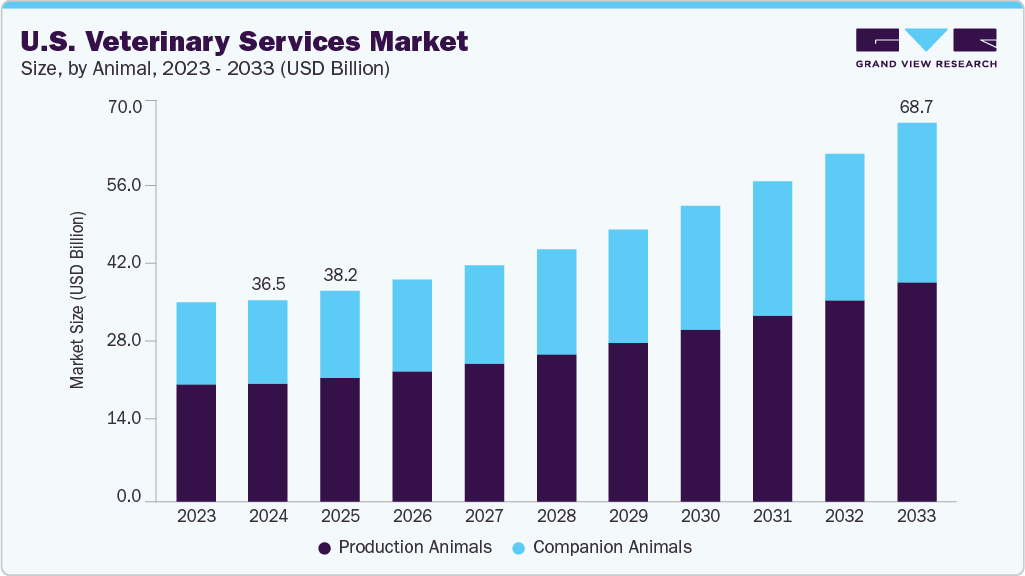
Innovations such as wearable health monitors, in-clinic diagnostic platforms, and cloud-based practice management systems also enable faster, more accurate diagnosis and treatment. These technologies increase access to care, decrease wait times, and boost clinic efficiency. Better patient outcomes are also fostered by enhanced data analytics, which enables veterinarians to anticipate health hazards and customize therapies. Nationwide, increased confidence and dependence on veterinary services are fueled by this technology revolution.

Market Dynamics
The increasing prevalence of chronic and lifestyle-related diseases in companion animals, including diabetes, obesity, arthritis, and cancer, drives demand for specialized veterinary services. U.S. pet owners are increasingly investing in oncology, cardiology, dermatology, and orthopedic services to manage complex conditions. With routine immunizations, dental cleanings, parasite control, and wellness screenings becoming commonplace, preventive care is also becoming more and more important. Comprehensive preventive packages are being added to the service offerings of hospital networks and veterinary clinics. Strong growth in the usage of veterinary services is maintained by the increased focus on preventative and specialist care, which guarantees early identification, efficient treatment, and enhanced animal well-being.
Service delivery is changing as a result of the corporate veterinarian chains and group practices' lucrative growth throughout the U.S. Stronger national networks are being created by the consolidation of smaller clinics by major businesses, such as Banfield Pet Hospitals, National Veterinary Associates, Mars Veterinary Health, and VCA. These organizations provide high-quality, standardized care supported by centralized data systems, sophisticated diagnostic instruments, and greater purchasing power for medical goods. To improve the overall quality of services, corporate networks also make significant investments in consumer interaction, research, and training. Their size and effectiveness increase market penetration and pet owners' trust in dependable, consistent care by making veterinary services more accessible and reasonably priced.
The deepening cultural shift toward pet humanization represents a compelling structural catalyst for the U.S. veterinary services industry. American pet owners increasingly regard companion animals as family members, leading to a materially higher willingness to pay for premium, proactive healthcare rather than solely reactive treatment. According to the American Pet Products Association's 2024 report, U.S. pet owners spent an average of USD 152.0 billion on pet healthcare and services, underscoring the robust consumer commitment driving demand. This behavioral shift is further evidenced by the rapid adoption of wellness programs, routine screenings, dental cleanings, and parasite control, with veterinary networks actively bundling these into comprehensive preventive packages. The rising prevalence of chronic and lifestyle-related conditions in companion animals-including diabetes, obesity, arthritis, and cancer-is also accelerating demand for specialized oncology, cardiology, dermatology, and orthopedic services.
Regulations governing the U.S. veterinary sector, spanning animal welfare standards, drug safety protocols, controlled substance management, medical record-keeping, and professional licensing, impose escalating compliance costs that disproportionately affect smaller and independent practices. As regulatory frameworks continue to evolve in complexity, independent operators face a structural disadvantage relative to corporate networks that can amortize compliance expenditure across large clinic portfolios. This dynamic threatens to accelerate consolidation, progressively eroding the independent practice segment's competitive viability and constraining service diversity in underserved or rural markets.
Market Concentration & Characteristics
The U.S. veterinary services industry demonstrated moderate to high industry concentration, with large corporate groups like Mars Veterinary Health, National Veterinary Associates, Banfield Pet Hospitals, and VCA Animal Hospitals operating extensive clinic networks nationwide. These players leverage economies of scale, advanced technology adoption, and strong branding to consolidate market share. However, independent clinics and regional practices remain significant, catering to local communities and offering personalized services. Growing consolidation through mergers, acquisitions, and private equity investments continues to reshape competition, driving standardization, service diversification, and expanded access to specialized veterinary care.
Wearable monitoring devices, AI-powered diagnostics, telemedicine platforms, and minimally invasive surgical methods are emerging innovations in the U.S. veterinary services sector. For instance, TelaVets introduced a nationwide virtual veterinary platform in July 2025, offering affordable online consultations at USD 65, helping pet owners and pets avoid stress and the wait period. These developments improve the quality of animal care, support preventive healthcare, increase treatment precision, and streamline workflows.

Consolidators are growing networks by purchasing individual practices, and the U.S. veterinary services sector is quite active in mergers and acquisitions. This trend fosters a stronger national presence and promotes scalability, operational efficiency, and resource accessibility. Vimian's Movora and VerticalVet collaborated in July 2024 to expand access to innovative orthopedic goods and services, helping veterinarians and clinics provide better animal care across the country. Additionally, the two companies introduced extensive in-person and online education programs.
Regulations in the U.S. veterinary sector emphasize animal welfare, drug safety, and professional standards. While safeguarding quality and accountability, they increase compliance costs for practices, particularly regarding controlled drugs, medical records, and licensing.
Pet wellness products, teleconsultation platforms, and over-the-counter medicines act as substitutes to veterinary services. However, their limitations in addressing complex diagnostics, surgeries, or emergencies ensure veterinarians remain indispensable for advanced animal healthcare.
In the U.S. veterinary services industry, pet owners are the main customer group, and their increasing spending on preventive care and pet humanization is fueling demand. Livestock producers also make a substantial contribution, focusing on productivity and herd health management.
Animal Insights
In 2025, production animals accounted for the largest revenue share of 58.5%, driven by the sizeable livestock and poultry industries in the nation. To maintain herd health, productivity, and food safety, cattle, pigs, and poultry need ongoing veterinarian care. Disease prevention, immunization, reproductive control, diagnostics, and emergency treatment are among the services offered. Through creative waterline application, IFF introduced Enviva DUO, a poultry-focused direct-fed microbial product that improves gut health, increases immunity, and improves bird performance while maintaining efficacy even when feed intake is reduced in January 2025. The necessity for specialist veterinary skills is further highlighted by growing worries about antibiotic resistance and zoonotic infections.
The companion animals segment is expected to grow at the fastest CAGR over the forecast period, fueled by rising pet ownership, increasing humanization of pets, and higher spending on advanced care. Pet owners increasingly seek preventive healthcare, wellness programs, diagnostics, and specialized treatments for dogs and cats. Growth is further supported by innovations such as telehealth platforms, wearable health monitors, and minimally invasive surgical techniques. Expanding insurance coverage for pets is also making high-quality veterinary care more accessible. In May 2024, BARK Air, founded by dog toy company BARK in partnership with a jet charter provider, launched as the world’s first airline for dogs, offering luxury, comfort, and VIP treatment for pets and owners.
Service Insights
Medical services accounted for the largest revenue share of 70.4% in 2025, due to the rising demand for specialized treatments, improved diagnostics, and preventative care. The demand for services such as surgery, oncology, cardiology, dermatology, and internal medicine has increased due to rising pet ownership and greater awareness of animal health. A sizable portion are companion animals, as owners place a greater emphasis on superior medical care and innovative treatments. Segment expansion is further supported by the rising incidence of chronic illnesses and by technical advancements in diagnosis and treatment. Medical services remain the foundation of the veterinary services sector, as clinics and hospitals make investments in state-of-the-art facilities.

The increased demand for grooming, boarding, daycare, training, and pet wellness programs is driving the non-medical services segment to become the fastest-growing segment of the U.S. veterinary services industry. As the number of pet owners rises, more people see their animals as members of the family, placing more value on comfort, behavior, and general health than just medical attention. Due to rising disposable incomes and changing consumer demands for convenience and comprehensive care, premium grooming, upscale boarding facilities, and specialist training services are growing rapidly. For instance, Petco debuted its first-ever human product line, "My Human," in August 2025, with more than 1,000 reasonably priced lifestyle products with a pet motif.
Key U.S. Veterinary Services Company Insights
The U.S. veterinary services market is shaped by leading players such as Mars Inc. and National Veterinary Associates, holding strong networks and advanced care models. Global players like CVS Group Plc and Pets at Home Group PLC also influence competition, leveraging innovation, consolidations, and client-focused services to strengthen market presence. For instance, in May 2025, Mars launched GREENIES Canine Dental Check, an AI-powered tool that uses smartphone photos to detect early oral health issues. Advancements in telehealth, diagnostics, and minimally invasive procedures further strengthen service quality, while consolidation and acquisitions expand networks, enhancing access and efficiency across companion and production animal care.
Key U.S. Veterinary Services Companies
-
Mars, Incorporated
-
National Veterinary Associates
-
Fetch! Pet Care
-
A Place for Rover, Inc.
-
PetSmart LLC
-
Airpets International
-
Chewy, Inc.
-
Trupanion
-
The Animal Medical Center
-
GOODVETS
Competitive Benchmarking
Operating Strategies
Competitive Edge
Weaknesses
Mature Players: Mars, Incorporated
- Expand multi-specialty hospital networks through acquisitions and regional consolidation to improve referral flow and service coverage.
- Invest in advanced diagnostics, specialty care, and digital practice management systems to enhance operational efficiency and client retention.
- Strong brand credibility with extensive veterinary networks, enabling higher client trust and recurring patient volumes.
- Greater financial capacity to invest in specialty services, talent acquisition, and nationwide infrastructure expansion.
- High operating and labor costs reduce margin flexibility amid veterinarian shortages and wage inflation.
- Large organizational structures can limit agility in adopting localized pricing and customized service models.
Emerging Players:
- Focus on niche offerings such as mobile veterinary care, telehealth, urgent care, and subscription-based wellness services.
- Expand through asset-light clinic models and partnerships with independent practices to penetrate underserved regions.
- Higher operational flexibility enables faster adoption of digital engagement, transparent pricing, and convenience-led care models.
- Ability to target specific customer segments with personalized services and differentiated care experiences.
- Limited geographic presence and lower capital availability constrain large-scale expansion and specialty service investments.
- Lower brand recognition compared to established networks impacts customer acquisition and referral volumes.
Recent Developments
-
In April 2025, Tractor Supply Company introduced Tractor Supply Rx, a digital pet and animal pharmacy platform offering prescriptions, autoship delivery, and rewards for 38 million Neighbor’s Club members, expanding affordable, convenient veterinary pharmacy access nationwide.
-
In January 2025, Covetrus unveiled its Covetrus Platform, integrating advanced technology with the VetSuite network to empower U.S. veterinary practices, enhancing clinical and financial outcomes while helping veterinarians meet rising costs, competition, and evolving pet parent expectations.
-
In October 2024, VCA Animal Hospitals launched an innovative 3D Printing Lab for orthopedic surgeries, offering personalized surgical models to improve precision, recovery outcomes, and pet quality of life, reinforcing Mars Veterinary Health’s commitment to innovative, personalized pet care.
U.S. Veterinary Services Market Report Scope
Report Attribute
Details
Market size in 2025
USD 38.2 billion
Market size in 2026
USD 40.3 billion
Revenue forecast in 2033
USD 68.7 billion
Growth rate
CAGR of 7.9% from 2026 to 2033
Actual data
2021 - 2024
Forecast period
2026 - 2033
Quantitative units
Revenue in USD billion and CAGR from 2026 to 2033
Report coverage
Revenue forecast, company ranking, competitive landscape, growth factors, and trends
Segments covered
Animal, service
Country scope
U.S.
Key companies profiled
Mars, Incorporated; National Veterinary Associates; Fetch! Pet Care; A Place for Rover, Inc.; PetSmart LLC; Airpets International; Chewy, Inc.; Trupanion; The Animal Medical Center; GOODVETS
Customization scope
Free report customization (equivalent to 8 analysts working days) with purchase. Addition or alteration to country, regional & segment scope.
Pricing and purchase options
Avail customized purchase options to meet your exact research needs. Explore purchase options
U.S. Veterinary Services Market Report Segmentation
This report forecasts revenue growth at the country levels and provides an analysis of the latest industry trends in each of the sub-segments from 2021 to 2033. For this study, Grand View Research has segmented the U.S. veterinary services market report based on animal and service:
-
Animal Outlook (Revenue, USD Million/Billion, 2021 - 2033)
-
Companion Animals
-
Dogs
-
Cats
-
Horses
-
Others
-
-
Production Animals
-
Cattle
-
Poultry
-
Swine
-
Others
-
-
-
Service Outlook (Revenue, USD Million/Billion, 2021 - 2033)
-
Medical Services
-
Diagnosis
-
In-Vitro Diagnosis
-
In-Vivo Diagnosis
-
-
Preventative Care
-
Treatment
-
Consultation
-
Surgery
-
Others
-
-
-
Non-Medical Services
-
Pet Services
-
Livestock Services
-
-
Delivered Customizations
This report has been delivered with the following In-depth customizations
Client Request
Customization Delivered
Value Adds
U.S. Veterinary Clinic Landscape & Ownership Analysis
Detailed overview of the U.S. veterinary services market segmented by clinic ownership structure (Corporate vs. Independent), major veterinary networks, regional footprint, and historical market share trends. Analysis also included clinic count evolution, consolidation activity, M&A trends, and service mix benchmarking across general practice, specialty, and emergency care.
Enables clients to evaluate consolidation trends, benchmark competitive positioning of corporate networks versus independents, and identify high-growth clinic formats and acquisition opportunities across the U.S. veterinary ecosystem.
Veterinary Specialization & Workforce Analytics
Expanded analysis of U.S. veterinarians by specialization type, including companion animal, surgery, dermatology, oncology, cardiology, orthopedics, radiology, emergency & critical care, and exotic animal medicine. Coverage included veterinarian headcount by specialty, geographic distribution, staffing density, and specialty-wise demand trends.
Provides visibility into specialty workforce gaps, supports recruitment and expansion planning, and helps assess underserved veterinary segments with high future demand potential.
Veterinary Topical Products Sales Trend Analysis
Comprehensive tracking of U.S. veterinary topical product sales at the product and therapeutic category level, including antiparasitics, dermatology treatments, wound care, pain management, and anti-infectives. Analysis covered prescription trends, revenue contribution, brand penetration, pricing movement, and channel-wise sales across clinics, hospitals, and retail pharmacies.
Supports product portfolio benchmarking, identifies fast-growing topical therapy segments, and enables data-driven commercialization, pricing, and distribution strategy decisions in the veterinary care market.
Frequently Asked Questions About This Report
Some key players operating in the U.S. veterinary services market include Mars, Incorporated, National Veterinary Associates, Fetch! Pet Care, A Place for Rover, Inc, Petsmart LLC, Airpets International, Chewy, Inc., Trupanion, The Animal Medical Center, GOODVETS.
The U.S. veterinary services market is continuously growing driven by advancements in veterinary technology, growing demand for specialty and preventive care and expansion of corporate veterinary networks. Medical advancement in technologies and adoption of these such as digital imaging, telemedicine platforms, AI-powered diagnostics, and minimally invasive surgical methods is propelling the market growth.
The U.S. veterinary services market size was estimated at USD 38.2 billion in 2025 and is expected to reach USD 40.3 billion in 2026.
The U.S. veterinary services market is expected to grow at a compound annual growth rate of 7.9% from 2026 to 2033 to reach USD 68.7 billion by 2033.
By Service type, medical services accounted for 70.4% of total revenue share in 2025, mostly due to the rising demand for specialized treatments, improved diagnostics, and preventative care. The demand for services like surgery, cancer, cardiology, dermatology, and internal medicine has increased due to rising pet ownership and growing knowledge of animal health.
About the Author(s)
Animal Health Research Team
Healthcare · Animal HealthThis report was authored by the animal health research team at Grand View Research - comprising two research analysts, one senior research analyst, and one industry expert - with specialized expertise in the animal health segment of the healthcare industry. All findings are based on proprietary healthcare databases, executive interviews, and regulatory analysis, subject to internal peer review prior to publication.
Last Updated:
Speak to Analyst


Customize this report to your needs - add regions, segments, or data points, with 20% free customization.
Or view our licence options:


ISO 9001:2015 & 27001:2022 Certified
We are GDPR and CCPA compliant! Your transaction & personal information is safe and secure. For more details, please read our privacy policy.


