
- Home
- »
- Biotechnology
- »
-
Vascularized Organoids Market Size & Share Report, 2033GVR Report cover

Vascularized Organoids Market (2026 - 2033)
Size, Share & Trends Analysis Report By Products & Services, By Vascularization Approach (Static In Vitro Methods, Perfused/Microfluidic Systems), By Organoid Type, By Application, By End-use, By Region, And Segment Forecasts
Market Size, 2025
$94.3MMarket Estimate, 2026
$123.5MMarket Forecast, 2033
$908.3MCAGR, 2026–2033
33.0%Vascularized Organoids Market Summary
The global vascularized organoids market size was valued at USD 94.3 million in 2025 and is projected to grow from USD 123.5 million in 2026 to USD 908.3 million by 2033, at a CAGR of 33.0% from 2026 to 2033. North America dominated the market, accounting for the largest revenue share of 43.0% in 2025. Market growth is driven by increasing adoption of vascularized organoids in drug discovery, disease modeling, regenerative medicine, and personalized medicine, alongside advancements in stem cell technologies, 3D bioprinting, vascularization techniques, and organoid culture systems.
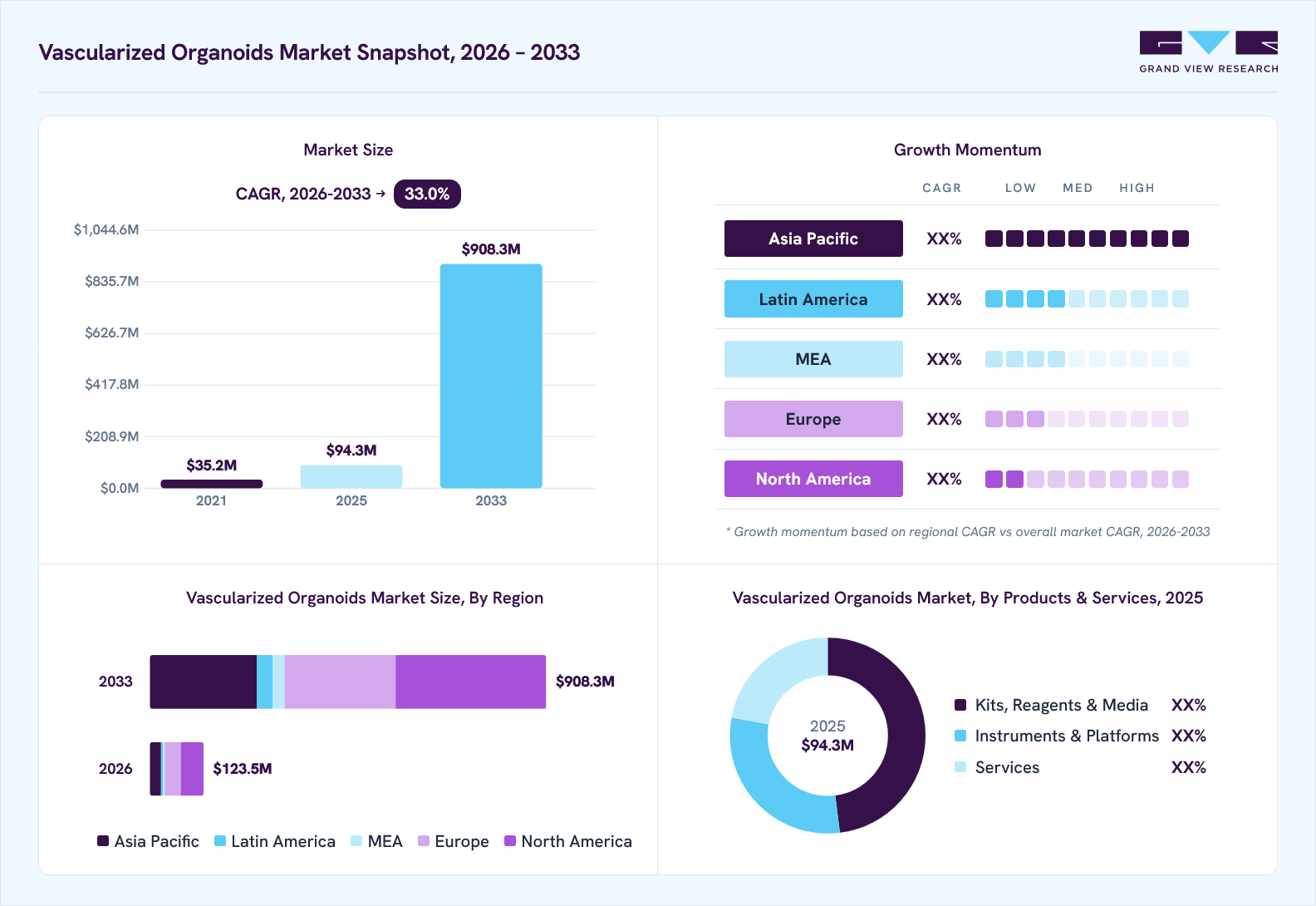 Source: Grand View Research, IR Documents, Primary Interviews, Paid DatabasesTo learn more about this report,
 Download Free Sample Report
 Key Market Trends & Insights
- By product & services: Kits, reagents & media segment held the highest market share of 48.0% in 2025.
- By organoid type: Liver segment accounted for the largest revenue share of 26.0% in 2025.
- By vascularization approach: Static in vitro methods segment held the highest market revenue share of 42.0% in 2025.
- By application: Drug discovery segment held the highest market share of 36.0% in 2025.
- By end-use: Pharmaceutical & biotechnology companies segment accounted for the largest revenue share of 51.0% in 2025
Regional Highlights
- Largest regional market: North America (43.0% revenue share, 2025)
- Fastest-growing regional market: Asia Pacific (highest CAGR, 2026-2033)
- By country: The U.S. held the largest market share in 2025.
Market Size & Forecast
- Market size in 2025: USD 94.3 Million
- Estimated market size in 2026: USD 123.5 Million
- Projected market size by 2033: USD 908.3 Million
- CAGR (2026-2033): 33.0%
Three ways to get this report
Buy it, customize it, or ask a question.Ask an Analyst
A direct answer, usually in 1 working day
- AccessReport author, directly
- Reply timeWithin 1 working day
- No sales callDirect answer only
- FormatEmail reply
- CostFree, no cost
Get the Full Report
What the study covers
- FormatsPDF · Excel · Dashboard
- Timeline2026–2033 annual, 2025 base
- Coverage20+ countries, 5 regions
- Companies10+ key players profiled
Customize the Report
20% free customization
- IncludeCountries, segments, points
- TailorTo your product definition
- ExtendDeeper competitor detail
- OrA fully bespoke study
- Turnaround5–10 working days
 To learn more about this report, Download Free Sample Report
 Market Dynamics
The vascularized organoids market is experiencing strong growth, driven by advances in stem cell technologies, 3D bioprinting, organoid culture systems, and vascularization techniques, as well as growing research activity in tissue engineering and regenerative medicine. Growing development of sophisticated in vitro models, coupled with improvements in microfluidics, biomaterials, and automated organoid platforms, is expected to enhance model reproducibility, functionality, and scalability, thereby creating new opportunities for market growth.
The increasing prevalence of chronic diseases and cancer is driving demand for physiologically relevant human disease models for drug discovery, disease progression studies, and therapeutic development. Vascularized organoids can better replicate tissue architecture, vascular networks, cellular interactions, and tumor microenvironments than conventional 2D cultures, supporting their growing use in modeling complex diseases and evaluating treatment responses. The advantages of organoids over conventional 2D models and animal models in biomedical research are presented in the following table.
Model
Advantages
Limitations
Best use cases
2D models
Easy to establish and implement; Widely available as commercial products
Low biocompatibility; Absence of complex structures and dynamic systems
Material biocompatibility testing; Cell-level research
Organoids
Complex architectures and mechanomimetic properties; Accurately replicate human tissue functions; Relatively fast experimental outcomes
Lack immune system involvement; Limited inter-organ signaling
High-throughput screening; Precision medicine; Organ-level research
Animal models
Fully functional immune and circulatory systems
Time-intensive; High costs; Ethical concerns; Interspecies variability
Pre-clinical testing; Whole-body research
Source: NIH, Secondary Research, Primary Interviews, Grand View Research Analysis
According to a Nature article published in November 2025, researchers developed a vascularized lung cancer organoid model by co-culturing lung cancer organoids with blood vessel organoids, thereby recreating tumor-vasculature interactions and enabling scalable drug-response assays to evaluate antimetastatic therapies. Such developments are expected to expand the application of vascularized organoids in cancer research and therapeutic screening.
The high cost of organoid development and maintenance is a key restraint on the vascularized organoids market. Developing vascularized organoids requires specialized stem cell sources, growth factors, extracellular matrix components, culture media, imaging systems, and advanced platforms, including microfluidic devices and 3D bioprinting systems. In addition, maintaining controlled culture conditions and performing regular monitoring and characterization increases operational and laboratory costs, particularly for research institutions and smaller biotechnology companies.
The complexity of establishing and maintaining functional vascular networks further increases resource requirements, as specialized equipment, skilled personnel, and extended culture periods may be necessary to achieve consistent organoid maturation. These cost considerations can limit adoption among organizations with constrained research budgets and may hinder the transition from small-scale research to large-scale, standardized production, thereby restricting broader commercialization of vascularized organoid technologies.
The integration of artificial intelligence (AI) and advanced imaging technologies presents a significant opportunity for the vascularized organoids market by enabling automated and quantitative analysis of complex three-dimensional structures. AI-based image analysis can facilitate organoid segmentation, vascular network characterization, morphological assessment, and viability monitoring, while advanced imaging enables detailed visualization of vascular development and cellular interactions. These capabilities can improve reproducibility and support high-throughput applications in drug screening and disease modeling.
For instance, in June 2025, researchers at Stanford University developed vascularized heart and liver organoids that incorporated functional blood-vessel networks and used advanced imaging approaches to characterize their structural and vascular features. The development demonstrated improved reconstruction of organ-level architecture and vascular interactions, supporting the use of advanced imaging and computational analysis to characterize and evaluate vascularized organoid models.
Market Concentration & Characteristics
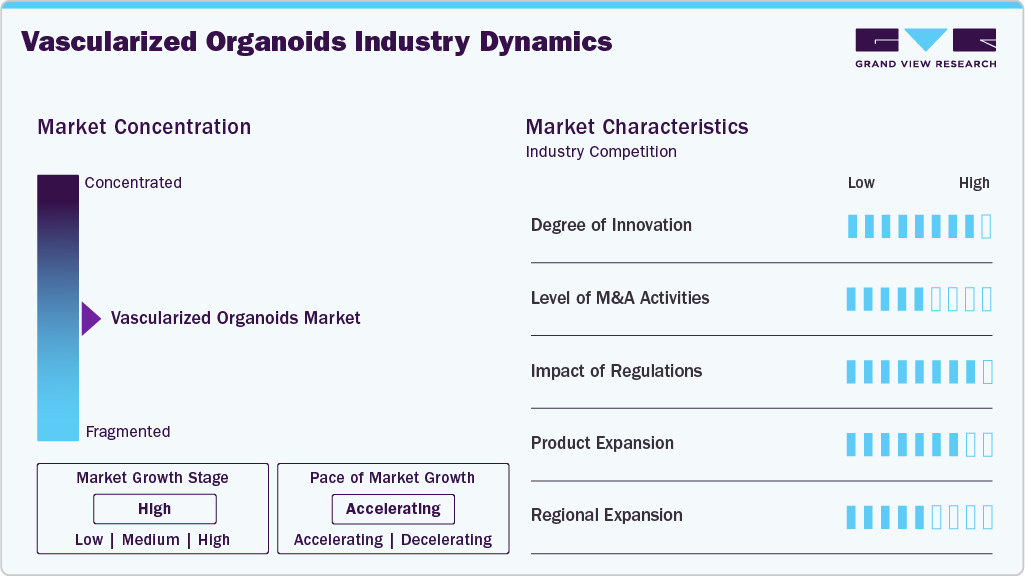
The vascularized organoids industry is characterized by a high degree of innovation, driven by advances in organotypic vascularization, stem cell differentiation, biomaterials, and 3D tissue engineering. Companies and research institutions are developing approaches that improve vascular functionality, maturation, and integration with organoid tissues. For instance, in May 2025, researchers developed vascular network-inspired 3D-printed scaffolds that reduced hypoxia and necrosis in midbrain organoids and improved their physiological and pharmacological responses.
 To learn more about this report, Download Free Sample Report
 The vascularized organoids industry is experiencing moderate M&A activity, moderate M&A activity, as life science companies seek to strengthen their organoid and advanced cell-culture technology portfolios. For instance, in January 2025, Merck KGaA completed the acquisition of HUB Organoids, expanding its next-generation biology portfolio and integrating organoid technologies with its existing cell culture products and instrumentation.
“The use of organoids offers tremendous potential to improve the drug discovery process.”
- Jean-Charles Wirth, Head of Science and Lab Solutions, Life Science business of Merck
The vascularized organoids industry is influenced by regulatory and ethical considerations related to stem cell research, human-derived biological materials, preclinical testing, and potential therapeutic applications. Increasing emphasis on reproducibility, characterization, quality control, and standardized organoid models is encouraging developers to establish well-defined protocols. The absence of harmonized standards for vascularized organoid production and characterization, however, remains a consideration for broader commercialization.
The vascularized organoids industry is experiencing rapid growth, driven by the development of organ-specific models and advanced vascularization platforms that enhance tissue maturation and functionality. Developers are broadening applications across disease modeling, drug screening, and regenerative medicine. For instance, in March 2025, researchers established vascularized retinal organoids from human induced pluripotent stem cells by integrating vascular components with retinal organoids, supporting the development of organ-specific models for retinal research and disease studies.
The vascularized organoids industry is experiencing moderate regional expansion, supported by increasing research activity and investments in organoid and regenerative medicine technologies across emerging markets. China is emerging as an important research hub, supported by developments in vascularization, organ-on-chip systems, and tissue engineering. For instance, in May 2025, researchers from Fudan University and collaborating Chinese institutions developed a vascularized organoid-on-a-chip platform capable of supporting centimeter-scale organoid cultivation, highlighting regional advances in scalable vascularized organoid technologies.
Analyst Perspective
The vascularized organoids market is expected to witness significant growth, driven by increasing adoption of advanced 3D cell culture models in drug discovery, disease modeling, regenerative medicine, and developmental biology. Growing demand for physiologically relevant models with improved tissue complexity is accelerating the integration of vascular networks into organoid systems. Advancements in stem cell biology, microfluidics, and organ-on-chip technologies, coupled with rising investments in personalized medicine and pharmaceutical research, are expected to support market expansion. Market participants are focusing on developing scalable vascularized organoid platforms and strategic collaborations to enhance model functionality, reproducibility, and research applications.
Products & Services Insights
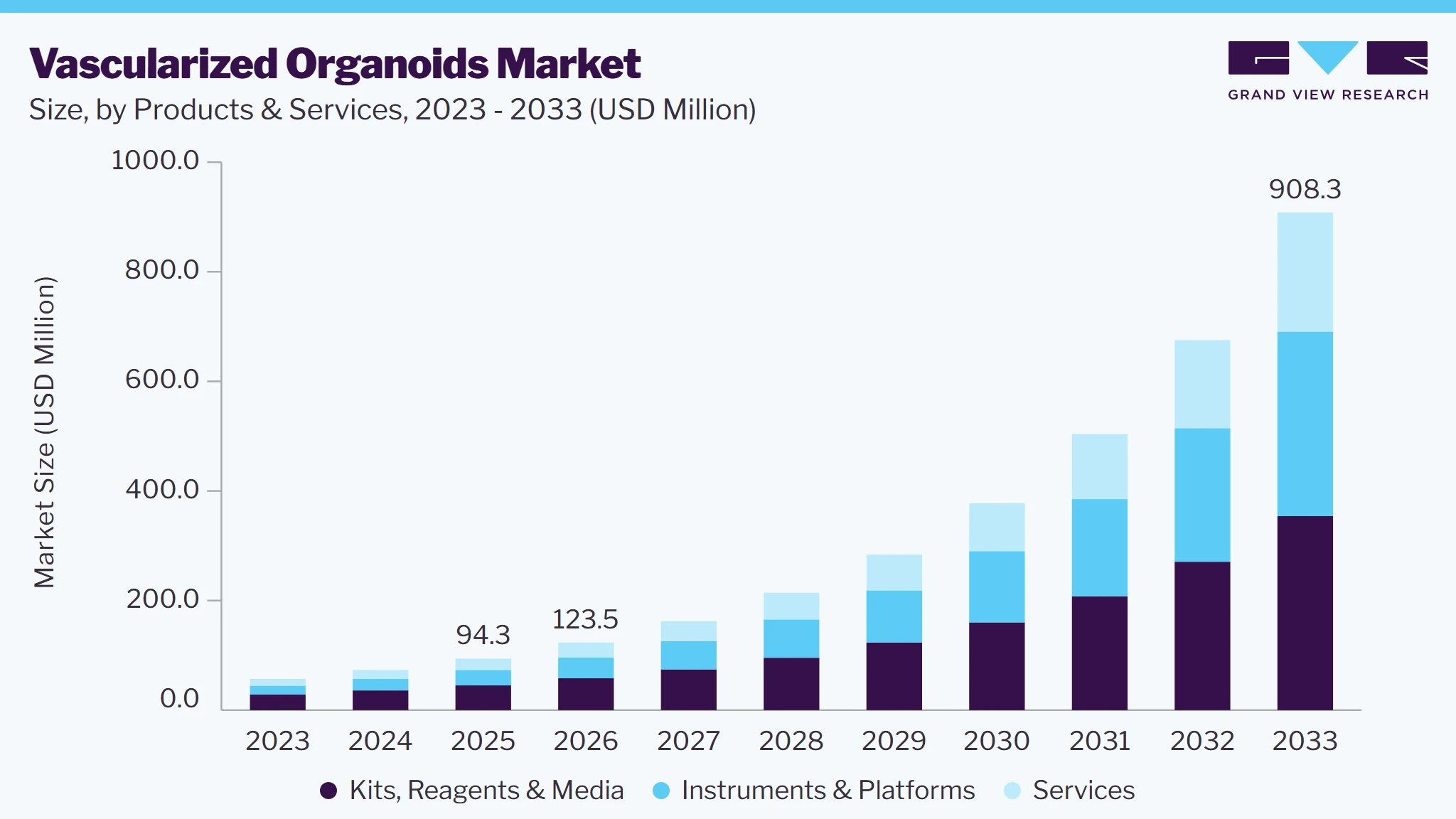
The kits, reagents & media segment accounted for the largest revenue share of 48.0% in 2025, driven by the recurring consumption of extracellular matrices and hydrogels, growth factors, endothelial cells, and differentiation kits across every vascularized organoid workflow. Unlike instruments, these consumables are repurchased with each experiment, and the growing availability of standardized, ready-to-use kits is lowering the technical barrier for laboratories adopting vascularized models. For instance, STEMCELL Technologies offers the STEMdiff Blood Vessel Organoid Kit, which enables researchers to generate blood vessel organoids containing endothelial cells and pericytes from human pluripotent stem cells without serum screening or extensive protocol optimization, supporting the use of kit-based workflows in disease modeling and drug discovery.
The instruments & platforms segment is expected to register the fastest CAGR of 36.5% over the forecast period, driven by the increasing adoption of microfluidic chips, perfusion systems, and bioprinters that provide controlled flow, improved nutrient and oxygen delivery, and higher experimental throughput. For instance, in June 2025, Emulate, Inc. commercially launched the AVA Emulation System, a self-contained benchtop instrument that cultures, incubates, and images up to 96 independent Organ-Chip samples in a single run, combining high-throughput microfluidic culture, environmental control, and real-time imaging. Such platforms are expected to accelerate the uptake of perfused, vascularized tissue models in pharmaceutical research.
Vascularization Approach Insights
The static in vitro methods segment accounted for the largest revenue share of 42.0% in 2025, owing to the widespread use of endothelial co-culture and self-vascularization protocols that can be performed in standard culture plates without specialized flow equipment. Their lower cost, ease of implementation, compatibility with established organoid protocols, and availability of commercial media and cell sources make them the preferred entry point for academic laboratories and early-stage drug screening programs.
The perfused / microfluidic systems segment is expected to register the fastest CAGR of 37.4% over the forecast period, driven by the ability of organ-on-chip and vessel-on-chip platforms to deliver luminal perfusion, reduce necrotic core formation, and support longer-term culture with more physiologically relevant shear stress. Supportive regulatory momentum is further strengthening demand. For instance, in April 2025, the U.S. FDA announced a plan to phase out animal testing requirements in favor of new approach methodologies, including organoids and organ-on-a-chip systems, and later that month the NIH established the Office of Research Innovation, Validation, and Application (ORIVA) to advance human-based research technologies.
Organoid Type Insights
The liver segment accounted for the largest revenue share of 26.0% in 2025, as drug-induced liver injury remains a leading cause of clinical attrition and post-market withdrawal, making hepatic models central to ADME and safety assessment. Vascularization improves hepatocyte function, metabolic zonation, and long-term viability, enhancing the predictive value of liver organoids in preclinical studies. For instance, Emulate, Inc.’s Liver-Chip S1, the first organ-chip admitted to the FDA’s ISTAND program, demonstrated 87% sensitivity and 100% specificity for drug-induced liver injury, reinforcing confidence in human-relevant liver models.
The cardiac segment is expected to register the fastest CAGR of 35.8% over the forecast period, driven by the high burden of cardiovascular disease, the need for improved screening for cardiotoxicity, and growing research into vascularized heart models for developmental and disease studies. For instance, in June 2025, researchers at Stanford Medicine reported an optimized method for growing heart organoids that reliably generate nearly all major cardiac cell types, including a robust network of blood vessels, thereby addressing a key limitation of earlier cardiac organoid models.
Application Insights
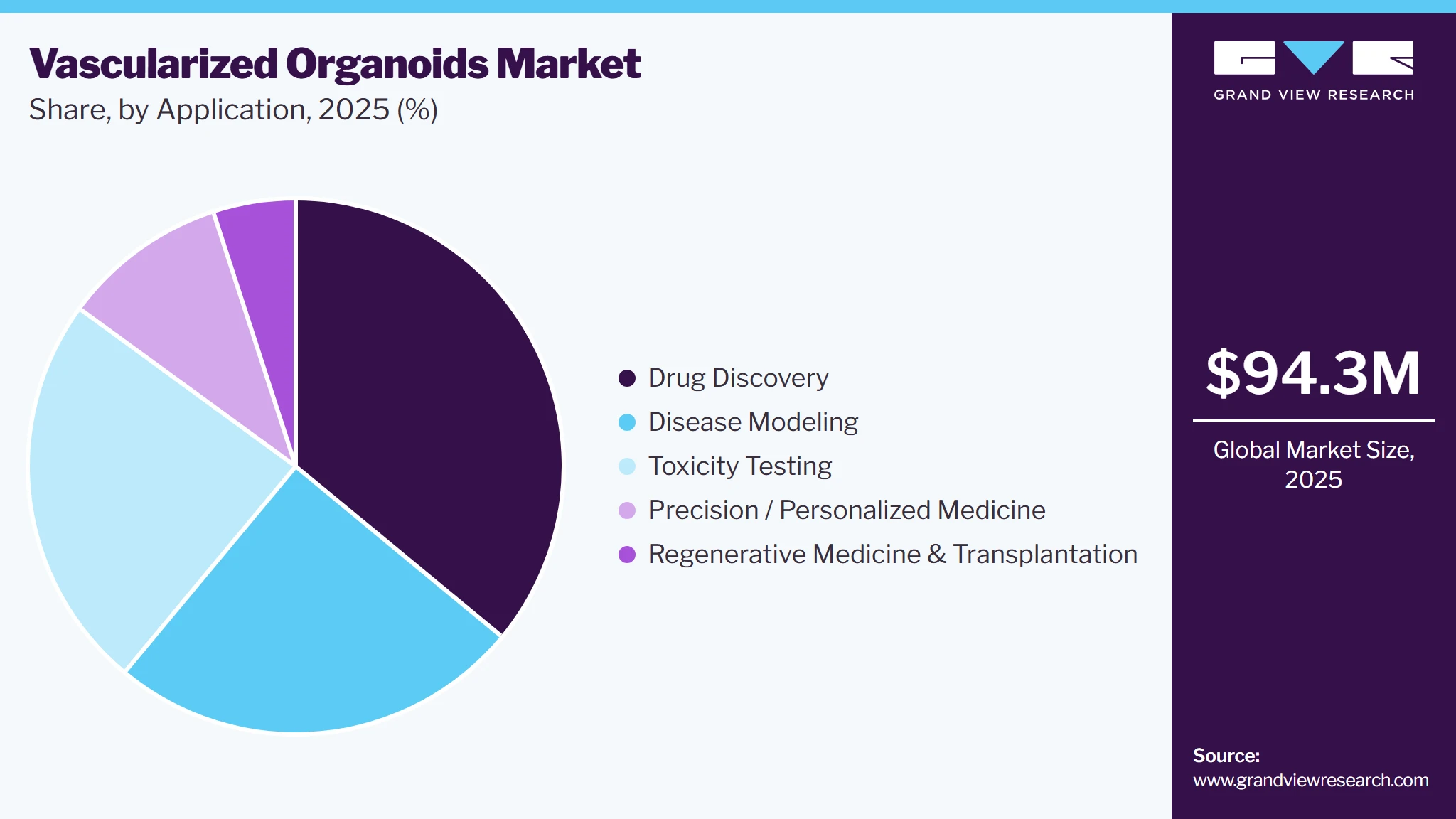
The drug discovery segment accounted for the largest revenue share, at 36.0% in 2025, driven by the pharmaceutical industry’s need for human-relevant models that better predict efficacy and safety prior to clinical trials. Vascularized organoids enable target validation, lead optimization, and compound screening in tissues with improved maturity and nutrient transport, helping reduce late-stage attrition. For instance, in May 2025, Vivodyne raised USD 40 million in Series A funding to scale its robotics- and AI-driven platform for testing drug candidates on lab-grown human tissues, including a new 23,000-square-foot facility in South San Francisco.
 To learn more about this report, Download Free Sample Report
 The precision / personalized medicine segment is expected to register the fastest CAGR of 36.2% over the forecast period, driven by the growing use of patient-derived vascularized organoids to evaluate individual responses to therapies and guide treatment selection, particularly in oncology. Advances in stem cell reprogramming, improved model reproducibility, and increasing clinical interest in functional precision medicine are expected to support segment growth.
End-use Insights
The pharmaceutical & biotechnology companies segment accounted for the largest revenue share of 51.0% in 2025, driven by substantial R&D spending, rising adoption of new approach methodologies in preclinical programs, and the need to reduce reliance on animal models that often fail to predict human outcomes. These companies are increasingly integrating vascularized organoid and organ-on-chip platforms into efficacy, toxicity, and ADME workflows, either in-house or through partnerships with technology providers.
The CROs segment is expected to register the fastest CAGR of 38.6% over the forecast period, driven by the increasing outsourcing of preclinical testing and the limited in-house expertise of many drug developers in generating regulator-ready data from complex in vitro models. CROs are expanding their microphysiological system and organoid-based service offerings, including contract testing and custom model development, to meet rising demand for human-relevant safety and efficacy data.
Regional Insights
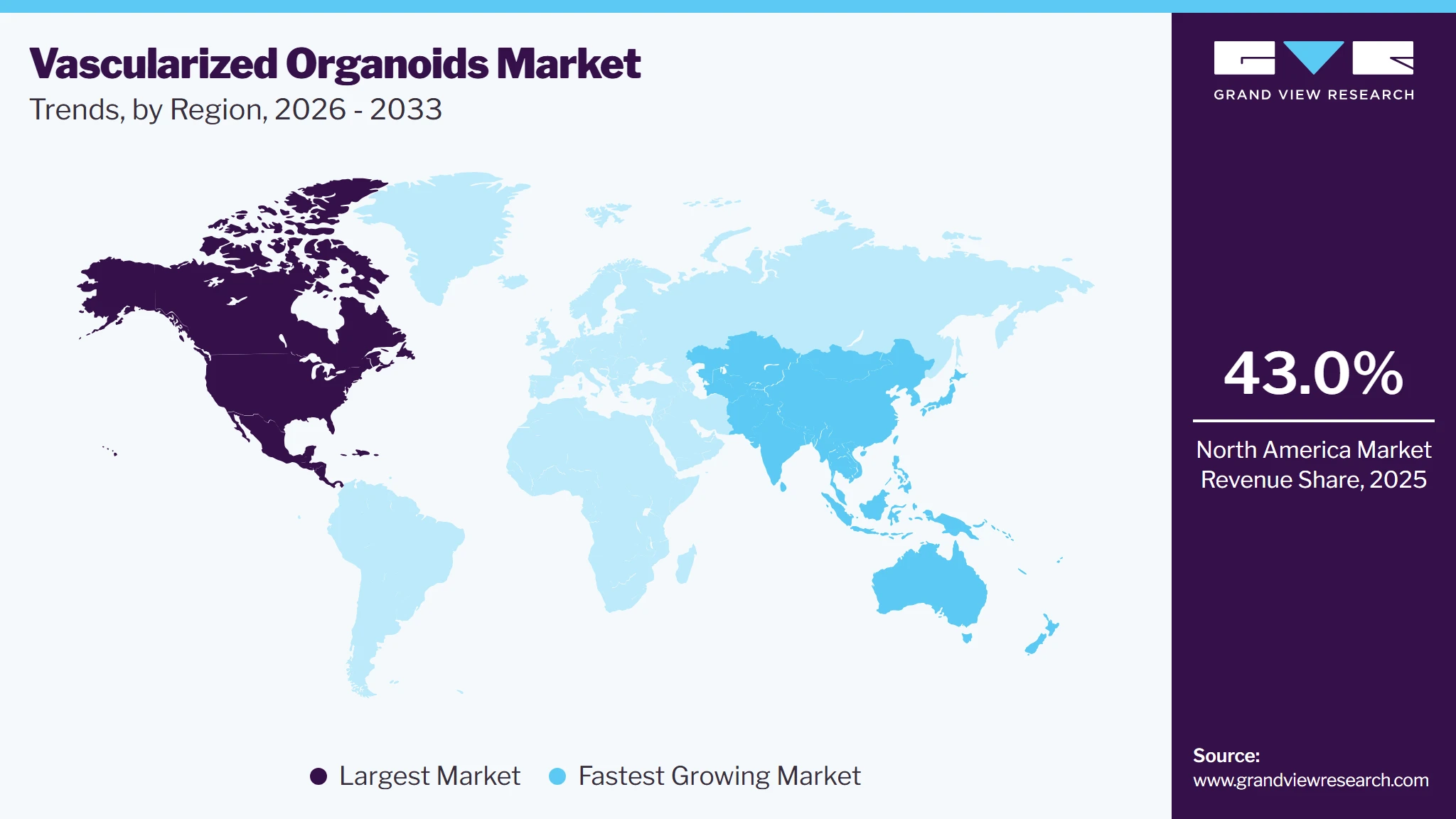
North America dominated the vascularized organoids industry, accounting for the largest revenue share of 43.0% in 2025, supported by advanced stem cell research, strong academic-industry collaboration, and increasing development of physiologically relevant organoid models. According to an article published by NIH in May 2025, researchers developed vascular network-inspired scaffolds that improved the functionality of human midbrain organoids, demonstrating continued innovation in vascularized tissue modeling in the region.
 To learn more about this report, Download Free Sample Report
 U.S. Vascularized Organoids Market Trends
The vascularized organoids industry in the U.S. is expected to grow over the forecast period, supported by strong translational research and increasing development of vascularized models for disease research and therapeutic evaluation. For instance, in July 2025, researchers at the University of North Texas developed vascularized heart organoids with blood-vessel networks to improve the modeling and testing of cardiovascular treatments.
Europe Vascularized Organoids Market Trends
The vascularized organoids market in Europe was identified as a lucrative region in this industry, supported by expanding research programs focused on vascular biology, organoid development, and regenerative medicine. For instance, in April 2025, the European Commission launched the BVO project under the Marie Skłodowska-Curie Actions program to investigate blood-vessel organoids and their role in human development, supporting regional research capabilities.
The UK vascularized organoids market is supported by established stem cell research, advanced in vitro modeling capabilities, and increasing development of physiologically relevant vascular models. For instance, in April 2026, Queen Mary University of London’s Centre for Predictive in vitro Models reported a vascular organoid platform generated from human induced pluripotent stem cells for modeling vascular inflammation, atherosclerosis, vascular calcification, and angiogenesis, highlighting the UK’s expanding capabilities in vascularized organoid research.
The vascularized organoids market in Germany is anticipated to grow significantly over the forecast period, supported by strong biomedical research capabilities and increasing development of advanced human tissue models for disease research and therapeutic development. For instance, in May 2025, researchers at the Max Delbrück Center in Berlin developed a vascularized organoid model of human stem cell-derived pancreatic islets with integrated blood vessels, demonstrating improved beta-cell maturation and insulin secretion and supporting applications in diabetes research and cell-based therapies.
“Non-vascularized organoids had the most immature cells, a greater proportion matured with vascularization, and even more matured by adding nutrient flow through blood vessels. A human cell model of pancreatic islets that closely replicates in-vivo physiology opens up novel avenues for investigating the underlying mechanisms of diabetes.”
- Maike Sander, Scientific Director of the Max Delbrück Center
Asia Pacific Vascularized Organoids Market Trends
Asia Pacific is expected to grow at the fastest CAGR of 38.03% during the forecast period, supported by expanding stem cell research, increasing investments in tissue engineering, and growing development of advanced organoid and organ-on-chip technologies. For instance, in March 2025, researchers at Gifu Pharmaceutical University in Japan developed vascularized retinal organoids from iPS cells, demonstrating their potential for modeling diabetic retinopathy and supporting the region’s expanding capabilities in vascularized organoid research.
The China vascularized organoids market is emerging as a key center for vascularized organoid research, supported by advances in bioprinting, stem cell engineering, and tissue regeneration. For instance, in November 2025, researchers at Sun Yat-Sen University developed pre-vascularized skin organoid models using coaxial 3D printing, integrating vascular channels with organoid microspheres to support wound-healing applications.
The vascularized organoids market in Japan is expected to grow steadily, supported by advanced stem cell research and increasing development of physiologically relevant human tissue models. For instance, in July 2025, researchers at the Institute of Science Tokyo developed human liver organoids containing authentic sinusoidal-like blood vessels, supporting applications in regenerative medicine, drug discovery, and disease modeling.
Latin America Vascularized Organoids Market Trends
The Latin America vascularized organoids market is expected to grow gradually, supported by expanding stem cell research, tissue engineering capabilities, and academic interest in advanced human disease models. Increasing collaborations between research institutions and biotechnology organizations are expected to strengthen regional capabilities and encourage the adoption of vascularized organoid technologies.
MEA Vascularized Organoids Market Trends
MEA vascularized organoids market is expected to grow steadily, supported by increasing research activity in regenerative medicine, tissue engineering, stem cell research, and organoid-based disease modeling. Growing investments in advanced biomedical research infrastructure and collaborations among academic and research institutions are expected to strengthen regional capabilities and support the gradual adoption of vascularized organoid technologies.
Key Vascularized Organoids Company Insights
Several established life science tool providers and specialized technology developers operate in the vascularized organoids market. Their portfolios span cell culture consumables, extracellular matrices, stem cell and differentiation media, organ-on-chip and microphysiological systems, and contract testing services. Leading players include Thermo Fisher Scientific Inc., Corning Incorporated, STEMCELL Technologies, Emulate, Inc., CN Bio Innovations, MIMETAS, InSphero AG, TissUse GmbH, AIM Biotech, and Vivodyne. They maintain a strong market presence through product launches, advances in perfusion and microfluidic platforms, strategic collaborations with pharmaceutical companies, and funding-backed capacity expansion. Their initiatives focus on improving model reproducibility, vascular functionality, throughput, and regulatory acceptance of human-relevant testing methods.
Key Vascularized Organoids Companies:
The following key companies have been profiled for this study on the vascularized organoids market.
-
Thermo Fisher Scientific Inc.
-
Corning Incorporated
-
STEMCELL Technologies
-
Emulate, Inc.
-
CN Bio Innovations
-
MIMETAS
-
InSphero AG
-
TissUse GmbH
-
AIM Biotech
-
Vivodyne
Competitive Benchmarking
Category
Operating Strategies
Competitive Edge
Weakness
Established Players (Thermo Fisher Scientific Inc., Corning Incorporated, STEMCELL Technologies)
Focus on expanding portfolios of kits, reagents, media, extracellular matrices, and 3D culture products that support vascularized organoid workflows across drug discovery, disease modeling, and toxicity testing.
Broad product portfolios, global distribution networks, strong brand recognition, and established relationships with pharmaceutical companies and academic institutes, enabling recurring consumables revenue.
Vascularized organoids represent a small share of their overall revenue. Their largely consumables-based offerings also face competition from integrated platform providers.
Emerging Players (Emulate, Inc., CN Bio Innovations, MIMETAS, InSphero AG, TissUse GmbH, AIM Biotech, Vivodyne)
Emphasize proprietary organ-on-chip, vessel-on-chip, multi-organ, and automated human tissue platforms. These are often combined with contract testing and custom model development services for pharmaceutical partners.
Specialized expertise in perfused and microfluidic vascularization, high physiological relevance, and agility in developing application-specific models aligned with the regulatory shift toward new approach methodologies.
Limited scale, manufacturing capacity, and financial resources compared with large life science companies. They also face high platform costs, a need for validation data, and dependence on venture funding and pharma adoption cycles.
Recent Developments
- In August 2026, Bruker announced a majority investment in MIMETAS to expand human physiology-relevant drug discovery capabilities through organ-on-chip and advanced human tissue model technologies, strengthening commercial infrastructure for complex 3D tissue and organoid-based research.
- In May 2026, Tissue Dynamics partnered with Galmed Pharmaceuticals to develop a human-centered chronic cardiac fibrosis model using vascularized, multichambered cardiac organoids with embedded metabolic sensors, expanding vascularized organoid applications in disease modeling and therapeutic research.
"The ability to model chronic human fibrosis in real time and at scale could allow us to investigate interventions that do more than delay disease progression. If we can identify approaches that improve tissue repair and help resolve fibrosis by correcting the underlying metabolic dysfunction, this has the potential to be a game changer for patients and for drug development in this field. This model is one of a kind. By combining vascularized, multichambered human cardiac organoids with continuous metabolic sensing and AI, we can investigate human fibrotic processes with unprecedented precision. This is especially important for metabolic processes such as lipid remodeling and SCD1 activity, where human relevance, timing, and tissue context are essential to understanding disease and therapeutic response."
- Prof. Yaakov Nahmias, Founder and CSO of Tissue Dynamics
- In December 2025, Thermo Fisher Scientific partnered with AIM Biotech to develop vascularized tumoroid models by combining patient-derived tumor organoids, endothelial cells, and fibroblasts within microfluidic platforms, supporting reproducible vascularized organoid models for cancer research and drug screening.
Vascularized Organoids Market Report Scope
Report Attribute
Details
Market size in 2025
USD 94.3 million
Estimated market size in 2026
USD 123.5 million
Projected market size by 2033
USD 908.3 million
Growth rate
CAGR of 33.0% from 2026 to 2033
Historical data
2021 - 2025
Forecast period
2026 - 2033
Quantitative units
Revenue in USD million, and CAGR from 2026 to 2033
Report coverage
Revenue forecast, company ranking, competitive landscape, growth factors, and trends
Segments covered
Products & services, vascularization approach, organoid type, application, end use, and region
Regional scope
North America; Europe; Asia Pacific; Latin America; MEA
Country scope
U.S.; Canada; Mexico; UK; Germany; France; Italy; Spain; Norway; Denmark; Sweden; China; Japan; India; South Korea; Australia; Thailand; Brazil; Argentina; Saudi Arabia; South Africa; UAE; Kuwait
Key companies profiled
Thermo Fisher Scientific Inc.; Corning Incorporated; STEMCELL Technologies, Emulate, Inc.; CN Bio Innovations; MIMETAS; InSphero AG; TissUse GmbH; AIM Biotech; Vivodyne
Customization scope
Free report customization (equivalent up to 8 analysts' working days) with purchase. Addition or alteration to country, regional & segment scope.
Pricing and purchase options
Avail customized purchase options to meet your exact research needs. Explore purchase options
Global Vascularized Organoids Market Report Segmentation
This report forecasts revenue growth and provides an analysis on the latest trends in each of the sub-segments from 2021 to 2033. For the purpose of this report, Grand View Research has segmented the global vascularized organoids market on the basis of products & services, vascularization approach, organoid type, application, end-use, and region:
-
Products & Services Outlook (Revenue, USD Million, 2021 - 2033)
-
Kits, Reagents & Media
-
Instruments & Platforms
-
Services
-
-
Vascularization Approach Outlook (Revenue, USD Million, 2021 - 2033)
-
Static In Vitro Methods
-
Perfused / Microfluidic Systems
-
In Vivo / Transplantation-Based Methods
-
Bioprinted Constructs
-
-
Organoid Type Outlook (Revenue, USD Million, 2021 - 2033)
-
Liver
-
Brain
-
Cardiac
-
Kidney
-
Lung
-
Other
-
-
Application Outlook (Revenue, USD Million, 2021 - 2033)
-
Drug Discovery
-
Disease Modeling
-
Toxicity Testing
-
Precision / Personalized Medicine
-
Regenerative Medicine & Transplantation
-
-
End-use Outlook (Revenue, USD Million, 2021 - 2033)
-
Pharmaceutical & Biotechnology Companies
-
Academic & Research Institutes
-
CROs
-
-
Regional Outlook (Revenue, USD Million, 2021 - 2033)
-
North America
-
U.S.
-
Canada
-
Mexico
-
-
Europe
-
UK
-
Germany
-
France
-
Italy
-
Spain
-
Denmark
-
Sweden
-
Norway
-
-
Asia Pacific
-
Japan
-
China
-
India
-
Australia
-
Thailand
-
South Korea
-
-
Latin America
-
Brazil
-
Argentina
-
-
Middle East and Africa (MEA)
-
South Africa
-
Saudi Arabia
-
UAE
-
Kuwait
-
-
Research Methodology
The vascularized organoids market figures in this report are based on a proven research process that combines executive interviews with secondary research from proprietary databases, company filings, and recognized regulatory and institutional sources. Market size is built through value-chain sizing-reconciling supply-side and demand-side estimates-and triangulated with bottom-up and top-down approaches. Every estimate passes multiple levels of expert validation before publication, with each vascularized organoids segment quantified using the revenue-capture definitions in the table below.
Segment Definition
Segment- Products & Services
Revenue Capture Definition
Kits, Reagents & Media
Revenue generated from consumables used to establish, differentiate, and maintain vascularized organoids, including extracellular matrices and hydrogels, growth factors and cytokines, endothelial and supporting cells, specialized culture media, and ready-to-use differentiation kits.
Instruments & Platforms
This segment captures income from hardware and platform systems that enable vascularization and perfusion of organoids, including microfluidic chips, organ-on-chip and vessel-on-chip platforms, perfusion and pump systems, and bioprinters used to fabricate vascularized constructs.
Services
Market value in this category stems from outsourced services related to vascularized organoids, such as contract testing, efficacy and toxicity screening, custom model development, and assay design delivered by technology providers and service organizations.
Segment- Vascularization Approach
Revenue Capture Definition
Static In Vitro Methods
Revenue generated from vascularized organoids produced under static culture conditions, including endothelial co-culture and self-vascularization approaches in which vascular networks form within the organoid without active perfusion.
Perfused / Microfluidic Systems
This segment captures income from vascularized organoid models maintained under controlled fluid flow in organ-on-chip, vessel-on-chip, and other microfluidic systems that provide luminal perfusion, shear stress, and improved nutrient and oxygen exchange.
In Vivo / Transplantation-Based Methods
Market value in this category arises from approaches in which organoids are transplanted into host animals or tissues to acquire host-derived vasculature, including ectopic and orthotopic transplantation models used for maturation and functional studies.
Bioprinted Constructs
Revenue originates from vascularized tissue constructs fabricated using 3D bioprinting and related biofabrication techniques, where perfusable channels or endothelialized networks are engineered into organoid-containing structures.
Segment- Organoid Type
Revenue Capture Definition
Liver
Revenue generated from vascularized liver organoids used for hepatotoxicity and drug-induced liver injury assessment, drug metabolism studies, and modeling of liver diseases such as fatty liver disease and fibrosis.
Brain
This segment captures income from vascularized brain and cerebral organoids used in neurodevelopmental research, neurodegenerative and neurological disease modeling, and blood-brain barrier and CNS drug permeability studies.
Cardiac
Market value in this category stems from vascularized cardiac organoids applied in cardiotoxicity screening, cardiac development research, and modeling of cardiovascular diseases.
Kidney
Revenue reflects the use of vascularized kidney organoids for nephrotoxicity testing, modeling of renal diseases, and studies of glomerular and tubular function.
Lung
This segment represents income from vascularized lung organoids used in respiratory disease modeling, infectious disease research, and inhalation toxicity and drug efficacy studies.
Other
Includes revenue from vascularized organoids of other tissue types, such as intestinal, pancreatic, skin, tumor, and multi-tissue models, not covered in the categories above.
Segment- Application
Revenue Capture Definition
Drug Discovery
Revenue generated from the use of vascularized organoids in target identification and validation, compound screening, lead optimization, and efficacy evaluation during pharmaceutical and biotechnology drug development.
Disease Modeling
This segment captures income from vascularized organoids used to recapitulate disease mechanisms and progression, including cancer, genetic, infectious, vascular, and degenerative disorders, for basic and translational research.
Toxicity Testing
Market value in this category stems from vascularized organoid models deployed to assess drug, chemical, and consumer-product safety, including organ-specific toxicity and ADME evaluation as alternatives or complements to animal testing.
Precision / Personalized Medicine
Revenue arises from patient-derived vascularized organoids used to predict individual responses to therapies and support treatment selection and stratification in clinical and translational settings.
Regenerative Medicine & Transplantation
Includes revenue from vascularized organoids and tissue constructs developed for tissue repair, replacement, and transplantation research, an emerging application that remains largely preclinical.
Segment- End Use
Revenue Capture Definition
Pharmaceutical & Biotechnology Companies
Revenue generated from purchases of vascularized organoid products, platforms, and services by pharmaceutical and biotechnology companies for in-house discovery, preclinical safety, and translational research.
Academic & Research Institutes
This segment captures income from universities, government laboratories, and research institutes using vascularized organoids for basic research, disease modeling, method development, and standardization initiatives.
CROs
Market value in this category stems from contract research organizations that use vascularized organoid models to deliver outsourced efficacy, toxicity, and ADME testing and custom model development services to drug developers and other sponsors.
Estimation Model
Method
Section
Description
Top-Down
Commodity Flow Analysis
Market size was estimated by analyzing revenues generated by key vascularized organoid manufacturers and providers, supported by company annual reports, investor presentations, product portfolios, industry databases, and primary research. Revenue contributions from private and emerging players were assessed and validated through expert interviews to derive the overall market value.
Parent Market
Parent Market & Penetration-Based Analysis
The vascularized organoids market was evaluated within the broader human organoids market. The penetration of vascularized models within human organoids, including disease modeling, drug discovery and development, regenerative medicine, and toxicity testing, was assessed based on adoption trends, research activity, technological maturity, and end-user demand to estimate the addressable market.
Segmentation
Country-Level Segment Share Modeling
Market shares for products & services, vascularization approach, organoid type, application, and end-use segments were derived using country-specific organoid research activity, biopharmaceutical R&D expenditure, academic research funding, clinical research infrastructure, adoption of advanced 3D cell culture technologies, and availability of organoid platforms. Weighted average calculations were applied to determine regional and global segment distributions.
Validation
Data Triangulation & Validation Model
Market estimates were validated through triangulation of secondary research, primary interviews, company-level revenue assessments, parent-market penetration analysis, product utilization trends, and end-user demand analysis to ensure consistency and accuracy across market segments and geographies.
Forecasting
Forecasting & CAGR Modeling
Market forecasts were developed using historical adoption trends, growth in human organoid research, increasing demand for physiologically relevant disease models, expansion of drug discovery and toxicity testing applications, advancements in vascularization technologies, and increasing investments in 3D cell culture and regenerative medicine. Regression-based analysis and trend modeling were applied to project future market growth and CAGR.
Delivered Customizations
This report has been delivered with the following In-depth customizations
Client Request
Customization Delivered
Value Adds
Organoid Development Workflow & Process Assessment
Detailed evaluation of vascularized organoid workflows across cell sourcing, stem cell differentiation, organoid formation, vascularization, maturation, culture, imaging, characterization, and downstream application stages.
Helps clients identify process bottlenecks, optimize development workflows, evaluate resource requirements, and improve consistency and reproducibility across vascularized organoid production.
Vascularized Organoid Application & Drug Screening Assessment
Assessment of vascularized organoid applications across drug efficacy and toxicity testing, disease modeling, cancer research, regenerative medicine, and personalized medicine, including evaluation of model relevance and adoption potential.
Helps pharmaceutical and biotechnology clients identify high-value application areas, evaluate alternatives to conventional preclinical models, and prioritize opportunities for drug development and translational research.
Organoid Platform Technology & Vendor Benchmarking
Comparative benchmarking of vascularized organoid platforms and manufacturers based on organ types supported, vascularization capabilities, cell sources, automation, throughput, customization, characterization capabilities, and commercial availability.
Enables clients to assess competitive positioning, identify technology gaps, evaluate potential partners, and support technology sourcing and investment decisions.
Frequently Asked Questions About This Report
The global vascularized organoids market size was valued at USD 94.3 million in 2025 and is estimated at USD 123.5 million for 2026.
The global vascularized organoids market is expected to grow at a CAGR of 33.0% from 2026 to 2033, reaching USD 908.3 million by 2033.
Asia Pacific is the fastest-growing region over the forecast period.
North America dominated the market, accounting for the largest revenue share of 43.0% in 2025.
Market growth is driven by increasing adoption of vascularized organoids in drug discovery, disease modeling, regenerative medicine, and personalized medicine, alongside advancements in stem cell technologies, 3D bioprinting, vascularization techniques, and organoid culture systems.
Key players include Thermo Fisher Scientific Inc., Corning Incorporated, STEMCELL Technologies, Emulate, Inc., CN Bio Innovations, MIMETAS, InSphero AG, TissUse GmbH, AIM Biotech, and Vivodyne
The static in vitro methods segment accounted for the largest revenue share of 42.0% in 2025, while perfused/microfluidic systems is the fastest-growing segment.
The drug discovery segment held the highest market share of 36.0% in 2025, while precision/personalized medicine is the fastest-growing segment.
The kits, reagents & media segment accounted for the largest revenue share of 48.0% in 2025, while instruments & platforms segment is the fastest-growing products & services.
About the Author(s)
Biotechnology Research Team
Healthcare · BiotechnologyThis report was authored by the biotechnology research team at Grand View Research - comprising two research analysts, one senior research analyst, and one industry expert - with specialized expertise in the biotechnology segment of the healthcare industry. All findings are based on proprietary healthcare databases, executive interviews, and regulatory analysis, subject to internal peer review prior to publication.
Last Updated:
Speak to Analyst

Customize this report to your needs - add regions, segments, or data points, with 20% free customization.
Or view our licence options:


ISO 9001:2015 & 27001:2022 Certified
We are GDPR and CCPA compliant! Your transaction & personal information is safe and secure. For more details, please read our privacy policy.


