
- Home
- »
- Animal Health
- »
-
Veterinary Vitamin Manufacturing Market Report, 2026-2033GVR Report cover

Veterinary Vitamin Manufacturing Market (2026 - 2033)
Size, Share & Trends Analysis Report By Animal (Production Animals, Companion Animals), By Product (Vitamin B-Complex, Vitamin B12, Vitamin K), By Type, By Dosage Form, By Value Chain, By Region, And Segment Forecasts
Market Size, 2025
$1.5BMarket Estimate, 2026
$1.6BMarket Forecast, 2033
$2.9BCAGR, 2026–2033
8.7%Veterinary Vitamin Manufacturing Market Summary
The global veterinary vitamin manufacturing market size was valued at USD 1.5 billion in 2025 and is projected to grow from USD 1.6 billion in 2026 to USD 2.9 billion by 2033, at a CAGR of 8.7% from 2026 to 2033. Asia Pacific dominated the market, accounting for the largest revenue share of 36.5% in 2025. The market growth is driven by its large livestock and poultry population, rising companion animal ownership, increasing adoption of preventive animal healthcare, and growing demand for feed-grade vitamin premixes.
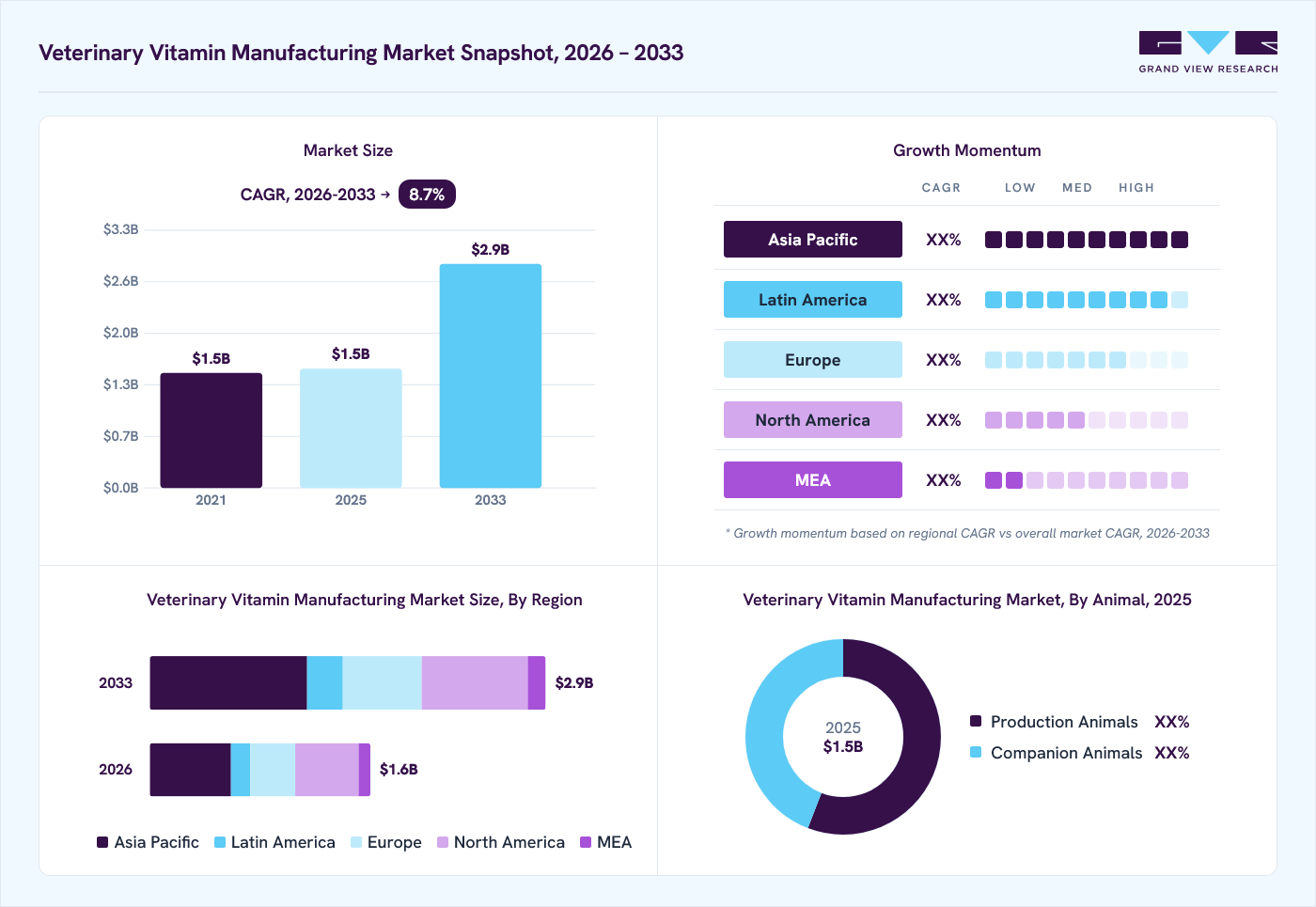 Source: Grand View Research, IR Documents, Primary Interviews, Paid DatabasesTo learn more about this report,
 Download Free Sample Report
Key Market Trends & Insights
- By animal: Production animals held the largest revenue share of 55.8% in 2025
- By product: Vitamin B-complex held the largest revenue share of 28.0% in 2025
- By type: Finished drug products held the largest revenue share of 55.6% in 2025
- By dosage form: Oral segment dominated the industry with the largest revenue share of 77.4% in 2025
- By value chain: Animal feed & nutrition companies held the largest share of 36.1% in 2025
Regional Highlights
- Largest regional market: Asia Pacific (36.5% revenue share, 2025)
- By country: China held the largest market share in 2025.
Market Size & Forecast
- Market Size in 2025: USD 1.5 Billion
- Estimated Market Size in 2026: USD 1.6 Billion
- Projected Market Size by 2033: USD 2.9 Billion
- CAGR (2026-2033): 8.7%
Prism AI by Grand View Research Free to tryAsk a question about the veterinary vitamin manufacturing marketTry asking✓Every figure cited from GVR research Prefer the report? Download free sample →In addition, advanced feed manufacturing infrastructure, stringent animal welfare and food safety regulations, antimicrobial stewardship initiatives, higher pet healthcare expenditure, and the strong presence of leading animal nutrition and veterinary health manufacturers further support sustained growth of the veterinary vitamin manufacturing industry.
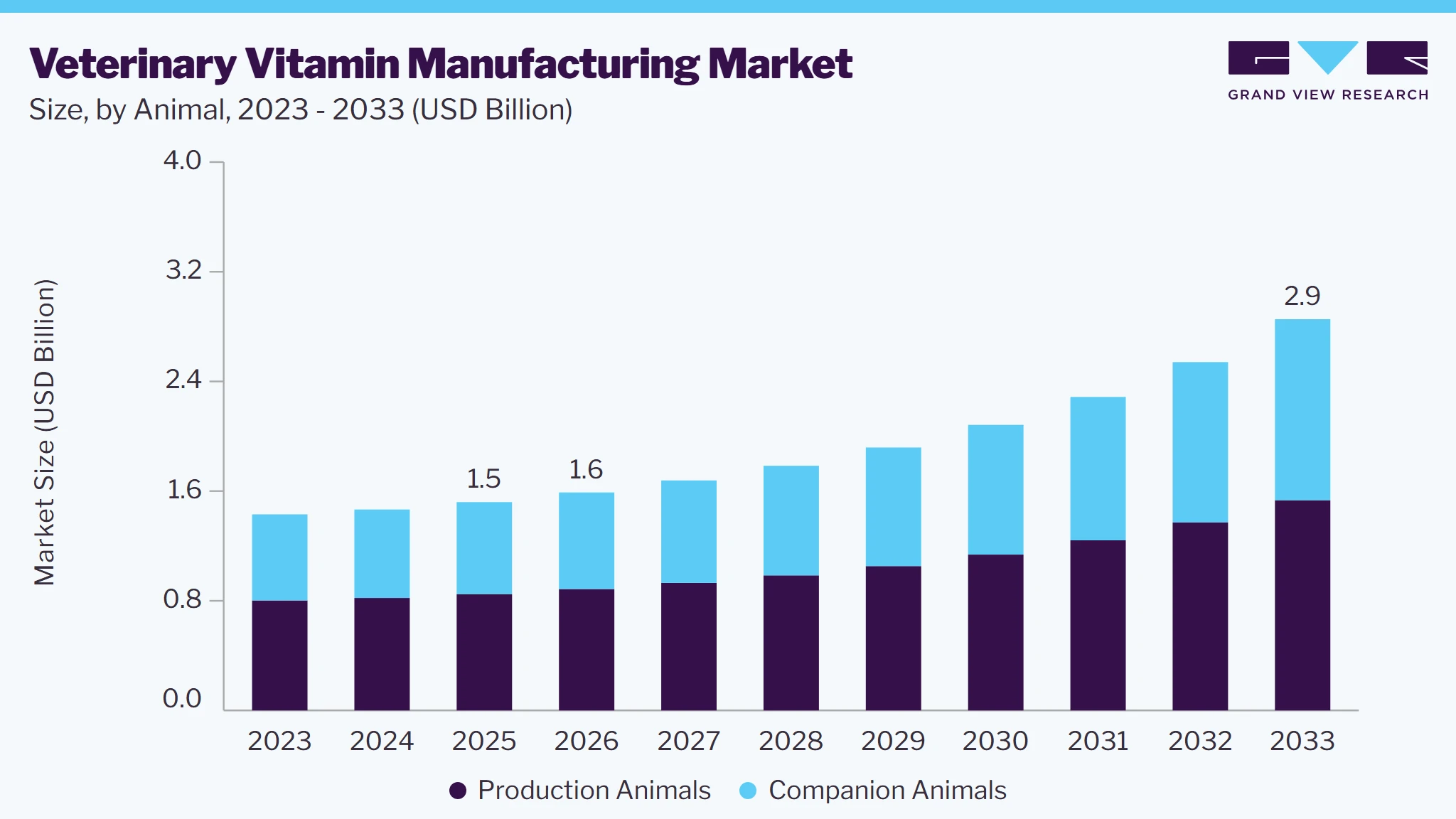 To learn more about this report, Download Free Sample Report
Market Dynamics
The veterinary vitamin manufacturing market is experiencing steady growth, driven by increasing livestock production, rising companion animal ownership, and greater emphasis on preventive animal healthcare. In addition, growing awareness of nutritional deficiencies and their impact on animal productivity, immunity, and reproductive performance has increased demand for species-specific vitamin formulations. The expanding adoption of precision livestock farming, fortified feed additives, and customized nutritional supplements further supports market expansion. In addition, increasing investments in animal nutrition research, advancements in microencapsulation and controlled-release technologies, and the development of multifunctional vitamin blends are enhancing product efficacy and stability.
Furthermore, regulatory emphasis on animal welfare, feed quality, and food safety is encouraging manufacturers to produce high-quality, compliant vitamin products. In addition, growing demand for antibiotic alternatives has also accelerated the use of vitamins to improve immune health and disease resistance. Moreover, strategic collaborations, capacity expansions, and investments by leading animal nutrition companies are strengthening global manufacturing capabilities, enabling wider product availability and supporting sustained market growth across both developed and emerging economies.
The government initiatives to strengthen domestic veterinary pharmaceutical manufacturing are driving the market growth. For instance, in July 2026, the U.S. Food and Drug Administration (FDA) launched a pilot program to encourage domestic production of animal drug products and active pharmaceutical ingredients by offering priority review of chemistry, manufacturing and controls (CMC) sections and permitting eligible sponsors to include multiple domestic active ingredient sources in original submissions. These measures are designed to improve supply chain resilience, reduce dependence on overseas manufacturing, and minimize product shortages. Such an initiative is expected to encourage manufacturers to expand U.S.-based production facilities, invest in advanced manufacturing technologies, and strengthen local sourcing capabilities.
Although focused on animal drugs, the program strengthens the broader veterinary pharmaceutical manufacturing ecosystem, encouraging investments in quality systems, production infrastructure, and regulatory compliance that also benefit veterinary vitamin manufacturers. In addition, in July 2026, Al Khayyat Investments announced a USD 100 million investment to establish VetHealth, a veterinary business focused on pharmaceuticals, biologicals, nutrition, diagnostics, and biosecurity, strengthening animal healthcare infrastructure, food security, and regional distribution capabilities across the Middle East while supporting livestock and companion animal health. Such a supportive regulatory environment is expected to accelerate innovation, enhance manufacturing capacity, and ensure a more reliable supply of veterinary nutritional products.
Limited awareness regarding preventive animal nutrition, particularly among small-scale livestock farmers and pet owners in developing regions, remains a significant restraint for the market. Many producers continue to prioritize treatment over preventive supplementation due to insufficient knowledge of the long-term benefits of vitamin-enriched nutrition on immunity, fertility, growth performance, and disease resistance. In addition, cost-sensitive purchasing behavior further discourages routine vitamin supplementation, especially where profit margins are narrow. In addition, inconsistent veterinary advisory services and limited access to animal nutrition education reduce the adoption of scientifically formulated vitamin products. This uneven market penetration restricts demand for premium veterinary vitamins and slows the expansion of manufacturers into rural and underserved markets, limiting overall market growth despite increasing global awareness of animal health and productivity.
Opportunity: Expansion of Precision Nutrition and Customized Vitamin Solutions
The growing adoption of precision livestock farming and personalized animal nutrition presents a significant opportunity for the market. Livestock producers and companion animal owners are seeking species-specific, life-stage-specific, and performance-oriented vitamin formulations that improve immunity, reproductive efficiency, feed conversion, and overall health outcomes. In addition, advances in precision feeding technologies, wearable health monitoring devices, and digital herd management platforms enable manufacturers to develop customized vitamin blends based on real-time nutritional requirements. Also, increasing demand for antibiotic-free animal production is accelerating the use of functional vitamins to naturally enhance disease resistance and productivity.
Some of the manufacturers can capitalize on this trend by introducing innovative formulations, including water-soluble, encapsulated, sustained-release, and multifunctional vitamin products tailored for poultry, swine, ruminants, aquaculture, and companion animals. in addition, expanding collaborations with feed manufacturers, veterinary clinics, and precision livestock technology providers will further create new revenue streams and strengthen market penetration across both developed and emerging regions.
Technology Advancements and Outlook of the Veterinary Vitamin Manufacturing Market
Category
Key Factors for Veterinary Vitamin Manufacturing Market
Technology Advancements
• Advanced vitamin stabilization and encapsulation technologies to improve shelf life and bioavailability
• Microencapsulation and coated-vitamin technologies for protection against degradation
• Improved synthesis, fermentation, and extraction processes for vitamin production
• Advanced premix blending and formulation technologies
• Automated quality-control systems for potency, purity, stability, and safety testing
• Improved packaging technologies for protecting vitamins from moisture, oxygen, light, and temperature
Outlook
• These technologies is expected to grow steadily, supported by increasing animal production and health-management requirements
• Greater adoption of science-based animal nutrition is expected to increase demand for specialized vitamin formulations
• Innovation in stabilization, encapsulation, and delivery technologies is expected to improve product performance
• Increasing demand for premium pet nutrition and functional animal-health products will create additional opportunities
• Domestic manufacturing and R&D investments may support supply-chain resilience and reduce dependence on imported vitamin ingredients
Market Concentration & Characteristics
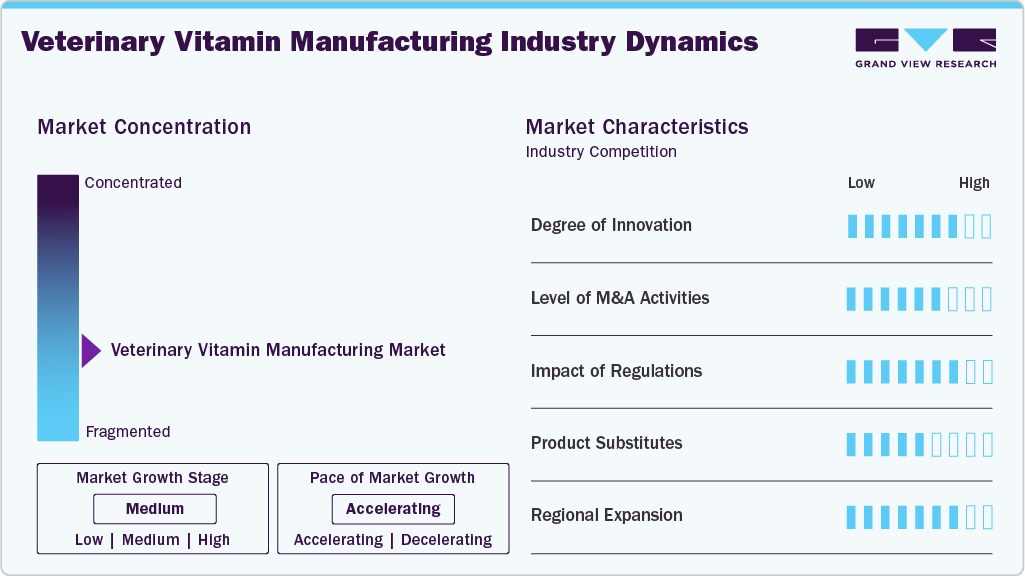
The industry is moderately consolidated, with multinational animal health and nutrition companies holding significant market shares through broad product portfolios, strong distribution networks, and advanced manufacturing capabilities. In addition, regional manufacturers compete by offering cost-effective, species-specific formulations, while continuous innovation, strategic partnerships, and capacity expansions intensify competition across global markets.
The veterinary vitamin manufacturing industry is witnessing growth attributed to advanced formulation technologies, including microencapsulation, sustained-release delivery systems, water-soluble vitamins, and species-specific nutritional blends. In addition, manufacturers are developing multifunctional products that combine vitamins with probiotics, minerals, amino acids, and phytogenic ingredients to enhance immunity, productivity, gut health, and reproductive performance across livestock and companion animals.
 To learn more about this report, Download Free Sample Report
Merger and acquisition activity is increasing as leading animal nutrition and veterinary health companies expand manufacturing capacity, strengthen product portfolios, and enhance geographic reach. The companies are acquiring regional manufacturers and nutrition specialists to access new markets, broaden distribution networks, and integrate innovative vitamin formulations.
Stringent regulations governing feed additives, veterinary supplements, product quality, manufacturing standards, and labeling significantly influence the market. In addition, compliance with GMP, feed safety standards, and country-specific approval requirements requires continuous investment in quality systems and documentation. Harmonization of regulatory frameworks is improving international trade, while stricter quality oversight increases demand for scientifically validated vitamin products.
Veterinary vitamins are witnessing competition from functional feed additives such as probiotics, prebiotics, phytogenic compounds, enzymes, organic trace minerals, and immune-enhancing nutritional supplements. These alternatives are increasingly adopted to improve animal health, productivity, and disease resistance while reducing antibiotic use. However, vitamins remain essential micronutrients that cannot be completely replaced, maintaining stable long-term market demand.
Manufacturers are expanding production facilities, distribution networks, and strategic partnerships across Asia-Pacific, Latin America, the Middle East, and Africa to meet growing demand for animal nutrition products. For instance, in December 2025, Fermenta Biotech approved a 1.2 million investment to expand its Dahej facility in India for commercial-scale production of plant-based Vitamin D3, vitamin D3 derivatives, and green chemistry enzymes, strengthening sustainable manufacturing capabilities and meeting growing global demand for innovative nutritional ingredients.
Analyst Perspective
The veterinary vitamin manufacturing market is expanding steadily, driven by rising global demand for animal protein, growing pet humanization trends, and increasing focus on preventive animal healthcare. Livestock and poultry producers are prioritizing nutritional supplementation to enhance growth performance, immunity, and reproductive outcomes, while pet owners increasingly seek premium, vitamin-fortified products for companion animals. Growing outsourcing to CMOs/CDMOs, expanding adoption of fortified feeds, and rising regulatory emphasis on product quality and safety further strengthen market growth across developed, established, and emerging livestock and companion animal care sectors globally.
Animal Insights
The production animals segment dominated the veterinary vitamin manufacturing market, accounting for the largest revenue share of 55.8% in 2025, owing to the growing global demand for meat, dairy, and poultry products necessitating optimal livestock health and productivity. Besides this, rising focus on animal nutrition to enhance growth rates, feed conversion efficiency, and reproductive performance is boosting vitamin supplementation in cattle, poultry, and swine. In addition, increasing awareness among farmers regarding preventive healthcare, growing adoption of intensive farming practices, and rising investments in livestock health management support the segment's dominant position across the market. In addition, the expansion of product offerings across the globe is boosting market growth. For instance, in December 2025, Orffa launched its branded Elovital Amino Acids and Vitamins portfolio for the South Asian market at Poultry India 2025, expanding its animal nutrition offerings and strengthening its position as a comprehensive supplier of feed additives for poultry, aquaculture, and livestock producers across the region.
The companion animals segment is expected to grow at the fastest CAGR over the forecast period, driven by the rising pet ownership and increasing pet humanization trends worldwide. In addition, growing awareness among pet owners of preventive healthcare and nutritional supplementation is boosting demand for vitamins that support immunity, skin, coat, joints, and overall wellness in dogs and cats. The market is also witnessing the expansion of manufacturing services amongst the players to meet the demand for pet health and wellness, boosting market growth. For instance, in July 2025, Superior Supplement Manufacturing expanded its pet supplement contract manufacturing services by enhancing capabilities for soft chews, capsules, tablets, and gummies, strengthening formulation support, quality assurance, regulatory compliance, and production capacity to meet rising demand in the pet health and wellness market.
Product Insights
The vitamin B-complex segment dominated the veterinary vitamin manufacturing industry, accounting for the largest revenue share of 28.0% in 2025. This segment is driven by its essential role in supporting metabolic function, energy production, nervous system health, and red blood cell formation in animals. Besides this, widespread use across livestock, poultry, and companion animals to prevent deficiencies, enhance growth performance, and improve feed efficiency strengthen its dominance. In addition, increasing incorporation of B-complex vitamins in fortified feed formulations, growing awareness of their role in reproductive and immune health, and cost-effective availability strengthen this segment's leading position in the market. The researchers at Iowa State University highlighted the importance of targeted nutritional support during high-stress periods for cattle. In a report of February 2026, they emphasized that early vitamin B supplementation improved immune function, reduced inflammation, delayed medical treatment by 42%, and enhanced health outcomes in stressed cattle.
The vitamin D3 segment is expected to grow at the fastest CAGR over the forecast period, driven by its critical role in calcium and phosphorus metabolism, bone development, and skeletal health in animals. Besides this, rising incidence of metabolic bone disorders in poultry and livestock, growing emphasis on improving eggshell quality and reproductive performance, and increasing awareness of vitamin D3's immune-boosting benefits are fueling demand. In addition, expanding use in companion animal nutrition and premium supplement formulations further accelerates growth, positioning vitamin D3 as the fastest-expanding segment in the market.
Type Insights
The finished drug products segment held the dominant revenue share of 55.6% in 2025, owing to strong demand for ready-to-use vitamin formulations, including tablets, injectables, oral solutions, and premixes, across veterinary clinics and farms. Besides this, ease of administration, precise dosing, and proven efficacy make finished products the preferred choice among veterinarians and animal owners. In addition, growing veterinary healthcare infrastructure, increasing adoption of branded and specialty formulations, and rising trust in quality-assured commercial products strengthen the dominant position of finished drug products within the market.
The API segment is growing at a significant CAGR, driven by rising demand for bulk vitamin compounds used in custom formulations, feed premixes, and in-house manufacturing by veterinary pharmaceutical companies. Increasing investments in local API production to reduce import dependency, growing focus on cost-effective sourcing, and expanding contract manufacturing activities are boosting segment growth. In addition, rising adoption of APIs by feed additive manufacturers and nutraceutical companies accelerates demand, strengthening this segment's growth within the market.
Dosage Form Insights
The oral segment dominated the veterinary vitamin manufacturing industry with the largest revenue share of 77.4% in 2025, driven by widespread preference for oral vitamin formulations such as powders, tablets, capsules, and liquid supplements across livestock, poultry, and companion animals. Additionally, cost-effectiveness, minimal handling requirements, and reduced stress on animals compared with injectable methods further support widespread adoption. In addition, growing availability of palatable and flavored oral formulations, coupled with increasing use in preventive healthcare and routine supplementation programs, continues to strengthen the oral segment's dominant position in the market.
Injectable is the second-fastest growing segment, driven by its ability to deliver precise dosing and rapid absorption, making it especially effective for treating acute vitamin deficiencies and critical health conditions in animals. In addition, increasing adoption in livestock and companion animals requiring immediate therapeutic intervention, coupled with rising veterinary recommendations for injectable supplementation during stress, illness, or post-surgical recovery, supports strong growth. Furthermore, growing use in large-scale farming operations for quick herd-wide correction of deficiencies, along with advancements in formulation stability and ease of administration, accelerates the expansion of the injectable segment.
Value Chain Insights
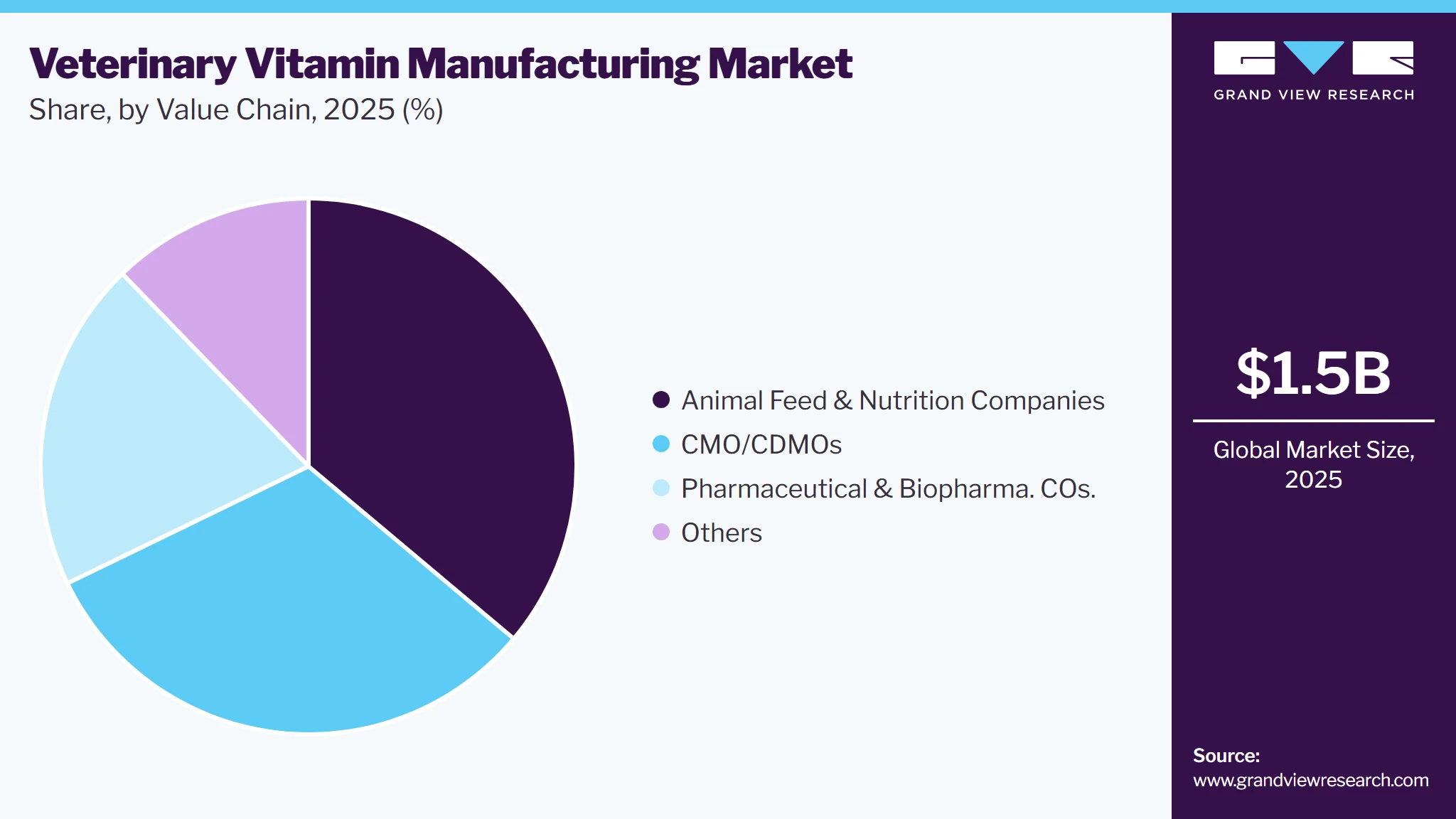
Animal feed & nutrition companies held the largest share of 36.1% in 2025, driven by extensive incorporation of vitamins into fortified feed formulations, premixes, and nutritional supplements for livestock, poultry, and companion animals. The growing emphasis on optimizing animal growth, immunity, and reproductive performance through balanced nutrition strengthens vitamin demand within this end-user segment. Increasing partnerships between vitamin manufacturers and feed producers, rising adoption of advanced feed formulation technologies, and expanding large-scale commercial farming operations further emphasize this segment's dominance.
 To learn more about this report, Download Free Sample Report
The CMO/CDMO segment is estimated to grow at the fastest CAGR over the forecast period, owing to increasing outsourcing of vitamin manufacturing and formulation processes by veterinary pharmaceutical and feed companies seeking cost efficiency and scalability. In addition, growing complexity of vitamin formulations, the rising demand for specialized manufacturing capabilities, and the need for regulatory compliance expertise are boosting reliance on contract manufacturing partners. Furthermore, increasing investments in advanced production technologies, expanding capacity to meet rising global demand, and growing preference for flexible, asset-light business models among veterinary vitamin companies accelerate growth within the CMO/CDMO segment, strengthening its market coverage.
Regional Insights
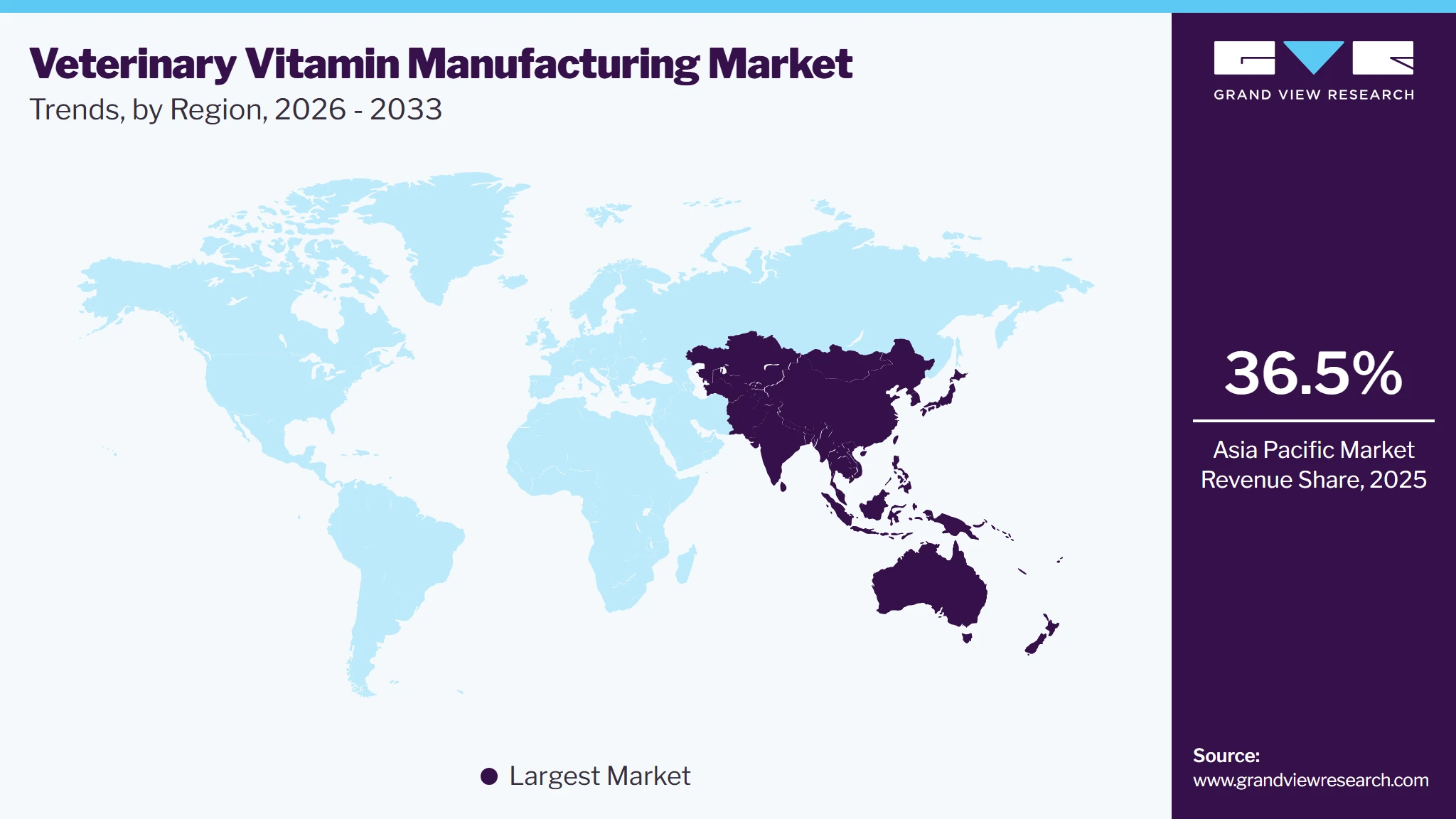
The Asia Pacific veterinary vitamin manufacturing industry held the largest global revenue share of 36.5% in 2025 and is expected to grow at the fastest CAGR over the forecast period. Regional growth is driven by the expansion of the livestock, poultry, and aquaculture industries in countries such as China and India. In addition, rising demand for animal-based protein and a growing focus on improving farm productivity through nutritional supplementation. Furthermore, rising pet ownership and humanization trends in urban areas, growing government initiatives supporting animal health and food safety standards, and expanding veterinary healthcare infrastructure further boost demand. Additionally, rising investments by global and regional manufacturers to strengthen local production capabilities continue to accelerate growth in the region's rapidly evolving market.
 To learn more about this report, Download Free Sample Report
China Veterinary Vitamin Manufacturing Market Trends
The veterinary vitamin manufacturing market in China is accelerating, driven by China's massive livestock, poultry, and aquaculture production base, rising demand for animal protein, and increasing government focus on food safety and animal health standards. The expanding ecosystem of VIV Select China and Pet Fair Asia, which are launching their first strategic collaboration in Shanghai in August 2026, uniting livestock production, animal health, and the pet industry, further boosts cross-sector investment, innovation, and demand for veterinary vitamin manufacturing across the country.
The Japan veterinary vitamin manufacturing market is drivenby the country's advanced livestock production systems, growing companion animal population, and strong emphasis on preventive animal healthcare. In addition, Japan's well-developed animal nutrition industry, continuous investment in research and development, aging pet population requiring specialized supplements, and increasing focus on improving livestock productivity and disease resistance further stimulate demand for veterinary vitamin manufacturing.
The veterinary vitamin manufacturing market in India is experiencing rapid growth, driven by expanding livestock and poultry production, increasing commercial dairy farming, rising awareness of preventive animal nutrition, and growing demand for fortified feed additives. In addition, government initiatives supporting domestic manufacturing strengthen the market. For instance, in September 2025, DSM-Firmenich inaugurated a new animal nutrition and health feed additive plant in Hyderabad, under the "Make in India" initiative, enhancing local production of advanced feed additives and supporting India's manufacturing capabilities, supply chain resilience, and availability of high-quality veterinary nutritional products across domestic and Asia-Pacific markets.
North America Veterinary Vitamin Manufacturing Market Trends
The North America veterinary vitamin manufacturing industry held a significant revenue share in 2025, attributed to high pet ownership rates and strong pet humanization trends, well-established livestock and poultry farming industries, and increasing awareness of animal nutrition among farmers and pet owners. Besides this, stringent FDA and other regulatory standards that ensure product quality and safety, rising demand for premium and fortified feed formulations, and growing investments in veterinary healthcare infrastructure further support market growth.
In addition, the presence of leading vitamin manufacturers and increasing adoption of manufacturing practices continue to strengthen demand across the region. For instance, in September 2025, ADM and Alltech announced a North American animal feed joint venture, combining 43 feed mills, nutrition expertise, and manufacturing capabilities to expand innovative feed solutions, strengthen production capacity, and enhance customer support across livestock, equine, and companion animal nutrition markets.
The U.S. veterinary vitamin manufacturing industry’s growth is driven by the presence of integrated animal health companies, specialized veterinary pharmaceutical developers, animal nutrition suppliers, and manufacturers serving both companion and production animal segments. Key participants include Zoetis, Elanco Animal Health, Merck Animal Health, Phibro Animal Health Corporation, Nutramax Laboratories, and Vetnil Pharmaceuticals, which maintain strong market positions through broad product portfolios and established distribution networks across veterinary and livestock production channels.
In addition, the presence of established domestic livestock production provides a strong demand base for veterinary vitamins. According to USDA livestock inventory data published in January 2026, the U.S. had approximately 86.2 million cattle and calves. Additionally, the USDA Poultry Production and Value Summary, published in April 2026, reported that the U.S. produced approximately 9.4 billion broiler chickens in 2025, representing a 1.0% increase from the previous year. This large production base supports demand for injectable vitamin B-complex formulations, vitamin D3 products, water-soluble supplements, and feed-incorporated vitamin premixes used to improve animal health, productivity, and feed efficiency
The Canada veterinary vitamin manufacturing market is driven by a well-developed livestock, poultry, and dairy farming industries requiring consistent nutritional supplementation, along with growing pet humanization trends across the country. In addition, increasing awareness of animal health and preventive nutrition, stringent regulatory standards that ensure feed and supplement quality, and the growing adoption of fortified feed formulations further support market growth. Furthermore, expanding veterinary healthcare infrastructure, rising investments in sustainable and efficient farming practices, and increasing demand for premium companion animal nutrition products continue to strengthen the market in Canada.
Europe Veterinary Vitamin Manufacturing Market Trends
The Europe veterinary vitamin manufacturing industry is influenced by the region’s well-established livestock and poultry industries, increasing focus on preventive animal healthcare, rising companion animal ownership, and growing demand for high-quality feed-grade vitamins and premixes. Other factors contributing to market growth include advanced animal feed manufacturing infrastructure, stringent EU regulations concerning animal nutrition, welfare, and food safety, increasing antimicrobial stewardship efforts, higher spending on companion animal health and nutrition, and the strong presence of established animal nutrition, veterinary health, and specialty feed ingredient manufacturers. Such factors are expected to support the market growth.
The veterinary vitamin manufacturing market in Germany is supported by a well-established animal health and nutrition industry, along with strong capabilities in feed additives, premixes, and specialty nutritional ingredients. The country is home to companies such as BASF and Boehringer Ingelheim, while a wider network of feed manufacturers, premix suppliers, veterinary product companies, and contract manufacturers serves both production and companion animals. In addition, in October 2025, BASF launched a major animal nutrition production site in Ludwigshafen, Germany, and started a new world-scale vitamin A formulation plant at the site, strengthening Germany’s position in vitamin production for animal nutrition.
Germany also has a large livestock base that creates steady demand for vitamins used in animal feed and nutritional products. According to the German Federal Statistical Office (Destatis), Germany had around 10.4 million cattle in November 2025, including nearly 3.6 million dairy cows. The country also had approximately 21.5 million pigs in November 2025. This established livestock base supports demand for vitamins A, D3, E, B-complex, and other micronutrients supplied through premixes, feed formulations, water-soluble products, and other nutritional formats used to support animal health, growth, reproduction, and overall production performance.
The UK veterinary vitamin manufacturing market is expected to grow significantly over the forecast period. The growth of the market is driven rising pet humanization trends, well-established livestock and poultry farming practices, and increasing awareness of animal nutrition and preventive healthcare. In addition, growing demand for premium and fortified nutritional products is boosting market growth.
Latin America Veterinary Vitamin Manufacturing Market Trends
The veterinary vitamin manufacturing industry in Latin America is expected to grow significantly, due to the region's large livestock population, expanding poultry and aquaculture industries, and growing emphasis on improving animal productivity and disease prevention. In addition, rising exports of meat and dairy products are increasing demand for high-quality nutritional supplements that meet international food safety standards. Furthermore, growing commercial feed production, increasing adoption of precision animal nutrition, expanding companion animal ownership, and investments by global animal nutrition companies in regional manufacturing and distribution networks continue to strengthen the veterinary vitamin manufacturing market across Latin America.
Brazil's veterinary vitamin manufacturing market is experiencing robust growth, as large livestock and expanding companion animal sectors, increasing demand for premium animal nutrition, and strong feed manufacturing infrastructure. For instance, in May 2026, DSM-Firmenich inaugurated its NextGen Itatiba pet premix facility in Brazil, establishing Latin America’s manufacturing hub for pet vitamin and mineral premixes, strengthening regional production capacity and supply chains. Furthermore, rising investments in pet nutrition, stringent feed quality standards, growing exports of animal products, and increasing adoption of scientifically formulated nutritional supplements further support market growth.
Middle East & Africa Veterinary Vitamin Manufacturing Market Trends
The Middle East & Africa veterinary vitamin manufacturing industry is growing steadily, supported by governments promoting modern feed nutrition and disease prevention, encouraging demand for vitamin-enriched feed additives. The competitive landscape is characterized by multinational animal nutrition companies partnering with regional distributors and feed manufacturers, while local producers expand their manufacturing capabilities and product portfolios to meet growing demand across the poultry, dairy, aquaculture, and pet nutrition sectors.
The South Africa veterinary vitamin manufacturing market is rapidly growing, driven by its well-developed commercial livestock and poultry industries, increasing companion animal ownership, and growing demand for preventive animal healthcare. In addition, rising exports of meat products are encouraging the adoption of high-quality vitamin premixes that meet international quality standards. Furthermore, expanding commercial feed production, increasing awareness of precision animal nutrition, strong veterinary services, and investments by multinational animal nutrition companies are supporting the production and adoption of scientifically formulated veterinary vitamin products across the country.
The veterinary vitamin manufacturing market in Saudi Arabia is driven by expanding commercial poultry and dairy farming, increasing investments in animal health under national food security initiatives, and growing adoption of preventive nutrition. In addition, rising demand for premium companion animal products further supports market growth. For instance, in June 2025, Purina Pro Plan Veterinary Diets (PPVD) consisting of added vitamins, expanded its veterinary nutrition portfolio in Saudi Arabia by launching advanced gastrointestinal and urinary nutritional solutions through nationwide veterinary outreach programs. Such initiatives, combined with increasing imports of specialized nutritional products, stronger veterinary networks, and modernization of livestock production, continue to accelerate demand for high-quality veterinary vitamin formulations.
Key Veterinary Vitamin Manufacturing Company Insights
The veterinary vitamin manufacturing market is fragmented, with competition distributed across multinational manufacturers, regional producers, and specialized vitamin and nutritional ingredient suppliers. Companies differentiate themselves through diverse product portfolios, species-specific formulations, manufacturing capabilities, and established relationships with feed manufacturers, veterinary distributors, and animal health companies. Market participants are increasingly focusing on expanding production capacity, strengthening regional supply chains, and developing customized vitamin solutions for livestock and companion animals. The growing demand for precision nutrition, functional vitamin formulations, and premium companion animal supplements is creating opportunities for both established and emerging manufacturers.
Key Veterinary Vitamin Manufacturing Companies
The following key companies have been profiled for this study of the veterinary vitamin manufacturing market.
-
Zoetis Services LLC
-
Merck & Co., Inc.
-
Virbac
-
Boehringer Ingelheim
-
Elanco
-
Phibro Animal Health Corporation
-
Intas Pharmaceuticals
-
Abbey Labs
-
Vetnil
-
Vandana Biotech Private Limited
Competitive Benchmarking
Category
Operating Strategies
Competitive Edge
Weakness
Established Players (Zoetis Services LLC and others)
- Mature players in the market prioritize portfolio diversification, advanced formulation development, and capacity expansion to maintain market leadership.
- They invest in precision nutrition, sustainable manufacturing, and digital quality management while strengthening partnerships with feed manufacturers, veterinary hospitals, distributors, and livestock integrators.
- Companies also expand geographically through acquisitions, local manufacturing facilities, and contract manufacturing agreements. Continuous investment in research, regulatory compliance, and science-backed product validation enables them to address evolving customer requirements and enhance long-term competitiveness.
- Mature manufacturers benefit from established global brands, extensive distribution networks, vertically integrated supply chains, and large-scale manufacturing capabilities.
- Their strong research and development infrastructure supports innovation in species-specific formulations, encapsulated vitamins, and multifunctional nutritional products. Long-standing relationships with feed producers, veterinary professionals, and regulatory agencies facilitate faster commercialization and broader market penetration.
- Robust quality assurance systems, regulatory expertise, diversified product portfolios, and financial strength enable these companies to consistently deliver premium products while maintaining customer trust and global competitiveness.
- Despite their market leadership, mature players often face challenges from high operational costs, complex global supply chains, and lengthy product development cycles.
- Large organizational structures may reduce flexibility in responding quickly to changing customer preferences and emerging niche markets.
Emerging Players (Trouw Nutrition and other players)
- Emerging companies should prioritize niche, species-specific vitamin formulations for companion animals, poultry, aquaculture, and ruminants while leveraging contract manufacturing to minimize capital investment.
- Building partnerships with veterinary clinics, feed manufacturers, and distributors can accelerate market penetration. Investing in innovative delivery formats such as water-soluble powders, soft chews, boluses, and encapsulated vitamins improves product differentiation.
- Digital sales platforms, localized manufacturing, and compliance with international quality standards can further enhance competitiveness and facilitate expansion into emerging regional markets.
- Emerging manufacturers possess agility to rapidly develop customized vitamin formulations tailored to regional livestock requirements and evolving pet nutrition trends.
- Their flexible production capabilities, faster product development cycles, and competitive pricing enable quicker responses to customer demands than larger competitors. Many also focus on clean-label, plant-based, and multifunctional nutritional solutions that address growing sustainability preferences.
- Close customer engagement, technical support, and localized distribution strategies help build stronger relationships with veterinarians, feed producers, and livestock farmers.
- Emerging companies often face limited financial resources, smaller manufacturing capacities, and lower brand recognition compared with established multinational animal nutrition companies.
- Restricted investment in research and development may slow innovation and product diversification.
Recent Developments
-
In March 2026, VitaDog Nutrition introduced its Daily All-In-One Dog Supplement containing over 40 active ingredients to support canine wellness. Distributed through Chewy and direct sales, the launch expands premium pet nutrition offerings. It intensifies competition in companion animal supplements and accelerates demand for multifunctional veterinary vitamin products.
-
In February 2026, DSM-Firmenich agreed to divest its Animal Nutrition & Health business to CVC Capital Partners while retaining a 20% equity stake. The transaction is expected to reshape competitive dynamics, encourage strategic restructuring, strengthen investment in specialized animal nutrition businesses, and drive consolidation within the veterinary vitamin manufacturing market.
Veterinary Vitamin Manufacturing Market Report Scope
Report Attribute
Details
Market size in 2025
USD 1.5 billion
Estimated market size in 2026
USD 1.6 billion
Projected market size by 2033
USD 2.9 billion
Growth rate
CAGR of 8.7% from 2026 to 2033
Actual data
2021 - 2025
Forecast period
2026 - 2033
Quantitative units
Revenue in USD million/billion and CAGR from 2026 to 2033
Report coverage
Revenue forecast, company ranking, competitive landscape, growth factors, and trends
Segments covered
Animal, product, type, dosage form, value chain, region
Regional scope
North America; Europe; Asia Pacific; Latin America; MEA
Country scope
U.S.; Canada; Mexico; UK; Germany; France; Italy; Spain; Denmark; Sweden; Norway; Japan; China; India; Thailand; South Korea; Australia; Brazil; Argentina; South Africa; UAE; Saudi Arabia; Kuwait; Qatar; Oman
Key companies profiled
Zoetis Services LLC; Merck & Co., Inc.; Virbac; Boehringer Ingelheim; Elanco; Phibro Animal Health Corporation; Intas Pharmaceuticals; Abbey Labs; Vetnil; Vandana Biotech Private Limited
Customization scope
Free report customization (equivalent up to 8 analysts working days) with purchase. Addition or alteration to country, regional & segment scope.
Pricing and purchase options
Avail customized purchase options to meet your exact research needs. Explore purchase options
Global Veterinary Vitamin Manufacturing Market Report Segmentation
This report forecasts revenue growth at the global, regional & country levels and provides an analysis of the latest industry trends in each of the sub-segments from 2021 to 2033. For this study, Grand View Research has segmented the global veterinary vitamin manufacturing market report based on animal, product, type, dosage form, value chain, and region:
-
Animal Outlook (Revenue, USD Million/Billion, 2021 - 2033)
-
Companion Animals
-
Production Animals
-
-
Product Outlook (Revenue, USD Million/Billion, 2021 - 2033)
-
Vitamin B-Complex
-
Vitamin B12
-
Vitamin K
-
Vitamin D3
-
Other Vitamins
-
-
Type Outlook (Revenue, USD Million/Billion, 2021 - 2033)
-
API
-
Finished Drug Products
-
-
Dosage Form Outlook (Revenue, USD Million/Billion, 2021 - 2033)
-
Oral
-
Injectables
-
-
Value Chain Outlook (Revenue, USD Million/Billion, 2021 - 2033)
-
Pharmaceutical & Biopharmaceutical Companies
-
Animal Feed & Nutrition Companies
-
CMO/CDMOs
-
Others
-
-
Regional Outlook (Revenue, USD Million/Billion, 2021 - 2033)
-
North America
-
U.S.
-
Canada
-
Mexico
-
-
Europe
-
UK
-
Germany
-
France
-
Italy
-
Spain
-
Denmark
-
Sweden
-
Norway
-
-
Asia Pacific
-
Japan
-
China
-
India
-
Australia
-
Thailand
-
South Korea
-
-
Latin America
-
Brazil
-
Argentina
-
-
Middle East & Africa
-
South Africa
-
UAE
-
Saudi Arabia
-
Kuwait
-
Qatar
-
Oman
-
-
Research Methodology
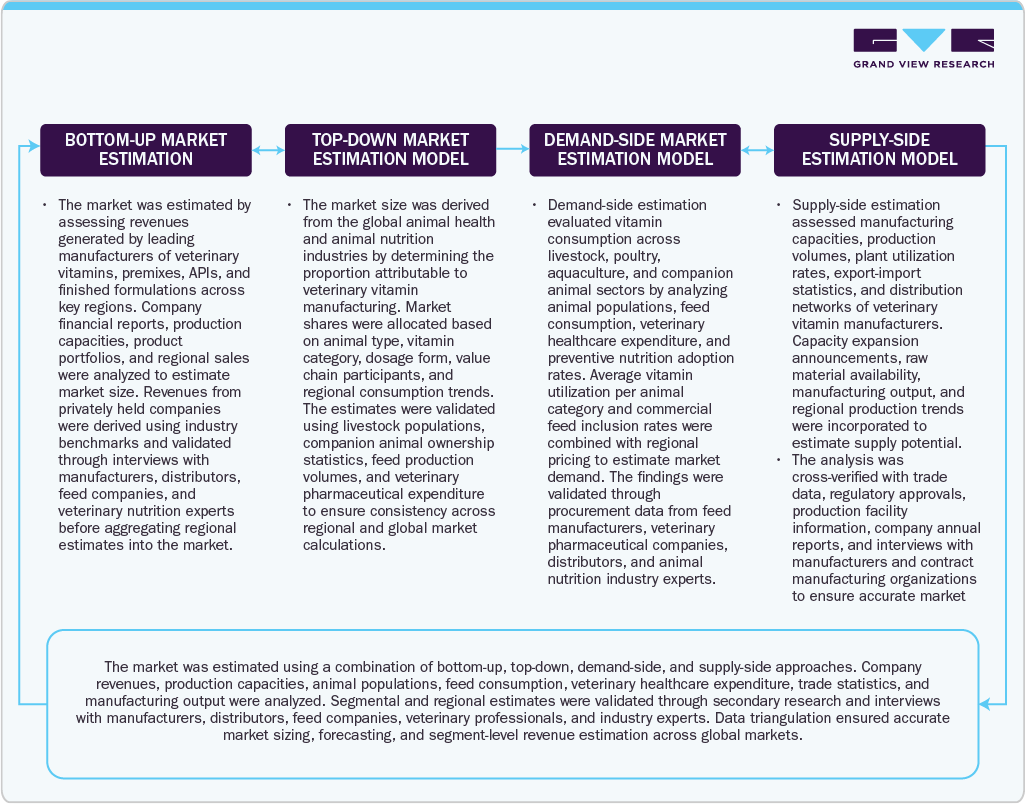
The veterinary vitamin manufacturing market figures in this report are based on a proven research process that combines executive interviews with secondary research from proprietary databases, company filings, and recognized regulatory and institutional sources. Market size is built through value-chain sizing-reconciling supply-side and demand-side estimates-and triangulated with bottom-up and top-down approaches. Every estimate passes multiple levels of expert validation before publication, with each veterinary vitamin manufacturing segment quantified using the revenue-capture definitions in the table below.
Segment Definition
Segment - Animal
Revenue capture definition
Companion Animals
Revenue includes vitamins manufactured for dogs, cats, horses, and other pets to support immunity, growth, metabolism, reproduction, and preventive healthcare through pharmaceutical products and nutritional supplements.
Production Animals
Revenue comprises vitamins manufactured for cattle, poultry, swine, sheep, goats, aquaculture, and other livestock to improve productivity, feed efficiency, health, reproduction, and disease resistance.
Segment - Product
Revenue capture definition
Vitamin B-Complex
Revenue includes manufacturing of multi-vitamin B formulations containing essential B vitamins for metabolic function, growth, energy production, stress reduction, and improved animal performance across species.
Vitamin B12
Revenue covers production of vitamin B12 formulations used to support red blood cell formation, neurological function, growth performance, appetite stimulation, and metabolic health in animals.
Vitamin K
Revenue includes manufacturing of vitamin K products supporting blood coagulation, bone metabolism, and nutritional supplementation in livestock and companion animals through oral and injectable formulations.
Vitamin D3
Revenue comprises manufacturing of vitamin D3 formulations used to enhance calcium absorption, skeletal development, immune health, and productivity in companion animals and food-producing livestock.
Other Vitamins
Revenue includes manufacturing of vitamins A, C, E, H, and other specialty vitamin formulations supporting immunity, antioxidant protection, fertility, skin health, and overall animal nutrition.
Segment - Type
Revenue capture definition
API
Revenue includes production of active pharmaceutical vitamin ingredients supplied to manufacturers for formulation into finished veterinary medicines, feed additives, nutritional supplements, and premix products.
Finished Drug Products
Revenue comprises manufacturing of completed veterinary vitamin products in market-ready dosage forms, including packaging, labeling, quality testing, and commercial distribution for animal healthcare applications.
Segment - Dosage Form
Revenue capture definition
Oral
Revenue covers manufacture of oral veterinary vitamin formulations, including powders, liquids, tablets, boluses, capsules, premixes, gels, chews, and feed additives administered through feed or drinking water.
Injectables
Revenue includes manufacturing of sterile injectable vitamin formulations administered intravenously, intramuscularly, or subcutaneously for rapid nutritional supplementation and therapeutic treatment in veterinary medicine.
Segment - Value Chain
Revenue capture definition
Pharmaceutical & Biopharmaceutical Companies
Revenue includes veterinary vitamin manufacturing services and products supplied to pharmaceutical and biopharmaceutical companies developing branded veterinary medicines, nutritional products, and therapeutic formulations.
Animal Feed & Nutrition Companies
Revenue comprises vitamin ingredients and premixes manufactured for feed manufacturers producing fortified animal feeds, mineral premixes, nutritional supplements, and specialty feed additive formulations.
CMO/CDMOs
Revenue includes contract manufacturing and development services for veterinary vitamin APIs, formulations, packaging, analytical testing, scale-up, and commercial production provided to third-party animal health companies.
Others
This segment captures revenue generated from veterinary vitamin manufacturing activities undertaken by organizations such as veterinary nutraceutical manufacturers, private-label manufacturers, research-focused production facilities, cooperatives, and specialized manufacturing service providers. across
Estimation Model
 To learn more about this report, Download Free Sample Report
Delivered Customizations
This report has been delivered with the following In-depth customizations
Client Request
Customization Delivered
Value Adds
Segment-Level Opportunity Analysis
Delivered detailed assessment across vitamin types, animal types, formulation formats, distribution channels, and end-use applications, highlighting dominant and fastest-growing segments with supporting market rationale and future growth potential.
This assists product portfolio planning, resource allocation, and identification of attractive revenue opportunities by focusing on high-growth market segments and evolving customer demand.
Regional Market Assessment
Delivered country-level analysis covering North America, Europe, Asia Pacific, Latin America, and the Middle East & Africa, including market drivers, regulatory landscape, manufacturing trends, investment activities, and competitive environment influencing veterinary vitamin manufacturing across major economies.
This enables clients to identify high-growth regions, prioritize investments, evaluate country-specific opportunities and risks, and develop market entry or expansion strategies supported by localized industry intelligence.
Competitive Benchmarking
Provided comprehensive profiling of leading manufacturers, recent product launches, capacity expansions, mergers, acquisitions, strategic partnerships, innovation initiatives, and competitive positioning across the global veterinary vitamin manufacturing ecosystem.
This helps clients benchmark competitors, identify market gaps, understand strategic moves of industry leaders, and formulate differentiated competitive strategies to strengthen long-term market positioning.
Frequently Asked Questions About This Report
The global veterinary vitamin manufacturing market size was valued at USD 1.5 billion in 2025 and is estimated at USD 1.6 billion for 2026.
The global veterinary vitamin manufacturing market is expected to grow at a CAGR of 8.7% from 2026 to 2033, reaching USD 2.9 billion by 2033.
On the basis of animal, production animals held the largest share of 55.8% in 2025.
Asia Pacific dominated the market with a share of 36.5% in 2025.
The market is experiencing steady growth, driven by increasing livestock production, rising companion animal ownership, and greater emphasis on preventive animal healthcare. In addition, growing awareness of nutritional deficiencies and their impact on animal productivity, immunity, and reproductive performance has increased demand for species-specific vitamin formulations.
Some of the key players include Zoetis Services LLC, Merck & Co., Inc, Virbac, Boehringer Ingelheim, Elanco, Phibro Animal Health Corporation, ADM Animal Nutrition, Trouw Nutrition, Dechra, Vetoquinol.
Asia Pacific is the fastest growing region with highest CAGR over the forecast period.
Vitamin B-Complex segment dominated the market with a share of 28.0% in 2025.
Based on type, finished drug products held the largest share of 55.6% in 2025.
About the Author(s)
Animal Health Research Team
Healthcare · Animal HealthThis report was authored by the animal health research team at Grand View Research - comprising two research analysts, one senior research analyst, and one industry expert - with specialized expertise in the animal health segment of the healthcare industry. All findings are based on proprietary healthcare databases, executive interviews, and regulatory analysis, subject to internal peer review prior to publication.
Last Updated:
Speak to Analyst

Customize this report to your needs - add regions, segments, or data points, with 20% free customization.
Or view our licence options:


ISO 9001:2015 & 27001:2022 Certified
We are GDPR and CCPA compliant! Your transaction & personal information is safe and secure. For more details, please read our privacy policy.


