
- Home
- »
- Animal Health
- »
-
Veterinary In Vitro Fertilization Market Size Report, 2026-2033GVR Report cover
![Veterinary In Vitro Fertilization Market (2026 - 2033)Report]()
Veterinary In Vitro Fertilization Market (2026 - 2033)
Size, Share & Trends Analysis Report By Product (Instruments, Reagents/Consumables, Services), By Animal (Bovine , Swine, Ovine , Caprine, Equine), By Technique, By End Use, By Region, And Segment Forecasts
Market Size, 2025
$1.9BMarket Estimate, 2026
$2.1BMarket Forecast, 2033
$3.6BCAGR, 2026–2033
8.2%Veterinary In Vitro Fertilization Market Summary
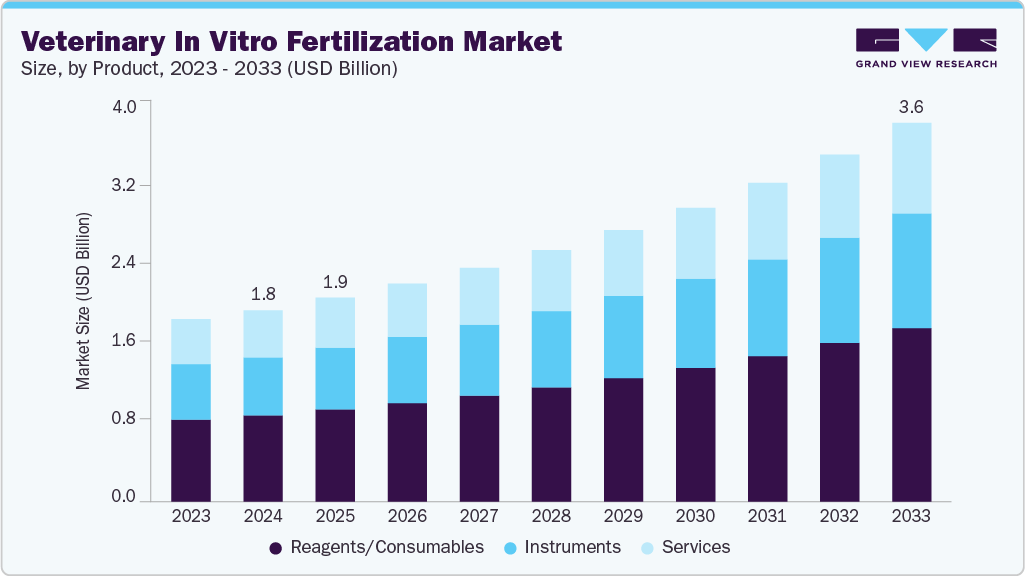
The global veterinary in vitro fertilization market size was valued at USD 1.9 billion in 2025 and is projected to grow from USD 2.1 billion in 2026 to USD 3.6 billion by 2033, at a CAGR of 8.2% from 2026 to 2033. The market in North America dominated with a revenue share of 30.8% in 2025. The market is experiencing growth driven by rising demand for genetically superior livestock, increasing adoption of advanced reproductive technologies in cattle, equine, and exotic species, and government initiatives supporting animal breeding and conservation programs, which collectively enhance productivity and biodiversity.

Key Market Trends & Insights
- By product: Reagents/consumables segment held the largest market share of 45.1% in 2025.
- By animal: Bovine segment held the largest market share in 2025.
- By technique: Embryo transfer segment held the largest market share in 2025.
- By end Use: Veterinary fertility clinics segment held the largest market share in 2025.
Regional Highlights
- Largest regional market: North America (30.8% revenue share, 2025)
- Fastest-growing regional market: Asia Pacific (highest CAGR, 2026-2033)
- By country: U.S. held the largest market share in 2025
Market Size & Forecast
- Market size in 2025: USD 1.9 Billion
- Estimated market size in 2026: USD 2.1 Billion
- Projected market size by 2033: USD 3.6 Billion
- CAGR (2026-2033): 8.2%
The veterinary in vitro fertilization (IVF) market is being significantly driven by technological advancements and the launch of more affordable products. For instance, in September 2024, Indian Immunologicals Limited, in collaboration with the National Dairy Development Board (NDDB), developed “Shashthi,” an indigenous IVF media, reducing the cost per embryo by 33% compared to imported media and enhancing accessibility for farmers. Innovations such as Ovum Pick Up (OPU) and In Vitro Embryo Production (IVEP) are replacing traditional in vivo techniques, improving embryo quality and genetic multiplication in livestock. These advancements, coupled with the availability of cost-effective IVF solutions, are accelerating adoption across veterinary hospitals and fertility clinics, boosting productivity and fostering widespread acceptance of assisted reproductive technologies.
Additionally, expanding the scope of IVF beyond livestock and companion animals into wildlife conservation is expected to boost market demand. It is also expected to drive increased investment, innovation, and cross-disciplinary research in veterinary reproductive technologies, solidifying IVF’s role in species preservation and global biodiversity initiatives. For instance, in January 2024, Scientists from the BioRescue consortium, led by Germany’s Leibniz Institute for Zoo and Wildlife Research, achieved the world’s first successful embryo transfer in southern white rhinos - a major milestone toward saving the nearly extinct northern white rhino. Using IVF, embryos created from preserved sperm and eggs are now stored in Germany and Italy, with plans to implant the first northern white rhino embryo into a surrogate in Kenya. Though the initial pregnancy ended prematurely, the achievement proves that rhino IVF and embryo transfer can work, marking a breakthrough in large-mammal reproduction science.
Market Dynamics
The veterinary in vitro fertilization (IVF) industry is propelled by ongoing technological advancements and the introduction of more cost-effective solutions. For instance, in September 2024, Indian Immunologicals Limited, in collaboration with the National Dairy Development Board (NDDB), launched “Shashthi,” an indigenous IVF medium that reduced the cost per embryo by 33.0% relative to imported alternatives, thereby improving affordability and access for farmers. In parallel, innovations such as Ovum Pick Up (OPU) and In Vitro Embryo Production (IVEP) are increasingly replacing conventional in vivo approaches, thereby improving embryo quality and enhancing genetic multiplication in livestock. Collectively, these developments are accelerating adoption across veterinary hospitals and fertility clinics, improving productivity, and supporting broader acceptance of assisted reproductive technologies. Furthermore, the expanding application of IVF beyond livestock and companion animals into wildlife conservation is expected to further strengthen market demand. This trend is also likely to catalyze greater investment, innovation, and cross-disciplinary research in veterinary reproductive technologies, reinforcing IVF’s strategic role in species preservation and global biodiversity initiatives.
IVF techniques used for different species
Species
IVF Technique
Overview
Bovine
Ovum Pick-Up (OPU) + In Vitro Embryo Production (IVEP), Embryo Transfer (ET)
Used in elite cattle breeding in Brazil, India, and the U.S.; increases milk and meat yield.
Equine
OPU + ICSI (Intracytoplasmic Sperm Injection), ET
Applied for high-value racehorses; overcomes low sperm motility issues.
Pigs
IVF + ET
For research and commercial genetics, helps improve litter size and growth traits.
Sheep & Goat
OPU + IVEP + ET
Used for dairy and meat breeds; supports genetic improvement programs.
Canine
OPU + IVF + ICSI
Used in high-value breeds, rare breeds, or endangered species; low natural fertilization rates.
Feline
OPU + IVF + ICSI, Stem Cell Derived Oocytes
Used in domestic and endangered wild cats; supports disease research and conservation.
Equids & Exotic Species
OPU + IVF + ET, Stem Cell Assisted IVF
Applied in wildlife conservation (e.g., rhinos, zebras); used to preserve endangered species.
Porpoises & Marine Mammals
IVF + ET
Rare applications for conservation; often involves surrogate species.
In veterinary medicine, different species utilize personalized IVF techniques, driving the growth of the veterinary in vitro fertilization market. Bovine species dominate, with Ovum Pick-Up (OPU) combined with In Vitro Embryo Production (IVEP) and Embryo Transfer (ET), which are widely applied in elite cattle breeding to enhance milk and meat productivity. Equine IVF often incorporates OPU with Intracytoplasmic Sperm Injection (ICSI) and ET for high-value racehorses, while porcine and small ruminants like goats and sheep use IVF and ET to improve litter size, growth traits, and genetic potential. Canine and feline IVF, including ICSI and stem cell-derived oocytes, supports breeding of rare or endangered breeds and conservation programs. Exotic and endangered species such as rhinos and zebras employ stem cell-assisted IVF and surrogate ET to preserve genetic diversity. The adoption of these species-specific IVF techniques has expanded market demand for specialized reagents, instruments, and laboratory services, driving technological innovation, higher investment in veterinary fertility clinics, and rapid global market growth.
The high cost associated with veterinary IVF procedures continues to act as a key constraint on market growth, limiting adoption primarily to premium and genetically valuable breeding programs. Establishing and operating IVF facilities requires significant capital investment in specialized laboratory infrastructure, advanced imaging systems, micromanipulation equipment, cryopreservation technologies, and highly skilled embryologists, all of which substantially increase procedural expenses. In addition, repeated hormonal stimulation cycles, oocyte retrieval, embryo culture, and embryo transfer procedures further elevate treatment costs.
In large animals such as cattle and horses, IVF-related expenditures are considerably higher due to additional requirements for animal handling, transportation, donor-recipient synchronization, veterinary supervision, and stringent biosecurity protocols. For instance, bovine IVF and embryo transfer procedures can cost between USD 300-700 per embryo transfer cycle, while equine IVF procedures may exceed USD 5,000-10,000 per breeding attempt, depending on pedigree value and reproductive complexity. Furthermore, establishing a fully equipped veterinary embryology laboratory can require investments exceeding USD 500,000. As a result, veterinary IVF remains economically feasible largely for elite breeding operations focused on high-value genetics, thereby restricting broader adoption among small- and medium-scale breeders despite ongoing technological advancements in reproductive biotechnology.
Market Concentration
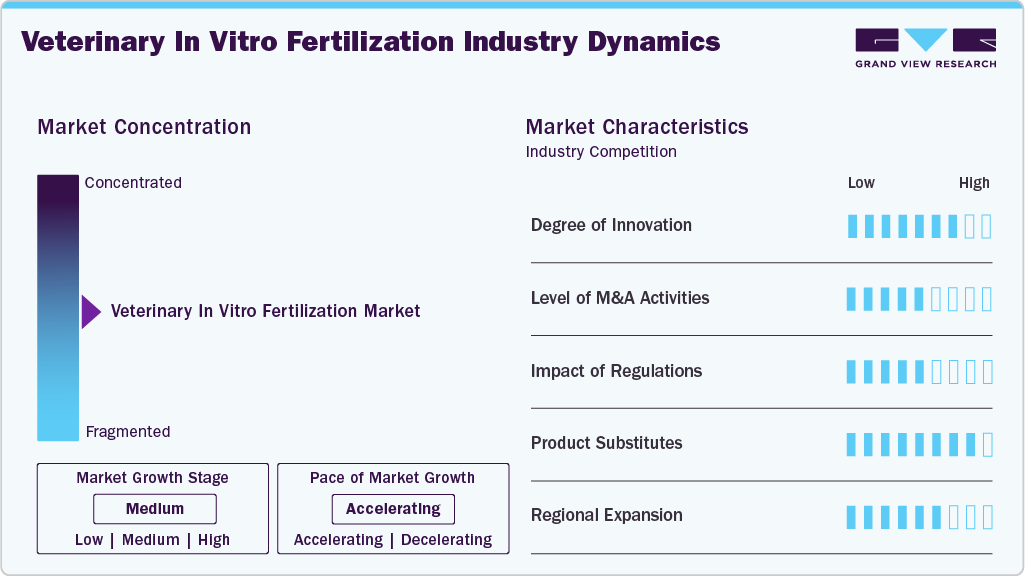
The global veterinary in vitro fertilization industry exhibits a moderate level of market concentration, characterized by a mix of established multinational players and numerous regional service providers. Major companies such as IMV Technologies, Genus PLC, SEMEX, CRV, and Select Sires Inc. collectively account for roughly 50.0%-55.0% of the global market share, primarily due to their advanced technologies, extensive distribution networks, and integrated breeding programs. Despite this concentration at the top, the industry remains fragmented at the service level, with many small and mid-sized veterinary clinics and laboratories offering IVF and embryo transfer services to local breeders. High infrastructure costs, technical expertise requirements, and regulatory barriers have reinforced the dominance of leading firms while limiting the entry of new players, resulting in a stable oligopolistic structure with regional diversification.
Market Characteristics
The veterinary IVF market is witnessing high innovation, driven by advanced reproductive technologies such as Ovum Pick Up (OPU), in vitro embryo production (IVEP), and stem cell-derived gametes for endangered species. Integration of AI and precision instruments enhances embryo selection and transfer success rates. Innovations like indigenous IVF media in India and cutting-edge embryo transfer techniques for rhinos in Africa exemplify the market’s rapid technological evolution.
The veterinary in vitro fertilization market has witnessed moderate M&A activity as companies seek to expand geographic reach and technological capabilities. Strategic acquisitions of IVF labs, biotech firms, and reproductive technology startups help firms enhance their service offerings and R&D pipelines. For example, global players have partnered with regional IVF labs in Latin America and Asia to strengthen market presence and access advanced embryo production technologies.
Regulations significantly influence the veterinary IVF industry by ensuring animal welfare, biosecurity, and ethical use of reproductive technologies. Stringent government guidelines on embryo transfer, gamete handling, and genetic manipulation affect market entry and operational costs. For instance, India’s Rashtriya Gokul Mission and Kenya’s oversight of northern white rhino IVF projects highlight how regulatory frameworks guide both innovation and adoption of IVF techniques.
In the veterinary IVF market, natural breeding and artificial insemination (AI) act as primary substitutes for advanced IVF techniques. While AI is cost-effective and widely used for cattle and other livestock, it offers lower genetic precision and limited success with endangered or high-value animals. For example, elite bovine embryos produced via IVF provide superior genetic traits compared to conventional AI, driving IVF adoption despite the availability of these substitutes.
The veterinary IVF market shows a concentrated end-user base, dominated by specialized fertility clinics, veterinary hospitals, and research institutions that handle advanced reproductive technologies. High setup costs, technical expertise requirements, and regulatory compliance limit widespread adoption among general veterinary practices. For example, countries like India and Brazil rely heavily on fertility clinics and veterinary hospitals for large-scale bovine IVF and embryo transfer programs.
Product Insights
The reagents/consumables segment held the largest revenue share of 45.1% in 2025 and is expected to grow at the fastest CAGR over the forecast period, driven by their essential role in successful IVF procedures, including embryo culture, oocyte handling, and embryo transfer. The rising adoption of techniques such as Ovum Pick Up (OPU) and in vitro embryo production in bovines, equines, and endangered species has increased demand for high-quality media, pipettes, and cryopreservation supplies. For instance, Indian Immunologicals’ launch of indigenous IVF media reduced dependency on imports and expanded IVF accessibility, exemplifying how consumables drive market growth.
Instruments is the second-largest segment in the veterinary in vitro fertilization market, due to their critical role in procedures such as Ovum Pick Up (OPU), embryo handling, and transfer, requiring specialized equipment such as microscopes, micromanipulators, and incubators. Growing livestock breeding programs in countries such as Brazil and India, along with the conservation of endangered species such as the northern white rhino, have increased demand for advanced IVF instruments. High investment in veterinary hospitals and fertility clinics further supports this segment’s substantial revenue share.
Animal Insights
The bovine segment dominated the veterinary in vitro fertilization industry, accounting for the largest revenue share in 2025, driven by the high economic value of cattle and the widespread adoption of advanced reproductive technologies across both the dairy and beef industries. In vitro fertilization and embryo transfer are extensively used to enhance milk yield, improve meat quality, and propagate superior genetics. For example, in Brazil, elite Nelore cows like Viatina-19 undergo IVF and embryo transfer for producing high-value offspring, while in India, programs under the Rashtriya Gokul Mission leverage IVF to improve indigenous cattle breeds. The large global cattle population and strong demand for genetic improvement contributed to the bovine segment’s largest revenue share.
The other animals is the fastest-growing segment of the veterinary in vitro fertilization market, due to rising demand for assisted reproductive technologies in equine, porcine, ovine, and exotic species. Increasing interest in breeding high-value horses, endangered species conservation, and pet fertility has driven adoption. For example, Japanese researchers successfully created high-quality feline iPS and embryonic stem cells to advance veterinary care, while BioRescue uses IVF and embryo transfer to preserve northern white rhinos. Expanding applications in pets, wildlife, and specialty livestock are fueling rapid growth in this segment.
Technique Insights
The embryo transfer segment accounted for the largest revenue share of the veterinary IVF industry in 2025, driven by its widespread adoption to improve livestock genetics and herd productivity. This technique enables the multiplication of superior quality embryos from elite animals, accelerating genetic improvement in dairy and beef cattle. For example, programs in Brazil and the U.S. routinely use embryo transfer to produce multiple calves from prize-winning cows, while in India, initiatives under the Rashtriya Gokul Mission utilize this technique to enhance indigenous cattle breeds. The high success rates, repeatability, and ability to preserve valuable genetic material make embryo transfer the most commercially lucrative IVF method.
The Ovum Pickup (OPU) segment is expanding rapidly in the veterinary IVF market, enabling the collection of multiple high-quality oocytes from elite female animals without the need for surgery and thereby enhancing embryo production efficiency. This minimally invasive technique supports repeated cycles and accelerates genetic improvement, making it popular in cattle breeding programs globally. For instance, in India, OPU is used under the Rashtriya Gokul Mission to boost indigenous cattle productivity, while in Brazil, elite Nelore cows like Viatina-19 undergo OPU to produce multiple embryos for commercial and export purposes. Its growing adoption in both the dairy and beef sectors is driving its status as the second-fastest growing IVF technique.
End Use Insights
The veterinary fertility clinics segment accounted for the largest revenue share in 2025, due to their specialized focus on reproductive services such as artificial insemination, embryo transfer, and genetic screening. These clinics cater to both high-value livestock breeding and companion animal reproduction, attracting clients seeking advanced fertility solutions. Their expertise, personalized care, and adoption of innovative IVF technologies drive higher treatment success rates, reinforcing their market dominance.
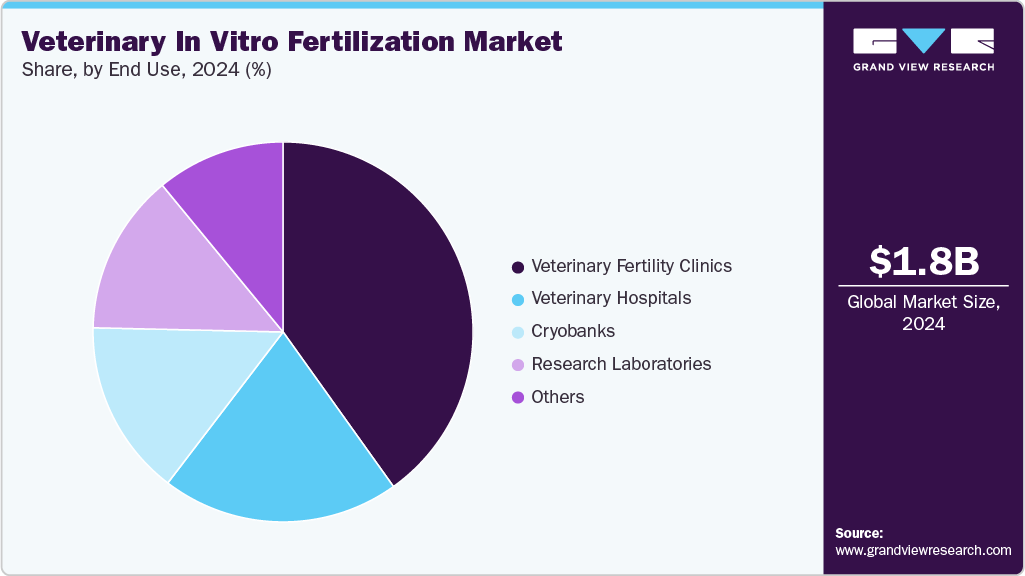
The veterinary hospitals segment is expected to grow at the fastest CAGR over the forecast period, driven by the rapid integration of advanced reproductive technologies, such as embryo transfer, oocyte retrieval, and cryopreservation into clinical practice. These facilities offer specialized equipment, skilled veterinarians, and round-the-clock care, enabling higher IVF success rates in both companion and livestock species. Additionally, hospitals increasingly collaborate with biotech firms and research institutes, accelerating the adoption and commercialization of IVF-based breeding programs.
Regional Insights
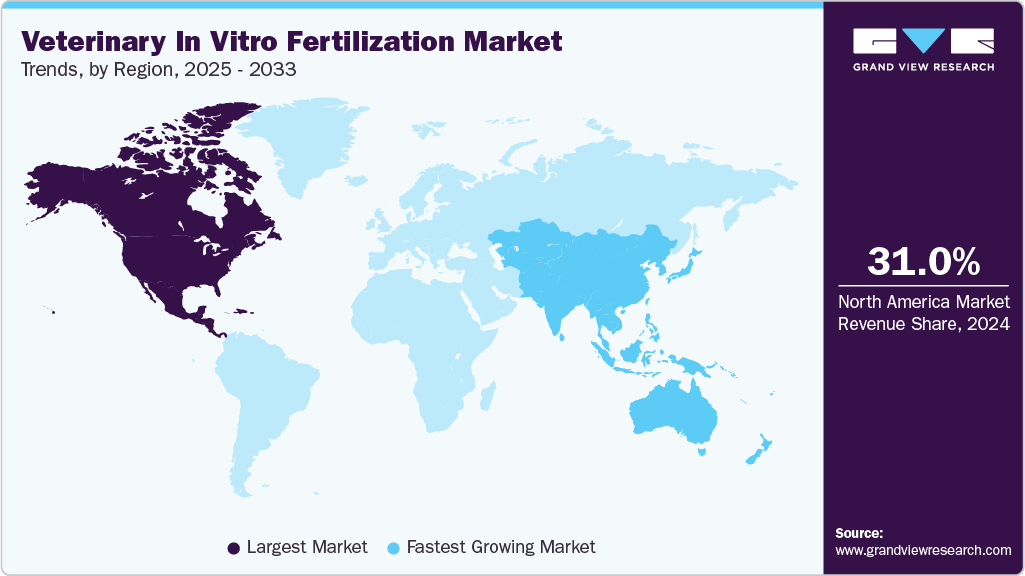
North America dominated the global veterinary in vitro fertilization market in 2025, holding the largest revenue share of 30.8%.The market growth is attributed to technological innovation, expanding breeding programs, and increasing demand for genetic enhancement in livestock. The U.S. leads in AI-assisted embryo assessment, portable reproductive imaging, and lab automation, while Canada is rapidly advancing through strategic partnerships such as Trans Ova Genetics’ collaboration with Evolygen to establish new IVF labs. There is also a growing shift toward on-farm IVF services and cryopreservation, improving accessibility and efficiency for cattle and equine breeders. Collectively, these trends are transforming North America into a center for precision reproductive technologies, emphasizing productivity, sustainability, and global competitiveness in animal genetics.
U.S. Veterinary In Vitro Fertilization Market Trends
The U.S. veterinary in vitro fertilization industry accounted for the largest share of North America in 2025. The market is witnessing strong adoption of advanced reproductive technologies such as ovum pick-up (OPU) and in vitro embryo production (IVEP) to enhance cattle and equine breeding efficiency. There is a growing trend toward automation, AI-based embryo grading, and non-invasive imaging for embryo assessment. Companies like IMV Technologies and Hamilton Thorne are expanding their precision imaging and reproductive equipment portfolios, while research institutions such as UC Davis are pioneering breakthroughs in equine IVF using frozen semen. These developments reflect a shift toward technology-driven, high-efficiency breeding programs in U.S. animal agriculture.
The Canada veterinary in vitro fertilization marketis expected to grow at a significant CAGR during the forecast period. The market growth is driven by the rising implementation of advanced reproductive technologies and increased investment in domestic IVF infrastructure. A key example is Trans Ova Genetics’ partnership with Evolygen in September 2025, to establish a state-of-the-art IVF lab in Quebec, which marks a major step in localizing embryo production and strengthening Canada’s livestock genetics sector. Additionally, there is a growing trend toward on-farm reproductive tools and portable imaging technologies, enabling veterinarians to perform real-time diagnostics and ovum pick-up (OPU) procedures efficiently.
Europe Veterinary In Vitro Fertilization Market Trends
The Europe veterinary in vitro fertilization industry’s growth is driven by the adoption of advanced assisted-reproduction tools (portable on-farm scanners, species-specific protocols, and lab automation) is accelerating clinical throughput and field OPU/IVF workflows. For example, IMV Technologies’ rugged ImaGo scanners are designed for farm use. At the same time, strategic consolidation among ART equipment and consumables suppliers (notably Astorg’s combination of Hamilton Thorne and Cook Medical’s Reproductive Health assets) is creating larger, integrated suppliers that can scale distribution and R&D across Europe. Demand is supported by growing industry focus on genetic improvement, cryopreservation services, and standardized IVP protocols, while regulatory and animal-welfare frameworks are shaping cross-border embryo movement and lab accreditation-all contributing to steady market expansion and faster commercialization of novel IVF workflows across major European dairy and beef regions.
The veterinary in vitro fertilization market in Germany held the largest revenue share in 2025. This expansion is driven by strong investments in animal biotechnology and reproductive research. Institutions like the Leibniz Institute for Zoo and Wildlife Research are pioneering IVF applications for wildlife conservation, exemplified by the BioRescue project’s breakthroughs in rhino embryo development. Additionally, the growing demand for genetic enhancement in cattle and companion animals supports the expansion of specialized IVF labs and precision breeding services across the country.
The UK veterinary in vitro fertilization market is expected to grow significantly over the forecast period. The country’s growth is influenced by increasing demand for advanced reproductive solutions in the cattle, equine, and companion-animal sectors. Veterinary clinics and research centers are adopting innovative IVF and embryo transfer techniques to improve breeding outcomes and preserve genetic diversity. For instance, equine fertility programs across major breeding hubs in Newmarket and Yorkshire are integrating IVF to overcome fertility challenges in high-value horses. Additionally, advancements in cryopreservation and lab automation are improving success rates and accessibility of veterinary IVF services in the UK.
Asia Pacific Veterinary In Vitro Fertilization Market Trends
Asia Pacific is expected to grow at a significant CAGR over the forecast period.This expansion is attributed to increased government-backed breeding programs, technological advancements, and rising demand for high-yield livestock. Additionally, the growing adoption of assisted reproductive technologies across countries like China, Australia, and South Korea. In China, expanding dairy operations and government initiatives for superior cattle breeding have increased demand for IVF and embryo transfer services. Australia’s livestock sector is rapidly integrating IVF and embryo transfer to enhance beef and dairy genetics, while South Korean research institutions are investing in reproductive biotechnology to improve animal fertility and conserve endangered species. These developments highlight the region’s focus on productivity, genetic preservation, and advanced veterinary science.
The Japan veterinary in vitro fertilization market is advancing through innovations in reproductive and stem cell technologies, emphasizing precision breeding and animal health research. Recent breakthroughs, such as Osaka Metropolitan University’s creation of feline iPS and embryonic stem cells, highlight Japan’s leadership in veterinary biotechnology and regenerative medicine. These developments are enhancing fertility solutions, expanding IVF applications beyond livestock to companion animals, and driving progress in disease modeling and genetic improvement across species.
The veterinary in vitro fertilization market in India is experiencing notable growth, driven by government initiatives like the Rashtriya Gokul Mission and advancements in reproductive biotechnology. The launch of indigenous IVF media “Shashthi” by Indian Immunologicals Ltd and NDDB in September 2024 has reduced dependency on imports and lowered production costs, making IVF more accessible to farmers. Additionally, successful projects such as the first IVF calf in Puducherry and the establishment of new laboratories in Assam highlight India’s growing focus on genetic improvement and dairy productivity through advanced reproductive technologies.
Latin America Veterinary In Vitro Fertilization Market Trends
In Latin America, veterinary IVF and broader reproductive-technology adoption are gaining momentum as livestock producers increasingly use embryo transfer (ET) and in vitro fertilization (IVF) to boost herd genetics and meat/dairy productivity. For example, exporters in Brazil are leveraging high-throughput IVF pipelines for elite beef cattle, and Argentina is enhancing its service infrastructure, including labs and cryopreservation, to support IVF/ET workflows. Additionally, smaller markets such as Mexico and Peru are expanding IVF-adjacent services and equipment in livestock clinics as access to reproductive technology spreads beyond large ranches into mid-sized operations.
The Brazil veterinary in vitro fertilization market is witnessing notable growth due beef cattle sector’s push for genetic improvement and higher-yield production through embryo transfer and in vitro embryo production (IVP). For example, according to a study published in September 2023 in the Animal Reproduction journal, IVP in dairy herds showed a slight drop in recent years; the beef segment experienced a 5% rise in in vitro embryo production and a 25.8% increase in in vivo embryo collection. Meanwhile, large-scale operations are adopting advanced reproductive technologies, including cloning and high-genetic-merit donors, to meet global export demand and reinforce Brazil’s position as a genetics powerhouse in livestock breeding.
Middle East & Africa Veterinary In Vitro Fertilization Market Trends
The Middle East & Africa veterinary IVF market is increasingly specialized. Gulf countries focus on high-value species (camels, performance horses) using IVF, embryo transfer, and even cloning to preserve elite lines and win races, while clinics and research centers in Saudi Arabia and the UAE offer dedicated embryo-transfer services. In Africa, Kenya’s BioRescue and partner labs are applying advanced IVF and stem cell techniques for rhino conservation, demonstrating wildlife-focused applications of assisted reproduction. Commercial livestock reproduction remains strong in South Africa, where established providers and labs (e.g., Embryo Plus) run large-scale IVP/ET operations and cryostorage for export-oriented genetics programs. Overall, the region shows a dual trajectory-luxury and conservation applications in the Gulf and East Africa, alongside robust, production-oriented IVF/ET services for beef and dairy in southern Africa.
The South Africa veterinary in vitro fertilization market is expected to grow at the fastest CAGR over the forecast period, propelled by increasing adoption of embryo flushing and transfer in commercial beef and dairy herds to accelerate genetic gain. For example, a study found that oocytes from slaughtered Bovelder cows produced 11 embryos, resulting in 7 live births (a 64% calving rate). Moreover, service providers such as Embryo Plus are expanding their use of advanced reproductive technologies (IVP, semen/embryo exports) across livestock and wildlife species. Finally, despite infrastructure and cost challenges, South Africa leads the region in embryo-based reproductive services, with efforts now extending into wildlife species and export-oriented genetics programs.
The veterinary in vitro fertilization market in Saudi Arabia is experiencing growth, driven by growing emphasis on embryo transfer and gamete cryopreservation in domesticated livestock such as camels, with clinics like Salam Veterinary Group offering dedicated embryo-transfer services to enhance reproductive efficiency in high-value animals. Parallel research into interspecies somatic-cell nuclear transfer (SCNT)-for example, using Arabian oryx cells and cattle oocytes-underscores the country’s investment in advanced reproductive technologies beyond conventional livestock. These trends reflect Saudi Arabia’s strategic shift toward genetic improvement of livestock and wildlife through assisted reproduction services and biotechnology, supporting both agricultural productivity and conservation goals.
Key Veterinary In Vitro Fertilization Company Insights
Market players in the veterinary IVF sector are deploying several clear strategies: they are pursuing vertical integration and acquisitions to build from genetics through equipment and services, investing heavily in technology innovation (such as genomics, AI-driven diagnostics, and improved embryo culture/cryopreservation systems), and forming partnerships and collaborations globally to access emerging-market distribution channels, local expertise, and breeding networks.
Key Veterinary In Vitro Fertilization Companies:
The following key companies have been profiled for this study on the veterinary in vitro fertilization market.
- Zoetis Services LLC
- Kruuse
- Hamilton Thorne, Inc.
- Esco Medical
- IMV Technologies
- Minitube
- Agetech Inc
- Jorgensen Laboratories
- Bovine Elite LLC
- Equine Fertility Centre
- Veterinary Group
- Stateline Veterinary Service
Competitive Benchmarking
Operating Strategies
Competitive Edge
Weaknesses
Mature Players: Zoetis
- Focus on vertically integrated reproductive solutions spanning genetics, semen technologies, embryo transfer, IVF services, and herd management platforms.
- Expand global presence through strategic acquisitions, distributor partnerships, and collaborations with livestock breeding networks.
- Strong brand credibility supported by advanced genomics, AI-enabled reproductive technologies, and large-scale cryopreservation capabilities.
- Extensive distribution infrastructure and long-term relationships with commercial dairy, beef, and equine breeding operations.
- High operating and R&D costs create pricing pressures, particularly in cost-sensitive emerging markets.
- Large organizational structures may limit agility in adopting niche reproductive innovations and localized service models.
Emerging Players: Bovine Elite LLC
- Target niche, high-value segments such as elite bovine genetics, equine fertility, and species-specific IVF services.
- Compete through customized reproductive programs, localized veterinary support, and flexible pricing models for breeders.
- Greater operational flexibility and faster adoption of specialized IVF, ovum pick-up (OPU), and embryo culture technologies.
- Ability to offer personalized breeding solutions and quicker turnaround times compared to larger multinational players.
- Limited financial resources and smaller laboratory infrastructure restrict scalability and geographic expansion.
- Lower brand recognition and constrained access to advanced genomics platforms compared to established companies.
Recent Developments
-
In October 2025, Phase Holographic Imaging (PHI) is expanding its operations into the veterinary IVF sector, leveraging its expertise in quantitative phase imaging (QPI) and live-cell analysis to enhance real-time monitoring of embryo and cell development. This move builds on PHI’s established capabilities in regenerative medicine and cell therapy, aiming to improve precision and outcomes in IVF processes.
-
In August 2025, IMV Technologies introduced the next generation of ImaGo fertility scanners-the ImaGo L/C and ImaGo Flex-designed for durability, portability, and high imaging accuracy in on-farm reproductive diagnostics. These advanced ultrasound devices feature color flow Doppler for early pregnancy detection and species-specific settings, enhancing workflow efficiency for veterinarians.
-
In December 2024, Astorg, a leading European private equity firm, completed the take-private acquisition of Hamilton Thorne and the purchase of Cook Medical’s Reproductive Health division, merging them to form a new global leader in assisted reproductive technology (ART) consumables and equipment. The combined company will operate under a new brand identity launching in 2025.
-
In September 2024, Indian Immunologicals Limited (IIL), in collaboration with the National Dairy Development Board (NDDB), launched “Shashthi”, a suite of indigenously developed IVF media for embryo transfer in livestock. The initiative aims to make veterinary IVF more affordable and self-reliant, reducing dependence on costly imported media by about 33%, and supporting India’s “Atmanirbhar Bharat” vision.
Veterinary In Vitro Fertilization Market Report Scope
Report Attribute
Details
Market size in 2025
USD 1.9 billion
Estimated market size in 2026
USD 2.1 billion
Projected market size by 2033
USD 3.6 billion
Growth Rate
CAGR of 8.2% from 2026 to 2033
Actual data
2021 - 2024
Forecast period
2026 - 2033
Quantitative units
Revenue in USD million/billion and CAGR from 2026 to 2033
Report coverage
Revenue forecast, company ranking, competitive landscape, growth factors, and trends
Segments covered
Product, animal, technique, end use, and region
Regional scope
North America; Europe; Asia Pacific; Latin America; MEA
Country scope
U.S.; Canada; Mexico; UK; Germany; France; Italy; Spain; Netherlands; Denmark; Sweden; Norway; Japan; China; India; Thailand; South Korea; Australia; Brazil; Argentina; South Africa; UAE; Saudi Arabia; Kuwait; Qatar; Oman
Key companies profiled
Zoetis Services LLC; Hamilton Thorne, Inc.; Kruuse; Esco Medical; Minitube; IMV Technologies; Agetech Inc.; Jorgensen Laboratories; Equine Fertility Centre; Bovine Elite LLC; Veterinary Group; Stateline Veterinary Service
Customization scope
Free report customization (equivalent up to 8 analysts working days) with purchase. Addition or alteration to country, regional & segment scope.
Pricing and purchase options
Avail customized purchase options to meet your exact research needs. Explore purchase options
Global Veterinary In Vitro Fertilization Market Report Segmentation
This report forecasts revenue growth at the global, regional, and country levels and provides an analysis of the latest industry trends in each of the sub-segments from 2021 to 2033. For this study, Grand View Research has segmented the global veterinary in vitro fertilization market report based on product, animal, technique, end use, and region:
-
Product Outlook (Revenue, USD Million, 2021 - 2033)
-
Instruments
-
Reagents/Consumables
-
Services
-
-
Animal Outlook (Revenue, USD Million, 2021 - 2033)
-
Bovine
-
Swine
-
Ovine
-
Caprine
-
Equine
-
Other Animals
-
-
Technique Outlook (Revenue, USD Million, 2021 - 2033)
-
Artificial Insemination
-
Embryo Transfer
-
Ovum Pickup
-
In-Vitro Maturation
-
-
End Use Outlook (Revenue, USD Million, 2021 - 2033)
-
Veterinary Fertility Clinics
-
Veterinary Hospitals
-
Research Laboratories
-
Cryobanks
-
Others
-
-
Regional Outlook (Revenue, USD Million, 2021 - 2033)
-
North America
-
U.S.
-
Canada
-
Mexico
-
-
Europe
-
UK
-
Germany
-
France
-
Italy
-
Spain
-
Netherlands
-
Denmark
-
Sweden
-
Norway
-
-
Asia Pacific
-
Japan
-
China
-
India
-
Australia
-
Thailand
-
South Korea
-
-
Latin America
-
Brazil
-
Argentina
-
-
Middle East & Africa
-
South Africa
-
UAE
-
Saudi Arabia
-
Kuwait
-
Qatar
-
Oman
-
-
Delivered Customizations
This report has been delivered with the following In-depth customizations
Client Request
Customization Delivered
Value Adds
Regional, Species & Conception Method Analysis
Segmentation of the veterinary IVF market by Region (North America, Europe, Asia Pacific, Latin America, Middle East & Africa), Species (Bovine, Equine, Canine, Feline, Others), and Conception Method (IVF, AI, ICSI, Embryo Transfer, Ovum Pick-Up). Analysis included procedure volumes, adoption trends, pricing benchmarks, and regional penetration of assisted reproductive technologies (ART).
Enables clients to identify high-growth geographies, evaluate species-wise demand trends, and benchmark adoption of advanced conception technologies across veterinary reproductive markets.
ART Procedure & Semen Analytics Customization
Expanded dataset coverage beyond conventional artificial insemination to include semen utilization and procedural analysis across IVF, ICSI, embryo transfer, and related ART techniques. Assessment covered semen processing methods, frozen vs. fresh semen usage, fertilization success rates, and IVF-specific semen demand trends.
Provides deeper visibility into IVF-linked reproductive workflows, supports technology investment decisions, and helps identify evolving demand patterns for advanced reproductive inputs and laboratory services.
Technique-Level Market Ranking & Procedure Insights
Detailed market breakdown by insemination and assisted reproduction procedures, including ranking analysis for IVF techniques by adoption and revenue contribution (1st, 2nd, and 3rd leading methods). Coverage also included procedural trends for ICSI and emerging ART technologies across veterinary fertility applications.
Supports competitive benchmarking of reproductive technologies, highlights fast-growing procedure categories, and helps clients prioritize high-potential ART segments for expansion and strategic partnerships.
Frequently Asked Questions About This Report
The global veterinary IVF market size was estimated at USD 1.9 billion in 2025 and is expected to reach USD 2.0 billion in 2026.
The global veterinary IVF market is expected to grow at a compound annual growth rate of 8.2% from 2026 to 2033 to reach USD 3.6 billion by 2033.
The reagents/consumables segment held the largest revenue share of 45.1% in 2025 and is the fastest growing segment over the forecast period in the veterinary in vitro fertilization market due to their essential role in successful IVF procedures, including embryo culture, oocyte handling, and embryo transfer.
Some prominent players in the veterinary in vitro fertilization market include Zoetis Services LLC, Kruuse, Hamilton Thorne, Inc., Esco Medical, IMV Technologies, Minitube, Agetech Inc, Jorgensen Laboratories, Bovine Elite LLC, Equine Fertility Centre, Veterinary Group, Stateline Veterinary Service.
The veterinary in vitro fertilization (IVF) market is being significantly driven by technological advancements and the launch of more affordable products
North America dominated with a 30.8% revenue share in 2025.
Asia Pacific is the fastest-growing region over the forecast period.
The bovine segment held the largest revenue share in 2025, while the other animals segment is the fastest-growing.
The embryo transfer segment held the largest revenue share in 2025, while the ovum pickup segment is the fastest-growing.
About the Author(s)
Animal Health Research Team
Healthcare · Animal HealthThis report was authored by the animal health research team at Grand View Research - comprising two research analysts, one senior research analyst, and one industry expert - with specialized expertise in the animal health segment of the healthcare industry. All findings are based on proprietary healthcare databases, executive interviews, and regulatory analysis, subject to internal peer review prior to publication.
Last Updated:
Speak to Analyst


Customize this report to your needs — add regions, segments, or data points, with 20% free customization.
Or view our licence options:


ISO 9001:2015 & 27001:2022 Certified
We are GDPR and CCPA compliant! Your transaction & personal information is safe and secure. For more details, please read our privacy policy.


