
- Home
- »
- Communications Infrastructure
- »
-
Wi-Fi Range Extender Market Size, Industry Report, 2033GVR Report cover

Wi-Fi Range Extender Market (2026 - 2033) Size, Share & Trends Analysis Report By Type, By Product Type (Wall Plug-in Extenders, Desktop Extenders, Powerline Wi-Fi Extenders), By Technology, By Sales Channel, By End Use, By Region, And Segment Forecasts
Market Size, 2025
$3.6BMarket Estimate, 2026
$3.9BMarket Forecast, 2033
$7.0BCAGR, 2026–2033
8.7%Wi-Fi Range Extender Market Summary
The global Wi-Fi range extender market size was estimated at USD 3.6 billion in 2025 and is projected to grow from USD 3.9 billion in 2026 to USD 7.0 billion by 2033, at a CAGR of 8.7% from 2026 to 2033. The North America held the largest share of 39.5% of the global market in 2025. The growing adoption of smart home devices and IoT technologies is contributing to higher internet penetration, thereby increasing the demand for Wi-Fi range extenders to ensure reliable and extended wireless connectivity across residential, commercial, and public environments.
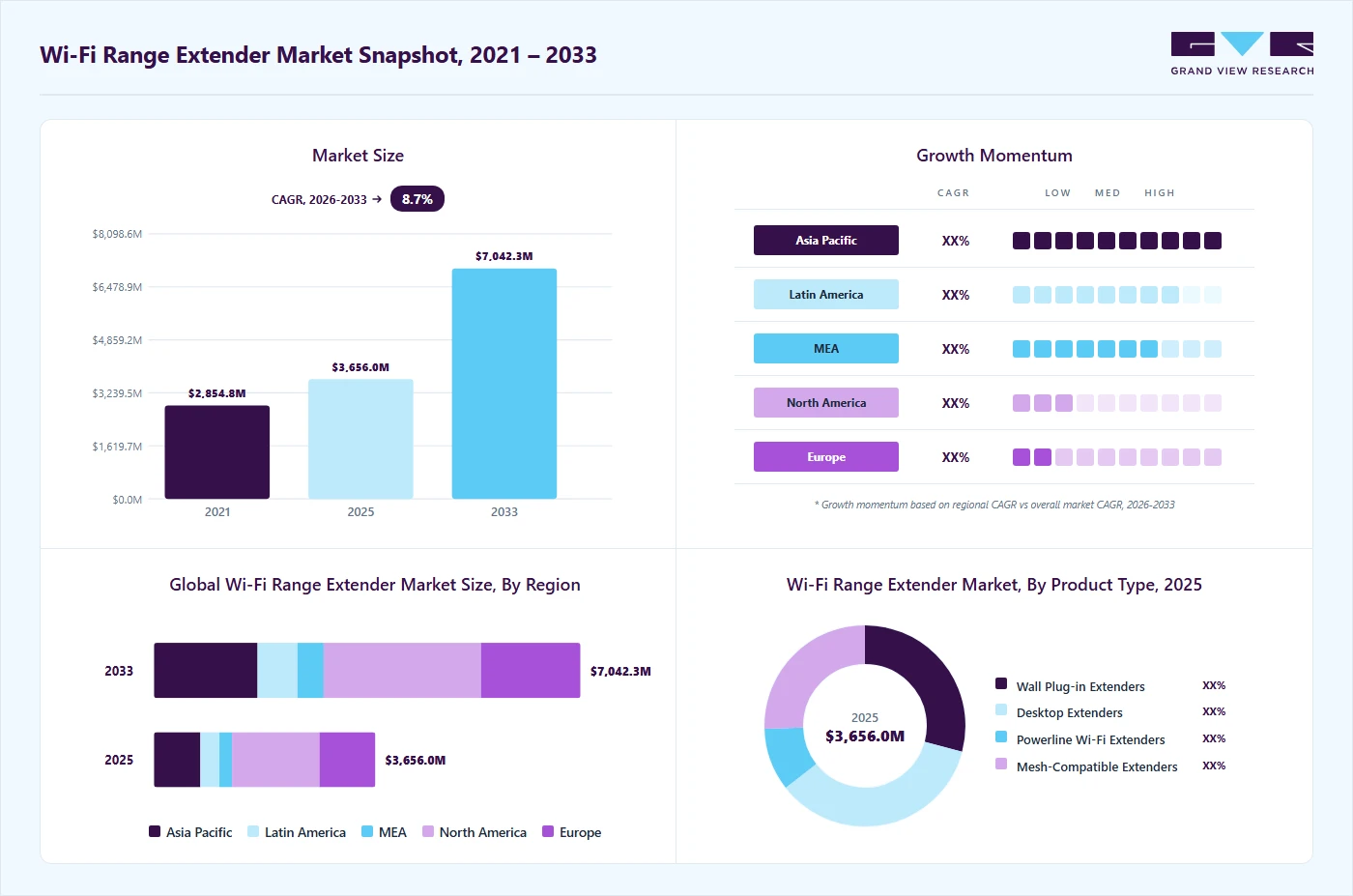 Source: Grand View Research, IR Documents, Primary Interviews, Paid DatabasesTo learn more about this report,
 Download Free Sample Report
 Key Market Trends & Insights
- By type: Indoor segment dominated the market, with a revenue share of 69.9% in 2025.
- By product type: Desktop extenders segment held the largest market share in 2025.
- By end use: Residential segment accounted for the largest revenue share in 2025.
Regional Highlights
- Largest regional market: North America (39.5% revenue share, 2025)
- Fastest-growing regional market: Asia Pacific (highest CAGR, 2026-2033)
- By country: The U.S. held the largest market share in 2025.
Market Size & Forecast
- Market size in 2025: USD 3.6 Billion
- Estimated market size in 2026: USD 3.9 Billion
- Projected market size by 2033: USD 7.0 Billion
- CAGR (2026-2033): 8.7%
Three ways to get this report
Buy it, customize it, or ask a question.Ask an Analyst
Analyst response in 1 business day
- AccessReport author, directly
- Reply timeWithin 1 working day
- No sales callDirect answer only
- FormatEmail reply
- CostFree, no cost
Get the Full Report
What the study covers
- FormatsPDF · Excel · Dashboard
- Timeline2026–2033 annual, 2025 base
- Coverage20+ countries, 5 regions
- Companies10+ key players profiled
Customize the Report
20% free customization
- IncludeCountries, segments, points
- TailorTo your product definition
- ExtendDeeper competitor detail
- OrA fully bespoke study
- Turnaround5–10 working days
This demand is further reinforced by the widespread use of remote work solutions, online education platforms, streaming services, gaming applications, and other high-bandwidth activities. In addition, continuous advancements in networking technologies, including Wi-Fi 6/6E, dual-band and tri-band range extenders and improvements in overall user experience, are driving further adoption.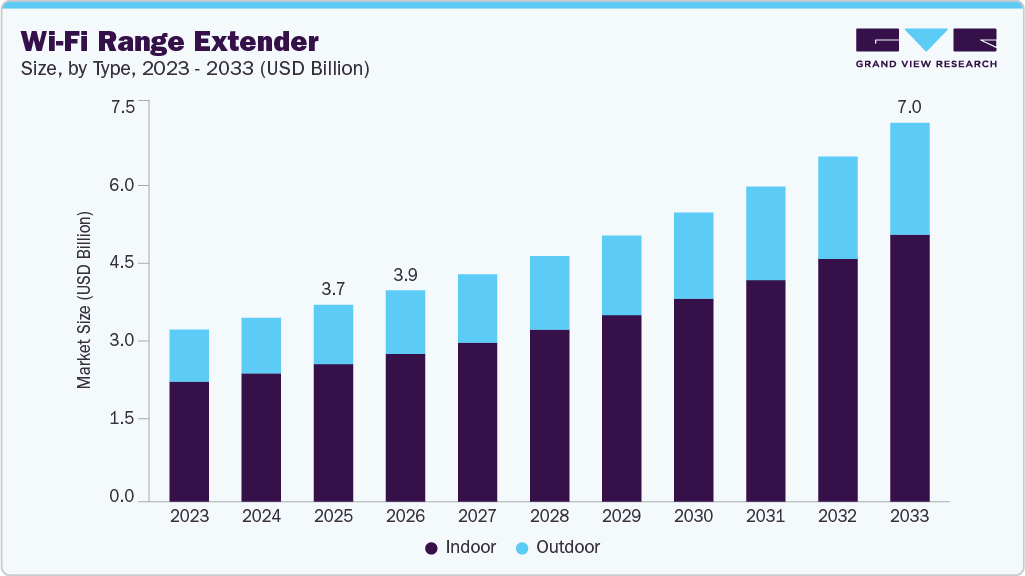 To learn more about this report, Download Free Sample Report
 The Wi-Fi range extenders market has been fueled by the increasing requirement for seamless high-speed connectivity due to the rise in internet usage across the world. With increasing use of bandwidth-intensive applications and services, and the trend of working and learning remotely continuing to rise, people are looking to install devices that can remove dead spots in their Wi-Fi networks and provide seamless connectivity. The rise of smart home devices and IoT gadgets, which require seamless connectivity to function effectively, has also fueled this trend.
Technological innovation in the market can be observed with the introduction of new Wi-Fi standards such as Wi-Fi 6, Wi-Fi 6E, and Wi-Fi 7. Range extenders have evolved with features such as multiple band support, intelligent traffic prioritization, and mesh compatibility to provide high speeds. For example, TP‑Link RE700X, a high‑performance Wi‑Fi 6 range extender was widely recommended in 2026 attributing to its dual‑band Wi‑Fi 6 connectivity with robust throughput and smart roaming features for device‑dense homes. Similarly, TP‑Link RE505X AX1500 Dual‑Band Wi‑Fi 6 Range Extender, offers compact, easy setup Wi‑Fi 6 coverage that supports consistent speeds across multiple devices, demonstrating how modern extenders now enable high‑speed connectivity in increasingly device‑dense environments.
The market has witnessed considerable investments and R&D activities from various players, including companies and investors. Companies have been focusing on the development of next-generation products with better scalability and integration with mesh and AI-based network optimization technologies. For instance, in November 2025, NETGEAR launched a tiered partner engagement initiative (“Drive”), designed to foster co‑investment and deeper collaboration with channel partners, thus improving product support and deployment (including extenders and mesh products).
Moreover, Wi-Fi range extenders must comply with regional and international regulations regarding radio equipment and wireless communication. For instance, in the European Union, the equipment must comply with the requirements of the Radio Equipment Directive 2014/53/EU to be sold in the region. This ensures safety and interference regulations are met. Regulations regarding spectrum allocation, energy efficiency, and wireless certification have an impact on the design and entry strategy of these range extenders, at times affecting the cost of development and availability of the equipment.
However, the market also faces several restraints that could limit its growth. Alternative technologies such as mesh Wi-Fi systems are increasingly preferred by consumers, as they offer seamless coverage and higher speeds, which can decrease demand for traditional extenders. Cybersecurity and privacy concerns also hinder adoption as users worry about potential vulnerabilities and data breaches when adding devices to their networks. In addition, energy-efficiency compliance costs for manufacturers can increase production expenses and affect pricing.
Market Dynamics
The rapid increase in internet-connected devices across households and commercial environments is driving the growth of the market. Modern homes and workplaces now rely on multiple connected devices simultaneously, including smartphones, laptops, smart TVs, gaming consoles, security systems, printers, and IoT-enabled appliances. This growing device density places substantial pressure on conventional wireless routers, often resulting in weak signals, network congestion, and connectivity dead zones in larger spaces or multi-room environments. Wi-Fi range extenders help strengthen signal coverage and improve network accessibility without requiring extensive infrastructure upgrades, making them an increasingly preferred solution among consumers and businesses.
Commercial establishments are also experiencing increased demand for enhanced wireless coverage as digitalization and cloud-based operations grow. Offices, retail outlets, educational institutions, healthcare facilities, and hospitality venues depend heavily on uninterrupted internet connectivity to support communication systems, customer services, digital transactions, and connected devices. Weak or inconsistent Wi-Fi coverage can directly impact operational efficiency and user experience, encouraging organizations to deploy range extenders to maintain stable network performance across wider areas. The growing adoption of smart devices and connected ecosystems across both residential and commercial sectors continues to drive sustained demand for Wi-Fi range extension solutions.
Compatibility issues with older routers and varying wireless standards are restraining the growth of the market by creating connectivity and performance challenges for users. Many households and small businesses continue to operate older routers that may not fully support newer extender technologies such as dual-band connectivity, Wi-Fi 6, or advanced security protocols. Differences in wireless standards, firmware versions, and network configurations can lead to unstable connections, reduced coverage efficiency, or installation difficulties. These technical limitations often prevent users from achieving the expected performance improvements after deploying range extenders.
Configuration complexity and inconsistent interoperability between devices from different manufacturers further impact consumer adoption. Users with limited technical knowledge may have difficulty pairing extenders with existing routers, updating firmware, or optimizing network settings for stable performance. Connectivity interruptions, speed reductions, and frequent reconnection issues can negatively affect user experience and reduce customer satisfaction. Such challenges encourage some consumers to upgrade directly to advanced routers or mesh networking systems rather than invest in standalone Wi-Fi range extenders, thereby limiting market growth potential.
The gaming and digital entertainment sector presents opportunities for the expansion of the market due to the growing demand for uninterrupted, high-speed wireless connectivity. Online multiplayer gaming, cloud gaming platforms, 4K and 8K video streaming, live content broadcasting, and virtual reality applications require stable, low-latency internet connections with minimal signal interruption. Weak Wi-Fi coverage in areas located far from the primary router can lead to lag, buffering, reduced streaming quality, and poor gaming performance. Consumers are increasingly adopting Wi-Fi range extenders to improve connectivity in gaming rooms, entertainment spaces, and larger residential environments where consistent network performance is critical.
Rising consumption of digital entertainment content across smart TVs, gaming consoles, tablets, and streaming devices is further strengthening demand for enhanced wireless coverage solutions. Modern households often run multiple bandwidth-intensive applications simultaneously, such as video streaming, online gaming, and live video communication, which can strain existing wireless networks. Wi-Fi range extenders help distribute network coverage more effectively across the premises, improving signal strength and supporting smoother entertainment experiences. Manufacturers are also introducing advanced extenders with dual-band and tri-band capabilities, low-latency optimization, and Wi-Fi 6 compatibility to meet the performance requirements of gamers and high-content-consumption users.
Market Concentration & Characteristics
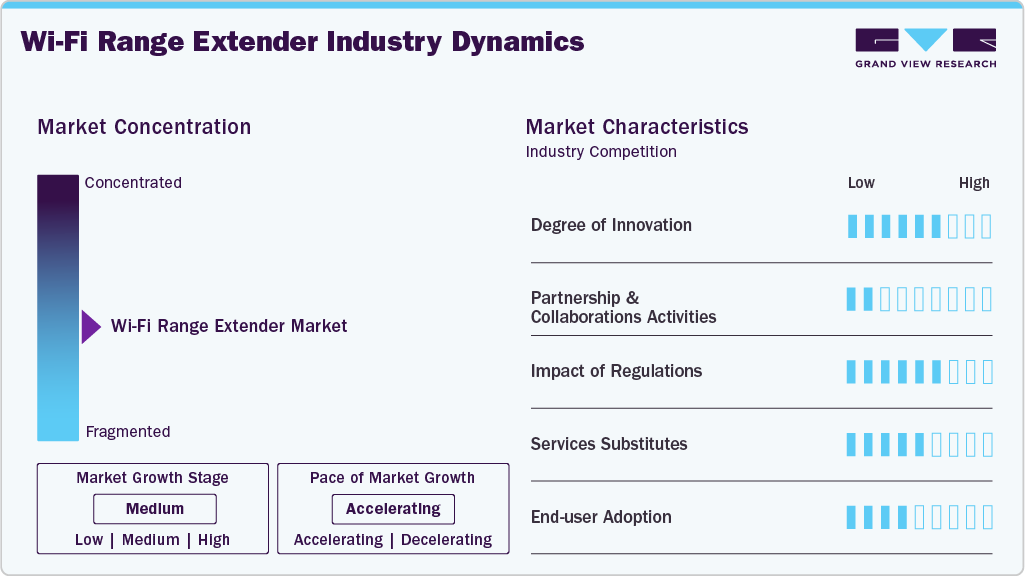
The market for Wi-Fi range extenders is moderately fragmented. The market comprises several established global networking equipment manufacturers, as well as numerous regional and emerging players competing across different price and performance segments. Companies such as NETGEAR Inc., TP-Link Technologies Co. Ltd, D-Link Corporation, Linksys Holdings, Inc., and ASUSTek Computer Inc. hold significant market presence due to their strong distribution networks, broad product portfolios, and brand recognition. However, the presence of cost-competitive regional manufacturers and niche networking solution providers prevents the market from being highly consolidated.
 To learn more about this report, Download Free Sample Report
 Competition is driven by factors such as pricing, wireless technology compatibility, product performance, ease of installation, smart home integration, and support for advanced standards, including Wi-Fi 6 and Wi-Fi 6E. Rapid technological advancements and relatively low entry barriers in consumer networking equipment have enabled several emerging companies to expand their presence, particularly in price-sensitive markets across the Asia Pacific, Latin America, and parts of Europe. Strong participation from online retail channels and e-commerce platforms has further increased market accessibility for smaller brands, contributing to the fragmented competitive landscape.
Type Insights
The indoor segment accounted for the largest share of 69.85% in 2025. A need for extended Wi-Fi connectivity inside homes, offices, and commercial establishments, where dead spots often occur, is driving growth of the segments. Indoor Wi-Fi range extenders are widely used due to their ease of use, high compatibility with existing routers, and convenience for users. In addition, the increasing need for remote work, e-learning, video streaming, and smart home devices is rising demand for indoor Wi-Fi range extenders, as these devices need uninterrupted connectivity. For instance, in January 2026, NETGEAR launched Wi‑Fi 7 range xxtender EXS27‑BE5000, which delivers high-speed dual-band performance designed to eliminate Wi-Fi dead zones in modern homes. It supports multiple devices simultaneously, and ensures faster data transfer, improved network efficiency, and future-proof compatibility with emerging connected devices.
The outdoor segment is expected to grow at the significant CAGR during the forecast period, owing to the increased requirement for expanded Wi-Fi connectivity in outdoor and semi-open spaces (gardens, campuses, parks, stadiums, others) with limited connectivity. In addition, the increased adoption of smart city initiatives, outdoor surveillance systems, and IoT-based applications is leading to the development of robust wireless networks in outdoor spaces. Moreover, the development of robust designs that can resist adverse weather conditions as well as the ability to transmit signals at long ranges and resist interference is improving the usability and convenience of outdoor Wi-Fi range extenders. In line with the trend, in November 2021, TP Link launched Omada EAP Outdoor Extender, which ensures high-speed and stable connectivity in adverse outdoor conditions, thus highlights the role of technological advancements in improving the adoption rate of this technology.
Product Type Insights
The desktop extenders segment dominates the Wi-Fi range extender market, as these extenders usually come equipped with more powerful antennas, signal amplification, and heat dissipation capabilities, thus provide more reliable and stable connectivity. These range extenders are also ideal for environments where multiple devices are connected and require high-speed internet access for streaming, gaming, and video conferencing. For instance, ASUS RP-AC1900 Desktop Wi-Fi extender provides robust dual-band coverage and supports multiple devices at once.
The mesh-compatible extenders segment is expected to register the highest CAGR during the forecast period due to its ability to create seamless, unified Wi-Fi networks across large areas. These extenders are ideal for users seeking uninterrupted connectivity without signal drops, especially in multi-story homes or offices. For instance, mesh-compatible devices such as the TP-Link Deco M5 extend coverage dynamically, allow multiple devices to connect efficiently and provide easy setup, thereby driving rapid adoption in this segment.
Technology Insights
The Wi‑Fi 6/6E segment accounted for the largest share in 2025. These range extenders can deliver high-speed connectivity, improved network capacity, and reliable performance, particularly where there are numerous devices connected simultaneously, including smart homes, small offices, and co-working spaces. Wi‑Fi 6/6E are equipped with advanced features such as MU-MIMO, OFDMA, and intelligent band steering. Wi‑Fi 6/6E can efficiently manage multiple data streams, reduce network congestion, and maintain stable connections across all devices. As a result, they enable smooth high-definition video streaming, responsive online gaming, uninterrupted video conferencing, and seamless integration of smart home devices, providing users with a consistently robust and dependable network experience throughout their coverage area.
Wi-Fi 7 (802.11be) is expected to grow at the fastest CAGR during the forecast period. Wi-Fi 7 offers higher data rates and lower latency, making it suitable for bandwidth-hungry applications. Wi-Fi 7 extenders are designed for applications such as 4K and 8K video streaming and cloud gaming. Wi-Fi 7 extenders are suitable for smart home applications as they offer improved spectrum efficiency and multi-link operation and make it possible for multiple devices to connect without compromising performance. Wi-Fi 7 is gaining traction with the increasing adoption of next-generation routers and growing demand for ultra-fast and future-proof connectivity solutions.
Sales Channel Insights
The online sales channel held the largest market share in 2025, due to the ease, variety, and competitive pricing offered by the online sales channel. Consumers are increasingly using websites such as Amazon, Flipkart, and other platforms to purchase range extenders, as online sales channel provides them with more convenient and faster delivery options. Moreover, online sales channel helps vendors to reach a wider audience across the world, thus increasing their share in the market.
The B2B/enterprise integrators sales channel is expected to witness a significant CAGR during the forecast period due to the increasing demand for customized and scalable network solutions among businesses and organizations. The demand for Wi-Fi range extenders is increasing among businesses and organizations, as they provide uninterrupted connectivity among various devices and applications within the premises. Moreover, the increasing trend of hybrid working and smart office solutions is also contributing to the growth of the Wi-Fi range extender market, making the B2B/enterprise integrators a crucial factor for the growth of the Wi-Fi range extender market.
End Use Insights
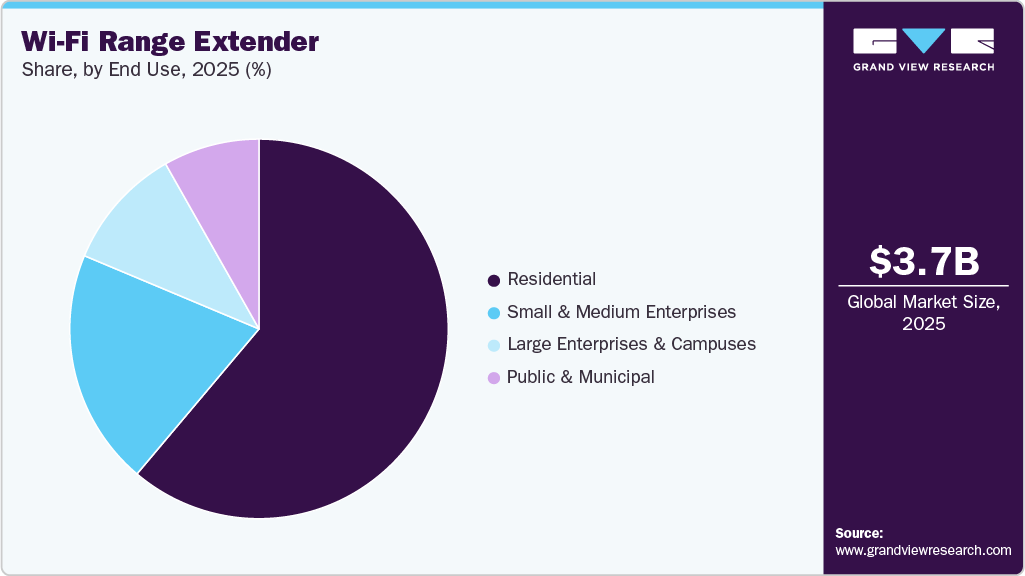
The residential segment held the largest market share in 2025. Residential sector is heavily dependent on stable and high-speed wireless connectivity for multiple devices simultaneously, such as smartphones, laptops, smart TVs, gaming consoles, and many smart home devices in terms of IoT connectivity. The growing demand for remote workers, online classes, and entertainment is also increasing the demand for uninterrupted connectivity throughout the residential sector. The growing need for such connectivity is leading consumers to look for reliable solutions that offer stable and consistent connectivity without dead spots in terms of Wi-Fi connectivity throughout larger spaces of living areas.
 To learn more about this report, Download Free Sample Report
 Small & medium enterprises segment is expected to register the highest CAGR over the forecast period, driven by the increasing trend of using digital tools, cloud-based applications, and collaborative software which demand high-speed internet connectivity to function efficiently. Small and medium-sized enterprises are using Wi-Fi range extenders to extend the range within the office, support the number of users and devices and ensure the efficiency of the network without the need to install expensive network infrastructure. The increasing trend of using video conferencing and collaborative software in SMEs is expected to drive the market, thus making this segment register high growth over the forecast period.
Regional Insights
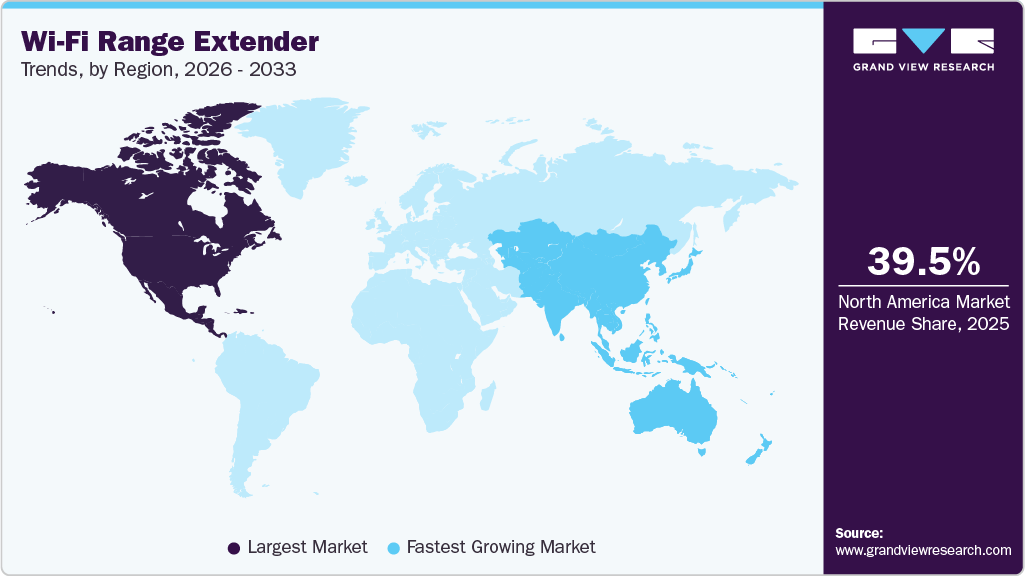
The North America Wi-Fi range extender market held a significant share in 2025. The high digital infrastructure and adoption of high-speed internet connectivity in the region is driving growth. The region also witnessed high penetration of smart homes, smart devices, and IoT ecosystems. The region also witnessed a high presence of key market players and innovations in range extender products.
 To learn more about this report, Download Free Sample Report
 U.S. Wi-Fi Range Extender Market Trends
The U.S. Wi-Fi range extender market held a dominant position in 2025. The increasing adoption of high-speed internet connectivity, smart homes, and connected devices are driving growth of the market. Rising demand for uninterrupted connectivity for remote work, online education, and streaming services further fueled market growth. In addition, strong presence of major market players, continuous product innovations, and easy availability of advanced range extenders contributed to the U.S. maintaining a leading position in the global market.
Europe Wi-Fi Range Extender Market Trends
The Europe Wi-Fi range extenders market in 2025 was identified as a lucrative market with growing demand for seamless internet connectivity in various regions. Growing demand for smart home devices, IoT applications, and remote work infrastructure have created opportunities for the expansion of the market. Technological advancements in Wi-Fi range extenders have enhanced the overall performance of the product. Digital connectivity initiatives in Europe such as the WiFi4EU program provide funding to cities to deploy free public Wi-Fi hotspots in parks, libraries and public spaces. Expanding broadband infrastructure in various cities in Europe, such as the broadband expansion plans in cities such as Patmos in Greece, have created opportunities for the expansion of the market.
The UK Wi‑Fi range extender industry is expected to grow rapidly due to rising home automation and increasing internet penetration across urban and rural areas. Remote work trends and online learning have escalated demand for reliable home networks, particularly as gigabit broadband coverage expands under Project Gigabit. Project Gigabit, launched in June 2021, is a USD 6.67 billion UK government-funded program aimed at delivering lightning-fast, gigabit-capable broadband (1,000 Mbps+) to 99% of the country by 2030.
Consumers in Germany are increasingly looking to eliminate connectivity dead zones in homes filled with multiple smart devices, fueled by advancements in Wi-Fi 6 routers and mesh networking systems. The rising adoption of smart home devices, streaming platforms, and remote work has boosted the need for in-home connectivity options such as Wi-Fi range extenders. Moreover, initiatives to expand broadband, such as the Gigabit Strategy Germany initiated by the Federal Government of Germany in July 2022, aim to improve fiber and 5G networks across the country. These initiatives are strengthening broadband coverage and generating demand for devices that improve internet connectivity.
Asia Pacific Wi-Fi Range Extender Market Trends
The Asia Pacific Wi-Fi range extender market is expected to grow at the fastest CAGR of 10.7% over the forecast period. The growth of the Asia Pacific Wi-Fi range extender market is attributed to the increasing rate of urbanization and the usage of smartphones and IoT devices. The demand for reliable high-speed internet connectivity is also expected to drive the market growth.
China holds the largest market share in the APAC Wi‑Fi range extender market largely due to its massive population size and one of the highest numbers of internet users globally. This results in a massive market demand for robust internet connectivity within homes and businesses. The country also possesses a massive number of broadband and mobile internet users, with a growing number of broadband and internet infrastructure development, including high-speed fixed broadband and Wi-Fi connectivity in public areas.
India is emerging as the fastest-growing market for Wi‑Fi range extenders due to rapid digital adoption and expanding broadband infrastructure. In January 2025, the National Broadband Mission 2.0 was launched by the National Broadband Mission 2.0 under the Department of Telecommunications, aiming to achieve universal, affordable high‑speed broadband connectivity across India by 2030 by expanding optical fibre networks to more villages, schools, health centres, and other institutions. Government initiatives to bridge the digital divide accelerate market growth across urban and rural India.
Key Wi-Fi Range Extenders Company Insights
Some of the key companies in the Wi-Fi range extender market include NETGEAR Inc., TP‑Link Technologies Co. Ltd, D‑Link Corporation, Linksys Holdings, Inc., ASUSTek Computer Inc., and others. These companies are primarily focusing on developing high-performance extenders that support the latest Wi-Fi standards (Wi-Fi 6 and Wi-Fi 6E), improving coverage for homes and offices, and improving user-friendly features such as easy setup, mobile app control, and mesh network compatibility.
-
NETGEAR Inc. is a networking equipment manufacturer known for its Wi‑Fi range extenders, routers, and mesh systems. NETGEAR focuses on high-performance devices supporting the latest Wi‑Fi standards, including Wi‑Fi 6 and Wi‑Fi 6E to deliver faster speeds, better multi-device handling and wider coverage. Its products, such as the Nighthawk series, feature MU-MIMO, Beamforming+ and dual/tri-band support for reliable connectivity. They also emphasize user-friendly setup through WPS and mobile apps, broad compatibility, and seamless integration with home and office networks.
-
TP‑Link Technologies Co. Ltd is a networking hardware manufacturer. The company focuses on delivering affordable and high‑performance extenders that support modern wireless standards, including Wi‑Fi 5 and Wi‑Fi 6, which helps users eliminate dead zones in homes and small offices. TP‑Link emphasizes easy setup and management through intuitive mobile apps and web interfaces along with features such as dual‑band support and seamless roaming. Its Archer and RE series products are popular for strong coverage and stable connectivity. TP‑Link also prioritizes energy efficiency and broad compatibility with routers from various brands to appeal to both budget and tech‑savvy consumers.
Key Wi-Fi Range Extenders Companies:
The following key companies have been profiled for this study on the Wi-Fi range extenders market.
- NETGEAR Inc.
- TP‑Link Technologies Co. Ltd
- D‑Link Corporation
- Linksys Holdings, Inc.
- ASUSTek Computer Inc.
- Huawei Technologies Co. Ltd
- Zyxel Communications Corp.
- Tenda Technology Co. Ltd.
- TRENDnet, Inc.
- Ubiquiti Networks
Competitive Benchmarking
Operating Strategies
Competitive Edge
Weaknesses
Mature Players: NETGEAR Inc.; TP‑Link Technologies Co. Ltd; D‑Link Corporation
- Mature networking equipment manufacturers focus on diversified wireless connectivity portfolios, including Wi-Fi range extenders, mesh networking systems, routers, and smart home connectivity solutions.
- Strong emphasis on Wi-Fi 6/6E integration, AI-based network optimization, enterprise connectivity solutions, and extensive retail and e-commerce distribution networks across global markets.
- Strong global brand recognition and extensive distribution partnerships support high market penetration across residential and commercial networking segments.
- Advanced R&D capabilities, broad product ecosystems, and established aftersales support networks strengthen competitive positioning in premium and mid-range connectivity markets.
- Intense competition from low-cost regional manufacturers creates pricing pressure and impacts profit margins.
- Rapid technological advancements in wireless networking standards increase product development costs and shorten product replacement cycles.
Emerging Players: Tenda Technology Co. Ltd.; TRENDnet, Inc.
- Increasing focus on affordable Wi-Fi coverage solutions, smart networking products, cloud-managed connectivity platforms, and localized market expansion strategies.
- Growing investments in Wi-Fi 6 compatible extenders, SMB networking solutions, and high-performance connectivity products for gaming and digital entertainment applications.
- Competitive pricing strategies and growing presence in emerging economies support market expansion in price-sensitive consumer segments.
- A strong focus on niche networking applications and flexible product offerings helps strengthen positioning in small-business and tech-savvy consumer markets.
- Limited brand visibility and distribution scale compared to established multinational networking companies restrict broader global penetration.
- Dependence on third-party retail channels and highly competitive pricing environments may affect long-term profitability and market share expansion.
Recent Developments
-
In November 2025, NETGEAR introduced the Nighthawk 5G M7 Portable Wi‑Fi 7 Hotspot with a new mobile app and integrated eSIM Marketplace designed to provide fast and flexible internet on the go. The compact device delivers up to 3.6 Gbps Wi‑Fi 7 speeds to as many as 32 connected devices and offered coverage in more than 140 countries, thus makes it useful for travelers, remote workers and families. It also included advanced security features such as WPA3 encryption, firewall protection, and automatic firmware updates.
-
In May 2025, TP‑Link Technologies Co. Ltd unveiled an expanded lineup of Wi‑Fi 7 products, including new routers, mesh systems and range extenders designed to deliver faster speeds and broader coverage for both home and outdoor use. The refreshed collection featured flagship models such as the Deco BE68 tri‑band Wi‑Fi 7 mesh system and high‑performance Archer BE600 routers. These routers offer multi‑gigabit wireless performance and advanced features such as 6 GHz band support and EasyMesh connectivity.
Wi-Fi Range Extender Market Report Scope
Report Attribute
Details
Market size in 2025
USD 3.6 billion
Estimated Market size in 2026
USD 3.9 billion
Projected Market size by 2033
USD 7.0 billion
Growth rate
CAGR of 8.7% from 2026 to 2033
Base year for estimation
2025
Historical data
2021 - 2024
Forecast period
2026 - 2033
Quantitative units
Revenue in USD million/billion and CAGR from 2026 to 2033
Report coverage
Revenue forecast, company ranking, competitive landscape, growth factors, and trends
Segments covered
Type, product type, technology, sales channel, end use, region
Regional scope
North America; Europe; Asia Pacific; Latin America; MEA
Country scope
U.S.; Canada; Mexico; Germany; UK; France; Spain; China; Japan; India; South Korea; Australia; Brazil; KSA; UAE; South Africa
Key companies profiled
NETGEAR Inc.; TP‑Link Technologies Co. Ltd; D‑Link Corporation; Linksys Holdings, Inc.; ASUSTek Computer Inc.; Huawei Technologies Co. Ltd; Zyxel Communications Corp.; Tenda Technology Co. Ltd; TRENDnet, Inc.; Ubiquiti Networks
Customization scope
Free report customization (equivalent up to 8 analysts working days) with purchase. Addition or alteration to country, regional & segment scope.
Pricing and purchase options
Avail customized purchase options to meet your exact research needs. Explore purchase options
Global Wi-Fi Range Extender Market Report Segmentation
This report forecasts revenue growth at global, regional, and country levels and provides an analysis of the latest industry trends in each of the sub-segments from 2021 to 2033. For this study, Grand View Research has segmented the global Wi-Fi range extender market report based on automation type, product type, technology, sales channel, end use, and region:
-
Type Outlook (Revenue, USD Million, 2021 - 2033)
-
Indoor
-
Outdoor
-
-
Product Type Outlook (Revenue, USD Million, 2021 - 2033)
-
Wall Plug-in Extenders
-
Desktop Extenders
-
Powerline Wi-Fi Extenders
-
Mesh-Compatible Extenders
-
-
Technology Outlook (Revenue, USD Million, 2021 - 2033)
-
Wi-Fi 5 (802.11ac)
-
Wi-Fi 6 / 6E (802.11ax)
-
Wi-Fi 7 (802.11be)
-
-
Sales Channel Outlook (Revenue, USD Million, 2021 - 2033)
-
Online
-
Offline
-
B2B/Enterprise Integrators
-
-
End Use Outlook (Revenue, USD Million, 2021 - 2033)
-
Residential
-
Small & Medium Enterprises
-
Large Enterprises and Campuses
-
Public and Municipal
-
-
Regional Outlook (Revenue, USD Million, 2021 - 2033)
-
North America
-
U.S.
-
Canada
-
Mexico
-
-
Europe
-
Germany
-
UK
-
France
-
-
Asia Pacific
-
China
-
Japan
-
India
-
South Korea
-
Australia
-
-
Latin America
-
Brazil
-
-
Middle East and Africa (MEA)
-
KSA
-
UAE
-
South Africa
-
-
Delivered Customizations
This report has been delivered with the following In-depth customizations
Client Request
Customization Delivered
Value Adds
Wi-Fi Technology Adoption and Connectivity Infrastructure Assessment
- Analysis of Wi-Fi 6, Wi-Fi 6E, and mesh networking adoption trends across residential and commercial applications.
- Evaluation of broadband penetration, fiber deployment expansion, and increasing smart home connectivity demand across key regions.
- Identified growth opportunities linked to rising internet consumption and connected device adoption.
- Supported strategic planning related to next-generation wireless networking technologies and consumer connectivity requirements.
Regional Demand and Consumer Usage Assessment
- Regional and country-level demand analysis for Wi-Fi range extenders based on household internet usage, smart device penetration, and broadband coverage.
- Segment-wise demand assessment across residential users, small businesses, gaming applications, and smart home environments.
- Supported demand forecasting and regional market penetration strategies.
- Enabled identification of high-growth application segments and emerging consumer usage patterns across key markets.
Competitive Benchmarking and Market Share Analysis
- Benchmarking of key Wi-Fi range extender manufacturers based on product portfolio, wireless technology support, regional presence, and pricing strategies.
- Analysis of partnerships with telecom operators, e-commerce channels, retail distribution networks, and smart home ecosystem providers.
- Supported competitor tracking and strategic positioning analysis across consumer and commercial networking markets.
- Enabled identification of technology adoption trends and expansion opportunities across developed and emerging economies.
Frequently Asked Questions About This Report
The growing need for reliable high-speed internet coverage across larger residential and commercial spaces, driven by the increasing use of smart devices, streaming services, and remote work applications, is boosting the adoption of Wi-Fi range extenders to eliminate connectivity dead zones.
North America dominated with a 39.5% revenue share in 2025.
Asia Pacific is the fastest-growing region over the forecast period.
The indoor segment led with a 69.9% revenue share in 2025.
The desktop extenders segment held the largest market share in 2025.
The residential segment accounted for the largest revenue share in 2025.
The global Wi-Fi range extender market size was estimated at USD 3.6 billion in 2025 and is projected to reach USD 3.9 billion for 2026.
The global Wi-Fi range extender market is expected to grow at a CAGR of 8.7% from 2026 to 2033, reaching USD 7.0 billion.
Key players include NETGEAR Inc., TP‑Link Technologies Co. Ltd, D‑Link Corporation, Linksys Holdings, Inc., ASUSTek Computer Inc., Huawei Technologies Co. Ltd, Zyxel Communications Corp., Tenda Technology Co. Ltd., TRENDnet, Inc.,Ubiquiti Networks.
About the Author(s)
Communications Infrastructure Research Team
Technology · Communications InfrastructureThis report was authored by the communications infrastructure research team at Grand View Research - comprising two research analysts, one senior research analyst, and one industry expert - with specialized expertise in the communications infrastructure segment of the technology industry. All findings are based on proprietary technology databases, executive interviews, and regulatory analysis, subject to internal peer review prior to publication.
Last Updated:
Speak to Analyst

Customize this report to your needs - add regions, segments, or data points, with 20% free customization.
Or view our licence options:


ISO 9001:2015 & 27001:2022 Certified
We are GDPR and CCPA compliant! Your transaction & personal information is safe and secure. For more details, please read our privacy policy.


