
- Home
- »
- Advanced Interior Materials
- »
-
Zeolite Market Size, Share And Trends Report, 2026-2033GVR Report cover

Zeolite Market (2026 - 2033) Size, Share & Trends Analysis Report By Application (Catalyst, Adsorbent, Detergent Builder Cement, Animal Feed), By Product (Natural, Synthetic), By Region North America, Europe, Asia Pacific, Latin America, MEA), And Segment Forecasts
Market Size, 2025
$15.6BMarket Estimate, 2026
$16.6BMarket Forecast, 2033
$27.5BCAGR, 2026–2033
7.5%Zeolite Market Summary
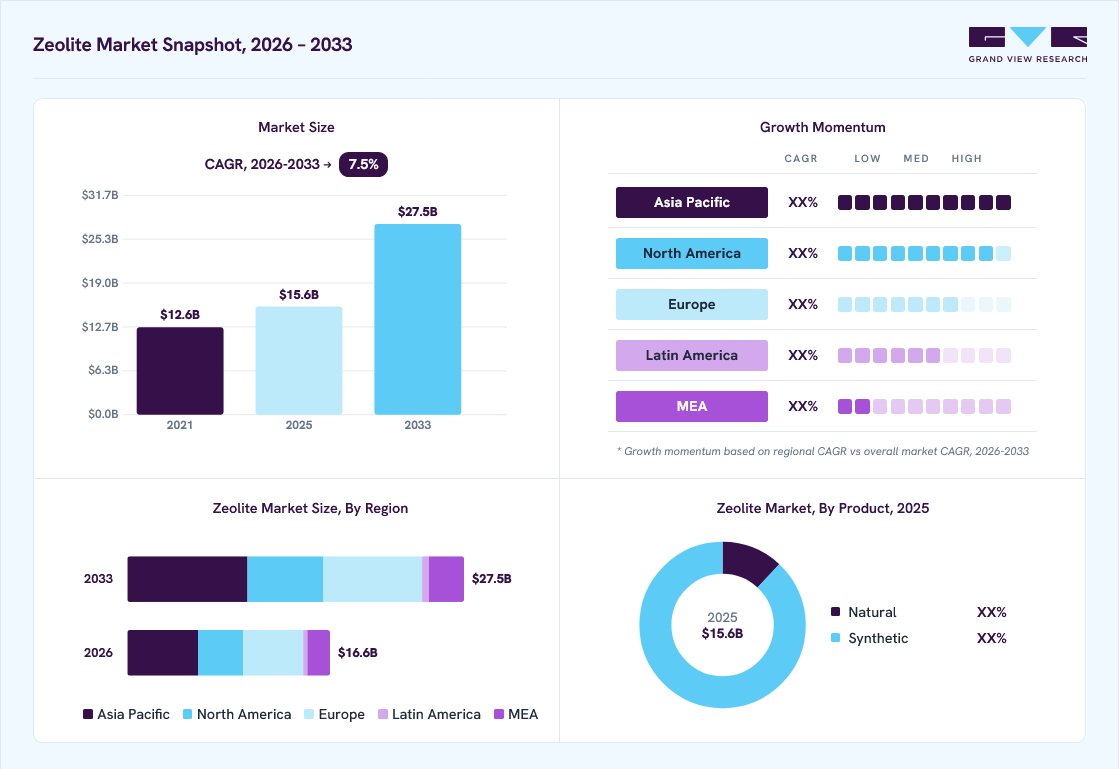
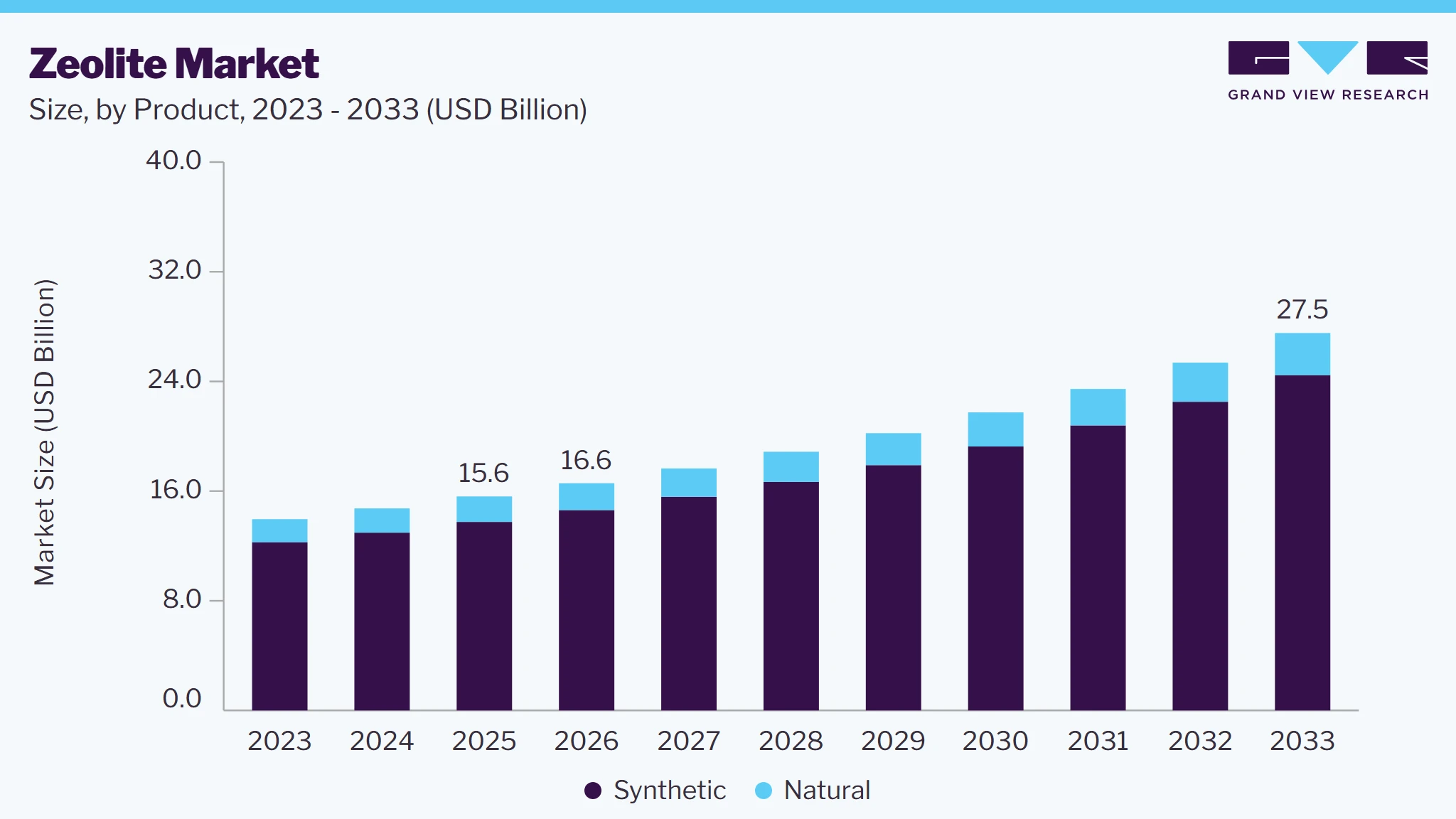
The global zeolite market size was valued at USD 15.6 billion in 2025 and is projected to grow from USD 16.6 billion in 2026 to USD 27.5 billion by 2033, at a CAGR of 7.5% from 2026 to 2033. Asia Pacific dominated the market, accounting for a revenue share of 34.8% in 2025. Increasing investments in expanding petrochemicals production and growth in the detergents industry are anticipated to drive market growth over the forecast period.
 Source: Grand View Research, IR Documents, Primary Interviews, Paid DatabasesTo learn more about this report,
 Download Free Sample Report
Key Market Trends & Insights
- By product: Synthetic segment dominated the market, with a revenue share of 88.1% in 2025.
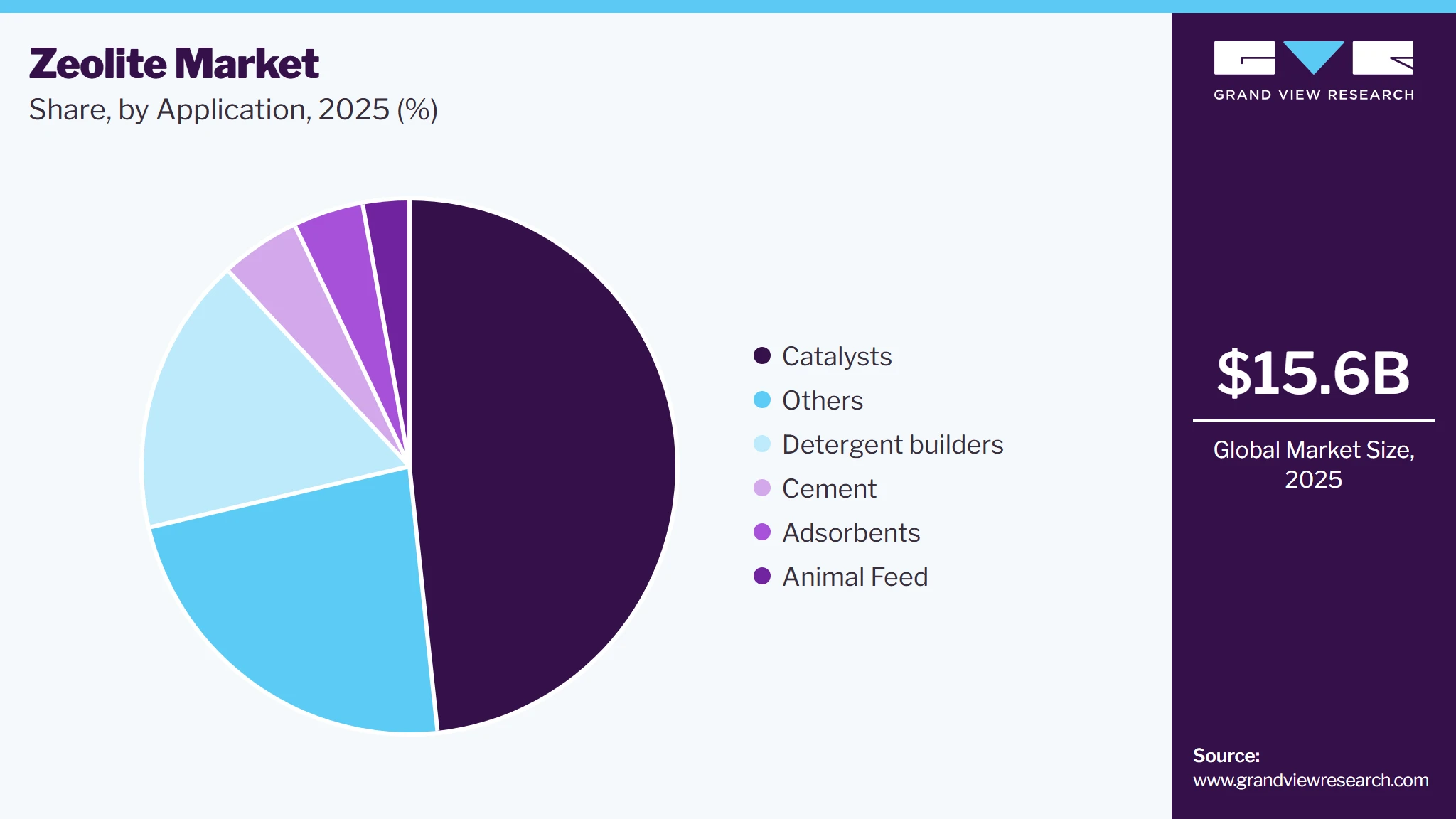
- By application: Catalyst segment held the largest market share of 48.3% in 2025.
Regional Highlights
- Largest regional market: Asia Pacific (34.8% revenue share, 2025)
- By country: China held the largest market share in 2025.
Market Size & Forecast
- Market size in 2025: USD 15.6 Billion
- Estimated market size in 2026: USD 16.6 Billion
- Projected market size by 2033: USD 27.5 Billion
- CAGR (2026-2033): 7.5%
Prism AI by Grand View Research Free to tryAsk a question about the zeolite marketTry asking✓Every figure cited from GVR research Prefer the report? Download free sample →Due to their stability, superior activity, and selectivity in conversion processes, zeolites are extensively used in the petrochemical industry as a catalyst for accelerating chemical reactions. Furthermore, owing to their high absorption capacity for liquid components, they are widely used in the production process of detergents. Synthetic zeolites hold the largest share of the zeolite market due to their superior performance, consistency, and versatility across multiple high-demand applications. These engineered materials are preferred for their controlled pore structures, high ion-exchange capacity, and thermal stability, making them ideal for detergents, catalysts, and adsorption systems. It has become the material of choice in phosphate-free detergents, where its environmentally friendly properties and strong water softening capabilities meet stringent regulatory and consumer demands.
 To learn more about this report, Download Free Sample Report
The increasing complexity of refining processes and petrochemical production has also driven the adoption of synthetic zeolites in catalyst applications, where precise molecular sieving and high selectivity are critical for improving yield and process efficiency. As industries transition to cleaner and more efficient production technologies, synthetic zeolites play a key role in emission control systems, including selective catalytic reduction (SCR) units for NOx abatement in automotive and industrial exhaust streams.
Furthermore, the growing emphasis on sustainability and resource optimization in sectors like wastewater treatment, gas separation, and air purification continues to expand the use of synthetic zeolites. Their ability to remove heavy metals, volatile organic compounds (VOCs), and greenhouse gases reinforces their value in modern environmental management solutions. As industries embrace advanced material solutions for cleaner production and more intelligent infrastructure, synthetic zeolites remain at the forefront of innovation, driving long-term growth in the global zeolite industry.
Market Dynamics
The global zeolite market is witnessing steady growth, driven by increasing demand for environmentally friendly adsorbents, catalysts, and ion-exchange materials across water treatment, petrochemicals, agriculture, construction, and detergents. Both natural and synthetic zeolites are widely used due to their unique microporous crystalline structure, high surface area, and excellent adsorption and molecular sieving capabilities. Growing concerns over water scarcity, tightening environmental regulations on industrial emissions, and the expanding use of sustainable materials are accelerating zeolite adoption worldwide.
The growing need for clean water and stricter regulations governing industrial and municipal wastewater discharge are major drivers of the zeolite market. Zeolites are extensively used as ion-exchange and adsorption media for removing ammonium, heavy metals, radioactive ions, and other contaminants from drinking water and wastewater. Their high cation exchange, chemical stability, and regeneration capability make them an economical and environmentally sustainable alternative to conventional treatment materials.
Rapid urbanization, industrialization, and increasing investments in water infrastructure across the Asia Pacific, the Middle East, and Latin America are further supporting market growth. In addition, industries such as mining, chemicals, power generation, and municipal utilities are increasingly adopting zeolite-based filtration systems to comply with stringent environmental standards while improving water reuse and resource efficiency.
The zeolite market faces challenges from the availability of competing filtration and adsorption materials, including activated carbon, silica gel, activated alumina, ion-exchange resins, and advanced membrane technologies. In several industrial applications, these alternatives offer higher selectivity or better performance depending on the contaminants being treated, limiting zeolite adoption in certain end-use sectors.
Furthermore, natural zeolite deposits vary considerably in mineral composition, purity, and cation exchange capacity depending on the source, resulting in inconsistent product performance. Additional beneficiation and processing are often required to achieve application-specific specifications, increasing production costs.
The increasing focus on sustainable agriculture and industrial emission reduction presents significant growth opportunities for the zeolite market. In agriculture, zeolites are increasingly incorporated into fertilizers and soil conditioners to enhance nutrient retention, improve water-use efficiency, reduce nitrogen losses, and increase crop productivity. Rising demand for precision farming and environmentally sustainable agricultural practices is expected to accelerate adoption, particularly in water-stressed regions.
Analyst Perspective
The global zeolite market is poised for steady growth, supported by rising demand for water treatment, sustainable agriculture, industrial catalysts, and adsorption technologies. Increasing environmental regulations, expanding industrial applications, and continued investments in advanced synthetic zeolite production are expected to drive long-term market growth despite competition from alternative materials and fluctuations in raw material availability.
Product Insights
Based on product, the synthetic segment led the market with the largest revenue share of 88.1% in 2025. Their widespread industrial applications-in petrochemical refining, water treatment, and detergent manufacturing are key growth drivers. Synthetic zeolites, known for their sponge-like structure and high surface area, are favored in fluid catalytic cracking and as phosphate-free detergent builders. The increasing global production of petrochemical derivatives such as plastics, solvents, and cosmetics has significantly increased demand. Furthermore, innovations like antimicrobial and environmentally safer variants of synthetic zeolites are expanding their use in emerging sectors such as healthcare and emissions control.
Natural zeolites, while trailing in revenue, lead the market in terms of volume due to their cost-effectiveness and broad application in construction and agriculture. In the construction sector, they are widely used in pozzolanic cement, lightweight aggregates, and insulating materials, benefiting from ongoing global infrastructure investment. Rising construction spending across Asia-Pacific, North America, and parts of Europe in 2025 has boosted the demand for natural zeolites in green building materials. Additionally, their use in water filtration, soil remediation, and animal feed supplements is gaining traction amid increasing environmental regulations and sustainability goals.
Application Insights
Based on applications, the catalyst segment led the market with the largest revenue share of 48.3% in 2025. Zeolites are widely employed in petroleum refining, particularly in fluid catalytic cracking (FCC) processes, where they facilitate the breakdown of large hydrocarbon molecules into more valuable products like gasoline and diesel. Their high surface area and shape-selective properties significantly enhance reaction efficiency and fuel yield. In the petrochemical industry, zeolites are used as catalysts in processes such as methanol-to-olefins (MTO) and methanol-to-propylene (MTP), supporting the production of essential building blocks like ethylene and propylene.
 To learn more about this report, Download Free Sample Report
Due to its effectiveness in removing calcium and magnesium ions from hard water, the detergent builder segment remains a central application area for synthetic zeolites, particularly Zeolite-A. In 2025, global demand for phosphate-free, eco-friendly cleaning products continues to rise, prompting companies like BASF and Honeywell to develop advanced detergent formulations incorporating zeolites. Regulatory pressure to eliminate phosphates and growing consumer preference for sustainable cleaning solutions have further accelerated the adoption of zeolite-based builders across household and industrial detergent segments.
Natural zeolites can absorb up to 50% of their weight in liquid without swelling, making them highly effective in moisture control applications. This property makes them a common additive in pet litter products and valuable in soil remediation efforts. Additionally, their ion-exchange capability is crucial in various water treatment processes, including handling radioactive waste from nuclear reactors, gas purification, petroleum refining, and industrial wastewater treatment.
Regional Insights
U.S. dominated the North American zeolite market's revenue share of over 78.0% in 2024. The region's demand is primarily driven by the growth of the petrochemical industry and increased animal feed production. Zeolites are widely used as catalysts in refining operations and as additives in livestock feed due to their ability to enhance nutrient absorption and reduce toxins. The U.S. and Mexico are among the leading animal feed producers globally, supported by expanding livestock industries and rising emphasis on sustainable agriculture. Additionally, environmental regulations favoring phosphate-free detergents and improved wastewater management continue to support zeolite consumption in the region.
U.S. Zeolite Market Trends
The United States continues to be the largest market for zeolites in North America, with strong demand supported by its expanding petrochemical industry and rising consumption in detergents, animal feed, agriculture, and water treatment sectors. A significant development occurred in January 2024, when ExxonMobil announced the commissioning of a USD 2 billion expansion at its Baytown complex in Texas. This project included upgrades to its steam cracker and fluid catalytic cracking units, which are expected to substantially increase the use of synthetic zeolites as key catalysts in processing operations. The combination of industrial investment and regulatory support for environmentally friendly products is anticipated to further drive zeolite demand across the U.S. in the coming years.
Asia Pacific Zeolite Market Trends
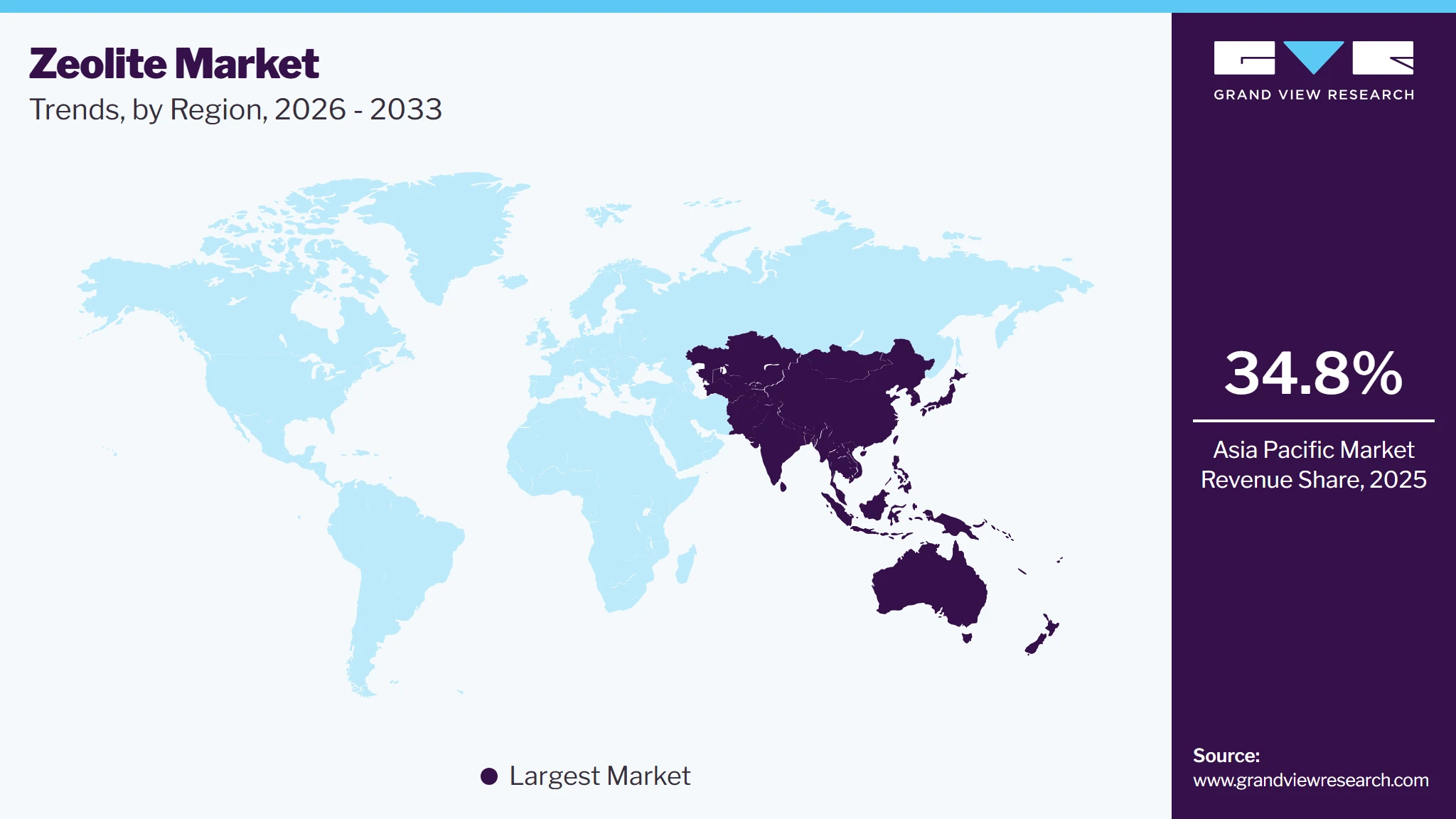
Asia Pacific dominated the zeolite market with the largest revenue share of 34.8% in 2025. The Asia-Pacific region is experiencing rapid growth in zeolite demand, making it one of the fastest-expanding markets globally. This surge is fueled by widespread industrialization, infrastructure development, and the expansion of chemical manufacturing across countries like China, India, and Southeast Asia. Zeolites are increasingly used in cement production, water treatment, petrochemical processing, and eco-friendly detergents. The region’s focus on improving water recycling systems and reducing environmental pollution has further reinforced the adoption of zeolite-based solutions across multiple sectors.
 To learn more about this report, Download Free Sample Report
China Zeolite Market Trends
The zeolite market in China held the largest share in the Asia Pacific region in 2025. China’s zeolite market is witnessing steady growth, driven by expanding petrochemical and refining activities, rising demand for synthetic detergents, and increasing investments in environmental protection. Synthetic zeolites dominate demand due to their consistent pore structures, high ion-exchange capacity, and catalytic efficiency, supporting their use in detergent builders, fluid catalytic cracking (FCC), petrochemical processing, and industrial adsorption. Growing emphasis on wastewater treatment, air pollution control, and industrial emission reduction is further creating opportunities for zeolite-based adsorbents and catalysts.
Europe Zeolite Market Trends
Europe remains a key region in the zeolite market, with strong demand driven by its focus on sustainability, environmental compliance, and advanced industrial applications. The area sees widespread use of synthetic zeolites in sectors such as detergents, petrochemicals, and wastewater treatment, supported by strict environmental regulations and a shift toward phosphate-free and eco-friendly alternatives. Countries including Germany, France, and the UK actively incorporate zeolite-based solutions in green construction, clean energy, and water purification technologies. This momentum is further supported by ongoing investments in research, innovation, and circular economy initiatives aimed at reducing the environmental footprint of industrial processes.
Key Zeolite Company Insights
Some key players operating in the market include BASF SE, Honeywell International Inc., Clariant AG, and Albemarle Corporation.
-
BASF SE, established in 1865 and headquartered in Ludwigshafen, Germany, is one of the world’s leading chemical manufacturers. The company plays a prominent role in the zeolite market by producing a wide range of synthetic zeolites used in applications such as fluid catalytic cracking, emission control, and chemical processing.
-
Honeywell International Inc., founded in 1906 and based in Charlotte, North Carolina, is a diversified technology and manufacturing company. Through its UOP division, Honeywell is a key supplier of molecular sieve zeolites used in refining, petrochemical, and gas treatment applications.
-
Clariant AG, established in 1995 and headquartered in Muttenz, Switzerland, is a global specialty chemicals company with a strong focus on sustainable innovation. It offers synthetic zeolites for environmental protection, including air purification, wastewater treatment, and odor control.
-
Albemarle Corporation, founded in 1994 and headquartered in Charlotte, North Carolina, is a major producer of specialty chemicals, including catalysts and lithium compounds. In the zeolite space, Albemarle supplies synthetic zeolites used in hydro processing and FCC units, which are essential for modern refining operations.
Key Zeolite Companies:
The following key companies have been profiled for this study on the zeolite market.
- Albemarle Corporation
- Arkema Group (incl. CECA)
- BASF SE
- Clariant AG
- Honeywell International Inc.
- PQ Corporation (PQ Group)
- Tosoh Corporation
- W. R. Grace & Co.
- Zeochem AG
- Zeolyst International
Competitive Benchmarking
Category
Operating Strategies
Competitive Edge
Weakness
Established Players (BASF SE, Honeywell International Inc., Clariant AG, Arkema Group, Tosoh Corporation)
- Emphasize innovation in synthetic zeolite technologies for catalysts, molecular sieves, and specialty adsorption applications.
- Continuously invest in R&D, process optimization, and advanced material engineering to develop high-performance products for refining, petrochemicals, environmental solutions, and industrial processing.
- Strengthen market position through global manufacturing footprints, technical support services, and long-term collaborations with industrial customers.
- Extensive research capabilities enable rapid development of application-specific zeolite formulations.
- Diversified product portfolios and broad customer networks reduce dependence on a single end-use industry.
- Well-established manufacturing and distribution infrastructure supports consistent product quality and reliable global supply.
- Significant investment in innovation and regulatory compliance increases operating expenditure.
- Demand fluctuations in refining and chemical industries can affect capacity utilization.
- Rising competition from regional manufacturers may exert pressure on pricing in standard-grade products.
Emerging & Specialized Players (PQ Corporation, W.R. Grace & Co., Zeochem AG, Zeolyst International, Albemarle Corporation)
- Focus on high-value zeolite products designed for catalysts, gas purification, molecular sieves, industrial adsorption, and specialty chemical applications.
- Expand business through customized product development, strategic partnerships, and application-specific technical solutions for refining, healthcare, electronics, and environmental industries.
- Enhance competitiveness by improving production efficiency and offering specialized grades tailored to customer requirements.
- Strong expertise in niche applications creates high customer retention and long-term commercial relationships.
- Ability to deliver customized products provides differentiation in technically demanding industries.
- Specialized manufacturing capabilities and technical service teams support premium product positioning.
- Business performance is influenced by demand cycles in catalyst and specialty chemical markets.
- Limited diversification compared with large multinational chemical companies may increase exposure to sector-specific downturns.
- Continuous investment is required to maintain technological leadership and meet evolving environmental and product quality standards.
Recent Developments
-
On May 22, 2025, Honeywell finalized the acquisition of the catalyst division from Johnson Matthey, broadening its portfolio in refining, petrochemicals, and sustainable fuel production. This move significantly enhances Honeywell UOP's capabilities in zeolite-based catalytic technologies and strengthens its position in the global chemicals sector.
-
On February 26, 2025, Taiyo Oil Co. selected Honeywell UOP’s Ethanol-to-Jet (ETJ) technology for integration at its Okinawa refinery. The project aims to produce sustainable aviation fuel (SAF) using advanced zeolite-based catalysts, contributing to Japan’s decarbonization efforts in the transport sector.
-
On February 28, 2025, Clariant concluded the 36th German Zeolite Conference in Erlangen, where it presented its latest research on novel zeolite applications. The event highlighted innovations in adsorption, catalysis, and energy storage while promoting academic excellence through a dedicated young scientist award.
-
On June 3, 2025, Albemarle released its latest sustainability performance update, detailing progress in reducing emissions and conserving water across its global operations. The report highlighted improvements in the efficiency of its zeolite-based catalyst production and reaffirmed the company’s commitment to responsible chemical manufacturing.
Zeolite Market Report Scope
Report Attribute
Details
Market definition
The market size represents the total revenue generated from the consumption of natural and synthetic zeolites across applications, including catalysts, adsorbents, detergent builders, cement, animal feed, and other applications.
Market size in 2025
USD 15.6 billion
Estimated market size in 2026
USD 16.6 billion
Projected market size by 2033
USD 27.5 billion
Growth rate
CAGR of 7.5% from 2026 to 2033
Base year for estimation
2025
Historical data
2021 - 2024
Forecast period
2026 - 2033
Quantitative units
Revenue in USD million, Volume in Kilotons, and CAGR from 2026 to 2033
Report coverage
Revenue forecast, volume forecast, company ranking, competitive landscape, growth factors, and trends
Segments covered
Product, application, region
Regional scope
North America; Europe; Asia Pacific; Latin America; Middle East & Africa
Country scope
U.S.; Canada; Mexico; Germany; UK.; Italy; Spain; Turkey; China; India; Japan; Brazil; GCC
Key companies profiled
Albemarle Corporation, Arkema Group (incl. CECA), BASF SE, Clariant AG, Honeywell International Inc., PQ Corporation (PQ Group), Tosoh Corporation, W.R. Grace & Co., Zeochem AG, Zeolyst International
Customization scope
Free report customization (equivalent up to 8 analysts' working days) with purchase addition or alteration to country, regional & segment scope.
Pricing and purchase options
Avail customized purchase options to meet your exact research needs. Explore purchase options
Global Zeolite Market Report Segmentation
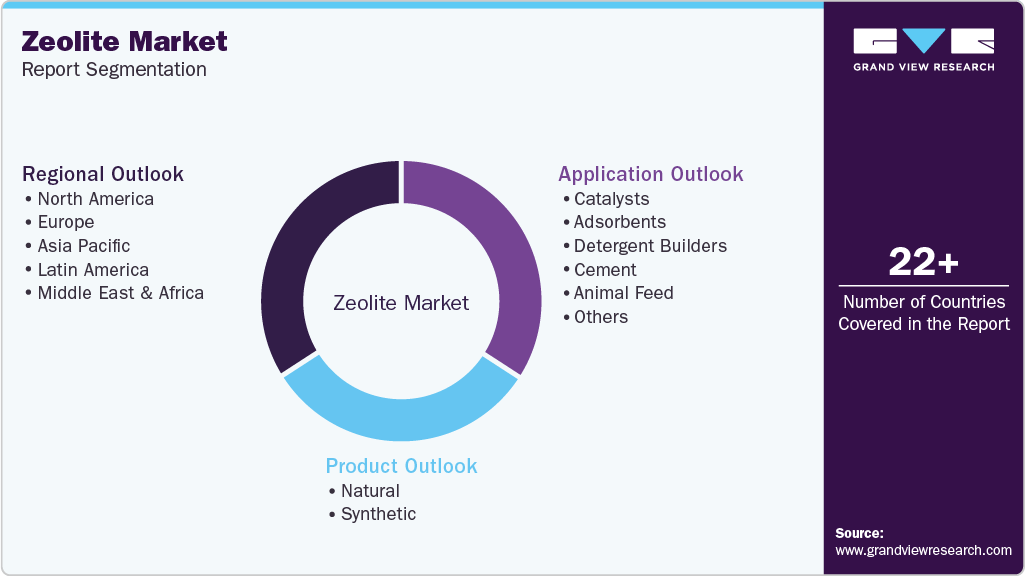
This report forecasts revenue growth at the global, country, and regional levels and analyzes the latest trends in each sub-segment from 2021 to 2033. For this study, Grand View Research has segmented the global zeolite market report by product, application, and region.
 To learn more about this report, Download Free Sample Report
-
Product Outlook (Volume, Kilotons; Revenue, USD Billion; 2021 - 2033)
-
Natural
-
Synthetic
-
-
Application Outlook (Volume, Kilotons; Revenue, USD Billion; 2021 - 2033)
-
Catalysts
-
Adsorbents
-
Detergent Builders
-
Cement
-
Animal Feed
-
Others
-
-
Regional Outlook (Volume, Kilotons; Revenue, USD Billion; 2021 - 2033)
-
North America
-
U.S.
-
Canada
-
Mexico
-
-
Europe
-
Germany
-
UK
-
Italy
-
Spain
-
Turkey
-
-
Asia Pacific
-
China
-
India
-
Japan
-
-
Latin America
-
Brazil
-
-
Middle East & Africa
-
GCC
-
-
Research Methodology
The zeolite Market figures in this report are based on a proven research process that combines executive interviews with secondary research from proprietary databases, company filings, and recognized regulatory and institutional sources. Market size is built through value-chain sizing - reconciling supply-side and demand-side estimates - and triangulated with bottom-up and top-down approaches. Every estimate passes multiple levels of expert validation before publication, with each zeolite segment quantified using the revenue-capture definitions in the table below.
Segment Definition
Type
Revenue Capture Definition
Natural
Represents the market value associated with naturally mined zeolite utilized across water treatment, agriculture, animal nutrition, construction, environmental remediation, and industrial filtration applications. The segment captures revenues generated through the commercial consumption of naturally occurring zeolite minerals.
Synthetic
Covers revenues derived from chemically synthesized zeolites engineered for uniform pore size, high purity, and specialized performance. Market value is attributed to their use in catalysts, detergent formulations, molecular sieves, gas separation, air purification, and other advanced industrial processes.
Application
Revenue Capture Definition
Catalysts
Includes the commercial value of zeolites employed as catalyst materials in petroleum refining, petrochemical processing, renewable fuel production, and chemical manufacturing, where they enhance reaction efficiency and product selectivity.
Adsorbents
Represents revenues associated with zeolite used as an adsorption medium for moisture removal, gas purification, solvent drying, air separation, and industrial emission control, leveraging its high adsorption capacity and molecular sieving characteristics.
Detergent Builders
Captures the market value of zeolites incorporated into laundry and industrial cleaning products as environmentally friendly water-softening agents that improve detergent performance by binding hardness ions.
Cement
Encompasses revenues from zeolite supplied as a supplementary cementitious material and mineral additive in cement and concrete production, contributing to enhanced mechanical performance, durability, and sustainability of construction materials.
Animal Feed
Reflects the value of zeolite consumed as a feed additive in livestock and poultry nutrition, supporting toxin adsorption, moisture regulation, improved feed efficiency, and healthier animal production systems.
Others
Covers revenues generated from a broad range of applications, including agriculture, horticulture, aquaculture, medical oxygen concentrators, nuclear waste treatment, odor management, and environmental protection, where the unique ion-exchange and adsorption properties of zeolites provide functional benefits.
Estimation Model
Layer Name
Key Question
Description
End-Use Demand Assessment
What drives the consumption of zeolites globally?
Quantify the demand for natural and synthetic zeolites across major end-use sectors, including water and wastewater treatment, petrochemical refining, detergents, agriculture, construction, animal feed, and environmental applications. Demand estimates are developed by analyzing industry output, infrastructure investments, environmental regulations, agricultural activity, and industrial production trends influencing zeolite consumption.
Supply & Manufacturing Assessment
How are zeolite produced and distributed?
Evaluate the global supply ecosystem by assessing natural zeolite mining operations, synthetic zeolite manufacturing facilities, production capacities, raw material availability, capacity expansions, and regional supply networks. The analysis also incorporates international trade, logistics, and the availability of commercial-grade zeolite products across key consumer markets.
Application & Industry Adoption Assessment
Where are zeolites creating the greatest commercial value?
Assess the penetration of zeolites across diverse application segments by examining adoption trends, technological developments, product performance requirements, and substitution dynamics. The evaluation covers catalyst systems, adsorbents, detergent builders, cement additives, animal nutrition, and emerging applications such as gas separation, carbon capture, and environmental remediation.
Market Sizing & Forecast Assessment
How is the global market value estimated?
Market size is calculated through an apparent consumption approach by integrating regional production, imports, exports, and end-use demand across major countries. Revenue estimation incorporates average selling prices by product type, application mix, regional consumption patterns, supply-demand balance, and macroeconomic and industry-specific growth indicators to forecast market performance throughout the study period.
Delivered Customizations
This report has been delivered with the following In-depth customizations
Client Request
Customization Delivered
Value Adds
Price Trend & Raw Material Cost Analysis
Analyzed historical and forecast prices of natural and synthetic zeolites, energy costs, alumina and silica feedstock pricing, regional price differentials, and key cost drivers.
Supported procurement planning, supplier negotiations, and raw material cost optimization.
Import–Export & Trade Flow Assessment
Evaluated global trade patterns, major exporting and importing countries, trade balances, tariff structures, and regional supply dependencies.
Supported sourcing strategies and regional market expansion decisions.
Substitute Material Competitiveness Analysis
Compared zeolites with activated carbon, silica gel, activated alumina, ion-exchange resins, and membrane technologies across major applications.
Help evaluate substitution risks and strengthen product positioning.
Frequently Asked Questions About This Report
The zeolite market is expected to grow at a CAGR of 7.5% from 2026 to 2033, reaching USD 27.5 billion by 2033.
Synthetic segment dominated the market, with a revenue share of 88.1% in 2025.Their widespread industrial applications-in petrochemical refining, water treatment, and detergent manufacturing are key growth drivers.
The key players operating in the zeolite market are Albemarle Corporation, Arkema Group, BASF SE, Clariant AG, Honeywell International Inc., PQ Corporation (PQ Group), Tosoh Corporation, W.R. Grace & Co., Zeochem AG, Zeolyst International, among others.
The key factor driving the growth of the global zeolite market is the increasing demand for zeolites in water and wastewater treatment, driven by stringent environmental regulations and rising investments in sustainable water purification infrastructure.
The zeolite market size was valued at USD 15.6 billion in 2025 and is estimated at USD 16.6 billion in 2026.
Asia Pacific dominated the zeolite market with the largest revenue share of 34.8% in 2025.
Catalyst segment held the largest market share of 48.3% in 2025.
About the Author(s)
Advanced Interior Materials Research Team
Advanced Materials · Advanced Interior MaterialsThis report was authored by the advanced interior materials research team at Grand View Research - comprising two research analysts, one senior research analyst, and one industry expert - with specialized expertise in the advanced interior materials segment of the advanced materials industry. All findings are based on proprietary advanced materials databases, executive interviews, and regulatory analysis, subject to internal peer review prior to publication.
Last Updated:
Speak to Analyst

Customize this report to your needs - add regions, segments, or data points, with 20% free customization.
Or view our licence options:


ISO 9001:2015 & 27001:2022 Certified
We are GDPR and CCPA compliant! Your transaction & personal information is safe and secure. For more details, please read our privacy policy.


