Machinery And Equipment Industry Trends: Productivity, Flexibility, and Lifecycle Economics Are Redefining Capital Equipment
Explore all 8 industry trends
Use the contents below to jump directly to the trend relevant to your research.
Forces Shaping The Machinery And Equipment Industry
- Capital Spending Is Returning, but Buyers Are More Selective
- Reindustrialization and Supply-Chain Resilience Are Changing Where Machinery Is Needed
- Higher-Technology Manufacturing Is Raising the Machinery Specification
- Flexibility Is Becoming a Core Machinery Requirement
- Automation Is Becoming Part of the Machine, not a Separate Layer
- Energy and Resource Efficiency Are Moving into Machine-Level Economics
- Lifecycle Economics Are Challenging the Lowest-Capex Model
Section I: Where Machinery Demand Is Coming From (Capital investment and manufacturing localization)
The global industrial machinery industry is progressing as manufacturers place greater emphasis on efficiency, productivity, and equipment performance, a shift that sits at the center of current machinery and equipment industry trends. Although production capacity is an important factor, purchasing decisions increasingly depend on precision, throughput, flexibility, maintenance needs, energy consumption, and equipment lifespan. The operators want equipment that will help them increase production efficiency, adapt to changes in manufacturing demands, and perform efficiently without incurring high operating costs.
The latest manufacturing trends reveal favorable conditions for machinery and equipment industry growth, even though the demand varies across industries and regions. For example, the United Nations Industrial Development Organization (UNIDO) has reported that global manufacturing production rose by 1.5% quarter-on-quarter in the second quarter of 2026, and manufacturing exports went up by 6.1%. The growth was higher in the case of high-technology manufacturing, which saw its production rise by 2.0%, and its exports grow by 7.1%. Similarly, according to the Association for Manufacturing Technology (AMT) metalworking machinery orders in the United States amounted to USD 4.03 billion in the first seven months of 2026, reflecting a 37.1% increase from the corresponding period in 2025.
Investment in industry today is no longer only about the expansion of production or an increase in capacity. Companies seek solutions that will allow them to optimize and improve existing facilities and make the best use of the machinery available to them. They seek machines that are flexible, maintainable, energy-efficient, and robust. This trend is causing a shift in the industry when it comes to the development and sale of machinery. There is an increased emphasis on engineering, automation, robustness, and services, which will cater to the evolving needs of customers.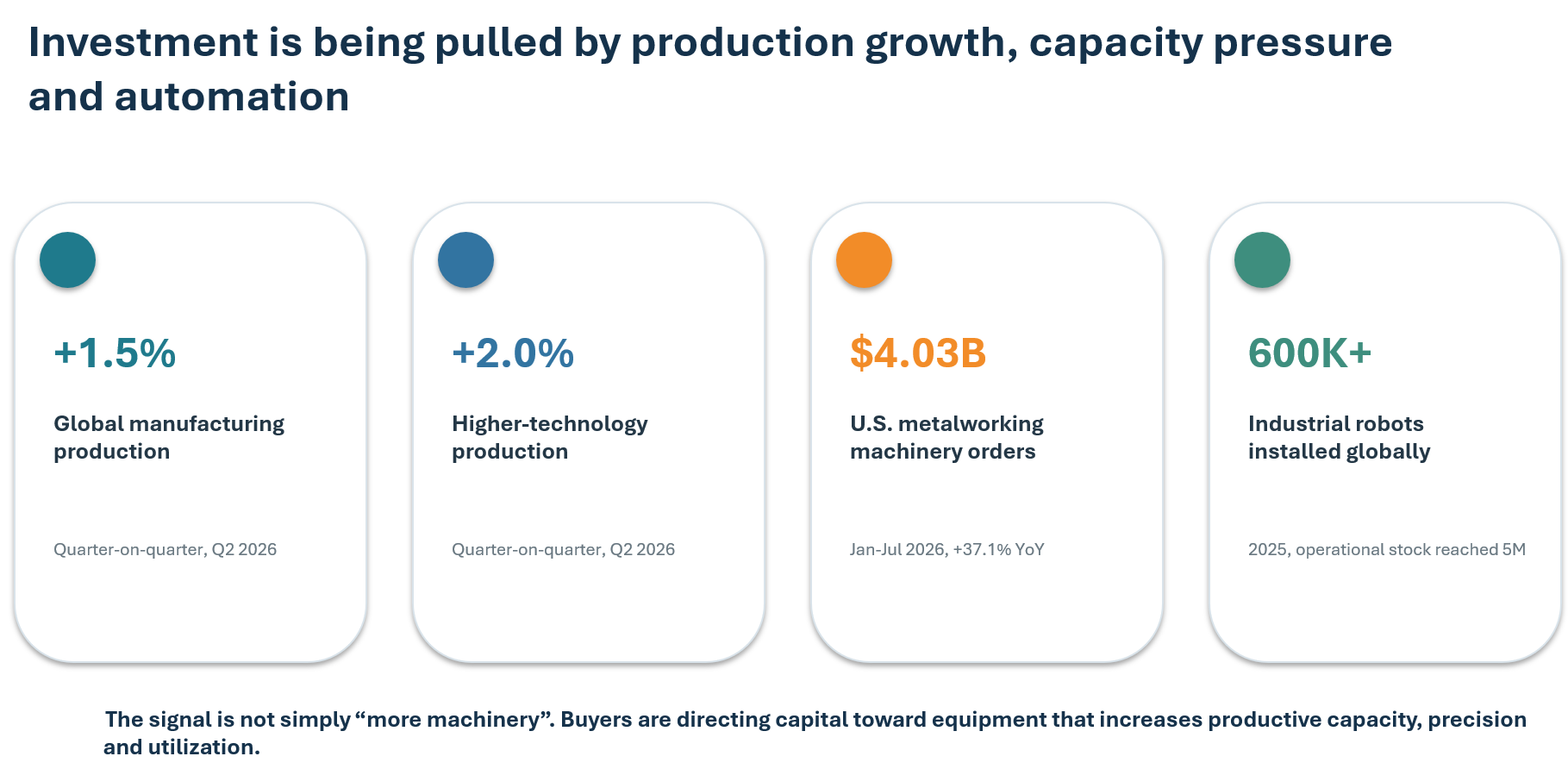
Sources: UNIDO; AMT, U.S. Manufacturing Technology Orders; IFR, World Robotics 2026.
01Capital Spending Is Returning, but Buyers Are More Selective
Machinery investment typically rises when manufacturers either need more capacity or need to produce more efficiently with the assets they already operate. The current cycle contains both forces. AMT reported that U.S. manufacturing technology orders totaled USD 5.74 billion in 2025, 22.5% above 2024. The first half of 2026 then reached USD 3.44 billion, up 36.0% year over year and the strongest half-year value since the USMTO series began in 1998.
Notably, the value of orders has been rising faster than machines in parts of the market. That points toward a mix of higher-specification equipment, automation content, multi-axis capability, and more complex production systems rather than a simple increase in the number of basic machines purchased. This shift toward value over volume is one of the clearest machinery and equipment industry trends in the current investment cycle.
The investment trend is also market-specific. Aerospace equipment makers made record machinery orders in the first half of 2026, according to AMT, while engine, turbine, and power transmission equipment makers increased their equipment investments as well. All of these industries have one thing in common: difficult-to-manufacture parts, hard materials, high quality standards, and costly manufacturing bottlenecks. In these conditions, the machinery is bought due to its ability to eliminate a bottleneck rather than simply due to the expiration of its accounting life.
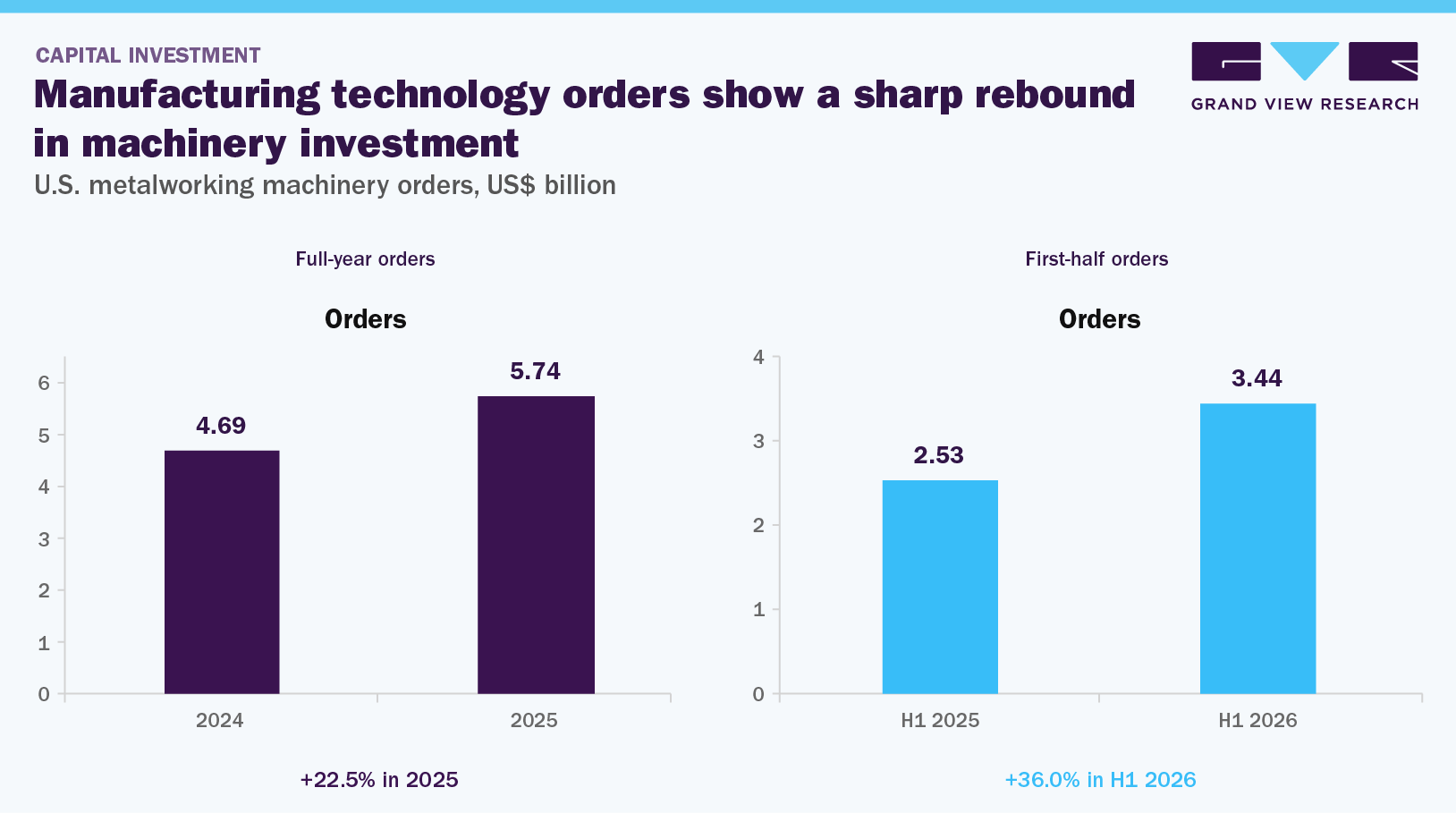
Source: AMT, U.S. Manufacturing Technology Orders. Prior-period values shown are calculated from AMT-reported growth rates.
02Reindustrialization and Supply-Chain Resilience Are Changing Where Machinery Is Needed
Manufacturers around the world are starting to rethink their manufacturing facilities and supply chains due to shifting trade policies, logistics costs, geopolitical risks, and the need for continuity of supplies. The proximity to customers, availability of skilled labor, cost of production, and supply chain stability are some of the issues that are being considered when planning manufacturing investments. As per the International Federation of Robotics (IFR), the development of industrial policy and increased importance of supply chain stability are driving the relocation and localization of manufacturing in several markets. Such trends are supporting machinery and equipment industry growth, creating opportunities for industrial machinery suppliers as firms set up new manufacturing plants in various markets.
The demand for equipment is further spurred on by investments in existing factories. The producers have been making upgrades to their production lines, increasing in-house manufacturing capacities, and adding more equipment to meet changes in product specifications and production levels. Investments like these have made demands for machine tools, equipment for shaping and fabrication, automatic production lines, material handling equipment, and equipment for inspecting products. Thus, the updating and re-tooling of existing plants are also emerging sources of demand for equipment besides new plant construction.
Such developments have also added greater significance to the relevance of technical expertise and after-sales services when it comes to the purchase of machines. Equipment suppliers that can help install, commission, ramp up production, optimize processes, and expand production capacity in the future are being sought out by the manufacturers of products. Therefore, the industrial machine manufacturing companies that boast robust engineering capabilities and flexible equipment ranges stand to gain more from such conditions.
Section II: How Machinery Technology Is Evolving (Precision, flexibility and automation)
03Higher-Technology Manufacturing Is Raising the Machinery Specification
UNIDO's latest data show that high-technology industries continue to lead manufacturing growth. Over the past five years, computers, electronics, and other transport equipment have been among the main drivers of manufacturing expansion. This matters for machinery suppliers because higher-technology production tends to demand tighter tolerances, better repeatability, more controlled processes, and stronger quality assurance.
The effect is noticeable across machine tools, assembly machines, precision forming, inspection equipment, specialized material handling, and production machinery. A machine that is capable of holding tighter tolerances, reducing part handling, combining various functions, or maintaining consistent output throughout extended production periods may be worth much more than its cost of acquisition.
This also raises the importance of machine rigidity, thermal stability, spindle and drive performance, tooling interfaces, fixturing, process control, and in-process measurement. The competitive discussion, therefore, moves away from headline speed toward repeatable, productive performance under real operating conditions.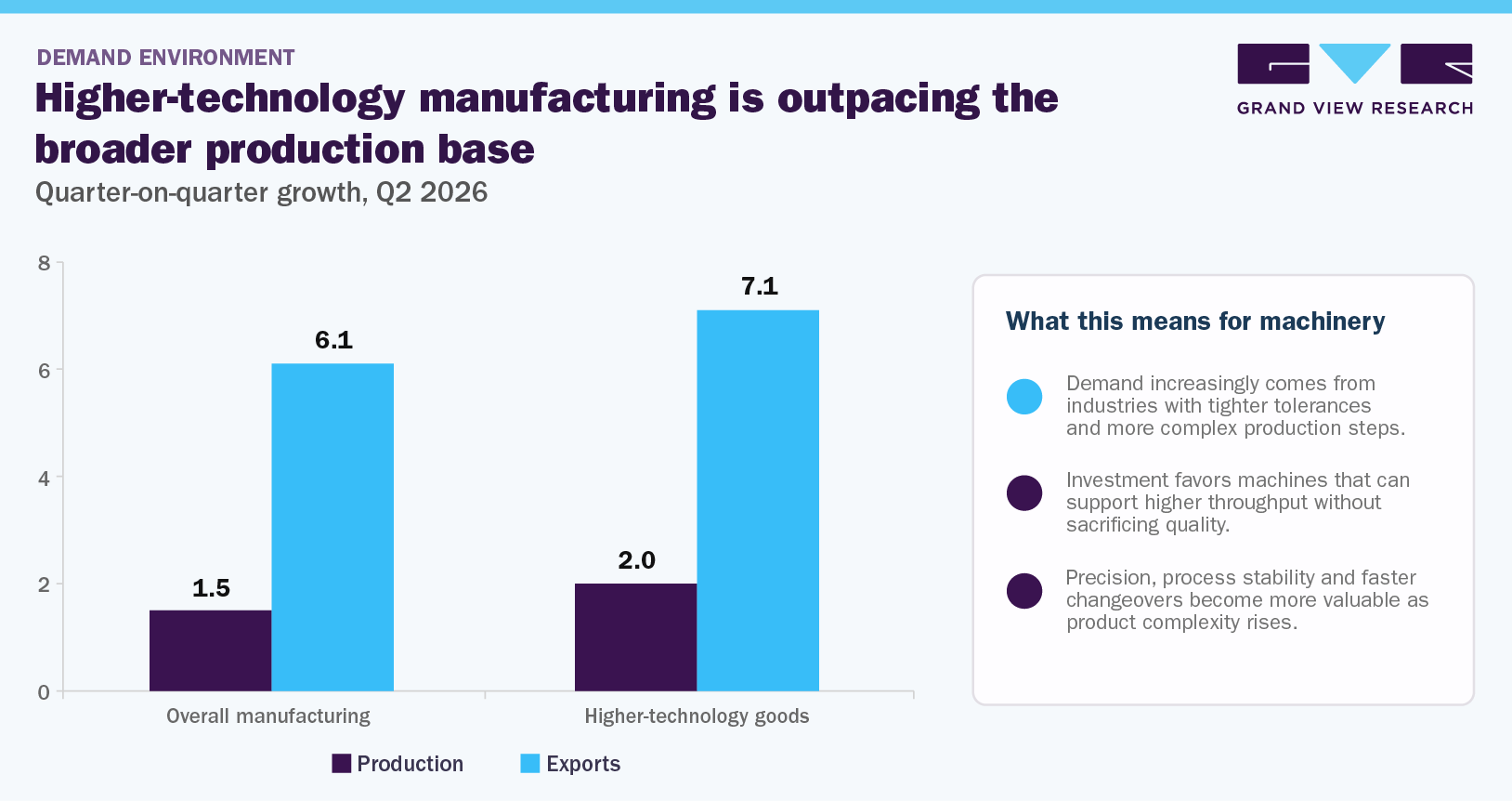
Source: UNIDO Statistics, World Manufacturing Production and Trade, Q2 2026.
04Flexibility Is Becoming a Core Machinery Requirement
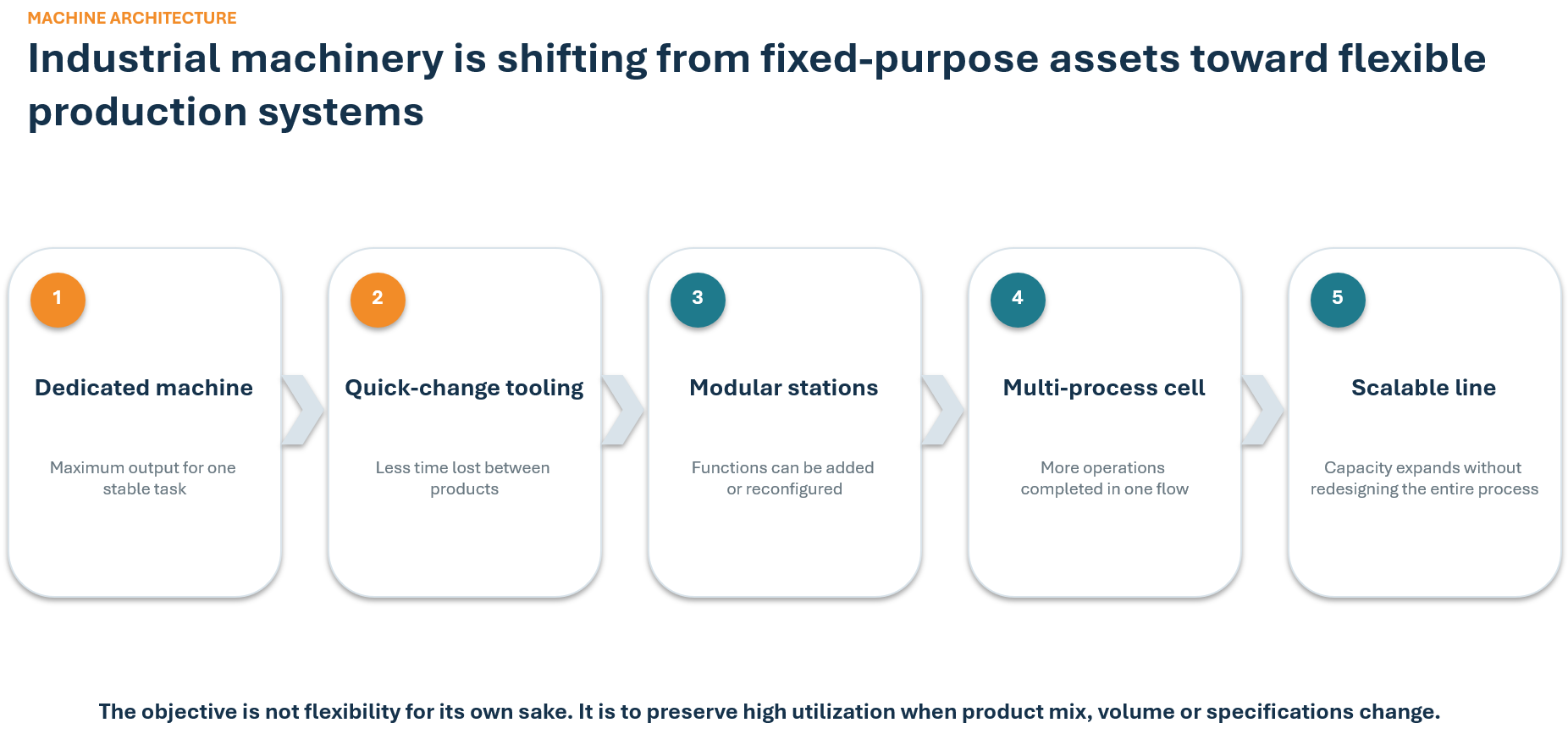
Flexible production systems have become an important goal for many industrial manufacturers in reaction to the changing needs of their customers, shortened product life cycles, and increased customization of products. Even though conventional manufacturing machines are ideal for mass production, many industries need machines that can manage different product types, design changes, and variable production volumes. This is especially true in industries such as automotive, aerospace, electronics, and precision manufacturing.
These developments are encouraging machinery manufacturers to introduce modular equipment designs, quick-change tooling, multi-process machining centers, and reconfigurable production lines. Such technologies allow industrial operators to accommodate changing production requirements with fewer modifications to existing equipment, lessening the need for dedicated machinery and helping minimize setup time and production interruptions.
The use of flexible machines can deliver considerable gains in terms of operations and economics through reduced reliance on specialized machines, lower disruption in production, and improved response to demand. For the purpose of contract manufacturing and supply of industrial parts, the capability of adapting to a variety of products and production volumes in the current facilities is an important consideration in machine purchases. Therefore, flexibility and adaptability continue to be increasingly important factors in addition to machine operational capability and efficiency.
05Automation Is Becoming Part of the Machine, not a Separate Layer
Automation is becoming an integral part of industrial machinery as manufacturers seek to improve production efficiency, reduce repetitive manual tasks, and sustain consistent product quality. Modern equipment increasingly incorporates automated material loading, component handling, tool changing, inspection, palletizing, and packaging capabilities. Manufacturers are also adopting integrated production cells that combine machinery, robotics, sensors, and control systems to improve workflow coordination and equipment utilization.
The increasing use of industrial robots also indicates this change. The International Federation of Robotics (IFR) states that over 600,000 industrial robots have been installed across the world in 2025, resulting in the worldwide stock of operational industrial robots exceeding 5 million. As a result of this development, machine producers are designing products that could be easily combined with robots and automatic production lines. Standardization of interfaces, automatic loading and unloading, safety systems, and synchronized control systems become important for modern production plants.
The concept of integration automation can prove to be highly beneficial for industries that have repetitive processes, larger quantities of production, and labor shortages. Automated equipment can prove to be helpful in reducing handling time, maximizing the use of equipment, avoiding production errors, and ensuring consistent product production. Nonetheless, manufacturers need to keep certain factors in mind while choosing from various options related to automation, like investment, programming, maintenance, and adaptability. In this connection, machinery companies are increasingly working on adaptable automation options.
Section III: What Determines Long-Term Machinery Value (Efficiency and lifecycle economics)
06Energy and Resource Efficiency Are Moving into Machine-Level Economics
Resource and energy efficiency have become very critical aspects when buying industrial machinery, as the manufacturer tries to cut costs and increase efficiency. Usage of electricity, compressed air, cooling water, and hydraulic energy plays a key role in the cost of operating the machine, especially for those industrial plants that use machinery over long periods of time. For this reason, buyers of such machinery are becoming more interested in machinery that is more productive and consumes fewer resources.
Machine makers are responding to this issue by using energy-efficient motors, variable speed drive systems, efficient hydraulic systems, automatic idling, as well as improved cooling and lubrication systems. This has the effect of reducing energy loss, increasing machine efficiency, and reducing operational cost. Small reductions in energy consumption translate into substantial savings throughout the lifespan of the machinery, especially for high-volume production plants.
Efficiency in the use of resources is not only confined to energy consumption but also includes better use of materials, less waste material generation, a lower requirement for coolant, and fewer faulty goods. This becomes very relevant in industries such as metal fabrication, food processing, packing, plastics, and chemicals, where wastage of material and inefficient production processes may result in loss of profits. For this reason, machine makers have started developing machinery that can offer high productivity with less material waste and coolant use.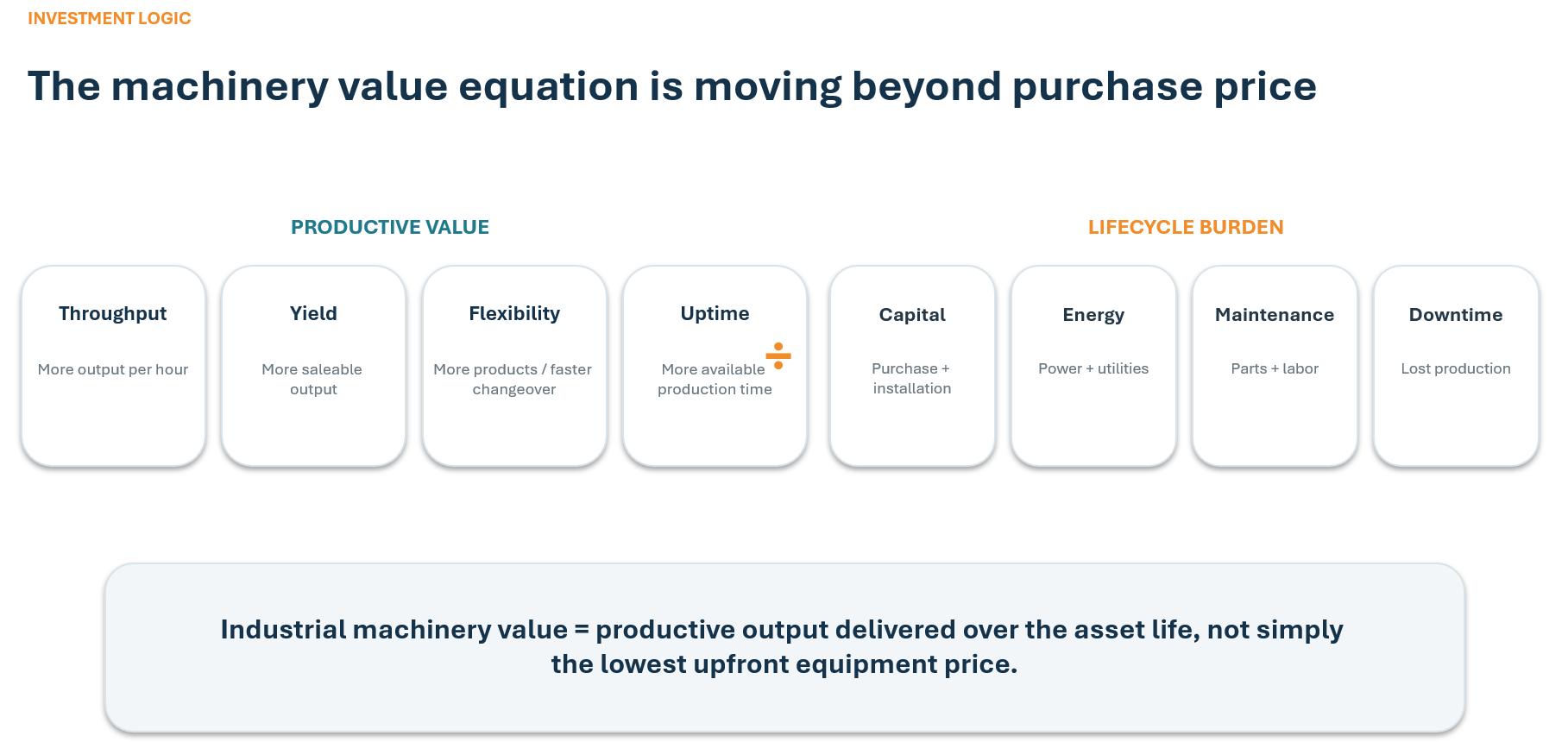
07Lifecycle Economics Are Challenging the Lowest-Capex Model
Industrial equipment constitutes a major long-term investment. Total cost of ownership thus becomes an issue of great concern to buyers during equipment procurement. Apart from the initial procurement cost, the manufacturer is now considering costs incurred in the installation, commissioning, energy consumption, maintenance, spare parts, man-hours, and downtime for the equipment. Equipment that is more reliable, productive, easy to maintain, and has a longer lifespan will be more economical despite having a higher cost of procurement.
Such development has pushed machine makers to concentrate on building durable, easy-to-service, and maintainable machinery. For example, accessibility of components, standardization of spare parts, remote diagnostics, and simplified maintenance processes are some of the features that may contribute to faster repairs and improved availability. In addition to manufacturing and selling the machinery, producers are now offering various after-sales services, including preventive maintenance, upgrading, retrofitting, and refurbishing. Such services are very helpful in case of operations in multi-shift mode.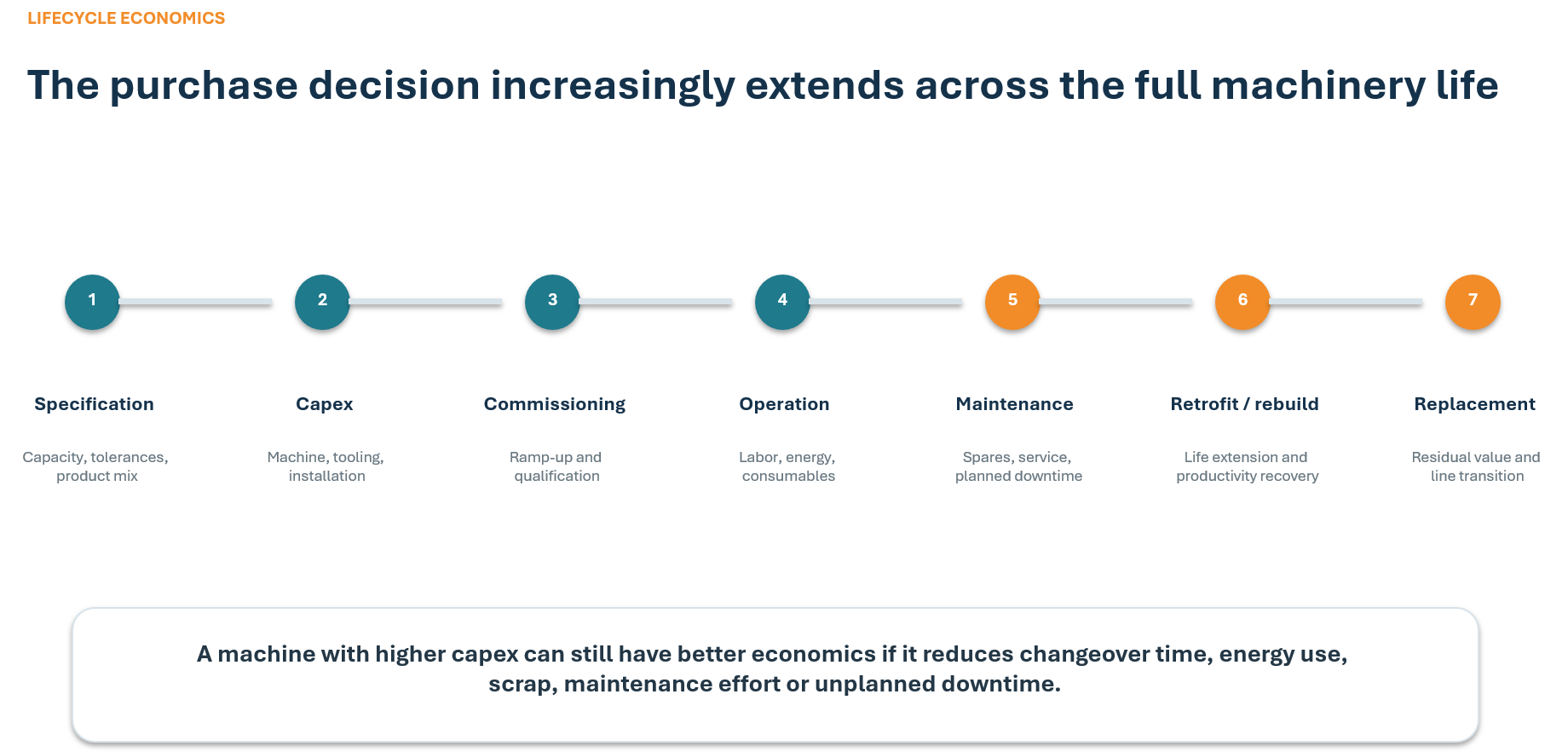
08Machinery And Equipment Industry Outlook: Moving from Capacity to Productive Value
The global machinery and equipment industry outlook points to further progress in automation technology, precision engineering, flexible manufacturing systems, and energy-efficient machines. But the demands of the machines will differ according to the industry because of their production processes and environmental needs, as well as financial concerns. Although the metalworking and aerospace industries concentrate on precision machines and machining technology, food processing, packaging, and electronic industries will favor automation and quality products.
Purchase decisions regarding industrial machines will increasingly be made on the basis of their efficiency, reliability, energy efficiency, and total cost of ownership. There is an increasing need for machines that are able to produce more, have less downtime, minimize wastage, and be flexible enough to meet the varying production demands. This will encourage machinery suppliers to come up with machines that incorporate all of these features.
The future competition between the producers of industrial machinery will largely be determined by the ability to provide reliable equipment with the appropriate technical assistance and after-sales services. In addition to the performance and cost of machinery, aspects like application engineering, commissioning assistance, availability of spare parts, upgrades, and lifecycle services will be vital in influencing the decision-making process of the buyer. In the future, producers that can assist industrial buyers in increasing equipment utilization and extending the lifespan of assets will have more chances to succeed. Together, these machinery and equipment industry trends signal a market that will reward productive value over installed capacity.
Last updated:


