
- Home
- »
- Electronic Devices
- »
-
Variable Frequency Drive Market Size & Share Report, 2033GVR Report cover

Variable Frequency Drive Market (2026 - 2033) Size, Share & Trends Analysis Report By Product Type, By Power Range, By Application (Pumps, Electric Fans, Conveyors, HVAC, Extruders), By End Use (Oil & Gas, Power Generation, Industrial), By Region, And Segment Forecasts
Market Size, 2025
$29.8BMarket Estimate, 2026
$31.4BMarket Forecast, 2033
$48.4BCAGR, 2026–2033
6.4%Variable Frequency Drive Market Summary
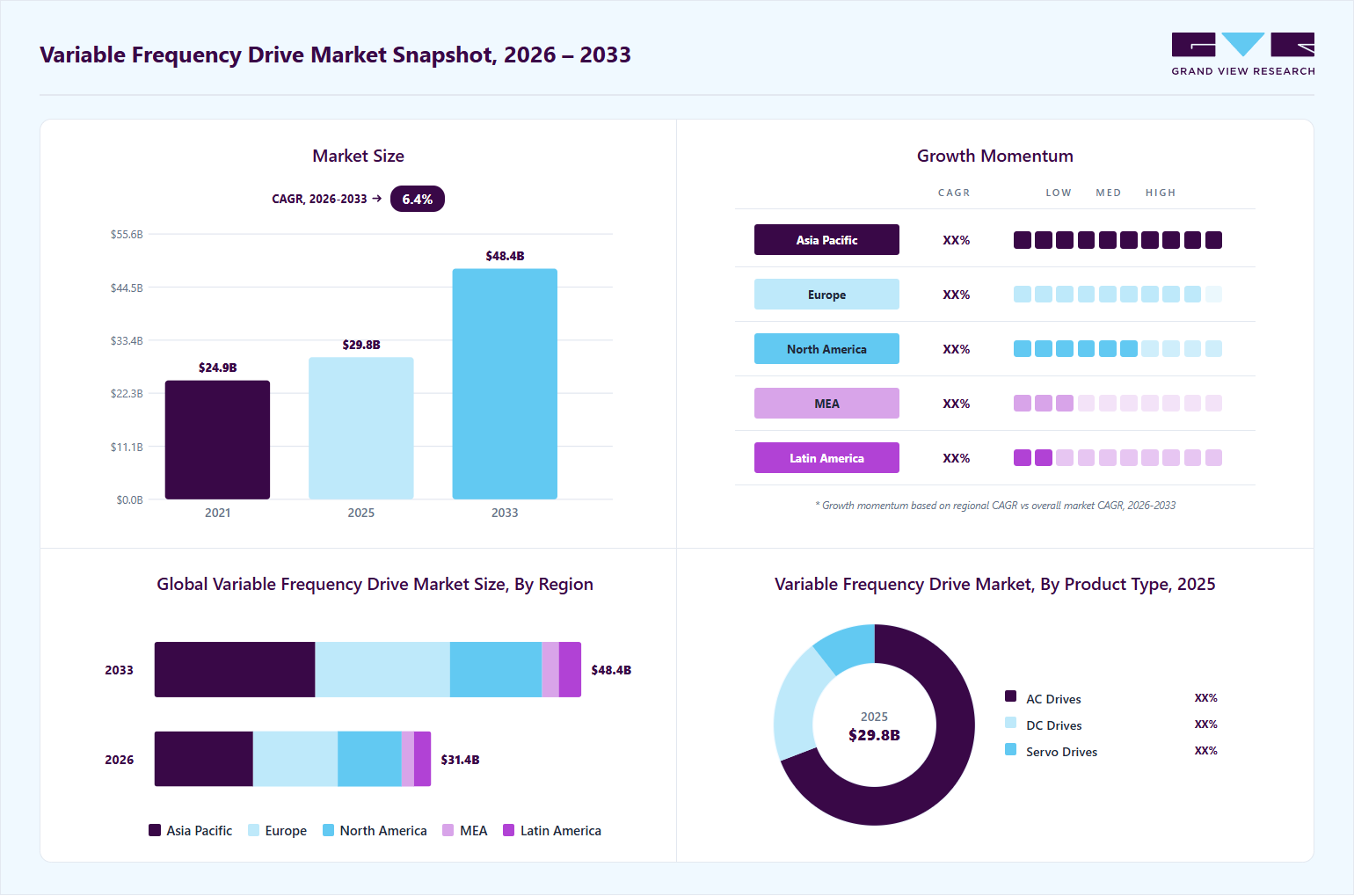
The global variable frequency drive market size was valued at USD 29.8 billion in 2025 and is projected to grow from USD 31.4 billion in 2026 to USD 48.4 billion by 2033, growing at a CAGR of 6.4% from 2026 to 2033. Asia Pacific dominated the variable frequency drive industry, accounting for 35.3% in 2025. The increasing penetration of connected devices across commercial, industrial, and residential sectors is a major driver behind the growth of the variable frequency drive market.
 Source: Grand View Research, IR Documents, Primary Interviews, Paid DatabasesTo learn more about this report,
 Download Free Sample Report
 Key Market Trends & Insights
- By product type: AC drives segment dominated the market in 2025 and accounted for the largest share of 69.2%.
- By power range: Low (6-40 kW) segment accounted for the largest market share in 2025.
- By application: Pumps segment dominated the market in 2025.
- By end use: Industrial segment dominated the market in 2025.
Regional Highlights
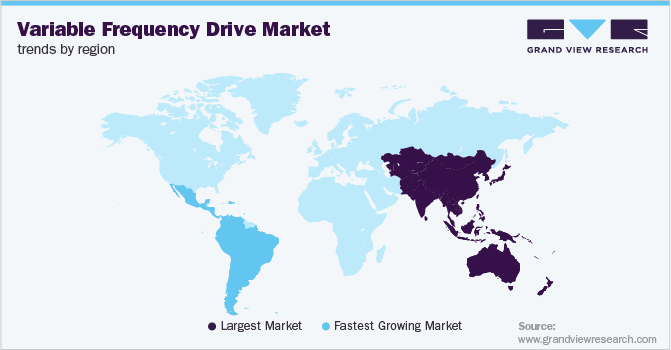
- Largest regional market: Asia Pacific (35.3% revenue share, 2025)
- Fastest-growing regional market: Latin America (highest CAGR, 2026-2033)
- The China variable frequency drive market held a significant market share in 2025, owing to its extensive manufacturing ecosystem, strong industrial base, and large-scale investments in automation technologies.
Market Size & Forecast
- Market size in 2025: USD 29.8 Billion
- Estimated market size in 2026: USD 31.4 Billion
- Projected market size by 2033: USD 48.4 Billion
- CAGR (2026-2033): 6.4%
Three ways to get this report
Buy it, customize it, or ask a question.Ask an Analyst
Analyst response in 1 business day
- AccessReport author, directly
- Reply timeWithin 1 working day
- No sales callDirect answer only
- FormatEmail reply
- CostFree, no cost
Get the Full Report
What the study covers
- FormatsPDF · Excel · Dashboard
- Timeline2026–2033 annual, 2025 base
- Coverage20+ countries, 5 regions
- Companies10+ key players profiled
Customize the Report
20% free customization
- IncludeCountries, segments, points
- TailorTo your product definition
- ExtendDeeper competitor detail
- OrA fully bespoke study
- Turnaround5–10 working days
The demand for variable frequency drives (VFDs) is growing due to their advantages, including dynamic torque control, energy efficiency, and adjustable speed. Industries such as oil & gas, automotive, and power generation are increasingly adopting VFDs to improve operational efficiency and reduce energy consumption. Furthermore, rising investments in infrastructure development are boosting the demand for heating, ventilation, and air conditioning (HVAC) systems, which require energy-efficient control solutions. In addition, rapid industrialization in developing economies is accelerating growth in the manufacturing and industrial sectors, thereby increasing the adoption of VFD components across various applications.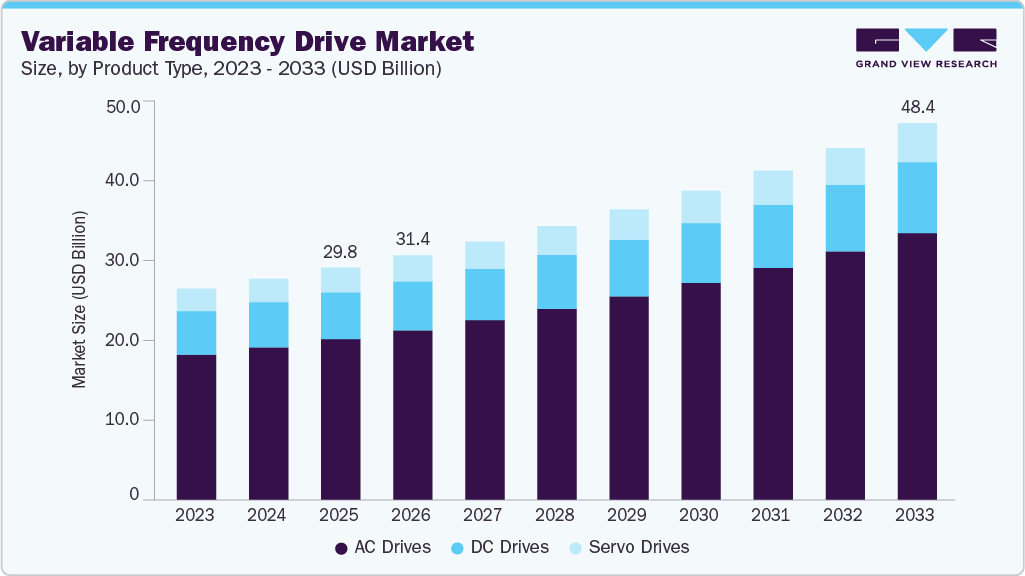 To learn more about this report, Download Free Sample Report
 The adoption of smart and IoT-enabled drive systems across industrial and commercial applications is further contributing to the growth of the market. Manufacturers are integrating cloud connectivity, predictive maintenance tools, and real-time monitoring capabilities into VFDs to improve operational efficiency and reduce downtime. These intelligent drives enable operators to remotely monitor motor performance and optimize energy consumption through data analytics. The emergence of Industry 4.0 and smart factory initiatives is accelerating the integration of VFDs with industrial automation systems, thereby driving the growth of the market.
Governments and regulatory authorities worldwide are implementing stricter energy-efficiency regulations and carbon-emission reduction targets, which are positively influencing the VFD market. VFDs are widely recognized as energy-saving solutions because they optimize motor speed and reduce unnecessary power consumption in pumps, compressors, fans, and conveyors. Regulatory frameworks focused on industrial energy management, green buildings, and emission reduction are encouraging industries to replace conventional motor systems with VFD-enabled systems. Furthermore, the increasing emphasis on achieving net-zero emission goals is driving the installation of energy-efficient HVAC systems equipped with VFDs. These regulatory developments are expected to create long-term demand for advanced drive technologies globally.
Rapid industrialization and infrastructure development across emerging economies are significantly driving the growth of the VFD market. Governments and private organizations are heavily investing in manufacturing plants, transportation networks, commercial buildings, and smart utility infrastructure, increasing the demand for motors and automation systems. VFDs are becoming critical in industrial automation due to their ability to provide precise speed control, improve process efficiency, and reduce operational costs. In addition, modernization projects in developed economies and the growing adoption of robotics and automated production lines are further accelerating demand for advanced VFD technologies.
The increasing integration of renewable energy systems and smart grid technologies is emerging as a major trend in the VFD market. Renewable energy facilities such as wind farms, solar power plants, and hydropower stations require efficient motor control systems to optimize power generation and equipment performance. VFDs help manage fluctuating load conditions and improve operational flexibility in renewable energy applications. In addition, utilities are investing in smart grid infrastructure to improve energy distribution efficiency and grid stability, which is increasing the use of advanced drive systems. The ability of VFDs to enhance power management and reduce electricity losses aligns well with global sustainability initiatives. The ongoing expansion of renewable energy capacity and electrification initiatives across countries is expected to drive steady demand for high-performance VFDs.
Market Dynamics
The growing emphasis on reducing industrial energy consumption is one of the primary drivers of the variable frequency drive market. Industries worldwide are actively adopting energy-efficient equipment to reduce electricity costs and meet sustainability targets. VFDs help optimize motor speed to meet operational requirements, thereby reducing unnecessary power consumption and improving overall process efficiency. Applications such as HVAC systems, pumps, compressors, and conveyors benefit particularly from VFD integration, resulting in substantial energy savings. Rising electricity prices and increasing awareness regarding carbon emissions are further encouraging businesses to deploy energy-efficient motor control technologies. Industrial facilities are increasingly focusing on operational efficiency and sustainability, which is expected to drive significant demand for VFDs across sectors.
Despite their long-term energy-saving benefits, the high upfront cost of VFD systems remains a key restraint on market growth. The installation of VFDs often requires significant capital investment, particularly in large industrial facilities involving multiple motor systems. Additional costs related to system integration, control software, harmonic mitigation equipment, and employee training can further increase project expenses. Small and medium-sized enterprises (SMEs) may hesitate to adopt advanced VFD solutions due to budget constraints and uncertain investment return timelines. In addition, retrofitting older industrial systems with VFDs can be technically complex and costly. These financial and integration challenges may limit adoption in price-sensitive industries and developing markets.
The increasing construction of energy-efficient commercial and residential buildings presents a significant opportunity for the VFD market. Modern HVAC systems are increasingly integrating VFDs to improve airflow control, optimize energy usage, and reduce operating costs. Smart buildings equipped with automated energy management systems require advanced motor control solutions to maintain efficient operation. Governments promoting green buildings and sustainable infrastructure are further encouraging the deployment of energy-efficient HVAC technologies. In addition, rapid urbanization and infrastructure development in emerging economies are expanding the installation of modern building management systems. This trend is expected to create strong long-term growth opportunities for VFD manufacturers operating in the HVAC and smart infrastructure segments.
Market Concentration & Characteristics
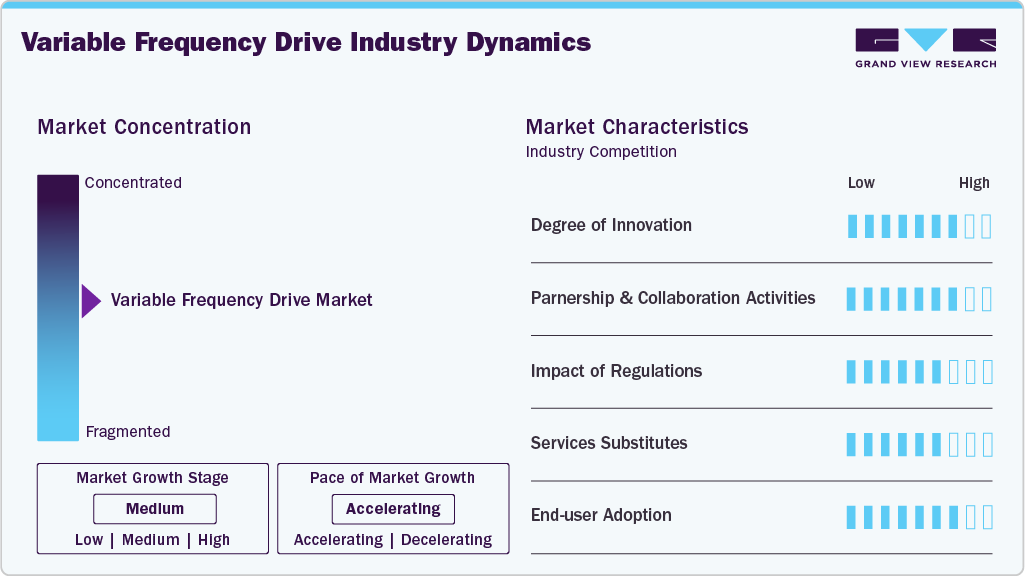
The variable frequency drive market is moderately consolidated, with a mix of well-established global players and regional manufacturers competing across different application areas and geographic markets. Major companies such as ABB, Siemens, Schneider Electric, Danfoss, and Rockwell Automation maintain strong market positions through extensive product portfolios, advanced technological capabilities, and broad distribution networks. The market continues to witness accelerating growth driven by rising industrial automation, energy-efficiency requirements, and infrastructure modernization investments. Although large multinational companies dominate high-value industrial applications, regional and local players remain competitive by offering cost-effective solutions tailored to specific end-user requirements.
 To learn more about this report, Download Free Sample Report
 The market is witnessing a high level of innovation, supported by continuous advancements in smart drives, IoT-enabled monitoring systems, predictive maintenance technologies, and energy-efficient motor control solutions. Partnership and collaboration activities are also increasing as companies focus on expanding their technological capabilities, strengthening their regional presence, and enhancing automation offerings. Regulatory impact remains significant due to stringent global energy-efficiency standards and sustainability initiatives that encourage the adoption of VFD systems across industries. In addition, growing end-user adoption across sectors such as industrial manufacturing, infrastructure, HVAC, oil & gas, and water treatment continues to support long-term market expansion, while the threat of service substitutes remains relatively moderate due to the critical operational role of VFDs in modern motor control applications.
Product Type Insights
The AC drives segment dominated the market in 2025 and accounted for the largest share of 69.2%. The growth of the segment is driven by the increasing demand for energy-efficient motor control systems across industries such as HVAC, manufacturing, oil & gas, and water treatment. AC drives help reduce energy consumption by adjusting motor speed to operational requirements, lowering electricity costs, and improving overall system efficiency. Growing industrial automation, rising investments in smart infrastructure, and stringent energy-efficiency regulations are further driving the adoption of AC drives globally.
The servo drives segment is expected to grow at a notable CAGR over the forecast period. The rising adoption of precision automation and robotics in industries such as electronics, automotive, packaging, and semiconductor manufacturing is expected to contribute to the growth of the market. Servo drives provide highly accurate motion control, fast response times, and improved positioning capabilities, making them essential for advanced automated production systems. Increasing investments in smart manufacturing, Industry 4.0 technologies, and high-speed production lines are significantly driving demand for servo drive systems.
Power Range Insights
The low (6-40 kW) segment accounted for the largest market share in 2025. The growth of the segment is driven by the growing demand for energy-efficient motor control solutions in commercial buildings, light industrial operations, and HVAC systems. These drives are widely used in pumps, fans, compressors, and conveyors due to their cost-effectiveness, compact design, and ability to reduce electricity consumption. Increasing investments in smart buildings, industrial automation, and energy management systems are further supporting the adoption of low-power VFDs across multiple industries.
The medium (41-200 kW) segment is expected to grow at the fastest CAGR during the forecast period. The medium-power (41-200 kW) VFD segment is growing due to rising deployment in heavy industrial applications such as mining, oil & gas, power generation, water treatment, and large-scale manufacturing facilities. These drives provide precise speed control, improved operational efficiency, and reduced maintenance costs for high-load industrial equipment. Expanding industrial infrastructure projects and the increasing adoption of automated production systems are driving significant demand for medium-power VFD solutions.
Application Insights
The pumps segment dominated the market in 2025. The segment’s growth is driven by the increasing demand for efficient fluid handling systems across industries such as water & wastewater treatment, oil & gas, chemicals, and power generation. VFDs help optimize pump performance by controlling motor speed according to operational requirements, resulting in significant energy savings and reduced equipment wear. Rising investments in water infrastructure projects and industrial process automation are further supporting the adoption of VFDs in pump applications.
The HVAC variable frequency drive market is expected to grow at the fastest CAGR during the forecast period. The rising focus on energy-efficient building systems in commercial, residential, and industrial sectors is expected to contribute to the growth of the segment. VFDs are widely used in HVAC systems to regulate fan and compressor speeds, improve temperature control, and reduce electricity consumption. The growing construction of smart buildings, stricter energy-efficiency regulations, and increasing investments in green infrastructure are driving demand for VFDs in HVAC applications.
End Use Insights
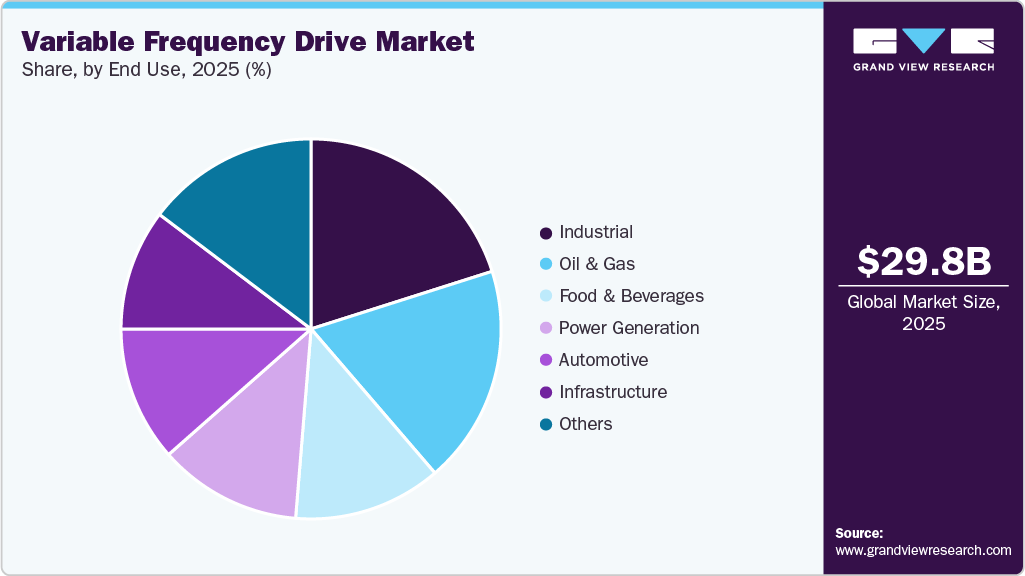
The industrial segment dominated the market in 2025. The growing adoption of automation and energy-efficient motor control systems across manufacturing, chemicals, mining, and processing industries is a major driver behind the segment’s growth. VFDs help improve operational efficiency, reduce energy consumption, and enhance process control in industrial equipment such as pumps, compressors, conveyors, and extruders. Increasing investments in smart factories, Industry 4.0 technologies, and the modernization of industrial infrastructure are further driving demand for VFDs in the industrial sector.
 To learn more about this report, Download Free Sample Report
 The infrastructure segment is expected to witness the fastest CAGR over the forecast period. The segment is witnessing rapid growth due to rising investments in commercial buildings, transportation systems, smart cities, and utility infrastructure projects. VFDs are widely used in infrastructure applications to improve the energy efficiency and performance of HVAC systems, water treatment facilities, elevators, and metro rail systems. Government initiatives supporting sustainable infrastructure development and energy conservation are further driving the adoption of VFD technologies across the infrastructure sector.
Regional Insights
Asia Pacific dominated the variable frequency drive industry, accounting for 35.3% in 2025, driven by rapid industrialization, expanding manufacturing infrastructure, and increasing investments in energy-efficient industrial systems. Countries across the region are accelerating the adoption of automation technologies and Industry 4.0 practices, creating strong demand for VFDs in applications such as pumps, compressors, conveyors, HVAC systems, and industrial motors.
 To learn more about this report, Download Free Sample Report
 India Variable Frequency Drive Market Trends
India’s variable frequency drive market is expected to grow at the fastest rate during the forecast period, driven by the rapid industrial expansion, increasing infrastructure development, and strong government support for domestic manufacturing under initiatives such as Make in India. In addition, the rising deployment of HVAC systems in commercial buildings, data centers, and smart infrastructure projects is also contributing to higher VFD adoption across the country.
The China variable frequency drive market held a significant market share in 2025, owing to its extensive manufacturing ecosystem, strong industrial base, and large-scale investments in automation technologies. Government-backed industrial modernization initiatives, including the Made in China 2025 strategy, are accelerating adoption of smart manufacturing technologies and advanced motor control systems, thereby driving the growth of the market.
North America Variable Frequency Drive Market Trends
The North America variable frequency drive market is expected to grow at a moderate CAGR during the forecast period, driven by increasing emphasis on energy optimization, industrial automation, and modernization of aging industrial infrastructure. Industries such as oil & gas, food processing, chemicals, water & wastewater treatment, and power generation are increasingly adopting VFDs to improve operational efficiency and reduce electricity consumption, thereby driving the market’s growth.
The U.S. variable frequency drive market held a dominant position in the region in 2025, driven by its advanced industrial sector, high penetration of automation technologies, and growing focus on industrial energy management. Demand for VFDs is increasing across manufacturing facilities, data centers, commercial buildings, and utility infrastructure as organizations seek to improve motor efficiency and reduce operational costs. The transition toward smart factories and digitally connected industrial systems is further accelerating the integration of intelligent VFD technologies with IoT-enabled monitoring platforms.
Europe Variable Frequency Drive Market Trends
Europe variable frequency drive market is expected to register a notable CAGR from 2026 to 2033. Europe represents a technologically advanced and regulation-driven market for variable frequency drives, supported by strong sustainability initiatives and stringent industrial energy efficiency standards. The region is witnessing increasing adoption of VFDs across manufacturing, utilities, transportation, and commercial infrastructure sectors to reduce carbon emissions and optimize energy consumption.
The UK variable frequency drive market is expected to grow at the significant growth rate during the forecast period. The UK variable frequency drive market is benefiting from the country’s growing emphasis on industrial sustainability, energy efficiency, and modernization of commercial infrastructure. Rising investments in smart buildings, industrial automation, and HVAC optimization are creating substantial demand for advanced motor control technologies across manufacturing and commercial sectors.
The Germany variable frequency drive market held a substantial market share in 2025, driven by its strong industrial manufacturing base and early adoption of Industry 4.0 technologies. The country’s automotive, machinery, chemicals, and industrial engineering sectors are increasingly deploying VFDs to improve process automation, operational precision, and energy efficiency. Germany’s strong focus on sustainable manufacturing practices and industrial decarbonization is accelerating replacement of conventional motor systems with intelligent and energy-efficient drive technologies.
Key Variable Frequency Drive Company Insights
Some of the key companies in the variable frequency drive industry include ABB Ltd., Hitachi, Ltd., and Schneider Electric, among others. Organizations are focusing on increasing customer base to gain a competitive edge in the industry. Therefore, key players are taking several strategic initiatives, such as mergers and acquisitions, and partnerships with other major companies.
-
ABB is a multinational corporation that offers a wide range of products through its business segments: robotics & discrete automation, industrial automation, electrification, motion, power grids, and cybersecurity. ABB’s automation business segment offers products catering to applications related to control, measurement, protection, and process optimization. The company manufactures motors, generators, mechanical transmission products, and drives through its robotics and motion business segment. Its power technologies business focuses on power plant automation, transmission, and distribution.
-
Hitachi, Ltd. is a global manufacturer of drives, automation products, and completely customizable solutions. The company offers its products to serve various industries, including metal and mining, oil and gas, cement, paper & pulp, water, rubber, and plastic. The company's product portfolio includes air compressors, UPS, AC drives, inverters, blowers, PLC, hoists, motors, and control systems. Hitachi Ltd. is in Asia, the Americas, Europe, and the Middle East.
Key Variable Frequency Drive Companies
The following key companies have been profiled for this study on the variable frequency drive market.
-
ABB Ltd.
-
Invertek Drives
-
Hitachi, Ltd.
-
Schneider Electric
-
Siemens AG
-
Eaton Corporation
-
Rockwell Automation, Inc.
-
Yaskawa Electric Corporation
-
Danfoss A/S
-
WEG S.A.
Competitive Benchmarking
Operating Strategies
Competitive Edge
Weaknesses
Mature Players: ABB Ltd., Siemens AG, Schneider Electric SE, Danfoss Group, Rockwell Automation
- Established companies focus heavily on expanding their energy-efficient and smart VFD product portfolios across industrial, infrastructure, HVAC, and utility applications.
- These players invest significantly in R&D, digital drive technologies, IoT-enabled monitoring systems, and predictive maintenance capabilities to strengthen market positioning.
- Strong global distribution networks, strategic acquisitions, and long-term partnerships with industrial automation providers help mature players maintain competitive leadership.
- Mature companies possess strong technological expertise, broad product offerings, and extensive global customer bases across multiple end-use industries.
- Their advanced manufacturing capabilities and integration of AI, cloud connectivity, and automation technologies enhance operational efficiency and product reliability.
- Established after-sales service networks and strong brand recognition provide a significant competitive advantage in large-scale industrial projects.
- Large organizations may face slower decision-making processes due to complex operational structures and broad geographic presence.
- High operational and R&D costs can reduce pricing flexibility compared to regional manufacturers offering low-cost solutions.
- Dependence on industrial capital expenditure cycles may expose major companies to fluctuations in manufacturing and infrastructure investments.
Emerging Players: INVT Electric, WEG S.A., Yaskawa Electric Corp.
- Emerging companies are increasingly focusing on cost-competitive VFD solutions and expanding their presence in developing economies with growing industrialization.
- Many emerging players are strengthening partnerships with local distributors, system integrators, and automation solution providers to expand market reach.
- These companies are targeting niche applications and mid-sized industrial customers through customized and application-specific VFD offerings.
- Emerging players benefit from greater operational flexibility and the ability to respond quickly to changing customer requirements and regional market trends.
- Competitive pricing strategies and localized manufacturing capabilities help these companies gain traction in price-sensitive markets.
- Increasing investments in automation technologies and smart drive systems are helping emerging companies improve technological competitiveness.
- Emerging companies often face limitations related to global brand recognition, large-scale distribution capabilities, and financial resources.
- Limited international service networks and lower R&D budgets may restrict their ability to compete with established multinational companies.
- Intense competition from mature players and pricing pressure can impact profitability and long-term market expansion strategies.
Recent Developments
-
In April 2026, Schneider Electric introduced the Altivar Machine ATV350, a high-protection on-machine VFD engineered for direct installation on conveyor systems and material handling equipment without requiring a separate protective enclosure. The direct on-machine mounting capability helps minimize installation footprint and lower overall setup costs while simplifying motor cable and control wiring configurations. In addition, the solution enables faster hardware replacement and maintenance, improving operational efficiency and reducing system downtime.
-
In September 2025, Shenzhen INVT Electric Co., Ltd. launched 30MVA medium-voltage water-cooled variable frequency drive (VFD) system. This development creates growth opportunities for industrial drive applications through enhanced reliability, extended operational lifespan, and improved energy efficiency.
Variable Frequency Drive Market Report Scope
Report Attribute
Details
Market size in 2025
USD 29.8 billion
Estimated Market size in 2026
USD 31.4 billion
Projected Market Size in 2033
USD 48.4 billion
Growth rate
CAGR of 6.4% from 2026 to 2033
Base year for estimation
2025
Historical data
2021 - 2024
Forecast period
2026 - 2033
Quantitative units
Revenue in USD million and CAGR from 2026 to 2033
Report coverage
Revenue forecast, company ranking, competitive landscape, growth factors, and trends
Segments covered
Product type, power range, application, end use, and region
Regional scope
North America; Europe; Asia Pacific; Latin America; MEA
Country scope
U.S.; Canada; Mexico; Germany; UK; France; China; Japan; India; South Korea; Australia; Brazil; KSA; UAE; South Africa
Key companies profiled
ABB Ltd.; Invertek Drives; Hitachi, Ltd.; Schneider Electric; Siemens AG; Eaton Corporation; Rockwell Automation, Inc.; Yaskawa Electric Corporation; Danfoss A/S.; WEG S.A.
Customization scope
Free report customization (equivalent up to 8 analysts working days) with purchase. Addition or alteration to country, regional & segment scope.
Pricing and purchase options
Avail customized purchase options to meet your exact research needs. Explore purchase options
Global Variable Frequency Drive Market Report Segmentation
This report forecasts revenue growth at global, regional, and country levels and provides an analysis of the latest industry trends in each of the sub-segments from 2021 to 2033. For this study, Grand View Research has segmented the global variable frequency drive market report based on product type, power range, application, end use, and region.
-
Product Type Outlook (Revenue, USD Billion, 2021 - 2033)
-
AC Drives
-
DC Drives
-
Servo Drives
-
-
Power Range Outlook (Revenue, USD Billion, 2021 - 2033)
-
Micro (0-5 kW)
-
Low (6-40 kW)
-
Medium (41-200 kW)
-
High (>200 kW)
-
-
Application Outlook (Revenue, USD Billion, 2021 - 2033)
-
Pumps
-
Electric Fans
-
Conveyors
-
HVAC
-
Extruders
-
Others
-
-
End Use Outlook (Revenue, USD Billion, 2021 - 2033)
-
Oil & Gas
-
Power Generation
-
Industrial
-
Infrastructure
-
Automotive
-
Food & Beverages
-
Others
-
-
Regional Outlook (Revenue, USD Million, 2021 - 2033)
-
North America
-
U.S.
-
Canada
-
Mexico
-
-
Europe
-
Germany
-
UK
-
France
-
-
Asia Pacific
-
China
-
Japan
-
India
-
South Korea
-
Australia
-
-
Latin America
-
Brazil
-
-
Middle East and Africa (MEA)
-
KSA
-
UAE
-
South Africa
-
-
Delivered Customizations
This report has been delivered with the following In-depth customizations
Client Request
Customization Delivered
Value Adds
Regional Variable Frequency Drive (VFD) Market Opportunity Assessment
Country/region-wise analysis of VFD demand, production, and adoption trends
Assessment of industrial automation growth, infrastructure investments, and energy efficiency regulations
Identification of high-growth application sectors and regional investment hotspots
Identified region-specific growth opportunities
Supported expansion and market entry strategies
Enabled informed investment and capacity planning decisions
VFD End-user Adoption & Application Analysis
Analysis of VFD adoption trends across industrial, infrastructure, HVAC, oil & gas, and automotive sectors
Evaluation of operational efficiency requirements, automation trends, and energy-saving initiatives
Assessment of demand patterns for pumps, conveyors, compressors, and HVAC applications
Improved customer targeting and application-specific positioning
Supported customized product development strategies
Enabled better understanding of end-user purchasing behaviour
Competitive Benchmarking & Strategic Positioning in the VFD Market
Benchmarking of major VFD manufacturers based on product portfolio, pricing, innovation, and regional presence
Comparative analysis of technological capabilities, partnerships, and expansion strategies
Evaluation of competitive strengths, weaknesses, and differentiation areas
Identified competitive white spaces and growth gaps
Supported strategic positioning and differentiation initiatives
Enabled data-driven competitive strategy development
Frequently Asked Questions About This Report
The global variable frequency drive market size was estimated at USD 29.8 billion in 2025 and is expected to reach USD 31.4 billion in 2026.
Key factors include increasing investment in infrastructure development is resulting in high demand for HVAC systems which calls for solutions to improve building energy efficiency.
Latin America is the fastest-growing region over the forecast period
The industrial segment led with a highest revenue share in 2025, while infrastructure is the fastest-growing segment.
The AC drives segment held the highest market share of 69.2% in 2025.
The low (6-40 kW) segment held the highest market share in 2025, while medium (41-200 kW) is the fastest-growing segment.
The global variable frequency drive market is expected to grow at a compound annual growth rate of 6.4% from 2026 to 2033 to reach USD 48.4 billion by 2033.
The Asia Pacific dominated the variable frequency drive market with a share of 35.3% in 2025.
Some key players operating in the variable frequency drive market include ABB Ltd., Invertek Drives, Hitachi, Ltd., Schneider Electric, Siemens AG, Eaton Corporation, Rockwell Automation, Inc., Yaskawa Electric Corporation, Danfoss A/S. and WEG S.A.
The pumps segment accounted for the largest share in 2025, while HVAC variable frequency drive is the fastest-growing segment.
About the Author(s)
Electronic Devices Research Team
Semiconductors & Electronics · Electronic DevicesThis report was authored by the electronic devices research team at Grand View Research - comprising two research analysts, one senior research analyst, and one industry expert - with specialized expertise in the electronic devices segment of the semiconductors & electronics industry. All findings are based on proprietary semiconductors & electronics databases, executive interviews, and regulatory analysis, subject to internal peer review prior to publication.
Last Updated:
Speak to Analyst

Customize this report to your needs - add regions, segments, or data points, with 20% free customization.
Or view our licence options:


ISO 9001:2015 & 27001:2022 Certified
We are GDPR and CCPA compliant! Your transaction & personal information is safe and secure. For more details, please read our privacy policy.


