
- Home
- »
- Advanced Interior Materials
- »
-
Aerospace Adhesives & Sealants Market Size Report, 2033GVR Report cover

Aerospace Adhesives And Sealants Market (2026 - 2033)
Size, Share & Trends Analysis Report By Adhesive Resin (Epoxy, Polyurethane), By Sealants Resin (Polysulfide, Silicone), By Aircraft (Commercial, Military), By Region, And Segment Forecasts
Market Size, 2025
$1.4BMarket Estimate, 2026
$1.5BMarket Forecast, 2033
$2.2BCAGR, 2026–2033
5.6%Aerospace Adhesives And Sealants Market Summary
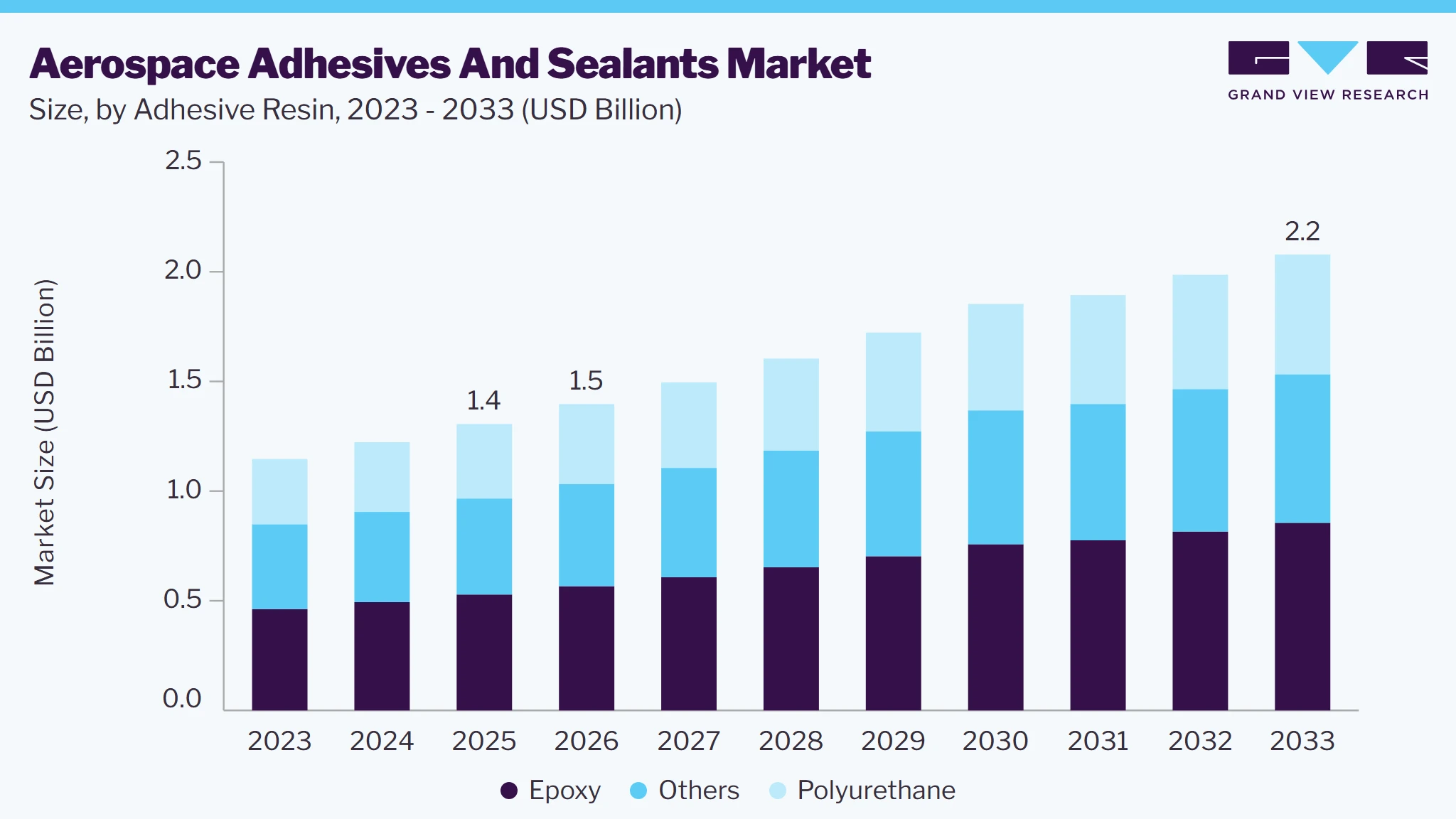
The global aerospace adhesives and sealants market size was valued at USD 1.4 billion in 2025 and is projected to grow from USD 1.5 billion in 2026 to USD 2.2 billion by 2033, at a CAGR of 5.6% from 2026 to 2033. North America dominated the aerospace adhesives And sealants market with the highest revenue share of 47.2% in 2025. The aerospace adhesives And sealants market is primarily driven by a rising demand for lightweight and fuel-efficient aircraft.
 Source: Grand View Research, IR Documents, Primary Interviews, Paid DatabasesTo learn more about this report,
 Download Free Sample Report
Key Market Trends & Insights
- By adhesive resin: Epoxy segment held the largest market share of 40.5% in 2025.
- By sealants resin: Silicone segment held the largest market share of 58.7% in 2025.
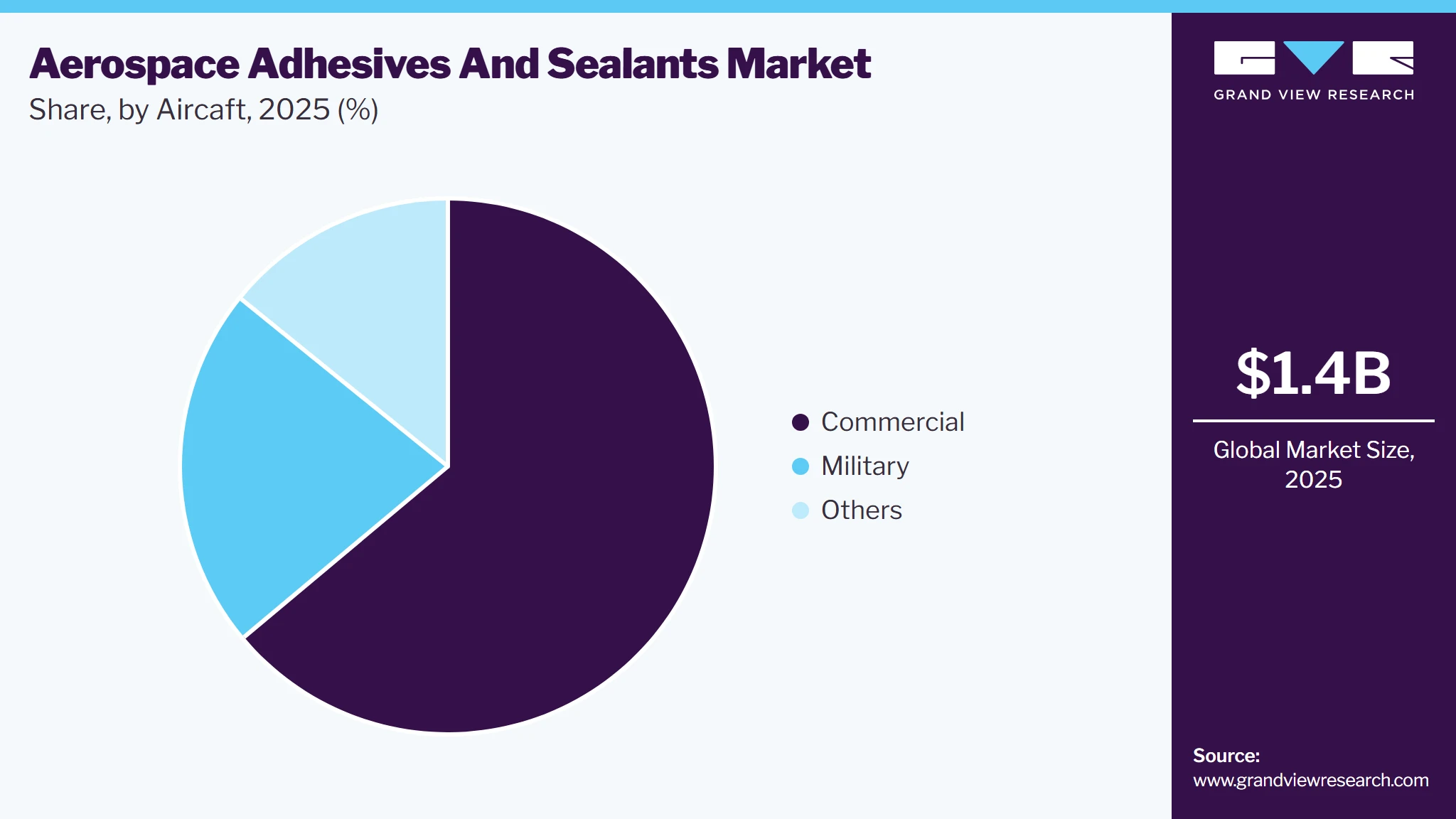
- By aircraft: Commercial segment held the largest market share of 63.9% in 2025.
Regional Highlights
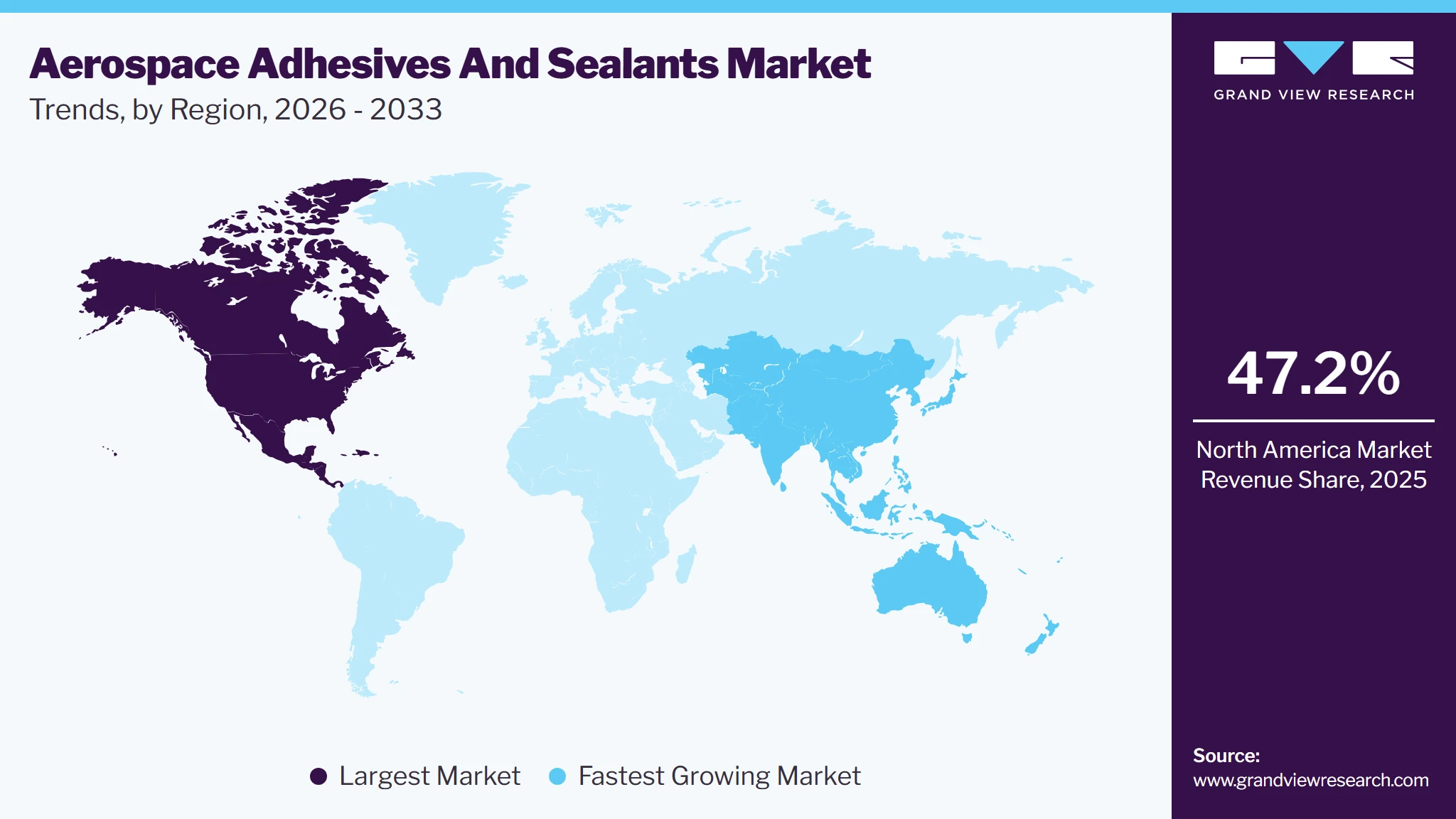
- Largest regional market: North America (47.2% revenue share, 2025)
- Fastest-growing regional market: Asia Pacific (highest CAGR, 2026-2033)
- By country: The U.S. held the largest market share in 2025.
Market Size & Forecast
- Market size in 2025: USD 1.4 Billion
- Estimated market size in 2026: USD 1.5 Billion
- Projected market size by 2033: USD 2.2 Billion
- CAGR (2026-2033): 5.6%
Three ways to get this report
Buy it, customize it, or ask a question.Ask an Analyst
Analyst response in 1 business day
- AccessReport author, directly
- Reply timeWithin 1 working day
- No sales callDirect answer only
- FormatEmail reply
- CostFree, no cost
Get the Full Report
What the study covers
- FormatsPDF · Excel · Dashboard
- Timeline2026–2033 annual, 2025 base
- Coverage20+ countries, 5 regions
- Companies10+ key players profiled
Customize the Report
20% free customization
- IncludeCountries, segments, points
- TailorTo your product definition
- ExtendDeeper competitor detail
- OrA fully bespoke study
- Turnaround5–10 working days
As the aerospace industry seeks to improve fuel economy and reduce greenhouse gas emissions, there is a significant shift toward using lightweight materials, such as composites and aluminum alloys. Adhesives and sealants play a crucial role in these applications, as they provide strong bonding solutions while reducing the need for fasteners and heavy materials, which would otherwise add weight to the aircraft. The need for durable, high-strength bonding solutions that perform under extreme temperatures and pressure conditions further drives the adoption of advanced aerospace adhesives and sealants.
 To learn more about this report, Download Free Sample Report
Technological advancements in adhesive and sealant formulations also contribute to market growth. Innovations in epoxy, polyurethane, and silicone-based adhesives have improved their compatibility with various substrates and enhanced their resistance to environmental factors such as UV radiation, moisture, and chemicals. This is particularly crucial in aerospace applications, where structural integrity and safety are paramount. In addition, government and regulatory bodies worldwide are imposing strict safety and performance standards for aerospace materials, which further increases the need for high-performance adhesives and sealants that meet these criteria.
The expansion of the global aerospace industry, fueled by increasing air travel, defense spending, and space exploration initiatives, also drives the demand for aerospace adhesives and sealants. Emerging economies, particularly in Asia Pacific and the Middle East, are investing heavily in commercial and military aviation, which is expected to boost the market. As aircraft production scales up, manufacturers rely on adhesives and sealants to streamline production processes, improve assembly efficiency, and ensure long-term durability in harsh flight conditions, further amplifying their demand in the market.
Market Dynamics
The aerospace adhesives and sealants market is supported by increasing aircraft production, fleet modernization programs, and the industry's continued focus on lightweight, high-performance materials. Adhesives and sealants are increasingly replacing conventional mechanical fasteners as they improve structural integrity, reduce overall aircraft weight, and enhance fuel efficiency. Rising demand for commercial aircraft, driven by expanding passenger traffic and airline fleet expansion, is creating favorable opportunities for advanced bonding and sealing solutions. The military aviation sector is also contributing to market growth through investments in next-generation aircraft and defense modernization initiatives. Technological advancements in resin formulations have improved resistance to extreme temperatures, chemicals, vibration, and fatigue, enabling wider adoption across critical aerospace applications.
The growing use of lightweight composite materials in commercial and military aircraft is a major driver for the aerospace adhesives and sealants market. Aircraft manufacturers are increasingly replacing traditional metallic structures with carbon fiber-reinforced composites and other advanced materials to reduce aircraft weight, improve fuel efficiency, and lower carbon emissions. Unlike conventional fastening methods, structural adhesives provide uniform stress distribution, minimize material fatigue, and enable the reliable bonding of dissimilar substrates without compromising structural integrity. This shift has significantly increased the demand for high-performance adhesive technologies capable of meeting stringent aerospace performance requirements.
The expansion of next-generation aircraft programs and the continuous production of fuel-efficient aircraft are reinforcing the need for advanced bonding and sealing solutions. Adhesives and sealants also contribute to improved corrosion resistance, enhanced cabin pressurization, and greater durability under extreme operating conditions. As aircraft manufacturers continue to prioritize lightweight engineering, manufacturing efficiency, and long-term operational performance, demand for aerospace-grade adhesive and sealant products is expected to grow steadily across both original equipment manufacturing (OEM) and maintenance, repair, and overhaul (MRO) applications.
Restraints affecting the aerospace adhesives and sealants market is the highly rigorous certification and qualification process required before products can be approved for aircraft applications. Aerospace adhesives and sealants must undergo extensive testing to demonstrate resistance to extreme temperatures, pressure variations, chemicals, vibration, moisture, fatigue, and long-term operational stress. Compliance with stringent aviation regulations and OEM specifications requires substantial investment in research, product validation, documentation, and quality assurance, resulting in extended product development cycles and increased commercialization costs. These lengthy approval timelines can delay product launches and limit the speed at which manufacturers introduce innovative formulations. Any modification to an existing adhesive or sealant formulation often requires additional qualification testing, adding further complexity and expense.
The increasing global fleet of commercial and military aircraft is creating significant opportunities for the aerospace adhesives and sealants market through expanding maintenance, repair, and overhaul activities. Aging aircraft require periodic replacement of sealants and adhesives to maintain structural integrity, cabin safety, fuel system performance, and environmental protection. Airlines are also extending the service life of existing fleets through scheduled maintenance programs, generating sustained demand for certified aerospace bonding and sealing materials across repair facilities worldwide. Manufacturers that develop products with faster curing times, improved durability, and compliance with evolving aerospace standards are well positioned to capitalize on this growing aftermarket demand. The increasing emphasis on reducing aircraft downtime while maintaining operational reliability is expected to further strengthen long-term market opportunities.
Analyst Perspective
The aerospace adhesives and sealants market is influenced by increasing aircraft production, fleet modernization, and the rising use of lightweight composite materials. Demand is shifting toward high-performance formulations that offer superior durability, fuel efficiency, and compliance with stringent aerospace standards. Growth in maintenance, repair, and overhaul (MRO) activities is creating additional opportunities across both commercial and defense aviation. While rigorous certification requirements and extended qualification timelines remain key challenges, continuous innovation in advanced resin technologies is strengthening the market outlook. Companies that focus on product performance, regulatory compliance, and strategic collaborations with aircraft manufacturers are expected to gain a competitive advantage.
Aircraft Insights
In terms of aircraft, commercial held a dominant position, contributing 63.9% of total revenue in 2025. The growth in the aerospace adhesives & sealants market within the commercial aircraft segment is driven by increasing global air travel demand, particularly in emerging economies in Asia Pacific and the Middle East. As these regions experience rapid economic growth, there is a substantial rise in passenger traffic and business travel, leading to an expansion of commercial airline fleets. Airlines are investing in new aircraft to accommodate this demand, driving a need for high-performance adhesives and sealants that support modern assembly and maintenance practices while enhancing fuel efficiency and structural integrity. In addition, a growing focus on fuel efficiency and reducing carbon emissions has led manufacturers to incorporate lightweight materials, such as composites, in aircraft structures. Advanced adhesives and sealants are essential in joining these materials, providing strong bonding solutions while avoiding the weight penalties associated with traditional fasteners.
 To learn more about this report, Download Free Sample Report
The military aircraft segment is expected to grow at fastest CAGR over the forecast period. The integration of stealth and advanced electronic systems in modern military aircraft is a significant driver for adhesives and sealants. These aircraft often incorporate radar-absorbing materials and sophisticated electronics that require specialized adhesives for assembly and protection against electromagnetic interference. Advanced sealants also play a crucial role in enhancing the durability and performance of these systems by protecting sensitive components from environmental exposure and ensuring seamless stealth characteristics. As military aircraft design evolves, demand for highly specialized adhesives and sealants that can support these advanced technologies continues to grow.
Resin Insights
Based on adhesive resin, epoxy accounted for the highest market share, representing 40.5% of total revenue in 2025. In the aerospace adhesives & sealants market, epoxy resins play a crucial role due to their superior mechanical strength, adhesion properties, and resistance to high temperatures, making them a top choice for bonding in structural applications. The growing demand for lightweight, fuel-efficient aircraft has intensified the need for high-performance materials like epoxy-based adhesives and sealants, which contribute to weight reduction by eliminating or reducing the reliance on metal fasteners. Epoxy resins are particularly valued for their ability to form strong bonds with composite materials, which are increasingly used in modern aircraft construction due to their lightweight and high-strength properties.
The polyurethane segment is expected to grow significantly at CAGR of 7.4% over the forecast period. Polyurethane adhesives and sealants are increasingly popular in the aerospace industry due to their high flexibility, strong bonding capabilities, and excellent resistance to impact and vibration. Polyurethane’s ability to withstand harsh environmental conditions, such as extreme temperature variations and exposure to moisture, makes it ideal for applications in areas like aircraft interiors and external airframe components. This material also offers superior bonding to diverse surfaces such as metals, composites, and plastics, which are frequently used in modern aircraft. The demand for polyurethane adhesives is further driven by the need for noise and vibration reduction in aircraft, as these adhesives contribute to quieter cabin experiences by absorbing sound and shock.
Sealants Resin Insights
By sealants resin, silicone held a dominant position, contributing 58.7% of total revenue in 2025. A primary driver for silicone sealants is their exceptional thermal stability and resistance to extreme temperatures, which are essential in the aerospace industry where materials must perform consistently under challenging conditions. Silicone sealants can withstand high heat and cold, making them particularly suitable for exterior applications and components exposed to varying atmospheric pressures and temperatures during flight. This reliability in extreme environments drives the demand for silicone-based sealants as aerospace manufacturers prioritize safety and durability.
The polysulfide segment is expected to grow at fastest CAGR of 2.9% over the forecast period. Polysulfide sealants are a key component in the aerospace adhesives & sealants market, driven by their unique properties suited to the rigorous demands of aerospace applications. Polysulfide resins are known for their exceptional resistance to chemicals, fuels, and solvents, making them ideal for applications in fuel tanks and other critical aircraft areas exposed to harsh chemicals. The ability of polysulfide sealants to maintain flexibility and adhesion under extreme temperature variations ensures that they perform reliably in environments where other materials might degrade, driving their demand in aerospace manufacturing and maintenance.
Regional Insights
North America dominated the aerospace adhesives & sealants market with the highest revenue share of 47.2% in 2025. Technological advancements in adhesive formulations, including innovations in epoxy, silicone, and polyurethane-based products, drive demand as they offer enhanced performance and versatility. These new formulations allow adhesives to perform effectively in varying temperatures, pressure changes, and exposure to chemicals. The ongoing focus on research and development in the U.S., supported by funding from both government and private sectors, accelerates advancements in adhesive and sealant technologies. This environment of continuous innovation and regulatory support makes North America a significant and resilient market for aerospace adhesives and sealants.
 To learn more about this report, Download Free Sample Report
U.S. Aerospace Adhesives And Sealants Market
U.S. dominated the North America aerospace adhesives & sealants market in 2025. The U.S. Aerospace adhesives & sealants market is driven by the country's robust aerospace and defense sector. The U.S. is home to some of the largest aerospace manufacturers globally, including Boeing, Lockheed Martin, and Northrop Grumman, which contributes significantly to the demand for high-performance adhesives and sealants. These companies rely on advanced bonding solutions to ensure structural integrity and durability while meeting stringent safety and quality standards mandated by regulatory bodies such as the Federal Aviation Administration (FAA). As these companies expand production to meet rising demand in both commercial and defense segments, the need for adhesives and sealants that meet critical performance requirements has increased.
Middle East & Africa Aerospace Adhesives And Sealants Market
The Aerospace adhesives & sealants market in the Middle East & Africa is primarily driven by the region’s increasing investments in aerospace infrastructure, defense, and commercial aviation. Countries such as the UAE and Saudi Arabia are heavily investing in modernizing their air fleets, both for commercial airlines and defense purposes. As part of their efforts to reduce reliance on imported products and boost local manufacturing capabilities, governments in this region are fostering the growth of a domestic aerospace industry. This shift is increasing demand for locally sourced adhesives and sealants, especially those that meet the rigorous standards required for aircraft maintenance, repair, and overhaul (MRO).
Asia Pacific Aerospace Adhesives And Sealants Market
The Aerospace adhesives & sealants market in the Asia Pacific region is driven by rapid growth in the aerospace sector, particularly in emerging economies like China, India, and Southeast Asia. With rising passenger demand, low-cost airlines are expanding, leading to increased aircraft production and maintenance activities. This drives the need for high-performance adhesives and sealants that can withstand the harsh operational conditions in aerospace applications. Many countries in the region are investing in developing domestic aerospace manufacturing capabilities, which is further fueling demand for these materials as they seek to produce reliable, efficient aircraft locally.
The rapid growth in air travel demand within China has led to increased production of commercial aircraft and the expansion of the country’s maintenance, repair, and overhaul (MRO) sector. This has boosted the market for aerospace adhesives and sealants, as these materials are critical in maintaining the structural integrity and safety of aircraft. Moreover, as China seeks to reduce its reliance on imported aerospace components, there is a strong push to develop locally sourced, high-quality adhesives and sealants, contributing to the market’s growth as domestic suppliers increase their production capacities and technological capabilities.
Europe Aerospace Adhesives And Sealants Market
One of the primary drivers is the increasing focus on sustainable aviation practices within the European Union. With stringent regulations aimed at reducing carbon emissions and enhancing fuel efficiency, the aerospace industry is compelled to adopt lightweight materials and innovative manufacturing processes. Adhesives and sealants are crucial in enabling the use of composite materials, which are lighter than traditional metals, thus contributing to overall weight reduction in aircraft.
Key Aerospace Adhesives And Sealants Company Insights
Some of the key players operating in the market include Henkel AG, 3M, PPG Industries
-
Henkel provides a range of products focused on meeting the specific needs of the industry. Their offerings include structural adhesives, such as epoxy and polyurethane-based formulations, which are designed for strong bonding in various aerospace applications. In addition, Henkel supplies sealants that provide effective sealing solutions to ensure airtight and watertight conditions. The company also offers specialty products for surface preparation and repair, catering to the requirements of manufacturers and maintenance operations within the aerospace sector.
-
3M is a diversified technology and manufacturing company, 3M has established itself as a leading provider of aerospace adhesives and sealants that meet stringent performance standards and regulatory requirements. The company's product offerings in the aerospace sector include a wide range of high-performance adhesives, sealants, and bonding agents designed for applications such as structural bonding, surface protection, and insulation. Notable products include 3M Scotch-Weld structural adhesives, 3M Adhesive Sealants, and 3M VHB tape, which are engineered to deliver exceptional strength, durability, and resistance to environmental factors, ensuring reliability and safety in various aerospace applications.
Key Aerospace Adhesives And Sealants Companies
The following key companies have been profiled for this study on the aerospace adhesives and sealants market.
-
Henkel AG & Co. KGaA
-
H.B. Fuller Company
-
3M
-
Huntsman International LLC
-
PPG Industries, Inc.
-
Solvay
-
Bostik
-
DuPont
-
Hexcel Corporation
-
Dow
Competitive Benchmarking
Category
Operating Strategies
Competitive Edge
Weakness
Established Players (Henkel AG, 3M, PPG Industries, Huntsman Corporation, Cytec-Solvay, H.B. Fuller, Bostik, Hexcel Corporation, Dow)
- Invest heavily in R&D to develop aerospace-certified adhesive and sealant technologies.
- Expand global manufacturing and distribution networks to ensure consistent supply for OEMs and MRO providers.
- Strengthen long-term partnerships with aircraft manufacturers through customized product development and technical support.
- Pursue acquisitions and strategic collaborations to broaden product portfolios and enhance technological capabilities.
- Well-established relationships with leading aircraft OEMs and Tier-1 suppliers worldwide.
- Extensive product portfolios covering structural adhesives, specialty sealants, and composite bonding solutions.
- Strong regulatory compliance expertise with proven aerospace certifications and quality standards.
- Significant financial resources enabling continuous innovation, capacity expansion, and global customer support.
- Lengthy product development and approval cycles reduce responsiveness to rapidly changing customer requirements.
- High operating and compliance costs associated with maintaining aerospace certifications and manufacturing facilities.
- Complex organizational structures may slow decision-making and product commercialization.
- Greater exposure to fluctuations in global commercial aviation demand and supply chain disruptions.
Emerging Players (Master Bond, DELO Industrie Klebstoffe GmbH & Co. KGaA)
- Focus on specialized adhesive and sealant formulations for niche aerospace applications.
- Prioritize innovation in customized solutions to address specific customer performance requirements.
- Build strategic partnerships with regional aerospace manufacturers and component suppliers.
- Expand market presence through technical expertise, flexible manufacturing, and targeted international distribution.
- Greater flexibility in developing customer-specific formulations and rapid product modifications.
- Faster decision-making processes that support quicker response to evolving industry requirements.
- Strong technical specialization in high-performance bonding technologies for demanding applications.
- Ability to compete through innovation and application-focused engineering rather than product volume.
- Limited global manufacturing footprint and distribution capabilities compared with multinational competitors.
- Lower financial capacity for large-scale R&D investments and production expansion.
- Smaller customer base with relatively limited penetration among major aircraft OEMs.
- Greater dependence on third-party suppliers and external certification timelines for business growth.
Aerospace Adhesives And Sealants Market Report Scope
Report Attribute
Details
Market size in 2025
USD 1.4 billion
Estimated market size in 2026
USD 1.5 billion
Projected market size by 2033
USD 2.2 billion
Growth rate
CAGR of 5.6% from 2026 to 2033
Base year for estimation
2025
Historical data
2021 - 2024
Forecast period
2026 - 2033
Quantitative units
Revenue in USD billion/million, Volume in Kilotons and CAGR from 2026 to 2033
Report coverage
Revenue forecast, company ranking, competitive landscape, growth factors, and trends
Segments covered
Resin, aircraft, region
Regional scope
North America; Europe; Asia Pacific; Latin America; Middle East & Africa
Country scope
U.S.; Canada; Mexico; Germany; UK; France; Italy; Spain; China; India; Japan; South Korea; Brazil
Key companies profiled
Henkel AG; 3M; PPG Industries; Huntsman Corporation; Cytec-Solvay; H.B. Fuller; Bostic; Hexcel Corporation; Dow; Master Bond; DELO Industrie Klebstoffe GmbH & Co. KGaA
Customization scope
Free report customization (equivalent up to 8 analysts' working days) with purchase. Addition or alteration to country, regional & segment scope.
Pricing and purchase options
Avail customized purchase options to meet your exact research needs. Explore purchase options
Global Aerospace Adhesives And Sealants Market Segmentation
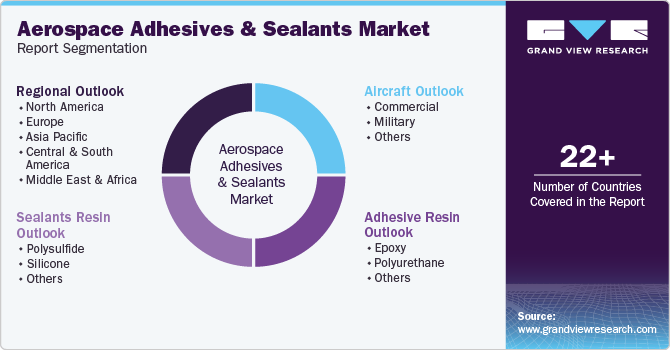
This report forecasts revenue growth at country levels and provides an analysis of the industry trends in each of the sub-segments from 2021 to 2033. For the purpose of this study, Grand View Research has segmented the global aerospace adhesives and sealants market on the basis of resin, aircraft, and region
 To learn more about this report, Download Free Sample Report
-
Adhesive Resin Outlook (Volume, Kilotons; Revenue, USD Million, 2021 - 2033)
-
Epoxy
-
Polyurethane
-
Others
-
-
Sealants Resin Outlook (Volume, Kilotons; Revenue, USD Million, 2021 - 2033)
-
Polysulfide
-
Silicone
-
Others
-
-
Aircraft Outlook (Volume, Kilotons; Revenue, USD Million, 2021 - 2033)
-
Commercial
-
Military
-
Others
-
-
Regional Outlook (Volume, Kilotons; Revenue, USD Million, 2021 - 2033)
-
North America
-
U.S.
-
Canada
-
-
Europe
-
Germany
-
France
-
UK
-
Italy
-
-
Asia Pacific
-
China
-
Japan
-
India
-
-
Central & South America
-
Brazil
-
-
Middle East & Africa
-
Research Methodology
The aerospace adhesives and sealants market figures in this report are based on a proven research process that combines executive interviews with secondary research from proprietary databases, company filings, and recognized regulatory and institutional sources. Market size is built through value-chain sizing - reconciling supply-side and demand-side estimates - and triangulated with bottom-up and top-down approaches. Every estimate passes multiple levels of expert validation before publication, with each aerospace adhesives and sealants segment quantified using the revenue-capture definitions in the table below.
Segment Definition
Segment - Adhesive Resin
Revenue capture definition
Epoxy
Strong commercial adoption stems from its extensive use in primary and secondary aircraft structures, where superior mechanical strength, fatigue resistance, and compatibility with composite materials ensure reliable structural bonding.
Polyurethane
Industry demand is accelerated by increasing integration into cabin interiors, flexible assemblies, and vibration-sensitive components requiring durable adhesion, impact resistance, and long service life.
Other Adhesive Resin
Industry prospects are strengthened using specialty sealants for fire protection, acoustic insulation, corrosion prevention, and customized sealing requirements across advanced aerospace platforms.
Segment - Sealants Resin
Revenue capture definition
Polysulfide
Sales performance is reinforced by widespread utilization in fuel tanks, fuselage joints, and pressurized aircraft sections where long-term resistance to fuels, moisture, and harsh environmental conditions is critical.
Silicone
Commercial momentum is supported by growing implementation in glazing systems, avionics protection, engine-adjacent assemblies, and other high-temperature sealing applications demanding exceptional thermal stability.
Other Sealants Resin
Industry prospects are strengthened using specialty sealants for fire protection, acoustic insulation, corrosion prevention, and customized sealing requirements across advanced aerospace platforms.
Segment - Aircraft
Revenue capture definition
Commercial
Business expansion is propelled by increasing passenger aircraft production, fleet renewal initiatives, and continuous maintenance requirements that drive demand for advanced bonding and sealing technologies.
Military
Growth potential is driven by defense modernization programs, next-generation aircraft development, and stringent performance standards requiring high-reliability adhesives and sealants in mission-critical applications.
Other Aircraft
Demand is sustained through applications in business jets, helicopters, regional aircraft, and unmanned aerial vehicles, where lightweight construction, structural durability, and operational efficiency remain essential priorities.
Estimation Model
Layer Name
Key Question
Description
Raw Material & Production Layer
What forms the supply base?
Assess global aerospace adhesives & sealants manufacturing based on the availability of epoxy resins, polyurethane resins, polysulfide polymers, silicone compounds, curing agents, fillers, plasticizers, adhesion promoters, solvents, and specialty additives. Evaluate resin synthesis, formulation technologies, quality assurance procedures, production efficiency, manufacturing capacity, cost structure, and key production hubs that shape the global supply landscape.
Application Adoption Layer
Where are aerospace adhesives & sealants consumed?
Examine the deployment of aerospace adhesives & sealants across commercial aircraft, military aviation, business jets, helicopters, regional aircraft, and unmanned aerial vehicles. Adoption is influenced by increasing use of lightweight composite materials, structural bonding requirements, fuel tank sealing, cabin assembly, corrosion protection, and the need for durable, high-performance joining and sealing solutions throughout aircraft manufacturing and maintenance operations.
Consumption Intensity Layer
How much aerospace adhesives & sealants are utilized?
Analyze utilization patterns by evaluating material consumption across airframe assembly, composite component manufacturing, engine-adjacent systems, interior installations, fuel systems, and maintenance, repair, and overhaul (MRO) activities. The assessment considers aircraft production volumes, fleet expansion, maintenance schedules, replacement cycles, composite penetration, and regional aerospace manufacturing activity to estimate overall product demand.
Revenue Layer
How is market revenue generated?
Market value is generated through the supply of certified aerospace adhesives and sealants to aircraft OEMs, component manufacturers, tier suppliers, and MRO service providers. Commercial performance is supported by rising aircraft production, expanding fleet modernization initiatives, increasing maintenance requirements, technological advancements in high-performance resin systems, compliance with stringent aerospace certification standards, and continuous investments in lightweight, durable bonding and sealing technologies that enhance long-term industry competitiveness.
Delivered Customizations
This report has been delivered with the following In-depth customizations
Client Request
Customization Delivered
Value Adds
Regional Segmentation
The study delivers detailed country-level analysis across major aerospace adhesives & sealants manufacturing and consumption markets, such as UAE, Indonesia, Singapore, etc. It evaluates raw material availability, production capacity, supply chain dynamics, import-export trends, regulatory frameworks, pricing outlook, aircraft manufacturing activity, MRO demand, and adoption across commercial, military, and other aircraft applications.
Enables stakeholders to identify high-growth regional markets, assess manufacturing competitiveness, understand certification and regulatory requirements, optimize sourcing strategies, and prioritize expansion opportunities based on evolving aerospace production and maintenance demand.
Competitive Benchmarking
The report provides a comprehensive benchmarking assessment of leading aerospace adhesives & sealants manufacturers, covering product portfolios, manufacturing capabilities, geographic presence, distribution networks, research and development initiatives, aerospace certifications, operational strengths, and recent strategic developments.
Helps businesses evaluate competitive positioning, identify portfolio gaps, benchmark technological capabilities, support strategic partnerships, and strengthen long-term market expansion and product differentiation strategies.
Opportunity Assessment
The study evaluates emerging growth opportunities across lightweight composite aircraft, next-generation adhesive and sealant technologies, expanding aircraft MRO activities, electric and hybrid aviation, advanced air mobility platforms, and sustainable low-VOC formulations. It also examines opportunities arising from increasing aircraft production, fleet modernization, and innovation in high-performance bonding materials.
Assists companies in identifying high-potential application areas, aligning product development with evolving industry requirements, optimizing investment decisions, accelerating commercialization efforts, and enhancing long-term business growth potential.
Frequently Asked Questions About This Report
The global aerospace adhesives and sealants market is expected to grow at a CAGR of 5.6% from 2026 to 2033, reaching USD 2.2 billion by 2033.
Some key players operating in the aerospace adhesives & sealants market include Henkel AG; 3M; PPG Industries; Huntsman Corporation; Cytec-Solvay; H.B. Fuller and others.
By sealants resin, silicone held a dominant position, contributing 58.7% of total revenue in 2025, supported by superior thermal stability, excellent weather resistance, and widespread use in high-temperature sealing applications, avionics, and aircraft glazing systems.
Based on adhesive resin, epoxy accounted for the highest market share, representing 40.5% of total revenue in 2025. They are extensively utilized in structural bonding and composite assembly due to their exceptional mechanical strength, fatigue resistance, and durability under demanding aerospace operating conditions.
North America dominated the aerospace adhesives & sealants market with the highest revenue share of 47.2% in 2025. The region is supported by the presence of major aircraft manufacturers, a well-established aerospace supply chain, robust defense spending, and continuous investments in advanced aviation technologies.
Asia Pacific is the fastest growing region with a CAGR of 6.2% in the forecast period. Increased investments in commercial aircraft manufacturing, expanding MRO infrastructure, and the rapid growth of aerospace production capabilities in countries such as China and India continue to strengthen the region's growth trajectory.
The global aerospace adhesives and sealants market size was valued at USD 1.4 billion in 2025 and is estimated at USD 1.5 billion in 2026.
The aerospace adhesives and sealants market is primarily driven by increasing aircraft production, growing adoption of lightweight composite materials, and ongoing fleet modernization programs aimed at improving fuel efficiency and structural performance. The expanding maintenance, repair, and overhaul (MRO) activities and the demand for high-performance bonding solutions that meet stringent aerospace safety standards are supporting market growth.
In terms of aircraft, commercial held a dominant position, contributing 63.9% of total revenue in 2025, supported by rising global air passenger traffic, increasing commercial aircraft deliveries, and sustained investments in fleet expansion and replacement programs.
About the Author(s)
Advanced Interior Materials Research Team
Advanced Materials · Advanced Interior MaterialsThis report was authored by the advanced interior materials research team at Grand View Research - comprising two research analysts, one senior research analyst, and one industry expert - with specialized expertise in the advanced interior materials segment of the advanced materials industry. All findings are based on proprietary advanced materials databases, executive interviews, and regulatory analysis, subject to internal peer review prior to publication.
Last Updated:
Speak to Analyst

Customize this report to your needs - add regions, segments, or data points, with 20% free customization.
Or view our licence options:


ISO 9001:2015 & 27001:2022 Certified
We are GDPR and CCPA compliant! Your transaction & personal information is safe and secure. For more details, please read our privacy policy.


