
- Home
- »
- Plastics, Polymers & Resins
- »
-
Agricultural Waste-derived Plastics Market Report 2026-2033GVR Report cover
![Agricultural Waste-derived Plastics Market (2026 - 2033)Report]()
Agricultural Waste-derived Plastics Market (2026 - 2033)
Size, Share & Trends Analysis Report Market By Material (Polylactic Acid (PLA), Polyhydroxyalkanoates (PHA), Starch-based plastics), By Application (Packaging, Agriculture), By Region, And Segment Forecasts
Market Size, 2025
$739.8MMarket Estimate, 2026
$838.0MMarket Forecast, 2033
$2,022.6MCAGR, 2026–2033
13.4%Agricultural Waste-derived Plastics Market Summary
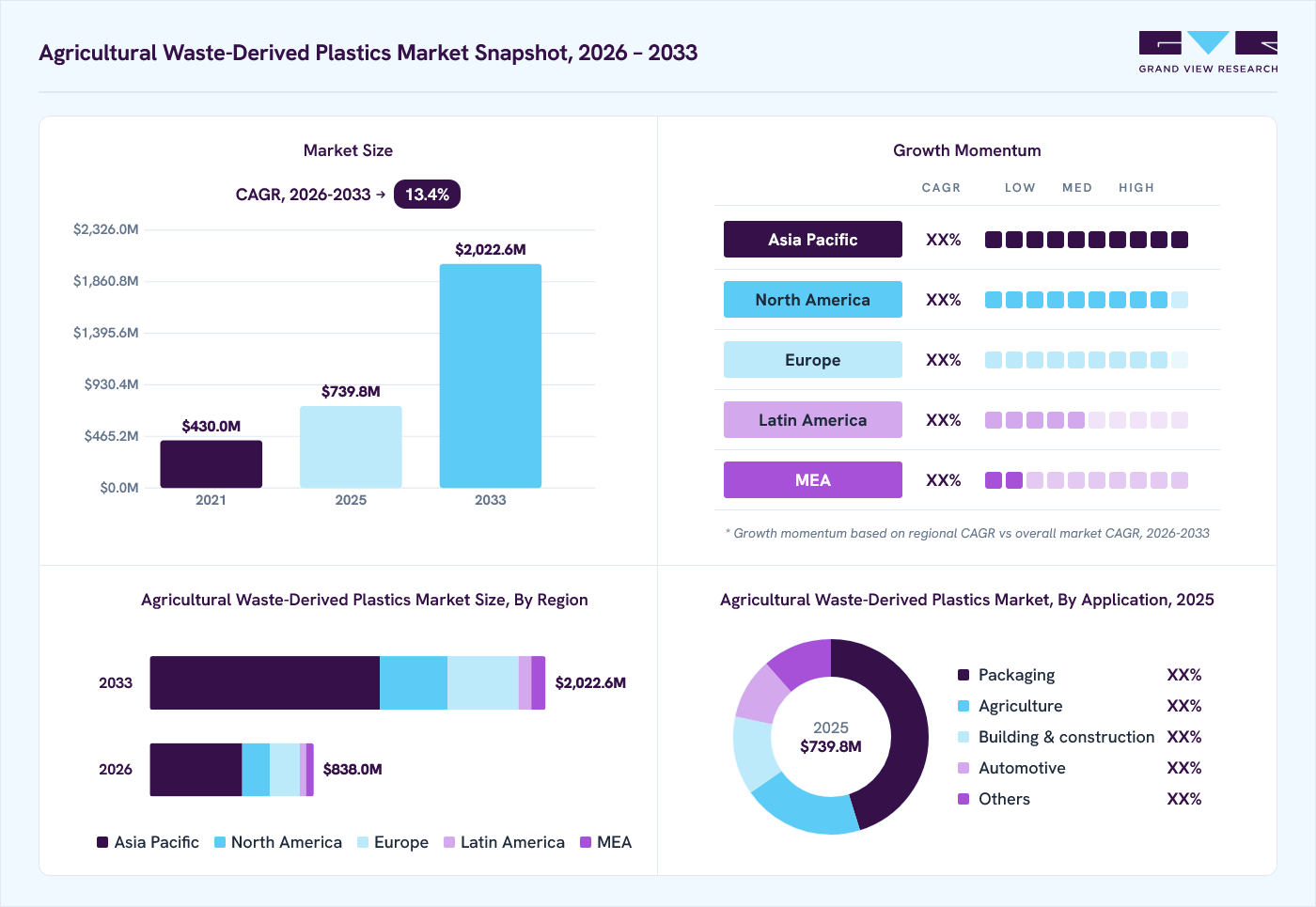
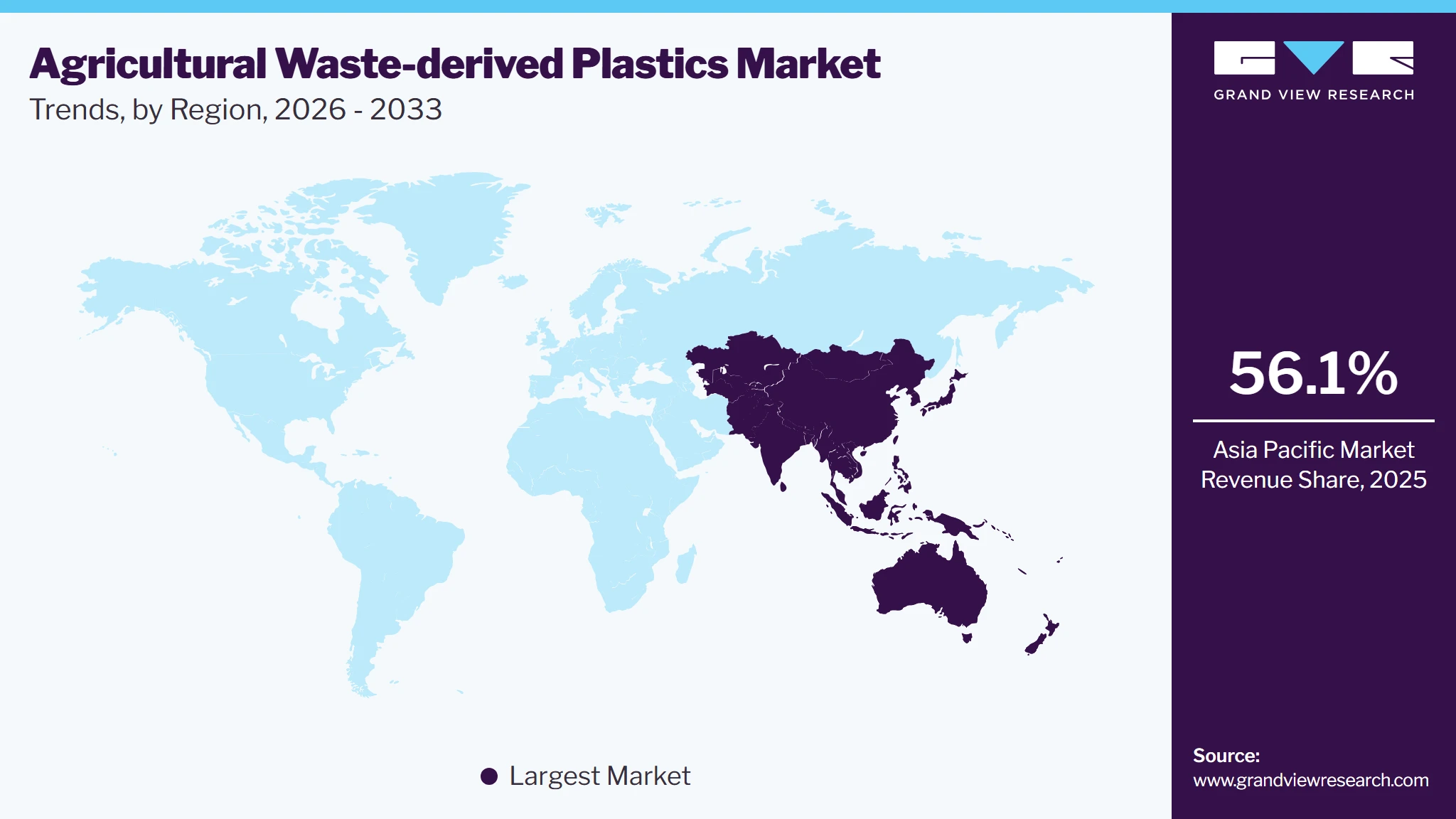
The global agricultural waste-derived plastics market size was valued at USD 739.8 million in 2025 and is projected to grow from USD 838.0 million in 2026 to USD 2,022.6 million by 2033, at a CAGR of 13.4% from 2026 to 2033. Asia Pacific dominated the market, accounting for the revenue share of 56.1% in 2025. The market is driven by growing demand for sustainable materials across packaging, agriculture, consumer goods, automotive, and building & construction applications.
Key Market Trends & Insights
- By material: The polylactic acid (PLA) segment held the largest market share of 35.4% in 2025.
- By application: The packaging segment led the market with the largest revenue share of 39.3% in 2025.
Regional Highlights
- Largest regional market: Asia Pacific (56.1% revenue share, 2025)
- By country: India dominated the Asia Pacific with the largest revenue share in 2025
Market Size & Forecast
- Market size in 2025: USD 739.8 Million
- Estimated market size in 2026: USD 838.0 Million
- Projected market size by 2033: USD 2,022.6 Million
- CAGR (2026-2033): 13.4%
Agricultural residues rich in starch, cellulose, and lignocellulosic components provide renewable feedstocks for producing biodegradable and bio-based plastics, supporting waste valorization, reducing fossil-fuel dependence, and circular economy goals. Advancements in biorefining, polymer processing, and biocomposite technologies are further expanding the adoption of these technologies across films, packaging, automotive components, and construction materials.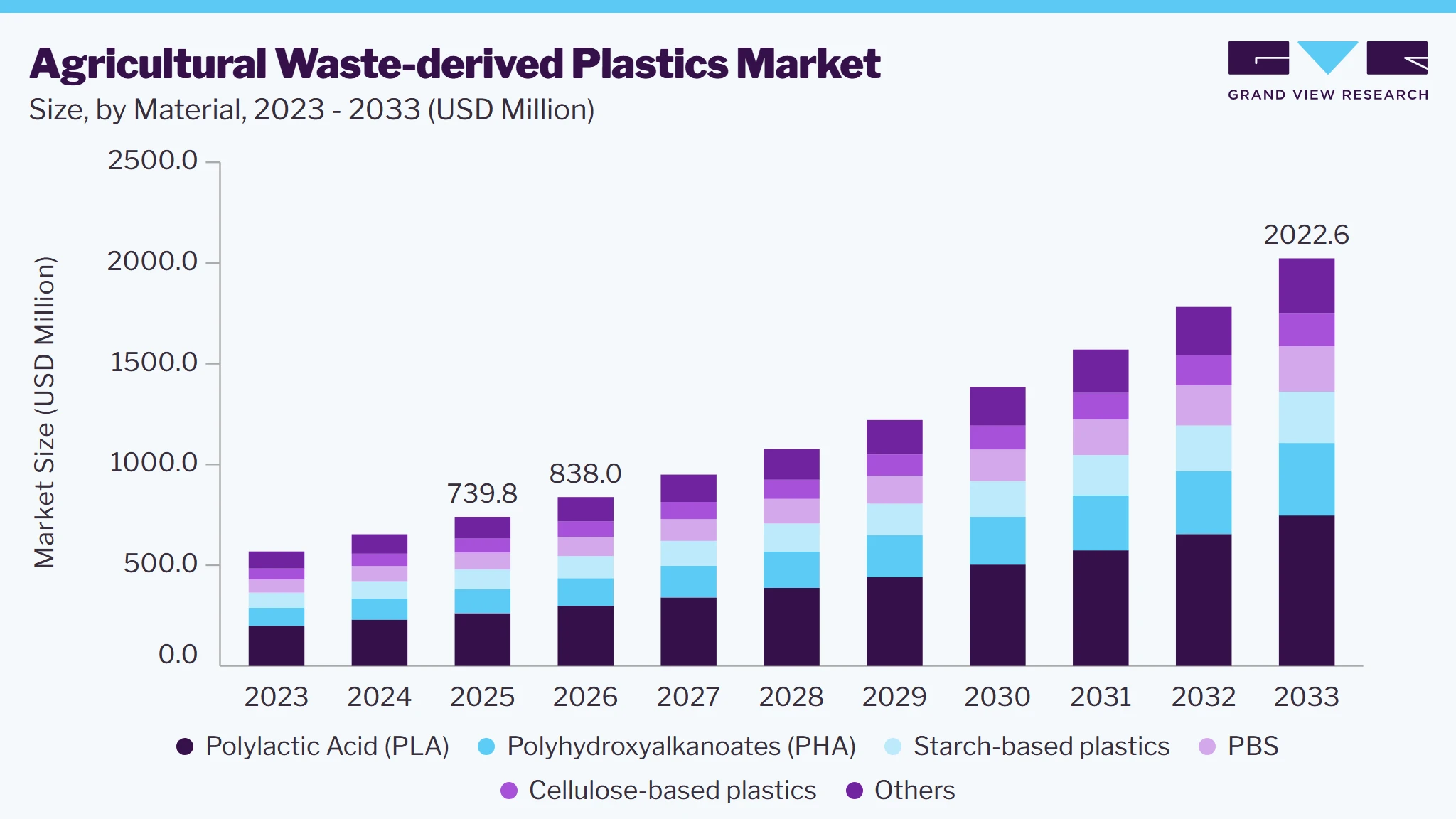
Technological advancements in biopolymer extraction, microbial fermentation, composite reinforcement, and advanced processing methods are emerging as a key trend in the agricultural waste-derived plastics industry. Manufacturers are increasingly developing materials to improve mechanical strength, barrier performance, biodegradability, and thermal stability. Innovations in nanofillers, surface modification, and biocomposite processing are further expanding suitability across packaging, agriculture, automotive, and building & construction applications.
The growing demand for sustainable, renewable, and cost-effective plastic alternatives is a major driver of the market growth. Agricultural residues provide abundant feedstocks for producing biodegradable polymers and biocomposites while supporting waste valorization, reduced fossil-resource dependence, and circular economy objectives. Growing environmental concerns and advances in waste conversion and biopolymer formulation are further accelerating adoption across applications.
Market Dynamics
Growing use in food and beverage packaging is emerging as a key driver for the agricultural waste-derived plastics industry, supported by increasing demand for sustainable short-life containers, films, trays, and foodservice products. Agricultural residues such as sugarcane bagasse and fallen arecanut leaves can be processed through pulping, molding, and pressing to produce durable plates, cups, takeaway boxes, and cutlery, reducing reliance on conventional plastics and styrofoam.
Agricultural waste-derived packaging offers biodegradability, lower environmental impact, and waste valorization benefits while supporting the transition toward circular packaging solutions. Bagasse-based tableware is increasingly adopted by foodservice companies, while agricultural flour and lignin blends enable extrusion and 3D printing of customized biodegradable packaging. Growing adoption of these materials can reduce persistent plastic waste and open-field burning of crop residues, further accelerating demand across food and beverage packaging applications.
High processing complexity is emerging as a key restraint for the global market, driven by raw material variability, multi-step extraction, and intensive chemical modification requirements. Differences in the compositions of cellulose, hemicellulose, and lignin across crop residues make uniform processing difficult, while tightly bound crystalline cellulose requires extensive pretreatment. Low extraction yields, high energy consumption, and incompatibility between hydrophilic natural fibers and hydrophobic polymer matrices further increase production costs and limit material performance.
The growing use of agricultural films presents a significant opportunity for the agricultural waste-derived plastics industry, driven by increasing demand for soil-biodegradable mulch and greenhouse films. Plant starches and agricultural residues can be converted into bioplastic films that retain moisture, control weeds, and reduce persistent plastic waste. Unlike conventional LDPE films, biodegradable alternatives can be incorporated into soil after harvest, where microorganisms decompose them, creating opportunities for advanced formulations with improved elasticity and growing-season durability.
Market Concentration & Characteristics
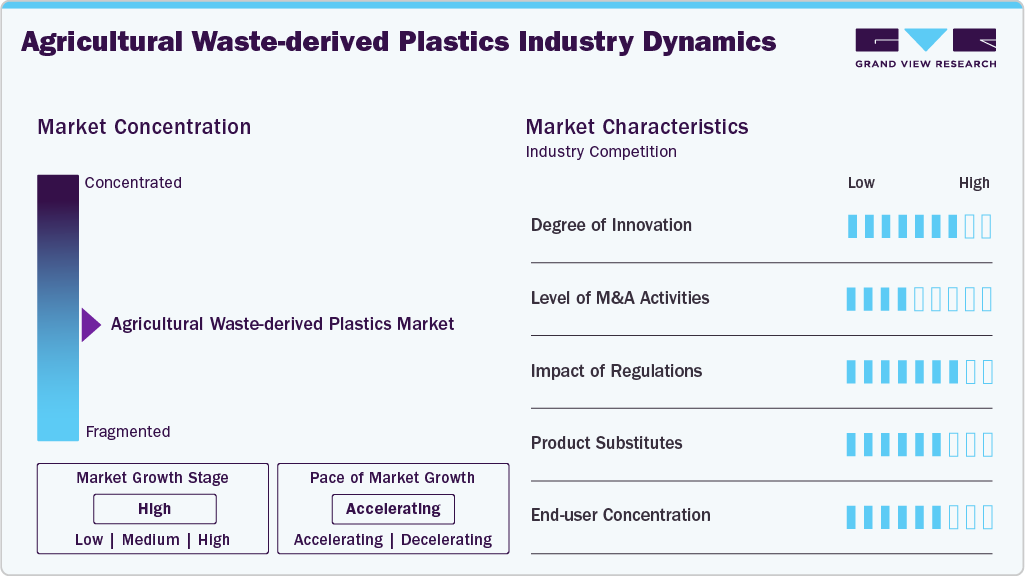
The market growth stage is exponential, and the pace is accelerating. The market exhibits fragmentation, with key players dominating the industry landscape. Major companies such as RRAJ Bioplast, Resysta International, BUYO Bioplastics, Dionymer, Bio-On SpA, Danimer Scientific, and others play a significant role in shaping the market dynamics. These leading players often drive innovation in the market by introducing new products, technologies, and materials to meet the industry's evolving demands.
The degree of innovation in the agricultural waste-derived plastics industry is moderate to high, driven by advances in biomass fractionation, biopolymer modification, nanocellulose reinforcement, and biocomposite processing. Manufacturers are developing optimized materials from cellulose, lignin, starch, and agricultural residues to improve mechanical strength, thermal stability, moisture resistance, and barrier performance. Innovations in fiber reinforcement, polymer blending, and advanced processing are further enhancing material performance across consumer goods and construction applications.
Product differentiation and performance-enhancement initiatives are shaping competitive positioning, with manufacturers focusing on application-specific formulations, biodegradability, mechanical durability, and improved water- and gas-barrier properties. Advanced systems increasingly combine agricultural waste-derived fibers and biopolymers with nanocellulose and other functional reinforcements to enhance structural and thermal performance. These developments are expanding product diversity and supporting adoption across consumer goods, sustainable packaging, automotive components, agricultural films, and building & construction applications.
Analyst Perspective
The market is expected to evolve from a feedstock-driven industry into an innovation-focused market over the next 5 to 10 years. Advances in biomass processing, fermentation, and biocomposite technologies will improve material performance and expand applications. Regulations promoting plastic waste reduction and the use of renewable feedstocks will further strengthen demand. Customers will increasingly prioritize certified biodegradability, consistent quality, and reliable supply. Companies will compete through scalable production, feedstock integration, product innovation, and strategic partnerships. However, high collection, pretreatment, and processing costs will continue to pressure profitability. Competition from conventional plastics and established bioplastics will remain a key challenge. Future growth is expected to be driven by high-performance, application-specific materials and integrated waste-to-polymer supply chains.
Material Insights
The polylactic acid (PLA) segment led the market with the largest revenue share of 35.4% in 2025, supported by increasing demand for compostable packaging and sustainable agricultural products. The use of starch-, sugar-, and cellulose-rich agricultural residues as renewable feedstocks enhances resource efficiency. Growing investments in biomass processing, fermentation, and polymerization technologies are improving production scalability, while corporate sustainability targets encourage the substitution of petroleum-based plastics with bio-based PLA.
The polyhydroxyalkanoates (PHA) segment is expected to grow at the fastest CAGR of 14.8% over the forecast period, driven by its biodegradability under diverse environmental conditions and suitability for applications requiring sustainable end-of-life solutions. Increasing research into converting crop residues and agro-industrial by-products into PHA provides new feedstock opportunities. Improvements in microbial fermentation, recovery processes, and bioprocess efficiency are supporting commercial development, while circular economy strategies encourage agricultural waste valorization.
Application Insights
The packaging segment led the market with the largest revenue share of 39.3% in 2025, driven by increasing demand for sustainable alternatives in food, beverage, and consumer goods packaging. Agricultural waste-derived plastics support the utilization of renewable resources and reduce reliance on petroleum-based materials. Growing regulations on single-use plastics and corporate sustainability commitments are accelerating adoption. Improvements in processing, barrier performance, durability, and compatibility with existing packaging formats are further strengthening commercial applications.
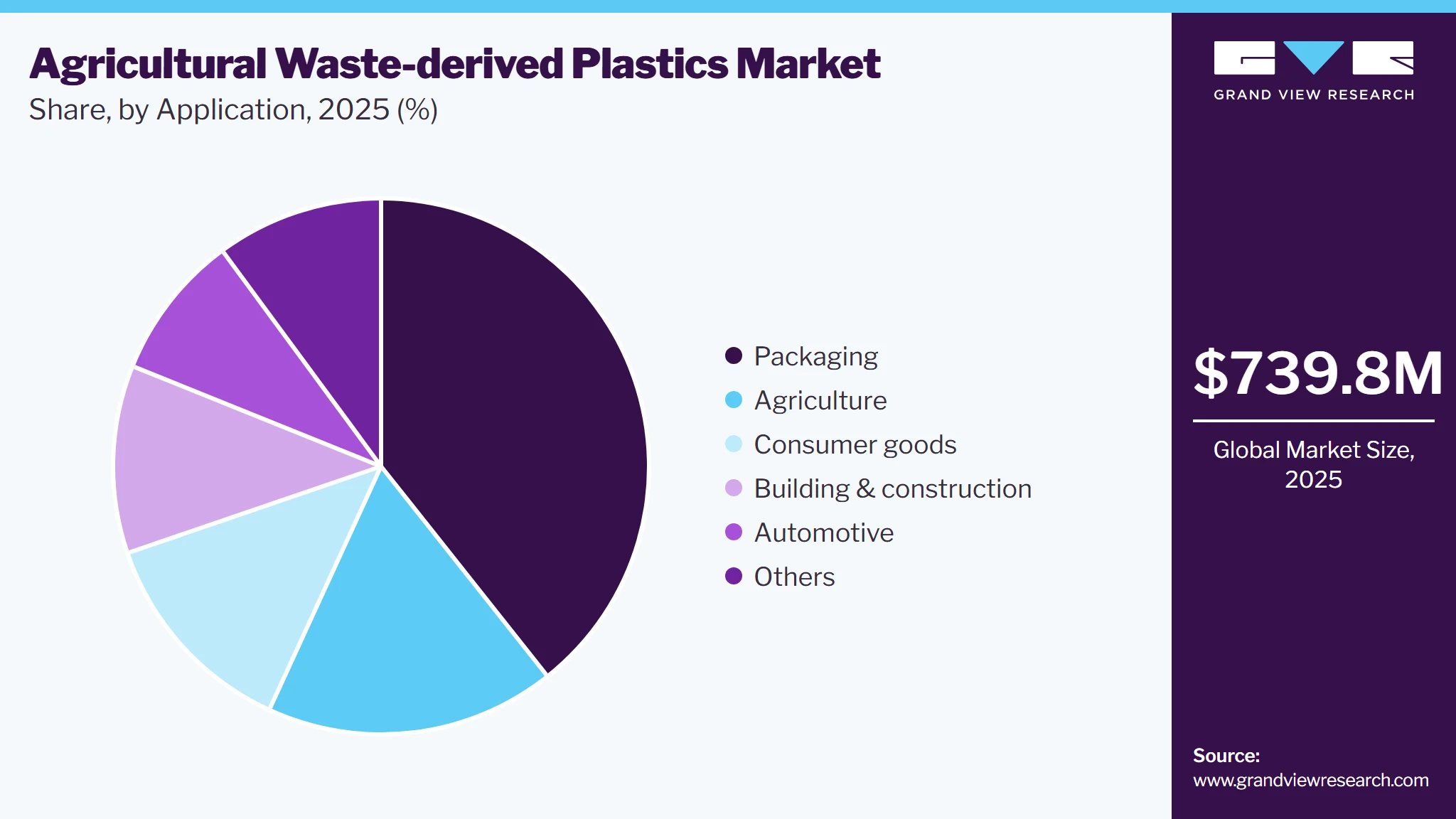
The agriculture segment is expected to grow at the fastest CAGR of 14.6% over the forecast period, driven by increasing adoption of agricultural waste-derived plastics in mulch films, greenhouse films, plant pots, seedling trays, and crop-protection products, supported by biodegradability, utilization of renewable feedstocks, and reduced microplastic accumulation. These materials enable sustainable agricultural practices by utilizing crop residues and supporting natural degradation after use. Advances in biopolymer formulations, fiber reinforcement, and biodegradable film technologies are further improving mechanical durability and growing-season performance, supporting expanded adoption across agricultural applications.
Regional Insights
The agricultural waste-derived plastics market in North America is driven by strong sustainability targets, established agricultural processing industries, and rising demand for renewable material solutions. Supportive initiatives for waste valorization and circular production are encouraging the conversion of crop residues and agro-industrial byproducts into plastics and biocomposites. Expanding applications in sustainable packaging, agriculture, and consumer products are further strengthening regional market opportunities.
U.S. Agricultural Waste-derived Plastics Market Trends
The agricultural waste-derived plastics market in the U.S. benefits from abundant agricultural waste, advanced biotechnology capabilities, and strong investment in materials innovation. Research and commercialization efforts are improving the conversion of cellulose, starch, lignin, and other biomass components into value-added plastics. Growing corporate commitments to sustainable materials, development of biodegradable packaging solutions, and increasing interest in domestic renewable feedstocks are supporting market expansion.
Asia Pacific Agricultural Waste-derived Plastics Market Trends
Asia Pacific agricultural waste-derived plastics market held the largest revenue share of 56.1% in 2025 and is projected to grow at the fastest CAGR of 13.9% over the forecast period. The Asia Pacific market is driven by the region’s large agricultural output and availability of diverse biomass residues, including rice husks, sugarcane waste, cassava residues, and palm by-products. Rising investments in bioplastic manufacturing, waste valorization, and processing infrastructure are improving feedstock utilization. Expanding sustainable packaging initiatives and increasing environmental awareness are further supporting regional market development.
The agricultural waste-derived plastics market in India is supported by increasing investment in domestic bioplastic production and technologies that convert crop residues into value-added materials. Strong growth in food packaging, agriculture, and consumer goods is creating new application opportunities. Government initiatives promoting plastic waste reduction, circular economy practices, and agricultural waste management are encouraging manufacturers to develop renewable and compostable plastic alternatives.
Europe Agricultural Waste-derived Plastics Market Trends
The agricultural waste-derived plastics market in Europe is supported by strong sustainability policies, advanced waste-management systems, and rising demand for circular material solutions. The EU Packaging and Packaging Waste Regulation encourages manufacturers to improve recyclability and reduce the use of virgin plastic. Established biopolymer research capabilities and growing interest in locally sourced biomass are supporting innovation and commercialization across consumer applications, packaging, and agriculture.
Central & South America Agricultural Waste-derived Plastics Market Trends
The agricultural waste-derived plastics market in Central and South America benefits from extensive agricultural activity and substantial availability of sugarcane bagasse, cassava residues, and other biomass resources. Brazil and Argentina provide favorable conditions for feedstock-based bioplastic production through established agricultural and bioenergy industries. Increasing interest in value-added utilization of farm residues, along with investments in bio-based materials and processing infrastructure, is creating new market opportunities.
Middle East & Africa Agricultural Waste-derived Plastics Market Trends
The agricultural waste-derived plastics market in the Middle East and Africa is driven by growing efforts to diversify material supply chains and utilize locally available agricultural byproducts. Investments in bioplastics, waste valorization, and sustainable manufacturing are creating opportunities for converting crop residues into value-added materials. Rising environmental awareness and demand for sustainable packaging are encouraging regional producers to explore agricultural waste-derived plastics for packaging, agriculture, and industrial applications.
Key Agricultural Waste-derived Plastics Company Insights
Some of the key players operating in the market include Danimer Scientific and Resysta International
-
Danimer Scientific participates in the global market through PHA and PLA biopolymer resins, supporting biodegradable packaging, films, agricultural mulch films, and consumer applications. Its proprietary Nodax technology, customized formulations, and commercial-scale PHA production strengthen its position in the sustainable plastics market.
-
Resysta International participates in the agricultural waste-derived plastics industry through its rice-husk-based Resysta material, containing approximately 60% agricultural waste. Its recyclable, weather-resistant polymer composite supports decking, façades, furniture, windows, and other sustainable applications, offering an alternative to wood and conventional WPC materials.
Dionymer and Bio-On SpA are some of the emerging participants in the global market.
-
Dionymer participates in the market through PHA and PHBV biopolymers produced from food waste and agricultural coproducts. Its fermentation-based technology supports biodegradable materials for packaging, coatings, and injection-molding applications, providing circular alternatives to conventional petrochemical plastics.
-
Bio-On SpA participates in the global market through PHA biopolymers produced from agricultural residues and organic waste streams. Its technologies support biodegradable materials for agriculture, packaging, automotive, textiles, biomedical, and other applications, while its licensing model enables broader commercialization of PHA production technologies.
Key Agricultural Waste-derived Plastics Companies
The following key companies have been profiled for this study on the global agricultural waste-derived plastics market.
-
RRAJ Bioplast
-
Resysta International
-
BUYO Bioplastics
-
Dionymer
-
Bio-On SpA
-
Danimer Scientific
Competitive Benchmarking
Operating Strategies
Competitive Edge
Weakness
Mature Players: Danimer Scientific, Resysta International
- Focus on PHA, PLA, rice-husk-based composites, and other bio-based materials for various industrial applications.
- Invest in biomass utilization, biodegradable polymer technologies, material formulation, and application-specific product development.
- Expand through commercial-scale production, licensing models, established distribution networks, technical partnerships, and relationships with downstream manufacturers.
- Established technologies, broader product portfolios, and stronger commercialization capabilities support market positioning.
- Bio-based and waste-derived materials provide differentiation through biodegradability, renewable feedstock utilization, and reduced dependence on fossil-based plastics.
- Broader application coverage across consumer products and construction strengthens market reach.
- High R&D, processing, feedstock preparation, and scale-up requirements increase development and commercialization costs.
- Maintaining consistent material quality is challenging because agricultural feedstocks can vary in composition, moisture, and purity.
- Higher production costs and performance requirements can limit competitiveness against conventional plastics in price-sensitive applications.
Emerging Players: RRAJ Bioplast, BUYO Bioplastics, Dionymer, Bio-On SpA
- Focus on agricultural waste-derived bioplastics, PHA/PHBV, rice-husk composites, and other biomass-based materials for specialized applications.
- Emphasize waste valorization, fermentation, biomass conversion, and customized biocomposite formulations.
- Expand through regional manufacturing, technology development, partnerships, pilot-scale production, licensing, and direct technical support.
- Specialized technologies enable differentiation through biodegradability, agricultural waste utilization, circularity, and application-specific material properties.
- Flexible development approaches support customized formulations using crop residues, food waste, starch, cellulose, lignin, and other renewable feedstocks.
- Regional proximity and technology-focused business models can facilitate collaboration with packaging, agriculture, and sustainable-material manufacturers.
- Comparatively smaller production capacity and geographic reach can limit competitiveness against established bioplastics producers.
- Limited financial resources may constrain R&D, commercialization, certification, and scale-up activities.
- Dependence on emerging technologies, feedstock availability, and customer qualification can increase commercialization and project-cycle risks.
Recent Developments
-
In July 2026, Suntory Holdings formed a strategic partnership with EF Polymer and launched a joint pilot program to evaluate its agricultural-waste-derived super absorbent polymer for improving soil water retention, crop yield, and quality, supporting sustainable sourcing and climate-resilient agricultural production.
-
In June 2026, Natur-Tec India and Bayer entered into a strategic collaboration to develop biodegradable and compostable seedling cups. The initiative supports sustainable nursery applications, reduces dependence on conventional single-use plastic containers, and strengthens the development of environmentally responsible agricultural solutions.
Agricultural Waste-derived Plastics Market Report Scope
Report Attribute
Details
Market size in 2025
USD 739.8 million
Estimated market size in 2026
USD 838.0 million
Projected market size by 2033
USD 2,022.6 million
Growth rate
CAGR of 13.4% from 2026 to 2033
Base year for estimation
2025
Historical data
2021 - 2024
Forecast period
2026 - 2033
Quantitative units
Revenue in USD million, Volume in tons, and CAGR from 2026 to 2033
Report coverage
Revenue & volume forecast, competitive landscape, growth factors, and trends
Segments covered
Material, application, region
Regional scope
North America; Europe; Asia Pacific; Central & South America; Middle East & Africa
Country scope
U.S.; Canada; Mexico; Germany; UK; France; Italy; Spain; China; India; Japan; South Korea; Australia; Brazil; Argentina; Saudi Arabia; UAE; South Africa
Key companies profiled
RRAJ Bioplast; Resysta International; BUYO Bioplastics; Dionymer; Bio-On SpA; Danimer Scientific
Customization scope
Free report customization (equivalent to up to 8 analyst working days) with purchase. Addition or alteration to country, regional & segment scope
Pricing and purchase options
Avail customized purchase options to meet your exact research needs. Explore purchase options
Global Agricultural Waste-derived Plastics Market Report Segmentation
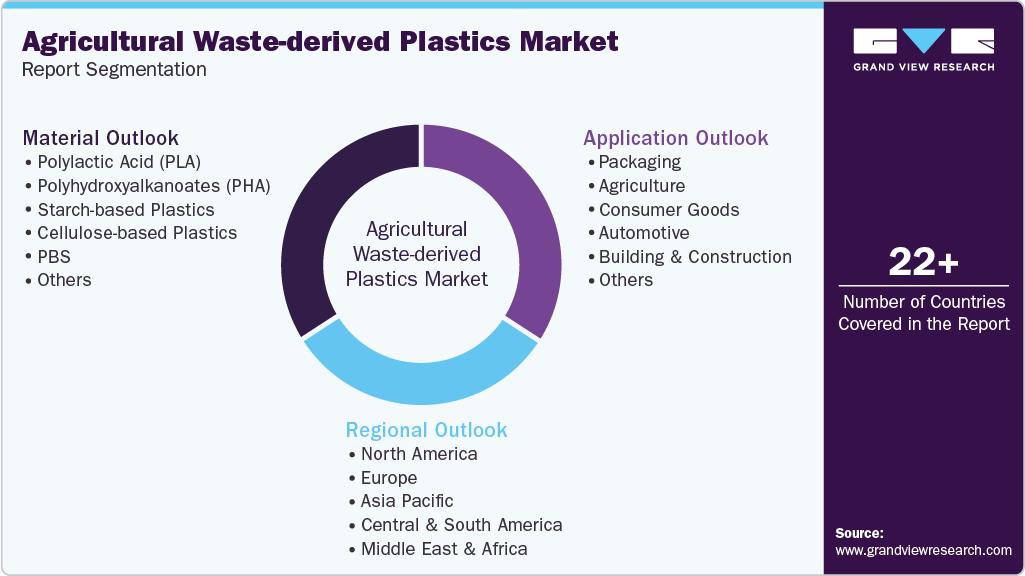
This report forecasts revenue growth at the global, regional, and country levels and provides an analysis of the latest industry trends across sub-segments from 2021 to 2033. For this study, Grand View Research has segmented the global agricultural waste-derived plastics market report based on material, application, and region:
-
Material Outlook (Volume, Kilotons; Revenue, USD Million, 2021 - 2033)
-
Polylactic Acid (PLA)
-
Polyhydroxyalkanoates (PHA)
-
Starch-based plastics
-
Cellulose-based plastics
-
PBS
-
Others
-
-
Application Outlook (Volume, Kilotons; Revenue, USD Million, 2021 - 2033)
-
Packaging
-
Agriculture
-
Consumer goods
-
Automotive
-
Building & construction
-
Others
-
-
Regional Outlook (Volume, Kilotons; Revenue, USD Million, 2021 - 2033)
-
North America
-
U.S.
-
Canada
-
Mexico
-
Europe
-
Germany
-
UK
-
France
-
Italy
-
Spain
-
Asia Pacific
-
China
-
India
-
Japan
-
South Korea
-
Australia
-
Central & South America
-
Brazil
-
Argentina
-
Middle East & Africa
-
Saudi Arabia
-
UAE
-
South Africa
-
Research Methodology
The agriculture waste-derived plastics marketfigures in this report are based on a proven research process that combines executive interviews with secondary research from proprietary databases, company filings, and recognized regulatory and institutional sources. Market size is built through value-chain sizing-reconciling supply-side and demand-side estimates-and triangulated with bottom-up and top-down approaches. Every estimate passes multiple levels of expert validation before publication, with eachagriculture waste-derived plastics segment quantified using the revenue-capture definitions in the table below.
Segment Definition
Segment - Material
Revenue capture definition
Polylactic Acid (PLA)
Revenue is generated through PLA-based agricultural waste-derived plastics used in packaging, films, containers, and consumer products that require biodegradability, renewable feedstock utilization, transparency, and favorable processing characteristics.
Polyhydroxyalkanoates (PHA)
Revenue is generated from PHA-based biodegradable plastics used in packaging, agricultural films, consumer goods, and specialty applications that require biodegradability, biocompatibility, and utilization of renewable or waste-derived feedstocks.
Starch-based plastics
Revenue is generated through starch-based plastics produced from agricultural residues and plant-derived starches, used in films, bags, foodservice products, and agricultural applications that require biodegradability, compostability, and reduced reliance on conventional plastics.
Cellulose-based plastics
Revenue is generated from cellulose-based plastics and bio-composites derived from agricultural residues, used in packaging, films, molded products, and construction applications that require renewable feedstocks, mechanical strength, biodegradability, and improved sustainability.
PBS
Revenue is captured through polybutylene succinate (PBS)-based biodegradable materials incorporating bio-based feedstocks and agricultural residues, used in packaging, agricultural films, and molded products requiring flexibility, processability, biodegradability, and mechanical durability.
Others
Revenue comes from other agricultural waste-derived materials, including lignin-based plastics, agricultural fiber composites, and other bio-based polymer systems, used where customized biodegradability, mechanical, thermal, or environmental performance is required.
Segment - Application
Revenue capture definition
Packaging
Revenue is generated from agricultural waste-derived plastics used in food and beverage containers, films, trays, bags, and takeaway products that require biodegradability, renewable feedstock utilization, barrier performance, and reduced plastic waste.
Agriculture
Revenue is captured through agricultural waste-derived plastics used in mulch films, greenhouse films, plant pots, seedling trays, and crop-protection products requiring biodegradability, soil compatibility, moisture retention, and reduced microplastic accumulation.
Consumer goods
Revenue is generated from agricultural waste-derived plastics used in household products, tableware, personal-care packaging, toys, and other consumer goods that require lightweight construction, sustainable material content, durability, and reduced environmental impact.
Automotive
Revenue is captured through agricultural waste-derived plastics and biocomposites used in interior components, panels, trims, housings, and other automotive parts requiring lightweight construction, mechanical strength, sustainability, and dimensional stability.
Building & construction
Revenue is generated from agricultural waste-derived plastics and composites used in decking, panels, profiles, flooring, façades, and construction components that require durability, moisture resistance, weatherability, lightweight construction, and reduced dependence on conventional materials.
Others
Revenue comes from agricultural waste-derived plastics used across textiles, electronics, medical products, industrial components, and specialty applications requiring customized mechanical, thermal, biodegradable, or environmental performance.
Estimation Model
Layer Name
Key Question
Description
Top-Down Agricultural Waste-Derived Plastics Demand Assessment Layer
What defines overall market demand?
Establishes global demand for agricultural waste-derived plastics across PLA, PHA, starch-based plastics, cellulose-based plastics, PBS, and other materials used in packaging, agriculture, consumer goods, automotive, building & construction, and other applications.
Application Demand Validation Layer
Where is demand concentrated?
Maps demand across packaging, agriculture, consumer goods, automotive, building & construction, and other applications based on sustainability requirements, biodegradability, material performance, regulatory adoption, and substitution potential for conventional plastics.
Consumption-to-Revenue Conversion Layer
How is demand monetized?
Converts agricultural waste-derived plastic consumption into revenue using material, feedstock availability, conversion efficiency, processing costs, product formulation, pricing, application requirements, production scale, and purchasing patterns.
Regional Demand Verification Layer
Where is demand validated?
Validates demand across North America, Europe, Asia Pacific, Central & South America, and Middle East & Africa using agricultural residue availability, bioplastics production capabilities, packaging demand, agricultural applications, sustainability policies, and biomass-processing infrastructure.
Delivered Customizations
This report has been delivered with the following In-depth customizations
Client Request
Customization Delivered
Value Adds
Regional segmentation
Detailed market assessment across North America, Europe, Asia Pacific, Central & South America, and Middle East & Africa, with country-level analysis for key agricultural waste and bioplastics markets. Regional assessment covers feedstock availability, bioplastics production capabilities, sustainability policies, packaging demand, agricultural applications, and technology adoption.
Identifies regional growth hotspots, feedstock advantages, policy-driven demand, production hubs, and geographic expansion opportunities. Supports region-specific market entry and investment decisions.
Competitive benchmarking
Benchmarking of major mature and emerging participants based on geographical presence, product portfolio, technology capabilities, agricultural waste utilization, commercialization stage, application coverage, production scale, partnerships, and strategic positioning.
Provides a structured view of competitive intensity, differentiation strategies, technology leadership, portfolio gaps, and market positioning, helping companies identify competitive advantages and whitespace opportunities.
Opportunity assessment
Opportunity mapping across sustainable food and beverage packaging, agricultural films, biodegradable mulch films, consumer goods, automotive components, construction materials, and specialty biocomposites. Assessment incorporates feedstock availability, application growth, regulatory support, technology readiness, competitive intensity, and commercialization potential.
Identifies high-potential application areas, regional white spaces, emerging technologies, and investable opportunities. Supports portfolio expansion, technology development, partnerships, market entry, and long-term growth strategy.
About the Author(s)
Plastics, Polymers & Resins Research Team
Bulk Chemicals · Plastics, Polymers & ResinsThis report was authored by the plastics, polymers & resins research team at Grand View Research - comprising two research analysts, one senior research analyst, and one industry expert - with specialized expertise in the plastics, polymers & resins segment of the bulk chemicals industry. All findings are based on proprietary bulk chemicals databases, executive interviews, and regulatory analysis, subject to internal peer review prior to publication.
Last Updated:
Speak to Analyst


Customize this report to your needs — add regions, segments, or data points, with 20% free customization.
Or view our licence options:


ISO 9001:2015 & 27001:2022 Certified
We are GDPR and CCPA compliant! Your transaction & personal information is safe and secure. For more details, please read our privacy policy.


