
- Home
- »
- Medical Devices
- »
-
Agriculture Insurance Market Size, Industry Report, 2033GVR Report cover
![Agriculture Insurance Market Size, Share & Trends Report]()
Agriculture Insurance Market (2025 - 2033) Size, Share & Trends Analysis Report By Product Type (Multi-peril Crop Insurance (MPCI), Crop-hail Insurance, Livestock Insurance), By Provider, By Distribution Channel (Insurance Companies, Banks), By Region, And Segment Forecasts
- Report ID: GVR-4-68040-769-8
- Number of Report Pages: 150
- Format: PDF
- Historical Range: 2021 - 2024
- Forecast Period: 2025 - 2033
- Industry: Healthcare
- Report Summary
- Table of Contents
- Segmentation
- Methodology
- Download FREE Sample
-
 Download Sample Report
Agriculture Insurance Market Summary
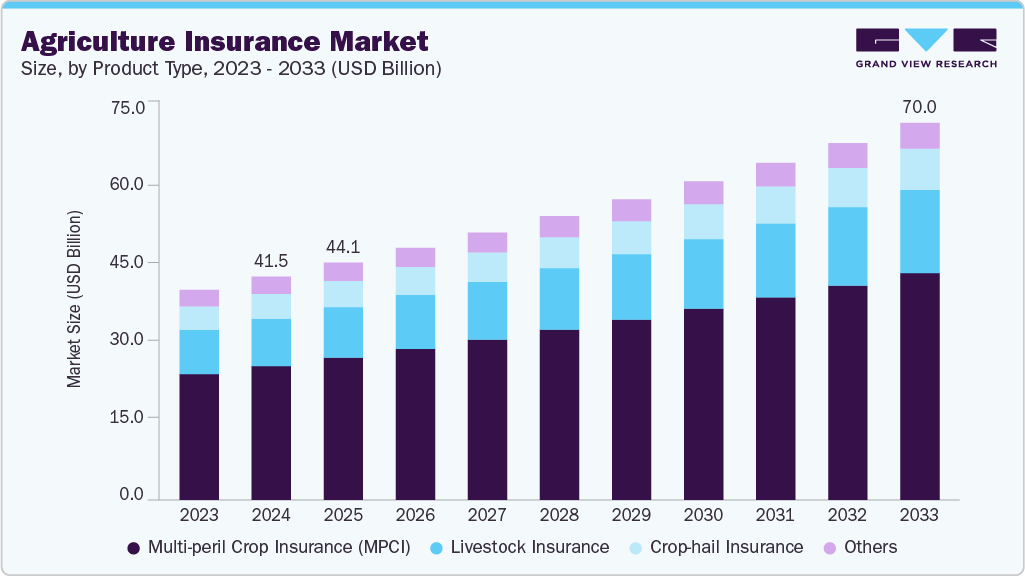
The global agriculture insurance market size was estimated at USD 41.47 billion in 2024 and is projected to reach USD 70.02 billion by 2033, growing at a CAGR of 5.96% from 2025 to 2033. The growing frequency and intensity of climate-related events, including droughts, floods, hurricanes, and pest outbreaks, are influencing farmers to seek insurance as a protective measure against financial losses.
Key Market Trends & Insights
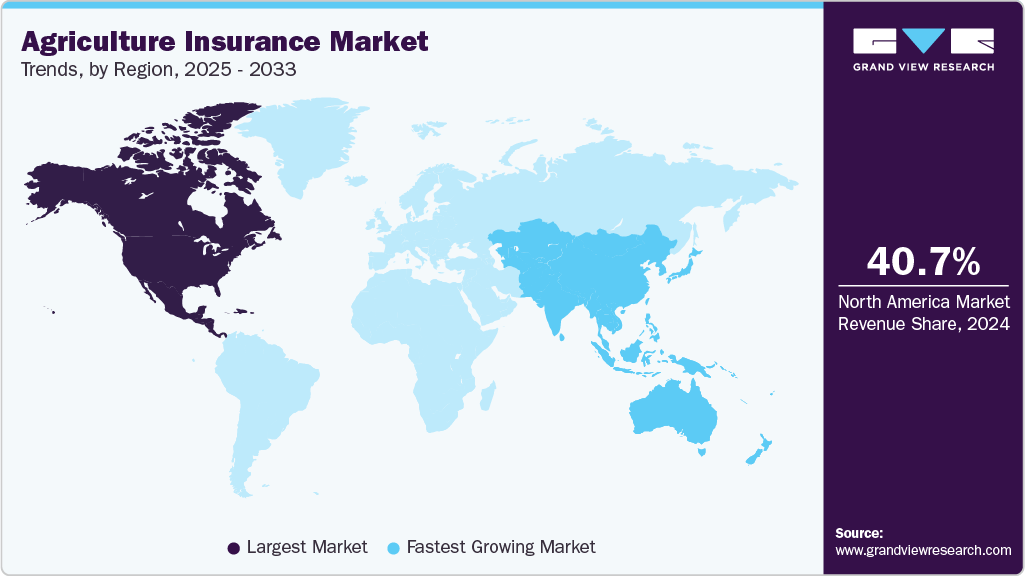
- North America dominated the global agriculture insurance market, with the largest revenue share of 40.68% in 2024.
- The agriculture insurance industry in the U.S. is anticipated to register the fastest CAGR from 2025 to 2033.
- By product type, the multi-peril crop insurance (MPCI) segment held the largest revenue share in 2024.
- By providers, the public segment led the agriculture insurance industry with a significant share of 77.58% in 2024.
- By distribution channel, the banks segment led the agriculture insurance market with a significant share of 48.17% in 2024.
Market Size & Forecast
- 2024 Market Size: USD 41.47 Billion
- 2033 Projected Market Size: USD 70.02 Billion
- CAGR (2025-2033): 5.96%
- North America: Largest Market in 2024
- Asia Pacific: Fastest growing market
Governments in both developed and developing nations are significantly contributing by offering subsidies and policy assistance to motivate farmers to invest in livestock and crops insurance, which in turn helps secure food supply and stabilize rural incomes. In addition, the increasing globalization of the food supply chain and the rising demand for agricultural products heighten the necessity for risk management solutions to shield against price fluctuations and production uncertainties.
Rising Climate Change and Weather-Related Risks
The increasing impacts of climate change and weather-related events are significant factors driving the expansion of the global agriculture insurance industry. The rising occurrence of floods, droughts, cyclones, wildfires, and erratic rainfall has greatly increased the vulnerability of farming and agricultural production across the globe. These unpredictable and often severe weather conditions can result in considerable crop losses, diminished yields, and financial hardship for farmers. Consequently, both farmers and governments are increasingly utilizing agricultural insurance as an essential risk management strategy. Insurance products act as a safety net that compensates for losses caused by natural disasters, safeguarding farmers’ incomes and ensuring the continuity of food production. This heightened awareness of climate-induced risks has led to a greater adoption of crops, livestock, and parametric insurance solutions, thus propelling the growth of the global agriculture insurance market.
Case Study Published in June 2025: Climate Change Impacts on Global Staple Crops and Implications for Agricultural Insurance
Context:
Climate change is reshaping weather patterns globally, creating hotter, cooler, wetter, or drier conditions depending on the region. These changes directly affect agricultural systems, forcing farmers to adjust management practices-such as crop varieties, planting schedules, and fertilizer use-to maintain yields. However, there is uncertainty over whether these adaptations will sufficiently counter climate impacts.
Research Design:
The study analyzed the effects of climate change on six staple crops-corn, soybean, rice, wheat, cassava, and sorghum-using a dataset covering over 12,600 regions across 54 countries, representing two-thirds of global crop calories. Unlike prior models that assumed farmer adaptation, this research empirically measured real-world farmer responses to weather events and assessed their effectiveness. By comparing regions with similar climates, income levels, and irrigation infrastructure, the researchers could estimate the impact of unobserved adaptation measures and project global crop yield changes under climate scenarios.
Key Findings:
-
Global Yield Declines: Every 1°C of warming reduces staple crop production by 4.4% of recommended consumption, equating to 120 kilocalories per person per day. Under a high-emissions scenario (4°C warming), per capita food consumption could fall by 17.2% by 2100.
-
Unequal Regional Impacts: Rich breadbasket regions (e.g., U.S. Midwest) face the largest absolute losses, up to 41% in crop yields under extreme scenarios, while poorer regions experience severe declines in subsistence crops such as cassava (up to 28%).
-
Crop-Specific Effects:
-
Corn and soybean: Major losses in the U.S., China, and other breadbaskets; moderate gains in Brazil and parts of South America.
-
Rice: Net global gains; minimal losses in Southeast Asia and India.
-
Wheat: Consistent losses in Europe, Africa, and North America; Western China exhibits mixed effects.
-
Cassava: Significant losses in Sub-Saharan Africa, threatening food security for the poorest populations.
-
Sorghum: Losses in North America, South Asia, and Sub-Saharan Africa; some gains in Western Europe and Northern China.
- Adaptation Limitations: While farmer adaptation and income growth can reduce losses by 23% in 2050 and 34% by 2100, they cannot fully offset the impacts, especially for corn, soybean, and wheat. Rice benefits most from adaptation measures.
Implications for Agricultural Insurance:
-
Rising Risk Exposure: The uneven and severe projected crop losses create significant financial vulnerability for farmers globally.
-
Need for Risk Management Tools: Insurance, including crops, livestock, and index-based products, becomes critical to stabilize farmer incomes, secure food production, and support adaptation efforts.
-
Regional Tailoring: Insurance solutions must account for local climate risks, crop types, and the varying effectiveness of adaptation strategies.
-
Economic Considerations: The study estimates the societal cost of future yield losses ranges from USD 0.99 to USD 49.48 per ton of CO2, underscoring the economic value of insurance in mitigating climate-driven agricultural losses.
Conclusion:
This research provides the first empirically based global assessment of climate change impacts on staple crops that incorporates real-world adaptation. It highlights the urgent need for innovation, insurance coverage, and adaptive agricultural strategies to protect both high-income breadbasket regions and vulnerable low-income areas from severe yield losses.
Increasing Expansions of Government-Subsidized Scheme:
The growth of government-sponsored agricultural insurance programs significantly drives the global agriculture insurance sector. By providing subsidies for insurance premiums, governments help make insurance for crops, livestock, and aquaculture more affordable and accessible, especially for smallholders and marginal farmers who are particularly susceptible to weather changes and natural disasters. These programs reduce the financial strain on farmers in the event of crop failure or livestock loss promote the widespread adoption of insurance products.
The Zimbabwean government, through the Ministry of Agriculture, launched an agricultural insurance awareness initiative in October 2024, for the 2024/2025 season, introducing the "farmer's basket" insurance product in a pilot district. This program aims to educate farmers about the benefits of crops and livestock insurance, helping them understand how such coverage can mitigate risks from droughts, floods, and other climate-related events. By promoting awareness and offering targeted insurance products, the initiative seeks to increase adoption among smallholder farmers, improve financial security, and enhance overall agricultural resilience. This pilot approach also allows the government to gather feedback and refine the scheme before expanding it to additional regions.
Furthermore, public-private partnerships and compulsory insurance initiatives in countries such as India, the U.S., and certain European regions enhance market penetration and stability, creating a safer environment for both farmers and insurers. Consequently, government-backed subsidies serve as a catalyst for market expansion by increasing farmer confidence, boosting coverage rates, and reducing risks in the agriculture sector, ultimately driving food security and economic resilience.
Growing Commercialization of Agriculture:
The increasing commercialization of agriculture is a significant factor driving the global agricultural insurance industry. As farming evolves from small-scale subsistence practices to large-scale, profit-driven enterprises, the financial stakes for farmers and investors are greatly heightened. Commercial farms usually focus on high-value crops, operate on either leased or owned land, and depend on costly inputs such as seeds, fertilizers, machinery, and irrigation systems. This substantial investment makes them more vulnerable to risks from crop failures, pest problems, or natural disasters. To protect these investments and ensure ongoing operations, commercial farmers are more inclined to use agricultural insurance.
In the Budget 2024, Union Finance Minister Nirmala Sitharaman allocated USD 171,289 million to the agriculture and allied sectors, signaling the government’s focus on enhancing productivity and building resilience in farming. While the overall allocation for agriculture has increased, the budget also proposes cuts in fertilizer and food subsidies, which have raised concerns among farmers about potential increases in input costs and affordability. The emphasis of the budget appears to be on modernizing agriculture, supporting technology adoption, and improving sustainability, rather than continuing blanket subsidies. This approach aims to make farming more productive and resilient to challenges such as climate change and market volatility. Still, it has also sparked apprehension among farmers who rely on traditional subsidy support to manage costs.
Moreover, agribusinesses that supply processing companies or exporters often require insured crops to safeguard their supply chains and meet contractual commitments. As a result, the growth of commercial farming boosts the demand for crop and livestock insurance. It drives the innovation in specialized insurance products that cater to the distinct risks associated with modern, large-scale agricultural practices.
Increasing Farmer Awareness and Financial Inclusion:
The global agriculture insurance market is significantly influenced by the growing awareness among farmers and improved financial inclusion. As farmers become increasingly informed about the risks linked to crop failures, livestock diseases, and adverse weather conditions, they see the value of insurance as a protective measure for their livelihoods. Initiatives aimed at financial inclusion, such as enhanced access to rural banking, microfinance, and digital payment systems, are making it easier for farmers, especially in developing regions, to obtain insurance products.
The U.S. Department of Agriculture (USDA) provides targeted farm loan programs specifically designed to support underserved groups and beginning farmers. These initiatives aim to address barriers such as limited access to capital, lack of farming experience, and historical inequities in agricultural lending. By offering low-interest loans, flexible repayment terms, and specialized technical assistance, the USDA helps these farmers establish and sustain their agricultural operations. This support promotes diversity and inclusion in the farming sector and strengthens rural economies by enabling new and disadvantaged farmers to invest in equipment, land, and inputs, ultimately contributing to the growth and resilience of U.S. agriculture.
Moreover, mobile technology and agri-tech platforms are facilitating straightforward enrollment and premium payments, even for smallholder farmers in remote locations. In September 2025, Land O’Lakes, alongside several U.S. agricultural cooperatives, launched AgRogue Growth Partners, a collaborative initiative designed to accelerate the development and adoption of innovative agricultural technologies. This partnership aims to address the challenges farmers face in accessing and implementing cutting-edge solutions by leveraging the cooperative model's strengths. Participating cooperatives, including Keystone Cooperative (Indiana), Central Valley Ag (Nebraska), Farmward Cooperative (Minnesota), Alabama Farmers Cooperative, and GreenPoint Ag (Alabama), will invest up to USD 7 million per startup in 10 to 15 companies.
Senior Vice President and Chief Strategy Officer at Land O’Lakes, said:
“We believe the key to jumpstarting the adoption of modern ag technologies lives in the partnership and trust between retailers and growers,” “This platform represents a focused strategy that builds on the strength of Land O’Lakes’ co-op model and our retail owners to assist Radicle Growth in finding, funding and scaling new innovation to help ensure our system remains at the leading edge of ag tech, and US agriculture remains competitive on a global stage.”
This blend of awareness and accessible resources is motivating more farmers to embrace insurance solutions, thereby broadening the market on a global scale and enhancing risk management within the agricultural sector.
Technological Advancements in Risk Assessment:
Advancements in technology for risk assessment play a crucial role in the growth of the global agriculture insurance market by significantly improving the accuracy, efficiency, and dependability of coverage options. Utilizing tools such as satellite imagery, drones, Internet of Things (IoT) sensors, and sophisticated weather modeling, insurers can track crop health, soil conditions, and climate patterns in real time. This wealth of data allows for precise risk assessment, quicker claims processing, and the creation of innovative products such as index-based or parametric insurance. These insurance types provide payouts based on measurable criteria, such as rainfall or temperature thresholds, instead of relying on conventional loss evaluations.
The Agriculture Insurance Company of India Ltd. (AIC) has transformed crop insurance in India by utilizing advanced technologies. Under the Pradhan Mantri Fasal Bima Yojana (PMFBY), AIC has digitized processes such as farmer enrollment, land record verification, and claim settlement through the National Crop Insurance Portal (NCIP). This platform allows seamless interaction between farmers, banks, and insurers using tools such as Aadhaar. AIC uses satellite imagery and remote sensing to monitor crop health and assess risks, leading to precise underwriting and quicker payouts while enhancing transparency and reducing fraud. In addition, AIC partners with the UNDP to implement and monitor the scheme effectively.
Consequently, farmers’ experience increased confidence in their insurance options, claim disputes are reduced, and insurers can extend coverage to areas that were previously overlooked. In summary, these technological advancements help to diminish uncertainty and lower operational costs while enhancing adoption rates, thus fostering growth in the global agriculture insurance sector.
Market Characteristics & Concentration
The chart below represents the relationship between industry concentration, characteristics, and participants. There is a moderate degree of innovation, moderate level of mergers & acquisitionsactivities, high impact of regulations, and moderate expansion of industry.
The agriculture insurance industry is experiencing a high degree of innovation. In February 2025, the Agriculture Ministry of India inaugurated “Sarathi” (Sandbox for Agricultural and Rural Security, Technology and Insurance), a unified digital platform aimed at simplifying access to various insurance products, including the Pradhan Mantri Fasal Bima Yojana (PMFBY). This portal enables farmers to view, purchase, initiate claims, and track resolutions via a single interface, thereby digitizing the insurance journey end-to-end. In parallel, the ministry also rolled out the Krishi Rakshak portal and a helpline (14447) to strengthen grievance redressal, enabling farmers to lodge complaints which are forwarded to insurers, banks, Common Service Centres (CSCs), or the government for resolution.
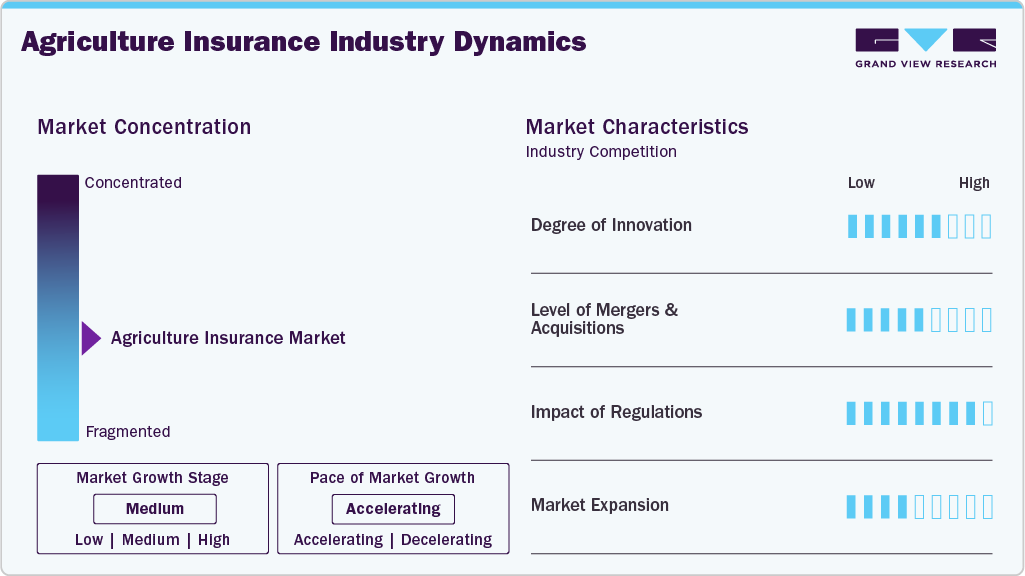
Several key players are actively engaging in mergers & acquisitions to promote growth & innovation and improve their competitiveness by combining the expertise & efforts of different organizations. For instance, in April 2024, Farmers Mutual Hail Insurance Company of Iowa (FMH) acquired Global Ag Insurance Services from AXA XL. This strategic move strengthens FMH’s presence in the U.S. agriculture insurance market, particularly in serving specialty crop farmers, a segment with growing demand for tailored coverage. CEO of Global Ag said:
"We're thrilled about the opportunities that lie ahead and look forward to working closely with the FMH team in their commitment to delivering risk management solutions to all farmers and producers. "This partnership couldn't come at a better time as we continue to see year-over-year growth and increased demand for specialty crop risk management solutions. FMH's impressive track record and long-standing dedication to crop insurance will serve our customers well."
The market is regulated by a variety of guidelines designed to ensure patient safety, quality of care, and ethical business practices. In many countries, governments establish regulatory frameworks that mandate or incentivize crop and livestock insurance, ensuring farmers are protected against natural calamities and market fluctuations. Subsidized premium policies, such as the U.S. Federal Crop Insurance Program or India’s PMFBY, lower the cost burden on farmers and expand participation. Regulatory oversight also builds trust by enforcing transparency, fair claim settlement, and data-driven loss assessment methods, reducing the risk of fraud and disputes. Furthermore, international guidelines from organizations such as the World Bank and FAO encourage governments to integrate climate resilience and disaster risk management into insurance schemes.
In November 2024, the U.S. Department of Agriculture announced more than USD 2 billion in new support programs aimed at strengthening the specialty crops sector and expanding storage capabilities for producers impacted by 2024 natural disasters. The effort includes two key initiatives: the Marketing Assistance for Specialty Crops program, which allocates up to USD 2 billion to help growers defray the higher costs of handling, transport, packaging, and entry into new markets for perishable fruits, vegetables, nuts, and similar crops; a Commodity Storage Assistance Program with USD 140 million in funds to support access to packinghouses, grain elevators, or other facilities for producers whose storage or marketing capacity has been disrupted due to disasters.
Product Type Insights
The multi-peril crop insurance (MPCI) segment led the agriculture insurance market with a significant share of 59.89% in 2024. This is driven by the increasing vulnerability of farmers to diverse and unpredictable risks. Unlike traditional crop insurance, MPCI covers multiple perils such as droughts, floods, storms, pests, and disease outbreaks, providing comprehensive protection against crop losses. Government support and subsidy programs in countries such as India, the U.S., and China further incentivize the adoption of MPCI by reducing premium costs and encouraging participation. In addition, advancements in technology, such as satellite imagery, remote sensing, and predictive analytics, allow insurers to assess risk accurately, streamline claim settlements, and design tailored policies for farmers. The increasing commercialization of agriculture and reliance on high-value crops also heightens the financial stakes for farmers, making MPCI an essential tool to safeguard income and ensure food security.
The livestock insurancesegment is expected to grow at the fastest CAGR during the forecast period. This growth is attributed to the increasing recognition of livestock as a critical asset in farmers’ livelihoods and rural economies. Rising incidences of animal diseases, such as avian influenza, foot-and-mouth disease, and swine fever, have heightened the financial risks associated with livestock rearing. Climate change and extreme weather events, including floods and droughts, further expose livestock to mortality and productivity losses, making insurance an essential risk mitigation tool. Governments and financial institutions are also promoting livestock insurance through subsidies, mandatory coverage for loans, and awareness campaigns, particularly in emerging markets where livestock forms a significant part of rural income.
Providers Insights
The public segment led the agriculture insurance industry with a significant share of 77.58% in 2024. Governments and public insurance entities intervene to protect farmers against risks that are too large, widespread, or unpredictable for private players to underwrite profitably, such as extreme weather events, pests, or crop diseases. Public providers also often offer subsidized premiums and mandatory coverage schemes, making insurance more affordable and accessible, particularly for smallholders and resource-poor farmers. Their involvement increases farmer trust and adoption, as state-backed programs are perceived as more reliable and transparent. In addition, public providers frequently collaborate with banks and rural financial institutions to link insurance with credit, ensuring that farmers can invest in inputs and technology with reduced financial risk.
The private segment is expected to grow at the fastest CAGR during the forecast period. Rising climate risks, such as droughts, floods, and unpredictable weather patterns, have amplified the demand for crop and livestock insurance, creating a lucrative space for private players to operate. Governments in many countries provide subsidies, regulatory support, and public-private partnership frameworks, which reduce the financial burden on insurers and encourage their participation. Moreover, the growing commercialization of agriculture and integration of insurance with credit and loans create dependable revenue streams for private providers. By offering tailored products, flexible coverage options, and faster settlements compared to traditional public schemes, private insurers are expanding market penetration, improving farmer confidence, and driving overall market growth.
Distribution Channel Insights
The banks segment led the agriculture insurance market with a significant share of 48.17% in 2024 as they link financial support to risk management, ensuring both farmer and institutional stability. Many banks require farmers to have crop or livestock insurance as a prerequisite for securing agricultural loans, which reduces the risk of default in case of crop failure or natural disasters. By integrating insurance with credit products, banks protect their portfolios while encouraging farmers to adopt formal financial services. In addition, partnerships between banks, insurance companies, and government-backed schemes, such as premium subsidies and digital enrollment platforms, make it easier for banks to disburse loans and manage claims efficiently.
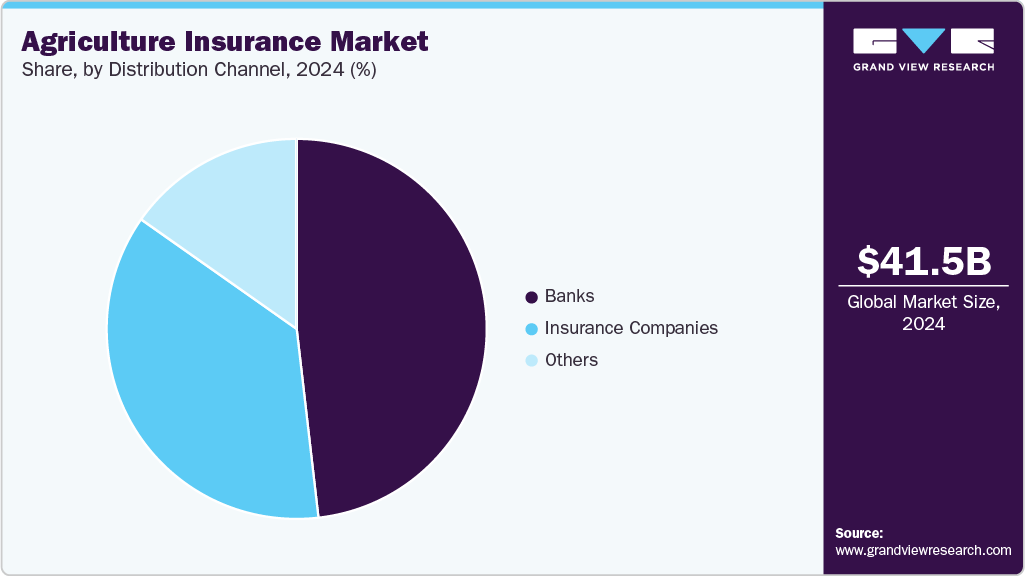
The insurance companies segment is expected to grow at the fastest CAGR during the forecast period. This growth is primarily driven by the rising climate-related uncertainties, such as droughts, floods, and erratic rainfall, making farmers more inclined to seek coverage, creating a stable demand for insurance products. Government initiatives and subsidy programs in many countries reduce premium costs and encourage widespread adoption, making the market more financially viable for insurers. Moreover, the digitalization of agriculture through satellite imagery, IoT sensors, and AI-driven risk assessment enables insurers to more accurately price policies, minimize claims disputes, and streamline payouts.
Regional Insights
The North America agriculture insurance market held the largest share of 40.68% in 2024. Technological advancements, including satellite imagery, precision farming, and data analytics, have improved risk assessment and claims processing, enhancing the reliability and appeal of insurance products. In addition, growing awareness among farmers about the economic impact of yield losses and market fluctuations is driving demand for comprehensive coverage. Rising investment in agribusiness and the expansion of commercial farming operations further contribute to the market’s growth, as larger farms often require more sophisticated insurance solutions to protect their assets and ensure business continuity.
U.S. Agriculture Insurance Market Trends
The U.S. agriculture insurance industry is experiencing significant growth. The rising frequency and severity of extreme weather events in the U.S., which resulted in over USD 20 billion in agricultural losses last year, is a major driver for the agricultural insurance market. As farmers face increasing risks from droughts, floods, and storms, there is a growing demand for insurance products that can safeguard their livelihoods and provide financial stability. Modernizing agricultural insurance, including the development of climate-resilient coverage, flexible policies, and faster claims processing, enables farmers to adopt sustainable and resilient farming practices without the fear of catastrophic losses. This heightened awareness of climate risks and the need for protective measures is accelerating the adoption of innovative insurance solutions, expanding the market, and encouraging private insurers and government programs to offer tailored coverage that addresses evolving environmental challenges.
Asia Pacific Agriculture Insurance Market Trends
The Asia Pacific agriculture insurance industry is expected to grow at the fastest CAGR during the forecast due to the region’s highly vulnerable to climate change, natural disasters, and extreme weather events such as floods, droughts, and cyclones, which increase the risk of crop losses and livestock damage, creating a strong need for risk mitigation tools. Rapid population growth and rising food demand further pressure farmers to secure stable incomes and protect production. Governments across countries such as India, China, and Indonesia are also promoting agricultural insurance through subsidies, public-private partnerships, and regulatory support to safeguard rural livelihoods and stabilize the agriculture sector.
The India agriculture insurance marketgrowthis driven by the growing government-backed financial protection in the country. In a significant move to support farmers in Kalaburagi district, the Karnataka government released USD 7.4 million in crop insurance claims in September 2025, benefiting over 2 lakh farmers affected by crop losses during the 2024-25 Kharif season. Rural Development and Panchayat Raj Minister Priyank Kharge announced that this financial assistance is part of the first installment of crop insurance claims, with subsequent payments scheduled as per the government's relief plan.
Europe Agriculture Insurance Market Trends
The agriculture insurance industry in Europe is expected to witness high growth due to the rising awareness among farmers about financial risk management, coupled with government initiatives and subsidies that support crop and livestock insurance, which further fuels market growth. Market expansion is also propelled by the European Union’s focus on sustainable agriculture and climate resilience, which encourages farmers to invest in insurance solutions as a safeguard against environmental and market uncertainties. Overall, the convergence of climate risks, technological innovation, and regulatory support acts as the key market growth driver.
The agriculture insurance market in Spainis expected to grow at a significant rate over the forecast period. The meeting between Spain’s Minister for Agriculture, Luis Planas, and Malta’s counterpart, Antón Refalo, in June 2024 highlights Spain’s agricultural insurance system as an international benchmark, reflecting its maturity and effectiveness. Spain’s agricultural insurance market is driven by a combination of government-backed risk management schemes, financial support for farmers, and well-structured policies that mitigate the impact of natural hazards such as droughts, floods, and disease outbreaks. By showcasing this system internationally, Spain reinforces the credibility and adoption of its insurance programs, encouraging both domestic and foreign investment in agricultural risk coverage.
Latin America Agriculture Insurance Market Trends
The Latin America agriculture insurance industry is anticipated to grow significantly, driven by increasing exposure to climate-related risks, such as droughts, floods, and hurricanes, which threaten crop yields and farmer incomes. Governments in countries such as Brazil, Mexico, and Chile are actively supporting the sector through subsidies, public-private partnerships, and regulatory frameworks to make insurance more accessible and affordable for small and medium-sized farmers.
The Brazil agriculture insurance marketheld the largest revenue share in 2024. The recent regulatory changes in Brazil, allowing cooperatives to access reinsurance, are poised to significantly boost the country’s agricultural insurance market. By enabling co-ops organizations that already have deep connections with local farmers to offer insurance products with reinsurance backing, more farmers can gain protection against crop losses from weather events, pests, or other risks. Currently, only about 10% of crops are insured, highlighting a substantial coverage gap. With cooperatives acting as intermediaries, the market can expand rapidly, as these organizations have the trust, scale, and local knowledge to reach small and medium-sized farmers who were previously excluded.
Middle East and Africa Agriculture Insurance Market Trends
The MEA agriculture insurance industry is anticipated to grow significantly due to the growing focus on food security and agricultural modernization, driving farmers to protect their investments in high-value crops and technology-driven farming. Increasing awareness of insurance benefits, coupled with innovative products such as index-based and weather-triggered policies, is also expanding market penetration. Moreover, partnerships between insurers, cooperatives, and fintech platforms are improving accessibility and affordability, particularly for smallholder farmers who historically lacked coverage, making the regional market increasingly dynamic.
The Saudi Arabia agriculture insurance marketis witnessing significant growth due to growing government initiatives. Saudi Arabia's introduction of a cooperative agricultural insurance programme in July 2024 marks a significant advancement in the nation's agricultural sector. Launched by Minister of Environment, Water, and Agriculture Abdulrahman Al-Fadhli, this initiative aims to mitigate financial losses from plant pests and animal diseases, thereby enhancing the resilience of the agricultural industry. Implemented by the Weqaa Center and other authorities, the programme is a key component of the National Transformation Program, aligning with Saudi Arabia's Vision 2030 objectives.
Key Agriculture Insurance Company Insights
The market is fragmented, with the presence of many country-level agriculture insurance providers.The market players undertake several strategic initiatives, such as partnerships & collaborations, product launches, mergers & acquisitions, and geographical expansion to maintain their position and grow in the market.
Key Agriculture Insurance Companies:
The following are the leading companies in the agriculture insurance market. These companies collectively hold the largest market share and dictate industry trends.
- Zurich Insurance Company Ltd.
- Tokio Marine HCC (HCC Insurance Holdings, Inc.)
- Farmers Mutual Hail Insurance Company of Iowa
- Sompo International Holdings Ltd.
- Allianz SE
- Munich Re
- AXA SA
- ICICI Lombard General Insurance Company Ltd.
- HDFC ERGO General Insurance Company Ltd.
- Anhua Agricultural Insurance Co., Ltd.
- Suncorp Group Ltd.
- Agro Nacional Seguros S.A.
- MAPFRE S.A.
Recent Developments
-
In January 2025, the Government of India extended two major crop insurance schemes-Pradhan Mantri Fasal Bima Yojana (PMFBY) and the Restructured Weather-Based Crop Insurance Scheme (RWBCIS)-till 2025-26, reinforcing its commitment to protecting farmers against crop losses due to natural calamities, pests, and weather risks. Alongside this, the Union Cabinet approved the creation of a dedicated Fund for Innovation and Technology (FIAT) with an outlay of USD 92.94 million, aimed at driving technological infusion in the agriculture insurance ecosystem.
-
In November 2024, Farmers Edge introduced its Managed Technology Services to address the most pressing digital challenges faced by large-scale agribusinesses and crop insurers. This comprehensive offering aims to streamline agricultural operations by integrating technology consulting, outsourcing, data licensing, and custom development. The services are tailored to key agricultural verticals, including farm productivity, agribusiness operations, crop insurance and risk management, supply chain optimization, and sustainability reporting.
“Our Managed Services redefine how agribusinesses adopt and integrate technology,” said Vibhore Arora, Farmers Edge CEO. “As a strategic partner, we deliver end-to-end lifecycle support-simplifying processes, resolving challenges, and empowering clients to harness technology into a catalyst of growth and innovation.”
-
In October 2024, Digital Agriculture Services (DAS) introduced a geospatial crop insurance solution in Australia aimed at reducing risk and improving accuracy for both insurers and farmers. The platform leverages machine learning, automapping, and geospatial data to verify the locations of paddocks, identify crop types, estimate yields (both predicted and actual), and monitor properties for insurance status and claims. This serves preventing premium leakage (where premiums are under‐collected relative to risk), reducing mistakes during policy issuance, minimizing fraud, and speeding up claims processing.
“Our goal is to prevent premium leakage, reduce mistakes in policy issuance, and streamline claims,” said Anthony Willmott, founder and CEO of DAS. “This solution provides almost full visibility on insured properties, benefiting both insurers and the farmers they protect.”
Agriculture Insurance Market Report Scope
Report Attribute
Details
Market size in 2025
USD 44.06 billion
Revenue forecast in 2033
USD 70.02 billion
Growth rate
CAGR of 5.96% from 2025 to 2033
Actual data
2021 - 2024
Forecast period
2025 - 2033
Quantitative units
Revenue in USD million/billion, and CAGR from 2025 to 2033
Report coverage
Revenue forecast, company ranking, competitive landscape, growth factors, and trends
Segments covered
Product type, distribution channel, providers, region
Regional scope
North America; Europe; Asia Pacific; Latin America; MEA
Country scope
U.S.; Canada; Mexico; Germany; UK; France; Italy; Spain; Norway; Denmark; Sweden; China; Japan; India; South Korea; Australia; Thailand; Brazil; Argentina; Saudi Arabia; South Africa; UAE; Kuwait
Key companies profiled
Zurich Insurance Company Ltd.; Tokio Marine HCC (HCC Insurance Holdings, Inc.); Farmers Mutual Hail Insurance Company of Iowa; Sompo International Holdings Ltd.; Allianz SE; Munich Re; AXA SA; ICICI Lombard General Insurance Company Ltd.; HDFC ERGO General Insurance Company Ltd.; Anhua Agricultural Insurance Co., Ltd.; Suncorp Group Ltd.; Agro Nacional Seguros S.A.; MAPFRE S.A.
Customization scope
Free report customization (equivalent up to 8 analysts working days) with purchase. Addition or alteration to country, regional & segment scope.
Pricing and purchase options
Avail customized purchase options to meet your exact research needs. Explore purchase options
Global Agriculture Insurance Market Report Segmentation
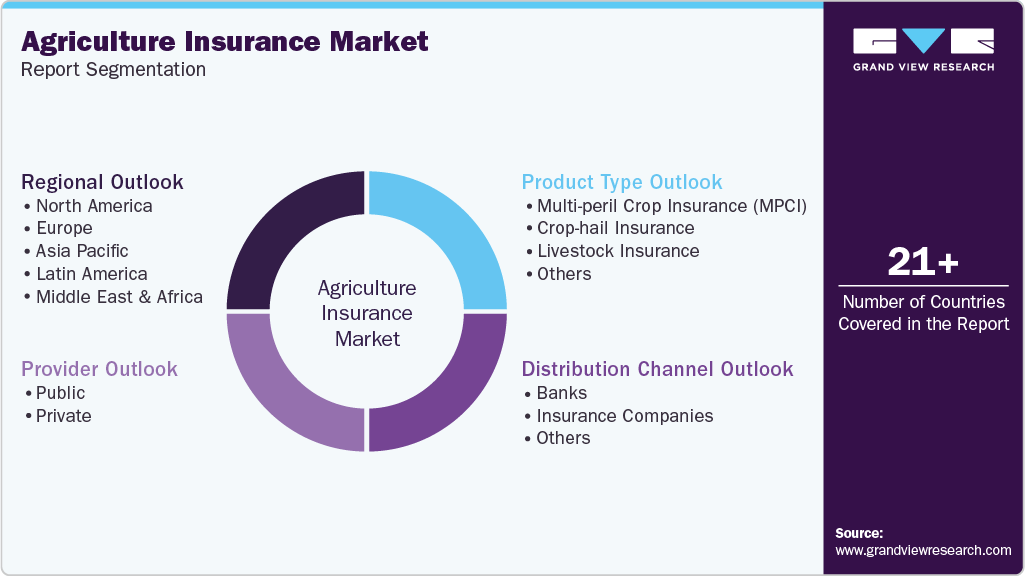
This report forecasts revenue growth at the global, regional, and country levels and provides an analysis of the latest industry trends in each of the sub-segments from 2021 to 2033. For this study, Grand View Research has segmented the global agriculture insurance market report based on product type, distribution channel, provider, and region:
-
Product Type Outlook (Revenue, USD Billion, 2021 - 2033)
-
Multi-peril Crop Insurance (MPCI)
-
Crop-hail Insurance
-
Livestock Insurance
-
Others
-
-
Provider Outlook (Revenue, USD Billion, 2021 - 2033)
-
Public
-
Private
-
-
Distribution Channel Outlook (Revenue, USD Billion, 2021 - 2033)
-
Banks
-
Insurance Companies
-
Others
-
-
Regional Outlook (Revenue, USD Billion, 2021 - 2033)
-
North America
-
U.S.
-
Canada
-
Mexico
-
-
Europe
-
UK
-
Germany
-
France
-
Italy
-
Spain
-
Denmark
-
Sweden
-
Norway
-
-
Asia Pacific
-
China
-
Japan
-
India
-
South Korea
-
Australia
-
Thailand
-
-
Latin America
-
Brazil
-
Argentina
-
-
Middle East and Africa (MEA)
-
South Africa
-
Saudi Arabia
-
UAE
-
Kuwait
-
-


Share this report with your colleague or friend.
Need a Tailored Report?
Customize this report to your needs — add regions, segments, or data points, with 20% free customization.


ISO 9001:2015 & 27001:2022 Certified
We are GDPR and CCPA compliant! Your transaction & personal information is safe and secure. For more details, please read our privacy policy.
Trusted market insights - try a free sample
See how our reports are structured and why industry leaders rely on Grand View Research. Get a free sample or ask us to tailor this report to your needs.













