
- Home
- »
- Healthcare IT
- »
-
AI In Blood Pressure Monitoring Market Report, 2026-2033GVR Report cover

AI In Blood Pressure Monitoring Market (2026 - 2033)
Size, Share & Trends Analysis Report By Device (Wearable Devices, Cuffless Solutions), By Technology, By Delivery Mode, By Application, By End Use, By Region, And Segment Forecasts
Market Size, 2025
$1.2BMarket Estimate, 2026
$1.5BMarket Forecast, 2033
$9.6BCAGR, 2026–2033
30.3%AI in Blood Pressure Monitoring Market Summary
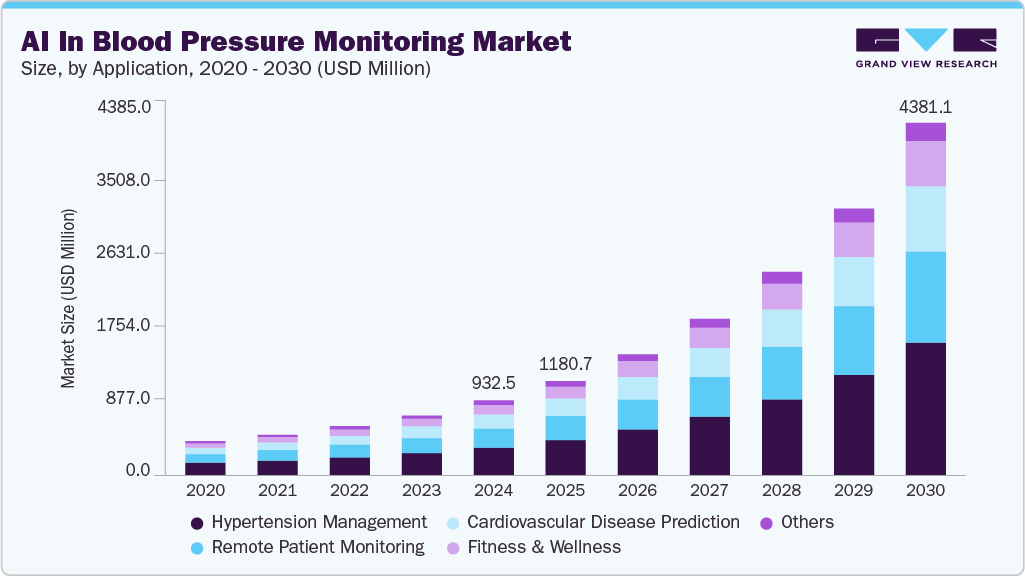
The global AI in blood pressure monitoring market size was valued at USD 1.2 billion in 2025 and is projected to grow from USD 1.5 billion in 2026 to USD 9.6 billion in 2033, at a CAGR of 30.3% from 2026 to 2033. North America dominated the market, accounting for a revenue share of 45.0% in 2025. The rising prevalence of hypertension and cardiovascular diseases, increasing demand for continuous and non-invasive monitoring, and growing consumer adoption of smart health devices are significant factors contributing to global market growth.
 Source: Grand View Research, IR Documents, Primary Interviews, Paid DatabasesTo learn more about this report,
 Download Free Sample Report
Key Market Trends & Insights
- By device: The wearable devices segment held the largest market share of around 47.7% in 2025.
- By technology: The machine learning segment held the largest market share of around 60.0% in 2025.
- By delivery mode: The on-device AI segment held the largest market share of around 50.0% in 2025.
- By application: The hypertension management segment held the largest market share of around 43.0% in 2025.
- By end use: The hospital & acute care segment held the largest market share of around 37.9% in 2025.
Regional Highlights
- Largest regional market: North America (45.0% revenue share, 2025)
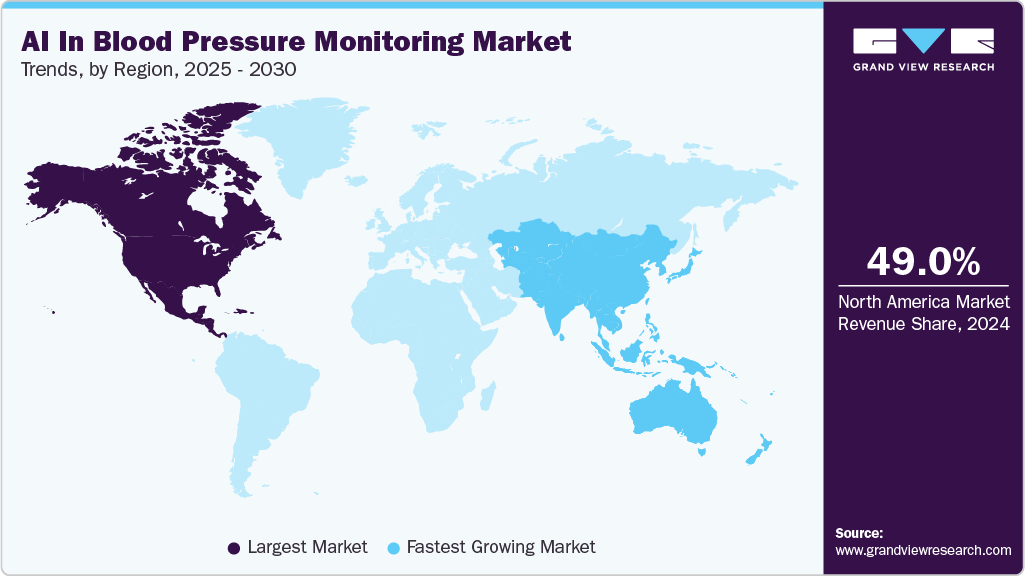
- Fastest-growing regional market: Asia Pacific (highest CAGR, 2026-2033)
Market Size & Forecast
- Market size in 2025: USD 1.2 Billion
- Estimated market size in 2026: USD 1.5 Billion
- Projected market size by 2033: USD 9.6 Billion
- CAGR (2026-2033): 30.3%
Three ways to get this report
Buy it, customize it, or ask a question.Ask an Analyst
Analyst response in 1 business day
- AccessReport author, directly
- Reply timeWithin 1 working day
- No sales callDirect answer only
- FormatEmail reply
- CostFree, no cost
Get the Full Report
What the study covers
- FormatsPDF · Excel · Dashboard
- Timeline2026–2033 annual, 2025 base
- Coverage20+ countries, 5 regions
- Companies10+ key players profiled
Customize the Report
20% free customization
- IncludeCountries, segments, points
- TailorTo your product definition
- ExtendDeeper competitor detail
- OrA fully bespoke study
- Turnaround5–10 working days
In addition, advancements in AI and sensor technologies and integration with telehealth & remote patient monitoring platforms are some other factors fueling market growth further. The increasing prevalence of hypertension and cardiovascular disorders (CVDs) globally significantly contributes to the market growth. For instance, according to the World Health Organization, in 2024, an estimated 1.4 billion adults (aged 30-79 years) had hypertension. In addition, CVDs are the leading cause of death globally, causing an estimated 17.9 million fatalities each year. This case surge pressures healthcare systems to adopt technologies that offer early detection, real-time monitoring, and proactive intervention. AI-powered blood pressure monitors help early detection of irregularities, supporting proactive disease management.Machine learning and AI algorithms have made significant advancements in signal processing, data interpretation, and pattern recognition. With advanced biosensors and IoT connectivity, AI analyzes blood pressure data alongside other health metrics such as heart rate, activity levels, oxygen concentration, and sleep quality. These advancements have enhanced the accuracy, predictive capabilities, and personalization of blood pressure monitoring systems. In addition, edge AI allows faster processing and real-time feedback directly on the device, reducing the dependence on cloud infrastructure.
Furthermore, advancements in AI & sensor technologies fuel market growth. Innovations in machine learning, edge computing, and biosensor miniaturization have significantly enhanced the accuracy and reliability of blood pressure estimation. AI can identify patterns and anomalies across vast datasets, allowing for personalized insights and predictive alerts, which improve user engagement and clinical decision-making. AI-powered monitoring systems use photoplethysmography (PPG) sensors to measure blood pressure, oxygen saturation, etc. For instance, in August 2024, Bisam Pharmaceuticals launched Quick Vitals, an AI and deep learning-powered health monitoring app in Hyderabad, India. This app uses Photoplethysmography (PPG) technology for rapid, accurate vital sign assessments such as heart rate, blood pressure, SPO2, etc., via smartphones or tablets in seconds.
In addition, the healthcare industry's adoption of AI-powered wearables is expanding rapidly. AI enhances its utility by analyzing large volumes of physiological data to detect anomalies, predict health risks, and enable timely interventions. This improves patient outcomes and reduces the burden on healthcare systems by minimizing hospital visits and enabling telehealth services. For instance, in July 2026, one of the key developers of calibration-free blood pressure-tracking devices, Signal Ring, announced the launch of a wearable (ring) designed to measure and recognize blood pressure. The development of such devices, which eliminate the squeeze, noise, or setup associated with traditional cuffs, is likely to support market growth during the forecast period.
Market Concentration & Characteristics
The chart below illustrates the relationship between industry concentration, industry characteristics, and industry participants. The x-axis represents the level of industry concentration, ranging from low to high. The y-axis represents various industry characteristics, including industry competition, level of partnerships & collaboration activities, degree of innovation, impact of regulations, and regional expansion. The market for AI in blood pressure monitoring is fragmented, with the presence of several emerging players entering the market. The degree of innovation is high. The level of merger & acquisition activities and the impact of regulations on industry is moderate. The regional expansion of the industry is high.
The market experiences a high degree of innovation driven by technological advancements. The increasing adoption of artificial intelligence in smart health monitoring devices supports new innovations in the market. For instance, in June 2024, Star Health Insurance launched the AI-driven Star Health Face Scan tool for remote health assessment. This innovative feature provides instant analysis of 18 vital health parameters, including blood pressure, heart rate, and hemoglobin, via a simple face scan.
The industry is experiencing a moderate level of merger and acquisition activities undertaken by several key players. This is due to the desire to gain a competitive advantage in the industry, enhance technological capabilities, and consolidate in a rapidly growing market.
Regulations, such as the HIPAA in the U.S. and the GDPR in Europe, establish standards for safeguarding patient data privacy and security. Compliance with these regulations is crucial for AI applications in healthcare to ensure the safe and secure handling of patient information, reducing the risk of data breaches and unauthorized access.
The industry is witnessing high geographical expansion. Companies within the AI in blood pressure monitoring industry seek geographic expansion strategies to maintain their foothold in emerging markets and attract customers from these regions. With the growing adoption of digital healthcare solutions, the market is expected to grow significantly in the coming years, especially in developing and underdeveloped countries. For instance, in January 2025, 73Health launched an AI-powered remote diagnostics technology in Zambia, enhancing healthcare access through remote medical examinations and specialist consultations. The eEva Kit allows comprehensive check-ups, such as blood pressure monitoring and temperature checks.
Case Study Insights: Bridging the Hypertension Care Gap: Leveraging AI to Enhance HEDIS Compliance and Patient Outcomes
Introduction:
Hypertension remains a leading cause of cardiovascular morbidity and mortality globally. Despite established guidelines such as the Healthcare Effectiveness Data and Information Set (HEDIS) emphasizing the importance of controlled blood pressure levels, many patients experience lapses in follow-up care, leading to unmanaged hypertension and increased risk of adverse events. Hippocratic AI addresses this challenge by deploying AI agents to proactively engage patients, monitor vital signs, and facilitate timely interventions. This case study illustrates the impact of such an AI-driven approach in closing care gaps and enhancing patient outcomes.
Challenge:
A 78-year-old patient with a history of elevated blood pressure had no documented follow-up after her last physician visit. This oversight posed a significant risk, as uncontrolled hypertension can lead to severe complications like stroke or myocardial infarction. The lack of timely monitoring and intervention highlighted a critical gap in adhering to HEDIS guidelines, which recommend maintaining blood pressure readings below 140/90 mmHg.
Solution:
Hippocratic AI's agent initiated a proactive outreach call to the patient. During the interaction, the AI agent guided her using her blood pressure monitor, recording a dangerously high reading of 208/103 mmHg. Recognizing the severity, the AI system immediately escalated the case to a human triage nurse for prompt intervention. This seamless integration of AI-driven monitoring with human oversight ensured critical health data did not go unnoticed, facilitating timely medical response.
Results/Outcome:
- Timely Intervention: The AI agent's proactive engagement identified a hypertensive crisis, enabling immediate clinical action that potentially averted a life-threatening event.
- Enhanced Compliance: By addressing the lapse in follow-up care, the intervention aligned with HEDIS performance measures, emphasizing the importance of consistent blood pressure monitoring.
- Scalable Patient Engagement: This case's success underscores AI agents' potential to conduct scalable, empathetic outreach, ensuring that high-risk patients receive the attention necessary to manage chronic conditions effectively.
Conclusion:
This case exemplifies how AI-driven solutions can bridge critical gaps in chronic disease management. Combining automated monitoring with human clinical oversight, Hippocratic AI enhances adherence to care guidelines, improves patient outcomes, and demonstrates a scalable model for proactive healthcare delivery.
Analyst Perspective
The market is expected to experience significant growth, driven by the increasing adoption of continuous physiological-tracking and monitoring devices and growing interest in preventive health analytics. Significant growth in the deployment of cloud-based health platforms, the emergence of technologies such as real-time edge computing and the adoption of intelligent robotic process automation (RPA) are further supporting market growth. Increasing adoption of remote patient monitoring systems and devices, a growing inclination toward home healthcare, and technological innovation are expected to shape the future course of this market. As demand for secure, compliance-ready cardiovascular intelligence continues to rise, medical device manufacturers and software vendors are expected to rely on partnerships, new developments, and innovation to improve engagement and market positioning.
Device Insights
The wearable devices segment held the largest market share of over 47.7% in 2025. Smartwatches, fitness bands, smart rings, and patch sensors are included in this segment. These devices offer non-invasive, 24/7 blood pressure tracking, enabling users and clinicians to monitor health trends over time. Consumers increasingly prefer wearables integrating blood pressure monitoring with AI-driven insights to detect abnormalities and suggest lifestyle changes. Moreover, technological advancements in sensor miniaturization and machine learning have allowed companies to embed AI algorithms directly into wearable devices, enabling real-time data analysis without external systems. For instance, in November 2024, Huawei launched the Watch D2 in China. It features advanced AI-powered blood pressure monitoring with single- and 24-hour measurements.
The cuffless solutions segment is expected to register growth at the fastest CAGR over the forecast period. Enhanced user comfort & convenience, continuous & real-time data collection, and growing integration with wearable technologies are factors contributing to the segment’s growth. Recent advancements in AI models that analyze photoplethysmography (PPG), ECG, or pulse transit time (PTT) signals have significantly improved the accuracy and reliability of cuff-less measurements, leveraging their clinical-grade performance.
Technology Insights
The machine learning segment accounted for the largest revenue share of around 60.0% in 2025, owing to the enhanced data interpretation capabilities, increased accuracy & predictive power, widespread integration in consumer and clinical devices, and its ability to support remote and continuous monitoring. For instance, in November 2024, Omron Healthcare received FDA approval for its new blood pressure monitors featuring AI-powered atrial fibrillation (AFib) detection. This innovative technology integrates machine learning to enhance routine monitoring, achieving a sensitivity of 95% and specificity of 98%. Such advancements propel segment growth further.
The computer vision techniques segment is anticipated to register the fastest growth from 2026 to 2033. This growth is attributed to the rapid advancements in facial imaging technology, contactless & non-invasive monitoring, rising demand for telehealth & home monitoring, and integration with smartphones & consumer devices. For instance, in October 2024, Aktiia, a Swiss startup, developed a clinically certified app that uses AI trained on 11 billion blood pressure data points to measure blood pressure and heart rate via a smartphone camera. However, since computer vision requires only a camera and software, it eliminates the need for dedicated medical hardware, reducing costs and increasing scalability, thus contributing to the segment's growth.
Delivery Mode Insights
The on-device AI segment held the largest revenue share of around 50.0% in 2025, owing to its ability to enable real-time data processing, enhanced user privacy, and instant feedback without relying on continuous internet connectivity. This architecture enables wearable and portable blood pressure monitoring devices to operate independently, making them highly effective in environments with limited connectivity or where data privacy is a concern.
The cloud-based AI segment is anticipated to grow at the fastest CAGR from 2026 to 2033 due to its scalability, advanced analytics capabilities, and integration with digital health ecosystems. Cloud-based AI can manage large-scale health datasets from multiple users and devices simultaneously. In addition, cloud-based AI allows for deep neural networks, big data analytics, and multi-modal integration (e.g., combining BP, ECG, and sleep data). This helps in predicting hypertensive crises, tracking long-term cardiovascular risks, and supporting clinical decision-making.
Application Insights
The hypertension management segment accounted for the largest revenue share of around 43.0% in 2025 due to the high global prevalence of hypertension, increasing awareness regarding heart health, and the growing demand for personalized care management. AI-powered tools such as machine learning algorithms and predictive analytics are essential for long-term tracking, enabling trend analysis, early detection of anomalies, and proactive management. Smart wearable devices and remote patient monitoring (RPM) platforms are widely used for hypertension management. These systems leverage AI to offer real-time alerts, risk scoring, and automated data sharing with healthcare providers, supporting early intervention and avoiding hypertensive crises.
The remote patient monitoring platforms segment is anticipated to grow at the fastest CAGR from 2026 to 2033. The accelerated shift towards home healthcare is a significant driver of the segment’s growth. In addition, the growing adoption of telehealth solutions propels segment growth further. For instance, in May 2025, AdventHealth announced that it is launching a remote patient monitoring (RPM) program for hypertension to provide earlier and more consistent treatment. The program uses AI to analyze blood pressure data, prompting virtual visits when readings are uncontrolled.
End Use Insights
The hospitals & acute care segment held the largest market share of over 37.9% in 2025 due to its crucial role in delivering advanced, accurate, and timely care to patients with critical and chronic cardiovascular conditions. Hospitals and acute care settings are early adopters of AI-enabled monitoring systems, integrating them into existing healthcare infrastructure to enhance clinical decision-making, reduce human error, and improve patient outcomes.
Moreover, healthcare providers are leveraging patient care by combining artificial intelligence in their facilities. For instance, in November 2024, Sancheti Advanced Orthocare Hospital introduced a "Smart Ward" equipped with Dozee's AI-based Remote Monitoring System (RMS) and Early Warning System (EWS). This system monitors vital parameters, including heart rate, respiration rate, blood pressure, SPO2 levels, temperature, and ECG.
The homecare settings/ patient (consumers) segment is anticipated to grow at the fastest CAGR from 2026 to 2033 due to the accelerating shift towards personalized, preventive, and remote healthcare. AI-enabled devices often link with mobile apps that track BP data, offer health tips and connect users with healthcare providers. This digital convenience and compatibility with various ecosystems are significant attractions for consumers managing chronic health from home.
Regional Insights
The AI in blood pressure monitoring industry in North America accounted for the largest global revenue share of over 45.0% in 2025. This is attributed to the high prevalence of heart diseases, strong reimbursement frameworks, and rapid integration of AI into digital health ecosystems. Furthermore, consumer health awareness, high disposable income, and demand for wearable and home-based monitoring systems contribute to widespread adoption.
 To learn more about this report, Download Free Sample Report
U.S. AI in Blood Pressure Monitoring Market Trends
The AI in blood pressure monitoring industry in the U.S. held the largest market share in 2025 due to the rising prevalence of hypertension and heart diseases, robust healthcare infrastructure, and technological advancements. Moreover, supportive healthcare policies, public-private partnerships, government initiatives, and a robust startup ecosystem are other factors propelling market growth further. For instance, in April 2025, Smart Meter and Kura Care partnered to enhance blood pressure management for U.S. citizens by launching a 12-week program. This program utilizes Smart Meter’s cellular iBloodPressure monitors along with Kura Care’s AI system, which analyzes data and provides personalized coaching and reminders via texts, emails, and reports.
"By combining Kura Care’s AI-driven patient engagement with Smart Meter’s iBloodPressure device, we are redefining blood pressure management, making it more personalized, proactive, and impactful for both patients and healthcare providers,"
-Shawn Hsu, Chief Technology Officer at Kura Care.
Europe AI in Blood Pressure Monitoring Market Trends
The AI in blood pressure monitoring industry in Europe is expected to witness significant growth during the forecast period. This is attributed to the widespread adoption of AI technologies in healthcare and increasing investments by government and private organizations. Moreover, integrating 5G with healthcare drives Europe's market by enabling faster, more reliable connectivity for advanced medical technologies.
The UK AI in blood pressure monitoring industry is expected to grow over the forecast period, owing to the robust healthcare infrastructure and increasing investments in AI technologies to enhance patient care. In addition, the NHS's promotion of digital health solutions and remote monitoring services has increased the acceptance and adoption of smart health devices among healthcare providers and patients, thus fueling market growth further.
The AI in blood pressure monitoring industry in Germany held the largest market share of the European market in 2025, attributed to the increasing investments in healthcare technology and robust healthcare infrastructure. In addition, favorable government initiatives and insurance coverage, coupled with the expansion of telemedicine services, create a lucrative environment for the adoption of AI-enabled blood pressure monitoring devices in the country.
Asia Pacific AI in Blood Pressure Monitoring Market Trends
The AI in blood pressure monitoring industry in Asia Pacific is projected to experience significant growth in the coming years. This growth is attributed to the rising prevalence of hypertension, rapid digital transformation, and increasing investment in health tech. Furthermore, the high penetration of smartphones and wearable devices and increasing health literacy enhance the demand for AI-integrated health tools. For instance, in October 2024, Dialog Axiata launched Sri Lanka's first AI-powered health scan service through the Doc990 App. The service enables users to monitor vital health indicators, such as blood pressure, heart rate, and stress levels, in real-time using smartphones.
"The introduction of AI-powered health scans is set to transform Sri Lanka's healthcare landscape, aligning seamlessly with Doc990's long-term goal of bringing 'Health at Your Fingertips' to every Sri Lankan."
-Dialog Axiata
The India AI in blood pressure monitoring industry is expanding rapidly, driven by the high prevalence of hypertension, government health initiatives, and technological innovation. For instance, according to a study published in the BMC Journal in October 2024, the overall prevalence of hypertension in India is found to be 22.6%. Moreover, the Digital India campaign encourages the adoption of digital technologies in healthcare, supporting the integration of AI in monitoring devices. Furthermore, the market is experiencing a growing adoption of AI technologies by healthcare providers in the country. For instance, in January 2024, Seshadripuram-based Apollo Hospital partnered with LifeSigns, a provider of AI-powered health-monitoring technology. This initiative aims to enhance patient care by implementing an advanced monitoring system that tracks vital signs, including ECG, blood pressure, and SpO2.
The AI in blood pressure monitoring industry in Japan is expected to grow rapidly, owing to the growing geriatric population, increasing healthcare expenditure, and rapid adoption of artificial intelligence in healthcare. Moreover, increasing public and private funding, coupled with the rapid adoption of telehealth solutions, propel market growth further.
Latin America AI in Blood Pressure Monitoring Market Trends
The AI in blood pressure monitoring industry in Latin America is anticipated to grow at a significant CAGR over the forecast period. This is attributed to the growing awareness about AI technologies, increasing government spending, and growing advancements in healthcare infrastructure.
Middle East and Africa AI in Blood Pressure Monitoring Market Trends
The AI in blood pressure monitoring industry in Middle East and Africa is expected to grow at a significant CAGR over the forecast period. The market is characterized by a dynamic landscape driven by the growing adoption of smart medical devices, increasing healthcare expenditures and supportive government policies. Significant integration of AI in healthcare technology across the region contributes to market growth further. Countries such as Saudi Arabia and the UAE are integrating AI into healthcare infrastructure under strategic visions such as Saudi Vision 2030 and the UAE National Strategy for Artificial Intelligence 2031.
Saudi Arabia's AI in blood pressure monitoring industry is expected to grow rapidly, owing to the rapid adoption of artificial intelligence in healthcare. In addition, favorable government support, coupled with the adoption of telehealth initiatives, propels market growth further. For instance, the Seha Virtual Hospital is a telehealth platform leveraging AI, augmented reality, digital twins, and remote diagnostics. It connects over 224 hospitals across the Kingdom to offer medical services to its citizens.
Key AI In Blood Pressure Monitoring Company Insights
Key players operating in the AI in blood pressure monitoring industry are undertaking various initiatives to strengthen their market presence and increase the reach of their products and services. Strategies such as new product launches and partnerships play a key role in propelling market growth.
Key AI In Blood Pressure Monitoring Companies:
The following key companies have been profiled for this study on the AI in blood pressure monitoring market.
-
Withings
-
Aktiia SA
-
Biospectal SA
-
Valencell, INC.
-
Biofourmis
-
Edwards Lifesciences Corporation (Critical Care division acquired by BD)
-
Hello Heart
-
FaceHeart Corporation
-
Shen AI
-
Huawei Technologies Co., Ltd.
Recent Developments
-
In March 2026, Sword Health, Inc., one of the major players in emerging AI-powered virtual care industry, announced launch of Pulse. The newly designed AI cardiometabolic care solution comprises combined powers of Sword's AI care platform, evidence-based interventions, and more.
-
In May 2025, Hyderabad-based Niloufer Hospital launched AmruthSwasthBharath, an AI-based diagnostic tool for non-invasive blood testing. This device provides results in under a minute, utilizing Remote Photoplethysmography (PPG) to measure key health parameters such as blood pressure, heart rate, SpO2, respiration rate, and hemoglobin A1c via smartphones.
-
In April 2025, BD introduced the HemoSphere Alta platform, an advanced hemodynamic monitoring solution featuring AI-driven algorithms. This technology assists clinicians in managing blood pressure instability and optimizing blood flow during critical situations. Key innovations include the Cerebral Autoregulation Index and the Acumen Hypotension Prediction Index, enhancing patient care and outcomes.
"HemoSphere Alta marks the latest milestone in our continuum of connected care innovations by redefining the clinician experience with more efficient workflows and increased usability. These AI-driven enhancements of advanced algorithms and machine learning provide clinicians with more insights and clinical decision support to help improve the quality of care for their patients."
- Tim Patz, president of BD Advanced Patient Monitoring
-
In February 2025, Validic launched a generative AI-powered assistant for remote patient monitoring (RPM) using generative AI (GenAI) within its Validic Impact platform. Utilizing Generative AI, the solution automatically analyzes variations in vital health metrics such as blood glucose levels, blood pressure, medication adherence, and lifestyle factors, delivering clinicians insights between patient evaluations.
-
In June 2024, Wellth, a digital health startup, enhanced its app with AI-driven, personalized, predictive features for blood pressure management. The app analyzes user-submitted blood pressure photos, provides tailored alerts, and incentivizes healthy behaviors.
AI In Blood Pressure Monitoring Market Report Scope
Report Attribute
Details
Market size in 2025
USD 1.2 billion
Estimated market size in 2026
USD 1.5 billion
Projected market size by 2033
USD 9.6 billion
Growth rate
CAGR of 30.3% from 2026 to 2033
Base year for estimation
2025
Historical data
2021 - 2025
Forecast period
2026 - 2033
Quantitative units
Revenue in USD billion and CAGR from 2026 to 2033
Report coverage
Revenue forecast, company ranking, competitive landscape, growth factors, and trends
Segments covered
Device, technology, delivery mode, application, end use, region
Regional Scope
North America; Europe; Asia Pacific; Latin America; MEA
Country Scope
U.S.; Canada; Mexico; Germany; UK; France; Italy; Spain; Denmark; Sweden; Norway; China; Japan; India; South Korea; Australia; Thailand; Brazil; Argentina; South Africa; Saudi Arabia; UAE; Kuwait
Key companies profiled
Withings; Aktiia SA; Biospectal SA; Valencell, INC.; Biofourmis; Edwards Lifesciences Corporation (Critical Care division acquired by BD); Hello Heart; FaceHeart Corporation; Shen AI; Huawei Technologies Co., Ltd.
Customization scope
Free report customization (equivalent to 8 analyst working days) with purchase. Addition or alteration to country, regional & segment scope.
Pricing and purchase options
Avail of customized purchase options to meet your exact research needs. Explore purchase options
Global AI In Blood Pressure Monitoring Market Report Segmentation
This report forecasts revenue growth at global, regional, and country levels and provides an analysis of the latest industry trends in each of the sub-segments from 2021 to 2033. For this study, Grand View Research has segmented the global AI in blood pressure monitoring market report based on device, technology, delivery mode, application, end use, and region.
- Device Outlook (Revenue, USD Billion, 2021 - 2033)
- Wearable Devices
- Smartwatches
- Fitness Bands
- Patch Sensors
- Smart Rings
- Cuff-based Device
- Cuffless Solutions
- Wearable Devices
- Technology Outlook (Revenue, USD Billion, 2021 - 2033)
- Machine Learning Algorithms
- Deep learning
- Supervised
- Unsupervised
- Others
- Natural Language Processing (NLP)
- Computer Vision Techniques
- Machine Learning Algorithms
- Delivery Mode Outlook (Revenue, USD Billion, 2021 - 2033)
- On-Device AI
- Cloud-based AI
- Hybrid AI
- Application Outlook (Revenue, USD Billion, 2021 - 2033)
- Hypertension Management
- Cardiovascular Disease Prediction
- Remote Patient Monitoring
- Fitness and Wellness
- Others
- End Use Outlook (Revenue, USD Billion, 2021 - 2033)
- Hospitals & Acute Care
- Home Care Settings/Patient (Consumers)
- Clinics & Ambulatory Care
- Others
- Regional Outlook (Revenue, USD Billion, 2021 - 2033)
- North America
- U.S.
- Canada
- Mexico
- Europe
- Germany
- UK
- France
- Italy
- Spain
- Denmark
- Sweden
- Norway
- Asia Pacific
- China
- Japan
- India
- South Korea
- Australia
- Thailand
- Latin America
- Brazil
- Argentina
- MEA
- South Africa
- Saudi Arabia
- UAE
- Kuwait
- North America
Frequently Asked Questions About This Report
The global AI in blood pressure monitoring market size was valued at USD 1.2 billion in 2025 and is estimated at USD 1.5 billion for 2026.
The global AI in blood pressure monitoring market is expected to grow at a CAGR of 30.3% from 2026 to 2033, reaching USD 9.6 billion.
North America dominated with an over 45.0% revenue share in 2025.
Key players in the market include Withings, Aktiia SA, Biospectal SA, Valencell, Inc., Biofourmis, Edwards Lifesciences Corporation (now BD), Hello Heart, FaceHeart Corporation, Shen AI, Huawei Technologies Co., Ltd.
The wearable devices segment accounted for the largest revenue share of around 47.0% in 2025.
About the Author(s)
Healthcare IT Research Team
Healthcare · Healthcare ITThis report was authored by the healthcare it research team at Grand View Research - comprising two research analysts, one senior research analyst, and one industry expert - with specialized expertise in the healthcare it segment of the healthcare industry. All findings are based on proprietary healthcare databases, executive interviews, and regulatory analysis, subject to internal peer review prior to publication.
Last Updated:
Speak to Analyst

Customize this report to your needs - add regions, segments, or data points, with 20% free customization.
Or view our licence options:


ISO 9001:2015 & 27001:2022 Certified
We are GDPR and CCPA compliant! Your transaction & personal information is safe and secure. For more details, please read our privacy policy.


