
- Home
- »
- Plastics, Polymers & Resins
- »
-
Animal Healthcare Packaging Market Size Report, 2026-2033GVR Report cover

Animal Healthcare Packaging Market (2026 - 2033)
Size, Share & Trends Analysis Report By Material (Plastic, Glass, Paper), By Product (Syringes, Bottles, Vials, Pouches, Blisters, Cans), By Animal Type (Companion Animals, Livestock, Poultry), By Region, And Segment Forecasts
Market Size, 2025
$17.5BMarket Estimate, 2026
$18.3BMarket Forecast, 2033
$25.7BCAGR, 2026–2033
5.0%Animal Healthcare Packaging Market Summary
The global animal healthcare packaging market size was estimated at USD 17.5 billion in 2025 and is projected to grow from USD 18.3 billion in 2026 to USD 25.7 billion by 2033, growing at a CAGR of 5.0% from 2026 to 2033. The North America market held the largest share of 30.2% of the global market in 2025. Rising pet ownership and increasing demand for advanced veterinary treatments are driving the global market
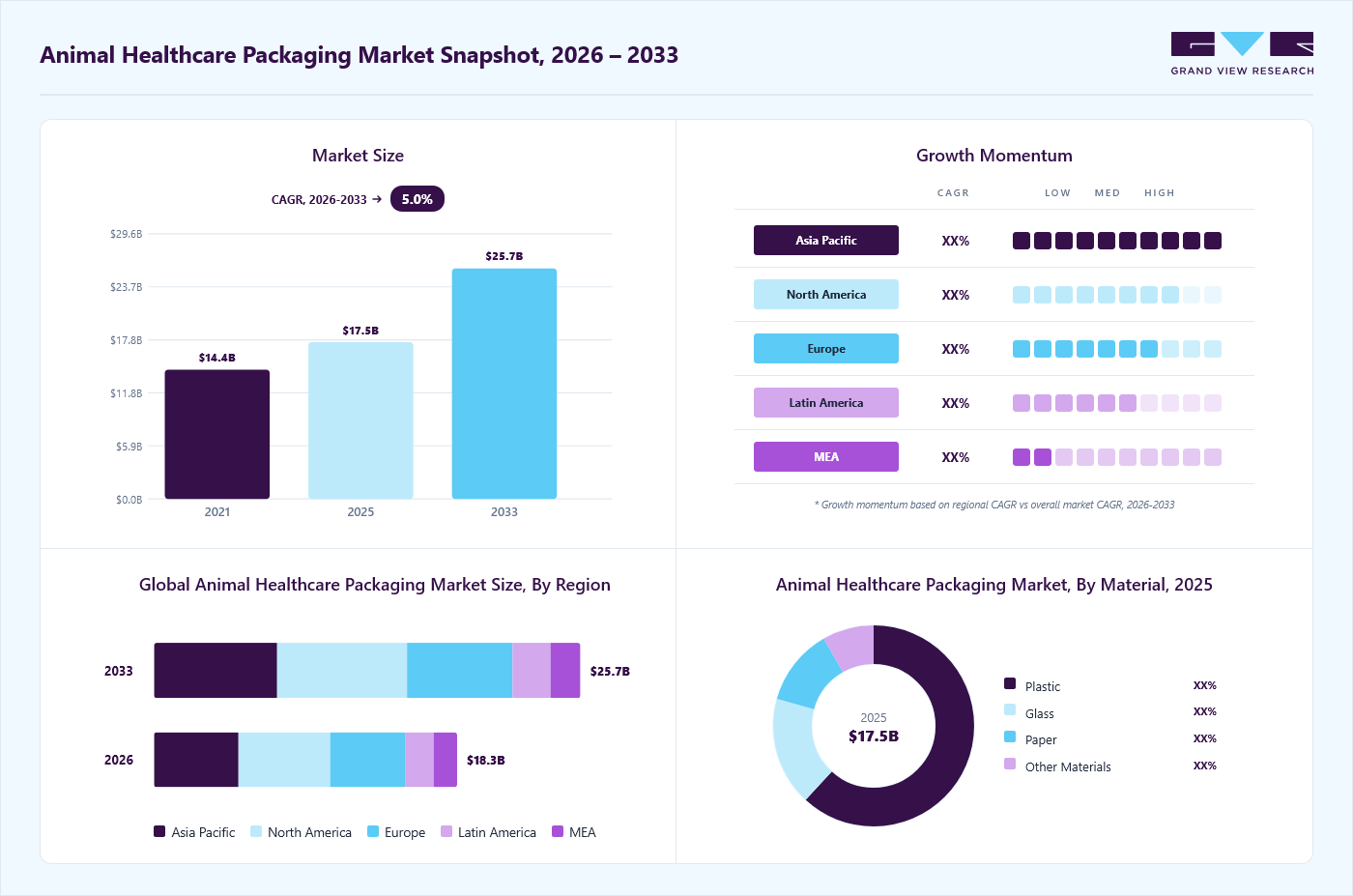 Source: Grand View Research, IR Documents, Primary Interviews, Paid DatabasesTo learn more about this report,
 Download Free Sample Report
Key Market Trends & Insights
- By product: The syringes segment led the market with the largest revenue share of 23.5% in 2025.
- By material: The plastic segment led the market with the largest revenue share of 57.3% in 2025.
- By animal type: The companion animal segment led the market with the largest revenue share of 34.5% in 2025.
Regional Highlights
- Largest regional market: North America (30.2% revenue share, 2025)
- By country: The U.S. held the largest market share in 2025.
Market Size & Forecast
- Market size in 2025: USD 17.5 Billion
- Estimated market size in 2026: USD 18.3 Billion
- Projected market size by 2033: USD 25.7 Billion
- CAGR (2026-2033): 5.0%
Prism AI by Grand View Research Free to tryAsk a question about the animal healthcare packaging marketTry asking✓Every figure cited from GVR research Prefer the report? Download free sample →
In addition, growth in livestock farming and the need for safe, sterile packaging solutions further boost market expansion. The global animal healthcare packaging industry is driven by several interconnected factors, particularly the rising demand for veterinary pharmaceuticals and biologicals due to increased pet ownership and livestock care. With more households treating pets as family members, the demand for advanced veterinary treatments has grown rapidly. This trend fuels the need for protective, tamper-evident, and user-friendly packaging for products such as vaccines, syringes, tablets, and supplements. For instance, child-resistant blister packs and easy-to-use dropper bottles have become increasingly important for pet medications, particularly in North America and Europe, where pet humanization is most prevalent.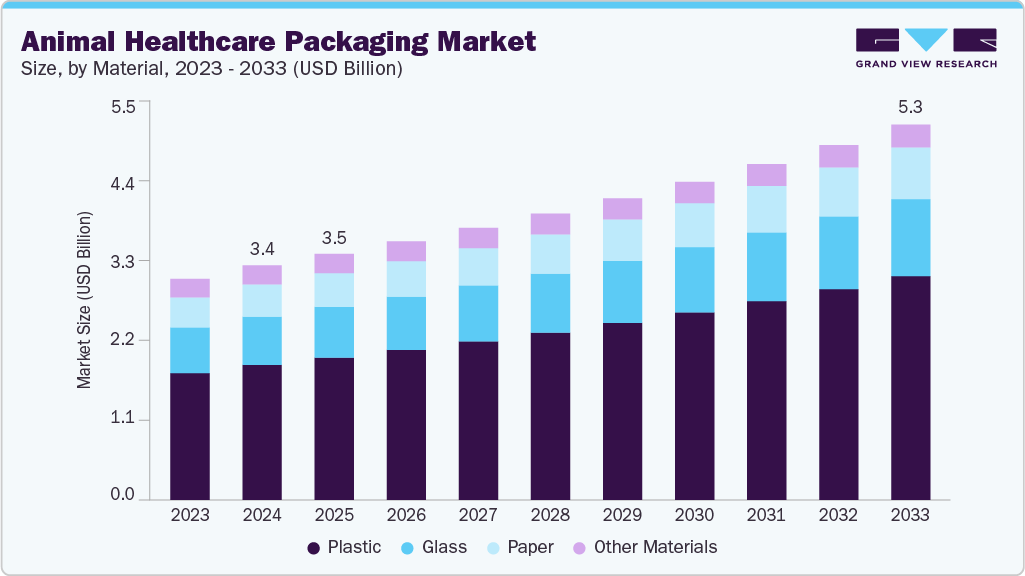 To learn more about this report, Download Free Sample Report
Another key driver is the growth in the livestock sector and commercial animal farming, especially in emerging economies such as India, China, and Brazil. These countries are witnessing increased investments in animal health infrastructure and disease prevention programs to meet food safety standards and enhance productivity. Packaging plays a vital role in maintaining the integrity and shelf life of animal vaccines, antibiotics, and nutritional supplements in challenging environmental conditions. Multilayer vials and aluminum pouches, which offer barrier properties against moisture and UV exposure, are examples of packaging innovations tailored for rural and farm environments.
Sustainability trends are reshaping packaging strategies in the animal healthcare sector. Manufacturers are increasingly shifting toward recyclable, biodegradable, and lightweight materials to align with environmental regulations and corporate ESG goals. For example, bio-based polymer containers and recyclable paper-based blister packs are being developed to replace conventional plastic packaging. Companies like Elanco and Zoetis are investing in eco-friendly packaging formats that reduce their carbon footprint without compromising product protection. This shift not only supports sustainability but also enhances brand reputation and market competitiveness.
Market Dynamics
The animal healthcare packaging market is experiencing steady growth, driven by rising global demand for veterinary pharmaceuticals, vaccines, feed additives, and pet healthcare products. Increasing pet ownership, growing livestock production, and heightened awareness of animal health and disease prevention are fueling the need for reliable, safe, and compliant packaging solutions. Manufacturers are focusing on packaging formats that enhance product protection, extend shelf life, and ensure accurate dosing while meeting stringent regulatory requirements for veterinary products. The market is also benefiting from advancements in sustainable packaging materials, tamper-evident designs, and smart packaging technologies that improve traceability and supply chain efficiency. However, challenges such as fluctuating raw material prices, complex regulatory standards, and the need to balance sustainability with product protection continue to influence market development.
One of the primary drivers of the animal healthcare packaging market is the increasing demand for veterinary pharmaceuticals and vaccines across both companion animals and livestock. Growing awareness of animal health, preventive care, and disease management has led to higher consumption of medicines, biologics, supplements, and vaccines. In the livestock sector, the need to maintain animal productivity and prevent disease outbreaks has accelerated the use of healthcare products, while rising pet ownership and spending on pet wellness continue to support demand in the companion animal segment.
This growing consumption of animal healthcare products is creating a greater need for high-quality packaging solutions that ensure product safety, stability, and regulatory compliance. Packaging plays a critical role in protecting sensitive formulations from contamination, moisture, light, and temperature fluctuations during storage and transportation. As veterinary drug manufacturers expand their product portfolios and distribution networks, demand for reliable, tamper-evident, and user-friendly packaging formats continues to increase, driving growth in the animal healthcare packaging market.
A significant restraint for the animal healthcare packaging market is the stringent regulatory framework governing veterinary pharmaceuticals, vaccines, and related healthcare products. Packaging manufacturers must comply with various regulations related to product safety, labeling, traceability, material compatibility, and quality standards across different countries and regions. Meeting these requirements often involves extensive testing, validation, certification, and documentation processes, which increase development timelines and operational costs. For small and medium-sized manufacturers, the financial burden of regulatory compliance can limit innovation and market expansion, thereby restraining overall market growth.
A major opportunity in the animal healthcare packaging market lies in the increasing adoption of sustainable packaging solutions. Rising environmental concerns, corporate sustainability commitments, and evolving regulatory policies are encouraging manufacturers to develop eco-friendly packaging materials and designs. The use of recyclable, biodegradable, and lightweight packaging can help reduce environmental impact while maintaining product safety and performance. As veterinary pharmaceutical companies and animal healthcare brands increasingly prioritize sustainability across their supply chains, demand for innovative and environmentally responsible packaging solutions is expected to create significant growth opportunities for market participants.
Market Concentration & Characteristics
The animal healthcare packaging industry is characterized by its highly regulated, innovation-driven, and quality-intensive nature. Given that the products it supports-such as vaccines, diagnostics, and veterinary pharmaceuticals-are sensitive to contamination, temperature, and light, the packaging solutions must meet stringent safety, sterility, and durability standards. Materials used (like glass, medical-grade plastics, and multi-layer foils) are carefully chosen to preserve product efficacy and extend shelf life. Compliance with regulatory frameworks such as the FDA, EMA, and WHO guidelines is mandatory, leading to high entry barriers for new players.
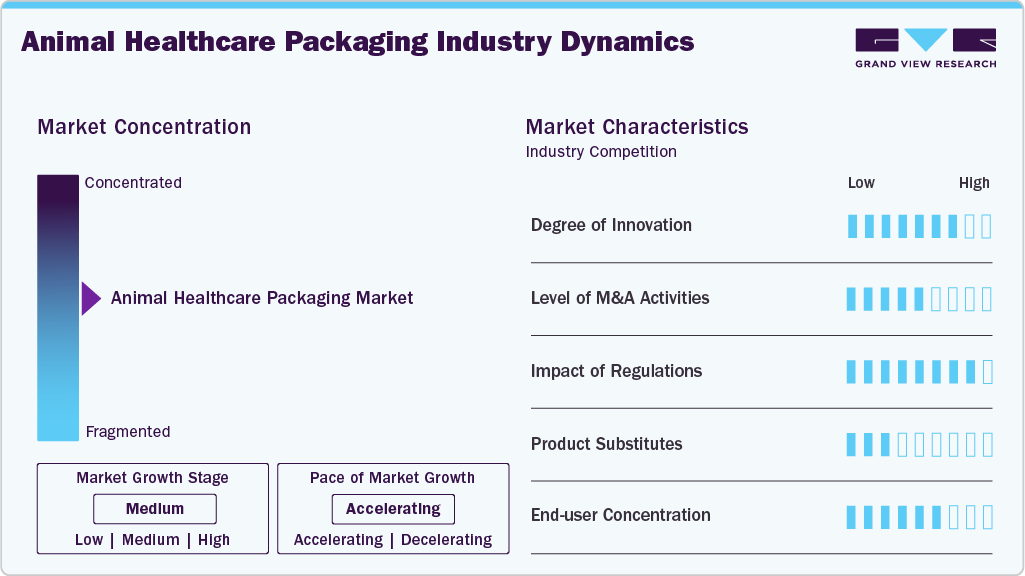 To learn more about this report, Download Free Sample Report
Another defining characteristic is its dual market orientation-serving both companion animals (pets) and livestock (food-producing animals). This dual focus creates varied packaging needs: user-friendly, small-dose formats like syringes and droppers are popular in pet care, while durable, bulk-sized, and cost-effective formats like multi-dose vials and pouches are essential for livestock medication and supplements. The need to cater to these diverse end-user segments pushes manufacturers to develop a wide range of packaging formats and materials.
Analyst Perspective
The animal healthcare packaging market is poised for sustained growth, driven by the expanding global veterinary healthcare industry, rising pet ownership rates, increasing expenditure on companion animal care, and growing focus on livestock health and productivity. As demand for veterinary pharmaceuticals, vaccines, biologics, feed additives, and nutritional supplements continues to increase, packaging is becoming an increasingly critical component in ensuring product safety, efficacy, sterility, traceability, and shelf-life preservation throughout the supply chain. Industry participants are facing greater regulatory scrutiny related to packaging integrity, tamper evidence, serialization, and transportation standards, prompting investments in advanced packaging formats and high-performance barrier materials. At the same time, sustainability considerations are reshaping product development strategies, with manufacturers actively exploring recyclable materials, lightweight packaging structures, and resource-efficient designs to meet evolving environmental expectations without compromising product protection.
Material Insights
Based on material, the plastic segment led the market with the largest revenue share of 57.3% in 2025. Plastic is the most widely used material in animal healthcare packaging due to its versatility, cost-effectiveness, and excellent barrier properties. Common plastic types include polyethylene (PE), polypropylene (PP), and polyethylene terephthalate (PET). Plastic is commonly used in bottles, syringes, blister packs, and vials for packaging veterinary medicines, vaccines, and nutritional supplements. Rising demand for single-dose packaging and increased use of injectable veterinary drugs have further pushed the need for plastic formats.
Glass is primarily used in the packaging of high-value veterinary pharmaceuticals, especially those requiring excellent chemical stability and protection from external elements. It is predominantly used for vials, ampoules, and bottles for liquid injectables, biologicals, and vaccines. Glass provides an inert, impermeable container that maintains the integrity of sensitive compounds. The use of glass is driven by its superior barrier properties, chemical inertness, and ability to protect sensitive animal healthcare products from contamination and UV exposure. Regulatory preferences for glass in biologics and injectable drugs further support its use.
Product Insights
Based on product, the syringes segment led the market with the largest revenue share of 23.5% in 2025. Syringes in animal healthcare packaging are primarily used for the administration of vaccines, antibiotics, and other injectable medications in both livestock and companion animals. These syringes can be disposable or reusable and are available in various sizes depending on the species and dosage. The rising prevalence of infectious diseases in animals, increased focus on preventive care (like vaccination), and the growing livestock population are driving the demand for veterinary syringes. In addition, the expansion of animal vaccination programs by governments and animal welfare agencies globally is boosting syringe usage.
The vials segment is expected to grow at the fastest CAGR of 5.6% during the forecast period. Vials are small containers used primarily for storing injectable veterinary drugs, vaccines, and biologicals. They can be made of glass or plastic and often require rubber stoppers and aluminum crimp seals to maintain product sterility. Vials are commonly used in clinical veterinary settings and during mass vaccination drives for livestock. The expansion of immunization programs for livestock diseases like FMD (Foot-and-Mouth Disease) and avian influenza, coupled with regulatory emphasis on safe drug storage, is pushing demand for vials. The need for multi-dose storage solutions and temperature-sensitive biologics also supports the growth of this segment.
Animal Type Insights
Based on animal type, the companion animal segment led the market with the largest revenue share of 34.5% in 2025. Companion animals include pets such as dogs, cats, rabbits, and other small animals that live with humans for companionship. The packaging used for companion animal healthcare products typically involves syringes, blisters, droppers, pouches, and bottles for vaccines, nutritional supplements, dermatologicals, and oral treatments. As pet humanization increases, there is a growing demand for high-quality, safe, and easy-to-use packaging that reflects the standards of human healthcare. The rising pet adoption rates, increasing spending on pet care, and growing awareness regarding pet health are driving this segment.
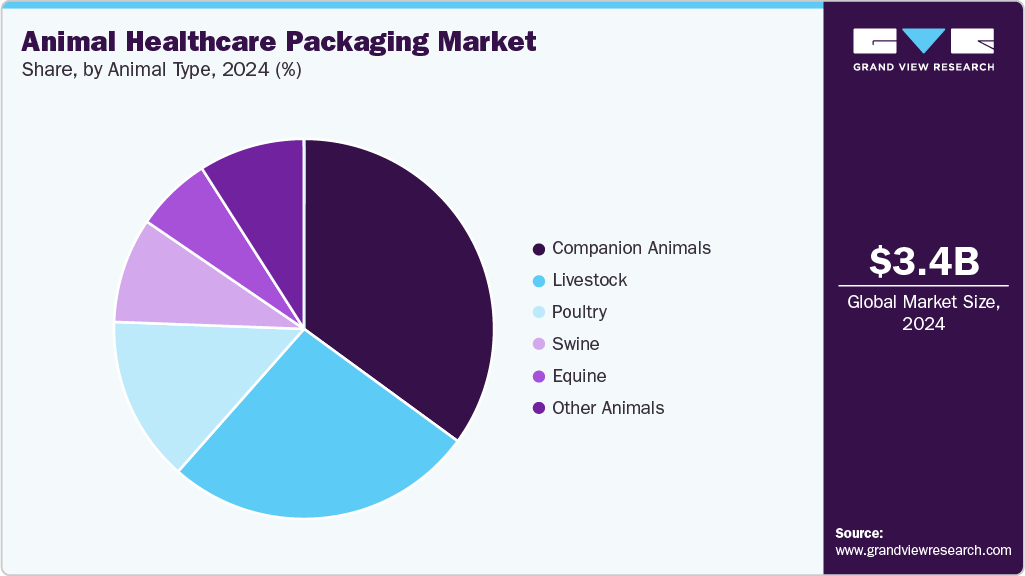 To learn more about this report, Download Free Sample Report
Livestock includes animals such as cattle, goats, and sheep, which are raised for meat, dairy, wool, or other purposes. Packaging for livestock healthcare often includes large-volume containers, vials, and pouches suitable for antibiotics, vaccines, dewormers, and nutritional supplements. The packaging must support durability, transportability, and shelf stability, often under harsh conditions. Growth in global meat and dairy consumption, especially in emerging markets, is boosting livestock production, which in turn drives demand for effective animal health management and packaging.
Regional Insights
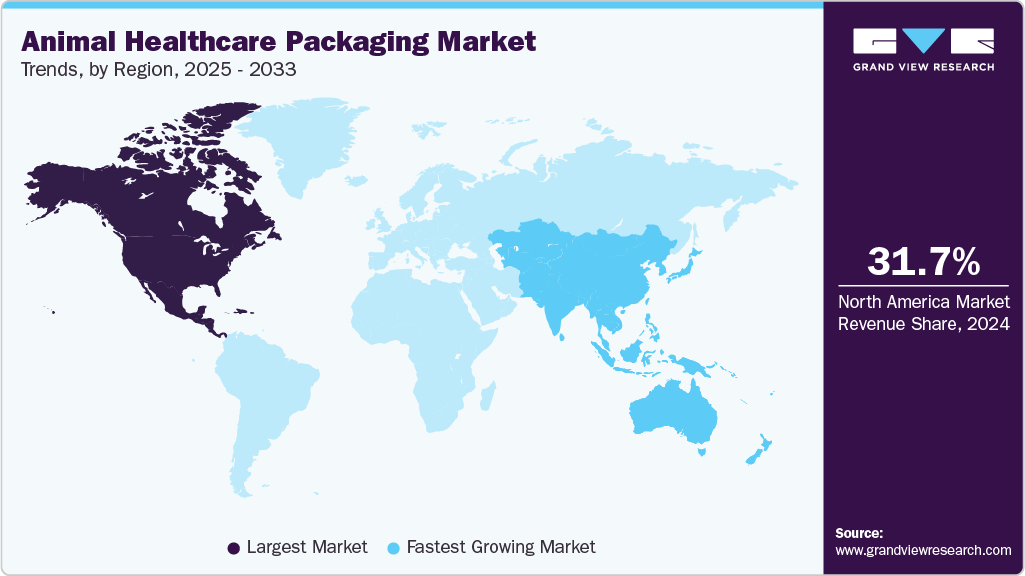
North America dominated the animal healthcare packaging market with the largest revenue share of 30.2% in 2025. This positive outlook is due to stringent regulatory standards, high pet adoption rates, and advanced veterinary care infrastructure. The U.S. and Canada have well-established pharmaceutical and biologics industries, driving demand for compliant and innovative packaging solutions like child-resistant and temperature-controlled packaging. The region’s focus on pet humanization has led to premium packaging for pet medications and supplements, including smart labels and eco-friendly materials. For instance, major companies like Zoetis and Elanco use high-barrier films and RFID tags to ensure product safety and traceability.
 To learn more about this report, Download Free Sample Report
U.S. Animal Healthcare Packaging Market Trends
The animal healthcare packaging market in U.S. held the largest share in the North America region in 2025. The country has one of the highest rates of pet ownership globally, with nearly 66% of U.S. households owning a pet as of 2024, resulting in increased demand for veterinary medicines, nutraceuticals, and companion animal care products. These products require specialized packaging that ensures safety, sterility, accurate dosing, and ease of use. For instance, blister packs for oral medications, unit-dose vials for injectables, and tamper-evident closures are widely used in veterinary packaging formats across the U.S., reflecting the importance of packaging in maintaining product efficacy and compliance.
Europe Animal Healthcare Packaging Market Trends
The animal healthcare packaging market in Europe plays a dominant role due to its strong emphasis on animal welfare, traceability, and sustainable packaging. The region’s well-developed pharmaceutical and biotech industries, particularly in countries such as Germany, UK, France, and the Netherlands, are key consumers of advanced packaging solutions. Regulatory frameworks such as the EU Veterinary Medicinal Products Regulation and REACH ensure stringent guidelines for packaging materials, encouraging the adoption of high-barrier, recyclable, and anti-contamination packaging options. The increasing trend toward organic and antibiotic-free animal husbandry also necessitates clearly labeled, compliant packaging for animal health supplements and treatments.
Asia Pacific Animal Healthcare Packaging Market Trends
The animal healthcare packaging market in Asia Pacific is expected to grow at the fastest CAGR of 5.6% over the forecast period. This positive outlook is due to rising livestock production, growing pet ownership, and increasing investments in veterinary infrastructure. Countries such as China, India, and Australia have large livestock populations, which drive the demand for animal pharmaceuticals and, consequently, packaging solutions like vials, pouches, and syringes. The expansion of the veterinary pharmaceutical industry, coupled with the presence of local and global pharmaceutical companies, is creating a favorable environment for packaging demand. Moreover, rising consumer awareness regarding animal health and government initiatives to control zoonotic diseases (such as Avian Influenza and African Swine Fever) are further propelling the need for safe, tamper-proof packaging formats.
Key Animal Healthcare Packaging Company Insights
The competitive environment of the animal healthcare packaging industry is characterized by a mix of global packaging giants and specialized players competing based on product innovation, regulatory compliance, sustainability, and customization. Major companies dominate the landscape by leveraging their advanced manufacturing capabilities, global supply chains, and strong R&D investments to develop sterile, tamper-evident, and eco-friendly packaging tailored for veterinary drugs, vaccines, and nutritional supplements. The market is moderately consolidated, with increasing strategic alliances, product expansions, and mergers & acquisitions aimed at expanding geographical presence and meeting the rising demand for livestock and pet healthcare.
Key Animal Healthcare Packaging Companies
The following key companies have been profiled for this study on the animal healthcare packaging market.
-
Gerresheimer AG
-
SCHOTT AG
-
AptarGroup, Inc.
-
Nipro Corporation
-
TekniPlex Healthcare
-
Catalent, Inc.
-
Berry Global Inc.
-
Borosil Limited
-
Ajanta Bottle
-
ThaMa-Vet
-
Nexus Pharmaceuticals, Inc.
Competitive Benchmarking
Category
Operating Strategies
Competitive Edge
Weakness
Established Players (Gerresheimer AG, SCHOTT AG, AptarGroup, Inc., Nipro Corporation, TekniPlex Healthcare, Catalent, Inc., Berry Global Inc., Borosil Limited.)
- Focus on integrated manufacturing and global supply networks to ensure consistent supply of high-quality veterinary packaging products across multiple regions.
- Invest heavily in innovation, regulatory compliance, and sustainable packaging technologies to address evolving animal healthcare industry requirements.
- Strong brand recognition, extensive customer relationships, and established regulatory expertise enable long-term contracts with leading animal health companies.
- Broad product portfolios and advanced production capabilities allow customization, scalability, and reliable delivery for diverse veterinary applications.
- Large organizational structures can reduce operational agility and slow responses to emerging market trends or niche customer requirements.
- High capital expenditure and compliance costs increase operational complexity and pressure profit margins during market fluctuations.
Emerging Players (Ajanta Bottle, ThaMa-Vet, Nexus Pharmaceuticals, Inc.)
- Focus on niche veterinary packaging segments and customized solutions to address specific customer requirements and regional market demands.
- Expand market presence through strategic partnerships, flexible production models, and targeted investments in product development.
- Greater operational flexibility enables faster decision-making and quicker adaptation to changing customer needs and industry trends.
- Ability to offer personalized services and specialized packaging solutions helps build strong relationships with small and mid-sized animal healthcare manufacturers.
- Limited financial resources and production capacity can restrict large-scale expansion and global market penetration.
- Lower brand visibility and narrower distribution networks may reduce competitiveness against established multinational packaging suppliers.
Recent Developments
-
In July 2024, ThaMa-Vet launched two fixed-dose swine syringes, the ThaMa 312 and 313, with transparent barrels for clear liquid flow visibility and preset doses (0.5, 1, 2 cc) for accurate, consistent vaccinations. The all-metal ThaMa 312 connects to vaccine bottles via a plastic hose, while ThaMa 313 features a vial holder for direct attachment, improving precision and ease in mass swine vaccinations.
-
In February 2023, Nexus Pharmaceuticals launched a new sterile vial product line-including 20mL and 10mL clear vials, and 2mL amber vials-manufactured under GMP in their FDA-inspected Pleasant Prairie, WI facility. Featuring FluroTec Barrier Film and latex-free chlorobutyl stoppers, the vials target research labs, healthcare clinics, and veterinary offices, aiming to ease supply chain issues and expand Nexus’s healthcare reach.
Animal Healthcare Packaging Market Report Scope
Report Attribute
Details
Market size in 2025
USD 17.5 billion
Estimated market size in 2026
USD 18.3 billion
Projected market size by 2033
USD 25.7 billion
Growth rate
CAGR of 5.0% from 2026 to 2033
Base year for estimation
2025
Historical data
2021 - 2024
Forecast period
2026 - 2033
Quantitative units
Revenue in USD million/billion and CAGR from 2026 to 2033
Report coverage
Revenue forecast, company ranking, competitive landscape, growth factors, and trends
Segments covered
Product, material, animal type, region
Regional scope
North America; Europe; Asia Pacific; Latin America; MEA
Country scope
U.S.; Canada; Mexico; Germany; UK; France; Italy; Spain; China; Japan; India; South Korea; Australia; Brazil; Argentina; Saudi Arabia; South Africa; UAE
Key companies profiled
Gerresheimer AG; SCHOTT AG; AptarGroup, Inc.; Nipro Corporation; TekniPlex Healthcare; Catalent, Inc.; Berry Global Inc.; Borosil Limited; Ajanta Bottle; ThaMa-Vet; Nexus Pharmaceuticals, Inc.
Customization scope
Free report customization (equivalent up to 8 analysts' working days) with purchase. Addition or alteration to country, regional & segment scope.
Pricing and purchase options
Avail customized purchase options to meet your exact research needs. Explore purchase options
Global Animal Healthcare Packaging Market Report Segmentation
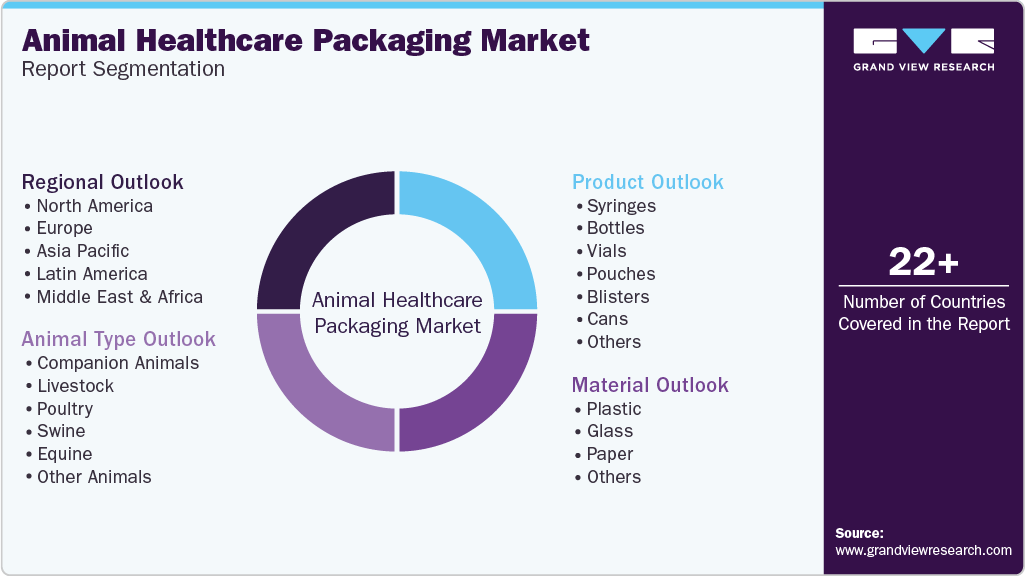
This report forecasts revenue growth at a global level and provides an analysis of the latest industry trends in each of the sub-segments from 2021 to 2033. For this study, Grand View Research has segmented the global animal healthcare packaging market report based on material, product, animal type, and region:
 To learn more about this report, Download Free Sample Report
-
Material Outlook (Volume, Million Units; Revenue, USD Million, 2021 - 2033)
-
Plastic
-
Glass
-
Paper
-
Others
-
-
Product Outlook (Volume, Million Units; Revenue, USD Million, 2021 - 2033)
-
Syringes
-
Bottles
-
Vials
-
Pouches
-
Blisters
-
Cans
-
Others
-
-
Animal Type Outlook (Volume, Million Units; Revenue, USD Million, 2021 - 2033)
-
Companion Animals
-
Livestock
-
Poultry
-
Swine
-
Equine
-
Other Animals
-
-
Region Outlook (Volume, Million Units; Revenue, USD Million, 2021 - 2033)
-
North America
-
U.S.
-
Canada
-
Mexico
-
-
Europe
-
Germany
-
France
-
UK
-
Italy
-
Spain
-
-
Asia Pacific
-
China
-
India
-
Japan
-
Australia
-
South Korea
-
-
Latin America
-
Brazil
-
Argentina
-
-
Middle East & Africa
-
South Africa
-
Saudi Arabia
-
UAE
-
-
Research Methodology
The animal healthcare packaging market figures in this report are based on a proven research process that combines executive interviews with secondary research from proprietary databases, company filings, and recognized regulatory and institutional sources. Market size is built through value-chain sizing - reconciling supply-side and demand-side estimates - and triangulated with bottom-up and top-down approaches. Every estimate passes multiple levels of expert validation before publication, with each animal healthcare packaging segment quantified using the revenue-capture definitions in the table below.
Segment Definition
Segment - Product
Revenue capture definition
Syringes
Revenue generated from the sale of animal healthcare packaging syringes used for the storage and administration of vaccines, biologics, and injectable veterinary drugs. This segment includes prefilled and empty syringes designed for companion animals, livestock, poultry, and other veterinary applications.
Bottles
Revenue generated from the sale of bottles used for packaging veterinary pharmaceuticals, nutritional supplements, disinfectants, and liquid healthcare products. This segment includes plastic and glass bottles utilized across companion animal and livestock healthcare applications.
Vials
Revenue generated from the sale of vials used for packaging injectable veterinary medicines, vaccines, biologics, and diagnostic products. This segment includes glass and plastic vials designed to ensure product stability, sterility, and regulatory compliance.
Pouches
Revenue generated from the sale of flexible pouches used for packaging animal healthcare products such as feed additives, nutritional supplements, powders, and specialty veterinary formulations. This segment includes stand-up, flat, and resealable pouch formats.
Blisters
Revenue generated from the sale of blister packaging used for veterinary tablets, capsules, and unit-dose pharmaceutical products. This segment includes thermoformed and cold-formed blister packs designed to enhance product protection and dosage accuracy.
Cans
Revenue generated from the sale of cans used for packaging medicated pet food, nutritional products, and specialized animal healthcare formulations. This segment includes metal cans designed to provide extended shelf life and product integrity.
Other Products
Revenue generated from the sale of other animal healthcare packaging products, including tubes, cartons, ampoules, sachets, and specialty containers used across veterinary pharmaceutical and animal care applications.
Segment - Materials
Revenue capture definition
Plastic
Revenue generated from the sale of plastic-based animal healthcare packaging solutions. This segment includes packaging manufactured from materials such as polyethylene (PE), polypropylene (PP), polyethylene terephthalate (PET), and other polymers used for bottles, syringes, pouches, and containers.
Glass
Revenue generated from the sale of glass-based packaging used for veterinary pharmaceuticals, vaccines, biologics, and injectable products. This segment includes vials, bottles, and ampoules designed to provide superior barrier properties and product stability.
Paper
Revenue generated from the sale of paper and paperboard packaging used for secondary packaging, labeling, cartons, and sustainable veterinary product packaging solutions. This segment supports product protection, branding, and regulatory compliance requirements.
Segment - Animal Type
Revenue capture definition
Companion Animals
Revenue generated from animal healthcare packaging used for products intended for companion animals such as dogs, cats, birds, and small mammals. This segment includes packaging for pharmaceuticals, vaccines, supplements, diagnostics, and pet wellness products.
Livestock
Revenue generated from animal healthcare packaging used for products intended for livestock animals, including cattle, sheep, goats, and buffalo. This segment includes packaging for veterinary medicines, vaccines, feed additives, and disease prevention products.
Poultry
Revenue generated from animal healthcare packaging used for products intended for poultry species such as chickens, ducks, turkeys, and other commercial birds. This segment includes packaging for vaccines, nutritional supplements, and disease control products.
Swine
Revenue generated from animal healthcare packaging used for products intended for pigs and swine production systems. This segment includes packaging for injectable drugs, vaccines, feed supplements, and herd health management products.
Equine
Revenue generated from animal healthcare packaging used for products intended for horses and equine healthcare applications. This segment includes packaging for pharmaceuticals, nutritional products, vaccines, and performance health solutions.
Other Animals
Revenue generated from animal healthcare packaging used for products intended for other animal categories, including aquaculture species, exotic animals, zoo animals, and specialty veterinary applications not covered under the primary animal segments.
Estimation Model
Layer Name
Key Question
Description
Animal Healthcare Product Demand Layer
What forms the demand base?
Identify global consumption volumes of veterinary pharmaceuticals, vaccines, biologics, nutritional supplements, feed additives, and pet healthcare products across companion animals, livestock, poultry, swine, equine, and other animal categories. This layer establishes the total demand for animal healthcare products that require primary and secondary packaging solutions.
Packaging Adoption Layer
Where is animal healthcare packaging utilized?
Estimate the penetration of packaging formats such as syringes, bottles, vials, pouches, blisters, cans, and other packaging products across veterinary medicines and animal health applications. Assess packaging utilization based on product type, dosage form, distribution channel, regulatory requirements, and end-use animal segment across major geographic markets.
Packaging Consumption Intensity Layer
How much packaging is consumed?
Analyze average packaging consumption per unit of veterinary product, considering packaging specifications, material requirements, sterility needs, shelf-life considerations, and transportation conditions. Consumption intensity is influenced by product formulation, packaging format, animal type, and regional healthcare regulations governing veterinary products.
Revenue Layer
How is market revenue generated?
Market revenue is quantified through the sale of animal healthcare packaging products manufactured from plastic, glass, paper, and other materials. Revenue is generated from packaging supplied for veterinary pharmaceuticals, vaccines, biologics, nutritional supplements, diagnostics, and pet healthcare products, supported by recurring demand from veterinary drug manufacturers, animal health companies, and related healthcare providers worldwide.
Delivered Customizations
This report has been delivered with the following In-depth customizations
Client Request
Customization Delivered
Value Adds
Regional Segmentation Analysis
Provided detailed market size, growth forecasts, demand trends, and market attractiveness analysis across North America, Europe, Asia Pacific, Central & South America, and Middle East & Africa. Included country-level evaluation of animal healthcare packaging demand and consumption patterns.
Enabled identification of high-growth regional markets, investment hotspots, and expansion opportunities based on veterinary healthcare expenditure, livestock production, companion animal ownership, and packaging adoption trends.
Cross-Segmentation Analysis
Delivered comprehensive cross-analysis of Product (Syringes, Bottles, Vials, Pouches, Blisters, Cans, Other Products), Material (Plastic, Glass, Paper, Other Materials), Animal Type (Companion Animals, Livestock, Poultry, Swine, Equine, Other Animals), and Region.
Facilitated identification of the highest-growth segment combinations, demand concentration areas, revenue pockets, and strategic opportunities across product categories, animal types, and geographic markets.
Opportunity Assessment
Identified emerging opportunities across sustainable packaging materials, recyclable and paper-based solutions, advanced pharmaceutical packaging formats, companion animal healthcare packaging, livestock vaccine packaging, and rapidly growing regional markets.
Supported strategic decision-making by highlighting high-potential investment areas, product development opportunities, expansion strategies, and long-term growth avenues within the animal healthcare packaging market.
Frequently Asked Questions About This Report
North America emerged as the dominating regional segment in the animal healthcare packaging market due to stringent regulatory standards, high pet adoption rates, and advanced veterinary care infrastructure.
The syringes segment led the market with a 23.5% revenue share in 2025
The plastic segment led the market with a 57.3% revenue share in 2025.
The companion animals segment held the largest revenue share of 34.5% in 2025.
Key players in the animal healthcare packaging market include Gerresheimer AG; SCHOTT AG; AptarGroup, Inc.; Nipro Corporation; TekniPlex Healthcare; Catalent, Inc.; Berry Global Inc.; Borosil Limited; Ajanta Bottle; ThaMa-Vet; Nexus Pharmaceuticals, Inc.
The global animal healthcare packaging market size was valued at USD 17.5 billion in 2025 and is estimated at USD 18.3 billion for 2026.
The global animal healthcare packaging market is expected to grow at a CAGR of 5.0% from 2026 to 2033, reaching USD 25.7 billion by 2033.
Key factors driving the animal healthcare packaging market include rising demand for veterinary pharmaceuticals and vaccines, increasing pet ownership, expanding livestock production, growing focus on animal health and disease prevention, and the need for safe, compliant, and sustainable packaging solutions.
Asia Pacific is the fastest-growing region with a CAGR of 5.7% over the forecast period.
About the Author(s)
Plastics, Polymers & Resins Research Team
Bulk Chemicals · Plastics, Polymers & ResinsThis report was authored by the plastics, polymers & resins research team at Grand View Research - comprising two research analysts, one senior research analyst, and one industry expert - with specialized expertise in the plastics, polymers & resins segment of the bulk chemicals industry. All findings are based on proprietary bulk chemicals databases, executive interviews, and regulatory analysis, subject to internal peer review prior to publication.
Last Updated:
Speak to Analyst

Customize this report to your needs - add regions, segments, or data points, with 20% free customization.
Or view our licence options:


ISO 9001:2015 & 27001:2022 Certified
We are GDPR and CCPA compliant! Your transaction & personal information is safe and secure. For more details, please read our privacy policy.


