
- Home
- »
- Healthcare IT
- »
-
Artificial Intelligence In Cancer Diagnostics Market Report, 2026-2033GVR Report cover
![Artificial Intelligence In Cancer Diagnostics Market (2026 - 2033)Report]()
Artificial Intelligence In Cancer Diagnostics Market (2026 - 2033)
Size, Share & Trends Analysis Report By Component (Software Solutions, Hardware, Services), By Cancer Type, By End Use (Hospitals, Surgical Centers and Medical Institutes), By Region, And Segment Forecasts
Market Size, 2025
$338.2MMarket Estimate, 2026
$424.0MMarket Forecast, 2033
$1,795.8MCAGR, 2026–2033
22.9%AI In Cancer Diagnostics Market Summary
The global artificial intelligence (AI) in cancer diagnostics market size was valued at USD 338.2 million in 2025 and is projected to grow from USD 424.0 million in 2026 to USD 1795.8 million by 2033, at a CAGR of 22.9% from 2026 to 2033. The growth is attributed to the rising healthcare IT expenditure globally, the shortage of healthcare professionals, and the increasing demand for early detection and classification of diseases.

Key Market Trends & Insights
- By component: the software solutions held the largest revenue share of 46.3% in 2025.
- By cancer type: breast cancer segment held the largest market share of 18.7% in 2025.
- By end use: the hospitals segment held the largest market share of 56.5% in 2025.
Regional Highlights
- Largest regional market: North America (54.0% revenue share, 2025)
- By country: The U.S. held the largest revenue share of North America in 2025
Market Size & Forecast
- Market Size in 2025: USD 338.2 Million
- Estimated Market Size in 2026: USD 424.0 Million
- Projected Market Size by 2033: USD 1795.8 Million
- CAGR (2026-2033): 29.5%
Moreover, growing government initiatives coupled with the rising number of startups & collaborations and increasing venture capital funding. Cancer diagnosis and treatment have significantly developed over the last decade. The increasing use of technologically advanced solutions for detecting cancer, majorly at early stages, contributes to market growth.Researchers have been developing artificial intelligence (AI) based tools that have great potential in making imaging more accurate, faster, and informative. The use of AI in oncology is growing, thereby providing healthcare institutions and professionals with better tools for cancer management. Constantly emerging solutions with the help of AI and a better diagnosis rate are anticipated to support adoption, thereby improving the competitive landscape. For instance, as per an article published in News Medical in November 2022, a novel AI-based blood testing technology, DELFI, successfully detects more than 80% of liver cancers.

The U.S. government launched the Cancer Moonshot initiative to minimize cancer-related mortality by half within 25 years. To encourage investment in AI data analysis, the Moonshot program aims to establish a nationwide ecosystem for sharing and analyzing data that includes patients, doctors, and researchers. To expedite research efforts and remove roadblocks to progress by improving data availability, Cancer Moonshot is expected to encourage cooperation among researchers, physicians, philanthropies, patients & patient advocates, and biotechnology & pharmaceutical businesses.
In pathology, which comprises large datasets of multiple types and subtypes of disease biomarkers and specimens, it can be particularly exhausting and complicated for a human pathologist to keep up with changes. AI-based systems can work constantly and can be trained to document & study several specimens. Moreover, integrating AI in pathology with large datasets of biomarkers and genomics can help reduce the pathologist’s role in providing an accurate & efficient diagnosis. Researchers emphasize that AI-based pathology tools could help clinicians competently diagnose and treat cancers that might go undetected by traditional methods.
For instance, in January 2024, researchers at Perelman School of Medicine (University of Pennsylvania) introduced Inferring Super-Resolution Tissue Architecture (iStar) to deliver detailed views of individual cells and a comprehensive understanding of a patient’s gene function. It helps clinicians detect cancer cells that might go unnoticed through traditional pathology and imaging methods.
Furthermore, the COVID-19 pandemic accelerated the adoption of AI technologies in healthcare, driving demand for advanced solutions to improve diagnostic accuracy and efficiency. AI and machine learning (ML) algorithms were widely integrated to detect cancer biomarkers and diagnostic findings rapidly. These systems were trained on datasets, including pathological results, chest CT images, MRI scans, symptoms, and exposure history, enabling faster and more accurate cancer diagnosis.
Case Study
-
As noted below in the bar chart, a survey was conducted in June 2022 among members of the European Society of Radiology (ESR) about their practical experience with AI-powered tools.
-
The data reveals that a total of 276 people with hands-on clinical experience in AI were surveyed. The survey indicates the number of respondents who use one or more algorithms to assist with either diagnostic interpretation or workflow prioritization.
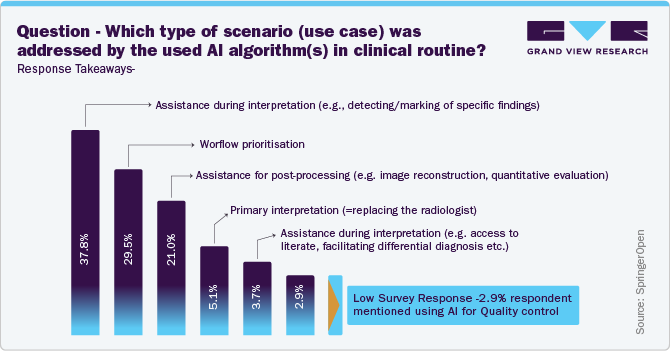
The figure above illustrates various use case scenarios, with the most frequent one being the assistance during detection or marking of specific findings such as nodules, embolic, and others.
Market Dynamics
The growth is attributed to the rising healthcare IT expenditure globally, the shortage of healthcare professionals, and the increasing demand for early detection and classification of diseases. Moreover, growing government initiatives coupled with the rising number of startups & collaborations and increasing venture capital funding. Cancer diagnosis and treatment have significantly developed over the last decade. The increasing use of technologically advanced solutions for detecting cancer, majorly at early stages, contributes to market growth.
The growing integration of artificial intelligence into precision oncology and pathology workflows is emerging as a key driver of the global AI in cancer diagnostics market. AI algorithms can analyze vast volumes of imaging, genomic, biomarker, and clinical data at high speed and with high accuracy, enabling earlier and more precise cancer detection. Advanced AI-based solutions are increasingly used to identify subtle disease patterns that are difficult to detect with conventional diagnostic methods. For instance, in May 2026, Researchers at the University of Jyväskylä used AI to speed colorectal cancer sample analysis and predict DNA repair function. The model can cut diagnosis time from days to minutes, reduce costs, and improve accuracy. Moreover, continuous innovation in AI-powered diagnostic platforms is enhancing clinical decision-making and improving the efficiency of cancer screening, diagnosis, and treatment planning.
The adoption of AI is further supported by growing investments from governments, research institutions, and healthcare organizations to advance cancer care. Initiatives such as the U.S. Cancer Moonshot program are promoting large-scale data sharing and collaborative research to accelerate the development of AI-enabled diagnostic tools. In addition, AI-powered pathology technologies are improving the analysis of complex tissue samples and biomarker datasets, helping clinicians identify cancerous changes with greater accuracy. For instance, in June 2026, Slideflow Labs expanded the deployment of its AI pathology platform, Slideflow Pro, across institutions, including the University of Chicago. The cloud-based system analyzes digitized histology slides in near real time and supports biomarker development, with an initial focus on breast cancer prediction, recurrence risk, and treatment decision support. These advancements are strengthening AI's role in oncology and driving worldwide demand for intelligent cancer diagnostic solutions.
Stringent regulatory requirements present a significant restraint to the global AI in cancer diagnostics market by increasing the complexity and duration of product development and commercialization. AI-based diagnostic solutions are generally classified as Software as a Medical Device (SaMD) and require extensive clinical validation, performance testing, cybersecurity assessments, and regulatory review before receiving market authorization. Regulatory agencies such as the U.S. Food and Drug Administration (FDA), the European Medicines Agency (EMA), and national competent authorities impose rigorous standards to ensure safety, accuracy, and clinical effectiveness. These requirements increase development costs and prolong approval timelines, delaying the introduction of innovative AI-powered cancer diagnostic technologies.
The challenge is further intensified by evolving regulations governing adaptive and machine learning-based algorithms. Unlike conventional diagnostic tools, AI systems are anticipated to require continuous updates and retraining as new clinical data become available, creating additional compliance obligations. Variations in regulatory frameworks across regions complicate multinational commercialization strategies, forcing developers to navigate different approval pathways, documentation requirements, and post-market surveillance obligations. Smaller companies and start-ups often face resource constraints in meeting these regulatory expectations, limiting innovation and market entry. As a result, stringent regulatory frameworks can slow technology adoption, increase operational burdens, and restrict the pace of growth in the global AI in cancer diagnostics marketMarket Concentration & Characteristics
Technological advancements driven by the increasing demand for early and accurate cancer detection, improving patient outcomes, further results in significant innovations. The growing availability of large medical datasets and advancements in ML algorithms enhance AI's ability to analyze complex imaging and clinical data. In September 2024, Ibex Medical Analytics introduced new advancements to its AI-driven product platform, developed in collaboration with expert pathologists worldwide. The platform's widely deployed AI algorithms, already known for accuracy and robustness in clinical pathology, have been refined using large, diverse datasets and insights from international experts. Validated by live customers and clinical studies, the improved algorithms offer enhanced reliability and versatility across various tissue types, including breast, prostate, and gastric, identifying numerous tissue morphologies.
The M&A activities, such as mergers, acquisitions, and partnerships, enable companies to expand geographically, financially, and technologically. For instance, in June 2024, Quest Diagnostics acquired PathAI, Inc. Diagnostics from PathAI, Inc. The acquisition aims to accelerate the adoption of AI and digital pathology, enhancing the accuracy and efficiency of cancer and disease diagnosis.
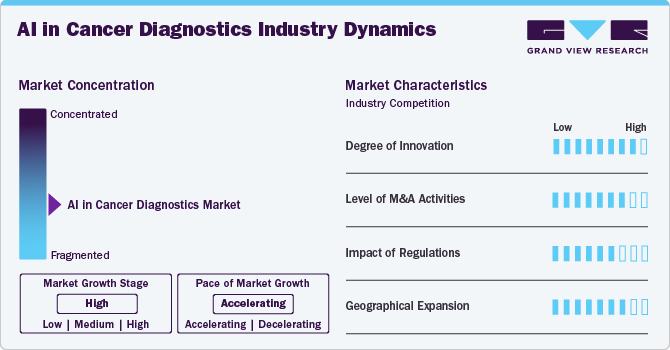
The industry has a significant impact of regulations, which are overlooked by several regulatory bodies, as per the region. For instance, the FDA issued a guidance draft in April 2023 to establish a regulatory framework for AI/ML-based devices. The draft outlines the least burdensome approach for continuously improving ML-based Device Software Functions (ML-DSF). The aim is to enhance patient access to secure and effective AI/ML-based devices, ensuring the promotion and protection of general health.
The industry's regional expansion activities are moderate, driven by an increasing demand for AI in cancer diagnostics market in the emerging nations. For instance, in March 2018, Microsoft announced expansion of its healthcare initiative in India by using AI. The new initiative by Microsoft and Apollo Hospital was to create new machine learning AI algorithms in cardiology segment to help doctors structure data and use algorithms to begin treatment while the disease is in the nascent stage.
Analyst Perspective
The AI in cancer diagnostics market is emerging as a critical component of precision oncology, driven by the increasing global burden of cancer, growing demand for early detection, and the expanding availability of healthcare data. Healthcare providers are increasingly adopting artificial intelligence technologies to improve diagnostic accuracy, accelerate image interpretation, identify subtle disease patterns, and support clinical decision-making. The integration of AI into oncology workflows is helping address growing diagnostic workloads while enabling more timely and personalized treatment interventions.
The competitive landscape is influenced by advancements in machine learning, digital pathology, radiomics, genomic analytics, and multimodal data integration. AI solutions are increasingly being utilized for cancer screening, tumor detection, risk assessment, biomarker identification, treatment response prediction, and patient stratification. Integration of imaging, genomic, pathology, and real-world clinical data is becoming a key differentiator among market participants. As healthcare systems continue to prioritize precision medicine, early diagnosis, and value-based care, AI-enabled cancer diagnostics platforms are expected to become an essential part of oncology care pathways. Companies with robust AI capabilities, access to large and diverse oncology datasets, strong clinical validation, and strategic healthcare partnerships will be best positioned to capitalize on long-term growth opportunities in the global AI in cancer diagnostics market.Recent Developments in the AI in Cancer Diagnostics Market
Company Month/Year Description Leica Biosystems June 2026 Leica Biosystems expanded its collaboration with AstraZeneca and Daiichi Sankyo to develop AI-powered cancer diagnostics centered on the TROP2 biomarker in non-small cell lung cancer. The partnership combines digital pathology, assay development, and image analysis algorithms to improve precision in oncology research and support future companion diagnostic workflows.“By working alongside AstraZeneca and Daiichi Sankyo, we are bringing together complementary expertise to help address some of the most complex challenges in biomarker research, with the aim of enabling more precise and scalable approaches that support the future of precision medicine.”-Gustavo Perez-Fernandez, Group Executive, Diagnostics, at Danaher and President of Leica Biosystems. Syneos Health May 2026 Helio Genomics partnered with Syneos Health to expand nationwide adoption of HelioLiver, an AI-powered blood test for early liver cancer detection. The collaboration combines Helio’s multi-analyte diagnostic technology with Syneos Health’s commercialization network to increase physician awareness, improve provider engagement, and broaden patient access to liver cancer screening. Ibex Medical Analytics March 2026 Ibex Medical Analytics partnered with HNL Lab Medicine to deploy clinical-grade AI pathology for prostate cancer in U.S. laboratories. Bristol Myers Squibb and Microsoft January 2026 Bristol Myers Squibb and Microsoft partnered to advance AI-driven early detection of lung cancer. The initiative uses FDA-cleared radiology AI workflows on Microsoft’s imaging network to identify hard-to-detect lung nodules sooner, support earlier triage, and improve access to screening in underserved U.S. communities such as rural hospitals and clinics. “By combining Microsoft’s highly scalable radiology solutions with Bristol Myers Squibb’s deep expertise in oncology and drug delivery, we’ve envisioned a unique AI-enabled workflow that helps clinicians quickly and accurately identify patients with non-small cell lung cancer (NSCLC) and guide them to optimal care pathways and precision therapies. An integrated, AI-powered platform that streamlines patient flow can significantly improve operational efficiency and patient outcomes.”-BMS digital health vice-president and head Dr Alexandra Goncalves Alpenglow Biosciences January 2026 Alpenglow Biosciences and PathNet formed a strategic partnership to build a national platform for 3D AI cancer diagnostics. The collaboration combines PathNet’s pathology network with Alpenglow’s volumetric imaging and spatial analytics to improve urologic oncology testing, with initial focus on prostate and bladder cancer. Valar Labs December 2025 Valar Labs partnered with PathNet Lab to expand access to AI-driven bladder cancer diagnostics across PathNet’s national laboratory network. The collaboration brings the Vesta Bladder Risk Stratify and Vesta Bladder BCGPredict tools to urologists and oncologists, supporting prognosis, therapy response prediction, and more informed treatment decisions for non-muscle invasive bladder cancer. Alpenglow Biosciences October 2025 Alpenglow Biosciences and Virdx announced a multi-year partnership to advance AI-enabled prostate cancer diagnostics by combining Virdx’s MRI-based detection with Alpenglow’s 3D light-sheet pathology. Component Insights
By component, the software solutions segment held the largest market share of 46.3% in 2025. However, the services segment is anticipated to witness the fastest growth with a CAGR over the forecast period. The market growth can also be attributed to rising number of entrepreneurial startups that provide innovative solutions for treatment and accurately predicting cancer. For instance, Concr, a UK-based startup, offers a software platform that uses a machine learning technique that works on a deep understanding of scientific projection to predict tumor progression and helps accurately predict cancer evolution in response to treatment.
Services segment is anticipated to grow at a significant CAGR over the forecast period. Growth of the services segment can be majorly attributed to rising need for integration and implementation of AI solutions, support & maintenance, training, and education. In addition, rising adoption of AI platforms has driven the demand for support and maintenance services imperative to keep the devices functional.
Cancer Type Insights
By cancer type, breast cancer segment held the largest market share of 18.7% in 2025. However, the brain tumor segment is expected to register fastest growth over the forecast period. According to the data published by the American Cancer Society, breast cancer is the most common type of cancer in the U.S., except for skin cancer. Breast cancer affects about one in three women in the U.S. Moreover, according to WHO, in 2020, over 2.3 million breast cancer cases were detected. It resulted in approximately 685,000 deaths globally. The rising demand for early cancer diagnosis is one of the key factors propelling market growth. Furthermore, WHO has recommended that countries promote programs for early detection of breast cancer, which will help detect at least 60% of early-stage breast cancer.
Brain Tumor segment is expected to grow at the fastest CAGR during the forecast period. According to an article by International Association of Cancer Registries, more than 28,000 new cases of brain tumors are reported every year in India, driving the segment growth. Furthermore, the availability of various AI solutions for diagnosing several types of brain tumors is expected to further drive the adoption of these solutions. For instance, Deep Convolutional Neural Network is an AI algorithm that aids physicians in predicting and diagnosing more than 10 types of brain tumors within minutes at the patient’s bedside with improved accuracy as compared to other conventional techniques.
End-use Insights
By end use the hospitals segment held the largest market share of 56.5% in 2025. However, the surgical centers and medical institutes segment and is expected to witness the fastest growth during the forecast period from 2026 to 2033. Technological advancements in the healthcare sector have increased over recent years. The market dominance is attributed to the rising adoption of AI-powered solutions by hospitals, the increasing number of companies entering the market to cater to cancer care in hospitals, and positive responses from patients, the market is anticipated to grow significantly during the forecast period. For instance, in February 2024, Qritive collaborated with Metropolis Healthcare in Rajiv Gandhi Cancer Institute and CŌRE Diagnostics (India) to offer its Pantheon Image Management System (IMS) and other AI-powered tools in cancer management.
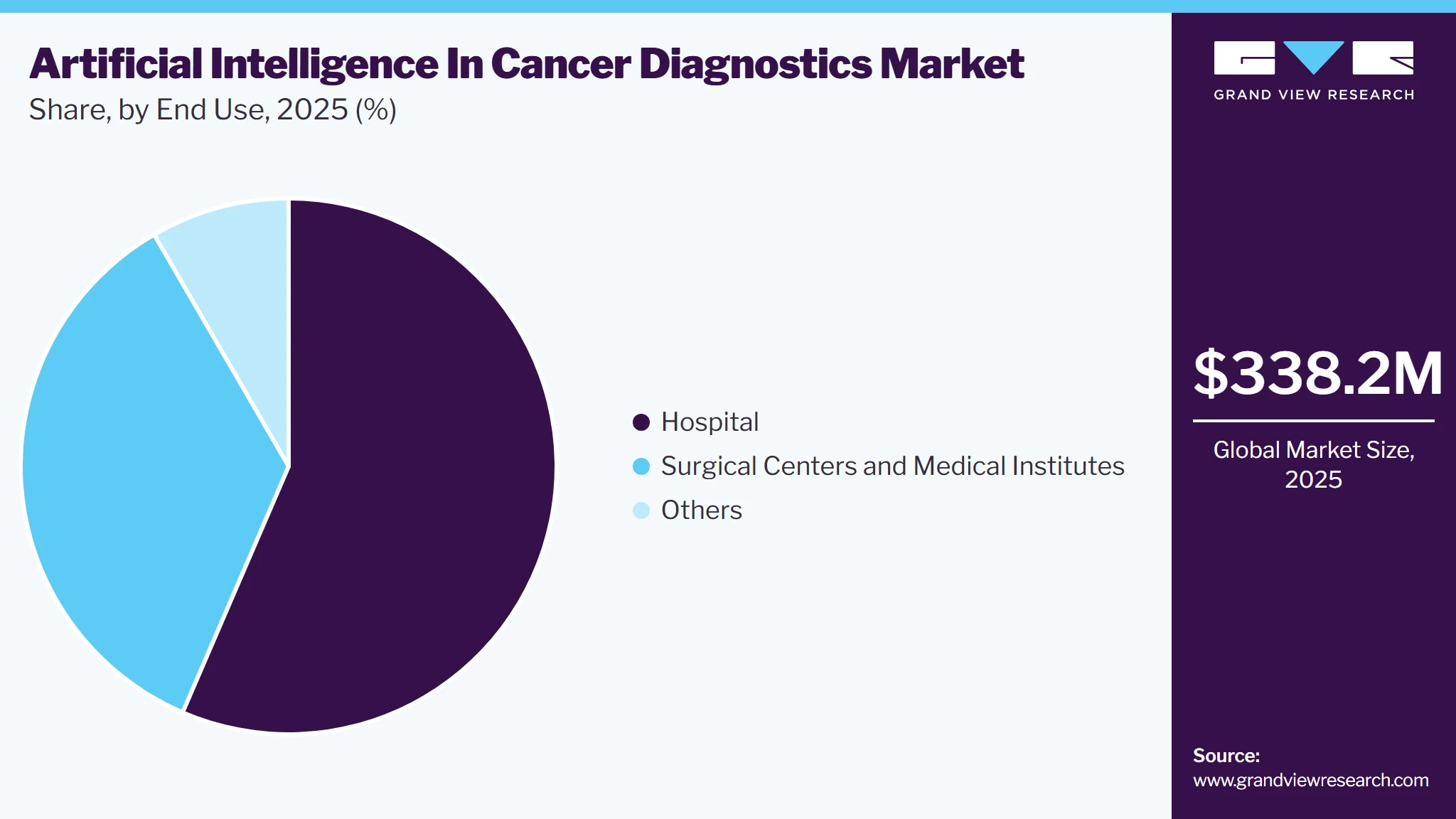
Surgical centers and medical institutes segment is expected to grow at the fastest CAGR from 2025 to 2030. AI and machine learning-powered algorithms hold numerous applications in surgery & surgical simulation. In surgical centers, it is useful in preoperative planning of cancer surgeries, such as brain surgery, dermatoscopy, and robotic-assisted surgery. Medical institutes utilize these platforms for training and assessment of students. Thus, these are some factors driving the adoption of AI-powered platforms by surgical centers and medical institutes.
Regional Insights
North America dominated the AI in cancer diagnostics market with the largest revenue share of 54.0% in 2025. Growing government initiatives and business strategies, including mergers & acquisitions, portfolio expansions, and collaborations by market players to promote AI implementation in the oncology field, are contributing to the accelerated growth in the region. For instance, in May 2021, the U.S. government initiated AI.gov, a dedicated website aimed at soliciting ideas regarding the regulation, development, and application of AI in the U.S. This platform was introduced under the administration of President Joe Biden.

U.S. AI in Cancer Diagnostics Market Trends
The AI in cancer diagnostics market in the U.S. held the largest share in the North America region in 2025. This can be attributed to rising demand for AI to transform the world of medicine and assist healthcare professionals in reshaping the diagnosis & treatment of cancer. Increase in demand for AI in medical imaging is also boosting the market growth. The AI-powered medical imaging systems produce scans that assist radiologists in identifying patterns & indicating treatments for patients affected with cancer.
Europe AI in Cancer Diagnostics Market Trends
The AI in cancer diagnostics market in Europe is poised to grow at a significant CAGR over the forecast period. Healthcare systems in Europe are overburdened due to increasing costs, rising incidence of cancer cases, increasing demand for healthcare facilities, and stagnating or shrinking healthcare workforce. The industry also faces issues due to structural inefficiencies in certain European countries. The move to value-based healthcare is expected to strengthen patient outcomes at a more sustainable cost. Incorporating AI into innovative medical technologies can help address the pressing healthcare issues. In addition, increasing investments in AI in healthcare are driving the market growth.
The AI in cancer diagnostics market in the UK is expected to grow significantly over the forecast period. The UK government is spearheading initiatives to promote AI applications in various aspects of oncology. For instance, in October 2023, the government granted USD 22.7 million to 64 NHS trusts in England, facilitating AI applications in diagnosing and treating lung cancer. These AI tools aid NHS staff in analyzing X-rays and CT scans, supporting clinicians with quicker and more precise diagnoses, given the monthly volume of over 600,000 chest X-rays in England.
The AI in cancer diagnostics market in Germany is expected to grow substantially over the forecast period. Several investments in the field of AI in healthcare have positively influenced market growth. For instance, investments by venture capital firm High-Tech Gründerfonds, which has made around 489 investments worth USD 942 billion in high-tech startups in areas such as robotics & virtual reality, have fueled growth of the market. Moreover, Merantix, a Germany-based AI research lab, builds machine learning companies in several fields, including healthcare. The company has developed an AI algorithm that analyzes mammogram X-rays and detects abnormalities & signs of cancer with reliable accuracy.
Asia Pacific AI in Cancer Diagnostics Market Trends
The AI in cancer diagnostics market in Asia Pacific is expected to grow significantly over the forecast period. Increasing patient pool, growing acceptance of cloud computing, and rising number of government programs supporting AI are among the factors primarily driving the market growth. For instance, in June 2020, the Australian government granted St Vincent’s Institute of Medical Research a fund of around USD 2.3 million for breast cancer screening research using AI solutions.
The AI in cancer diagnostics market in China is poised to grow substantially over the forecast period. China is increasing application of AI in healthcare system, which is rapidly improving disease diagnosis and treatment accuracy in country-level hospitals. Various startups are investing in AI in healthcare to enhance this sector for patients and doctors. For instance, Beijing-based startup PereDoc has developed AI software that can parse CT scans and discover potential nodules, especially in lung scans.
Key AI In Cancer Diagnostics Company Insights
The global AI in cancer diagnostics market is highly competitive, with the presence of key players such as Cancer Center.ai, Microsoft, Tempus AI, Inc., and FLATIRON HEALTH, among others. Key players are involved in new product launches, acquisitions, and partnerships to gain a competitive edge in the market.
Key AI In Cancer Diagnostics Companies
The following key companies have been profiled for this study on the AI in cancer diagnostics market.- EarlySign
- Cancer Center.ai
- Microsoft
- FLATIRON HEALTH
- PathAI, Inc.
- Therapixel
- Tempus AI, Inc.
- Paige AI Inc.
- Kheiron Medical Technologies Limited
- SkinVision
Competitive Benchmarking
Category Operating Strategies Competitive Edge Weakness Established Players (Microsoft, Roche, Flatiron Health (Roche Group), Tempus AI, Inc.) - Expand AI-powered cancer diagnostics capabilities through strategic partnerships with healthcare providers, cancer centers, pharmaceutical companies, and research institutions. Invest in machine learning algorithms, genomic analytics, digital pathology, clinical decision support systems, real-world evidence platforms, and cloud-based oncology data ecosystems to strengthen market leadership. Focus on integrating imaging, genomic, molecular, and clinical data to support early cancer detection, patient stratification, treatment selection, and precision oncology initiatives.
- Strong global brand recognition, extensive oncology research capabilities, access to large-scale clinical and genomic datasets, and established relationships with healthcare systems and life sciences organizations. Significant investments in AI infrastructure, cloud computing, regulatory expertise, and advanced analytics enable development and deployment of scalable cancer diagnostics solutions across diverse clinical settings.
- High development and validation costs associated with AI algorithms, clinical studies, and regulatory approvals can impact commercialization timelines. Data privacy concerns, interoperability challenges, and the need for extensive clinical validation may slow adoption across healthcare organizations and regulatory jurisdictions.
Emerging & Specialized Players (EarlySign, Cancer Center.ai, Therapixel, Kheiron Medical Technologies Limited, SkinVision) - Focus on specialized AI applications for cancer screening, imaging analysis, risk prediction, early detection, and clinical workflow optimization. Leverage proprietary algorithms, niche oncology expertise, targeted product development, and strategic collaborations with hospitals and diagnostic centers to address specific cancer diagnostic challenges and strengthen competitive positioning.
- Greater agility in responding to emerging clinical needs and technological advancements within oncology diagnostics. Ability to rapidly develop innovative solutions, provide specialized cancer detection capabilities, and address unmet needs in breast cancer, skin cancer, and population-based cancer screening programs.
- Limited financial resources, smaller clinical datasets, and narrower product portfolios compared to large technology and healthcare companies. Lower brand visibility, restricted geographic presence, and dependence on partnerships and regulatory approvals may constrain large-scale commercialization and market expansion.
Recent Developments
- In October 2024, Microsoft introduced innovations within Microsoft Cloud for Healthcare to improve care experiences, improve team collaboration, and empower healthcare workers. Developed in partnership with Paige.ai and Providence, the AI models help healthcare organizations integrate and analyze diverse data types, such as genomics, medical imaging, and clinical records, for improved clinical and operational insights.
““The development of foundational AI models in pathology and medical imaging is expected to drive significant advancements in cancer research and diagnostics. These models can complement human expertise by providing insights beyond traditional visual interpretation and, as we move toward a more integrated, multimodal approach, will reshape the future of medicine.”~Carlo Bifulco, MD, chief medical officer of Providence Genomics and a co-author of the Prov-GigaPath study
- In September 2024, PathAI, Inc. introduced MET Predict on the AISight Image Management System (IMS). This AI-powered algorithm aids pathologists in identifying non-small cell lung cancer (NSCLC) tumors that may exhibit MET exon 14 skipping (METex14) or MET amplification directly from H&E whole slide images.
“The integration of MET Predict into AISight marks a significant leap forward in utilizing AI to enhance the efficiency of NSCLC tumor assessments, particularly in identifying those with potential genetic alterations. By providing rapid and precise biomarker insights directly from H&E images, MET Predict equips pathologists with the essential information needed to drive timely and accurate NSCLC evaluations.”-Andy Beck, MD, PhD, co-founder and CEO of PathAI, Inc.
- In October 2022, Tempus AI, Inc. launched Tempus AI, Inc.+, enhancing collaborative precision oncology research using real-world data. Tempus AI, Inc.+ houses multiple, renowned healthcare & research institutes to advance research.
AI In Cancer Diagnostics Market Report Scope
Report Attribute
Details
Market size in 2025
USD 338.2 million
Estimated Market size in 2026
USD 424.0 million
Projected Market size by 2033
USD 1795.8 million
Growth rate
CAGR of 22.9% from 2026 to 2033
Historical data
2021 - 2024
Forecast period
2026 - 2033
Quantitative units
Revenue in USD million/billion and CAGR from 2026 to 2033
Report coverage
Revenue forecast, company ranking, competitive landscape, growth factors, and trends
Segments covered
Component, Cancer Type, End Use, and Region
Regional scope
North America; Europe; Asia Pacific; Latin America; MEA
Country scope
U.S.; Canada; Mexico; Germany; UK; France; Italy; Spain; Russia; China; Japan; India; South Korea; Australia; Singapore; Brazil; Argentina; Saudi Arabia; South Africa; UAE; Kuwait
Key companies profiled
EarlySign; Cancer Center.ai; Microsoft; FLATIRON HEALTH (Roche Group); Roche; Therapixel; Tempus AI, Inc.; Kheiron Medical Technologies Limited; SkinVision
Customization scope
Free report customization (equivalent up to 8 analysts' working days) with purchase. Addition or alteration to country, regional & segment scope.
Pricing and purchase options
Avail customized purchase options to meet your exact research needs. Explore purchase options
Global Artificial Intelligence (AI) In Cancer Diagnostics Market Report Segmentation
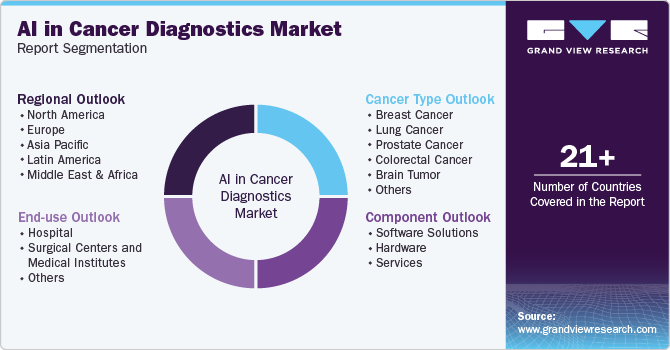
This report forecasts revenue growth at global, regional, and country levels and provides an analysis of the latest industry trends in each of the sub-segments from 2021 to 2033. For this study, Grand View Research has segmented the global AI in cancer diagnostics market report based on component, cancer type, end-use, and region:
-
Component Outlook (Revenue, USD Million, 2021 - 2033)
-
Software Solutions
-
Hardware
-
Services
-
-
Cancer Type Outlook (Revenue, USD Million, 2021 - 2033)
-
Breast Cancer
-
Lung Cancer
-
Prostate Cancer
-
Colorectal Cancer
-
Brain Tumor
-
Others
-
-
End-use Outlook (Revenue, USD Million, 2021 - 2033)
-
Hospital
-
Surgical Centers and Medical Institutes
-
Others
-
-
Regional Outlook (Revenue, USD Million, 2021 - 2033)
-
North America
-
U.S.
-
Canada
-
Mexico
-
-
Europe
-
UK
-
Germany
-
France
-
Italy
-
Spain
-
Norway
-
Denmark
-
Sweden
-
-
Asia Pacific
-
Japan
-
China
-
India
-
Australia
-
South Korea
-
Thailand
-
-
Latin America
-
Brazil
-
Argentina
-
-
Middle East and Africa (MEA)
-
South Africa
-
Saudi Arabia
-
UAE
-
Kuwait
-
-
Research Methodology
The artificial intelligence (AI) in cancer diagnostics market figures in this report are based on a proven research process that combines executive interviews with secondary research from proprietary databases, company filings, and recognized regulatory and institutional sources. Market size is built through value-chain sizing - reconciling supply-side and demand-side estimates - and triangulated with bottom-up and top-down approaches. Every estimate passes multiple levels of expert validation before publication, with each artificial intelligence (AI) in cancer diagnostics segment quantified using the revenue-capture definitions in the table below.
Segment Definition
Segment - Component Revenue capture definition Software Solutions AI-powered software platforms and applications used to analyze medical images, pathology slides, genomic data, laboratory results, and electronic health records for cancer detection, classification, risk assessment, and diagnostic decision support. These solutions utilize machine learning, deep learning, computer vision, and predictive analytics to enhance diagnostic accuracy and efficiency. Hardware Physical infrastructure and computing systems required to support AI-based cancer diagnostic workflows. This includes high-performance servers, graphics processing units (GPUs), data storage systems, digital pathology scanners, imaging equipment, and other hardware used for processing large-scale diagnostic datasets. Services Professional services related to the implementation, integration, validation, maintenance, consulting, training, technical support, and optimization of AI-driven cancer diagnostic solutions. These services help healthcare organizations deploy and manage AI technologies effectively within clinical environments. Segment - Cancer Type Revenue capture definition Breast Cancer AI applications used for the detection, diagnosis, screening, risk assessment, and characterization of breast cancer through the analysis of mammography, ultrasound, MRI, pathology, and genomic data. These solutions support early detection and improved clinical decision-making. Lung Cancer AI-driven diagnostic tools designed to identify, classify, and monitor lung cancer using imaging modalities such as chest X-rays and computed tomography (CT) scans, as well as pathology and molecular data. These systems assist in early detection and treatment planning. Prostate Cancer AI solutions utilized for the detection and assessment of prostate cancer through the analysis of prostate imaging, pathology specimens, biomarker data, and patient health records. These tools support risk stratification and diagnostic accuracy. Colorectal Cancer AI technologies used to assist in the screening, detection, diagnosis, and prognosis of colorectal cancer by analyzing colonoscopy images, pathology slides, radiology data, and clinical information to identify suspicious lesions and disease progression. Brain Tumor AI-based diagnostic systems developed to detect, classify, segment, and monitor brain tumors using MRI, CT, pathology, and molecular datasets. These tools support tumor characterization, treatment planning, and disease monitoring. Others Includes AI applications for the diagnosis and management of other cancer types such as liver cancer, pancreatic cancer, ovarian cancer, cervical cancer, skin cancer, gastric cancer, hematological malignancies, and other rare cancers. Segment - End Use Revenue capture definition Hospital Hospitals and integrated healthcare systems that utilize AI-powered cancer diagnostic solutions for screening, diagnosis, pathology analysis, radiology interpretation, treatment planning, and multidisciplinary oncology care. These institutions represent the primary users of advanced cancer diagnostic technologies. Surgical Centers and Medical Institutes Specialized cancer centers, academic medical institutions, surgical facilities, and research organizations that employ AI technologies to support cancer diagnosis, precision oncology, clinical research, surgical planning, and disease monitoring. Others Includes diagnostic laboratories, pathology laboratories, imaging centers, ambulatory care facilities, contract research organizations (CROs), and other healthcare settings that utilize AI-based cancer diagnostic tools and services. Estimation Model
Market Estimation Process
Market-specific Research Models
Consensus-Based Estimates & Forecasting
The AI in cancer diagnostics market presents emerging dominant opportunities, featuring global key players such as EarlySign; Cancer Center.ai; Microsoft; FLATIRON HEALTH (Roche Group); Roche; Therapixel; Tempus AI, Inc.; Kheiron Medical Technologies Limited; SkinVision. To ensure a holistic approach, the GVR research team adopted a comprehensive methodology, considering multiple companies worldwide and utilizing various variables for data accuracy.
Our methodology included:
-
Model 1: Commodity Flow Analysis - For public players, annual reports were referenced. For private players, premium paid data sources such as S&P Global, Crunchbase, ZoomInfo, RocketReach, etc., were used for the latest revenue insights.
-
Model 2: Parent Market Analysis
-
Model 3: Country-level Multivariate Analysis Assumptions
-
Model 4: Segment-level Multivariate Analysis Assumptions
-
Model 5: AI in Cancer Diagnostics Market CAGR Calculations
Model 1: Commodity Flow Analysis
Commodity flow analysis was employed to track the movement of AI in cancer diagnostics through the value chain, from technology providers to end users. This analysis provided insights into demand generation points, intermediary roles, and ultimate consumption patterns.
Delivered Customizations
This report has been delivered with the following In-depth customizations
Client Request
Customization Delivered
Value Adds
AI-Powered Cancer Diagnostics Adoption & Clinical Decision Support Analysis
Developed a tailored analysis of the global AI in cancer diagnostics market focused on AI-enabled imaging analysis, computer-aided detection (CAD), pathology diagnostics, radiomics, genomics interpretation, risk prediction, and clinical decision support solutions. The study assessed adoption trends across hospitals, cancer centers, diagnostic laboratories, academic research institutions, and healthcare networks while evaluating increasing cancer incidence, growing imaging volumes, precision oncology initiatives, and demand for early cancer detection technologies driving market growth.
Enables stakeholders to understand evolving oncology diagnostic trends, identify high-growth AI application areas, assess adoption opportunities across cancer care pathways, and evaluate the impact of AI technologies on diagnostic accuracy, workflow efficiency, early disease detection, and long-term market expansion.
Cancer Imaging Analytics, Precision Oncology & Diagnostic Innovation Assessment
Delivered a customized evaluation of AI utilization across breast cancer screening, lung cancer detection, skin cancer assessment, colorectal cancer risk prediction, digital pathology, biomarker identification, genomic profiling, and treatment response monitoring. The analysis assessed machine learning algorithms, deep learning-based image interpretation, predictive analytics platforms, real-world data integration, clinical validation requirements, physician adoption patterns, and demand for AI-driven oncology solutions supporting personalized cancer diagnosis and treatment planning. The assessment incorporated innovations from companies such as Tempus AI, Kheiron Medical Technologies, Therapixel, SkinVision, EarlySign, Cancer Center.ai, Roche, and Flatiron Health.
Provides actionable insights into commercially attractive diagnostic segments, emerging AI technologies, evolving clinical requirements, and growth opportunities associated with precision medicine, improved screening outcomes, accelerated diagnosis, optimized treatment selection, reduced diagnostic variability, and enhanced patient care.
Oncology Data Infrastructure, Regulatory Environment & Competitive Landscape Assessment
Conducted a focused assessment of the AI in cancer diagnostics ecosystem, including imaging databases, digital pathology platforms, genomic data repositories, cloud computing infrastructure, interoperability frameworks, cybersecurity requirements, regulatory compliance standards, and competitive positioning. The analysis evaluated implementation challenges, data privacy considerations, algorithm validation requirements, reimbursement trends, healthcare integration barriers, and competitive differentiation strategies among leading market participants including Microsoft, Roche, Flatiron Health (Roche Group), Tempus AI, Kheiron Medical Technologies, Therapixel, SkinVision, EarlySign, and Cancer Center.ai.
Supports strategic planning for AI platform development, precision oncology initiatives, technology investments, healthcare partnerships, clinical commercialization, geographic expansion, and market entry strategies by identifying adoption drivers, regulatory challenges, revenue opportunities, data infrastructure requirements, and competitive advantages across the global AI in cancer diagnostics value chain.
Frequently Asked Questions About This Report
The global artificial intelligence in cancer diagnostics market size was valued at USD 338.2 million in 2025 and is estimated at USD 424.0 million for 2026.
The global AI in cancer diagnostics market is expected to grow at a CAGR of 22.9% from 2026 to 2033, reaching USD 1,795.8 million by 2033.
Key factors that are driving the market growth are growing cancer prevalence, increasing healthcare IT expenditure, advancements in AI algorithms, and the increasing demand for early detection and classification of diseases.
Asia Pacific is the fastest-growing region over the forecast period.
Software solutions held the largest revenue share in 2025, while services is the fastest-growing area.
Breast cancer held the largest revenue share in 2025, while brain tumor is the fastest-growing area.
Hospital held the largest revenue share in 2025, while surgical centers and medical institutes is the fastest-growing area.
North America held the largest revenue share of 54.0% in 2025. This is attributed to the growing government initiatives and business strategies, including mergers & acquisitions, portfolio expansions, and collaborations by market players to promote AI implementation in the oncology field, are contributing to the accelerated growth in the region.
Some key players operating in the AI in cancer diagnostics market include EarlySign; Cancer Center.ai; Microsoft; FLATIRON HEALTH (Roche Group); Roche; Therapixel; Tempus AI, Inc.; Kheiron Medical Technologies Limited; SkinVision
About the Author(s)
Healthcare IT Research Team
Healthcare · Healthcare ITThis report was authored by the healthcare it research team at Grand View Research - comprising two research analysts, one senior research analyst, and one industry expert - with specialized expertise in the healthcare it segment of the healthcare industry. All findings are based on proprietary healthcare databases, executive interviews, and regulatory analysis, subject to internal peer review prior to publication.
Last Updated:
Speak to Analyst


Customize this report to your needs — add regions, segments, or data points, with 20% free customization.
Or view our licence options:


ISO 9001:2015 & 27001:2022 Certified
We are GDPR and CCPA compliant! Your transaction & personal information is safe and secure. For more details, please read our privacy policy.


