
- Home
- »
- Healthcare IT
- »
-
AI In Cardiology Market Size And Share Report, 2026-2033GVR Report cover

AI In Cardiology Market (2026 - 2033) Size, Share & Trends Analysis Report By Component (Software, Hardware, Services), By Application (Diagnosis, Prediction, Drug Discovery), By Medical Condition, By Region, And Segment Forecasts
Market Size, 2025
$1.7BMarket Estimate, 2026
$2.2BMarket Forecast, 2033
$14.8BCAGR, 2026–2033
31.2%AI In Cardiology Market Summary
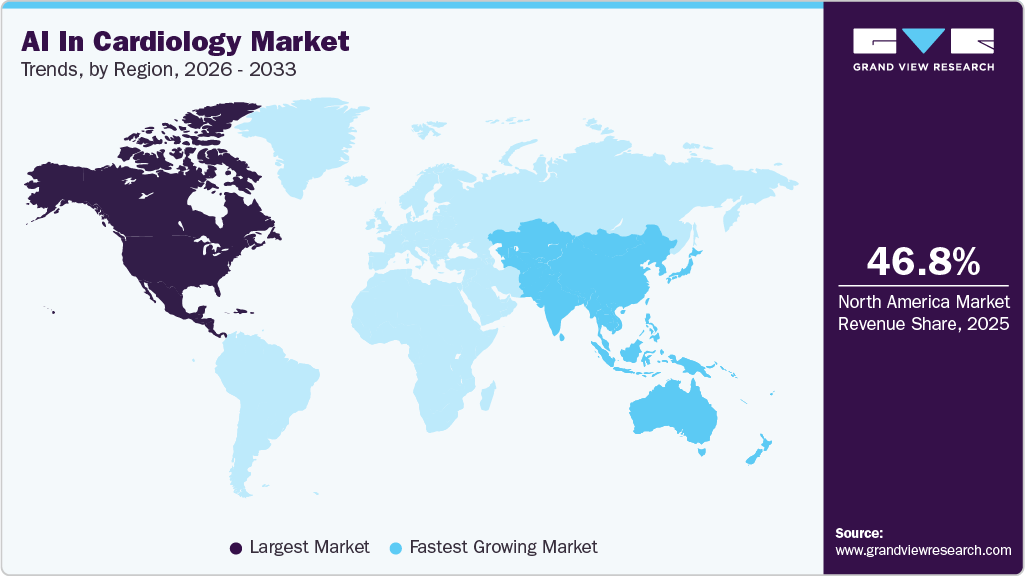
The global AI in cardiology market size was valued at USD 1.7 billion in 2025 and is projected to grow from USD 2.2 billion in 2026 to USD 14.8 billion by 2033, at a CAGR of 31.2% from 2026 to 2033. North America dominated the artificial intelligence in cardiology market with the largest revenue share of 46.8% in 2025. The rising global prevalence of cardiovascular diseases, coupled with the increasing focus of cardiac specialists on enhancing diagnostic precision and rapid advancements in cardiac imaging technology, are among the key factors responsible for expanding the applications of artificial intelligence (AI) in cardiology.
 Source: Grand View Research, IR Documents, Primary Interviews, Paid DatabasesTo learn more about this report,
 Download Free Sample Report
 Key Market Trends & Insights
- By component: Hardware segment led the market with the largest revenue share of 36.9% in 2025.
- By application: Diagnosis segment led the market with the largest revenue share 40.0% in 2025.
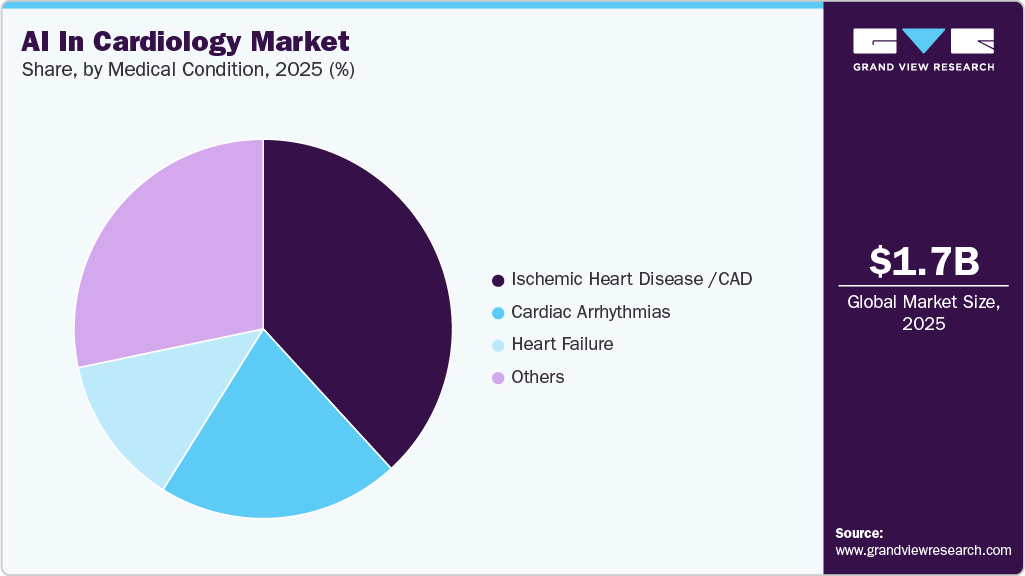
- By medical condition: Ischemic heart disease /CAD segment held the largest share of 38.2% in 2025.
Regional Highlights
- Largest regional market: North America (46.8% revenue share, 2025)
- Fastest-growing regional market: Asia Pacific (highest CAGR, 2026-2033)
- By country: The U.S. AI in cardiology market held the largest share in North America.
Market Size & Forecast
- Market size in 2025: USD 1.7 Billion
- Estimated market size in 2026: USD 2.2 Billion
- Projected market size by 2033: USD 14.8 Billion
- CAGR (2026-2033): 31.2%
Three ways to get this report
Buy it, customize it, or ask a question.Ask an Analyst
Analyst response in 1 business day
- AccessReport author, directly
- Reply timeWithin 1 working day
- No sales callDirect answer only
- FormatEmail reply
- CostFree, no cost
Get the Full Report
What the study covers
- FormatsPDF · Excel · Dashboard
- Timeline2026–2033 annual, 2025 base
- Coverage20+ countries, 5 regions
- Companies10+ key players profiled
Customize the Report
20% free customization
- IncludeCountries, segments, points
- TailorTo your product definition
- ExtendDeeper competitor detail
- OrA fully bespoke study
- Turnaround5–10 working days
For instance, in January 2026, Cleerly, Inc. announced that Aetna expanded coverage for its AI-QCT plaque analysis technology, supporting improved diagnosis and risk assessment of coronary artery disease through advanced AI-enabled coronary imaging and broader clinical adoption across the insured population.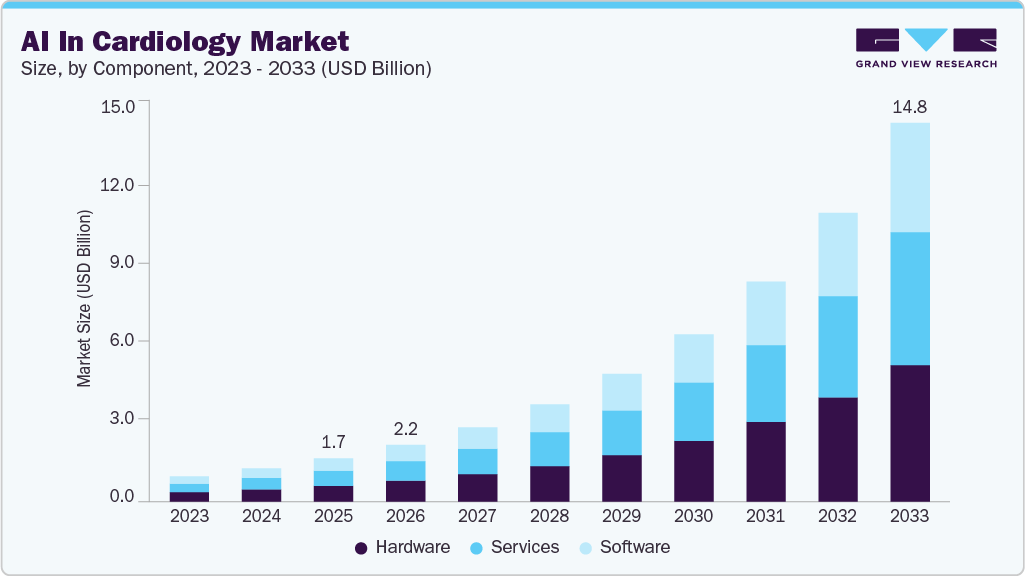 To learn more about this report, Download Free Sample Report
 Increasing prevalence of cardiovascular diseases (CVDs)
A primary factor driving the growth of artificial intelligence (AI) in cardiology industry is the increasing prevalence of cardiovascular diseases (CVDs) and the consequent need for efficient & effective healthcare solutions. According to the WHO, CVD remains the leading cause of mortality worldwide. For instance, an estimated 19.8 million people died from CVDs in 2022, representing approximately 32% of all global deaths. Similarly, according to the Centers for Disease Control and Prevention (CDC), 919,032 people died from cardiovascular disease in the U.S. in 2023, equivalent to one in every three deaths. This escalating burden necessitates the development and implementation of advanced technologies to improve disease management and patient outcomes.
The high prevalence of conditions such as hypertension, coronary artery disease, heart failure, and arrhythmia puts a substantial strain on healthcare systems globally. Traditional diagnostic & treatment methods are often time-consuming & resource-intensive and are likely to lack the precision required for optimal patient care. AI offers a transformative solution by enhancing the accuracy and efficiency of CVD detection, diagnosis, and management.
Growing Integration of AI in Cardiology
Moreover, the integration of AI in cardiology facilitates personalized medicine. By analyzing individual patient data, AI assists in tailoring treatment plans designed to address the unique needs and conditions of each patient. In March 2026, South Korea advanced AI adoption in public healthcare by initiating policy discussions, launching a national AI task force, and planning a “public healthcare AI highway” to enhance care coordination, reduce regional disparities, and support patient-centered healthcare delivery. This personalized approach enhances the efficacy of interventions and improves patients' overall quality of life.
Technological advancements in AI algorithms and imaging techniques significantly drive the growth of artificial intelligence in cardiology market. The development of advanced machine learning and deep learning algorithms has revolutionized the capabilities of AI in medical imaging and diagnostics. These advanced algorithms can now process vast amounts of data with high precision, allowing early detection, accurate diagnosis, and personalized treatment plans for CVDs. In March 2026, Verily secured USD 300 million in funding to advance its AI-based health strategy, supporting platform development, enhancing data integration capabilities, and accelerating deployment of AI-driven insights across clinical research and healthcare delivery workflows. Similarly, in February 2025, Heart Eye Diagnostics developed Dr.Noon CVD, an AI-driven retinal imaging system for cardiovascular disease (CVD) risk assessment. Using noninvasive retinal images instead of CT or blood tests, it offers accuracy comparable to heart CT scans and delivers results in three minutes.
Rising strategic initiatives and funding in AI cardiology
The growth of AI in cardiology industry is significantly propelled by the rise in strategic initiatives and the surge in startup funding. Strategic initiatives, including partnerships, new launches, collaborations, & acquisitions, foster innovation and accelerate the development & deployment of AI solutions in cardiology. For instance, in January 2026, Koninklijke Philips N.V.partnered with MediReport to deliver an AI-enabled, end-to-end cardiovascular workflow integrating imaging, analysis, and structured reporting to enhance efficiency, data integration, and clinical decision-making in cardiology. Similarly, in July 2025, Anumana partnered with Philips to launch the Philips ECG AI Marketplace, which enables cardiac care teams to easily access multiple validated AI diagnostic tools on a single platform. Anumana's FDA-cleared ECG-AI LEF algorithm for detecting reduced ejection fraction (an early heart failure marker) is the flagship offering, integrated into Philips' ECG devices and workflow.
 To learn more about this report, Download Free Sample Report
 Market Concentration & Characteristics
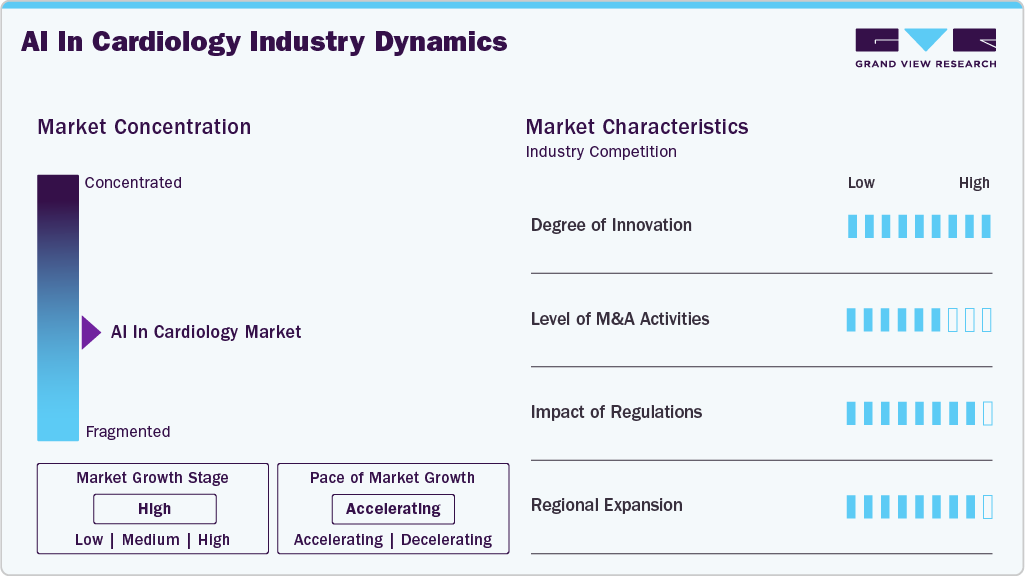
The chart below illustrates the relationship between industry concentration, industry characteristics, and industry participants. The x-axis represents the level of industry concentration, ranging from low to high. The y-axis shows various industry characteristics, including competition, mergers and acquisitions, innovation, regulatory impact, and regional expansion. The artificial intelligence in cardiology market is fragmented. The degree of innovation, the impact of regulations, and the regional expansion of industry are high. Moreover, the level of mergers & acquisitions is moderate.
The degree of innovation in the AI in cardiology industry is high. The growing use of machine learning, deep learning, cloud computing, big data analytics, and other technologies drives technological advancements. For instance, in August 2025, the Bordeaux-based AI company DESKi introduced HeartFocus, a cardiac examination software now integrated into Butterfly Network’s handheld ultrasound devices. The tool, available as an application and a software development kit, gained FDA clearance in April. Even with minimal training, it enables healthcare professionals to capture complete echocardiographic views.
 To learn more about this report, Download Free Sample Report
 M&A activities, such as mergers, acquisitions, and partnerships, enable companies to expand geographically, financially, and technologically. For instance,in December 2025, Koninklijke Philips N.V. agreed to acquire SpectraWAVE, Inc., expanding its intravascular imaging portfolio with AI-enabled coronary imaging and physiology technologies to enhance the diagnosis and treatment of coronary artery disease.
The impact of regulations is moderate to high in the artificial intelligence in cardiology market. The industry involves several digital technologies, including AI and ML. It is regulated by different bodies in different countries. For instance, in October 2023, the WHO published key regulatory considerations for AI in healthcare. It emphasized key factors such as transparency, documentation, risk management, AI systems development lifecycle methods, intended use, clinical & analytical validation, AI-based data quality, protection & privacy, and collaboration & engagement.
Geographic expansion significantly drives the AI in cardiology industry by increasing market penetration and revenue, enabling access to diverse data sources, and fostering regulatory compliance and standardization. For instance, in November 2025, Philips expanded its AI-driven healthcare investments in China, showcasing over 50 innovations at CIIE, supported by a market with more than 400 AI models and over 100 approved medical AI products, reflecting strong digital health adoption.
Component Insights
AI-powered cardiology hardware devices dominated the market with the largest share of 36.86% in 2025 by offering enhanced diagnostic accuracy and treatment precision. These devices include advanced wearable monitors that continuously track vital signs, smart ECG machines that provide real-time analysis, and AI-enabled imaging systems that improve the detection of cardiac conditions through enhanced image processing. These innovations streamline workflows for healthcare providers and improve cardiovascular patient outcomes. For instance, in May 2024, Koninklijke Philips N.V. announced the successful deployment of ePatch across Spain. It uses the AI-driven Cardiologs analytics platform to detect heart arrhythmias, such as Atrial Fibrillation (AF).
The software segment is expected to grow at the fastest CAGR during the forecast period. AI-based software in cardiology is revolutionizing the field by enhancing diagnostic accuracy, improving patient monitoring, and enabling personalized treatments. Key applications include analyzing medical images, predicting cardiac events, and optimizing treatment plans. The FDA-cleared solution enables users with minimal training to acquire complete echocardiographic views, addressing sonographer shortages and improving access to cardiac diagnostics. Similarly, in October 2025, Circle Cardiovascular Imaging received U.S. FDA clearance for its cvi42 Plaque AI software for coronary CT angiography analysis, improving plaque assessment, workflow efficiency, and study processing, while supporting broader clinical adoption with upcoming permanent CPT Category I reimbursement coverage.
Application Insights
The diagnosis segment dominated the artificial intelligence in cardiology market, accounting for the largest share of 40.05% in 2025. AI systems analyze medical data, such as electrocardiograms, echocardiograms, and imaging scans, to accurately identify cardiac abnormalities & predict cardiovascular events, leveraging advanced algorithms and machine learning techniques. These AI-powered diagnostic tools enable healthcare professionals to make quicker and more precise diagnoses, leading to earlier interventions & improved patient outcomes. For instance, in January 2026, Cleerly announced Aetna coverage for its AI-powered CCTA-based plaque analysis software, expanding payer support for AI-QCT technology and enhancing the diagnosis and assessment of coronary artery disease through improved plaque characterization, risk stratification, and clinical decision-making.
The prediction segment is expected to grow at the fastest CAGR over the forecast period. The predictive models enable healthcare providers to identify high-risk individuals, implement preventive measures, and design individualized treatment plans, ultimately improving patient outcomes and reducing healthcare costs. Hence, market players are actively advancing AI-powered prediction solutions in the cardiology domain. For instance, in May 2024, iHealthScreen developed and approved risk prediction models for cardiovascular disease using individuals' retinal color images alongside their health data.
Medical Condition Insights
The ischemic heart disease (IHD)/CAD segment dominated the artificial intelligence in cardiology industry, with the largest share of 38.18% in 2025. The growth is attributed to the rising prevalence of CAD/IHD. Using advanced algorithms and machine learning, AI analyzes medical images, genetic data, and patient health records to detect early signs of IHD/CAD, predict patient outcomes, and personalize treatment plans. For instance, in February 2024, the founders of Cincinnati-based Genexia developed AI technology to assess CAD risk during mammograms, offering women an additional preventative diagnostic health marker.
 To learn more about this report, Download Free Sample Report
 The cardiac arrhythmias segment is expected to grow at the fastest CAGR over the forecast period. Atrial Fibrillation (AF) is one of the most common clinically significant cardiac arrhythmias associated with various cardiovascular complications such as stroke and increased mortality. AI algorithms have significantly enhanced routine digital devices and diagnostic technology, enabling large-scale population screening and improved diagnostic assessments. In January 2026, AccurKardia received U.S. FDA clearance for its AccurECG 2.0 AI-enabled ECG analysis platform, enabling automated interpretation of 13 cardiac rhythms, including atrial fibrillation, while supporting scalable, device-agnostic deployment across diverse clinical and diagnostic settings.
Regional Insights
North America dominated the artificial intelligence in cardiology industry with a revenue share of 46.79% in 2025. Advancements in AI & ML technologies, growing demand for early & accurate diagnosis, strategic initiatives by market players, and increasing prevalence of cardiovascular diseases are key factors expected to drive the regional market. For instance, in November 2025, Koninklijke Philips N.V. introduced an AI-enabled cardiac MR innovation suite that incorporates automated planning, accelerated imaging, and motion correction technologies, enhancing workflow efficiency, improving diagnostic precision, and expanding access to advanced cardiac imaging across diverse patient populations.
 To learn more about this report, Download Free Sample Report
 U.S. AI in Cardiology Market Trends
The AI in cardiology industry in the U.S. is driven by the advancements in ML & deep learning technologies, which can enable the development of refined algorithms to analyze complex medical data, such as imaging & genetic information, to provide early detection, personalized treatment plans, and improved patient outcomes. In March 2026, Microsoft introduced Copilot Health, an AI-driven feature within its Copilot platform that enables personalized health insights by integrating medical records, wearable data, and clinical information, thereby supporting chronic disease management while ensuring secure, privacy-compliant data handling.
Europe AI in Cardiology Market Trends
The artificial intelligence in cardiology industry in Europe is expected to be driven by the region’s significantregulatory support for AI innovation, substantial funding from EU authorities & national governments, and well-established healthcare infrastructure. In June 2025, the EuroHeartPath initiative assessed cardiovascular care organizations across Europe, conducted 18 pathfinder studies, leveraged advances in AI, digital health, point‑of‑care testing, and robotics, and evaluated best practices to enhance prevention, diagnosis, monitoring, and treatment, with a USD 31 million budget.
The UK artificial intelligence in cardiology market is expected to be driven by increased efforts of market players to promote AI-powered devices and tools in treating heart disorders. For instance, in November 2023, GP clinics in Wales and London announced participation in a trial deploying an AI-powered tool to improve the diagnosis of heart failure. The TRICORDER program, funded by a USD 1.3 million (EUR 1.2 million) award from the National Institute for Health and Care Research (NIHR) and led by Imperial College London researchers, would provide AI-enabled smart stethoscopes to 100 primary care practices.
The Germany AI in cardiology market is expected to grow over the forecast period. The increasing number of R&D activities is one of the significant factors boosting the growth. For instance, in August 2025, deepc partnered with Us2.ai to integrate FDA-cleared echocardiography AI into clinical workflows, automating over 150 measurements, improving diagnostic accuracy for cardiac amyloidosis, reducing analysis time, and enhancing clinician efficiency and patient care.
Asia Pacific AI in Cardiology Market Trends
The Asia Pacific artificial intelligence in cardiology market is expected to be driven by the increasing prevalence of cardiovascular diseases in multiple countries, boosting the demand for more efficient and accurate diagnostic & treatment solutions. A key factor driving market growth is the rising elderly population in the Asia Pacific region. According to the United Nations Economic and Social Commission for Asia and the Pacific, in 2023, approximately 697 million individuals aged 60 or older lived in the Asia and the Pacific region, constituting approximately 60% of the global older population. The elderly population is more susceptible to cardiovascular diseases, and the increase is leading to a higher demand for artificial intelligence in cardiology devices.
The Japan in cardiology market is projected to grow during the forecast period. The increasing collaborations among universities, hospitals, and companies is expected to drive the market growth. For instance, in October 2023, Mount Sinai's Icahn School of Medicine announced signing a Memorandum of Understanding (MoU) with the Chiba Institute of Technology (CIT), establishing a collaborative partnership to leverage AI in cardiovascular disease research. This initiative is designed to enhance the efficiency of clinical trials, accelerate improvements in patient care, and expedite the introduction of potential new treatments for individuals suffering from heart conditions.
The India AI in cardiology market is expected to be driven by the high prevalence of cardiovascular diseases and increasing investments in healthcare technology. Collaborations between healthcare providers and technology companies promote the development & deployment of AI-driven cardiology solutions. In October 2025, Biostate AI partnered with Narayana Health to develop a 12,000-patient, India-specific cardiac AI dataset to address diagnostic gaps, as South Asians develop heart disease 5-10 years earlier, enabling improved early detection and precision cardiology solutions.
Moreover, in March 2025, Kanpur's Cardiology Institute integrated AI technology to enhance advanced cardiac care. This initiative aims to improve diagnostic accuracy and treatment outcomes for patients with heart conditions.
Key AI in Cardiology Company Insights
Strategic initiatives, including partnerships, new launches, collaborations, & acquisitions, foster innovation and accelerate the development & deployment of AI solutions in cardiology. For instance, in November 2023, VERSICLES TECHNOLOGIES PVT LTD, a Kerala, India-based startup, launched an AI-based digital health kiosk that claimed to offer basic diagnostics for blood sugar, blood pressure, and heart conditions in multiple languages at the lowest cost. These initiatives are often aimed at integrating AI with existing healthcare infrastructure, enhancing diagnostic accuracy, and improving patient outcomes.
Furthermore, in October 2023, Ultromics Limited received approval from the Centers for Medicare & Medicaid Services (CMS) for the New Technology Add-On Payment (NTAP) for its AI system, EchoGo Heart Failure. This technology is a diagnostic aid for Heart Failure with Preserved Ejection Fraction (HFpEF) during routine echocardiography assessments.
Key AI in Cardiology Companies:
The following key companies have been profiled for this study on the ai in cardiology market.
- GE Healthcare
- Heartflow, Inc.
- IDOVEN
- CardiAI
- Ultromics Limited
- Arterys Inc. (Tempus AI)
- Ultrasight
- Koninklijke Philips N.V.
- Vista AI
- Viz.ai, Inc.
- RSIP Vision
- Cleerly, Inc.
- Medical AI Co., Ltd.
- Anumana, Inc.
- Aidoc
- Circle Cardiovascular Imaging Inc.
- Eko Health, Inc.
- cardiomatics.com
Recent Developments
-
In March 2026, Philips received FDA 510(k) clearance for SmartHeart, an AI-powered cardiac MR planning solution that automated 14 standard and advanced views in under 30 seconds, reducing operator variability, simplifying workflow, and improving accessibility to cardiac MR imaging.
-
Heartflow, Inc. received U.S. FDA 510(k) clearance for its Next Generation Plaque Analysis platform, featuring an updated algorithm, expanded nomogram, and 3D color-coded visualization, enhancing AI-powered coronary plaque quantification and supporting precise, informed clinical decision-making.
-
In June 2025, HeartSciences received FDA Breakthrough Device designation for its AI-driven ECG algorithm, designed to detect moderate-to-severe aortic stenosis. Trained on more than 120,000 ECG records, the model can predict the disease up to 24 months before confirmatory echocardiography, with high diagnostic accuracy.
-
In May 2025, Anumana expanded its AI platform to encompass complete cardiovascular care, beyond diagnostic ECG-AI technology, into perioperative and acute cardiac care. The company is developing generative AI imaging and visualization technologies to enhance patient outcomes for heart patients.
-
In March 2025, Fujifilm collaborated with Us2.ai to implement AI automation in echocardiography. This collaboration integrates Us2.ai's AI-driven analysis with Fujifilm's LISENDO 800 Ultrasound System, enabling fully automated assessments of heart chambers.
-
In March 2025, Cleerly showcased its advanced AI heart imaging technology at the American College of Cardiology's Chicago Community Health Fair. The company demonstrated FDA-cleared heart image analyses using mobile scanners in collaboration with Corazon Imaging and Philips, aiming to enhance cardiovascular health awareness and diagnostics.
-
In March 2025, GE HealthCare expanded its invasive cardiology solutions by introducing the AltiX AI.i edition of Mac-Lab, CardioLab, and ComboLab systems.
-
In January 2025, Philips and Myocardial Solutions partnered to enhance AI-powered cardiac MR imaging.
-
In May 2024, InfoBionic.Ai partnered with HBox.ai to develop a comprehensive cardiovascular care solution for the “Cardiology Clinic of the Future.” This collaboration combines the advanced cardiac telemetry of InfoBionic.Ai with the virtual care model of HBox.ai, providing AI-driven tools for virtual consultations, remote monitoring, and diagnostic care.
-
In April 2024, Viz.aipartnered with iCardio.ai to enhance aortic stenosis detection through the integration of ultrasound imaging and artificial intelligence.
-
In April 2024, the Faithful Innovation Project consortium, led by Idoven and supported by EIT Health, initiated the development of an AI-based solution for ECGs to reduce heart failure-related hospitalizations in Europe by 40%.
-
In January 2024, Cleerly launched Cleerly ISCHEMIA, cleared by the U.S. FDA under the 510(k) medical device category. Leveraging AI technology, Cleerly ISCHEMIA assesses the potential presence or absence of coronary vessel ischemia by analyzing quantitative data on stenosis, atherosclerosis, & notable vascular morphology from patients’ CCTA images.
-
In October 2023, Ultromics Limited obtained approval for the New Technology Add-On Payment (NTAP) from the Centers for Medicare & Medicaid Services (CMS) for its AI system, EchoGo Heart Failure. This technology is a diagnostic aid for Heart Failure with Preserved Ejection Fraction (HFpEF) during routine echocardiography assessments.
AI In Cardiology Market Report Scope
Report Attribute
Details
Market size in 2025
USD 1.7 billion
Estimated Market size in 2026
USD 2.2 billion
Projected Market size by 2033
USD 14.8 billion
Growth rate
CAGR of 31.2% from 2026 to 2033
Actual data
2021 - 2025
Forecast period
2026 - 2033
Quantitative units
Revenue in USD million/billion and CAGR from 2026 to 2033
Report coverage
Revenue forecast, company ranking, competitive landscape, growth factors, and trends
Segments covered
Component, application, medical condition, region
Regional scope
North America; Europe; Asia Pacific; Latin America; MEA
Country scope
U.S.; Canada; Mexico; UK; Germany; Spain; France; Italy; Denmark; Sweden; Norway; China; Japan; India; Australia; South Korea; Thailand; Brazil; Argentina; South Africa; Saudi Arabia; UAE; Kuwait
Key companies profiled
GE Healthcare; Heartflow, Inc.; IDOVEN; CardiAI; Ultromics Limited; Arterys Inc. (Tempus AI); Ultrasight; Koninklijke Philips N.V.; Vista AI; Viz.ai, Inc.; RSIP Vision; Cleerly, Inc.; Medical AI Co., Ltd.; Anumana, Inc.; Aidoc; Circle Cardiovascular Imaging Inc.; Eko Health, Inc.; cardiomatics.com
Customization scope
Free report customization (equivalent up to 8 analysts working days) with purchase. Addition or alteration to country, regional & segment scope.
Pricing and purchase options
Avail customized purchase options to meet your exact research needs. Explore purchase options
Global AI In Cardiology Market Report Segmentation
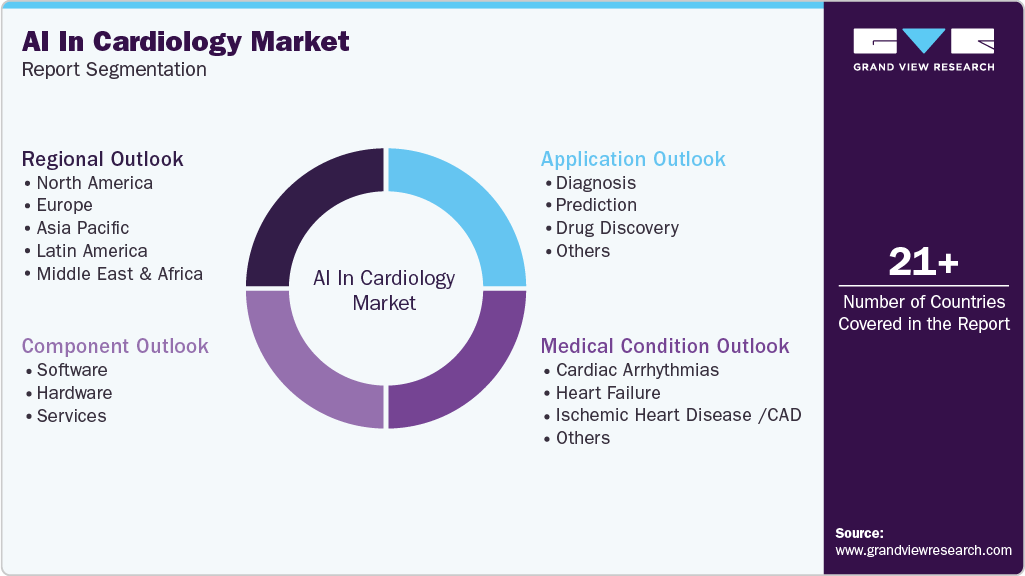
This report forecasts revenue growth and provides at the global, regional, and country levels an analysis of the latest trends in each of the sub-segments from 2021 to 2033. For this report, Grand View Research has segmented the global AI in cardiology market report based on component, application, medical condition, and region:
 To learn more about this report, Download Free Sample Report
 -
Component Outlook (Revenue, USD Million, 2021 - 2033)
-
Software
-
Hardware
-
Services
-
-
Application Outlook (Revenue, USD Million, 2021 - 2033)
-
Diagnosis
-
Prediction
-
Drug Discovery
-
Others
-
-
Medical Condition Outlook (Revenue, USD Million, 2021 - 2033)
-
Cardiac Arrhythmias
-
Heart Failure
-
Ischemic Heart Disease /CAD
-
Others
-
-
Regional Outlook (Revenue, USD Million, 2021 - 2033)
-
North America
-
U.S.
-
Canada
-
Mexico
-
-
Europe
-
UK
-
Germany
-
France
-
Italy
-
Spain
-
Denmark
-
Sweden
-
Norway
-
-
Asia Pacific
-
Japan
-
China
-
India
-
Australia
-
South Korea
-
Thailand
-
-
Latin America
-
Brazil
-
Argentina
-
-
Middle East & Africa
-
South Africa
-
Saudi Arabia
-
UAE
-
Kuwait
-
-
Frequently Asked Questions About This Report
Some key players operating in the artificial intelligence in cardiology market include GE Healthcare; Heartflow, Inc.; IDOVEN; CardiAI; Ultromics Limited; Arterys Inc. (Tempus AI); Ultrasight; Koninklijke Philips N.V.; Vista AI; Viz.ai, Inc.; RSIP Vision; Cleerly, Inc.; Medical AI Co., Ltd.; anumana, Inc.; Aidoc; Circle Cardiovascular Imaging Inc.; Eko Health, Inc.; cardiomatics.com
The Asia Pacific AI in cardiology market is expected to grow at the fastest CAGR from 2026 to 2033.
AI-powered cardiology hardware devices dominated the market with the largest share of 36.9% in 2025.
The diagnosis segment dominated the AI in cardiology market, accounting for the largest share of 40.0% in 2025.
The ischemic heart disease (IHD)/CAD segment dominated the market, with the largest share of 38.2% in 2025.
The global artificial intelligence in cardiology market is expected to grow at a compound annual growth rate of 31.2% from 2026 to 2033 to reach USD 14.8 billion by 2033.
North America dominated the AI in cardiology market with a share of over 46.8% in 2025. This is attributable to well-established healthcare infrastructure, rapid adoption of technologically advanced products, and increasing regulatory approvals of AI products in the region.
Key factors include the high burden of cardiovascular diseases worldwide, the growing interest of cardiac physicians to improve accuracy in diagnosing heart diseases, and technological advancement in cardiac imagining.
The global artificial intelligence in cardiology market size was estimated at USD 1.7 billion in 2025 and is expected to reach USD 2.2 billion in 2026.
About the Author(s)
Healthcare IT Research Team
Healthcare · Healthcare ITThis report was authored by the healthcare it research team at Grand View Research - comprising two research analysts, one senior research analyst, and one industry expert - with specialized expertise in the healthcare it segment of the healthcare industry. All findings are based on proprietary healthcare databases, executive interviews, and regulatory analysis, subject to internal peer review prior to publication.
Last Updated:
Speak to Analyst

Customize this report to your needs - add regions, segments, or data points, with 20% free customization.
Or view our licence options:


ISO 9001:2015 & 27001:2022 Certified
We are GDPR and CCPA compliant! Your transaction & personal information is safe and secure. For more details, please read our privacy policy.


