
- Home
- »
- Conventional Energy
- »
-
Automotive Fuel Market Size, Growth Report, 2026-2033GVR Report cover

Automotive Fuels Market (2026 - 2033)
Size, Share & Trends Analysis Report By Fuel (Gasoline, Diesel, Natural Gas, CNG, Biofuels, Hydrogen, Synthetic Fuels), By Vehicle ((Light-duty Vehicles (LDVs), Heavy-duty Vehicles (HDVs)), By Region, And Segment Forecasts
Market Size, 2025
$2,950.7BMarket Estimate, 2026
$3,018.7BMarket Forecast, 2033
$3,393.1BCAGR, 2026–2033
1.7%Automotive Fuels Market Summary
The global automotive fuels market size was valued at USD 2,950.7 billion in 2025 and is projected to grow from USD 3,018.7 billion in 2026 to USD 3,393.1 billion by 2033, at a CAGR of 1.7% from 2026 to 2033. Asia Pacific dominated the global market, accounting for the largest revenue share of 37.3% in 2025. The market is expanding due to stringent environmental regulations and rising demand for fuel-efficient vehicles.
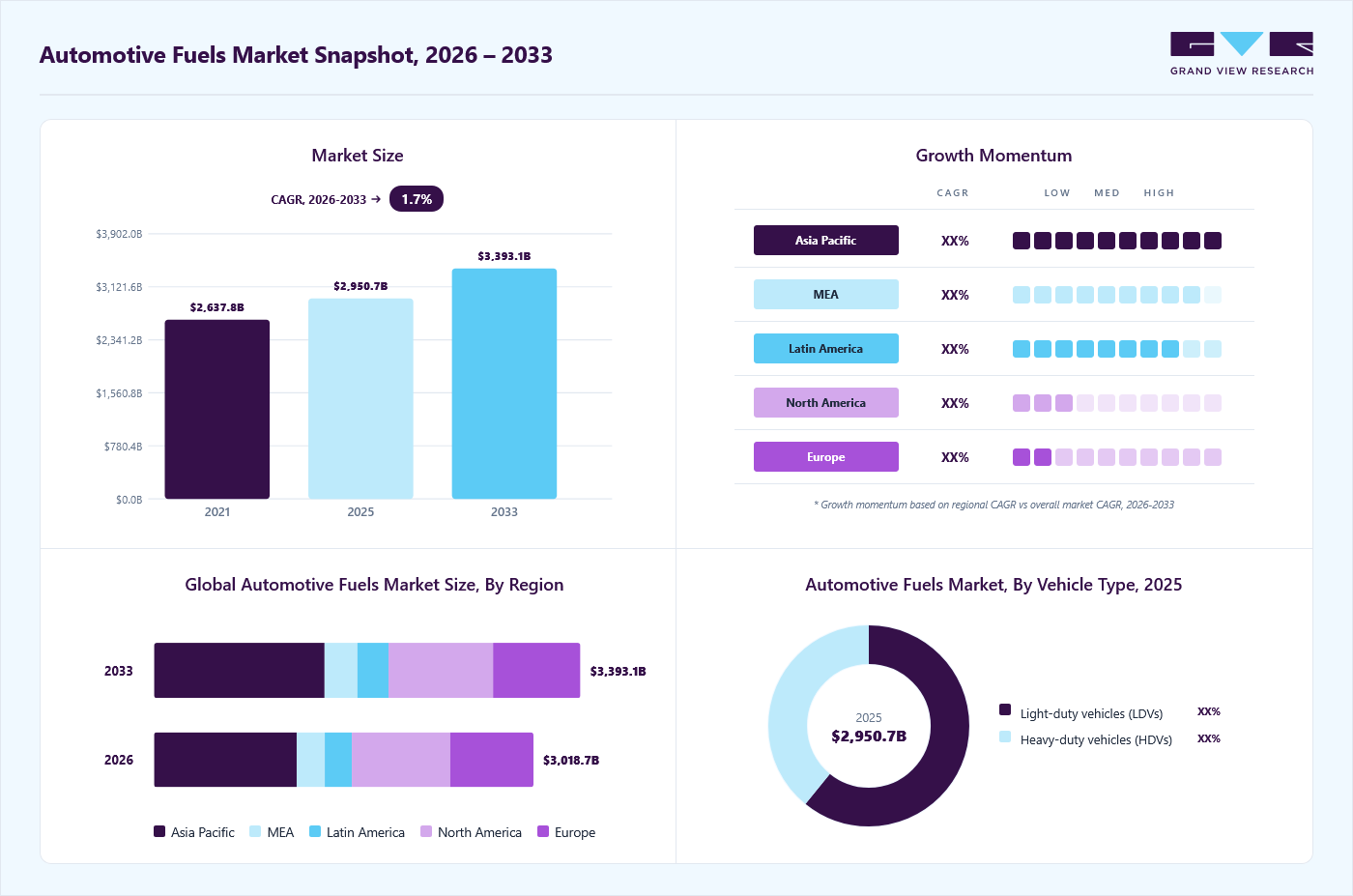 Source: Grand View Research, IR Documents, Primary Interviews, Paid DatabasesTo learn more about this report,
 Download Free Sample Report
 Key Market Trends & Insights
- By fuel: Gasoline segment accounted for the largest market share of 50.0% in 205.
- By vehicle: Light-duty vehicles (LDVs) sub-segment held the largest revenue share of 60.8% in 2025.
Regional Highlights
- Largest regional market: Asia Pacific (37.3% revenue share, 2025)
- By country: The China automotive fuels industry is a major contributor to the global market.
Market Size & Forecast
- Market size in 2025: USD 2,950.7 Billion
- Estimated market size in 2026: USD 3,018.7 Billion
- Projected market size by 2033: USD 3,393.1 Billion
- CAGR (2026-2033): 1.7%
Three ways to get this report
Buy it, customize it, or ask a question.Ask an Analyst
Analyst response in 1 business day
- AccessReport author, directly
- Reply timeWithin 1 working day
- No sales callDirect answer only
- FormatEmail reply
- CostFree, no cost
Get the Full Report
What the study covers
- FormatsPDF · Excel · Dashboard
- Timeline2026–2033 annual, 2025 base
- Coverage20+ countries, 5 regions
- Companies10+ key players profiled
Customize the Report
20% free customization
- IncludeCountries, segments, points
- TailorTo your product definition
- ExtendDeeper competitor detail
- OrA fully bespoke study
- Turnaround5–10 working days
Governments across major economies are implementing stricter emission norms and carbon reduction targets, compelling manufacturers and fuel providers to adopt cleaner and more efficient fuel alternatives. The market is experiencing rapid growth, primarily driven by the increasing production and sales of vehicles worldwide. Rapid urbanization, rising disposable incomes, and improving living standards are leading to higher vehicle ownership, thereby boosting fuel consumption. The expansion of passenger and commercial vehicles, along with the growth of logistics and transportation activities, is further strengthening demand for automotive fuels such as petrol, diesel, and alternative fuels. Increasing mobility needs, infrastructure development, and the rise of e-commerce and last-mile delivery services are contributing to higher fuel usage across regions.
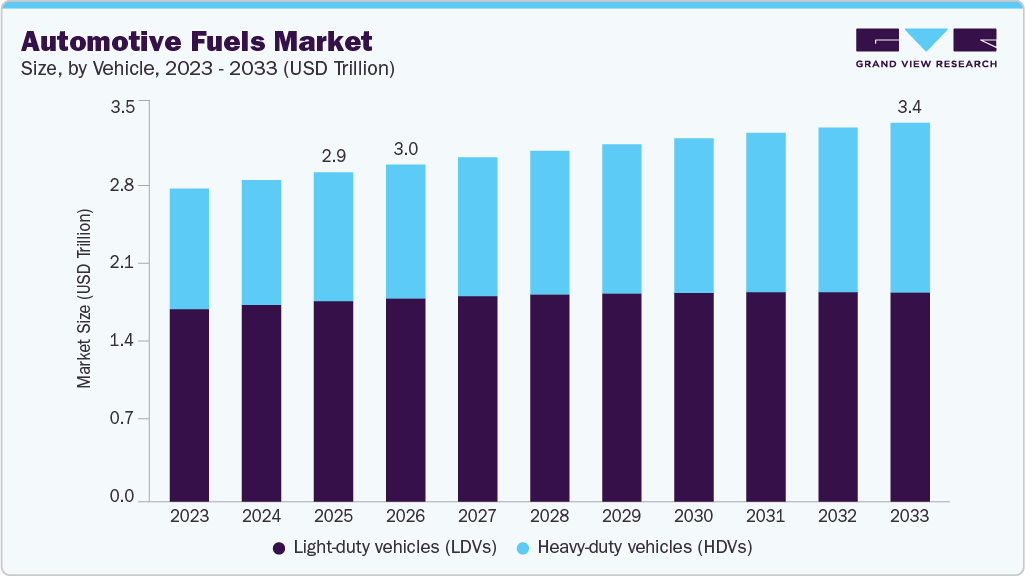 To learn more about this report, Download Free Sample Report
 The rapid expansion of e-commerce, industrialization, and global trade has significantly increased freight movement and last-mile delivery operations. This surge in logistics activities has led to higher utilization of commercial vehicles, particularly trucks and delivery vans. Therefore, the demand for automotive fuels, especially diesel, continues to rise. Growing supply chain networks and faster delivery expectations are further intensifying fuel consumption across the transportation sector.
Drivers, Opportunities & Restraints
The primary driver of the automotive fuels industry is the rising production and ownership of vehicles, particularly in developing economies. Improving economic conditions and increasing disposable incomes are enabling consumers to purchase personal vehicles, leading to a steady expansion of the global number of vehicles in use. Rapid urbanization, population growth, and enhanced mobility needs are further contributing to higher fuel consumption across passenger and commercial segments. The growth of transportation, logistics, and daily commuting activities continues to reinforce demand for automotive fuels. Increased spending capacity and vehicle usage are directly supporting sustained market growth.
The growing focus on sustainable energy solutions is creating significant opportunities within the automotive fuels industry through biodiesel and waste-to-fuel production. The conversion of agricultural waste, used cooking oil, and other residues into usable fuels is enabling the development of environmentally friendly alternatives to conventional fuels. Advancements in processing technologies are improving fuel quality, scalability, and cost efficiency. These developments are opening new avenues across bio-refining, waste management integration, and circular economy initiatives, while supporting emission reduction goals and reducing dependence on fossil fuels.
However, the rapid shift toward electric vehicles is posing a significant challenge to the market by reducing long-term demand for conventional fuels. With global EV sales rising sharply, traditional fuel supply chains and infrastructure are facing increasing pressure to adapt. The transition is constrained by the lack of reliable and widespread charging infrastructure, leading to concerns such as range anxiety among consumers. This uneven development of EV ecosystems creates uncertainty in fuel demand patterns, making it challenging for market players to plan investments and manage the transition effectively.
Stringent fuel quality regulations, including limits on sulfur content and specific blending requirements, are acting as a restraint on the market. Compliance with these standards necessitates costly refinery upgrades and increases production complexity, thereby impacting operational efficiency and profit margins for market players.
Vehicle Insights
Based on vehicle, light-duty vehicles (LDVs) held the largest share of 60.8% in 2025. This segment is driven by the widespread use and popularity of passenger cars. These vehicles offer unmatched convenience and flexibility for daily commuting, personal travel, and family needs, making them the preferred mode of transportation globally. The growing ownership of passenger vehicles, particularly in urban and emerging markets, continues to drive fuel consumption. The frequent usage patterns and high vehicle volumes further reinforce the dominance of the light-duty vehicle segment in the automotive fuels industry.
The heavy-duty vehicles segment is projected to register the fastest CAGR of 3.5% over the forecast period, driven by the rapid expansion of logistics, freight transportation, and industrial activities. The surge in e-commerce and global trade has significantly increased demand for long-haul trucking and bulk transportation, leading to higher fuel consumption. Heavy-duty vehicles operate for longer hours and cover greater distances, resulting in higher fuel usage per vehicle compared to light-duty vehicles.
Fuel Insights
Based on fuel, the gasoline segment accounted for the largest market share of 50.0% in 2025, primarily driven by the immense installed base of internal combustion engine (ICE) vehicles worldwide. With over a billion vehicles on the road designed to run on gasoline, there exists a well-established and long-term demand for this fuel. The widespread availability of refueling infrastructure, ease of access, and strong presence in passenger vehicles continue to support its dominance. The existing vehicle parc, particularly in emerging economies, further reinforces sustained gasoline consumption within the automotive fuels industry.
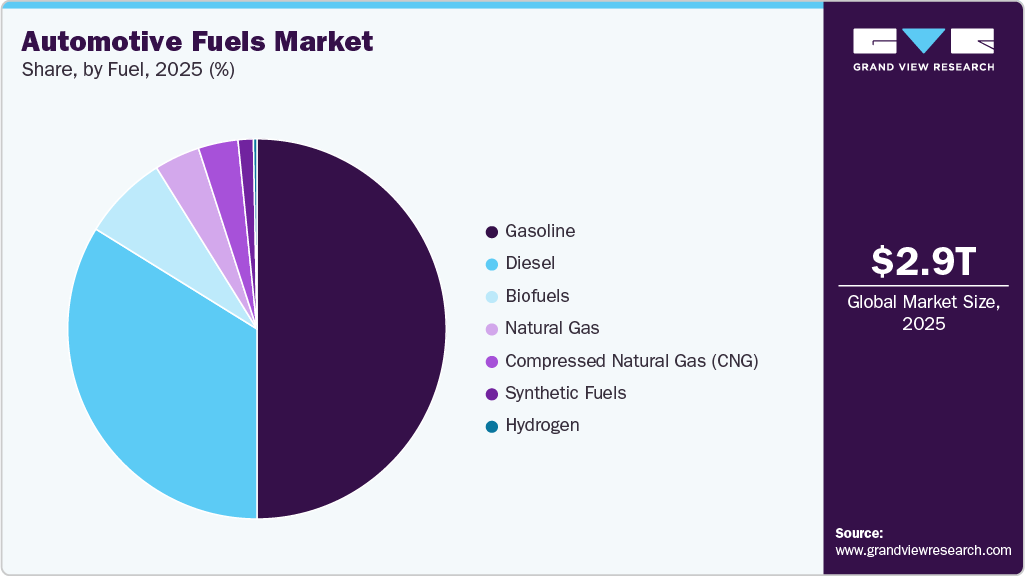 To learn more about this report, Download Free Sample Report
 The hydrogen segment is anticipated to be the fastest-growing segment with a CAGR of 22.8% over the forecast period, driven by its superior performance in heavy-duty transportation applications. Hydrogen fuel cell vehicles offer extended driving ranges and rapid refueling times of 3-5 minutes, making them more suitable than battery electric vehicles for long-haul trucking and logistics operations. These advantages are particularly critical for commercial fleets requiring high utilization and minimal downtime.
Regional Insights
Asia Pacific automotive fuels market accounted for the largest global revenue share of 37.3% in 2025, primarily driven by massive vehicle production and strong demand across key economies. Countries such as China and India lead in both automobile manufacturing and adoption, with millions of vehicles produced annually, resulting in substantial fuel consumption. The region’s rapidly expanding transportation and logistics sectors further reinforce demand for automotive fuels. The growing commercialization of advanced technologies, including fuel cell vehicles, is strengthening the region’s position in the market.
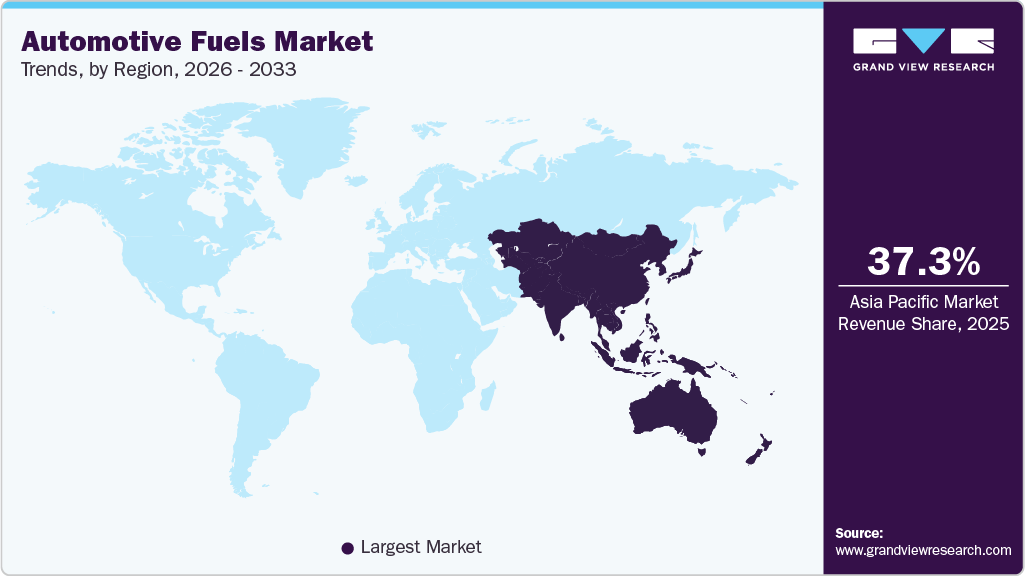 To learn more about this report, Download Free Sample Report
 The automotive fuels industry in the Asia Pacific is also the projected fastest-growing market as compared to the other regions, with a CAGR of 2.6%. This growth is supported by rapid economic expansion and rising mobility demand. Countries in APAC are witnessing increasing vehicle production and ownership due to urbanization and improving income levels. The expansion of logistics, e-commerce, and industrial activities is further boosting fuel consumption, particularly for commercial vehicles. The ongoing infrastructure development and gradual adoption of alternative fuels are supporting the sustained growth of the automotive fuels industry across the region.
China’s automotive fuels industry is being shaped by the rapid electrification of its vehicle fleet, which is moderating the growth of conventional fuel demand. A significant share of new car sales now consists of electric and plug-in hybrid vehicles, reducing incremental demand for petrol and diesel. This transition is driven by strong policy support, technological advancements, and expanding charging infrastructure. As electrification continues to accelerate, it is gradually curbing new fuel demand while reshaping consumption patterns within the market.
Europe Automotive Fuels Market Trends
Europe’s automotive fuels industry is driven by strict regulatory frameworks and emission norms aimed at reducing greenhouse gas emissions. Standards such as Euro 7 emission standards are compelling manufacturers and fuel providers to adopt advanced fuel system technologies and cleaner fuels. These regulations are accelerating improvements in fuel quality, engine efficiency, and emission control systems across the region. The regulatory pressure continues to play a key role in shaping fuel demand and driving innovation within the market in Europe.
North America Automotive Fuels Market Trends
The North America automotive fuels industry is witnessing steady growth, supported by the increasing adoption of alternative fuels. Rising environmental awareness is encouraging the use of cleaner options such as CNG, LNG, and biofuels, helping to reduce emissions from transportation. This shift is also driving the development of advanced and smart fuel systems that improve efficiency and performance. Supportive policies and growing investments in alternative fuel infrastructure are further strengthening market growth across the region.
Latin America Automotive Fuels Market Trends
Latin America’s automotive fuels industry is led by increasing fuel diversification and the growing adoption of alternative fuels. Countries such as Brazil are leading in the use of flex-fuel vehicles, enabling consumers to switch between gasoline and ethanol based on price and availability. The region is also expanding the use of CNG, LNG, and biofuels such as E85 to manage high fuel costs and reduce dependence on conventional fuels. This diversification strategy is supporting more flexible fuel consumption patterns and strengthening market growth across the region.
Middle East & Africa Automotive Fuels Market Trends
The Middle East & Africa (MEA) automotive fuels industry is expanding, supported by the growing demand for hydrogen and fuel cell technologies. The region’s abundant natural resources are enabling large-scale production of green hydrogen, positioning it as a key hub for future clean fuel supply. This development is encouraging the adoption of hydrogen-powered vehicles, particularly in segments requiring long-range and high-efficiency performance. Increasing investments in hydrogen infrastructure and fuel cell technologies are further strengthening the region’s role in advancing alternative fuels within the automotive fuels industry.
Key Automotive Fuels Company Insights
Some of the key participants in the global automotive fuels industry include Saudi Aramco, ExxonMobil, Shell plc, BP plc, TotalEnergies, Chevron Corporation, Sinopec, BHP Group, Valero Energy Corporation and Phillips 66. These companies collectively hold the largest market share in the market and play a critical role in shaping industry trends and competitive dynamics. They are heavily investing in refining capacity expansion, fuel efficiency improvements, and cleaner fuel alternatives such as biofuels, hydrogen, and synthetic fuels to align with evolving regulatory frameworks and sustainability goals.
Their operations typically encompass the exploration, production, refining, and distribution of automotive fuels, supported by extensive global supply chains and retail fuel networks. The companies are increasingly leveraging digital technologies such as automation, real-time monitoring, and predictive analytics to optimize refinery operations, improve fuel quality, and enhance operational efficiency. The integration of advanced refining processes and data-driven systems is enabling better yield optimization, cost control, and compliance with stringent fuel standards across regions.
As global mobility demand continues to grow alongside tightening emission regulations, companies operating in the market are prioritizing capacity expansion, technological innovation, and diversification into low-carbon fuels. Strategic collaborations with technology providers, automotive manufacturers, and governments are becoming more common to accelerate the development of sustainable fuel solutions. Evolving market dynamics, including the gradual shift toward alternative fuels and improved engine technologies, are reshaping the competitive landscape.
Key Automotive Fuels Companies:
The following key companies have been profiled for this study on the automotive fuels market.
- Saudi Aramco
- ExxonMobil
- Shell plc
- BP plc
- TotalEnergies
- Chevron Corporation
- Sinopec
- BHP Group
- Valero Energy Corporation
- Phillips 66
Recent Developments
- In March 2024, Indian Oil Corporation launched ‘Ethanol 100’ across multiple retail outlets as part of its initiative to promote higher ethanol blending in automotive fuels. This move supports the nationwide transition toward E20 fuel, aiming to reduce dependence on conventional fossil fuels and lower emissions. The initiative is expected to accelerate the adoption of biofuels, enhance energy security, and drive sustainable growth in the market.
Automotive Fuels Market Report Scope
Report Attribute
Details
Market Definition
The Automotive Fuels market refers to the global revenue generated from the production, refining, distribution, and sale of fuels such as gasoline, diesel, biofuels, and alternative energy sources used to power vehicles across passenger and commercial transportation segments.
Market size in 2025
USD 2,950.7 billion
Estimated Market size in 2026
USD 3,018.7 billion
Projected Market size by 2033
USD 3,393.1 billion
Growth rate
CAGR of 1.7% from 2026 to 2033
Base year for estimation
2025
Historical data
2021 - 2024
Forecast period
2026 - 2033
Quantitative Units
Revenue in USD billion/trillion, volume in million liters, and CAGR from 2026 to 2033
Report coverage
Revenue forecast, competitive landscape, growth factors, and trends
Segments covered
Fuel, vehicle, region
Regional scope
North America; Europe; Asia Pacific; Latin America; Middle East & Africa
Country scope
U.S.; Canada; Mexico; Germany; UK; France; Italy; Spain; China; India; Australia; Japan; South Korea; Brazil; Argentina; Saudi Arabia; UAE; South Africa
Key companies profiled
Saudi Aramco; ExxonMobil; Shell plc; BP plc; TotalEnergies; Chevron Corporation; Sinopec; BHP Group; Valero Energy Corporation; Phillips 66
Customization scope
Free report customization (equivalent up to 8 analysts working days) with purchase. Addition or alteration to country, regional & segment scope.
Pricing and purchase options
Avail customized purchase options to meet your exact research needs. Explore purchase options
Global Automotive Fuels Market Report Segmentation
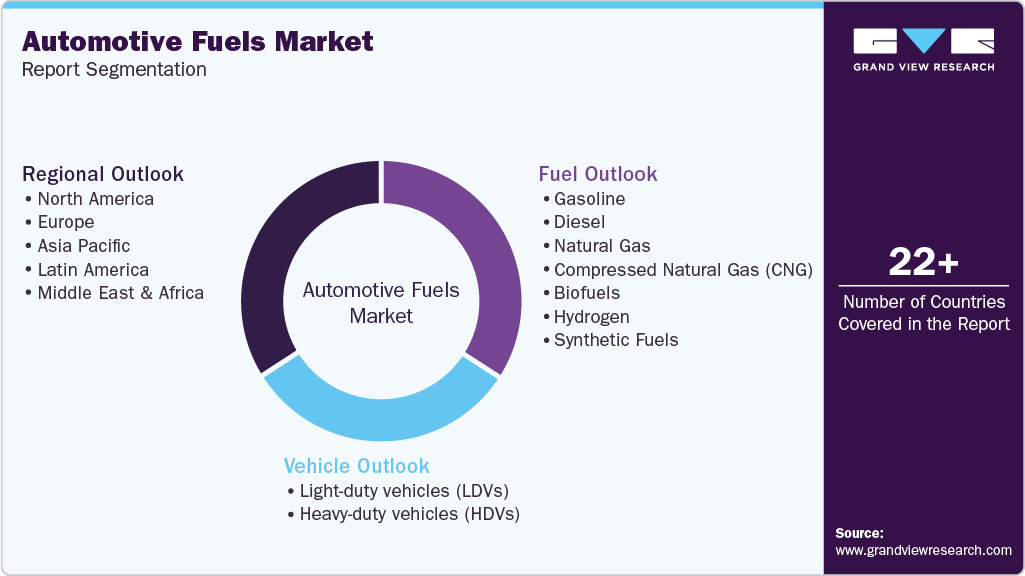
This report forecasts revenue growth at global, regional, and country levels and provides an analysis of the latest industry trends in each of the sub-segments from 2021 to 2033. For this study, Grand View Research has segmented the global automotive fuels market report based on fuel, vehicle, and region.
 To learn more about this report, Download Free Sample Report
 -
Fuel Outlook (Volume, Million Liters; Revenue, USD Billion, 2021 - 2033)
-
Gasoline
-
Diesel
-
Natural Gas
-
Compressed Natural Gas (CNG)
-
Biofuels
-
Hydrogen
-
Synthetic Fuels
-
-
Vehicle Outlook (Volume, Million Liters; Revenue, USD Billion, 2021 - 2033)
-
Light-duty vehicles (LDVs)
-
Heavy-duty vehicles (HDVs)
-
-
Regional Outlook (Volume, Million Liters; Revenue, USD Billion, 2021 - 2033)
-
North America
-
U.S.
-
Canada
-
Mexico
-
-
Europe
-
Germany
-
UK
-
France
-
Italy
-
Spain
-
-
Asia Pacific
-
China
-
India
-
Australia
-
Japan
-
South Korea
-
-
Latin America
-
Brazil
-
Argentina
-
-
Middle East & Africa
-
Saudi Arabia
-
UAE
-
South Africa
-
-
Frequently Asked Questions About This Report
Asia Pacific dominated with a 37.3% revenue share in 2025.
The light-duty vehicles (LDVs) segment led with a 60.8% revenue share in 2025, while the heavy-duty vehicles segment is the fastest-growing.
The global automotive fuels market was estimated at USD 2,950.7 billion in 2025 and is expected to reach USD 3,018.7 billion in 2026.
The global automotive fuels market is expected to grow at a compound annual growth rate of 1.7% from 2026 to 2033 to reach USD 3,393.1 billion by 2033.
The gasoline category held the largest revenue share of more than 50.0% in 2025, while the hydrogen segment is anticipated to be the fastest-growing segment with a CAGR of 22.8% over the forecast period.
Some of the key participants in the global automotive fuels market include Saudi Aramco, ExxonMobil, Shell plc, BP plc, TotalEnergies, Chevron Corporation, Sinopec, BHP Group, Valero Energy Corporation, Phillips 66, among others.
The key factors driving the growth of the global automotive fuels market are primarily linked to rising mobility demand and economic growth. Increasing vehicle production and ownership, especially in emerging economies, is a major contributor to higher fuel consumption. Rapid urbanization, population growth, and improving living standards are further boosting demand for passenger and commercial transportation.
About the Author(s)
Conventional Energy Research Team
Energy & Power · Conventional EnergyThis report was authored by the conventional energy research team at Grand View Research - comprising two research analysts, one senior research analyst, and one industry expert - with specialized expertise in the conventional energy segment of the energy & power industry. All findings are based on proprietary energy & power databases, executive interviews, and regulatory analysis, subject to internal peer review prior to publication.
Last Updated:
Speak to Analyst

Customize this report to your needs - add regions, segments, or data points, with 20% free customization.
Or view our licence options:


ISO 9001:2015 & 27001:2022 Certified
We are GDPR and CCPA compliant! Your transaction & personal information is safe and secure. For more details, please read our privacy policy.


