
- Home
- »
- Medical Devices
- »
-
Biologics Quality Control Testing Services CDMO Market Report 2033GVR Report cover
![Biologics Quality Control Testing Services CDMO Market (2026 - 2033)Report]()
Biologics Quality Control Testing Services CDMO Market (2026 - 2033)
Size, Share & Trends Analysis Report By Service (Analytical Quality Control, Microbiological Quality Control) By Molecule, By Development Stage, By Workflow, By Source, By Therapeutic Area, By End User, By Region, And Segment Forecasts
Market Size, 2025
$5.3BMarket Estimate, 2026
$5.7BMarket Forecast, 2033
$9.6BCAGR, 2026–2033
7.7%Biologics Quality Control Testing Services CDMO Market Summary
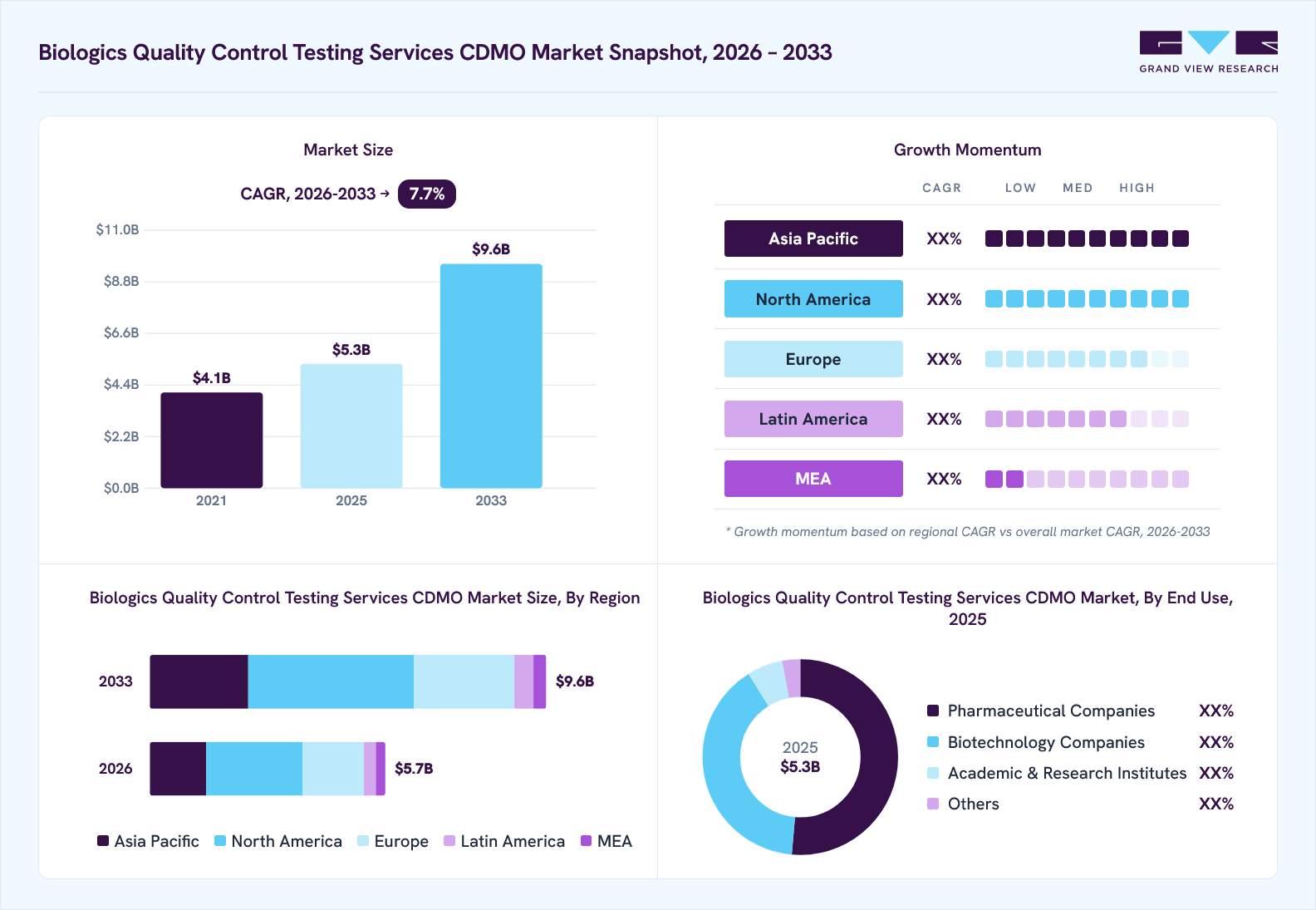
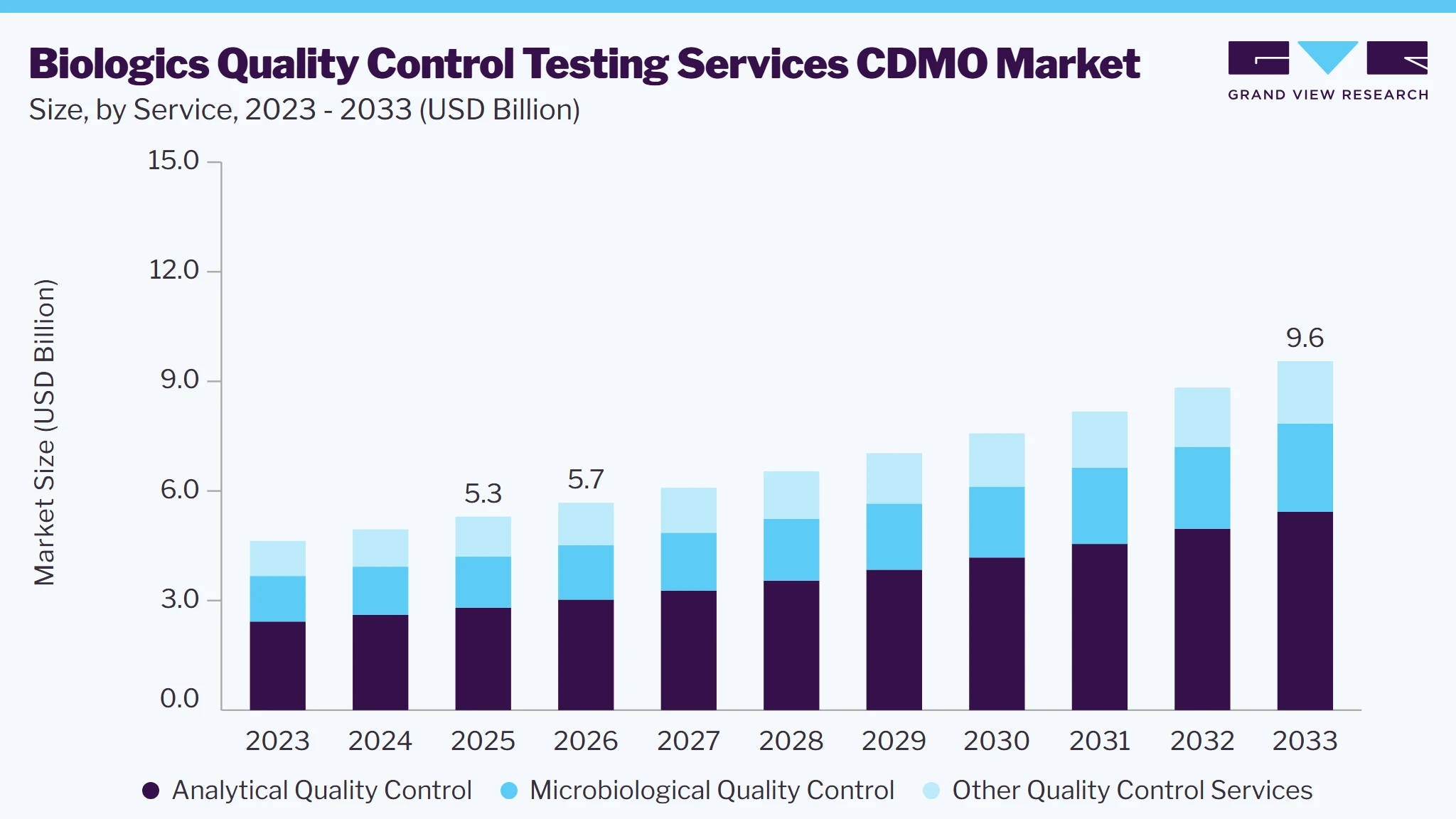
The global biologics quality control testing services CDMO market size was valued at USD 5.3 billion in 2025 and is projected to grow from USD 5.7 billion in 2026 to USD 9.6 billion by 2033, at a CAGR of 7.7% from 2026 to 2033. North America dominated the market, accounting for the largest revenue share of 40.7% in 2025. The market is driven by the increasing number of biologics entering clinical and commercial development, rising outsourcing of analytical and quality control activities, growing complexity of biologic molecules and advanced therapies, increasing regulatory requirements for product characterization and release testing, and expansion of biosimilar and cell and gene therapy pipelines.
Key Market Trends & Insights
- By service: Analytical quality control segment led the market with the largest revenue share of 52.9% in 2025.
- By molecule: Monoclonal antibodies (mAbs) segment led the market with the largest revenue share of 35.2% in 2025.
- By development stage: Commercial manufacturing segment led the market with the largest revenue share of 40.8% in 2025.
- By workflow: Routine GMP QC segment led the market with the largest revenue share of 67.7% in 2025.
- By source: Mammalian segment led the market with the largest revenue share of 65.3% in 2025.
- By therapeutic area: Oncology segment led the market with the largest revenue share of 31.2% in 2025.
Regional Highlights
- Largest regional market: North America (40.7% revenue share, 2025)
- Fastest-growing regional market: Asia Pacific (highest CAGR, 2026–2033)
- By country: The U.S. held the largest share of North America in 2025.
Market Size & Trends
- Market Size in 2025: USD 5.3 billion
- Estimated market size in 2026: USD 5.7 billion
- Projected Market Size by 2033: USD 9.6 billion
- CAGR (2026 – 2033): 7.7%
Market Dynamics
The expansion of biologics and advanced therapy pipelines remains a primary growth driver for the market. Biologic products require extensive analytical characterization, potency assessment, contamination testing, stability studies, and lot release testing across development and commercialization, while complex modalities require specialized analytical and biosafety capabilities. As per the data published by the U.S. Food and Drug Administration, in 2025, 38 biological license applications were approved, with biosimilars accounting for more than 40% of BLA approvals in both 2024 and 2025. The increasing number of biological products and biosimilars reaching regulatory approval is creating additional requirements for analytical characterization, comparability, method validation, stability, and release testing. Furthermore, the growing diversity of biologic modalities is expanding the testing requirements for monoclonal antibodies, recombinant proteins, vaccines, viral vectors, and cell therapies, increasing demand for specialized outsourced testing capabilities. Similarly, the increasing outsourcing of quality control and analytical testing is another significant factor supporting market growth. Biologics testing requires specialized laboratories, validated analytical methods, biosafety infrastructure, qualified personnel, and regulatory compliance, creating operational and capital requirements for companies seeking to maintain comprehensive testing capabilities internally. The need for flexible testing capacity is particularly relevant for biotechnology companies with variable testing volumes and early-stage development programs.
On the other hand, the market growth is restricted by high investment requirements for GMP testing laboratories, lengthy analytical method qualification and validation processes, stringent regulatory requirements, and limited availability of personnel with specialized expertise in biologics testing. The increasing adoption of advanced biologics, expansion of biosimilar development, growth of cell and gene therapy programs, rising outsourcing of analytical testing, and development of specialized testing capabilities are expected to create significant opportunities for biologics quality control testing service providers.
The increasing complexity of biologic products is driving demand for specialized quality control testing services. The development of monoclonal antibodies, recombinant proteins, vaccines, biosimilars, cell and gene therapies, and other complex biological products requires extensive analytical assessment to establish product identity, purity, potency, safety, and consistency. The growing diversity of biological products also increases the need for product-specific analytical methods, characterization studies, biological assays, contamination testing, and stability evaluation across development and commercial manufacturing. As per the World Health Organization, in July 2026, its Expert Committee on Biological Standardization published its 81st report covering vaccines, biotherapeutics, blood products, in vitro diagnostics, and cell and gene therapy products, while documenting the development and adoption of new and revised international standards and guidance related to the quality, safety, and efficacy of biological products. The report also included guidance on replacing or removing animal tests for the quality control of biological products. The increasing analytical requirements associated with complex biological products are therefore expected to support demand for specialized outsourced QC testing capabilities.
The limited availability of specialized expertise in biologics quality control testing is a significant restraint for the market. Biologics testing requires personnel with experience in analytical characterization, biological assays, microbiological testing, potency assessment, method validation, and interpretation of complex analytical data. The requirement for specialized knowledge becomes more pronounced as testing programs involve advanced biological products and technically complex analytical methods. As per guidance published by the U.S. Food and Drug Administration, analytical testing for biological products can include chemical and physical assays used for product characterization and lot consistency, while bioassays are used to assess biological activity and potency and require appropriate validation. The technical requirements associated with these activities can increase the resources and expertise required to establish comprehensive testing capabilities, creating capacity constraints for providers seeking to expand specialized biologics QC services.
The increasing outsourcing of analytical testing presents a significant opportunity for biologics quality control testing service providers. Pharmaceutical and biotechnology companies can use external laboratories to access specialized analytical capabilities for method development, characterization, potency testing, microbiological testing, stability studies, and batch release without establishing equivalent capabilities internally. The outsourcing opportunity is particularly relevant for development programs where testing requirements can change as products progress through preclinical, clinical, and commercial stages. As per the World Health Organization, in April 2025, updated guidance on bioanalytical method validation and study sample analysis was issued to provide recommendations for validating bioanalytical methods used for chemical and biological drug quantification and to support the quality and consistency of data used in drug development and market approval. Furthermore, as per the World Health Organization's GMP compendium published in February 2024, good manufacturing practices cover manufacturing and quality control of pharmaceuticals, vaccines, and other biological products, including requirements related to personnel, equipment, validation, documentation, and testing. These requirements create opportunities for specialized third-party testing laboratories with established GMP infrastructure and analytical capabilities.
Market Concentration & Characteristics
The biologics quality control (QC) testing services CDMO market growth stage is medium, and growth is accelerating. The market is characterized by the degree of innovation, level of M&A activities, regulatory impact, service expansion, and regional expansion.
Innovation remains a critical competitive factor in the Biologics quality control (QC) testing services CDMO market, with service providers investing in advanced analytical instrumentation, automated testing platforms, high-throughput technologies, mass spectrometry, capillary electrophoresis, sequencing, and data management systems. Increasing analytical complexity across monoclonal antibodies, vaccines, biosimilars, and cell and gene therapies is driving adoption of sophisticated testing approaches that improve analytical resolution, testing throughput, data quality, and characterization capabilities.
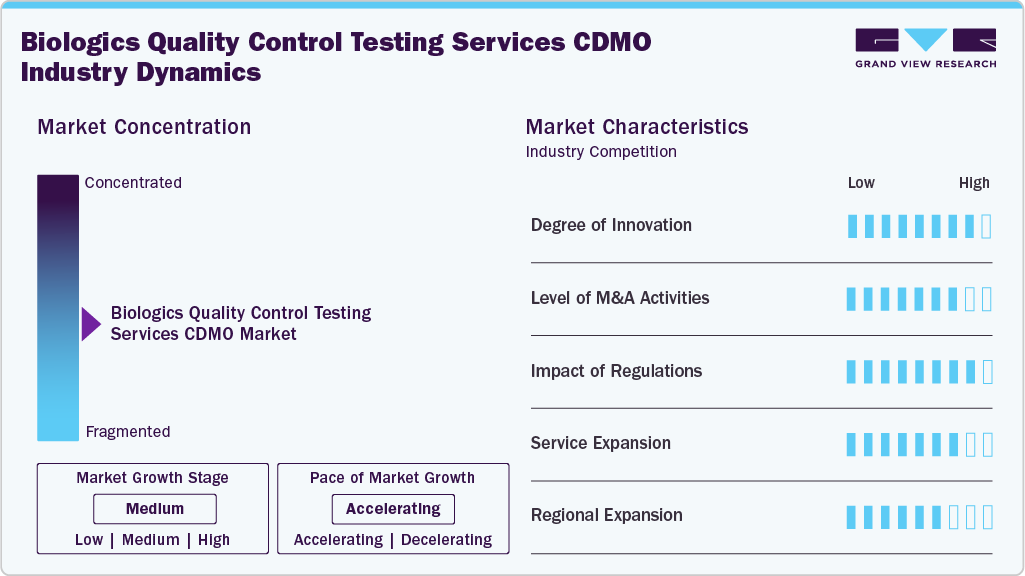
Mergers and acquisitions continue to influence the Biologics quality control (QC) testing services CDMO market by expanding analytical testing capabilities, geographic coverage, laboratory capacity, and specialized technical expertise. Strategic acquisitions enable providers to strengthen capabilities in biologics characterization, bioassays, microbiological testing, stability testing, and analytical method development while expanding their customer base. These transactions also support service diversification and integrated testing offerings across development and commercial programs.
Regulatory requirements remain a major factor shaping the Biologics quality control (QC) testing services CDMO market. Testing providers must comply with current Good Manufacturing Practices (cGMP), pharmacopeial requirements, ICH guidelines, and requirements established by regulatory agencies for analytical procedures, method validation, data integrity, stability testing, and batch release. Compliance requirements increase laboratory operating complexity and documentation requirements while creating competitive advantages for providers with established quality systems and regulatory expertise.
Biologics QC testing providers are expanding their service portfolios to cover a broader range of analytical and microbiological requirements across the product lifecycle. Providers increasingly offer analytical characterization, method development and validation, potency testing, physicochemical testing, microbiological testing, stability studies, raw material testing, in-process testing, and batch release testing. Broader service portfolios enable pharmaceutical and biotechnology companies to consolidate testing activities with fewer specialized providers and support continuity across development and commercial programs.
Regional expansion is strengthening the geographic presence of Biologics Quality Control Testing Services CDMOs as providers establish or expand laboratories in major pharmaceutical and biotechnology markets. Expansion across North America, Europe, and Asia Pacific enables providers to increase local testing capacity, support regional regulatory requirements, reduce sample transportation requirements, and serve multinational customers across multiple development and manufacturing locations. Geographic diversification also supports faster turnaround times and broader access to specialized analytical testing capabilities.
Analyst Perspective
The biologics quality control (QC) testing services CDMO market is experiencing steady growth, driven by increasing biologics development, expanding manufacturing pipelines, and greater outsourcing of specialized analytical activities. The growing pipeline of monoclonal antibodies, vaccines, biosimilars, cell and gene therapies, and other complex biological products is increasing demand for analytical characterization, potency testing, microbiological testing, stability studies, method development and validation, and batch release testing. Furthermore, rising regulatory requirements, technological advancements in analytical testing, and increasing adoption of external laboratories by pharmaceutical and biotechnology companies are expected to further support market growth.
Impact of U.S. Tariffs on Biologics quality control (QC) testing services CDMO market
The current U.S. tariff environment is expected to have a moderate and indirect impact on the global biologics quality control (QC) testing services CDMO market. The direct exposure of testing providers is relatively limited because quality control services are primarily delivered through laboratory activities rather than the cross-border shipment of finished biological products. However, changes in the cost and availability of pharmaceutical inputs and related materials can affect pharmaceutical and biotechnology manufacturing strategies, which may subsequently influence the geographic distribution and volume of quality control testing requirements.
As per a U.S. presidential proclamation issued in April 2026, the United States established a 100% ad valorem duty on specified patented pharmaceuticals and associated pharmaceutical ingredients, while qualifying companies with approved onshoring plans may be subject to a 20% rate. Generic pharmaceuticals and their associated ingredients were excluded from Section 232 tariffs at that time. These measures may encourage selected pharmaceutical manufacturers to evaluate domestic production and supply-chain strategies, potentially influencing the location of manufacturing and associated QC testing activities.
In addition, the tariff environment had created new opportunities for testing providers located closer to domestic or regional manufacturing facilities as pharmaceutical companies evaluate localized production and supply chains. However, the effect on biologics QC testing providers will depend on the treatment of specific biological products, pharmaceutical ingredients, laboratory supplies, and other relevant categories under applicable U.S. trade measures. Therefore, U.S. tariffs should be treated as a secondary external factor for this market rather than a primary market driver or restraint.
Technological Advancements
Technological advancement is reshaping the operating model of biologics quality control testing services by increasing analytical resolution, testing throughput, data generation, and the range of measurable product attributes. Mass spectrometry and advanced electrophoretic techniques are expanding the depth of molecular characterization, while high-throughput sequencing is creating additional testing requirements associated with genetic and biological materials. Automated laboratory platforms are improving sample-processing capacity and enabling testing providers to manage larger volumes with greater consistency. Process analytical technology is also strengthening the connection between manufacturing conditions and quality assessment through faster measurement of process and product attributes.
These developments are increasing the technical scope of outsourced QC programs and encouraging service providers to invest in sophisticated instrumentation, validated workflows, data-management systems, and specialized technical personnel. WHO's continued development of international reference standards and guidance for advanced biological products, including cell and gene therapies and high-throughput sequencing applications, is further supporting the adoption of sophisticated analytical approaches. Consequently, providers with broad analytical platforms and the capability to integrate multiple testing technologies are positioned to capture more complex testing programs, while smaller laboratories may face higher investment and validation requirements to remain competitive.
Pricing Model Analysis
The pricing structures in the biologics quality control testing services market vary according to testing frequency, analytical complexity, project duration, sample volumes, and the degree of technical customization required. Per-test and per-sample arrangements provide a transactional structure for routine analytical requirements and allow sponsors to align expenditure with actual testing volumes. Project-based and fixed-fee contracts are more suitable for defined analytical programs in which the scope, deliverables, and testing timelines can be established before execution. Milestone-based arrangements provide a staged commercial structure for programs involving sequential activities such as method development, qualification, validation, characterization, and reporting. Retainer and FTE-based arrangements are relevant to pharmaceutical and biotechnology companies that require ongoing access to analytical resources across multiple studies or products.
Pricing is affected by instrumentation requirements, regulatory standards, method transfer activities, sample preparation, data review, documentation, and turnaround commitments. As biologics programs progress from development to commercial manufacturing, providers may use different pricing structures within the same client relationship, depending on the nature of individual testing activities. This creates a flexible commercial environment in which standardized QC testing can be priced on a per-transaction basis, while complex or recurring analytical programs are more often contracted through broader service agreements.
Service Insights
Based on service, the analytical quality control segment led the market with the largest revenue share of 52.9% in 2025, driven by the extensive requirement for physicochemical characterization, biological characterization, analytical method development and validation, and other analytical assessments across biologics development and manufacturing. The increasing complexity of biologic molecules and the need to establish product identity, purity, potency, safety, and consistency across development and commercial manufacturing are supporting demand for outsourced analytical QC services. Biologics manufacturers also increasingly engage specialized CDMOs to access advanced analytical capabilities, validated testing platforms, specialized instrumentation, and technical expertise without maintaining equivalent testing infrastructure internally.
The microbiological quality control segment is projected to be the second-fastest-growing segment over the forecast period, supported by increasing testing requirements for sterility, endotoxin, mycoplasma, bioburden, environmental monitoring, and other microbiological attributes. The expansion of biologics manufacturing and the increasing adoption of stringent contamination-control and aseptic-processing practices are creating sustained demand for microbiological QC testing. In addition, the growing number of biologics entering clinical and commercial manufacturing stages is increasing the need for recurring microbiological testing throughout batch release and routine GMP quality control activities.
Molecule Insights
Based on molecule, the monoclonal antibodies (mAbs) segment led the market with the largest revenue share of 35.2% in 2025, driven by the extensive commercial use of mAbs across oncology, autoimmune diseases, inflammatory disorders, and other therapeutic applications. The structural complexity of mAbs and the need for comprehensive characterization of identity, purity, potency, aggregation, charge variants, glycosylation, and other critical quality attributes generate substantial demand for outsourced QC testing. The broad commercial base of approved mAbs and continued development of new antibody-based therapies further support recurring analytical, microbiological, stability, and batch release testing requirements.
The cell & gene therapies segment is projected to be the fastest-growing segment over the forecast period, supported by the expanding development pipeline for advanced therapies and increasing requirements for specialized quality control testing. Cell and gene therapy products require extensive testing related to identity, purity, potency, sterility, mycoplasma, endotoxin, adventitious agents, vector characteristics, and other product-specific attributes. The specialized nature of these testing requirements and the limited availability of advanced testing infrastructure are encouraging developers to utilize external CDMO and specialized QC testing providers, particularly as products progress from early development toward clinical and commercial manufacturing.
Development Stage Insights
Based on development stage, the commercial manufacturing segment led the market with the largest revenue share of 40.8% in 2025, driven by the recurring QC requirements associated with commercial biologics production. Commercial-stage products require routine batch release testing, stability testing, microbiological testing, raw material testing, in-process testing, environmental monitoring, and other GMP-related quality control activities. The recurring nature of these requirements creates a larger testing opportunity compared with earlier development stages, while the expansion of commercial biologics manufacturing and increasing reliance on specialized external testing laboratories continue to support demand for outsourced QC services.
The preclinical segment is projected to be the fastest-growing segment over the forecast period, supported by increasing biologics discovery and early-stage development activity and the growing use of analytical testing to characterize candidate molecules before clinical development. Early-stage programs require analytical characterization, method development, preliminary stability assessment, and other testing activities to establish product understanding and support progression into clinical studies. Increasing development of complex biologics and advanced therapeutic modalities is also expanding the need for specialized analytical capabilities during preclinical development.
Workflow Insights
Based on workflow, the routine GMP QC segment led the market with the largest revenue share of 67.7% in 2025, driven by recurring testing requirements associated with GMP manufacturing and batch release activities. Routine GMP QC encompasses analytical and microbiological testing performed on raw materials, in-process materials, finished products, and manufacturing environments, as well as stability and other ongoing quality control programs. The recurring nature of these testing activities, combined with increasing commercial biologics production and stringent regulatory requirements for product quality and manufacturing consistency, supports the segment's dominant market position.
The development QC segment is projected to be the fastest-growing segment over the forecast period, supported by the expansion of biologics pipelines and increasing analytical requirements during preclinical and clinical development. Development QC includes analytical characterization, method development, qualification and validation, comparability assessments, and other studies required to establish and monitor critical quality attributes. The increasing complexity of biologics and growing development of cell and gene therapies, ADCs, and nucleic acid therapeutics are generating additional demand for specialized development-stage QC capabilities.
Source Insights
Based on source, the mammalian segment led the market with the largest revenue share of 65.3% in 2025, driven by the widespread use of mammalian expression systems for producing monoclonal antibodies and other complex recombinant biologics. Mammalian-derived products generally require extensive characterization and quality control testing because of their structural complexity and critical quality attributes, including glycosylation, aggregation, charge heterogeneity, purity, and biological activity. The large commercial base of mammalian-derived biologics and continued development of antibody-based therapies, therefore, generate substantial demand for outsourced QC testing services.
The microbial segment is projected to be the second-fastest-growing segment over the forecast period, supported by continued development and manufacturing of recombinant proteins, enzymes, vaccines, and other biologics produced using microbial expression systems. Increasing use of microbial platforms for selected biologic products and the need for specialized testing of purity, identity, potency, impurities, bioburden, endotoxin, and other quality attributes are supporting demand for outsourced QC services. The expansion of microbial-based development programs is expected to create additional opportunities for specialized testing providers.
Therapeutic Area Insights
Based on therapeutic area, the Oncology segment led the market with the largest revenue share of 31.2% in 2025, driven by the extensive use of biologics in cancer treatment and the continued development of monoclonal antibodies, antibody-drug conjugates, recombinant proteins, and other targeted therapies. Oncology biologics require comprehensive analytical characterization, potency assessment, impurity testing, microbiological testing, stability testing, and batch release testing throughout development and manufacturing. The large pipeline and commercial base of oncology biologics, therefore, generate substantial demand for outsourced QC testing services.
The rare diseases segment is projected to be the fastest-growing segment over the forecast period, supported by increasing development of biologics and advanced therapies for rare and genetic disorders. The growing number of specialized therapies targeting small patient populations is increasing demand for sophisticated analytical characterization, potency testing, stability assessment, and microbiological QC. In particular, the development of cell and gene therapies for rare diseases is creating additional requirements for specialized testing capabilities, supporting faster growth in outsourced QC testing demand.
End User Insights
Based on end user, the pharmaceutical companies segment led the market with the largest revenue share of 51.4% in 2025, driven by the large commercial biologics portfolios of established pharmaceutical manufacturers and their recurring requirements for GMP QC, batch release, stability, microbiological, and analytical testing. Pharmaceutical companies also increasingly utilize external QC testing providers to access specialized analytical capabilities, manage testing capacity, support product launches, and accommodate geographic or manufacturing expansion. The scale and diversity of commercial biologics portfolios, therefore, contribute to the segment's leading position.
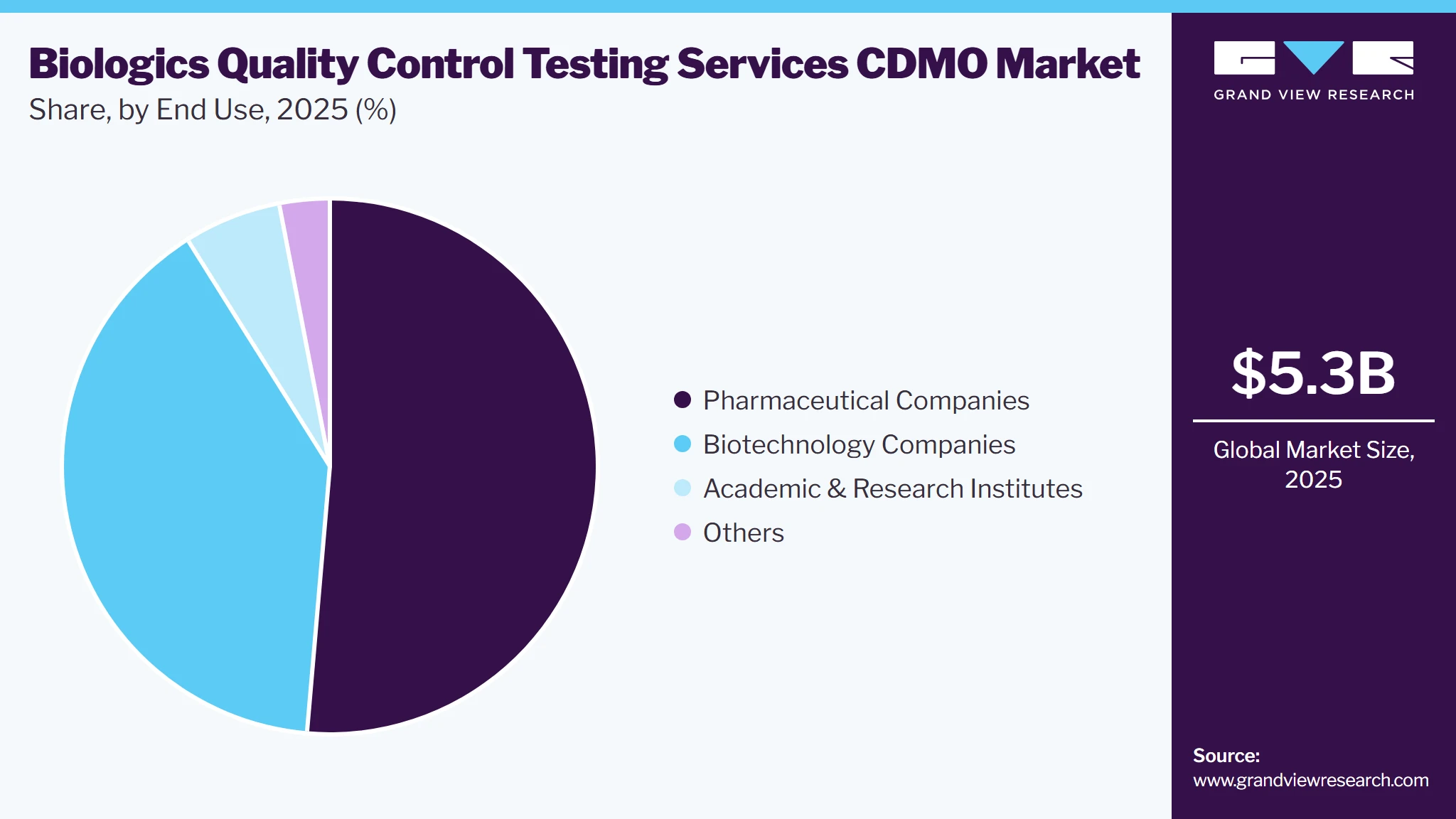
The biotechnology companies segment is projected to be the fastest-growing segment over the forecast period, supported by the expanding biologics development pipeline and increasing outsourcing of analytical and quality control activities by emerging and established biotechnology companies. Biotechnology companies frequently require access to specialized testing infrastructure and technical expertise as products progress through preclinical and clinical development and into commercial manufacturing. The growing development of complex biologics, cell and gene therapies, ADCs, and other advanced modalities is expected to further increase demand for outsourced QC testing services among biotechnology companies.
Regional Insights
The North America dominated the market with revenue share of 40.7% in 2025, is supported by a mature pharmaceutical and biotechnology industry, substantial biologics development activity, and stringent regulatory requirements for product quality and analytical testing. Increasing development of monoclonal antibodies, vaccines, biosimilars, and cell and gene therapies is generating demand for specialized characterization, potency, microbiological, stability, and batch release testing. The region benefits from established analytical testing providers, advanced laboratory infrastructure, and strong pharmaceutical R&D capabilities. Increasing outsourcing of analytical activities and investments in specialized biologics testing capacity are expected to support market growth over the forecast period.

U.S. Biologics Quality Control Testing Services CDMO Market Trends
The U.S. biologics quality control (QC) testing services CDMO market is expected to maintain strong growth over the forecast period, supported by extensive biologics development, a large biotechnology sector, and stringent FDA requirements for analytical characterization, validation, stability, and quality control. The increasing development of monoclonal antibodies, biosimilars, vaccines, and cell and gene therapies is expanding the demand for specialized testing capabilities. The presence of established pharmaceutical companies, biotechnology firms, and analytical testing providers, combined with continued outsourcing of laboratory activities, is expected to support market expansion.
The Canada biologics quality control (QC) testing services CDMO market is supported by growth in biotechnology research, pharmaceutical development, and biologics manufacturing activities. Increasing development of biologics and advanced therapies is generating demand for analytical characterization, microbiological testing, potency assessment, stability studies, and other quality control services. The country benefits from established research institutions, pharmaceutical manufacturing capabilities, and regulatory oversight of biological products. Increasing collaboration between biotechnology companies and specialized testing providers is expected to create additional demand for outsourced QC testing services.
Europe Biologics Quality Control Testing Services CDMO Market Trends
The Europe biologics quality control (QC) testing services CDMO market is supported by a well-established pharmaceutical industry, strong biologics development capabilities, and stringent regulatory requirements governing pharmaceutical quality and manufacturing. Increasing development of monoclonal antibodies, vaccines, biosimilars, and advanced biological therapies is generating demand for specialized analytical characterization, potency, microbiological, and stability testing. The region benefits from established pharmaceutical testing infrastructure, experienced analytical service providers, and strong regulatory capabilities. Increasing pharmaceutical outsourcing and investments in specialized laboratory capacity are expected to support market growth over the forecast period.
UK biologics quality control testing services CDMO market held a significant share in 2025 in the European region. The market is expected to grow over the forecast period, supported by a strong life sciences sector, biotechnology research base, and continued development of biological medicines. Increasing activity in advanced therapies, vaccines, biosimilars, and complex biologics is generating demand for specialized analytical characterization, potency, microbiological, and stability testing. The presence of pharmaceutical and biotechnology companies, research institutions, and specialized laboratory providers supports the development of advanced testing capabilities. Government initiatives supporting life sciences and continued pharmaceutical outsourcing are expected to contribute to market expansion.
The biologics quality control testing services CDMO market in Germany is anticipated to grow significantly over the forecast period. The market is supported by a large pharmaceutical and biotechnology industry, advanced research infrastructure, and stringent quality requirements for biological medicines. The increasing development and manufacturing of monoclonal antibodies, vaccines, biosimilars, and other biologics are generating demand for analytical characterization, method validation, potency, microbiological, and stability testing. Germany's established pharmaceutical manufacturing base and specialized laboratory infrastructure provide a strong foundation for outsourced QC services. Increasing adoption of external analytical testing and biologics development activities is expected to support market growth.
Asia Pacific Biologics Quality Control Testing Services CDMO Market Trends
The Asia Pacific biologics quality control (QC) testing services CDMO market is experiencing increasing demand due to expanding pharmaceutical manufacturing, growing biotechnology activity, and rising biologics development across major markets. The increasing production of biosimilars, vaccines, monoclonal antibodies, and other biological products is driving demand for specialized analytical and microbiological testing. The region benefits from expanding laboratory infrastructure, growing manufacturing capacity, and comparatively competitive operating costs. Increasing outsourcing by global pharmaceutical companies and investments in biologics manufacturing and testing capabilities are expected to support regional market expansion.
The Biologics quality control testing services CDMO market in China is expanding alongside the country's growing pharmaceutical and biotechnology industries, increasing biologics manufacturing capacity, and the development of biosimilars and innovative biological products. Rising investments in monoclonal antibodies, vaccines, cell therapies, and other advanced biological medicines are increasing demand for analytical characterization, potency, microbiological, and stability testing. The expansion of domestic pharmaceutical manufacturing and specialized laboratory infrastructure is supporting local testing capabilities. Increasing adoption of outsourced QC services among pharmaceutical and biotechnology companies is expected to contribute to market growth.
Japan Biologics quality control testing services CDMO market is witnessing significant growth over the forecast period. The market is supported by an established pharmaceutical industry, advanced biotechnology research, and increasing development of biological medicines. Growing activity in monoclonal antibodies, vaccines, regenerative medicines, and other advanced biological products is generating demand for specialized characterization, potency, microbiological, and stability testing. The country benefits from sophisticated laboratory infrastructure and established pharmaceutical quality systems. Increasing analytical requirements for complex biologics and the continued adoption of external testing services are expected to support market growth.
The India Biologics quality control testing services CDMO market is expected to grow significantly, supported by a growing pharmaceutical and biotechnology sector, expanding biologics manufacturing, and increasing development of biosimilars and vaccines. Rising investment in biological medicines is driving demand for analytical characterization, potency testing, microbiological testing, stability studies, and batch release testing. India benefits from a large pharmaceutical manufacturing base, established testing infrastructure, and cost-competitive laboratory services. Increasing outsourcing from domestic and international pharmaceutical companies is expected to support the continued expansion of biologics QC testing services.
Latin America Biologics Quality Control Testing Services CDMO Market Trends
The Latin America biologics quality control (QC) testing services CDMO market is supported by increasing pharmaceutical manufacturing, expanding biotechnology activity, and growing demand for biological medicines. Development and production of vaccines, biosimilars, and other biologics are generating requirements for analytical characterization, microbiological testing, potency assessment, and stability testing. Brazil and other major pharmaceutical markets are developing local manufacturing and laboratory capabilities, while pharmaceutical companies increasingly use specialized external providers for analytical activities. Continued investment in pharmaceutical infrastructure and biologics production is expected to support regional market development.
The Biologics quality control (QC) testing services CDMO market in Brazil is expected to grow over the forecast period. The market is supported by a large pharmaceutical industry, expanding biological product manufacturing, and increasing demand for vaccines and biosimilars. Growing pharmaceutical production is generating requirements for analytical characterization, microbiological testing, potency assessment, stability studies, and batch release testing. The country benefits from established pharmaceutical manufacturing capabilities and a developing biotechnology ecosystem. The expansion of domestic biologics production and the increasing use of specialized external laboratories are expected to create additional opportunities for QC testing service providers.
Middle East And Africa Biologics Quality Control Testing Services CDMO Market Trends
The Middle East & Africa biologics quality control (QC) testing services CDMO market is developing alongside investments in pharmaceutical manufacturing, healthcare infrastructure, and local production capabilities. Increasing efforts to strengthen pharmaceutical supply chains and expand domestic manufacturing are generating requirements for quality control, analytical testing, microbiological testing, and stability assessment. The region is gradually developing specialized laboratory infrastructure, while pharmaceutical companies continue to use external testing providers for technically complex requirements. Investments in local pharmaceutical production and healthcare manufacturing capabilities are expected to support market development.
The UAE biologics quality control (QC) testing services CDMO market is supported by investments in pharmaceutical manufacturing, healthcare infrastructure, and the country's development as a regional hub for life sciences and healthcare. Increasing efforts to establish local pharmaceutical production and strengthen supply-chain capabilities are generating demand for quality control and analytical testing services. The UAE's strategic position enables service providers to support pharmaceutical companies across the Middle East and neighboring markets. Continued investments in biotechnology, pharmaceutical manufacturing, and laboratory infrastructure are expected to support demand for specialized biologics QC testing services.
Key Biologics Quality Control Testing Services CDMO Company Insights
The key players operating across the market are adopting strategic initiatives such as service launches, mergers & acquisitions, partnerships & agreements, and expansions to gain a competitive edge in the market. Companies are investing in AI-enabled testing, biocompatibility assessment, digital validation, and strategic acquisitions to strengthen their global presence. Long-term partnerships with medical device manufacturers and compliance with international quality standards remain key competitive differentiators.
Key Biologics Quality Control Testing Services CDMO Companies
The following key companies have been profiled for this study on the biologics quality control testing services CDMO market.
-
Charles River
-
SGS
-
Merck BioReliance
-
Eurofins BioPharma Product Testing
-
Labcorp
-
FUJIFILM Biotechnologies
-
Thermo Fisher / Patheon
-
Sartorius
-
WuXi AppTec
-
KBI Biopharma
-
Alcami Corporation
-
Intertek
-
Pace Life Sciences
Competitive Benchmarking
Category
Operating Strategies
Competitive Edge
Weakness
Established Players (Eurofins Scientific, Charles River Laboratories)
Established players focus on expanding and integrating biologics testing capabilities across analytical characterization, bioassays, microbiological testing, stability testing, method development and validation, and batch release testing. These companies invest in specialized laboratory infrastructure, advanced analytical instrumentation, quality systems, and geographically distributed testing facilities to support pharmaceutical and biotechnology clients across development and commercial programs.
Established players benefit from broad analytical service portfolios, extensive laboratory networks, strong regulatory expertise, and established relationships with pharmaceutical and biotechnology companies. Their ability to provide multiple testing services through a single provider, support complex biologics programs, and operate under recognized quality and regulatory frameworks provides an advantage in securing large and recurring testing contracts.
Established players face high operating and capital expenditure requirements associated with sophisticated analytical instruments, laboratory infrastructure, validation, accreditation, and specialized personnel. Large organizational structures can also increase administrative complexity and reduce flexibility when accommodating highly customized testing requirements or shorter project timelines.
Emerging & Specialized Players (WuXi AppTec)
Emerging and specialized players generally focus on specific biologics testing capabilities such as potency assays, analytical characterization, microbiological testing, biosafety testing, stability studies, or method development and validation. These providers expand through specialized laboratory investments, technical partnerships, targeted geographic expansion, and development of capabilities for complex biologics and advanced therapies.
These players gain competitive advantages through specialized technical expertise, focused laboratory capabilities, flexible project management, and the ability to customize testing programs. Their narrower operating structures can support faster decision-making and more tailored client engagement, particularly for biotechnology companies and development-stage programs requiring specialized analytical services.
Emerging and specialized providers may face limitations in geographic coverage, breadth of analytical capabilities, laboratory capacity, and financial resources compared with large multinational testing organizations. Dependence on specific testing disciplines or customer segments can increase exposure to changes in project pipelines, while expansion into additional biologics testing areas requires significant investment in instrumentation, validation, quality systems, and specialized personnel.
Recent Developments
-
In June 2026, SGS acquired CMIC, Inc., a Chicago-based specialized provider of bioanalytical testing services. Established in 2010, CMIC supports pharmaceutical and biotechnology companies with specialized testing for biologics and advanced therapeutics. The acquisition expanded SGS's North American bioanalytical testing capabilities and strengthened its ability to provide specialized testing services for pharmaceutical and biotechnology clients.
-
In January 2026, Charles River Laboratories announced its plan to acquire the remaining 79% stake in PathoQuest SAS for approximately ~USD 60 million (EUR 51.6 million), after initially acquiring a 21% stake in 2018. PathoQuest provides next-generation sequencing (NGS) solutions for manufacturing quality-control testing for biopharmaceutical companies, and the transaction was expected to strengthen Charles River's biologics testing business. The acquisition was subsequently completed in April 2026.
Biologics Quality Control Testing Services CDMO Market Report Scope
Report Attribute
Details
Market size in 2025
USD 5.3 billion
Estimated market size in 2026
USD 5.7 billion
Projected market size by 2033
USD 9.6 billion
Growth rate
CAGR of 7.7% from 2026 to 2033
Historical data
2021 - 2025
Forecast period
2026 - 2033
Quantitative units
Revenue in USD million/billion and CAGR from 2026 to 2033
Report coverage
Revenue forecast, company ranking, competitive landscape, growth factors, and trends
Segments covered
Service, molecule, development stage, workflow, source, therapeutic area, end use, region
Regional scope
North America; Europe; Asia Pacific; Latin America; MEA
Country scope
U.S.; Canada; Mexico; Germany; UK; France; Italy; Spain; Norway; Denmark; Sweden; China; Japan; India; South Korea; Australia; Thailand; Brazil; Argentina; Saudi Arabia; South Africa; UAE; Kuwait; Oman; Qatar
Key companies profiled
Charles River; SGS; Merck BioReliance; Eurofins; Labcorp; FUJIFILM Biotechnologies; Thermo Fisher (Patheon); Sartorius; WuXi AppTec; KBI Biopharma; Alcami Corporation; Intertek; Pace Life Sciences
Customization scope
Free report customization (equivalent up to 8 analysts' working days) with purchase. Addition or alteration to country, regional & segment scope.
Pricing and purchase options
Avail customized purchase options to meet your exact research needs. Explore purchase options
Global Biologics Quality Control Testing Services CDMO Market Report Segmentation
This report forecasts revenue growth at global, regional, and country levels and provides an analysis of the latest industry trends in each of the sub-segments from 2021 to 2033. For this study, Grand View Research has segmented the global biologics quality control testing services CDMO market report based on service, molecule, development stage, workflow, source, therapeutic area, end use, and region.
-
Service Outlook (Revenue, USD Million, 2021 - 2033)
-
Analytical Quality Control
-
Physicochemical Characterization
-
Biological Characterization
-
Method Development & Validation
-
Extractables & Leachables Testing
-
Others
-
-
Microbiological Quality Control
-
Sterility Testing
-
Bioburden Testing
-
Endotoxin Testing
-
Mycoplasma Testing
-
Environmental Monitoring
-
Others
-
-
Other Quality Control Services
-
Batch Release Testing
-
Stability Testing
-
Raw Material & In-Process Testing
-
Others
-
-
-
Molecule Outlook (Revenue, USD Million, 2021 - 2033)
-
Monoclonal Antibodies (mAbs)
-
Recombinant Proteins
-
Vaccines
-
Cell & Gene Therapies
-
Antibody Drug Conjugates (ADCs)
-
Nucleic Acid Therapeutics
-
Others
-
-
Development Stage Outlook (Revenue, USD Million, 2021 - 2033)
-
Preclinical
-
Clinical
-
Commercial Manufacturing
-
-
Workflow Outlook (Revenue, USD Million, 2021 - 2033)
-
Development QC
-
Routine GMP QC
-
-
Source Outlook (Revenue, USD Million, 2021 - 2033)
-
Mammalian
-
Microbial
-
Others
-
-
Therapeutic Area Outlook (Revenue, USD Million, 2021 - 2033)
-
Oncology
-
Autoimmune Diseases
-
Infectious Diseases
-
Rare Diseases
-
Metabolic Disorders
-
Neurology
-
Cardiovascular Diseases
-
Others
-
-
End User Outlook (Revenue, USD Million, 2021 - 2033)
-
Pharmaceutical Companies
-
Biotechnology Companies
-
Academic & Research Institutes
-
Others
-
-
Regional Outlook (Revenue, USD Million, 2021 - 2033)
-
North America
-
U.S.
-
Canada
-
Mexico
-
-
Europe
-
UK
-
Germany
-
France
-
Italy
-
Spain
-
Denmark
-
Sweden
-
Norway
-
-
Asia Pacific
-
China
-
Japan
-
India
-
Australia
-
South Korea
-
Thailand
-
-
Latin America
-
Brazil
-
Argentina
-
-
Middle East and Africa (MEA)
-
South Africa
-
Saudi Arabia
-
UAE
-
Kuwait
-
Oman
-
Qatar
-
-
Research Methodology
The biologics quality control testing services CDMO market figures in this report are based on a proven research process that combines executive interviews with secondary research from proprietary databases, company filings, and recognized regulatory and institutional sources. Market size is built through value-chain sizing-reconciling supply-side and demand-side estimates-and triangulated with bottom-up and top-down approaches. Every estimate passes multiple levels of expert validation before publication, with each biologics quality control testing services CDMO segment quantified using the revenue-capture definitions in the table below.
Delivered Customizations
This report has been delivered with the following In-depth customizations
Client Request
Customization Delivered
Value Adds
Competitive Benchmarking and Analytical Capability Assessment
Performed in-depth benchmarking of leading biologics QC testing service providers based on analytical testing capabilities, laboratory infrastructure, regulatory accreditations, testing portfolio, biologics expertise, advanced analytical instrumentation, sample-processing capacity, geographic footprint, turnaround capabilities, and end-user coverage. The assessment included comparative evaluation of capabilities across analytical characterization, potency and bioassays, microbiological testing, stability testing, method development and validation, biosafety testing, and batch release testing.
Enables identification of competitive positioning, capability gaps, technology differentiation, service expansion opportunities, partnership targets, acquisition candidates, and areas requiring additional laboratory investment. The benchmarking also supports evaluation of provider strengths across complex biologics and advanced therapy testing requirements.
Global Regulatory Landscape and Quality Compliance Assessment
Conducted a comprehensive assessment of regulatory and quality requirements governing biologics quality control testing services across North America, Europe, Asia Pacific, Latin America, and the Middle East & Africa. The analysis covered cGMP requirements, analytical procedure validation, method qualification, data integrity, stability testing, microbiological controls, batch release requirements, laboratory accreditation, pharmacopoeial standards, and expectations of major regulatory authorities. Regional differences in testing requirements, quality systems, documentation, and regulatory oversight were also evaluated.
Enables testing providers, pharmaceutical companies, and investors to understand regional compliance requirements, assess regulatory barriers, identify laboratory qualification requirements, reduce compliance-related risks, and develop market entry or geographic expansion strategies aligned with applicable biologics testing standards.
Technology and Service Capability Assessment
Evaluated the adoption and commercial relevance of advanced technologies used in biologics QC testing, including mass spectrometry, chromatography, capillary electrophoresis, high-throughput sequencing, automated analytical platforms, multiplex assays, and process analytical technology. Assessed technology adoption across characterization, potency testing, impurity analysis, microbiological testing, biosafety testing, and other critical quality assessments, together with provider investments in laboratory automation and analytical infrastructure.
Supports assessment of technology-led differentiation, identification of high-growth testing capabilities, evaluation of laboratory investment requirements, and prioritization of analytical technologies with potential to expand testing portfolios and address increasingly complex biologics QC requirements.
About the Author(s)
Medical Devices Research Team
Healthcare · Medical DevicesThis report was authored by the medical devices research team at Grand View Research - comprising two research analysts, one senior research analyst, and one industry expert - with specialized expertise in the medical devices segment of the healthcare industry. All findings are based on proprietary healthcare databases, executive interviews, and regulatory analysis, subject to internal peer review prior to publication.
Last Updated:
Speak to Analyst


Customize this report to your needs — add regions, segments, or data points, with 20% free customization.
Or view our licence options:


ISO 9001:2015 & 27001:2022 Certified
We are GDPR and CCPA compliant! Your transaction & personal information is safe and secure. For more details, please read our privacy policy.


