
- Home
- »
- Biotechnology
- »
-
Bioprocess Technology Market Size, Share Report 2026-2033GVR Report cover

Bioprocess Technology Market (2026 - 2033)
Size, Share & Trends Analysis Report By Technology (Upstream, Downstream), By Application (Monoclonal Antibodies, Vaccines), By End Use (Biopharmaceutical & Pharmaceutical Companies, CROs & CMOs), By Region, And Segment Forecasts
Market Size, 2025
$25.8BMarket Estimate, 2026
$29.6BMarket Forecast, 2033
$83.5BCAGR, 2026–2033
15.9%Bioprocess Technology Market Summary
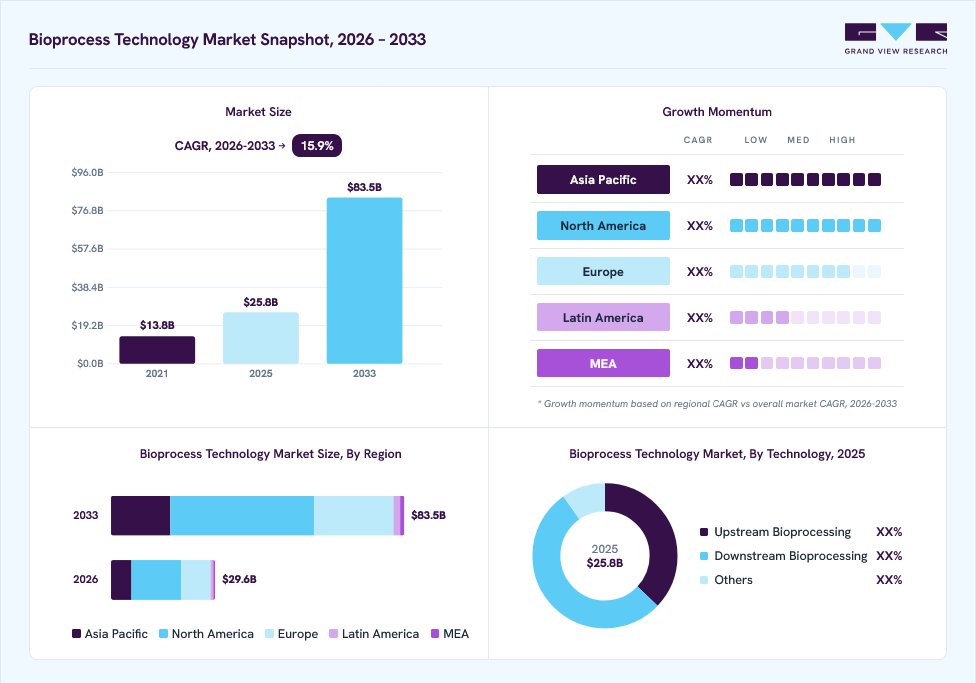
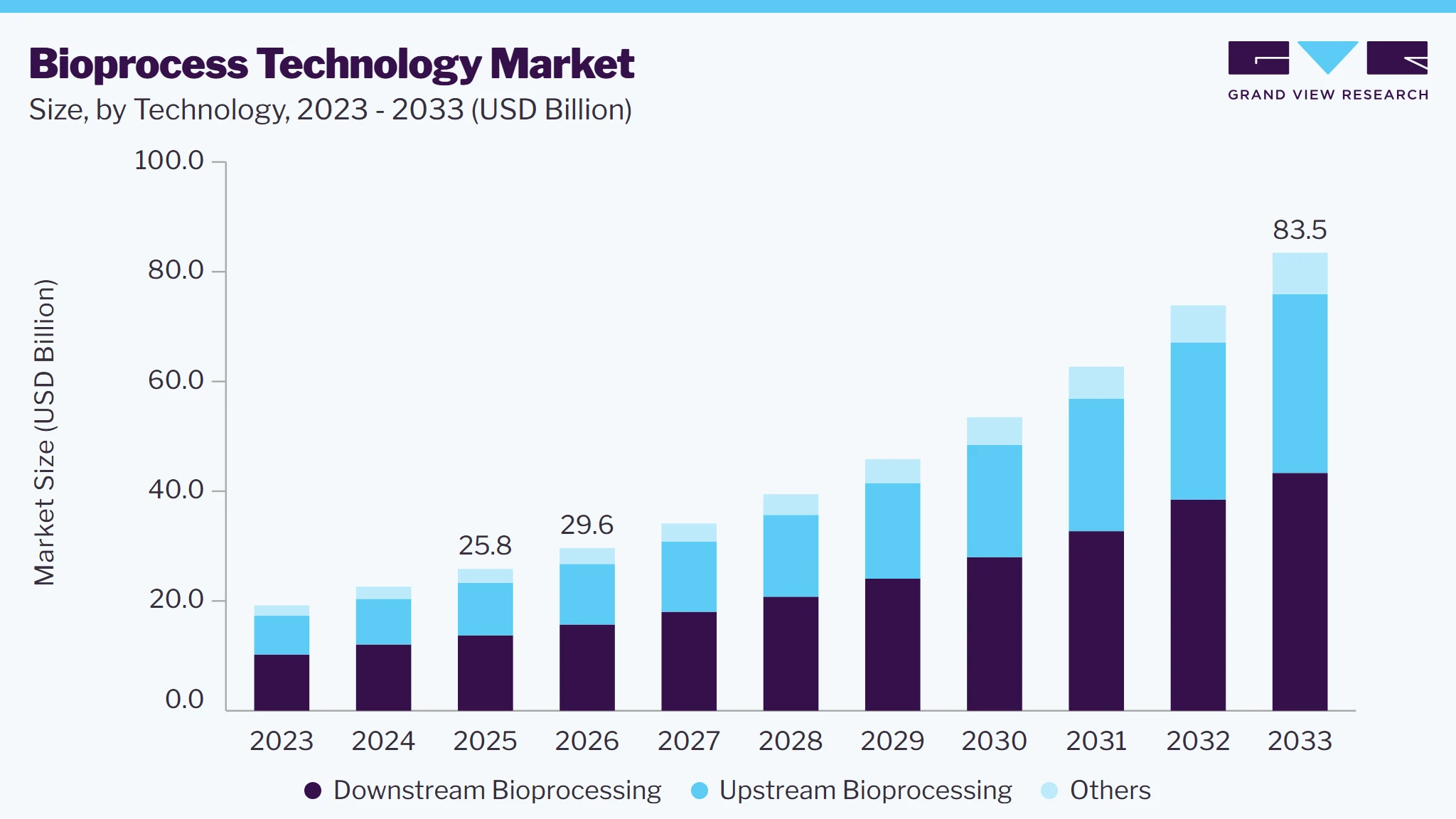
The global bioprocess technology market size was valued at USD 25.8 billion in 2025 and is projected to grow from USD 29.6 billion in 2026 to USD 83.5 billion by 2033, at a CAGR of 15.9% from 2026 to 2033. North America dominated the market, accounting for the largest revenue share of 47.3% in 2025. Market growth is driven by the rising adoption of precision fermentation, along with advancements in bioreactor automation, process monitoring, and scalable fermentation technologies.
 Source: Grand View Research, IR Documents, Primary Interviews, Paid DatabasesTo learn more about this report,
 Download Free Sample Report
 Key Market Trends & Insights
- By technology: Downstream bioprocessing segment held the highest market share of 53.2% in 2025.
- By application: Monoclonal antibodies segment held the highest market share in 2025.
- By end use: Biopharmaceutical & pharmaceutical companies segment held the highest market share in 2025.
Regional Highlights
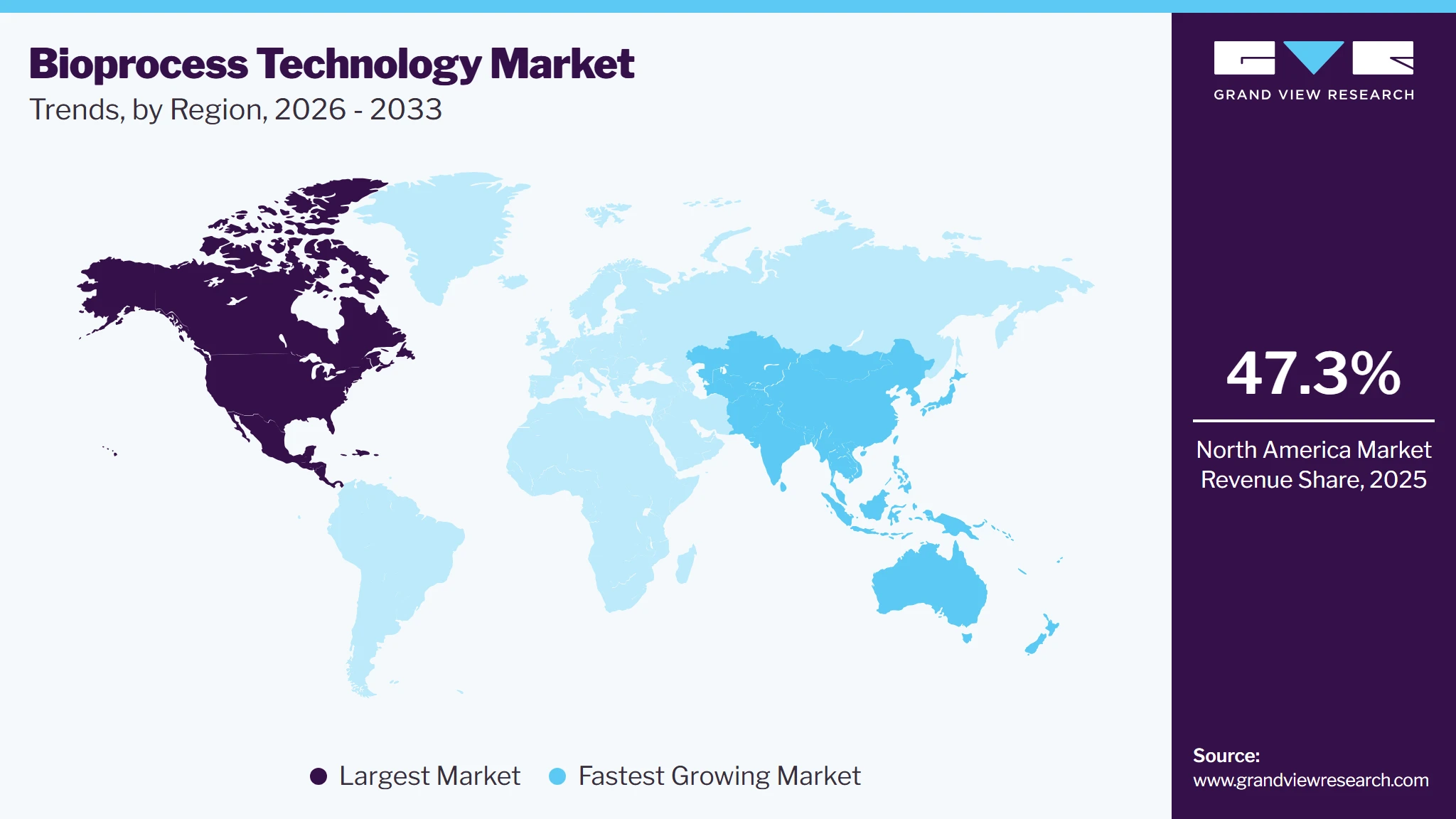
- Largest regional market: North America (47.3% revenue share, 2025)
- Fastest-growing regional market: Asia Pacific (highest CAGR, 2026-2033)
- By country: The U.S. held the largest market share in 2025
Market Size & Forecast
- Market size in 2025: USD 25.8 Billion
- Estimated market size in 2026: USD 29.6 Billion
- Projected market size by 2033: USD 83.5 Billion
- CAGR (2026-2033): 15.9%
Three ways to get this report
Buy it, customize it, or ask a question.Ask an Analyst
A direct answer, usually in 1 working day
- AccessReport author, directly
- Reply timeWithin 1 working day
- No sales callDirect answer only
- FormatEmail reply
- CostFree, no cost
Get the Full Report
What the study covers
- FormatsPDF · Excel · Dashboard
- Timeline2026–2033 annual, 2025 base
- Coverage20+ countries, 5 regions
- Companies10+ key players profiled
Customize the Report
20% free customization
- IncludeCountries, segments, points
- TailorTo your product definition
- ExtendDeeper competitor detail
- OrA fully bespoke study
- Turnaround5–10 working days
 To learn more about this report, Download Free Sample Report
 Market Dynamics
The market is experiencing strong growth, driven by rising demand for biopharmaceuticals, advancements in process automation, and increasing adoption of scalable manufacturing technologies. Growing investments in biomanufacturing infrastructure and the development of advanced fermentation and cell culture processes are further supporting market expansion. In addition, the integration of AI, digital process control, and real-time analytics is improving process efficiency, consistency, and productivity, creating new opportunities for market growth.
The growing adoption of single-use technologies is driving the market, as biopharmaceutical manufacturers seek flexible, scalable, and cost-efficient production systems. Single-use bioreactors, bags, filtration assemblies, and other disposable components reduce the need for cleaning and sterilization, minimize contamination risks, and enable faster changeovers between batches. These benefits are particularly valuable for multiproduct facilities and clinical-stage manufacturing, where flexibility and shorter production timelines are important.
For instance, in June 2026, Thermo Fisher Scientific marked 20 years of its HyPerforma Single-Use Bioreactor, highlighting continued innovation in single-use bioprocessing systems. The company has also expanded its DynaDrive platform to support process development and manufacturing from 5 L to 5,000 L, strengthening the scalability and applicability of single-use technologies in biopharmaceutical manufacturing.
Complex process validation requirements constrain the market, as manufacturers must demonstrate that bioprocessing systems consistently deliver products that meet predefined quality, safety, and performance specifications. Validation of bioreactors, single-use systems, filtration technologies, sensors, and automated process controls requires extensive testing, documentation, and quality assessments. These requirements can increase implementation costs and extend the time needed to adopt new technologies, particularly for smaller biopharmaceutical manufacturers.
The growing integration of automation, digital monitoring, and advanced process-control technologies further increases validation complexity, as manufacturers need to ensure the reliability, accuracy, and consistency of interconnected systems throughout the production process. In addition, evolving regulatory expectations around data integrity, process control, and manufacturing consistency require continuous updates to validation protocols, creating additional compliance burdens and potentially slowing the adoption of emerging bioprocess technologies.
The integration of artificial intelligence (AI) and advanced process analytics presents a significant market opportunity by enabling real-time monitoring, predictive modeling, anomaly detection, and optimization of complex bioprocesses. AI and machine learning can analyze high-volume process data from bioreactors, sensors, and process analytical technology (PAT) systems to improve process control, product consistency, yield, and resource efficiency.
According to an article published in the International Journal of Artificial Intelligence and Machine Learning in June 2026, data-driven control strategies that integrate process analytical technology (PAT), advanced sensors, machine learning, and digital twins can enable real-time process monitoring and adaptive control in upstream bioprocessing. These advancements are expected to improve process consistency, product quality, and operational efficiency, supporting the integration of AI and advanced process analytics into bioprocess manufacturing.
Market Concentration & Characteristics
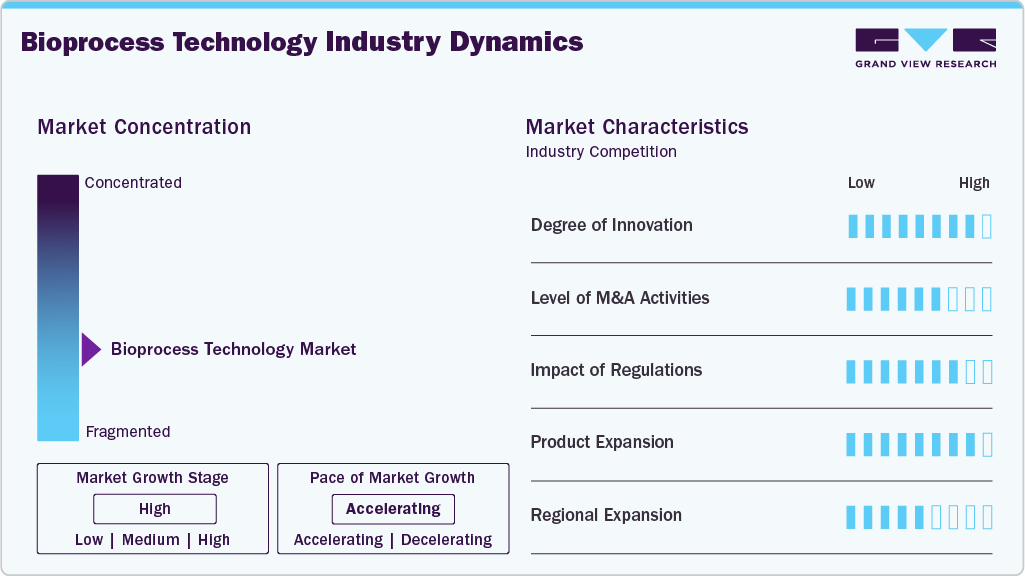
The bioprocess technology industry is highly innovative, driven by advancements in process intensification, automated bioreactors, process analytical technology (PAT), and digital process control. Companies are increasingly integrating advanced technologies to improve process monitoring, scalability, and manufacturing consistency. For instance, in August 2023, Sartorius and Repligen launched an integrated system combining the Biostat STR single-use bioreactor with XCell ATF technology, supporting intensified upstream processing and streamlined process control across biopharmaceutical manufacturing applications.
“The market introduction of this integrated bioreactor-intensification system created in partnership with Repligen further reinforces Sartorius’ commitment to being an innovator in process intensification and demonstrates our expertise in upstream processing technologies.”
- Mario Becker, Head of Product Group Bioreactor Technologies, Sartorius
 To learn more about this report, Download Free Sample Report
 The bioprocess technology industry is experiencing moderate M&A activity, with strategic transactions focused on expanding bioreactor, fermentation, and upstream processing capabilities. Such transactions enable companies to strengthen their technology portfolios and address growing demand for scalable bioprocessing solutions. For instance, in December 2025, Tetra Pak acquired Bioreactors.net, strengthening its bioreactor equipment and fermentation capabilities across laboratory, pilot, and commercial-scale applications.
Regulations have a high impact on the bioprocess technology industry, particularly for systems used in pharmaceutical and biologics manufacturing. Requirements related to GMP, process validation, equipment qualification, contamination control, and data integrity increase the need for validated and standardized technologies. For instance, in January 2025, the FDA issued guidance on the use of AI to support regulatory decision-making for drugs and biological products, establishing a risk-based framework for assessing the credibility of AI models.
The bioprocess technology industry is witnessing high product expansion, with manufacturers broadening their portfolios across laboratory, pilot, and commercial-scale bioprocessing applications. Companies are introducing new equipment and systems with enhanced automation, scalability, and process-control capabilities to address diverse manufacturing requirements.
The bioprocess technology industry is witnessing a moderate to high regional expansion, supported by investments in local biomanufacturing and scale-up infrastructure, particularly across emerging biotechnology hubs. For instance, in February 2026, Glatt and PreferCo established the PreferCo-Glatt Center of Excellence for Bioprocess Scale-Up in Hyderabad, India, featuring bioreactor capacity of up to 1,500 L along with automation, advanced instrumentation, and AI-enabled process intelligence.
Analyst Perspective
The market is expected to grow strongly, driven by the expanding biopharmaceutical pipeline, increasing adoption of biologics and cell & gene therapies, and rising demand for scalable manufacturing processes. Growing emphasis on process efficiency, quality, and cost optimization is accelerating the adoption of single-use systems, process automation, and advanced bioprocessing solutions. Technological advancements and increasing investments in biomanufacturing infrastructure are expected to support long-term market expansion, while market participants focus on automation, workflow integration, and innovative solutions to enhance manufacturing productivity and scalability.
Technology Insights
The downstream bioprocessing segment accounted for the largest revenue share, over 53.2% in 2025, driven by the global adoption of chromatography and other purification technologies for the efficient recovery and purification of biologics, particularly monoclonal antibodies and therapeutic proteins. The segment is further supported by ongoing investments in advanced purification capabilities. For instance, in October 2025, Merck announced an agreement to acquire JSR Life Sciences’ chromatography business to expand its purification solutions for monoclonal antibodies and therapeutic proteins, strengthening downstream bioprocessing capabilities and supporting scalable biopharmaceutical manufacturing.
The upstream bioprocessing segment is expected to register the fastest CAGR over the forecast period, driven by increasing demand for higher-yield cell culture processes, advances in cell-line development and process intensification, and the growing adoption of fed-batch and continuous perfusion technologies for scalable biologics manufacturing. For instance, in March 2026, Sartorius launched a genetically engineered CHO host cell line that delivered up to three-fold higher cell-specific productivity and supported intensified perfusion processes, highlighting continued technological advancement in upstream bioprocessing.
Application Insights
The monoclonal antibodies segment dominated the market with a 40.2% share in 2025, driven by the expanding pipeline of antibody-based therapeutics, increasing demand for targeted treatments, and continued growth in commercial-scale biologics manufacturing. For instance, in March 2024, Lonza announced the acquisition of Roche’s Genentech manufacturing facility in Vacaville, California, for USD 1.2 billion, with plans to invest approximately CHF 500 million to upgrade the facility and enhance capabilities for next-generation mammalian biologics therapies. The facility has approximately 330,000 liters of bioreactor capacity, supporting the growing demand for large-scale biologics manufacturing, including monoclonal antibodies.
The cell & gene therapies segment is expected to register the fastest CAGR over the forecast period, driven by the expanding pipeline of advanced therapies, increasing adoption of personalized and regenerative medicine, and rising demand for specialized bioprocessing solutions capable of handling complex cell and gene therapy manufacturing workflows. Growth is further supported by advancements in viral vector production, cell processing, automation, and scalable manufacturing platforms, which are improving process consistency and supporting the transition of these therapies toward commercial production.
End Use Insights
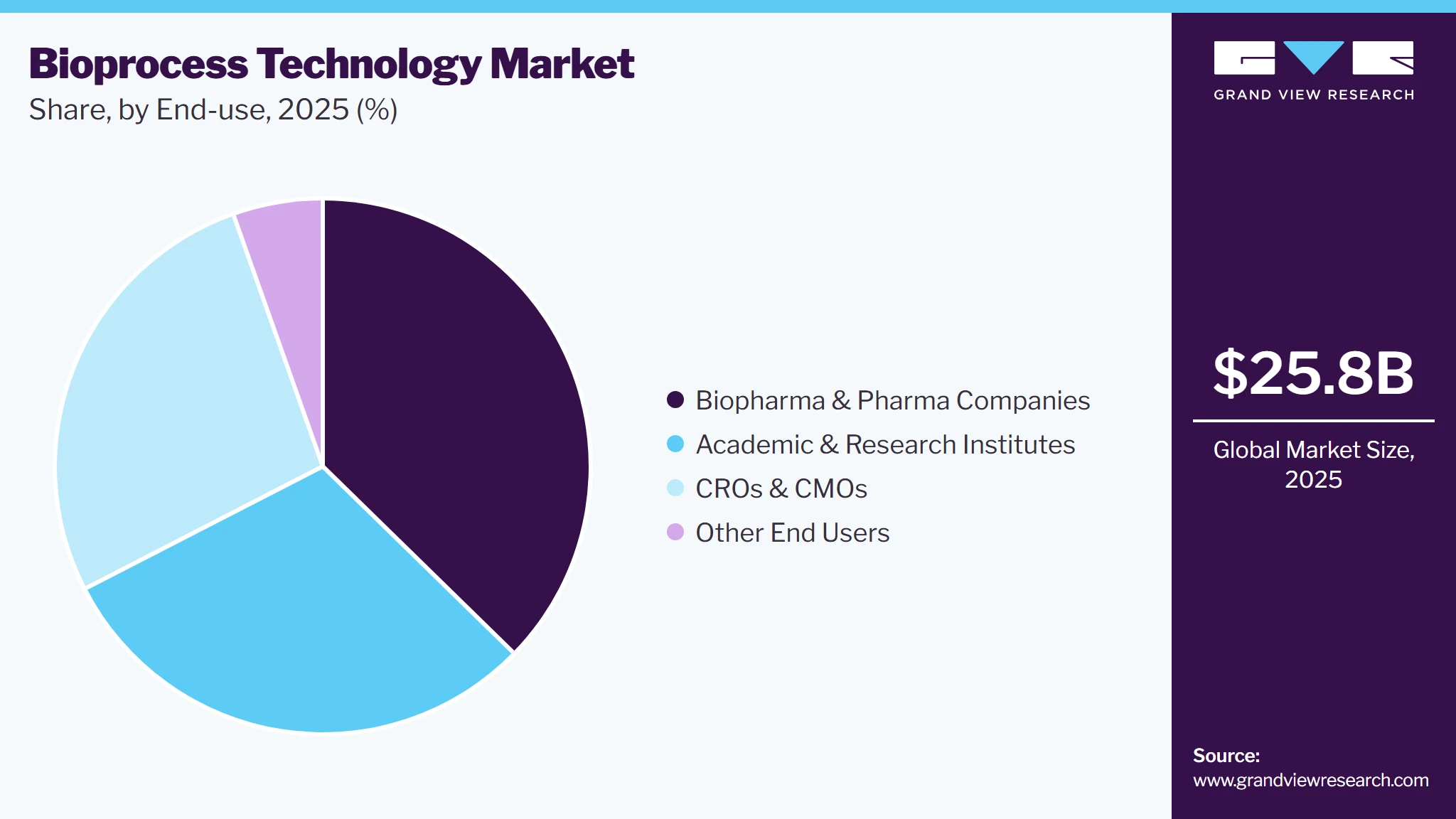
The biopharmaceutical & pharmaceutical companies segment dominated the market with a share of 37.3% in 2025, driven by the expanding biologics pipeline, increasing in-house manufacturing of complex therapeutics, and continued investments in production capacity and process optimization. The segment’s dominance is further supported by the growing adoption of advanced bioprocessing technologies to improve manufacturing efficiency, product consistency, and scalability across commercial production.
 To learn more about this report, Download Free Sample Report
 The CROs & CMOs segment is projected to witness the fastest CAGR, driven by the increasing outsourcing of capital-intensive bioprocess development and manufacturing activities, growing demand for specialized technical expertise, and the need for flexible production capacity among emerging biopharmaceutical developers. The shift toward outsourced models is further supported by the growing adoption of integrated services spanning process development, clinical manufacturing, scale-up, and commercial production.
Regional Insights
North America dominated the bioprocess technology market, accounting for the largest revenue share of 47.3% in 2025, supported by strong biomanufacturing capabilities, advanced R&D infrastructure, and investments in domestic production capacity. For instance, in August 2026, the Province of Nova Scotia announced funding to expand the Verschuren Centre’s bioprocessing scale-up facility, which includes a 10,000-L precision fermentation line and is expected to support additional biotechnology companies.
 To learn more about this report, Download Free Sample Report
 “Innovation is one of Canada’s greatest strengths, and facilities like 10X help turn innovative ideas into real economic opportunities. ACOA’s continued support will help companies develop, test, and scale new technologies right here in Atlantic Canada, strengthening our innovation ecosystem and supporting a more resilient and competitive Canadian economy.”
- Sean Fraser, Minister of Justice and Attorney General of Canada, and Minister responsible for the Atlantic Canada Opportunities Agency
U.S. Bioprocess Technology Market Trends
The bioprocess technology market in the U.S. is expected to grow over the forecast period, supported by increasing investments in advanced biomanufacturing, process automation, and domestic pharmaceutical production. For instance, in August 2026, Genentech completed the structural framework of its approximately USD 2 billion biomanufacturing facility in Holly Springs, North Carolina, which will incorporate automation, robotics, and an AI-powered digital twin to enhance manufacturing efficiency.
Europe Bioprocess Technology Market Trends
The bioprocess technology market in Europe was identified as a lucrative region in this industry, supported by established biotechnology capabilities and increasing policy support for industrial biotechnology and biomanufacturing. For instance, in May 2026, the European Commission launched a consultation on industrial biotechnology and biomanufacturing to support the development of Biotech Act II and improve conditions for investment and scale-up across the region.
The UK bioprocess technology market is supported by a well-established life sciences ecosystem, advanced research capabilities, and growing investments in biopharmaceutical manufacturing. Increasing focus on strengthening domestic production capacity, scaling innovative biological processes, and adopting advanced manufacturing technologies is expected to support demand for bioprocessing systems.
The bioprocess technology market in Germany is anticipated to grow significantly over the forecast period, supported by its strong biotechnology ecosystem and increasing development of large-scale fermentation-based production. For instance, in July 2026, MicroHarvest confirmed the selection of Leuna, Germany, for its first large-scale production plant, designed to produce up to 15,000 tonnes annually through biomass fermentation.
Asia Pacific Bioprocess Technology Market Trends
The bioprocess technology market in the Asia Pacific is expected to grow at the fastest CAGR of 16.4% during the forecast period, supported by expanding biopharmaceutical manufacturing, increasing biotechnology investments, and the development of fermentation and biomanufacturing capabilities. The region’s growing emphasis on local production and process scale-up is expected to increase demand for advanced bioreactors, process-control systems, and other bioprocess technologies.
China bioprocess technology market is expected to experience strong market growth, supported by its large-scale industrial fermentation ecosystem, established biotechnology manufacturing base, and increasing focus on advanced biomanufacturing. The country’s extensive production capabilities for fermentation-derived products provide a strong foundation for adopting scalable, automated bioprocess technologies.
The bioprocess technology market in Japan is expected to grow steadily, supported by its established expertise in fermentation, advanced biotechnology infrastructure, and growing interest in sustainable bio-based manufacturing. The increasing application of fermentation technologies across food, chemicals, and biotechnology is expected to drive demand for sophisticated bioprocessing and scale-up solutions.
Latin America Bioprocess Technology Market Trends
The bioprocess technology market in Latin America is expected to grow gradually, supported by expanding bioprocessing infrastructure, increasing adoption of fermentation technologies, and growing investments in biotechnology and biopharmaceutical manufacturing. Brazil is expected to remain a key regional market, supported by its established fermentation ecosystem and expanding upstream bioprocessing capabilities.
MEA Bioprocess Technology Market Trends
The bioprocess technology market in MEA is expected to grow steadily, supported by increasing biotechnology investments, efforts to develop local biomanufacturing capabilities, and government initiatives promoting biotechnology-led economic diversification. Growing focus on vaccine production, biologics, and industrial biotechnology is expected to create demand for scalable bioprocessing infrastructure across the region.
Key Bioprocess Technology Company Insights
Several well-established companies operate in the market, supported by their portfolios of upstream and downstream bioprocessing systems, bioreactors, filtration, chromatography, and process-control technologies. Leading players such as Thermo Fisher Scientific Inc., Sartorius AG, Merck KGaA, Danaher Corporation, Corning Incorporated, Eppendorf SE, Getinge AB, Repligen Corporation, ABEC, Inc., and PBS Biotech, Inc. maintain a strong market presence through product innovation, technology development, portfolio expansion, and strategic initiatives focused on improving bioprocess efficiency, scalability, automation, and manufacturing consistency.
Key Bioprocess Technology Companies
The following key companies have been profiled for this study on the bioprocess technology market:
-
Thermo Fisher Scientific Inc.
-
Sartorius AG
-
Merck KGaA
-
Danaher Corporation
-
Corning Incorporated
-
Eppendorf SE
-
Getinge AB
-
Repligen Corporation
-
ABEC, Inc.
-
PBS Biotech, Inc.
Competitive Benchmarking
Category
Operating Strategies
Competitive Edge
Weakness
Established Players (Thermo Fisher Scientific, Sartorius AG, Merck KGaA, Danaher Corporation, Corning Incorporated, Eppendorf SE, Repligen Corporation, etc.)
Focus on developing integrated bioprocessing solutions, including upstream and downstream processing equipment, single-use technologies, bioreactors, and process analytics.
Advanced bioprocessing technologies, strong R&D capabilities, and ability to provide scalable and customized solutions across the biomanufacturing workflow.
Complex global supply chains and stringent quality and regulatory requirements can increase operational costs and implementation complexity.
Emerging Players (ABEC, Inc., PBS Biotech, Inc., Getinge AB)
Focus on specialized bioreactors, fermentation systems, and bioprocess equipment for research, process development, and commercial manufacturing.
Ability to serve specialized and complex bioprocessing requirements with application-focused solutions and responsive customer support.
Greater dependence on specific equipment segments and vulnerability to competition from integrated end-to-end bioprocessing providers.
Recent Developments
- In April 2026, Thermo Fisher Scientific opened its flagship U.S. Bioprocess Design Center in Plainville, Massachusetts, providing advanced bioproduction technologies, technical expertise, training, and collaborative support to accelerate biologics process development, scalability, and delivery of transformative therapies.
"Our new Bioprocess Design Center brings together Thermo Fisher’s experts and customers to tackle some of the most complex challenges in bioprocessing, demonstrating how collaboration and shared innovation can accelerate therapeutic development and help deliver life-changing therapies to patients faster."
- Daniella Cramp, senior vice president and president, BioProduction and Customer Excellence at Thermo Fisher Scientific
-
In January 2026, Sartorius expanded its bio-circular product portfolio by introducing certified renewable raw materials into additional single-use bioprocessing technologies, including filters and fluid-management solutions, thereby reducing fossil-based plastics and supporting more sustainable biopharmaceutical manufacturing processes.
-
In November 2024, Thermo Fisher Scientific announced plans to establish a bioprocess design center in Hyderabad, India, offering upstream and downstream development, cell-culture media development, single-use manufacturing scale-up, product validation, technical expertise, and training to strengthen regional biopharmaceutical manufacturing capabilities.
-
In November 2024, Sartorius Stedim Biotech opened a Center for Bioprocess Innovation in Marlborough, Massachusetts, featuring research laboratories, process development services, customer demonstrations, training, and planned GMP suites to advance bioprocess optimization and manufacturing for next-generation therapeutics.
Bioprocess Technology Market Report Scope
Report Attribute
Details
Market size in 2025
USD 25.8 billion
Estimated market size in 2026
USD 29.6 billion
Projected market size by 2033
USD 83.5 billion
Growth rate
CAGR of 15.9% from 2026 to 2033
Historical data
2021 - 2025
Forecast period
2026 - 2033
Quantitative units
Revenue in USD billion, and CAGR from 2026 to 2033
Report coverage
Revenue forecast, company ranking, competitive landscape, growth factors, and trends
Segments covered
Technology, application, end use, region
Regional scope
North America; Europe; Asia Pacific; Latin America; MEA
Country scope
U.S.; Canada; Mexico; UK; Germany; France; Italy; Spain; Norway; Denmark; Sweden; China; Japan; India; South Korea; Australia; Thailand; Brazil; Argentina; Saudi Arabia; South Africa; UAE; Kuwait
Key companies profiled
Thermo Fisher Scientific Inc.; Sartorius AG; Merck KGaA; Danaher Corporation; Corning Incorporated; Eppendorf SE; Getinge AB; Repligen Corporation; ABEC, Inc.; PBS Biotech, Inc.
Customization scope
Free report customization (equivalent up to 8 analysts' working days) with purchase. Addition or alteration to country, regional & segment scope.
Pricing and purchase options
Avail customized purchase options to meet your exact research needs. Explore purchase options
Global Bioprocess Technology Market Report Segmentation
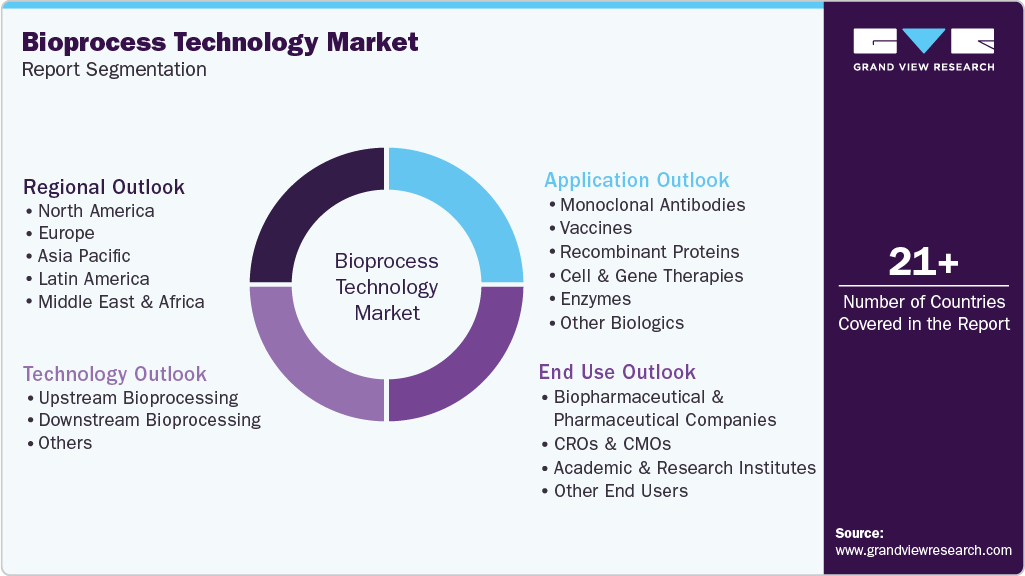
This report forecasts revenue growth and provides an analysis of the latest trends in each of the sub-segments from 2021 to 2033. For this report, Grand View Research has segmented the global bioprocess technology market report based on technology, application, end use, and region:
 To learn more about this report, Download Free Sample Report
 -
Technology Outlook (Revenue, USD Billion, 2021 - 2033)
-
Upstream Bioprocessing
-
Downstream Bioprocessing
-
Others
-
-
Application Outlook (Revenue, USD Billion, 2021 - 2033)
-
Monoclonal Antibodies
-
Vaccines
-
Recombinant Proteins
-
Cell & Gene Therapies
-
Enzymes
-
Other Biologics
-
-
End Use Outlook (Revenue, USD Billion, 2021 - 2033)
-
Biopharmaceutical & Pharmaceutical Companies
-
CROs & CMOs
-
Academic & Research Institutes
-
Other End Users
-
-
Regional Outlook (Revenue, USD Billion, 2021 - 2033)
-
North America
-
U.S.
-
Canada
-
Mexico
-
-
Europe
-
UK
-
Germany
-
France
-
Italy
-
Spain
-
Denmark
-
Sweden
-
Norway
-
-
Asia Pacific
-
Japan
-
China
-
India
-
Australia
-
Thailand
-
South Korea
-
-
Latin America
-
Brazil
-
Argentina
-
-
Middle East and Africa (MEA)
-
South Africa
-
Saudi Arabia
-
UAE
-
Kuwait
-
-
Research Methodology
The bioprocess technology market figures in this report are based on a proven research process that combines executive interviews with secondary research from proprietary databases, company filings, and recognized regulatory and institutional sources. Market size is built through value-chain sizing-reconciling supply-side and demand-side estimates-and triangulated with bottom-up and top-down approaches. Every estimate passes multiple levels of expert validation before publication, with each bioprocess technology segment quantified using the revenue-capture definitions in the table below.
Segment Definition
Segment- Technology
Revenue Capture Definition
Upstream Bioprocessing
Revenue generated from technologies, equipment, and solutions used during the initial stages of biopharmaceutical production to cultivate and maintain biological systems and enable target product generation. This segment encompasses cell culture, fermentation, media preparation, bioreactors, and associated process-control solutions used for producing biologics and other biological products.
Downstream Bioprocessing
This segment captures income from technologies and solutions employed after biological production to recover, separate, purify, concentrate, and formulate target products. These processes support the removal of impurities and achievement of the required purity, quality, and consistency of biopharmaceutical products.
Others
Market value in this category stems from bioprocessing technologies that do not fall directly within upstream or downstream operations, including process monitoring, automation, analytical solutions, data management, and other supporting technologies that facilitate efficient and controlled biomanufacturing.
Segment- Application
Revenue Capture Definition
Monoclonal Antibodies
Revenue generated from bioprocessing technologies used for the development and manufacturing of monoclonal antibodies, including cell culture, production, harvesting, purification, and formulation processes. These solutions support the scalable manufacture of antibody-based therapeutics for oncology, autoimmune disorders, and other disease indications.
Vaccines
This segment reflects income from bioprocess technologies utilized in the production, recovery, purification, and formulation of vaccines and vaccine-related biological products. The segment supports manufacturing workflows for conventional and advanced vaccine modalities across research, clinical development, and commercial production.
Recombinant Proteins
Market value in this category arises from bioprocessing solutions used to produce, recover, purify, and formulate recombinant proteins through biological expression systems. These technologies support manufacturing of therapeutic proteins, enzymes, hormones, and other protein-based biologics.
Cell & Gene Therapies
Revenue originates from bioprocess technologies supporting the development and manufacturing of cell and gene therapy products, including cell expansion, genetic modification, harvesting, purification, formulation, and associated process-control activities.
Enzymes
This segment captures income from bioprocessing technologies applied to the production, recovery, purification, and formulation of enzymes through microbial, cellular, or other biological production systems. These solutions serve therapeutic, research, diagnostic, and industrial enzyme manufacturing applications.
Other Biologics
Includes revenue from bioprocessing technologies utilized in the production of biological products outside the primary application categories, including fusion proteins, blood-derived products, and other emerging biologic modalities.
Segment- End-use
Revenue Capture Definition
Biopharmaceutical & Pharmaceutical Companies
Revenue generated from bioprocessing technologies adopted by pharmaceutical and biopharmaceutical manufacturers for research, process development, clinical production, scale-up, and commercial manufacturing of biologics and other biological products.
CROs & CMOs
This segment represents income from contract research and contract manufacturing organizations using bioprocessing technologies to provide outsourced research, process development, analytical, clinical manufacturing, and commercial production services to life sciences companies.
Academic & Research Institutes
Demand within this category is associated with the use of bioprocessing technologies by universities, government laboratories, and research institutions conducting basic, translational, and applied research involving biological production and biomanufacturing processes.
Other End Users
Market value stems from bioprocess technology adoption by organizations outside the primary end user categories, including hospitals, diagnostic organizations, government agencies, and specialized biotechnology facilities involved in biological research, testing, and production activities.
Estimation Model
Methodology
Sub-Methodology
Description
Top Down
Market Size Estimation
Market size was estimated by analyzing revenues generated by key players, including manufacturers and suppliers, industry groups, and trusted forecasts. Historical market size was gathered from public and private data, government reports, industry associations, and previous industry reports.
Parent Market
Parent Market & Redistribution
The parent market methodology was used to determine the total addressable market by analyzing historical growth rates, market trends, and industry dynamics. This approach provided a comprehensive view of the market's potential and helped identify growth opportunities.
Segmentation
Country-Level Segment Share Modeling
Market shares for technology, application, and end-use segments were derived using country-specific information, historical growth patterns, and secondary research. This included analysis of industry reports, company filings, and market studies to determine weighted average calculations appropriate to determine regional and global segment distributions.
Validation
Data Triangulation & Validation Model
Market estimates were validated through triangulation of secondary research, interviews, company revenue analysis, technology adoption rates, and benchmarking data. Industry experts and key stakeholders were also consulted to ensure consistency and accuracy.
Forecasting
Forecasting & CAGR Modeling
Market forecasts were developed using historical market trends, CAGR calculations, and assumptions regarding adoption of technology and market penetration. Forecasting incorporated industry growth trends, investment patterns, and macroeconomic conditions to provide a comprehensive and realistic projection of future market growth.
Customization Table
Client Request
Customization Delivered
Value Adds
Biologic-Specific Bioprocess Workflow Assessment
Evaluation of bioprocess requirements across monoclonal antibodies, vaccines, recombinant proteins, cell & gene therapies, enzymes, and other biologics, covering critical upstream and downstream process requirements, production complexity, scalability, and technology utilization.
Helps clients identify high-growth application areas, align technology portfolios with biologic manufacturing requirements, and identify opportunities for targeted product development.
Process Intensification & Continuous Bioprocessing Assessment
Assessment of continuous processing, intensified cell culture, perfusion, continuous chromatography, and integrated process technologies, including productivity improvements, equipment requirements, process complexity, and adoption across manufacturing scales.
Supports clients in evaluating productivity-enhancing technologies, identifying opportunities for process optimization, and assessing the transition from batch to intensified or continuous manufacturing.
Bioprocess Technology & Workflow Benchmarking
Comparative assessment of upstream, downstream, and other bioprocess technologies across bioreactors, fermentation systems, filtration, chromatography, cell culture, and purification platforms, evaluating technology maturity, throughput, scalability, automation, and suitability across biologic modalities.
Enables clients to benchmark competing technologies, identify performance gaps, evaluate technology maturity, and prioritize platforms with the strongest commercial potential.
Frequently Asked Questions About This Report
The global bioprocess technology market size was valued at USD 25.8 billion in 2025 and is estimated at USD 29.6 billion for 2026.
The global bioprocess technology market is expected to grow at a CAGR of 15.9% from 2026 to 2033, reaching USD 83.5 billion by 2033.
The downstream bioprocessing segment accounted for the largest revenue share, over 53.2% in 2025.
North America dominated with a 47.3% revenue share in 2025.
Market growth is driven by the rising adoption of precision fermentation, along with advancements in bioreactor automation, process monitoring, and scalable fermentation technologies.
Key players include Thermo Fisher Scientific Inc., Sartorius AG, Merck KGaA, Danaher Corporation, Corning Incorporated, Eppendorf SE, Getinge AB, Repligen Corporation, ABEC, Inc., and PBS Biotech, Inc.
Asia Pacific is the fastest-growing region over the forecast period.
The monoclonal antibodies segment dominated the market with a 40.2% share in 2025.
The biopharmaceutical & pharmaceutical companies segment dominated the market with a share of 37.3% in 2025.
About the Author(s)
Biotechnology Research Team
Healthcare · BiotechnologyThis report was authored by the biotechnology research team at Grand View Research - comprising two research analysts, one senior research analyst, and one industry expert - with specialized expertise in the biotechnology segment of the healthcare industry. All findings are based on proprietary healthcare databases, executive interviews, and regulatory analysis, subject to internal peer review prior to publication.
Last Updated:
Speak to Analyst

Customize this report to your needs - add regions, segments, or data points, with 20% free customization.
Or view our licence options:


ISO 9001:2015 & 27001:2022 Certified
We are GDPR and CCPA compliant! Your transaction & personal information is safe and secure. For more details, please read our privacy policy.


