
- Home
- »
- Advanced Interior Materials
- »
-
Carbon Fiber Composites Market Size Report, 2026-2033GVR Report cover

Carbon Fiber Composites Market (2026 - 2033)
Size, Share & Trends Analysis Report By Raw Material (PAN-based Carbon Fiber, Pitch-based Carbon Fiber, Rayon-based Carbon Fiber), By Application (Aerospace & Defense, Wind Energy), By Region, And Segment Forecasts,
Market Size, 2025
$26.3BMarket Estimate, 2026
$28.3BMarket Forecast, 2033
$47.9BCAGR, 2026–2033
7.8%Carbon Fiber Composites Market Summary
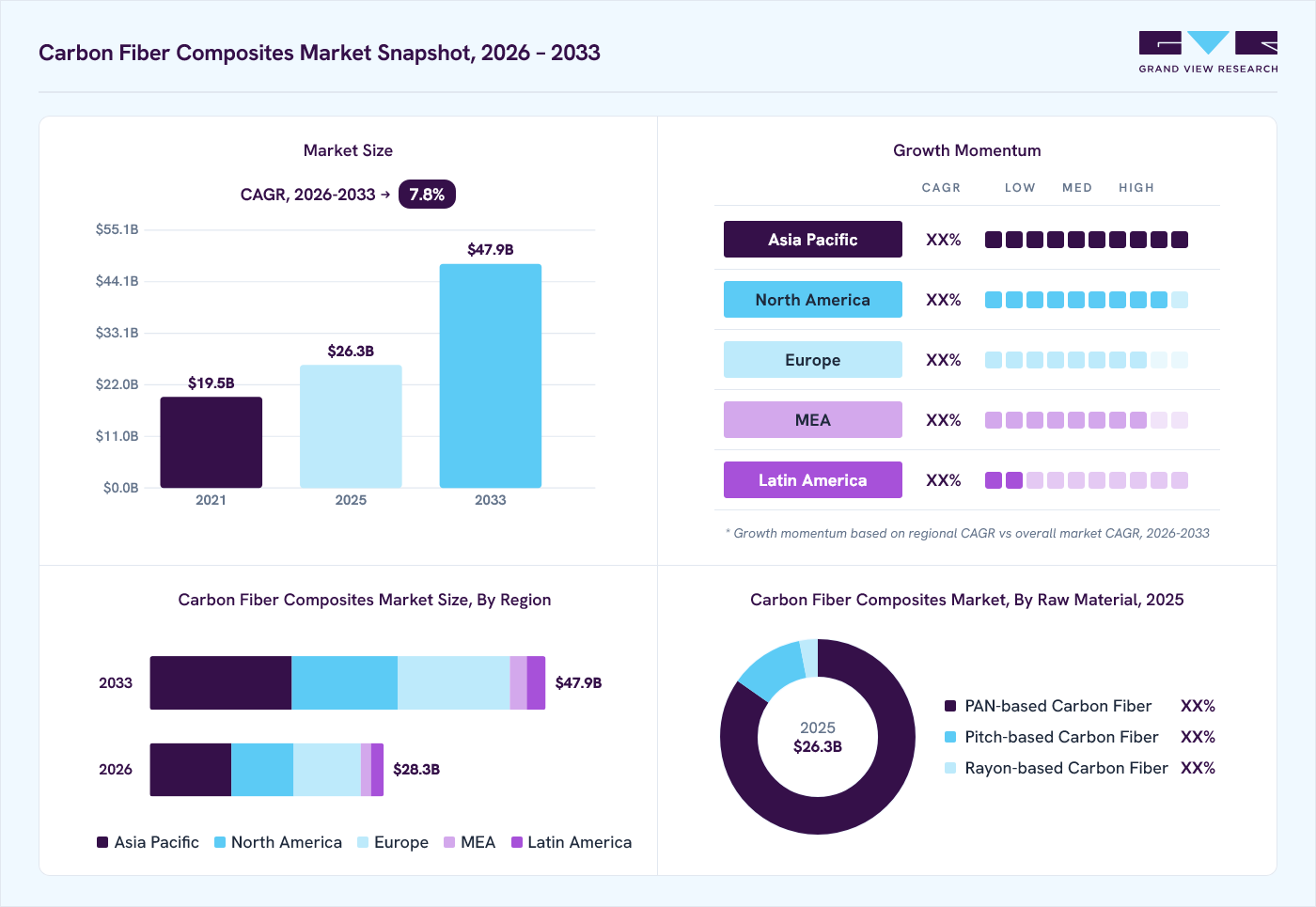
The global carbon fiber composites market size was valued at USD 26.3 billion in 2025 and is projected to grow from USD 28.3 billion in 2026 to USD 47.9 billion by 2033, at a CAGR of 7.8% from 2026 to 2033. The market in Asia Pacific dominated with a revenue share of 34.8% in 2025. The demand for carbon fiber composites is increasing as industries transition toward lightweight, high-strength materials to meet fuel efficiency and emission reduction goals.
 Source: Grand View Research, IR Documents, Primary Interviews, Paid DatabasesTo learn more about this report,
 Download Free Sample Report
 Key Market Trends & Insights
- By raw material: PAN-based carbon fiber segment held the largest market share of 84.6% in 2025.
- By application: Aerospace & defense segment held the largest market share of 26.4% in 2025.
Regional Highlights
- Largest regional market: Asia Pacific (34.8% revenue share, 2025)
- By country: China held the largest market share in 2025
Market Size & Forecast
- Market size in 2025: USD 26.3 Billion
- Estimated market size in 2026: USD 28.3 Billion
- Projected market size by 2033: USD 47.9 Billion
- CAGR (2026-2033): 7.8%
Three ways to get this report
Buy it, customize it, or ask a question.Ask an Analyst
Analyst response in 1 business day
- AccessReport author, directly
- Reply timeWithin 1 working day
- No sales callDirect answer only
- FormatEmail reply
- CostFree, no cost
Get the Full Report
What the study covers
- FormatsPDF · Excel · Dashboard
- Timeline2026–2033 annual, 2025 base
- Coverage20+ countries, 5 regions
- Companies10+ key players profiled
Customize the Report
20% free customization
- IncludeCountries, segments, points
- TailorTo your product definition
- ExtendDeeper competitor detail
- OrA fully bespoke study
- Turnaround5–10 working days
Aerospace OEMs are increasing the penetration of composites in next-generation aircraft structures, driving long-term demand. Automotive manufacturers are increasingly adopting carbon fiber for body panels, monocoques, and EV components to enhance performance and extend driving range. Wind energy is witnessing strong uptake, with larger turbine blades requiring high-stiffness materials. Industrial uses such as pressure vessels, robotics, and sporting goods are expanding rapidly. Rising investments in renewable energy and clean mobility are strengthening consumption.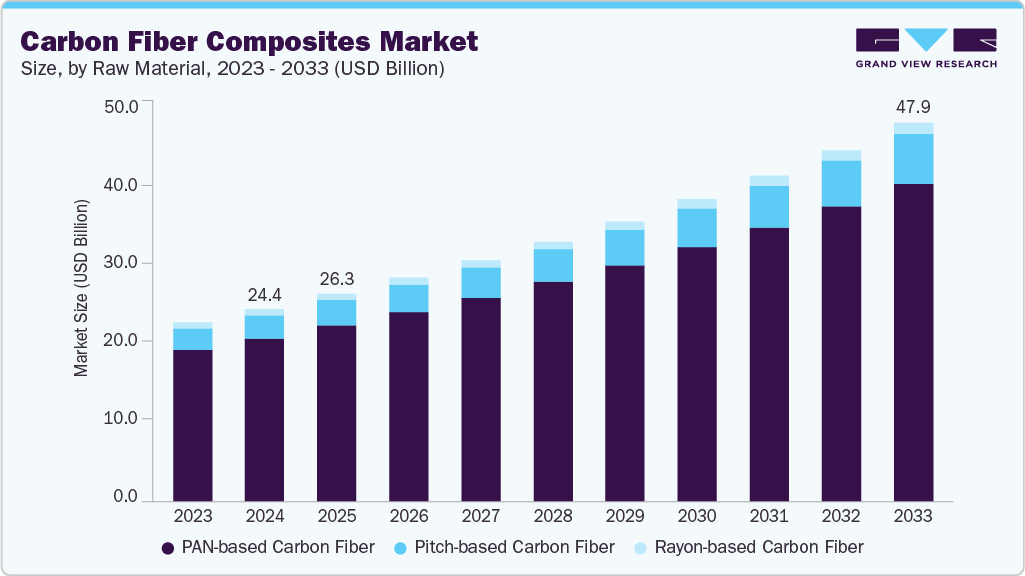 To learn more about this report, Download Free Sample Report
 A significant demand driver is the global shift toward lightweighting across aerospace, automotive, and energy markets. Growing EV production is boosting the demand for carbon fiber components that reduce vehicle weight while maintaining structural strength. The wind energy sector requires larger, more durable blades that depend heavily on carbon fiber composites for stiffness-to-weight advantages. The increasing adoption of automation and industrial robotics is driving the demand for high-performance mechanical structures. Expanding use in high-pressure hydrogen storage tanks is another strong driver, aligned with global clean fuel strategies. Technological improvements in precursor materials and automated fabrication processes are reducing costs, enabling wider adoption. The rise of premium sports equipment and performance applications also contributes to steady demand.
 To learn more about this report, Download Free Sample Report
 The market is witnessing a shift toward low-cost carbon fiber precursors like PAN alternatives, lignin-based fibers, and recycled carbon fiber. Advancements in automated fiber placement (AFP), additive manufacturing, and resin infusion are improving production efficiency and reducing manufacturing costs. OEMs are increasingly integrating hybrid composites that combine carbon fiber with thermoplastics for faster cycle times and improved recyclability. The aerospace sector is adopting higher-temperature resins and next-generation prepregs for improved performance. Growth in hydrogen tanks and battery enclosures is emerging as a key trend. Wind OEMs are moving toward ultra-long blades that require high-modulus carbon fiber. Sustainability innovations such as reclaimed fiber and circular composite solutions are gaining traction rapidly.
Market Dynamics
The carbon fiber composites market is witnessing robust growth, driven by increasing demand for lightweight, high-strength materials across the automotive, aerospace, wind energy, sporting goods, and industrial sectors. Carbon fiber composites offer an exceptional strength-to-weight ratio, corrosion resistance, fatigue durability, and superior mechanical performance compared to conventional metals, making them an ideal solution for high-performance applications. The accelerating transition toward electric mobility, stringent fuel efficiency and emission regulations, and growing investments in renewable energy infrastructure are further supporting market expansion. In addition, continuous advancements in resin systems, automated composite manufacturing technologies, and recyclable carbon fiber solutions are improving production efficiency and expanding the commercial adoption of carbon fiber composites across diverse end-use industries.
The growing emphasis on vehicle and aircraft lightweighting to improve fuel efficiency, reduce emissions, and enhance performance is a major driver for the carbon fiber composites market. Automotive manufacturers are increasingly incorporating carbon fiber composites into structural, exterior, and interior components to reduce vehicle weight while maintaining structural integrity and safety. Similarly, the aerospace industry continues to expand the use of carbon fiber composites in aircraft fuselage, wings, and interior structures to lower fuel consumption and improve operational efficiency. The rapid growth of electric vehicles is further accelerating demand, as lightweight composite materials play a critical role in extending battery range and improving overall vehicle performance.
The carbon fiber composites market continues to face challenges associated with the high cost of carbon fiber raw materials, energy-intensive production processes, and relatively long manufacturing cycles. Compared to conventional materials such as steel, aluminum, and glass fiber composites, carbon fiber composites require significant investment in specialized manufacturing equipment, skilled labor, and quality control systems. Additionally, limitations in recycling infrastructure, supply chain constraints for precursor materials, and high processing costs may restrict wider adoption in cost-sensitive applications, particularly in mass-market automotive and general industrial sectors.
The expanding deployment of renewable energy infrastructure and increasing industrial adoption of advanced composite materials present significant growth opportunities for the carbon fiber composites market. Wind turbine manufacturers are increasingly utilizing carbon fiber composites in larger turbine blades to improve strength, reduce weight, and enhance energy generation efficiency. At the same time, rising demand from pressure vessels, hydrogen storage tanks, construction reinforcement, marine structures, and industrial equipment is creating new avenues for market expansion. Ongoing advancements in automated manufacturing technologies, recycled carbon fiber solutions, and cost-effective production methods are expected to further broaden the application scope of carbon fiber composites and unlock long-term growth opportunities across multiple industries.
Market Concentration & Characteristics
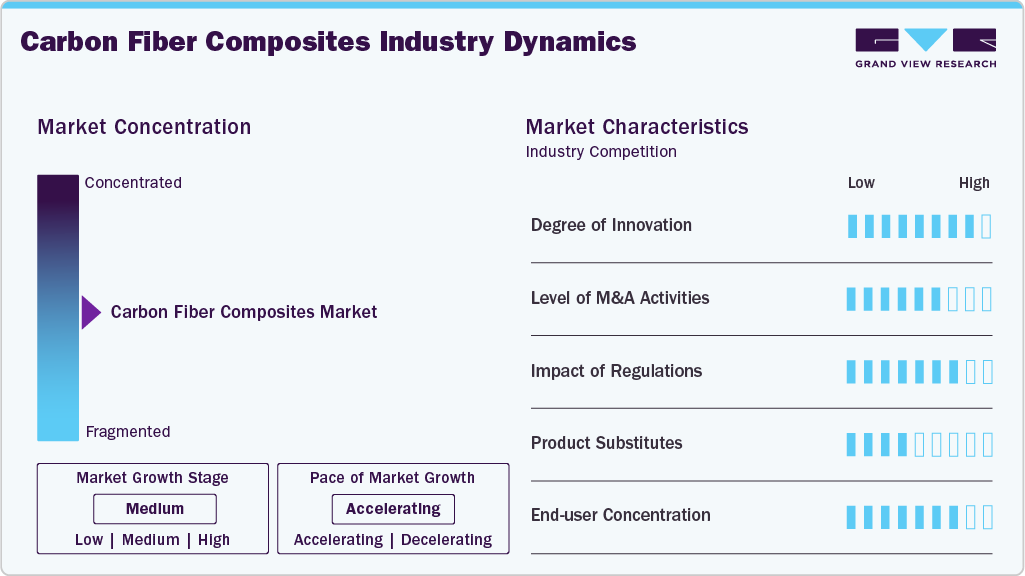
The carbon fiber composites industry remains moderately concentrated, dominated by a limited number of integrated manufacturers producing both fiber and composite materials. Leading players, including Toray, Teijin, Mitsubishi Chemical, Hexcel, and SGL Carbon, control a significant share of the global capacity. High entry barriers, such as capital-intensive precursor production, stringent aerospace certifications, and advanced engineering requirements, limit new entrants. Tier-1 aerospace suppliers and automotive OEM partnerships further reinforce concentration. However, downstream composite fabricators are more fragmented, especially in industrial and sporting goods segments. M&A activities continue to shape competitive dynamics.
 To learn more about this report, Download Free Sample Report
 Substitutes for carbon fiber composites include glass fiber composites, aluminum, high-strength steel, and emerging thermoplastic composites. While glass fiber remains cheaper, it cannot match carbon fiber’s stiffness-to-weight ratio in premium applications, limiting its threat. Aluminum alloys compete in the production of automotive and aerospace parts, but face restrictions due to weight and forming limitations. Advanced thermoplastics and hybrid composites are gaining ground in mid-performance applications due to recyclability and lower production costs. In wind energy, alternatives are limited because ultra-long blades require the mechanical properties of carbon fiber. The substitution threat remains moderate, with cost-sensitive segments being more likely to shift to alternatives.
Analyst Perspective
The carbon fiber composites market is transitioning from a niche, high-performance materials segment to a strategically important industry driven by lightweight engineering, sustainability objectives, and the growing need for high-strength materials across multiple end-use sectors. While aerospace and defense continue to represent the benchmark for carbon fiber composite adoption, future growth is expected to be increasingly driven by electric vehicles, wind energy, hydrogen storage, industrial equipment, and infrastructure reinforcement as manufacturers seek to improve energy efficiency, reduce lifecycle costs, and meet stringent environmental regulations. The competitive landscape is shifting from material supply alone toward integrated engineering capabilities, scalable manufacturing technologies, and the development of cost-effective, recyclable composite solutions. Companies that can combine advanced material science with automated production processes, strong OEM partnerships, and a diversified presence across high-growth industries will be best positioned to strengthen their market position and achieve sustainable long-term growth as carbon fiber composites become increasingly integral to next-generation engineering applications.
Raw Material Insights
Based on raw material, the PAN-based carbon fiber segment led the market with the largest revenue share of 84.6% in 2025 and is expected to grow at a CAGR of 7.7% over the forecast period, due to its superior tensile strength, versatility, and wide applicability across aerospace, automotive, wind energy, and industrial sectors. Its established production ecosystem, stable precursor supply, and cost-efficient scaling make it the preferred choice for high-performance and structural applications. Manufacturers increasingly rely on PAN-based grades for consistent quality, lightweighting requirements, and stringent mechanical performance standards, reinforcing its position as the leading material type.
The pitch-based carbon fiber segment is expected to grow at the fastest CAGR of 8.7% over the forecast period, driven by increasing demand for ultra-high modulus materials required in specialty applications such as aerospace components, robotics, medical devices, and advanced industrial systems. Its exceptional stiffness, thermal conductivity, and dimensional stability make it suitable for precision-critical structures. As industries expand into high-modulus composites and thermal management solutions, the use of pitch-based fibers is rising despite higher costs and limited production capacity.
Application Insights
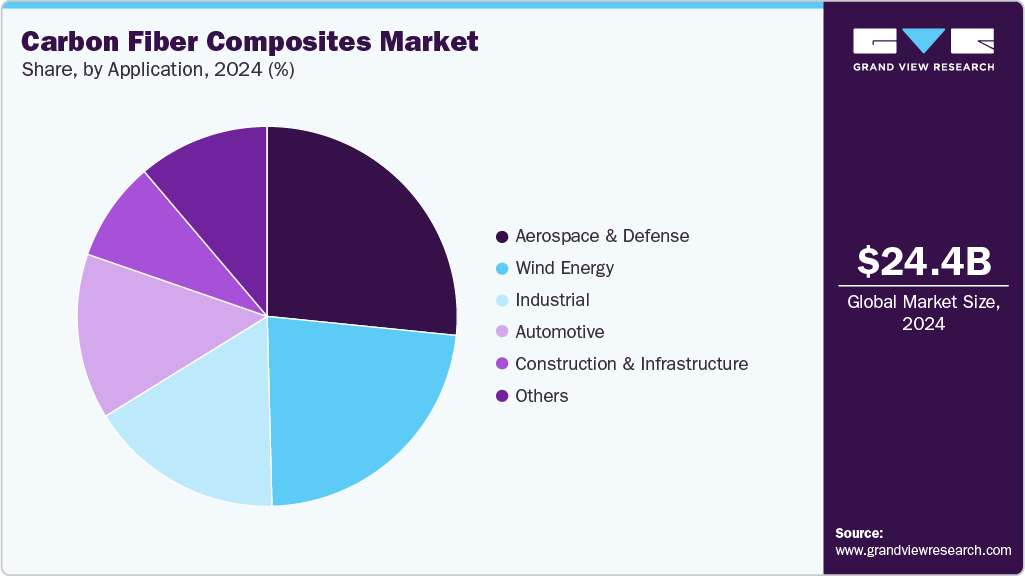
Based on application, the aerospace & defense segment led the market with the largest revenue share of 26.4% in 2025 and is expected to grow at a CAGR of 7.4% over the forecast period, due to its heavy reliance on lightweight, high-strength materials for aircraft structures, propulsion systems, UAVs, and defense-grade equipment. Increasing aircraft production rates, defense modernization programs, and requirements for fuel efficiency and structural durability drive sustained demand. Carbon fiber composites enable improved operational performance, reduced maintenance, and better energy efficiency, making them indispensable for next-generation aerospace systems.
 To learn more about this report, Download Free Sample Report
 The automotive segment is expected to grow at the fastest CAGR of 8.9% over the forecast period, as a key consumer of carbon fiber composites, fueled by accelerating electrification, lightweighting targets, and stricter emission regulations. OEMs are integrating carbon fiber into battery enclosures, body panels, chassis components, and high-performance vehicle structures to enhance range, safety, and overall efficiency. Advancements in mass-production technologies, the adoption of recycled carbon fiber, and cost-optimized composite solutions are further supporting wider automotive penetration across both premium and mid-segment vehicles.
Regional Insights
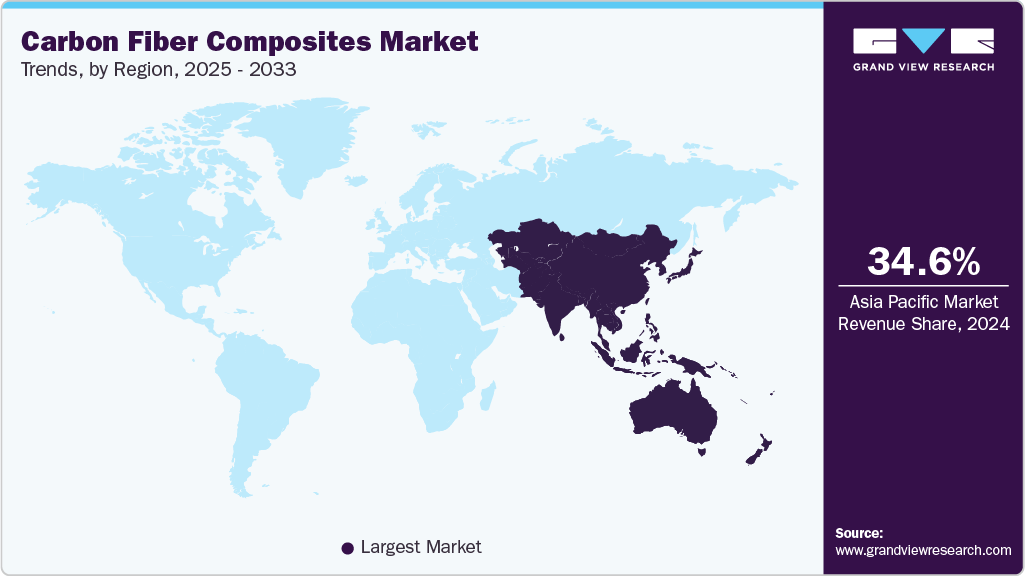
Asia Pacific dominated the carbon fiber composites market with the largest revenue share of 34.8% in 2025, mainly due to the strong aerospace, automotive, electronics, and industrial manufacturing ecosystems across China, Japan, and South Korea. China’s rapid expansion in wind energy and EV production significantly boosts composite demand. Japan remains a global hub for high-quality carbon fiber production, with leading players such as Toray. Government policies that support clean energy and hydrogen infrastructure are accelerating their adoption. Growing industrial automation across APAC is increasing composite usage in robotics and high-performance machinery. Lower-cost manufacturing capabilities attract major OEM investments.
 To learn more about this report, Download Free Sample Report
 The carbon fiber composites market in China held the largest share in the Asia Pacific region in 2025. Rapid expansion in wind turbine installations and the world’s largest EV market drives significant composite consumption. Local players are entering high-end precursor production, narrowing the technology gap with global leaders. The aerospace sector is increasingly incorporating carbon composites in commercial and defense aircraft. Hydrogen storage tank development and fuel-cell commercial vehicles are emerging growth opportunities. Government incentives for new materials innovation continue to support R&D. China’s large-scale industrial applications further strengthen composite penetration.
North America Carbon Fiber Composites Market Trends
The carbon fiber composites industry in North America benefits from strong aerospace manufacturing, advanced defense programs, and a well-established wind energy sector. The U.S. leads in next-generation composite technologies, including high-temperature resins, automated layup systems, and hydrogen tank composites. EV manufacturing investments are increasing adoption in battery enclosures and structural components. The presence of major OEMs and composite fabricators supports market maturity. Regulatory pushes toward lightweighting and sustainability are accelerating the adoption of lightweight materials in the mobility and infrastructure markets. Growth in recreational sports and marine segments also contributes.
U.S. Carbon Fiber Composites Market Trends
The U.S. carbon fiber composites industry remains the core market for aerospace-grade carbon fiber composites, driven by Boeing, defense programs, and space exploration projects. Substantial federal funding for renewable energy supports the use of composites in wind turbines. The hydrogen economy initiatives are accelerating the adoption of pressure vessels and mobility solutions. The addition of EV production capacity and advancements in battery technology are driving demand for carbon fiber integration. Advanced manufacturing programs support R&D in lightweight materials and automated composite fabrication. The U.S. also leads in recycled carbon fiber technologies. Industrial robotics and performance sports equipment further complement market expansion.
Europe Carbon Fiber Composites Market Trends
The carbon fiber composites industry in Europe has a strong presence in aerospace, automotive engineering, and wind energy, which are key sectors driving demand for composites. Airbus remains a major consumer of carbon fiber for aircraft structures. Strict emission regulations and lightweighting mandates accelerate automotive adoption. Germany and the U.K. lead in composite R&D and high-performance engineering. Extensive offshore wind development boosts demand for high-modulus carbon fibers. EU initiatives promoting a circular economy support innovations in composite recycling. Hydrogen mobility and storage infrastructure rollouts are strengthening new application areas. Europe remains a technologically advanced and sustainability-focused composites market.
The Germany carbon fiber composites industry drives European demand due to its global leadership in automotive engineering, industrial machinery, and materials innovation. OEMs and Tier-1 suppliers increasingly use carbon fiber for structural and lightweighting applications. Strong R&D institutions and collaborative initiatives enhance composite manufacturing capabilities. Wind energy expansion and sustainability policies further support market penetration. Germany’s hydrogen programs are fostering demand for composite pressure vessels. The country maintains high standards for engineering performance, making carbon fiber a vital component in many precision applications. A mature industrial base and technology-driven adoption reinforce Germany’s market significance.
Central & South America Carbon Fiber Composites Market Trends
The carbon fiber composites industry in Central & South America presents growing opportunities driven by wind energy developments, industrial modernization, and expanding aerospace assembly operations. Brazil and Mexico are key markets, supported by rising investments in renewable energy infrastructure. Automotive production in Mexico contributes to the adoption of composites in lightweight component manufacturing. Sports equipment and consumer goods segments continue to expand. However, high material costs limit full-scale penetration compared to developed regions. Regional governments promoting clean energy and industrial upgrading create new avenues for composite usage.
Middle East & Africa Carbon Fiber Composites Market Trends
The carbon fiber composites industry in the Middle East & Africa is driven by emerging aerospace, automotive, and renewable energy initiatives. The UAE and Saudi Arabia are investing heavily in advanced manufacturing, composite materials, and hydrogen economy programs. Wind energy installations in North Africa support moderate composite usage. High-performance materials are increasingly used in oil & gas applications such as pipes, pressure vessels, and structural reinforcements. Growth in sports and luxury automotive markets also supports adoption. Limited local manufacturing capacity creates opportunities for developing the supply chain. MEA remains a niche but steadily developing market for carbon fiber composites.
Key Carbon Fiber Composites Company Insights
Some of the key players operating in the market include Toray Industries and TEIJIN LIMITED.
-
Toray Industries is a global leader in advanced materials, particularly carbon fiber, offering high-performance composites for aerospace, automotive, industrial, and energy applications, supported by large-scale production capacity and strong R&D capabilities.
-
Teijin Limited is a primary Japanese chemical and materials company known for its high-strength carbon fiber brand (Tenax), supplying aerospace, automotive, and industrial markets with cutting-edge composite solutions and sustainability-focused innovations.
Mitsubishi Chemical and DowAksa are among the emerging market participants in the carbon fiber composites industry.
-
Mitsubishi Chemical is a key global producer of PAN-based carbon fibers, advanced resins, and composite materials, serving aerospace, automotive, energy, and sporting goods industries with strong expertise in material science and high-performance engineering.
-
DowAksa, a joint venture between Dow and Aksa, is a leading producer of cost-effective carbon fiber and composite solutions, focused on large-volume applications such as wind energy, construction, and industrial sectors with a strong emphasis on scale and innovation.
Key Carbon Fiber Composites Companies:
The following key companies have been profiled for this study on the carbon fiber composites market.
-
Toray Industries
-
TEIJIN LIMITED
-
Mitsubishi Chemical
-
Hexcel
-
SGL Carbon
-
Syensqo
-
DowAksa
-
ZOLTEK
-
Hyosung Advanced Materials
-
Carbon Composites, Inc.
Competitive Benchmarking
Category
Operating Strategies
Competitive Edge
Weakness
Established Players (Toray Industries; TEIJIN LIMITED; Mitsubishi Chemical)
- Invest in advanced carbon fiber precursor technologies, high-performance resin systems, and automated composite manufacturing processes.
- Strengthen long-term partnerships with aerospace, automotive, wind energy, and industrial OEMs while expanding global production capacity.
- Extensive manufacturing capabilities with vertically integrated carbon fiber and composite production.
- Strong technological expertise, diversified end-market presence, and long-standing relationships with leading OEMs worldwide.
- High dependence on capital-intensive manufacturing processes and fluctuations in raw material and energy costs.
- Long product qualification cycles and significant investments required for capacity expansion and technology development.
Emerging Players (Gen 2 Carbon; Procotex Corporation; Exel Composites)
- Focus on sustainable composite materials, recycled carbon fiber solutions, and niche high-performance applications.
- Target emerging opportunities across industrial, construction, renewable energy, and specialty transportation sectors through product innovation.
- Specialized expertise in recycled carbon fiber technologies and customized composite solutions.
- Ability to differentiate through sustainability, application-specific engineering, and flexible manufacturing capabilities.
- Smaller global manufacturing footprint and lower production capacity than established industry leaders.
- Greater reliance on niche applications and comparatively limited brand recognition and customer base.
Recent Developments
-
In October 2023, Toray Industries, Inc. announced that it has decided to expand the production facilities for regular tow medium- and high-modulus carbon fiber at its French subsidiary, Toray Carbon Fibers Europe SA.
-
In December 2023, Teijin Limited announced that it would begin producing and selling Tenax Carbon Fiber made with sustainable acrylonitrile (AN) using waste and residue from biomass-derived products or recycled raw materials that have received ISCC PLUS certification from the International Sustainability and Carbon Certification system.
Carbon Fiber Composites Market Report Scope
Report Attribute
Details
Market size in 2025
USD 26.3 billion
Estimated market size in 2026
USD 28.3 billion
Projected market size by 2033
USD 47.9 billion
Growth rate
CAGR of 7.8% from 2026 to 2033
Base year for estimation
2025
Historical data
2021 - 2024
Forecast period
2026 - 2033
Quantitative units
Revenue in USD million/billion and CAGR from 2026 to 2033
Report coverage
Revenue forecast, company ranking, competitive landscape, growth factors, and trends
Segments covered
Raw Material, application, region
Regional scope
North America; Europe; Asia Pacific; Central & South America; Middle East & Africa
Country scope
U.S.; Canada; Mexico; UK; Germany; France; Italy; Spain; China; India; Japan
Key companies profiled
Toray Industries; TEIJIN LIMITED; Mitsubishi Chemical; Hexcel; SGL Carbon; Syensqo; DowAksa; ZOLTEK; Hyosung Advanced Materials; Carbon Composites, Inc.
Customization scope
Free report customization (equivalent up to 8 analysts' working days) with purchase. Addition or alteration to country, regional & segment scope.
Pricing and purchase options
Avail customized purchase options to meet your exact research needs. Explore purchase options
Global Carbon Fiber Composites Market Report Segmentation
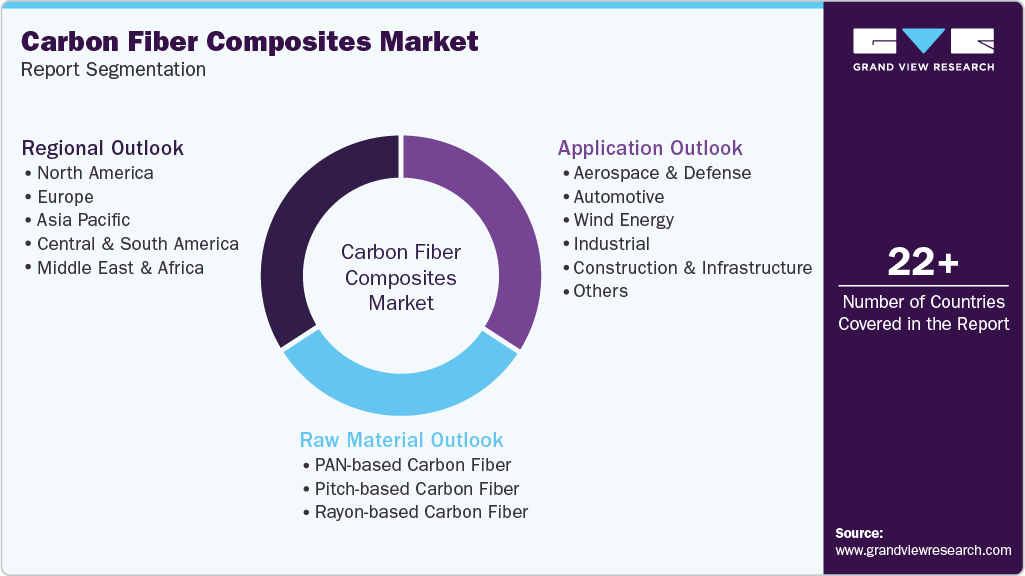
This report forecasts revenue growth at the global, regional & country levels and provides an analysis on the industry trends in each of the sub-segments from 2021 to 2033. For the purpose of this study, Grand View Research has segmented the global carbon fiber composites market report on the basis of raw material, application, and region:
 To learn more about this report, Download Free Sample Report
 -
Raw Material Outlook (Revenue, USD Million, 2021 - 2033)
-
PAN-based Carbon Fiber
-
Pitch-based Carbon Fiber
-
Rayon-based Carbon Fiber
-
-
Application Outlook (Revenue, USD Million, 2021 - 2033)
-
Aerospace & Defense
-
Automotive
-
Wind Energy
-
Industrial
-
Construction & Infrastructure
-
Others
-
-
Regional Outlook (Revenue, USD Million, 2021 - 2033)
-
North America
-
U.S.
-
Canada
-
Mexico
-
-
Europe
-
UK
-
Germany
-
France
-
Spain
-
-
Asia Pacific
-
China
-
Japan
-
India
-
South Korea
-
-
Central & South America
-
Middle East & Africa
-
Saudi Arabia
-
UAE
-
Egypt
-
Qatar
-
Kuwait
-
-
Research Methodology
The carbon fiber composites market figures in this report are based on a proven research process that combines executive interviews with secondary research from proprietary databases, company filings, and recognized regulatory and institutional sources. Market size is built through value-chain sizing - reconciling supply-side and demand-side estimates - and triangulated with bottom-up and top-down approaches. Every estimate passes multiple levels of expert validation before publication, with each carbon fiber composites segment quantified using the revenue-capture definitions in the table below.
Segment Definition
Raw Material Segment
Revenue Capture Definition
PAN-based Carbon Fiber
Revenue generated from carbon fiber composites manufactured using polyacrylonitrile (PAN)-based carbon fibers. This segment includes composites utilized across aerospace & defense, automotive, wind energy, industrial, and other high-performance applications where high strength-to-weight ratio, stiffness, and fatigue resistance are critical. Revenues are captured from composite manufacturers supplying prepregs, laminates, molded components, and structural composite solutions.
Pitch-based Carbon Fiber
Revenue generated from carbon fiber composites manufactured using pitch-based carbon fibers. This segment captures revenues from high-modulus and high-thermal-conductivity composite materials used in aerospace, defense, electronics, industrial equipment, and specialized applications requiring exceptional stiffness, thermal management, and dimensional stability.
Rayon-based Carbon Fiber
Revenue generated from carbon fiber composites manufactured using rayon-based carbon fibers. This segment includes composite products utilized in aerospace, defense, thermal insulation, and other niche high-temperature applications where excellent thermal resistance and ablative properties are required. Revenues are captured from manufacturers supplying specialty composite materials for advanced engineering applications.
Application Segment
Revenue Capture Definition
Aerospace & Defense
Revenue generated from carbon fiber composites utilized in commercial aircraft, military aircraft, helicopters, spacecraft, missiles, unmanned aerial vehicles (UAVs), and defense systems. This segment captures revenues from structural airframes, fuselage components, wings, interiors, radomes, and other lightweight composite components supplied to aerospace OEMs and defense contractors.
Automotive
Revenue generated from carbon fiber composites used in passenger vehicles, commercial vehicles, electric vehicles (EVs), motorsports, and high-performance automotive applications. This segment includes structural, exterior, interior, chassis, battery enclosure, and powertrain components supplied to automotive OEMs and Tier-1 suppliers to improve lightweighting, fuel efficiency, and vehicle performance.
Wind Energy
Revenue generated from carbon fiber composites used in wind turbine blades, nacelles, and structural reinforcement components. This segment captures revenues from composite materials supplied to wind turbine manufacturers to improve blade length, structural strength, fatigue resistance, and energy generation efficiency.
Industrial
Revenue generated from carbon fiber composites utilized in industrial machinery, pressure vessels, hydrogen storage tanks, marine equipment, robotics, oil & gas, electronics, and other industrial applications. This segment includes composite products designed to enhance corrosion resistance, durability, operational efficiency, and weight reduction across industrial sectors.
Construction & Infrastructure
Revenue generated from carbon fiber composites used in structural reinforcement, bridge strengthening, seismic retrofitting, building rehabilitation, concrete reinforcement, and civil infrastructure applications. This segment captures revenues from composite solutions supplied for extending infrastructure lifespan, improving structural integrity, and reducing maintenance requirements.
Others
Revenue generated from carbon fiber composites used across sporting goods, medical devices, consumer products, energy storage systems, and other specialty applications. This segment captures revenues from niche applications where lightweight construction, high mechanical performance, and long-term durability are key performance requirements.
Estimation Model
Layer Name
Key Question
Description
Global Advanced Composite Materials Market
What is the total market size for advanced composite materials used across industries globally?
This layer represents the overall advanced composite materials market, including carbon fiber composites, glass fiber composites, aramid fiber composites, natural fiber composites, and other high-performance composite materials used across aerospace & defense, automotive, wind energy, construction, industrial, marine, sporting goods, and other end-use industries. The market encompasses revenues generated from composite materials supplied for structural and semi-structural applications globally.
Global Carbon Fiber Composites Market
What portion of the advanced composite materials market is represented by carbon fiber composites?
This layer narrows the focus to composite materials reinforced with carbon fibers and manufactured using thermoset and thermoplastic resin systems. Carbon fiber composites are widely adopted owing to their superior strength-to-weight ratio, corrosion resistance, stiffness, and fatigue performance. The market includes carbon fiber composite materials supplied across aerospace & defense, automotive, wind energy, industrial, construction, and other high-performance applications.
Structural Carbon Fiber Composites Market
What share of the carbon fiber composites market consists of structural carbon fiber composite applications?
This layer focuses specifically on structural carbon fiber composites used in load-bearing and performance-critical applications. It includes prepregs, laminates, molded composite parts, pultruded products, and other engineered composite solutions utilized across aerospace structures, automotive body components, wind turbine blades, industrial equipment, and infrastructure reinforcement. The market is supported by increasing lightweighting initiatives, electrification, renewable energy investments, and demand for high-performance engineered materials.
Carbon Fiber Composites Market
What is the market value of carbon fiber composites commercialized across end-use industries globally?
This final layer represents revenues generated from carbon fiber composites commercialized across aerospace & defense, automotive, wind energy, industrial, construction & infrastructure, and other end-use industries. The market includes carbon fiber composite materials manufactured using PAN-based, pitch-based, and rayon-based carbon fibers with various resin systems, driven by increasing demand for lightweight materials, sustainability initiatives, renewable energy expansion, and technological advancements in composite manufacturing.
Delivered Customizations
This report has been delivered with the following In-depth customizations
CLIENT REQUEST
CUSTOMIZATION DELIVERED
VALUE ADDS
End-Use Opportunity Assessment
Detailed analysis of demand across aerospace & defense, automotive, wind energy, industrial, construction & infrastructure, and other high-growth applications.
Identified the highest-growth end-use industries, emerging demand pockets, and the most attractive application areas for investment, product development, and market expansion.
Competitive Landscape & Technology Benchmarking
Benchmarking of leading carbon fiber composite manufacturers based on material capabilities, manufacturing technologies, product portfolio, end-use focus, geographic presence, and strategic initiatives.
Provided actionable competitive intelligence to support strategic planning, partnership evaluation, technology benchmarking, and market differentiation initiatives.
Technology & Sustainability Assessment
Comprehensive assessment of advanced composite manufacturing technologies, recyclable carbon fiber solutions, thermoplastic composite adoption, automation trends, and evolving sustainability initiatives across key end-use industries.
Helped identify emerging technology trends, evaluate sustainable material innovations, and capitalize on next-generation composite opportunities across high-growth sectors.
Frequently Asked Questions About This Report
Some of the key players operating in the carbon fiber composites market include Toray Industries, TEIJIN LIMITED, Mitsubishi Chemical, Hexcel, SGL Carbon, Syensqo, DowAksa, ZOLTEK, Carbon Composites, Inc., and Hyosung Advanced Materials.
Lightweighting requirements across aerospace, automotive, wind energy, and clean-energy applications are the key factors driving the carbon fiber composites market.
Asia Pacific dominated the carbon fiber composites market with a 34.8%% revenue share in 2025.
Asia Pacific is the fastest-growing region in the carbon fiber composites market with a CAGR of 8.2% over the forecast period.
The carbon fiber composites market in China held the largest share of 38.7% in the Asia Pacific region in 2025.
The aerospace & defense segment led the carbon fiber composites market with a 26.4% revenue share in 2025.
The global carbon fiber composites market size was valued at USD 26.3 billion in 2025 and is estimated at USD 28.3 billion for 2026.
The global carbon fiber composites market is expected to grow at a CAGR of 7.8% from 2026 to 2033, reaching USD 47.9 billion by 2033.
The PAN-based carbon fiber segment held the highest revenue market share of 84.6% in 2025, due to its superior tensile strength, versatility, and wide applicability across aerospace, automotive, wind energy, and industrial sectors.
About the Author(s)
Advanced Interior Materials Research Team
Advanced Materials · Advanced Interior MaterialsThis report was authored by the advanced interior materials research team at Grand View Research - comprising two research analysts, one senior research analyst, and one industry expert - with specialized expertise in the advanced interior materials segment of the advanced materials industry. All findings are based on proprietary advanced materials databases, executive interviews, and regulatory analysis, subject to internal peer review prior to publication.
Last Updated:
Speak to Analyst

Customize this report to your needs - add regions, segments, or data points, with 20% free customization.
Or view our licence options:


ISO 9001:2015 & 27001:2022 Certified
We are GDPR and CCPA compliant! Your transaction & personal information is safe and secure. For more details, please read our privacy policy.


