
- Home
- »
- Biotechnology
- »
-
Cell Proliferation Kit Market Size & Share Report, 2026-2033GVR Report cover

Cell Proliferation Kit Market (2026 - 2033)
Size, Share & Trends Analysis Report By Product Type (Colorimetric Kits, Fluorometric Kits, Luminescent Kits), By Assay Type (DNA Synthesis Assays, Metabolic Activity Assays), By Detection Method, By Application, By Region, And Segment Forecasts
Market Size, 2025
$498.2MMarket Estimate, 2026
$519.4MMarket Forecast, 2033
$709.6MCAGR, 2026–2033
4.6%Cell Proliferation Kit Market Summary
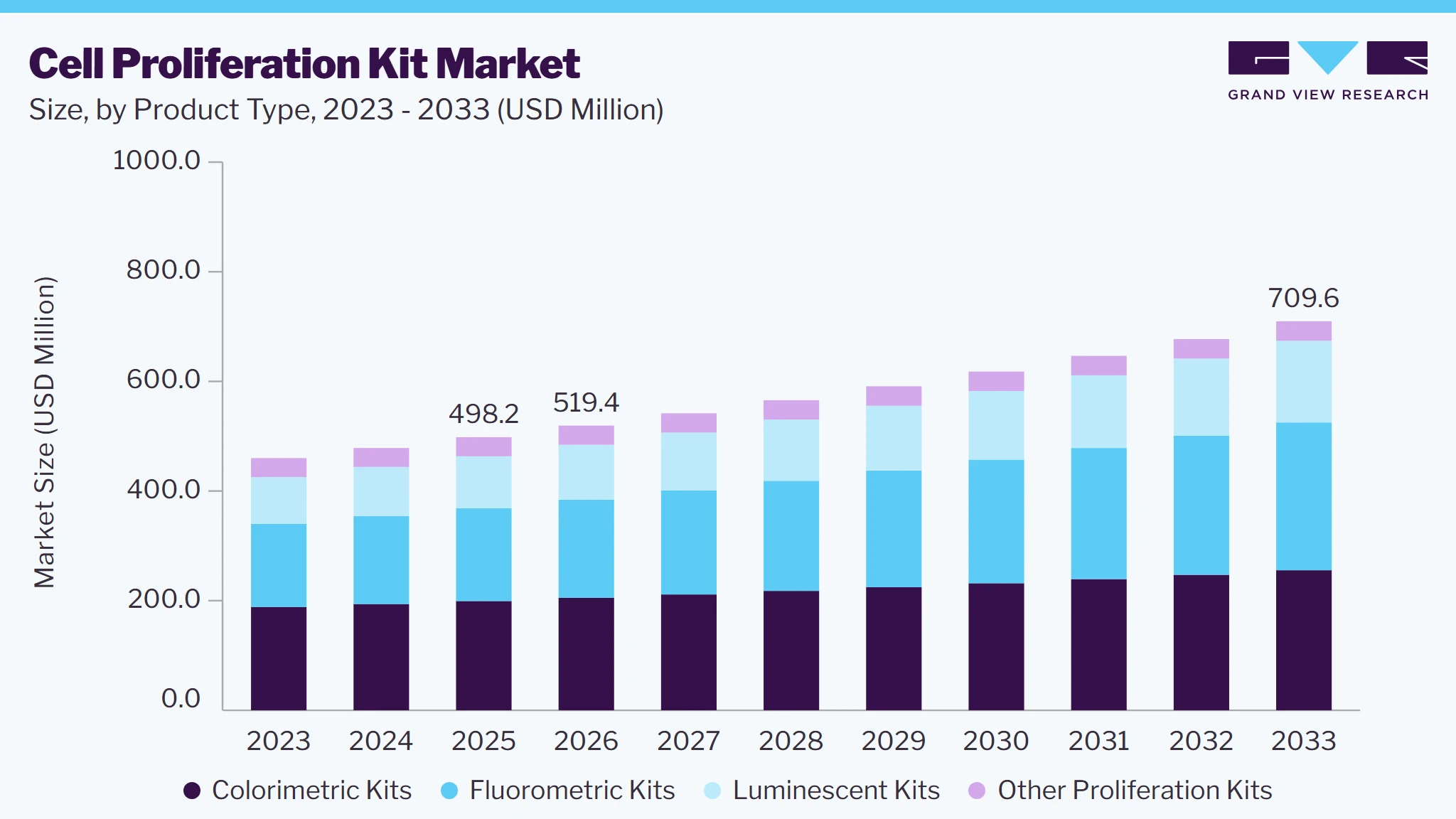
The global cell proliferation kit market size was valued at USD 498.2 million in 2025 and is projected to grow from USD 519.4 million in 2026 to USD 709.6 million by 2033, at a CAGR of 4.6% from 2026 to 2033. The market in North America dominated with a revenue share of 41.2% in 2025. The market growth is driven by increasing adoption of cell-based assays, rising demand for drug discovery and toxicity testing, and expanding applications of cell proliferation kits in cancer research, pharmaceutical development, and academic research.
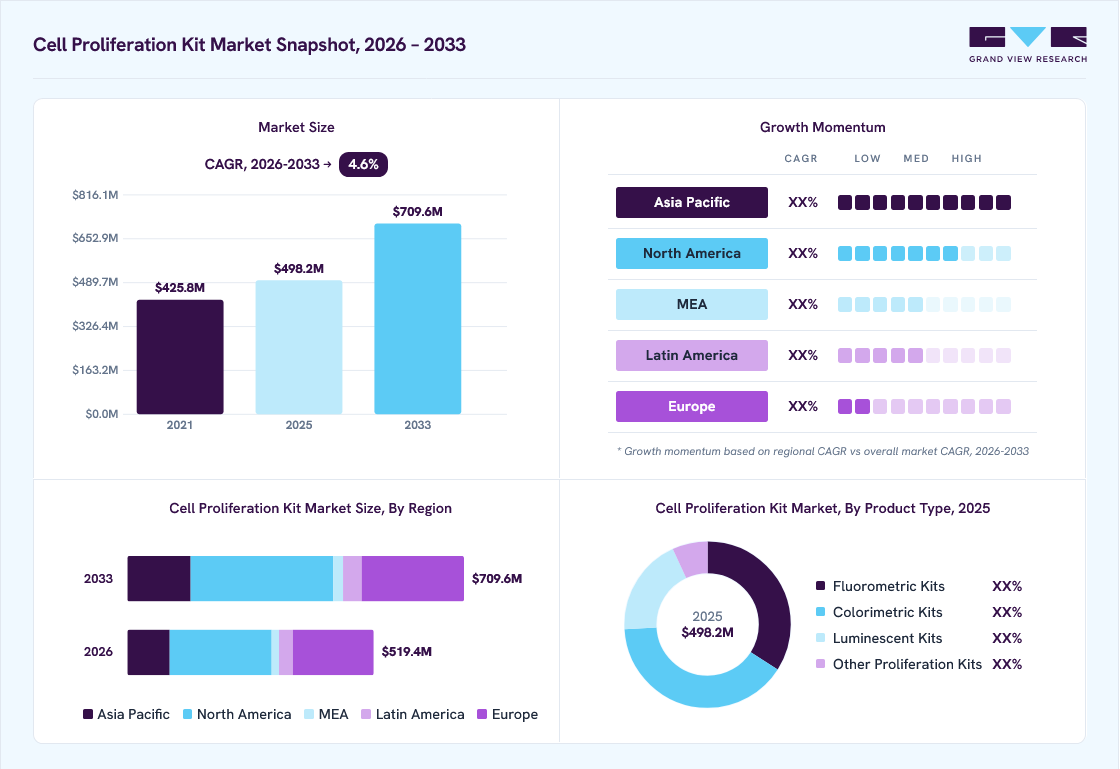 Source: Grand View Research, IR Documents, Primary Interviews, Paid DatabasesTo learn more about this report,
 Download Free Sample Report
 Key Market Trends & Insights
- By product type: Colorimetric kits segment held the largest market share of 40.0% in 2025.
- By assay type: Metabolic activity assays segment held the largest market share of 38.0% in 2025.
- By detection method: Absorbance-based detection segment held the largest market share of 35.3% in 2025.
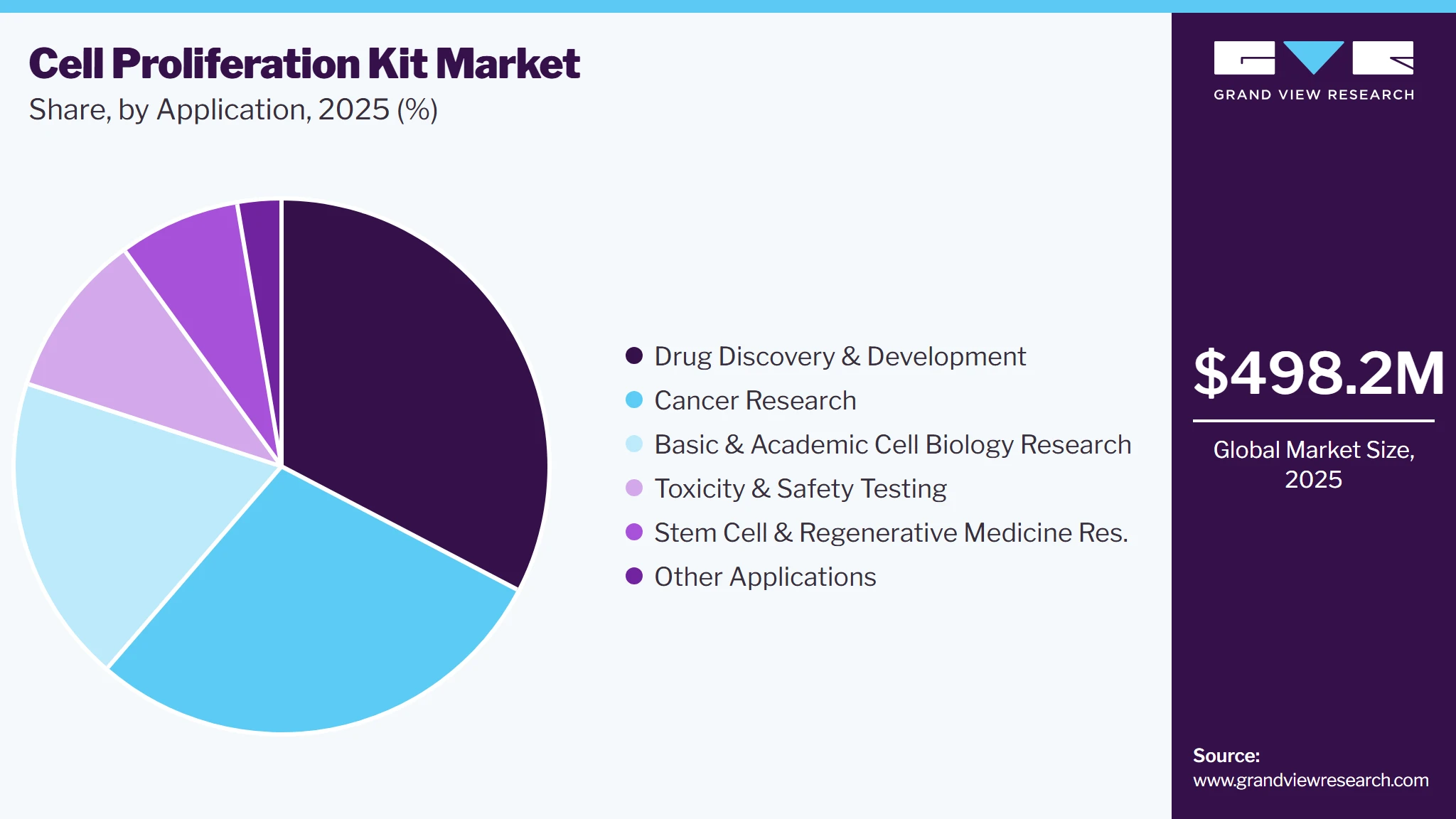
- By application: Drug discovery & development segment held the largest market share of 32.7% in 2025.
Regional Highlights
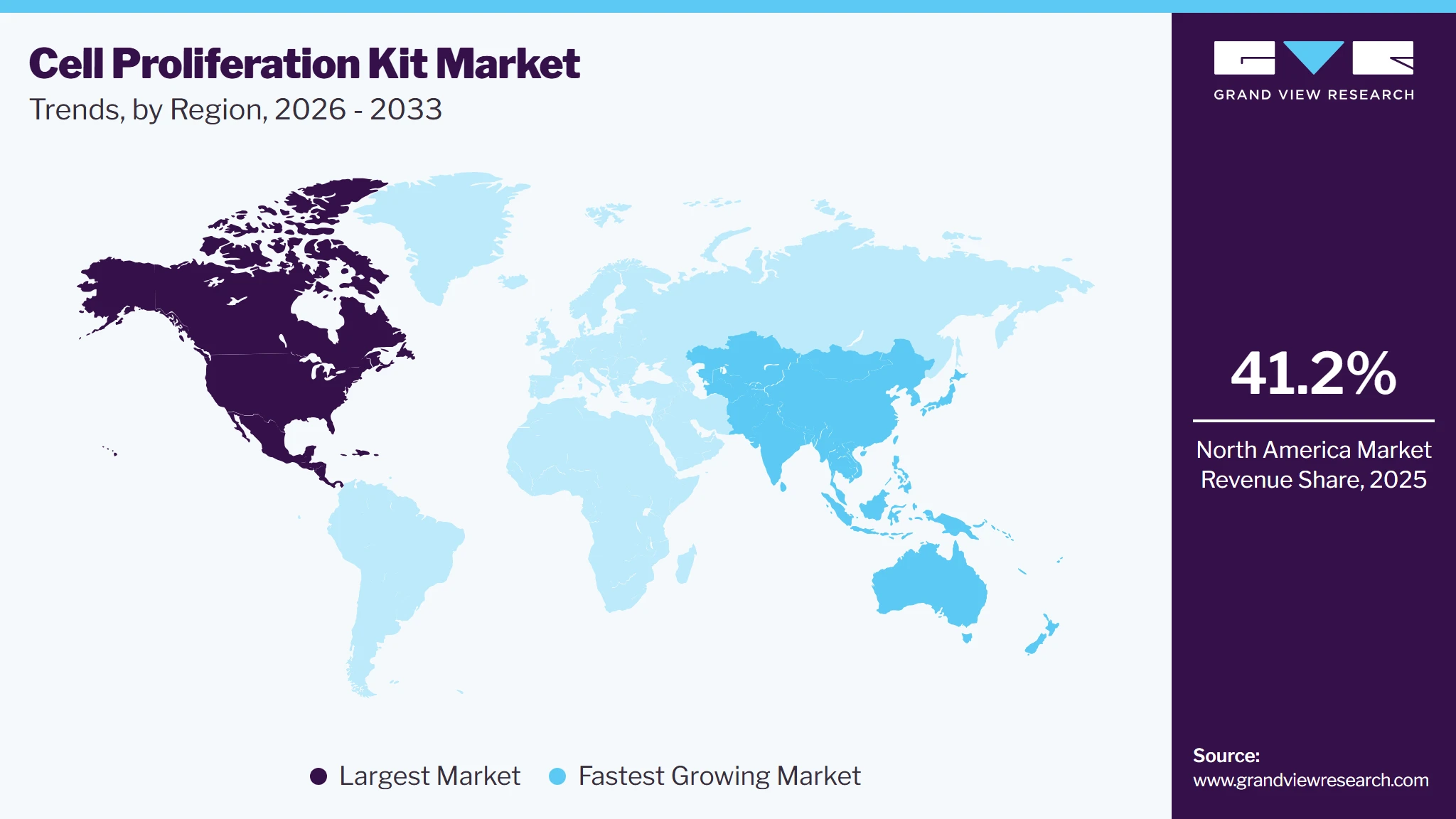
- Largest regional market: North America (41.2% revenue share, 2025)
- Fastest-growing regional market: Asia Pacific (highest CAGR, 2026-2033)
- By country: The U.S. held the largest market share in 2025
Market Size & Forecast
- Market size in 2025: USD 498.2 Million
- Estimated market size in 2026: USD 519.4 Million
- Projected market size by 2033: USD 709.6 Million
- CAGR (2026-2033): 4.6%
Three ways to get this report
Buy it, customize it, or ask a question.Ask an Analyst
A direct answer, usually in 1 working day
- AccessReport author, directly
- Reply timeWithin 1 working day
- No sales callDirect answer only
- FormatEmail reply
- CostFree, no cost
Get the Full Report
What the study covers
- FormatsPDF · Excel · Dashboard
- Timeline2026–2033 annual, 2025 base
- Coverage20+ countries, 5 regions
- Companies10+ key players profiled
Customize the Report
20% free customization
- IncludeCountries, segments, points
- TailorTo your product definition
- ExtendDeeper competitor detail
- OrA fully bespoke study
- Turnaround5–10 working days
 To learn more about this report, Download Free Sample Report
 Market Dynamics
Driven by increasing use of cell-based assays in drug discovery, cancer research, toxicity testing, and cell biology studies. Growing demand for reliable measurement of cell growth, DNA synthesis, and cell division is supporting the adoption of proliferation kits across pharmaceutical, biotechnology, and academic laboratories. In addition, advances in fluorescence, luminescence, and imaging-based assays are improving assay sensitivity, throughput, and compatibility with automated microplate and high-content screening platforms, supporting broader use of cell proliferation kits.
Increasing adoption of cell proliferation kits in immunology research is supporting market growth by enabling researchers to evaluate immune-cell proliferation alongside functional immune responses. The growing use of T-cell analysis in vaccine development, immunotherapy, and cancer research is creating demand for specialized proliferation assays that provide more comprehensive cellular readouts. For instance, in December 2025, ClickTech launched the Proliferation Spot T-Cell Kit (ProliSpot), which combines EdU-based DNA synthesis detection with cytokine capture to simultaneously measure T-cell proliferation and antigen-specific immune function at single-cell resolution. Moreover, this kit is designed for applications including immunological research, vaccine development, CAR-T potency testing, and cancer immunology, expanding the application of cell proliferation kits in specialized immune-cell studies.
Limitations in the accuracy of cell proliferation assays may restrain the cell proliferation kit market, as some metabolic assays may not accurately reflect changes in cell proliferation under certain treatment conditions. According to an article published in npj Breast Cancer in March 2024, ATP-based proliferation assays can obscure cell-cycle arrest because treated cells may continue to increase in size and mitochondrial content despite not proliferating. Such limitations may increase the need for appropriate assay selection and complementary proliferation measurements.
The development of advanced cell proliferation analysis methods is creating opportunities for the cell proliferation kit market by enabling continuous and high-throughput measurement of cell growth while reducing the need for labeling. According to an article published in Stem Cell Reviews and Reports in July 2025, researchers developed a high-throughput, label-free method for continuous quantification of muscle stem cell proliferation and differentiation. In addition, this approach enables non-invasive monitoring of cell growth and can support applications requiring repeated proliferation measurements, creating opportunities for advanced cell proliferation testing.
Market Concentration & Characteristics
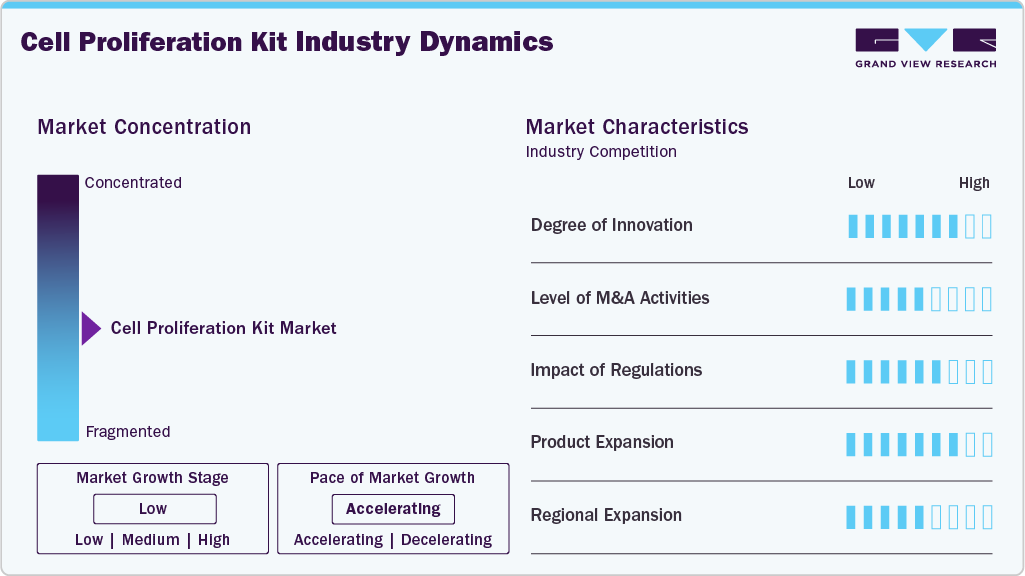
The degree of innovation in the cell proliferation kit market is high, driven by advances in microfluidics, 3D cell culture, and high-throughput cell-based assays. For instance, according to a research article published in Lab on a Chip in August 2025, researchers developed a droplet-based cell viability assay for analyzing proliferation in 3D spheroids, enabling high-resolution drug-response analysis across multiple drug concentrations. This approach enhances the efficiency and throughput of cell proliferation and drug-response assessment.
The cell proliferation kit market is witnessing moderate M&A activity, as companies seek to strengthen their portfolios of cell-based assays, research reagents, and analytical technologies. M&A activity is supporting the integration of complementary technologies and expanding product portfolios, while increasing capabilities in cell analysis and assay development. These activities are contributing to the broader development of cell-based research solutions and supporting the adoption of cell proliferation assays across pharmaceutical, biotechnology, and academic research applications.
 To learn more about this report, Download Free Sample Report
 The cell proliferation kit market is influenced by regulatory expectations for the accuracy, precision, reproducibility, and validation of cell-based assays used in research and regulated applications. These requirements affect the development and validation of proliferation assays by emphasizing appropriate controls, assay performance, and reliable measurement methods. As cell proliferation assays are used in drug development, cell therapy, and potency testing, regulatory expectations are supporting greater standardization and consistency in assay results.
The cell proliferation kit market is witnessing product expansion through the introduction of assay technologies that improve the speed, sensitivity, and efficiency of cell-based measurements. For instance, in March 2026, Elabscience launched its Cell Viability Chemiluminescence Assay Kit, designed for cell proliferation and toxicity testing using an ATP-based chemiluminescence detection method. This kit provides a broad linear detection range of 500-50,000 cells and uses a simplified add-and-read workflow, expanding the range of rapid cell-based assay solutions available for proliferation-related research.
The cell proliferation kit market is witnessing regional expansion as companies increase their cell-based testing and analytical capabilities across key research markets. For instance, in January 2025, Solvias opened a 50,000-square-foot Center of Excellence in Research Triangle Park, North Carolina, U.S., expanding its North American capabilities for cell-based potency and molecular assays. The new facility strengthens Solvias’ analytical testing capacity for biologics and cell and gene therapies, supporting the broader adoption of cell-based assay technologies.
“This Center of Excellence in RTP is a milestone in Solvias’ global growth journey. Combining our team’s expertise with advanced technology, we aim to set a new benchmark for delivering high-quality, reliable analytical support. It’s an honor to partner with our clients in bringing groundbreaking therapies to patients worldwide.”
-said Archie Cullen, Chief Executive Officer of Solvias.
Analyst Perspective
The cell proliferation kit market is expected to witness steady growth, driven by increasing adoption of cell-based assays and rising demand for proliferation analysis in drug discovery, cancer research, and toxicity testing. Its Applications in pharmaceutical development, immunology, stem cell research, and academic cell biology are supporting market expansion. Advancements in fluorescence, luminescence, imaging-based assays, and high-throughput detection methods are improving assay sensitivity, speed, and compatibility with automated screening workflows. Moreover, market participants are focusing on developing sensitive, rapid, and reproducible proliferation assays, expanding assay portfolios, and introducing advanced detection solutions to address evolving requirements across pharmaceutical, biotechnology, and research laboratories.
Product Type Insights
The colorimetric kits segment accounted for the largest revenue share, over 40.0% in 2025, supported by their cost-effectiveness, simple workflow, and suitability for measuring cell proliferation and cytotoxicity. According to an article published in MethodsX in June 2025 presented a standardized Sulforhodamine B (SRB) colorimetric cell proliferation assay optimized for 96-well plate testing and high-throughput anticancer compound screening. Moreover, the study highlighted the assay’s ability to provide reproducible measurements of cellular proliferation and cytotoxicity, supporting the continued adoption of colorimetric methods in cell-based research and drug screening.
The fluorometric kits segment is expected to register the fastest CAGR over the forecast period, driven by the high sensitivity, rapid detection, and compatibility of fluorescence-based assays with microplate readers and high-throughput cell analysis. According to an article published in Cytotherapy in June 2024 evaluated fluorescent image-based cell viability measurements and demonstrated the use of calibration beads and fixed-cell control materials to improve the comparability of fluorescence-based viability assays across instruments, sites, and studies. In addition, this study highlights ongoing efforts to improve the standardization and reliability of fluorescence-based cell analysis, supporting the adoption of fluorometric methods in cell viability and proliferation workflows.
Assay Type Insights
The metabolic activity assays segment dominated the market with a share of 38.0% in 2025, driven by increasing use of these methods for evaluating cell proliferation, viability, and drug responses. According to an article published in Biomaterials Advances in February 2025, researchers evaluated PrestoBlue and AlamarBlue assays for assessing pancreatic cancer cell growth and drug responses in hydrogel-based 3D models. Moreover, the study demonstrated their application in evaluating responses to gemcitabine and nab-paclitaxel, highlighting their use in cell proliferation and drug-response assessment.
The DNA synthesis assays segment is expected to register the fastest CAGR over the forecast period. Growth is anticipated to be driven by increasing use of DNA replication-based methods for directly measuring cell proliferation. These assays detect the incorporation of thymidine analogs such as BrdU and EdU into newly synthesized DNA during the S phase, enabling quantitative assessment of proliferating cells. In addition, their applicability across cancer research, cell-cycle analysis, drug screening, and developmental studies is supporting broader adoption in cell-based research.
Detection Method Insights
The absorbance-based detection segment dominated the market with a share of 35.3% in 2025, owing to the simplicity, cost-effectiveness, and compatibility of absorbance-based methods with conventional microplate readers. These methods enable quantitative measurement of colorimetric signals generated in cell viability and proliferation assays and are widely used across routine cell-based research and high-throughput screening workflows. For instance, in September 2026, Thermo Fisher Scientific launched the Thermo Scientific Multiskan Ease Absorbance Microplate Reader, a single-mode absorbance reader designed for applications including cell viability studies, protein quantification, ELISAs, enzyme activity analysis, and microbial growth monitoring. This launch highlights continued adoption of absorbance-based microplate detection technology for cell-based analysis.
The flow cytometry-based detection segment is expected to register the fastest CAGR over the forecast period, driven by increasing use of flow cytometry for quantitative analysis of cell proliferation. Fluorescent proliferation dyes enable tracking of cell divisions at the single-cell level and support applications in cancer research, immunology, and drug development. Furthermore, the ability to combine proliferation analysis with multiple cellular markers supports the adoption of flow cytometry-based methods in cell-based research.
Application Insights
The drug discovery & development segment dominated the market with a share of 32.7% in 2025, owing to increasing use of cell proliferation assays to evaluate cellular responses and validate potential therapeutic targets during drug discovery. These assays enable researchers to quantify cell-growth inhibition and assess the efficacy of candidate targets and compounds, particularly in cancer research. For instance, in July 2025, FRONTEO announced that its AI-based Drug Discovery AI Factory service identified 17 candidate target genes for pancreatic cancer, of which six demonstrated inhibitory effects on pancreatic cancer cell proliferation in vitro. Moreover, these findings highlight the application of cell proliferation assessment in validating novel therapeutic targets and supporting drug discovery and development.
 To learn more about this report, Download Free Sample Report
 The cancer research segment is projected to witness the fastest CAGR, driven by increasing use of cell proliferation assays to study cancer cell growth and responses to therapeutic interventions. According to an article published in Scientific Reports in March 2025, researchers used an MTS proliferation assay to evaluate the effects of reduced extracellular sodium concentrations on ACHN and Caki-1 renal carcinoma cells. This study found that reduced sodium concentrations increased cell proliferation in both cell lines.
Regional Insights
North America has the largest regional market, accounting for 41.2% of the global cell proliferation kits market in 2025. The market is driven by increasing use of cell-based assays in drug screening and cancer research. For instance, in August 2024, researchers from Stanford University and the Stanford Cancer Institute reported the modernization of the NCI60 cancer-cell screening platform, introducing a higher-throughput 384-well format and a luminescent cell-viability endpoint aligned with current cell proliferation assay standards. Moreover, the updated platform strengthens high-throughput evaluation of anticancer compounds and supports proliferation-based drug discovery
 To learn more about this report, Download Free Sample Report
 U.S. Cell Proliferation Kit Market Trends
The U.S. Cell Proliferation Kit industry is expected to grow over the forecast period, driven by continued demand for cell-based assays in drug discovery, cancer research, and regenerative medicine. For instance, in May 2025, U.S.-based Amerigo Scientific announced the expansion of its cell proliferation and viability assay kit portfolio for applications including drug discovery, cancer research, immunology, and regenerative medicine. This expansion broadens access to assay solutions for measuring cell proliferation and viability across research applications.
Europe Cell Proliferation Kit Market Trends
cell proliferation kit market in Europe was identified as a lucrative region, supported by increasing use of cell-based assays in oncology, drug discovery, and biomedical research. For instance, in March 2025, France-based Eurobio Scientific expanded its oncology portfolio through a partnership with Biovica to distribute DiviTum TKa across key European markets, providing a test for measuring thymidine kinase activity as a biomarker of cell proliferation. This expansion broadens access to proliferation-related testing across European research and clinical applications.
“We see great potential in DiviTum TKa, which will allow us to sell a broader range of tests to our established network of breast oncologists in the selected countries. It complements our oncology portfolio very well and our strong oncology sales force now has an even more comprehensive offering,”
-Denis Fortier, Chairman and CEO of Eurobio Scientific.
The UK cell proliferation kit market is anticipated to grow over the forecast period, supported by strong biomedical and pharmaceutical research activity and continued use of proliferation assays in oncology, drug discovery, and cell-based research. Increasing adoption of high-throughput screening, 3D cell models, and quantitative cell-analysis methods is creating demand for sensitive and reproducible tools to measure cell growth and proliferation across research workflows.
The Germany cell proliferation kit market is expected to show significant growth over the forecast period, supported by strong biotechnology and cell-based research activity. For instance, in April 2026, Germany-based PL BioScience entered into a distribution agreement for its Human Platelet Lysate (HPL), a cell-culture supplement used to support cell proliferation and the in-vitro expansion of primary cells and cell lines. Moreover, the agreement also includes co-development of a new media product, highlighting continued innovation in cell-culture solutions that support proliferation-focused research workflows.
"This partnership combines the core technologies of both organizations. By promoting each company’s flagship products, we aim to broaden our customer reach and strengthen long-term revenue growth."
- Xcell Therapeutics CEO Uri (Uiil) Lee
Asia Pacific Cell Proliferation Kit Market Trends
The Asia Pacific cell proliferation kit market is expected to register the fastest CAGR of 5.9% during the forecast period, supported by expanding pharmaceutical and biotechnology research, increasing cell-based drug screening, and wider adoption of high-throughput assay technologies. Growing use of advanced cell models and quantitative analysis methods is also strengthening demand for reliable tools to measure cell growth, viability, and proliferation across research and drug-development workflows.
The China cell proliferation kit market is expected to show significant growth over the forecast period, supported by increasing adoption of cell-based assays in biomedical research, drug screening, and cytotoxicity testing. For instance, in September 2025, China-based Yeasen Biotechnology introduced its ATP Luminescent Cell Viability Detection Kit 2.0, featuring stable chemiluminescence signals, a wide linear detection range, and rapid cell viability measurement. In addition, the launch strengthens the availability of sensitive and stable cell viability detection tools for proliferation and cytotoxicity research in China.
The Japan cell proliferation kit market is supported by trong life-science research and increasing adoption of quantitative cell-based assays in drug discovery and biomedical research. According to an article published by the Japan Science and Technology Agency (JST) in 2024, researchers at Tohoku University developed genetically modified mice that enable highly sensitive, repeated monitoring of specific cell proliferation in vivo using a small blood sample and luciferase measurement. This method demonstrated high-sensitivity detection of β-cell proliferation in vitro, supporting the development of new approaches for studying cell-proliferative and anti-proliferative drugs.
Latin America Cell Proliferation Kit Market Trends
The Latin America Cell Proliferation Kit industry is anticipated to witness gradual growth, supported by expanding biomedical research and increasing use of cell-based approaches for evaluating therapeutic candidates and biological responses. The growing focus on cancer research, regenerative medicine, and in-vitro evaluation of cellular responses is creating greater demand for quantitative proliferation assays that can support experimental validation and drug-response studies.
MEA Cell Proliferation Kit Market Trends
The Middle East and Africa cell proliferation kit market is expected to witness steady growth, supported by investment in precision medicine, translational oncology, and advanced cellular research is creating opportunities for proliferation assays in applications ranging from therapeutic development to cellular response analysis. The increasing establishment of specialized research laboratories and biotechnology facilities is expected to further support adoption of cell proliferation testing technologies across the region.
Key Cell Proliferation Kit Company Insights
The Cell Proliferation Kit industry is witnessing significant growth, driven by increasing demand for reliable cell proliferation, viability, and cytotoxicity assays across drug discovery, cancer research, cell biology, immunology, and biotechnology applications. Advances in assay technologies are improving sensitivity, accuracy, speed, and compatibility with high-throughput screening workflows. In addition, the growing adoption of 3D cell cultures, stem cell research, and automated cell-based assays is further driving demand for advanced proliferation kits. The market is also benefiting from rising investments in pharmaceutical R&D, drug development, personalized medicine, and life sciences research, supported by expanding research activities globally
Key Cell Proliferation Kit Companies:
The following key companies have been profiled for this study on the cell proliferation kit market.
-
Thermo Fisher Scientific Inc.
-
Merck KGaA
-
Bio-Rad Laboratories, Inc.
-
Revvity
-
Agilent Technologies, Inc.
-
Promega Corporation
-
Abcam plc (subsidiary of Danaher Corporation)
-
Biotium, Inc.
-
Lonza
-
AAT Bioquest, Inc.
Competitive Benchmarking
Category
Operating Strategies
Competitive Edge
Weakness
Established Players (Thermo Fisher Scientific Inc., Merck KGaA, Bio-Rad Laboratories, Inc., Revvity, Agilent Technologies, Inc., Promega Corporation, Abcam plc (subsidiary of Danaher Corporation))
Expand proliferation assay portfolios, develop automated and high-throughput solutions, and strengthen global distribution across research and pharmaceutical applications.
Strong global presence, broad product portfolios, established customer bases, advanced assay technologies, and strong R&D capabilities.
High R&D and operating costs, stringent quality requirements, competition from alternative technologies, and dependence on research spending.
Emerging Players (Biotium, Inc., Lonza, AAT Bioquest, Inc.)
Develop sensitive, rapid, and cost-effective proliferation and viability assays for high-throughput and live-cell applications.
Innovative assay formats, specialized detection technologies, flexible offerings, and application-specific expertise.
Smaller market reach, limited distribution networks, lower production scale, and challenges in competing with established brands.
Recent Developments:
-
In June 2026, Promega launched the Lumit Cell Proliferation Assay (Human Ki-67), a homogeneous, wash-free assay for detecting Ki-67, an established marker of cell proliferation. The assay uses NanoBiT luciferase complementation to generate a luminescent readout and is designed for 96- and 384-well plate formats, supporting high-throughput applications in oncology, drug discovery, immunology, and cell therapy research.
“Cell proliferation is a fundamental parameter assessed across a wide range of cell-based research workflows, from oncology drug screening and kinase inhibitor biology to targeted protein degradation, immunology, and cell therapy applications. It is equally central to antibody-drug conjugate screening, mechanism-of-action and pathway studies, yet current methods are laborious and time-consuming, typically requiring 72 to 96-hour treatment windows and multiple handling steps that introduce variability. Our new Lumit Cell Proliferation Assay addresses this directly - tracking hKi-67 in a simple add-and-read format that delivers results faster and with greater confidence. It is a meaningful addition to our portfolio of cell health solutions, designed to give researchers more time to focus on the science that matters.”
- Philip Hargreaves, Director of Strategic Marketing and Business Development, Promega UK
-
In March 2025, Biotium launched the Steady-ATP HTS Viability Assay Kit, a luciferase-based ATP cell viability assay designed for high-throughput luminescence detection. The kit enables sensitive measurement of cellular metabolic activity and is specifically designed to assess cell proliferation or the cytotoxic potential of compounds, supporting applications in high-throughput drug screening and toxicity testing. This launch strengthens Biotium’s portfolio of proliferation and viability assays with a luminescent metabolic-activity readout.
Cell Proliferation Kit Market Report Scope
Report Attribute
Details
Market size in 2025
USD 498.2 million
Estimated market size in 2026
USD 519.4 million
Projected market size by 2033
USD 709.6 million
Growth rate
CAGR of 4.6% from 2026 to 2033
Historical data
2021 - 2025
Forecast period
2026 - 2033
Quantitative units
Revenue in USD million, and CAGR from 2026 to 2033
Report coverage
Revenue forecast, company ranking, competitive landscape, growth factors, and trends
Segments covered
Product type, assay type, detection method, application and region
Regional scope
North America; Europe; Asia Pacific; Latin America; MEA
Country scope
U.S.; Canada; Mexico; UK; Germany; France; Italy; Spain; Norway; Denmark; Sweden; China; Japan; India; South Korea; Australia; Thailand; Brazil; Argentina; Saudi Arabia; South Africa; UAE; Kuwait
Key companies profiled
Thermo Fisher Scientific Inc.; Merck KGaA; Bio-Rad Laboratories, Inc.; Revvity; Agilent Technologies, Inc.; Promega Corporation; Abcam plc (subsidiary of Danaher Corporation); Biotium, Inc.; Lonza; AAT Bioquest, Inc.
Customization scope
Free report customization (equivalent up to 8 analysts' working days) with purchase. Addition or alteration to country, regional & segment scope.
Pricing and purchase options
Avail customized purchase options to meet your exact research needs. Explore purchase options
Global Cell Proliferation Kit Market Report Segmentation
This report forecasts revenue growth and provides an analysis on the latest trends in each of the sub-segments from 2021 to 2033. For the purpose of this report, Grand View Research has segmented the cell proliferation kit industry on the basis of product type, assay type, detection method, application and region.
-
Product Type Outlook (Revenue, USD Million, 2021 - 2033)
-
Colorimetric Kits
-
Fluorometric Kits
-
Luminescent Kits
-
Other Proliferation Kits
-
-
Assay Type Outlook (Revenue, USD Million, 2021 - 2033)
-
DNA Synthesis Assays
-
Metabolic Activity Assays
-
Cell Division / Dye-Dilution Assays
-
Protein/Antigen-based Assays
-
Other Assay Types
-
-
Detection Method Outlook (Revenue, USD Million, 2021 - 2033)
-
Absorbance-based Detection
-
Fluorescence-based Detection
-
Luminescence-based Detection
-
Flow Cytometry-based Detection
-
Imaging-based Detection
-
Other Detection Methods
-
-
Application Outlook (Revenue, USD Million, 2021 - 2033)
-
Drug Discovery & Development
-
Cancer Research
-
Stem Cell & Regenerative Medicine Research
-
Toxicity & Safety Testing
-
Basic & Academic Cell Biology Research
-
Other Applications
-
-
Regional Outlook (Revenue, USD Million, 2021 - 2033)
-
North America
-
U.S.
-
Canada
-
Mexico
-
-
Europe
-
UK
-
Germany
-
France
-
Italy
-
Spain
-
Denmark
-
Sweden
-
Norway
-
-
Asia Pacific
-
Japan
-
China
-
India
-
Australia
-
Thailand
-
South Korea
-
-
Latin America
-
Brazil
-
Argentina
-
-
Middle East and Africa (MEA)
-
South Africa
-
Saudi Arabia
-
UAE
-
Kuwait
-
-
Research Methodology
The cell proliferation kit market figures in this report are based on a proven research process that combines executive interviews with secondary research from proprietary databases, company filings, and recognized regulatory and institutional sources. Market size is built through value-chain sizing—reconciling supply-side and demand-side estimates—and triangulated with bottom-up and top-down approaches. Every estimate passes multiple levels of expert validation before publication, with each Cell Proliferation Kit segment quantified using the revenue-capture definitions in the table below.
Segment Definition
Product Type
Revenue Capture Definition
Colorimetric Kits
Revenue generated from colorimetric cell proliferation kits that measure cellular proliferation or viability through color development, typically quantified using absorbance-based detection following reagent treatment.
Fluorometric Kits
This segment captures income from fluorometric cell proliferation kits that use fluorescent dyes, probes, or substrates to quantify viable and proliferating cells through changes in fluorescence intensity.
Luminescent Kits
Market value in this category stems from luminescent proliferation kits that quantify cellular viability or proliferation by measuring light generated through ATP-dependent or enzyme-mediated luminescent reactions.
Other Proliferation Kits
Revenue from cell proliferation kits based on detection or assay principles not classified as colorimetric, fluorometric, or luminescent, including specialized labeling and alternative proliferation measurement technologies.
Assay Type
Revenue Capture Definition
DNA Synthesis Assays
Revenue generated from assays that evaluate cell proliferation by measuring DNA synthesis or nucleotide incorporation, including methods using labeled nucleotides to identify newly synthesized DNA.
Metabolic Activity Assays
This segment captures income from assays that assess cellular proliferation or viability through metabolic activity measurements, including cellular reduction reactions and ATP-based methods associated with viable and proliferating cells.
Cell Division / Dye-Dilution Assays
Market value in this category stems from assays that track cell division through dilution of fluorescent or other intracellular dyes as cells proliferate and distribute the label among daughter cells.
Protein/Antigen-based Assays
Revenue generated from assays that quantify proliferation-associated proteins, antigens, or biomarkers to evaluate proliferating cell populations and changes in proliferation-related biological activity.
Other Assay Types
Revenue from cell proliferation assays based on methods not included under DNA synthesis, metabolic activity, dye-dilution, or protein/antigen-based approaches, including specialized or emerging assay formats.
Detection Method
Revenue Capture Definition
Absorbance-based Detection
This segment captures income from detection methods that quantify cell proliferation through changes in optical density or absorbance generated by colorimetric reactions or cellular assay products.
Fluorescence-based Detection
Market value in this category stems from fluorescence-based detection methods that quantify proliferating cells through fluorescent dyes, probes, labels, or substrates measured by fluorescence intensity.
Luminescence-based Detection
Revenue generated from detection methods that measure light-producing biochemical reactions to quantify cellular viability, proliferation, or related biological activity with high sensitivity.
Flow Cytometry-based Detection
This segment captures income from flow cytometry-based detection methods that quantify proliferating cells using fluorescent markers, DNA content, cell-cycle measurements, or other cellular characteristics.
Imaging-based Detection
Market value in this category stems from imaging-based methods that evaluate cell proliferation through microscopic or automated image acquisition and analysis of cell number, morphology, labeling, or cell division.
Other Detection Methods
Revenue from detection approaches not classified as absorbance, fluorescence, luminescence, flow cytometry, or imaging, including specialized platforms and alternative analytical methods for measuring cell proliferation.
Application
Revenue Capture Definition
Drug Discovery & Development
Revenue generated from cell proliferation kits used to evaluate compound effects, identify candidate therapeutics, support screening workflows, assess mechanisms of action, and measure cellular responses during drug discovery and development.
Cancer Research
This segment captures income from cell proliferation kits used to study cancer cell growth, tumor biology, oncogenic pathways, therapeutic responses, and mechanisms regulating uncontrolled cellular proliferation.
Stem Cell & Regenerative Medicine Research
Market value in this category stems from the use of proliferation kits to evaluate stem-cell expansion, proliferation, viability, and differentiation-related cellular responses in regenerative medicine and related research workflows.
Toxicity & Safety Testing
Revenue generated from cell proliferation kits used to assess cytotoxicity, growth inhibition, cell viability, and cellular responses to drugs, chemicals, biomaterials, and other test substances during toxicity and safety evaluations.
Basic & Academic Cell Biology Research
This segment captures income from proliferation kits used in fundamental studies of cell growth, division, cell-cycle regulation, signaling pathways, and other biological processes across academic and research laboratories.
Other Applications
Market value in this category stems from cell proliferation kits applications outside drug development, cancer research, stem cell research, toxicity testing, and basic cell biology, including specialized research and laboratory applications.
Estimation Model
Stage
Description
Top-Down
Commodity Flow Analysis: Market value was estimated from revenues generated by cell proliferation kits, including DNA-content assays, nucleoside-incorporation kits, proliferation dyes, antibody-based kits, and related reagents. Company financials, product portfolios, kit pricing, assay volumes, and commercial availability were analyzed to quantify revenues across major proliferation-testing workflows.
Parent Market
Parent Market & Penetration-Based Analysis: The cell proliferation kits market was assessed within the broader cell analysis market by determining the share attributable to proliferation measurement. Adoption across cell counting, cell-cycle analysis, cytotoxicity testing, drug screening, and cell-based research was evaluated based on actual assay usage and laboratory workflows to establish the addressable market.
Segmentation
Country-Level Segment Share Modeling: Country-level shares were estimated using cell-based research activity, pharmaceutical R&D, academic laboratories, screening infrastructure, assay utilization, and availability of cell-analysis platforms. Differences in research funding, biotechnology activity, laboratory capacity, and technology adoption were incorporated to distribute the market across product type, assay type, detection method, and application segments.
Validation
Data Triangulation & Validation Model: Market estimates were validated using company revenues, kit pricing, assay volumes, product availability, laboratory activity, research applications, and scientific evidence. Results were cross-checked across product type, assay type, detection method, application, country, and region to reconcile volume-based and revenue-based estimates.
Forecasting
Forecasting & CAGR Modeling: Future demand was projected from growth in drug discovery, high-throughput screening, cancer research, stem-cell studies, immunology, and cell-based research. Increasing use of automated assays, fluorescence and luminescence detection, flow cytometry, and multiplexed proliferation measurements was incorporated with historical adoption trends to estimate segment-level growth and CAGR.
Delivered Customizations
This report has been delivered with the following In-depth customizations
Client Request
Customization Delivered
Value Adds
Cell Proliferation Kits Performance Benchmarking
Comparative assessment of selected kits based on sensitivity, reproducibility, assay time, sample compatibility, and detection performance.
Help clients understand key performance differences and identify areas for product improvement.
Cell Proliferation Assay Workflow & Protocol Assessment
Detailed review of selected assay protocols, including cell preparation, reagent handling, incubation, detection, and data analysis requirements.
Help clients identify workflow challenges and optimize assay procedures for specific research applications.
Cell Proliferation Kits Purchasing & Usage Assessment
Assessment of key purchasing and usage factors, including kit format, testing volume, ease of use, reagent stability, and customer preferences across selected laboratory types.
Help clients understand user priorities and refine product features, packaging, and positioning.
Frequently Asked Questions About This Report
Asia Pacific is the fastest-growing region over the forecast period.
Drug discovery & development segment held the largest share (over 32.0%) in 2025, while the cancer research segment is the fastest-growing.
The global cell proliferation kit market size was valued at USD 498.2 million in 2025 and is estimated at USD 519.4 million for 2026.
The global cell proliferation kit market is expected to grow at a CAGR of 4.6% from 2026 to 2033, reaching USD 709.6 million by 2033.
The market growth is driven by increasing adoption of cell-based assays, rising demand for drug discovery and toxicity testing, and expanding applications of cell proliferation kits in cancer research, pharmaceutical development, and academic research.
North America dominated with a 41.2% revenue share in 2025.
The colorimetric kits segment led with 40.0% revenue share in 2025, while fluorometric kits is the fastest-growing segment.
Metabolic activity assays segment held the largest revenue share in 2025, while DNA synthesis assays segment is the fastest-growing segment.
Absorbance based segment held the largest share (over 35.0%) in 2025, and flow cytometry based detection is the fastest-growing segment.
Key players include Thermo Fisher Scientific Inc., Merck KGaA, Bio-Rad Laboratories, Inc., Revvity, Agilent Technologies, Inc., Promega Corporation, Abcam plc (subsidiary of Danaher Corporation), Biotium, Inc., Lonza, and AAT Bioquest, Inc.
About the Author(s)
Biotechnology Research Team
Healthcare · BiotechnologyThis report was authored by the biotechnology research team at Grand View Research - comprising two research analysts, one senior research analyst, and one industry expert - with specialized expertise in the biotechnology segment of the healthcare industry. All findings are based on proprietary healthcare databases, executive interviews, and regulatory analysis, subject to internal peer review prior to publication.
Last Updated:
Speak to Analyst

Customize this report to your needs - add regions, segments, or data points, with 20% free customization.
Or view our licence options:


ISO 9001:2015 & 27001:2022 Certified
We are GDPR and CCPA compliant! Your transaction & personal information is safe and secure. For more details, please read our privacy policy.


