
- Home
- »
- Biotechnology
- »
-
Cell Therapy Potency Assay Market Size Report, 2026-2033GVR Report cover

Cell Therapy Potency Assay Market (2026 - 2033)
Size, Share & Trends Analysis Report By Product & Service (Services, Kits & Reagents, Instruments), By Assay Type, By Cell Therapy, By Development Stage, By End-use, By Region, And Segment Forecasts
Market Size, 2025
$510.8MMarket Estimate, 2026
$582.3MMarket Forecast, 2033
$1,471.1MCAGR, 2026–2033
14.2%Cell Therapy Potency Assay Market Summary
The global cell therapy potency assay market size was valued at USD 510.8 million in 2025 and is projected to grow from USD 582.3 million in 2026 to USD 1,471.1 million by 2033, at a CAGR of 14.2% from 2026 to 2033. North America market dominated, with a revenue share of 45.2% in 2025. The market growth is driven by increasing adoption of cell-based therapies, growing demand for advanced potency testing, and expanding applications of cell therapy potency assays in cancer treatment, regenerative medicine, and pharmaceutical development.
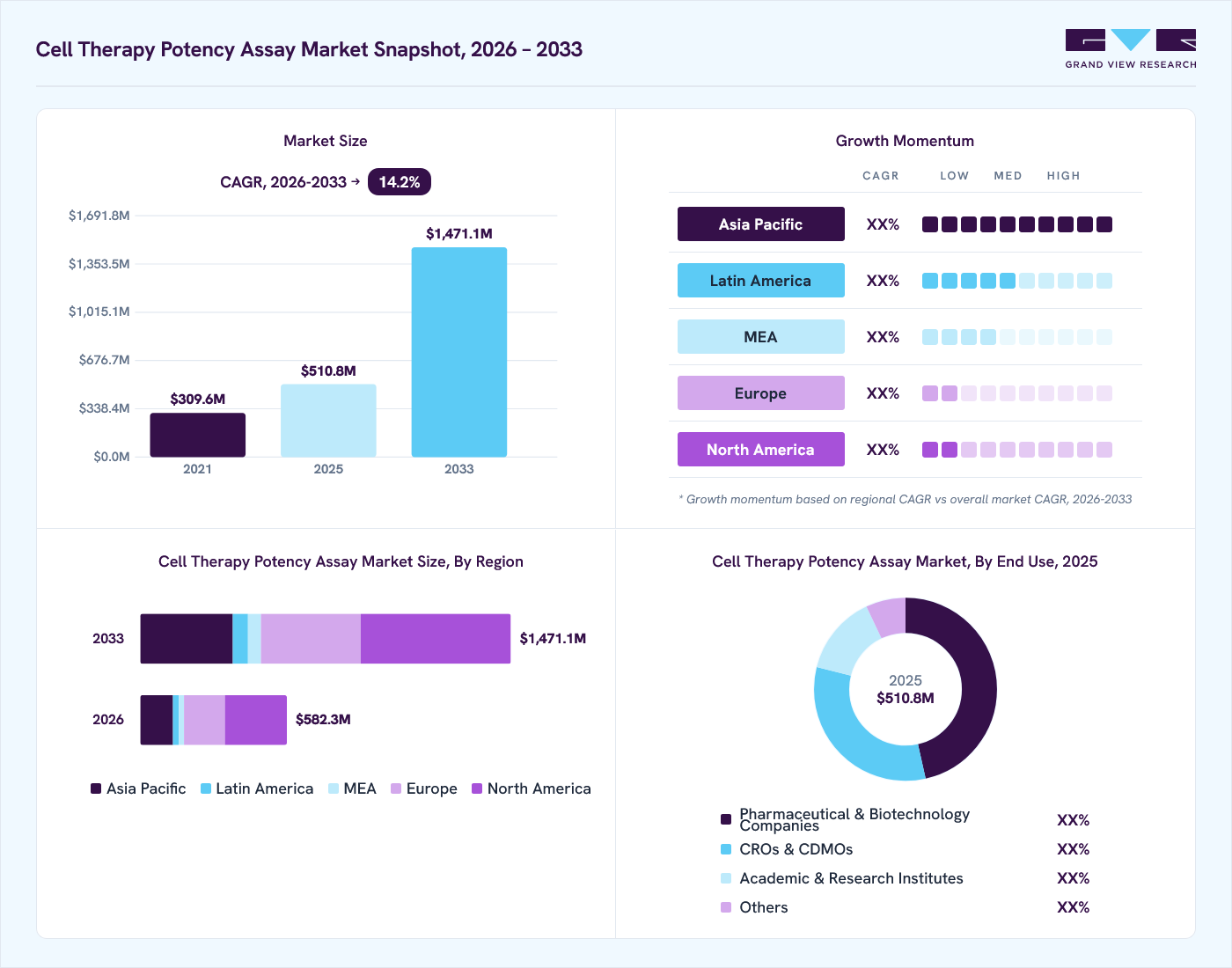 Source: Grand View Research, IR Documents, Primary Interviews, Paid DatabasesTo learn more about this report,
 Download Free Sample Report
Key Market Trends & Insights
- By product & service: Services segment held the highest market share of 51.2% in 2025.
- By assay type: Cell-based functional assays segment dominated the market with a share of 43.9% in 2025.
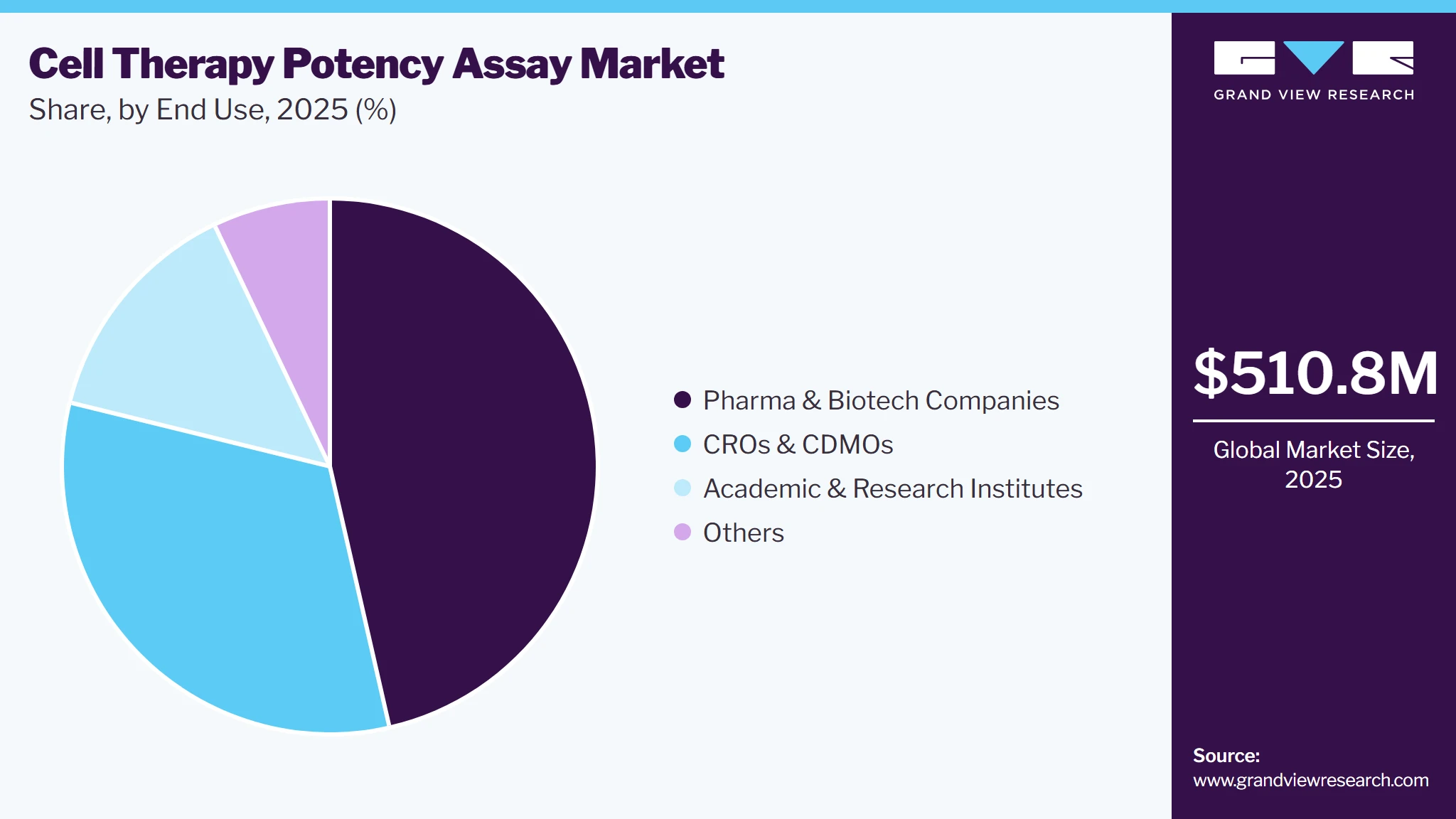
- By end-use: Pharmaceutical & biotechnology companies segment held the highest market revenue share of 46.4% in 2025.
- By development stage: Clinical segment accounted for the largest revenue share of over 52.3% in 2025.
- By cell therapy type: CAR-T cell therapy segment accounted for approximately 42.0% in 2025.
Regional Highlights
- Largest regional market: North America (42.5% revenue share, 2025)
- Fastest-growing regional market: Asia Pacific (highest CAGR, 2026-2033)
- By country: The U.S. held the largest market share in 2025.
Market Size & Forecast
- Market size in 2025: USD 510.8 Million
- Estimated market size in 2026: USD 582.3 Million
- Projected market size by 2033: USD 1,471.1 Million
- CAGR (2026-2033): 14.2%
Prism AI by Grand View Research Free to tryAsk a question about the cell therapy potency assay marketTry asking✓Every figure cited from GVR research Prefer the report? Download free sample →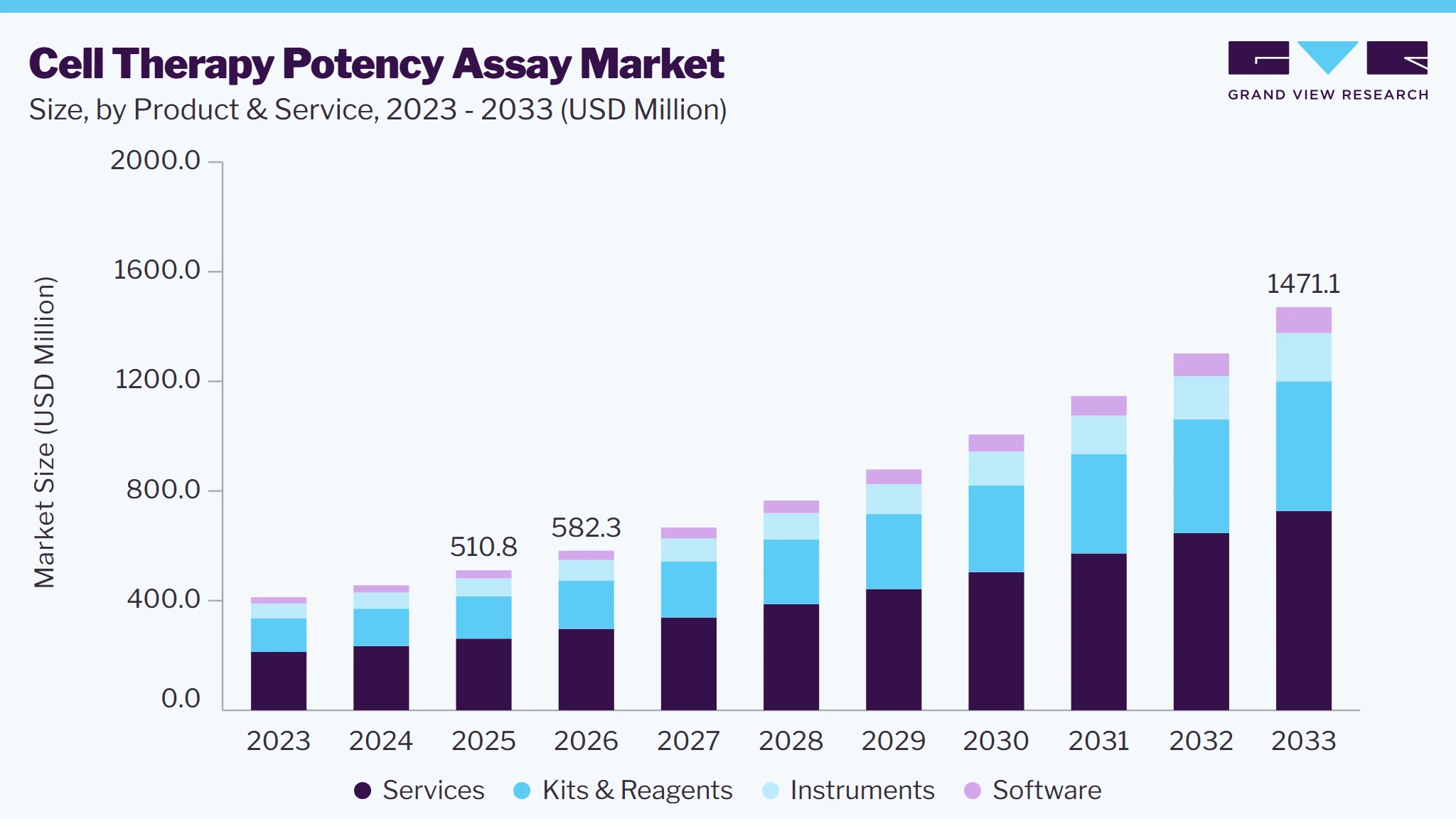 To learn more about this report, Download Free Sample Report
Market Dynamics
The cell therapy potency assay market is witnessing significant growth, driven by increasing demand for evaluating the biological activity and therapeutic effectiveness of cell-based therapies across cancer treatment, regenerative medicine, immunotherapy, and drug development. Growing adoption of advanced analytical techniques and functional assays is enabling the assessment of cell viability, functionality, and biological potency with greater accuracy and reliability. In addition, expanding use of potency testing for quality control, product characterization, regulatory compliance, and clinical development is supporting market growth.
Advancements in standardized potency assay technologies are driving the cell therapy potency assay market by improving assay consistency, reproducibility, and efficiency in evaluating the biological activity of cell therapies. For instance, in May 2025, Slingshot Biosciences launched TruCytes Potency, a customizable cell-mimic solution designed for functional CAR-T cell potency assays. The product provides an alternative to conventional target cell lines, helping reduce variability and the operational challenges associated with maintaining engineered cells. Initially available for CD19 and BCMA targets, the solution can be customized for clinically relevant antigens. This development supports demand for standardized potency assay tools that help cell therapy developers improve assay reproducibility and streamline assay validation and product lot release.
“As cell and gene therapies continue to revolutionize medicine, the demand for smarter, more scalable cell solutions is only growing. With TruCytes Potency, we’re giving cell therapy developers a new tool for greater consistency, efficiency, and confidence. This launch marks a key milestone in our mission to make precision therapeutics a reality.”
- Jeff Kim, CEO of Slingshot Biosciences.
The growing emphasis on standardized potency testing is further reflected in the range of functional assays used to evaluate different cell therapy products. According to an article published in Frontiers in Immunology in June 2023, potency assessment methods vary according to the cell type and its intended biological function, with approaches including cytotoxicity assays, cytokine secretion analysis, and flow cytometry-based methods. As shown in table below, multiple assays and analytical techniques are used to assess the functional activity of cytotoxic T lymphocytes. The diversity of these methods highlights the need for reliable and reproducible potency testing technologies to support consistent quality assessment of cell therapy products.
Cell type
Potency assays or surrogates
Common methods
CTL anti-viral
Cytotoxicity
⁵¹Cr release assay; IFN-γ/IL-2 induction by peptide-loaded APC (ELISpot)
CTL anti-viral
Specific TCR expression
Tetramer and peptide staining
CTL anti-viral
Specific Th1 cytokine secretion induced by antigen stimulation
Antigen stimulation (through peptide- or antigen-pulsed APCs) and detection of cytokine-positive T cells by flow cytometry or ELISpot
CTL anti-EBV
Cytotoxicity
Cytotoxicity against EBV-LCL; frequency of anti-EBV CTLs by limiting dilution culture; IFN-γ production induced by target (e.g., ELISpot)
CTL anti-EBV
Specific Th1 cytokine secretion induced by antigen stimulation
Antigen stimulation (through peptide-pulsed APCs or EBV-LCLs) and detection of cytokine-positive T cells by flow cytometry or ELISpot
Anti-tumor CTL or TIL
Cytotoxicity
⁵¹Cr release assay or flow cytometry after co-culture with tumor cells; anti-CD3-redirected cytotoxicity of the P815 cell line
Anti-tumor CTL or TIL
Specific TCR expression
Tetramer and peptide staining by flow cytometry
CIK
Cytotoxicity against autologous or allogeneic neoplastic target cells, cell lines, or K562 leukemic cell line
⁵¹Cr, ATP, LDH, or calcein release; alamarBlue; or flow cytometry using live/dead markers after 4-72 hours of co-culture at different effector-to-target (E:T) ratios
CAR-T
Cytotoxicity
Co-culture with target cells at different E:T ratios and assessment of apoptosis by flow cytometry, ⁵¹Cr release, or dye release; IFN-γ, TNF-α, or IL-2 induction after co-culture
CAR-T
CAR expression
Percentage and/or intensity of CAR expression by flow cytometry or qRT-PCR
CAR-CIK
Cytotoxicity
Flow cytometry analysis with apoptosis markers after 4-hour co-culture at different E:T ratios
CAR-CIK
CAR expression
Percentage and intensity of CAR expression by flow cytometry or qRT-PCR
TCR-modified T cells
Cytotoxicity
⁵¹Cr release assay or IFN-γ release by ELISpot after co-culture
TCR⁺ CD8⁺ T cells
Specific TCR expression
Tetramer and peptide staining by flow cytometry
Source: Frontiers, Secondary Research, Primary Interviews, Grand View Research Analysis
Challenges in establishing reliable potency assays can restrain the cell therapy potency assay market by complicating assay development, validation, and interpretation of product quality. According to an article published in the Journal of Translational Medicine in May 2024, defining the mechanism of action and developing appropriate potency tests remain major challenges for cell therapy products. The article reviewed 27 U.S. FDA-approved cell therapy products and highlighted cases where the relationship between potency test results and the proposed mechanism of action was unclear. It also noted that correlating potency measurements with clinical efficacy can be difficult. These challenges may complicate the development of suitable potency assays and limit manufacturers' ability to establish reliable measures of biological activity and product consistency.
The challenges associated with establishing reliable potency assays for cell therapies are further compounded by product-specific characteristics and limitations in analytical testing. Variability in starting materials, limited sample availability, product instability, and the lack of appropriate reference standards can complicate assay development and validation. Moreover, the presence of multiple active components and potential interactions between them can make it difficult to accurately characterize the biological activity of complex cell and gene therapy products. These technical limitations highlight the difficulties manufacturers face in developing consistent and reliable potency assessment methods.
The development of automated single-cell potency characterization platforms presents an opportunity for the cell therapy potency assay market by enabling comprehensive assessment of immune cell functionality, improving testing efficiency, and reducing sample requirements. For instance, in January 2024, Cellply launched VivaCyte, an automated platform that integrates microfluidic technology with AI-powered image analysis to characterize cell therapy potency and immunophenotype at single-cell resolution. Its patented CC-Array technology can generate up to 153,600 cocultures per run, enabling researchers to evaluate immune cell cytotoxicity, serial killing, and phenotype while comparing multiple cell therapy candidates and manufacturing conditions. These capabilities create opportunities to improve potency characterization and support cell therapy discovery, process development, and quality control.
"Until now there has been no simple methodology to evaluate supercharged subpopulations within a heterogeneous cell therapy sample which retain a phenotype capable of serial killing. With the multiparametric capability of VivaCyte, single-cell cytotoxicity, serial killing, and phenotype can be determined on the same set of cells within a heterogeneous population. With this information, identification of donors or cell therapy batches or manufacturing processes featuring higher serial killing activity and better killing kinetics can enable the use of more potent products requiring fewer immune cells to generate a response in the patient."
- Massimo Bocchi, PhD, co-founder and Chief Strategy Officer, Cellply.
Market Concentration & Characteristics
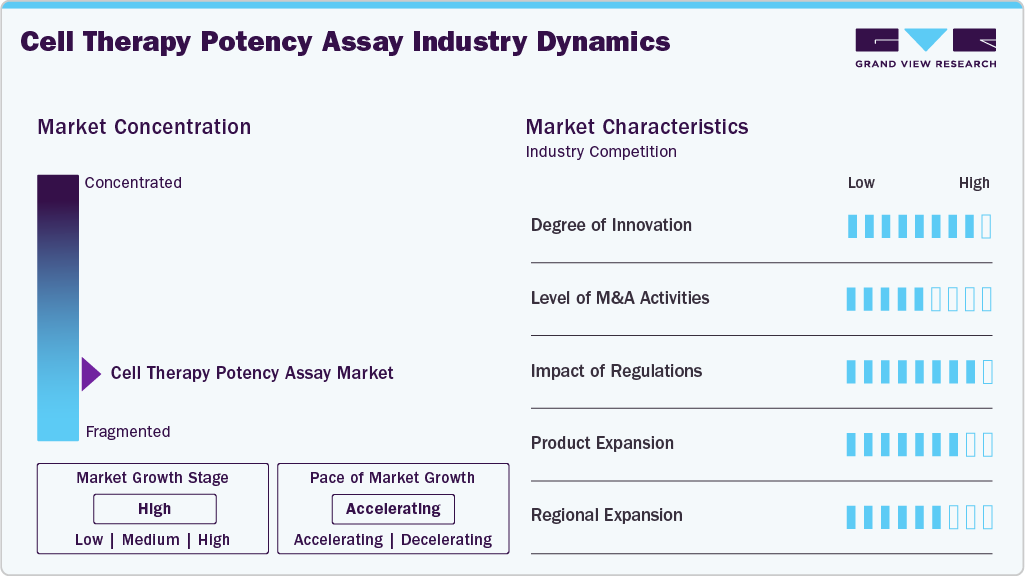
The degree of innovation in the cell therapy potency assay market is high, driven by the development of standardized analytical methods that improve assay reproducibility and simplify cell therapy quality control. According to an article published in the International Journal of Pharmaceutics: X in May 2026, researchers developed a GMP-compliant, bead-based potency assay for CAR-T cell products. The method uses antigen-loaded beads instead of target cell lines and measures interferon-gamma (IFN-γ) secretion to assess functional activity. Validated for CD19 CAR-T cells and qualified for CD7 and HER2 CAR-T cells, the assay offers a standardized approach to potency testing and batch-release assessment.
The level of merger and acquisition activity in the cell therapy potency assay industry is supported by strategic acquisitions that expand functional immune-response testing capabilities. For instance, in April 2026, VION Biosciences completed the acquisition of Cellular Technology Limited (CTL), a provider of immune-monitoring analyzers, software, consumables, and testing services. CTL’s technologies measure functional T-cell and B-cell responses and are used in applications including cell therapy research. The acquisition strengthens VION’s analytical capabilities in immune medicine, reflecting consolidation in the broader functional cell analysis and testing market.
 To learn more about this report, Download Free Sample Report
“CTL represents a highly strategic addition to the VION platform and strengthens our presence at a workflow-critical point in immune medicine. Functional cellular immune monitoring is becoming increasingly central to translational research and clinical development, as the ability to quantify immune response plays a critical role in understanding therapeutic activity. By integrating CTL into our business, we are expanding our ability to deliver more connected, workflow-oriented solutions that embed these measurement capabilities directly into the workflow environments our customers depend on.”
- Mark Thornton, Chief Executive Officer of VION Biosciences.
The impact of regulations on the cell therapy potency assay market is high, as regulatory expectations for demonstrating biological activity and product consistency drive demand for reliable potency testing methods. For instance, in December 2023, the U.S. Food and Drug Administration (FDA) issued the draft guidance Potency Assurance for Cellular and Gene Therapy Products. The guidance recommends a science- and risk-based approach incorporating manufacturing controls, in-process testing, and potency lot-release assays to ensure that each product batch retains its intended therapeutic activity. These recommendations increase the need for robust, product-specific potency assays throughout cell therapy development and manufacturing.
The cell therapy potency assay market is expanding through the introduction of specialized controls that improve the consistency and reproducibility of functional potency testing. For instance, in October 2025, Slingshot Biosciences launched TruCytes Potency CD20 controls, expanding its cell-mimic product portfolio for cell therapy research and manufacturing. The controls support mechanism-of-action potency readouts and consistent antigen-specific activation and cytokine-release measurements across assay runs and operators. This product expansion helps address variability associated with conventional cell-line-based assays and supports standardized potency testing for cell therapy development and quality control.
“Assay variability is a blatant tax on timelines and cost. Our controls are game-changing by allowing scientists to standardize their most critical readouts from early research through post-approval, and rapidly make decisions derived from highly consistent data rather than being impaired by the intolerant level of variability inherent in the use of biological materials.”
-Dr. Nimisha Srivastava, Chief Operating Officer of Slingshot Biosciences.
The cell therapy potency assay market is expanding geographically as specialized analytical technology providers secure funding to increase their international commercial reach. For instance, in April 2026, Cellply secured €7.15 million (USD 8.0 million) in funding to accelerate the international expansion of its VivaCyte platform. The platform enables automated functional characterization of immune cells and supports potency assessment for cell therapy research and quality control. The investment is intended to increase the company’s commercial presence across global markets and advance automated potency-testing solutions, supporting broader access to specialized cell therapy analytical technologies.
“We are pleased to welcome Enea Tech and Biomedical Foundation as lead investor and to strengthen our shareholder base with the support of CDP Venture Capital and our existing investors. This investment provides the resources to accelerate our commercial expansion and advance innovative quality control solutions that can help unlock broader adoption of ATMPs worldwide.”
-Alessia Zanelli, President and CEO at Cellply.
Analyst Perspective
The cell therapy potency assay market is expected to witness high growth, supported by increasing adoption of cell-based therapies and rising demand for reliable methods to assess biological activity and therapeutic effectiveness. As developers advance cell therapies through clinical development and commercialization, demand is expected to rise for validated potency assays that ensure product quality, consistency, and regulatory compliance. Growing complexity of cellular therapies is further strengthening the need for mechanism-of-action-based testing and reproducible analytical methods. However, challenges in assay standardization and validation may constrain market growth. Market participants are focusing on developing automated, high-throughput testing platforms, improving assay reproducibility, and expanding specialized assay development and validation services.
Product & Service Insights
The services segment accounted for the largest revenue share, over 51.2% in 2025, supported by increasing demand for specialized assay development, qualification, and validation to assess the biological activity of cell therapy products. For instance, in March 2024, uBriGene Biosciences announced the launch of its Cell Therapy Potency Analytical Development and GMP Testing service, designed to provide customized potency assays for tumor-associated antigens across different tumor types. The service also includes GMP assay qualification and validation, highlighting the role of specialized analytical services in supporting cell therapy development and quality assessment.
The software segment is expected to register the fastest CAGR during 2026-2033, driven by increasing demand for automated data analysis, reliable potency measurement, and regulatory-compliant data management. For instance, in June 2023, Agilent Technologies released version 2.8 of its xCELLigence RTCA Software Pro, featuring enhanced data integrity controls to support FDA 21 CFR Part 11 and EU GMP Annex 11 requirements. The software analyzes real-time cellular responses and supports functional potency assessment of immune cells, including CAR-T cells, natural killer cells, and tumor-infiltrating lymphocytes. This development highlights the role of specialized software in improving data reliability, streamlining potency analysis, and supporting quality control in cell therapy development and manufacturing.
“The addition of compliance features to xCELLigence RTCA Software Pro ensures that Agilent xCELLigence RTCA systems meet the regulatory needs of our valued customers, especially in manufacturing and quality control settings. This bridges the regulatory gap and reinforces Agilent as a leading cell analysis solutions provider to the pharma and biopharma industries.”
- Todd Christian, vice president and general manager of Agilent’s Cell Analysis Division.
Assay Type Insights
The cell-based functional assays segment dominated the market with a share of 43.9% in 2025, supported by increasing demand for reliable methods to evaluate the biological activity and functional performance of cell therapy products. These assays measure cellular responses relevant to a therapy’s mechanism of action, such as target-cell killing, cytokine secretion, and immunomodulatory activity. Their use in potency characterization, batch-release testing, and manufacturing consistency assessment is expected to support market growth as developer’s advance cell therapies through clinical development and toward commercialization.
The reporter gene assays segment is expected to register the fastest CAGR during 2026-2033, driven by the need for sensitive, mechanism-of-action-based methods to evaluate the biological activity of engineered cell therapies. For instance, in July 2025, researchers from TScan Therapeutics presented work at the Cell and Gene Therapy Summit on developing a reporter gene-based potency assay for T-cell receptor-engineered T-cell (TCR-T) therapies. The approach uses genetically engineered target cells expressing a luciferase reporter to measure antigen-specific T-cell recognition, supporting functional potency assessment and the development of assays for batch-release testing. This development highlights the potential of reporter gene assays to improve the consistency and scalability of potency testing for engineered cell therapy products.
Cell Therapy Type Insights
The CAR-T cell therapy segment accounted for approximately 42.0% of the cell therapy type segment in 2025, making it the leading segment, mainly due to increasing need for reliable analytical methods to evaluate the functional activity and quality of engineered T-cell products. According to an article published in Frontiers in Immunology in May 2025, researchers reviewed advances in potency assays for CAR-T cell therapies, highlighting functional indicators such as target-cell killing, cytokine secretion, cell viability, proliferation, and persistence. The article emphasized the need for improved potency assays that reflect the biological activity and evolving characteristics of CAR-T cell products. These findings highlight the importance of advanced potency testing methods in supporting product characterization and quality control during CAR-T cell manufacturing.
TIL & NK cell therapy segment is projected to register the fastest CAGR during 2026-2033, driven by increasing research and development of cellular immunotherapies and the need for reliable methods to evaluate their biological activity and functional performance. Potency assays play a critical role in assessing key functional attributes, including target-cell killing, cytokine secretion, immune cell activation, and persistence. The growing development of TIL and NK cell-based therapies is expected to increase demand for sensitive and reproducible potency testing methods that support product characterization, manufacturing consistency, and quality control.
Development Stage Insights
The clinical segment accounted for the largest revenue share, over 52.3% in 2025, supported by increasing advancement of cell therapy candidates through clinical trials and the need for validated potency assays to ensure product quality and consistency. According to an article published in Scientific Reports in August 2025, researchers from CellProthera described the validation of a vascular endothelial growth factor (VEGF)-based potency assay for ProtheraCytes, an autologous CD34+ cell therapy candidate being investigated for cardiac regeneration. The assay quantified VEGF secretion using an automated ELISA system and was evaluated using 38 clinical batches from a Phase I/IIb study. The findings demonstrated that the assay was suitable for potency assessment and batch release, highlighting the importance of validated analytical methods in supporting clinical-stage cell therapy development.
The commercial segment is expected to register the fastest CAGR during 2026-2033, driven by the increasing need for validated potency testing methods to ensure product quality, consistency, and stability after regulatory approval. For instance, in September 2026, Mesoblast announced that the U.S. Food and Drug Administration (FDA) had approved its T-cell Proliferation Inhibition BioAssay (TIBA) for release and stability monitoring of commercial batches of Ryoncil (remestemcel-L-rknd), an approved mesenchymal stromal cell therapy. The assay will complement existing potency tests to help detect changes in product potency associated with manufacturing process modifications or production at new facilities. This development highlights the importance of robust potency assays in maintaining quality and consistency during the commercial manufacturing of cell therapy products.
End-use Insights
Pharmaceutical & biotechnology companies segment accounted for approximately 46.4% share in 2025 making it a leading end use segment. Growth is driven by increasing investment in cell therapy development and the need for reliable potency assays to evaluate biological activity and maintain product consistency. For instance, in November 2025, Capricor Therapeutics announced the publication of a study in Biomedicines describing a validated in vitro potency assay for Deramiocel, its investigational cardiosphere-derived cell therapy for Duchenne muscular dystrophy. The assay evaluated the therapy’s anti-fibrotic activity by measuring the suppression of collagen I and III gene expression in human fibroblasts and demonstrated consistent results across more than 100 manufacturing lots. This development highlights the role of pharmaceutical and biotechnology companies in advancing validated potency assays to support cell therapy characterization, manufacturing consistency, and quality control.
 To learn more about this report, Download Free Sample Report
“This publication contributes to the growing body of evidence describing how cardiosphere-derived cells may modulate fibrotic and inflammatory pathways that underlie the progression of Duchenne muscular dystrophy. By establishing a reproducible and quantitative assay, we have strengthened our understanding of Deramiocel’s biological profile and enhanced our ability to ensure product consistency as our Duchenne program advances.”
- Linda Marbán, Ph.D., Chief Executive Officer of Capricor.
CROs & CDMOs segment is projected to witness the fastest CAGR during 2026-2033, supported by outsourcing of potency assay development, validation, and analytical testing by pharmaceutical and biotechnology companies. These organizations provide specialized expertise and advanced analytical technologies to evaluate the biological activity and quality of cell therapy products. Their services help developers establish reliable potency assays, maintain manufacturing consistency, and meet regulatory quality requirements throughout clinical development and commercialization.
Regional Insights
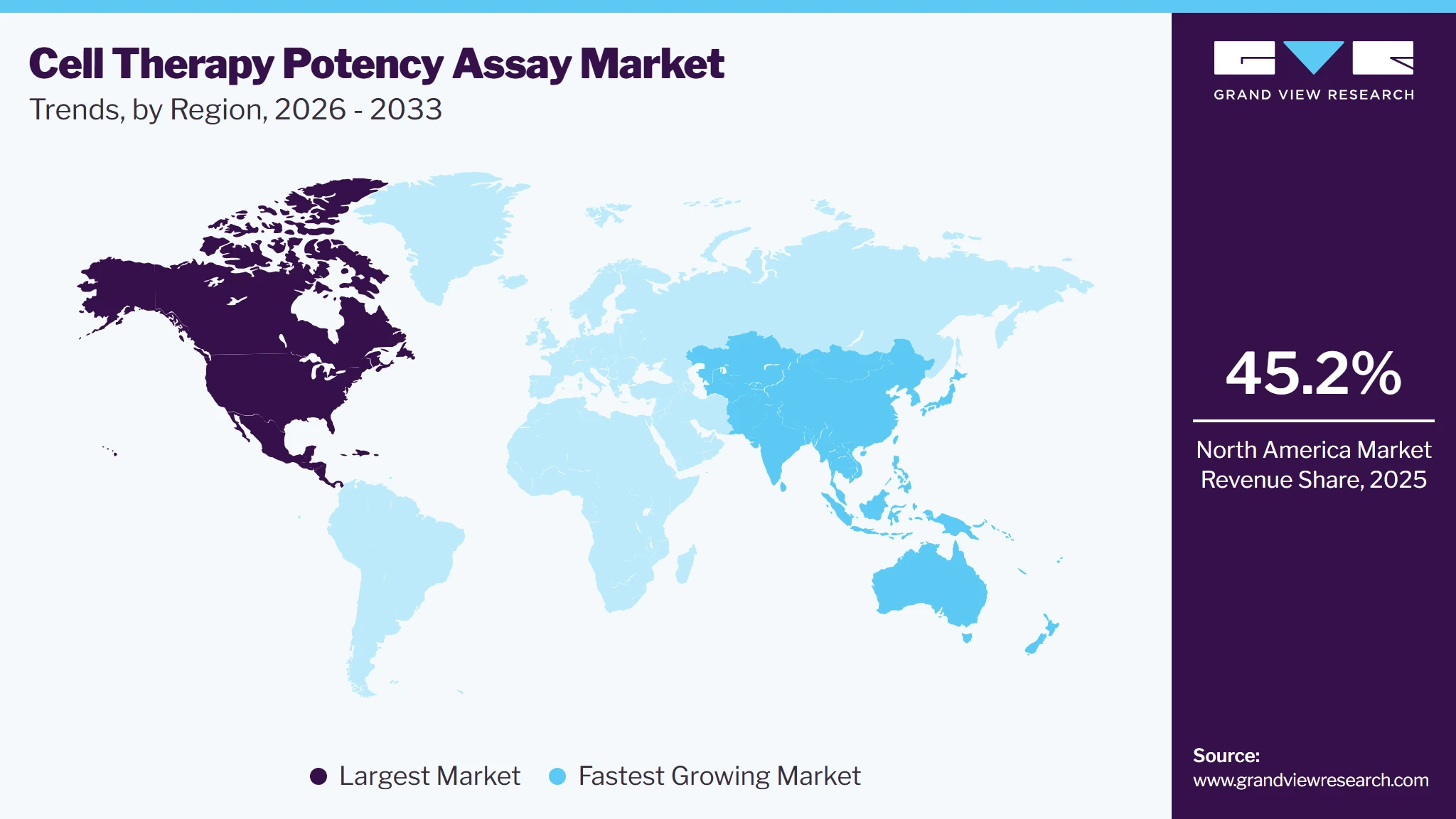
North America dominated the cell therapy potency assay market accounting for the largest revenue share of 42.5% in 2025, driven by increasing investment in specialized assay development infrastructure and rising demand for functional testing of cell and gene therapies. For instance, in December 2025, Houston-based Avance Biosciences announced the opening of its Potency and Cell-Based Assay Center of Excellence, a dedicated facility offering GMP-compliant potency assay development and functional cell-based testing services for biologics and cell and gene therapies. This investment expands specialized testing capacity for therapeutic developers.
 To learn more about this report, Download Free Sample Report
"With the launch of this Center, we've unified a world-class team and expanded our capacity to deliver complex, custom assays for our growing client base. This investment reflects Avance's continued commitment to providing industry-leading analytical and bioanalytical solutions for next-generation therapeutics."
- Xuening Huang, PhD, CEO of Avance Biosciences.
U.S. Cell Therapy Potency Assay Market Trends
The U.S. cell therapy potency assay market is expected to grow over the forecast period, supported by increasing investment in functional assay development and the need for reliable methods to assess the biological activity, quality, and consistency of advanced therapeutic products. For instance, in January 2026, U.S.-based Cellular Logistics, Inc. announced new funding through the National Heart, Lung, and Blood Institute’s Catalyze program to advance potency assays for its CFX regenerative therapy. The assays focus on evaluating macrophage phenotype, cytokine release, and other biological indicators to support product characterization and future release testing. This development highlights continued investment in analytical methods to support the development and quality assessment of regenerative medicine products.
Europe Cell Therapy Potency Assay Market Trends
Europe cell therapy potency assay market is anticipated to grow significantly over the forecast period, supported by increasing demand for functional assays to evaluate the biological activity, quality, and consistency of cell-based therapies. For instance, in December 2023, France-based CellProthera announced the development of a new potency assay for its ProtheraCytes CD34+ cell-based therapy, which is being developed for cardiac tissue regeneration. The assay measures vascular endothelial growth factor (VEGF) secretion as a biological indicator of cellular activity, helping characterize the therapeutic potential of the cell product. This development highlights the importance of functional potency assays in supporting clinical development, product characterization, and quality assessment of cell-based therapies.
"The development of this potency assay signifies a great milestone on our journey to bringing ProtheraCytes to patients. Over 15 million people suffer strokes each year, and a third of a million patients have severely damaged heart tissues following acute myocardial infarction in the US, Europe and Japan alone, but treatments for both are currently limited to alleviating symptoms. A one-time, curative solution would make an incredible difference to these patient groups. We look forward to continuing to move closer to this goal with the announcement of the results of our Phase I/IIb EXCELLENT study next year."
-Ibon Garitaonandia, Chief Scientific Officer of CellProthera
The UK cell therapy potency assay market is expected to grow over the forecast period, driven by increasing demand for standardized analytical controls that improve the reliability and reproducibility of functional potency testing. For instance, in February 2026, Slingshot Biosciences announced an expansion into the UK and European Union markets to improve local access to its synthetic cell-mimic controls for cell-based assay development. These controls help standardize flow cytometry measurements and support cell therapy manufacturing, quality control, and potency assessment, highlighting the growing commercial availability of technologies that support reliable cell therapy testing.
“The United Kingdom and European Union represent one of the world's most dynamic and innovative life sciences markets. These regions are home to top-tier research institutions, leading cell therapy companies, and global pharmaceutical firms that share our dedication to advancing scientific rigor and reproducibility. We're excited about the rapid adoption of our technology in these markets and are expanding our commitment to researchers and manufacturers in their mission to develop life-saving therapies faster and more reliably.”
- Glenn Bilawsky, Chief Executive Officer of Slingshot Biosciences.
The cell therapy potency assay market in Germany is anticipated to grow significantly over the forecast period, supported by increasing investment in advanced therapy testing infrastructure and rising demand for validated analytical methods to assess the functional activity and quality of cell-based therapies. For instance, in October 2026, Merck announced plans to open a €25 million (USD 28.0 million) BioReliance testing facility in Darmstadt, Germany, in early 2027. The facility will expand access to GMP quality-control and release testing services for advanced therapies, including CAR-T cells and other ex vivo gene-modified cell therapies, with testing capabilities covering potency, identity, viability, and sterility.
“For cell and gene therapy products, for example, we provide release testing for CAR-T cells and other ex vivo gene-modified cell therapy products - including identity, viability, sterility, potency, vector copy number, and residual material testing - supporting the emerging and rapidly growing European cell and gene therapy sector. The new BioReliance Facility in Darmstadt is designed to support microbial safety in line with regulatory and industry expectations”
- Tina Tao, Site Head of BioReliance Contract Testing Services, Merck, Darmstadt, Germany
Asia Pacific Cell Therapy Potency Assay Market Trends
Asia Pacific is expected to grow at the fastest CAGR of 16.0% during the forecast period, supported by increasing demand for reliable functional testing methods, growing emphasis on cell therapy product quality and consistency, and evolving regulatory requirements for advanced therapy medicinal products. Potency assays play a critical role in evaluating the biological activity and functional effectiveness of cell therapies, enabling manufacturers to establish product consistency, validate manufacturing processes, and support batch release. The region’s expanding cell therapy research ecosystem, growing biopharmaceutical manufacturing capabilities, and increasing adoption of advanced analytical technologies are expected to support market growth.
China’s cell therapy potency assay market is expected to grow over the forecast period, supported by increasing demand for validated methods to assess the biological activity of cell-based therapies, growing emphasis on product quality and consistency, and advancements in stem cell therapy development. Potency assays are essential for evaluating the functional properties of therapeutic cells and supporting quality control. For instance, in April 2026, Longeveron announced that it had received a Chinese patent for potency assay methods used to assess human mesenchymal stem cells (MSCs) derived from various tissue sources, including bone marrow, adipose tissue, umbilical cord, and placenta. The patent strengthens intellectual property protection for specialized cell therapy potency assessment methods in China.
“This patent issuance adds to our growing international portfolio of 52 patents protecting the novelty of our cell-based therapeutic products globally. We believe the breadth and strength of our global intellectual property portfolio is a strategic asset as Longeveron continues to advance its mission of advancing stem cell therapies for the benefit of patients and their families.”
-Dr. Joshua M. Hare, Executive Chairman and Chief Science Officer of Longeveron. “
Japan’s cell therapy potency assay market is witnessing rapid growth driven by increasing demand for validated methods to evaluate the biological activity of therapeutic cells, growing emphasis on cell therapy product quality, and advancements in regenerative medicine. Potency assays are essential for assessing the functional properties of cells and ensuring product consistency during manufacturing and quality control. For instance, in January 2026, Longeveron announced that the Japan Patent Office had granted a patent for potency assay methods used to assess human mesenchymal stem cells (MSCs) derived from multiple tissue sources, including bone marrow, adipose tissue, umbilical cord, and placenta. This development strengthens intellectual property protection for specialized cell therapy potency assessment methods.
“We are extremely encouraged by our growing portfolio of international patents protecting the novelty of our cell-based therapeutic products. This issuance brings Longeveron’s global intellectual property portfolio to 33 issued patents.”
- Dr. Joshua M. Hare, Executive Chairman and Chief Science Officer of Longeveron.
Latin America Cell Therapy Potency Assay Market Trends
The Latin America cell therapy potency assay industry is expected to grow steadily over the forecast period, supported by increasing development of cell-based therapies, rising demand for reliable functional testing, and growing emphasis on quality control during cell therapy manufacturing. Potency assays help evaluate the biological activity and functional effectiveness of therapeutic cells, supporting product consistency and quality assurance. For instance, in October 2024, Terumo Blood and Cell Technologies announced the expansion of its automated cell and gene therapy manufacturing solutions across Brazil, Colombia, and Mexico. This expansion is expected to support regional cell therapy manufacturing capabilities and increase the need for reliable analytical testing, including potency assessment, as the sector develops.
MEA Cell Therapy Potency Assay Market Trends
The Middle East & Africa cell therapy potency assay market is growing steadily, supported by increasing demand for validated analytical methods to evaluate the biological activity of cell therapies, growing emphasis on product quality and consistency, and evolving regulatory requirements for advanced therapies. Potency assays play a critical role in assessing the functional effectiveness of therapeutic cells, enabling manufacturers to validate production processes, monitor batch-to-batch consistency, and support quality control and batch release. The gradual expansion of regenerative medicine research, development of cell therapy infrastructure, and adoption of advanced biopharmaceutical testing technologies across the region are expected to support market growth.
Key Cell Therapy Potency Assay Company Insights
The cell therapy potency assay industry is highly competitive, with key players focusing on cell-based bioassays, flow cytometry, cytokine analysis, cytotoxicity assays, gene expression analysis, and functional potency testing technologies. Companies are strengthening their market position through product launches, technological advancements, strategic collaborations, and expansion of assay development and validation capabilities. Moreover, competitive positioning depends on product offerings, technological expertise, assay accuracy, regulatory compliance, geographic presence, customer base, and applications across CAR T-cell therapies, stem cell therapies, regenerative medicine, immunotherapy, and advanced medicinal therapy products.
Key Cell Therapy Potency Assay Companies
The following key companies have been profiled for this study on the cell therapy potency assay market.
-
Thermo Fisher Scientific Inc.
-
Charles River Laboratories
-
Sartorius AG
-
Danaher Corporation
-
Eurofins
-
Agilent Technologies, Inc.
-
Lonza
-
Revvity
-
Bio-Techne
-
Merck KGaA
-
Bruker Cellular Analysis (Bruker)
-
BD
-
Cytek Biosciences
-
WuXi AppTec
-
Bio-Rad Laboratories, Inc.
Recent Developments
-
In March 2026, Sartorius AG introduced the Eveo Cell Therapy Platform, an integrated system combining cell therapy manufacturing with quality-control capabilities, including live-cell imaging and high-throughput flow cytometry. The platform aims to improve manufacturing scalability and streamline quality-control workflows for autologous cell therapies, particularly CAR-T therapies.
“Cell therapies are redefining medical possibilities. Yet, they remain accessible to only a small share of patients because manufacturing is complex, capacity-constrained and therefore expensive. With our integrated platform, we are tackling these structural bottlenecks head-on. By combining raw materials, production equipment, software and QC assays into a scalable system, we enable our customers to expand output, significantly reduce cost per dose and shorten vein-to-vein time for patients.”
- René Fáber, member of the Executive Board at Sartorius.
-
In May 2025, Bruker Cellular Analysis unveiled the Beacon Discovery platform, a compact optofluidic system for live single-cell functional analysis. The platform supports cytokine secretion analysis, cytotoxicity testing, and T-cell profiling, enabling functional characterization of CAR-T and TCR-T cell candidates and supporting preclinical cell therapy potency assessment.
-
In May 2026, Charles River Laboratories entered into a strategic, non-exclusive memorandum of understanding with MEDIPOST Co., Ltd. to expand GMP-compliant testing and support cell therapy development and commercialization. The collaboration leverages Charles River’s cell therapy testing expertise to support MEDIPOST’s global pipeline across the Asia-Pacific and North American regions, with potential expansion into Europe and the Middle East, strengthening specialized testing services for cell therapy developers.
“With over 14 years of commercial-stage allogeneic cell therapy product manufacturing and release experience, treating more than 36,000 patients within South Korea, MEDIPOST is now expanding into global regions starting with APAC and North America. Our partnership with Charles River will help us pave solid paths to efficient and compliant commercial pathways in multiple regulatory jurisdictions across the globe.”
- Antonio (Tony) Lee, Global President and Board Director at MEDIPOST.
Competitive Benchmarking
Category
Operating Strategies
Competitive Edge
Weakness
Established Players (Thermo Fisher Scientific Inc.; Charles River Laboratories; Sartorius AG; Danaher Corporation; Eurofins; Agilent Technologies, Inc.; Lonza; Merck KGaA; Bruker Cellular Analysis (Bruker))
- Expanding cell therapy potency testing through bioassays, flow cytometry, analytical platforms, reagents, and contract testing services; focusing on innovation and strategic collaborations.
- Broad portfolios, advanced analytical technologies, established customer relationships, global presence, and integrated cell therapy testing solutions.
- High development costs, complex assay validation, regulatory requirements, infrastructure needs, and intense competition.
Emerging Players (Revvity; Bio-Techne; BD; Cytek Biosciences; WuXi AppTec; Bio-Rad Laboratories, Inc.)
- Developing specialized potency assays, cell-based analytical technologies, immunoassays, flow cytometry, and testing services through product innovation and partnerships.
- Specialized technologies, differentiated assay solutions, strong research capabilities, and growing presence in cell therapy characterization.
- Limited market reach in some segments, high testing costs, assay standardization challenges, and competition from established players.
Cell Therapy Potency Assay Market Report Scope Table
Report Attribute
Details
Market size in 2025
USD 510.8 million
Market size value in 2026
USD 582.3 million
Revenue forecast in 2033
USD 1,471.1 million
Growth rate
CAGR of 14.2% from 2026 to 2033
Historical data
2021 - 2025
Forecast period
2026 - 2033
Quantitative units
Revenue in USD million, and CAGR from 2026 to 2033
Report coverage
Revenue forecast, company ranking, competitive landscape, growth factors, and trends
Segments covered
Product & service, assay type, cell therapy type, development stage, end-use, region
Regional scope
North America; Europe; Asia Pacific; Latin America; MEA
Country scope
U.S., Canada, Mexico, UK, Germany, France, Italy, Spain, Norway, Denmark, Sweden, China, Japan, India, South Korea, Australia, Thailand, Brazil, Argentina, Saudi Arabia, South Africa, UAE, and Kuwait
Key companies profiled
Thermo Fisher Scientific Inc., Charles River Laboratories, Sartorius AG, Danaher Corporation, Eurofins, Agilent Technologies, Inc., Lonza, Revvity, Bio-Techne, Merck KGaA, Bruker Cellular Analysis (Bruker), BD, Cytek Biosciences, WuXi AppTec, and Bio-Rad Laboratories, Inc.
Customization scope
Free report customization (equivalent up to 8 analysts' working days) with purchase. Addition or alteration to country, regional & segment scope.
Pricing and purchase options
Avail customized purchase options to meet your exact research needs. Explore purchase options
Global Cell Therapy Potency Assay Market Report Segmentation
This report forecasts revenue growth and provides an analysis on the latest trends in each of the sub-segments from 2021 to 2033. For the purpose of this report, Grand View Research has segmented the global cell therapy potency assay market on the basis of product & service, assay type, cell therapy type, development stage, end-use and region:
-
Product & Service Outlook (Revenue, USD Million, 2021 - 2033)
-
Services
-
Kits & Reagents
-
Instruments
-
Software
-
-
Assay Type Outlook (Revenue, USD Million, 2021 - 2033)
-
Cell-based Functional Assays
-
Flow Cytometry-based Assays
-
Binding & Immunoassays
-
Reporter Gene Assays
-
Molecular & Biochemical Assays
-
-
Cell Therapy Type Outlook (Revenue, USD Million, 2021 - 2033)
-
CAR-T Cell Therapy
-
Stem Cell Therapy
-
TIL & NK Cell Therapy
-
TCR-T Cell Therapy
-
Others
-
-
Development Stage Outlook (Revenue, USD Million, 2021 - 2033)
-
Clinical
-
Commercial
-
Preclinical
-
-
End-use Outlook (Revenue, USD Million, 2021 - 2033)
-
Pharmaceutical & Biotechnology Companies
-
CROs & CDMOs
-
Academic & Research Institutes
-
Others
-
-
Regional Outlook (Revenue, USD Million, 2021 - 2033)
-
North America
-
U.S.
-
Canada
-
Mexico
-
-
Europe
-
UK
-
Germany
-
France
-
Italy
-
Spain
-
Denmark
-
Sweden
-
Norway
-
-
Asia Pacific
-
Japan
-
China
-
India
-
Australia
-
Thailand
-
South Korea
-
-
Latin America
-
Brazil
-
Argentina
-
-
Middle East and Africa (MEA)
-
South Africa
-
Saudi Arabia
-
UAE
-
Kuwait
-
-
Research Methodology
The cell therapy potency assay market figures in this report are based on a proven research process that combines executive interviews with secondary research from proprietary databases, company filings, and recognized regulatory and institutional sources. Market size is built through value-chain sizing - reconciling supply-side and demand-side estimates - and triangulated with bottom-up and top-down approaches. Every estimate passes multiple levels of expert validation before publication, with each cell therapy potency assay segment quantified using the revenue-capture definitions in the table below.
Segment Definition
Segment- Product & Service
Revenue Capture Definition
Services
This segment includes revenue generated from services supporting cell therapy potency assays, including assay development, optimization, validation, analytical testing, method transfer, and regulatory support. These services help evaluate the biological activity, functionality, and potency of cell therapy products.
Kits & Reagents
This segment captures income from kits and reagents used in cell therapy potency assays, including assay-specific reagents, antibodies, cytokines, substrates, detection reagents, reference materials, and other consumables required to measure the biological activity of cell therapy products.
Instruments
This segment includes revenue generated from instruments and laboratory equipment used to perform, monitor, and analyze cell therapy potency assays. These include flow cytometers, plate readers, cell analysis systems, imaging instruments, and other analytical equipment used to assess the biological activity, functionality, and potency of cell therapy products.
Software
This segment captures income from digital tools and platforms used to acquire, process, analyze, interpret, and report data generated from cell therapy potency assays. These solutions support assay data management, statistical analysis, visualization, workflow automation, and regulatory documentation.
Segment- Assay Type
Revenue Capture Definition
Cell-based Functional Assays
Revenue generated from cell-based assays that measure the biological activity of cell therapy products through functional responses, including target-cell killing, immune-cell activation, cytokine release, proliferation, and other mechanism-of-action-related activities.
Flow Cytometry-based Assays
This segment captures income from potency assays that use flow cytometry to quantify cellular characteristics and functional responses, including cell identity, viability, activation markers, intracellular proteins, and target-cell killing associated with cell therapy products.
Binding & Immunoassays
Market value in this category stems from binding-based and immunoassay methods used to measure relevant proteins, cytokines, receptors, ligands, or other biological markers associated with the potency and mechanism of action of cell therapy products.
Reporter Gene Assays
Market value in this category stems from reporter gene-based methods used to evaluate the biological activity and functional potency of cell therapy products by measuring reporter signals, such as luminescence or fluorescence, associated with target-specific receptor activation or downstream cellular signaling.
Molecular & Biochemical Assays
This segment captures income from molecular and biochemical methods used to evaluate potency-related attributes of cell therapy products, including gene expression, protein activity, enzyme function, and other molecular or biochemical indicators associated with biological activity.
Segment- Cell Therapy Type
Revenue Capture Definition
CAR-T Cell Therapy
Revenue generated from potency assays developed or used to assess the biological activity and functional performance of chimeric antigen receptor T-cell therapies, including antigen-specific target-cell killing, T-cell activation, cytokine production, and other relevant functional responses.
Stem Cell Therapy
This segment captures income from potency assays used to evaluate the biological activity and functional properties of stem cell-based therapies, including differentiation capacity, lineage-specific function, immunomodulatory activity, and other product-specific therapeutic attributes.
TIL & NK Cell Therapy
Market value in this category stems from potency assay methods used to evaluate the functional activity of tumor-infiltrating lymphocytes (TILs) and natural killer (NK) cells, including target-cell recognition, cytotoxicity, cellular activation, and cytokine secretion.
TCR-T Cell Therapy
Revenue generated from potency assays used to evaluate T-cell receptor-engineered T-cell therapies, including antigen-specific recognition, target-cell killing, cytokine production, and other functional responses associated with T-cell receptor-mediated activity.
Others
Revenue from potency assays used for cell therapy types outside CAR-T cell therapy, stem cell therapy, TIL and NK cell therapy, and TCR-T cell therapy, including other engineered or non-engineered cellular therapies requiring product-specific potency evaluation.
Segment- Development Stage
Revenue Capture Definition
Clinical
Revenue generated from cell therapy potency assays used during clinical development to characterize and evaluate product potency, support clinical trial testing, establish or refine analytical methods, and generate data required for product quality assessment and regulatory submissions.
Commercial
This segment captures income from potency assays used for commercially manufactured cell therapy products, including routine batch release testing, quality control, ongoing assay validation, and monitoring of product consistency and biological activity.
Preclinical
Market value in this category stems from cell therapy potency assays used before clinical development to characterize candidate products, evaluate biological activity, support proof-of-concept studies, establish or optimize assays for subsequent development stages.
Segment- End Use
Revenue Capture Definition
Pharmaceutical & Biotechnology Companies
Revenue generated from cell therapy potency assays purchased or used by pharmaceutical and biotechnology companies for cell therapy research, candidate development, assay establishment, process development, quality control, and clinical or commercial product testing.
CROs & CDMOs
This segment captures income from cell therapy potency assays used by contract research organizations and contract development and manufacturing organizations to provide outsourced assay development, validation, analytical testing, manufacturing support, and quality control services for cell therapy developers.
Academic & Research Institutes
Market value in this category stems from cell therapy potency assays used by universities, academic laboratories, and research institutes to investigate cellular function, evaluate therapeutic candidates, study mechanisms of action, and support early-stage cell therapy research.
Others
Revenue from cell therapy potency assays used by end users outside pharmaceutical and biotechnology companies, CROs and CDMOs, and academic and research institutes, including hospitals, specialized testing laboratories, and government research organizations.
Estimation Model
No.
Approach
Title
Description
01
Top-Down
Commodity Flow Analysis
Market value was estimated by assessing revenues from potency assay kits, reagents, instruments, software, and laboratory services. Company financials, product portfolios, pricing, testing volumes, and commercial offerings were analyzed to quantify revenue across key applications and technologies. Contributions from specialized potency-testing products and services were evaluated to determine overall market value.
02
Parent Market
Parent Market & Penetration-Based Analysis
The cell therapy potency assay market was assessed within the broader cell-based assays market, focusing on potency testing in cell therapy development, manufacturing, and quality control. Adoption across clinical and commercial workflows was evaluated to establish the addressable opportunity. Regulatory guidelines highlight functional assays and validated methods for assessing cell therapy potency.
03
Segmentation
Country-Level Segment Share Modeling
Country-level shares were estimated using clinical trials, manufacturing capacity, testing infrastructure, laboratory networks, pharmaceutical R&D, and clinical adoption. Differences in therapy development, testing volumes, technology availability, healthcare infrastructure, and research activity were incorporated to determine country and regional distributions across product & service, assay type, cell therapy type, development stage, and end use segments.
04
Validation
Data Triangulation & Validation Model
Market estimates were reconciled using company revenues, testing volumes, assay pricing, testing capacity, laboratory activity, clinical applications, and scientific evidence. Estimates were cross-checked across product & service, assay type, cell therapy type, development stage, end use, country, and region to ensure consistency between volume-based and revenue-based calculations.
05
Forecasting
Forecasting & CAGR Modeling
Future demand was projected using observed expansion of cell therapies, CART treatments, stem cell therapies, clinical trials, and potency testing services. Increasing regulatory requirements, therapy commercialization, assay innovation, manufacturing improvements, and growing clinical use of cell-based treatments were incorporated into segment-level growth assumptions.
Delivered Customizations
This report has been delivered with the following In-depth customizations
Client Request
Customization Delivered
Value Adds
Cell Therapy Potency Assay Development & Validation Assessment
Assessment of assay development timelines, validation requirements, analytical challenges, and method suitability for selected cell therapy products.
Help clients understand assay development needs, identify validation challenges, and plan analytical development activities.
Cell Therapy Potency Assay Selection by Mechanism of Action
Evaluation of potency assay approaches based on cell therapy mechanism of action, including immunomodulation, cell killing, and tissue regeneration.
Help clients identify suitable assay approaches and align potency testing with the intended biological activity of their therapies.
Cell Therapy Potency Testing Outsourcing Assessment
Assessment of external testing services based on assay capabilities, cell therapy expertise, analytical methods, and support for product development stages.
Help clients evaluate outsourced testing options and identify service providers suited to their analytical requirements.
Frequently Asked Questions About This Report
The global cell therapy potency assay market is expected to grow at a CAGR of 14.2% from 2026 to 2033, reaching USD 1,471.1 million by 2033.
The cell-based functional assays segment held the largest revenue share in 2025, while reporter gene assays segment is the fastest-growing segment.
CAR-T cell therapy segment held the largest shareof 42.0% in 2025 and TIL & NK cell therapy segment is the fastest growing segment.
The global cell therapy potency assay market size was valued at USD 510.8 million in 2025 and is estimated at USD 582.3 million in 2026.
The market growth is driven by increasing adoption of cell-based therapies, growing demand for advanced potency testing, and expanding applications of cell therapy potency assays in cancer treatment, regenerative medicine, and pharmaceutical development.
North America market dominated, with a revenue share of 45.2% in 2025.
Asia Pacific is the fastest-growing region over the forecast period.
The services segment led with 51.2% revenue share in 2025, while software segment is the fastest-growing segment.
Key players are Thermo Fisher Scientific Inc., Charles River Laboratories, Sartorius AG, Danaher Corporation, Eurofins, Agilent Technologies, Inc., Lonza, Revvity, Bio-Techne, Merck KGaA, Bruker Cellular Analysis (Bruker), BD, Cytek Biosciences, WuXi AppTec, and Bio-Rad Laboratories, Inc.
About the Author(s)
Biotechnology Research Team
Healthcare · BiotechnologyThis report was authored by the biotechnology research team at Grand View Research - comprising two research analysts, one senior research analyst, and one industry expert - with specialized expertise in the biotechnology segment of the healthcare industry. All findings are based on proprietary healthcare databases, executive interviews, and regulatory analysis, subject to internal peer review prior to publication.
Last Updated:
Speak to Analyst

Customize this report to your needs - add regions, segments, or data points, with 20% free customization.
Or view our licence options:


ISO 9001:2015 & 27001:2022 Certified
We are GDPR and CCPA compliant! Your transaction & personal information is safe and secure. For more details, please read our privacy policy.


