
- Home
- »
- Biotechnology
- »
-
Competent Cells Market Size And Share Report, 2026-2033GVR Report cover

Competent Cells Market (2026 - 2033)
Size, Share & Trends Analysis Report By Type (Chemically Competent Cells, Electrocompetent Cells, Ultracompetent Cells), By Application (Cloning, Protein Expression, Mutagenesis), By End Use, By Region, And Segment Forecasts
Market Size, 2025
$2.4BMarket Estimate, 2026
$2.5BMarket Forecast, 2033
$5.1BCAGR, 2026–2033
10.5%Competent Cells Market Summary
The global competent cells market size was valued at USD 2.4 billion in 2025 and is projected to grow from USD 2.5 billion in 2026 to USD 5.1 billion by 2033, at a CAGR of 10.5% from 2026 to 2033. North America dominated the competent cells market with the largest revenue share of 36.0% in 2025. As genetic engineering and synthetic biology advance, the demand for effective and high-performance competent cells is expected to increase throughout the forecast period.
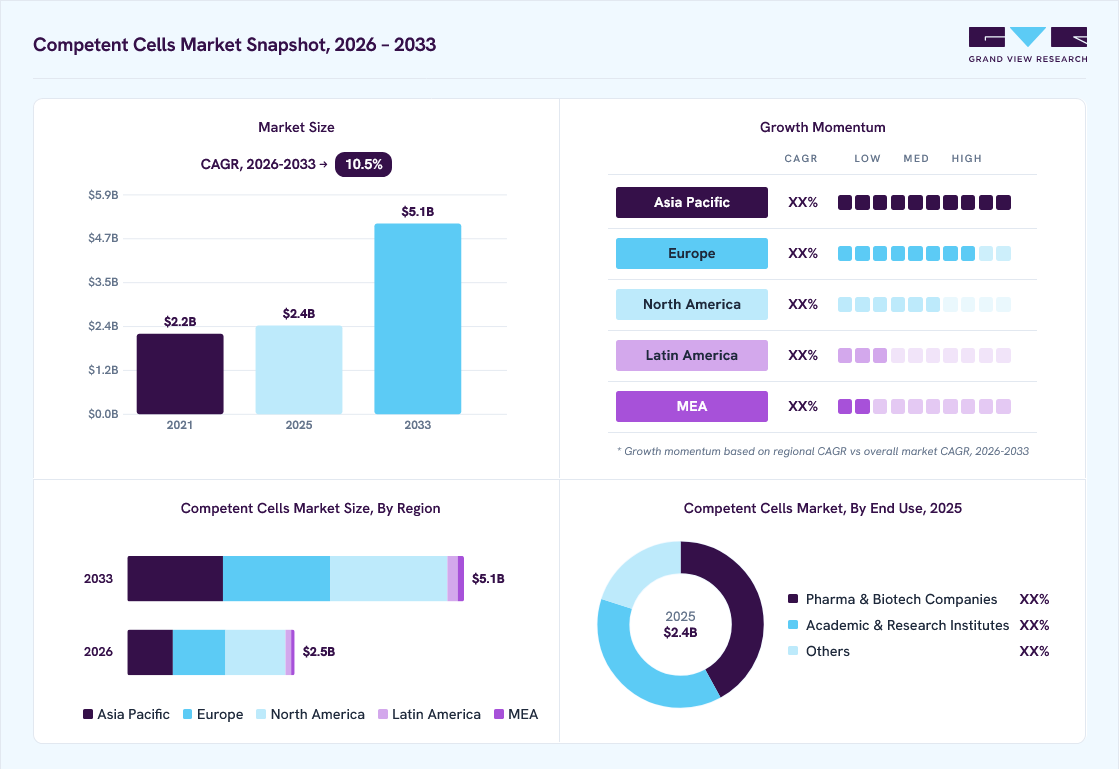 Source: Grand View Research, IR Documents, Primary Interviews, Paid DatabasesTo learn more about this report,
 Download Free Sample Report
 Key Market Trends & Insights
- By type: Chemically competent cells segment held the largest market share of 43.6% in 2025.
- By application: Cloning segment held the largest market share of 44.8% in 2025.
- By end use: Pharmaceutical & biotechnology companies segment held the largest market share of 42.0% in 2025.
Regional Highlights
- Largest regional market: North America (36.0% revenue share, 2025)
- Fastest-growing regional market: Asia Pacific (highest CAGR, 2026-2033)
- By country: The U.S. held the largest market share in 2025
Market Size & Forecast
- Market size in 2025: USD 2.4 Billion
- Estimated market size in 2026: USD 2.5 Billion
- Projected market size by 2033: USD 5.1 Billion
- CAGR (2026-2033): 10.5%
Three ways to get this report
Buy it, customize it, or ask a question.Ask an Analyst
A direct answer, usually in 1 working day
- AccessReport author, directly
- Reply timeWithin 1 working day
- No sales callDirect answer only
- FormatEmail reply
- CostFree, no cost
Get the Full Report
What the study covers
- FormatsPDF · Excel · Dashboard
- Timeline2026–2033 annual, 2025 base
- Coverage20+ countries, 5 regions
- Companies10+ key players profiled
Customize the Report
20% free customization
- IncludeCountries, segments, points
- TailorTo your product definition
- ExtendDeeper competitor detail
- OrA fully bespoke study
- Turnaround5–10 working days
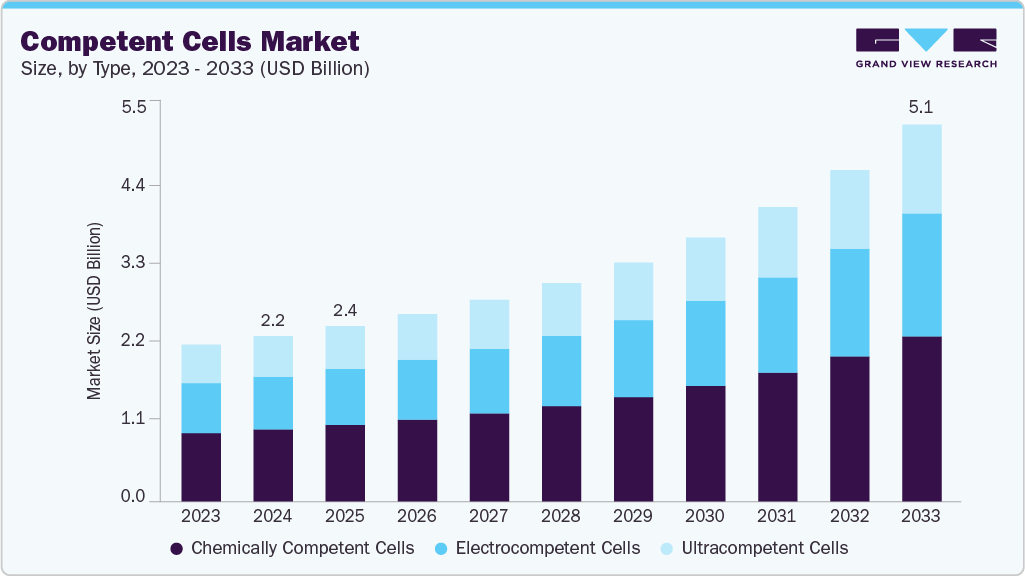 To learn more about this report, Download Free Sample Report
 Increasing Demand for Recombinant Proteins & Enzymes
The rapid growth of recombinant protein and enzyme production is a key driver of the competent cells market. Biopharmaceutical firms rely on the use of recombinant proteins, such as monoclonal antibodies, hormones, cytokines, and biosimilars developed from engineered microbes, for applications in food processing, diagnostics, biofuels, and the biotech industry. Competent cells are required to enable clonal and expression workflows in these applications, for both research laboratories and larger-scale manufacturing. Competent cell performance is in high demand as biologics pipelines expand and the need for new and innovative therapies grows, prompting high transformation efficiency and yield during protein production.
Competent Cells Across the Biotech Workflow
Stage
Role of Competent Cells
DNA Design / Gene Construction
Competent cells are used to clone and assemble gene fragments, plasmids, and DNA libraries. They enable the incorporation of synthetic DNA constructs designed for engineering proteins, metabolic pathways, and gene circuits. This forms the foundation for downstream experiments and product development.
Transformation / DNA Uptake
Competent cells facilitate efficient uptake of plasmid DNA, ensuring successful transformation. High-efficiency strains help laboratories and biopharma companies achieve high cloning success rates, reduce iterative cycles, and accelerate research timelines.
Protein & Vector Production
After successful transformation, competent cells express recombinant proteins or serve as hosts for plasmid amplification needed for viral vector manufacturing (AAV, lentiviral, mRNA production templates). This step is central to therapeutic protein production, enzyme synthesis, and vaccine development.
Scale-up & Manufacturing
Stable engineered cell strains support reliable plasmid amplification and recombinant protein synthesis at pilot and production scale. They enable consistent yield, low mutational rates, and scalability for commercial manufacturing.
Source: Secondary Research, Grand View Research
In addition, innovations in synthetic biology and metabolic engineering are expanding the applications of recombinant enzymes in sustainable materials, chemicals, and bioplastics. Increased investments in precision fermentation and cell-free protein synthesis create increased demand for optimized competent cell systems. As research institutions and biotech companies focus on cloning speed, scalability, and better expression platforms, demand for competent cells continues to grow for drug discovery, protein engineering, and industrial biomanufacturing applications.
Growth in Genetic Engineering & Synthetic Biology
The growing areas of genetic engineering and synthetic biology are primary factors in the competent cells market. These areas rely on competent cells with high efficiency for DNA cloning, plasmid construction, CRISPR editing, and microbial engineering. Demand for reliable, high-performance competent cells continues to grow as research groups implement automated cloning, AI protein design, and sophisticated genome-editing workflows.
At the same time, synthetic biology is rapidly developing into industrial applications, including biomanufacturing, sustainable chemicals, biofuels, precision agriculture, and biosensors. Increased investment in microbial strain engineering and high-throughput screening is putting pressure on finding optimized competent cell lines that enable rapid, scalable, and reproducible results.
Market Dynamics
The competent cells market is driven by increasing demand for molecular cloning, recombinant protein expression, synthetic biology, and genetic engineering applications across academic, biotechnology, and pharmaceutical research. Growing adoption of advanced workflows such as CRISPR-based research, DNA assembly, and engineered strain development is increasing the need for high-efficiency chemically competent and electrocompetent cells that enable reliable transformation and faster construct generation. Companies are expanding their portfolios with specialized strains optimized for applications such as cloning of complex DNA constructs, toxic gene expression, and protein production, supporting broader adoption across research and commercial laboratories. However, market growth may be influenced by challenges, including the availability of alternative transformation methods, variation in product performance across applications, and cost constraints among smaller research institutions.
The rapid growth of recombinant protein and enzyme production is a key driver of the competent cells market. Biopharmaceutical firms rely on the use of recombinant proteins, such as monoclonal antibodies, hormones, cytokines, and biosimilars developed from engineered microbes, for applications in food processing, diagnostics, biofuels, and the biotech industry. Competent cells are required to enable clonal and expression workflows in these applications, for both research laboratories and larger-scale manufacturing. Competent cell performance is in high demand as biologics pipelines expand and the need for new and innovative therapies grows, prompting high transformation efficiency and yield during protein production.
Competent Cells Across the Biotech Workflow
Stage
Role of Competent Cells
DNA Design / Gene Construction
Competent cells are used to clone and assemble gene fragments, plasmids, and DNA libraries. They enable the incorporation of synthetic DNA constructs designed for engineering proteins, metabolic pathways, and gene circuits. This forms the foundation for downstream experiments and product development.
Transformation / DNA Uptake
Competent cells facilitate efficient uptake of plasmid DNA, ensuring successful transformation. High-efficiency strains help laboratories and biopharma companies achieve high cloning success rates, reduce iterative cycles, and accelerate research timelines.
Protein & Vector Production
After successful transformation, competent cells express recombinant proteins or serve as hosts for plasmid amplification needed for viral vector manufacturing (AAV, lentiviral, mRNA production templates). This step is central to therapeutic protein production, enzyme synthesis, and vaccine development.
Scale-up & Manufacturing
Stable engineered cell strains support reliable plasmid amplification and recombinant protein synthesis at pilot and production scale. They enable consistent yield, low mutational rates, and scalability for commercial manufacturing.
Source: Secondary Research, Grand View Research
In addition, innovations in synthetic biology and metabolic engineering are expanding the applications of recombinant enzymes in sustainable materials, chemicals, and bioplastics. Increased investments in precision fermentation and cell-free protein synthesis create increased demand for optimized competent cell systems. As research institutions and biotech companies focus on cloning speed, scalability, and better expression platforms, demand for competent cells continues to grow for drug discovery, protein engineering, and industrial biomanufacturing applications.
The adoption of competent cells may be limited by the availability of alternative gene delivery and transformation approaches, including electroporation-based methods, viral delivery systems, and advanced genome-engineering platforms. While competent cells remain widely used for routine cloning and molecular biology workflows, researchers working with complex genetic constructs or specialized applications may prefer alternative approaches that offer higher efficiency or broader host compatibility.
Market Concentration & Characteristics
The competent cells industry exhibits a substantial degree of innovation, routinely advancing new technologies and processes to enhance efficiency and effectiveness. Moreover, competent cells are being applied to innovative yet unconventional applications, including drug discovery methods in medicine and therapeutics.
The competent cell industry is also characterized by a moderate level of merger and acquisition activities undertaken by several industry players. This is due to several factors, including the desire to gain a competitive advantage in the industry and the need to consolidate in a rapidly growing market.
 To learn more about this report, Download Free Sample Report
 The regulatory frameworks for the use and production of competent cells can create challenges for market players. Compliance with regulations surrounding biosafety, genetic engineering, and other areas can add to operating costs and hinder the entry of new firms into the market.
The competent cells industry is growing due to diverse applications, improvements in biotechnology and manufacturing service delivery, and increasing investments in research and development. Many players in the industry focus on diversifying their product and service range, resulting in new product launches across various areas, including cloning, protein expression, cDNA, and genomic library construction, as well as high throughput cloning and cloning unstable DNA.
The competent cell industry is currently witnessing a moderate level of regional expansion, with growth opportunities expected from an expanding customer base for gene cloning products & services. As scientific knowledge of the technique increases globally and biotechnology becomes more accessible in emerging markets, leading players in the market are projected to accelerate their initiatives for regional expansions.
Analyst Perspective
The competent cells market is expected to maintain high growth as biotechnology research continues shifting toward more complex genetic engineering and high-throughput workflows. Future market expansion will be supported by innovations that improve transformation efficiency, strain specialization, workflow compatibility, and application-specific performance for synthetic biology, biologics development, and cell-based research. Leading suppliers with integrated molecular biology portfolios, strong technical support capabilities, and customized competent cell solutions are likely to strengthen their market positions. In addition, increasing biotechnology investments in emerging regions and the growing adoption of advanced genetic engineering tools are expected to create new opportunities for suppliers offering scalable, cost-effective transformation solutions.
Type Insights
Based on type, the chemically competent cells segment held the largest market share of 43.6% in 2025, primarily due to their effective strategies, ease of use, and efficiency in heat-shock applications. They are commonly used in molecular biology workflows, such as cloning, DNA sequencing, and library construction, and are therefore a common choice for both academic and industrial research.
The electrocompetent cells segment is expected to grow at the fastest CAGR over the forecast period. Electrocompetent cells are important for introducing external DNA into host cells for purposes such as gene cloning, gene expression studies, protein production, and functional genomics. By making cells electrocompetent, researchers can effectively deliver specific DNA sequences into the cells, resulting in genetic modifications and desired phenotypic changes.
Application Insights
Based on application, cloning dominated the market with a revenue share of 44.8% in 2025. The rising prevalence of infectious and non-communicable diseases has led to an increase in the use of competent cells in research and development (R&D) activities. For instance, according to research published in April 2024, researchers developed recombinant antibodies using phage display technology to treat viral infectious diseases. The phage display libraries used in these technologies were constructed using competent E. coli cells.
The protein expression segment is anticipated to grow at the fastest CAGR over the forecast period. Competent cells are utilized for the synthesis of proteins and enzymes that can be applied in biotechnology and the food & beverage industry, driving demand in the competent cells market.
End Use Insights
Based on end use, the pharmaceutical & biotechnology companies segment led the market with the largest revenue share of 42.0%, due to increasing developments in biologics, biosimilars, gene therapies, and mRNA-based platforms. These companies rely on competent cells for essential activities, such as DNA cloning and recombinant protein production, as well as for preparing viral vectors to facilitate drug discovery and large-scale biomanufacturing.
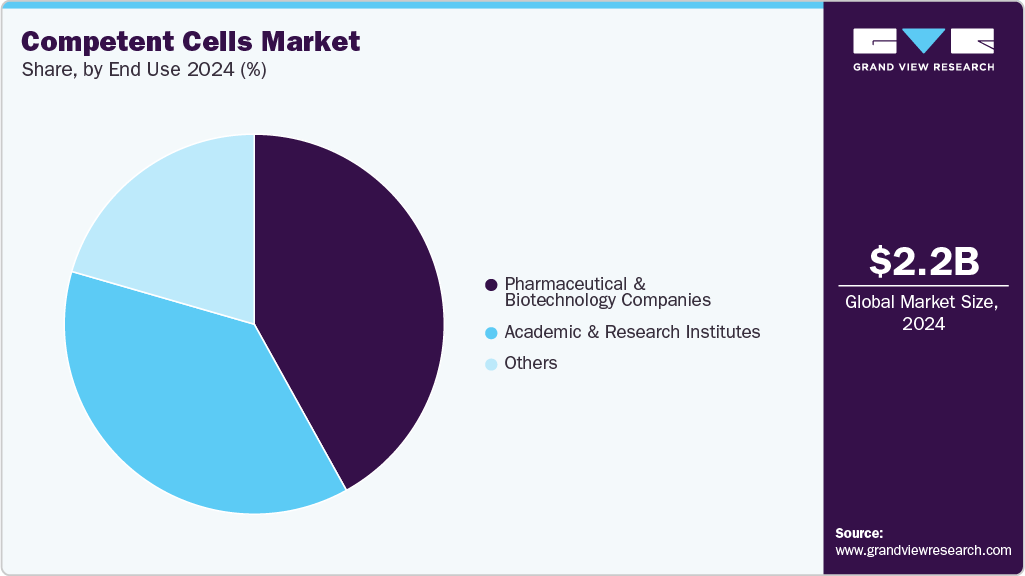 To learn more about this report, Download Free Sample Report
 The academic and research institutes segment is projected to exhibit the fastest CAGR during the forecast period, as academic and research institutes utilize competent cells for applications such as subcloning, generating phage display libraries, cloning unstable DNAs, high-throughput workflows, and mutagenesis, which support the market expansion.
Regional Insights
North America dominated the competent cells market with the largest revenue share of 36.0% in 2025, driven by advancements in molecular cloning research, the introduction of newer technologies, and rising commercial demand for molecularly cloned products. Moreover, the region benefits from substantial research and development investments, government funding for biotechnology and healthcare research, as well as highly advanced healthcare infrastructure.
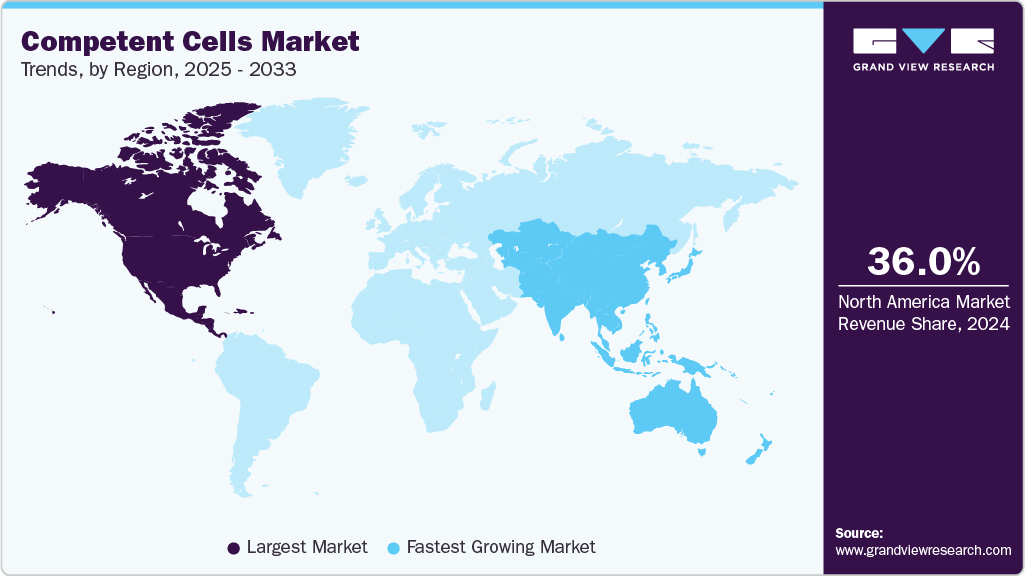 To learn more about this report, Download Free Sample Report
 U.S. Competent Cells Market Trends
The competent cells market in the U.S. held the largest share in the North America region in 2025 due to the robust research and development landscape in biotechnology and life sciences, which fosters innovation & technological advancements in molecular cloning techniques, as well as the presence of key players in the country.
Europe Competent Cells Market Trends
Europe competent cells market was identified as a lucrative region in this industry. Strong research & development in biology, pharmaceuticals, and therapeutics, along with the presence of key market players in the region, are factors driving market growth.
The competent cells market in the UK is expected to grow over the forecast period. The rise in demand for personalized medicine, the increased prevalence of chronic and hereditary diseases, and the surge in gene therapies have propelled the use of gene cloning techniques in the country.
The competent cells market in Germany is expected to grow over the forecast period driven by factors such as increased demand for molecularly cloned products, advancements in cloning technologies, and rising research and development investments in biotechnology sectors.
Asia Pacific Competent Cells Market Trends
Asia Pacific competent cells market is anticipated to witness the fastest CAGR of 11.2% from 2026 to 2033 in the competent cells market. The rapid growth is due to the extensive developments by countries like India and China in the adoption of protein expression in various applications, along with the emerging focus on proteomics and genomics research.
The competent cells market in China is expected to grow significantly over the forecast period, driven by increasing investments and favorable government initiatives in the field of biotechnology. For instance, in March 2022, researchers in China reported exceptionally high transformation and cloning efficiencies using E. coli BW25113, which reinforces the demand for premium competent cells that support advanced synthetic biology and high-throughput DNA assembly workflows.
Japan competent cells industry is anticipated to grow at a significant CAGR over the forecast period. The increasing demand for recombinant DNA technique products, advancement in molecular engineering, and the rising demand for therapeutic products are some of the factors expected to propel market growth.
Middle East & Africa Competent Cells Market Trends
The MEA competent cells market is projected to grow during the forecast period due to the increasing awareness and adoption of cloning techniques for developing recombinant proteins, enzymes, and novel therapeutic tools to combat rising chronic disease prevalence in the region.
Kuwait competent cells market is anticipated to witness growth over the forecast period. Kuwaiti institutions are actively collaborating with international researchers and companies in biotechnology research. This collaboration facilitates knowledge transfer and access to cutting-edge technologies, potentially accelerating market growth.
Key Component Cells Company Insights
The global competent cells industry is shaped by a strong presence of well-established biotechnology and life science companies that maintain leadership through advanced product portfolios, strategic expansions, and sustained investments in research and development. Key players, including Thermo Fisher Scientific, Merck KGaA, Agilent Technologies, Inc., Takara Bio Inc., and New England Biolabs (NEB), continue to hold notable market positions by offering high-efficiency chemically and electrocompetent cells. Their robust distribution networks and broad product range, designed for academic, clinical, and commercial use, contribute to their competitive advantage.
 To learn more about this report, Download Free Sample Report
 Companies such as Promega Corporation, Bio-Rad Laboratories, Roche Applied Science, QIAGEN, and SGI-DNA (Synthetic Genomics, Inc.) are expanding their market footprint with innovative transformation technologies, engineered microbial strains, and specialized competent cell systems designed for high-throughput workflows and synthetic biology applications. The industry is experiencing a balance between established expertise and emerging competitiveness, with strategic partnerships, product innovation, and mergers driving continuous advancement.
Key Component Cells Companies:
The following key companies have been profiled for this study on the component cells market.
-
Thermo Fisher Scientific
-
Merck KGaA
-
Agilent Technologies, Inc.
-
Takara Bio Inc.
-
New England Biolabs (UK) Ltd.
-
Promega Corporation
-
Bio-Rad Laboratories
-
Roche Applied Science
-
Qiagen
-
SGI-DNA (Synthetic Genomics, Inc.)
Competitive Benchmarking
Category
Operating Strategies
Competitive Edge
Weakness
Established Players (Thermo Fisher Scientific; Merck KGaA; Agilent Technologies, Inc. etc)
- Expand molecular biology portfolios by offering high-efficiency competent cells integrated with cloning, PCR, and genetic engineering workflows. Focus on product innovation, global distribution, technical support, and application-specific solutions.
- Strong brand presence, broad product portfolios, global reach, established research customer base, and integrated life science solutions.
- Higher pricing of advanced products and slower innovation cycles compared with specialized suppliers may limit adoption in cost-sensitive markets.
Emerging Players (SGI-DNA (Synthetic Genomics, Inc.) Takara Bio Inc.; New England Biolabs Ltd, etc)
- Focus on synthetic biology, genome engineering, and customized genetic engineering solutions for specialized applications.
- Expertise in advanced biological engineering and customized research solutions.
- Limited commercial scale, narrower product offerings, and lower market visibility compared with established suppliers.
Recent Developments
-
In February 2024, U.S. researchers developed a naturally competent Vibrio natriegens platform enabling rapid, low-cost plasmid transformation. This advancement accelerated synthetic biology workflows, increasing reliance on high-performance competent cells for fast cloning, strain engineering, and scalable gene expression applications.
-
In February 2024, Bio-Rad launched Vericheck ddPCR kits for replication-competent lentivirus and AAV testing in the U.S., enhancing viral vector QC workflows. As cell and gene therapy pipelines expand, higher volumes of plasmid construction and viral packaging increase cloning workloads, driving demand for high-efficiency competent cells in upstream vector development.
-
In December 2023, CCM Biosciences launched its 5Prime Sciences unit focused on advanced enzyme engineering and DNA technologies. By accelerating cloning, polymerase innovation, and synthetic biology workflows, this expansion supports rising demand for high-efficiency competent cells in recombinant DNA applications.
-
In January 2020, SGI-DNA launched Vmax X2 competent cells, which deliver faster growth and higher protein yields than E. coli, thereby boosting demand for advanced competent cells in the rapid development of vaccines and biologics.
Competent Cells Market Report Scope
Report Attribute
Details
Market size in 2025
USD 2.4 billion
Estimated market size in 2026
USD 2.5 billion
Projected market size by 2033
USD 5.1 billion
Growth rate
CAGR of 10.5% from 2026 to 2033
Base year for estimation
2025
Historical data
2021 - 2024
Forecast period
2026 - 2033
Quantitative units
Revenue in USD million/billion and CAGR from 2026 to 2033
Report coverage
Revenue forecast, company ranking, competitive landscape, growth factors, and trends
Segments covered
Type, application, end use, region
Regional scope
North America; Europe; Asia Pacific; Latin America; MEA
Country scope
U.S.; Canada; UK; Germany; France; Spain; Italy; Sweden; Norway; Denmark; Russia; Japan; China; India; South Korea; Australia; Thailand; Brazil; Mexico; Argentina; South Africa; UAE; Saudi Arabia; Kuwait
Key companies profiled
Thermo Fisher Scientific; Merck KGaA; Agilent Technologies, Inc.; Takara Bio Inc.; New England Biolabs (UK) Ltd.; Promega Corporation; Bio-Rad Laboratories; Roche Applied Science; Qiagen; SGI-DNA (Synthetic Genomics, Inc.)
Customization scope
Free report customization (equivalent up to 8 analysts' working days) with purchase. Addition or alteration to country, regional & segment scope.
Pricing and purchase options
Avail customized purchase options to meet your exact research needs. Explore purchase options
Global Component Cells Market Report Segmentation
This report forecasts revenue growth and provides an analysis on the latest trends in each of the sub-segments from 2021 to 2033. For the purpose of this report, Grand View Research has segmented the global competent cells market on the basis of type, application, end use, and region:
 To learn more about this report, Download Free Sample Report
 -
Type Outlook (Revenue, USD Million, 2021 - 2033)
-
Chemically Competent Cells
-
Electrocompetent Cells
-
Ultracompetent Cells
-
-
Application Outlook (Revenue, USD Million, 2021 - 2033)
-
Cloning
-
Protein Expression
-
Mutagenesis
-
Others
-
-
End Use Outlook (Revenue, USD Million, 2021 - 2033)
-
Pharmaceutical & Biotechnology Companies
-
Academic & Research Institutes
-
Others
-
-
Regional Outlook (Revenue, USD Million, 2021 - 2033)
-
North America
-
U.S.
-
Canada
-
Mexico
-
-
Europe
-
Germany
-
UK
-
France
-
Italy
-
Spain
-
Denmark
-
Sweden
-
Norway
-
-
Asia Pacific
-
China
-
Japan
-
India
-
South Korea
-
Australia
-
Thailand
-
-
Latin America
-
Brazil
-
Argentina
-
-
MEA
-
South Africa
-
Saudi Arabia
-
UAE
-
Kuwait
-
-
Research Methodology
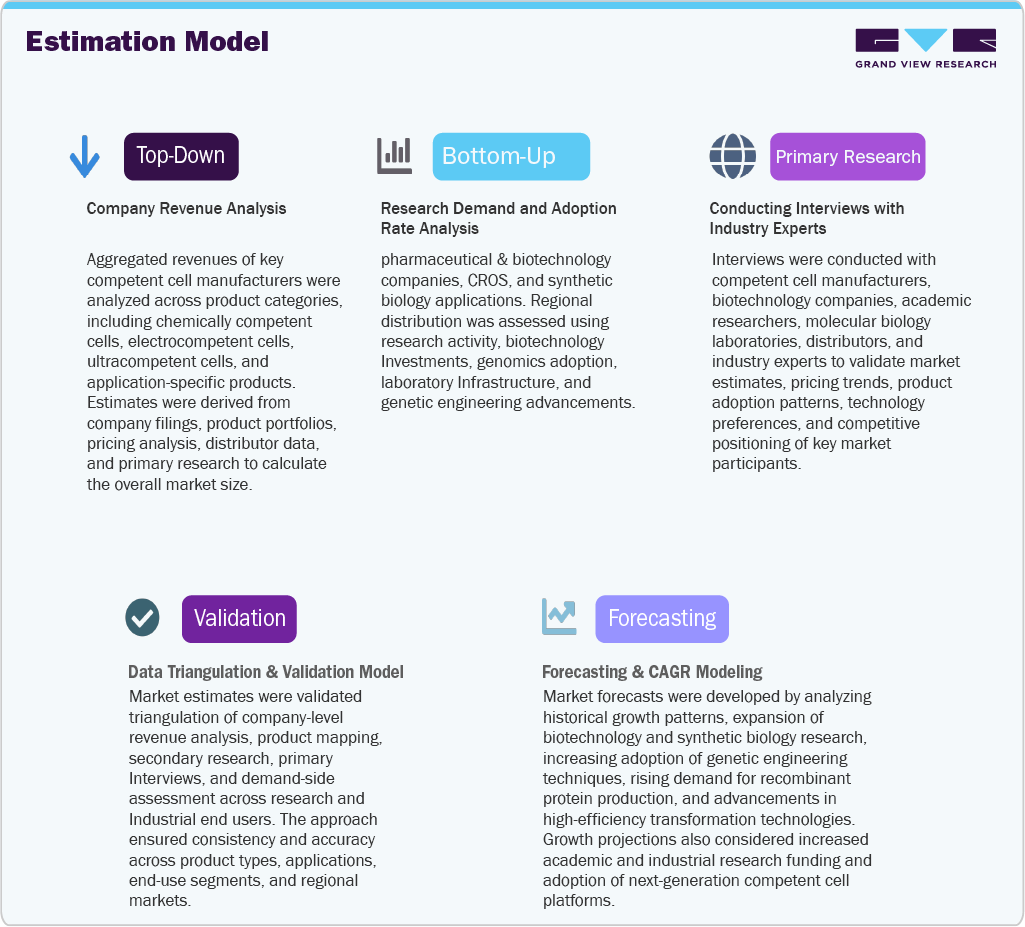
The competent cells market figures in this report are based on a proven research process that combines executive interviews with secondary research from proprietary databases, company filings, and recognized regulatory and institutional sources. Market size is built through value-chain sizing - reconciling supply-side and demand-side estimates - and triangulated with bottom-up and top-down approaches. Every estimate passes multiple levels of expert validation before publication, with each competent cells segment quantified using the revenue-capture definitions in the table below.
Segment Definition
Segment - Type
Revenue capture definition
Chemically Competent Cells
Revenue is generated from chemically treated bacterial cells, typically prepared using calcium chloride or other chemical methods, that enable uptake of foreign DNA during transformation workflows for molecular cloning, plasmid propagation, and recombinant DNA applications.
Electrocompetent Cells
Revenue is generated from highly efficient bacterial cells optimized for electroporation-based transformation, where electrical pulses facilitate DNA uptake. These products are primarily used for applications requiring high transformation efficiency, including large plasmid introduction, library construction, and synthetic biology workflows.
Ultracompetent Cells
Revenue is generated from high-efficiency competent cell strains engineered or optimized to provide enhanced DNA transformation performance, including improved uptake of complex constructs, larger plasmids, and challenging DNA assemblies used in advanced genetic engineering applications.
Segment - Application
Revenue capture definition
Cloning
Revenue is generated from competent cell products used for DNA cloning workflows, including plasmid amplification, recombinant DNA construction, gene insertion, and propagation of engineered genetic materials.
Protein Expression
Revenue is generated from competent cell products used for recombinant protein production, including expression of therapeutic proteins, enzymes, research proteins, and other biologically active molecules through engineered host systems.
Mutagenesis
Revenue is generated from competent cell products used in targeted genetic modification workflows, including site-directed mutagenesis, variant generation, and functional studies of genes and proteins.
Others
Revenue is generated from competent cell applications beyond cloning, protein expression, and mutagenesis, including synthetic biology, genome engineering, DNA library preparation, and other molecular biology research workflows.
Segment - End-use
Revenue capture definition
Pharmaceutical & Biotechnology Companies
Revenue is generated from competent cell products purchased by pharmaceutical and biotechnology companies for drug discovery, biologics development, recombinant protein production, synthetic biology, and genetic engineering research activities.
Academic & Research Institutes
Revenue is generated from competent cell products used by universities, government laboratories, and research institutions for molecular biology studies, genetic engineering research, education, and basic life science investigations.
Others
Revenue is generated from competent cell products utilized by contract research organizations (CROs), diagnostic laboratories, industrial biotechnology companies, and other research entities involved in genetic manipulation and biotechnology applications.
 To learn more about this report, Download Free Sample Report
 Delivered Customizations
This report has been delivered with the following In-depth customizations
Client Request
Customization Delivered
Value Adds
Technology & Innovation Trend Analysis
Analyzed advancements in high-efficiency transformation strains, synthetic biology applications, and integration with automated molecular workflows.
Provides visibility into future technology trends and innovation areas influencing market evolution.
Synthetic Biology & Genetic Engineering Trend Analysis
Evaluated the impact of synthetic biology, genome engineering, CRISPR research, and recombinant DNA technologies on competent cell demand.
Provides insights into future demand drivers and emerging application opportunities.
Research Workflow Integration Analysis
Evaluated the role of competent cells within broader molecular biology workflows, including DNA assembly, plasmid preparation, cloning, and expression systems.
Provides insights into workflow dependencies and opportunities for bundled product offerings.
Frequently Asked Questions About This Report
Based on end use, the pharmaceutical & biotechnology companies segment led the market with the largest revenue share of 42.0% in 2025.
Some key market player operating in competent cells market are Thermo Fisher Scientific; Merck KGaA; Agilent Technologies, Inc.; Takara Bio Inc.; New England Biolabs (UK) Ltd.; Promega Corporation; Bio-Rad Laboratories; Roche Applied Science; Qiagen; and SGI-DNA (Synthetic Genomics, Inc.) among others
Advancements in molecular cloning research, increasing commercial demand for molecular cloned products, and increasing demand for recombinant proteins are some of the factors that drive the market growth of competent cells over the forecast period.
The global competent cells market size was valued at USD 2.4 billion in 2025 and is estimated at USD 2.5 billion for 2026.
The global competent cells market is expected to grow at a CAGR of 10.5% from 2026 to 2033, reaching USD 5.1 billion by 2033.
The chemically competent cells segment held the largest market share of 43.6% in 2025 for type segment due to their high transformation efficiency, suitability for heat shock treatment, and simplicity.
Based on application, cloning dominated the market with a revenue share of 44.8% in 2025.
North America dominated the competent cells market with the largest revenue share of 36.0% in 2025.
Asia Pacific is the fastest-growing region over the forecast period.
About the Author(s)
Biotechnology Research Team
Healthcare · BiotechnologyThis report was authored by the biotechnology research team at Grand View Research - comprising two research analysts, one senior research analyst, and one industry expert - with specialized expertise in the biotechnology segment of the healthcare industry. All findings are based on proprietary healthcare databases, executive interviews, and regulatory analysis, subject to internal peer review prior to publication.
Last Updated:
Speak to Analyst

Customize this report to your needs - add regions, segments, or data points, with 20% free customization.
Or view our licence options:


ISO 9001:2015 & 27001:2022 Certified
We are GDPR and CCPA compliant! Your transaction & personal information is safe and secure. For more details, please read our privacy policy.


