
- Home
- »
- Plastics, Polymers & Resins
- »
-
Composite Adhesive Market Size & Share Report, 2026-2033GVR Report cover
![Composite Adhesive Market (2026 - 2033)Report]()
Composite Adhesive Market (2026 - 2033)
Size, Share & Trends Analysis Report By Product (Acrylic, Epoxy, Polyurethane, Cyanoacrylate), By Application (Automotive & Transportation, Aerospace & Defense, Electrical & Electronics), By Region, And Segment Forecasts
Market Size, 2025
$3.9BMarket Estimate, 2026
$4.1BMarket Forecast, 2033
$6.1BCAGR, 2026–2033
5.9%Composite Adhesive Market Size & Trends
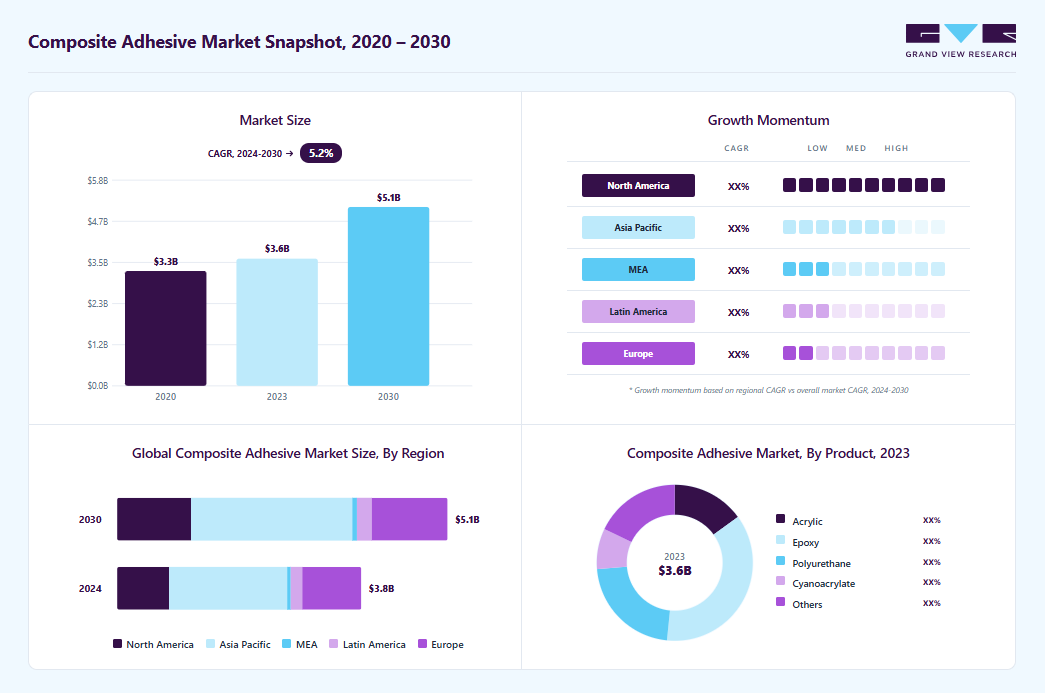
The global composite adhesive market size was valued at USD 3.9 billion in 2025 and is projected to grow from USD 4.1 billion in 2026 to USD 6.1 billion by 2033, at a CAGR of 5.9% from 2026 to 2033. Asia Pacific dominated the composite adhesive market with the highest revenue share of 48.5% in 2025. This is majorly attributed to the penetration of lightweight composites with superior strength and low-density properties in different industries like aerospace & defense, electric vehicles (EVs), sports, and others is expected to propel the demand for composite adhesives in the future.
Key Market Trends & Insights
- By product: Epoxy segment held the largest market share of 36.8% in 2025.
- By application: Aerospace & defense segment held the largest market share of 17.6% in 2025.
Regional Highlights
- Largest regional market: Asia Pacific (48.5% revenue share, 2025)
- By country: China held the largest market share in 2025.
Market Size & Forecast
- Market size in 2025: USD 3.9 Billion
- Estimated market size in 2026: USD 4.1 Billion
- Projected market size by 2033: USD 6.1 Billion
- CAGR (2026-2033): 5.9%
India is another lucrative market for EVs in the world. Various initiatives undertaken by the government are anticipated to propel the EV market in India over the forecast period. For instance, as per the National Investment Promotion & Facilitation Agency, in 2023 the Indian government has set a target of 30% electrification of the total vehicles in the country by 2023. Moreover, as per the Union Budget of 2023-2024, the government has allocated a budget of 35,000 crores to achieve the energy transition at a net zero target by 2070. Multiple Indian automobile manufacturers such as TATA MOTORS and Mahindra & Mahindra have begun the production of E.V at a higher pace owing to their increasing demand Such initiatives are expected to augment EV production and sales in the country, thereby propelling the demand for composite adhesives over the forecast period.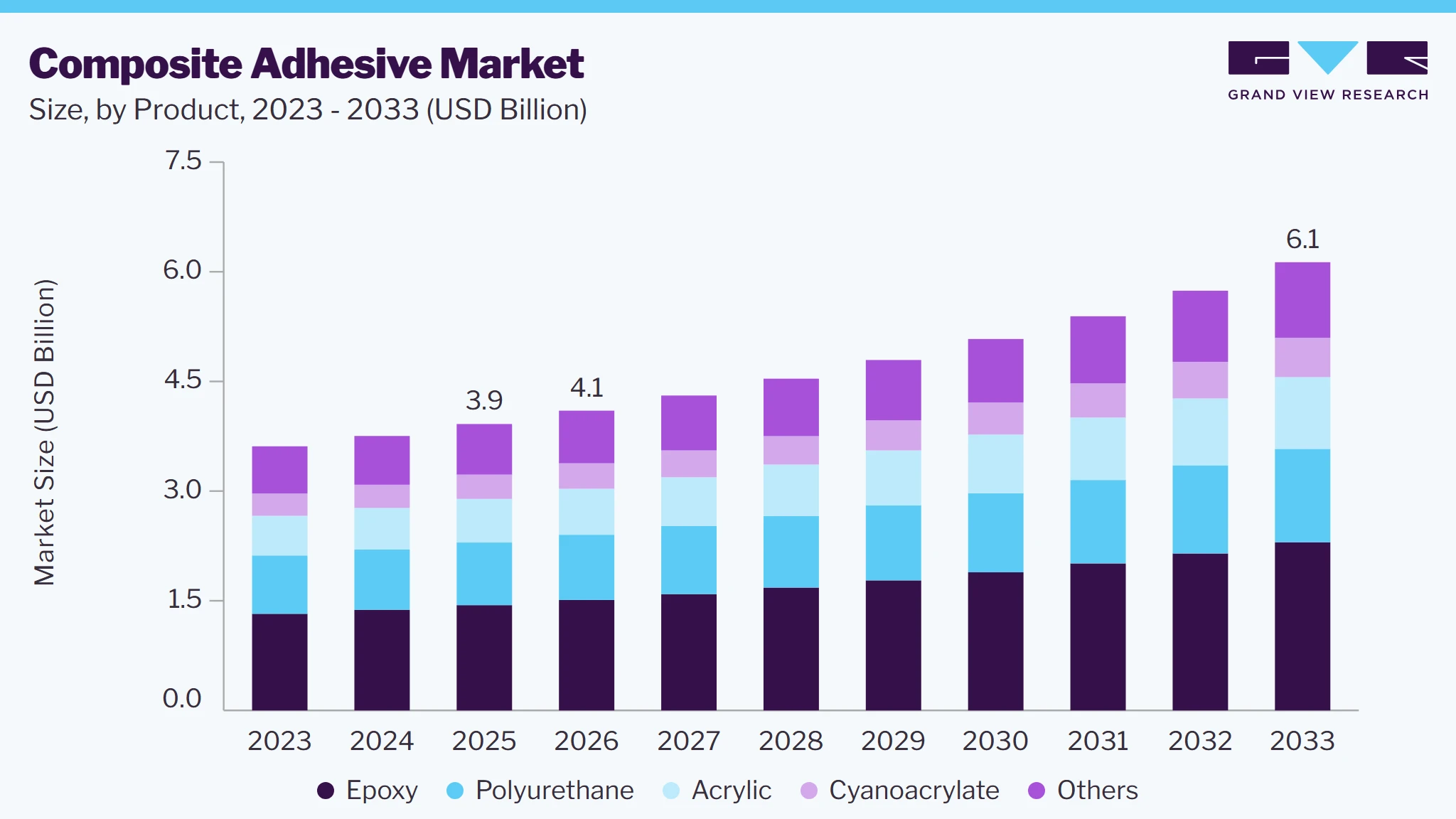
The growth in construction spending in various economies is anticipated to augment the requirement for composites. Moreover, government initiatives toward infrastructure development, such as the reintroduced Innovative Materials for America’s Growth and Infrastructure Newly Expanded (IMAGINE) Act, are propelling the incorporation of composites in construction applications. Composite adhesives are used in construction applications as they provide strong adhesion for different materials.
The building and construction sector in the Asia Pacific is largely driven by the developing countries of the region including China, India, Malaysia, and Indonesia. The growth of the construction sector in the countries is largely attributed to the continuous support schemes offered by the government. For instance, 100% of foreign direct investment in the construction industry under automatic route is permitted in business construction, malls, and shopping complexes.
Moreover, the construction industry is experiencing a significant boom, particularly in emerging economies. Rapid urbanization, population growth, and increased investment in infrastructure projects are driving the demand for construction materials. Composite adhesives are essential in meeting the requirements of these expanding construction markets.
On the other hand, the composite adhesives manufacturing process has several environmental and health impacts. Exposure to epoxy resin compound, one of the key raw materials used in the manufacturing of composite adhesives, can lead to various health problems like allergic reactions and respiratory problems from breathing vapor. Such environmental hazards can restrain market growth.
Market Dynamics
The composite adhesive market is experiencing growth and is driven by the increasing adoption of lightweight, high-performance materials across multiple industries. Rising demand for fuel-efficient vehicles and electric mobility has accelerated the use of composite components that require advanced adhesives capable of delivering structural strength, durability, and design flexibility. In the aerospace sector, manufacturers are increasingly replacing conventional fastening methods with adhesive bonding to reduce weight and improve fatigue resistance. Continuous innovations in adhesive chemistries, including low-VOC, fast-curing, and high-temperature-resistant formulations, are expanding their suitability for demanding industrial applications. However, fluctuations in the prices of petrochemical-based raw materials and the complexity of bonding dissimilar substrates can challenge market expansion. Growing investments in renewable energy infrastructure, particularly wind turbine manufacturing, along with increasing infrastructure modernization and industrial automation, are expected to create substantial opportunities for advanced composite adhesive solutions throughout the forecast period.
The growing emphasis on lightweight engineering in the automotive, aerospace, and rail industries is a primary factor driving the composite adhesive market. Manufacturers are increasingly replacing conventional metals with fiber-reinforced composites to reduce overall weight, improve fuel efficiency, and enhance structural performance. Unlike traditional mechanical fastening methods, composite adhesives provide uniform stress distribution, minimize material fatigue, and enable the bonding of dissimilar substrates without compromising structural integrity. These advantages have made adhesive bonding an integral part of modern composite assembly processes.
The accelerating production of electric vehicles and next-generation aircraft is reinforcing demand for advanced composite adhesives. As manufacturers seek to improve battery efficiency, extend vehicle range, and optimize aerodynamic performance, lightweight composite structures have become essential. High-performance adhesive technologies support complex component designs while reducing assembly time and manufacturing costs, making them indispensable in high-volume production environments. Continued investments in lightweight mobility solutions are therefore expected to sustain long-term market growth.
A key restraint in the composite adhesive market is the extensive surface preparation and controlled processing conditions required to achieve reliable and durable bonding performance. Composite materials often possess diverse surface characteristics that necessitate cleaning, abrasion, chemical treatment, or priming before adhesive application. Factors such as curing temperature, humidity, application pressure, and curing time must be carefully managed to ensure optimal bond strength. These technical requirements increase production complexity and extend manufacturing cycles, particularly in industries where precision and consistency are critical. The need for specialized equipment, skilled labor, and rigorous quality control further raises operational costs for manufacturers and end users. In high-volume production environments, any deviation in the bonding process can result in reduced joint performance, product failures, or costly rework, affecting overall manufacturing efficiency.
The rapid expansion of renewable energy projects presents a significant growth opportunity for the composite adhesive market, particularly in wind energy applications. Modern wind turbine blades are manufactured using advanced composite materials that require high-strength structural adhesives capable of withstanding continuous mechanical stress and harsh environmental conditions. As governments and private investors increase funding for renewable power generation, the demand for durable and reliable adhesive solutions is expected to grow substantially.
Manufacturers are investing in innovative adhesive formulations that support automated production processes while meeting stringent performance standards. Beyond wind energy, composite adhesives are also finding greater adoption in solar panel structures, energy storage systems, and other clean energy infrastructure, creating new avenues for product innovation and long-term revenue growth.
Analyst Perspective
The composite adhesive market is supported by increasing adoption of lightweight composite materials across automotive, aerospace, and industrial manufacturing sectors. Demand is being reinforced by the shift toward electric mobility, advanced aircraft production, and renewable energy infrastructure, where high-performance bonding solutions are essential. Product innovation focused on faster curing, improved durability, and environmentally compliant formulations is strengthening competitive differentiation. Manufacturers are also expanding production capabilities and collaborating with OEMs to address evolving application requirements. As industries prioritize lightweight design, structural integrity, and manufacturing efficiency, the market is expected to witness steady technological advancement and long-term commercial opportunities.
Product Insights
Based on product, epoxy segment accounted for the largest revenue of 36.8% of the composite adhesive market in 2025. This is attributable to their growing utilization in numerous end-use industries, especially oil & gas, owing to their ability to withstand extreme environmental conditions. For instance, 3M’s Scotch-Weld Structural Epoxy Adhesive DP940 is used for bonding both carbon fiber-carbon fiber and carbon fiber-stainless steel configurations to achieve lighter shale shaker builds. This helps in meeting the challenge of movement and crude oil presence at high temperatures.
Polyurethane adhesives exhibit superior properties such as fast curing, good abrasion & chemical resistance, and excellent bond strength on various substrates such as metals, plastics, rubber, wood, and glass. These adhesives are generally based on reactive technology. Polyurethane adhesives are produced from polymers containing urethane linkages in the molecular backbone, regardless of the chemical composition of the rest of the chain.
Acrylic adhesives are prominently used for adhesion in various rigid and semi-rigid bonding applications such as automotive and medical. They provide high-strength bonds to composites along with high peel strength. They are highly preferred in a wide range of end-use industries owing to characteristics such as fast curing time and acid & solvent resistance. These factors are expected to contribute toward the growth in their demand over the forecast period.
Application Insights
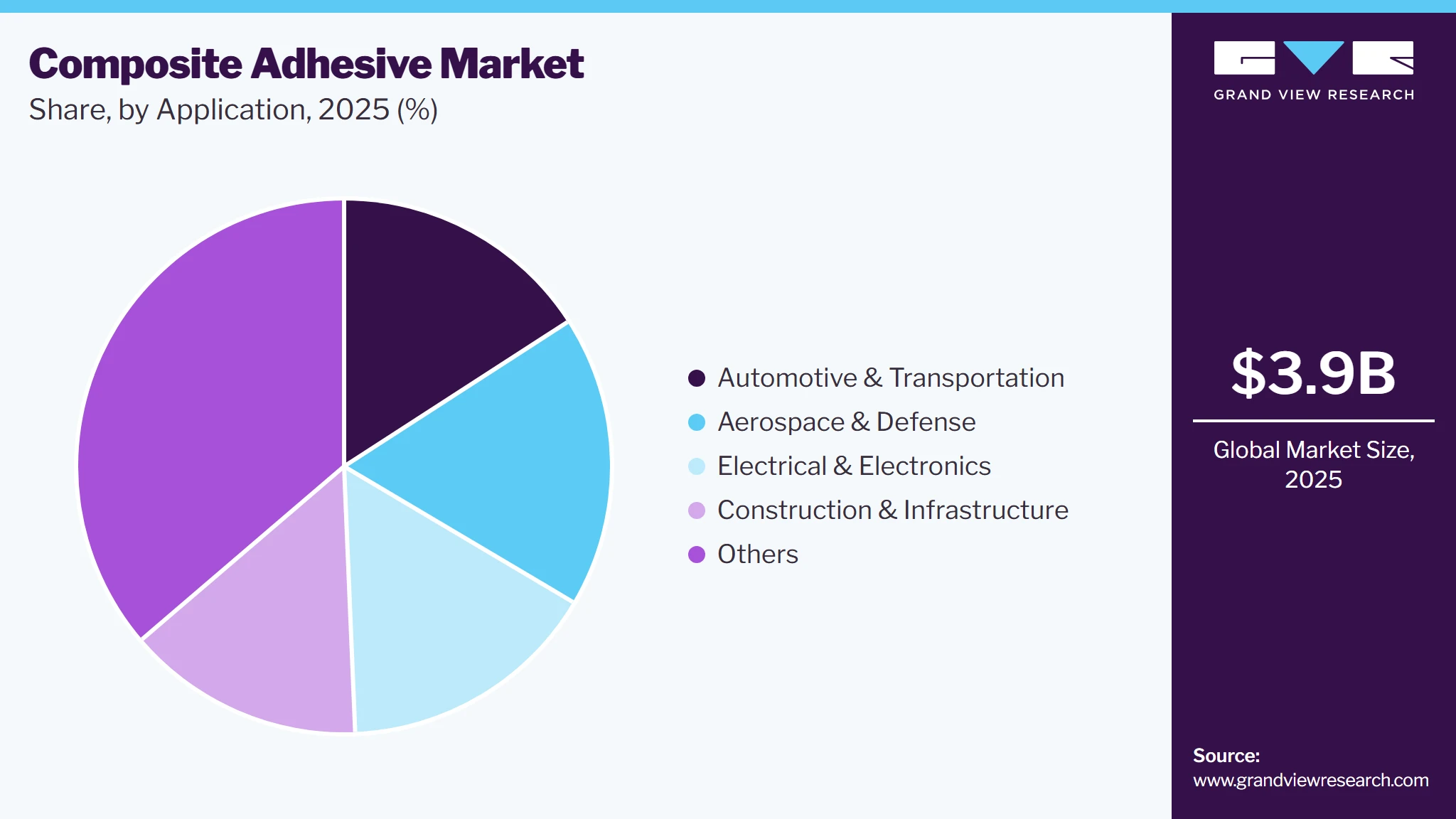
Aerospace & defense segment accounted for the largest revenue of 17.6% of the composite adhesive market in 2025, as composite adhesives are used extensively in the aerospace & defense sector owing to their ability to provide strong bonding to the composite materials. Composite materials are widely deployed in the manufacturing of aircraft and military vehicles. Increasing consumption of composite materials in various parts of the aircraft including engines, interior, windows, electrical systems, and other structures is augmenting the demand for the product in this application segment.
Automotive companies are investing in the composites industry considering the potential growth opportunities. For instance, in April 2021, Sundaram Finance Holdings Limited (SFHL), a company with investments in India-based TVS Group, entered into a strategic partnership with Italy-based Mind S.r.l. (Mind Composites). This partnership marks the entry of SFHL in the composites industry at a time when weight reduction in vehicles is becoming of prime importance. Such partnerships are anticipated to further aid the demand for composite adhesives in the automotive industry.
Composite materials have various applications in the electronics & electrical segment, including electromagnetic shielding, wearable devices, batteries, electrical switching & insulations, and sensors. Hence, the growing penetration of composite materials in this end-use segment is propelling the demand for composite adhesives for the assembling of the components. Increasing demand for electronic devices is leading to investments in new manufacturing plants by key consumer electronics manufacturers to focus on expanding their production capacities.
Regional Insights
Asia Pacific dominated the composite adhesive market with the highest revenue share of 48.5% in 2025. This is attributable to the increasing requirement for composite-based products in EVs, renewables, aerospace & defense, and construction industries from the region.
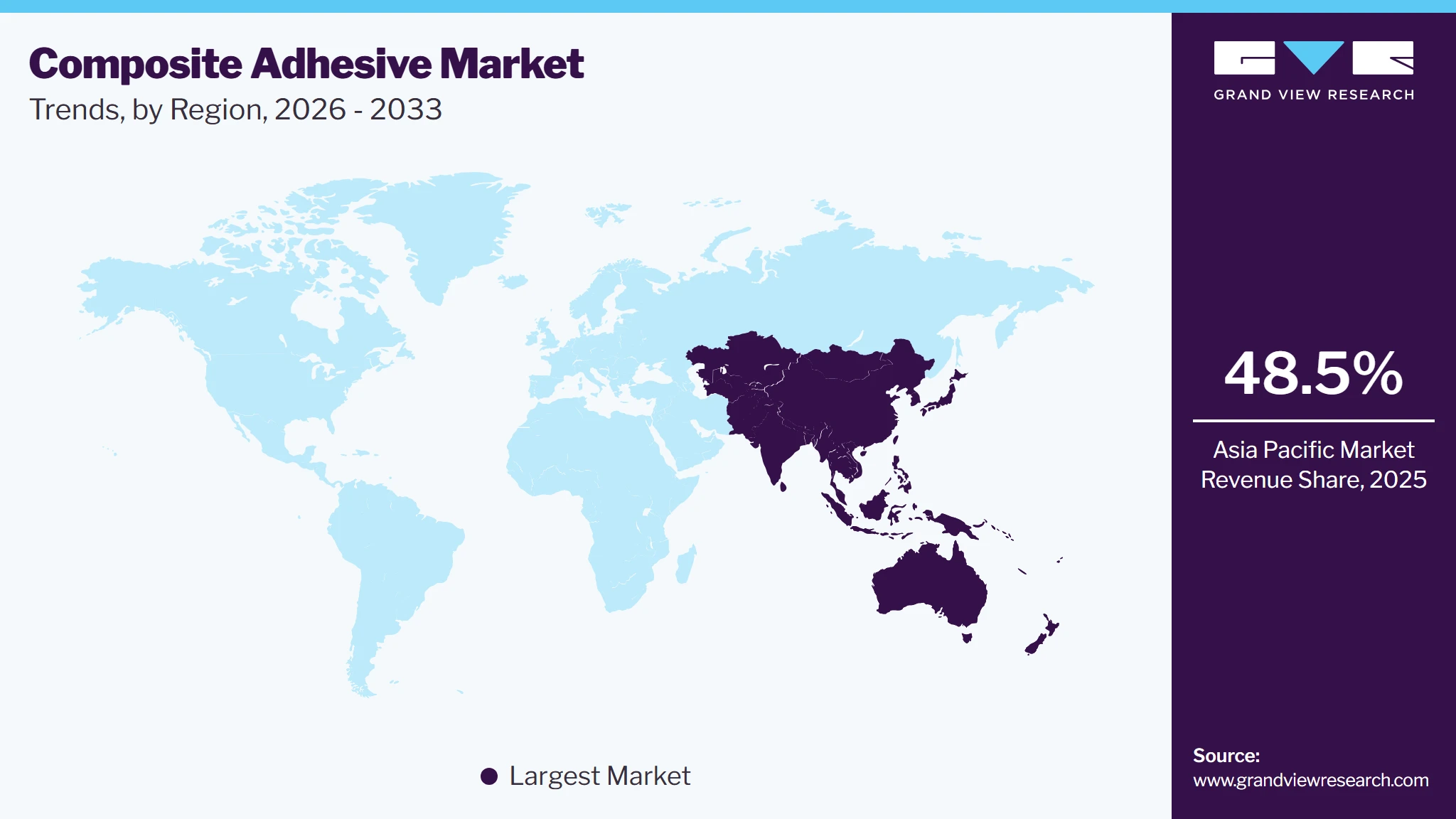
China dominated the Asia Pacific composite adhesive market with a revenue share of 51.8% in 2025.
Emphasis on lightweight materials is anticipated to augment the demand for composite materials and consequently benefit the demand for adhesives over the coming years. In February 2022, the Netherlands-based Venturi Aviation partnered with the Netherlands-based Airborne, a company engaged in offering solutions for advanced composites, for using lightweight composite structures for an all-electric commuter aircraft, Echelon 01. Such innovations are expected to propel the use of lightweight composite materials and eventually propel the demand for adhesives over the forecast period.
There have been rising investments in EVs and battery production in Canada, which is anticipated to positively influence the demand for composite adhesives in the country. For instance, in early 2022 Tesla Inc. announced plans to establish a new factory to produce battery manufacturing equipment in Markham, Canada. EV battery packs use a wide variety of adhesives in their production. Such investments are expected to propel the use of composite adhesives in North America over the forecast period.
Key Composite Adhesive Company Insights
The global composite adhesive market is highly competitive owing to the presence of various emerging and established players. In 2022, companies like DOW, Henkel AG & Co. KGaA, 3M, and Sika accounted for more than 30% of the market share in the market and demonstrated significant leadership in the market. These companies have a global geographical presence catering to a large number of industries worldwide. They also offer a wide range of Composite Adhesive which is used in various applications to their clientele across Europe, U.S., Japan, China, and other Asian countries.
In addition, these companies are also undertaking numerous strategic initiatives like expansion, merger & acquisition, partnerships, new product launches, and others. For instance, in February 2023, Henkel AG & Co. KGaA announced an agreement with the International Centre for Industrial Transformation participation program. (INCIT). The company’s adhesive technologies business section hopes to use INCIT; tools and frameworks to advance the digital transformation of its operations by joining INCIT’s partner network.
Key Composite Adhesive Companies
The following key companies have been profiled for this study on the composite adhesive market.
-
3M
-
Bostik
-
Dow
-
Henkel AG & Co. KGaA
-
H.B. Fuller
-
Huntsman International LLC.
-
Illinois Tool Works Inc.
-
Permabond LLC
-
Parker Hannifin Corp
-
Sika AG
Competitive Benchmarking
Category
Operating Strategies
Competitive Edge
Weakness
Established Players (3M, Dow, Henkel AG & Co. KGaA, H.B. Fuller, Huntsman International LLC., Illinois Tool Works Inc., Parker Hannifin Corp, Sika AG)
- Invest heavily in R&D to develop high-performance and sustainable composite adhesive technologies.
- Expand manufacturing capacity and regional production facilities to strengthen supply chain resilience.
- Pursue acquisitions and strategic partnerships to broaden product portfolios and market presence.
- Collaborate with OEMs to develop customized adhesive solutions for advanced composite applications.
- Strong global distribution networks with well-established customer relationships across multiple industries.
- Broad product portfolios catering to automotive, aerospace, electronics, construction, and industrial applications.
- Significant financial resources enabling continuous innovation and technology commercialization.
- Well-recognized brands supported by extensive technical service and regulatory expertise.
- Large organizational structures can slow product development and decision-making processes.
- High operating and manufacturing costs may reduce pricing flexibility in competitive markets.
- Greater exposure to fluctuations in global raw material and logistics costs.
- Dependence on mature industrial markets may limit growth compared with niche, high-growth segments.
Emerging Players (Bostik, Permabond LLC)
- Focus on specialized adhesive formulations targeting niche composite applications.
- Strengthen market presence through customer-centric technical support and customized product development.
- Expand distribution partnerships to increase regional penetration without major capital investments.
- Prioritize flexible manufacturing and rapid product adaptation to meet evolving customer requirements.
- Greater agility in responding to changing market trends and customer specifications.
- Ability to deliver highly customized adhesive solutions for specialized industrial needs.
- Lean organizational structures support faster innovation and shorter product development cycles.
- Strong focus on niche markets where personalized technical expertise creates differentiation.
- Limited global footprint compared to multinational competitors.
- Lower investment capacity for large-scale research, expansion, and advanced manufacturing technologies.
- Narrower product portfolios may restrict participation across diverse end-use industries.
- Greater dependence on regional distributors and a smaller customer base can affect long-term revenue stability.
Composite Adhesive Market Report Scope
Report Attribute
Details
Market size in 2025
USD 3.9 billion
Estimated market size in 2026
USD 4.1 billion
Projected market size by 2033
USD 6.1 billion
Growth rate
CAGR of 5.9% from 2026 to 2033
Base year for estimation
2025
Historical data
2021 - 2024
Forecast period
2026 - 2033
Quantitative units
Revenue in USD billion/billion, volume in kilotons, and CAGR from 2026 to 2033
Report coverage
Revenue forecast, company ranking, competitive landscape, growth factors, and trends
Segments covered
Product, application, region
Regional scope
North America; Europe; Asia Pacific; Latin America; MEA
Country scope
U.S.; Canada; Mexico; Germany; UK; France; Italy; Spain; China; India; Japan; South Korea; Brazil; Argentina; Saudi Arabia; South Africa
Key companies profiled
3M; Bostik; Dow; Henkel AG & Co. KGaA; H.B. Fuller; Huntsman International LLC.; Illinois Tool Works Inc.; Permabond LLC; Parker Hannifin Corp; Sika AG
Customization scope
Free report customization (equivalent up to 8 analysts' working days) with purchase. Addition or alteration to country, regional & segment scope.
Pricing and purchase options
Avail customized purchase options to meet your exact research needs. Explore purchase options
Global Composite Adhesive Market Report Segmentation
This report forecasts revenue growth at global, regional, and country levels and provides an analysis of the latest industry trends in each of the sub-segments from 2021 to 2033. For this study, Grand View Research has segmented the global composite adhesive market report based on product, application, and region:
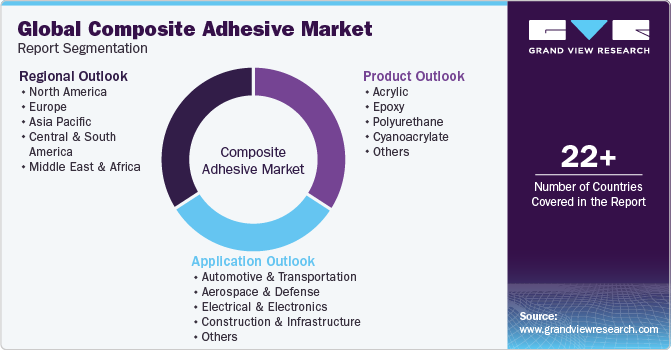
-
Product Outlook (Volume, Kilotons; Revenue, USD Million, 2021 - 2033)
-
Acrylic
-
Epoxy
-
Polyurethane
-
Cyanoacrylate
-
Others
-
-
Applications Outlook (Volume, Kilotons; Revenue, USD Million, 2021 - 2033)
-
Automotive & Transportation
-
Aerospace & Defense
-
Electrical & Electronics
-
Construction & Infrastructure
-
Others
-
-
Region Outlook (Volume, Kilotons; Revenue, USD Million, 2021 - 2033)
-
North America
-
U.S.
-
Canada
-
Mexico
-
-
Europe
-
Germany
-
UK
-
France
-
Italy
-
Spain
-
-
Asia Pacific
-
China
-
India
-
Japan
-
South Korea
-
-
Central & South America
-
Brazil
-
Argentina
-
-
Middle East & Africa
-
Saudi Arabia
-
South Africa
-
-
Research Methodology
The composite adhesive market figures in this report are based on a proven research process that combines executive interviews with secondary research from proprietary databases, company filings, and recognized regulatory and institutional sources. Market size is built through value-chain sizing - reconciling supply-side and demand-side estimates - and triangulated with bottom-up and top-down approaches. Every estimate passes multiple levels of expert validation before publication, with each composite adhesive segment quantified using the revenue-capture definitions in the table below.
Segment Definition
Segment - Product
Revenue capture definition
Acrylic
Revenue is generated from the supply of acrylic-based composite adhesives for applications requiring rapid curing, excellent environmental resistance, and strong adhesion to composite substrates. Growing utilization in transportation, electronics, and general industrial assembly supports sustained demand.
Epoxy
Market earnings are driven by the extensive use of epoxy composite adhesives in structural bonding applications that require superior mechanical strength, chemical resistance, and long-term durability. Their widespread adoption across aerospace, automotive, wind energy, and industrial manufacturing reinforces segment leadership.
Polyurethane
Sales are derived from polyurethane composite adhesives used in flexible bonding applications where impact resistance, vibration damping, and compatibility with multiple substrates are essential. Increasing deployment in electric vehicles, construction systems, and lightweight composite assemblies accelerates commercial growth.
Cyanoacrylate
Business value originates from cyanoacrylate-based composite adhesives designed for instant bonding, precision assembly, and high-speed manufacturing processes. Rising demand from electronics, medical devices, and specialty industrial applications contributes to expanding revenue streams.
Other Products
Revenue is captured through specialty adhesive technologies, including silicone, methacrylate, and hybrid formulations, developed for niche composite bonding requirements involving extreme temperatures, chemical exposure, or customized performance characteristics across diverse industrial sectors.
Segment - Application
Revenue capture definition
Automotive & Transportation
Revenue is generated through the integration of composite adhesives in vehicle body structures, battery enclosures, interior assemblies, and lightweight components that improve structural integrity, reduce vehicle weight, and enhance manufacturing efficiency.
Aerospace & Defense
Market value is created from the use of high-performance composite adhesives in aircraft structures, interior panels, defense equipment, and advanced composite assemblies requiring exceptional strength, fatigue resistance, and operational reliability under demanding conditions.
Electrical & Electronics
Income is obtained from adhesive solutions used for bonding electronic housings, circuit components, sensors, and electrical assemblies where thermal stability, electrical insulation, and miniaturization are critical performance requirements.
Construction & Infrastructure
Sales are attributed to the application of composite adhesives in structural reinforcement, bridge rehabilitation, prefabricated construction, and composite building materials that improve durability, load-bearing performance, and installation efficiency.
Other Applications
Business revenue is generated from marine, renewable energy, sporting goods, medical equipment, and industrial machinery applications where composite adhesives enable reliable bonding, weight reduction, corrosion resistance, and extended product service life.
Estimation Model
Layer Name
Key Question
Description
Fuel Additives Production Layer
What forms the supply base?
Assess the global production ecosystem for composite adhesives by evaluating the availability of epoxy resins, acrylics, polyurethanes, cyanoacrylates, curing agents, fillers, and specialty additives, along with resin synthesis capabilities, formulation technologies, manufacturing capacity, quality control standards, and regional production networks. This layer defines the industry's foundational supply infrastructure.
Application Adoption Layer
Where are composite adhesives utilized?
Evaluate the incorporation of composite adhesives across automotive & transportation, aerospace & defense, electrical & electronics, construction & infrastructure, and other industrial sectors by examining structural bonding requirements, lightweight material adoption, assembly techniques, regulatory compliance, and evolving application trends. This layer identifies the principal demand centers driving product utilization.
Consumption Intensity Layer
How much composite adhesives are consumed?
Analyze adhesive consumption by considering production volumes of composite components, adhesive usage per assembly, manufacturing throughput, replacement demand, project scale, automation levels, and sector-specific purchasing patterns across major geographic markets. This layer quantifies product utilization across key end-use industries.
Revenue Layer
How is market revenue generated?
Market revenue is generated through the sale of high-performance composite adhesive solutions to OEMs, Tier-1 suppliers, aerospace manufacturers, electronics producers, construction firms, industrial fabricators, and aftermarket distributors. Revenue growth is supported by increasing demand for lightweight structures, enhanced bonding performance, manufacturing efficiency, and durable assembly solutions across advanced industrial applications.
Delivered Customizations
This report has been delivered with the following In-depth customizations
Client Request
Customization Delivered
Value Adds
Regional Segmentation
Provides detailed country-level and regional analysis of the composite adhesive market across major geographic regions, evaluating manufacturing capacity, end-use industry demand, regulatory standards, raw material availability, technological adoption, and supply chain dynamics. The study highlights region-specific growth prospects, investment trends, and competitive developments to support market expansion strategies.
Enables identification of high-growth countries and emerging regional opportunities by assessing industrial demand, regulatory landscapes, and production ecosystems. Supports market entry planning, capacity expansion, and strategic resource allocation with comprehensive geographic insights.
Competitive Benchmarking
Delivers comparative benchmarking of leading composite adhesive manufacturers based on product portfolio breadth, production capabilities, technology innovation, research and development investments, distribution reach, strategic partnerships, mergers and acquisitions, and global market presence. The assessment also evaluates competitive positioning and product differentiation across key end-use industries.
Assists stakeholders in assessing competitive intensity, identifying technology leadership, and recognizing market differentiation strategies. Supports partnership evaluation, portfolio optimization, and long-term competitive planning through actionable industry intelligence.
Opportunity Assessment
Provides a comprehensive evaluation of emerging growth opportunities arising from lightweight vehicle production, electric mobility, aerospace modernization, renewable energy infrastructure, advanced composite manufacturing, and sustainable adhesive technologies. The analysis also examines the commercial potential of bio-based formulations, automation-driven manufacturing, and evolving performance requirements across industrial applications.
Helps identify attractive investment opportunities, high-growth application areas, and innovation priorities aligned with evolving industry trends. Supports strategic decision-making by highlighting future demand drivers, technology advancements, and expansion opportunities across global markets.
Frequently Asked Questions About This Report
Some of the key players operating in the composite adhesive market are 3M; Bostik; Dow; Henkel AG & Co. KGaA; H.B. Fuller; Huntsman International LLC.; Illinois Tool Works Inc.; Permabond LLC; Parker Hannifin Corp; Sika AG.
Aerospace & defense segment accounted for the largest revenue of 17.6% of the composite adhesive market in 2025. The segment's leadership is supported by the growing use of advanced composite materials in aircraft structures, where high-performance adhesives provide superior strength, fatigue resistance, and weight reduction compared to conventional fastening methods.
Asia Pacific dominated the composite adhesive market with the highest revenue share of 48.5% in 2025. The region's leadership is supported by its strong automotive and electronics manufacturing base, expanding aerospace production, and increasing investments in lightweight composite applications across major economies such as China, Japan, South Korea, and India.
Acrylic is the fastest growing product segment with a CAGR of 6.6% in the forecast period. Its rapid growth is supported by increasing demand for fast-curing, weather-resistant, and versatile bonding solutions in automotive, construction, and electrical & electronics applications, where efficient assembly and durable performance are essential.
Aerospace & defense is the fastest growing application segment with a CAGR of 6.6% in the forecast period. Increasing investments in next-generation aircraft, defense modernization programs, and the growing use of advanced composite structures for weight reduction and fuel efficiency are accelerating demand for high-performance composite adhesives in this segment.
The composite adhesive market is driven by the increasing adoption of lightweight composite materials in the automotive, aerospace, and transportation industries to improve fuel efficiency and structural performance. Rising demand for electric vehicles, expanding renewable energy installations, and continuous advancements in high-strength, fast-curing, and environmentally compliant adhesive technologies are further supporting market growth.
The global composite adhesive market size was valued at USD 3.9 billion in 2025 and is estimated at USD 4.1 billion in 2026.
The global composite adhesive market is expected to grow at a CAGR of 5.9% from 2026 to 2033, reaching USD 6.1 billion by 2033.
Based on product, epoxy segment accounted for the largest revenue of 36.8% of the composite adhesive market in 2025. Its market leadership is supported by superior mechanical strength, excellent chemical resistance, and widespread adoption in structural bonding applications across the automotive, aerospace, wind energy, and industrial manufacturing sectors.
About the Author(s)
Plastics, Polymers & Resins Research Team
Bulk Chemicals · Plastics, Polymers & ResinsThis report was authored by the plastics, polymers & resins research team at Grand View Research - comprising two research analysts, one senior research analyst, and one industry expert - with specialized expertise in the plastics, polymers & resins segment of the bulk chemicals industry. All findings are based on proprietary bulk chemicals databases, executive interviews, and regulatory analysis, subject to internal peer review prior to publication.
Last Updated:
Speak to Analyst


Customize this report to your needs — add regions, segments, or data points, with 20% free customization.
Or view our licence options:


ISO 9001:2015 & 27001:2022 Certified
We are GDPR and CCPA compliant! Your transaction & personal information is safe and secure. For more details, please read our privacy policy.


