
- Home
- »
- Automotive & Transportation
- »
-
Connected Ship Market Size And Share Report, 2026-2033GVR Report cover
![Connected Ship Market (2026 - 2033)Report]()
Connected Ship Market (2026 - 2033)
Size, Share & Trends Analysis Report By Ship (Commercial, Defense), By Installation (Onboard, Onshore), By Application (Vessel Traffic Management, Fleet Operations), By Region, And Segment Forecasts
Market Size, 2025
$8.1BMarket Estimate, 2026
$8.6BMarket Forecast, 2033
$14.2BCAGR, 2026–2033
7.4%Connected Ship Market Size & Trends
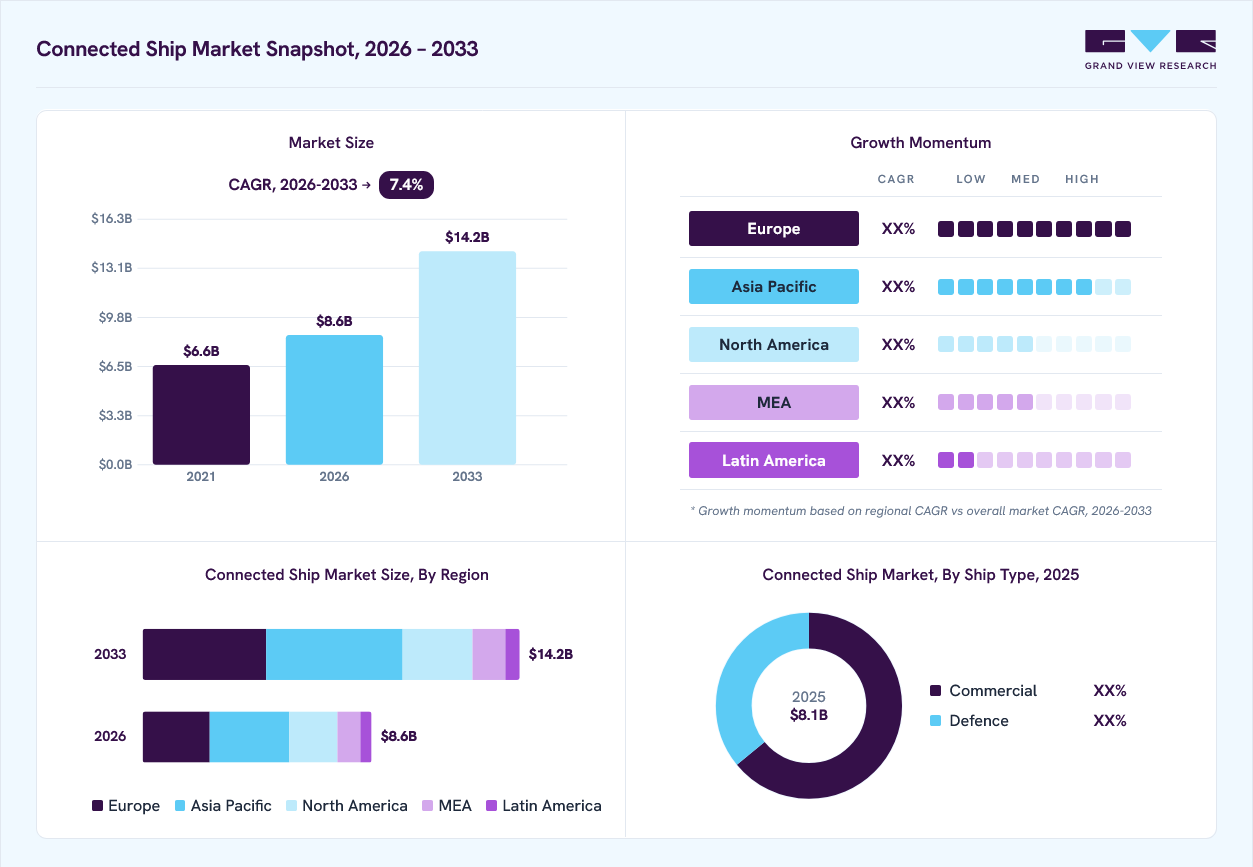
The global connected ship market size was valued at USD 8.1 billion in 2025 and is projected to grow from USD 8.6 billion in 2026 to USD 14.2 billion by 2033, at a CAGR of 7.4% from 2026 to 2033. The market in Asia Pacific dominated with a revenue share of 34.5% in 2025. Operators in the maritime sector are looking to continuously improve their functioning and enable data-driven decision-making, which has led to the rapid adoption of connected ship technology.
Key Market Trends & Insights
- By ship: Commercial segment held the largest market share of 64.0% in 2025.
- By installation: Onboard segment held the largest market share of 61.0% in 2025.
- By application: Vessel traffic management segment held the largest market share of 44.0% in 2025.
Regional Highlights
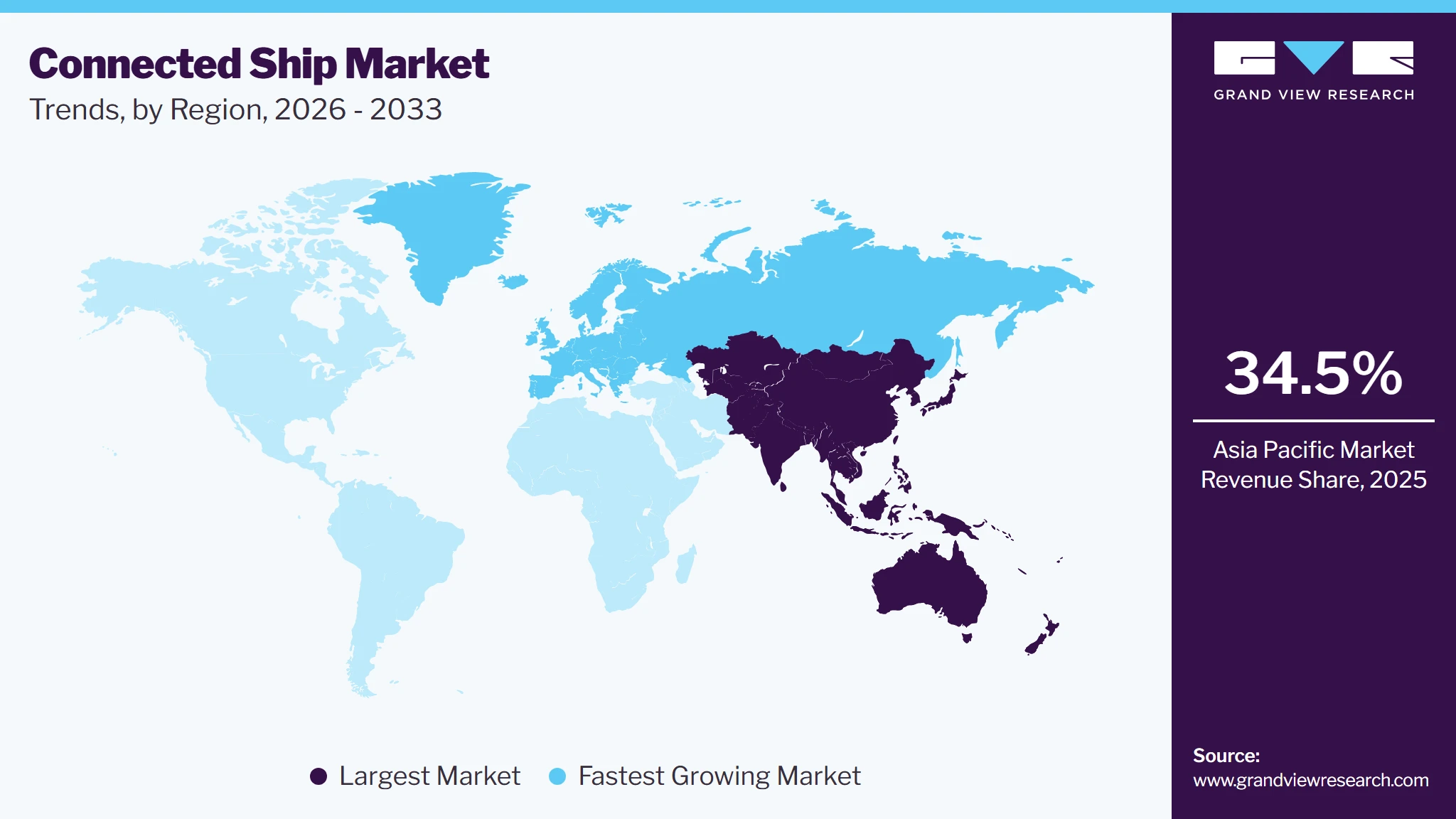
- Largest regional market: Asia Pacific (34.5% revenue share, 2025)
- Fastest-growing regional market: Europe (highest CAGR, 2026-2033)
- By country: China held the largest market share in 2025.
Market Size & Forecast
- Market size in 2025: USD 8.1 Billion
- Estimated market size in 2026: USD 8.6 Billion
- Projected market size by 2033: USD 14.2 Billion
- CAGR (2026-2033): 7.4%
The significance of connected ships lies in their ability to integrate advanced digital technologies that can help boost operational efficiency, safety, environmental sustainability, and cost-effectiveness. They are equipped with Internet of Things (IoT) sensors, communication systems, and data analytics systems that allow for the real-time monitoring and remote control of vessels. The shipping industry has increasingly embraced digital technologies to streamline operations in recent years. The extensive use of solutions that capture data related to vessel performance, navigation, fuel consumption, cargo management, and crew well-being has become a leading factor for market expansion. Furthermore, the rising frequency of traffic congestions at major canals and the need for efficient port traffic management are anticipated to fuel the growth of the connected ship industry in the coming years. For instance, connected ships can communicate their estimated time of arrival (ETA) and other relevant information, such as cargo details or special requirements, directly to port authorities and terminal operators. This helps authorities anticipate arrivals and better allocate resources such as docking spaces and tugboats, substantially reducing delays and wait times. Moreover, the provision of updates enables them to dynamically adjust berth assignments. Ships can be directed to the most suitable berth based on cargo, vessel size, and expected departure times, thus minimizing waiting times and optimizing the use of available docking spaces.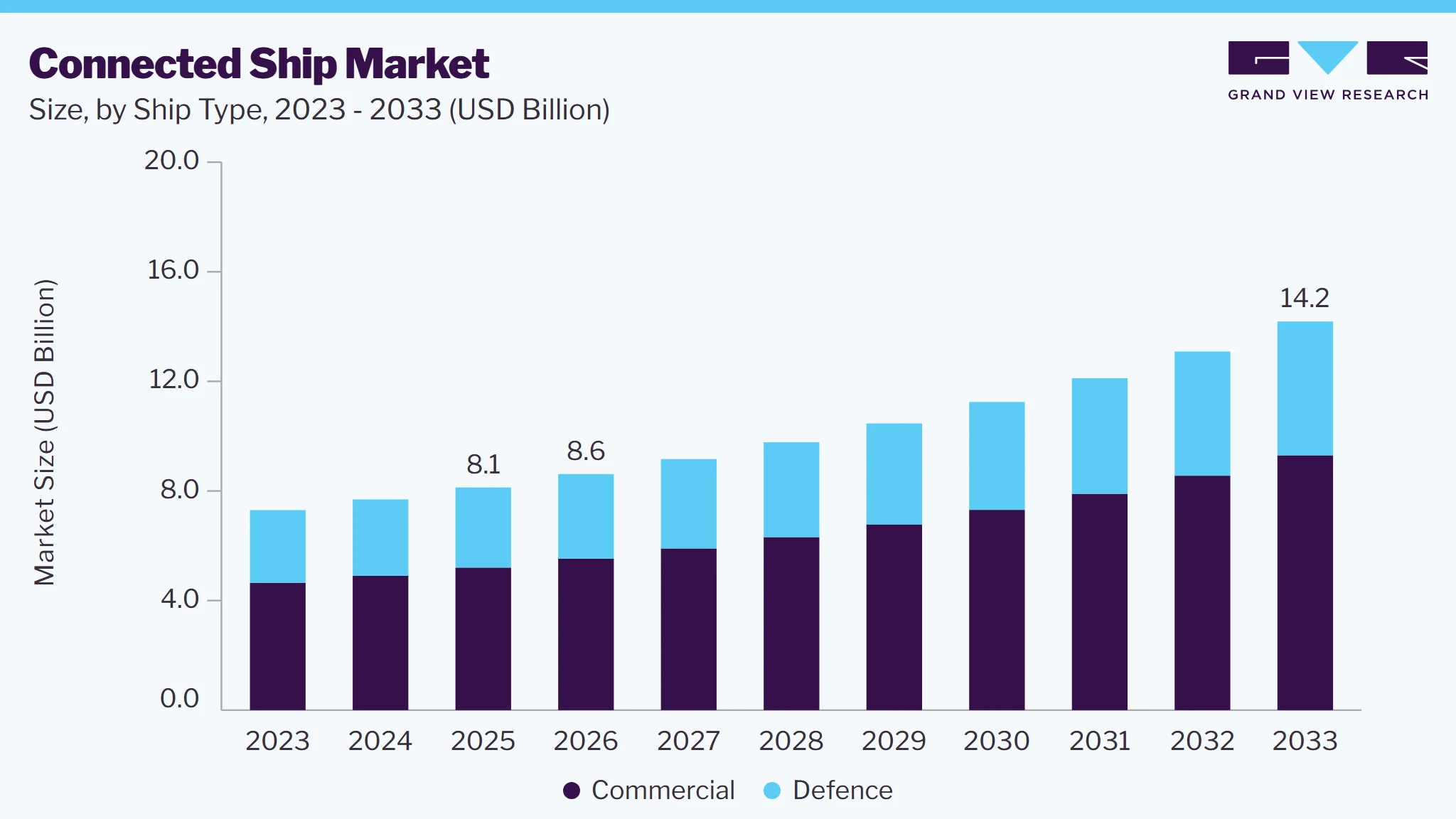
The connected ship industry is rapidly evolving, with various projects and initiatives aiming to enhance maritime operations' safety, efficiency, sustainability, and automation. These projects span from pilot programs and research initiatives to large-scale deployments by shipping companies, port operators, and technology providers. For instance, the Connected Ship project funded by Nordic Innovation aims to showcase a digitalization platform deployed on a ship. This platform leverages solutions and technologies from various smart city projects in combination with control systems from the maritime industry, as well as communication protocols and environmental prerequisites. The project is expected to prepare ships for future interactions with trucks, harbors, passengers, cargo, and other smart micro-systems. The platform horizontally collects and controls non-critical data, handles data access policies, and enables AI, data analytics, and automation to connect and receive access to data and devices. Such functions are expected to support energy efficiency, predictive maintenance, and cybersecurity objectives.
Market Dynamics
The connected ship market is shaped by the maritime industry’s accelerating digital transformation, driven by operational optimization mandates, regulatory compliance requirements, and advances in satellite connectivity, IoT, and maritime analytics. Shipping operators across commercial and defense segments are increasingly integrating onboard and onshore digital platforms to improve situational awareness, asset utilization, and lifecycle management. The market is moving toward data-centric vessel operations, where real-time connectivity, predictive intelligence, and integrated fleet ecosystems are becoming core operational enablers rather than optional enhancements.
Maritime operators face persistent challenges related to fuel efficiency, crew productivity, unplanned downtime, and compliance-driven operating costs. Volatile fuel prices, tightening emission norms, and pressure to improve vessel turnaround times have intensified the need for granular operational visibility across fleets. Traditional ship management practices, characterized by siloed data and manual reporting, limit the ability of operators to respond proactively to operational inefficiencies and performance deviations.
Connected ship solutions address this driver by enabling continuous data capture from vessel systems, engines, navigation equipment, and auxiliary assets. Advanced analytics platforms convert this data into actionable insights for route optimization, fuel consumption management, and predictive maintenance. As a result, operators achieve measurable reductions in operating expenditure, improved asset availability, and enhanced decision-making, directly accelerating the adoption of connected ship technologies across commercial shipping and offshore segments.
The adoption of connected ship solutions requires substantial upfront investments in onboard hardware, satellite communication infrastructure, cybersecurity systems, and software platforms. Additionally, integration with legacy vessel systems and heterogeneous fleet architectures increases implementation complexity. For smaller fleet operators and older vessels, the return-on-investment timeline can appear uncertain, slowing decision-making and deployment cycles.
This restraint has a disproportionate impact on small and mid-sized commercial fleets, particularly in emerging maritime regions where capital allocation is constrained. Retrofit-heavy segments, such as bulk carriers and general cargo vessels, are more affected than newly built vessels equipped with digitally ready architectures. As a result, market growth is moderated in price-sensitive geographies, while adoption remains concentrated among large shipping companies, defense fleets, and technologically advanced maritime hubs.
The increasing availability of high-bandwidth maritime connectivity and cloud-native analytics platforms is enabling a shift from reactive to predictive vessel operations. Regulatory mandates related to emissions monitoring, safety reporting, and vessel performance transparency are further reinforcing demand for integrated digital fleet solutions. These factors collectively create a strong opportunity for advanced fleet health monitoring and data-driven operational intelligence.
Vendors offering scalable analytics, AI-driven diagnostics, and integrated onboard and onshore platforms are well positioned to capture this opportunity. Solution providers serving commercial fleets, offshore support vessels, and defense applications benefit from long-term service contracts and recurring software revenues. Segments focused on fleet health operations and performance optimization are expected to deliver higher value realization, supporting sustained expansion of the connected ship market.
Analyst Perspective
The connected ship market is transitioning from foundational connectivity deployments toward advanced analytics-driven fleet intelligence. Efficiency optimization, regulatory compliance, and asset lifecycle management continue to anchor demand across commercial and defense segments. Technology trends such as AI-based diagnostics, cloud-native maritime platforms, and integrated onboard-onshore ecosystems are reshaping competitive differentiation. Investment activity is increasingly directed toward scalable software platforms and long-term service models. Strategic partnerships between connectivity providers, OEMs, and analytics specialists are expected to intensify, reinforcing ecosystem-based competition.
Ship Insights
Based on ship, the commercial segment led the market with the largest revenue share of 64.0% in 2025, aided by the increasing presence of commercial fleets worldwide. Increasing trade activities between major economies have created a significant demand for using connected technologies that can reduce travel times by selecting the shortest route to a destination depending on parameters such as traffic congestion and port availability. Customers increasingly expect real-time visibility into the status of their shipments. Connected ships, with their integrated tracking and monitoring capabilities, allow shipping companies to offer customers updates regarding cargo location, condition, and expected delivery times, thus enhancing service quality and customer satisfaction.
The defense segment is anticipated to grow at a steady CAGR during the forecast period in the connected ship industry. With naval bases across several countries looking to modernize their operations and strengthen their strategic positioning, connected technologies have emerged as a highly effective solution. Their extensive use is reshaping how naval forces operate, enhancing their capabilities across a range of areas such as situational awareness, autonomous operations, maintenance and logistics, command & control, and cybersecurity. Connected ships are facilitating the deployment of unmanned combat systems, which can perform reconnaissance, surveillance, anti-submarine warfare (ASW), and even strike missions without risking crew members' lives. These systems can be controlled remotely and share real-time information with other military assets. Such advantages are expected to aid segment expansion.
Installation Insights
Based on installation, the onboard segment led the market with the largest revenue share of 61.0% in 2025. The presence of connected technologies such as IoT sensors, advanced communication systems, and AI-based analytics enables instantaneous data collection and decision-making, improving the vessel’s overall performance while reducing costs and environmental impacts. Advanced onboard systems can autonomously adjust the ship’s course based on real-time data, using AI-driven algorithms for collision avoidance, route optimization, and weather condition assessment. The availability of onboard systems further enables the continuous monitoring of machinery and systems for early signs of wear and tear, reducing the risk of breakdowns and improving overall operational uptime.
The onshore segment is anticipated to grow at a significant CAGR from 2026 to 2033 in the global market. Onshore technologies involve fleet management systems, port operations, command centers, and other land-based infrastructure that monitor, manage, and interact with ships during their voyages and at port. These technologies are crucial for coordinating and optimizing the overall logistics network that supports the vessel’s journey, enhancing operational efficiencies, and providing critical decision-making support to shore-based operators. Onshore connected systems can offer route planning tools and dynamic routing suggestions to optimize voyage times and reduce fuel consumption based on weather conditions, port traffic, and other relevant factors. Additionally, authorities and regulatory bodies can access real-time data from ships to ensure compliance with environmental standards. This includes verification of emissions data, fuel usage, and ballast water treatment status.
Application Insights
Based on application, the vessel traffic management segment led the market with the largest revenue share of 44.0% in 2025 and is further expected to grow at the fastest CAGR during the forecast period. Vessel traffic management (VTM) involves the management of vessel movements in port areas, shipping lanes, and coastal regions to ensure safe, efficient, and environmentally sustainable maritime traffic. With the integration of connected technologies, this function has become more data-driven and automated, resulting in improved safety, reduced congestion, optimized operations, and enhanced communication between vessels and port authorities. An Automatic Identification System (AIS) is one of the most widely used technologies for real-time vessel tracking. Ships are equipped with AIS transponders that broadcast their position, speed, heading, and other data to nearby vessels and shore-based authorities. Their continuous tracking allows vessel traffic managers to monitor vessels across a region, improving situational awareness and preventing collisions.
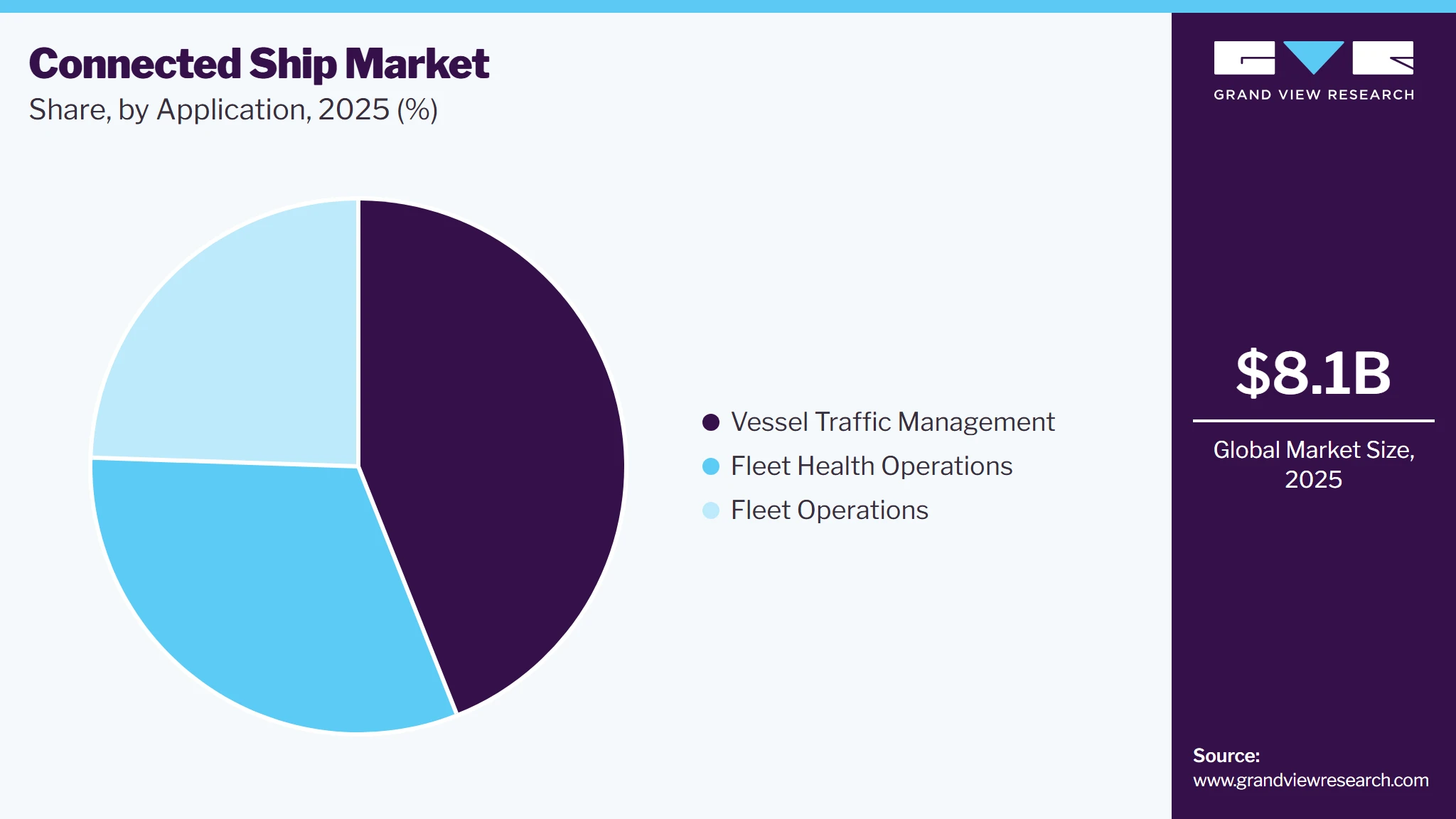
The fleet operations segment is anticipated to advance at a significant CAGR from 2026 to 2033. Fleet operations involve travel route decisions, trade information management, and asset protection and inspection tasks. A large number of systems can be simultaneously monitored to prevent any misalignments with planned schedules. The adoption of a centralized system enables convenience in control over every operation, which aids segment demand. Connective technologies can provide insights into a vessel’s fuel efficiency by monitoring fuel consumption in real-time. Operators can adjust routes, vessel speed, or operational procedures to minimize fuel usage, lowering operational costs and reducing the environmental footprint. Connected technologies further provide remote monitoring of onboard systems, allowing shore-based teams to assist the crew with troubleshooting and maintenance issues. Additionally, crew performance data can be gathered and analyzed for improved training and support.
Regional Insights
Asia Pacific dominated the global connected ship market with the largest revenue share of 34.5% in 2025. Shipping companies in the region are increasingly looking to reduce operating costs, including fuel consumption, maintenance costs, and labor. Connected ships, with real-time data and analytics, can optimize fuel use, improve routing, and reduce delays. Moreover, governments and private organizations in the Asia Pacific have been investing substantially in upgrading port infrastructure to support digital transformation. Countries such as China, India, Japan, and Australia offer significant potential for the development of such ports. These smart ports create an ecosystem where connected ships can easily integrate with port systems for smoother operations, reducing bottlenecks and improving logistics efficiency.
China Connected Ship Market Trends
The connected ship market in the China held the largest share in the Asia Pacific region in 2025. The government and private sectors in the economy are investing heavily in digital transformation. State-owned and private shipping companies are increasingly integrating connected technologies into their fleets. These investments are enabling the growth of smart shipping technologies and have transformed China into a leader in connected vessels in this region. Moreover, China’s maritime sector is heavily involved in global trade activities, with major shipping routes connecting China to the rest of the world. According to the ‘One Hundred Ports 2024’ report by Lloyd’s List, the country’s container volume share at the 100 biggest global seaports grew from 40.2% in 2022 to 41.3% in 2023. Thus, the significant movement of vessels across international waters has made connected ships a vital part of enhancing the visibility and reliability of global supply chains.
Europe Connected Ship Market Trends
Europe is expected to advance at the highest CAGR from 2026 to 2033 in the connected ships market. The increasing demand for connected ships in this region is driven by a combination of regulatory, technological, economic, and environmental factors that align with the region’s broader goals of sustainability, efficiency, and innovation in the maritime sector. Europe has some of the most stringent environmental regulations, including those set by the European Union (EU) and other bodies such as the International Maritime Organization (IMO). The EU’s Green Deal and the IMO’s push for carbon emission reductions are significant drivers aiding the adoption of connected technologies in ships and other vessels. Moreover, organizations such as the European Maritime Safety Agency (EMSA) and the Baltic and International Maritime Council (BIMCO) encourage industry-wide cooperation in adopting new technologies and creating common standards for connected vessels. These standards streamline the implementation of connected ship technologies, making it easier for operators to integrate them across fleets and regions.
Germany accounted for the largest revenue share in the European market for connected ships in 2025 and is further expected to maintain its position during the forecast period. Germany is home to major ports such as Hamburg, Bremerhaven, and Wilhelmshaven, which are investing significantly in transforming into “smart ports.” Smart ports involve the comprehensive use of automation, IoT, and AI technologies to streamline logistics, improve cargo handling, and increase port efficiency. In October 2024, the German government launched the National Action Plan for Climate-Friendly Shipping to boost investments and accelerate the German industry’s maritime energy transition. Such initiatives are expected to expand the deployment of connected solutions that can conduct real-time monitoring of fuel consumption, emissions, and compliance with environmental regulations in the maritime sector.
North America Connected Ship Market Trends
The U.S. accounted for a dominant revenue share in the regional market in 2025 on account of factors including regulatory requirements, sustainability initiatives, technological advancements, and industry requirements for operational efficiency. Companies in regional economies such as the U.S. and Canada are increasingly adopting smart shipping technologies that integrate sensors, IoT devices, and data analytics platforms, helping fleets become more efficient and adaptable. Furthermore, the high traffic levels on major trade routes such as the East Coast and the Gulf of Mexico have prioritized safety in North America’s maritime industry, resulting in the increased deployment of connected systems on vessels. For instance, collision avoidance systems, real-time weather data, and remote diagnostics features allow operators to avoid accidents and minimize human error risks. These factors are expected to create positive growth avenues for market players operating in this region.
The U.S. accounted for a dominant revenue share in the regional market in 2024 on account of factors including regulatory requirements, sustainability initiatives, technological advancements, and industry requirements for operational efficiency. The U.S. Coast Guard enforces various safety regulations, including the Vessel Incidental Discharge Act (VIDA) and the Ballast Water Management Program. Connected ships can monitor water discharge, ballast water treatment systems, and other environmental parameters to ensure compliance with these regulations. Moreover, several major ports on both the East and West coasts, such as Los Angeles, Seattle, Houston, and New York/New Jersey, have aided market expansion, as these ports are transforming into smart ports. Connected ships are essential for the seamless integration of vessels with these smart port systems, enabling automated docking and port operations, optimized scheduling and logistics, and real-time cargo tracking.
Key Connected Ship Company Insights
Some of the major companies involved in the global connected ship industry include Sperry Marine, Wärtsilä, and Danelec Marine A/S, among others.
-
Sperry Marine, part of the Northrop Grumman Corporation, is a global supplier of navigation, communication, information, and automation systems for commercial marine and naval markets. The company is known for its connected ship solution, which serves both commercial and defense segments under VisionMaster Integrated Bridge System (IBS) and Defence Integrated Bridge System, respectively. The company has an extensive international presence, catering to clients in Asia, Europe, and the Americas.
-
Wärtsilä is a Finland-based company that specializes in manufacturing and servicing power sources and equipment for the marine and energy markets. Under the marine segment, the company offers solutions for different application areas, including passenger vessels (cruise ships and ferries), offshore vessels, special-purpose vessels, and merchant vessels (carriers, bulkers, and tankers). Wärtsilä launched its ‘Smart Marine Ecosystem’ initiative to drive digital transformation in the shipping industry. The project integrates a number of connected technologies, including IoT, data analytics, and AI, to enhance vessel performance, optimize operations, and improve fleet management.
Key Connected Ship Companies
The following key companies have been profiled for this study on the connected ship market.
-
Schneider Electric
-
Sperry Marine B.V.
-
YALTES Electronic and Information Systems Production and Trade Inc.
-
Wärtsilä
-
Kongsberg Maritime
-
Danelec Marine A/S
-
Anglo-Eastern
-
Rockwell Automation
-
Marlink B.V.
-
HD Hyundai Heavy Industries Co., Ltd.
Competitive Benchmarking
Category
Operating Strategies
Competitive Edge
Weakness
Established Players (Wärtsilä, Kongsberg Maritime, Schneider Electric, Rockwell Automation)
- These players are focused on integrated digital ecosystems, lifecycle services, and long-term fleet partnerships. Emphasis on analytics, automation, and energy optimization.
- These players have strong installed base, global service networks, and deep engineering capabilities.
- High solution costs and longer deployment cycles for smaller operators.
Emerging Players (Marlink B.V., Danelec Marine A/S, Sperry Marine B.V.)
- These players are focused on agile deployment models, connectivity-led platforms, and modular analytics offerings. Focus on niche applications and retrofit markets.
- These players have faster implementation, specialized maritime expertise, and competitive pricing.
- Limited portfolio breadth and dependence on partnerships for full-stack solutions.
Recent Developments
-
In December 2024, Marlink announced that it would provide Thoresen Shipping’s fleet with its Sealink NextGen solution, aiding Thoresen Shipping in its digitalization initiatives. As part of the agreement, 24 vessels would be integrated with VSAT and Starlink LEO services, aiding Thoresen Shipping in optimizing its operations and improving customer support via enhanced network security and application performance.
-
In May 2024, Danelec and DanPilot, a Denmark-based piloting organization, announced the development of an innovative remote piloting solution at the European Maritime Day conference. The new technology involves the integration of navigation and operational solutions, enabling operators to pilot the ship safely without requiring their onboard presence. This is expected to improve safety and optimize logistics while lowering environmental impact. Moreover, ships can maintain a planned speed that would reduce fuel costs and meet scheduled ETD (estimated time of departure) and ETA (estimated time of arrival).
Connected Ship Market Report Scope
Report Attribute
Details
Market size in 2025
USD 8.1 billion
Estimated market size in 2026
USD 8.6 billion
Projected market size by 2033
USD 14.2 billion
Growth rate
CAGR of 7.4% from 2026 to 2033
Base year for estimation
2025
Historical data
2021 - 2024
Forecast period
2026 - 2033
Quantitative units
Revenue in USD billion and CAGR from 2026 to 2033
Report coverage
Revenue forecast, company market share, competitive landscape, growth factors, and trends
Segments covered
Ship, installation, application, region
Regional scope
North America; Europe; Asia Pacific; Central & South America; MEA
Country scope
U.S.; Canada; Mexico; Germany; U.K.; France; China; Japan; India; South Korea; Australia; Brazil; Saudi Arabia; UAE; and South Africa
Key companies profiled
Schneider Electric; Sperry Marine B.V.; YALTES Electronic and Information Systems Production and Trade Inc.; Wärtsilä; Kongsberg Maritime; Danelec Marine A/S; Anglo-Eastern; Rockwell Automation; Marlink B.V.; HD Hyundai Heavy Industries Co., Ltd.
Customization scope
Free report customization (equivalent up to 8 analysts' working days) with purchase. Addition or alteration to country, regional & segment scope.
Pricing and purchase options
Avail customized purchase options to meet your exact research needs. Explore purchase options
Global Connected Ship Market Report Segmentation
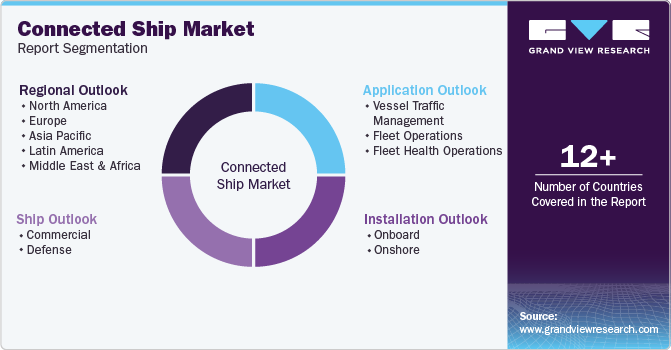
This report forecasts revenue growth at the global, regional, and country levels and provides an analysis of the latest industry trends in each of the sub-segments from 2021 to 2033. For this study, Grand View Research has segmented the global connected ship market report based on ship, installation, application, and region:
-
Ship Outlook (Revenue, USD Million, 2021 - 2033)
-
Commercial
-
Defense
-
-
Installation Outlook (Revenue, USD Million, 2021 - 2033)
-
Onboard
-
Onshore
-
-
Application Outlook (Revenue, USD Million, 2021 - 2033)
-
Vessel Traffic Management
-
Fleet Operations
-
Fleet Health Operations
-
-
Regional Outlook (Revenue, USD Million, 2021 - 2033)
-
North America
-
U.S.
-
Canada
-
Mexico
-
-
Europe
-
Germany
-
U.K.
-
France
-
-
Asia Pacific
-
China
-
India
-
Japan
-
South Korea
-
Australia
-
-
Latin America
-
Brazil
-
-
MEA
-
Saudi Arabia
-
UAE
-
South Africa
-
-
Research Methodology
The connected ship market figures in this report are based on a proven research process that combines executive interviews with secondary research from proprietary databases, company filings, and recognized regulatory and institutional sources. Market size is built through value-chain sizing - reconciling supply-side and demand-side estimates - and triangulated with bottom-up and top-down approaches. Every estimate passes multiple levels of expert validation before publication, with each connected ship segment quantified using the revenue-capture definitions in the table below.
Segment Definition
Segment - Ship
Revenue capture definition
Commercial
Revenue generated from connected ship hardware, software licenses, data analytics platforms, satellite connectivity services, system integration, and long-term digital service contracts deployed across merchant vessels, tankers, container ships, bulk carriers, and offshore commercial fleets.
Defense
Revenue derived from secure communication systems, naval fleet management platforms, situational awareness solutions, cybersecurity services, and mission-critical analytics deployed on naval vessels, patrol ships, submarines, and defense support fleets.
Segment - Installation
Revenue capture definition
Onboard
Digital systems, sensors, communication equipment, and analytics hardware are installed directly on vessels to collect, process, and transmit operational and navigational data in real time.
Onshore
Shore-based platforms and command centers that aggregate vessel data, enable fleet-wide analytics, support decision-making, and facilitate regulatory reporting and operational coordination.
Segment - Application
Revenue capture definition
Vessel Traffic Management
Solutions supporting real-time vessel tracking, collision avoidance, port coordination, and navigational safety through integrated data visualization and communication systems.
Fleet Operations
Platforms focused on route planning, fuel optimization, voyage performance analysis, and operational coordination across multiple vessels.
Fleet Health Operations
Predictive maintenance, asset health monitoring, condition-based diagnostics, and lifecycle management systems aim to reduce downtime and maintenance costs.
Estimation Model
Layer Name
Key Question
Description
Vessel Base Assessment
How many vessels are addressable for connected ship solutions?
This layer evaluates the global commercial and defense vessel population, segmented by vessel type, age, and operational profile. It identifies digitally addressable vessels based on retrofit feasibility and newbuild adoption. The analysis establishes the core addressable base for connected ship deployments.
Technology Penetration
What proportion of vessels adopt connected ship technologies?
This layer assesses adoption rates across connectivity systems, onboard sensors, and digital platforms. Penetration varies by vessel segment, regulatory exposure, and fleet size. It captures differences between early adopters and price-sensitive operators.
Solution Value Mapping
What revenue is generated per vessel?
Average revenue per vessel is mapped across hardware, software, connectivity, and services. Differentiation is made between basic monitoring and advanced analytics solutions. This layer reflects recurring revenue contributions from software and managed services.
Market Aggregation
What is the total market size and structure?
This layer aggregates revenues across vessel segments, applications, and installations. It accounts for regional variations and service mix. The output represents the consolidated Connected Ship Market value framework.
Delivered Customizations
This report has been delivered with the following In-depth customizations
Client Request
Customization Delivered
Value Adds
Regional Connected Ship Market Opportunity Assessment
Country/region-wise market sizing and forecasts
Analysis of demand, adoption trends, and regulatory landscape
Identification of high-growth regions and investment hotspots
Identified region-specific growth opportunities
Supported expansion and go-to-market strategy
Enabled informed regional investment decisions
Cross-Segmentation Analysis for the Connected Ship Market
Criss-cross market analysis by Ship, installation, and application
Demand and adoption assessment across key segments
Segment attractiveness and growth potential benchmarking
Identified high-potential market segments
Supported targeted product positioning and marketing strategy
Improved customer and segment prioritization
Competitive Benchmarking and Strategic Positioning in the Connected Ship Market
Benchmarking of key competitors across products, pricing, partnerships, and innovation
Comparative assessment of market share, capabilities, and strategies
Analysis of competitive strengths, gaps, and differentiation areas
Identified competitive white spaces and growth gaps
Supported strategic positioning and differentiation
Enabled data-driven competitive strategy development
Frequently Asked Questions About This Report
Asia Pacific dominated the global market with the largest revenue share of 34.5% in 2025. Shipping companies in the region are increasingly looking to reduce operating costs, including fuel consumption, maintenance costs, and labor.
Europe is the fastest-growing region over the forecast period.
Onboard segment held the largest market share of 61.0% in 2025.
Vessel Traffic Management segment accounted for the largest revenue share in 2025, and it is the fastest-growing region over the forecast period.
The global connected ship market size was valued at USD 8.1 billion in 2025 and is expected to reach USD 8.6 billion in 2026.
The global connected ship market is expected to grow at a compound annual growth rate of 7.4% from 2026 to 2033, reaching USD 14.2 billion by 2033.
Commercial segment dominated the market, with a revenue share of 64.0% in 2025.
Some key players operating in the connected ship market include Schneider Electric; Sperry Marine B.V.; YALTES Electronic and Information Systems Production and Trade Inc.; Wärtsilä; Kongsberg Maritime; Danelec Marine A/S; Anglo-Eastern; Rockwell Automation; Marlink B.V.; HD Hyundai Heavy Industries Co., Ltd.
The shipping industry has increasingly embraced digital technologies to streamline operations in recent years. The extensive use of solutions that capture data on vessel performance, navigation, fuel consumption, cargo management, and crew well-being has become a prominent driver of market expansion.
About the Author(s)
Automotive & Transportation Research Team
Technology · Automotive & TransportationThis report was authored by the automotive & transportation research team at Grand View Research - comprising two research analysts, one senior research analyst, and one industry expert - with specialized expertise in the automotive & transportation segment of the technology industry. All findings are based on proprietary technology databases, executive interviews, and regulatory analysis, subject to internal peer review prior to publication.
Last Updated:
Speak to Analyst


Customize this report to your needs — add regions, segments, or data points, with 20% free customization.
Or view our licence options:


ISO 9001:2015 & 27001:2022 Certified
We are GDPR and CCPA compliant! Your transaction & personal information is safe and secure. For more details, please read our privacy policy.


