
- Home
- »
- Personal Care & Cosmetics
- »
-
Cosmetic Lipid Ingredients Market Size & Share Report 2033GVR Report cover

Cosmetic Lipid Ingredients Market (2026 - 2033)
Size, Share & Trends Analysis Report By Source (Plant Based, Animal Based), By Application (Skincare, Haircare, Suncare), By Function (Emollients, Emulsifiers, Surfactants), By Region, And Segment Forecasts
Market Size, 2025
$2.9BMarket Estimate, 2026
$3.0BMarket Forecast, 2033
$4.6BCAGR, 2026–2033
6.0%Cosmetic Lipid Ingredients Market Summary
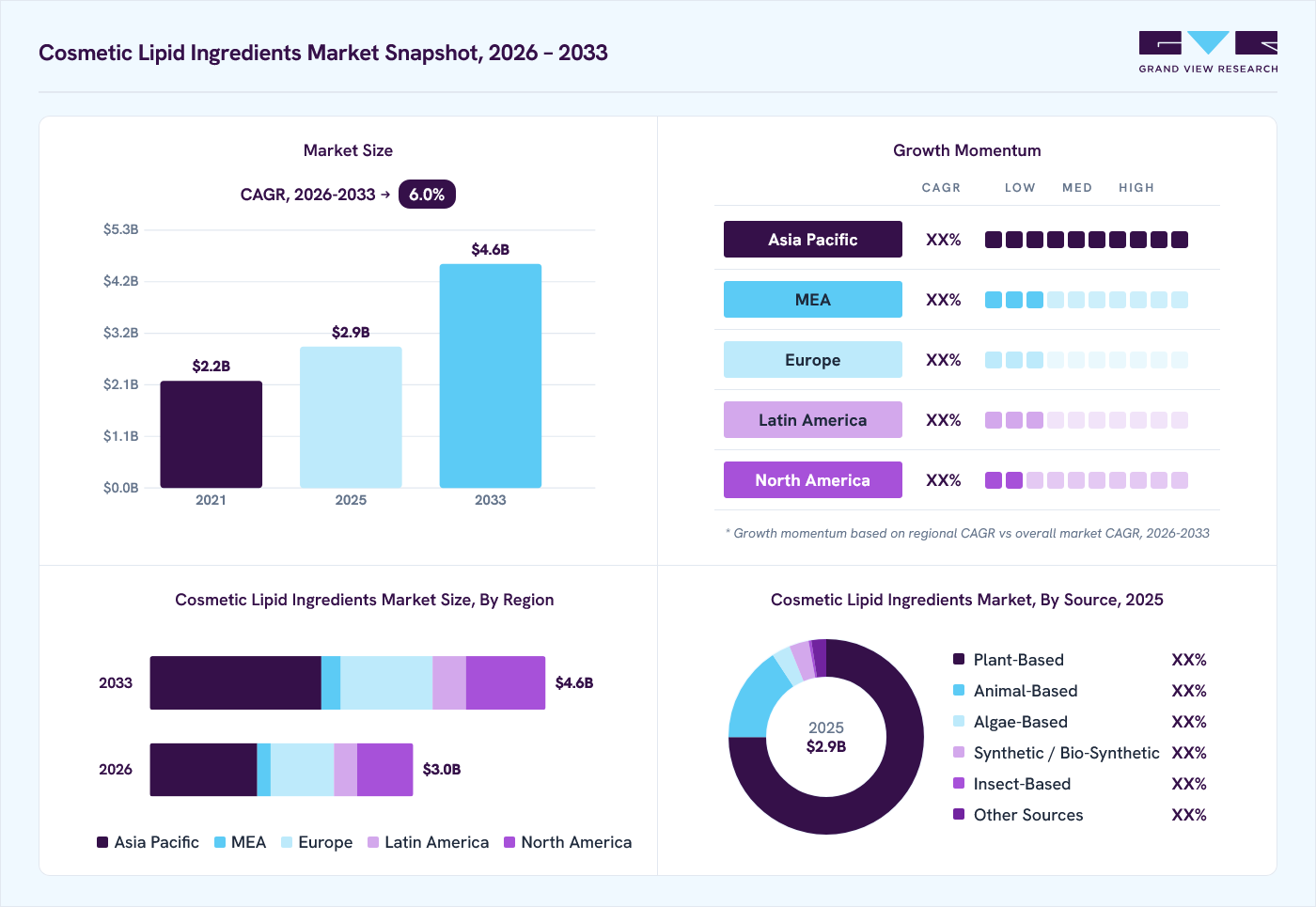
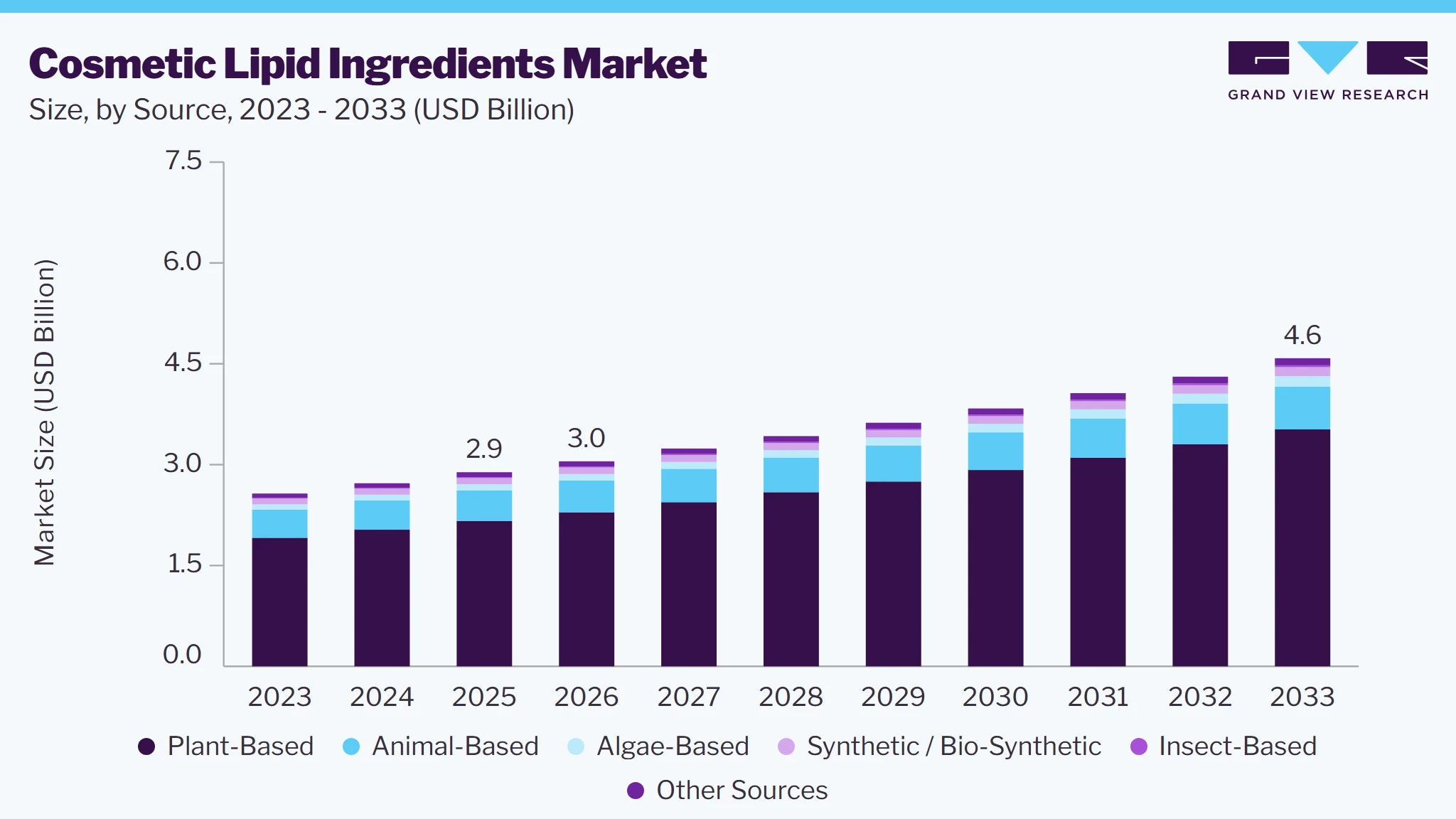
The global cosmetic lipid ingredients market size was valued at USD 2.9 billion in 2025 and is projected to grow from USD 3.0 billion in 2026 to USD 4.6 billion by 2033, at a CAGR of 6.0% from 2026 to 2033. The market in Asia Pacific dominated with a revenue share of 40.5% in 2025. Growth is being supported by increasing adoption of naturally derived and multifunctional lipids across skincare, haircare, sun care, and color cosmetics, alongside rising demand for premium and sustainable formulations.
 Source: Grand View Research, IR Documents, Primary Interviews, Paid DatabasesTo learn more about this report,
 Download Free Sample Report
 Key Market Trends & Insights
- By source: Plant-based segment held the largest market share of 74.9% in 2025.
- By application: Skincare segment held the largest market share of 42.6% in 2025.
- By function: Emollients segment held the largest market share of 37.3% in 2025.
Regional Highlights
- Largest regional market: Asia Pacific (40.5% revenue share, 2025)
- By country: China held the largest market share in 2025
Market Size & Forecast
- Market size in 2025: USD 2.9 Billion
- Estimated market size in 2026: USD 3.0 Billion
- Projected market size by 2033: USD 4.6 Billion
- CAGR (2026-2033): 6.0%
Three ways to get this report
Buy it, customize it, or ask a question.Ask an Analyst
A direct answer, usually in 1 working day
- AccessReport author, directly
- Reply timeWithin 1 working day
- No sales callDirect answer only
- FormatEmail reply
- CostFree, no cost
Get the Full Report
What the study covers
- FormatsPDF · Excel · Dashboard
- Timeline2026–2033 annual, 2025 base
- Coverage20+ countries, 5 regions
- Companies10+ key players profiled
Customize the Report
20% free customization
- IncludeCountries, segments, points
- TailorTo your product definition
- ExtendDeeper competitor detail
- OrA fully bespoke study
- Turnaround5–10 working days
Growing consumer preference for renewable, and responsibly sourced beauty ingredients is encouraging manufacturers to incorporate plant-based oils, specialty lipids, algae-derived materials, and bio-synthetic alternatives into formulations. This shift is particularly evident in skincare and haircare, where ingredients are expected to provide moisturizing, conditioning, barrier-supporting, and sensory benefits. At the same time, formulators are seeking multifunctional materials that can perform several roles within a formulation while maintaining product stability and consumer appeal. Increasing premiumization across beauty and personal care is further supporting the use of higher-value specialty ingredients with differentiated performance, sustainability credentials, and traceable sourcing.
 To learn more about this report, Download Free Sample Report
 Advances in biotechnology, fermentation, algae cultivation, and alternative biological feedstocks are creating new avenues for ingredient manufacturers. These technologies can enable production of specialty lipids with greater consistency while reducing dependence on conventional agricultural resources and addressing sustainability objectives. Algae-based and insect-derived materials also offer opportunities to develop differentiated ingredients with functional properties tailored to emerging formulation requirements. Manufacturers that combine bio-based sourcing with scalable processing, strong technical validation, and regulatory compliance can address demand from brands seeking innovative alternatives. Further opportunities exist in premium skincare, advanced haircare, suncare, and multifunctional formulations where performance and environmental attributes increasingly influence ingredient selection.
Market Dynamics
Demand is being shaped by increasing consumer preference for naturally derived, multifunctional, and performance-oriented cosmetic ingredients across skincare, haircare, suncare, and color cosmetics. Growing interest in clean-label formulations is encouraging formulators to replace conventional inputs with plant-based oils, bio-derived materials, and sustainably sourced alternatives. At the same time, advances in biotechnology are expanding the availability of high-performance ingredients derived from algae, fermentation, and other renewable feedstocks. Manufacturers are responding by expanding their portfolios, investing in capacity, making strategic acquisitions, and placing greater emphasis on traceability and responsible sourcing. Premiumization within beauty and personal care is further supporting demand for specialty emollients, conditioning agents, emulsifiers, and texture modifiers that enhance sensory characteristics and formulation stability. However, volatility in feedstock costs, stringent regulatory requirements, supply-chain disruptions, and sustainability-related sourcing challenges can constrain margins and complicate procurement. Competitive intensity is consequently shifting toward innovation, formulation performance, supply reliability, and environmental credentials, rather than price alone.
Growing consumer preference for clean-label, plant-derived, and sustainably sourced beauty products is encouraging formulators to incorporate renewable oils, seed-derived materials, marine ingredients, and bio-based alternatives into product formulations. Brands are increasingly positioning natural origin, responsible sourcing, and ingredient transparency as key product attributes, particularly across skincare, haircare, and body care. This shift is encouraging manufacturers to expand portfolios containing naturally derived emollients, conditioning materials, emulsifiers, and other functional inputs that can support both formulation performance and sustainability objectives.
The demand for multifunctional ingredients is further strengthening this trend as formulators seek to simplify formulations while maintaining product efficacy and sensory appeal. Ingredients capable of delivering multiple benefits, such as moisturization, conditioning, texture enhancement, and skin-feel improvement, can help reduce formulation complexity and optimize raw-material utilization. Consequently, suppliers are investing in processing technologies, renewable feedstocks, and specialty ingredient development to provide materials that combine functional performance with improved environmental profiles.
Fluctuations in the prices and availability of feedstocks can exert considerable pressure on manufacturers and formulators, particularly where production depends on vegetable oils, marine resources, specialty seeds, animal-derived materials, or other agricultural and biological inputs. Weather-related disruptions, crop variability, geopolitical conditions, transportation bottlenecks, and changes in commodity markets can create substantial swings in procurement costs. For naturally sourced materials, seasonal availability and geographic concentration of cultivation can further complicate supply planning and increase exposure to regional disruptions.
These fluctuations can adversely affect production economics because manufacturers may not be able to immediately pass higher input costs to customers, particularly in price-sensitive mass-market applications. Substituting one feedstock with another is also not always straightforward, as differences in fatty acid composition, purity, processing characteristics, odor, color, and sensory performance may require reformulation and additional testing. Furthermore, tighter sustainability requirements may restrict the pool of acceptable suppliers or require additional traceability and certification expenditures.
Advancements in biotechnology present significant opportunities for manufacturers to develop specialty materials through fermentation, precision biotechnology, algae cultivation, and other biological processes. These technologies can provide alternative production pathways for high-value cosmetic ingredients while reducing dependence on conventional petrochemical or resource-intensive feedstocks. Emerging applications include bio-based emollients, specialty lipids, active ingredients, surfactants, and conditioning materials, creating opportunities for suppliers to address growing demand for renewable and technologically differentiated solutions.
Commercialization of biotechnology-derived materials can also enable companies to establish differentiated product portfolios and access premium formulation segments. Improvements in fermentation efficiency, downstream processing, scalability, and feedstock utilization are gradually supporting the transition from laboratory development toward commercial production. Partnerships between ingredient manufacturers, biotechnology firms, and cosmetic brands can accelerate this process by combining production expertise with formulation knowledge and consumer insights. This creates scope for innovative ingredients with defined performance characteristics, traceable origins, and potentially improved sustainability credentials.
Market Concentration & Characteristics
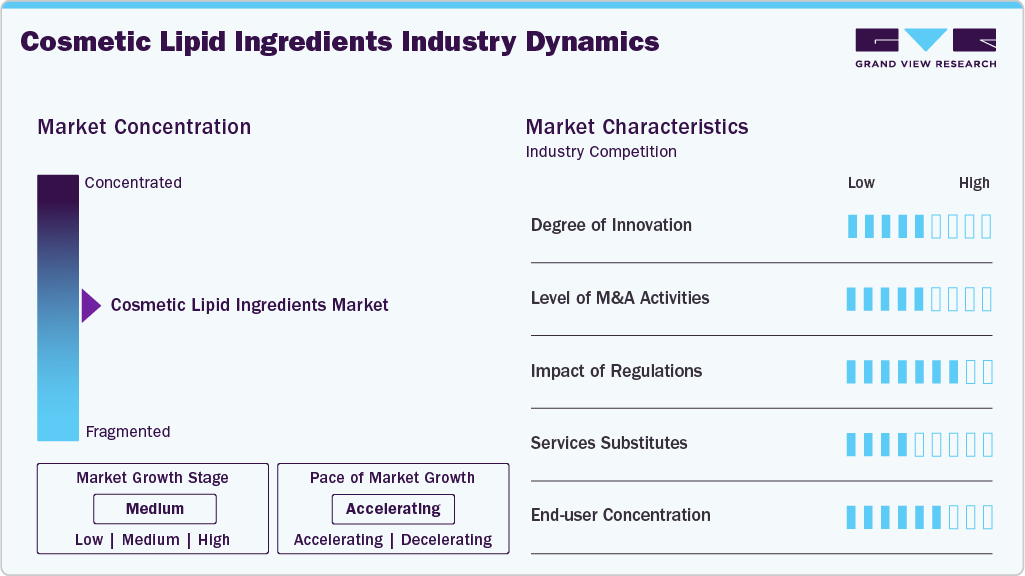
Competitive environment comprises multinational specialty-chemical producers, oleochemical manufacturers, biotechnology companies, and specialized beauty-ingredient suppliers. Major participants such as BASF, Croda, Evonik, Clariant, dsm-firmenich, and among others, compete through broad product offerings spanning emollients, surfactants, emulsifiers, conditioning materials, texture enhancers, and other formulation components. Their established manufacturing networks and technical capabilities enable them to serve large cosmetic and personal-care companies across multiple geographic markets.
 To learn more about this report, Download Free Sample Report
 Manufacturers are expanding their portfolios through acquisitions, new product introductions, biotechnology platforms, renewable feedstocks, and investments in production infrastructure. Natural-origin and bio-based solutions are receiving particular attention as brands seek alternatives that align with evolving consumer expectations and sustainability targets. At the same time, established suppliers are strengthening application laboratories and technical-support capabilities to assist customers with formulation development and regulatory requirements. Companies with diversified manufacturing footprints, strong research capabilities, proprietary technologies, and access to renewable raw materials are consequently better positioned to address changing formulation requirements. The competitive structure is expected to remain dynamic as manufacturers pursue geographic expansion, strategic partnerships, capacity additions, and differentiated ingredient technologies.
Analyst Perspective
The industry is shifting from a simple “natural versus synthetic” approach toward ingredients that combine proven efficacy, responsible sourcing, and consistent performance. Biotechnology is becoming increasingly relevant as manufacturers seek scalable alternatives to climate-sensitive crops and resource-intensive extraction processes. At the same time, traceability and transparent sourcing are becoming important commercial considerations for both brands and ingredient buyers. For suppliers, the key opportunity lies in developing materials that deliver measurable formulation benefits while meeting evolving environmental expectations.
Source Insights
The plant-based segment dominated with a revenue share of 74.9% in 2025, reflecting their extensive use across personal-care formulations. Vegetable oils, nut and seed oils, fruit-derived oils, and other botanical lipids are widely incorporated for their moisturizing and conditioning properties. Their broad compatibility with skincare, haircare, makeup, and body-care products supports sustained consumption. Increasing consumer preference for naturally derived and renewable ingredients is further encouraging formulators to select botanical sources. Growing emphasis on responsible sourcing and traceability is likely to reinforce the importance of plant-derived inputs further.
Insect-based is projected to be the fastest-growing segment, with a CAGR of 9.6% over the forecast period. They represent an emerging area within cosmetic formulation, supported by growing interest in alternative and resource-efficient feedstocks. Materials such as insect-derived lipids, proteins, chitin, and chitosan can provide conditioning, film-forming, moisturizing, and texture-enhancing properties. Their comparatively efficient use of resources is attracting attention from companies exploring novel approaches to sustainable ingredient production. Advances in processing and purification are improving the feasibility of incorporating these materials into personal-care formulations. Interest is particularly relevant to brands seeking differentiated ingredients with distinctive sustainability narratives. However, broader adoption will depend on consumer acceptance, regulatory clarity, consistent supply, and competitive production economics.
Application Insights
The skincare segment dominated with a share of 42.6% in 2025 due to its extensive incorporation of lipid ingredients into creams, lotions, serums, cleansers, and treatment products. These materials contribute important attributes such as moisturization, barrier support, softness, spread ability, and sensory enhancement. Growing consumer attention to skin health is encouraging brands to develop increasingly sophisticated formulations with targeted functional benefits. Premium and dermocosmetic products are also driving demand for specialty oils, emollients, and bio-derived lipid systems. The expansion of natural and clean-label skincare is providing additional opportunities for botanical and renewable inputs. Product innovation in barrier repair, hydration, anti-aging, and sensitive-skin care should continue to support consumption.
Suncare is projected to be the fastest-growing segment, with a CAGR of 7.8% from 2026 to 2033. This growth is attributed to consumers placing greater emphasis on daily UV protection and preventive skin health. Lipid ingredients play an important supporting role by improving skin feel, emulsion stability, and overall formulation aesthetics. The development of lightweight, non-greasy, water-resistant, and multifunctional sunscreen products is creating demand for specialized formulation materials. Growth in premium facial sunscreens and hybrid skincare-suncare products is broadening the application base. Increasing innovation in sun-protection formats, including sticks, sprays, gels, and lightweight emulsions, is also widening ingredient requirements. These trends are expected to create additional opportunities for high-performance and naturally derived lipid solutions.
Function Insights
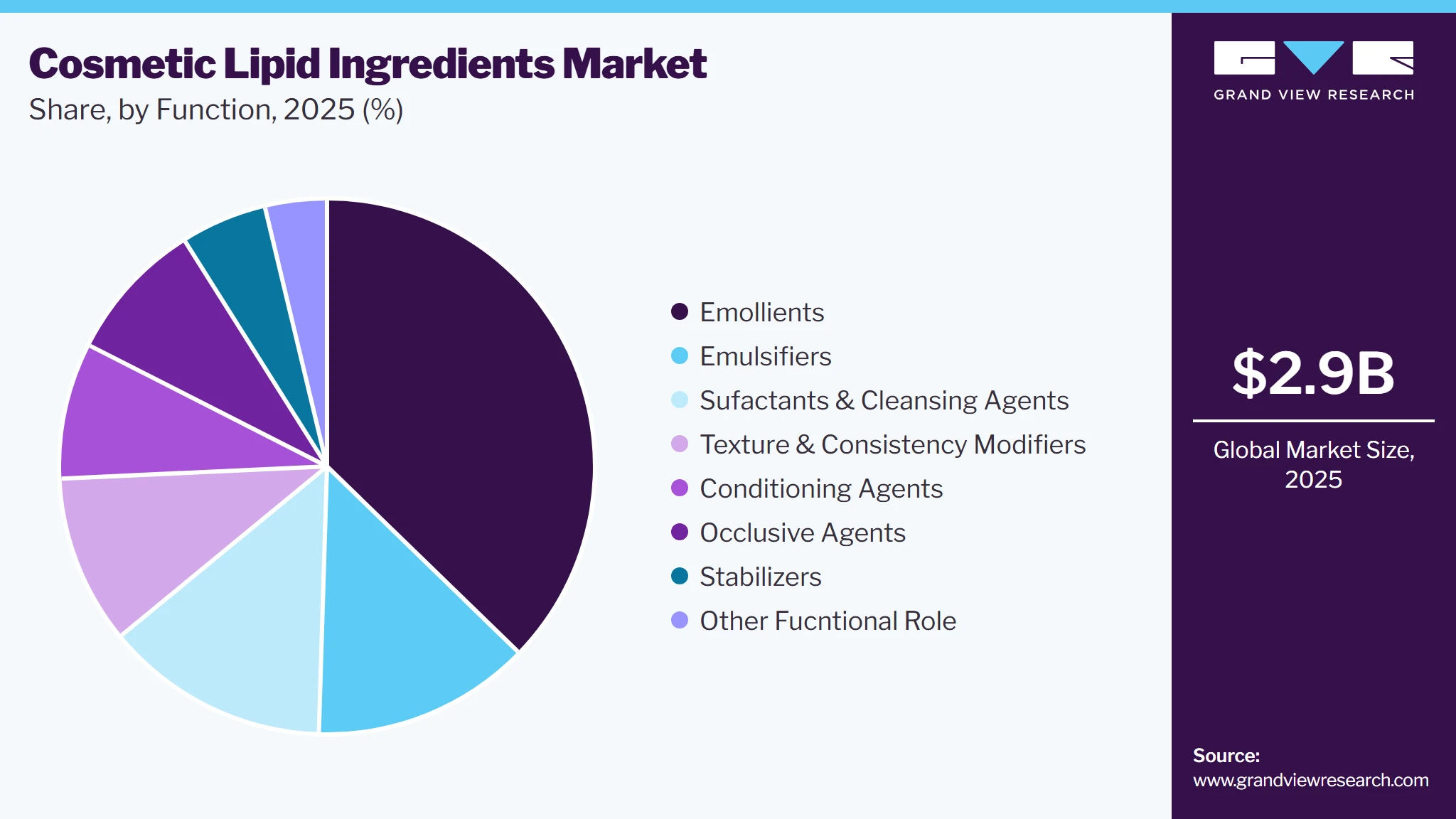
The emollients segment held the largest share of 37.3% in 2025, because of their fundamental role in improving skin softness, smoothness, and overall sensory characteristics. They are extensively used in moisturizers, creams, lotions, sunscreens, makeup, conditioners, and other leave-on formulations. A wide selection of plant oils, esters, specialty lipids, and synthetic alternatives allows formulators to tailor texture and skin feel according to product requirements. Demand is also being supported by growing interest in lightweight, fast-absorbing, and non-greasy formulations. Naturally derived emollients are gaining attention as brands focus on renewable and responsible ingredient sourcing.
 To learn more about this report, Download Free Sample Report
 Stabilizers is projected to be the fastest growing segment, with a CAGR of 7.6% from 2026 to 2033. This growth is due to increasingly complex formulations that require greater control over shelf life, consistency, and product integrity. They help minimize phase separation, oxidation, changes in viscosity, and other forms of formulation deterioration during storage and use. Their relevance extends across skincare, haircare, suncare, makeup, and bath-and-body products. The growing use of multifunctional formulations with diverse natural and active ingredients is increasing the need for effective stabilization systems. Natural-origin and clean-label product development is also encouraging innovation in alternative stabilization technologies. As formulators pursue longer-lasting products without compromising sensory quality, demand for advanced stabilizing solutions is expected to strengthen.
Regional Insights
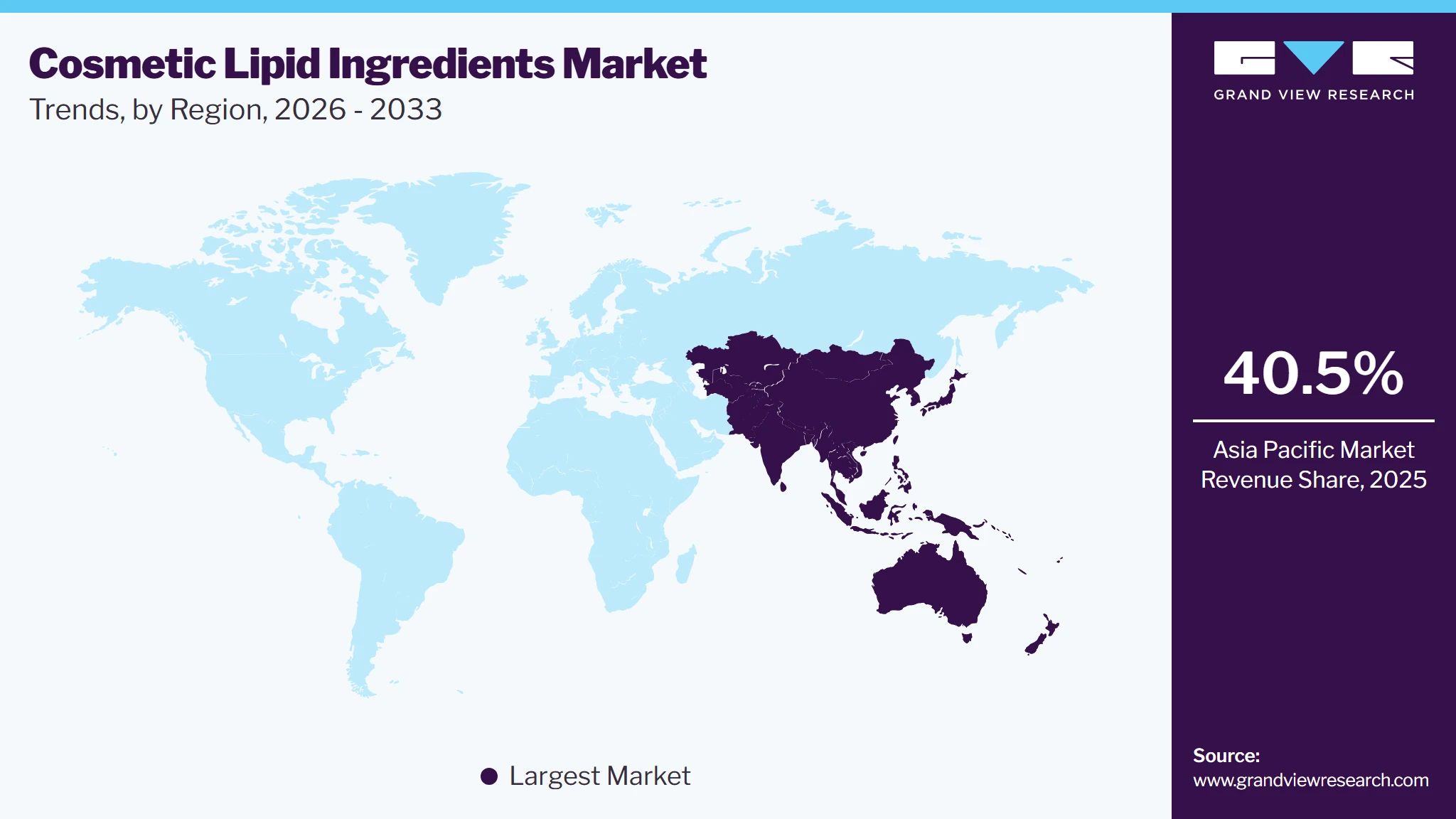
The cosmetic lipid ingredients industry in Asia Pacific dominated the global market with a revenue share of 40.5% in 2025. The region is also expected to grow at the fastest CAGR over the forecast period. The region is an important manufacturing and consumption hub for beauty and personal-care products, supported by expanding cosmetics production and rising demand for premium formulations. China, Japan, South Korea, and India have well-developed formulation ecosystems, creating demand for specialty oils, emollients, surfactants, emulsifiers, conditioning materials, and other functional ingredients. Manufacturers are also increasing regional production capabilities to serve local customers and shorten supply chains. For instance, in October 2023, Croda broke ground on a new multipurpose facility in Guangzhou for fragrance and beauty-active ingredients, strengthening its regional manufacturing footprint.
 To learn more about this report, Download Free Sample Report
 China Cosmetic Lipid Ingredients Market Trends
China cosmetic lipid ingredients industry is expected to grow at a CAGR of 7.7%, during the forecast period. This is due to substantial domestic beauty consumption with a strong ingredient and formulation manufacturing base. Local suppliers and international producers offer a broad range of surfactants, conditioning agents, thickeners, emulsifiers, and other formulation components. Kao's Chinese operations, for example, provide cosmetic ingredients spanning surfactants, conditioning agents, thickeners, foam boosters, pearling agents, and emulsifiers. International manufacturers are simultaneously expanding local production, indicating the country's importance as both a consumption center and manufacturing location.
North America Cosmetic Lipid Ingredients Market Trends
The cosmetic lipid ingredients industry in North America is characterized by established personal-care manufacturers, sophisticated formulation capabilities, and strong demand for specialized ingredients. Product developers increasingly emphasize formulation efficacy, sensory characteristics, ingredient transparency, and sustainability. The region's mature industrial base supports applications ranging from skincare and haircare to suncare and color cosmetics. Ingredient producers are consequently focusing on multifunctional materials, renewable feedstocks, specialty lipids, advanced surfactants, and biotechnology-enabled solutions. Strong technical infrastructure and established brand-manufacturer relationships further support commercialization of differentiated formulations.
U.S. Cosmetic Lipid Ingredients Market Trends
The cosmetic lipid ingredients industry in the U.S. represents a substantial commercial center, supported by a broad ecosystem of beauty brands, ingredient manufacturers, contract formulators, retailers, and research organizations. Demand spans conventional and naturally derived inputs, with suppliers increasingly developing materials that combine formulation performance with sustainability attributes. The country's manufacturing depth also facilitates innovation across emollients, surfactants, conditioning agents, emulsifiers, texture modifiers, and specialty actives. Its importance is reinforced by the presence of major global ingredient producers with extensive domestic manufacturing and technical-support capabilities.
Europe Cosmetic Lipid Ingredients Market Trends
The cosmetic lipid ingredients industry in Europe is driven by the sophisticated beauty and personal-care industry in which regulatory compliance, safety documentation, sustainability, and ingredient traceability have considerable commercial importance. The European Commission maintains CosIng, its database providing information on cosmetic substances and ingredients, supporting transparency around ingredient use within the region. This regulatory environment encourages manufacturers to invest in well-characterized raw materials, responsible sourcing, and formulation solutions with clear safety profiles. Demand remains relevant for botanical materials, plant-derived oils, biodegradable surfactants, specialty emollients, and other functional ingredients.
Germany cosmetic lipid ingredients industry is an important European manufacturing and consumption center, supported by established cosmetics companies, specialized suppliers, and a strong natural-cosmetics ecosystem. Procurement increasingly emphasizes consistent quality, traceable origins, regulatory compliance, and environmental credentials. This supports opportunities for vegetable oils, botanical extracts, naturally derived emollients, sustainable surfactants, and other specialty inputs. Germany's broader industrial infrastructure also provides manufacturers with access to advanced processing, research capabilities, and established distribution networks serving both domestic and neighboring European markets.
Middle East & Africa Cosmetic Lipid Ingredients Market Trends
The cosmetic lipid ingredients industry in Middle East & Africa offers developing opportunities as beauty consumption expands and manufacturers respond to region-specific skincare, haircare, fragrance, and sun-protection requirements. Demand for moisturizing, conditioning, sensory-enhancing, and protective ingredients is particularly relevant in formulations designed for regional climatic conditions. Indigenous and traditionally used botanical materials can also provide opportunities for differentiated product development. However, suppliers need to address variations in regulatory frameworks, logistics infrastructure, sourcing practices, and product-registration requirements across individual countries. Regional trade events and internationalization initiatives are helping connect local manufacturers with global suppliers and buyers.
Latin America Cosmetic Lipid Ingredients Market Trends
The cosmetic lipid ingredients industry in Latin America benefits from a well-established beauty culture and significant local manufacturing capabilities, with Brazil serving as a major regional production and consumption center. According to ABIHPEC, Brazil's beauty and personal care sector generated approximately R$200 billion in 2025, while exports reached USD 1.0 billion to 189 countries. The country's biodiversity also creates opportunities for botanical extracts, specialty oils, and other naturally sourced materials. Brazilian manufacturers are increasingly combining local biodiversity with formulation expertise and international commercialization, strengthening the region's role in supplying differentiated beauty products and ingredients.
Key Cosmetic Lipid Ingredients Company Insights
Companies are strengthening their positions through portfolio diversification, targeted capacity expansion, strategic acquisitions, and development of sustainable, bio-based ingredients that address evolving formulation requirements. They are also increasing investment in customer-centric innovation, application support, biotechnology, and regional manufacturing capabilities, particularly in high-growth markets, to improve responsiveness and establish closer relationships with formulators and beauty brands.
-
Lubrizol has a broad beauty-ingredient portfolio spanning rheology modifiers, emulsifiers, surfactants, conditioning agents, emollients, film formers, peptides, botanical ingredients, and marine biotechnology-based solutions. Its offerings address skincare, haircare, cleansing, suncare, and color cosmetics, allowing the company to support formulators across multiple application areas. The company is also advancing naturally derived and biodegradable technologies, including algae-based oils and bio-based rheology modifiers, strengthening its positioning around performance and sustainability.
-
Oleon NV is an established oleochemical manufacturer focused on converting renewable fats and oils into specialty ingredients, giving it a strong position in naturally derived cosmetic materials. Its personal-care portfolio includes fatty-acid esters, vegetable oils and butters, emollients, emulsifiers, solubilizers, and other functional ingredients serving skincare, haircare, sun care, and color cosmetics. The company is also pursuing lower-impact manufacturing technologies, including enzymatic esterification, while expanding its range of renewable and biodegradable solutions. Recent innovations such as Jolee 7777 and high-performance Radia emollients demonstrate its focus on combining formulation functionality with sustainability.
Key Cosmetic Lipid Ingredients Companies
The following key companies have been profiled for the study on the cosmetic lipid ingredients market.
-
Croda International
-
BASF SE
-
Evonik Industries AG
-
Clariant AG
-
dsm-firmenich AG
-
Givaudan SA
-
Ashland Inc.
-
Lubrizol Corporation
-
Kao Corporation
-
Stepan Company
-
AAK AB
-
Oleon NV
Competitive Benchmarking
Operating Strategies
Competitive Edge
Weaknesses
Mature Players: Croda International; BASF SE; Evonik Industries AG; Clariant AG; dsm-firmenich AG; Givaudan SA; Kao Corporation; Ashland Inc.; Lubrizol Corporation
- Expand portfolios across multiple ingredient categories and cosmetic applications.
- Collaborate with formulators and beauty brands to develop application-specific solutions.
- Invest in regional manufacturing facilities to strengthen supply capabilities and customer proximity.
- Develop bio-based, biodegradable, renewable, and lower-impact ingredient alternatives.
- Extensive global manufacturing and distribution networks.
- Broad product portfolios covering diverse formulation requirements.
- Strong R&D and technical application capabilities.
- Significant financial resources for acquisitions, capacity expansion, and innovation.
- Complex organizational structures can slow decision-making and commercialization.
- Large-scale operations can increase manufacturing and supply-chain complexity.
- Broad business portfolios can reduce focus on specific niche ingredient categories.
- Premium specialty products may face adoption barriers in cost-sensitive applications.
Emerging Players: Stepan Company; AAK AB; Oleon NV
- Concentrate on specialized ingredient categories such as oleochemicals, emollients, surfactants, and specialty oils.
- Leverage renewable feedstocks and natural-origin materials to address changing formulation preferences.
- Expand production capacity selectively in attractive regional markets.
- Strengthen sustainability credentials through responsible sourcing, certification, and lower-impact manufacturing.
- Strong expertise in selected ingredient categories.
- Established capabilities in renewable and naturally derived raw materials.
- Greater specialization in targeted formulation requirements.
- Ability to develop customized solutions for specific customer applications.
- More focused portfolios can limit cross-selling opportunities.
- Relatively narrower geographic footprints can increase regional exposure.
- Concentration in specific product categories can increase sensitivity to demand fluctuations.
- More limited financial resources can constrain large-scale investments and rapid international expansion.
Recent Developments
-
In April 2025, Stepan Company commenced production at its new alkoxylation facility in Pasadena, Texas, with operations beginning in early April. The milestone represents a major accomplishment for the start-up team, comprising Stepan employees and contractors, who collectively contributed more than 2 million work hours at the site while maintaining a strong focus on safety. The project was completed without any recordable safety incidents, reflecting the commitment and efforts of all personnel involved.
-
In October 2024, Oleon NV, an Avril subsidiary and a leading global producer of naturally derived oleochemicals, advanced its international expansion by acquiring a majority stake in A.Azevedo Óleos, a prominent Brazilian oleochemical manufacturer specializing in castor oil and related derivatives. The transaction reinforces Oleon NV’s presence in the fast-growing South American market, particularly Brazil, while supporting the company’s long-term objective of achieving sustainable growth.
Cosmetic Lipid Ingredients Market Report Scope
Report Attribute
Details
Market size in 2025
USD 2.9 billion
Estimated market size in 2026
USD 3.0 billion
Projected market size by 2033
USD 4.6 billion
Growth rate
CAGR of 6.0% from 2026 to 2033
Base year for estimation
2025
Historical data
2021 - 2024
Forecast period
2026 - 2033
Quantitative units
Revenue in USD billion, Volume in Kilotons, and CAGR from 2026 to 2033
Report coverage
Revenue forecast, volume forecast, company ranking, competitive landscape, growth factors, and trends
Segments covered
Source, application, function, and region
Regional Scope
North America; Europe; Asia Pacific; Latin America; Middle East & Africa
Country scope
U.S.; Canada; Mexico; Germany; UK; France; Italy; Spain; China; India; Japan; South Korea; Brazil; Argentina; Saudi Arabia; South Africa.
Key companies profiled
Croda International; BASF SE; Evonik Industries AG; Clariant AG; dsm-firmenich AG; Givaudan SA; Ashland Inc.; Lubrizol Corporation; Kao Corporation; Stepan Company; AAK AB; Oleon NV
Customization scope
Free report customization (equivalent up to 8 analysts’ working days) with purchase. Addition or alteration to country, regional & segment scope.
Pricing and purchase options
Avail customized purchase options to meet your exact research needs. Explore purchase options
Global Cosmetic Lipid Ingredients Market Report Segmentation
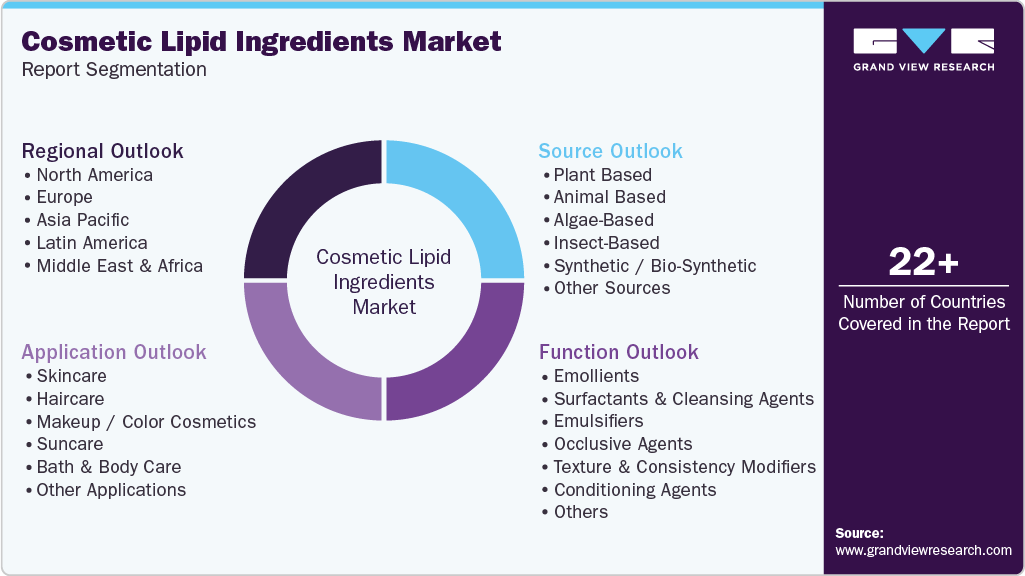
This report forecasts volume & revenue growth at regional and country levels and provides an analysis of the latest industry trends in each of the sub-segments from 2021 to 2033. For this study, Grand View Research has segmented the global cosmetic lipid ingredients market report based on source, application, function, and region:
 To learn more about this report, Download Free Sample Report
 -
Source Outlook (Volume, Kilotons; Revenue, USD Billion, 2021 - 2033)
-
Plant Based
-
Animal Based
-
Algae-Based
-
Insect-Based
-
Synthetic / Bio-Synthetic
-
Other Sources
-
-
Application Outlook (Volume, Kilotons; Revenue, USD Billion, 2021 - 2033)
-
Skincare
-
Haircare
-
Makeup / Color Cosmetics
-
Suncare
-
Bath & Body Care
-
Other Applications
-
-
Function Outlook (Volume, Kilotons; Revenue, USD Billion, 2021 - 2033)
-
Emollients
-
Surfactants & Cleansing Agents
-
Emulsifiers
-
Occlusive Agents
-
Texture & Consistency Modifiers
-
Conditioning Agents
-
Stabilizers
-
Other Functional Roles
-
-
Regional Outlook (Volume, Kilotons; Revenue, USD Billion, 2021 - 2033)
-
North America
-
U.S.
-
Canada
-
Mexico
-
-
Europe
-
UK
-
Germany
-
France
-
Italy
-
Spain
-
-
Asia Pacific
-
China
-
Japan
-
India
-
South Korea
-
-
Latin America
-
Brazil
-
Argentina
-
-
Middle East and Africa (MEA)
-
South Africa
-
Saudi Arabia
-
-
Research Methodology
The cosmetic lipid ingredients market figures in this report are based on a proven research process that combines executive interviews with secondary research from proprietary databases, company filings, and recognized regulatory and institutional sources. Market size is built through value-chain sizing-reconciling supply-side and demand-side estimates-and triangulated with bottom-up and top-down approaches. Every estimate passes multiple levels of expert validation before publication, with each cosmetic lipid ingredients segment quantified using the revenue-capture definitions in the table below.
Segment Definition
Source
Revenue capture definition
Plant Based
Revenue is generated through customer purchases of ingredients derived from vegetable oils, nuts, seeds, fruits, and other botanical feedstocks. Demand is supported by their use as emollients, emulsifiers, conditioning materials, and other formulation components across personal-care products, with value influenced by sourcing, purity, processing, and functional performance.
Animal Based
Value is captured from ingredients obtained from marine and animal-derived sources, including fish oils, lanolin, and their derivatives. These materials are utilized for moisturizing, conditioning, texture enhancement, and other formulation functions, with demand shaped by performance requirements and preferences regarding sourcing and product positioning.
Algae-Based
Income stems from cosmetic ingredients cultivated or extracted from algae and marine biomass, including specialty oils, polysaccharides, extracts, and bioactive compounds. Their adoption is encouraged by interest in renewable feedstocks, marine-derived actives, and differentiated formulations offering moisturizing, antioxidant, soothing, or skin-conditioning benefits.
Insect-Based
Commercial returns originate from materials derived from insects and insect-processing streams, including specialty lipids, proteins, chitin, and chitosan-based ingredients. Their utilization is associated with emerging sustainable formulation approaches and interest in alternative biological feedstocks with functional and film-forming properties.
Synthetic / Bio-Synthetic
Sales are associated with synthetically produced or biotechnology-enabled ingredients designed to deliver controlled formulation performance. These materials support functions such as emollience, emulsification, cleansing, conditioning, stabilization, and texture modification, with purchasing decisions influenced by consistency, efficacy, scalability, and regulatory suitability.
Other Sources
Additional revenue comes from ingredients derived through less conventional sources, including fermentation, minerals, microbial processes, and hybrid natural-technological pathways. These products generally address specialized formulation requirements and can command higher value when they offer distinctive performance, sustainability attributes, or difficult-to-replicate functionalities.
Application
Revenue capture definition
Skincare
Spending is associated with ingredients incorporated into facial and body skincare formulations such as moisturizers, serums, cleansers, creams, and treatments. Demand is supported by requirements for hydration, barrier support, skin conditioning, sensory enhancement, and targeted functional benefits.
Haircare
Economic activity comes from ingredients used in shampoos, conditioners, treatments, styling products, and hair masks. Surfactants, conditioning agents, emollients, oils, and texture modifiers are increasingly selected to improve cleansing efficiency, manageability, softness, shine, and overall hair feel.
Makeup / Color Cosmetics
Value generation results from ingredients incorporated into foundations, lip products, mascaras, concealers, and other color-cosmetic formulations. Emollients, emulsifiers, oils, texture modifiers, and stabilizing materials contribute to spreadability, pigment dispersion, consistency, adhesion, and sensory characteristics.
Suncare
Customer purchases cover ingredients used in sunscreens, after-sun products, and other UV-protection formulations. Emollients, emulsifiers, texture enhancers, film-forming materials, and supporting functional ingredients help achieve uniform application, pleasant skin feel, formulation stability, and effective product delivery.
Bath & Body Care
Revenue is derived from ingredients incorporated into body washes, soaps, shower products, lotions, scrubs, and other bath-and-body formulations. Demand is linked to cleansing performance, moisturization, conditioning, fragrance delivery, texture, and consumer preference for naturally derived or skin-friendly components.
Other Applications
Commercial expenditure reflects ingredient consumption in products such as oral care, deodorants, fragrances, personal hygiene products, and specialty beauty formulations. Suppliers capture value by providing materials that deliver targeted sensory, functional, stability, cleansing, or conditioning properties across these applications.
Function
Revenue capture definition
Emollients
The primary spending base comes from ingredients that soften and smooth the skin or hair while improving formulation feel and spreadability. Plant oils, esters, specialty lipids, and synthetic alternatives are selected according to sensory profile, absorption characteristics, stability, and desired moisturizing performance.
Surfactants & Cleansing Agents
Customer demand is linked to ingredients responsible for cleansing, foaming, solubilization, and dispersion in shampoos, facial cleansers, body washes, and other rinse-off products. Growth in gentle and sulfate-free formulations is encouraging development of milder, naturally derived, biodegradable, and high-performance alternatives.
Emulsifiers
Commercial value is associated with ingredients that enable stable combinations of oil and water phases in creams, lotions, sunscreens, makeup, and other formulations. Demand is influenced by the need for improved stability, attractive textures, sensory performance, and compatibility with natural-origin formulation systems.
Occlusive Agents
Expenditure arises from materials that form protective layers on the skin and reduce moisture loss, particularly in creams, balms, ointments, and intensive moisturizers. Demand is supported by growing attention to skin-barrier care and formulations designed to provide prolonged hydration and protection from environmental stressors.
Texture & Consistency Modifiers
Incremental sales originate from ingredients used to control viscosity, consistency, spreadability, suspension, and overall sensory characteristics. Their importance spans skincare, haircare, makeup, and suncare, where precise rheological properties help manufacturers achieve desirable product appearance, stability, and consumer experience.
Conditioning Agents
Revenue is generated from ingredients that improve softness, smoothness, manageability, and surface characteristics of skin and hair. These materials are widely incorporated into conditioners, shampoos, skin creams, and treatment products, with demand influenced by performance expectations and the growing use of naturally derived alternatives.
Stabilizers
Spending is associated with ingredients that preserve formulation integrity by improving resistance to separation, oxidation, degradation, or changes in viscosity during storage. Their use supports longer shelf life, consistent product quality, and reliable performance across a wide range of personal-care formulations.
Other Functional Roles
Additional commercial value comes from ingredients serving specialized purposes such as film formation, solubilization, preservation support, opacification, pigment dispersion, fragrance delivery, and skin or hair protection. Demand is driven by increasingly complex formulations requiring multiple performance attributes within a single product.
Estimation Model
Layer Name
Key Question
Description
Raw Material & Production Layer
What forms the supply base?
Identify the botanical, marine, animal-derived, synthetic, and bio-synthetic feedstocks used to produce cosmetic lipid ingredients, including vegetable oils, nut and seed oils, fruit seed oils, fish oils, lanolin, algae-derived materials, and specialty synthetic or fermentation-based inputs. Assess feedstock availability, extraction and refining technologies, fractionation, purification, esterification, hydrogenation, blending, and other processing capabilities. The assessment also considers sourcing practices, traceability, quality-control systems, certifications, production infrastructure, storage, packaging, and compliance with cosmetic safety and sustainability requirements.
Application Adoption Layer
Where are cosmetic lipid ingredients utilized?
Evaluate consumption across skincare, haircare, makeup and color cosmetics, suncare, bath and body care, and other personal-care formulations. These materials contribute functions such as moisturization, skin conditioning, cleansing, emulsification, texture enhancement, occlusion, and sensory modification. Adoption is influenced by formulation trends, consumer preferences, product premiumization, demand for naturally derived materials, and the performance requirements of different cosmetic applications.
Consumption Intensity Layer
How extensively are cosmetic lipid ingredients consumed?
Analyze usage according to product category, formulation type, ingredient functionality, concentration levels, production volumes, and product positioning. Consumption intensity varies between rinse-off and leave-on products and depends on whether lipids serve as primary functional components or supporting formulation aids. Demand is additionally shaped by premium skincare and haircare launches, multifunctional formulations, natural-origin claims, substitution of conventional materials, and increasing incorporation of specialty oils, esters, and bio-derived lipids.
Revenue Layer
How is market revenue generated?
Revenue is generated through the sale of specialty oils, emollients, lipid-based surfactants, emulsifiers, conditioning materials, occlusive agents, and other functional ingredients to cosmetic manufacturers and formulators. Commercial value is influenced by ingredient origin, purity, processing complexity, functionality, certification, customization, and supply consistency. Higher-value opportunities arise from specialty and bio-based materials, differentiated natural ingredients, application-specific solutions, technical support, long-term customer relationships, and expansion into premium personal-care formulations.
Delivered Customizations
This report has been delivered with the following In-depth customizations
Client Request
Customization Delivered
Value Adds
Regional segmentation
The assessment provides country-level market sizing and forecasts, supported by analysis of cosmetics and personal-care manufacturing, consumer spending, beauty-product launches, natural and organic product adoption, raw-material availability, import-export activity, regulatory frameworks, and production infrastructure. It evaluates regional supply networks, access to botanical and renewable feedstocks, local processing capabilities, manufacturing clusters, sustainability requirements, and evolving formulation preferences across key countries.
Supports geographic expansion, sourcing decisions, production planning, supplier selection, distribution-network development, and investment prioritization by identifying countries with strong personal-care manufacturing bases, favorable consumer trends, accessible raw materials, and growing demand for specialty cosmetic ingredients.
Opportunity Assessment
Comprehensive evaluation of emerging opportunities across skincare, haircare, color cosmetics, suncare, bath and body care, and other personal-care applications. The assessment examines opportunities arising from naturally derived oils, specialty lipids, multifunctional ingredients, algae-based materials, biotechnology-enabled solutions, biodegradable alternatives, and premium formulation systems. It also considers clean-label trends, sustainability initiatives, technological advances, evolving consumer preferences, and demand for high-performance ingredients.
Helps identify attractive applications, ingredient categories, customer groups, and geographic markets by evaluating product innovation, formulation trends, sourcing shifts, sustainability requirements, and purchasing priorities. The findings support portfolio expansion, new-product development, capacity investments, strategic collaborations, and market-entry initiatives.
Competitive Benchmarking
Comparative assessment of leading manufacturers based on product breadth, source-material expertise, manufacturing capabilities, functional coverage, geographic footprint, R&D strength, technical support, supply reliability, and sustainability credentials. The benchmarking also reviews recent product introductions, capacity expansions, acquisitions, partnerships, biotechnology investments, and initiatives focused on naturally derived and bio-based solutions.
Enables companies to understand their competitive position, portfolio strengths, capability gaps, differentiation opportunities, and areas requiring strategic investment. The insights support decisions related to product innovation, manufacturing expansion, sourcing strategy, technology adoption, partnerships, acquisitions, customer development, and long-term positioning.
Frequently Asked Questions About This Report
The global cosmetic lipid ingredients market size was valued at USD 2.9 billion in 2025 and is estimated at USD 3.0 billion for 2026.
Asia Pacific represented 40.5% of revenue in 2025, as the region is an important manufacturing and consumption hub for beauty and personal-care products, supported by expanding cosmetics production and rising demand for premium formulations.
The cosmetic lipid ingredients market is primarily driven by rising consumer preference for plant-derived, renewable, and responsibly sourced ingredients is encouraging cosmetic manufacturers to incorporate specialty oils, emollients, and bio-based lipids into formulations.
Some of the key players operating in the cosmetic lipid ingredients market include Croda International; BASF SE; Evonik Industries AG; Clariant AG; dsm-firmenich AG; Givaudan SA; Ashland Inc.; Lubrizol Corporation; Kao Corporation; Stepan Company; AAK AB; Oleon NV.
Which application segment accounted for the largest cosmetic lipid ingredients market share in 2025?Skincare dominated with a share of 42.6% in 2025 due to their extensive incorporation of lipid ingredients into creams, lotions, serums, cleansers, and treatment products. These materials contribute important attributes such as moisturization, barrier support, softness, spread ability, and sensory enhancement.
The global cosmetic lipid ingredients market is expected to grow at a CAGR of 6.0% from 2026 to 2033, reaching USD 4.6 billion by 2033.
Plant-based dominated with a revenue share of 74.9% in 2025. reflecting their extensive use across personal-care formulations. Vegetable oils, nut and seed oils, fruit-derived oils, and other botanical lipids are widely incorporated for their moisturizing and conditioning properties.
Emollients held the largest share of 37.3% in 2025, because of their fundamental role in improving skin softness, smoothness, and overall sensory characteristics. They are extensively used in moisturizers, creams, lotions, sunscreens, makeup, conditioners, and other leave-on formulations.
Suncare is the fastest growing, with a CAGR of 7.8% from 2026 to 2033., as consumers place greater emphasis on daily UV protection and preventive skin health. Lipid ingredients play an important supporting role by improving skin feel, emulsion stability, and overall formulation aesthetics.
About the Author(s)
Personal Care & Cosmetics Research Team
Bulk Chemicals · Personal Care & CosmeticsThis report was authored by the personal care & cosmetics research team at Grand View Research - comprising two research analysts, one senior research analyst, and one industry expert - with specialized expertise in the personal care & cosmetics segment of the bulk chemicals industry. All findings are based on proprietary bulk chemicals databases, executive interviews, and regulatory analysis, subject to internal peer review prior to publication.
Last Updated:
Speak to Analyst

Customize this report to your needs - add regions, segments, or data points, with 20% free customization.
Or view our licence options:


ISO 9001:2015 & 27001:2022 Certified
We are GDPR and CCPA compliant! Your transaction & personal information is safe and secure. For more details, please read our privacy policy.


