
- Home
- »
- Biotechnology
- »
-
CRISPR Screening Market Size & Share Report, 2026-2033GVR Report cover

CRISPR Screening Market (2026 - 2033)
Size, Share & Trends Analysis Report By Product & Services, By Type (CRISPR Knockout (CRISPR-KO), CRISPR Interference (CRISPRi)), By Screening Format, By Application, By End Use, By Region, And Segment Forecasts
Market Size, 2025
$2.8BMarket Estimate, 2026
$3.3BMarket Forecast, 2033
$8.7BCAGR, 2026–2033
15.0%CRISPR Screening Market Summary
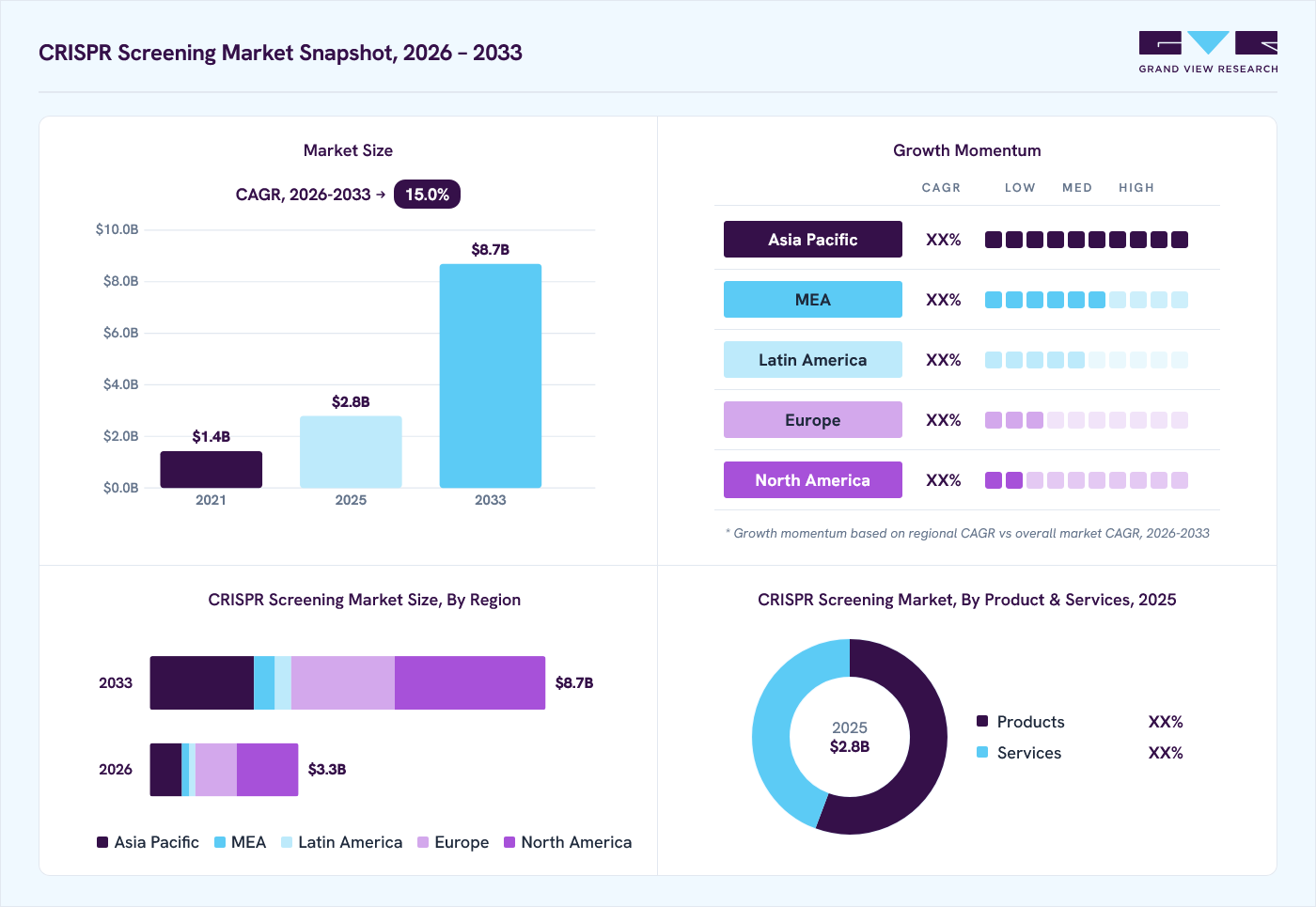
The global CRISPR screening market size was valued at USD 2.8 billion in 2025 and is projected to grow from USD 3.3 billion in 2026 to USD 8.7 billion by 2033, at a CAGR of 15.0% from 2026 to 2033. The market in North America dominated with a revenue share of 42.0% in 2025. Growth is driven by increasing adoption of CRISPR-based functional genomics, drug discovery, target identification, and disease research, as well as advancements in high-throughput screening and gene-editing technologies.
 Source: Grand View Research, IR Documents, Primary Interviews, Paid DatabasesTo learn more about this report,
 Download Free Sample Report
Key Market Trends & Insights
- By product & services: Products segment held the largest market share of 55.7% in 2025.
- By type: CRISPR knockout (CRISPR-KO) segment held the largest market share of 61.6% in 2025.
- By screening format: Pooled screening segment held the largest market share of 53.9% in 2025.
- By application: Functional genomics segment held the largest market share of 29.9% in 2025.
- By end use: Pharmaceutical & biotechnology companies segment held the largest market share of 47.7% in 2025.
Regional Highlights
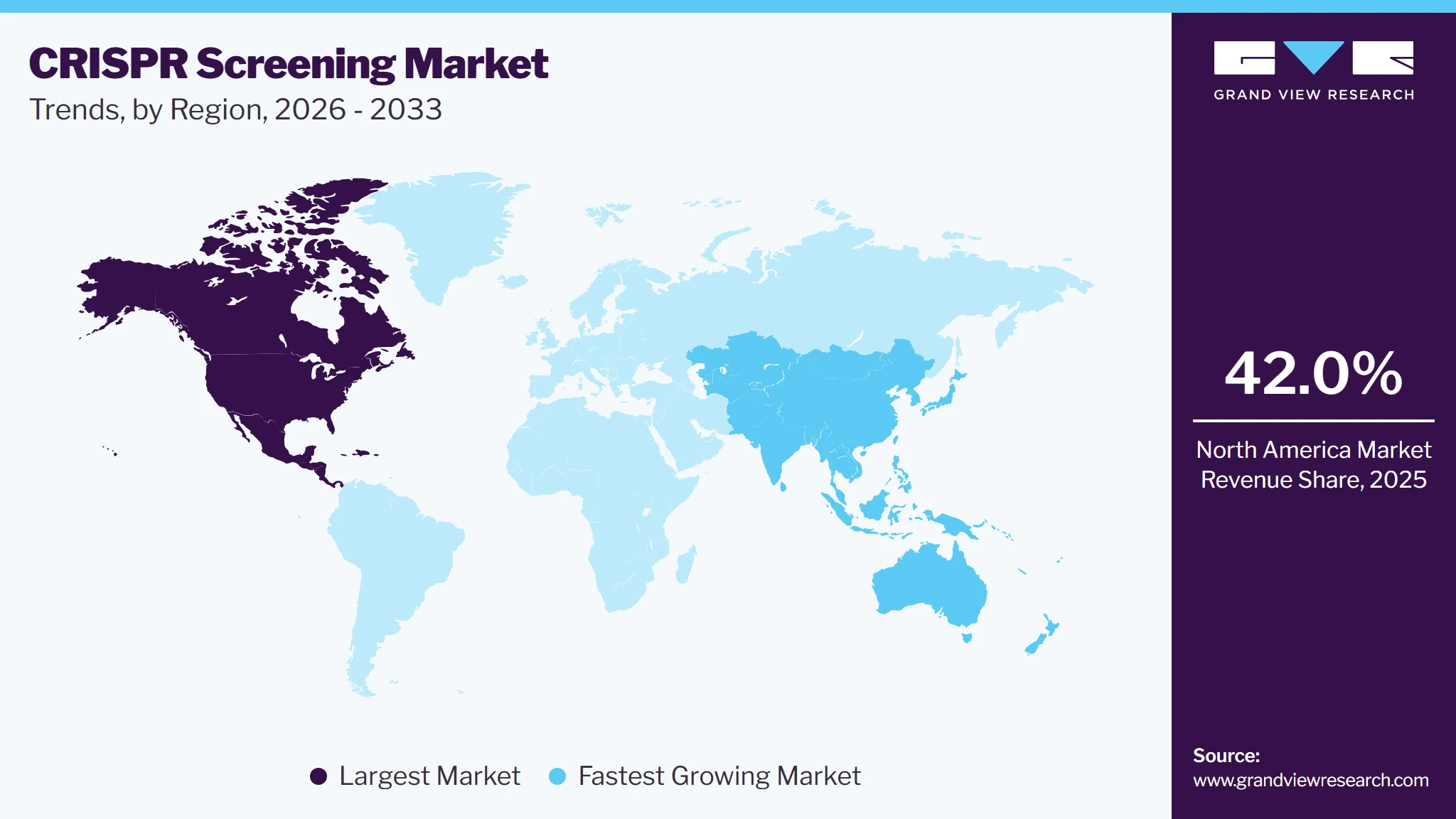
- Largest regional market: North America (42.0% revenue share, 2025)
- Fastest-growing regional market: Asia Pacific (highest CAGR, 2026-2033)
- By country: The U.S. held the largest market share in 2025
Market Size & Forecast
- Market size in 2025: USD 2.8 Billion
- Estimated market size in 2026: USD 3.3 Billion
- Projected market size by 2033: USD 8.7 Billion
- CAGR (2026-2033): 15.0%
Prism AI by Grand View Research Free to tryAsk a question about the CRISPR screening marketTry asking✓Every figure cited from GVR research Prefer the report? Download free sample →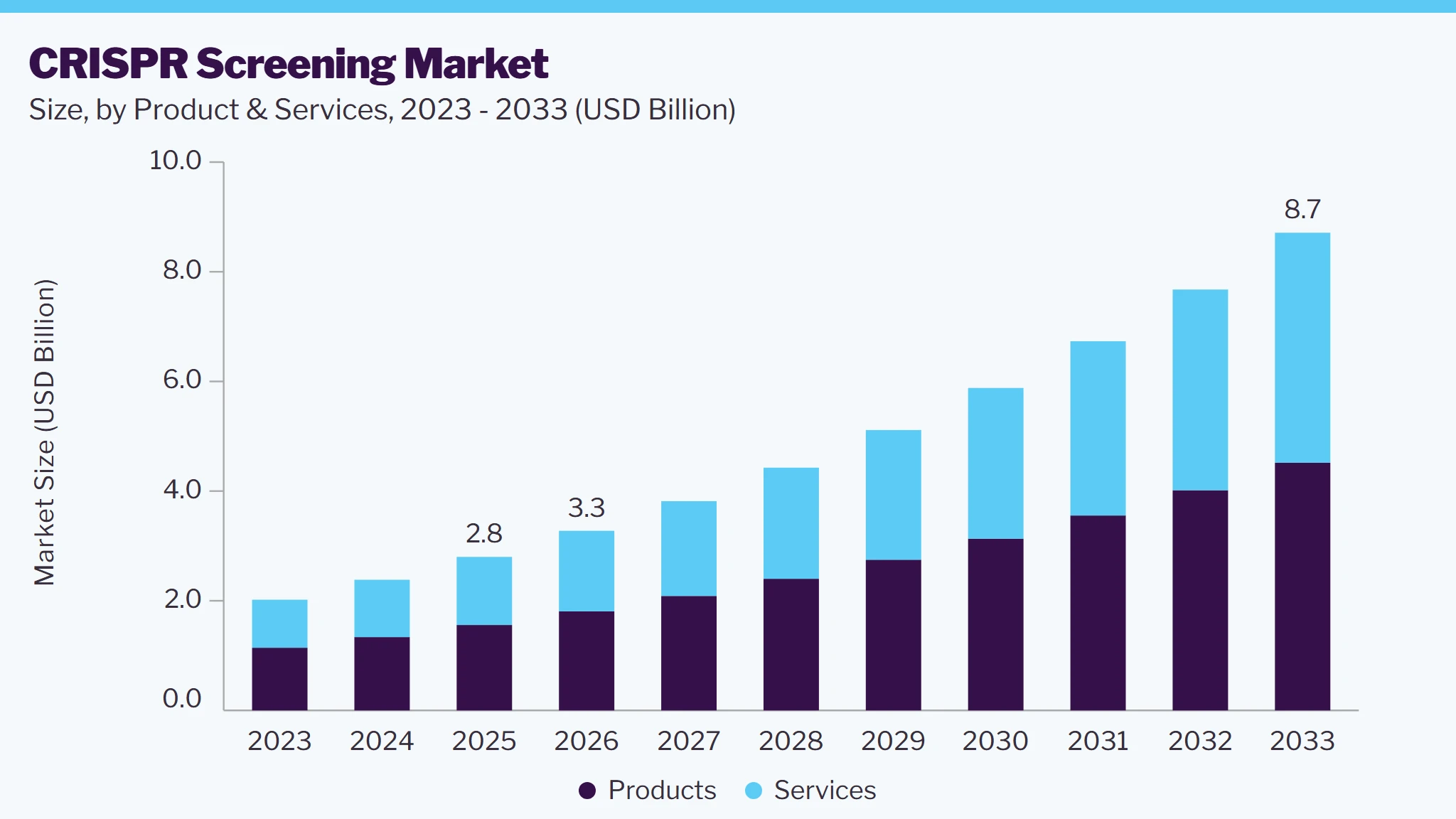 To learn more about this report, Download Free Sample Report
Market Dynamics
The industry is driven by the increasing adoption of functional genomics, the growing demand for drug target identification and validation, and the expansion of genetic disease and cancer research. Rising use of CRISPR screening in pharmaceutical and biotechnology research, coupled with growing investments in gene-editing platforms and personalized medicine, is expected to expand screening applications and create new opportunities for market growth.
Advancements in CRISPR-Cas screening technologies are enhancing the scale, precision, and efficiency of genetic screening by enabling high-throughput pooled, single-cell, and in vivo screening. Integration with next-generation sequencing, high-content imaging, and multi-omics approaches allows researchers to evaluate large numbers of genetic targets simultaneously and obtain detailed genotype-phenotype insights. These capabilities are accelerating gene function analysis, target identification, biomarker discovery, and drug development, thereby supporting the broader adoption of CRISPR screening platforms.
Applications of CRISPR Screening in Therapeutic Target Discovery
Disease/Condition
Type of CRISPR Screening
Target
Mechanism
Drug Validation
Clinical Implication
Cancers with 9p21.3 biallelic deletion; MSI-H cancers
Forward screening
PELO
Synthetic lethality
Not reported
Highlights the potential of cancer dependency maps for the discovery of new therapeutic targets
Prostate cancer
Forward screening
CDK12
Immunology
THZ531
Immune checkpoint blockade may be more effective in prostate cancer with CDK12 mutations
Gastric cancer
Forward screening
METTL1
tRNA modification
Not reported
Modulation of the immune microenvironment may influence immunotherapy outcomes
Colorectal cancer
Forward screening
INTS3
RNA processing and stability
DOTAP/cholesterol-mshINTS3 nanoparticle
Potential therapeutic value of RNA-binding proteins in cancer
Acute myeloid leukemia (AML)
Forward screening
KAT2A
Gene transcription regulation
MB-3
Provides potential targets and therapeutic strategies for AML treatment
Multiple endocrine neoplasia type 1 defect cancer
Forward screening
DHODH
Synthetic lethality
Leflunomide
Demonstrates CRISPR-driven drug repurposing and supports precision oncology
Pancreatic ductal adenocarcinoma (PDAC)
Forward screening
RIPK2
Immunology
RIPK2 inhibitor
Provides a potential target for immunotherapy in PDAC
Hepatocellular carcinoma
Forward screening
PHGDH
Drug resistance
NCT-503
Targeting PHGDH may enhance existing drug efficacy and help overcome treatment resistance
Source: NIH, Secondary Research, Primary Interviews, Grand View Research Analysis
The expanding application of CRISPR screening in therapeutic target discovery is further supported by recent commercial developments. For instance, in August 2026, bit.bio launched its ioScreen platform, a CRISPR screening service designed to support drug discovery using human cells. The platform combines CRISPR-based screening with bit.bio’s human cell programming technology, enables researchers to investigate gene function and identify potential therapeutic targets across relevant human cell types. Such commercial advancements are expanding the availability of scalable CRISPR screening solutions for pharmaceutical and biotechnology companies, thereby supporting market growth.
“As bit.bio enters its next phase of growth, we're investing in both the leadership and technologies that will define the future of human first research and drug discovery. Creating our first Chief Technology Officer role strengthens our executive team as we continue to scale the business and expand our portfolio. At the same time, the ioScreen platform removes many of the barriers that have historically limited access to high-quality functional genomics, enabling researchers to leverage the data without needing the expertise."
- Dr Emma Pepperell, CEO at bit.bio
The high cost of CRISPR screening workflows acts as a restraint on market growth, particularly for academic institutions, small biotechnology companies, and research laboratories. Comprehensive screening requires specialized CRISPR libraries, delivery systems, cell culture and sequencing reagents, high-throughput equipment, and advanced data-analysis tools. The expenses associated with library preparation, large-scale sequencing, validation of screening hits, and specialized personnel can increase the overall cost of screening projects, limiting adoption among organizations with constrained research budgets.
Moreover, large-scale and complex CRISPR screens can require substantial computational infrastructure and repeated validation experiments to identify reliable genetic hits and minimize false positives or off-target effects. The need to integrate sequencing, imaging, and multi-omics datasets further increases analytical and operational costs. Consequently, the high upfront investment and recurring consumable and data-analysis expenses may delay adoption of advanced CRISPR screening workflows, particularly in resource-constrained research settings and smaller market participants.
The integration of artificial intelligence (AI), machine learning, and multi-omics approaches with CRISPR screening is creating opportunities to improve the interpretation of complex screening datasets and accelerate target discovery. AI-based tools can analyze large-scale genomic, transcriptomic, proteomic, and phenotypic datasets generated from CRISPR screens to identify gene-phenotype relationships, prioritize potential targets, and uncover biological pathways. Combining these capabilities can improve screening accuracy, reduce data analysis time, and enable more comprehensive characterization of cellular responses, thereby supporting applications in drug discovery and precision medicine.
According to an article published by Nature Communications in December 2025, insitro reported validation of its POSH platform, which integrates pooled CRISPR screening, high-content imaging, and self-supervised deep learning to identify gene functions and therapeutic targets without relying on predefined biomarkers. The associated study demonstrated that AI-derived morphological profiles could reveal gene networks from large-scale CRISPR screens, highlighting the potential of combining AI with high-content screening for scalable target discovery. Such technology developments are expected to expand the use of AI-enabled CRISPR screening solutions among pharmaceutical and biotechnology companies, creating new opportunities for market growth.
Market Concentration & Characteristics
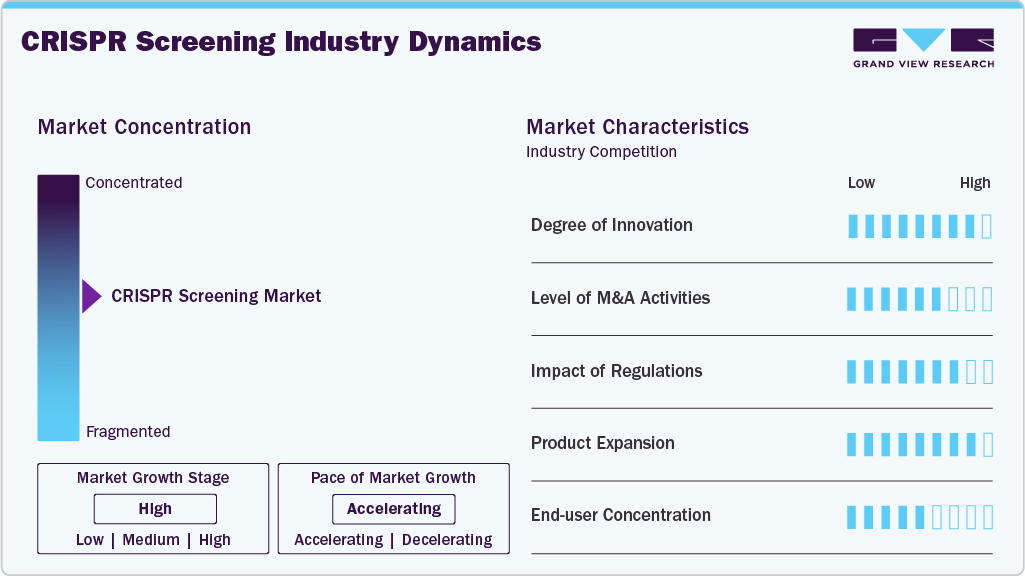
The industry is characterized by a high degree of innovation, driven by advances in high-throughput screening, functional genomics, single-cell analysis, and human-cell-based screening. Companies are increasingly developing platforms that improve the scale of screening, biological relevance, and target-validation capabilities. For instance, in June 2025, Myllia Biotechnology launched its VISTA platform for genome-wide CRISPR screening in primary human macrophages and dendritic cells, expanding the use of CRISPR screening in physiologically relevant cell models.
“We are proud to support such an important milestone for Myllia’s VISTA platform with Ultima’s unique high-throughput and low-cost sequencing technology. Myllia’s end-to-end genome-wide CRISPR screening platform represents an enormous opportunity in biotechnology, enabled by the combination of Myllia’s capabilities and Ultima’s unique sequencing technology. This is a great example of a large and impactful application that can be unlocked, in part, through sequencing data at scale, high-throughput, and low cost, and why we built our unique sequencing technology.”
- Gilad Almogy, Founder and Chief Executive Officer at Ultima Genomics
The industry is experiencing moderate M&A activity, with transactions focused on strengthening capabilities in genome engineering, functional genomics, and CRISPR technology. For instance, in January 2025, Vividion Therapeutics, a subsidiary of Bayer AG, acquired Tavros Therapeutics to expand its functional genomics capabilities and access additional genomic screening approaches for target discovery.
“The acquisition of Tavros is an exciting next step as we seek to accelerate the development of previously undruggable targets to improve outcomes for patients with significant high unmet medical needs.”
- Juergen Eckhardt, M.D., Head of Business Development and Licensing at Bayer’s Pharmaceuticals Division
 To learn more about this report, Download Free Sample Report
The industry is influenced by biosafety, genetic engineering, data, and research-use regulations, particularly for screens involving human cells, genetically modified organisms, and disease-relevant models. Regulatory and institutional requirements related to biosafety, ethical research practices, genetic manipulation, and data handling can influence screening workflows and increase compliance requirements for research organizations and service providers.
The industry is experiencing rapid expansion of products and services, with companies broadening their offerings across CRISPR libraries, screening platforms, engineered cell models, and associated data-analysis solutions. For instance, in June 2023, Parse Biosciences launched CRISPR Detect, a solution enabling single-cell pooled CRISPR screening with whole-transcriptome analysis. The offering expanded access to scalable, high-throughput screening capabilities for gene function and drug discovery research.
The industry is witnessing a moderate to high regional expansion, supported by increasing investments in functional genomics, gene-editing research, and drug discovery capabilities across established and emerging biotechnology hubs. Expansion of research infrastructure, academic collaborations, and outsourced screening services is increasing access to CRISPR screening technologies across major markets.
Analyst Perspective
The market is driven by the increasing adoption of CRISPR-based technologies in functional genomics, drug discovery, target identification, and genetic research. Growing demand for high-throughput screening, coupled with rising investments in precision medicine and gene editing research, is accelerating the adoption of CRISPR libraries, reagents, and screening services. Advancements in single-cell analysis, sequencing, and bioinformatics are further improving screening accuracy and efficiency. Market participants are focusing on platform innovation, workflow automation, and strategic collaborations to address evolving research needs and support long-term market expansion.
Product & Services Insights
The products segment accounted for the largest revenue share of 55.7% in 2025, driven by increasing demand for CRISPR libraries, reagents, kits, and bioinformatics tools for high-throughput genetic screening. Advancements in screening technologies and guide RNA detection are further supporting product adoption across functional genomics and drug discovery. For instance, in March 2024, Fluent BioSciences announced early access to PIPseq-CRISPR kits and reagents, enabling direct capture of CRISPR guide RNA for single-cell analysis and supporting scalable CRISPR screening workflows.
The services segment is expected to register the fastest CAGR over the forecast period, driven by increasing outsourcing of CRISPR library development, screening execution, sequencing, and data analysis. Growing demand for specialized expertise, advanced screening platforms, and cost-efficient research workflows is expected to support segment growth.
Type Insights
The CRISPR knockout (CRISPR-KO) segment dominated the market with a 61.6% share in 2025, driven by its global application in gene function analysis, target identification, and validation. Its ability to systematically disrupt genes and identify their roles in disease pathways has strengthened adoption across pharmaceutical research, functional genomics, and cancer biology.
The CRISPR activation (CRISPRa) segment is expected to register the fastest CAGR over the forecast period, supported by growing interest in identifying therapeutic targets through controlled gene upregulation. Its ability to investigate gene function without permanently altering DNA sequences is expanding its relevance in disease modeling, pathway analysis, and therapeutic discovery.
Screening Format Insights
The pooled screening segment dominated the market with a 53.9% share in 2025, driven by its ability to evaluate thousands of genetic perturbations simultaneously within a single experiment. Lower experimental costs, high-throughput capabilities, and compatibility with next-generation sequencing enable researchers to conduct genome-wide screens efficiently. Its global application in functional genomics, gene function analysis, and therapeutic target identification further supports segment growth
The arrayed screening segment is expected to register the fastest CAGR over the forecast period, driven by increasing demand for precise characterization of individual genetic perturbations and their associated phenotypic effects. Unlike pooled approaches, arrayed screening allows researchers to evaluate distinct genetic modifications individually, facilitating the identification of gene-specific effects and reducing ambiguity in interpreting results. Its suitability for automated screening, cell-based assays, drug response profiling, and disease mechanism studies is expected to support increased adoption across drug discovery and biomedical research.
Application Insights
The functional genomics segment dominated the market with a 29.9% share in 2025, driven by the growing use of CRISPR-based tools to investigate gene function, regulatory networks, and cellular pathways. The increasing adoption of genome-wide loss- and gain-of-function studies is supporting the identification of genes associated with disease development and biological processes.
The drug discovery & development segment is expected to register the fastest CAGR over the forecast period, driven by rising demand for efficient therapeutic target identification and validation. CRISPR screening enables researchers to identify genes that influence drug sensitivity, resistance, and therapeutic response, thereby supporting target prioritization and the development of precision medicines.
End Use Insights
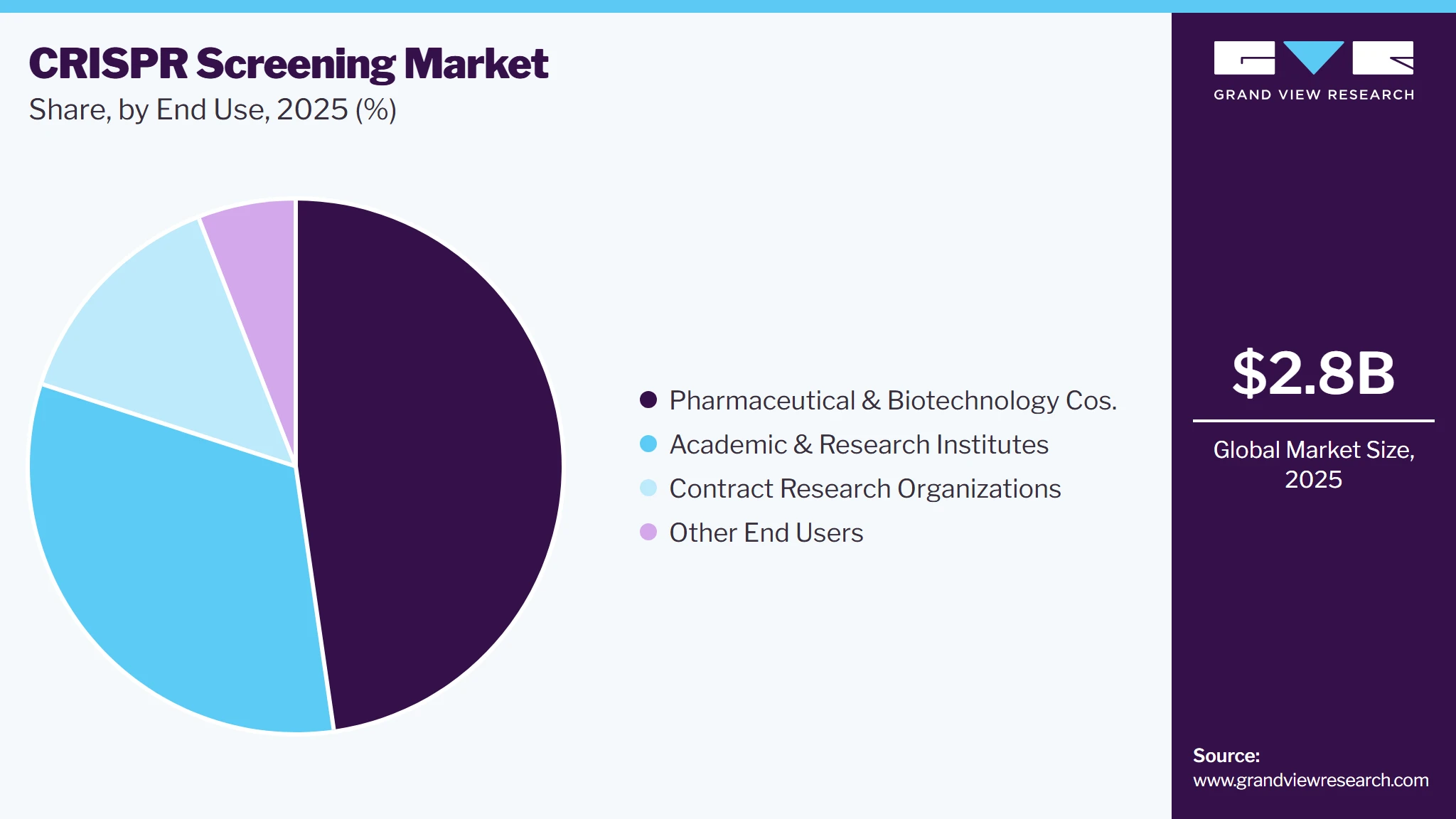
The pharmaceutical & biotechnology companies segment dominated the market with a share of 47.7% in 2025, driven by increasing investments in target discovery, therapeutic development, and functional genomics research. The integration of CRISPR screening into preclinical workflows enables companies to investigate disease-associated genes, validate therapeutic targets, and identify mechanisms underlying drug resistance. Growing adoption of genome-wide knockout and activation screens to evaluate gene function and prioritize potential drug candidates further supports segment growth.
 To learn more about this report, Download Free Sample Report
The contract research organizations segment is projected to witness the fastest CAGR, driven by increasing outsourcing of complex genetic screening studies by pharmaceutical and biotechnology companies. CROs provide specialized expertise, advanced screening infrastructure, and integrated capabilities in library design, screening execution, sequencing, and data analysis. Their ability to offer cost-efficient research solutions, access to advanced technologies, and flexible project support is expected to encourage outsourcing and accelerate the adoption of CRISPR screening across drug discovery and development programs.
Regional Insights
The North America CRISPR screening industry dominated, accounting for the largest revenue share of 42.0% in 2025, supported by advanced functional genomics infrastructure, strong pharmaceutical R&D activity, and adoption of AI-enabled target discovery. For instance, in April 2025, Tempus AI introduced its Loop platform, integrating AI, human-derived biological models, and CRISPR screens for oncology target discovery and validation.
 To learn more about this report, Download Free Sample Report
U.S. CRISPR Screening Market Trends
The CRISPR screening industry in the U.S. is expected to grow over the forecast period, supported by strong adoption of functional genomics in oncology, drug discovery, and target validation. For instance, in February 2026, researchers at Children’s Hospital of Philadelphia and Penn Medicine launched a CRISPR-based platform that enables genetic screening directly in patient-derived leukemia cells to identify genes and regulatory elements driving acute myeloid leukemia. The platform supports the identification of potential drug targets and the investigation of treatment resistance, highlighting the growing use of patient-relevant CRISPR screening approaches in the U.S.
Europe CRISPR Screening Market Trends
The CRISPR screening industry in Europe represents a lucrative market, supported by established functional genomics infrastructure, pharmaceutical R&D, and adoption of large-scale genetic screening for therapeutic target discovery. For instance, in May 2025, Evotec presented a CRISPR screening platform using primary human CD4+ T cells, where a genome-scale knockout screen covering more than 8,000 genes was used to identify and validate immune-modulating targets for autoimmune and immuno-oncology applications. This highlights the increasing use of large-scale CRISPR screening for disease-relevant target discovery in Europe.
The UK CRISPR screening market is supported by strong academic-industry collaboration and increasing use of automated functional genomics. The University of Cambridge’s functional genomics infrastructure provides researchers with access to automated arrayed-CRISPR screening capabilities to identify therapeutic opportunities across chronic diseases, thereby supporting broader adoption of advanced screening technologies.
The CRISPR screening market in Germany is anticipated to grow significantly over the forecast period, supported by its strong biotechnology research base, pharmaceutical R&D capabilities, and adoption of functional genomics technologies. For instance, in September 2025, researchers at the University of Stuttgart developed CRISPRgenee, a CRISPR-based approach designed to improve the efficiency and reproducibility of loss-of-function genetic screens. The technology enables more precise identification of gene functions, supporting the advancement of CRISPR screening applications in cellular and disease research.
Asia Pacific CRISPR Screening Market Trends
The CRISPR screening market in Asia Pacific is expected to grow at the fastest CAGR over the forecast period. Rapid expansion of genomics research and pharmaceutical R&D is driving growth in the market in the Asia-Pacific region, which is projected to register a CAGR of 18.3% from 2026 to 2033. Increasing adoption of functional genomics and advanced screening approaches is supporting regional growth. For instance, in September 2025, researchers at Hangzhou City University published research on transcriptome-scale CRISPR-Cas13 screening to identify essential long non-coding RNAs, highlighting the growing use of CRISPR screening in functional genomics research.
The China CRISPR screening market is strengthening its position through increased activity in functional genomics, disease model research, and target discovery. The increasing availability of genome-wide screening libraries, advanced sequencing infrastructure, and bioinformatics capabilities is enabling researchers to conduct larger and more complex genetic screens, thereby supporting the use of CRISPR-based approaches across biomedical research and drug development.
The CRISPR screening market in Japan is advancing through research focused on improving editing precision and screening efficiency. For instance, in December 2025, researchers at Hiroshima University developed a screening system to identify CRISPR-Cas9 variants with enhanced homology-directed repair activity, leading to the discovery of a variant with improved editing accuracy at specific genomic targets. This development highlights the growing application of screening approaches to optimize CRISPR-based technologies in Japan.
Latin America CRISPR Screening Market Trends
The CRISPR screening market in Latin America is expected to grow gradually, supported by increasing research activity in functional genomics, rising use of CRISPR-based gene-function studies, and improving access to sequencing and molecular-analysis infrastructure. Growing collaborations between research institutions and biotechnology organizations are further advancing CRISPR screening applications across the region.
MEA CRISPR Screening Market Trends
The CRISPR screening market in the Middle East & Africa is expected to expand as countries strengthen genomics and precision-medicine infrastructure. For instance, in August 2025, Abu Dhabi launched a newborn genetic screening program using whole-genome sequencing and AI to screen for more than 815 treatable childhood genetic conditions, supporting the development of regional genomic research capabilities relevant to future CRISPR-based target discovery and screening applications.
Key CRISPR Screening Company Insights
Several well-established companies operate in the CRISPR screening market, supported by their portfolios of screening libraries, CRISPR reagents and kits, bioinformatics tools, and screening services. Leading players maintain a strong market presence through product innovation, expansion of CRISPR screening portfolios, development of advanced screening solutions, and strategic initiatives focused on improving screening efficiency, scalability, data analysis, and target identification.
Key CRISPR Screening Companies
The following key companies have been profiled for this study on the CRISPR screening market include:
-
Revvity
-
Thermo Fisher Scientific Inc.
-
Merck KGaA
-
Cellecta, Inc.
-
GenScript
-
Synthego
-
GeneCopoeia, Inc.
-
Takara Bio Inc.
-
Agilent Technologies, Inc.
-
Integrated DNA Technologies, Inc.
Competitive Benchmarking
Category
Operating Strategies
Competitive Edge
Weakness
Established Players (Revvity, Thermo Fisher Scientific Inc, Merck KGaA, GenScript, Takara Bio Inc., Agilent Technologies, Inc., Integrated DNA Technologies, Inc.)
- Strengthen market presence through strategic collaborations, product development, and integration of CRISPR technologies with sequencing, automation, and bioinformatics solutions.
- Established global distribution networks and customer relationships across pharmaceutical, biotechnology, academic, and research institutions.
- High R&D and technology development costs due to rapid advancements in CRISPR screening and gene-editing technologies.
Emerging Players (Cellecta, Inc, GeneCopoeia, Inc., Synthego)
- Focus on specialized CRISPR screening libraries, pooled screening platforms, and customized gene-editing solutions for research applications.
- Strong specialization in custom screening libraries and application-specific CRISPR solutions, enabling greater flexibility for research requirements.
- Greater dependence on research funding and specialized CRISPR screening applications, increasing exposure to fluctuations in research demand.
Recent Developments
- In August 2026, Synthego launched Engineered Cell Libraries, providing arrayed CRISPR-edited cells for functional screening assays. The offering leveraged its Eclipse Platform to deliver custom knockout cell libraries, enabling scalable target identification and validation while streamlining CRISPR-based drug discovery workflows.
"Arrayed screening approaches are more sensitive, compatible with a broader assortment of downstream assays, and can yield data that is more readily interpretable than the more commonly used pooled approach but are underutilized due to lack of infrastructure and limited bandwidth. With Engineered Cell Libraries, Synthego continues to provide transformative solutions for accelerated drug discovery which ultimately can bring a wider range of therapeutics to market faster."
- Travis Maures, Synthego’s Chief Technology Officer
- In July 2024, Integrated DNA Technologies announced a licensing agreement with SeQure Dx to incorporate GUIDE-seq technology into its portfolio, enabling genome-wide identification and characterization of CRISPR-induced off-target effects and supporting the development and safety assessment of CRISPR-based therapeutic applications.
- In October 2023, Cellecta, Inc. launched genome-wide CRISPR knockout libraries for chicken and pig models, enabling systematic genetic screening across approximately 39,000 genes. The libraries supported gene function studies, viability screening, and pathogen resistance research.
CRISPR Screening Market Report Scope
Report Attribute
Details
Market size in 2025
USD 2.8 billion
Estimated market size in 2026
USD 3.3 billion
Projected market size by 2033
USD 8.7 billion
Growth rate
CAGR of 15.0% from 2026 to 2033
Historical data
2021 - 2025
Forecast period
2026 - 2033
Quantitative units
Revenue in USD billion, and CAGR from 2026 to 2033
Report coverage
Revenue forecast, company ranking, competitive landscape, growth factors, and trends
Segments covered
Product & services, type, screening format, application, end use, region
Regional scope
North America; Europe; Asia Pacific; Latin America; MEA
Country scope
U.S.; Canada; Mexico; UK; Germany; France; Italy; Spain; Norway; Denmark; Sweden; China; Japan; India; South Korea; Australia; Thailand; Brazil; Argentina; Saudi Arabia; South Africa; UAE; and Kuwait
Key companies profiled
Revvity; Thermo Fisher Scientific Inc.; Merck KGaA; Cellecta, Inc.; GenScript; Synthego; GeneCopoeia, Inc.; Takara Bio Inc.; Agilent Technologies, Inc.; Integrated DNA Technologies, Inc.
Customization scope
Free report customization (equivalent up to 8 analysts' working days) with purchase. Addition or alteration to country, regional & segment scope.
Pricing and purchase options
Avail customized purchase options to meet your exact research needs. Explore purchase options
Global CRISPR Screening Market Report Segmentation
This report forecasts revenue growth at the global, regional and country levels and provides an analysis of the latest trends in each of the sub-segments from 2021 to 2033. For this study, Grand View Research has segmented the global CRISPR screening market report based on product & services, type, screening format, application, end use, and region:
-
Product & Services Outlook (Revenue, USD Billion, 2021 - 2033)
-
Products
-
CRISPR Screening Libraries
-
CRISPR Reagents & Kits
-
Software & Bioinformatics Tools
-
-
Services
-
Library Design & Construction
-
CRISPR Screening Services
-
Sequencing & Data Analysis Services
-
Hit Identification & Validation Services
-
-
-
Type Outlook (Revenue, USD Billion, 2021 - 2033)
-
CRISPR Knockout (CRISPR-KO)
-
CRISPR Interference (CRISPRi)
-
CRISPR Activation (CRISPRa)
-
Others
-
-
Screening Format Outlook (Revenue, USD Billion, 2021 - 2033)
-
Pooled Screening
-
Arrayed Screening
-
-
Application Outlook (Revenue, USD Billion, 2021 - 2033)
-
Functional Genomics
-
Drug Discovery & Development
-
Target Identification & Validation
-
Cancer Research
-
Genetic Disease Research
-
Others
-
-
End Use Outlook (Revenue, USD Billion, 2021 - 2033)
-
Pharmaceutical & Biotechnology Companies
-
Academic & Research Institutes
-
Contract Research Organizations
-
Other End Users
-
-
Regional Outlook (Revenue, USD Billion, 2021 - 2033)
-
North America
-
U.S.
-
Canada
-
Mexico
-
-
Europe
-
UK
-
Germany
-
France
-
Italy
-
Spain
-
Denmark
-
Sweden
-
Norway
-
-
Asia Pacific
-
Japan
-
China
-
India
-
Australia
-
Thailand
-
South Korea
-
-
Latin America
-
Brazil
-
Argentina
-
-
Middle East and Africa (MEA)
-
South Africa
-
Saudi Arabia
-
UAE
-
Kuwait
-
-
Research Methodology
The CRISPR screening market figures in this report are based on a proven research process that combines executive interviews with secondary research from proprietary databases, company filings, and recognized regulatory and institutional sources. Market size is built through value-chain sizing-reconciling supply-side and demand-side estimates-and triangulated with bottom-up and top-down approaches. Every estimate passes multiple levels of expert validation before publication, with each CRISPR screening segment quantified using the revenue-capture definitions in the table below.
Segment Definition
Product & Services
Revenue Capture Definition
Products
Revenue generated from physical products and digital tools used to design, conduct, and analyze CRISPR-based screening experiments. This segment includes CRISPR screening libraries containing guide RNAs targeting specific genes or genomic regions, reagents and kits required for gene-editing and screening workflows, and software and bioinformatics tools for experimental design, screening data processing, and candidate gene analysis.
Services
Market revenue stems from outsourced services supporting CRISPR screening projects, including library design and construction, execution of screening experiments, sequencing and data analysis, and hit identification and validation. These services help researchers identify gene functions, evaluate potential therapeutic targets, and interpret screening outcomes across drug discovery and functional genomics programs.
Type
Revenue Capture Definition
CRISPR Knockout (CRISPR-KO)
Revenue derived from CRISPR screening technologies that disrupt target gene function through targeted DNA editing, typically by introducing insertions or deletions that impair gene expression. These approaches support functional genomics, investigations of disease mechanisms, genetic dependency mapping, and the identification of potential drug targets.
CRISPR Interference (CRISPRi)
This segment captures income from CRISPR-based gene repression technologies that reduce gene expression without intentionally introducing double-stranded DNA breaks. These systems generally use catalytically inactive Cas proteins coupled with transcriptional repression mechanisms to investigate gene function and regulatory pathways.
CRISPR Activation (CRISPRa)
Market value in this category reflects CRISPR-based screening approaches that increase the expression of selected genes via transcriptional activation systems. These technologies support gain-of-function studies, pathway analysis, target discovery, and investigation of genes associated with disease progression and therapeutic response.
Others
Includes revenue from alternative CRISPR screening approaches that fall outside conventional knockout, interference, and activation methods, including specialized gene-editing and functional screening strategies used to investigate genetic function and cellular responses.
Screening Format
Revenue Capture Definition
Pooled Screening
Revenue generated from screening workflows in which multiple CRISPR guide RNAs are collectively introduced into a cell population, and guide representation is subsequently quantified to determine the effects of genetic perturbations. These methods enable large-scale, high-throughput assessment of gene function, genetic dependencies, and potential therapeutic targets.
Arrayed Screening
This segment represents revenue from screening approaches in which individual genetic perturbations are tested separately in designated wells or experimental locations. Arrayed formats enable controlled assessment of gene-specific effects through phenotypic measurements, imaging, molecular assays, and other experimental readouts.
Application
Revenue Capture Definition
Functional Genomics
Includes revenue from CRISPR screening applications used to study gene function, identify genetic interactions, and understand biological pathways and cellular processes.
Drug Discovery & Development
Covers revenue generated through CRISPR screening applications that support therapeutic target discovery, disease research, and the development of drug candidates.
Target Identification & Validation
Encompasses the use of CRISPR screening to identify genes and molecular targets associated with disease mechanisms and validate their suitability for therapeutic intervention.
Cancer Research
Includes CRISPR screening applications used to investigate cancer-related genes, identify tumor dependencies, study drug resistance, and discover potential cancer therapy targets.
Genetic Disease Research
Covers the use of CRISPR screening to investigate disease-associated genes, understand genetic mechanisms, and identify potential therapeutic targets for inherited disorders.
Others
Includes CRISPR screening applications within drug discovery and development beyond target identification and validation, cancer research, and genetic disease research, such as research into other therapeutic areas.
End Use
Revenue Capture Definition
Pharmaceutical & Biotechnology Companies
Revenue generated from CRISPR screening products and services adopted by pharmaceutical and biotechnology companies for target discovery, genetic dependency analysis, therapeutic development, biomarker research, and investigation of drug resistance mechanisms.
Academic & Research Institutes
This segment captures income from CRISPR screening tools and services utilized by universities, government laboratories, and research institutions conducting fundamental and translational studies in gene function, disease biology, molecular pathways, and genetic interactions.
Contract Research Organizations
Market revenue stems from CRISPR screening services provided by contract research organizations (CROs) to external clients. Activities include screening experiment execution, library-based studies, sequencing, bioinformatics analysis, and target identification to support outsourced research and drug development programs.
Other End Users
Includes revenue from government research agencies, nonprofit research organizations, clinical research centers, and other specialized institutions using CRISPR screening technologies for scientific investigations and biotechnology development.
Estimation Model
Stage
Description
Top-Down
Commodity Flow Analysis: Market size was estimated by analyzing revenues generated by key CRISPR screening product and service providers, supported by company annual reports, investor presentations, product portfolios, and premium databases. Revenue contributions from private companies were assessed using industry databases and validated through primary research to derive the overall market value.
Segmentation
Country-Level Segment Share Modeling: Market shares for product and services, type, screening format, application, and end use segments were derived using country-specific biotechnology R&D expenditure, gene editing research activity, pharmaceutical development pipelines, academic funding, and adoption of CRISPR-based screening technologies. Weighted average calculations were applied to determine regional and global segment distributions.
Validation
Data Triangulation & Validation Model: Market estimates were validated through triangulation of secondary research, primary interviews, company-level revenue assessments, product and service pricing, screening technology adoption, and end-user demand analysis to ensure consistency and accuracy across market segments and geographies.
Forecasting
Forecasting & CAGR Modeling: Market forecasts were developed using historical demand trends, advancements in CRISPR-Cas screening technologies, increasing demand for functional genomics research, expansion of drug discovery programs, growth in genetic disease research, and investments in biotechnology R&D. Trend analysis and forecasting models were applied to project future market growth and CAGR.
Customization Table
Client Request
Customization Delivered
Value Adds
CRISPR Screening Platform & Workflow Assessment
Evaluation of CRISPR screening workflows across pooled, arrayed, genome-wide, targeted, single-cell, and in vivo approaches, including guide RNA library design, delivery methods, screening readouts, sequencing, hit identification, and validation requirements.
Helps clients compare screening approaches, identify workflow bottlenecks, optimize experimental design, and select platforms aligned with specific research and drug discovery objectives.
CRISPR Screening Technology & Cost Benchmarking
Comparative assessment of CRISPR screening technologies based on screening throughput, editing efficiency, specificity, library coverage, instrumentation requirements, consumable costs, data-processing requirements, and overall cost per screen.
Enables clients to benchmark competing technologies, assess cost-performance trade-offs, identify cost optimization opportunities, and support technology procurement decisions.
Single-cell & Multi-omics CRISPR Screening Opportunity Assessment
Evaluation of emerging single-cell CRISPR screening, CRISPR-seq, CRISPR-based transcriptomic and proteomic screening, and multi-omics approaches, including technology maturity, data requirements, applications, and adoption potential.
Enables clients to identify next-generation screening opportunities, assess technology readiness, prioritize emerging platforms, and strengthen capabilities in high-resolution functional genomics.
Frequently Asked Questions About This Report
The pharmaceutical & biotechnology companies segment led with a 47.7% revenue share in 2025.
The global CRISPR screening market size was valued at USD 2.8 billion in 2025 and is estimated at USD 3.3 billion for 2026.
The global CRISPR screening market is expected to grow at a CAGR of 15.0% from 2026 to 2033, reaching USD 8.7 billion by 2033.
The products segment held the highest market share of 55.7% in 2025.
North America dominated with a 42.0% revenue share in 2025.
Market growth is driven by increasing adoption of CRISPR-based functional genomics, drug discovery, target identification, and disease research, as well as advancements in high-throughput screening and gene-editing technologies.
Key players include Revvity, Thermo Fisher Scientific Inc., Merck KGaA, Cellecta, Inc., GenScript, Synthego, GeneCopoeia, Inc., Takara Bio Inc., Agilent Technologies, Inc., Integrated DNA Technologies, Inc.
The CRISPR knockout (CRISPR-KO) segment held the highest market share of 61.6% in 2025.
The functional genomics segment held the highest market share of 29.9% in 2025.
Asia Pacific is the fastest-growing region over the forecast period.
About the Author(s)
Biotechnology Research Team
Healthcare · BiotechnologyThis report was authored by the biotechnology research team at Grand View Research - comprising two research analysts, one senior research analyst, and one industry expert - with specialized expertise in the biotechnology segment of the healthcare industry. All findings are based on proprietary healthcare databases, executive interviews, and regulatory analysis, subject to internal peer review prior to publication.
Last Updated:
Speak to Analyst

Customize this report to your needs - add regions, segments, or data points, with 20% free customization.
Or view our licence options:


ISO 9001:2015 & 27001:2022 Certified
We are GDPR and CCPA compliant! Your transaction & personal information is safe and secure. For more details, please read our privacy policy.


