
- Home
- »
- Medical Devices
- »
-
Dental Service Organization Market Size Report, 2026 – 2033GVR Report cover

Dental Service Organization Market (2026 - 2033)
Size, Share & Trends Analysis Report By Service (Human Resources, Marketing & Branding, Accounting, Medical Supplies Procurement), By End-use (Dental Surgeons, General Dentists), By Region, And Segment Forecasts
Market Size, 2025
$86.8BMarket Estimate, 2026
$100.6BMarket Forecast, 2033
$301.5BCAGR, 2026–2033
17.0%Dental Service Organization Market Summary
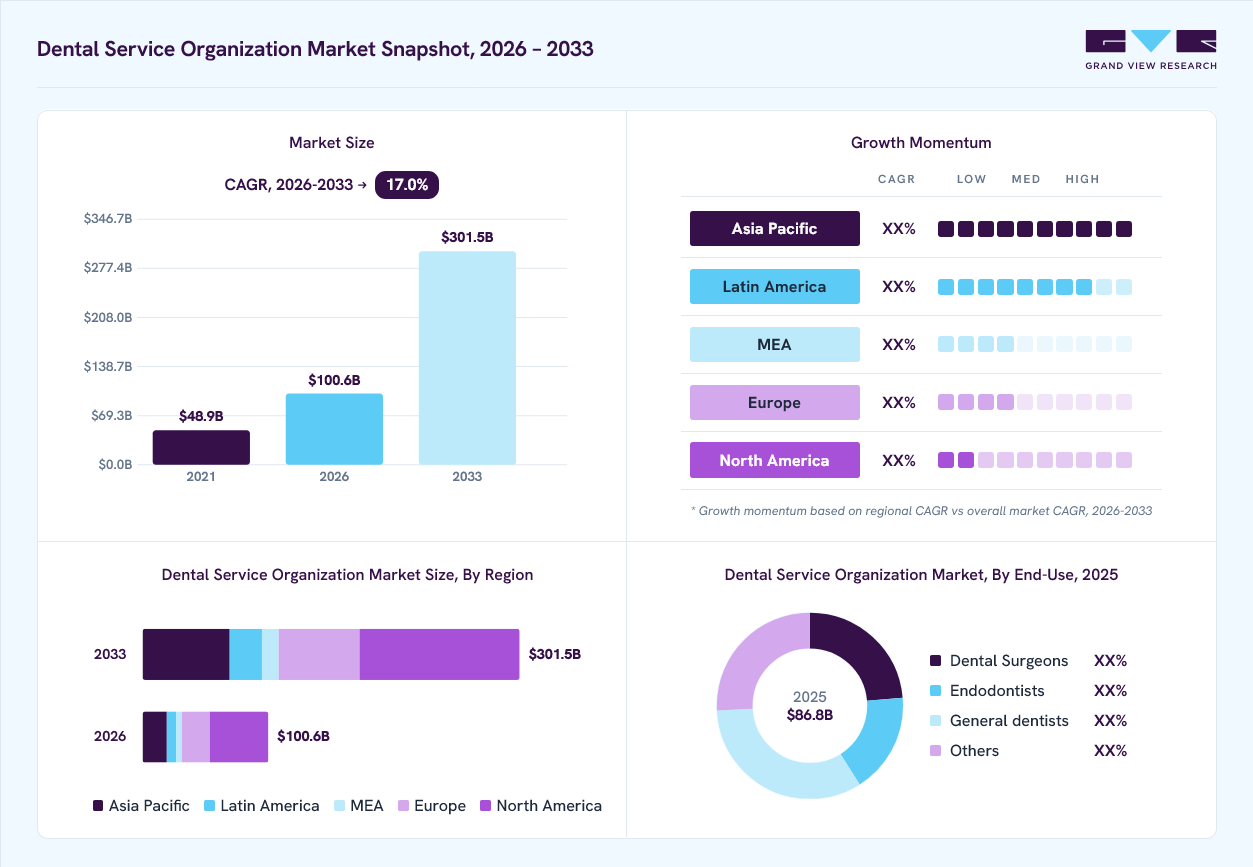
The global dental service organization market size was valued at USD 86.8 billion and is projected to grow from USD 100.6 billion in 2026 to USD 301.5 billion by 2033, growing at a CAGR of 17.0% from 2026 to 2033. North America dominated the market, accounting for the largest global share of 47.2% in 2025. This growth is attributed to the increase in the prevalence of oral conditions, high expenditure on dental care, and improved efficiency in non-clinical business management by DSOs.
 Source: Grand View Research, IR Documents, Primary Interviews, Paid DatabasesTo learn more about this report,
 Download Free Sample Report
Key Market Trends & Insights
- By service: Medical supplies procurement segment led the market with a revenue share of 20.6% in 2025.
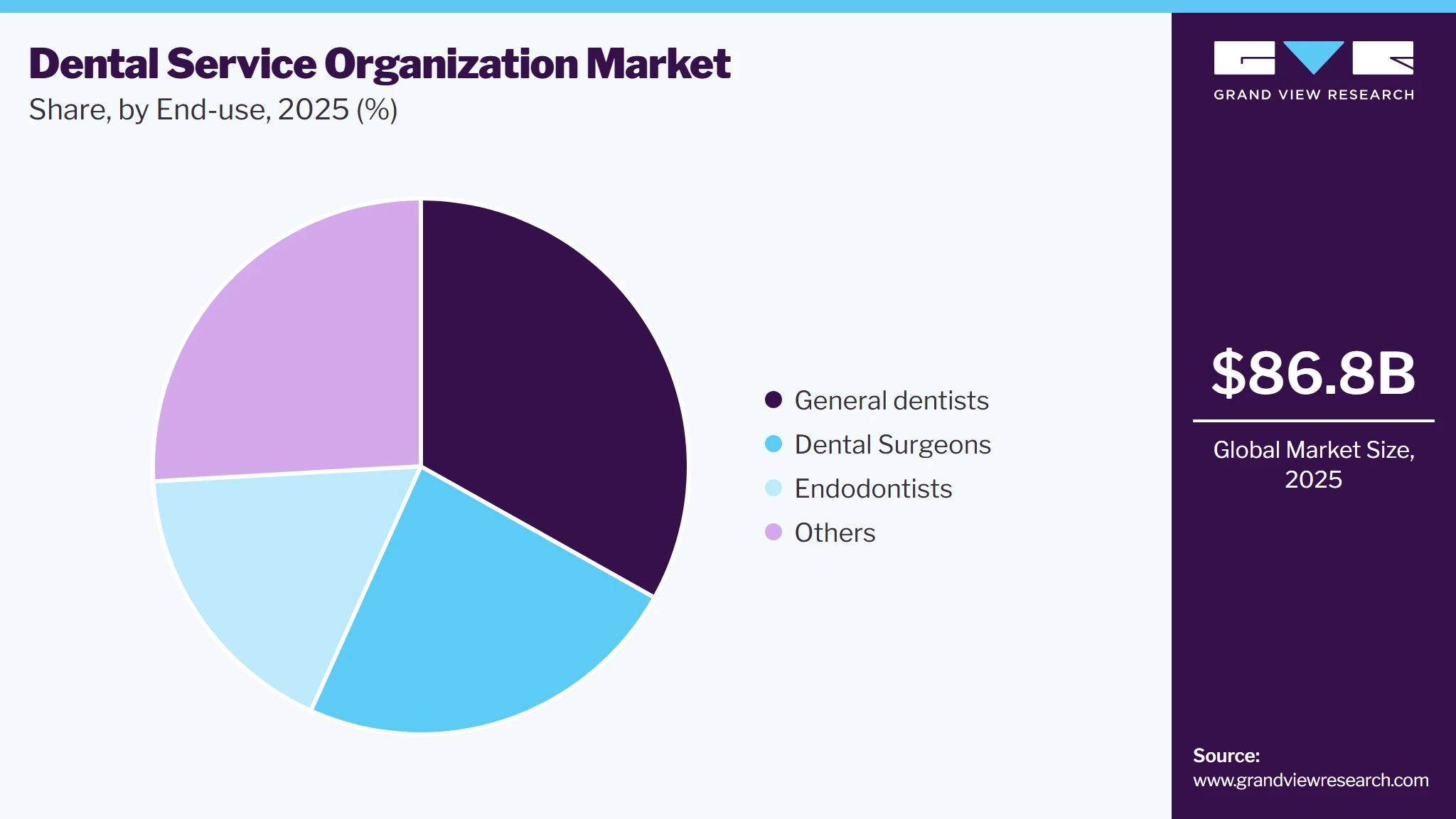
- By end-use: General dentists segment led the market with the largest revenue share of 33.3% in 2025.
Regional Highlights
- Largest regional market: North America (47.2% revenue share, 2025)
- Fastest-growing regional market: Asia Pacific (fastest CAGR, 2026-2033)
- By country: The U.S. held the largest share of North America in 2025.
Market Size & Forecast
- Market size in 2025: USD 86.8 Billion
- Estimated market size in 2026: USD 100.6 Billion
- Projected market size by 2033: USD 301.5 Billion
- CAGR (2026-2033): 17.0%
Three ways to get this report
Buy it, customize it, or ask a question.Ask an Analyst
Analyst response in 1 business day
- AccessReport author, directly
- Reply timeWithin 1 working day
- No sales callDirect answer only
- FormatEmail reply
- CostFree, no cost
Get the Full Report
What the study covers
- FormatsPDF · Excel · Dashboard
- Timeline2026–2033 annual, 2025 base
- Coverage20+ countries, 5 regions
- Companies10+ key players profiled
Customize the Report
20% free customization
- IncludeCountries, segments, points
- TailorTo your product definition
- ExtendDeeper competitor detail
- OrA fully bespoke study
- Turnaround5–10 working days
Dental Service Organizations (DSOs) are private equity-backed autonomous business support centers that offer administrative & compliance services to dental specialists. The non-clinical services offered by dental service organizations range from human resources, dental supply/device procurement, branding, & maintenance to accounting services. The DSOs offer better buying power as they can negotiate with vendors and thus lower dentists' supply costs. To learn more about this report, Download Free Sample Report
DSOs make a uniform and standardized approach across their dental practices to offer efficient dental services to patients every time they come into the clinic. The standardization also covers the ability of the practices to learn the best-practice methods as well as the uniform compliance with regulations.
Key dental device manufacturers such as Dentsply Sirona and Institut Straumann, which capture the major market share in the dental market, have started new initiatives, like collaborating with dental service organizations for the distribution of dental equipment.
DSOs offer several benefits to dental practitioners and clinics. Here are some key advantages of partnering with DSOs:
-
Streamlined Business Operations: The DSOs provide comprehensive business support services, handling tasks such as administrative work, facility management, procurement, human resources, & marketing. Dental practitioners can focus more on patient care and clinical activities by offloading these responsibilities to the DSO, improving efficiency & productivity.
-
Cost Savings: The DSOs can leverage their purchasing power and economies of scale to negotiate favorable contracts with suppliers, reducing the procurement costs of dental supplies and equipment. In addition, shared administrative and support services can lead to cost savings for individual practices, as they benefit from shared resources & expertise.
-
Access to Expertise: The DSOs typically have experienced professionals who specialize in various areas of dental practice management. This expertise can be invaluable for dentists who may not have extensive business knowledge or experience. The DSOs can provide guidance and support in compliance, insurance billing, financial management, and marketing strategies.
-
Improved Quality and Standardization: The DSOs often establish protocols, guidelines, and standardized practices across their affiliated dental clinics. This helps ensure consistent delivery of high-quality care and enhances patient satisfaction. The DSOs can also invest in training & professional development programs for dentists and staff, further enhancing the clinical expertise within the organization.
-
Access to Technology and Innovation: DSOs often have the resources to invest in advanced dental technologies and digital systems. By partnering with a DSO, dental practitioner’s access advanced equipment & tools that can enhance diagnostic capabilities, treatment outcomes, and patient experience. This access to technology can be expensive for individual dental practices.
Case study: AI-powered operational automation enhances DSO performance across multi-Location network
Overview
A mid-sized Dental Service Organization (DSO) operating 12 clinics across the U.S. Midwest implemented TensorLinks' AI-driven operational automation platform to address workflow inefficiencies, patient engagement challenges, and administrative bottlenecks. Prior to implementation, the organization faced inconsistent performance across locations, missed patient follow-ups, insurance verification delays, and limited visibility into operational metrics, constraining revenue growth and clinic productivity.
Challenge
As the DSO expanded its footprint, maintaining operational consistency became increasingly difficult. Individual clinics relied on different scheduling processes, patient communication methods, and reporting practices, resulting in variable performance across the network. Manual follow-up processes contributed to missed treatment opportunities, while front-desk staff were burdened with administrative tasks such as appointment reminders, insurance verification, and patient inquiries. In addition, the absence of centralized reporting limited management's ability to identify underperforming locations and optimize resource allocation.
Solution
The DSO deployed TensorLinks' centralized automation platform across all 12 locations. The solution included AI-powered patient follow-up systems, automated insurance eligibility verification, unified communication channels, real-time performance dashboards, and weekly business intelligence reporting. The platform also integrated with multiple practice management systems, enabling standardized workflows across the network while providing leadership with centralized operational oversight. Omnichannel patient engagement capabilities, including voice, SMS, and web chat, were introduced to improve communication effectiveness across diverse patient demographics.
Results
Within 90 days of deployment, the DSO reported a 22% increase in revenue, driven by improved treatment acceptance, enhanced patient recall management, and reduced appointment leakage. Administrative workload declined by 35%, allowing staff to focus more on patient-facing activities. The organization also achieved an 18% reduction in no-show appointments and a 28% increase in patient follow-up completion rates, contributing to higher chair utilization and improved practice productivity. Furthermore, patient response rates to recall campaigns increased by approximately 40%, reflecting the effectiveness of automated omnichannel communication.
Strategic Impact on the Market
This case highlights the growing role of AI-enabled operational platforms in supporting DSO scalability and profitability. By standardizing workflows across multiple locations, automating repetitive administrative functions, and improving patient engagement, technology solutions can help DSOs maximize operational efficiency without proportionally increasing staffing costs. The successful implementation also demonstrates how AI-powered automation can facilitate rapid integration of newly acquired or newly established clinics, supporting broader consolidation trends within the dental services market. As DSOs increasingly seek to enhance margins, optimize workforce utilization, and improve patient experiences, adoption of intelligent automation platforms is expected to become a key competitive differentiator across the industry.
Market Dynamics
The dental service organization (DSO) market is experiencing robust growth as dental practices increasingly partner with DSOs to improve operational efficiency, reduce administrative burdens, and enhance access to advanced clinical technologies. DSOs provide centralized support services, including practice management, billing, marketing, procurement, staffing, and regulatory compliance, enabling dentists to focus on patient care. The rising prevalence of dental diseases, growing demand for preventive and cosmetic dentistry, consolidation of independent dental practices, and increasing adoption of digital dentistry solutions such as CAD/CAM systems, AI-powered diagnostics, and tele dentistry are expected to continue driving market growth. In addition, favorable investment activity from private equity firms and the expansion of multi-location dental networks are further accelerating the development of the global DSO market.
The DSO enables the consolidation of oral care practices under a centralized management structure, streamlining operations, reducing overhead costs, and enhancing patient care. By offering support in administrative tasks, marketing, compliance, and technology, DSOs allow dentists to concentrate on clinical care while improving their practices' efficiency and profitability. This model particularly appeals to investors due to its scalability, potential for higher profit margins, adaptability to new technologies, and changing patient expectations. Furthermore, DSOs are leading innovation in teledentistry, AI-driven diagnostics, digital treatment planning, and patient engagement platforms. These advancements help practices extend their reach and provide more personalized, efficient, and value-based care.
Moreover, the increasing benefits offered by DSOs are the rising demand for cost-effective and efficient dental care. Dental treatment costs can be a major concern for patients, especially in regions with limited access to affordable oral healthcare. The DSOs address this issue by optimizing operational efficiencies and leveraging economies of scale, allowing them to offer more competitive pricing for dental services.
The regulatory environment governing dental practice ownership remains one of the most significant barriers to the expansion of DSOs. The DSOs generally do not provide clinical care directly; instead, they offer non-clinical administrative support services such as human resources, billing, procurement, marketing, and facility management. In several jurisdictions, particularly in the U.S., Corporate Practice of Dentistry (CPD) laws prohibit non-dentists from owning, controlling, or influencing clinical decision-making within dental practices.
According to the American Dental Association's Health Policy Institute (ADA HPI), despite the rapid growth of consolidation, only 16.1% of U.S. dentists were affiliated with DSOs in 2024, indicating that approximately 84% of practicing dentists remain outside DSO-supported models. The relatively moderate penetration reflects the complexity of ownership restrictions, state-specific regulatory requirements, and concerns over preserving professional autonomy
Artificial intelligence (AI) is emerging as one of the most transformative technologies within the Dental Service Organization (DSO) market, presenting substantial opportunities to improve operational efficiency, optimize revenue cycle management, enhance patient engagement, and support clinical decision-making. AI-powered technologies can automate labor-intensive administrative functions, streamline claims management, improve provider productivity, and facilitate data-driven expansion strategies.
DSOs are increasingly leveraging AI and machine learning (ML) capabilities to automate appointment scheduling, insurance eligibility verification, patient communications, billing workflows, and follow-ups. In addition, AI-assisted radiographic interpretation and clinical decision support tools can improve diagnostic consistency, enable earlier disease detection, and support treatment planning.
Market Characteristics & Concentration
The chart below represents the relationship between industry concentration, industry characteristics, and industry participants. The industry is fragmented, with many services and end users entering the market. There is a high degree of innovation, a high level of partnerships and collaboration activities, a moderate impact of regulations, and market geographical expansion of the industry.
The dental service organization industry is experiencing a high degree of innovation. DSOs are adopting digital platforms, AI-based diagnostic tools, cloud-based practice management software, and teledentistry to streamline operations and standardize care across multiple practices. For instance, companies such as Overjet and Pearl are leveraging AI to analyze X-rays and detect oral conditions with higher accuracy and consistency across DSO networks. Moreover, platforms such as Denticon streamline scheduling, patient records, billing, and analytics for multi-location DSOs.
 To learn more about this report, Download Free Sample Report
Several key players are actively engaging in partnerships & collaborations to promote growth & innovation and improve their competitiveness by combining the expertise & efforts of different organizations. For instance, in June 2024, VideaHealth and vVARDIS partnered to strengthen the future of preventative oral care by combining advanced AI-driven diagnostics with innovative oral health solutions. This collaboration was designed to make early detection and prevention more accessible, allowing dentists to identify potential tooth issues before they progress and provide patients with more effective, non-invasive treatments.
Dr. Haley and Dr. Goly Abivardi, DMDs, Founders and Chief Executive Officers of vVARDIS, said:
“VideaHealth has achieved both impressive clinical results and is the dental AI partner of choice for industry leaders, such as Heartland Dental, 42 North, and many others. This collaboration further strengthens vVARDIS’ mission to provide solutions that deliver a positive impact on dental practices and patients' overall health and experience. “
The regulatory framework for the dental service organization industry involves compliance with guidelines and standards to ensure accuracy and consistency.
-
EU-Wide Regulations
-
The sector is governed by broader healthcare directives under the European Union Medical Device Regulation (MDR 2017/745), ensuring that all materials, implants, and devices used in DSOs meet safety, efficacy, and quality requirements.
-
General Data Protection Regulation (GDPR) governs patient data management, which is crucial for DSOs as they operate multi-practice networks handling sensitive health information.
-
Cross-border healthcare directive (2011/24/EU) allows patients to seek treatment in other EU states, indirectly impacting DSO competition and network expansion.
-
-
Ownership and Practice Management Restrictions
-
In countries such as Germany, France, and Austria, dental practice ownership is restricted to licensed dentists, limiting corporate DSOs from directly owning practices. Instead, DSOs often form partnership models or management service agreements.
-
In the UK, Sweden, and the Netherlands, corporate ownership of clinics is permitted, enabling faster DSO expansion.
-
The launch of the “SMITHAM” Campus Dental Care Facility at NIT Calicut in August 2025 aims to strengthen healthcare infrastructure within the institution. Designed to provide accessible, affordable, and high-quality oral healthcare services to students, faculty, and staff, the facility aims to address both preventive and curative oral needs directly on campus. Equipped with modern diagnostic and treatment technologies, “SMITHAM” reduces the need for patients to travel outside the institute for oral care, ensuring timely intervention and improved oral health outcomes.
Analyst Perspective
The case underscores a broader shift within the DSO market toward technology-driven practice management. As labor shortages, rising operating costs, and patient acquisition challenges persist, DSOs are increasingly investing in AI, automation, and centralized analytics platforms to drive operational excellence. Organizations capable of leveraging these technologies at scale are likely to achieve superior financial performance, stronger patient retention, and greater success in multi-site expansion strategies.
Rapid Growth of the DSO Model
The DSO enables the consolidation of oral care practices under a centralized management structure, streamlining operations, reducing overhead costs, and enhancing patient care. By offering support in administrative tasks, marketing, compliance, and technology, DSOs allow dentists to concentrate on clinical care while improving their practices' efficiency and profitability. This model particularly appeals to investors due to its scalability, potential for higher profit margins, adaptability to new technologies, and changing patient expectations. Furthermore, DSOs are leading innovation in tele dentistry, AI-driven diagnostics, digital treatment planning, and patient engagement platforms. These advancements help practices extend their reach and provide more personalized, efficient, and value-based care.
Increasing Preference for Aesthetic and Cosmetic Dentistry
As patients increasingly prioritize smile aesthetics, there is a growing demand for cosmetic procedures such as whitening, aligners, veneers, bonding, and same-day makeovers. This trend raises case values and makes demand more predictable. DSOs are well-positioned to capitalize on this growth through centralized marketing, standardized clinical protocols, vendor negotiations for materials and equipment, and scalable financing options.
Cosmetic procedures are also well-suited for digital workflows, which include scanners, CAD/CAM technology, and 3D printing. These technologies enable high throughput, consistent outcomes, and enhanced patient experiences across various locations. In addition, bundled pricing, membership plans, and in-house labs enhance profit margins and efficiency. Brand-driven advertising and positive online reviews further boost patient acquisition. The overall outcome of these strategies is higher revenue per visit, an increase in repeat and referral business, and a defensible, scalable service offering for DSOs.
Innovations & Trends in Cosmetic Dentistry
Innovation
Description
Benefit to DSOs
Clear aligner therapy 2.0
New materials, remote monitoring, shorter trays
High margin, protocolized service; scalable case management via centralized aligner teams
Same-day crowns & veneers (CAD/CAM)
Chairside milling with digital impressions
Faster turnaround, fewer visits, higher patient satisfaction, better operatory utilization
Digital Smile Design (DSD)
Software to plan and preview aesthetic outcomes
Increases case acceptance with visual “try-ins”; standardizes treatment planning across clinics
3D printing for models, Provisionals, guides
In-office or hub labs printing appliances
Cuts lab costs/turnaround; enables rapid cosmetic mock-ups and temporaries
Minimally invasive veneers & bonding materials
Thinner ceramics, advanced composites
Shorter chair time, broader candidate pool, repeatable protocols
Advanced whitening platforms
Light-activated and take-home gels with sensitivity control
Popular entry service for funnels; easy to train and market across locations
AI-assisted treatment planning & case presentation
AI analyzes photos/scans for proposals
Consistent planning, upsell support, and documentation; boosts acceptance
Centralized media & influencer marketing
Before/after libraries, social proof
Lowers CAC via brand storytelling; scalable content for all sites
In-house or hub-and-spoke labs
Central lab services feeding multiple clinics
Quality control, lower unit cost, faster remakes/iterations
AR “smile preview” apps
Augmented reality try-on for smiles
Emotional engagement → higher close rates; consistent across locations
Source: Grand View Research
Case Study: Dental Care Alliance and Overjet Launch Historic Rollout of AI:
 To learn more about this report, Download Free Sample Report
Case Study: Merger of Smile Source and ACT Dental:
In May 2025, Smile Source and ACT Dental announced their historic merger. Smile Source is a leading network of independent oral care practices, while ACT Dental specializes in coaching and educational services for professionals. This merger marks a strategic alliance aimed at empowering independent dentists by combining Smile Source’s national peer network and purchasing leverage with ACT Dental’s coaching systems and continuing education prowess.
Strategic Rationale & Organizational Synergies:
-
The merger aligns two mission-driven organizations with a common purpose: to preserve, support, and elevate independent dentistry
-
Leadership emphasizes a values-driven, collaborative culture, blending educational excellence with community empowerment
Complementary Strengths:
-
Smile Source brings:
-
Over 1,000 member dentists across 750 practices.
-
Group purchasing power, vendor partnerships, marketing support, and benchmarking tools.
-
ACT Dental offers:
-
Decades of leadership in coaching, leadership development, and continuing education (e.g., AGD-approved PACE programs, BPA app, Master Classes, study clubs
Positioning within the DSO Market:
-
Distinction from Traditional DSOs
-
Traditional DSOs often own and manage non-clinical aspects of dental groups, emphasizing centralized control and standardization, sometimes with private equity backing.
-
Smile Source occupies a middle ground: It’s a supportive network offering autonomy, shared resources, and scalability without owning practices.
Reinforcing Independent Practice:
-
This merger strengthens independent practices’ ability to compete by combining economies of scale (purchasing, educational depth) with individual autonomy.
-
In the broader DSO market, this model represents an alternative to both solo private practice and full corporate consolidation.
Key Takeaways for the DSO Market:
-
Alternative DSO Model: Shows that DSOs can support independents without ownership or centralization, preserving doctor-led culture.
-
Integration of Community + Coaching: Combining networks and education creates synergies beyond transaction-based support, a holistic growth model.
-
Sustainability via Shared Resources: Pooled purchasing and shared educational infrastructure offer cost-efficiency and a competitive edge.
- Scalability with Autonomy: Demonstrates sustainable growth while preserving the clinical and decision-making independence of member practices.
Service Insights
Based on service, the medical supplies procurement segment led the market with a significant revenue share of 20.6% in 2025. This growth is primarily driven by the need for cost efficiency, standardization, and streamlined operations across multi-site oral practices. Moreover, growing patient volumes and rising demand for preventive and restorative procedures further push DSOs to secure reliable supply chains and bulk purchasing contracts with vendors, ensuring uninterrupted availability of essential products. In addition, increasing regulatory requirements for infection control and sterilization encourage DSOs to rely on structured procurement services that guarantee certified and approved supplies. The push towards digitalization and data-driven decision-making also enables DSOs to adopt procurement platforms that optimize inventory management, improve supplier negotiations, and minimize wastage.
The human resources segment is expected to grow at the significant CAGR during the forecast period. This growth is attributed to the growing need to manage a large and diverse workforce effectively. With responsibilities across various roles, centralized HR services handle recruitment, onboarding, credentialing, and retention to address the shortage of skilled professionals and high turnover rates. Emphasizing training and professional development ensures consistent care quality, while standardized policies support scalability as DSOs expand. This leads to improved employee satisfaction, operational efficiency, and better patient care outcomes. In June 2024, HR for Health and DirectDental partnered to streamline hiring and HR in dental practices, addressing staffing shortages and administrative challenges. This collaboration leverages HR for Health’s compliance and workforce management expertise with DirectDental’s recruitment platform, providing a unified solution to attract, hire, and retain talent while minimizing administrative tasks.
End-use Insights
Based on end use, the general dentists segment led the market with the largest revenue share of 33.3% in 2025 and is expected to grow at the fastest CAGR during the forecast period. This is due to the need for cost efficiency, streamlined operations, and access to advanced technologies. By partnering with DSOs, general dentists can alleviate administrative burdens such as billing, insurance management, procurement, and compliance, allowing them to concentrate more on patient care. The economies of scale provided by DSOs enable general dentists to obtain high-quality equipment, digital dentistry tools, and supplies at reduced costs, which can increase practice profitability. Furthermore, DSOs offer structured support in areas such as marketing, staff training, and patient management, helping general dentists expand their patient base and enhance service quality.
 To learn more about this report, Download Free Sample Report
The endodontists segment is expected to grow at a significant CAGR during the forecast period. This growth is primarily driven by the rising prevalence of root canal treatments, retreatments, and other endodontic procedures resulting from increasing cases of tooth decay, pulp infections, and traumatic injuries, which are fueling demand for specialized endodontic care. DSOs provide endodontists access to advanced technology such as 3D imaging, rotary instruments, and digital workflow systems, enhancing procedural accuracy and patient outcomes. In addition, DSOs offer centralized administrative support, streamlined patient referrals, and economies of scale, allowing endodontists to focus more on clinical care rather than practice management. The growing patient preference for comprehensive, multi-specialty oral care services under one roof further strengthens the role of endodontists in DSOs, as it enables seamless collaboration with general dentists and other specialists.
Regional Insights
North America dominated the dental service organization market with the largest revenue share of 47.2% in 2025. The U.S. presently has the major cluster of DSOs across the globe. This is due to the country’s good reimbursement policies, presence of key providers, and a rising oral care services market. As per Institut Straumann, the trend of independent practices in North America, China, and Europe has decreased over the years; there is a rise in demand for DSO, and this is anticipated to boost the market growth in the region.
 To learn more about this report, Download Free Sample Report
U.S. Dental Service Organization Market Trends
The dental service organization market in the U.S. held the largest share in the North America region in 2025. The dental service organization market in the U.S. is anticipated to grow at the fastest CAGR during the forecast period, driven by the aging population, which is leading to increased demand for restorative and prosthetic oral care services as seniors utilize more tooth care. In addition, expanding benefits and Medicaid at the state level brings more patients into the healthcare system, further increasing demand. There’s also a noticeable shift among younger dentists who prefer employment over solo practice ownership due to various challenges, including administrative burdens and student debt, resulting in more practice sales to DSOs.
Moreover, private equity and strategic investors are keen on investing in scalable healthcare platforms, facilitating the acquisition & funding by DSOs. In January 2025, VideaHealth secured USD 40 million in an oversubscribed Series B funding round led by Spark Capital. The funds will enhance its AI-driven diagnostic technology to improve oral care, increase diagnostic accuracy, and streamline workflows. The investment aims to scale operations, expand partnerships with DSOs and insurers, and advance technology development for broader adoption of AI in dentistry.
Asia Pacific Dental Service Organization Market Trends
The dental service organization market in the Asia Pacific is expected to grow at the fastest CAGR over the forecast period. The dental service organization market in the Asia Pacific is expected to register at a significant CAGR over the forecast period. This growth is fueled by the growing oral care tourism, an increase in the number of oral care centers, and a surge in R&D activities in this field. The rise in the adoption of new technologies and the surge in public awareness about oral care are estimated to be the factors helping the growth. Several factors, such as the surge in adoption of advanced technology, the availability of highly skilled professionals, an increase in healthcare expenditure, and low-cost treatments, are expected to boost market growth in the region.
The Japan dental service organization market held a significant revenue share in 2025. In June 2025, Japan’s Ministry of Health, Labor and Welfare released the results of its 2024 Survey of Dental Diseases, reporting that 63.8% of people had received a dental checkup in the previous year, up from 58.0% in the previous survey. The increase in dental checkup utilization highlights a growing emphasis on preventive oral healthcare and supports demand for organized dental care services. This trend aligns with DSO models that emphasize standardized, accessible, and scalable dental services, encouraging investments in preventive care, patient engagement, and operational efficiency. The increasing focus on routine dental care is expected to support the expansion of dental service networks and strengthen opportunities for DSOs across Japan.
The dental service organization market in India is driven by the establishment of a state-level dental council, which aims to expand oral care services to rural communities. Rural areas have long faced gaps in access to oral healthcare due to limited infrastructure, workforce shortages, and lower awareness, resulting in a large, underserved patient population. By establishing a Dental Council, the state provides a structured framework for setting standards, incentivizing dental practitioners, and facilitating partnerships with private players. This opens opportunities for DSOs to step in with scalable models that centralize administration, enable group practices, and bring affordable preventive and restorative care to remote populations.
In addition, such initiatives often come with government support, public-private partnerships, and funding for mobile clinics and outreach programs, thereby reducing entry barriers for DSOs. Hence, the council’s focus on rural expansion improves healthcare equity and creates fertile ground for DSOs to grow their networks, tap into new patient segments, and strengthen their market presence in India.
Europe Dental Service Organization Market Trends
The dental service organization market in Europe is expected to see strong growth due to varied dynamics across key countries. Germany, despite slow consolidation due to the prevalence of single-dentist practices and strong statutory insurance, is recovering in M&A activity. The UK is witnessing a boom in private dentistry driven by dissatisfaction with NHS services, providing opportunities for DSOs to expand. Meanwhile, Spain's fragmented market offers significant consolidation potential, despite challenges faced by low-cost chains. Moreover, companies such as Colosseum Dental Group operate more than 620 modern, well-equipped clinics and 50 dental laboratories across 11 European countries, treating more than 6 million patients per year with the support of more than 12,500 dental professionals. The Group’s investments in innovations, modern technologies, and digital workflows improve patient outcomes & service efficiency and enhance operational integration and scalability.
The UK dental service organization market is currently undergoing consolidation, with larger dental service organizations acquiring smaller independent practices to expand their networks and market share. Established companies are focusing on organic growth strategies, including collaboration and partnerships with dental suppliers and clinics. Meanwhile, smaller players are directing their services towards specialist dental practitioners. This specialization has led to the emergence of niche markets within the broader dental industry, allowing small vendors to compete for expertise and market share in their specific areas of focus. In addition, the coexistence of the National Health Service (NHS) and private dentistry creates a competitive environment. Dental service organizations must manage the pricing pressures imposed by the NHS while capitalizing on the higher revenue generated from private patients. This further intensifies competition among these organizations in the UK.
The dental service organization market in Germany is influenced by recognition of companies such as DURR DENTAL as Best Managed Companies 2025, which enhances trust in Germany's dental ecosystem and supports the growth of DSOs. This award highlights the strength of dental technology providers in strategy and innovation, encouraging DSOs to adopt digital workflows and advanced solutions for high-quality patient care. Strong supplier performance reduces risks and ensures access to cutting-edge technology, fostering a favorable environment for DSO expansion and investment in Germany.
Latin America Dental Service Organization Market Trends
The dental service organization market in Latin America is anticipated to grow at a significant CAGR during the forecast period, driven by increasing demand for affordable, standardized dental care, fueled by a growing middle class and government oral health initiatives. There is a notable shortage of independent dental practices in rural and semi-urban areas, presenting opportunities for DSOs to provide consistent services. The rise of digital dentistry and tele-dentistry enhances efficiency, attracting both patients and dentists. In addition, private equity and international dental groups are investing in the region, motivated by its fragmented market and potential for consolidation. These trends are collectively propelling the growth of the DSO model in Latin America.
The Brazil dental service organization market accounted for the largest market revenue share in Latin America in 2024, due to the CIGOH's focus on sustainable oral health at a major dental conference in January 2025, which boosts the country's Dental Service Organization (DSO) market by raising awareness of oral health. This fosters public and private investments in preventive care and aligns with DSOs' goals of standardizing practices and expanding access. The conference encourages the use of eco-friendly materials and efficient resource management, enhancing patient trust in quality care. Moreover, it promotes collaboration between academia, government, and corporate dental groups, facilitating the rapid expansion of DSOs across Brazil.
Middle East & Africa Dental Service Organization Market Trends
The dental service organization market in the MEA is anticipated to grow at a significant CAGR due to increased demand for accessible and affordable dental care, driven by population growth, urbanization, and heightened awareness of oral health. A rising middle class and higher disposable incomes are boosting interest in both basic and cosmetic dental services. Government investments in healthcare and the shortage of dentists, especially in rural areas, are creating a favorable environment for DSOs. The integration of digital technologies such as tele-dentistry and AI is enhancing patient care, while international dental groups and private equity investments are fostering consolidation in the sector.
The South African dental service organization market is witnessing an increasing awareness of oral health, a rising burden of dental diseases, and a growing urban middle class, which are contributing to the demand for affordable dental care. Many independent dental practices are struggling with high costs and operational challenges, making DSO integration appealing. In addition, increased investor interest in scalable healthcare ventures highlights the potential for DSOs to enhance efficiency and standardize patient care, solidifying their role in the dental market.
Key Dental Service Organization Company Insights
The dental service organization industry is fragmented, with the presence of many country-level DSO providers.The market players undertake several strategic initiatives, such as partnerships & collaborations, product launches, mergers & acquisitions, and geographical expansion to maintain their position and grow in the market.
Key Dental Service Organization Companies
The following key companies have been profiled for this study on the dental service organization (DSO) market.
-
Heartland Dental
-
Colosseum Dental Group
-
Aspen Dental Management, Inc
-
Passion Dental Group
-
PDS Health
-
GSD Dental Clinics
-
Dental Care Alliance
-
MB2 DENTAL
-
42North Dental
-
Midwest Dental (acquired by Smile Brands)
-
North American Dental Group
-
New Benevis, Inc.
-
Affordable Care, LLC
-
DECA Dental Group
-
Elite Dental Partners
Competitive Benchmarking
Operating Strategies
Competitive Edge
Weaknesses
Established Players (e.g., Heartland Dental, Aspen Dental Management, Inc.)
- Scale-driven expansion through acquisitions, de novo clinics, and affiliation models to increase geographic presence and patient reach.
- Technology-enabled care delivery through AI, digital dentistry, integrated EHRs, patient engagement platforms, and clinician ownership/partnership programs to enhance clinical outcomes and retention.
- Advanced technology ecosystems and diversified service offerings including AI-enabled workflows, digital dentistry, specialty care, and integrated medical-dental care models that enhance patient outcomes and practice performance.
- Extensive practice networks and geographic scale enabling strong brand recognition, referral ecosystems, and payer relationships.
- Complex organizational structures and integration challenges that can slow decision-making and standardization across large practice networks.
- Higher operating and administrative costs associated with maintaining extensive support infrastructure and multi-site operations.
Emerging Players (e.g., Passion Dental Group, GSD Dental Clinics)
- Clinician-centric partnership and ownership models focused on attracting, retaining, and empowering dentists while preserving clinical autonomy.
- Selective adoption of digital and operational technologies to improve patient acquisition, practice productivity, and scalability without significant infrastructure investments.
- Greater organizational agility and faster decision-making enabling rapid implementation of growth initiatives and operational improvements.
- Flexible partnership structures and clinician-focused cultures that enhance provider recruitment, retention, and practice alignment.
- Limited scale and geographic reach compared to leading DSOs, resulting in lower bargaining power with suppliers, players, and technology vendors.
- Resource constraints in centralized support functions such as IT, analytics, revenue cycle management, and compliance infrastructure.
Recent Developments
- In May 2025, Dental Care Alliance (DCA) partnered with Philips Oral Healthcare to enhance growth opportunities for Dental Service Organizations (DSOs). This collaboration allows DCA to incorporate Philips’ innovative oral health products, such as powered toothbrushes and digital hygiene solutions, into patient care and aftercare programs. Darren Coppe, Marketing Director, Professional Oral Healthcare, Philips, said:
“We’re proud to partner with DCA to bring our advanced oral care technology to even more patients across the country. This collaboration reflects our mutual dedication to empowering dental professionals with the tools they need to improve patient outcomes and promote lifelong oral health.”
- In April 2025, Rodeo Dental & Orthodontics is expanding its partnership with Overjet, showcasing how U.S. Dental Service Organizations (DSOs) are using artificial intelligence to improve patient care and operational efficiency. This collaboration emphasizes the benefits of digital solutions in streamlining workflows, enhancing patient experiences, and encouraging growth and competitiveness in the dental market. Dr. Yahya Mansour, co-founder and Chief Dental Officer at Rodeo Dental, said:
“At the end of this decade, there will be two types of companies: those that use AI and those that are out of business. AI-assisted imaging like Overjet is the key to detecting diseases early and helping our patients' health and wellness.”
- In April 2025, Orthobrain secured USD 7.5 million to enhance digital treatment planning, remote monitoring, and clinical support tools, benefiting training for general practitioners in orthodontic care. By simplifying access to orthodontics, Orthobrain improves treatment availability, patient retention, and revenue for dentists, attracting interest from DSOs focused on scalable service models. Richard Uria, President of Orthobrain, said:
"At Orthobrain, we are not just transforming orthodontic care; we are giving general practitioners the confidence, tools, and education to integrate orthodontics into their practices seamlessly. This funding is a testament to the success of our model and the trust we've built with both our investors and partners. It will drive continued innovation, ensuring more dentists worldwide have access to the support they need to grow their practices and provide outstanding patient care."
Dental Service Organization Market Report Scope
Report Attribute
Details
Market size value in 2025
USD 86.8 billion
Market size value in 2026
USD 100.6 billion
Revenue forecast in 2033
USD 301.5 billion
Growth rate
CAGR of 17.0% from 2026 to 2033
Historical data
2021 - 2025
Forecast period
2026 - 2033
Quantitative units
Revenue in USD million/billion and CAGR from 2026 to 2033
Report coverage
Revenue forecast, company ranking, competitive landscape, growth factors, and trends
Segments covered
Service, end use, region
Regional scope
North America; Europe; Asia Pacific; Latin America; MEA
Country scope
U.S.; Canada; Mexico; Germany; UK; France; Italy; Spain; Norway; Denmark; Sweden; China; Japan; India; South Korea; Australia; Thailand; Brazil; Argentina; Saudi Arabia; South Africa; UAE; Kuwait; Oman; Qatar
Key companies profiled
Heartland Dental; Colosseum Dental Group; Aspen Dental Management; Inc; Passion Dental Group; PDS Health; GSD Dental Clinics; Dental Care Alliance; MB2 DENTAL; 42North Dental; Midwest Dental (acquired by Smile Brands); North American Dental Group; New Benevis; Inc.; Affordable Care, LLC; DECA Dental Group; Elite Dental Partners
Customization scope
Free report customization (equivalent up to 8 analysts' working days) with purchase. Addition or alteration to country, regional & segment scope.
Pricing and purchase options
Avail customized purchase options to meet your exact research needs. Explore purchase options
Global Dental Service Organization Market Report Segmentation
This report forecasts revenue growth at global, regional, and country levels and provides an analysis of the latest industry trends in each of the sub-segments from 2021 to 2033. For this study, Grand View Research has segmented the global dental service organization market report based on service, end-use, and region.
 To learn more about this report, Download Free Sample Report
-
Service Outlook (Revenue, USD Billion, 2021 - 2033)
-
Human Resources
-
Marketing and Branding
-
Accounting
-
Medical Supplies Procurement
-
Others
-
-
End-use Outlook (Revenue, USD Billion, 2021 - 2033)
-
Dental Surgeons
-
Endodontists
-
General dentists
-
Others
-
-
Regional Outlook (Revenue, USD Billion, 2021 - 2033)
-
North America
-
U.S.
-
Canada
-
Mexico
-
-
Europe
-
UK
-
Germany
-
France
-
Italy
-
Spain
-
Denmark
-
Sweden
-
Norway
-
-
Asia Pacific
-
China
-
Japan
-
India
-
South Korea
-
Australia
-
Thailand
-
-
Latin America
-
Brazil
-
Argentina
-
-
Middle East and Africa (MEA)
-
South Africa
-
Saudi Arabia
-
UAE
-
Kuwait
-
Oman
-
Qatar
-
-
Research Methodology
The dental service organization market figures in this report are based on a proven research process that combines executive interviews with secondary research from proprietary databases, company filings, and recognized regulatory and institutional sources. Market size is built through value-chain sizing-reconciling supply-side and demand-side estimates-and triangulated with bottom-up and top-down approaches. Every estimate passes multiple levels of expert validation before publication, with each dental service organization segment quantified using the revenue-capture definitions in the table below.
Segment Definition
Segment - Service
Revenue capture definition
Human Resources
Includes workforce management and talent development services offered by DSOs, encompassing recruitment, onboarding, credentialing, payroll administration, benefits management, staff engagement, compliance training, continuing education coordination, performance management, retention initiatives, and support for specialized technical personnel involved in dental operations and equipment maintenance.
Marketing and Branding
Includes patient acquisition and retention initiatives, digital marketing, search engine optimization (SEO), social media management, website development, reputation management, patient communication programs, call center support, branding activities, loyalty programs, and outreach campaigns designed to improve practice visibility and patient engagement.
Accounting
Covers financial and administrative support services, including bookkeeping, budgeting, tax preparation, payroll administration, revenue cycle management, insurance claims processing, financial reporting, practice valuation support, merger and acquisition accounting, compliance monitoring, and strategic financial planning.
Medical Supplies Procurement
Refers to centralized sourcing, purchasing, inventory management, vendor negotiations, and supply chain optimization activities related to dental consumables, restorative materials, orthodontic supplies, imaging accessories, infection prevention products, laboratory services, clinical equipment, and other operational supplies.
Others
Includes ancillary support services provided by DSOs, such as information technology management, cybersecurity, facility maintenance, leasing support, legal and regulatory compliance, risk management, capital planning, equipment upgrades, continuing education administration, business consulting, and operational improvement initiatives.
Segment – End Use
Revenue capture definition
Dental Surgeons
Includes oral and maxillofacial surgeons and other surgically focused dental professionals performing implantology, extractions, reconstructive procedures, and complex oral surgeries. These providers increasingly leverage DSO support services to access centralized administration, advanced technologies, continuing education, and collaborative clinical networks.
Endodontists
Comprises specialists focused on diagnosing and treating diseases of the dental pulp and surrounding tissues, including root canal therapies and endodontic surgeries. DSOs support these providers through operational efficiencies, patient retention initiatives, procurement capabilities, and specialty care integration.
General Dentists
Includes primary dental care providers delivering preventive, restorative, cosmetic, and routine oral healthcare services. General dentists represent the largest end-user segment within the DSO ecosystem owing to the fragmented nature of private dental practices and the growing preference for administrative support and practice scalability.
Others
Includes specialty dental providers such as orthodontists, periodontists, pediatric dentists, prosthodontists, cosmetic dentists, community-based dental programs, academic dental institutions, military dental facilities, and nonprofit oral healthcare organizations that utilize DSO support services to improve operational efficiency, expand access to care, and enhance practice sustainability.
Estimation Model
Research Model
This chapter outlines the structured approach used to estimate and forecast the market across countries, service, and end use. The analytical framework leverages three interconnected components: extensive secondary research, ongoing primary market intelligence, and a bottom-up modeling approach that combines practice base assessment, DSO affiliation trends, and management service economics to develop validated market estimates and long-term growth projections.
Secondary market research
Practice Infrastructure & Workforce Sources
Sources include national dental associations, dentist licensing boards, workforce registries, dental expenditure databases, insurance statistics, and oral healthcare utilization reports.
Information Extracted:
-
Total number of dental practices by country and region
-
Licensed and actively practicing dentist counts
-
Dentist-to-population ratios
-
Distribution of specialists, including endodontists and oral surgeons
-
Annual patient visit volumes
-
Dental expenditure trends and spending per capita
-
Private insurance penetration and out-of-pocket expenditure patterns
-
Dental workforce shortages and retirement trends
Regulatory & Policy Sources
Sources include corporate practice of dentistry regulations, state and country-specific DSO frameworks, reimbursement policies, employment regulations, and healthcare compliance guidelines.
Information Extracted:
-
Regulatory permissibility of DSO ownership structures
-
State and country-level restrictions on practice acquisitions
-
Employment regulations affecting dentist affiliations
-
Insurance reimbursement mechanisms
-
Data privacy and compliance requirements
-
Factors influencing expansion strategies and market entry
Company-Level Sources
Sources include annual reports, investor presentations, affiliated practice disclosures, rating agency reports, press releases, and practice management software publications.
Information Extracted:
-
Number of affiliated clinics
-
Supported dentist counts
-
Specialty composition of affiliated practices
-
Geographic footprint
-
Revenue contribution by service category
-
Expansion initiatives and acquisition activities
-
Operational efficiency indicators and business models
Practice-Level Audits & Benchmarking
Sources include dental clinic pricing schedules, financial benchmarking studies, staffing reports, procurement analyses, and revenue cycle management studies.
Information Extracted:
-
Average annual collections per clinic
-
Revenue generated per supported dentist
-
Staffing cost structures
-
Procurement savings achieved through centralization
-
Administrative expense benchmarks
-
Marketing expenditures
-
Productivity metrics and operational efficiencies
Academic & Industry Publications
Sources include peer-reviewed literature, workforce studies, oral healthcare access reports, industry conferences, and association publications.
Information Extracted:
-
Dental practice economics
-
Workforce supply-demand dynamics
-
Consolidation maturity assessments
-
Specialty-specific growth trends
-
Technology adoption patterns
-
Emerging business models and operational best practices
Analysis Focus
-
Estimation of the addressable dental practice base across countries and regions.
-
Assessment of DSO penetration rates by affiliated clinics, supported dentists, and specialty practices.
-
Evaluation of consolidation maturity using acquisition activity, practice succession trends, and private equity investments.
-
Benchmarking revenue productivity through supported clinic counts, dentist affiliations, and management service penetration.
-
Validation of practice-level economics, including staffing costs, procurement efficiencies, marketing expenditures, and administrative cost savings.
Primary market intelligence
Our primary research is designed to validate, refine, and calibrate assumptions derived from secondary research and anchor the market model in actual practice-level economics and consolidation trends. Since the market is characterized by significant variability in ownership structures, management service penetration, practice productivity, staffing availability, reimbursement dynamics, and private equity participation across countries, primary intelligence is critical for reconciling publicly available information with real-world operating models.
We conduct both In-Depth Interviews (IDIs) and structured online surveys across key stakeholders participating in the DSO ecosystem. All primary data collection aligns with GDPR, HIPAA (U.S.), PIPEDA (Canada), and local healthcare market research regulations.
Delivered Customizations
This report has been delivered with the following In-depth customizations
Client Request
Customization Delivered
Value Adds
Practice Volume Analysis by Dental Service Type
Developed a comprehensive volume assessment of dental services segmented by general dentistry, orthodontics, endodontics, periodontics, prosthodontics, pediatric dentistry, oral surgery, cosmetic dentistry, and implantology. The study evaluates annual patient volumes, treatment frequencies, revenue contribution, payer mix, and regional demand trends across DSO-managed practices.
Enables stakeholders to identify high-growth service lines, optimize practice capacity, allocate clinical resources efficiently, and prioritize expansion into high-demand specialties.
Patient Journey & Treatment Adoption Analysis
Developed a patient-centric assessment covering appointment scheduling, consultation, diagnosis, treatment planning, procedure completion, recall visits, and long-term patient retention across DSO networks. The study incorporates treatment acceptance rates, patient preferences, digital engagement, financing adoption, and loyalty drivers.
Provides actionable insights to improve patient acquisition, enhance treatment acceptance, strengthen retention strategies, optimize recall programs, and deliver personalized patient experiences.
Digital Dentistry & AI Technology Assessment
Conducted an in-depth evaluation of digital dentistry solutions adopted by DSOs, including AI-assisted diagnostics, CAD/CAM systems, intraoral scanners, teledentistry platforms, practice management software, and digital imaging technologies. The study benchmarks technology adoption, operational efficiency, clinical effectiveness, and competitive positioning.
Helps stakeholders identify emerging technologies, improve operational efficiency, enhance clinical outcomes, accelerate digital transformation, and maximize return on technology investments.
Frequently Asked Questions About This Report
Key factors that are driving the market growth include administrative benefits offered by the DSO, dental practice autonomy, easy procurement of dental supplies at lower costs and quality treatment services
Some key players operating in the dental service organization market include Heartland Dental, Colosseum Dental Group, Aspen Dental Management, Inc., Passion Dental Group, PDS Health, GSD Dental Clinics, Dental Care Alliance, MB2 DENTAL, 42North Dental, Midwest Dental (acquired by Smile Brands), North American Dental Group, New Benevis, Inc., Affordable Care, LLC, DECA Dental Group, and Elite Dental Partners.
The global dental service organization market is projected to reach at a value of USD 301.5 billion by 2033, growing at a CAGR of 17.0% from 2026 to 2033.
The medical supplies procurement segment led the market with a significant revenue share of 20.6% in 2025.
The general dentists segment led the market with the largest revenue share of 33.3% in 2025.
The global dental service organization market size was valued at USD 86.8 billion in 2025 and is projected to reach USD 100.6 billion in 2026.
North America dominated the dental service organization market with a share of 47.2% in 2025. This is attributable to rising healthcare awareness, increasing presence of DSOs in the country, high Private Equity inflow in the market and large pool of dental professionals in the region.
About the Author(s)
Medical Devices Research Team
Healthcare · Medical DevicesThis report was authored by the medical devices research team at Grand View Research - comprising two research analysts, one senior research analyst, and one industry expert - with specialized expertise in the medical devices segment of the healthcare industry. All findings are based on proprietary healthcare databases, executive interviews, and regulatory analysis, subject to internal peer review prior to publication.
Last Updated:
Speak to Analyst

Customize this report to your needs - add regions, segments, or data points, with 20% free customization.
Or view our licence options:


ISO 9001:2015 & 27001:2022 Certified
We are GDPR and CCPA compliant! Your transaction & personal information is safe and secure. For more details, please read our privacy policy.


