
- Home
- »
- Medical Devices
- »
-
Dual Chamber Drug Delivery Systems Market Report, 2033GVR Report cover

Dual Chamber Drug Delivery Systems Market (2026 - 2033)
Size, Share & Trends Analysis Report By Product (Dual-chamber prefilled syringes, Dual-chamber bags), By Drug Type (Vaccines, Anti-infective drugs), By Route of Administration, By End Use, By Region, And Segment Forecasts
Market Size, 2025
$573.4MMarket Estimate, 2026
$613.7MMarket Forecast, 2033
$1,030.2MCAGR, 2026–2033
7.7%Dual Chamber Drug Delivery Systems Market Summary
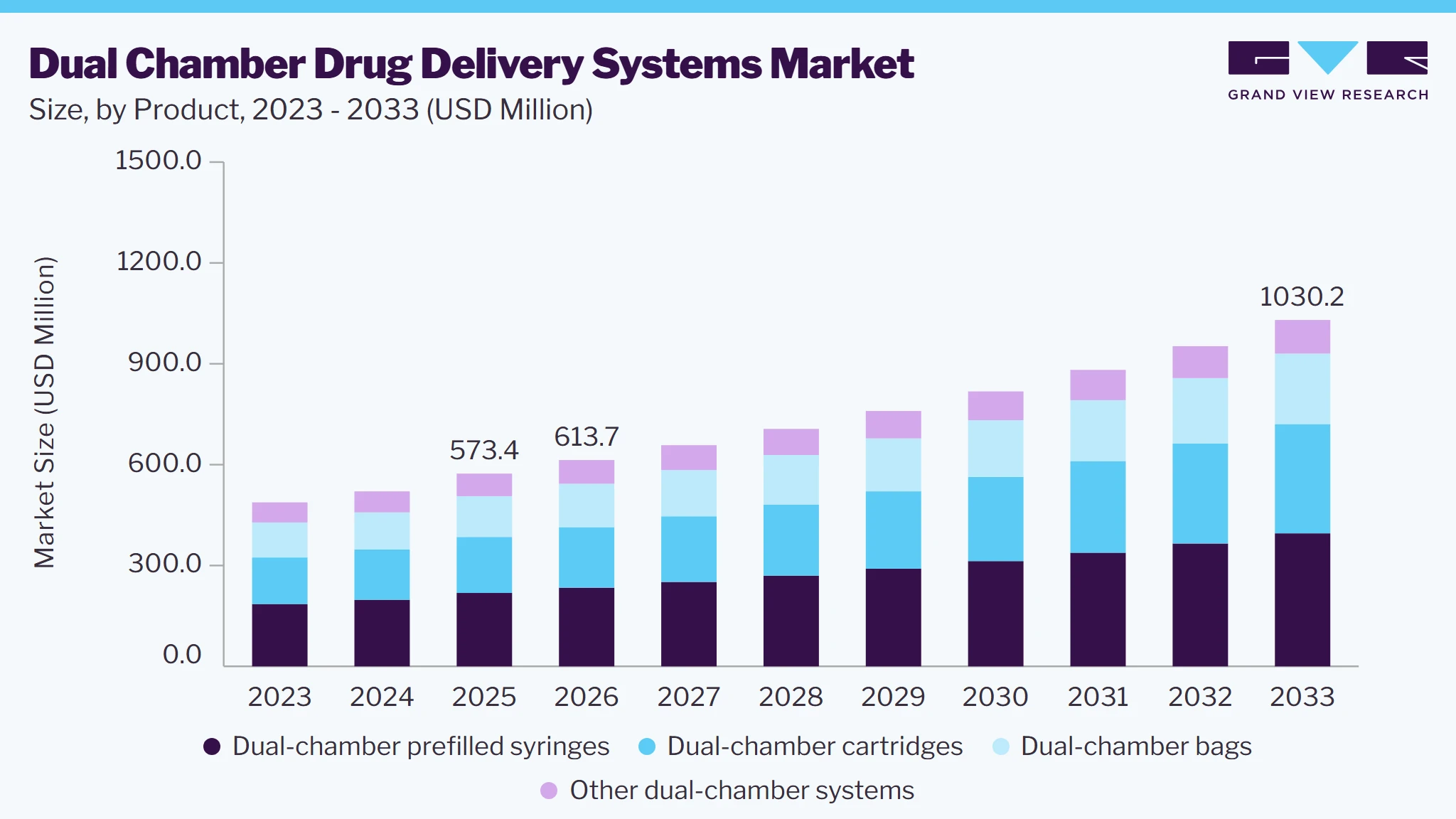
The global dual chamber drug delivery systems market size was valued at USD 573.4 million in 2025 and is projected to grow from USD 613.7 million in 2026 to USD 1,030.2 million by 2033, at a CAGR of 7.7% from 2026 to 2033. The market in North America dominated with a revenue share of 40.7% in 2025. The growing prevalence of chronic and complex diseases, increasing adoption of biologics and lyophilized drug formulations, and rising demand for convenient drug reconstitution and administration are supporting market growth.
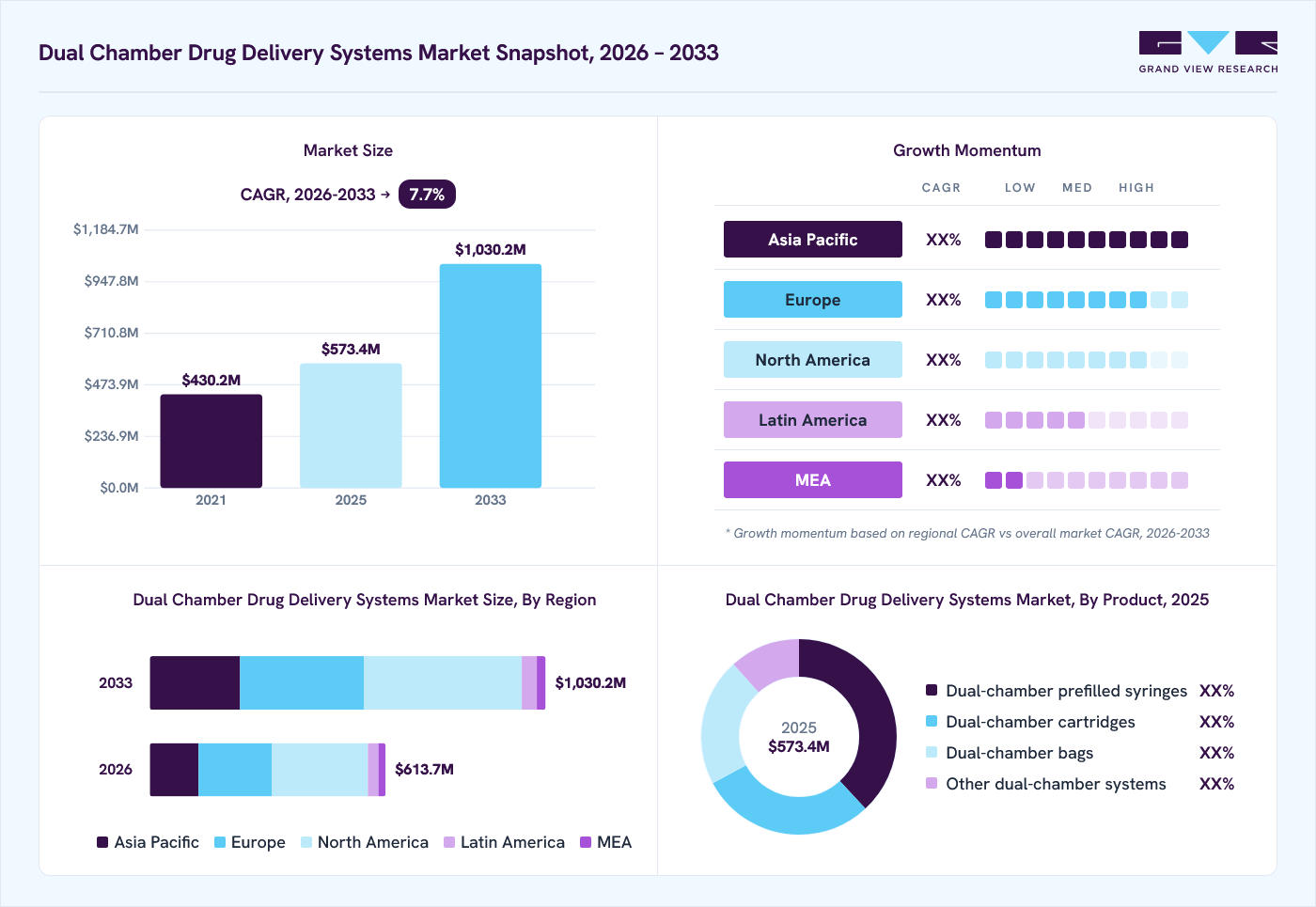 Source: Grand View Research, IR Documents, Primary Interviews, Paid DatabasesTo learn more about this report,
 Download Free Sample Report
Key Market Trends & Insights
- By product: Dual-chamber prefilled syringes segment held the largest market share of 38.1% in 2025.
- By drug type: Vaccines segment held the largest market share of 53.1% in 2025.
- By route of administration: Subcutaneous segment held the largest market share of 45.0% in 2025.
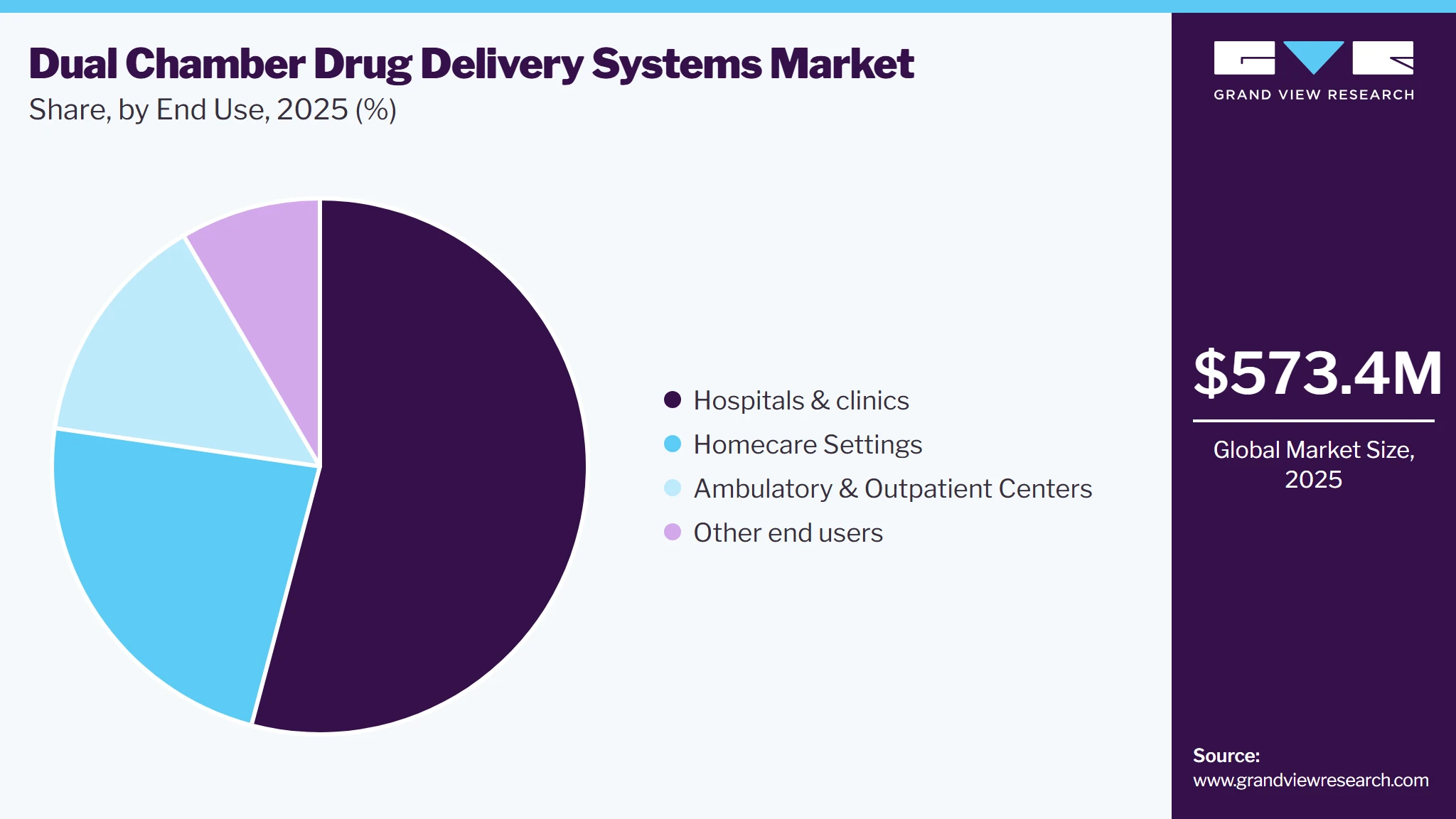
- By end use: Hospitals & clinics segment held the largest market share of 54.1% in 2025.
Regional Highlights
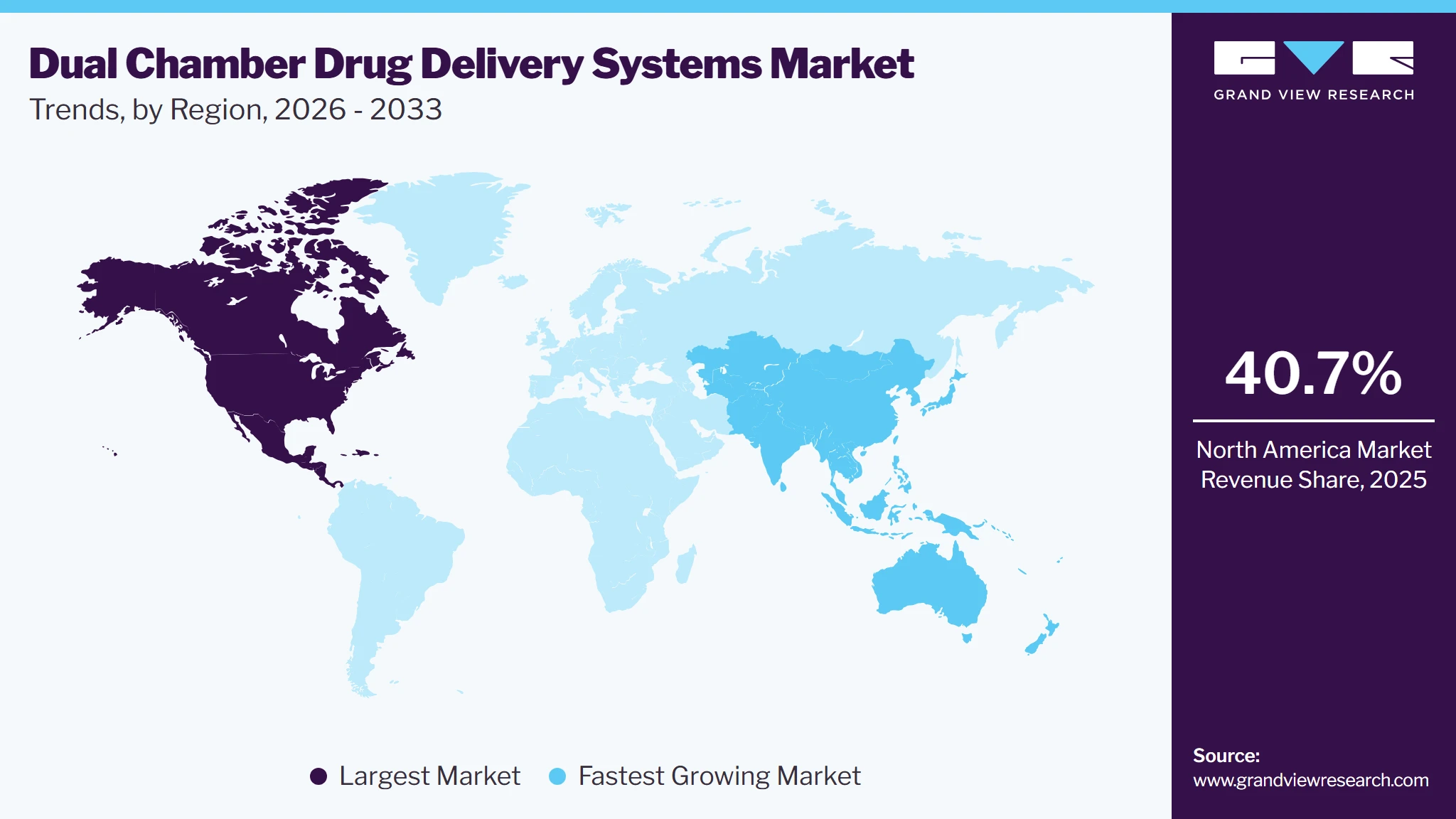
- Largest regional market: North America (40.7% revenue share, 2025)
- Fastest-growing regional market: Asia Pacific (highest CAGR, 2026-2033)
- By country: The U.S. held the largest market share in 2025
Market Size & Forecast
- Market size in 2025: USD 573.4 Million
- Estimated market size in 2026: USD 613.7 Million
- Projected market size by 2033: USD 1,030.2 Million
- CAGR (2026-2033): 7.7%
Prism AI by Grand View Research Free to tryAsk a question about the dual chamber drug delivery systems marketTry asking✓Every figure cited from GVR research Prefer the report? Download free sample →Dual-chamber systems enable the separate storage of incompatible drug components and their mixing immediately before administration, improving product stability and usability. Increasing demand for self-administration and ready-to-use delivery systems is further driving adoption across healthcare settings. The market is witnessing technological advancement through the integration of spray drying, precision aseptic powder filling, and next-generation reconstitution devices. These technologies are intended to support injectable formulations that require dry-state storage to maintain stability and a separate sterile diluent for reconstitution immediately before administration. In October 2026, Drug Development & Delivery published an article titled “Powder to Patient: Advancing Reconstitutable Injectables Through Integrated Aseptic Powder Filling & Next-Generation Dual Chamber Delivery,” highlighting work by Credence MedSystems and 3P innovation to improve the feasibility and manufacturability of powder-liquid dual-chamber syringes.
 To learn more about this report, Download Free Sample Report
A key aspect of the development is the use of spray drying as an alternative to traditional lyophilization for selected formulations. Spray drying converts a liquid feed into dry particles through atomization and solvent evaporation, potentially reducing drying time and allowing control over particle size, density, moisture, flowability, and dissolution characteristics. When combined with a dual-chamber syringe, the dry drug can be stored separately from the sterile diluent, supporting reconstitution at the point of use. The approach may be particularly relevant for sensitive peptides, proteins, and other biologic formulations, although suitability depends on the specific molecule and formulation.
The article also describes a design-of-experiments study conducted by Credence MedSystems and 3P Innovation using precision gravimetric powder-filling equipment and Credence dual-chamber syringes. The study evaluated powders with different physical characteristics and target fill weights, with a target relative standard deviation below 5%. The reported results showed that the tested powders could generally be dosed with the required accuracy, although low-density, electrostatically charged trehalose presented a capacity challenge at a 400 mg target fill in the 5 mL syringe. Ionization helped reduce powder accumulation around the stopper region. Further chemical analysis was identified as necessary to verify the absence of cross-contamination between chambers.
In the dual-chamber bag segment, B. Braun continues to demonstrate the clinical utility of ready-to-activate drug delivery systems through its DUPLEX Drug Delivery System. The system keeps premeasured medication and diluent in separate compartments until activation, enabling reconstitution immediately before intravenous administration. Its portfolio includes injectable antibiotics such as piperacillin and tazobactam, cefepime, and meropenem. The system is designed to simplify hospital workflows, reduce preparation steps, and help prevent administration of diluent without the medication. These applications illustrate the continued role of dual-chamber systems in hospital-based drug preparation, particularly for injectable therapies that require separation of drug components until use.
Market Dynamics
The market is driven by the increasing use of biologics, lyophilized formulations, and complex injectable drugs that require separation of the drug and diluent until administration. Dual chamber systems enable pharmaceutical formulations to remain physically separated during storage and to be reconstituted immediately before injection, helping address stability and shelf-life challenges. Demand is also supported by the growing adoption of prefilled syringes, dual-chamber cartridges, self-injection systems, and combination products across oncology, autoimmune diseases, infectious diseases, and other chronic conditions. Technology development is focused on improved reconstitution mechanisms, sequential drug delivery, cartridge-based systems, compatibility with autoinjectors and pens, larger-volume delivery, and patient-centric designs that simplify administration.
The increasing development and commercialization of biologics, vaccines, peptides, and other complex injectable formulations is a major market driver. Many sensitive formulations require lyophilization or separation from their diluent to maintain stability during storage. Dual chamber syringes and cartridges allow the drug and diluent to remain separated until administration, after which the components can be mixed or delivered sequentially. This functionality reduces the need for separate reconstitution steps and can improve the convenience of administering complex injectable therapies. The expanding pipeline of biologics and specialty drugs is therefore creating opportunities for dual chamber systems across pharmaceutical and biotechnology applications.
High development and manufacturing costs remain a significant market restraint. These systems require precision-engineered chambers, plungers, bypass mechanisms, seals, valves, and drug-contact materials to ensure reliable separation, mixing, and delivery of the drug components. Manufacturers must also conduct extensive compatibility, stability, container-closure integrity, extractables and leachables, sterility, and human-factors testing. When dual chamber systems are integrated with pens, autoinjectors, or other combination products, additional device-development and regulatory requirements can further increase costs. These requirements can make commercialization more complex, particularly for smaller pharmaceutical companies and device manufacturers.
The growing shift toward drug-device combination products and self-administration presents a significant opportunity for dual chamber drug delivery system manufacturers. Pharmaceutical companies are increasingly seeking delivery platforms that combine drug containment, reconstitution, and administration into a single patient-friendly system. Dual chamber cartridges and syringes can reduce manual preparation steps and support administration in home-care settings, while compatibility with autoinjectors and pen systems can further improve usability. This trend creates opportunities for manufacturers to develop integrated platforms that can be customized for biologics, specialty medicines, and other complex injectable therapies.
Market Concentration & Characteristics
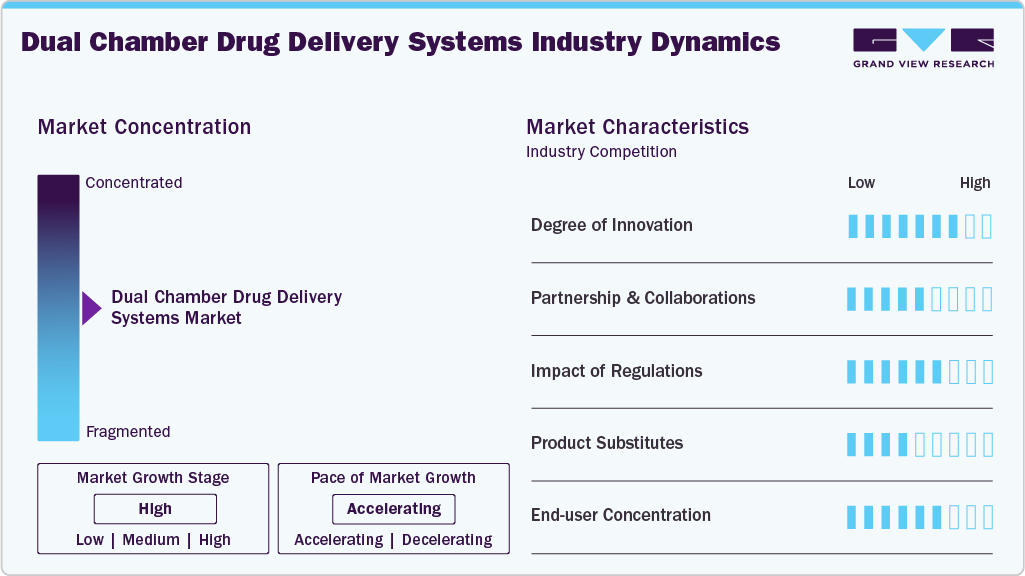
The dual chamber drug delivery systems industry is moderately concentrated, with established pharmaceutical packaging and drug-delivery companies maintaining strong positions through dual-chamber syringes and cartridges, primary-container technologies, device platforms, manufacturing capabilities, and pharmaceutical partnerships. Key participants include SCHOTT Pharma, Nipro, Gerresheimer, Stevanato Group, BD, West Pharmaceutical Services, Credence MedSystems, Ypsomed, Nemera, and Vetter. Competition is increasingly centered on dual-chamber syringes and cartridges, reliable reconstitution, compatibility with biologics and lyophilized formulations, large-volume delivery, self-administration, combination-product integration, and scalable fill-finish and assembly capabilities.
The dual chamber drug delivery systems industry is characterized by a high degree of technological innovation, particularly around formulation separation, reconstitution, sequential delivery, primary-container compatibility, and patient-friendly administration. Manufacturers are developing dual-chamber syringes and cartridges that can maintain separation between lyophilized drugs and diluents or between incompatible liquid formulations until administration. Innovation is also focused on improving mixing reliability, reducing preparation steps, increasing available dose volumes, and integrating dual-chamber containers with pens, autoinjectors, and other delivery platforms.
 To learn more about this report, Download Free Sample Report
A notable example is Stevanato Group's September 2025 publication on dual-chamber containment solutions, which highlighted the use of dual-chamber syringe and cartridge formats for complex drug products. The company's technology addresses applications where drug components need to remain separated during storage and subsequently be mixed or delivered sequentially before or during administration.
Another recent development occurred in April 2026, when SCHOTT Pharma announced cartriQ BioPure, a sterile glass cartridge designed for sensitive biologics. The product was developed to improve chemical resistance and the extractables-and-leachables profile of primary packaging for complex biologic medicines. While cartriQ BioPure is not itself a dual-chamber product, the development demonstrates the broader innovation occurring in cartridge-based delivery and primary containment for increasingly complex injectable formulations.
Partnerships and collaborations are an important competitive strategy in the dual chamber drug delivery systems industry because successful commercialization requires coordination between drug manufacturers, primary-container suppliers, delivery-device developers, fill-finish providers, and combination-product manufacturers. Collaboration allows companies to optimize drug formulation, container compatibility, device performance, filling processes, assembly, quality control, and regulatory requirements simultaneously.
A relevant recent example is the Ypsomed-ten23 health partnership, which was expanded on September 29, 2026. Ten23 Health is adding dedicated device-assembly capabilities for Ypsomed's YpsoDose platform, extending their existing collaboration beyond formulation development, sterile filling, analytical testing, and quality control to final device assembly. The integrated solution uses 10 mL glass cartridges and combines Ypsomed's delivery platform with ten23's drug-product manufacturing capabilities. The collaboration builds on the companies' original April 16, 2024 agreement, which combined Ypsomed's YpsoDose platform with SCHOTT Pharma's cartridge technology and ten23 health's formulation, filling, assembly, and testing capabilities.
Regulatory requirements have a significant impact on the dual chamber drug delivery systems industry because many dual chamber syringes and cartridges are considered drug-device combination products. In the U.S., FDA 21 CFR Part 3 establishes the regulatory framework for classification and jurisdiction of combination products, while 21 CFR Part 4 specifies current good manufacturing practice requirements and postmarket safety-reporting requirements for combination products. FDA specifically identifies prefilled drug-delivery systems, including syringes, as examples of combination products. For dual chamber prefilled syringes, FDA guidance also highlights requirements related to system integrity, separation of the drug and diluent during storage and shipment, reconstitution performance, and drug-device compatibility. These requirements can increase development, validation, and commercialization costs but are important for ensuring product quality and patient safety. In addition, ISO 11040-4:2024, Prefilled syringes, glass barrels for injectables and sterilized subassembled syringes ready for filling, provides relevant technical requirements for syringe materials, dimensions, quality, performance, and testing. FDA recognizes ISO 11040-4 as a consensus standard.
The dual chamber drug delivery systems industry faces substitution from conventional prefilled syringes, single-chamber cartridges, vials with separate diluent systems, autoinjectors, traditional syringes, and other reconstitution devices. For formulations that are stable in a ready-to-use liquid form, conventional prefilled syringes and cartridges can provide a simpler and potentially lower-cost alternative. For lyophilized or otherwise unstable formulations, however, dual-chamber systems can offer an advantage by keeping the drug and diluent separated until administration. The competitive position of dual-chamber systems therefore depends on drug stability requirements, dose volume, reconstitution complexity, treatment setting, manufacturing cost, patient usability, and compatibility with existing delivery devices.
Regional expansion is an important strategy as manufacturers seek to increase production capacity, establish localized supply chains, and support pharmaceutical customers across major injectable-drug markets. Expansion is particularly relevant for primary packaging, cartridges, prefillable syringes, fill-finish operations, and combination-product assembly, where proximity to pharmaceutical manufacturing can reduce supply-chain complexity and improve responsiveness. A notable example occurred in August 2025, when SCHOTT announced the local production of high-precision glass tubing for syringes and cartridges at its Jambusar facility in Gujarat, India. The investment expands local manufacturing capabilities for pharmaceutical syringe and cartridge components and was linked by SCHOTT to growing demand for injectable medicines, including GLP-1 therapies. The company has subsequently continued expanding its portfolio for complex biologics, while SCHOTT Pharma's 2026 developments with Nemera demonstrate the company's increasing focus on integrating primary packaging with delivery-device platforms.
Analyst Perspective
The market is driven by the growing demand for convenient, stable, and ready-to-use injectable therapies, particularly biologics, vaccines, and other drugs requiring reconstitution before administration. Increasing adoption of self-administration and home-based care is supporting demand for user-friendly delivery formats. Pharmaceutical manufacturers are also increasingly adopting dual-chamber systems to improve drug stability, simplify preparation, reduce dosing errors, and extend product shelf life. Technological advancements in prefilled syringes, cartridges, and dual-chamber bags are further expanding applications. Meanwhile, the shift toward personalized and complex therapies is creating opportunities for innovative dual-chamber delivery platforms across hospitals, outpatient facilities, and homecare settings.
Product Insights
The dual-chamber prefilled syringes segment dominated the market in 2025 and accounted for 38.1% of the overall revenue. The segment's leading position is primarily attributed to its ability to store drug components and diluents separately while enabling convenient reconstitution immediately before administration. These systems help improve dose accuracy, maintain formulation stability, reduce preparation steps, and minimize the risk of handling errors. Their application in vaccines, biologics, lyophilized drugs, and other injectable therapies further supports adoption. In addition, growing demand for ready-to-use drug delivery solutions, advancements in syringe design, and increasing pharmaceutical investment in combination products are expected to support segment growth.
The dual-chamber cartridges segment is expected to witness the fastest CAGR over the forecast period, driven by increasing demand for advanced drug delivery solutions that support accurate dosing and convenient administration. These cartridges enable the separate storage of drug components until use, helping maintain formulation stability and simplifying reconstitution. Their compatibility with reusable injection devices and automated drug delivery systems further supports adoption across biologics, vaccines, and other injectable therapies. In addition, growing pharmaceutical investment in combination products and patient-centric administration technologies is expected to create new opportunities. Advancements in cartridge materials, sealing technologies, and manufacturing processes may further enhance product reliability and commercial adoption.
Drug Type Insights
The vaccines segment dominated the market and held the largest revenue share in 2025. The segment's leading position is primarily attributed to the use of dual-chamber formats for storing vaccine components separately from diluents until administration. These systems help preserve formulation stability, simplify reconstitution, and reduce preparation steps in clinical settings. Growing immunization programs, increasing demand for combination vaccines, and continued vaccine development are supporting adoption. In addition, dual-chamber syringes and bags offer practical advantages for healthcare professionals by improving preparation convenience and reducing handling complexity. Continued innovation in vaccine formulations is expected to support segment demand.
The biologics segment is expected to witness the fastest CAGR over the forecast period, driven by increasing development of complex injectable therapies that require specialized storage and administration solutions. Many biologic formulations are sensitive to environmental conditions and may require separation from diluents or other components until use. Dual-chamber systems can support formulation stability while simplifying reconstitution and administration. Rising demand for monoclonal antibodies, specialty medicines, and other advanced biologic therapies is creating opportunities for innovative delivery formats. Furthermore, pharmaceutical companies are increasingly investing in patient-centric drug-device combination products. Advancements in container materials, sealing technologies, and device design are expected to support future segment growth.
Route of Administration Insights
The subcutaneous segment dominated the market and held the largest revenue share in 2025. Its leading position is primarily attributed to the increasing use of injectable biologics, vaccines, and specialty therapies administered through the subcutaneous route. Dual-chamber systems enable the separation of drug components and diluents until administration, supporting formulation stability and convenient reconstitution. These systems are particularly relevant for therapies requiring precise dosing and simplified preparation. Growing preference for self-administration, home-based treatment, and patient-friendly drug delivery solutions further supports segment demand. Continued development of subcutaneous biologics and combination products is expected to sustain the segment's market position.
The intramuscular segment is expected to witness the fastest CAGR over the forecast period, driven by the growing use of injectable vaccines, anti-infective drugs, and other therapies requiring intramuscular administration. Dual-chamber delivery systems can keep active ingredients and diluents separate until use, helping facilitate reconstitution and simplify preparation before injection. These features are valuable for formulations that require mixing immediately before administration. Expanding immunization initiatives, continued vaccine development, and demand for reliable drug preparation solutions are expected to support adoption. In addition, advancements in container design, sealing technologies, and prefilled delivery formats may improve product convenience and handling, contributing to segment growth over the forecast period.
End Use Insights
The hospitals & clinics segment held the largest revenue share in the market in 2025. Its leading position is primarily attributed to the high volume of injectable drug administration, vaccine delivery, and reconstitution procedures performed in healthcare facilities. Hospitals and clinics also benefit from trained medical personnel, established medication management protocols, and access to specialized injectable therapies. The increasing use of biologics, anti-infective drugs, and specialty injectable treatments is expected to sustain demand across these settings.
 To learn more about this report, Download Free Sample Report
The homecare settings segment is expected to witness the fastest CAGR over the forecast period, driven by the growing preference for convenient, patient-centric treatment and home-based administration of injectable therapies. Dual-chamber drug delivery systems can simplify reconstitution by keeping drug components and diluents separate until use, potentially reducing preparation steps for appropriate formulations. The expanding use of biologics and chronic disease treatments, alongside increasing demand for self-administration, is expected to support adoption. In addition, advancements in user-friendly prefilled devices, improved packaging, and patient education may encourage the use of suitable dual-chamber products outside healthcare facilities. However, adoption will depend on product design, therapy requirements, and whether home administration is clinically appropriate.
Regional Insights
The North America dual chamber drug delivery systems market dominated the global market in 2025, and is supported by advanced healthcare infrastructure, strong pharmaceutical and biotechnology industries, high biologics utilization, and growing demand for convenient injectable therapies. Increasing development of combination products and formulations requiring physical separation before administration is creating opportunities for dual-chamber syringes, cartridges, and other systems. BD is developing a dual-injection valve and syringe system that keeps two liquid drugs separated until injection while maintaining compatibility with standard prefillable syringe and autoinjector platforms.
 To learn more about this report, Download Free Sample Report
U.S. Dual Chamber Drug Delivery Systems Market Trends
The dual chamber drug delivery systems market in the U.S. is supported by strong pharmaceutical innovation, increasing use of biologics, and growing demand for home-based and self-administered therapies. FDA guidance recognizes dual-chamber prefilled syringes as combination products that can contain lyophilized drugs or biologics separately from diluents, highlighting the technical and regulatory requirements associated with these systems. The shift toward large-volume subcutaneous biologics is also creating demand for patient-friendly delivery formats. West Pharmaceutical Services' SmartDose 10 platform, for example, supports delivery volumes of up to 10 mL for subcutaneous administration in home or clinical settings.
Europe Dual Chamber Drug Delivery Systems Market Trends
The dual chamber drug delivery systems market in Europe is supported by established pharmaceutical manufacturing capabilities, strong biologics development, and increasing adoption of patient-centric and home-based injectable therapies. The region's regulatory environment under the EU Medical Device Regulation continues to shape development and commercialization of combination and drug-delivery products. The expansion of large-volume subcutaneous delivery is also supporting demand for advanced syringes, cartridges, and delivery systems. In 2026, Enable Injections received expanded CE certification for its enFuse system with Aspaveli, supporting patient and caregiver administration of the therapy across the European Union.
The UK dual chamber drug delivery systems market is supported by established healthcare infrastructure, increasing adoption of home-based treatment, and growing use of biologic therapies. The NHS and pharmaceutical companies are increasingly exploring approaches that shift appropriate injectable treatments from hospitals to patients' homes. A 2026 UK study is evaluating Roche's enFuse on-body delivery system for home administration of high-concentration subcutaneous ocrelizumab in patients with multiple sclerosis, reflecting the broader movement toward decentralized injectable care. Enable Injections also obtained UK MHRA registration for its enFuse technology in June 2025.
The dual chamber drug delivery systems market in Spain is supported by increasing use of biologics, expansion of outpatient treatment, and growing emphasis on patient-centered care. The shift toward self-administration and homecare is creating opportunities for drug-delivery systems that simplify preparation and administration of complex injectable therapies. Broader European adoption of prefillable syringes and large-volume delivery technologies is also expected to support market development.
Asia Pacific Dual Chamber Drug Delivery Systems Market Trends
The dual chamber drug delivery systems market in the Asia Pacific is expected to grow at the fastest CAGR during the forecast period. The market is supported by rising chronic disease prevalence, expanding pharmaceutical manufacturing, increasing biologics adoption, and improving healthcare infrastructure. China, Japan, South Korea, and India are important markets as pharmaceutical companies expand injectable portfolios and healthcare systems increasingly adopt patient-centric administration models. Regional manufacturing investments in prefillable syringes, cartridges, and other drug-containment formats are also strengthening the supply base.
China dual chamber drug delivery systems market is supported by a large patient population, expanding biologics and biosimilars utilization, and continued development of domestic pharmaceutical and medical-device manufacturing. Growing demand for injectable therapies in oncology, autoimmune diseases, and other chronic conditions is creating opportunities for advanced delivery systems. The increasing shift toward subcutaneous administration and home-based treatment is also supporting demand for convenient drug-delivery formats.
The dual chamber drug delivery systems market in South Korea is supported by advanced healthcare infrastructure, strong pharmaceutical and biotechnology capabilities, and increasing development of biologic and biosimilar therapies. The country's expanding portfolio of prefilled and self-administered biologic products creates opportunities for advanced syringe and cartridge technologies. South Korea's Ministry of Food and Drug Safety lists multiple biologic and biosimilar products in prefilled syringe formats, including products from Samsung Bioepis, Celltrion, and other domestic manufacturers.
Latin America Dual Chamber Drug Delivery Systems Market Trends
The dual chamber drug delivery systems market in Latin America is developing alongside increasing access to biologics, expansion of pharmaceutical manufacturing, and gradual adoption of homecare and outpatient treatment models. Brazil represents a key market because of its large patient population and established regulatory and pharmaceutical ecosystem. Adoption remains influenced by healthcare expenditure, reimbursement, access to specialty medicines, and regulatory requirements across individual countries. Recent regulatory approvals for advanced subcutaneous delivery technologies are supporting regional commercialization.
Brazil dual chamber drug delivery systems market is supported by its large healthcare market, growing demand for biologics, and expansion of patient-centric injectable treatment. In August 2025, Brazil's ANVISA approved Enable Injections' enFuse system for subcutaneous medication administration, allowing distribution of the technology in the country. The approval also supports the company's partnership with Sobi for delivery of Empaveli/Aspaveli. This regulatory development demonstrates increasing availability of advanced self-administration technologies in Brazil.
Middle East & Africa Dual Chamber Drug Delivery Systems Market Trends
The dual chamber drug delivery systems market in MEA is supported by rising healthcare investment, increasing prevalence of chronic diseases, development of specialized healthcare infrastructure, and growing access to biologic and specialty medicines. Adoption is concentrated in countries with stronger healthcare systems, particularly Gulf markets. Increasing emphasis on advanced pharmaceutical therapies and patient-centered care is creating opportunities for convenient injectable delivery systems, while the gradual development of homecare models can further support adoption.
Saudi Arabia dual chamber drug delivery systems market is supported by healthcare modernization, investment in advanced therapies, and the development of local pharmaceutical and biotechnology capabilities. In 2025, Saudi Arabia recorded an 83% increase in clinical-trial applications for advanced therapies and biotechnology products, while the SFDA reported improvements in clinical-trial approval efficiency. The country's investment in advanced therapy manufacturing, including the launch of Saudi Arabia's first gene and cell therapy manufacturing facility in 2025, further demonstrates its growing focus on sophisticated pharmaceutical technologies. These developments are expected to create longer-term opportunities for advanced injectable and drug-delivery systems.
Key Dual Chamber Drug Delivery Systems Company Insight
The market is moderately competitive, with companies such as Gerresheimer, Nipro, SCHOTT Pharma, BD, West Pharmaceutical Services, and Stevanato Group competing across syringes, cartridges, bags, and integrated delivery systems. Competition focuses on device reliability, drug stability, reconstitution efficiency, dosing accuracy, and patient convenience. Players are expanding capabilities through product innovation, manufacturing investments, pharmaceutical partnerships, and customized drug-device solutions. Demand for biologics, self-administration, and home-based care is encouraging development of ready-to-use and higher-volume delivery formats. Market share remains fragmented because companies participate across different product categories and value-chain stages.
Key Dual Chamber Drug Delivery Systems Companies
The following key companies have been profiled for this study on the dual chamber drug delivery systems market.
-
B. Braun
-
Baxter
-
Nipro
-
Gerresheimer
-
SCHOTT Pharma
-
Vetter
-
Otsuka Pharmaceutical
-
ARTE Corporation
-
Stevanato Group
-
Credence MedSystems
Competitive Benchmarking
Category
Operating Strategies
Competitive Edge
Weakness
Established Players (B. Braun, Baxter, Nipro, Gerresheimer, SCHOTT Pharma, Vetter)
- Focus on expanding sterile drug delivery and pharmaceutical packaging capabilities, including dual-chamber bags, syringes, cartridges, and other specialized systems. Strengthen relationships with pharmaceutical and biotechnology companies through contract manufacturing, customized container development, reconstitution technologies, and integrated packaging solutions. Invest in manufacturing capacity, quality systems, and regulatory compliance to support complex injectable formulations, biologics, vaccines, and lyophilized drugs.
- Established pharmaceutical customer relationships, strong manufacturing infrastructure, sterile production expertise, and extensive quality and regulatory capabilities support customer confidence. Broad packaging and drug delivery portfolios enable these companies to support different drug formulations, product development requirements, and commercialization needs.
- High capital expenditure for sterile manufacturing, specialized filling equipment, and quality assurance can increase operating costs. Product development and validation requirements may lengthen commercialization timelines, while dependence on pharmaceutical customers and specific drug-development programs can create demand uncertainty.
Specialized & Technology-Focused Players (Otsuka Pharmaceutical Factory, ARTE Corporation, Stevanato Group, Credence MedSystems)
- Focus on differentiated drug containment, reconstitution, and administration technologies, including dual-chamber bags, cartridges, and syringe-based systems. Develop specialized solutions for separating incompatible drug components, maintaining formulation stability, and simplifying preparation before administration. Strengthen collaborations with pharmaceutical companies through customized container engineering, combination-product development, specialized manufacturing, and integration with drug administration devices.
- Specialized expertise in pharmaceutical packaging, container design, reconstitution systems, and drug delivery technologies enables these companies to address complex formulation and administration requirements. Their product-specific capabilities can support drug stability, preparation accuracy, ease of use, and differentiation in injectable therapies.
- More specialized product portfolios may limit exposure across the broader drug delivery market. Adoption depends on pharmaceutical customer validation, compatibility testing, regulatory approvals, and integration with existing filling and administration systems. Commercial growth may also depend on the success of selected customer programs and the scalability of specialized manufacturing processes.
Recent Development
-
In September 2026, Capa Valve introduced a new valve system for dual-chamber drug delivery devices. The technology is designed to enable separate storage and controlled delivery of two drug components using a valve-based approach, potentially reducing reliance on specialized syringe-barrel bypass designs. By supporting compatibility with existing filling and finishing infrastructure, the innovation could help pharmaceutical manufacturers simplify development and production of dual-chamber systems.
-
In September 2026, Credence MedSystems announced that it had achieved ISO 13485:2016 certification for its quality management system. The company’s portfolio includes dual-chamber syringes designed for drug reconstitution and sequential delivery, supporting pharmaceutical and biotechnology companies developing complex injectable therapies. The certification marks a manufacturing-readiness milestone as the company expands its support for filling, assembly, labeling, and packaging through specialized partners.
Dual Chamber Drug Delivery Systems Market Report Scope
Report Attribute
Details
Market size in 2025
USD 573.4 million
Estimated market size in 2026
USD 613.7 million
Projected market size by 2033
USD 1,030.2 million
Growth rate
CAGR of 7.7% from 2026 to 2033
Historical data
2021 - 2025
Forecast period
2026 - 2033
Quantitative units
Revenue in USD million and CAGR from 2026 to 2033
Report coverage
Revenue forecast, company ranking, competitive landscape, growth factors, and trends
Segments covered
Product, drug type, route of administration, end use, region
Regional scope
North America; Europe; Asia Pacific; Latin America; MEA
Country scope
U.S.; Canada; Mexico; UK; Germany; France; Italy; Spain; Denmark; Sweden; Norway; Japan; China; India; Australia; Thailand; South Korea; Brazil; Argentina; South Africa; Saudi Arabia; UAE; Kuwait
Key companies profiled
B. Braun; Baxter; Nipro; Gerresheimer; SCHOTT Pharma; Vetter; Otsuka Pharmaceutical; ARTE Corporation; Stevanato Group; Credence MedSystems
Customization scope
Free report customization (equivalent up to 8 analyst’s working days) with purchase. Addition or alteration to country, regional, and segment scope
Pricing and purchase options
Avail customized purchase options to meet your exact research needs. Explore purchase options
Global Dual Chamber Drug Delivery Systems Market Report Segmentation
This report forecasts revenue growth at global, regional, and country levels and provides an analysis of the latest industry trends in each of the sub-segments from 2021 to 2033. For this study, Grand View Research has segmented the global dual chamber drug delivery systems market report based on product, drug type, route of administration, end use, and region:
-
Product Outlook (Revenue, USD Million, 2021 - 2033)
-
Dual-chamber prefilled syringes
-
Dual-chamber cartridges
-
Dual-chamber bags
-
Other dual-chamber systems
-
-
Drug Type Outlook (Revenue, USD Million, 2021 - 2033)
-
Vaccines
-
Biologics
-
Hormonal therapies
-
Anti-infective drugs
-
Other drug types
-
-
Route of Administration Outlook (Revenue, USD Million, 2021 - 2033)
-
Subcutaneous
-
Intramuscular
-
Intravenous
-
Other routes
-
-
End Use Outlook (Revenue, USD Million, 2021 - 2033)
-
Hospitals & clinics
-
Homecare Settings
-
Ambulatory & Outpatient Centers
-
Other end users
-
-
Region Outlook (Revenue, USD Million, 2021 - 2033)
-
North America
-
U.S.
-
Canada
-
Mexico
-
-
Europe
-
UK
-
Germany
-
France
-
Italy
-
Spain
-
Norway
-
Denmark
-
Sweden
-
-
Asia Pacific
-
China
-
Japan
-
South Korea
-
Thailand
-
Australia
-
India
-
-
Latin America
-
Brazil
-
Argentina
-
-
MEA
-
South Africa
-
Saudi Arabia
-
UAE
-
Kuwait
-
-
Research Methodology
The dual chamber drug delivery systems market figures in this report are based on a proven research process that combines executive interviews with secondary research from proprietary databases, company filings, and recognized regulatory and institutional sources. Market size is built through value-chain sizing - reconciling supply-side and demand-side estimates - and triangulated with bottom-up and top-down approaches. Every estimate passes multiple levels of expert validation before publication, with each dual chamber drug delivery systems segment quantified using the revenue-capture definitions in the table below.
Segment Definition
Product
Revenue capture definition
Dual-chamber prefilled syringes
Revenue generated from sales of prefilled syringes containing separately stored drug components that are mixed immediately before administration.
Dual-chamber cartridges
Revenue generated from sales of cartridges containing two separately stored drug components for reconstitution or mixing before administration.
Dual-chamber bags
Revenue generated from sales of dual-chamber bags designed to separately store and subsequently mix drugs, diluents, or other components before use.
Other dual-chamber systems
Revenue generated from other dual-chamber drug delivery formats, excluding prefilled syringes, cartridges, and bags, used for component separation and mixing.
Drug Type
Revenue capture definition
Vaccines
Revenue generated from dual-chamber delivery systems used to store, reconstitute, and administer vaccines requiring separation of active ingredients and diluents.
Biologics
Revenue generated from dual-chamber systems used for biologic drugs, including products requiring separation of sensitive components until administration.
Hormonal therapies
Revenue generated from dual-chamber systems used to store and administer hormone-based therapies requiring component separation or reconstitution.
Anti-infective drugs
Revenue generated from dual-chamber systems used for antibiotics, antivirals, antifungals, and other anti-infective therapies requiring reconstitution before administration.
Other drug types
Revenue generated from dual-chamber systems used for drug categories not classified under vaccines, biologics, hormonal therapies, or anti-infectives.
Route of Administration
Revenue capture definition
Subcutaneous
Revenue generated from dual-chamber delivery systems used to administer drugs into subcutaneous tissue, primarily for therapies suitable for self-administration or outpatient treatment.
Intramuscular
Revenue generated from dual-chamber delivery systems used to administer drugs directly into muscle tissue, including vaccines and other injectable therapies.
Intravenous
Revenue generated from dual-chamber delivery systems used to administer reconstituted drugs directly into the bloodstream through intravenous administration.
Other routes
Revenue generated from dual-chamber delivery systems used through administration routes other than subcutaneous, intramuscular, or intravenous routes.
End Use
Revenue capture definition
Homecare Settings
Revenue generated from dual-chamber systems used in home-based treatment, including self-administration and caregiver-assisted drug delivery.
Hospitals & Clinics
Revenue generated from dual-chamber systems purchased or used by hospitals and clinics for inpatient, outpatient, and clinical drug administration.
Ambulatory & outpatient centers
Revenue generated from dual-chamber systems used in ambulatory and outpatient facilities for treatments not requiring hospital admission.
Other end users
Revenue generated from dual-chamber systems used by other healthcare or non-traditional end users not classified under hospitals, homecare, or ambulatory centers.
Estimation Model
Step
Stage
Key Question
Process Steps
Data Sources
01
Scope Definition
What exactly is included in the dual chamber drug delivery systems market?
- Define the market scope across dual-chamber prefilled syringes, dual-chamber cartridges, dual-chamber bags, and other dual-chamber drug delivery systems.
- Segment the market by product type, including prefilled syringes, cartridges, bags, and other systems.
- Define the market by drug type, route of administration. and by end use, including hospitals and clinics, homecare, ambulatory and outpatient settings, and other end users.
- Establish the geographic and temporal scope, including historical years, base year, and forecast period.
National Association of Aesthetic Medicine, professional cosmetology associations
02
Build the Product Base
What is the addressable demand for dual-chamber drug delivery systems?
- Identify injectable drugs requiring reconstitution or separation of components.
- Estimate annual demand using pharmaceutical product volumes and manufacturer disclosures.
- Map demand across prefilled syringes, cartridges, bags, and other systems.
- Assess demand from pharmaceutical companies, hospitals, and homecare settings.
Roszdravnadzor product registry, Federal Customs Service import data, Ministry of Industry and Trade, distributor/importer price lists
03
Estimate Penetration
How extensively are dual-chamber systems adopted?
- Estimate adoption among eligible pharmaceutical formulations.
- Determine product mix by drug type, route of administration, and end use.
- Assess the impact of regulatory approvals, drug compatibility, and pharmaceutical partnerships.
- Evaluate adoption trends in biologics, vaccines, and ready-to-use injectable therapies.
Primary interviews with dermatologists, plastic surgeons, aesthetic physicians, clinic operators
04
Revenue Conversion
How does product demand translate into market revenue?
- Collect average selling prices for each dual-chamber product type.
- Estimate annual unit sales using company disclosures and production data.
- Calculate segment revenue by multiplying unit volume by average selling price.
- Aggregate product-level revenues to estimate the total market size.
Clinic price lists, distributor pricing catalogs, Federal Customs Service data, market research on out-of-pocket aesthetic spending in Russia
Delivered Customizations
This report has been delivered with the following In-depth customizations
Client Request
Customization Delivered
Value Adds
Porter Analysis
Conducted a comprehensive Porter's Five Forces analysis of the dual-chamber drug delivery systems market, evaluating the threat of new entrants, supplier power, buyer power, threat of substitutes, and competitive rivalry. The analysis considered regulatory requirements, combination-product approvals, manufacturing complexity, sterile packaging technologies, component suppliers, pharmaceutical company purchasing decisions, alternative drug delivery formats, product differentiation, pricing pressures, and strategic partnerships.
Enables stakeholders to understand competitive intensity, entry barriers, supplier dependencies, and customer purchasing dynamics. Supports strategic decisions related to manufacturing investments, supplier diversification, pricing strategies, partnerships, and market entry.
Competitive Landscape
Conducted a detailed competitive landscape assessment of the dual-chamber drug delivery systems market, comparing key players based on product portfolios, including prefilled syringes, cartridges, bags, and other systems; drug compatibility; reconstitution capabilities; manufacturing expertise; regulatory compliance; and pharmaceutical partnerships. The assessment covered companies such as B. Braun, Baxter, Nipro, Gerresheimer, SCHOTT, BD, Ypsomed, Stevanato Group, and West Pharmaceutical Services, along with their competitive positioning and product development strategies.
Enables stakeholders to benchmark leading manufacturers, assess competitive positioning, identify product portfolio gaps, and evaluate potential partnership opportunities. Supports decisions related to product development, technology investments, contract manufacturing, strategic collaborations, and competitive differentiation.
Geographic Analysis
Conducted a comprehensive geographic assessment of the dual-chamber drug delivery systems market across North America, Europe, Asia Pacific, Latin America, and the Middle East & Africa. The analysis evaluated pharmaceutical manufacturing infrastructure, biologics and vaccine demand, healthcare expenditure, regulatory requirements, sterile manufacturing capabilities, regional supplier networks, and adoption of advanced drug delivery technologies. It also assessed regional production capacity, localization opportunities, and market expansion potential.
Enables stakeholders to identify high-potential regions, regional demand drivers, manufacturing hubs, and expansion opportunities. Supports strategic decisions related to geographic prioritization, production localization, distributor selection, regulatory planning, supply-chain optimization, and investment allocation.
Frequently Asked Questions About This Report
The subcutaneous segment led with a 45.0% revenue share in 2025, while the intramuscular segment is the fastest-growing.
The vaccines segment led with a 53.1% revenue share in 2025.
The global dual chamber drug delivery systems market is expected to grow at a CAGR of 7.7% from 2026 to 2033, reaching USD 1,030.2 million by 2033.
By product, the dual-chamber prefilled syringes segment held the highest market share of 38.1% in 2025.
By end use, the hospitals & clinics segment held a leading market share of 54.1% in 2025.
The global dual chamber drug delivery systems market size was valued at USD 573.4 million in 2025 and is estimated at USD 613.7 million for 2026.
North America market dominated, with a revenue share of 40.7% in 2025.
Key factors that are driving the dual chamber drug delivery systems market growth include growing prevalence of chronic and complex diseases, increasing adoption of biologics and lyophilized drug formulations, and rising demand for convenient drug reconstitution and administration are supporting market growth.
Some key players operating in the dual chamber drug delivery systems market include B. Braun, Baxter, Nipro, Gerresheimer, SCHOTT Pharma, Vetter, Otsuka Pharmaceutical Factory, ARTE Corporation, Stevanato Group, Credence MedSystems.
Asia Pacific is the fastest-growing region over the forecast period.
About the Author(s)
Medical Devices Research Team
Healthcare · Medical DevicesThis report was authored by the medical devices research team at Grand View Research - comprising two research analysts, one senior research analyst, and one industry expert - with specialized expertise in the medical devices segment of the healthcare industry. All findings are based on proprietary healthcare databases, executive interviews, and regulatory analysis, subject to internal peer review prior to publication.
Last Updated:
Speak to Analyst

Customize this report to your needs - add regions, segments, or data points, with 20% free customization.
Or view our licence options:


ISO 9001:2015 & 27001:2022 Certified
We are GDPR and CCPA compliant! Your transaction & personal information is safe and secure. For more details, please read our privacy policy.


