
- Home
- »
- Electronic & Electrical
- »
-
Electronic Home Locks Market Size Report, 2026-2033GVR Report cover
![Electronic Home Locks Market (2026 - 2033)Report]()
Electronic Home Locks Market (2026 - 2033)
Size, Share & Trends Analysis Report By Product (Biometrics, Keypad, Others), By End Use (Residential, Commercial, Industrial, Institutional), By Region (North America, Europe, Asia Pacific, Latin America, Middle East & Africa), And Segment Forecasts
Market Size, 2025
$3.8BMarket Estimate, 2026
$4.2BMarket Forecast, 2033
$7.1BCAGR, 2026–2033
8.0%Electronic Home Locks Market Summary
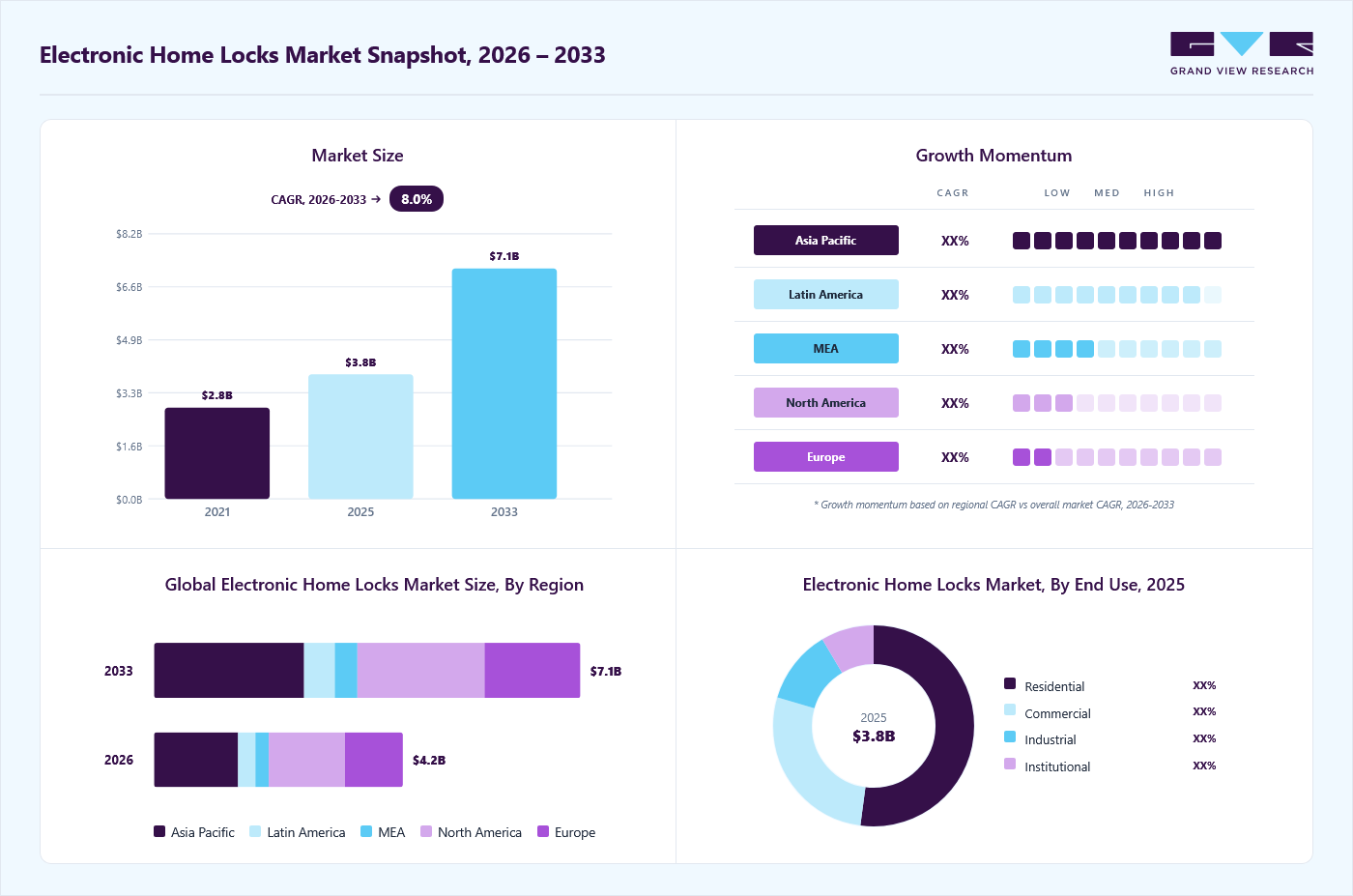
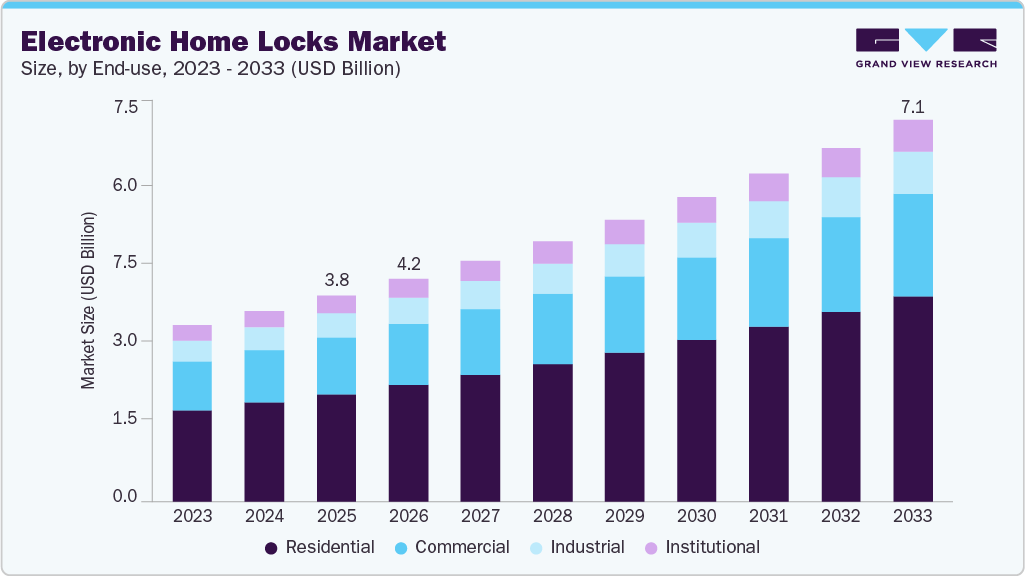
The global electronic home locks market size was valued at USD 3.8 billion in 2025 and is projected to grow from USD 4.2 billion in 2026 to USD 7.1 billion by 2033, at a CAGR of 8.0% from 2026 to 2033. The market in Asia Pacific dominated with a revenue share of 33.6% in 2025. The global electronic home locks market is gaining strong momentum as consumers place increasing importance on home security, safety, and controlled access in both owned and rented residential spaces.
Key Market Trends & Insights
- By product: Keypad electronic home locks segment held the largest market share of 39.4% in 2025.
- By end use: Residential electronic home locks segment held the largest market share of 52.0% in 2025.
Regional Highlights
- Largest regional market: Asia Pacific (33.6% revenue share, 2025)
- By country: China held the largest market share in 2025
Market Size & Forecast
- Market size in 2025: USD 3.8 Billion
- Estimated market size in 2026: USD 4.2 Billion
- Projected market size by 2033: USD 7.1 Billion
- CAGR (2026-2033): 8.0%
Three ways to get this report
Buy it, customize it, or ask a question.Ask an Analyst
A direct answer, usually in 1 working day
- AccessReport author, directly
- Reply timeWithin 1 working day
- No sales callDirect answer only
- FormatEmail reply
- CostFree, no cost
Get the Full Report
What the study covers
- FormatsPDF · Excel · Dashboard
- Timeline2026–2033 annual, 2025 base
- Coverage20+ countries, 5 regions
- Companies10+ key players profiled
Customize the Report
20% free customization
- IncludeCountries, segments, points
- TailorTo your product definition
- ExtendDeeper competitor detail
- OrA fully bespoke study
- Turnaround5–10 working days
Rising urbanization, higher population density, and increasing awareness of burglary risks are prompting homeowners to move beyond traditional mechanical locks toward more secure, tamper-resistant electronic systems. These locks offer features such as keyless entry, auto-locking, and real-time alerts, providing greater control over home access and reducing the risks associated with lost or duplicated keys. Demand is particularly strong in urban households, gated communities, and rental properties where secure yet convenient access management is essential for daily living.At the same time, rapid adoption of smart home ecosystems is significantly accelerating market growth, as electronic locks are increasingly integrated with connected devices such as security cameras, doorbells, and home automation platforms. Consumers are seeking centralized control over home security through mobile applications, enabling remote locking and unlocking, guest access management, and activity monitoring. This integration allows electronic locks to function as part of a broader connected living environment, enhancing convenience while improving overall security management. The expansion of smart home adoption across developed and emerging markets is therefore positioning electronic locks as a core component of modern residential infrastructure.
Ongoing technological innovations in biometrics and wireless systems are further transforming product capabilities and consumer expectations. Advanced features such as fingerprint recognition, facial identification, PIN-based access, and Bluetooth or Wi-Fi connectivity are improving both security and ease of use, reducing reliance on physical keys while enabling faster, more secure authentication. Reflecting this trend, DESLOC launched its K140 Plus smart lock in March 2026, designed to address common fingerprint recognition challenges by improving reliability across diverse user groups, including children and elderly individuals, while offering multiple unlocking options for added convenience. In addition, improvements in wireless communication and battery efficiency are ensuring more reliable performance, even during power outages or extended usage, which is critical for consumer trust and long-term adoption.
Improved affordability and wider product availability are also playing a key role in expanding the addressable market. Manufacturers are introducing a broader range of models across different price points, making electronic locks accessible to mid-income households as well as premium segments. The expansion of e-commerce platforms and organized retail channels is further enhancing product visibility, allowing consumers to more easily compare features, pricing, and installation requirements. As a result, electronic home locks are transitioning from a niche, high-end product category to a mainstream home security solution, supported by increasing consumer awareness, competitive pricing, and widespread distribution.
Brand Market Share Insights
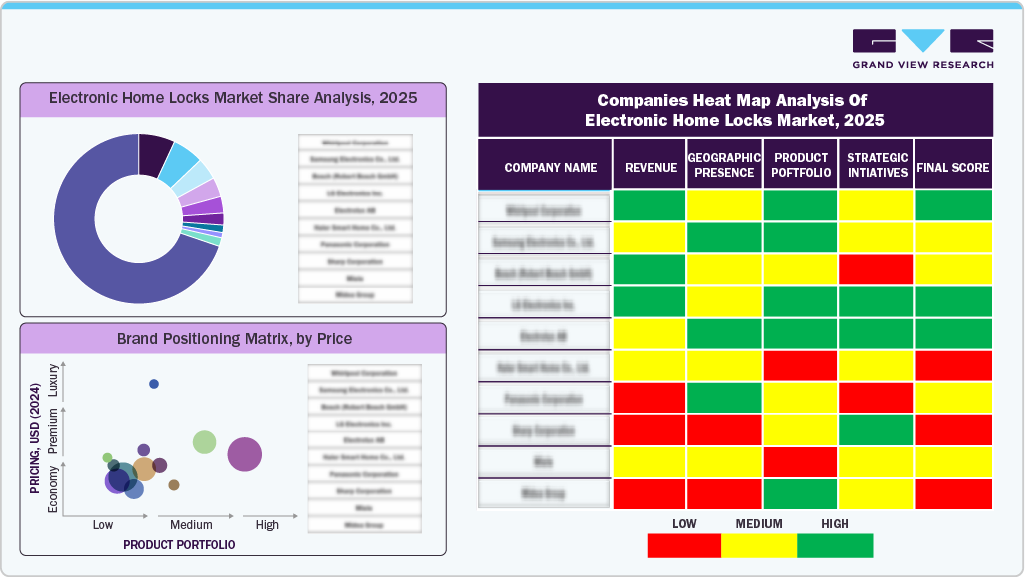
The electronic home locks market is highly competitive, driven by diverse consumer needs, housing formats, and regional security requirements, leading manufacturers to offer a wide range of products across price points and technologies. As an innovation-led category, the market is seeing continuous advancements in biometrics, app-based access, and smart home integration, resulting in frequent product upgrades and new brand entries. Companies are expanding distribution through e-commerce and retail channels while strengthening visibility via digital marketing and partnerships with real estate developers and installers. At the same time, focus on competitive pricing, data security, and energy efficiency is shaping product strategies. Brand share analysis remains essential for assessing competitive positioning and identifying growth opportunities.
Consumer Insights
Homeowners tend to invest in permanent, high-security solutions such as biometric or fully integrated smart locks that enhance long-term property value and security control. In contrast, renters and users of shared accommodation prefer non-invasive or easy-to-install models that do not require structural modifications. Meanwhile, short-term rental hosts prioritize features such as temporary digital keys, remote access control, and activity logs, enabling seamless guest management without physical key exchange. This shift indicates that purchasing decisions are becoming highly use-case driven, with functionality tailored to specific living arrangements rather than uniform consumer needs.
Consumers increasingly expect electronic locks to support multiple access modes, such as PIN codes, fingerprints, RFID cards, and mobile apps, allowing different users to access the property based on convenience and authorization levels. Temporary access credentials for domestic help, service personnel, or guests are becoming a critical feature, reducing the need for physical key duplication and improving control over entry permissions. This is especially relevant in urban households where dynamic access requirements are common, positioning electronic locks as tools for managing household movement rather than just securing entry points.
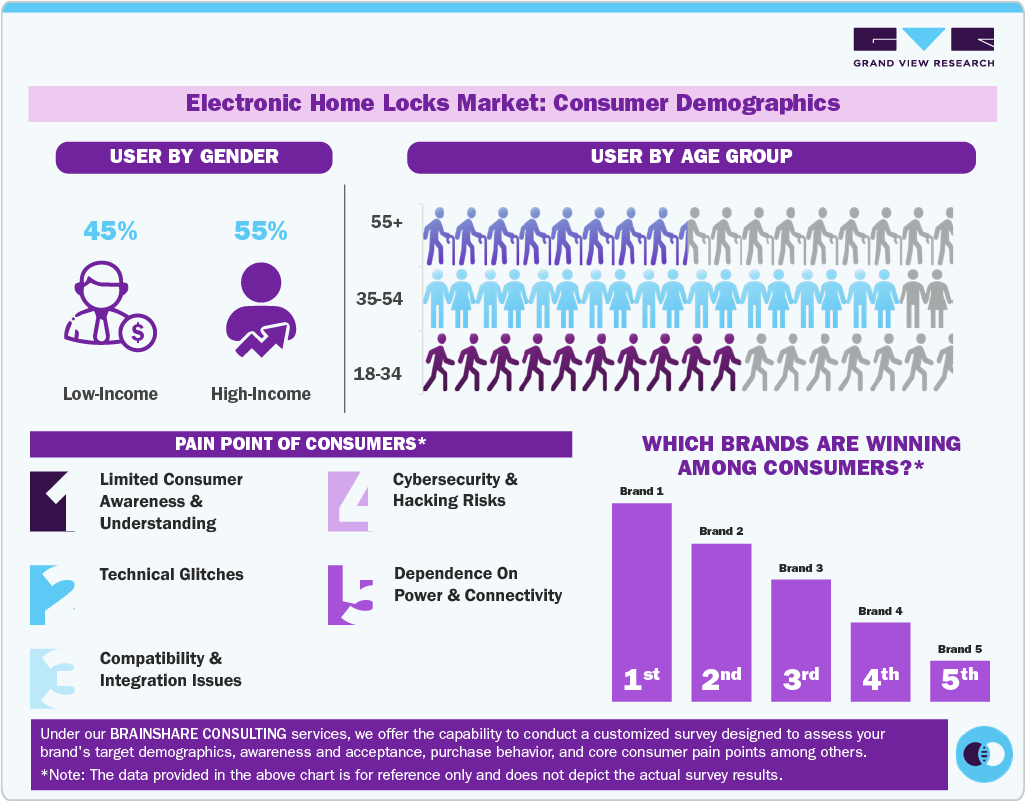
There is also a noticeable shift toward design integration and aesthetic alignment in purchase decisions, as electronic locks become visible components of modern home exteriors and interiors. Consumers are paying closer attention to finish, form factor, and compatibility with door materials, preferring sleek, minimal designs that complement contemporary architecture. This is particularly important in premium housing and newly constructed properties, where visual consistency across fixtures and smart devices is a priority. As a result, manufacturers are focusing not only on functionality but also on design differentiation, offering a range of finishes, slimmer profiles, and integrated display panels.
Product Insights
The keypad electronic home locks industry accounted for a 39.4% share of the global revenue in 2025, driven by strong consumer preference for simple, reliable, and cost-effective access control solutions. These locks offer keyless entry through PIN-based authentication, eliminating the need for physical keys while maintaining ease of use across a wide range of users. Their straightforward functionality makes them particularly attractive for households, rental properties, and small commercial spaces where convenience and basic security are primary requirements. In addition, keypad locks are simpler than fully integrated smart or biometric systems, reducing installation challenges and ongoing maintenance requirements.
Demand is further supported by growing adoption in multi-user environments where temporary or shared access is required, as users can easily create and modify PIN codes without duplicating keys. This makes them suitable for families, shared accommodations, and short-term rental setups. Technological improvements are also enhancing product appeal, with features such as backlit keypads, anti-peep password protection, auto-locking, and mobile app integration in advanced models.
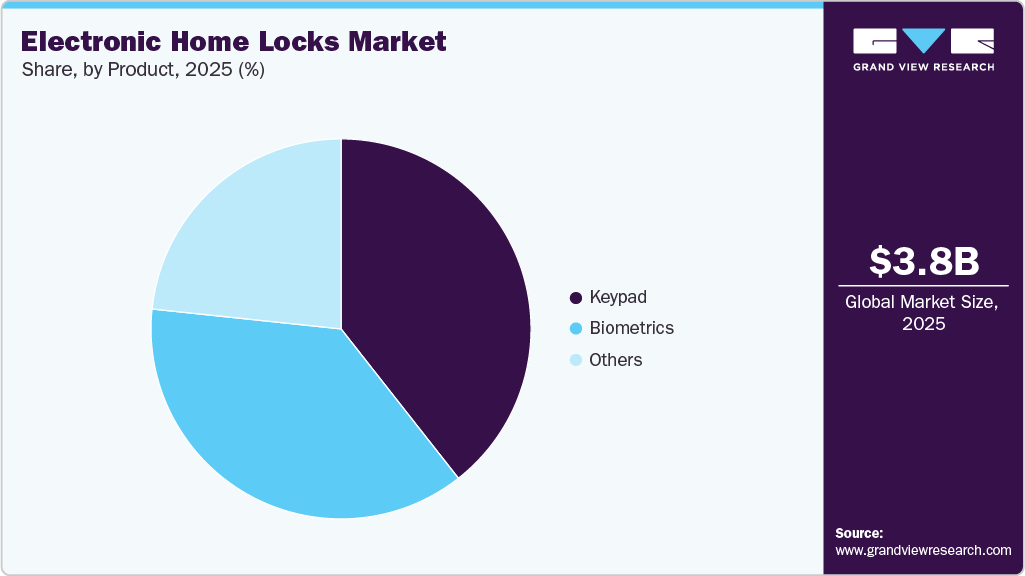
Biometric electronic home locks market is expected to grow at a CAGR of 9.7% from 2026 to 2033, driven by increasing demand for high-security, user-specific access solutions across residential and commercial settings. Consumers are increasingly adopting fingerprint and facial recognition technologies that offer faster, contactless entry while reducing risks associated with lost keys or shared PINs. These systems are particularly valued in multi-user households and premium housing environments, where individualized authentication enhances both security and convenience. Growth is further supported by integration with smart home ecosystems, enabling features such as remote access control, activity tracking, and real-time alerts. Continuous improvements in sensor accuracy, recognition speed, and reliability are strengthening consumer confidence.
End Use Insights
The residential electronic home locks industry accounted for a share of 52.0% in 2025, driven by increasing adoption of smart security solutions across individual homes and apartment complexes. Homeowners are prioritizing keyless entry systems that offer convenience, controlled access, and improved security, particularly in households with multiple users and frequent visitor access. These locks enable remote control, user management, and real-time monitoring, making them well-suited for modern living environments. Demand is further supported by the rise in apartment living and gated communities, where secure and centralized access control is essential.
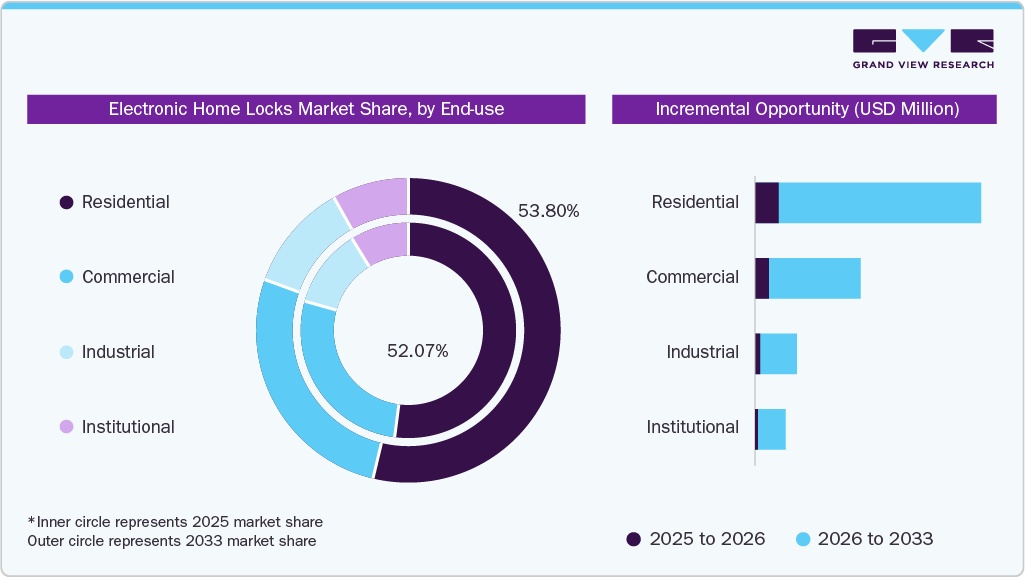
Retail electronic home locks are projected to grow at a CAGR of 7.7% from 2026 to 2033. Driven by the increasing need for secure and efficient access control in high-traffic environments such as retail outlets, offices, co-working spaces, and shared facilities. These settings require systems that can manage multiple users, track entry activity, and restrict unauthorized access, making electronic locks a practical alternative to traditional keys. Businesses are adopting keyless solutions to improve operational efficiency, reduce security risks, and support flexible access for employees and service personnel. Growth is further supported by rising adoption of smart, connected lock systems that enable remote monitoring, centralized control, and real-time alerts, along with increasing focus on compliance, audit trails, and data security across commercial infrastructure.
Regional Insights
North America Electronic Home Locks Market Trends
The North America electronic home locks market accounted for 30.7% of the global market in 2025. The North America vending machine market is driven by strong adoption of smart home technologies and increasing consumer focus on residential security and access control. Changing lifestyles, particularly among working professionals and urban households, are reinforcing demand for keyless entry systems that offer convenience, remote access, and real-time monitoring. The region’s high penetration of connected devices and home automation platforms is accelerating the integration of electronic locks into broader smart home ecosystems, enabling seamless control through mobile applications and voice-enabled systems.
U.S. Electronic Home Locks Market Trends
The U.S. electronic home locks market accounted for 82.5% of the North America market in 2025. The U.S. electronic home locks industry is driven by the widespread adoption of smart home technologies and by strong consumer demand for advanced residential security solutions. The market benefits from high connected device penetration, with households increasingly integrating electronic locks into broader home automation systems for centralized control, remote access, and real-time monitoring. Demand is further supported by strong activity in the housing sector, including new residential construction and renovation projects, where electronic locks are being installed as part of modern security infrastructure. Key manufacturers are also driving growth through continuous product innovation, introducing advanced features such as biometric authentication, enhanced app-based controls, and improved cybersecurity measures.
The Canada electronic home locks market is projected to grow at a CAGR of 8.6% from 2026 to 2033. The Canada electronic home locks industry is driven by increasing adoption of smart home technologies and rising demand for secure, keyless access solutions across residential and multi-unit housing. Consumers are prioritizing convenience and safety, leading to higher uptake of electronic locks that offer features such as remote access, user management, and real-time monitoring. Growth is further supported by expansion of smart home ecosystems and increasing integration of electronic locks with connected devices such as security cameras and doorbells. In addition, rising renovation activity and new residential developments are encouraging installation of modern locking systems as part of upgraded home infrastructure.
Europe Electronic Home Locks Market Trends
The Europe electronic home locks market accounted for a share of 23.3% of the global market in 2025. The electronic home locks market in Europe is driven by increasing demand from the rental housing and short-term accommodation sector, where property owners require flexible and secure access management solutions such as remote check-ins and temporary digital keys. Growth is further supported by rising investment in multi-family housing and residential complexes, where centralized access control systems are used to manage multiple entry points efficiently. In addition, ongoing renovation and modernization of older housing stock across Europe is encouraging replacement of traditional locks with electronic alternatives to improve security and convenience.
The UK electronic home locks market accounted for a share of 22.3% of the Europe market in 2025. Electronic home locks industry in the UK is driven by increasing demand for secure and flexible access control solutions across residential and rental properties. Growth is supported by rising adoption of smart home technologies, with consumers seeking keyless entry systems that offer remote access, user management, and real-time monitoring. The expanding rental and short-term accommodation market is further encouraging use of electronic locks that enable temporary digital access and reduce reliance on physical keys. In addition, ongoing residential renovation and modernization projects are accelerating replacement of traditional locking systems with electronic alternatives.
The Germany electronic home locks market is projected to grow at a CAGR of 9.1% from 2026 to 2033. Electronic home locks industry in the Germany is driven by strong demand for high-quality, precision-engineered security solutions that align with consumer preference for durability and reliability. Adoption is increasing across multi-unit residential buildings and commercial spaces where centralized access control and efficient user management are required. Growth is further supported by rising use of retrofit-friendly electronic locks that can be installed on existing doors, particularly in older buildings. In addition, increasing deployment in office and industrial environments, along with strong emphasis on product certification, data protection, and long-term service support, continues to support steady market expansion in Germany.
Asia Pacific Electronic Home Locks Market Trends
Asia Pacific electronic home locks market is projected to grow at a CAGR of 8.6% from 2026 to 2033. Electronic home locks industry in Asia Pacific is driven by rapid urbanization and large-scale residential construction across countries such as China, India, and Southeast Asia, where rising development of apartments and gated communities is increasing demand for modern access control solutions. Consumers are increasingly adopting electronic locks as part of smart home upgrades, supported by growing digital penetration and familiarity with connected devices. Rising concerns around safety in densely populated urban areas are further encouraging the shift from traditional locks to advanced electronic systems.
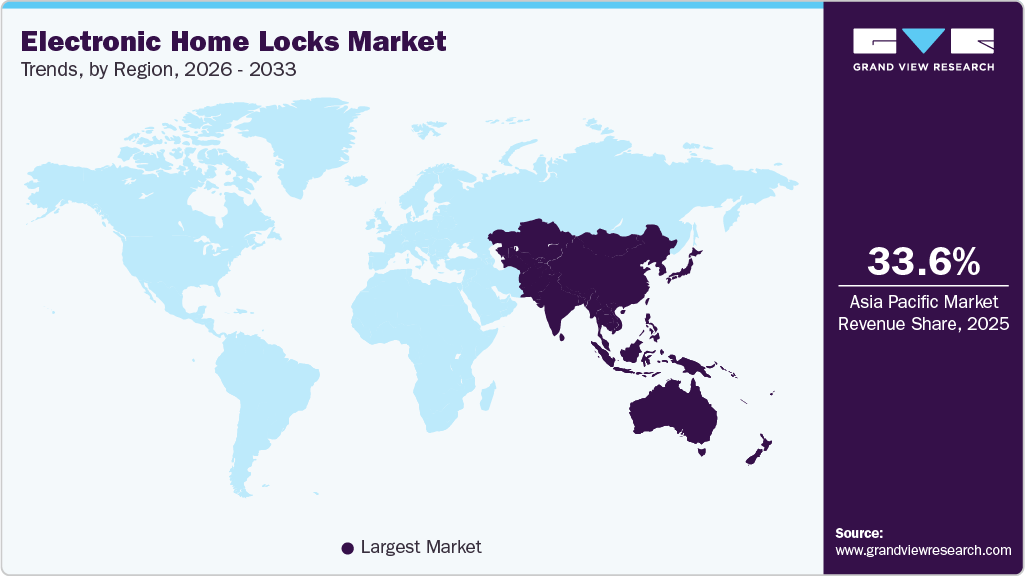
The China electronic home locks market accounted for a share of 25.4% of the Asia Pacific market in 2025. The electronic home locks industry in China is driven by rapid expansion of smart residential developments and high adoption of connected home technologies across urban areas. Growing construction of high-rise apartments and gated communities is creating strong demand for advanced access control systems that offer both security and convenience. Consumers are increasingly adopting electronic locks with mobile app integration, remote access, and multi-user management features, supported by high smartphone penetration and a mature digital ecosystem. In addition, strong presence of domestic manufacturers offering cost-competitive and feature-rich products is enabling wider adoption across income groups.
The India electronic home locks market is projected to grow at a CAGR of 9.6% from 2026 to 2033. The electronic home locks in India is driven by rising demand for affordable and secure access control solutions across urban households and newly developed residential complexes. Rapid urbanization and increasing apartment living in metropolitan and tier 2 cities are encouraging adoption of electronic locks that offer convenience, keyless entry, and improved security. Growing awareness of home safety and gradual adoption of smart home technologies are further supporting the shift from traditional locks to digital alternatives. In addition, availability of cost-competitive products, expansion of e-commerce platforms and installer networks, and ongoing residential construction and renovation activities are collectively supporting widespread adoption.
Latin America Electronic Home Locks Market Trends
Latin America electronic home locks market is projected to grow at a CAGR of 8.5% from 2026 to 2033. The electronic home locks in Latin America is driven by rising concerns around residential security and increasing adoption of keyless access solutions across urban and semi-urban areas. Growing residential construction and expansion of multi-family housing projects are supporting integration of modern locking systems in new developments. At the same time, improving availability of cost-effective electronic locks and expansion of regional distribution networks are making these solutions more accessible to a broader consumer base.
Middle East And Africa Electronic Home Locks Market Trends
Middle East & Africa electronic home locks market is projected to grow at a CAGR of 7.8% from 2026 to 2033. The electronic home locks in Middle East & Africa is driven by increasing investment in smart cities, residential complexes, and large-scale infrastructure developments where advanced security systems are being integrated as standard features. Rapid urbanization and growth of premium housing and mixed-use developments are supporting demand for keyless and connected locking solutions. Rising adoption of digital technologies and improved connectivity are enabling wider use of app-based and remotely managed access systems.
Key Electronic Home Locks Companies:
The following key companies have been profiled for this study on the electronic home locks market.
- Vivint, Inc.
- Honeywell International Inc.
- Allegion
- dormakaba Group
- Godrej.com
- Spectrum Brands, Inc.
- Samsung
- Salto Systems, S.L.
- Master Lock Company LLC
- MIWA Lock Co.
Recent Developments
-
In April 2026, Dreame Technology launched two new smart locks for the U.S. market, expanding its presence in home security solutions. The lineup includes the NAVO Smart Lock A10, offering advanced features such as geofencing auto-unlock, multi-mode access, and smart home integration, and the Safio Lock Turbo Lite, designed for everyday convenience with compatibility across platforms like Apple Home. With multiple unlocking options, real-time alerts, and durable designs, the launch reflects the company’s focus on delivering accessible, technology-driven security solutions tailored to modern households.
-
In November 2025, Codelocks launched the KitLockNano, a compact digital lock redesigned with improved durability and a more advanced, user-friendly design. The upgraded model offers enhanced functionality within a small form factor, including dual-access options and simplified operation for a wide range of applications. This launch reflects the company’s focus on delivering space-efficient, reliable locking solutions that combine modern design with practical usability.
Electronic Home Locks Market Report Scope
Report Attribute
Details
Market size in 2025
USD 3.8 billion
Estimated Market size in 2026
USD 4.2 billion
Projected Market size by 2033
USD 7.1 billion
Growth rate
CAGR of 8.0% from 2026 to 2033
Base year
2025
Actual data
2021 - 2025
Forecast period
2026 - 2033
Quantitative units
Revenue in USD Million/ Billion, Units, and CAGR from 2026 to 2033
Report coverage
Revenue forecast, company ranking, competitive landscape, growth factors, and trends
Segments covered
Product, end use, region
Regional scope
North America; Europe; Asia Pacific; Latin America; Middle East & Africa
Country scope
U.S.; Canada; Mexico; UK; Germany; France; Italy; Spain; China; Japan; India; Australia; South Korea; Brazil; South Africa; Saudi Arabia; UAE
Key companies profiled
Vivint, Inc.; Honeywell International Inc.; Allegion; dormakaba Group; Godrej.com; Spectrum Brands, Inc.; Samsung; Salto Systems, S.L.; Master Lock Company LLC; MIWA Lock Co.
Customization scope
Free report customization (equivalent up to 8 analysts working days) with purchase. Addition or alteration to country, regional & segment scope.
Pricing and purchase options
Avail customized purchase options to meet your exact research needs. Explore purchase options
Global Electronic Homes Locks Market Report Segmentation
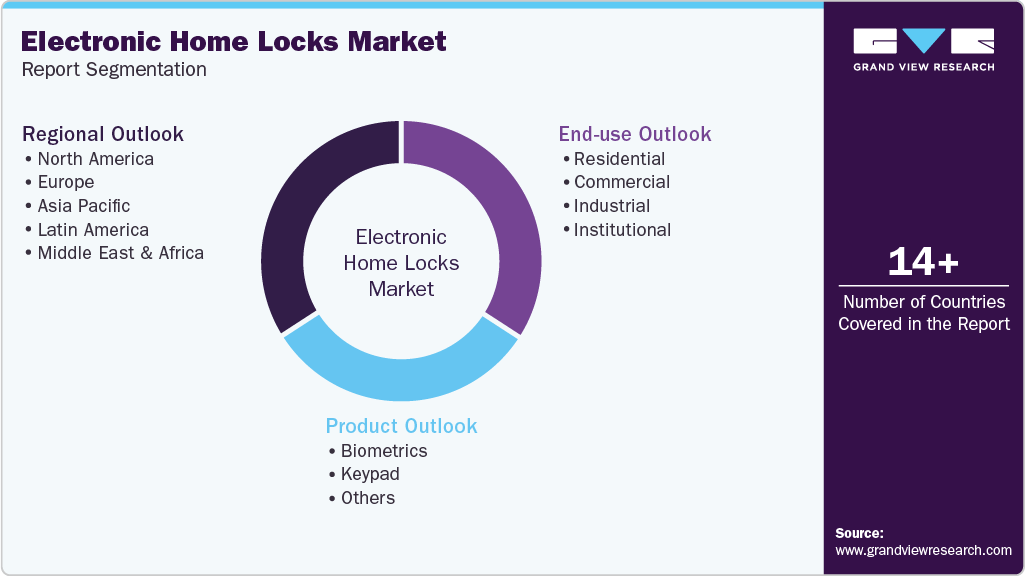
This report forecasts revenue growth at the global, regional, and country levels and provides an analysis of the latest industry trends and opportunities in each of the sub-segments from 2021 to 2033. For the purpose of this study, Grand View Research has segmented the global electronic home locks market report on the basis of product, end use, and region.
-
Product Outlook (Revenue, USD Million, 2021 - 2033)
-
Biometrics
-
Keypad
-
Others
-
-
End Use Outlook (Revenue, USD Million, 2021 - 2033)
-
Residential
-
Commercial
-
Industrial
-
Institutional
-
-
Regional Outlook (Revenue, USD Million, 2021 - 2033)
-
North America
-
U.S.
-
Canada
-
Mexico
-
-
Europe
-
UK
-
Germany
-
France
-
Italy
-
Spain
-
-
Asia Pacific
-
China
-
India
-
Japan
-
Australia
-
South Korea
-
-
Latin America
-
Brazil
-
-
Middle East & Africa
-
South Africa
-
Saudi Arabia
-
UAE
-
-
Frequently Asked Questions About This Report
The global electronic home locks market size was valued at USD 3.8 billion in 2025 and is estimated at USD 4.2 billion for 2026.
The global electronic home locks market is expected to grow at a CAGR of 8.0% from 2026 to 2033, reaching USD 7.1 billion by 2033.
Key players include Vivint, Inc.; Honeywell International Inc.; Allegion; dormakaba Group; Godrej.com; Spectrum Brands, Inc.; Samsung; Salto Systems, S.L.; Master Lock Company LLC; MIWA Lock Co.
Key factors that are driving the market growth include integration of advanced technologies, such as Bluetooth and face recognition, increasing number of smartphone users, and availability of wireless connectivity.
Asia Pacific dominated with a 33.6% revenue share in 2025.
The residential segment led with a 52.0% revenue share in 2025.
Keypad electronic home locks accounted for a 39.4% share of the global revenue in 2025, due to their affordability, ease of installation, and user-friendly access through PIN-based entry. Their widespread adoption in residential settings, along with minimal dependence on smartphones or connectivity, continues to support strong demand.
About the Author(s)
Electronic & Electrical Research Team
Consumer Goods · Electronic & ElectricalThis report was authored by the electronic & electrical research team at Grand View Research - comprising two research analysts, one senior research analyst, and one industry expert - with specialized expertise in the electronic & electrical segment of the consumer goods industry. All findings are based on proprietary consumer goods databases, executive interviews, and regulatory analysis, subject to internal peer review prior to publication.
Last Updated:
Speak to Analyst


Customize this report to your needs - add regions, segments, or data points, with 20% free customization.
Or view our licence options:


ISO 9001:2015 & 27001:2022 Certified
We are GDPR and CCPA compliant! Your transaction & personal information is safe and secure. For more details, please read our privacy policy.


