
- Home
- »
- Plastics, Polymers & Resins
- »
-
Food Grade Plastics Market Size, Growth Report, 2026-2033GVR Report cover

Food Grade Plastics Market (2026 - 2033)
Size, Share & Trends Analysis Report By Polymer Type (PET, PP, HDPE, LDPE, PS), By Application (Bags & Wraps, Bottles, Cups, Lids & Caps, Jars & Containers, Trays & Cartons), By Region, And Segment Forecasts
Market Size, 2025
$72.2BMarket Estimate, 2026
$75.8BMarket Forecast, 2033
$108.0BCAGR, 2026–2033
5.2%Food Grade Plastics Market Summary
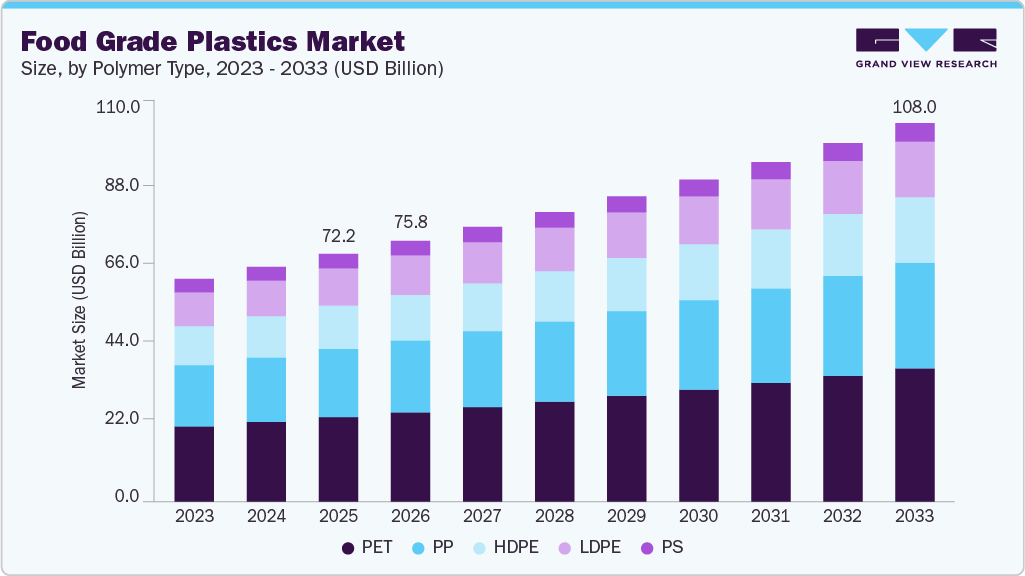
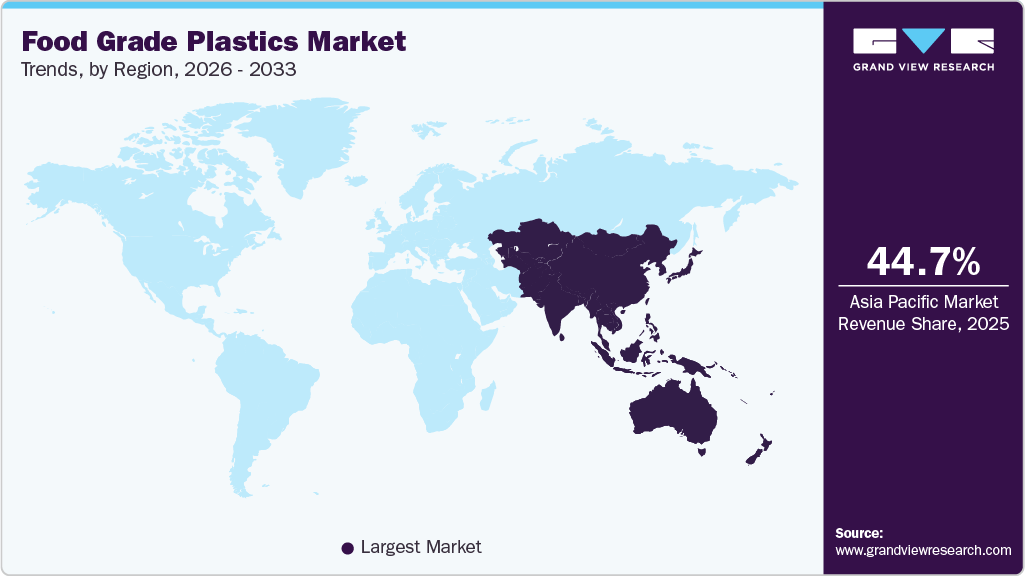
The global food grade plastics market size was valued at USD 72.2 billion in 2025 and is projected to grow from USD 75.8 billion in 2026 to USD 108.0 billion by 2033, at a CAGR of 5.2% from 2026 to 2033. Asia Pacific dominated the global market, accounting for the largest revenue share of 44.7% in 2025. The demand for food-grade plastics is being driven by the increasing consumption of convenience and processed foods, supported by fast-paced urban lifestyles.
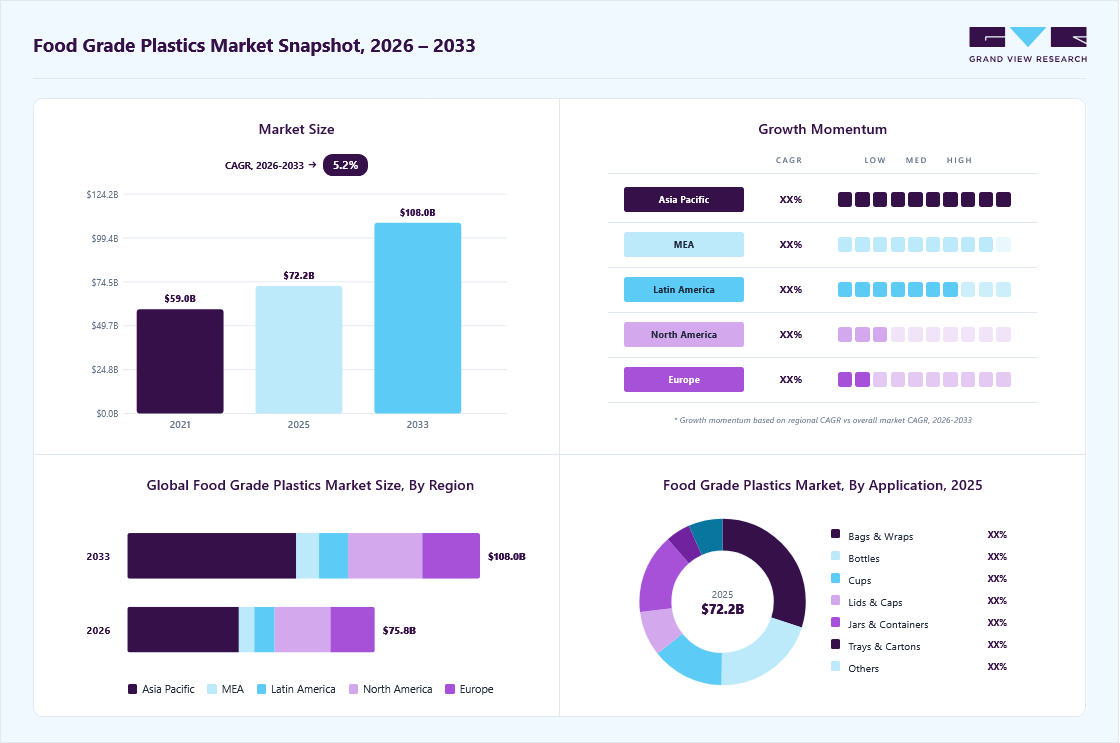 Source: Grand View Research, IR Documents, Primary Interviews, Paid DatabasesTo learn more about this report,
 Download Free Sample Report
Key Market Trends & Insights
- By polymer type: PET segment is anticipated to grow at a CAGR of 5.9% from 2026 to 2033.
- By application: Bags & wraps segment is expected to grow at a 6.0% CAGR from 2026 to 2033.
Regional Highlights
- Largest regional market: Asia Pacific (44.7% revenue share, 2025)
- By country: The France food grade plastics industry is a major contributor to the global market.
Market Size & Forecast
- Market size in 2025: USD 72.2 Billion
- Estimated market size in 2026: USD 75.8 Billion
- Projected market size by 2033: USD 108.0 Billion
- CAGR (2026-2033): 5.2%
Prism AI by Grand View Research Free to tryAsk a question about the food grade plastics marketTry asking✓Every figure cited from GVR research Prefer the report? Download free sample →Additionally, growing awareness of food safety and hygiene standards is encouraging the use of materials that effectively prevent contamination. A major trend in the industry is the increasing adoption of recycled materials such as high-quality rPET (recycled polyethylene terephthalate) and rPP (recycled polypropylene), which support the development of circular economy models.
 To learn more about this report, Download Free Sample Report
These materials are widely used in applications such as beverage bottles and food packaging containers. Additionally, there is growing innovation in bioplastics and compostable materials, including PLA (polylactic acid) and PHA (polyhydroxyalkanoates), which are derived from renewable resources like corn starch and sugarcane, enhancing sustainability across the value chain.
Drivers, Opportunities & Restraints
The industry is driven by strong demand from the food and beverage sector, supported by the growth of convenience and processed foods, increasing urban lifestyles, and expanding retail channels. These factors are raising the need for safe, reliable, and efficient packaging solutions. Growing awareness of food safety and hygiene standards is further encouraging the use of materials that prevent contamination. In addition, the rapid expansion of e-commerce, meal delivery services, and online grocery platforms is boosting packaging demand. As consumption of beverages, ready-to-eat meals, dairy, frozen foods, fresh produce, and meat products increases, the use of plastic containers, films, and wraps continues to grow across the supply chain.
A key opportunity in the industry lies in the expansion of food-grade rPET. This segment is growing rapidly as post-consumer PET bottles are increasingly recycled into new food packaging, driven by strong demand for circular economy solutions. In addition, there is a rising focus on the development of sustainable packaging materials. Innovations in bioplastics, such as corn-based PLA, are gaining importance as companies seek alternatives to conventional petroleum-based plastics and aim to reduce environmental impact while maintaining product safety and performance.
Regulatory compliance requirements remain a key constraint in the industry. Strict standards mandate certification labels such as those issued by the FDA, BRCGS, and NSF to verify food safety, leading to additional testing, documentation, and higher operational costs. In addition, material limitations are increasing, as certain plastics like polycarbonate are being restricted due to concerns over BPA content. These factors can raise production expenses, limit material choices, and slow product approvals, thereby impacting overall efficiency and market growth potential.
Market Concentration & Characteristics
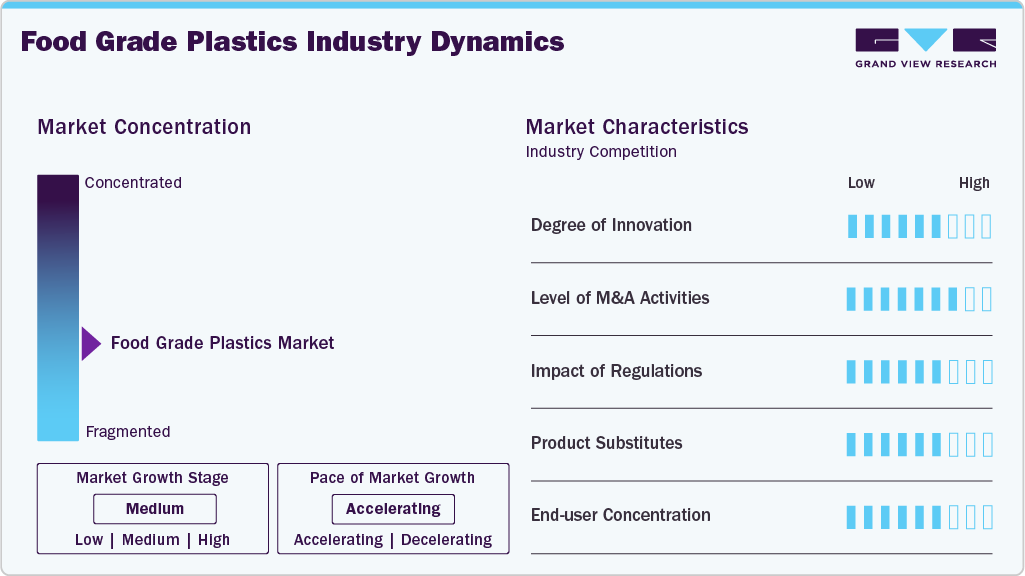
The industry growth stage is medium, and growth is accelerating. The market exhibits moderate fragmentation with key players dominating the industry landscape. Major companies such as Dow Inc., ExxonMobil Chemical Company, LyondellBasell Industries N.V., Braskem S.A., BASF SE, SABIC, Eastman Chemical Company, NatureWorks LLC, Indorama Ventures, TotalEnergies Corbion B.V., and others play a significant role in shaping the market dynamics. These leading players often drive innovation in the market by introducing new products, technologies, and materials to meet the industry's evolving demands.
Product substitutes include paper-based packaging, glass, metal, and bio-based materials, as well as reusable and refillable systems that can reduce reliance on conventional plastic formats. These alternatives can pressure demand in applications where brands prioritize sustainability, premium presentation, or regulatory alignment. They also push plastic suppliers to improve recyclability, food safety performance, and cost efficiency. However, food-grade plastics still retain a strong position because they are lightweight, versatile, affordable, and suitable for high-volume food distribution, which supports steady market demand across key end-use sectors.
 To learn more about this report, Download Free Sample Report
Regulations have a significant influence on the industry by setting clear requirements for material safety, product quality, and environmental compliance. Food contact standards and packaging rules support the use of approved polymers, which increases demand for certified and traceable solutions. Sustainability regulations are also pushing the market toward recyclable, recycled, and lower-emission materials. In addition, food safety enforcement and extended producer responsibility programs are shaping procurement and production decisions across the value chain. However, stricter compliance can increase material costs, testing needs, and approval timelines, which may affect pricing and operational efficiency.
Polymer Type Insights
The PET segment led the food-grade plastics industry, holding a 29.5% share in 2025. It is expected to expand at a CAGR of 5.9% from 2026 to 2033. Growth is supported by the rapid rise of e-commerce and ready-to-eat meal delivery services, which require lightweight and durable packaging. Demand is also driven by increasing consumption of functional beverages such as energy drinks, juices, and sports drinks, along with steady demand from the alcohol and beer segment, where PET offers cost and logistics advantages.
The PP segment is expected to expand at a CAGR of 5.6% during the forecast period. Growth is supported by the rapid urbanization and busy consumer lifestyle, which is sustaining demand for reliable packaging solutions. Increasing use in certified food and beverage packaging is also contributing to adoption. PP offers strong thermal and physical stability, making it suitable for hot-fill, microwavable, and freezer-safe applications. Its low density supports cost-efficient lightweight packaging. In addition, its recyclability and compatibility with mono-material designs align with sustainability objectives.
Application Insights
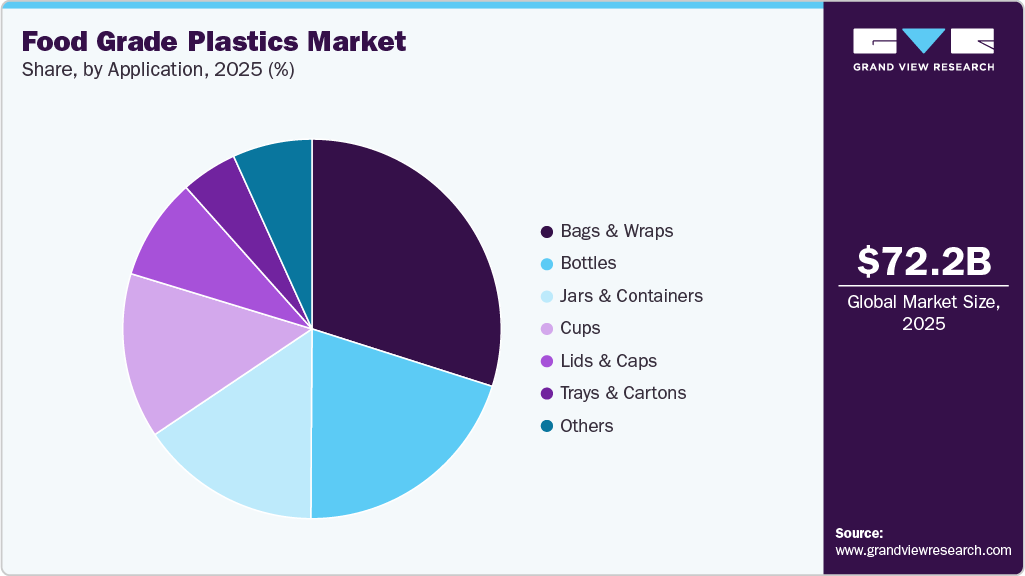
The bags and wraps segment dominated the market, contributing 29.9% of total revenue in 2025, and is projected to expand at a CAGR of 6.0% from 2026 to 2033. Growth is supported by advanced polymer formulations that improve barrier properties against moisture and oxygen. These improvements enable recycled materials to meet performance standards required for food preservation, extending shelf life, and maintaining product quality. Enhanced barrier functionality also supports the replacement of multi-layer virgin plastics with recyclable alternatives, improving sustainability. As regulatory pressure and brand commitments toward circular packaging increase, demand for high-performance recycled films in flexible packaging applications continues to strengthen.
 To learn more about this report, Download Free Sample Report
The bottles segment is expected to record the fastest CAGR of 5.7% during the forecast period. Growth is driven by its extensive use across multiple end-use industries. The beverage sector remains the primary consumer, with strong demand for PET bottles in water, soft drinks, and juices. The dairy and food processing industries also contribute through the use of HDPE and PP plastics for liquid and semi-liquid product packaging. In addition, pharmaceutical applications support demand due to the need for safe and durable packaging. Rising consumption in the household and food service sectors further strengthens market expansion.
Regional Insights
The food-grade plastics market in the Asia Pacific is set to expand steadily over the forecast period, supported by strong consumption trends and regulatory developments. The region held 44.7% of total market revenue and is expected to record a CAGR of 6.1%. Rising demand for packaged and convenience foods, driven by urbanization and higher disposable incomes in China and India, is increasing the need for safe and durable packaging. Growth in e-commerce food delivery, stricter food safety regulations, and increasing adoption of recycled and bio-based plastics are further supporting market growth.
 To learn more about this report, Download Free Sample Report
The China food-grade plastics market is expanding due to rapid urbanization and changing consumption patterns. Growing urban populations are increasing the demand for packaged and convenience foods. This is supported by rising disposable incomes and busy lifestyles. In parallel, the food processing industry is scaling up production to meet higher consumption needs. Organized retail and e-commerce channels are also strengthening the distribution of packaged products. Regulatory focus on food safety and hygiene is reinforcing material standards. These factors are collectively driving sustained demand for food-grade plastics across the region.
North America Food Grade Plastics Market Trends
The food-grade plastics market in North America is projected to grow, owing to the strict regulations on waste reduction and mandated recycled content in packaging. These policies are accelerating the shift toward recyclable and sustainable plastic materials. Demand is also rising due to the increased use of single-use foodservice disposables and takeaway packaging. In addition, the expansion of e-commerce and direct-to-consumer grocery delivery is driving the need for durable, high-performance packaging solutions that ensure product safety and integrity during the transportation of food-grade products.
U.S. Food Grade Plastics Market Trends
The food-grade plastics market in the US is expected to expand steadily, supported by strong sustainability commitments and tightening regulatory frameworks. Federal and state-level policies are encouraging reduced reliance on virgin plastics and higher recycled content in packaging. These measures are pushing manufacturers to adopt compliant materials and redesign packaging formats. The shift is also influencing procurement strategies across food and beverage companies, which are prioritizing suppliers that can meet evolving environmental standards while maintaining product safety and performance.
Europe Food Grade Plastics Market Trends
The food-grade plastics market in Europe is growing, supported by strict regulatory frameworks and evolving consumption patterns. Policies such as the Packaging and Packaging Waste Regulation (PPWR) mandate minimum recycled content in food packaging, increasing demand for high-quality recycled plastics. Strong consumer awareness regarding food safety is driving the use of certified materials that limit contamination risks. In addition, the rapid expansion of the ready-to-eat and meal delivery segment is further accelerating demand for safe and specialized packaging solutions.
Key Food Grade Plastics Company Insights
The food-grade plastics industry is highly competitive, with several key players dominating the landscape. Major companies in the market include Dow Inc., ExxonMobil Chemical Company, LyondellBasell Industries N.V., Braskem S.A., BASF SE, SABIC, Eastman Chemical Company, NatureWorks LLC, Indorama Ventures, and TotalEnergies Corbion B.V. The food-grade plastics industry is characterized by a competitive landscape with several key players driving innovation and market growth. Major companies in this sector are investing heavily in research and development to enhance the performance, cost-effectiveness, and sustainability of their products.
Key Food Grade Plastics Companies:
The following key companies have been profiled for this study on the food-grade plastics market.
- Dow Inc.
- ExxonMobil Chemical Company
- LyondellBasell Industries N.V.
- Braskem S.A.
- BASF SE
- SABIC
- Eastman Chemical Company
- NatureWorks LLC
- Indorama Ventures
- TotalEnergies Corbion B.V.
Recent Developments
-
In April 2026, Dow and RDM Group teamed up to launch Multiboard CirculaRR, a new recycled cartonboard designed for food packaging. This breakthrough solution improves sustainability for items like frozen fish, cakes, fruit trays, and dry pet food, offering a circular alternative for food-contact applications.
-
In December 2025, Alpla Group announced the establishment of a new recycling company focused on developing a food-grade high-density polyethylene (HDPE) recycling process.
Food Grade Plastics Market Report Scope
Report Attribute
Details
Market size in 2025
USD 72.2 billion
Estimated Market size in 2026
USD 75.8 billion
Projected Market size by 2033
USD 108.0 billion
Growth rate
CAGR of 5.2% from 2026 to 2033
Historical data
2021 - 2025
Forecast period
2026 - 2033
Quantitative units
Volume in kilotons; revenue in USD million/billion, and CAGR from 2026 to 2033
Report coverage
Revenue & volume forecast, competitive landscape, growth factors, and trends
Segments covered
Polymer type, application, region
Regional scope
North America; Europe; Asia Pacific; Central & South America; Middle East & Africa
Country scope
U.S.; Canada; Mexico; Germany; UK; France; Italy; Spain; China; India; Japan; South Korea; Australia; Brazil; Argentina; Saudi Arabia; UAE; South Africa
Key companies profiled
Dow Inc.; ExxonMobil Chemical Company; LyondellBasell Industries N.V.; Braskem S.A.; BASF SE; SABIC; Eastman Chemical Company; NatureWorks LLC; Indorama Ventures; TotalEnergies Corbion B.V.
Customization scope
Free report customization (equivalent to up to 8 analyst working days) with purchase. Addition or alteration to country, regional & segment scope
Pricing and purchase options
Avail customized purchase options to meet your exact research needs. Explore purchase options
Global Food Grade Plastics Market Report Segmentation
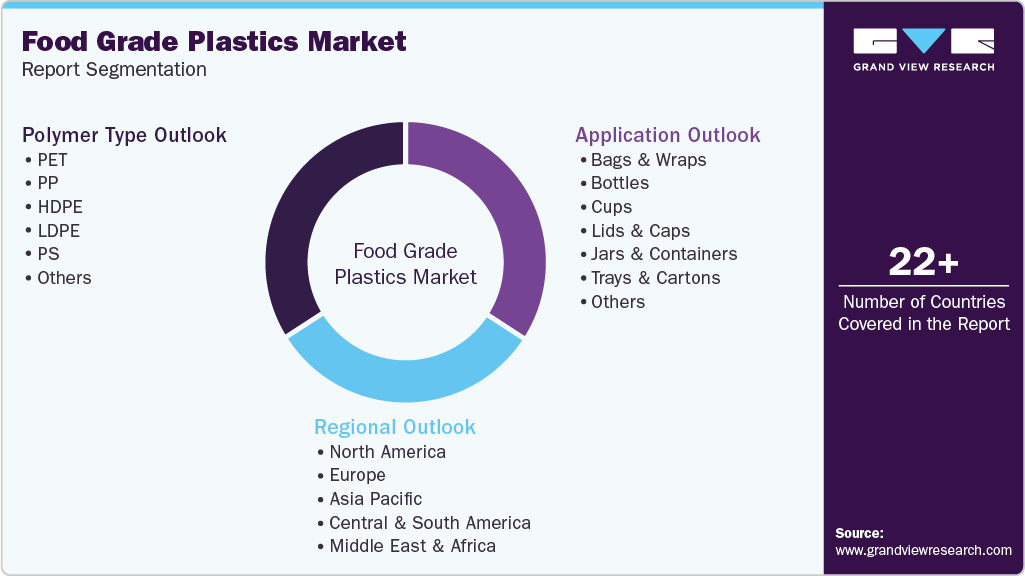
This report forecasts volume & revenue growth at the global, regional, and country levels and provides an analysis of the latest industry trends across sub-segments from 2021 to 2033. For this study, Grand View Research has segmented the global food grade plastics market report based on polymer type, application, and region:
 To learn more about this report, Download Free Sample Report
-
Polymer Type Outlook (Volume, Kilotons; Revenue, USD Billion, 2021 - 2033)
-
PET
-
PP
-
HDPE
-
LDPE
-
PS
-
Others
-
-
Application Outlook (Volume, Kilotons; Revenue, USD Billion, 2021 - 2033)
-
Bags & Wraps
-
Bottles
-
Cups
-
Lids & Caps
-
Jars & Containers
-
Trays & Cartons
-
Others
-
-
Regional Outlook (Volume, Kilotons; Revenue, USD Billion, 2021 - 2033)
-
North America
-
U.S.
-
Canada
-
Mexico
-
-
Europe
-
Germany
-
UK
-
France
-
Italy
-
Spain
-
-
Asia Pacific
-
China
-
India
-
Japan
-
South Korea
-
Australia
-
-
Central & South America
-
Brazil
-
Argentina
-
-
Middle East & Africa
-
Saudi Arabia
-
UAE
-
South Africa
-
-
Frequently Asked Questions About This Report
PET segment led with a 29.5% revenue share in 2025.
The bags and wraps segment led with a 29.9% revenue share in 2025, while bottles is the fastest-growing segment.
The global food grade plastics market was estimated at around USD 72.2 billion in the year 2025 and is expected to reach around USD 75.8 billion in 2026.
The global food grade plastics market is expected to grow at a compound annual growth rate of 5.2% from 2026 to 2033 to reach around USD 108.0 billion by 2033.
Asia Pacific dominated with a 44.7%revenue share in 2025.
The key players in the food-grade plastics market are Dow Inc., ExxonMobil Chemical Company, LyondellBasell Industries N.V., Braskem S.A., BASF SE, SABIC, Eastman Chemical Company, NatureWorks LLC, Indorama Ventures, and TotalEnergies Corbion B.V.
Key factors include the increasing consumption of convenience and processed foods, supported by fast-paced urban lifestyles. Additionally, growing awareness of food safety and hygiene standards is encouraging the use of materials that effectively prevent contamination.
About the Author(s)
Plastics, Polymers & Resins Research Team
Bulk Chemicals · Plastics, Polymers & ResinsThis report was authored by the plastics, polymers & resins research team at Grand View Research - comprising two research analysts, one senior research analyst, and one industry expert - with specialized expertise in the plastics, polymers & resins segment of the bulk chemicals industry. All findings are based on proprietary bulk chemicals databases, executive interviews, and regulatory analysis, subject to internal peer review prior to publication.
Last Updated:
Speak to Analyst

Customize this report to your needs - add regions, segments, or data points, with 20% free customization.
Or view our licence options:


ISO 9001:2015 & 27001:2022 Certified
We are GDPR and CCPA compliant! Your transaction & personal information is safe and secure. For more details, please read our privacy policy.


