
- Home
- »
- Biotechnology
- »
-
Genomics Data Analysis Market Size Report, 2026-2033GVR Report cover

Genomics Data Analysis Market (2026 - 2033)
Size, Share & Trends Analysis Report By Service Type (Variant Calling & Annotation, Gene Expression Analysis), By Technology (NGS, Microarray, PCR), By Application, By End-use, By Region, And Segment Forecasts
Market Size, 2025
$6.5BMarket Estimate, 2026
$7.5BMarket Forecast, 2033
$18.1BCAGR, 2026–2033
13.4%Genomics Data Analysis Market Summary
The global genomics data analysis market size was valued at USD 6.5 billion in 2025 and is projected to grow from USD 7.5 billion in 2026 to USD 18.1 billion by 2033, at a CAGR of 13.4% from 2026 to 2033. North America dominated the market, accounting for the largest revenue share of 42.1% in 2025. This growth trajectory reflects the accelerating adoption of next-generation sequencing (NGS), the expanding use of precision medicine, and the rising demand for cloud-based bioinformatics platforms.
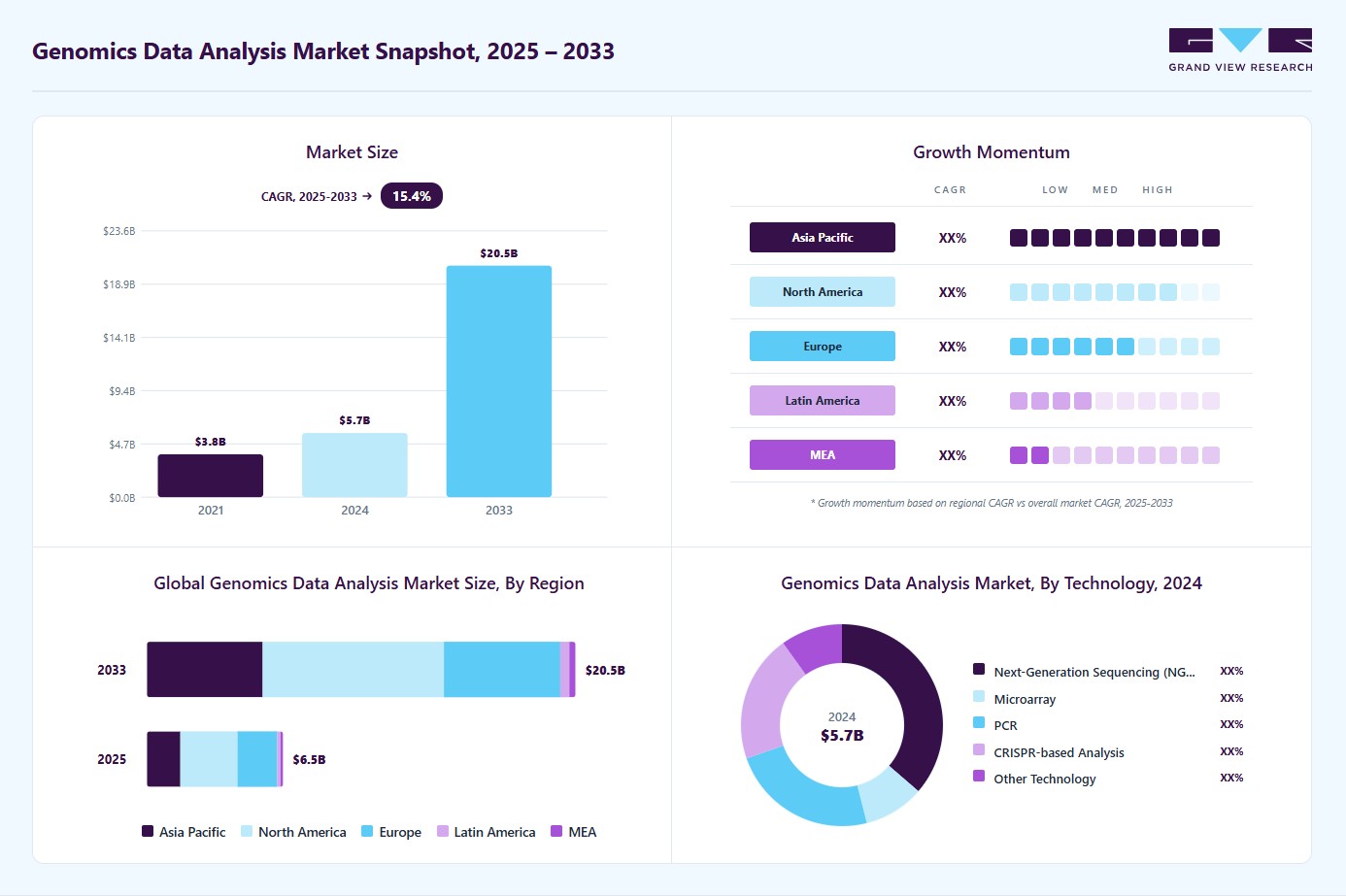 Source: Grand View Research, IR Documents, Primary Interviews, Paid DatabasesTo learn more about this report,
 Download Free Sample Report
 Key Market Trends & Insights
- By service: Variant calling and annotation segment held the largest revenue share of over 29.8% in 2025.
- By technology: Next-generation sequencing (NGS) segment held the largest revenue share of over 36.5% in 2025.
- By application: Drug discovery and development segment held the largest revenue share of over 54.1% in 2025.
- By end use: Pharmaceutical and biotechnology companies segment held the largest revenue share of over 40.0% in 2025.
Regional Highlights
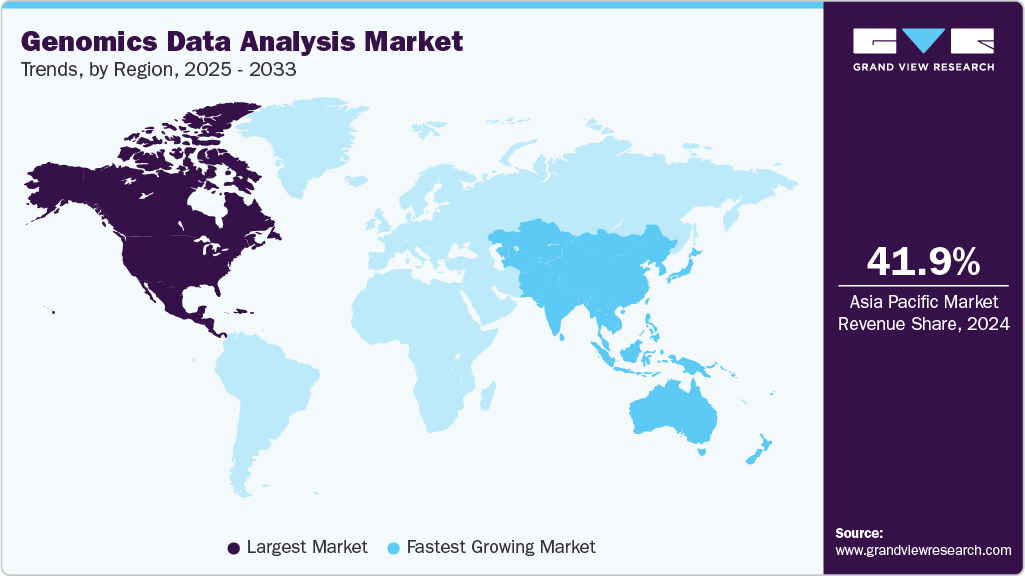
- Largest regional market: North America (42.1% revenue share, 2025)
- Fastest-growing regional market: Asia Pacific (highest CAGR, 2026-2033)
- By country: The U.S. dominated North America with the largest revenue share in 2025
Market Size & Forecast
- Market Size in 2025: USD 6.5 Billion
- Estimated Market Size in 2026: USD 7.5 Billion
- Projected Market Size by 2033: USD 18.1 Billion
- CAGR (2026-2033): 13.4%
Three ways to get this report
Buy it, customize it, or ask a question.Ask an Analyst
Analyst response in 1 business day
- AccessReport author, directly
- Reply timeWithin 1 working day
- No sales callDirect answer only
- FormatEmail reply
- CostFree, no cost
Get the Full Report
What the study covers
- FormatsPDF · Excel · Dashboard
- Timeline2026–2033 annual, 2025 base
- Coverage20+ countries, 5 regions
- Companies10+ key players profiled
Customize the Report
20% free customization
- IncludeCountries, segments, points
- TailorTo your product definition
- ExtendDeeper competitor detail
- OrA fully bespoke study
- Turnaround5–10 working days
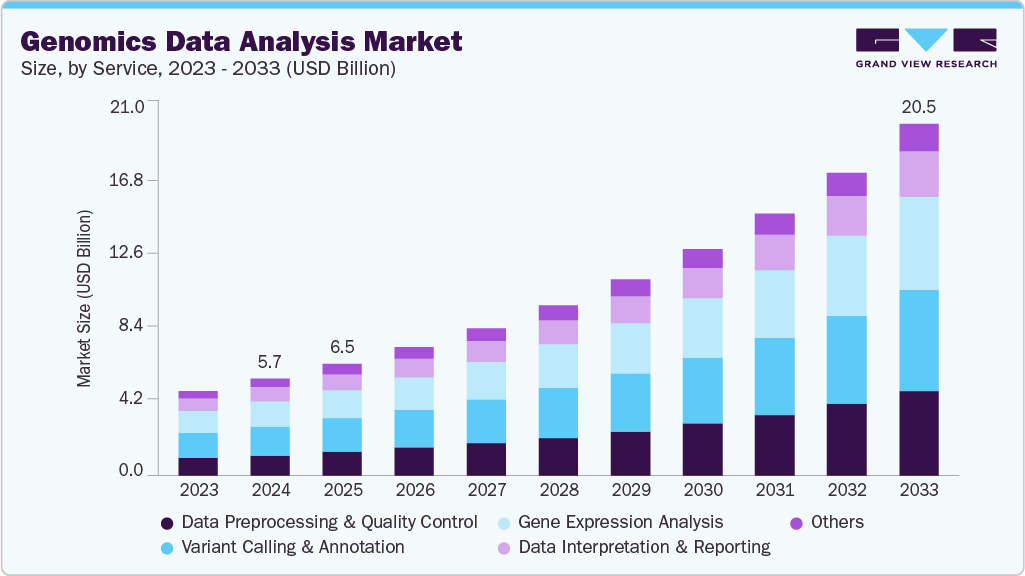 To learn more about this report, Download Free Sample Report
 More public and private sector investments and incorporating artificial intelligence (AI) and machine learning (ML) into genomic processes will help support additional market growth.
Market Dynamics
The genomics data analysis market is witnessing robust growth, driven by the increasing adoption of next-generation sequencing (NGS), precision medicine, and large-scale genomic research initiatives. Rising demand for advanced bioinformatics tools to manage, interpret, and store complex genomic datasets across research and clinical settings is further supporting market expansion. Moreover, continuous advancements in artificial intelligence (AI)-based analytics, increasing investments in genomics research, and expanding applications in oncology, rare disease diagnostics, and drug discovery are expected to propel market growth over the forecast period.
The increasing adoption of next-generation sequencing (NGS) technologies is a major driver for the genomics data analysis market. NGS platforms generate massive volumes of genomic data at high speed and lower cost compared to traditional sequencing methods, creating a strong demand for advanced data analysis solutions. Researchers and clinicians increasingly rely on bioinformatics tools, cloud-based platforms, and artificial intelligence-driven analytics to process, interpret, and manage complex sequencing datasets. The growing use of NGS across applications such as oncology, rare disease diagnosis, reproductive health, infectious disease surveillance, and population genomics is further supporting the need for efficient genomics data analysis solutions.
In addition, continuous technological advancements and increasing deployment of high-throughput sequencing systems are expanding the scale of genomic studies, thereby driving demand for sophisticated analytical capabilities. For instance, in October 2024, Illumina launched the MiSeq i100 Series, a next-generation benchtop sequencing platform designed to deliver faster turnaround times, simplified workflows, and enhanced accessibility for sequencing applications. Such product innovations are expected to increase sequencing adoption across research and clinical laboratories, consequently increasing the demand for genomics data analysis tools and services.
Data privacy, security, and ethical concerns associated with genomic information are key challenges restraining the genomics data analysis market. Genomic datasets contain highly sensitive personal information, raising concerns regarding unauthorized access, data breaches, and misuse. As the volume of sequencing data continues to grow, organizations face increasing challenges in ensuring secure storage, sharing, and management of genomic information.
Moreover, stringent data protection regulations and ethical considerations surrounding patient consent and genetic data ownership increase compliance requirements for market participants. The need for robust cybersecurity infrastructure and secure data management systems can increase operational costs and limit data sharing across institutions, thereby impacting the broader adoption of genomics data analysis solutions.
Market Concentration & Characteristics
The genomics data analysis industry is characterized by extensive innovation, largely due to accelerated technological developments and the adoption of new computational tools. Companies continuously strive to create new technologies for AI-based analyses, cloud-based bioinformatics, and solutions that incorporate multiple forms of omics data in recognition of the increased complexity of genomic data. Further, the partnerships between technology companies, academic or research institutes, and pharmaceutical companies to quickly develop innovative offerings for personalized medicine, diagnostic of rare diseases, and drug discovery make innovation a key competitive differentiator in this highly dynamic international market.
The genomics data analysis industry has experienced moderate to high levels of mergers and acquisitions (M&A) activity, denoting a lifecycle of rapid growth and strategic consolidation across the segment. For instance, in January 2020, Charles River Laboratories formed a strategic partnership with Fios Genomics to provide bioinformatics-driven drug discovery and safety assessment services, enhancing the efficiency of preclinical development. Strategic alliances and joint ventures have increased, allowing companies to leverage complementary expertise efficiently; these approaches also shorten the service type development cycle and allow entry into new geographies. Overall, M&A activity represents a proven mechanism for growth, innovation, and consolidation within the genomics data analysis industry.
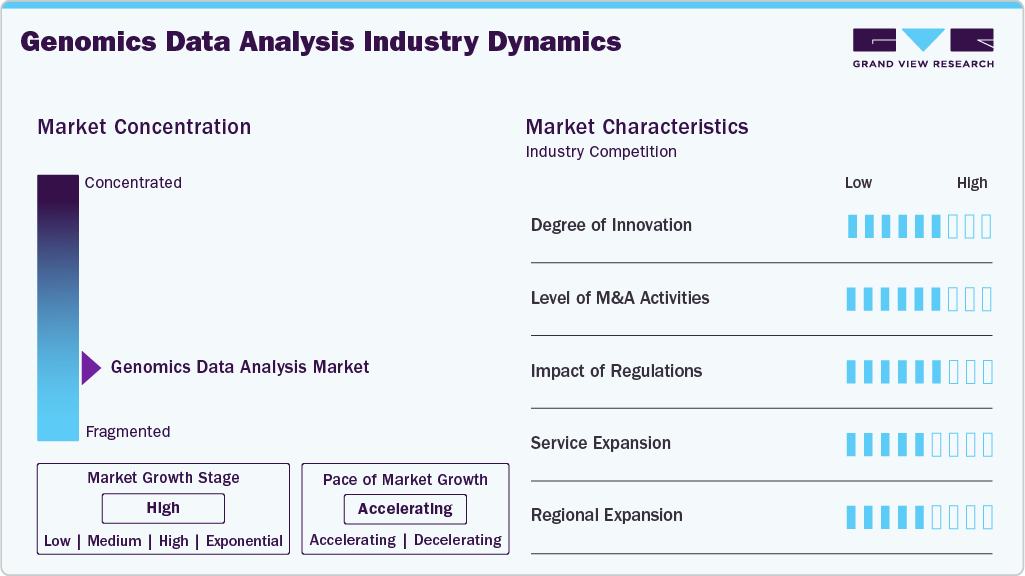 To learn more about this report, Download Free Sample Report
 The genomics data analysis industry is heavily shaped by rules surrounding data privacy, patient consent, and clinical validation. Strict regulations like HIPAA in the U.S., GDPR in Europe, and other regional guidelines ensure sensitive genomic and health data are handled securely. This can lead to higher compliance costs for companies. These rules can also make it tough for new solutions to enter the market and create challenges for startups, even though they are essential for maintaining data integrity and protecting patient privacy. Following these regulations, however, builds market credibility and trust among patients, researchers, and healthcare providers. This support can help long-term growth in the genomics data analysis industry.
Service expansion is a key growth driver in the genomics data analysis industry. Companies are consistently developing new and improved solutions to meet the changing needs of researchers, clinicians, and pharmaceutical firms. This includes introducing bioinformatics software, AI-powered analytics tools, cloud-based platforms, and multi-omics integration solutions that interpret genomic data. Firms are expanding their offerings to include specialized applications like cancer genomics, rare disease diagnostics, pharmacogenomics, and large-scale population studies.
Regional expansion is an important growth strategy for companies in the genomics data analysis industry. This is driven by the rising demand for genomic solutions in various regions. Firms are setting up local offices, research centers, and partnerships in emerging markets like Asia-Pacific, Latin America, and the Middle East to take advantage of growing research initiatives, increasing healthcare investments, and expanding biotech ecosystems. This geographic diversification allows companies to reach new customer segments and helps them meet region-specific regulatory requirements while tailoring solutions to local needs.
Analyst Perspective
The genomics data analysis market is expected to witness significant growth, driven by the rapid expansion of next-generation sequencing (NGS) applications, increasing adoption of precision medicine, and rising volumes of genomic data generated across research and clinical settings. Growing demand for advanced bioinformatics solutions to manage, interpret, and store complex genomic datasets is accelerating the adoption of cloud-based and AI-enabled analytics platforms. Moreover, increasing investments in population genomics, biomarker discovery, and personalized healthcare are expected to support long-term market expansion, encouraging companies to focus on scalable, automated, and integrated data analysis solutions.
AI & machine learning integration
AI and ML in genomics data analysis are changing how scientists and healthcare providers understand complex genomic data. Analyzing genomic data has historically been time-consuming and has often not detected subtle patterns across large data sets. However, AI and ML can rapidly analyze millions of data points while identifying associations and accurately predicting outcomes. This is a particularly important capability in cancer genomics, where the identification of infrequent mutations or patterns of gene expression may help guide treatment decisions or improve outcomes. Consequently, organizations are beginning to use AI-based genomics platforms to process and analyze genomics data to report and obtain conclusions faster and more accurately.
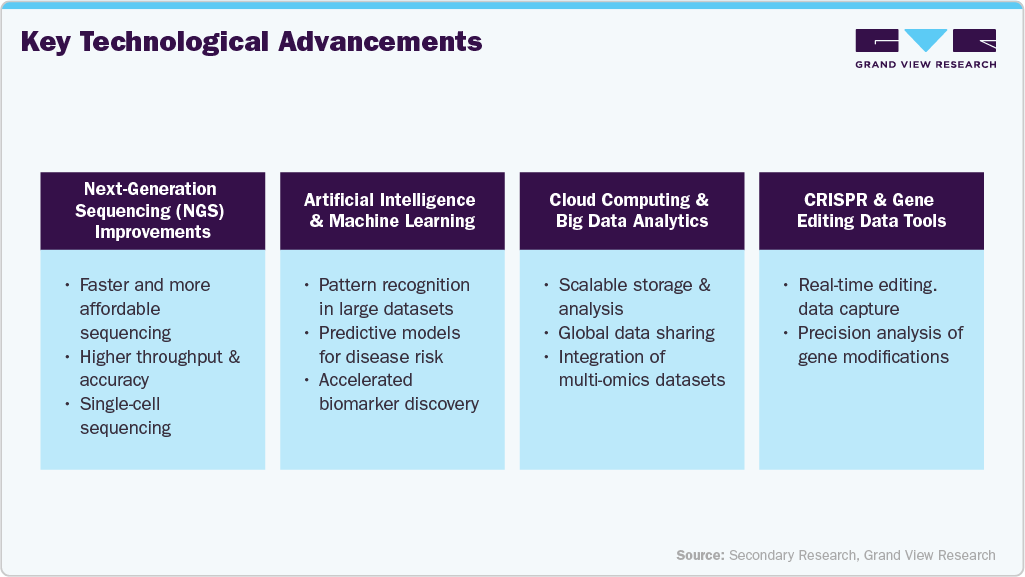 To learn more about this report, Download Free Sample Report
 In addition, AI and ML technologies applications are advancing into non-clinical diagnostics areas, as drug development, population genomics, and predictive medicine. For example, pharmaceutical companies are already applying ML to help identify potential drug target genes and optimize the design of clinical trials, which can reduce time and expenditure by significant margins. In the case of population-level genomic studies, which utilize AI to recognize genetic predispositions to diseases, these can also inform preventive medicine. AI technologies also continue to adapt, including deep learning and natural language processing capabilities, to make it more straightforward to interpret multi-omics datasets and clinic records and provide insights to inform practice. As such, the demand for AI and ML is a key market driver; their proven efficiency and scalability will continue to support the market through to the growing demand for evidence-based, precision medicine initiatives.
Explosion of Genomic Data
The rapid advancement and adoption of next-generation sequencing (NGS) technologies have led to an unprecedented surge in genomic data generation. Sequencing costs have dropped dramatically over the past decade, enabling researchers, clinical laboratories, and biotechnology firms to analyze entire genomes at a fraction of the cost and time previously required. This has led to deposits of genomic datasets much larger than previously required, which must be stored, processed, and interpreted through additional computational software. The variability, volume, and complexity of genomic data are driving a need for strong genomics data analysis solutions.
In addition, demand is stimulated due to more genomic applications in various areas, such as precision medicine, cancer, rare disease research, and population health studies. Each application involves the ability to derive actionable results from raw genomic sequences, whether to identify mutations that cause a disease, predict patient response to therapies, or identify trends in population-wide genetic data. Organizations will continue to generate more genomic data, and the need for bioinformatics platforms, AI-based analytic tools, and cloud-based solutions to analyze this data is likely to grow, which makes the growth of genomic data itself one of the various important drivers of market development.
Service Insights
Based on service type, the variant calling and annotation segment held the largest revenue share of over 29.8% in 2025, driven by the increasing demand for accurate identification and interpretation of genetic variations across diverse applications. The growth is also supported by the increased use of next-generation sequencing (NGS) technologies, which produce large amounts of data. This data needs sophisticated tools for variant detection and annotation. Moreover, improvements in AI-driven algorithms and bioinformatics platforms increase variants' speed, accuracy, and functional interpretation. This makes this segment a key player in the overall market growth.
The data preprocessing and quality control segment is expected to grow fastest during the forecast period. This segment’s dominance is driven by its critical role in ensuring genomic data's accuracy, reliability, and usability. With the increasing volume of sequencing data generated from next-generation sequencing and multi-omics studies, proper preprocessing, such as filtering, normalization, and error correction, is essential to eliminate noise and prepare datasets for downstream analysis.
Technology Insights
Based on technology, the next-generation sequencing (NGS) segment held the largest revenue share of over 36.5% in 2025, due to its high-throughput ability, cost efficiency, and viability for research centers and clinical laboratories. NGS technologies fast-track whole-genome, whole-exome, and transcriptome sequencing, creating huge datasets that require advanced analysis tools for interpretation. Further driving the segment's growth are increased investments in precision medicine, cancer research, and population-scale genomics projects- all fields where NGS-based techniques play a pivotal role. For instance, in July 2025, QIAGEN launched the QIAseq xHYB Long Read Panels in the Netherlands, expanding its NGS portfolio to support long-read sequencing, high-resolution analysis, and advanced bioinformatics for complex genomic regions. Coupling this with the continuous improvement of the sequencing platforms, such as the step-up in accuracy, speed, and affordability, makes NGS the most sought-after technology for bulk-scale and targeted genomic applications.
The CRISPR-based analysis segment is expected to grow at the fastest CAGR during the forecast period, driven by the increasing adoption of CRISPR-Cas technologies for gene editing, functional genomics, and therapeutic research. Moreover, continuous modifications in bioinformatics platforms, AI-based annotation tools, and high-throughput CRISPR screening methods facilitate quick and scalable interpretation of CRISPR data, making the area one of the fastest-growing frontiers in biology data analysis.
Application Insights
Based on application, the drug discovery and development segment held the largest revenue share of over 54.1% in 2025, and it is expected to grow with the fastest CAGR over the forecast period. supported by the growing integration of genomics data analysis methods to identify novel drug targets, develop efficient clinical trials, and speed up the development of promising therapies. The growth of this segment is further sustained by the rising adoption of numerous technology-based infrastructures, including AI-driven bioinformatics data analysis platforms, high-throughput sequencing technologies, and CRISPR gene-based screening tools, all of which simplify preclinical drug discovery use cases and reduce the total time of drug R&D work.
In 2024, the diagnostics portion of the market segment is expected to grow at a significant CAGR during the forecast period, driven by clinical settings' increased use of genomic technologies to support early diagnosis, risk evaluation, and tailored treatment planning. The increasing prevalence of genetic diseases, cancer, and communicable diseases is expanding the need for defined and rapid diagnosis, which is creating additional growth in this segment. Technological advances in NGS, CRISPR-based assays, and AI-based bioinformatics platforms will further increase the accuracy and speed of genomic diagnostics and expansive applications, making this segment revolutionary in the industry.
End Use Insights
Based on end use, the pharmaceutical and biotechnology companies segment held the largest revenue share of over 40.0% in 2025, and is expected to grow fastest over the forecast period. This growth is driven by these companies' increasing reliance on genomics data analysis for drug discovery, target identification, biomarker development, and precision medicine initiatives. Rising investments in genomics research and collaborations between industry players and research institutions are expected to sustain high growth in this end-user segment.
 To learn more about this report, Download Free Sample Report
 The hospitals and laboratories segment is expected to grow fastest during the forecast period. The main drivers are the need for quick, precise diagnostics, the growing demand for personalized medicine, and the growing use of next-generation sequencing. While diagnostic labs are growing their capacity to handle massive amounts of sequencing data and incorporate multi-omics insights, hospitals are investing in cutting-edge genomics platforms for precision oncology, rare disease detection, and prenatal testing.
Regional Insights
North America dominated the genomics data analysis market with the largest revenue share of 42.1% in 2025. The need for advanced data analysis tools has increased due to large investments in population-scale sequencing projects, precision medicine programs, and genomics research in the U.S. and Canada. Growth and distinction in the genomics data analysis sector are sustained by the region's emphasis on innovation and partnerships among academic institutions, research groups, and industry actors.
 To learn more about this report, Download Free Sample Report
 U.S Genomics Data Analysis Market Trends
The genomics data analysis market in the U.S. held the largest share in the North America region in 2025. The genomics data analysis market in the U.S. is highly competitive, driven by a large number of well-established firms, creative startups, and a strong emphasis on R&D. To obtain a competitive edge, businesses continue to spend money on cutting-edge bioinformatics platforms, cloud-based solutions, AI-driven analytics, and multi-omics integration tools.
Europe Genomics Data Analysis Market Trends
The genomics data analysis market in Europe is witnessing steady growth, supported by increasing investments in research, well-established healthcare infrastructure, and the rising adoption of advanced sequencing and bioinformatics technologies. Through government-funded precision medicine programs, extensive population genomics investigations, and partnerships between academic institutions and biotechnology companies, important nations like Germany, the UK, and France are propelling industry expansion.
The UK genomics data analysis market is expanding, supported by substantial government initiatives, such as the 100,000 Genomes Project, and increasing investments in precision medicine and biomedical research. Genomics data analysis tools are further fueled by public-private sector collaboration and increasing financing for rare disease, oncology, and population genomics research.
The genomics data analysis market in Germany is experiencing significant growth, fueled by its well-established life sciences ecosystem and focus on integrating genomics into healthcare. The nation is seeing a rise in funding for pharmacogenomics, clinical genomics, and cancer genomics studies. AI, machine learning, and cloud-based platforms are being used by major biotech businesses and local startups to increase the precision and effectiveness of data analysis. Germany's ability to undertake large-scale genomic initiatives has been strengthened by strong backing from federal research programs and partnerships between hospitals and research institutes, which have fueled market expansion.
Asia Pacific Genomics Data Analysis Market Trends
The genomics data analysis market in Asia-Pacific is expected to witness the fastest growth, with a CAGR of 16.88% during the forecast period. Countries like China, Japan, India, and South Korea are increasingly adopting next-generation sequencing technologies and AI-powered bioinformatics platforms to support precision medicine, oncology research, and population genomics projects. Government initiatives promoting genomic research and growing collaborations between academic institutions, hospitals, and biotech companies are accelerating the development and deployment of advanced data analysis solutions.
China genomics data analysis market is emerging as a major player. Due to investments in high-throughput sequencing infrastructure and extensive government programs like the Precision Medicine Project, China is becoming a significant market for genomics data analysis.
The genomics data analysis market in Japan is growing rapidly due to the need for scalable and trustworthy genomics data processing solutions. This need is growing in Japan due to an aging population and an increase in the prevalence of genetic illnesses, further driving the demand for genomics data analysis in the country.
MEA Genomics Data Analysis Market Trends
The genomics data analysis market in the Middle East and Africa (MEA) is emerging, and growing investments in biotechnology research, healthcare infrastructure, and regional precision medicine initiatives are propelling growth. Moreover, the desire for personalized healthcare and increased awareness of genetic disorders drive the adoption of genomics data analysis technologies. These factors are establishing MEA as a promising growth market in the global landscape.
Kuwait genomics data analysis market is in the early stages of development but is gaining momentum, supported by government initiatives to modernize healthcare and promote genomic research and diagnostics. Collaborations between hospitals, research institutions, and international genomics companies are helping build local expertise in data analysis and interpretation.
Key Genomics Data Analysis Company Insights
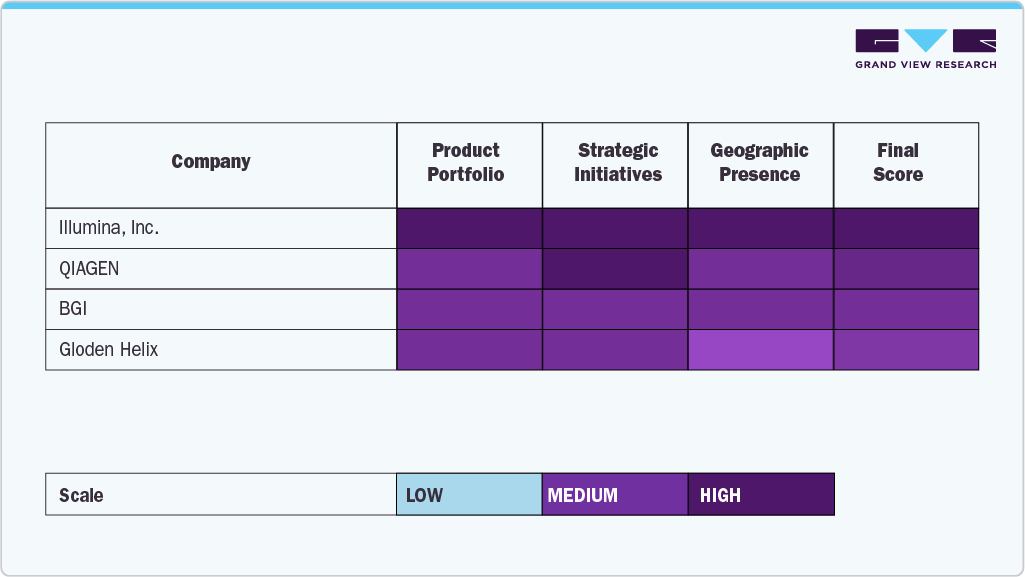
The genomics data analysis industry is dominated by several established players who leverage comprehensive service type portfolios, strategic collaborations, and sustained investments in research and development. By providing cutting-edge bioinformatics platforms, scalable analytics solutions, and globally accessible services, industry leaders like Illumina, Inc., QIAGEN, CD Genomics, CellCarta, Charles River Laboratories, BGI, Fios Genomics, Eurofins Genomics, Basepair, and Golden Helix have managed to sustain a sizable market presence.
Other up-and-coming competitors are extending their reach by providing cutting-edge tools, cloud-based pipelines, and specialized genomic data analysis services that meet the changing demands of pharmaceutical companies, academic institutions, clinical laboratories, and precision medicine efforts.
 To learn more about this report, Download Free Sample Report
 The genomics data analytics market is experiencing a dynamic interplay of existing competencies and novel entrants. Service launches, strategic alliances, acquisitions, and breakthroughs in algorithmic analytics elevate the intensity of the competition. Firms able to couple scientific innovation with user-capable solutions will provide ongoing benefit in this fast-evolving space.
Key Genomics Data Analysis Companies
The following key companies have been profiled for this study on the genomics data analysis market.
-
Illumina, Inc.
-
QIAGEN
-
CD Genomics
-
CellCarta
-
Charles River Laboratories
-
BGI
-
Fios Genomics
-
Eurofins Genomics
-
Basepair
-
Golden Helix
Recent Developments
-
In September 2025, Golden Helix (U.S.) partnered strategically with Genomenon to integrate the Mastermind Genomic Intelligence Platform and Cancer Knowledgebase into VarSeq, enhancing genomic interpretation and clinical diagnostics worldwide.
-
In May 2025, QIAGEN, Netherlands, acquired Israel-based Genoox for USD 70M, adding its Franklin AI-powered clinical genomics platform to strengthen QIAGEN Digital Insights and expand global NGS data interpretation capabilities.
Genomics Data Analysis Market Report Scope
Report Attribute
Details
Market size in 2025
USD 6.5 billion
Estimated Market Size in 2026
USD 7.5 billion
Projected Market Size by 2033
USD 18.1 billion
Growth rate
CAGR of 13.4% from 2026 to 2033
Historical data
2021 - 2025
Forecast period
2026 - 2033
Quantitative units
Revenue in USD million, and CAGR from 2026 to 2033
Report coverage
Revenue forecast, company ranking, competitive landscape, growth factors, and trends
Segments covered
Service, technology, application, end use, region
Regional scope
North America; Europe; Asia Pacific; Latin America; MEA
Country scope
U.S., Canada, Mexico, UK, Germany, France, Italy, Spain, Norway, Denmark, Sweden, China, Japan, India, South Korea, Australia, Thailand, Brazil, Argentina, Saudi Arabia, South Africa, UAE, and Kuwait
Key companies profiled
Illumina, Inc.; QIAGEN; CD Genomics; CellCarta; Charles River Laboratories; BGI; Fios Genomics; Eurofins Genomics; Basepair; Golden Helix
Customization scope
Free report customization (equivalent up to 8 analysts' working days) with purchase. Addition or alteration to country, regional & segment scope.
Pricing and purchase options
Avail customized purchase options to meet your exact research needs. Explore purchase options
Global Genomics Data Analysis Market Report Segmentation
This report forecasts revenue growth and provides an analysis of the latest trends in each of the sub-segments from 2021 to 2033. For this study, Grand View Research has segmented the global genomics data analysis market based on service, technology, application, end use, and region:
-
Service Outlook (Revenue, USD Million, 2021 - 2033)
-
Data Preprocessing and Quality Control
-
Variant Calling and Annotation
-
Gene Expression Analysis
-
Data Interpretation and Reporting
-
Others
-
-
Technology Outlook (Revenue, USD Million, 2021 - 2033)
-
Next-Generation Sequencing (NGS)
-
Microarray
-
PCR
-
CRISPR-based Analysis
-
Others
-
-
Application Outlook (Revenue, USD Million, 2021 - 2033)
-
Diagnostics
-
Drug Discovery & Development
-
Oncology
-
Neurology
-
Infectious Diseases
-
Others
-
-
Others
-
-
End Use Outlook (Revenue, USD Million, 2021 - 2033)
-
Academic & Research Institutes
-
Pharmaceutical & Biotechnology Companies
-
Hospitals & Labs
-
Others
-
-
Regional Outlook (Revenue, USD Million, 2021 - 2033)
-
North America
-
U.S.
-
Canada
-
Mexico
-
-
Europe
-
Germany
-
UK
-
France
-
Italy
-
Spain
-
Denmark
-
Sweden
-
Norway
-
-
Asia Pacific
-
China
-
India
-
Japan
-
South Korea
-
Australia
-
Thailand
-
-
Latin America
-
Brazil
-
Argentina
-
-
Middle East and Africa (MEA)
-
South Africa
-
Saudi Arabia
-
UAE
-
Kuwait
-
-
Research Methodology
The genomics data analysis market figures in this report are based on a proven research process that combines executive interviews with secondary research from proprietary databases, company filings, and recognized regulatory and institutional sources. Market size is built through value-chain sizing-reconciling supply-side and demand-side estimates-and triangulated with bottom-up and top-down approaches. Every estimate passes multiple levels of expert validation before publication, with each genomics data analysis segment quantified using the revenue-capture definitions in the table below.
Segment Definition
Segment- Service Type
Revenue Capture Definition
Data Preprocessing and Quality Control
Revenue generated from services focused on preparing raw genomic datasets for downstream analysis through data cleaning, filtering, normalization, alignment, error correction, and quality assessment procedures. These services ensure the accuracy, reliability, and integrity of sequencing and other genomic datasets prior to advanced analytical workflows.
Variant Calling and Annotation
This segment captures income from analytical services used to identify, classify, and interpret genetic variations such as single nucleotide variants (SNVs), insertions, deletions, copy number variations, and structural variants. The segment also includes annotation services that link identified variants with biological functions, disease associations, and clinical significance.
Gene Expression Analysis
Market value in this category stems from services that evaluate gene activity and expression patterns across different biological samples and conditions. These analyses support biomarker discovery, disease characterization, pathway analysis, therapeutic target identification, and functional genomics research.
Data Interpretation and Reporting
Revenue originates from bioinformatics services that transform complex genomic datasets into clinically or scientifically meaningful insights through interpretation, visualization, and report generation. These services facilitate decision-making in research, diagnostics, precision medicine, and drug development applications.
Others
This segment reflects earnings from specialized genomics data analysis services not classified under core categories, including pathway analysis, epigenomic analysis, metagenomics analysis, population genomics studies, and customized bioinformatics consulting services.
Segment- Technology
Revenue Capture Definition
Next-Generation Sequencing (NGS)
Revenue generated from genomics data analysis solutions designed to process and interpret high-throughput sequencing datasets produced by next-generation sequencing platforms. These analyses support applications including whole genome sequencing, exome sequencing, transcriptomics, metagenomics, and clinical genomics.
Microarray
This segment captures income from data analysis services and software used to interpret genomic datasets generated through microarray technologies. Such analyses are widely employed for gene expression profiling, genotyping, copy number variation analysis, and biomarker discovery studies.
PCR
Market value in this category stems from analytical solutions used to process and interpret data generated from polymerase chain reaction (PCR)-based genomic assays, including quantitative PCR (qPCR) and digital PCR applications used in diagnostics, research, and validation studies.
CRISPR-based Analysis
Revenue originates from genomics data analysis tools and services supporting CRISPR-based experiments, including gene editing efficiency assessment, off-target analysis, guide RNA evaluation, and functional genomics studies.
Others
This segment reflects earnings from genomics data analysis technologies outside the primary categories, including emerging genomic platforms and specialized molecular analysis technologies used in research and clinical applications.
Segment- Application
Revenue Capture Definition
Diagnostics
Revenue generated from genomics data analysis used in disease diagnosis, patient stratification, risk assessment, and clinical decision-making. These analytical solutions support applications such as genetic disorder identification, infectious disease detection, carrier screening, and precision medicine initiatives across clinical settings.
Drug Discovery & Development
This segment captures income from genomic data analysis utilized throughout the drug development continuum, including target identification, biomarker discovery, patient selection, mechanism-of-action studies, and therapeutic response assessment. The segment encompasses applications across multiple therapeutic areas, including oncology, neurology, infectious diseases, and other disease indications, supporting the development of personalized and targeted therapies.
Others
Market value in this category stems from genomics data analysis applications outside core diagnostic and drug development workflows, including reproductive health, agrigenomics, population genomics, forensic genomics, rare disease research, and other emerging areas of genomic investigation.
Segment- End Use
Revenue Capture Definition
Academic & Research Institutes
Revenue generated from genomics data analysis solutions utilized by universities, research organizations, and government institutions conducting basic, translational, and applied genomics research across diverse therapeutic and scientific fields.
Pharmaceutical & Biotechnology Companies
This segment captures income from genomic analysis services and software employed by pharmaceutical and biotechnology companies for drug discovery, biomarker identification, clinical development, precision medicine, and therapeutic research activities.
Hospitals & Labs
Market value in this category stems from genomics data analysis platforms and services used by hospitals, clinical laboratories, and diagnostic facilities for genomic testing, disease diagnosis, patient management, and personalized medicine applications.
Others
Revenue originates from contract research organizations (CROs), public health agencies, forensic laboratories, and other organizations utilizing genomics data analysis for specialized research, surveillance, and clinical applications.
Estimation Model
Category
Methodology / Analysis
Top-Down – Commodity Flow Analysis
Market size was estimated by analyzing revenues generated by key genomics data analysis solution providers, including software developers, cloud platform providers, and bioinformatics service companies. Data were collected from company annual reports, investor presentations, product portfolios, and premium industry databases. Revenue contributions from private and emerging companies were assessed through secondary research and validated through primary interviews to derive the overall market value.
Parent Market & Penetration-Based Analysis
The genomics data analysis market was evaluated within the broader genomics market. Adoption rates of genomics data analysis platforms across research institutions, clinical laboratories, pharmaceutical and biotechnology companies, and academic centers were analyzed alongside sequencing volumes and bioinformatics utilization trends to estimate the addressable market and segment-level opportunities.
Segmentation – Country-Level Segment Share Modeling
Market shares for service, technology, application, and end-use segments were derived using country-specific genomic research funding, sequencing capacity, precision medicine initiatives, bioinformatics infrastructure, and adoption of cloud-based analytics platforms. Weighted average calculations were applied to determine regional and global segment distributions.
Validation – Data Triangulation & Validation Model
Market estimates were validated through triangulation of secondary research, primary interviews, company-level revenue assessments, sequencing volume analysis, end-user adoption trends, and demand-side evaluation to ensure consistency and accuracy across all market segments and geographies.
Forecasting – Forecasting & CAGR Modeling
Market forecasts were developed using historical trends in genomic sequencing, growth in precision medicine initiatives, increasing ad
Delivered Customizations
This report has been delivered with the following In-depth customizations
Client Request
Customization Delivered
Value Adds
Cross-Segmentation Analysis of Genomics Data Analysis Services Across Technologies & End Uses
Detailed cross-segmentation analysis across genomics data analysis services such as variant calling & annotation, gene expression analysis, data preprocessing, and reporting across technologies including NGS, PCR, microarray, and CRISPR-based analysis. Assessment of adoption patterns across pharmaceutical & biotechnology companies, academic & research institutes, hospitals, and laboratories by region.
Enables clients to identify high-growth service-technology combinations, evaluate end-user adoption trends, prioritize product development investments, and uncover whitespace opportunities across precision medicine and research workflows.
Competitive Benchmarking & Bioinformatics Platform Assessment
Comprehensive benchmarking of key market participants based on service portfolio, bioinformatics capabilities, AI/ML integration, cloud deployment strategies, geographic presence, strategic collaborations, regulatory compliance, pricing models, and end-user focus. Analysis also includes competitive positioning across clinical, research, and drug discovery applications.
Help clients assess competitive positioning, identify differentiation opportunities, benchmark best practices in genomic analytics, evaluate partnership or acquisition targets, and refine commercialization and expansion strategies.
Regional Demand Assessment for Precision Medicine & Genomics Analytics
Customized country- and region-level demand analysis covering North America, Europe, Asia Pacific, Latin America, and MEA, incorporating precision medicine initiatives, population genomics programs, research funding trends, sequencing infrastructure, regulatory landscape, and adoption of cloud-based bioinformatics platforms. Includes demand forecasting across diagnostics, drug discovery, oncology, neurology, and infectious disease applications.
Supports identification of high-growth regional markets, evaluates commercialization potential by application area, enables prioritization of geographic expansion strategies, and aligns investment decisions with evolving genomics research and clinical adoption trends.
Frequently Asked Questions About This Report
Asia Pacific is the fastest-growing region over the forecast period.
The variant calling and annotation segment held the largest revenue share of over 29.8% in 2025.
The next-generation sequencing (NGS) segment held the largest revenue share of over 36.5% in 2025.
The drug discovery and development segment held the largest revenue share of over 54.1% in 2025, and it is expected to grow with the fastest CAGR over the forecast period.
The global genomics data analysis market size was estimated at USD 6.5 billion in 2025 and is expected to reach USD 7.5 billion in 2026.
The global genomics data analysis market is expected to grow at a compound annual growth rate of 13.4% from 2025 to 2033 to reach USD 18.1 billion by 2033.
North America dominated the genomics data analysis market with a share of 42.1% in 2025. This was due to the need for advanced data analysis tools, which has increased due to significant investments in population-scale sequencing projects, precision medicine programs, and genomics research in the U.S. and Canada.
Some key players operating in the genomics data analysis market include Illumina, Inc., QIAGEN, CD Genomics, CellCarta, Charles River Laboratories, BGI, Fios Genomics, Eurofins Genomics, Basepair, and Golden Helix
Key factors that are driving the market growth include increasing medicare reimbursement for telehealth services, reducing emergency room visits and hospitalization rate, and technological innovation in communication technology across the world.
About the Author(s)
Biotechnology Research Team
Healthcare · BiotechnologyThis report was authored by the biotechnology research team at Grand View Research - comprising two research analysts, one senior research analyst, and one industry expert - with specialized expertise in the biotechnology segment of the healthcare industry. All findings are based on proprietary healthcare databases, executive interviews, and regulatory analysis, subject to internal peer review prior to publication.
Last Updated:
Speak to Analyst

Customize this report to your needs - add regions, segments, or data points, with 20% free customization.
Or view our licence options:


ISO 9001:2015 & 27001:2022 Certified
We are GDPR and CCPA compliant! Your transaction & personal information is safe and secure. For more details, please read our privacy policy.


