
- Home
- »
- Nutraceuticals & Functional Foods
- »
-
Georgia Dietary Supplements Market Size Report 2026-2033GVR Report cover

Georgia Dietary Supplements Market (2026 - 2033)
Size, Share & Trends Analysis Report By Ingredient (Vitamins, Botanicals, Minerals, Probiotics), By Form, By Type (OTC and Prescribed), By Application, By End User, By Distribution Channel, And Segment Forecasts
Market Size, 2025
$57.4MMarket Estimate, 2026
$62.0MMarket Forecast, 2033
$109.9MCAGR, 2026–2033
8.5%Georgia Dietary Supplements Market Summary
The Georgia dietary supplements market size was valued at USD 57.4 million in 2025 and is projected to grow from USD 62.0 million in 2026 to USD 109.9 million by 2033, at a CAGR of 8.5% from 2026 to 2033. The market growth is driven by increasing health awareness, rising demand for preventive healthcare, and expanding availability of international dietary supplement brands through pharmacy chains and online retail platforms.
Key Market Trends & Insights
- By ingredient: Vitamins segment held the largest market share of 30.8% in 2025.
- By form: Tablets segment held the largest market share of 30.8% in 2025.
- By type: OTC segment held the largest market share of 78.3% in 2025.
- By application: General health segment held the largest market share of 21.2% in 2025.
- By end user: Adults segment held the largest market share of 78.2% in 2025.
- By distribution channel: Offline segment held the largest market share of 74.1% in 2025.
Market Size & Forecast
- Market size in 2025: USD 57.4 Million
- Estimated market size in 2026: USD 62.0 Million
- Projected market size by 2033: USD 109.9 Million
- CAGR (2026-2033): 8.5%
Prism AI by Grand View Research Free to tryAsk a question about the georgia dietary supplements marketTry asking✓Every figure cited from GVR research Prefer the report? Download free sample →
In addition, new product introductions and the growing adoption of vitamins, minerals, probiotics, and herbal supplements are expected to support market growth during the forecast period. Dietary supplements market in Georgia is supported by growing consumer awareness of preventive healthcare, nutritional balance, immunity, and overall wellness. Consumers are increasingly using vitamins, minerals, probiotics, omega-3, botanicals, and other supplements to address nutritional gaps and support specific health needs. The growing availability of international brands through pharmacies, health stores, and online platforms is improving product access, while greater health awareness is encouraging consumers to include supplements in their regular wellness routines.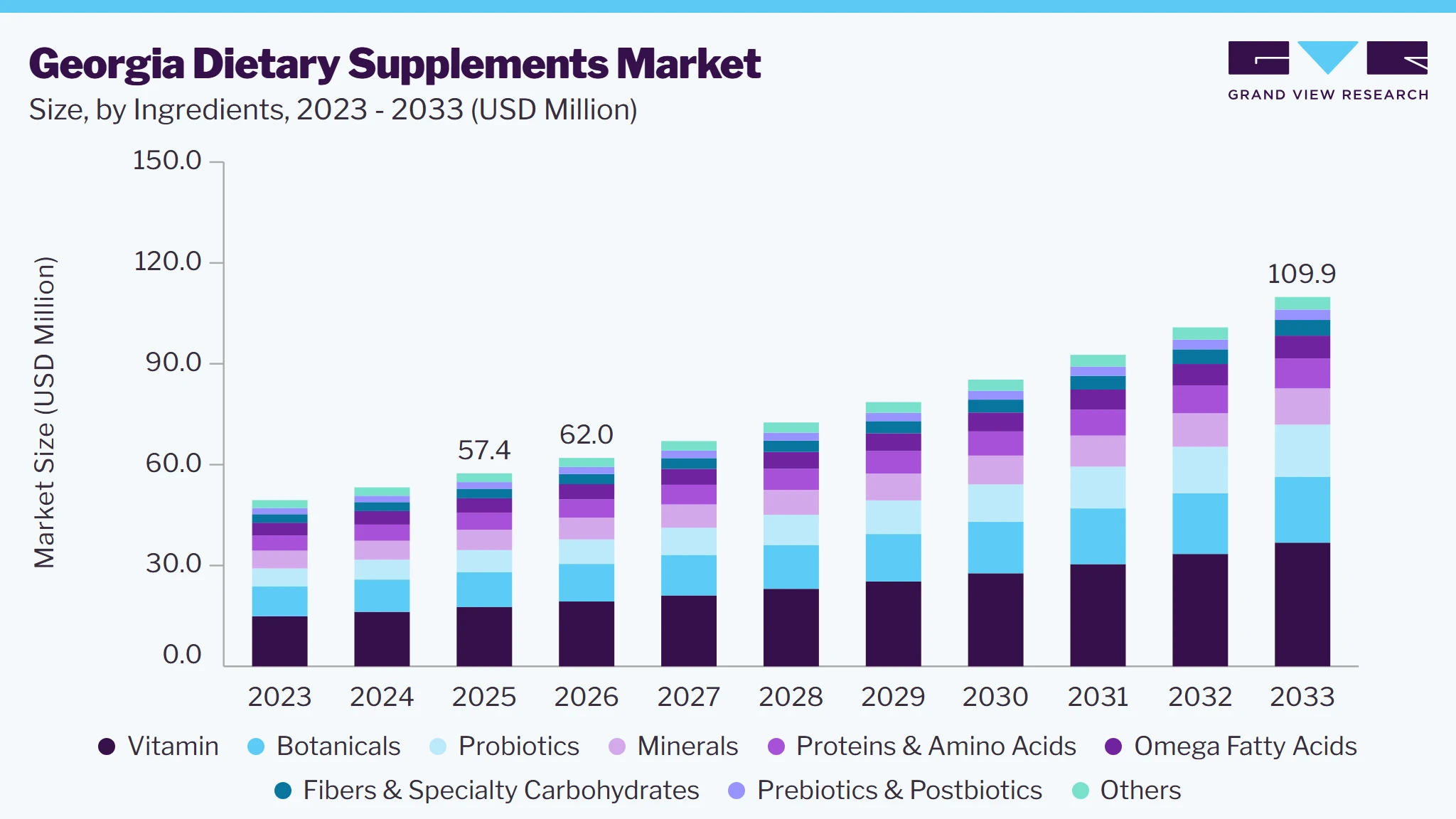 Source: Grand View Research, IR Documents, Primary Interviews, Paid DatabasesTo learn more about this report,
 Download Free Sample Report
Product innovation is also shaping the market as companies introduce targeted formulations, combination products, and convenient dosage formats such as gummies, capsules, powders, and effervescent tablets. Manufacturers are increasingly focusing on areas such as gut health, immunity, healthy aging, sports nutrition, and women's health, while natural ingredients and science-backed formulations are gaining attention. These developments are helping brands differentiate their products and are expected to support the continued growth of the dietary supplements market in Georgia.
Consumer Insights
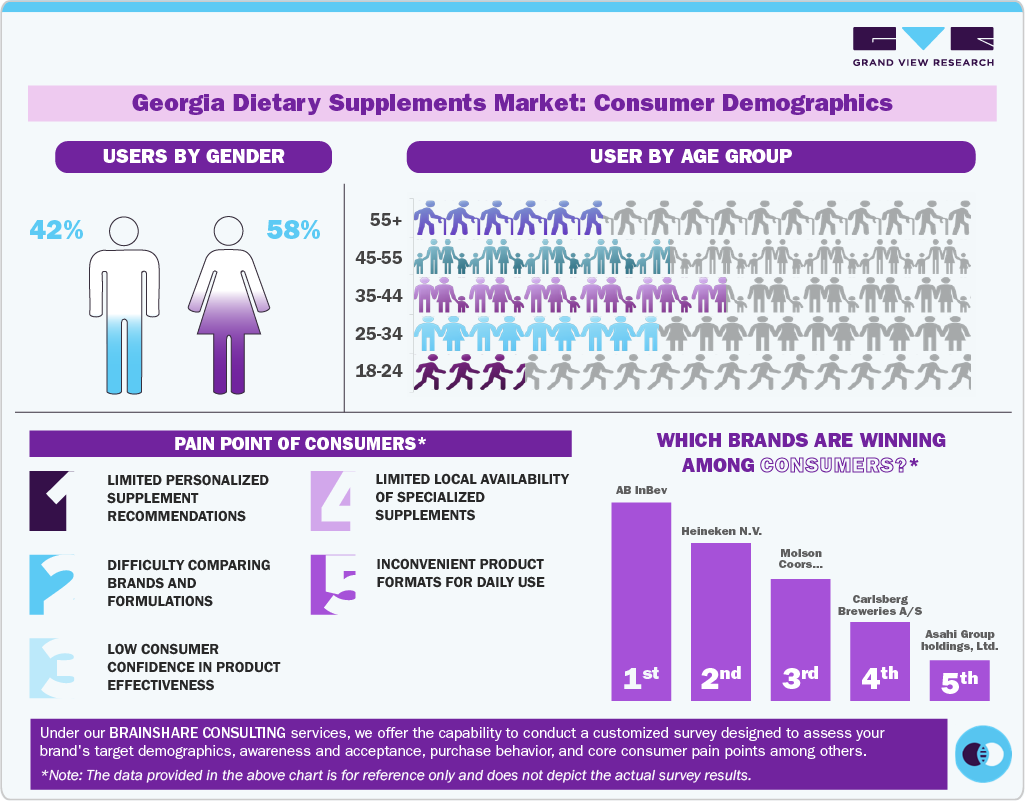
Age remains an important demographic factor influencing dietary supplement purchasing behavior in Georgia. Nutritional requirements evolve across different life stages, resulting in varying consumption patterns among consumers. Young adults are more likely to purchase supplements that support active lifestyles, sports nutrition, energy, immunity, and skin health. Working-age consumers increasingly incorporate multivitamins, probiotics, proteins, omega-3 fatty acids, and condition-specific supplements into their daily routines to complement busy lifestyles and preventive healthcare practices. Older adults generally seek products that support healthy aging, bone and joint health, cardiovascular wellness, cognitive function, vision, and immunity, reflecting changing nutritional requirements associated with age.
 To learn more about this report, Download Free Sample Report
Gender influences dietary supplement purchasing behavior in Georgia through differences in nutritional requirements, life-stage health priorities, and wellness objectives. Female consumers generally account for a larger share of purchases related to multivitamins, prenatal nutrition, iron, calcium, collagen, probiotics, menopause support, and skin, hair, and nail health. Regular engagement with preventive healthcare services, pregnancy care, and healthy aging initiatives contributes to greater awareness of micronutrient intake and condition-specific supplementation among women.
Market Dynamics
Preventive healthcare is becoming an integral part of consumer wellness habits in Georgia, driving steady demand for dietary supplements across multiple health categories. Rather than relying solely on treatment after illness, consumers are increasingly incorporating vitamins, minerals, probiotics, omega-3 fatty acids, collagen, and botanical supplements into their daily routines to support immunity, bone health, cardiovascular function, digestive wellness, and healthy aging. This shift is supported by growing awareness of balanced nutrition, increasing health literacy, and easier access to scientifically formulated nutritional products through pharmacies and digital retail channels.
The dietary supplements market in Georgia is highly dependent on imported products, making the industry susceptible to disruptions in global supply chains, international freight costs, currency fluctuations, and geopolitical developments. Since domestic production remains limited, importers and distributors rely on overseas manufacturers for a substantial share of vitamins, minerals, probiotics, botanical extracts, proteins, and other specialty nutritional products. Any interruption in international procurement or increases in import-related costs can affect product availability, extend replenishment timelines, and increase retail prices, creating challenges for both distributors and consumers.
The expansion of personalized nutrition and omnichannel retail presents a significant opportunity in Georgia dietary supplements market as consumers increasingly seek products tailored to specific health needs, age groups, and lifestyles. The growth of online pharmacies, mobile applications, and home delivery services is improving product accessibility and enabling companies to offer targeted formulations, premium supplements, and subscription-based wellness solutions. As digital pharmacy networks expand, brands offering transparent, clinically supported, and differentiated products can strengthen consumer engagement and market presence.
Analyst Perspective
The Georgia dietary supplements market is positioned for steady development as rising health awareness, preventive healthcare adoption, and demand for targeted nutritional products support consumption across vitamins, minerals, probiotics, botanicals, and sports nutrition. The pharmacy-led retail structure, combined with growing e-commerce adoption, provides brands with established routes to reach consumers, while increasing interest in natural ingredients and convenient formats creates opportunities for differentiated products. From a competitive perspective, international brands benefit from strong brand recognition and established product portfolios, while local and emerging players can compete through focused formulations, competitive pricing, and closer alignment with Georgian consumer needs. Regulatory compliance, product authenticity, affordability, and reliable distribution will remain important success factors.
Ingredient Insights
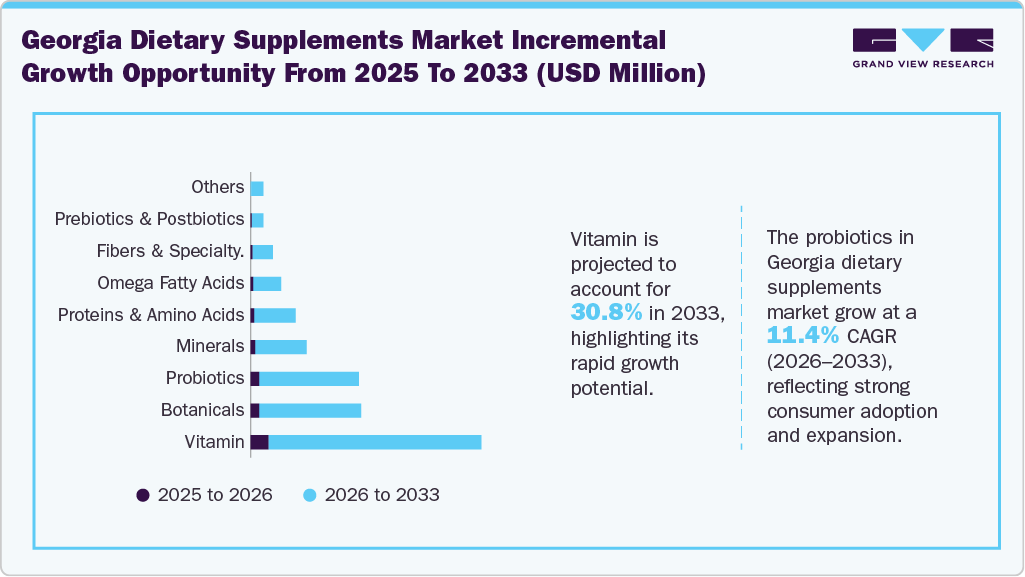
The vitamin ingredient accounted for the largest share in Georgia dietary supplements market, accounting for around 30.8% of total market revenue in 2025. Vitamin-supplements are available in multiple types, including Vitamin A (retinol and beta-carotene), Vitamin B-complex (including folic acid, biotin, niacin, and vitamin B12), Vitamin C (ascorbic acid), Vitamin D (cholecalciferol), Vitamin E (tocopherols), Vitamin K (phylloquinone and menaquinone), and multivitamin formulations that combine essential vitamins with minerals. Vitamin A supports vision, skin integrity, and immune function, while B-complex vitamins contribute to energy metabolism and nervous system health. Vitamin C is widely consumed for its antioxidant properties and immune support, whereas Vitamins D and K are commonly formulated together to promote calcium absorption and maintain bone health. Vitamin E continues to be incorporated into supplements targeting antioxidant protection and healthy ageing. These vitamins are increasingly available in tablets, capsules, soft gels, gummies, powders, effervescent tablets, and liquid formulations, allowing manufacturers to cater to different consumer preferences and age groups.
 To learn more about this report, Download Free Sample Report
The probiotics segment is projected to grow at the fastest CAGR of 11.4% from 2026 to 2033. Probiotics are live microorganisms, primarily strains of Lactobacillus, Bifidobacterium, Saccharomyces boulardii, Bacillus coagulans, and Bacillus subtilis, that provide health benefits when consumed in adequate amounts. In dietary supplements, probiotics are commonly formulated as standalone capsules, sachets, chewable tablets, powders, and liquid preparations, or combined with prebiotics, vitamins, and digestive enzymes to support gastrointestinal and overall health. Their ability to maintain a balanced gut microbiota has made probiotics one of the significant ingredient categories in the Georgia dietary supplements industry.
Form Insights
The tablets form accounted for the largest share of 30.8% of the revenue in 2025. Tablets are commonly used for multivitamins, minerals, botanical extracts, and specialty nutrients, as they can accommodate relatively high concentrations of active ingredients while maintaining product stability during transportation and storage. Their compact format also makes them suitable for large-scale distribution through pharmacies, healthcare institutions, and organized retail channels.
The powder form is projected to grow at the fastest CAGR of 11.8% from 2026 to 2033, supported by the increasing availability of sports nutrition and active lifestyle products through pharmacies, fitness centers, specialty nutrition stores, and e-commerce platforms. Consumers participating in recreational fitness, resistance training, and endurance sports are increasingly opting for powdered supplements owing to their ease of mixing, formulation flexibility, and suitability for delivering high concentrations of proteins, amino acids, collagen, and hydration ingredients. This has encouraged distributors to expand their portfolios with imported sports nutrition brands offering specialized formulations for muscle recovery, performance, and healthy ageing.
Type Insights
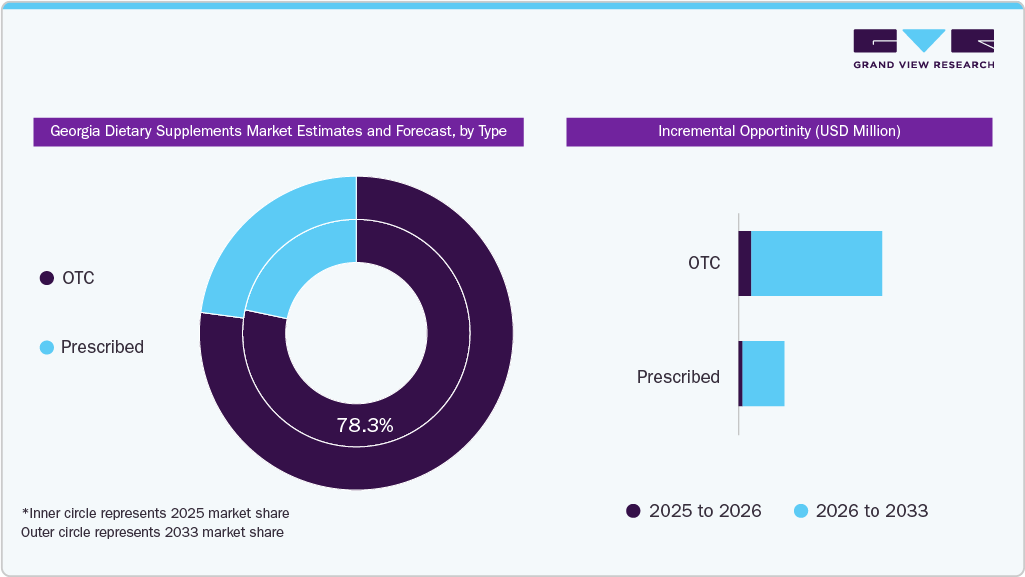
The OTC segment accounted for the largest revenue share at 78.3% in 2025. Large pharmacy chains have expanded their nutraceutical portfolios by introducing internationally recognized brands across multiple health categories, improving product accessibility throughout both urban and regional markets. The continued expansion of organized pharmacy retail, together with the growing use of pharmacy-operated e-commerce platforms, has further strengthened consumer access to OTC dietary supplements in Georgia. For instance, in June 2024, PSP Pharmacy expanded its premium nutraceutical portfolio by introducing a wider range of Solgar dietary supplements across its pharmacy network and online platform. The expansion improved consumer access to internationally recognized OTC vitamins, minerals, botanicals, probiotics, and specialty supplements throughout Georgia.
 To learn more about this report, Download Free Sample Report
The prescribed segment is projected to grow at a CAGR of 9.2% from 2026 to 2033. Physician-recommended dietary supplements constitute an established distribution channel within Georgia's dietary supplements market, particularly for individuals requiring nutritional intervention based on clinical evaluation or laboratory-confirmed deficiencies. Healthcare professionals commonly recommend vitamins, minerals, omega-3 fatty acids, probiotics, prenatal formulations, and specialty nutritional products as supportive therapy for pregnancy, anemia, osteoporosis, gastrointestinal disorders, cardiovascular health, and post-operative recovery. Recommendations provided by physicians and pharmacists encourage consumers to select products with standardized compositions, clinically evaluated ingredients, and established quality certifications.
Application Insights
The general health accounted for the largest share of 21.2% in 2025. Daily nutritional supplementation has become increasingly integrated into wellness routines across Georgia as consumers seek practical ways to complement their diets amid changing eating habits and demanding work schedules. Irregular meal patterns, frequent consumption of convenience foods, and limited dietary diversity have encouraged many individuals to incorporate multivitamins, minerals, probiotics, omega fatty acids, and botanical supplements into their everyday nutrition. Rather than purchasing products for a specific medical condition, many consumers are selecting supplements to maintain nutritional balance throughout the year.
The brain/mental health is projected to grow at the fastest CAGR of 13.0% from 2026 to 2033. Nutrients such as omega-3 fatty acids, magnesium, B-complex vitamins, vitamin D, phosphatidylserine, choline, Ginkgo biloba, Bacopa monnieri, L-theanine, and ashwagandha are widely incorporated into formulations intended to support memory, concentration, learning ability, stress management, and normal nervous system function. These supplements are increasingly used by students, working professionals, and older adults seeking to maintain cognitive performance throughout different stages of life.
End User Insights
The dietary supplements for the adult segment accounted for the largest revenue share of 78.2% in 2025, supported by increasing awareness of nutrition, changing dietary habits, and greater emphasis on maintaining long-term health and productivity. As working professionals continue to balance demanding careers, family responsibilities, and active lifestyles, dietary supplements are increasingly being incorporated into everyday wellness routines to complement nutritional intake rather than replace conventional diets. The growing participation in recreational fitness activities, outdoor sports, and wellness programmes has also encouraged regular consumption of protein supplements, multivitamins, omega fatty acids, probiotics, collagen, botanicals, and specialty nutritional formulations. The wider availability of imported nutraceutical products through pharmacy chains, specialty nutrition retailers, and digital commerce platforms has further expanded consumer access to scientifically formulated supplements tailored to different lifestyle needs.
The dietary supplements for children is projected to grow at a fastest CAGR of 9.5% from 2026 to 2033. The growing awareness of balanced childhood nutrition, coupled with changing eating habits and busy family lifestyles, has encouraged parents to incorporate dietary supplements into their children's daily routines when dietary intake alone may not adequately meet nutritional requirements. Pediatric formulations containing vitamins, minerals, probiotics, omega-3 fatty acids, and immune-supporting ingredients are becoming more widely available across pharmacies and specialty nutrition retailers, providing parents with a broader selection of age-appropriate nutritional products.
Distribution Channel Insights
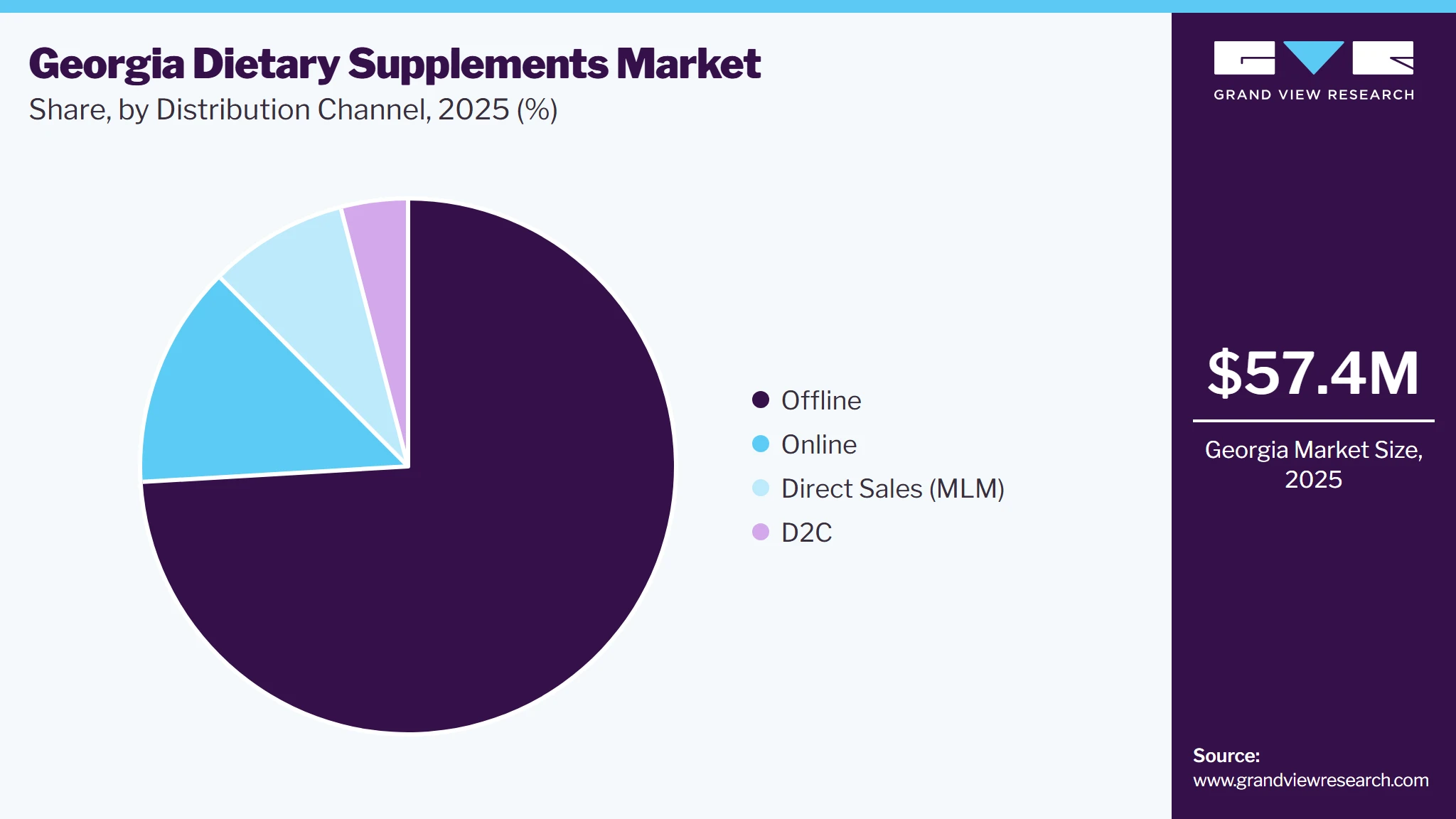
The offline channel accounted for the largest revenue share of 74.1% in 2025. The increasing tendency of healthcare professionals to recommend dietary supplements to address health issues such as gastrointestinal disorders, bone health, folic acid deficiency, immunity issues, heart health, age-related macular degeneration, and many other conditions is majorly contributing to the rise in consumption of these supplements via offline channels. Consumers frequently purchase dietary supplements through physical retail outlets to obtain immediate product availability, compare different brands, and receive guidance from pharmacists or trained store personnel before making a purchase. Pharmacy chains remain the primary point of sale for vitamins, minerals, probiotics, omega fatty acids, botanical supplements, and specialty nutritional products, particularly for consumers seeking products recommended by healthcare professionals.
 To learn more about this report, Download Free Sample Report
The online channel is projected to grow at a fastest CAGR of 10.9% from 2026 to 2033. Online retailers enable consumers to compare nutritional compositions, pack sizes, prices, certifications, and customer feedback before making purchasing decisions. The growing availability of imported dietary supplements through pharmacy e-commerce platforms and online marketplaces has broadened product accessibility, particularly for premium vitamins, sports nutrition products, probiotics, botanical supplements, and condition-specific formulations that may not always be available in nearby physical stores.
Key Georgia Dietary Supplements Company Insights
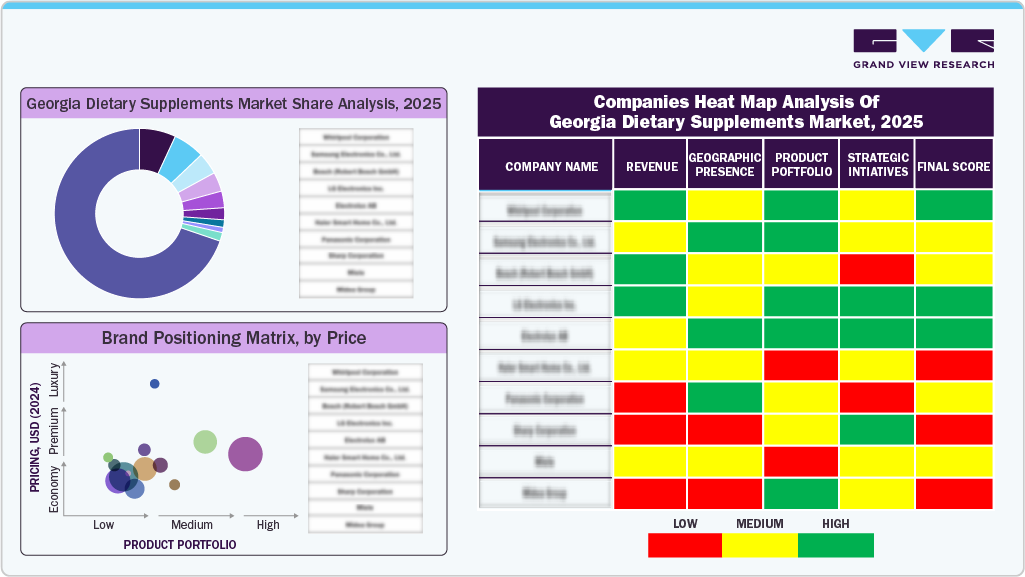
Georgia dietary supplements market is becoming more competitive as international brands, regional companies, and local distributors expand their presence through the country’s pharmacy-led retail structure. Companies are focusing on vitamins, minerals, probiotics, herbal products, sports nutrition, and specialty supplements, while pharmacy availability, pharmacist recommendations, brand reputation, and product affordability remain important factors influencing competition.
Companies are also responding to rising interest in immunity, digestive health, women's health, healthy aging, and natural wellness through targeted formulations and convenient dosage formats. The expansion of e-commerce is providing additional opportunities for brands to reach consumers beyond traditional pharmacies, while partnerships with local distributors and retailers help international companies strengthen market access. Product authenticity, regulatory compliance, competitive pricing, and reliable distribution are therefore key factors shaping competitive positioning in Georgia.
 To learn more about this report, Download Free Sample Report
Key Georgia Dietary Supplements Companies
-
Bayer AG
-
Glanbia plc
-
BellRing Brands, Inc.
-
Orkla ASA
-
Applied Nutrition
-
BioGaia AB (publ)
-
Herbalife Nutrition
-
Nature’s Sunshine Products Inc.
-
Queisser Pharma
-
Nestle S.A.
-
Kompava Georgia LLC
Competitive Benchmarking
Category
Operating Strategies
Competitive Edge
Weakness
Established Players (Bayer AG and Herbalife Nutrition)
- Build scale through broad portfolios, established pharmacy/distributor networks, strong brand marketing, and products covering multiple health and wellness needs.
- Strong brand recognition, consumer trust, established distribution relationships, and extensive product portfolios provide an advantage in Georgia's pharmacy-led market.
- Larger international brands can face higher pricing, greater operating complexity, and stronger competition from focused local and regional players.
Emerging Players (Kompava Georgia LLC, Applied Nutrition, BioGaia AB)
- Focus on specialized categories such as sports nutrition, probiotics, targeted wellness, and natural formulations while expanding through local retail and digital channels.
- Greater product specialization, faster innovation, focused consumer targeting, and the ability to respond quickly to emerging wellness trends.
- Lower brand awareness and smaller distribution networks compared with established international companies, creating challenges in building consumer trust and nationwide reach.
Recent Development
-
In July 2025, Vitamini.ge partnered with Carrefour Georgia to launch a shop-in-shop concept at East Point Hypermarket, expanding consumer access to dietary supplements, sports nutrition, and wellness products through organized retail channels.
-
In Feb 2025, ArtPharma introduced Scandinavian premium food supplement brand New Nordic in Georgia, with exclusive availability through the Pharm House pharmacy chain. The portfolio includes products for joint health, beauty, immunity, digestion, and healthy ageing.
- In June 2024, ArtPharma's Vitaferol received the Golden Brand Award for the second consecutive year, strengthening its leadership in Georgia's vitamin D dietary supplements category.
Georgia Dietary Supplements Market Report Scope
Report Attribute
Details
Market size in 2025
USD 57.4 million
Estimated market size in 2026
USD 62.0 million
Projected market size by 2033
USD 109.9 million
Growth Rate (Revenue)
CAGR of 8.5% from 2026 to 2033
Actual data
2021 - 2025
Forecast period
2026 - 2033
Quantitative (Revenue) units
Revenue in USD Million, and CAGR from 2026 to 2033
Report coverage
Revenue forecast, company ranking, competitive landscape, growth factors, and trends
Segments covered
Ingredient, form, type, application, end user, distribution channel, ingredient-form, form-end-user, form-application
Country scope
Georgia
Key companies profiled
Bayer AG; Glanbia plc; BellRing Brands Inc.; Orkla ASA; Applied Nutrition; BioGaia AB (publ); Herbalife Nutrition; Nature’s Sunshine Products Inc.; Queisser Pharma; Nestle S.A.; Kompava Georgia LLC
Customization scope
Free report customization (equivalent up to 8 analysts’ working days) with purchase. Addition or alteration to country, regional & segment scope.
Pricing and purchase options
Avail customized purchase options to meet your exact research needs. Explore purchase options
Georgia Dietary Supplements Market Report Segmentation
This report forecasts revenue growth at the country level and provides an analysis of the latest industry trends and opportunities in each of the sub-segments from 2021 to 2033. For this study, Grand View Research has segmented the Georgia dietary supplements market report based on ingredient, form, type, application end user, distribution channel, ingredient-form, form-end-user, and form-application.
-
Ingredient Outlook (Revenue, USD Million, 2021 - 2033)
-
Vitamins
-
Multivitamin
-
Vitamin A
-
Vitamin B
-
Vitamin C
-
Vitamin D
-
Vitamin K
-
Vitamin E
-
-
Botanicals
-
Minerals
-
Calcium
-
Potassium
-
Magnesium
-
Iron
-
Zinc
-
Others
-
-
Proteins & Amino Acids
-
Collagen
-
Others
-
-
Fibers & Specialty Carbohydrates
-
Omega Fatty Acids
-
Probiotics
-
Prebiotics & Postbiotics
-
Others
-
-
Form Outlook (Revenue, USD Million, 2021 - 2033)
-
Tablets
-
Capsules
-
Soft gels
-
Powders
-
Gummies
-
Liquids
-
Others
-
-
Type Outlook (Revenue, USD Million, 2021 - 2033)
-
OTC
-
Prescribed
-
-
Application Outlook (Revenue, USD Million, 2021 - 2033)
-
Energy & Weight Management
-
General Health
-
Bone & Joint Health
-
Gastrointestinal Health
-
Immunity
-
Cardiac Health
-
Diabetes
-
Anti-cancer
-
Lungs Detox/Cleanse
-
Skin/Hair/Nails
-
Sexual Health
-
Brain/Mental Health
-
Insomnia
-
Menopause
-
Anti-aging
-
Prenatal Health
-
Others
-
-
End User Outlook (Revenue, USD Million, 2021 - 2033)
-
Adults
-
Millennials
-
Male
-
Female
-
Pregnant Women
-
Non-Pregnant Women
-
-
-
Gen X
-
Male
-
Female
-
Pregnant Women
-
Non-Pregnant Women
-
-
-
Gen Z
-
Male
-
Female
-
Pregnant Women
-
Non-Pregnant Women
-
-
-
Boomers
-
Male
-
Female
-
-
-
Geriatric
-
Children
-
Infants
-
-
Distribution Channel Outlook (Revenue, USD Million, 2021 - 2033)
-
Offline
-
Hypermarkets/Supermarkets
-
Pharmacies
-
Specialty Stores
-
Practitioner
-
Others
-
-
D2C
-
Direct Sales (MLM)
-
Online
-
-
Ingredient-Form Outlook (Revenue, USD Million, 2021 - 2033)
-
Vitamins
-
Tablets
-
Capsules
-
Soft gels
-
Powders
-
Gummies
-
Liquids
-
Others
-
Multivitamin
-
Tablets
-
Capsules
-
Soft gels
-
Powders
-
Gummies
-
Liquids
-
Others
-
-
Vitamin A
-
Tablets
-
Capsules
-
Soft gels
-
Powders
-
Gummies
-
Liquids
-
Others
-
-
Vitamin B
-
Tablets
-
Capsules
-
Soft gels
-
Powders
-
Gummies
-
Liquids
-
Others
-
-
Vitamin C
-
Tablets
-
Capsules
-
Soft gels
-
Powders
-
Gummies
-
Liquids
-
Others
-
-
Vitamin D
-
Tablets
-
Capsules
-
Soft gels
-
Powders
-
Gummies
-
Liquids
-
Others
-
-
Vitamin K
-
Tablets
-
Capsules
-
Soft gels
-
Powders
-
Gummies
-
Liquids
-
Others
-
-
Vitamin E
-
Tablets
-
Capsules
-
Soft gels
-
Powders
-
Gummies
-
Liquids
-
Others
-
-
-
-
Minerals
-
Tablets
-
Capsules
-
Soft gels
-
Powders
-
Gummies
-
Liquids
-
Others
-
Calcium
-
Tablets
-
Capsules
-
Soft gels
-
Powders
-
Gummies
-
Liquids
-
Others
-
-
Potassium
-
Tablets
-
Capsules
-
Soft gels
-
Powders
-
Gummies
-
Liquids
-
Others
-
-
Magnesium
-
Tablets
-
Capsules
-
Soft gels
-
Powders
-
Gummies
-
Liquids
-
Others
-
-
Iron
-
Tablets
-
Capsules
-
Soft gels
-
Powders
-
Gummies
-
Liquids
-
Others
-
-
Zinc
-
Tablets
-
Capsules
-
Soft gels
-
Powders
-
Gummies
-
Liquids
-
Others
-
-
Others
-
Tablets
-
Capsules
-
Soft gels
-
Powders
-
Gummies
-
Liquids
-
Others
-
-
-
-
Proteins & Amino Acids
-
Tablets
-
Capsules
-
Soft gels
-
Powders
-
Gummies
-
Liquids
-
Others
-
Collagen
-
Tablets
-
Capsules
-
Soft gels
-
Powders
-
Gummies
-
Liquids
-
Others
-
-
-
-
Fibers & Specialty Carbohydrates
-
Tablets
-
Capsules
-
Soft gels
-
Powders
-
Gummies
-
Liquids
-
Others
-
-
Omega Fatty Acids
-
Tablets
-
Capsules
-
Soft gels
-
Powders
-
Gummies
-
Liquids
-
Others
-
-
Probiotics
-
Tablets
-
Capsules
-
Soft gels
-
Powders
-
Gummies
-
Liquids
-
Others
-
-
Prebiotics & Postbiotics
-
Tablets
-
Capsules
-
Soft gels
-
Powders
-
Gummies
-
Liquids
-
Others
-
-
Others
-
Tablets
-
Capsules
-
Soft gels
-
Powders
-
Gummies
-
Liquids
-
Others
-
-
-
Form-End User Outlook (Revenue, USD Million, 2021 - 2033)
-
Tablets
-
Adults
-
Millennials
-
Male
-
Female
-
Pregnant Women
-
Non-pregnant Women
-
-
-
Gen X
-
Male
-
Female
-
Pregnant Women
-
Non-pregnant Women
-
-
-
Gen Z
-
Male
-
Female
-
Pregnant Women
-
Non-pregnant Women
-
-
-
Boomers
-
Male
-
Female
-
-
-
Geriatric
-
Children
-
Infants
-
-
Capsules
-
Adults
-
Millennials
-
Male
-
Female
-
Pregnant Women
-
Non-pregnant Women
-
-
-
Gen X
-
Male
-
Female
-
Pregnant Women
-
Non-pregnant Women
-
-
-
Gen Z
-
Male
-
Female
-
Pregnant Women
-
Non-pregnant Women
-
-
-
Boomers
-
Male
-
Female
-
-
-
Geriatric
-
Children
-
Infants
-
-
Soft Gels
-
Adults
-
Millennials
-
Male
-
Female
-
Pregnant Women
-
Non-pregnant Women
-
-
-
Gen X
-
Male
-
Female
-
Pregnant Women
-
Non-pregnant Women
-
-
-
Gen Z
-
Male
-
Female
-
Pregnant Women
-
Non-pregnant Women
-
-
-
Boomers
-
Male
-
Female
-
-
-
Geriatric
-
Children
-
Infants
-
-
Powders
-
Adults
-
Millennials
-
Male
-
Female
-
Pregnant Women
-
Non-pregnant Women
-
-
-
Gen X
-
Male
-
Female
-
Pregnant Women
-
Non-pregnant Women
-
-
-
Gen Z
-
Male
-
Female
-
Pregnant Women
-
Non-pregnant Women
-
-
-
Boomers
-
Male
-
Female
-
-
-
Geriatric
-
Children
-
Infants
-
-
Gummies
-
Adults
-
Millennials
-
Male
-
Female
-
Pregnant Women
-
Non-pregnant Women
-
-
-
Gen X
-
Male
-
Female
-
Pregnant Women
-
Non-pregnant Women
-
-
-
Gen Z
-
Male
-
Female
-
Pregnant Women
-
Non-pregnant Women
-
-
-
Boomers
-
Male
-
Female
-
-
-
Geriatric
-
Children
-
Infants
-
-
Liquid
-
Adults
-
Millennials
-
Male
-
Female
-
Pregnant Women
-
Non-pregnant Women
-
-
-
Gen X
-
Male
-
Female
-
Pregnant Women
-
Non-pregnant Women
-
-
-
Gen Z
-
Male
-
Female
-
Pregnant Women
-
Non-pregnant Women
-
-
-
Boomers
-
Male
-
Female
-
-
-
Geriatric
-
Children
-
Infants
-
-
Others
-
Adults
-
Millennials
-
Male
-
Female
-
Pregnant Women
-
Non-pregnant Women
-
-
-
Gen X
-
Male
-
Female
-
Pregnant Women
-
Non-pregnant Women
-
-
-
Gen Z
-
Male
-
Female
-
Pregnant Women
-
Non-pregnant Women
-
-
-
Boomers
-
Male
-
Female
-
-
-
Geriatric
-
Children
-
Infants
-
-
-
Form- Application Outlook (Revenue, USD Million, 2021 - 2033)
-
Tablets
-
Energy & Weight Management
-
General Health
-
Bone & Joint Health
-
Gastrointestinal Health
-
Immunity
-
Cardiac Health
-
Diabetes
-
Anti-cancer
-
Lungs Detox/Cleanse
-
Skin/ Hair/ Nails
-
Sexual Health
-
Brain/Mental Health
-
Insomnia
-
Menopause
-
Anti-aging
-
Prenatal Health
-
Others
-
-
Capsules
-
Energy & Weight Management
-
General Health
-
Bone & Joint Health
-
Gastrointestinal Health
-
Immunity
-
Cardiac Health
-
Diabetes
-
Anti-cancer
-
Lungs Detox/Cleanse
-
Skin/ Hair/ Nails
-
Sexual Health
-
Brain/Mental Health
-
Insomnia
-
Menopause
-
Anti-aging
-
Prenatal Health
-
Others
-
-
Soft Gel
-
Energy & Weight Management
-
General Health
-
Bone & Joint Health
-
Gastrointestinal Health
-
Immunity
-
Cardiac Health
-
Diabetes
-
Anti-cancer
-
Lungs Detox/Cleanse
-
Skin/ Hair/ Nails
-
Sexual Health
-
Brain/Mental Health
-
Insomnia
-
Menopause
-
Anti-aging
-
Prenatal Health
-
Others
-
-
Powder
-
Energy & Weight Management
-
General Health
-
Bone & Joint Health
-
Gastrointestinal Health
-
Immunity
-
Cardiac Health
-
Diabetes
-
Anti-cancer
-
Lungs Detox/Cleanse
-
Skin/ Hair/ Nails
-
Sexual Health
-
Brain/Mental Health
-
Insomnia
-
Menopause
-
Anti-aging
-
Prenatal Health
-
Others
-
-
Gummies
-
Energy & Weight Management
-
General Health
-
Bone & Joint Health
-
Gastrointestinal Health
-
Immunity
-
Cardiac Health
-
Diabetes
-
Anti-cancer
-
Lungs Detox/Cleanse
-
Skin/ Hair/ Nails
-
Sexual Health
-
Brain/Mental Health
-
Insomnia
-
Menopause
-
Anti-aging
-
Prenatal Health
-
Others
-
-
Liquid
-
Energy & Weight Management
-
General Health
-
Bone & Joint Health
-
Gastrointestinal Health
-
Immunity
-
Cardiac Health
-
Diabetes
-
Anti-cancer
-
Lungs Detox/Cleanse
-
Skin/ Hair/ Nails
-
Sexual Health
-
Brain/Mental Health
-
Insomnia
-
Menopause
-
Anti-aging
-
Prenatal Health
-
Others
-
-
Others
-
Energy & Weight Management
-
General Health
-
Bone & Joint Health
-
Gastrointestinal Health
-
Immunity
-
Cardiac Health
-
Diabetes
-
Anti-cancer
-
Lungs Detox/Cleanse
-
Skin/ Hair/ Nails
-
Sexual Health
-
Brain/Mental Health
-
Insomnia
-
Menopause
-
Anti-aging
-
Prenatal Health
-
Others
-
-
Research Methodology
The Georgia dietary supplements market figures in this report are based on a proven research process that combines executive interviews with secondary research from proprietary databases, company filings, and recognized regulatory and institutional sources. Market size is built through value-chain sizing—reconciling supply-side and demand-side estimates—and triangulated with bottom-up and top-down approaches. Every estimate passes multiple levels of expert validation before publication, with each Georgia dietary supplements segment quantified using the revenue-capture definitions in the table below.
Segment Definition
Ingredient
Revenue capture definition
Vitamins
Vitamins are essential micronutrients used to support immunity, energy, bone health, and overall nutritional balance. In Georgia, demand is supported by increasing health awareness and interest in preventive nutrition, particularly for vitamin D, C, B-complex, and multivitamin products.
Botanicals
Botanicals include herbs, plant extracts, roots, and other naturally derived ingredients used for specific health and wellness purposes. Growing consumer interest in natural health solutions and traditional herbal products is supporting demand for botanical supplements in Georgia.
Minerals
Minerals such as calcium, magnesium, iron, zinc, and potassium support essential functions including bone health, immunity, energy, and muscle function. Increasing awareness of nutritional requirements is encouraging consumers to use mineral-based supplements for targeted wellness needs.
Protein & Amino Acids
Proteins and amino acids provide nutritional support for muscle development, recovery, energy, and physical performance. Growing participation in fitness and recreational sports is supporting demand for protein powders, amino acid supplements, and sports nutrition products in Georgia.
Fibers & Specialty Carbohydrates
Fibers and specialty carbohydrates are functional ingredients that support digestive health, bowel regularity, and nutritional balance. Increasing consumer interest in digestive wellness is creating opportunities for fiber-based and functional carbohydrate supplements.
Omega Fatty Acids
Omega fatty acids, particularly omega-3, are used to support cardiovascular, brain, eye, and overall health. Growing awareness of preventive healthcare and healthy aging is supporting demand for fish oil and other omega fatty acid supplements in Georgia.
Probiotics
Probiotics are live beneficial microorganisms that support gut microbiota balance, digestive health, and immune function. Increasing awareness of the connection between gut health and overall wellness is encouraging adoption of probiotic supplements in Georgia.
Prebiotics & Postbiotics
Prebiotics are ingredients that nourish beneficial gut bacteria, while postbiotics are beneficial compounds produced through microbial fermentation. Growing interest in microbiome health is creating opportunities for these emerging ingredients in specialized digestive health formulations.
Others
Others include specialty ingredients such as Coenzyme Q10, lutein, glucosamine, collagen, enzymes, and other functional compounds. Demand is supported by growing interest in targeted solutions for joint, eye, beauty, cardiovascular, and healthy-aging needs.
Estimation Model
Layer Name
Key Question
Description
Consumption Profile Layer
Who consumes these supplements?
Adults and middle-aged consumers represent the core user base, with demand also coming from women, fitness-oriented consumers, and older adults seeking immunity, nutrition, digestive health, and healthy-aging support.
Market Reach Layer
Where are they sold?
Pharmacies are the primary channel, supported by specialty health stores, supermarkets, practitioner recommendations, and an expanding online/e-commerce channel.
Innovation & Differentiation Layer
How do brands differentiate?
Brands differentiate through trusted international brands, targeted formulations, natural ingredients, specialized health benefits, convenient formats, product quality, and competitive pricing.
Value Generation Layer
How do companies generate value from the market?
Companies generate value through premium and specialized products, repeat consumption, pharmacy partnerships, local distribution, e-commerce expansion, and targeted solutions for immunity, gut health, sports nutrition, and healthy aging.
Delivered Customizations
This report has been delivered with the following In-depth customizations
Client Request
Customization Delivered
Value Adds
Analyze the market by consumer demographics, including gender and age groups
Developed estimated consumer distributions by gender and age group specifically for the Georgia market.
Identified high-potential consumer segments, supporting more targeted market sizing, consumer profiling, and segmentation strategies.
Assess key product categories and emerging ingredient trends
Evaluated vitamins, botanicals, minerals, probiotics, proteins, omega fatty acids, and prebiotic/postbiotic ingredients based on local market relevance.
Identified high-potential product categories and emerging ingredient trends, supporting product innovation, portfolio development, and identification of new market opportunities.
Assess the market size and share of major dietary supplement players in Georgia
Developed a Georgia-specific competitive assessment covering leading international, regional, and local players across key supplement categories.
Provides a clear view of competitive positioning and helps identify market leaders and potential growth areas.
Frequently Asked Questions About This Report
The Georgia dietary supplements market size was valued at USD 57.4 million in 2025 and is estimated at USD 62.0 million for 2026.
Key factors include a high burden of lifestyle-related diseases and obesity, poor dietary patterns, and growing preventive health awareness.
The market offers opportunities primarily in the expansion of targeted and condition-specific supplements and the growth of online and omnichannel supplement distribution
Vitamins led the Georgia dietary supplements market, accounting for 30.8% in 2025.
OTC held the largest revenue share in 2025, while prescribed is the fastest-growing area.
The general health segment held the largest share (over 21.0%) in 2025.
Key players include Bayer AG, Glanbia plc, BellRing Brands, Inc., Orkla ASA, Applied Nutrition, BioGaia AB (publ), Herbalife Nutrition, Nature’s Sunshine Products Inc., Queisser Pharma, Nestle S.A., Kompava Georgia LLC.
The offline segment led with a 74.1% revenue share in 2025.
The Georgia dietary supplements market is expected to grow at a CAGR of 8.5% from 2026 to 2033, reaching USD 109.9 million by 2033.
About the Author(s)
Nutraceuticals & Functional Foods Research Team
Consumer Goods · Nutraceuticals & Functional FoodsThis report was authored by the nutraceuticals & functional foods research team at Grand View Research - comprising two research analysts, one senior research analyst, and one industry expert - with specialized expertise in the nutraceuticals & functional foods segment of the consumer goods industry. All findings are based on proprietary consumer goods databases, executive interviews, and regulatory analysis, subject to internal peer review prior to publication.
Last Updated:
Speak to Analyst

Customize this report to your needs - add regions, segments, or data points, with 20% free customization.
Or view our licence options:


ISO 9001:2015 & 27001:2022 Certified
We are GDPR and CCPA compliant! Your transaction & personal information is safe and secure. For more details, please read our privacy policy.


