
- Home
- »
- Advanced Interior Materials
- »
-
Hazardous Wastewater Treatment Market Report, 2026-2033GVR Report cover

Hazardous Wastewater Treatment Market (2026 - 2033)
Size, Share & Trends Analysis Report By Source (Hospital, Pharmaceutical, Oil & Gas, Power Generation, Automotive, Food & Beverage), By Treatment (Physical, Chemical, Thermal, Biological), By Region, And Segment Forecasts
Market Size, 2025
$21.8BMarket Estimate, 2026
$22.2BMarket Forecast, 2033
$26.8BCAGR, 2026–2033
2.7%Hazardous Wastewater Treatment Market Summary
The global hazardous wastewater treatment market size was valued at USD 21.8 billion in 2025 and is projected to grow from USD 22.2 billion in 2026 to USD 26.8 billion by 2033, at a CAGR of 2.7% from 2026 to 2033. The market in North America dominated with a revenue share of 37.5% in 2025. The market is primarily driven by stringent environmental regulations governing industrial effluent discharge and hazardous waste management.
 Source: Grand View Research, IR Documents, Primary Interviews, Paid DatabasesTo learn more about this report,
 Download Free Sample Report
Key Market Trends & Insights
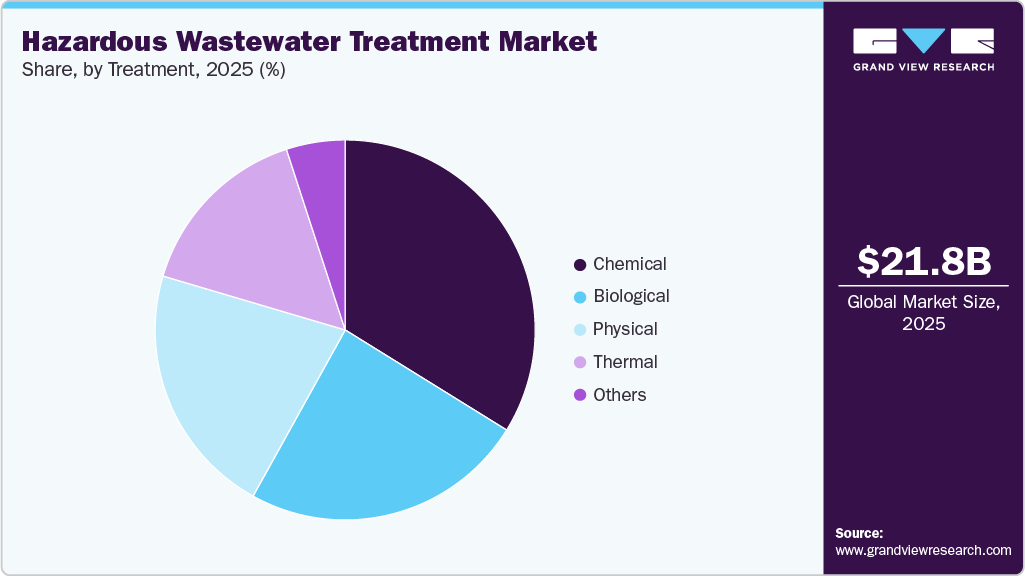
- By treatment: Chemical segment held the largest market share of 33.8% in 2025.
- By source: Oil & gas segment held the largest market share of 30.0% in 2025.
Regional Highlights
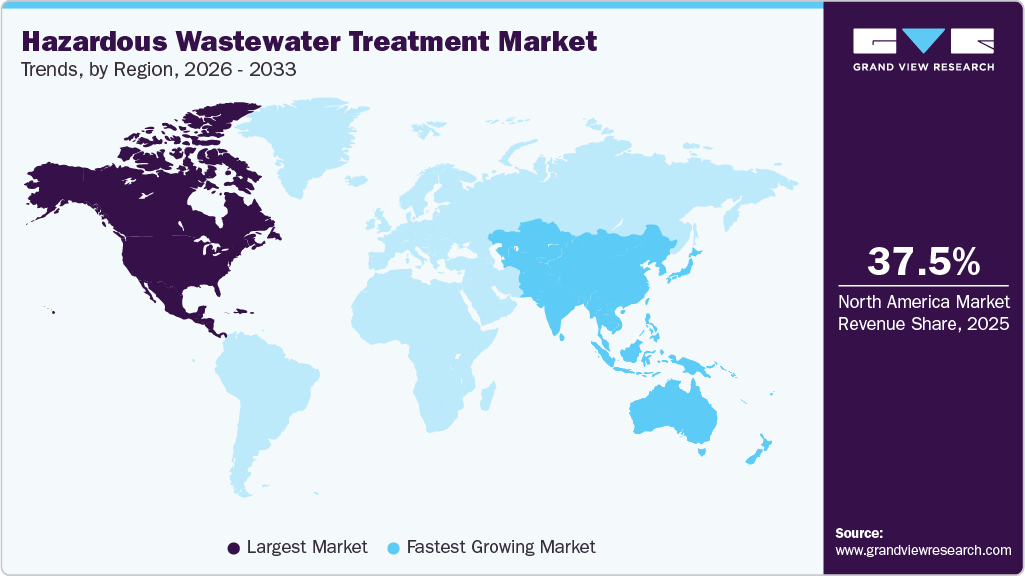
- Largest regional market: North America (37.5% revenue share, 2025)
- Fastest-growing regional market: Asia Pacific (highest CAGR, 2026-2033)
- By country: The U.S. held the largest market share in 2025
Market Size & Forecast
- Market size in 2025: USD 21.8 Billion
- Estimated market size in 2026: USD 22.2 Billion
- Projected market size by 2033: USD 26.8 Billion
- CAGR (2026-2033): 2.7%
Prism AI by Grand View Research Free to tryAsk a question about the hazardous wastewater treatment marketTry asking✓Every figure cited from GVR research Prefer the report? Download free sample →
Industries such as oil & gas, power generation, automotive, chemicals, and healthcare generate wastewater containing toxic chemicals, heavy metals, oils, and pathogens, which require proper treatment before disposal. Another major growth driver is the rising industrialization and expansion of manufacturing activities worldwide, particularly in emerging economies.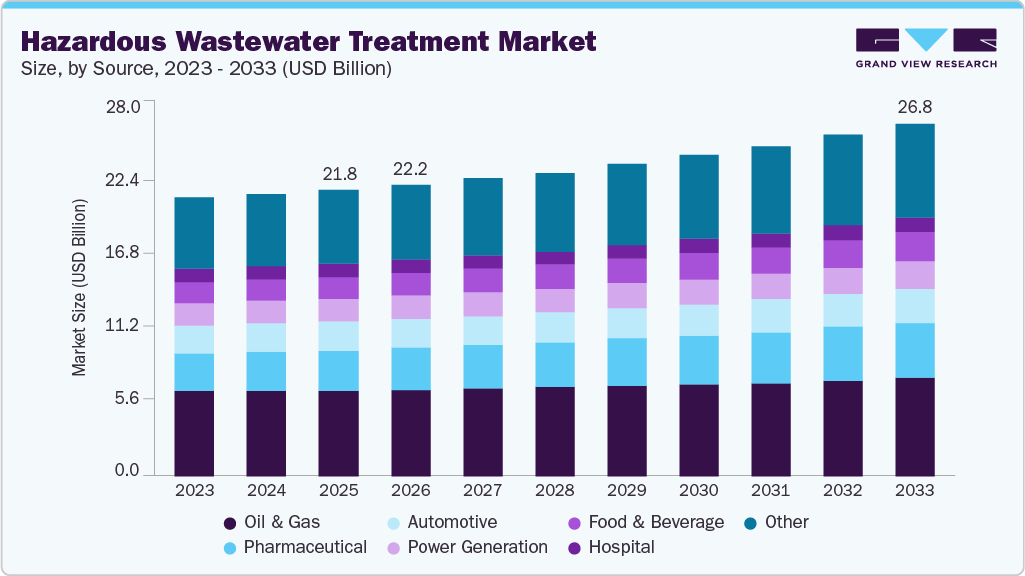 To learn more about this report, Download Free Sample Report
Industries are increasingly adopting physical, chemical, biological, and thermal treatment systems to recycle water, minimize freshwater consumption, and improve operational sustainability. In sectors such as food & beverage, hospitals, and thermal power plants, growing awareness regarding water conservation and circular water management practices is further accelerating demand for hazardous wastewater treatment solutions.
Market Concentration & Characteristics
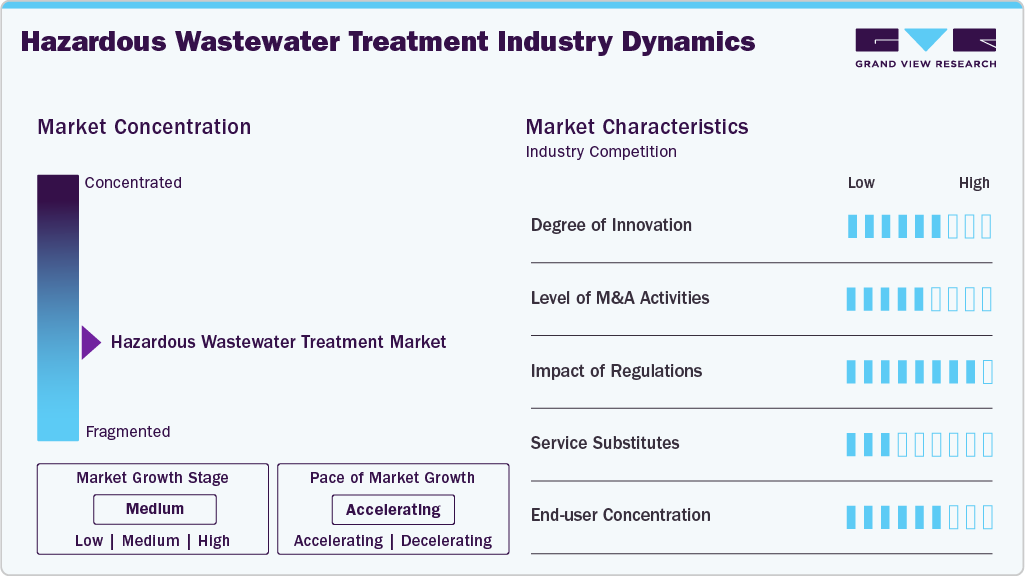
The hazardous wastewater treatment market is moderately fragmented, with the presence of numerous global and regional players offering specialized treatment technologies and services across different industrial sectors. Large multinational companies dominate major industrial projects through advanced treatment solutions, strong engineering capabilities, and long-term service contracts, while regional and local companies compete by providing cost-effective and customized systems for small- and medium-scale industries.
The hazardous wastewater treatment market is characterized by a high degree of technological innovation, driven by the need for efficient removal of toxic contaminants and compliance with strict environmental standards. Companies are increasingly investing in advanced treatment technologies such as membrane filtration, reverse osmosis, advanced oxidation processes, zero liquid discharge (ZLD), and automated monitoring systems. Digitalization, smart sensors, and AI-based process optimization are also being adopted to improve treatment efficiency, reduce operational costs, and support water reuse initiatives across industries.
 To learn more about this report, Download Free Sample Report
Regulatory compliance plays a critical role in shaping the market landscape. Governments and environmental agencies across regions such as North America, Europe, and Asia Pacific have implemented stringent regulations regarding industrial effluent discharge, hazardous waste disposal, and water reuse. Industries generating hazardous wastewater are required to meet strict discharge limits for heavy metals, toxic chemicals, oils, and biological contaminants. Failure to comply with these standards can result in heavy penalties, operational shutdowns, and environmental liabilities, encouraging industries to invest continuously in advanced wastewater treatment infrastructure.
The market also exhibits high end-user concentration, as demand is largely generated from major industrial sectors including oil & gas, chemicals, power generation, pharmaceuticals, healthcare, food & beverage, and automotive manufacturing. Large industrial facilities typically require customized and high-capacity treatment systems due to the complex nature of hazardous effluents.
Drivers, Opportunities & Restraints
The hazardous wastewater treatment market is primarily driven by stringent environmental regulations and increasing industrial wastewater generation across sectors such as oil & gas, chemicals, healthcare, power generation, and manufacturing. Governments worldwide are enforcing strict discharge standards to reduce water pollution and protect public health, compelling industries to adopt advanced wastewater treatment systems. In addition, rising concerns regarding water scarcity and the growing adoption of water recycling and reuse practices are further supporting market growth.
Growing industrialization in emerging economies and increasing investments in sustainable water infrastructure are creating significant growth opportunities for market players. Industries are increasingly adopting advanced technologies such as membrane filtration, zero liquid discharge (ZLD), smart monitoring systems, and automated treatment solutions to improve operational efficiency and reduce environmental impact.
High installation and operational costs associated with hazardous wastewater treatment systems remain a major challenge for the market, particularly for small and medium-sized industries. Advanced treatment technologies often require substantial capital investment, a skilled workforce, continuous maintenance, and high energy consumption.
Source Insights
The oil & gas segment held the largest share of the hazardous wastewater treatment market in 2025, driven by the large volume of wastewater produced from drilling, refining, and petrochemical operations. This wastewater typically contains oil residues, toxic chemicals, heavy metals, and suspended particles that require proper treatment before disposal or reuse. Increasing exploration activities and stricter environmental discharge regulations have encouraged oil & gas companies to invest heavily in advanced wastewater treatment technologies to improve compliance and support sustainable water management.
The pharmaceutical segment is projected to register the fastest CAGR of 4.1% during the forecast period, supported by the rapid expansion of pharmaceutical manufacturing and stricter regulations for handling chemical-rich effluents. Wastewater generated from pharmaceutical facilities often contains complex organic compounds, solvents, and active pharmaceutical ingredients that require specialized treatment processes. Rising healthcare demand, increasing production capacities, and growing focus on water recycling and environmentally responsible manufacturing practices are further driving the adoption of hazardous wastewater treatment solutions in the pharmaceutical industry.
Treatment Insights
The chemical treatment segment dominated the hazardous wastewater treatment market in 2025 and accounted for 33.8% share, owing to its widespread use in removing toxic contaminants, heavy metals, oils, suspended solids, and harmful chemicals from industrial wastewater. Chemical treatment methods such as coagulation, flocculation, neutralization, oxidation, and disinfection are extensively adopted across industries including oil & gas, chemicals, power generation, and pharmaceuticals due to their effectiveness in treating highly contaminated effluents.
 To learn more about this report, Download Free Sample Report
The biological treatment segment is expected to witness the fastest CAGR from 2026 to 2033, due to increasing demand for sustainable and cost-effective wastewater treatment solutions. Biological processes utilize microorganisms to break down organic pollutants and reduce harmful contaminants in wastewater, making them environmentally friendly and energy-efficient compared to conventional methods. Growing emphasis on water reuse, stricter environmental regulations, and rising adoption of eco-friendly treatment technologies across industrial facilities are driving the growth of biological hazardous wastewater treatment systems globally.
Regional Insights
North America hazardous wastewater treatment market dominated the global market in 2025 with 37.5% share, due to the presence of strict environmental regulations, advanced industrial infrastructure, and high adoption of water treatment technologies across industries such as oil & gas, chemicals, pharmaceuticals, and power generation. The region has a strong focus on industrial wastewater recycling, sustainable water management, and compliance with discharge standards established by environmental authorities.
 To learn more about this report, Download Free Sample Report
U.S. Hazardous Wastewater Treatment Market Trends
Hazardous wastewater treatment market in the U.S. driven by strong industrial activity, strict environmental regulations, and rising investments in sustainable water management infrastructure. Industries such as oil & gas, chemicals, pharmaceuticals, power generation, and food processing generate significant volumes of hazardous wastewater that require advanced treatment before discharge or reuse. According to the U.S. Department of Energy, U.S. crude oil production reached a record high of 13.6 million barrels per day in 2025, leading to increased generation of produced water and industrial effluents from upstream and downstream operations. This has accelerated demand for advanced wastewater treatment technologies including membrane filtration, chemical treatment, and zero liquid discharge systems across the country.
Europe Hazardous Wastewater Treatment Market Trends
Europe represents a mature market supported by stringent environmental policies and strong emphasis on sustainability and circular water management practices. Industries across the region are increasingly adopting advanced wastewater treatment technologies to reduce environmental impact and improve resource efficiency. The presence of established manufacturing industries, coupled with growing investments in water reuse, energy-efficient treatment systems, and zero liquid discharge solutions, continues to support steady market demand across countries such as Germany, France, Italy, and the UK.
Hazardous wastewater treatment market in Germany represents a significant growth due to its strong industrial base comprising chemicals, automotive manufacturing, pharmaceuticals, metal processing, and food production industries. The country places high emphasis on environmental sustainability and industrial water reuse, encouraging companies to adopt advanced wastewater treatment technologies to comply with strict European Union environmental standards.
Hazardous wastewater treatment market in France is witnessing steady growth owing to increasing focus on environmental protection, industrial emission control, and sustainable water resource management. The presence of major pharmaceutical, petrochemical, food processing, and power generation industries is contributing to rising demand for advanced treatment solutions capable of handling complex industrial effluents.
Asia Pacific Hazardous Wastewater Treatment Market Tends
Asia Pacific is expected to witness the fastest growth during the forecast period, driven by rapid industrialization, urban expansion, and increasing environmental concerns in countries such as China, India, Japan, and South Korea. Rising manufacturing activities across sectors including pharmaceuticals, food & beverage, chemicals, and electronics are significantly increasing hazardous wastewater generation. Governments across the region are strengthening wastewater discharge regulations and investing in industrial water treatment infrastructure, creating strong growth opportunities for market participants.
Hazardous wastewater treatment market in China is experiencing strong growth in 2025, due to rapid industrial expansion and increasingly stringent environmental regulations. Industries such as chemicals, electronics, pharmaceuticals, mining, and manufacturing generate substantial volumes of hazardous effluents, driving demand for advanced treatment technologies. The Chinese government is actively promoting industrial wastewater recycling, pollution control measures, and sustainable manufacturing practices, leading to significant investments in modern wastewater treatment infrastructure across industrial zones and urban centers.
Hazardous wastewater treatment market in India is emerging as a fast-growing market, supported by expanding industrialization and rising awareness regarding water conservation and environmental compliance. Growth in sectors including pharmaceuticals, textiles, oil & gas, chemicals, and food processing is increasing the generation of industrial wastewater requiring specialized treatment. Government initiatives such as stricter effluent discharge norms, industrial water reuse policies, and investments in wastewater treatment facilities are encouraging industries to adopt advanced treatment solutions to improve sustainability and reduce environmental impact.
Latin America Hazardous Wastewater Treatment Market Trends
The hazardous wastewater treatment market in Latin America is experiencing gradual growth due to increasing industrial activities in sectors such as mining, oil & gas, food processing, and chemicals. Countries including Brazil and Argentina are focusing on improving industrial wastewater management to address rising concerns related to water pollution and resource scarcity. Expanding industrial infrastructure and growing awareness regarding environmental protection are encouraging industries to invest in modern wastewater treatment solutions across the region.
Brazil hazardous wastewater treatment market is growing steadily due to increasing industrial activities across sectors such as mining, oil & gas, chemicals, food processing, and pulp & paper. The country is witnessing rising demand for advanced wastewater treatment solutions as industries focus on reducing water pollution and complying with stricter environmental regulations related to industrial effluent discharge.
Middle East & Africa Hazardous Wastewater Treatment Market Trends
The Middle East & Africa market is gaining momentum owing to increasing investments in industrial development, desalination projects, and water reuse initiatives. The region faces significant water scarcity challenges, making wastewater treatment and recycling critical for industrial and municipal operations. Growth in oil & gas, petrochemicals, mining, and power generation industries is increasing the demand for hazardous wastewater treatment systems, particularly in Gulf countries and South Africa, where governments are prioritizing sustainable water management strategies.
Hazardous wastewater treatment market in Saudi Arabia is witnessing growing demand for hazardous wastewater treatment solutions due to expanding industrial activities in oil & gas, petrochemicals, power generation, and manufacturing sectors. The country’s strong focus on water conservation and industrial sustainability, supported by initiatives under Saudi Vision 2030, is encouraging investments in advanced wastewater treatment and water reuse infrastructure.
Key Hazardous Wastewater Treatment Company Insights
Some of the key players operating in the market include Veolia, Xylem Inc., and Ecolab Inc.
-
Veolia is an environmental services company specializing in water, waste, and energy management solutions for industrial and municipal customers. The company provides advanced hazardous and industrial wastewater treatment technologies, including membrane filtration, biological treatment, chemical treatment, sludge management, and zero liquid discharge (ZLD) systems for industries such as oil & gas, chemicals, pharmaceuticals, mining, food & beverage, and power generation. Veolia also offers wastewater recycling, hazardous waste disposal, and resource recovery solutions that enable industries comply with environmental regulations, reduce water consumption, and support sustainable operations globally.
-
Xylem Inc. is a water technology company that provides advanced water and wastewater treatment solutions for industrial, municipal, and commercial applications. The company offers technologies related to hazardous wastewater treatment, including membrane filtration, biological treatment, sludge handling, disinfection, pumps, smart monitoring systems, and water reuse solutions. Xylem serves industries such as oil & gas, pharmaceuticals, chemicals, mining, food & beverage, and power generation, helping customers improve wastewater management, regulatory compliance, and operational efficiency. The company further strengthened its position in the hazardous wastewater treatment market through the acquisition of Evoqua Water Technologies, expanding its portfolio of industrial water treatment and reuse solutions globally.
Key Hazardous Wastewater Treatment Companies:
The following key companies have been profiled for this study on the hazardous wastewater treatment market.
- Veolia
- Xylem Inc.
- Ecolab Inc.
- AQUARION AG
- Kurita Water Industries Ltd.
- Aquatech International LLC
- DuPont Water Solutions
- Kemira Oyj
- Thermax Limited
- WOG Group
- Ovivo Inc.
- Acciona Agua
- VLS Environmental Solutions, LLC
- Envirosystems Inc.
- SAMCO
Recent Developments
-
In October 2025, VLS Environmental Solutions acquired Industrial Waste Utilization and AA Sydcol to strengthen its industrial waste and wastewater management operations across the U.S. West Coast. The acquisition expanded the company’s treatment and processing capabilities in California and Arizona while enhancing its environmental service portfolio. The move also supports VLS’ regional expansion and sustainable waste management strategy.
-
In January 2025, Transition Industries LLC partnered with Veolia in Ahome, Mexico, to develop a large-scale industrial water recycling project. As part of the collaboration, municipal wastewater from Los Mochis is expected to be treated using advanced technologies and reused for operations at a new methanol production plant. The initiative aims to minimize freshwater consumption, support sustainable industrial development, reduce environmental pressure on the Bay of Ohuira, and strengthen long-term regional water sustainability.
Hazardous Wastewater Treatment Market Report Scope
Report Attribute
Details
Market size in 2025
USD 21.8 billion
Estimated market size in 2026
USD 22.2 billion
Projected market size by 2033
USD 26.8 billion
Growth rate
CAGR of 2.7% from 2026 to 2033
Actual data
2021 - 2025
Forecast period
2026 - 2033
Quantitative units
Revenue in USD million/billion and CAGR from 2026 to 2033
Report coverage
Revenue forecast, company ranking, competitive landscape, growth factors, and trends
Segments covered
Source, treatment, region
Regional scope
North America; Europe; Asia Pacific; Latin America; Middle East & Africa
Country scope
U.S.; Canada; Mexico; France; Germany; Italy; Spain; UK; China; Japan; India; South Korea; Australia; Argentina; Brazil; Saudi Arabia; South Africa; UAE
Key companies profiled
Veolia; Xylem Inc.; Ecolab Inc.; AQUARION AG; Kurita Water Industries Ltd.; Aquatech International LLC; DuPont Water Solutions; Kemira Oyj; Thermax Limited; WOG Group; Ovivo Inc.; Acciona Agua; VLS Environmental Solutions, LLC; Envirosystems Inc.; SAMCO
Customization scope
Free report customization (equivalent up to 8 analysts working days) with purchase. Addition or alteration to country, regional & segment scope.
Pricing and purchase options
Avail customized purchase options to meet your exact research needs. Explore purchase options
Global Hazardous Wastewater Treatment Market Report Segmentation
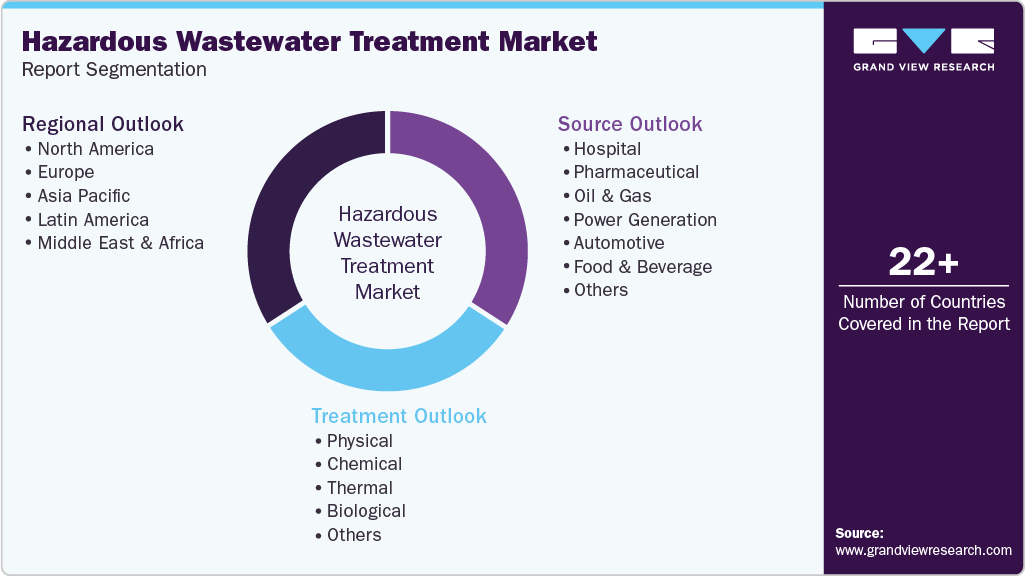
This report forecasts revenue growth at global, regional, and country levels and provides an analysis of the latest industry trends in each of the sub-segments from 2021 to 2033. For this study, Grand View Research has segmented the hazardous wastewater treatment market report based on source, treatment, and region.
 To learn more about this report, Download Free Sample Report
-
Source Outlook (Revenue, USD Billion, 2021 - 2033)
-
Hospital
-
Pharmaceutical
-
Oil & Gas
-
Power Generation
-
Automotive
-
Food & Beverage
-
Others
-
-
Treatment Outlook (Revenue, USD Billion, 2021 - 2033)
-
Physical
-
Chemical
-
Thermal
-
Biological
-
Others
-
-
Region Outlook (Revenue, USD Billion, 2021 - 2033)
-
North America
-
U.S.
-
Canada
-
Mexico
-
-
Europe
-
Germany
-
France
-
Italy
-
Spain
-
UK
-
-
Asia Pacific
-
China
-
India
-
Japan
-
South Korea
-
Australia
-
-
Latin America
-
Brazil
-
Argentina
-
-
Middle East & Africa
-
Saudi Arabia
-
UAE
-
South Africa
-
-
Frequently Asked Questions About This Report
Asia Pacific is the fastest-growing region over the forecast period.
Oil & gas segment led with a 30.0% revenue share in 2025, while pharmaceutical is the fastest-growing source.
The chemical segment led with a 33.8% revenue share in 2025, while biological is the fastest-growing treatment.
The global hazardous wastewater treatment market size was valued at USD 21.8 billion in 2025 and is estimated at USD 22.2 billion for 2026.
The global hazardous wastewater treatment market is expected to grow at a CAGR of 2.7% from 2026 to 2033, reaching USD 26.8 billion by 2033.
North America dominated the hazardous wastewater treatment market in 2025 with 37.5% share, due to the presence of strict environmental regulations, advanced industrial infrastructure, and high adoption of water treatment technologies across industries such as oil & gas, chemicals, pharmaceuticals, and power generation.
Kye players include Veolia; Xylem Inc.; Ecolab Inc.; AQUARION AG; Kurita Water Industries Ltd.; Aquatech International LLC; DuPont Water Solutions; Kemira Oyj; Thermax Limited; WOG Group; Ovivo Inc.; Acciona Agua; VLS Environmental Solutions, LLC; Envirosystems Inc.; SAMCO.
The hazardous wastewater treatment market is primarily driven by stringent environmental regulations, rising industrial wastewater generation, and growing concerns regarding water pollution and water scarcity. Increasing adoption of advanced treatment technologies and industrial water recycling practices across sectors such as oil & gas, chemicals, pharmaceuticals, and power generation is further supporting market growth.
About the Author(s)
Advanced Interior Materials Research Team
Advanced Materials · Advanced Interior MaterialsThis report was authored by the advanced interior materials research team at Grand View Research - comprising two research analysts, one senior research analyst, and one industry expert - with specialized expertise in the advanced interior materials segment of the advanced materials industry. All findings are based on proprietary advanced materials databases, executive interviews, and regulatory analysis, subject to internal peer review prior to publication.
Last Updated:
Speak to Analyst

Customize this report to your needs - add regions, segments, or data points, with 20% free customization.
Or view our licence options:


ISO 9001:2015 & 27001:2022 Certified
We are GDPR and CCPA compliant! Your transaction & personal information is safe and secure. For more details, please read our privacy policy.


