
- Home
- »
- Next Generation Technologies
- »
-
Heavy-duty Automotive Aftermarket Industry Report, 2033GVR Report cover

Heavy-duty Automotive Aftermarket Industry (2026 - 2033)
Size, Share & Trends Analysis Report By Replacement Part (Tire, Battery, Brake Parts, Filters, Body Parts, Lighting & Electronic Components, Wheels), By Vehicle Type, By Service Channel, By Region, And Segment Forecasts
Market Size, 2025
$155.8BMarket Estimate, 2026
$161.9BMarket Forecast, 2033
$204.3BCAGR, 2026–2033
3.4%Heavy-duty Automotive Aftermarket Industry Summary
The global heavy-duty automotive aftermarket industry size was valued at USD 155.8 billion in 2025 and is projected to grow from USD 161.9 billion in 2026 to USD 204.3 billion by 2033, at a CAGR of 3.4% from 2026 to 2033. Asia Pacific dominated the global market with the largest revenue share of 40.9% in 2025. The region's leadership is driven by the large and expanding fleet of commercial vehicles across countries such as China, India, Japan, and Southeast Asian nations, coupled with rising freight transportation and logistics activities.
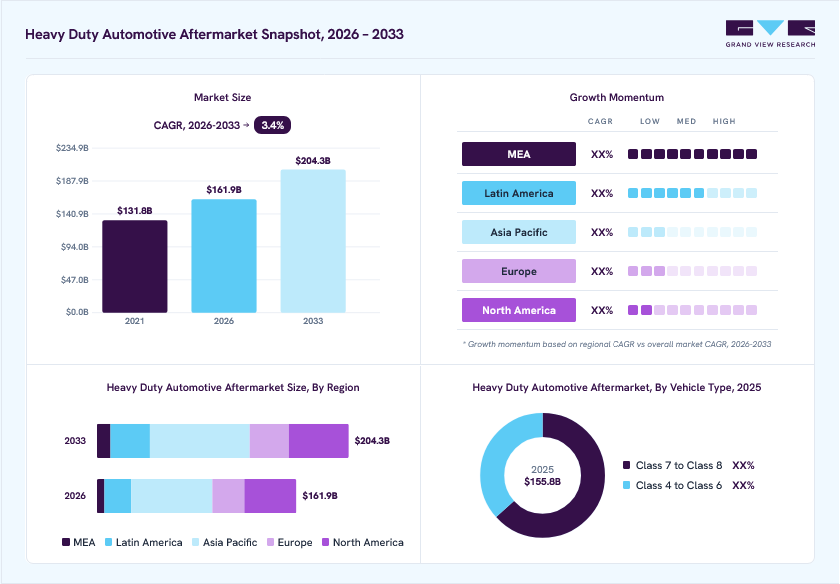 Source: Grand View Research, IR Documents, Primary Interviews, Paid DatabasesTo learn more about this report,
 Download Free Sample Report
Key Market Trends & Insights
- By replacement part: Tire segment led the market and held the largest revenue share of over 24.4% in 2025.
- By vehicle type: Class 7 to Class 8 segment led the market and held the largest revenue share of over 63.3% in 2025.
- By service channel: DiFM segment accounted for the largest revenue share of 66.9% in 2025.
Regional Highlights
- Largest regional market: Asia Pacific (40.9% revenue share, 2025)
- Fastest growing regional market: Middle East & Africa (highest CAGR, 2026–2033)
- By country: The China held the largest market share in 2025
Market Size & Forecast
- Market size in 2025: USD 155.8 Billion
- Estimated market size in 2026: USD 161.9 Billion
- Projected market size by 2033: USD 204.3 Billion
- CAGR (2026-2033): 3.4%
Three ways to get this report
Buy it, customize it, or ask a question.Ask an Analyst
Analyst response in 1 business day
- AccessReport author, directly
- Reply timeWithin 1 working day
- No sales callDirect answer only
- FormatEmail reply
- CostFree, no cost
Get the Full Report
What the study covers
- FormatsPDF · Excel · Dashboard
- Timeline2026–2033 annual, 2025 base
- Coverage20+ countries, 5 regions
- Companies10+ key players profiled
Customize the Report
20% free customization
- IncludeCountries, segments, points
- TailorTo your product definition
- ExtendDeeper competitor detail
- OrA fully bespoke study
- Turnaround5–10 working days
Increasing vehicle parc age and the growing need for regular maintenance, repair, and replacement of critical components such as tires, filters, brakes, and engine parts continue to support market growth. Better vehicle monitoring, predictive maintenance, and cost-effective repairs are expected to boost demand over the forecast period. The increasing adoption of electric and hybrid heavy-duty vehicles is creating a new segment in the aftermarket. Electric and hybrid vehicles have different powertrains and components compared to traditional internal combustion engine (ICE) vehicles. This shift in technology creates a demand for a new range of aftermarket products, such as batteries, electric motors, inverters, and charging infrastructure. Moreover, the growth of electric vehicles (EVs) necessitates the development of charging infrastructure, including charging stations, cables, and connectors. The aftermarket plays a role in providing these products and installing charging stations for commercial and fleet customers.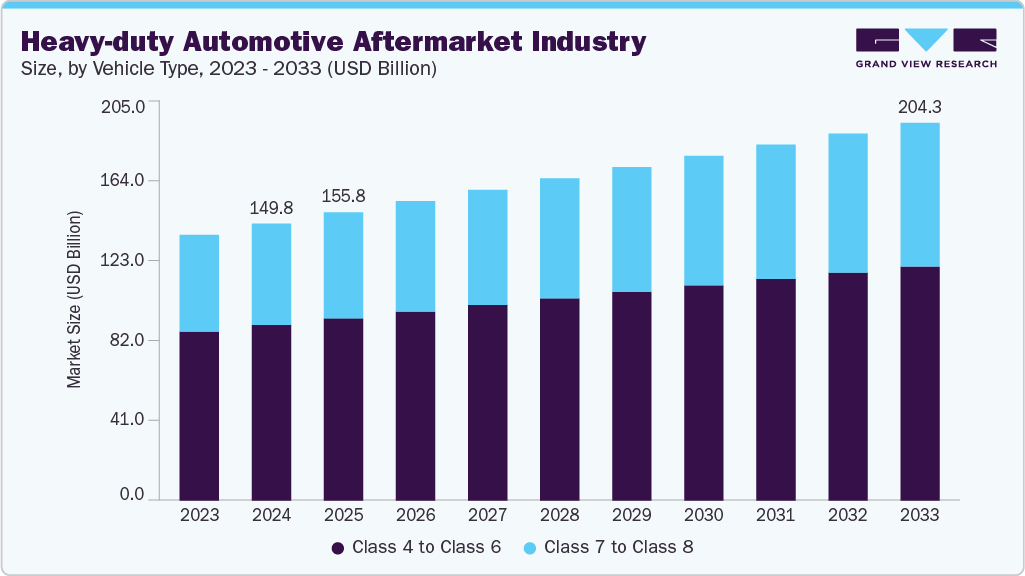 To learn more about this report, Download Free Sample Report
Additionally, digitalization and e-commerce are playing a significant role in driving the growth of the heavy-duty automotive aftermarket. Digitalization has led to the emergence of online marketplaces and e-commerce platforms specializing in heavy-duty automotive parts. Fleet operators, repair shops, and individual vehicle owners can conveniently browse catalogs, compare prices, and order parts online. Moreover, e-commerce platforms provide access to a vast array of aftermarket parts and products from various suppliers and manufacturers. Customers can explore a broader selection of products than they might find at traditional brick-and-mortar stores.
Government incentives, subsidies, and regulations related to vehicle maintenance and emissions control can influence the aftermarket. Programs aimed at reducing pollution or promoting cleaner transportation can drive demand for specific products and services. Furthermore, Startups and technology companies are entering the heavy-duty automotive aftermarket with innovative solutions, such as predictive maintenance platforms and digital marketplace platforms.
Market Dynamics
The heavy-duty automotive aftermarket industry is experiencing substantial growth, driven by the expanding global commercial vehicle fleet, increasing average vehicle age, and the growing emphasis on vehicle uptime and operational efficiency. Aftermarket products and services enable fleet operators to maintain performance, ensure regulatory compliance, and extend the service life of trucks, buses, and trailers. Rising freight transportation activities, infrastructure development, and advancements in connected vehicle technologies are further supporting demand for replacement parts, maintenance services, and predictive diagnostics solutions.
The heavy-duty automotive aftermarket industry is primarily driven by the rising number of medium- and heavy-duty vehicles in operation and the increasing average age of commercial fleets. Older vehicles require more frequent replacement of components such as brakes, filters, tires, batteries, suspension systems, and engine parts, thereby creating sustained demand for aftermarket products and repair services. The rapid growth of logistics, e-commerce, mining, and construction industries has increased vehicle utilization rates, leading to higher wear and tear. Additionally, fleet operators are increasingly adopting preventive and predictive maintenance strategies to minimize downtime and improve operational efficiency, further boosting aftermarket demand.
Despite strong growth prospects, the heavy-duty automotive aftermarket industry faces challenges associated with volatile raw material prices and supply chain disruptions. Rising costs of steel, aluminum, rubber, and electronic components can increase the prices of replacement parts and affect profit margins for manufacturers and distributors. In addition, shortages of critical components, transportation bottlenecks, and geopolitical uncertainties may disrupt product availability and extend delivery timelines. The growing complexity of modern commercial vehicles and the shortage of skilled technicians capable of servicing advanced systems also pose challenges to market expansion.
The increasing adoption of telematics, connected vehicle technologies, and predictive maintenance solutions presents significant opportunities for the heavy-duty automotive aftermarket industry. Fleet operators are leveraging IoT-enabled sensors, real-time diagnostics, and data analytics to monitor vehicle health and identify maintenance requirements before failures occur. The rising penetration of electric and hybrid commercial vehicles is also creating new opportunities for specialized replacement components and service offerings. Furthermore, the expansion of e-commerce, cross-border trade, and logistics networks is expected to drive demand for maintenance services and aftermarket parts, supporting long-term market growth throughout the forecast period.
Market Concentration & Characteristics
The heavy-duty automotive aftermarket industry is moderately fragmented, characterized by the presence of several established component manufacturers, distributors, and aftermarket solution providers competing on product quality, durability, distribution networks, pricing, and technological capabilities. Market participants are increasingly focusing on expanding their product portfolios, strengthening supply chain networks, and introducing advanced replacement components to cater to the evolving requirements of commercial vehicle fleets. The growing adoption of connected vehicle technologies and predictive maintenance solutions is also encouraging companies to enhance their offerings through innovation and strategic collaborations.
Key market participants include 3M Company, ATC Technology Corp, Continental AG, Denso Corporation, Detroit Diesel Corporation, Dorian Drake International Inc., Dorman Products, Federal-Mogul LLC, Instrument Sales & Service, Inc., Remy International Inc., and UCI International Inc. These companies are emphasizing product development, expansion of distribution channels, strategic partnerships, acquisitions, and investments in advanced diagnostics and fleet maintenance solutions to strengthen their market presence and maintain competitiveness in the global heavy-duty automotive aftermarket industry.
Analyst Perspective
The heavy-duty automotive aftermarket industry is a key part of the commercial vehicle ecosystem, supported by the growing vehicle parc and aging fleets. Rising focus on vehicle uptime, safety, and operational efficiency is increasing demand for replacement parts and maintenance services. Growth in freight transportation, construction, mining, agriculture, and logistics further supports aftermarket demand. Advancements in telematics, connected vehicles, predictive maintenance, and diagnostic tools are improving maintenance efficiency. Fleet operators are increasingly adopting preventive maintenance to reduce downtime and operating costs. Expansion of e-commerce and logistics networks is also increasing commercial vehicle utilization. Moreover, fleet modernization and the adoption of electric and connected commercial vehicles are creating new aftermarket opportunities. Growing demand for high-quality components and value-added services is further strengthening the market. These factors collectively support sustained growth of the heavy-duty automotive aftermarket.
Replacement Part Insights
Based on replacement part, the tire segment led the market with the largest revenue share of 24.4% in 2025. The rising trends of remanufacturing mechanical and electrical components are expected to drive the market demand for heavy-duty automotive aftermarket components, as remanufactured parts assist in minimizing expenses and support the continuity of older vehicles. Moreover, the retrofitting of components and parts reduced the emissions of an older heavy-duty vehicle, enhancing the life of that vehicle and thus directly driving the market demand for heavy-duty automotive aftermarket products.
The turbocharger segment is predicted to foresee significant growth in the forecast period. Turbochargers enable engine downsizing, where a smaller-displacement engine is equipped with a turbocharger to deliver the power output of a larger engine. This reduces fuel consumption and emissions while maintaining performance. Furthermore, the segment is crucial for enhancing the fuel efficiency of heavy-duty vehicles. As fuel costs remain a significant operational expense for fleet operators, there's a growing focus on adopting turbochargers to reduce fuel consumption.
Vehicle Type Insights
Based on vehicle type, the Class 7 to Class 8 segment led the market with the largest revenue share of 63.3% in 2025. Stricter emissions regulations are driving the demand for aftermarket emissions control technologies in Class 7 to Class 8 vehicles. This includes diesel particulate filters (DPFs), selective catalytic reduction (SCR) systems, and exhaust gas recirculation (EGR) components. Moreover, the integration of telematics and fleet management systems is growing in this segment. Fleet operators are using these technologies for vehicle tracking, maintenance scheduling, and route optimization, leading to increased demand for related aftermarket products and services.
The class 4 to class 6 segment is predicted to foresee significant growth in the forecast period. The installation of safety and driver assistance systems such as backup cameras, collision avoidance, and lane departure warning systems is growing in this segment. The aftermarket offers retrofit options for existing vehicles. Moreover, to reduce operating costs, medium-duty vehicle owners are looking for efficiency improvements. Aftermarket products like aerodynamic kits, tire management systems, and engine tuning can deliver fuel savings. Moreover, the integration of telematics and predictive maintenance solutions is reshaping parts replacement cycles and service intervals. As fleet operators prioritize cost efficiency and minimize downtime, the demand for high-quality replacement components, remanufactured parts, and digital service platforms continues to strengthen within this segment.
Service Channel Insights
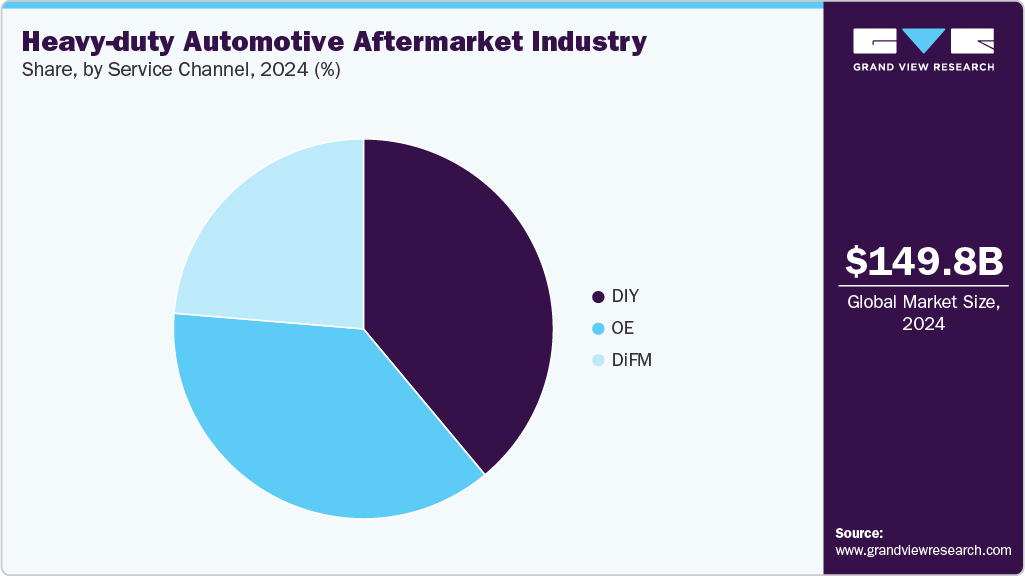
Based on service channel, the DiFM segment led the market with the largest revenue share of 66.9% in 2025. The "Do it For Me" (DiFM) segment is characterized by services and maintenance performed by professional technicians or service providers on behalf of vehicle owners or fleet operators. This segment is essential for those who prefer to outsource vehicle maintenance and repairs rather than doing it themselves. DiFM providers often offer fleet management services that include maintenance scheduling, cost tracking, and compliance management. These services help fleet operators optimize vehicle performance and reduce operational costs. Additionally, fleet downtime costs are prompting operators to outsource repairs to ensure faster turnaround and quality assurance. This trend is further supported by digital service management platforms that enhance scheduling, transparency, and parts availability, strengthening the professional repair ecosystem in the heavy-duty segment.
 To learn more about this report, Download Free Sample Report
The DIY segment is predicted to foresee significant growth in the forecast period. The Do-It-Yourself (DIY) segment refers to vehicle owners or enthusiasts who perform maintenance, repairs, and customization on their own vehicles without relying on professional mechanics or service providers. While the heavy-duty automotive sector traditionally has a strong professional service component. The availability of online resources, including repair manuals, instructional videos, and automotive forums, has empowered DIYers with the knowledge and confidence to tackle more complex projects. The availability of online diagnostic tools, e-commerce platforms for spare parts, and video-based learning has strengthened this movement. However, the complexity of modern heavy-duty vehicles and the need for specialized equipment still limit full-scale DIY adoption. Overall, the DIY trend is fostering greater consumer awareness and demand for user-friendly components, driving manufacturers to develop more modular and easily serviceable products.
Regional Insights
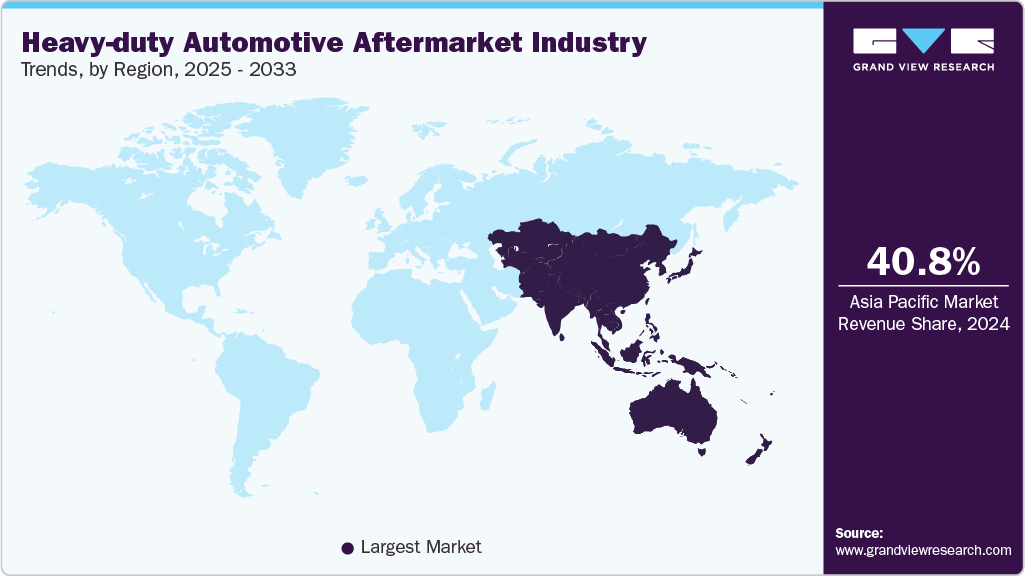
Asia Pacific dominated the heavy-duty automotive aftermarket industry with the largest revenue share of 40.9% in 2025, as the market is driven by the rapid urbanization and infrastructure development, which has led to an increased demand for heavy-duty vehicles such as trucks, buses, and construction equipment in the region. This growth in infrastructure projects has driven the demand for aftermarket parts and services. Moreover, the rise of e-commerce and the growth of logistics and transportation companies in the region have driven the demand for heavy-duty vehicles to transport goods. As these fleets expand, there is a growing need for aftermarket parts and maintenance services.
 To learn more about this report, Download Free Sample Report
North America Heavy-duty Automotive Aftermarket Industry Trends
North America heavy-duty automotive aftermarket industry held a significant revenue share in 2024 and is driven by aging vehicle fleets, regulatory mandates, and increasing fleet maintenance needs. Rising demand for replacement parts, especially tires, turbochargers, and emission control components, is fueling aftermarket revenue, with Class 7-8 trucks contributing the largest share. Growing emphasis on fuel efficiency, emission compliance, and predictive maintenance is accelerating the adoption of telematics and IoT-based diagnostic tools. However, challenges such as skilled labor shortages, price competition, and counterfeit parts continue to restrain market growth. The heavy-duty automotive aftermarket industry in the China held the largest share in the Asia Pacific region in 2025.
U.S. Heavy-duty Automotive Aftermarket Industry Trends
The heavy-duty automotive aftermarket industry in the U.S. is driven by tires, which remain the largest replacement part segment in terms of revenue, while turbochargers are among the fastest-growing sub-segments, driven by demands for better fuel efficiency and emissions compliance. A large and aging fleet of commercial vehicles encourages reliance on aftermarket maintenance versus fleet replacement, especially under tighter emissions and fuel-economy regulations.
Europe Heavy-duty Automotive Aftermarket Industry Trends
The heavy-duty automotive aftermarket industry in Europe is experiencing steady growth driven by the aging vehicle fleet, increased vehicle parc, and the rising adoption of digital service platforms. Demand for advanced diagnostic tools and telematics-based maintenance is strengthening as fleets seek to minimize downtime and enhance operational efficiency. Sustainability trends, including the shift toward remanufacturing and eco-friendly parts, are also shaping market dynamics. Additionally, strong regulatory frameworks and the expansion of e-commerce channels are supporting consistent aftermarket growth across major European economies.
Middle East & Africa Heavy-duty Automotive Aftermarket Industry Trends
The middle east & Africa heavy-duty automotive aftermarket is expected to witness the fastest growth, driven by the expanding fleet of commercial vehicles, increasing freight and logistics activities, and continued dependence on road transportation across the region. Rapid infrastructure development, construction projects, mining activities, and growth in cross-border trade are increasing the utilization of heavy-duty trucks and buses. In addition, the region has a large and aging installed base of heavy-duty vehicles, particularly across major transportation and industrial markets, creating sustained aftermarket demand. At the same time, fleet operators are placing greater emphasis on preventive maintenance, vehicle uptime, and total cost of ownership, which is expected to accelerate aftermarket spending and position MEA as a fast-growing regional market over the forecast period.
Key Heavy-duty Automotive Aftermarket Company Insights
Key players operating in the heavy-duty automotive aftermarket industry are undertaking various initiatives to strengthen their presence and increase the reach of their products and services. Strategies such as expansion activities and partnerships are key in propelling the market growth. Some key companies in the industry are 3M Company, ATC Technology Corp, Continental AG, Denso Corporation, Detroit Diesel Corporation, and more.
-
3M India, with nearly 100 years of global automotive industry experience, offers innovative solutions tailored for the industry. Their product portfolio includes ultra-strong abrasives, advanced materials for lightweighting, and durable adhesives that enhance vehicle repair, maintenance, and manufacturing efficiency. 3M’s technologies support improved fuel economy, faster and higher-quality painting processes, and durable, safe, and environmentally responsible transportation solutions. Their offerings help automotive professionals push limits while ensuring reliability, cost-effectiveness, and performance in demanding heavy-duty applications.
-
Continental, a global technology company, offers a comprehensive range of solutions for the heavy-duty automotive aftermarket. Their offerings include high-performance tires, advanced vehicle electronics, and robust safety systems designed to enhance durability, reliability, and efficiency in heavy-duty vehicles. Continental’s innovations also support sustainable and safe mobility solutions tailored for demanding industrial and commercial transportation needs. The company’s strong global presence and technological expertise position it as a key partner in the heavy-duty automotive aftermarket sector.
Key Heavy-duty Automotive Aftermarket Companies
The following key companies have been profiled for this study on the heavy-duty automotive aftermarket industry.
-
3M Company
-
ATC Technology Corp
-
Continental AG
-
Denso Corporation
-
Detroit Diesel Corporation
-
Dorian Drake International Inc.
-
Dorman Products
-
Federal-Mogul LLC
-
Instrument Sales & Service, Inc.
-
Remy International Inc.
-
UCI International Inc.
Recent Developments
-
In August 2025, DENSO expanded its PowerEdge aftermarket product line to include high-performance NOx sensors for medium- and heavy-duty vehicles. These sensors, covering nearly 40 models from Chrysler/RAM/Stellantis, Cummins, Daimler Truck, and Ford, play a vital role in monitoring nitrogen oxide levels to ensure compliance with federal emissions standards. Manufactured in the U.S. to original equipment (OE) specifications, PowerEdge NOx sensors offer reliable engine performance, durability, and a one-year warranty. By integrating these sensors, fleet owners can meet emissions regulations without compromising on quality or value, reinforcing PowerEdge as a trusted brand for heavy-duty vehicle aftertreatment needs.
-
In September 2024, Continental is significantly expanding its aftermarket product range in original equipment quality, introducing new product groups including sensors for driver assistance systems, chassis and steering components, and high-pressure fuel pumps. The company is also launching the ATE New Original line of brake discs and pads tailored for electric vehicles and future Euro 7 emissions standards. Workshops will benefit from expanded coverage in engine management parts, water pumps, and belt drive kits, along with new digital services like Remote Support for high-quality repairs. This expansion reflects Continental's commitment to meeting the increasing technical demands of modern vehicles and supporting workshops through a diversified, reliable portfolio by mid-2025.
Heavy-duty Automotive Aftermarket Industry Report Scope
Report Attribute
Details
Market size in 2025
USD 155.8 billion
Estimated market size in 2026
USD 161.9 billion
Revenue forecast in 2033
USD 204.3 billion
Growth rate
CAGR of 3.4% from 2026 to 2033
Base year for estimation
2025
Historical data
2021 - 2024
Forecast period
2026 - 2033
Quantitative units
Revenue in USD billion/billion and CAGR from 2026 to 2033
Report coverage
Revenue forecast, company ranking, competitive landscape, growth factors, and trends
Segments covered
Replacement part, vehicle type, service channel, region
Regional scope
North America; Europe; Asia Pacific; Latin America; MEA
Country scope
U.S.; Canada; Mexico; UK; Germany; France; China; Japan; India; South Korea; Australia; Brazil; KSA; UAE; South Africa
Key companies profiled
3M Company; ATC Technology Corp; Continental AG; Denso Corporation; Detroit Diesel Corporation; Dorian Drake International Inc.; Dorman Products; Federal-Mogul LLC; Instrument Sales & Service, Inc.; Remy International Inc.; UCI International Inc.
Customization scope
Free report customization (equivalent up to 8 analysts' working days) with purchase. Addition or alteration to country, regional & segment scope.
Pricing and purchase options
Avail customized purchase options to meet your exact research needs. Explore purchase options
Global Heavy-duty Automotive Aftermarket Industry Report Segmentation
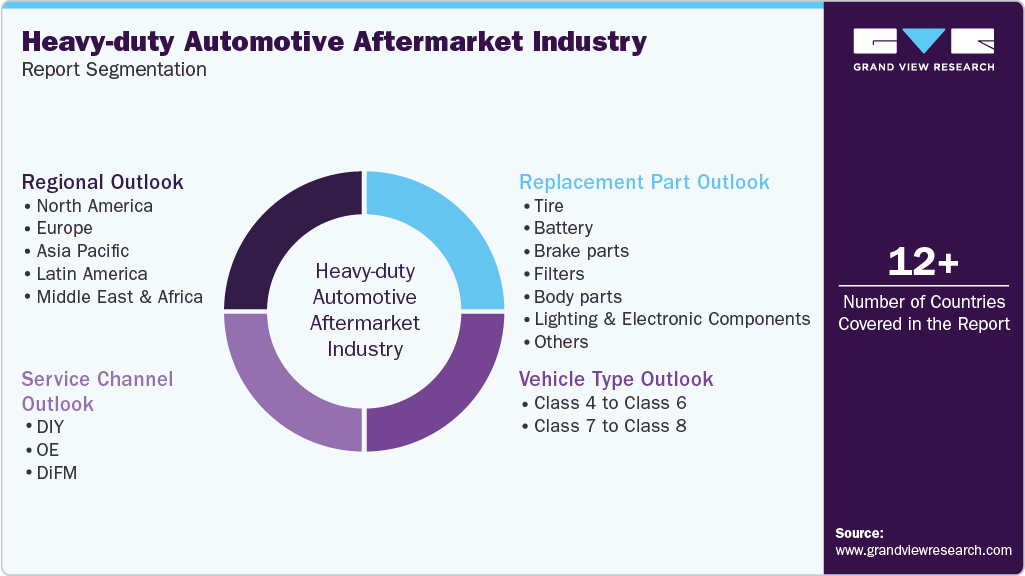
This report forecasts revenue growth at global, regional, and country levels and provides an analysis of the latest industry trends in each of the sub-segments from 2021 to 2033. For this study, Grand View Research has segmented the global heavy-duty automotive aftermarket industry report based on replacement part, vehicle type, service channel, and region:
 To learn more about this report, Download Free Sample Report
-
Replacement Part Outlook (Revenue, USD Billion, 2021 - 2033)
-
Tire
-
Battery
-
Brake parts
-
Filters
-
Body parts
-
Lighting & Electronic components
-
Wheels
-
Exhaust components
-
Turbochargers
-
Others
-
-
Vehicle Type Outlook (Revenue, USD Billion, 2021 - 2033)
-
Class 4 to Class 6
-
Class 7 to Class 8
-
-
Service Channel Outlook (Revenue, USD Billion, 2021 - 2033)
-
DIY
-
OE
-
DiFM
-
-
Regional Outlook (Revenue, USD Billion, 2021 - 2033)
-
North America
-
U.S.
-
Canada
-
Mexico
-
-
Europe
-
UK
-
Germany
-
France
-
-
Asia Pacific
-
China
-
Japan
-
India
-
South Korea
-
Australia
-
-
Latin America
-
Brazil
-
-
Middle East and Africa (MEA)
-
KSA
-
UAE
-
South Africa
-
-
Competitive Benchmarking
Operating Strategies
Competitive Edge
Weaknesses
Established Players (3M Company; Continental AG; Denso Corporation; Detroit Diesel Corporation; Dorman Products; Federal-Mogul LLC.)
- Focus on expanding heavy-duty aftermarket product portfolios across tires, filtration systems, braking components, electrical systems, powertrain parts, and diagnostics solutions.
- Emphasize strategic partnerships, distribution network expansion, product innovation, predictive maintenance technologies, and investments in advanced components and fleet support solutions to strengthen market leadership.
- Strong global brand recognition, extensive distribution networks, diversified product offerings, established OEM and aftermarket relationships, advanced engineering capabilities.
- Broad customer bases, and strong presence across commercial vehicle and fleet maintenance ecosystems.
- High operational and manufacturing costs, exposure to raw material price fluctuations, complex supply chain management.
- Dependence on commercial vehicle production and freight activity, and challenges associated with rapidly evolving vehicle technologies and electrification trends.
Emerging Players (ATC Technology Corp; Dorian Drake International Inc.; Instrument Sales & Service, Inc.; Remy International Inc.; UCI International Inc.)
- Focus on specialized aftermarket solutions, regional distribution expansion, product innovation, fleet maintenance services, and strategic collaborations to enhance market penetration.
- Invest in niche product categories, customer support capabilities, and targeted offerings for commercial vehicle operators and independent repair networks.
- Strong flexibility, specialized product expertise, faster response to customer requirements, focused distribution strategies.
- The ability to address specific heavy-duty vehicle maintenance and repair needs.
- Limited global presence, smaller customer bases, lower brand recognition, narrower product portfolios.
- Resource constraints compared to larger competitors, and challenges in scaling operations and expanding distribution capabilities.
Research Methodology
The heavy-duty automotive aftermarket market figures in this report are based on a proven research process that combines executive interviews with secondary research from proprietary databases, company filings, and recognized regulatory and institutional sources. Market size is built through value-chain sizing-reconciling supply-side and demand-side estimates-and triangulated with bottom-up and top-down approaches. Every estimate passes multiple levels of expert validation before publication, with each heavy-duty automotive aftermarket segment quantified using the revenue-capture definitions in the table below.
Segment Definition
Segment – Replacement Part
Revenue capture definition
Tire
Revenue in this segment is generated through the sale and replacement of tires used in heavy-duty commercial vehicles operating across freight transportation, construction, mining, agriculture, and logistics applications. These products include steer tires, drive tires, trailer tires, all-position tires, radial tires, bias tires, and retreaded tires designed to provide enhanced durability, load-bearing capacity, fuel efficiency, traction, and safety.
Battery
Revenue in this segment is generated through the sale and replacement of batteries used in heavy-duty commercial vehicles to support engine starting, lighting, ignition, and auxiliary power requirements. These products include lead-acid batteries, absorbed glass mat (AGM) batteries, enhanced flooded batteries (EFB), lithium-ion batteries, and auxiliary batteries designed for trucks, buses, and off-highway vehicles.
Brake parts
Revenue in this segment is generated through the sale and replacement of brake components used in heavy-duty commercial vehicles to ensure safe and reliable braking performance. These products include brake pads, brake shoes, brake discs, brake drums, calipers, air brake chambers, slack adjusters, brake linings, and hydraulic and pneumatic braking components designed for trucks, buses, trailers, and off-highway vehicles.
Filters
Revenue in this segment is generated through the sale and replacement of filtration products used in heavy-duty commercial vehicles to maintain engine performance, fuel efficiency, and system reliability. These products include air filters, oil filters, fuel filters, cabin air filters, hydraulic filters, and coolant filters designed for trucks, buses, trailers, and off-highway vehicles.
Body parts
Revenue in this segment is generated through the sale and replacement of exterior and structural components used in heavy-duty commercial vehicles to restore functionality, safety, and appearance. These products include bumpers, hoods, fenders, grilles, doors, mirrors, lighting assemblies, windshields, panels, and other cab and chassis body components designed for trucks, buses, and trailers
Lighting & Electronic components
Revenue in this segment is generated through the sale and replacement of lighting and electronic components used in heavy-duty commercial vehicles to enhance visibility, safety, connectivity, and vehicle performance. These products include headlamps, tail lamps, indicator lights, LED lighting systems, sensors, wiring harnesses, alternators, starters, control modules, switches, relays, telematics devices, and electronic control units (ECUs) designed for trucks, buses, trailers, and off-highway vehicles
Wheels
Revenue in this segment is generated through the sale and replacement of wheels used in heavy-duty commercial vehicles to support load-bearing capacity, stability, and overall vehicle performance. These products include steel wheels, aluminum wheels, forged wheels, hub assemblies, rims, and wheel accessories designed for trucks, buses, trailers, and off-highway vehicles. The segment supports vehicle safety and operational efficiency by enabling routine replacement, refurbishment, and maintenance of wheel systems required to withstand high loads, long-distance operations, and demanding road and environmental conditions.
Exhaust components
Revenue in this segment is generated through the sale and replacement of exhaust components used in heavy-duty commercial vehicles to manage emissions, reduce noise, and maintain engine efficiency. These products include mufflers, exhaust pipes, catalytic converters, diesel particulate filters (DPFs), selective catalytic reduction (SCR) systems, exhaust manifolds, sensors, and related mounting components designed for trucks, buses, trailers, and off-highway vehicles.
Turbochargers
Revenue in this segment is generated through the sale and replacement of turbochargers used in heavy-duty commercial vehicles to enhance engine power, fuel efficiency, and overall performance. These products include variable geometry turbochargers (VGTs), wastegate turbochargers, twin-turbo systems, turbo cartridges, actuators, and related components designed for trucks, buses, trailers, and off-highway vehicles.
Others
Revenue in this segment is generated through the sale and replacement of various heavy-duty automotive aftermarket products and related services such as engine components, transmission parts, suspension and steering systems, cooling systems, drivetrain components, lubricants and fluids, bearings, belts, hoses, wiper systems, air conditioning components, and maintenance accessories designed for trucks, buses, trailers, and off-highway vehicles.
Segment – Vehicle Type
Revenue capture definition
Class 4 to Class 6
Revenue in this segment is generated through the sale of replacement parts, maintenance products, and repair services for medium-duty commercial vehicles classified under Class 4 to Class 6. These vehicles include delivery trucks, box trucks, utility vehicles, vocational trucks, and medium-duty buses used across logistics, construction, municipal services, and regional transportation applications
Class 7 to Class 8
Revenue in this segment is generated through the sale of replacement parts, maintenance products, and repair services for heavy-duty commercial vehicles classified under Class 7 to Class 8. These vehicles include tractor-trailers, semi-trucks, dump trucks, cement mixers, refuse trucks, heavy-duty buses, and other long-haul and vocational vehicles used across freight transportation, construction, mining, and industrial applications.
Segment – Service Channel
Revenue capture definition
DIY
Revenue in this segment is generated through the sale of heavy-duty automotive aftermarket parts and maintenance products purchased directly by vehicle owners, independent operators, and small fleet managers for self-installation and routine maintenance activities. This segment includes products such as filters, batteries, lighting components, wiper blades, lubricants, belts, hoses, and other replacement parts designed for medium- and heavy-duty commercial vehicles.
OE
Revenue in this segment is generated through the sale of original equipment (OE) replacement parts and components supplied by vehicle manufacturers or authorized suppliers for medium- and heavy-duty commercial vehicles. These products include tires, batteries, brake parts, filters, lighting and electronic components, turbochargers, body parts, and drivetrain systems engineered to meet original factory specifications and performance standards
DiFM
Revenue in this segment is generated through the sale and installation of heavy-duty automotive aftermarket parts and services performed by professional repair shops, authorized service centers, dealerships, and fleet maintenance providers under the Do-it-for-Me (DIFM) model.
Estimation Model
Layer Name
Key Question
Description
Addressable Heavy-duty Vehicle Parc Layer
Which vehicles generate demand for aftermarket products and services?
Identify the global addressable base of medium- and heavy-duty commercial vehicles requiring replacement parts and maintenance. Include Class 4–6 and Class 7–8 trucks, buses, trailers, construction vehicles, and vocational vehicles operating across freight transportation, logistics, mining, agriculture, and infrastructure sectors.
Replacement & Maintenance Demand Layer
Which vehicle systems require aftermarket replacement?
Apply replacement cycles and maintenance frequencies across key components including tires, batteries, brake parts, filters, body parts, lighting and electronic components, wheels, exhaust systems, turbochargers, and other powertrain and chassis components. Consider wear rates, operating conditions, preventive maintenance schedules, regulatory requirements, and fleet uptime requirements influencing component replacement demand.
Product Consumption Layer
How extensively are aftermarket products and services utilized?
Estimate product consumption based on the number of replacement parts, maintenance products, and repair services required per vehicle annually. Consider consumption intensity across long-haul transportation, construction, mining, municipal services, and regional logistics applications, along with the contribution of OE, DIY, and DIFM distribution channels.
Revenue Generation Layer
How much revenue is generated?
Calculate market revenue by multiplying the volume of aftermarket components and services consumed across the heavy-duty vehicle parc by their respective average selling prices (ASPs), service charges, labor costs, distributor margins, and recurring maintenance expenditures. Revenue is generated through the sale of replacement parts, repair services, diagnostics, preventive maintenance programs, and value-added fleet support solutions.
Delivered Customizations
This report has been delivered with the following In-depth customizations
Client Request
Customization Delivered
Value Adds
Competitive Intelligence & Market Positioning Assessment
Performed an in-depth evaluation of major heavy-duty aftermarket component manufacturers, distributors, and service providers. Assessed market positioning, product portfolios, distribution capabilities, maintenance solutions, strategic partnerships, acquisitions, regional presence, and recent developments across the Heavy-duty Automotive Aftermarket ecosystem.
Helps stakeholders identify leading market participants, evaluate competitive positioning, benchmark product and service capabilities, uncover partnership and acquisition prospects, and gain a deeper understanding of evolving competitive dynamics within the heavy-duty automotive aftermarket industry.
Fleet Demand Patterns & Application-Specific Analysis
Analyzed aftermarket demand trends across key applications including long-haul trucking, logistics and transportation, construction, mining, agriculture, municipal services, and fleet operations. Evaluated replacement cycles, maintenance requirements, fleet utilization patterns, purchasing behavior, and growth drivers across medium- and heavy-duty vehicle segments.
Provides actionable insights into demand patterns, application-specific replacement trends, emerging opportunities, and high-growth end-use sectors, supporting informed decision-making for market entry, business expansion, product development, and commercialization strategies.
Technology Advancements & Future Growth Potential Evaluation
Assessed the impact of telematics, predictive maintenance solutions, connected fleet technologies, advanced diagnostics, emissions control systems, electric commercial vehicle components, and digital fleet management platforms on market development. Identified emerging innovation areas, untapped growth opportunities, and high-potential application segments across the heavy-duty aftermarket value chain.
Supports long-term strategic planning by highlighting attractive investment opportunities, prioritizing technology innovation initiatives, identifying future revenue streams, and understanding the key trends shaping the evolution of the Heavy-duty Automotive Aftermarket.
Frequently Asked Questions About This Report
The global heavy-duty automotive aftermarket industry size was estimated at USD 155.8 billion in 2025 and is expected to reach USD 161.9 billion in 2026.
The heavy-duty automotive aftermarket is rapidly changing with innovative technologies such as connected vehicles and hybrid vehicles being introduced in the market.
Tire leads the market with revenue share of 24.4% in 2025, while Turbochargers is the fastest growing in the market.
Class 7 to Class 8 segment leads the market with revenue share of 63.3% in 2025, while Class 4 to Class 6 is the fastest growing segment in the market.
DiFM segment leads the market with revenue share of 66.9% in 2025,while DIY is the fastest growing segment in the market.
The global heavy-duty automotive aftermarket industry is expected to grow at a CAGR of 3.4% from 2026 to 2033 to reach USD 204.3 billion by 2033.
Middle East & Africa is the fastest-growing region over the forecast period.
Asia Pacific dominated the heavy-duty automotive aftermarket industry with a share of 40.9% in 2025.
Some key players operating in the heavy-duty automotive aftermarket industry include 3M Company; ATC Technology Corp, Continental AG; Denso Corporation; Detroit Diesel Corporation; Dorian Drake International Inc.; Dorman Products; Federal-Mogul LLC; Instrument Sales & Service, Inc.; Remy International Inc.; and UCI International Inc.
About the Author(s)
Next Generation Technologies Research Team
Technology · Next Generation TechnologiesThis report was authored by the next generation technologies research team at Grand View Research - comprising two research analysts, one senior research analyst, and one industry expert - with specialized expertise in the next generation technologies segment of the technology industry. All findings are based on proprietary technology databases, executive interviews, and regulatory analysis, subject to internal peer review prior to publication.
Last Updated:
Speak to Analyst

Customize this report to your needs - add regions, segments, or data points, with 20% free customization.
Or view our licence options:


ISO 9001:2015 & 27001:2022 Certified
We are GDPR and CCPA compliant! Your transaction & personal information is safe and secure. For more details, please read our privacy policy.


