
- Home
- »
- Medical Devices
- »
-
High Potency API Contract Manufacturing Market Report, 2026-2033GVR Report cover

High Potency API Contract Manufacturing Market (2026 - 2033)
Size, Share & Trends Analysis Report By Product (Innovative, Generic), By Dosage Form (Injectable, Creams, Oral Solids), By Application (Oncology, Hormonal Disorders, Glaucoma), By Synthesis (Synthetic, Biotech), By Region, And Segment Forecasts
Market Size, 2025
$8.8BMarket Estimate, 2026
$9.7BMarket Forecast, 2033
$21.2BCAGR, 2026–2033
11.8%High Potency API Contract Manufacturing Market Summary
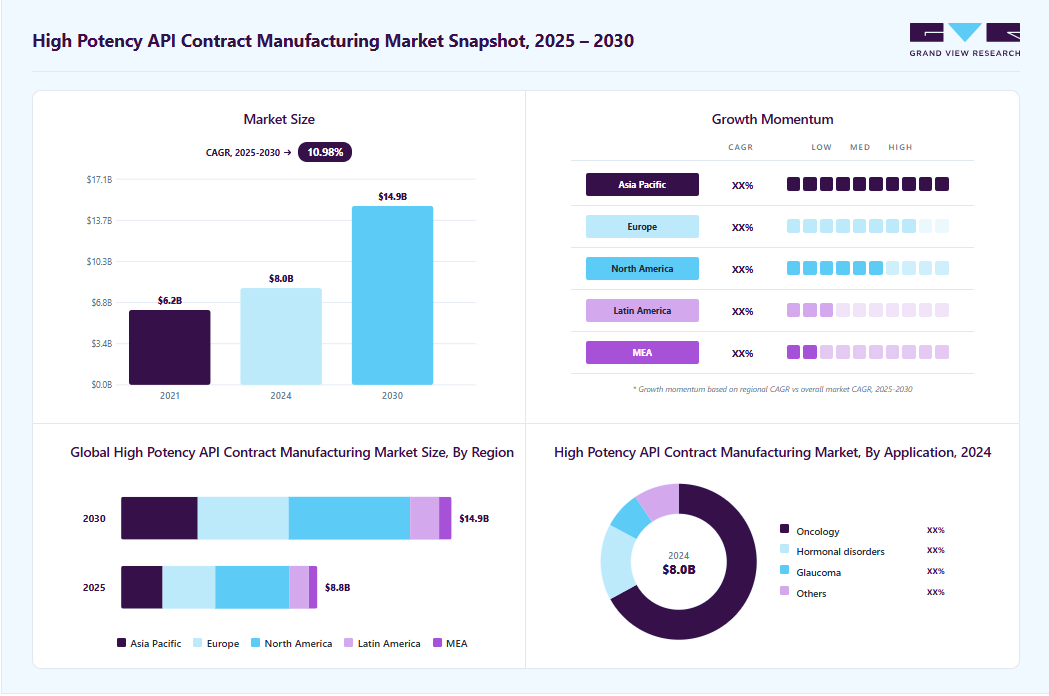
The global high potency API contract manufacturing market size was valued at USD 8.8 billion in 2025 and is projected to grow from USD 9.7 billion in 2026 to USD 21.2 billion by 2033, at a CAGR of 11.8% from 2026 to 2033. North America dominated the market, accounting for a revenue share of 37.8% in 2025. The high potency API contract manufacturing industry is witnessing sustained growth, supported by the increasing incidence of cancer and other chronic diseases, expansion of the oncology drug pipeline, rising clinical and commercial demand for antibody-drug conjugates (ADCs), growing outsourcing of complex manufacturing operations to specialized CDMOs, and continuous investments in high-containment manufacturing infrastructure.
 Source: Grand View Research, IR Documents, Primary Interviews, Paid DatabasesTo learn more about this report,
 Download Free Sample Report
 Key Market Trends & Insights
- By product: Innovative held the largest revenue share of 72.3% in 2025.
- By application: Oncology held the largest revenue share of 67.4% in 2025.
- By synthesis: Synthetic held the largest revenue share of 73.7% in 2025.
- By dosage form: Injectables held the largest revenue share of 51.9% in 2025.
Regional Highlights
- Largest regional market: North America (37.8% revenue share, 2025)
- Fastest-growing regional market: Asia Pacific (fastest CAGR, 2026-2033)
- By country: The U.S. is expected to grow significantly from 2026 to 2033
Market Size & Forecast
- Market size in 2025: USD 8.8 Billion
- Estimated market size in 2026: USD 9.7 Billion
- Projected market size in 2033: USD 21.2 Billion
- CAGR (2026-2033): 11.8%
Three ways to get this report
Buy it, customize it, or ask a question.Ask an Analyst
Analyst response in 1 business day
- AccessReport author, directly
- Reply timeWithin 1 working day
- No sales callDirect answer only
- FormatEmail reply
- CostFree, no cost
Get the Full Report
What the study covers
- FormatsPDF · Excel · Dashboard
- Timeline2026–2033 annual, 2025 base
- Coverage20+ countries, 5 regions
- Companies10+ key players profiled
Customize the Report
20% free customization
- IncludeCountries, segments, points
- TailorTo your product definition
- ExtendDeeper competitor detail
- OrA fully bespoke study
- Turnaround5–10 working days
The increasing complexity of highly potent molecules, stringent occupational safety requirements, and the need for regulatory-compliant manufacturing capabilities are further encouraging pharmaceutical and biotechnology companies to rely on specialized contract manufacturing partners rather than establishing in-house facilities. The expanding oncology and ADC pipeline remains a primary growth driver for the market. Highly potent APIs serve as essential payloads in targeted cancer therapies, particularly ADCs, which require advanced containment technologies, specialized process development expertise, and compliance with stringent GMP and occupational exposure standards.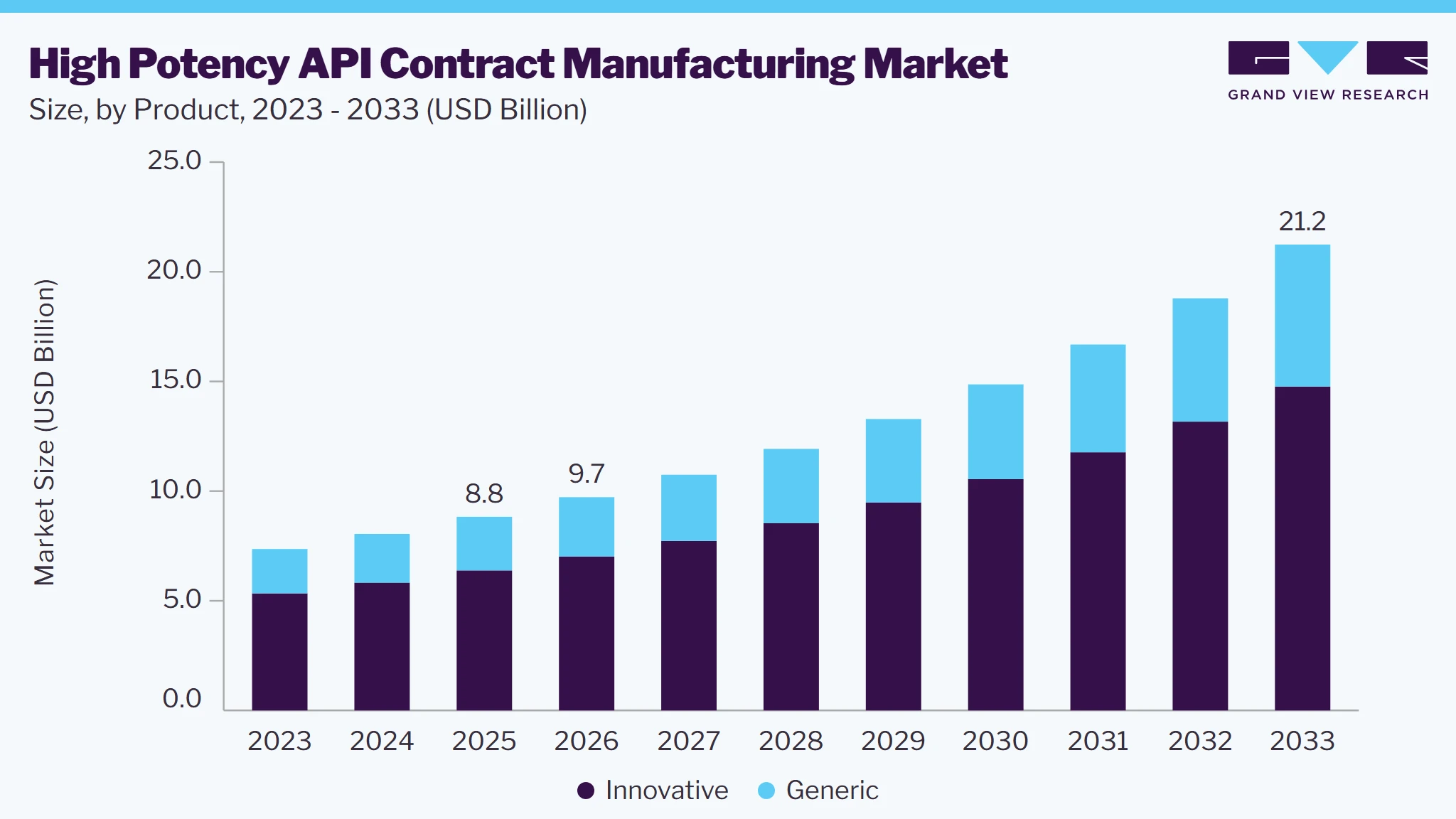 To learn more about this report, Download Free Sample Report
 The increasing number of oncology drug candidates advancing through clinical development is driving higher demand for commercial-scale HPAPI manufacturing capacity. This trend continues to drive capacity expansion across leading CDMOs. In June 2026, Lonza announced the expansion of its payload-linker manufacturing capabilities at its Visp, Switzerland, facility, adding commercial-scale capacity for highly potent APIs and ADC payload-linkers to address increasing global demand for targeted oncology therapeutics. The investment also includes dedicated analytical and process development laboratories to strengthen integrated HPAPI manufacturing services. Increasing outsourcing of HPAPI manufacturing is another significant factor supporting market growth. Construction and operation of HPAPI facilities require substantial capital investment in high-containment infrastructure, specialized engineering controls, environmental monitoring systems, and regulatory compliance. Therefore, pharmaceutical manufacturers partner with established CDMOs that possess proven containment capabilities, experienced technical teams, and global regulatory expertise, enabling accelerated development timelines while minimizing capital expenditure.
Similarly, strategic developments indicate continued investment in specialized HPAPI manufacturing infrastructure. For instance, in November 2025, Lupin Manufacturing Solutions commissioned a dedicated Oncology Block at its Vizag, India, facility to expand its contract development and manufacturing capabilities for high-potency APIs. The high-containment facility supports preclinical through commercial manufacturing of oncology products and is equipped with advanced containment systems and isolator technology to safely manufacture highly potent compounds.
Market Dynamics
Market growth is moderated by high capital requirements for containment facilities, lengthy qualification and regulatory approval processes, and the limited availability of a specialized workforce with expertise in the manufacturing of highly potent compounds. The continued commercialization of ADCs, expansion of precision oncology therapeutics, increasing outsourcing by emerging biotechnology companies, and ongoing investments in dedicated high-containment manufacturing facilities are expected to create significant long-term opportunities for HPAPI contract manufacturing service providers.
The increasing commercialization of oncology drugs and targeted therapeutics is a major driver of growth in the high potency API contract manufacturing market. The rising number of approved cancer therapies, antibody-drug conjugates (ADCs), kinase inhibitors, hormone therapies, and other highly potent pharmaceuticals is creating substantial demand for specialized API manufacturing capacity. As pharmaceutical companies advance products from clinical development to commercial production, they increasingly rely on contract manufacturers with expertise in high-containment manufacturing, technology transfer, process optimization, regulatory support, and commercial-scale production. Manufacturing HPAPIs requires specialized facilities equipped with isolators, containment systems, advanced air handling technologies, and stringent occupational safety measures, making outsourcing an attractive strategy, particularly for emerging biotechnology companies that lack dedicated infrastructure. The expanding global oncology pipeline, coupled with increasing patient access to targeted therapies, is encouraging contract manufacturers to invest in new high-containment manufacturing suites, advanced process technologies, and commercial production capabilities.
Manufacturing complexity and stringent regulatory requirements remain significant restraints for the high potency API contract manufacturing market. HPAPIs require highly specialized manufacturing environments with advanced containment systems to protect both personnel and products from cross-contamination and hazardous exposure. Facilities must comply with strict Good Manufacturing Practice (GMP) standards, occupational exposure limits, environmental monitoring requirements, and rigorous cleaning validation procedures, resulting in high capital and operating costs. In addition, process development for HPAPIs often involves complex synthetic routes, specialized analytical methods, and stringent quality control testing to ensure product safety and consistency. The limited availability of qualified high-containment manufacturing facilities and experienced technical personnel can lead to production bottlenecks, extended project timelines, and increased manufacturing costs. These challenges may limit outsourcing options for pharmaceutical companies and create barriers for smaller drug developers seeking commercial-scale manufacturing support.
The expanding pipeline of antibody-drug conjugates (ADCs), targeted cancer therapies, and next-generation high-potency pharmaceuticals presents significant opportunities for the high potency API contract manufacturing market. Increasing investments in precision medicine, oncology drug development, peptide-based therapeutics, and highly potent small molecules are generating sustained demand for specialized development and manufacturing services. Many emerging pharmaceutical and biotechnology companies lack the infrastructure and expertise required for safe HPAPI manufacturing, creating substantial outsourcing opportunities for contract manufacturers with advanced containment capabilities and regulatory experience. Growing research into novel oncology treatments, rare disease therapies, and hormone-based drugs is expected to increase demand for process development, analytical testing, scale-up, and commercial manufacturing services. Furthermore, the ongoing expansion of high-containment manufacturing infrastructure across North America, Europe, and the Asia Pacific, along with strategic investments in advanced production technologies and capacity expansion, is enabling contract manufacturers to strengthen their service offerings and support the growing commercialization of high-potency pharmaceuticals worldwide.
Market Concentration & Characteristics
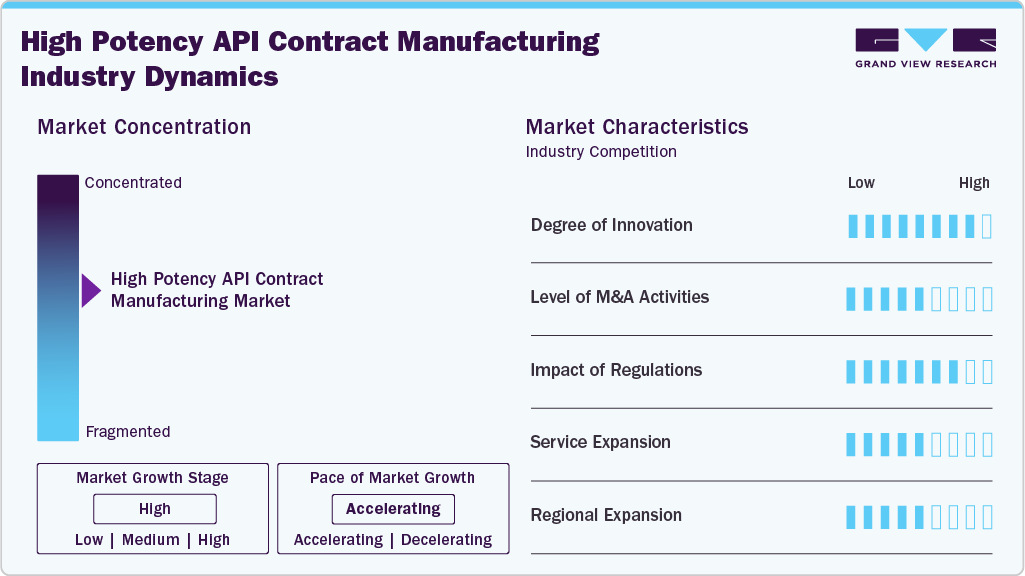
The high potency API contract manufacturing industry’s growth stage is high, and the pace of growth is accelerating. The market is characterized by the degree of innovation, level of M&A activities, regulatory impact, service expansion, and regional expansion.
Innovation remains a critical competitive factor in the high potency API contract manufacturing market, with contract manufacturers investing in advanced high-containment technologies, continuous manufacturing, process analytical technology (PAT), automation, and digital manufacturing platforms. Increasing demand for highly potent oncology therapies, antibody-drug conjugates (ADCs), and other targeted medicines is driving the adoption of sophisticated manufacturing and analytical capabilities that enhance process efficiency, product quality, and occupational safety. Continuous technological advancements enable manufacturers to improve production scalability, accelerate project timelines, and strengthen regulatory compliance.
 To learn more about this report, Download Free Sample Report
 Mergers and acquisitions continue to influence the high potency API contract manufacturing industry by expanding manufacturing capacity, strengthening high-containment capabilities, and broadening integrated service offerings. Strategic acquisitions allow CDMOs to enhance expertise in HPAPI process development, analytical services, sterile manufacturing, and ADC production while extending their global manufacturing footprint. These transactions also improve operational scale, diversify customer portfolios, and reinforce competitive positioning in the expanding pharmaceutical outsourcing market.
Regulatory compliance remains a major factor shaping the market. Manufacturers are required to comply with current Good Manufacturing Practices (cGMP), International Council for Harmonisation (ICH) guidelines, occupational exposure limit (OEL) standards, environmental health and safety regulations, and requirements established by global regulatory agencies. Compliance with stringent quality, containment, validation, and documentation standards increases operational complexity while creating competitive advantages for manufacturers with established regulatory expertise and advanced quality management systems.
High potency API contract manufacturers are expanding their service portfolios to provide integrated development and manufacturing solutions across the pharmaceutical product lifecycle. Many CDMOs now offer process development, route scouting, analytical method development, process optimization, scale-up, commercial API manufacturing, technology transfer, and regulatory support through a single platform. Integrated service offerings improve operational efficiency, simplify vendor management, and enable pharmaceutical and biotechnology companies to accelerate product development and commercialization.
Regional expansion continues to strengthen the global presence of High Potency API contract manufacturers. Companies are establishing new high-containment manufacturing facilities and expanding existing production sites across North America, Europe, and Asia Pacific to address growing demand for oncology therapeutics and targeted medicines. Geographic expansion improves manufacturing flexibility, enhances supply chain resilience, supports regional regulatory compliance, and enables contract manufacturers to serve global pharmaceutical and biotechnology customers more effectively.
Analyst Perspective
The high potency API contract manufacturing market is experiencing robust growth driven by the expanding pipeline of highly potent pharmaceuticals, increasing oncology drug development, and rising outsourcing activities among pharmaceutical and biotechnology companies. From a cross-sectional perspective, the growing adoption of targeted therapies, antibody-drug conjugates (ADCs), hormone therapies, peptide-based drugs, and other high-potency medicines is accelerating demand for specialized contract manufacturing services, including process development, custom synthesis, analytical testing, scale-up, validation, and commercial API production. The complexity of manufacturing highly potent active pharmaceutical ingredients, combined with stringent occupational safety and regulatory requirements, is prompting drug developers to partner with experienced contract manufacturers with advanced high-containment infrastructure and regulatory expertise.
Simultaneously, increasingly stringent regulatory expectations related to product quality, contamination control, environmental health and safety, and Good Manufacturing Practice (GMP) compliance are driving investments in high-containment manufacturing technologies, process automation, continuous manufacturing, advanced analytical platforms, and digital quality management systems. The growing commercialization of oncology drugs, expanding clinical pipelines for precision medicines, and increasing demand for antibody-drug conjugates are further strengthening the need for scalable and compliant HPAPI manufacturing capacity. Additionally, ongoing investments in facility expansion across North America, Europe, and the Asia Pacific are enhancing global manufacturing capabilities and supporting increasing outsourcing demand. Companies with advanced containment technologies, integrated development-to-commercial manufacturing services, strong regulatory compliance records, and global production networks are expected to strengthen their competitive position and capture a larger share of the expanding market. Such factors are expected to drive market growth.
Impact of U.S. Tariffs on the Global High Potency API Contract Manufacturing Market
The imposition of U.S. tariffs on imported pharmaceutical intermediates, specialty chemicals, laboratory equipment, containment systems, and process instrumentation has increased capital and operating costs across the high potency API (HPAPI) contract manufacturing industry. Higher prices for high-containment isolators, reactor systems, filtration equipment, analytical instruments, and critical raw materials have elevated investment requirements for new HPAPI facilities and capacity expansions. Contract manufacturers that depend on imported intermediates, solvents, and engineering components have also experienced procurement delays and supply chain disruptions, affecting production schedules and project timelines.
Pharmaceutical and biotechnology companies may face higher outsourcing costs for HPAPI development and commercial manufacturing, particularly for oncology products and antibody-drug conjugate (ADC) payloads that require specialized containment infrastructure and highly controlled production environments. Some CDMOs have responded by diversifying supplier networks, increasing local sourcing of intermediates and consumables, and strengthening inventory management to reduce supply risk. Equipment manufacturers and engineering service providers have also expanded regional manufacturing, assembly, and servicing capabilities to mitigate tariff-related cost pressures and improve supply continuity.
Demand for HPAPI contract manufacturing services remains strong, supported by expanding oncology pipelines, increasing commercialization of ADCs, and continued outsourcing by pharmaceutical and biotechnology companies seeking access to specialized containment expertise. Long-term outsourcing agreements, strategic capacity reservations, and investments in domestic manufacturing infrastructure are expected to partially offset the impact of higher input costs. Consequently, the development of localized supply chains, regional HPAPI manufacturing hubs, and additional high-containment capacity is likely to improve industry resilience while supporting sustained market growth.
Technological Advancements
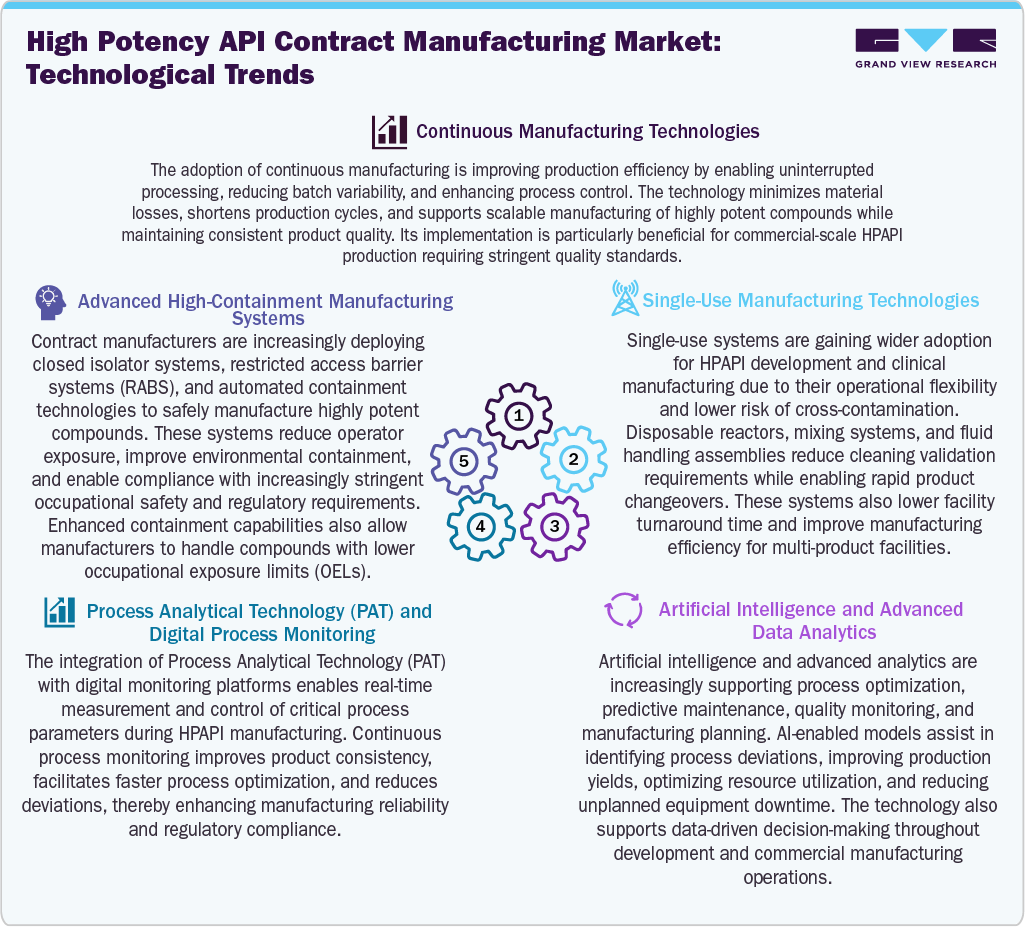
Technological advancements continue to redefine the operational capabilities of high potency API contract manufacturers by improving manufacturing efficiency, product quality, regulatory compliance, and workplace safety. Investments in digital manufacturing platforms, advanced containment technologies, and automated production systems are enabling service providers to support increasingly complex, highly potent molecules across clinical and commercial stages. The growing adoption of continuous manufacturing and real-time process monitoring is strengthening process robustness while reducing production variability and operational inefficiencies. Single-use technologies provide greater manufacturing flexibility, particularly for facilities handling multiple products and smaller commercial batches.
 To learn more about this report, Download Free Sample Report
 The increasing complexity of oncology therapeutics, antibody-drug conjugates, and other targeted medicines is accelerating demand for advanced manufacturing technologies capable of supporting highly contained operations with consistent product quality. Contract manufacturers continue to modernize production infrastructure through automation, digital quality systems, and integrated analytical capabilities to enhance operational performance and meet evolving regulatory expectations. These technological developments are improving manufacturing productivity, shortening project timelines, strengthening supply chain reliability, and expanding commercial manufacturing capacity. Continued investments in next-generation manufacturing technologies are expected to reinforce the competitive position of specialized HPAPI contract manufacturers while supporting the long-term expansion of the global market.
Pricing Model Analysis
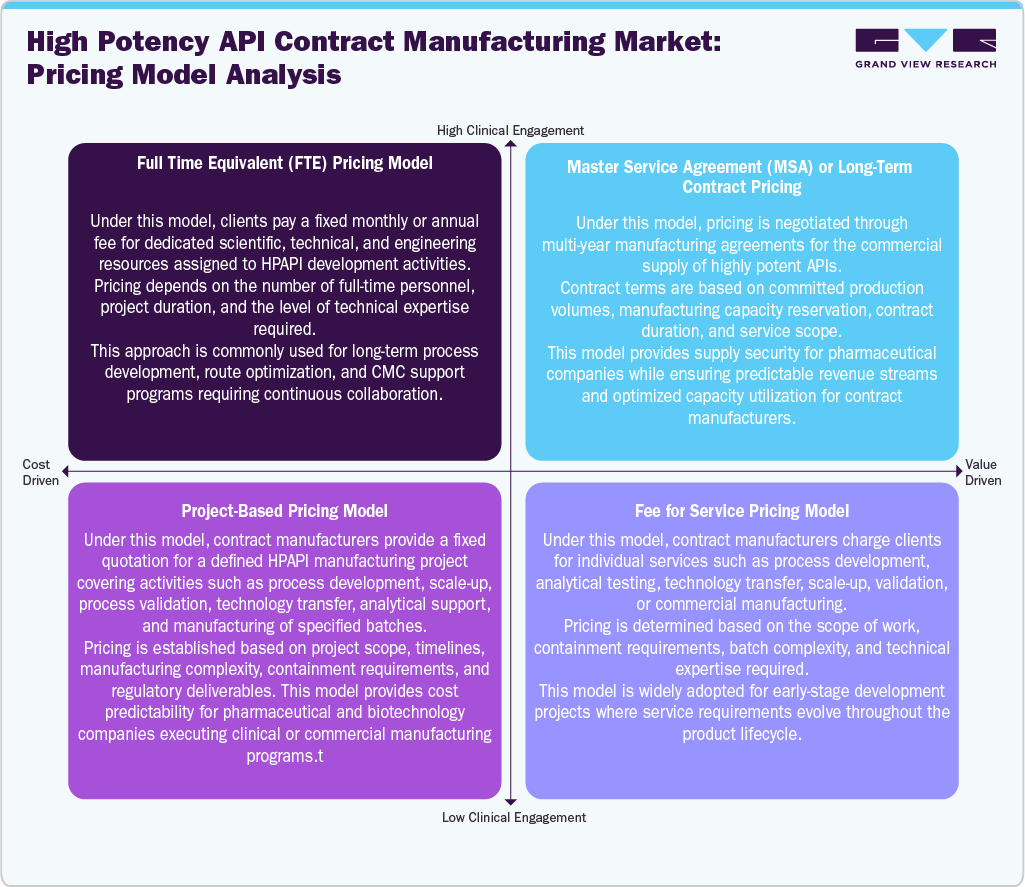
Pricing strategies in the high potency API contract manufacturing market are structured to accommodate varying project scopes, development stages, and commercial manufacturing requirements. Service providers employ multiple pricing approaches based on technical complexity, production scale, containment requirements, and contractual commitments. Early-stage programs generally use flexible pricing structures that align with evolving development activities, whereas commercial manufacturing engagements are supported by long-term contractual agreements that provide greater cost stability. Dedicated resource-based pricing is commonly used for projects that require continuous process development and technical support over extended periods. Fixed-price models remain suitable for projects with clearly defined deliverables and regulatory milestones, enabling improved budget planning for clients.
 To learn more about this report, Download Free Sample Report
 Pricing also reflects factors such as batch size, occupational exposure limits, specialized infrastructure, analytical support, validation activities, and compliance with global regulatory standards. Manufacturing highly potent compounds requires significant investments in containment technologies, advanced process controls, and a specialized workforce, which contributes to premium service pricing. Volume commitments, production frequency, and capacity utilization further influence commercial contract negotiations. Increasing demand for oncology therapeutics and antibody-drug conjugates has strengthened the adoption of long-term manufacturing partnerships between pharmaceutical companies and CDMOs. As outsourcing activities continue to expand, pricing models are becoming increasingly structured to balance operational efficiency, manufacturing flexibility, and supply assurance while supporting sustainable revenue generation across the HPAPI contract manufacturing value chain.
Product Insights
The innovative segment led the high-potency API contract manufacturing market, accounting for the largest revenue share of 72.3% in 2025. This is attributed to the increasing development and commercialization of novel oncology therapies, including antibody-drug conjugates (ADCs) and targeted medicines that require highly potent active ingredients. Pharmaceutical companies increasingly outsource the manufacturing of innovative HPAPIs due to the need for specialized containment infrastructure, technical expertise, and regulatory compliance. Growing investments in precision medicine and biologics further support demand for contract manufacturing of innovative molecules.
The generic segment is projected to register the fastest CAGR during the forecast period. Patent expirations of high-value oncology products and increasing demand for affordable cancer therapies are driving the development of generic highly potent APIs. Generic pharmaceutical manufacturers are increasingly outsourcing production to specialized CDMOs to reduce capital investment and accelerate market entry. Expansion of healthcare access in emerging economies is expected to further support segment growth.
Application Insights
The oncology segment led the high potency API contract manufacturing industry, accounting for the largest revenue share of 67.4% in 2025, owing to the extensive use of highly potent APIs in cancer therapeutics. Rising global cancer incidence, expanding oncology drug pipelines, and increasing commercialization of targeted therapies and ADCs continue to drive demand for HPAPI manufacturing. Stringent containment requirements and manufacturing complexity encourage pharmaceutical companies to partner with specialized contract manufacturers. Continuous investment in oncology drug development is expected to sustain the segment's growth.
The glaucoma segment is anticipated to witness the fastest growth during the forecast period. The increasing prevalence of glaucoma, particularly among the aging population, is driving demand for potent ophthalmic therapeutics. Several glaucoma medications utilize highly potent APIs requiring specialized manufacturing capabilities to ensure product quality and safety. Growing awareness, improved diagnosis rates, and expanding treatment accessibility are expected to contribute to continued segment growth.
Synthesis Insights
The synthetic segment led the market with the largest revenue share of 73.7% in 2025. Most commercially available highly potent APIs, particularly small-molecule oncology drugs, are manufactured through synthetic chemical processes. Established manufacturing technologies, scalable production processes, and broad therapeutic applications contribute to the segment's leading market position. The continuous development of novel small-molecule targeted therapies further supports the demand for synthetic HPAPI manufacturing.
The biotech segment is expected to register the fastest CAGR during the forecast period. Rapid growth in biologics, antibody-drug conjugates, peptide therapeutics, and recombinant technologies is increasing the demand for highly potent, biologically derived APIs. Pharmaceutical companies are expanding investments in advanced biologics and precision medicines, creating significant opportunities for specialized biotech manufacturing capabilities. Continued technological advancements are expected to accelerate segment growth.
Dosage Form Insights
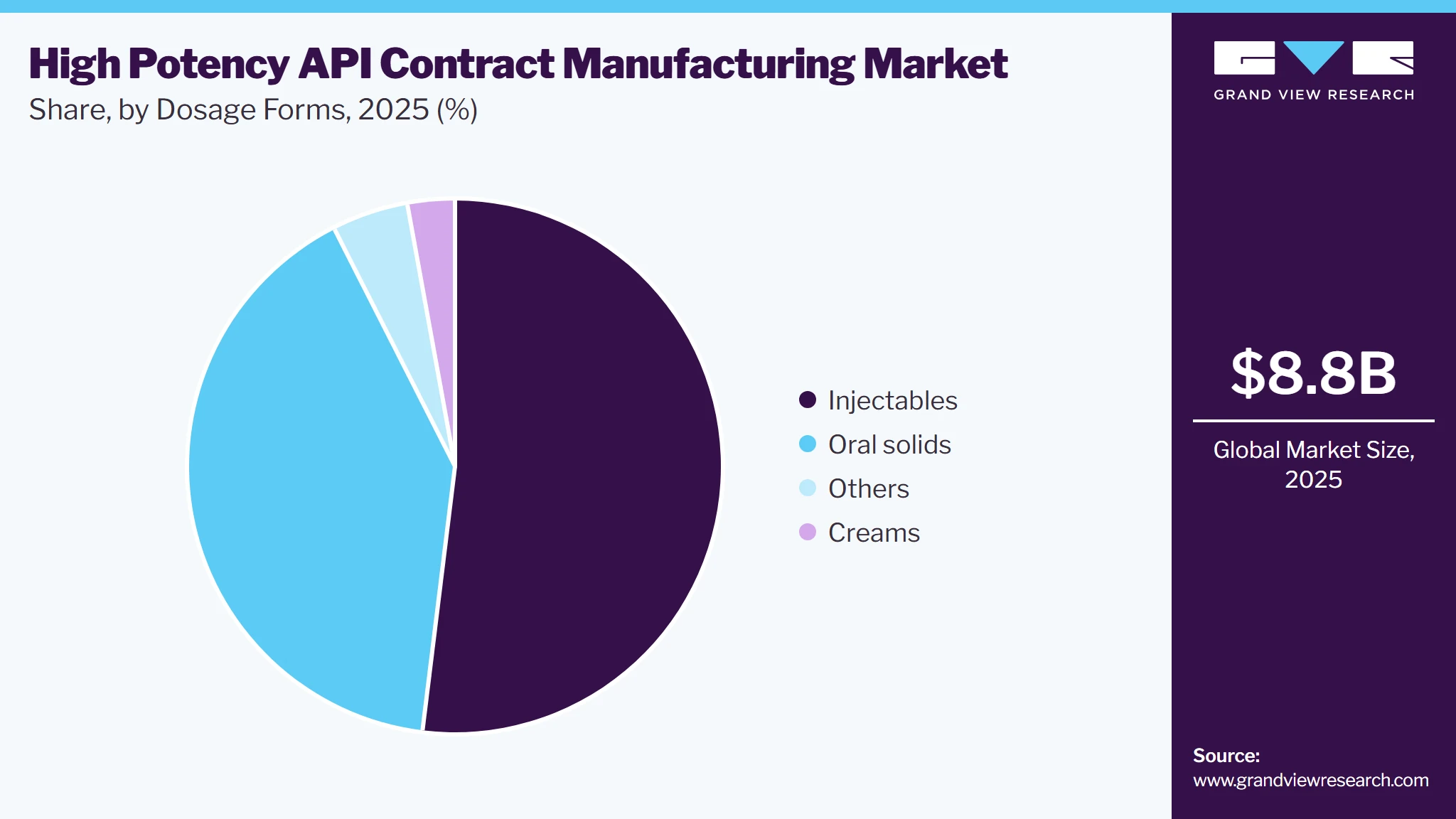
The injectables segment led the high potency API contract manufacturing industry, with the largest revenue share of 51.9% in 2025. The majority of oncology drugs, antibody-drug conjugates, and biologics containing highly potent APIs are administered through injectable formulations due to their superior bioavailability and therapeutic efficacy. Manufacturing injectable products requires stringent aseptic processing and high-containment capabilities, driving outsourcing to specialized contract manufacturers. Increasing commercialization of injectable targeted therapies continues to support segment growth.
 To learn more about this report, Download Free Sample Report
 The oral solids segment is projected to witness the fastest growth over the forecast period. Rising adoption of targeted oral oncology therapies and kinase inhibitors is increasing demand for highly potent APIs formulated as tablets and capsules. Oral formulations improve patient convenience, treatment adherence, and outpatient care, contributing to wider clinical adoption. Growing product approvals and expanding oncology pipelines are expected to drive continued growth in this segment.
Regional Insights
North America dominated the high-potency API contract manufacturing market with the largest revenue share of 37.8% in 2025. The region benefits from a well-established pharmaceutical and biotechnology industry, a strong oncology drug development pipeline, and the presence of leading global CDMOs with advanced high-containment manufacturing capabilities. The increasing development of antibody-drug conjugates, targeted therapies, and other highly potent medicines continues to drive demand for specialized HPAPI manufacturing services. Ongoing investments in commercial manufacturing capacity, technological advancements, and strategic outsourcing by pharmaceutical companies are expected to sustain market growth throughout the forecast period.
 To learn more about this report, Download Free Sample Report
 U.S. High Potency API Contract Manufacturing Market Trends
The U.S. high potency API contract manufacturing industry held the largest share of North America in 2025. Market growth is driven by extensive pharmaceutical research and development activities, increasing commercialization of oncology therapeutics, and strong demand for antibody-drug conjugates and precision medicines. The presence of leading CDMOs, continuous investments in high-containment manufacturing facilities, and growing outsourcing by pharmaceutical and biotechnology companies are strengthening the country's leadership in HPAPI contract manufacturing. Continued expansion of commercial production capacity and adoption of advanced manufacturing technologies are expected to support long-term market growth.
The Canada high potency API contract manufacturing market is expected to grow at a significant CAGR during the forecast period. Market growth is supported by increasing pharmaceutical research activity, expanding oncology drug development, and government initiatives that promote life sciences and biopharmaceutical innovation. Rising investments in precision medicine, biologics, and antibody-drug conjugates (ADCs) are driving demand for specialized high-containment manufacturing capabilities. Furthermore, Canada's skilled scientific workforce, robust regulatory framework, and expanding pharmaceutical manufacturing infrastructure continue to attract outsourcing from global pharmaceutical and biotechnology companies. Ongoing investments in advanced manufacturing technologies and cGMP-compliant facilities are expected to support market expansion throughout the forecast period.
Europe High Potency API Contract Manufacturing Market Trends
The Europe high potency API contract manufacturing industry is experiencing steady growth, supported by a well-established pharmaceutical industry, increasing development of oncology therapeutics, and stringent regulatory standards governing pharmaceutical manufacturing. Growing investments in antibody-drug conjugates, targeted therapies, and other highly potent medicines are increasing demand for specialized HPAPI process development and commercial manufacturing services. The region benefits from the presence of leading CDMOs, advanced high-containment manufacturing infrastructure, and strong pharmaceutical innovation. Continued investments in dedicated HPAPI production facilities and increasing outsourcing by pharmaceutical companies are expected to support market growth over the forecast period.
The high-potency API contract manufacturing market in Germany held a significant share of Europe in 2025. The country benefits from a strong pharmaceutical manufacturing base, advanced high-containment production capabilities, and significant investments in oncology therapeutics and highly potent compounds. Increasing outsourcing of complex API manufacturing, expanding commercial production of targeted therapies, and continued investments by global CDMOs are supporting market growth. Strong regulatory compliance and advanced manufacturing technologies are expected to further strengthen Germany's position during the forecast period.
The UK high-potency API contract manufacturing market is expected to grow significantly over the forecast period.Market expansion is supported by a strong biotechnology ecosystem, increasing clinical development of oncology therapies, and the presence of leading pharmaceutical companies and contract manufacturing organizations. Rising investments in antibody-drug conjugates, precision medicines, and advanced therapeutics are increasing demand for specialized HPAPI development and manufacturing services. In addition, continued government support for the life sciences, the expansion of high-containment manufacturing facilities, and increased outsourcing by global pharmaceutical companies are expected to contribute to sustained market growth.
Asia Pacific High Potency API Contract Manufacturing Market Trends
The Asia Pacific high potency API contract manufacturing industry is expected to grow at a significant CAGR over the forecast period. Market growth is supported by expanding pharmaceutical and biotechnology industries, increasing investment in oncology drug development, improving manufacturing infrastructure, and favorable government initiatives that promote pharmaceutical innovation. The growing outsourcing of HPAPI manufacturing to countries with cost-effective production capabilities, skilled technical personnel, and regulatory-compliant facilities is driving regional demand. In addition, increasing production of targeted therapies, antibody-drug conjugates, and other highly potent medicines is accelerating investments in dedicated high-containment manufacturing infrastructure. Continued expansion of commercial manufacturing capacity and technology adoption is expected to support long-term regional growth.
The high potency API contract manufacturing market in China is witnessing strong growth due to expanding pharmaceutical manufacturing, increasing biotechnology research, and rising outsourcing by multinational pharmaceutical companies. Government initiatives supporting pharmaceutical innovation, improvements in regulatory standards, and growing investments in oncology therapeutics and highly potent compounds are strengthening demand for HPAPI manufacturing services. Furthermore, the continuous expansion of cGMP-compliant high-containment facilities and the presence of a large domestic pharmaceutical industry are reinforcing China's position as a major HPAPI manufacturing hub in Asia Pacific.
The high potency API contract manufacturing market in Japan is supported by a mature pharmaceutical industry, advanced manufacturing capabilities, and substantial investments in innovative drug development. Increasing development of oncology therapeutics, precision medicines, and antibody-drug conjugates is generating sustained demand for specialized HPAPI process development and commercial manufacturing services. Strict regulatory standards, advanced manufacturing technologies, and continued investments in pharmaceutical production infrastructure are expected to support stable market growth during the forecast period.
The India high potency API contract manufacturing market is experiencing rapid growth, driven by expanding pharmaceutical manufacturing, increasing contract development and manufacturing activities, and a large pool of technically skilled professionals. Rising production of oncology drugs, targeted therapies, and complex generic pharmaceuticals is driving demand for specialized HPAPI manufacturing services. In addition, government initiatives supporting domestic pharmaceutical production, increased investment in high-containment manufacturing facilities, and growing outsourcing by global pharmaceutical and biotechnology companies are expected to sustain market growth throughout the forecast period.
Latin America High Potency API Contract Manufacturing Market Trends
The Latin America high potency API contract manufacturing industry is expected to witness steady growth during the forecast period. Market expansion is supported by the growing pharmaceutical manufacturing sector, increasing investments in oncology therapeutics, and rising outsourcing of API production by multinational pharmaceutical companies. Improvements in regulatory frameworks, expanding cGMP-compliant manufacturing infrastructure, and increasing demand for specialty pharmaceuticals are creating opportunities for HPAPI contract manufacturers. Continued investments in pharmaceutical production capabilities and regional supply chain development are expected to support long-term market growth.
The Brazil high-potency API contract manufacturing market accounted for the largest share of Latin America in 2025. The country's large pharmaceutical industry, expanding domestic drug manufacturing capabilities, and increasing investment in oncology medicines are supporting demand for HPAPI manufacturing services. Growing pharmaceutical outsourcing, government initiatives promoting local pharmaceutical production, and modernization of manufacturing facilities are strengthening Brazil's position as a regional contract manufacturing hub. Increasing adoption of high-containment production technologies is expected to further support market expansion during the forecast period.
Middle East & Africa High Potency API Contract Manufacturing Market Trends
The Middle East & Africa high potency API contract manufacturing industry is projected to register moderate growth during the forecast period. Market growth is supported by rising investment in pharmaceutical manufacturing, expanding healthcare infrastructure, and government initiatives to strengthen domestic drug production. Rising demand for oncology therapies, improving regulatory frameworks, and increasing collaboration between regional and international pharmaceutical companies are contributing to the development of HPAPI manufacturing capabilities. Expansion of pharmaceutical industrial zones and local manufacturing capacity is expected to support sustained market growth.
The UAE High Potency API Contract Manufacturing market is experiencing steady growth due to increasing investments in pharmaceutical manufacturing and life sciences infrastructure. Government initiatives aimed at promoting local pharmaceutical production and reducing import dependence are encouraging the establishment of advanced manufacturing facilities. Growing partnerships between multinational pharmaceutical companies and regional manufacturers, along with the expansion of pharmaceutical free zones and industrial parks, are expected to strengthen the country's position as a pharmaceutical manufacturing hub in the Middle East.
Key High Potency API Contract Manufacturing Company Insights
The key players operating across the market are adopting strategic initiatives such as service launches, mergers & acquisitions, partnerships & agreements, and expansions to gain a competitive edge in the market. For instance, in June 2025, Axplora announced a ~USD 40 million (EUR 30 million) expansion of its Farmabios facility in Gropello Cairoli, Italy, to strengthen its High Potency API (HPAPI) manufacturing capabilities. The investment will more than double the site's footprint by expanding its dedicated HPAPI production building, enhancing containment capabilities, and increasing manufacturing capacity for highly potent compounds used in oncology and targeted therapies.
Key High Potency API Contract Manufacturing Companies
The following key companies have been profiled for this study on the high potency API contract manufacturing market.
-
Piramal Pharma Solutions
-
Lonza
-
Catalent, Inc.
-
VxP Pharma, Inc.
-
Pfizer CentreOne
-
Gentec Pharmaceutical Group
-
AbbVie
-
Aurigene Pharmaceutical Services Ltd.
-
CordenPharma International
-
Curia Global, Inc.
Competitive Benchmarking
Operating Strategies
Competitive Edge
Weaknesses
Established Players (Lonza Group, CordenPharma, Almac Group)
- Mature players in the market focus on expanding high-containment manufacturing capacity for highly potent active pharmaceutical ingredients (HPAPIs), including oncology APIs, ADC payloads, hormones, peptides, and other specialty compounds.
- These companies offer integrated services covering process development, custom synthesis, analytical method development, scale-up, GMP manufacturing, process validation, regulatory support, and commercial production.
- Established players benefit from extensive global manufacturing networks, advanced high-containment infrastructure, and proven expertise in handling complex HPAPIs.
- Their ability to support projects from early development through commercial manufacturing, combined with strong regulatory compliance, advanced quality systems, and broad technology platforms, enables them to secure large, long-term manufacturing contracts.
- Established players face challenges related to high capital requirements for containment facilities, rising operating costs, and the need for ongoing investments in environmental, health, and safety (EHS) compliance.
- Large organizational structures may also reduce operational flexibility and increase project onboarding timelines compared with smaller specialized manufacturers.
Emerging Players (Piramal Pharma Solutions)
- Emerging players primarily focus on niche capabilities in high-potency API synthesis, antibody-drug conjugate (ADC) payload manufacturing, peptide APIs, and small-scale clinical manufacturing.
- Many invest in modular high-containment facilities, flexible manufacturing platforms, and specialized process development capabilities. Strategic collaborations with biotechnology companies, targeted capacity expansions, and investments in advanced containment technologies help strengthen their market presence.
- Emerging players gain competitive advantages through specialized expertise, flexible manufacturing operations, and customized customer engagement.
- Their focused capabilities in handling highly potent compounds, rapid technology transfer, and shorter project timelines enable them to serve emerging pharmaceutical and biotechnology companies efficiently. Modern facilities equipped with the latest containment technologies also improve manufacturing efficiency and regulatory compliance.
- Emerging players often face limitations in commercial-scale manufacturing capacity, global market reach, and financial resources. Many have limited experience managing large commercial supply programs across multiple regulatory jurisdictions.
- Dependence on a smaller client base, ongoing capital requirements for containment infrastructure, and increasing competition from well-established CDMOs may restrict long-term growth and market expansion.
Recent Developments
-
In February 2025, SK Pharmteco launched a state-of-the-art cGMP analytical laboratory dedicated to High Potency APIs (HPAPIs) at its Rancho Cordova, California, facility. The investment enhances the company's integrated HPAPI contract development and manufacturing services by strengthening analytical support for process development, quality control, method validation, and commercial manufacturing of highly potent compounds, including oncology therapies and antibody-drug conjugate (ADC) payloads.
-
In January 2025, AGC Pharma Chemicals announced the expansion of its High Potency API (HPAPI) manufacturing capabilities at its Barcelona, Spain, facility. The investment establishes an integrated OEB5-compliant manufacturing platform spanning process development through commercial production, including a new R&D laboratory, IPC/QC laboratories, and a dedicated HPAPI manufacturing unit. The expansion enables seamless scale-up of highly potent compounds from gram quantities to commercial-scale production, strengthening the company's HPAPI contract manufacturing capabilities.
High Potency API Contract Manufacturing Market Report Scope
Report Attribute
Details
Market size in 2025
USD 8.8 billion
Estimated market size in 2026
USD 9.7 billion
Projected market size by 2033
USD 21.2 billion
Growth rate
CAGR of 11.8% from 2025 to 2033
Actual data
2021 - 2025
Forecast period
2026 - 2033
Quantitative units
Revenue in USD million/billion and CAGR from 2026 to 2033
Report coverage
Revenue forecast, company ranking, competitive landscape, growth factors, and trends
Segments covered
Product, application, synthesis, dosage form, region
Regional scope
North America; Europe; Asia Pacific; Latin America; MEA
Country scope
U.S.; Canada; Mexico; Germany; UK; France; Italy; Spain; Norway; Denmark; Sweden; China; Japan; India; South Korea; Australia; Thailand; Brazil; Argentina; Saudi Arabia; South Africa; UAE; Kuwait; Oman; Qatar
Key companies profiled
Piramal Pharma Solutions; Lonza; Catalent, Inc.; VxP Pharma, Inc.; Pfizer CentreOne; Gentec Pharmaceutical Group; AbbVie; Aurigene Pharmaceutical Services Ltd.; CordenPharma International; Curia Global, Inc.
Customization scope
Free report customization (equivalent up to 8 analysts working days) with purchase. Addition or alteration to country, regional & segment scope.
Pricing and purchase options
Avail customized purchase options to meet your exact research needs. Explore purchase options
Global High Potency API Contract Manufacturing Market Report Segmentation
This report forecasts revenue growth at the global, regional & country levels and provides an analysis of the latest industry trends in each of the sub-segments from 2021 to 2033. For this study, Grand View Research has segmented the global high potency API contract manufacturing market report based on product, application, synthesis, dosage form, and region:
-
Product Outlook (Revenue, USD Million/Billion, 2021 - 2033)
-
Innovative
-
Generic
-
-
Application Outlook (Revenue, USD Million/Billion, 2021 - 2033)
-
Oncology
-
Hormonal Disorders
-
Glaucoma
-
Others
-
-
Synthesis Outlook (Revenue, USD Million/Billion, 2021 - 2033)
-
Synthetic
-
Biotech
-
-
Dosage Form Outlook (Revenue, USD Million/Billion, 2021 - 2033)
-
Injectable
-
Oral Solids
-
Creams
-
Others
-
-
Regional Outlook (Revenue, USD Million/Billion, 2021 - 2033)
-
North America
-
U.S.
-
Canada
-
Mexico
-
-
Europe
-
UK
-
Germany
-
France
-
Italy
-
Spain
-
Denmark
-
Sweden
-
Norway
-
-
Asia Pacific
-
Japan
-
China
-
India
-
Australia
-
Thailand
-
South Korea
-
-
Latin America
-
Brazil
-
Argentina
-
-
Middle East & Africa
-
South Africa
-
UAE
-
Saudi Arabia
-
Kuwait
-
Qatar
-
Oman
-
-
Research Methodology
The high potency API contract manufacturing market figures in this report are based on a proven research process that combines executive interviews with secondary research from proprietary databases, company filings, and recognized regulatory and institutional sources. Market size is built through value-chain sizing-reconciling supply-side and demand-side estimates-and triangulated with bottom-up and top-down approaches. Every estimate passes multiple levels of expert validation before publication, with each high potency API contract manufacturing segment quantified using the revenue-capture definitions in the table below.
Segment Definition
Segment - Product
Revenue capture definition
Innovative
The segment captures revenue generated by contract manufacturing services provided for innovative high potency active pharmaceutical ingredients (HPAPIs) developed for novel drug candidates. Services include process development, route optimization, analytical method development, pilot-scale manufacturing, process validation, commercial API production, and regulatory support for patented pharmaceuticals, particularly in oncology, hormonal therapies, and targeted therapeutics.
Generic
The segment captures revenue generated by contract manufacturing services provided for generic high potency active pharmaceutical ingredients following patent expiration of branded drugs. Services include process optimization, cost-efficient API manufacturing, analytical testing, scale-up, validation, regulatory compliance, and commercial production to support the development and commercialization of generic high-potency pharmaceutical products.
Segment - Application
Revenue capture definition
Oncology
The segment captures revenue generated by contract manufacturing services provided for high potency active pharmaceutical ingredients used in oncology therapies. Services include process development, API synthesis, analytical testing, scale-up, validation, and commercial manufacturing for cytotoxic drugs, targeted therapies, antibody-drug conjugate (ADC) payloads, kinase inhibitors, and other anticancer medications.
Hormonal Disorders
The segment captures revenue generated by contract manufacturing services provided for high potency active pharmaceutical ingredients used in the treatment of hormonal and endocrine disorders. Services include process optimization, high-containment API manufacturing, analytical testing, validation, and commercial production for steroid hormones, reproductive health drugs, and endocrine therapies.
Glaucoma
The segment captures revenue generated by contract manufacturing services provided for high potency active pharmaceutical ingredients used in glaucoma treatment. Services include API synthesis, process development, analytical characterization, GMP manufacturing, and commercial production for ophthalmic drugs designed to reduce intraocular pressure and manage glaucoma.
Others
The segment captures revenue generated by contract manufacturing services provided for high potency active pharmaceutical ingredients used across other therapeutic applications, including cardiovascular diseases, central nervous system disorders, respiratory diseases, autoimmune disorders, infectious diseases, dermatology, and rare diseases. Services include process development, analytical testing, scale-up, validation, and commercial API manufacturing.
Segment - Synthesis
Revenue capture definition
Synthetic
The segment captures revenue generated by contract manufacturing services provided for chemically synthesized high potency active pharmaceutical ingredients. Services include custom chemical synthesis, process development, route optimization, impurity profiling, analytical testing, scale-up, validation, and commercial manufacturing in highly contained production facilities.
Biotech
The segment captures revenue generated by contract manufacturing services provided for biologically derived high potency active pharmaceutical ingredients. Services include microbial fermentation, mammalian cell culture, peptide and oligonucleotide manufacturing, purification, analytical characterization, process development, and commercial-scale production under GMP conditions.
Segment - Dosage Form
Revenue capture definition
Injectable
The segment captures revenue generated by contract manufacturing services for high potency APIs intended for injectable dosage forms. Services include API manufacturing to support sterile formulations such as intravenous, subcutaneous, intramuscular, and other parenteral products, particularly for oncology, biologics, and specialty pharmaceuticals requiring high potency compounds.
Oral Solids
The segment captures revenue generated by contract manufacturing services for high potency APIs intended for oral solid dosage forms, including tablets, capsules, and powders. Services include API synthesis, process optimization, analytical testing, and commercial manufacturing to support the production of oral pharmaceutical products.
Creams
The segment captures revenue generated by contract manufacturing services for high potency APIs intended for topical cream formulations. Services include API production for dermatological and hormone-based topical therapies, supported by process development, quality testing, validation, and commercial manufacturing.
Others
The segment captures revenue generated by contract manufacturing services for high potency APIs intended for other dosage forms, including ointments, gels, transdermal patches, ophthalmic formulations, inhalation products, suspensions, and liquid formulations. Services include API manufacturing, process development, analytical testing, validation, and commercial production to support diverse pharmaceutical delivery systems.
Estimation Model
Layer Name
Description
Bottom-Up Revenue Model
Market size is estimated by identifying major and emerging HPAPI contract manufacturers that provide custom synthesis, process development, analytical services, clinical API manufacturing, and commercial-scale production for highly potent compounds.
Revenue attributable to HPAPI contract manufacturing is derived from annual reports, investor presentations, regulatory filings, manufacturing site disclosures, customer announcements, and management commentary.
Company-level HPAPI revenues are aggregated and validated by comparing manufacturing footprint, containment capabilities, customer mix, and industry benchmarks to estimate the overall market value.Capacity-Based Manufacturing Model
Market value is estimated using the available high-containment manufacturing capacity across facilities dedicated to highly potent active pharmaceutical ingredients.
Key parameters evaluated include the number of containment suites, reactor volumes, occupational exposure band (OEB) ratings, annual batch throughput, facility utilization rates, and average contract manufacturing pricing for clinical and commercial projects.
Total effective production capacity is translated into potential annual revenue and cross-checked against reported utilization levels, announced expansion projects, and commercial supply agreements.Drug Pipeline Demand Model
Market size is derived by evaluating the number of high-potency drug candidates progressing through preclinical, Phase I, Phase II, Phase III, and commercial stages.
Average outsourcing expenditure is assigned to each development stage for services such as process chemistry, route optimization, analytical testing, GMP API manufacturing, process validation, and commercial supply.
The number of drug programs is multiplied by the estimated outsourced manufacturing spend, and the result is aggregated across oncology, hormonal disorders, ophthalmology, cardiovascular diseases, CNS disorders, and other therapeutic areas that utilize HPAPIs.Outsourcing Penetration Model
Market size is estimated by assessing the proportion of pharmaceutical and biotechnology companies that outsource HPAPI manufacturing rather than build dedicated high-containment facilities.
Outsourcing rates are determined through primary interviews, industry publications, CDMO partnership announcements, pharmaceutical company disclosures, and manufacturing investment trends.
The addressable market is calculated by applying outsourcing penetration rates to total spending on HPAPI process development, clinical manufacturing, commercial API production, analytical services, and related manufacturing activities, thereby estimating the overall contract manufacturing opportunity.Delivered Customizations
This report has been delivered with the following In-depth customizations
Client Request
Customization Delivered
Value Adds
Industry Outlook, Value Chain, and Business Model Assessment
Conducted a comprehensive evaluation of the High Potency API Contract Manufacturing ecosystem, covering raw material and specialty chemical suppliers, advanced intermediates manufacturers, custom synthesis providers, analytical testing laboratories, high-containment API manufacturers, formulation and drug product manufacturers, packaging partners, logistics providers, and pharmaceutical & biotechnology companies. Assessed prevailing business models, outsourcing trends, revenue streams, pricing dynamics, supply chain dependencies, and value creation opportunities across process development, clinical manufacturing, technology transfer, and commercial API production.
Provides a holistic understanding of the industry structure, profit pools, outsourcing dynamics, and critical success factors, enabling stakeholders to identify high-value opportunities across the HPAPI contract manufacturing value chain while supporting informed investment and business expansion decisions.
Competitive Benchmarking and Technology Capability Analysis
Performed in-depth benchmarking of leading HPAPI contract manufacturers based on containment capabilities (OEB/OEL), manufacturing capacity, process chemistry expertise, regulatory compliance history, analytical capabilities, commercial manufacturing readiness, geographic footprint, technology platforms, and strategic collaborations. Included comparative positioning of global CDMOs and specialized niche manufacturers supporting oncology, ADC payloads, peptides, and other highly potent compounds.
Enables identification of competitive gaps, technology differentiation opportunities, partnership targets, acquisition candidates, and best-in-class manufacturing capabilities to support strategic planning and long-term market positioning.
Global Regulatory Landscape and Compliance Assessment
Conducted a comprehensive assessment of regulatory requirements governing high potency API manufacturing across North America, Europe, Asia Pacific, and other key markets. The analysis covered Good Manufacturing Practice (GMP) requirements, occupational exposure limits (OELs), containment standards, environmental health and safety (EHS) regulations, facility inspection trends, and regulatory expectations from major health authorities. Also evaluated regional differences in compliance requirements and their impact on manufacturing operations and outsourcing decisions.
Enables manufacturers and investors to understand evolving regulatory expectations, minimize compliance risks, prepare for inspections, and develop market entry and expansion strategies aligned with regional regulatory frameworks.
Frequently Asked Questions About This Report
The innovative segment led with a 72.3% revenue share in 2025.
The oncology segment led with a 67.4% revenue share in 2025 and is also the fastest growing segment.
The injectables segment held the largest revenue share of 51.9% in 2025.
Key players include Piramal Pharma Solutions; Lonza, Catalent, Inc.; VxP Pharma, Inc.; Pfizer CentreOne, Gentec Pharmaceutical Group; AbbVie; Aurigene Pharmaceutical Services Ltd.; CordenPharma International; Curia Global, Inc., among others.
The global high potency API contract manufacturing market size was valued at USD 8.8 billion in 2025 and is estimated at USD 9.7 billion for 2026.
The global high potency API contract manufacturing market is expected to grow at a CAGR of 11.8% from 2026 to 2033, reaching USD 21.2 billion.
Key factors include increasing prevalence of chronic diseases such as cancer, which is increasing demand for targeted drugs and therapies. Moreover, advancements in high potency API manufacturing technologies, coupled with growing demand for effective treatments to improve patient outcomes, have led to a surge in the development of HPAPIs.
North America dominated with a 37.8% revenue share in 2025.
Asia Pacific is the fastest-growing region over the forecast period.
About the Author(s)
Medical Devices Research Team
Healthcare · Medical DevicesThis report was authored by the medical devices research team at Grand View Research - comprising two research analysts, one senior research analyst, and one industry expert - with specialized expertise in the medical devices segment of the healthcare industry. All findings are based on proprietary healthcare databases, executive interviews, and regulatory analysis, subject to internal peer review prior to publication.
Last Updated:
Speak to Analyst

Customize this report to your needs - add regions, segments, or data points, with 20% free customization.
Or view our licence options:


ISO 9001:2015 & 27001:2022 Certified
We are GDPR and CCPA compliant! Your transaction & personal information is safe and secure. For more details, please read our privacy policy.


