
- Home
- »
- Medical Devices
- »
-
Hospital Supplies Market Size & Share Report, 2026-2033GVR Report cover

Hospital Supplies Market (2026 - 2033)
Size, Share & Trends Analysis Report By Product Type (Consumables, Equipment), By Application (Cardiology, Orthopedics, Oncology, Neurology, Critical Care / Emergency Medicine, General Surgery), By End Use, By Region, And Segment Forecasts
Market Size, 2025
$90.7BMarket Estimate, 2026
$97.0BMarket Forecast, 2033
$158.4BCAGR, 2026–2033
7.3%Hospital Supplies Market Summary
The global hospital supplies market size was valued at USD 90.7 billion in 2025 and is projected to grow from USD 97.0 billion in 2026 to USD 158.4 billion by 2033, at a CAGR of 7.3% from 2026 to 2033. North America dominated the market, accounting for the largest revenue share of 40.8% in 2025. The increasing emphasis on infection prevention and control is further supporting demand for disposable and protective supplies as healthcare providers seek to reduce healthcare-associated infections and improve patient safety.
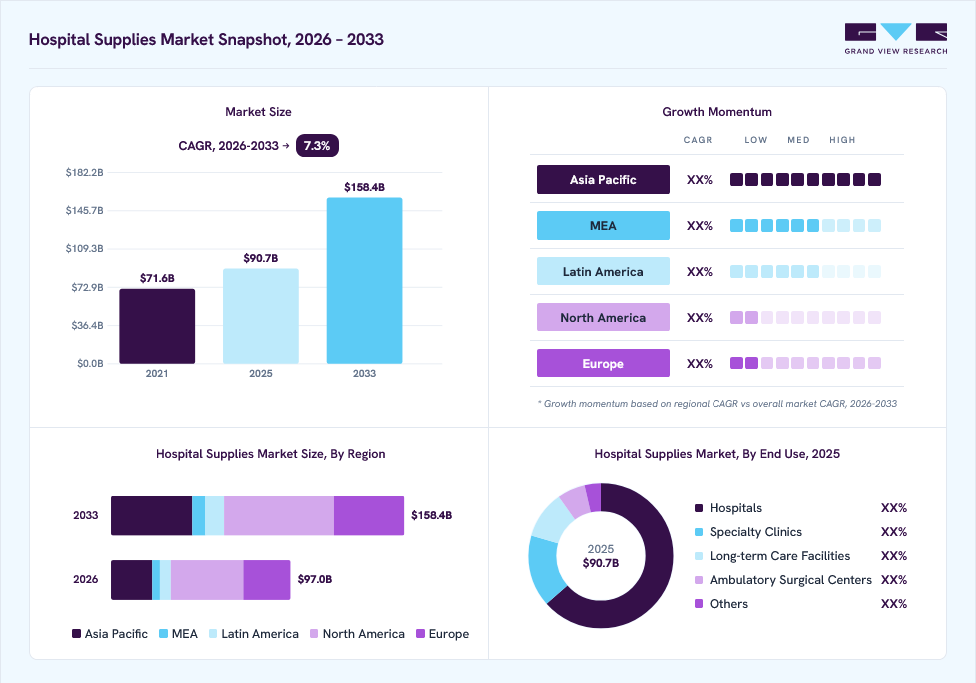 Source: Grand View Research, IR Documents, Primary Interviews, Paid DatabasesTo learn more about this report,
 Download Free Sample Report
Key Market Trends & Insights
- By product type: Consumables held the largest revenue share in 2025
- By application: Critical care / emergency medicine held the largest revenue share in 2025
- By end use: Hospitals held the largest revenue share in 2025
Regional Highlights
- Largest regional market: North America (40.8% revenue share, 2025)
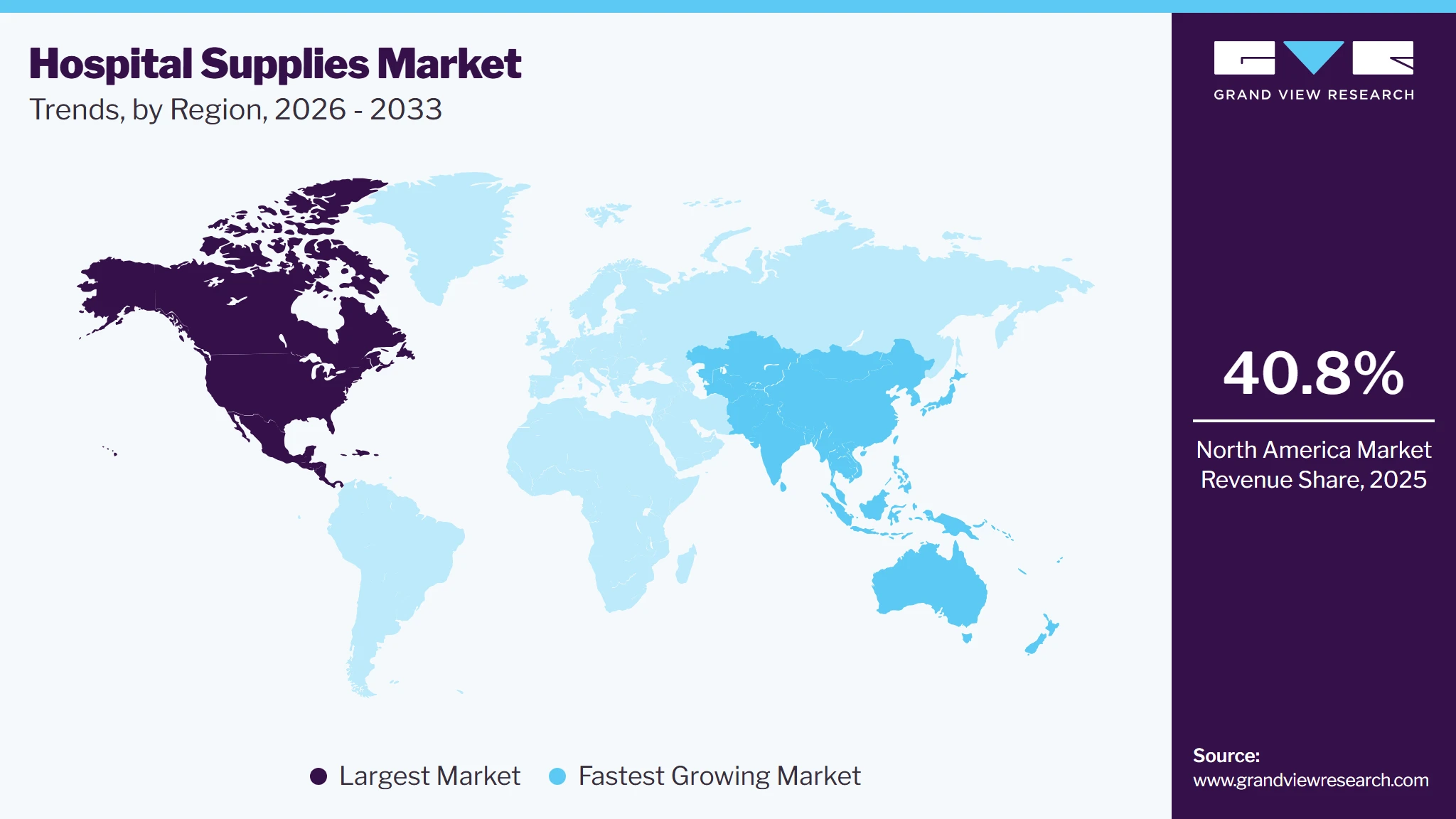
- Fastest-growing regional market: Asia Pacific (fastest CAGR, 2026-2033)
- By country: The U.S. held the largest revenue share of North America in 2025
Market Size & Forecast
- Market Size in 2025: USD 90.7 Billion
- Estimated Market Size in 2026: USD 97.0 Billion
- Projected Market Size by 2033: USD 158.4 Billion
- CAGR (2026-2033): 7.3%
Prism AI by Grand View Research Free to tryAsk a question about the hospital supplies marketTry asking✓Every figure cited from GVR research Prefer the report? Download free sample →
Aging populations and higher healthcare utilization are also contributing to sustained consumption, while the expansion of ambulatory care centers, outpatient facilities, and specialized hospitals is broadening the customer base. In emerging economies, investments in healthcare infrastructure, hospital modernization, and improved access to medical services are creating additional opportunities.Rising numbers of surgical and diagnostic procedures are driving growth in the hospital supplies industry by increasing the consumption of products required before, during, and after medical procedures. The rising volume of general surgeries, minimally invasive procedures, diagnostic testing, imaging-guided interventions, and routine investigations creates recurring demand for syringes, needles, gloves, gowns, surgical drapes, wound-care materials, specimen-collection products, and other disposable supplies. The growing preference for minimally invasive procedures further increases the use of procedure-specific consumables because these interventions often require specialized single-use materials. In addition, hospitals need to maintain sufficient inventories to support higher patient throughput, prevent procedure delays, and meet infection-control requirements. As surgical and diagnostic capacity expands across hospitals and outpatient facilities, the resulting increase in procedure volumes translates into higher recurring procurement and replacement requirements, supporting sustained growth of the hospital supplies market.
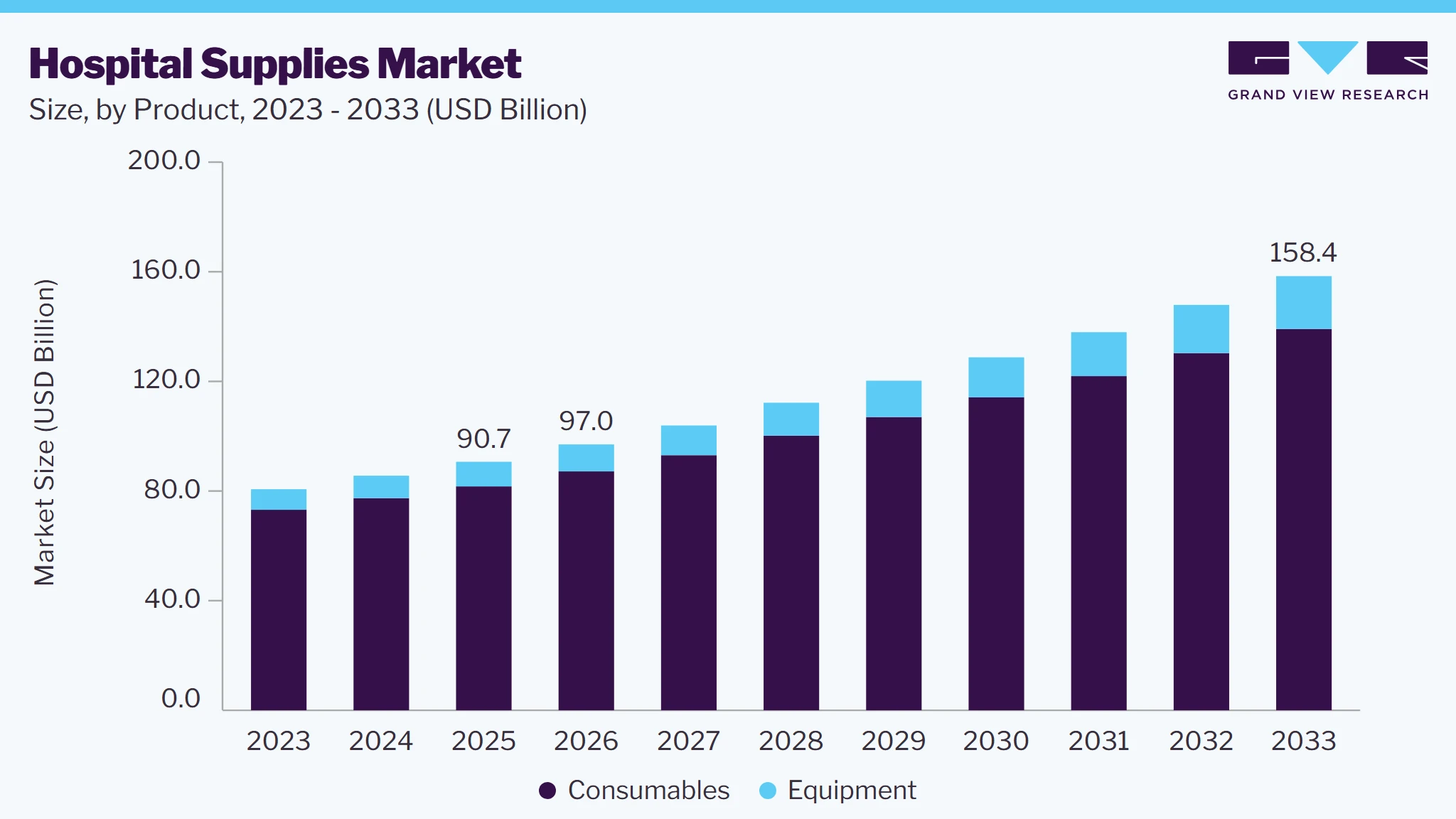 To learn more about this report, Download Free Sample Report
For instance, U.S. healthcare data analyzed by the American College of Surgeons covered more than 1.7 million operations across 249 procedure codes and 11 surgical specialties, while CMS recorded more than 100 million hospital outpatient claims for services furnished during 2025.
Rising hospital admissions are supporting the hospital supplies market, as each additional admission generates recurring requirements for consumables throughout the patient journey, including admission, diagnosis, treatment, monitoring, surgery, medication administration, wound management, and discharge. Higher patient volumes increase the utilization of syringes, needles, examination gloves, gowns, masks, IV-related supplies, wound-care products, specimen-collection materials, and other disposable supplies. The effect is amplified when admitted patients have greater clinical complexity, as more intensive monitoring and treatment generally require greater per-patient consumption of supplies.
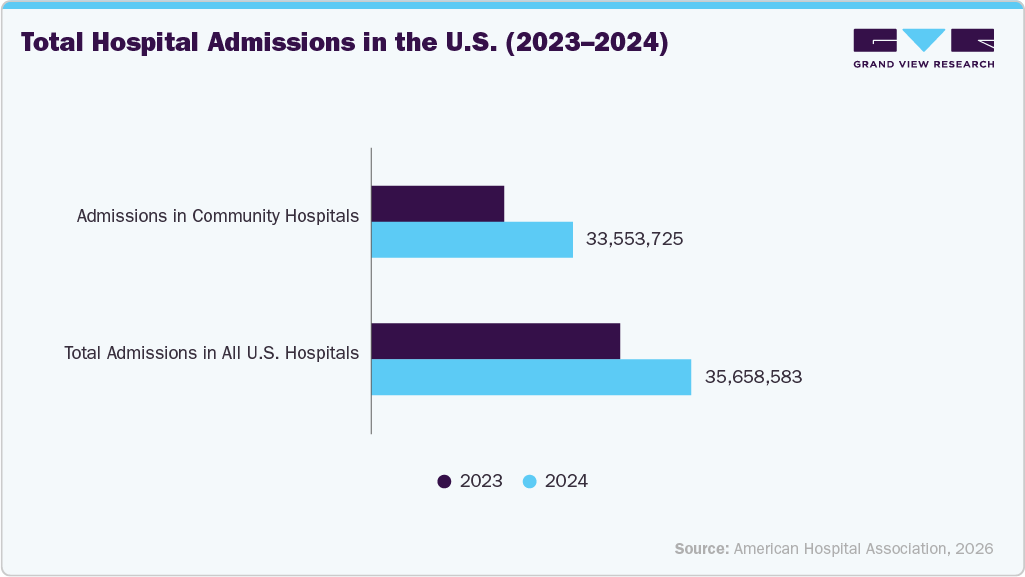 To learn more about this report, Download Free Sample Report
Hip replacement surgeries support the hospital supplies industry because each procedure requires a wide range of consumables throughout preoperative preparation, surgery, anesthesia, wound closure, and postoperative care. These procedures require surgical drapes, gowns, gloves, syringes, needles, antiseptic materials, dressings, sutures, suction and irrigation supplies, catheters, and other disposable items. The need for strict sterile techniques and infection prevention further increases the use of single-use supplies in the operating room. In addition, postoperative management requires wound care and drainage materials, resulting in ongoing consumption beyond the surgical procedure itself. As hospitals perform hip replacement procedures, the associated need for both procedure-specific and general consumables creates recurring procurement demand and contributes to growth in the hospital supplies market.
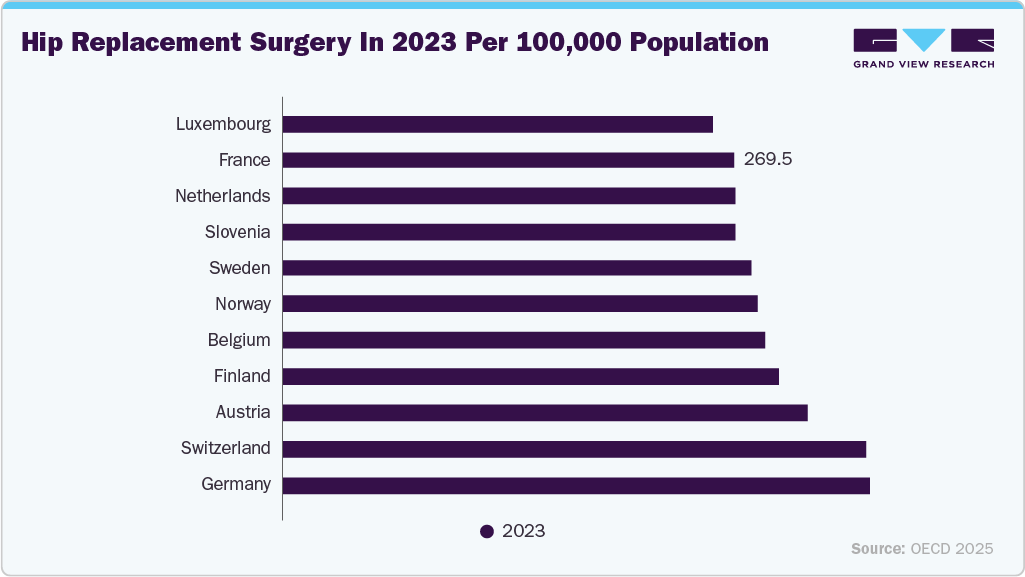 To learn more about this report, Download Free Sample Report
The rising number of hospitals is supporting the hospital supplies market by expanding the overall number of healthcare facilities that require continuous procurement of medical consumables, patient-care products, operating-room supplies, infection-control materials, and other essential items. New hospitals require supplies for the initial setup, while established facilities generate recurring demand as they treat patients and perform diagnostic and surgical procedures. Hospital expansion is also accompanied by additional beds, operating rooms, emergency departments, intensive care units, and specialty services, thereby increasing the volume and variety of supplies consumed. The expansion of private and public healthcare infrastructure, particularly in underserved urban and rural areas, therefore broadens the customer base for hospital-supply manufacturers and distributors.
Number of Hospitals, Staffed Hospital Beds, and Admissions in the U.S.
Hospital Category
2024
2023
Total Number of All U.S. Hospitals
6,100
6,093
U.S. Community Hospitals
5,121
5,112
Nongovernment Not-for-Profit Community Hospitals
2,984
2,978
Investor-Owned (For-Profit) Community Hospitals
1,224
1,214
State and Local Government Community Hospitals
913
920
Federal Government Hospitals
210
207
Nonfederal Psychiatric Hospitals
656
654
Other Hospitals
113
120
Source: American Hospital Association 2026, 2025
Market Dynamics
The hospital supplies market is supported by rising hospital admissions, increasing surgical and diagnostic activity, the expansion of healthcare infrastructure, and a growing emphasis on infection prevention and patient safety. Higher patient throughput increases the recurring consumption of essential supplies across admission, diagnosis, treatment, surgery, intensive care, wound management, and discharge. Thus, the expansion of hospitals, ambulatory care facilities, diagnostic centers, and specialty departments broadens the purchasing base and increases requirements for routine and specialized supplies.
The rising prevalence of chronic diseases is supporting the hospital supplies market by increasing the frequency and duration of healthcare utilization across diagnosis, treatment, monitoring, and follow-up care. Conditions such as cardiovascular diseases, diabetes, cancer, chronic respiratory diseases, and kidney disorders often require repeated hospital visits, diagnostic procedures, medication administration, wound management, and inpatient or outpatient monitoring, creating recurring demand for syringes, needles, gloves, IV supplies, dressings, specimen-collection products, and other consumables. Patients with multiple chronic conditions generally require more intensive healthcare services than patients without chronic conditions, further increasing consumption per patient. The growing need for long-term disease management also encourages hospitals to maintain consistent inventories of essential supplies to support continuous care and prevent treatment interruptions.
In 2025, according to the WHO, cardiovascular diseases (CVDs) were the leading cause of death globally. An estimated 19.8 million people died from CVDs, accounting for approximately 32% of all deaths worldwide. Of these fatalities, around 85% were attributed to heart attacks and strokes.
Stringent regulatory and quality requirements are restraining the hospital supplies market by increasing the compliance burden and operating costs for manufacturers. Suppliers must maintain rigorous quality-management systems, product testing, sterilization controls, traceability, documentation, manufacturing controls, and post-market surveillance to meet regulatory expectations. These requirements can extend product development and approval timelines while requiring continued investment in quality infrastructure, audits, validation, and regulatory expertise. The complexity is greater for manufacturers operating across multiple countries because differences in regulatory frameworks can require additional documentation, testing, registrations, and compliance procedures.
Sustainable and eco-friendly hospital supplies represent an important opportunity for the hospital supplies market as healthcare providers seek to reduce waste, resource consumption, and the environmental impact associated with procurement and disposal. This creates opportunities for manufacturers to develop supplies with reduced packaging, recyclable or lower-impact materials, safer production processes, and reusable designs where clinically appropriate. Hospitals can also incorporate environmental criteria into procurement decisions, encouraging suppliers to differentiate their products through sustainability credentials alongside price, quality, and clinical performance.
For instance, in January 2025, Medline launched its first full-polypropylene Proxima surgical gowns in the UK market. The single-material design was developed to support compatibility with emerging recycling streams, demonstrating the growing development of hospital consumables that combine clinical functionality with improved end-of-life sustainability.
Market Characteristics & Characteristics
The hospital supplies market is characterized by broad product requirements across operating rooms, inpatient wards, emergency departments, intensive care units, laboratories, and outpatient settings. Demand is closely connected to hospital admissions, surgical and diagnostic procedures, infection-prevention practices, and the management of acute and chronic conditions. The market includes both standardized products, where purchasing decisions are strongly influenced by price and availability, and specialized supplies, where product quality, clinical performance, safety, and regulatory compliance are more important. Hospitals also place considerable emphasis on reliable supply chains, inventory availability, product standardization, and procurement efficiency to avoid interruptions in patient care. In addition, the growing focus on infection control, sustainable healthcare practices, and supply-chain resilience is encouraging suppliers to improve product design, packaging, sourcing, and distribution.
The degree of innovation in the hospital supplies industry is moderate, as the market comprises many standardized, well-established products, even as manufacturers continue to introduce improvements in safety, efficiency, sustainability, and clinical functionality. Innovation is focused on antimicrobial materials, ergonomic designs, improved sterility, recyclable or lower-impact materials, and reduced packaging. Manufacturers are also developing smarter supplies incorporating tracking, sensing, and monitoring capabilities to improve product management and patient care. In addition, product redesign is being used to reduce material consumption, improve recyclability, minimize medical waste, and enhance supply-chain efficiency. While basic hospital supplies remain relatively standardized and price-sensitive, specialized and procedure-specific supplies provide greater scope for technological differentiation.
In January 2025, BD, in partnership with Carilion Clinic, introduced the BD PIVO Pro Needle-free Blood Collection Device at Carilion Roanoke Memorial Hospital, making Carilion the first health system in Virginia and the Southeastern U.S. to offer needle-free inpatient blood draws. The technology enables clinicians to collect blood samples through an existing peripheral IV catheter, reducing the need for repeated needle insertions and potentially lowering patient discomfort, needlestick risks, redraws, and delays in care.
Merger and acquisition activity in the hospital supplies industry is driven by companies seeking to broaden their product portfolios, strengthen distribution networks, expand geographic presence, and gain access to complementary technologies and specialized capabilities. Established manufacturers are using acquisitions to enter adjacent hospital-care segments, enhance their consumables offerings, and improve their ability to serve large healthcare systems through integrated product portfolios. M&A can also provide opportunities to achieve manufacturing and procurement efficiencies, strengthen supply-chain capabilities, and accelerate access to new customer groups.
In January 2025, Henry Schein completed the acquisition of substantially all assets of Acentus, a U.S.-based medical supplier specializing in the delivery of continuous glucose monitors (CGMs). The acquisition expanded Henry Schein’s homecare medical supplies platform and strengthened its ability to serve clinics, physician practices, health systems, and patients receiving care at home. Acentus added specialized medical-supply capabilities to Henry Schein’s portfolio and complemented its previous acquisitions in the homecare supplies segment.
The impact of regulations on the hospital supplies market is significant, as manufacturers and suppliers must comply with requirements related to product safety, quality management, sterility, labeling, manufacturing practices, traceability, and post-market surveillance. Regulatory compliance increases the resources required for product development, testing, documentation, manufacturing validation, and quality assurance, thereby raising operating costs and extending commercialization timelines. At the same time, regulatory standards help hospitals maintain consistent product quality and patient safety, favoring suppliers with established quality systems and reliable manufacturing capabilities.
The market has a high degree of end-user concentration, with hospitals representing the primary purchasing and consumption base across most supply categories. Large hospitals, integrated health systems, and hospital networks account for substantial procurement volumes because they operate multiple departments, surgical units, intensive-care facilities, laboratories, and emergency services. Their purchasing decisions are often centralized or coordinated through group purchasing organizations, allowing them to negotiate prices, standardize products, and establish long-term supplier agreements. This concentration can create significant opportunities for suppliers that secure contracts with large healthcare systems, but it also increases customer bargaining power and pricing pressure.
Product Type Insights
The consumables segment led the hospital supplies market in 2025. They are used continuously across virtually every hospital department and require frequent replenishment. The category includes PPE, syringes and needles, IV products, wound-care materials, diagnostic supplies, infection-prevention products, dialysis supplies, and disposable catheters. High patient throughput, recurring surgical and diagnostic procedures, infection-control requirements, and the preference for single-use products generate sustained consumption.
Equipment is the fastest-growing product type segment as healthcare providers increase investment in modern diagnostic, monitoring, examination, and procedure-support technologies. Within the defined hospital supplies scope, demand is driven by the modernization of healthcare infrastructure, the expansion of Hospitals, an increasing emphasis on early diagnosis, and the adoption of portable and point-of-care technologies. Equipment such as vital-sign monitors, glucometer devices, hemoglobin meters, suction machines, examination lights, stethoscopes, otoscopes, and ophthalmoscopes is being upgraded to improve clinical efficiency and patient monitoring.
Application Insights
The general surgery segment led the hospital supplies industry with the largest revenue share in 2025. It encompasses a broad range of high-volume procedures, including appendectomy, hernia repair, cholecystectomy, colorectal surgery, gastrointestinal procedures, and other elective and emergency interventions. The wide procedural base creates recurring demand for syringes, IV products, wound-care materials, surgical drapes, gloves, procedure trays, medical tapes, disposable instruments, and other hospital consumables. Increasing adoption of minimally invasive techniques and the continued need for emergency and elective surgical care further support supply utilization.
Urology & nephrology is the fastest-growing application segment as the burden of kidney disease, urological disorders, and age-related renal conditions continues to increase. Growing demand for kidney replacement therapy, dialysis access procedures, urinary catheterization, diagnostic testing, and minimally invasive urological interventions is expanding the consumption of specialized hospital supplies. The increasing prevalence of chronic kidney disease, diabetes, and hypertension, combined with population aging, is expected to sustain demand for renal and urological care.
End Use Insights
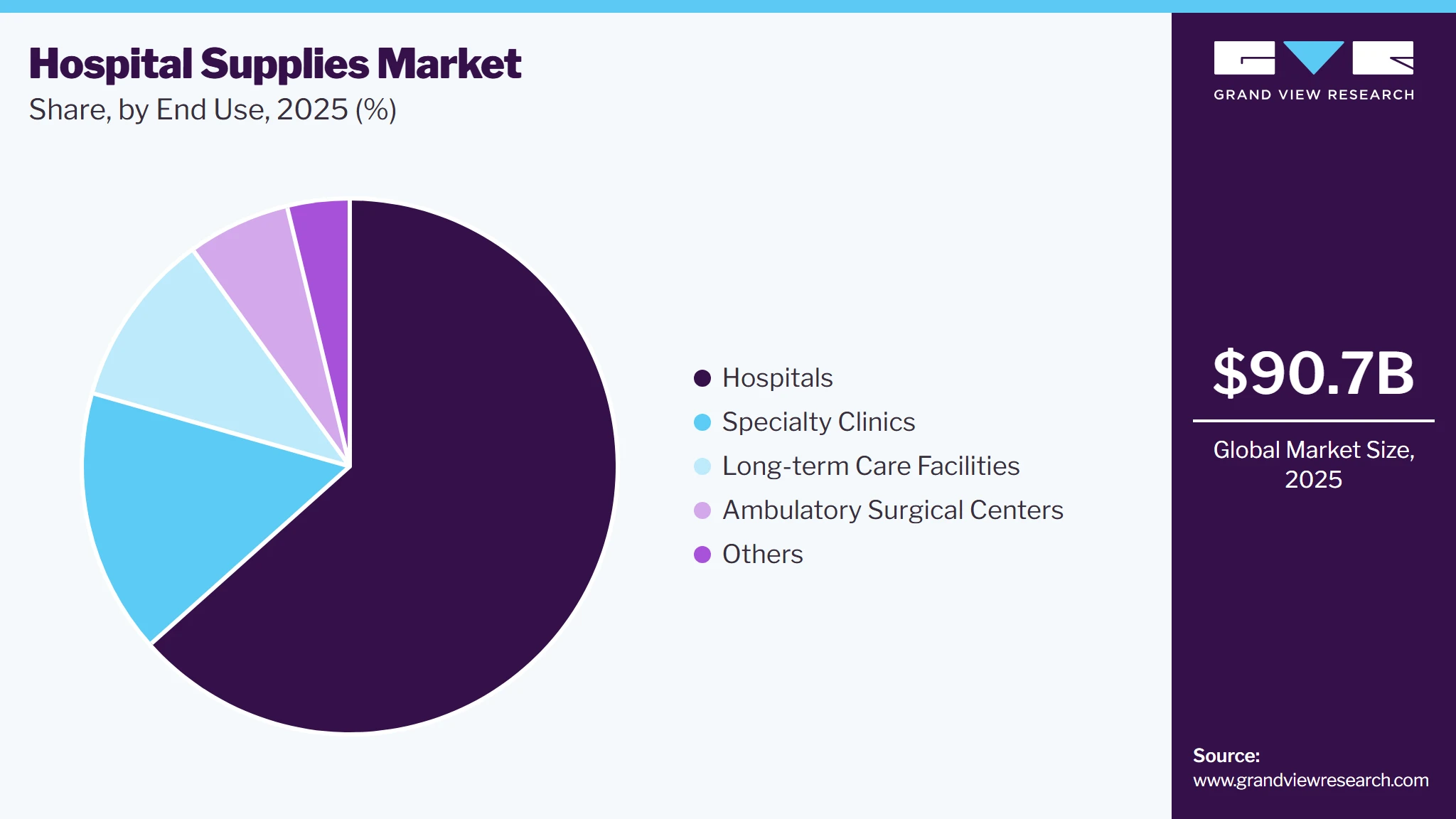
The hospitals segment led the market with the largest revenue share of 63.4% in 2025. They handle the broadest range of inpatient, outpatient, emergency, surgical, diagnostic, and critical-care activities. These facilities require the continuous procurement of consumables such as gloves, syringes, needles, IV products, wound-care materials, infection-prevention supplies, catheters, and diagnostic supplies, as well as monitoring and examination equipment. Their high patient throughput, 24-hour operations, and need to maintain substantial inventory levels create recurring demand across multiple product categories.
 To learn more about this report, Download Free Sample Report
Ambulatory Surgical Centers (ASCs) is the fastest-growing end-use segment as healthcare delivery shifts suitable procedures from hospitals toward outpatient facilities. The growing adoption of minimally invasive procedures, shorter recovery periods, lower treatment costs, improved anesthesia techniques, and enhanced outpatient capabilities is encouraging healthcare providers to perform more procedures in ASCs. Increasing utilization of orthopedic, ophthalmic, gastrointestinal, urological, gynecological, and other same-day procedures is expanding the need for medical supplies within these facilities.
Regional Insights
North America dominated the hospital supplies market with the largest revenue share of 40.8% in 2025, supported by well-developed healthcare infrastructure, extensive hospital networks, and sustained utilization of inpatient and outpatient healthcare services. The region has a large base of hospitals, specialty facilities, ambulatory centers, and diagnostic facilities that require continuous procurement of medical consumables, surgical supplies, infection-control products, diagnostic materials, and patient-care products. Growing demand for healthcare services for chronic and acute conditions is increasing the utilization of hospital supplies across care settings. In addition, healthcare providers are placing greater emphasis on infection prevention, product quality, supply-chain resilience, inventory availability, and procurement efficiency.
 To learn more about this report, Download Free Sample Report
U.S. Hospital Supplies Market Trends
The U.S. hospital supplies industry is supported by its extensive healthcare infrastructure, high utilization of medical services, and continued expansion of both hospital-based and outpatient care. Hospitals require a broad range of medical consumables, surgical supplies, infection-control products, diagnostic materials, and patient-care products to manage routine and complex procedures. Ambulatory Surgical Centers (ASCs) are also contributing to demand as more procedures are performed in outpatient settings, increasing the use of surgical, anesthesia, wound-care, infection-control, and other procedure-related supplies outside traditional inpatient hospitals. The shift toward outpatient care is encouraging healthcare providers to improve procedural capacity and efficiency while maintaining appropriate supply availability. In addition, demand for specialized procedures, chronic disease management, emergency care, and minimally invasive interventions continues to support procurement across healthcare facilities.
U.S. Ambulatory Surgical Centers by State 2025
State / Territory
Number of ASCs
Alabama
60
Alaska
20
Arizona
246
Arkansas
84
California
933
Colorado
134
Connecticut
55
Delaware
22
District of Columbia
3
Florida
536
Georgia
424
Guam
2
Hawaii
24
Idaho
65
Illinois
135
Indiana
147
Iowa
34
Kansas
73
Kentucky
42
Louisiana
89
Maine
15
Maryland
358
Massachusetts
55
Michigan
126
Minnesota
92
Mississippi
87
Missouri
96
Montana
26
Nebraska
46
Nevada
91
New Hampshire
28
New Jersey
251
New Mexico
24
New York
Upgrade the report license to gain access to the complete analysis.
North Carolina
North Dakota
Ohio
Oklahoma
Oregon
Pennsylvania
Puerto Rico
Rhode Island
South Carolina
South Dakota
Tennessee
Texas
Utah
Vermont
Virgin Islands
Virginia
Washington
West Virginia
Wisconsin
Wyoming
Source: Ambulatory Surgery Center Association
Europe Hospital Supplies Market Trends
The growth of the Europe hospital supplies industry is driven by sustained healthcare expenditure, extensive hospital infrastructure, and increasing demand for medical and treatment services. Healthcare systems across the region continue to invest in hospital capacity, modernization, digitalization, and improved access to care, creating demand for medical consumables, surgical supplies, diagnostic materials, infection-control products, and patient-care supplies. The growing burden of chronic diseases and an aging population are also increasing the need for diagnosis, treatment, hospitalization, and long-term care, supporting the utilization of hospital supplies. In addition, European healthcare systems are strengthening supply chain resilience and improving the availability of medical devices, encouraging hospitals and procurement organizations to maintain reliable sources of essential supplies.
The UK hospital supplies market is expanding alongside increasing healthcare activity and continued pressure on NHS hospitals to manage higher patient volumes efficiently. Rising admissions, outpatient procedures, diagnostic activity, and emergency care are sustaining demand for a broad range of routine clinical and surgical supplies. The NHS is strengthening centralized procurement, standardizing frequently purchased products, and improving supply resilience, thereby encouraging more structured, recurring purchasing across healthcare facilities. The expansion of procurement frameworks covering surgical consumables, wound care, infusion-related supplies, patient assessment products, respiratory care, and other hospital requirements is further supporting market opportunities.
Hospital Admission and Procedure Activity in the UK, February 2025-January 2026
Measure
February 2025-January 2026
Finished Consultant Episodes (FCEs)
22.5 million
FCEs, including at least one procedure or intervention
13.0 million
Day Cases
8.6 million
Finished Admission Episodes (FAEs)
18.3 million
Emergency Admissions
6.5 million
Source: NHS 2026
The hospital supplies market in Germany is growing as the country’s aging population and the rising prevalence of chronic diseases increase the need for continuous healthcare services. Conditions such as cardiovascular diseases, cancer, diabetes, and respiratory disorders generate recurring requirements for diagnosis, treatment, monitoring, surgery, and long-term patient management. Hospital modernization and infrastructure upgrades are also encouraging healthcare facilities to replace outdated systems and improve clinical environments, supporting the procurement of essential supplies. Germany’s focus on infection prevention, quality standards, and patient safety further strengthens demand for reliable hospital consumables. In addition, healthcare workforce shortages are encouraging hospitals to improve operational efficiency, standardize clinical processes, and adopt solutions that reduce resource requirements.
Asia Pacific Hospital Supplies Market Trends
Asia Pacific is a growing market for hospital supplies due to the region’s expanding healthcare infrastructure, the rising burden of chronic diseases, and increasing healthcare needs among aging populations. Countries such as China, India, Japan, South Korea, and Southeast Asian economies are strengthening hospital capacity and improving access to medical services, thereby increasing demand for routine clinical and surgical supplies. The growing prevalence of diabetes, cardiovascular diseases, cancer, and kidney-related disorders is generating recurring demand for diagnosis, treatment, monitoring, and long-term care.
The Japan hospital supplies market is growing due to its rapidly aging population, rising prevalence of chronic diseases, and extensive healthcare infrastructure. The increasing number of elderly patients is generating greater demand for hospital-based treatment, long-term disease management, diagnostic procedures, and post-treatment care. Cardiovascular diseases, cancer, diabetes, and other age-associated conditions are supporting recurring requirements for clinical, surgical, wound-care, infection-control, and patient-care supplies. Japan’s well-established hospital network also creates consistent demand for replenishment and replacement of essential supplies. In addition, healthcare providers are placing greater emphasis on infection prevention, patient safety, efficient clinical workflows, and elderly-focused care, encouraging hospitals to maintain reliable inventories and adopt higher-quality supplies.
- According to the World Economic Forum, Japan's Ministry of Internal Affairs and Communications reported that, as of 2024, the country had a record 36.25 million people aged 65 and over, accounting for 29.3% of the total population. This share is projected to rise to 34.8% in 2040 and 36.3% in 2045. Japan's proportion of elderly residents is already far higher than second-ranked Martinique (25.3%), making it the world's most aged society.
The hospital supplies market in India is growing as healthcare delivery expands beyond major metropolitan areas into Tier-2 and Tier-3 cities, where new hospitals and specialty care facilities are being developed to address underserved populations. The rising burden of chronic diseases such as diabetes, cardiovascular disorders, cancer, and kidney diseases is increasing the frequency of diagnosis, treatment, surgery, and long-term patient management. Growth in health insurance coverage and medical tourism is also improving access to organized hospital care and supporting higher utilization of healthcare services. In addition, government initiatives aimed at strengthening public healthcare infrastructure, encouraging domestic medical-device manufacturing, and expanding digital health are improving the capacity of hospitals and healthcare facilities.
Latin America Hospital Supplies Market Trends
Latin America is a growing market for hospital supplies as healthcare systems expand capacity to meet increasing demand for medical services and the growing burden of chronic diseases. Cardiovascular diseases, diabetes, cancer, and chronic respiratory conditions are increasing the need for diagnosis, treatment, monitoring, and hospital-based care across the region. Healthcare infrastructure development in major markets such as Brazil and Argentina is supporting greater procurement of clinical and surgical supplies, while improvements in primary and specialized care are increasing patient access to healthcare services. In addition, governments are strengthening public health programs and collective procurement mechanisms, thereby improving access to essential medical supplies, diagnostic technologies, and healthcare equipment.
Middle East And Africa Hospital Supplies Market Trends
The MEA hospital supplies industry is expanding as healthcare systems across the region strengthen hospital capacity, improve access to medical services, and respond to changing disease patterns. Countries in the Gulf are investing in new hospitals, specialty care centers, and healthcare modernization programs, while African markets are expanding healthcare capacity through public-sector investments and public-private partnerships. The rising burden of diabetes, cardiovascular diseases, cancer, infectious diseases, and other chronic conditions is generating sustained requirements for diagnosis, treatment, surgery, and patient monitoring. Growing awareness of infection prevention is also encouraging hospitals to strengthen sterilization practices and use disposable clinical supplies.
For instance, in April 2025, Saudi Arabia launched 28 healthcare projects in Riyadh across the government, private, and non-profit sectors, with a combined capacity of more than 3,000 beds. The projects included new hospitals, medical towers, maternity and children’s facilities, and specialized healthcare buildings, reflecting the continued expansion of healthcare infrastructure.
Key Hospital Supplies Company Insights
The hospital supplies market comprises a broad mix of global manufacturers, specialized suppliers, and regional companies, with competitive positions varying considerably across individual product categories and geographic markets. Companies with diversified portfolios, established hospital procurement relationships, extensive distribution capabilities, and strong regulatory expertise are positioned to capture larger portions of demand. Market share is therefore induced by product breadth, pricing, supply reliability, manufacturing scale, and the ability to meet hospital-specific procurement requirements. Larger suppliers generally maintain stronger positions in high-volume and standardized supply categories, while regional and specialized players gain opportunities through localized manufacturing, cost advantages, customized offerings, and focused product expertise.
Key Hospital Supplies Companies
The following key companies have been profiled for this study of the hospital supplies market.
-
Medtronic
-
LivaNova PLC
-
Getinge
-
BD
-
NIPRO
-
Solventum (3M)
-
Medline Industries, LP
-
Paul Hartmann AG
-
Cardinal Health
-
Baxter
-
Johnson & Johnson Services, Inc.
-
Nichiban Co., Ltd.
-
Lohmann Technologies
-
F. Hoffmann-La Roche Ltd
-
Dexcom, Inc.
-
Sanofi
-
Abbott Laboratories
-
Senseonics Holdings, Inc.
-
Coloplast
-
B. Braun SE
-
Nihon Kohden Corp.
-
HEINE Optotechnik GmbH & Co. KG
-
GE Healthcare
-
GF Health Products, Inc.
-
Koninklijke Philips N.V.
-
Hollister Incorporated
-
Cook
-
Teleflex Incorporated
-
Optimum Medical Limited (Shanghai MicroPort Endovascular MedTech)
-
Convatec
-
Boston Scientific Corporation
-
Stryker
-
Terumo Medical Corp.
-
Fresenius Medical Care AG & Co. KGaA
-
Kae Hwa Industrial Co., Ltd.
-
Manish Medi Innovation
-
Dynarex Corporation
Recent Developments
-
In May 2026, Smith+Nephew announced the launch of ALLEVYN COMPLETE CARE Foam Dressing and RENASYS EDGE Negative Pressure Wound Therapy System at the European Wound Management Association (EWMA) Conference. ALLEVYN COMPLETE CARE features a five-layer construction designed for wound management and pressure injury prevention, while RENASYS EDGE is a lightweight negative pressure wound therapy system designed to improve portability, ease of use, and patient compliance.
-
In April 2026, INTCO Medical expanded its non-latex glove portfolio with the launch of Syntex Synthetic Latex Gloves and Synmax Pro Gloves. Syntex gloves are designed without natural rubber latex proteins to reduce the risk of latex allergy, while Synmax Pro Gloves emphasize higher abrasion resistance and durability for frequent-use environments. The launches strengthen innovation in PPE consumables, particularly medical gloves, and respond to growing demand for synthetic, compliant, and durable protective solutions.
-
In January 2026, Terumo launched the SurTract Safety Syringe in the U.S., powered by Roncadelle Operations’ SafeR passive safety technology. The retractable safety syringe features an automatic needle-retraction mechanism that withdraws the needle into the plunger after use, helping reduce needlestick injuries while maintaining standard injection techniques. Its low-dead-space design also helps reduce medication waste, while the customizable needle options provide greater flexibility for clinical use. The launch strengthens innovation in injection and infusion consumables, particularly disposable safety syringes.
-
In January 2025, BD announced additional investments in its U.S. manufacturing network to expand production capacity for syringes, needles, and IV catheters. New needle-and-syringe production lines were installed at its Connecticut and Nebraska facilities, increasing capacity for safety-engineered injection devices and conventional syringes. The company also planned additional investment to expand IV-line manufacturing at its Utah facility. The development strengthens domestic supply capacity for injection and infusion consumables, particularly disposable syringes, needles, IV catheters, and IV lines, while improving supply-chain resilience for hospital applications.
-
In January 2025, Stryker announced a definitive agreement to acquire Inari Medical for approximately USD 4.9 billion, expanding its presence in the peripheral vascular segment. The acquisition added mechanical thrombectomy solutions for conditions such as deep vein thrombosis and pulmonary embolism to Stryker’s portfolio. The transaction strengthened Stryker’s position in endovascular procedures and broadened its range of hospital-use medical technologies.
Hospital Supplies Market Report Scope
Report Attribute
Details
Market size in 2025
USD 90.7 billion
Estimated market size in 2026
USD 97.0 billion
Projected market size by 2033
USD 158.4 billion
Growth rate
CAGR of 7.3% from 2026 to 2033
Base year for estimation
2025
Historical data
2021 - 2024
Forecast period
2026 - 2033
Quantitative units
Revenue in USD million/billion and CAGR from 2026 to 2033
Report coverage
Revenue forecast, company ranking, competitive landscape, growth factors, and trends
Segments covered
Product type, application, end use, and region
Regional scope
North America; Europe; Asia Pacific; Latin America; MEA
Country scope
U.S.; Canada; Mexico; Germany; UK; France; Italy; Spain; Norway; Denmark; Sweden; China; Japan; India; South Korea; Australia; Thailand; Brazil; Argentina; Saudi Arabia; South Africa; UAE; Kuwait
Key companies profiled
Medtronic; LivaNova PLC; Getinge; BD; NIPRO; Solventum (3M); Medline Industries, LP; Paul Hartmann AG; Cardinal Health; Baxter; Johnson & Johnson Services, Inc.; Nichiban Co., Ltd.; Lohmann Technologies; F. Hoffmann-La Roche Ltd; Dexcom, Inc.; Sanofi; Abbott Laboratories; Senseonics Holdings, Inc.; Coloplast; B. Braun SE; Nihon Kohden Corp.; HEINE Optotechnik GmbH & Co. KG; GE Healthcare; GF Health Products, Inc.; Koninklijke Philips N.V.; Hollister Incorporated; Cook; Teleflex Incorporated; Optimum Medical Limited (Shanghai MicroPort Endovascular MedTech); Convatec; Boston Scientific Corporation; Stryker; Terumo Medical Corp.; Fresenius Medical Care AG & Co. KGaA; Kae Hwa Industrial Co., Ltd.; Manish Medi Innovation; Dynarex Corporation
Customization scope
Free report customization (equivalent up to 8 analysts' working days) with purchase. Addition or alteration to country, regional & segment scope.
Pricing and purchase options
Avail customized purchase options to meet your exact research needs. Explore purchase options
Global Hospital Supplies Market Report Segmentation
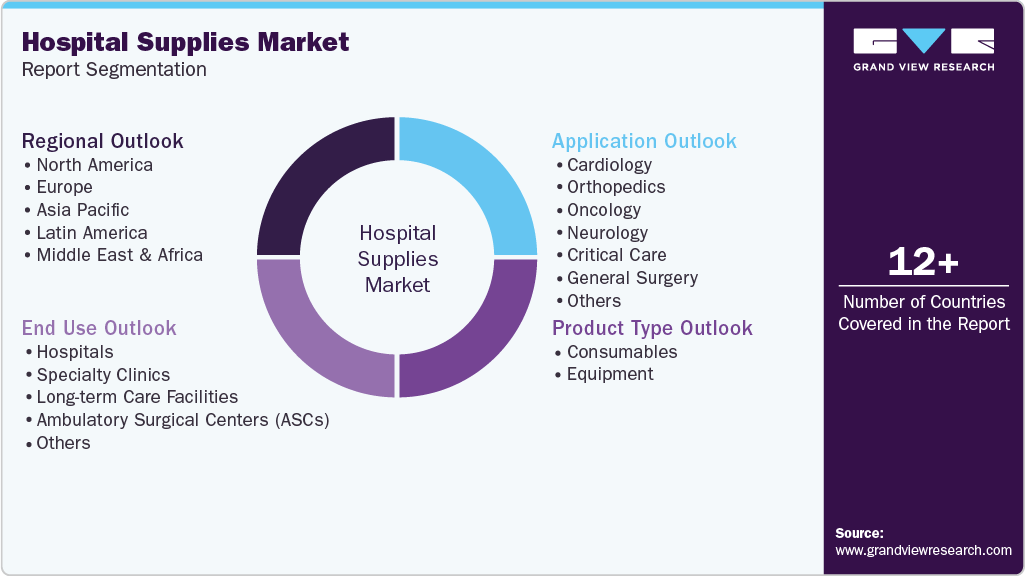
This report forecasts revenue growth at the global, regional & country levels and provides an analysis of the latest industry trends across each sub-segment from 2021 to 2033. For this study, Grand View Research has segmented the hospital supplies market report based on product type, application, end use, and region:
 To learn more about this report, Download Free Sample Report
-
Product Type Outlook (Revenue, USD Million/Billion, 2021 - 2033)
-
Consumables
-
PPE Consumables
-
Medical Gloves
-
Masks
-
Gowns
-
PPE Kits
-
Face Shields
-
Others
-
-
Injection & Infusion Consumables
-
Disposable Syringes
-
Needles
-
IV Kits
-
Others
-
-
Wound Care & Procedure Consumables
-
Gauze
-
Dressings
-
Medical Tapes
-
Procedure Trays
-
Surgical Blades
-
Non-woven Disposable Products
-
Surgical Drapes
-
Surgical Covers
-
Other Non-woven Procedure Products
-
-
Medicine Cups
-
Others
-
-
Diagnostic & Test Consumables
-
Glucometer Strips
-
Urine Test Strips
-
Laboratory Test Strips
-
Rapid Test Consumables
-
Others
-
-
Infection Prevention & Sterilization Consumables
-
Infection Prevention Consumables
-
Disinfectants
-
Hand Sanitizers
-
Others
-
-
Sterilization Consumables
-
Sterilization Wraps
-
Sterilization Pouches
-
Sterilization Indicators
-
Others
-
-
-
Fluid & Dialysis Consumables
-
IV Solutions
-
100 mL
-
500 mL
-
1,000 mL
-
Others
-
-
Dialysis Consumables
-
Irrigation Solutions
-
Others
-
-
Disposable Catheters & Cannulas
-
Urinary Catheters
-
IV Catheters / Peripheral IV Cannulas
-
Others
-
-
-
Equipment
-
Vital Signs Monitoring Devices
-
Blood Pressure Monitors
-
Pulse Oximeters
-
Temperature Monitoring Devices
-
Other Vital Sign Monitors
-
-
Diagnostic Examination Devices
-
Stethoscopes
-
Otoscopes
-
Ophthalmoscopes
-
Others
-
-
Point-of-Care Testing Devices
-
Glucometer Devices
-
Portable Hemoglobin Meters
-
Others
-
-
Minor Procedure & Support Equipment
-
Portable Suction Machines
-
Examination Lights
-
Others
-
-
Others
-
-
-
Application Outlook (Revenue, USD Million/Billion, 2021 - 2033)
-
Cardiology
-
Orthopedics
-
Oncology
-
Neurology
-
Critical Care / Emergency Medicine
-
General Surgery
-
Wound Care
-
Respiratory Care
-
Urology & Nephrology
-
Gynecology & Obstetrics
-
Infectious Disease Management
-
Others
-
-
End Use Outlook (Revenue, USD Million/Billion, 2021 - 2033)
-
Hospitals
-
Specialty Clinics
-
Long-term Care Facilities
-
Ambulatory Surgical Centers (ASCs)
-
Others
-
-
Regional Outlook (Revenue, USD Million/Billion, 2021 - 2033)
-
North America
-
U.S.
-
Canada
-
Mexico
-
-
Europe
-
Germany
-
UK
-
France
-
Italy
-
Spain
-
Norway
-
Denmark
-
Sweden
-
-
Asia Pacific
-
China
-
Japan
-
India
-
South Korea
-
Australia
-
Thailand
-
-
Latin America
-
Brazil
-
Argentina
-
-
Middle East & Africa
-
Saudi Arabia
-
South Africa
-
UAE
-
Kuwait
-
-
Frequently Asked Questions About This Report
The global hospital supplies market size was valued at USD 90.7 billion in 2025 and is estimated at USD 97.0 billion for 2026
The global hospital supplies market is expected to grow at a CAGR of 7.3% from 2026 to 2033, reaching USD 158.4 billion.
North America dominated with a 40.8% revenue share in 2025.
The consumables hospital supplies segment accounted for the largest revenue share in 2025.
Key players in the market Medtronic, LivaNova PLC, Getinge, BD, NIPRO, Solventum (3M), Medline Industries, LP, Paul Hartmann AG, Cardinal Health, Baxter, Johnson & Johnson Services, Inc., Nichiban Co., Ltd., Lohmann Technologies, F. Hoffmann-La Roche Ltd, Dexcom, and others.
About the Author(s)
Medical Devices Research Team
Healthcare · Medical DevicesThis report was authored by the medical devices research team at Grand View Research - comprising two research analysts, one senior research analyst, and one industry expert - with specialized expertise in the medical devices segment of the healthcare industry. All findings are based on proprietary healthcare databases, executive interviews, and regulatory analysis, subject to internal peer review prior to publication.
Last Updated:
Speak to Analyst

Customize this report to your needs - add regions, segments, or data points, with 20% free customization.
Or view our licence options:


ISO 9001:2015 & 27001:2022 Certified
We are GDPR and CCPA compliant! Your transaction & personal information is safe and secure. For more details, please read our privacy policy.


