
- Home
- »
- Biotechnology
- »
-
Lab Automation Systems For Container Sample Labelling & Scanning Market Report 2033GVR Report cover

Lab Automation Systems For Container Sample Labelling & Scanning Market (2026 - 2033)
Size, Share & Trends Analysis Report By Product (Label Printing Systems, Barcode, RFID & Scanning Systems), By Throughput Volume, By End-use, By Region, And Segment Forecasts
Market Size, 2025
$783.0MMarket Estimate, 2026
$846.4MMarket Forecast, 2033
$1,519.5MCAGR, 2026–2033
8.7%Lab Automation Systems For Container Sample Labelling & Scanning Market Summary
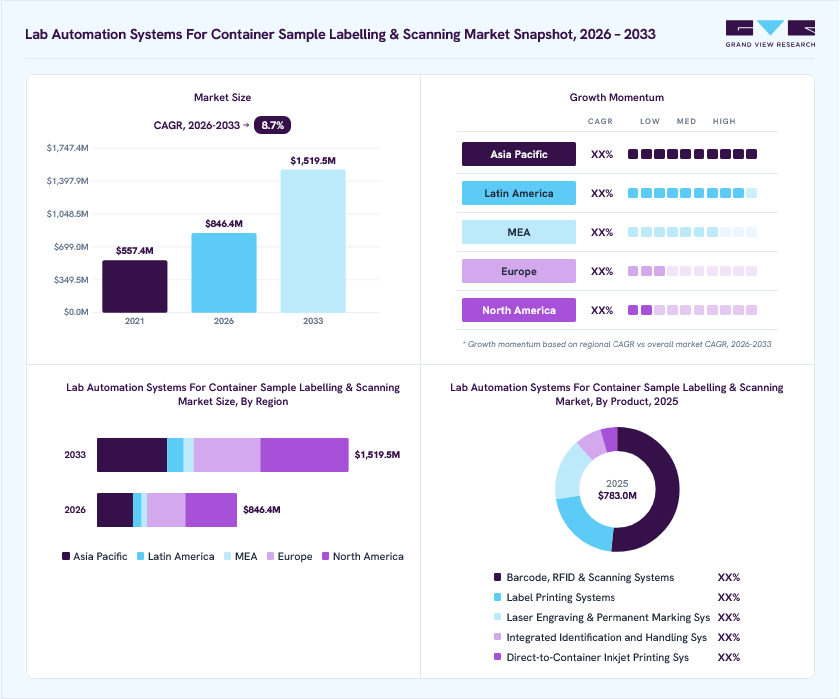
The global lab automation systems for container sample labelling & scanning market size was valued at USD 783.0 million in 2025 and is projected to grow from USD 846.4 million in 2026 to USD 1,519.5 million by 2033, at a CAGR of 8.7% from 2026 to 2033. North America market dominated the market, accounting for the largest share of 37.2% in 2025. The market is driven by the increasing adoption of automated specimen identification and tracking systems across clinical, pharmaceutical, and research laboratories.
 Source: Grand View Research, IR Documents, Primary Interviews, Paid DatabasesTo learn more about this report,
 Download Free Sample Report
 Key Market Trends & Insights
- By product: The barcode, RFID & scanning systems segment held the highest market share of 51.6% in 2025.
- By throughput volume: The high throughput (301 to 1,000 samples per hour) segment held the highest market share in 2025.
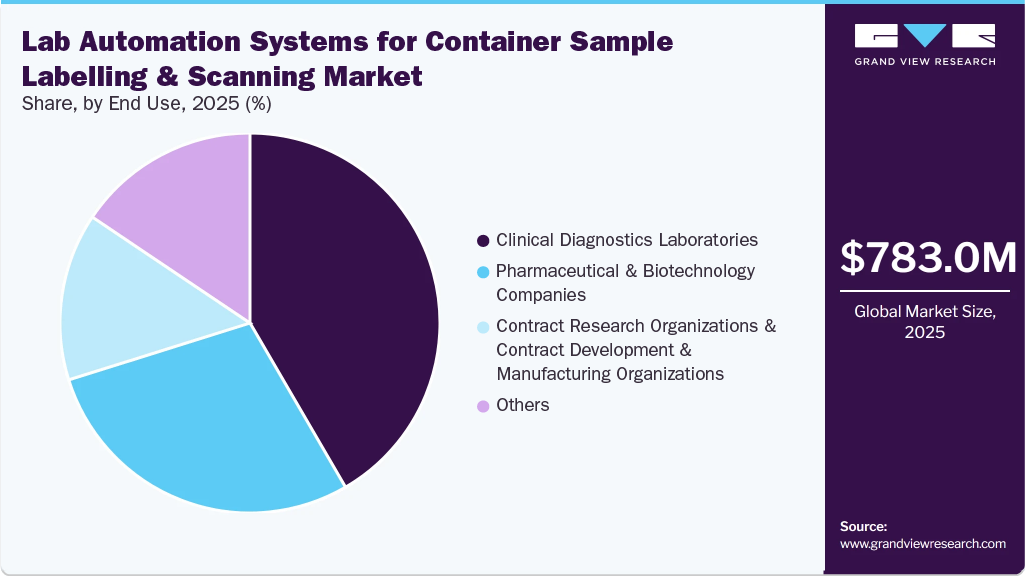
- By end use: The clinical diagnostics laboratories segment held the highest market share of 41.6% in 2025.
Regional Highlights
- Largest regional market: North America (37.2% revenue share, 2025)
- Fastest-growing regional market: Asia Pacific (highest CAGR, 2026-2033)
- By country: The U.S. held the largest market share in 2025
Market Size & Forecast
- Market size in 2025: USD 783.0 Million
- Estimated market size in 2026: USD 846.4 Million
- Projected market size by 2035: USD 1,519.5 Million
- CAGR (2026-2033): 8.7%
Three ways to get this report
Buy it, customize it, or ask a question.Ask an Analyst
A direct answer, usually in 1 working day
- AccessReport author, directly
- Reply timeWithin 1 working day
- No sales callDirect answer only
- FormatEmail reply
- CostFree, no cost
Get the Full Report
What the study covers
- FormatsPDF · Excel · Dashboard
- Timeline2026–2033 annual, 2025 base
- Coverage20+ countries, 5 regions
- Companies10+ key players profiled
Customize the Report
20% free customization
- IncludeCountries, segments, points
- TailorTo your product definition
- ExtendDeeper competitor detail
- OrA fully bespoke study
- Turnaround5–10 working days
Growing demand for accurate sample traceability, reduced manual errors, and improved laboratory workflow efficiency is supporting the adoption of barcode-, QR code-, and RFID-based labelling and scanning solutions.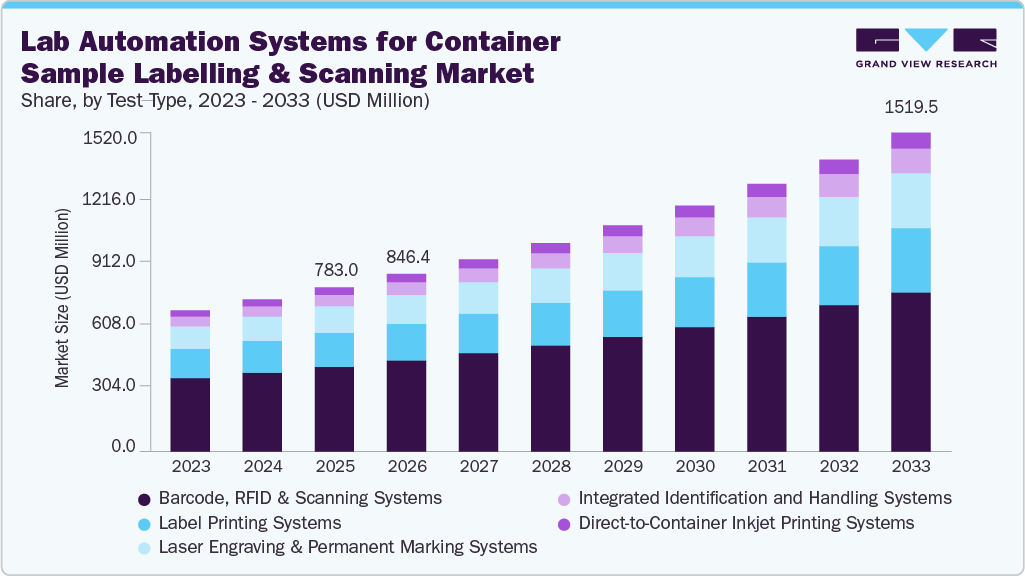 To learn more about this report, Download Free Sample Report
 Market Dynamics
The lab automation systems for container sample labelling & scanning industry is witnessing steady growth, driven by the increasing demand for accurate sample traceability, stringent regulatory and quality compliance requirements, and the growing adoption of barcode- and RFID-based identification technologies across clinical, pharmaceutical, and research laboratories. Rising investments in laboratory infrastructure, increasing diagnostic testing volumes, and the expansion of biobanking and life science research activities are further supporting market growth. In addition, continuous technological advancements in sample identification solutions and increasing emphasis on data integrity and laboratory efficiency are expected to sustain market expansion over the forecast period.
The increasing adoption of laboratory automation is a significant market driver. Laboratories are increasingly shifting toward automated workflows to improve operational efficiency, accuracy, and productivity. Rising sample volumes, increasing workflow complexity, and the need for faster processing times are driving the adoption of automated labeling and scanning systems over manual sample handling methods.
Automated container sample labeling and scanning solutions play a critical role in streamlining laboratory operations by enabling accurate sample identification, barcode generation, tracking, and data capture with minimal human intervention. These systems reduce labeling errors, sample mix-ups, transcription mistakes, and data duplication while improving sample traceability, workflow consistency, and regulatory compliance. As laboratories prioritize high-throughput operations and standardized workflows, the adoption of automated labeling and scanning solutions continues to accelerate. For instance, in July 2025, Merck KGaA launched the AAW Automated Assay Workstation in Germany, enhancing automated laboratory workflows, sample handling, and assay consistency, thereby supporting efficiency improvements in lab automation systems for the container sample labeling & scanning market.
One of the major constraints on market growth is the high initial capital investment required to deploy advanced automated labeling, printing, scanning, and sample-identification systems. Laboratories adopting automation solutions must invest not only in core equipment such as benchtop print-and-apply systems, standalone tube and vial label printers, direct-to-container inkjet and thermal printing systems, laser engraving and marking technologies, barcode and RFID scanners, verification systems, and robotic sample handling platforms, but also in supporting software, workflow integration, and laboratory infrastructure upgrades.
Integrated systems such as robotic sample ID and handling systems, tube processors, and software-linked barcode or RFID tracking platforms involve particularly high procurement and installation costs due to their advanced robotics, AI-enabled tracking capabilities, precision engineering, and interoperability requirements. In addition, permanent marking technologies, including laser engraving and laser marking systems, often require specialized safety infrastructure, calibration, and maintenance, further increasing operational expenditure.
RFID technology enhances real-time sample tracking and eliminates the need for line-of-sight scanning, improving accuracy and workflow speed in high-throughput environments. Similarly, AI-driven verification systems help reduce human error in sample identification, label validation, and quality control by enabling automated anomaly detection and intelligent decision-making across labeling and scanning workflows. For instance, in November 2025, United Robotics Group advanced AI-driven laboratory automation with voice-enabled robotics, improving barcode scanning, sample handling, and workflow coordination for the container sample labeling and scanning market.
IoT-enabled lab automation systems further strengthen this opportunity by enabling continuous monitoring of equipment performance, environmental conditions, and sample movement across laboratory networks. When combined with cloud connectivity and integrated laboratory information management systems (LIMS), these technologies support end-to-end traceability, remote accessibility, and centralized data management across multi-site laboratories. As laboratories increasingly shift toward digitalization and smart lab ecosystems, the adoption of RFID, artificial intelligence (AI), and IoT technologies is expected to significantly enhance operational efficiency, scalability, and data integrity in sample labeling and scanning processes.
Unplanned downtime and ongoing maintenance requirements pose a key challenge for the market, as these systems are important components of high-throughput laboratory workflows. Equipment such as benchtop print-and-apply labelers, direct-to-container inkjet and thermal printers, laser marking systems, barcode/RFID scanners, verification units, and robotic sample-handling platforms requires continuous calibration, software updates, and periodic servicing to maintain accuracy and compliance. Any system malfunction or interruption can disrupt sample processing, delay diagnostics or research timelines, and compromise sample traceability, making laboratories highly sensitive to operational downtime. In addition, maintenance often demands specialized technical expertise and vendor support, increasing service costs and creating dependency on OEMs, which can be particularly challenging for small and mid-sized laboratories with limited in-house engineering capabilities.
Frequent service intervals and the need for replacement of consumables such as print heads, labels, inks, and calibration components further add to operational complexity and recurring expenditure. This can reduce overall system uptime efficiency and impact the perceived reliability of automated labelling and scanning solutions, especially in cost-sensitive laboratory environments.
Market Concentration & Characteristics
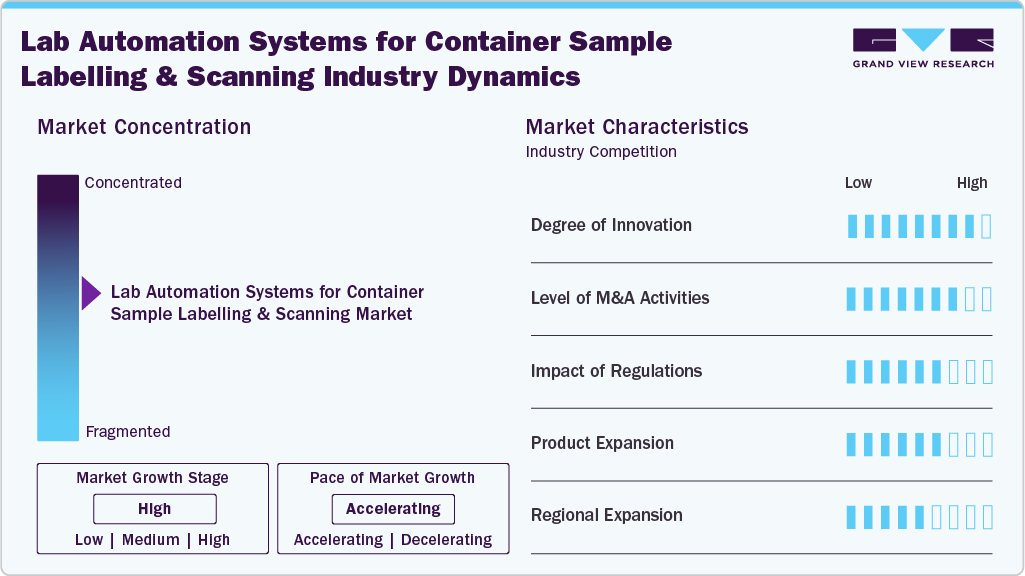
The lab automation systems for container sample labelling & scanning industry is characterized by a high degree of innovation, driven by advancements in intelligent barcode and RFID technologies, AI-enabled image recognition, cloud-connected sample tracking, and seamless integration with laboratory information management systems (LIMS). These innovations are enhancing sample traceability, reducing identification errors, and improving workflow efficiency across clinical, pharmaceutical, and research laboratories. For instance, in August 2025, COPAN launched UriVerse, a fully automated urine specimen processing system that automates barcode labeling, aliquoting, and sample handling, enabling faster and more accurate pre-analytical laboratory workflows.
The lab automation systems for container sample labelling & scanning industry is witnessing a high level of mergers, acquisitions, and strategic partnerships as companies seek to expand laboratory automation capabilities, strengthen sample management portfolios, and enhance end-to-end workflow solutions. These strategic initiatives enable market participants to broaden their technological expertise, geographic reach, and product offerings. For instance, in January 2026, Scinomix announced its acquisition by Ingersoll Rand, expanding Ingersoll Rand’s capabilities in sample management, labeling, barcode scanning, and laboratory workflow automation, thereby strengthening its presence in the clinical, pharmaceutical, and biotechnology laboratory automation market.
 To learn more about this report, Download Free Sample Report
 The regulatory impact on the lab automation systems for container sample labelling & scanning industry is significantly influenced by stringent regulatory requirements governing sample identification, traceability, and data integrity. Compliance with standards such as FDA 21 CFR Part 11, Good Laboratory Practice (GLP), and ISO 15189 is driving the adoption of reliable labeling and scanning solutions that ensure accurate sample tracking, auditability, and quality assurance across clinical, diagnostic, and research laboratories.
The lab automation systems for container sample labelling & scanning industry is witnessing moderate product expansion, driven by the growing demand for high-throughput laboratory workflows, enhanced sample traceability, and integrated automation solutions. Market participants are expanding their portfolios by introducing advanced labeling, barcode scanning, and sample management systems with improved connectivity and automation capabilities. For instance, in February 2025, Azenta Life Sciences launched the BioArc Ultra Automated Store, an automated biorepository solution featuring integrated sample identification, barcode tracking, and inventory management to enhance the efficiency of sample storage and retrieval in life science laboratories.
The lab automation systems for container sample labelling & scanning industry is witnessing a high level of regional expansion, driven by increasing investments in clinical diagnostics, pharmaceutical R&D, biobanking, and life science research infrastructure across emerging economies. The expansion of healthcare and laboratory facilities, coupled with the growing adoption of automated sample management technologies, is enabling market participants to strengthen their geographic presence and address the rising demand for efficient laboratory workflows.
Product Insights
The barcode, RFID, and scanning systems segment accounted for the largest revenue share, over 51.6% in 2025, driven by the increasing need for accurate sample identification, traceability, and workflow efficiency across laboratory operations. These systems support rapid data capture, automated specimen tracking, and integration with laboratory informatics platforms, enabling laboratories to improve operational accuracy, reduce manual intervention, and enhance overall sample management processes. Moreover, various market players are increasingly introducing integrated tracking and scanning technologies to strengthen laboratory automation capabilities and improve real-time sample monitoring. For instance, in May 2023, Ziath launched the Ri-Track Mirage system, which combines RFID technology with 2D barcode scanning to support cryogenic sample labeling, frozen rack identification, and automated container tracking in laboratory automation workflows.
The integrated identification and handling systems segment is expected to register the fastest CAGR over the forecast period. These systems combine sample labeling, scanning, tracking, and physical handling functions into unified laboratory automation platforms. These systems are increasingly deployed in high-throughput laboratories seeking to minimize manual intervention and streamline specimen processing workflows.
Throughput Volume
The high-throughput (301 to 1,000 samples per hour) segment dominated the market, with the largest revenue share of 40.7% in 2025. Growth is driven by increasing diagnostic testing volumes, rising adoption of automated workflows in centralized laboratories, and the need for rapid, accurate sample processing. These systems improve sample traceability, reduce labeling errors, and enhance laboratory efficiency, supporting their global adoption across clinical, pharmaceutical, and research laboratories.
The low throughput (less than 100 samples per hour) segment is expected to register the fastest CAGR over the forecast period, driven by increasing adoption among small- and medium-sized laboratories, research institutes, and specialty diagnostic centers. Growing demand for cost-effective automation, improved sample traceability, and efficient processing of low-volume workflows is expected to support the segment's growth.
End-use Insights
The clinical diagnostics laboratories segment dominated the market, accounting for 41.6% of the market in 2025. The growing use of molecular diagnostics, infectious disease testing, and personalized diagnostics is increasing sample complexity within clinical laboratories. This is driving demand for high-throughput scanning systems and software-linked identification platforms capable of managing real-time sample movement across multiple analyzers and departments. For instance, in March 2025, Pramana and ARUP Laboratories partnered in the U.S. to digitize pathology slides and develop AI-powered hematopathology algorithms using edge AI-enabled scanners, aiming to enhance diagnostic accuracy, workflow efficiency, and clinical pathology automation.
 To learn more about this report, Download Free Sample Report
 The contract research organizations and contract development & manufacturing organizations segment is projected to witness the fastest CAGR, driven by the increasing outsourcing of laboratory testing, drug development, and biopharmaceutical manufacturing activities. Growing demand for high-throughput sample processing, accurate sample traceability, and standardized laboratory workflows is accelerating the adoption of automated container sample labelling and scanning systems across CROs and CDMOs.
Regional Insights
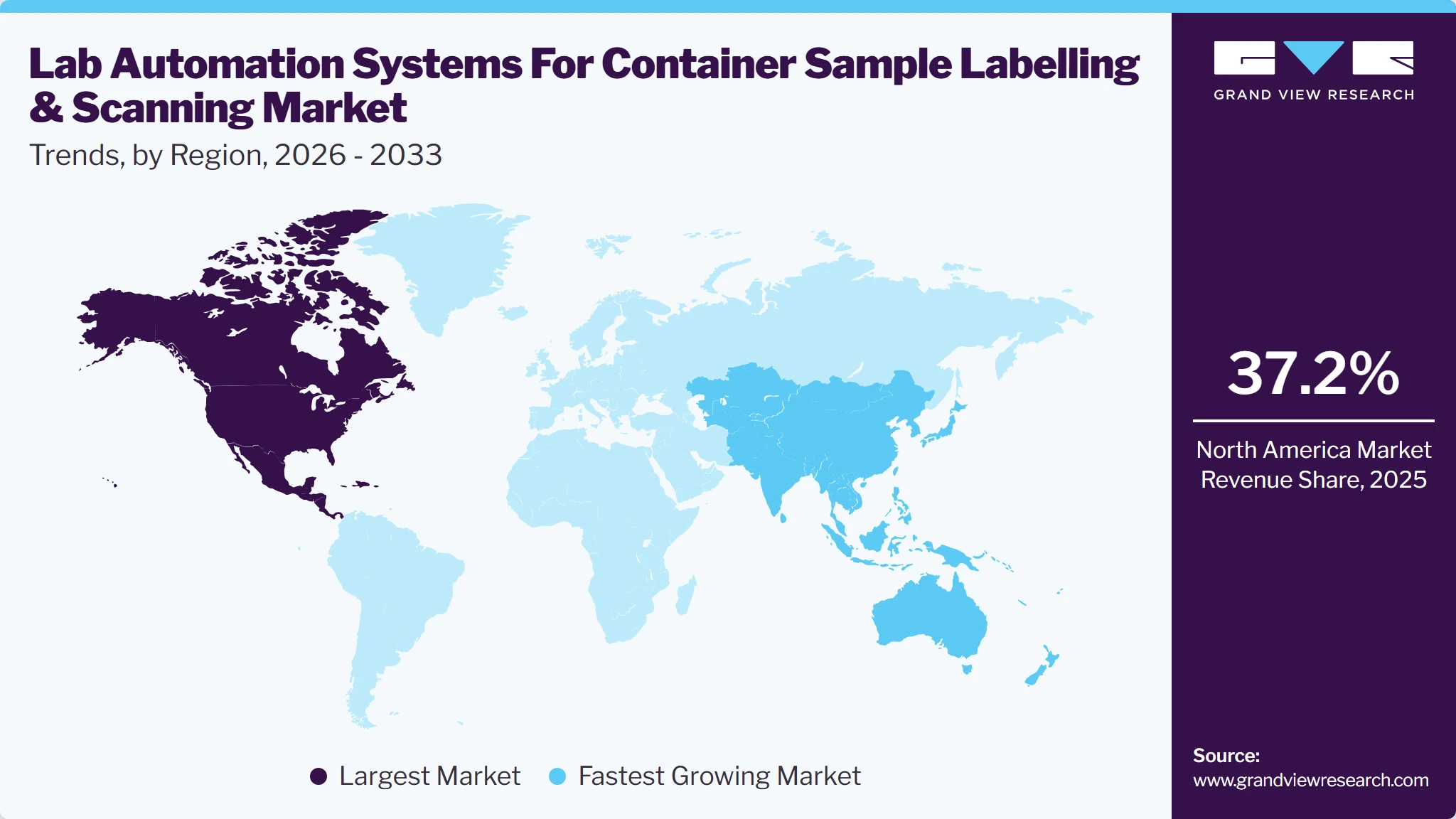
North America dominated the lab automation systems for container sample labelling & scanning market, accounting for the largest revenue share of 37.2% in 2025, driven by advanced healthcare and life science research infrastructure, increasing demand for high-throughput sample processing, and rising adoption of automated sample identification and tracking technologies. Continued investments in biotechnology and laboratory expansion further support market growth. For instance, in May 2026, CTIBIOTECH announced the establishment of its North American headquarters in Greater Philadelphia, expanding the region's biotechnology and laboratory research capabilities.
 To learn more about this report, Download Free Sample Report
 U.S. Lab Automation Systems for Container Sample Labelling & Scanning Market Trends
The lab automation systems for container sample labelling & scanning market in the U.S. is witnessing significant growth due to increasing adoption of automated laboratory workflows and rising demand for accurate, high-throughput sample processing across healthcare and life sciences facilities.
Europe Lab Automation Systems for Container Sample Labelling & Scanning Market Trends
The lab automation systems for container sample labelling & scanning market in Europe is identified as a lucrative region in this industry. Increased funding for research infrastructure is accelerating the deployment of automated sample identification, barcode/RFID tracking, and integrated laboratory workflows. For instance, in February 2026, the European Life Sciences Coalition was launched in association with Invest Europe to strengthen Europe’s life sciences investment ecosystem by mobilizing public and private capital. The coalition brought together leading venture capital firms managing over EUR 24 billion in life sciences assets across more than 1,400 portfolio companies.
The UK lab automation systems for container sample labelling & scanning market held a significant share, attributed to the increasing focus on sustainable biomanufacturing, advanced laboratory automation, and the digital transformation of life sciences infrastructure, which is supporting market growth.
The lab automation systems for container sample labelling & scanning market in Germany is anticipated to grow significantly over the forecast period. Increasing investment in pharmaceutical R&D infrastructure, digital laboratory transformation, and advanced drug discovery capabilities is supporting the growth of the market. For instance, in March 2024, Merck KGaA announced an investment of over USD 349.0 million (€300 million) to build a new Life Science Advanced Research Center at its Darmstadt headquarters in Germany. The facility will integrate R&D in antibodies, mRNA technologies, cell culture, and bioprocessing to accelerate biopharmaceutical development.
Asia Pacific Lab Automation Systems for Container Sample Labelling & Scanning Market Trends
The lab automation systems for container sample labelling & scanning market in the Asia Pacific is expected to grow at the fastest CAGR of 10.0% during the forecast period, due to the increasing adoption of automated specimen management systems across pharmaceutical manufacturing facilities, diagnostic laboratories, blood banks, and biorepositories. Rising laboratory testing volumes and expanding biologics and molecular diagnostics workflows are driving demand for barcode-based sample identification, RFID-enabled tracking systems, automated tube labeling platforms, and integrated scanning technologies that improve traceability and reduce manual handling errors.
China lab automation systems for container sample labelling & scanning market is growing significantly, driven by the large-scale expansion of pharmaceutical manufacturing, the development of centralized diagnostics networks, and genomics research programs. The country’s rapid adoption of laboratory digitization and smart manufacturing initiatives is encouraging the deployment of integrated automation platforms capable of handling large-scale specimen management workflows. For instance, in October 2024, SPT Labtech and ICE Bioscience launched a joint automated laboratory in China to advance intelligent drug screening, high-throughput screening capabilities, and laboratory automation solutions for pharmaceutical research.
The lab automation systems for container sample labelling & scanning market in Japan is witnessing rapid growth driven by the strong presence of pharmaceutical manufacturers, precision diagnostics laboratories, and regenerative medicine research facilities. The country’s aging population and increasing diagnostic testing volumes are driving laboratories to adopt automated specimen identification systems that improve workflow accuracy, reduce manual intervention, and support high-throughput processing environments.
Latin America Lab Automation Systems for Container Sample Labelling & Scanning Market Trends
The Latin America lab automation systems for container sample labelling & scanning market is growing gradually, driven by expanding diagnostic laboratory networks, increasing adoption of laboratory information management systems (LIMS), and rising demand for standardized sample tracking. Growing pharmaceutical research activities and efforts to improve laboratory efficiency and regulatory compliance are further supporting the adoption of automated labelling and scanning solutions across the region.
MEA Lab Automation Systems for Container Sample Labelling & Scanning Market Trends
The lab automation systems for container sample labelling & scanning market in MEA is expected to grow exponentially over the forecast period, driven by increasing investments in laboratory modernization, expanding diagnostic infrastructure, and growing pharmaceutical manufacturing activities. The rising adoption of digital laboratory technologies is further supporting demand for automated sample identification and tracking solutions. For instance, in February 2026, Mindray showcased its Smart Hospital Ecosystem at WHX 2026 in Dubai, UAE, highlighting AI-enabled laboratory automation and integrated digital healthcare solutions to improve laboratory efficiency and diagnostic workflows.
Kuwait lab automation systems for container sample labelling & scanning market is growing steadily, driven by increasing investments in healthcare infrastructure, expanding diagnostic laboratory capabilities, and the gradual adoption of laboratory automation technologies. Rising demand for accurate sample identification, traceability, and workflow efficiency is further supporting the adoption of automated labelling and scanning solutions across clinical and research laboratories.
Key Lab Automation Systems For Container Sample Labelling & Scanning Company Insights
The market is characterized by the presence of several established players competing through product innovation, automation capabilities, and integrated sample management solutions. Key companies, including HTI Automation GmbH, Scinomix, Azenta US Inc., Labman Automation Ltd., Brady Worldwide, Inc., Micronic, and AFYS3G, are strengthening their market position by offering advanced labeling, barcode scanning, sample tracking, and workflow automation systems tailored for clinical, pharmaceutical, and research laboratories.
Key Lab Automation Systems For Container Sample Labelling & Scanning Companies
The following key companies have been profiled for this study on the lab automation systems for container sample labelling & scanning market:
-
HTI Automation GmbH
-
Scinomix
-
Azenta US Inc.
-
Tubewriter, LLC
-
SPT Labtech Ltd
-
Nautilus Systems
-
Labman Automation Ltd
-
Brady Worldwide, Inc.
-
Micronic
-
AFYS3G
-
Thermo Fisher Scientific
-
Zebra Technologies Corp.
-
Tecan Group AG
-
BD
-
Sartorius AG
Competitive Benchmarking
Category
Operating Strategies
Competitive Edge
Weakness
Established Players (Azenta US Inc., Brady Worldwide, Inc., SPT Labtech Ltd., Micronic, etc.)
- Expand market presence through product innovation, strategic collaborations, and integration with laboratory information management systems (LIMS) to enhance sample traceability and operational efficiency.
- Strong global presence with comprehensive automation portfolios and established relationships across pharmaceutical, biotechnology, clinical, and research laboratories.
- Intense competition from diversified laboratory automation providers and the need for continuous technological upgrades.
Emerging Players (HTI Automation GmbH, Scinomix, Tubewriter, LLC)
- Focus on specialized sample labeling, tube handling, and automated scanning systems tailored for research laboratories, biobanks, and diagnostic facilities.
- Strong specialization in niche laboratory automation applications with highly customizable labeling and sample identification solutions.
- Narrower product portfolios and lower brand recognition restrict expansion into large-scale enterprise laboratory projects.
Recent Developments
-
In February 2025, AFYS3G announced the launch of the Lambda768 Information Marking System, a high-throughput laser marking platform designed for automated laboratory sample identification and traceability. The system can permanently engrave text, logos, barcodes, and sample IDs directly onto tubes at speeds of up to 500 tubes per hour, improving workflow efficiency while eliminating the need for traditional labels and ink consumables.
-
In May 2023, TubeWriter announced the launch of the TubeWriter 400, a next-generation direct printing system for life sciences laboratories. The new platform features patented thermal inkjet and UV-curable printing technology for durable, high-speed direct labeling of tubes and vials, improving sample traceability, barcode printing, and workflow efficiency in laboratory environments.
“We are very proud to have made such an impactful contribution to the scientific community with TubeWriter 360, and know that the design and technology improvements of TubeWriter 400 will facilitate scientific discovery, forensic tracking, better patient outcomes and drug discovery in labs and facilities across the globe.”
- TubeWriter 400 release, CEO Satish Rao
Lab Automation Systems For Container Sample Labelling & Scanning Market Report Scope
Report Attribute
Details
Market size in 2025
USD 783.0 million
Estimated market size in 2026
USD 846.4 million
Projected market size by 2033
USD 1,519.5 million
Growth rate
CAGR of 8.7% from 2026 to 2033
Historical data
2021 - 2025
Forecast period
2026 - 2033
Quantitative units
Revenue in USD million, Volume in 00’ Units, and CAGR from 2026 to 2033
Report coverage
Revenue forecast, company ranking, competitive landscape, growth factors, and trends
Segments covered
Product, throughput volume, end-use, region
Regional scope
North America; Europe; Asia Pacific; Latin America; MEA
Country scope
U.S.; Canada; Mexico; UK; Germany; France; Italy; Spain; Norway; Denmark; Sweden; China; Japan; India; South Korea; Australia; Thailand; Brazil; Argentina; Saudi Arabia; South Africa; UAE; Kuwait
Key companies profiled
HTI Automation GmbH; Scinomix; Azenta US Inc.; Tubewriter, LLC; SPT Labtech Ltd; Nautilus Systems; Labman Automation Ltd; Brady Worldwide, Inc.; Micronic; AFYS3G; Thermo Fisher Scientific; Zebra Technologies Corp.; Tecan Group AG; BD; Sartorius AG
Customization scope
Free report customization (equivalent up to 8 analysts' working days) with purchase. Addition or alteration to country, regional & segment scope.
Pricing and purchase options
Avail customized purchase options to meet your exact research needs. Explore purchase options
Global Lab Automation Systems for Container Sample Labelling & Scanning Market Report Segmentation
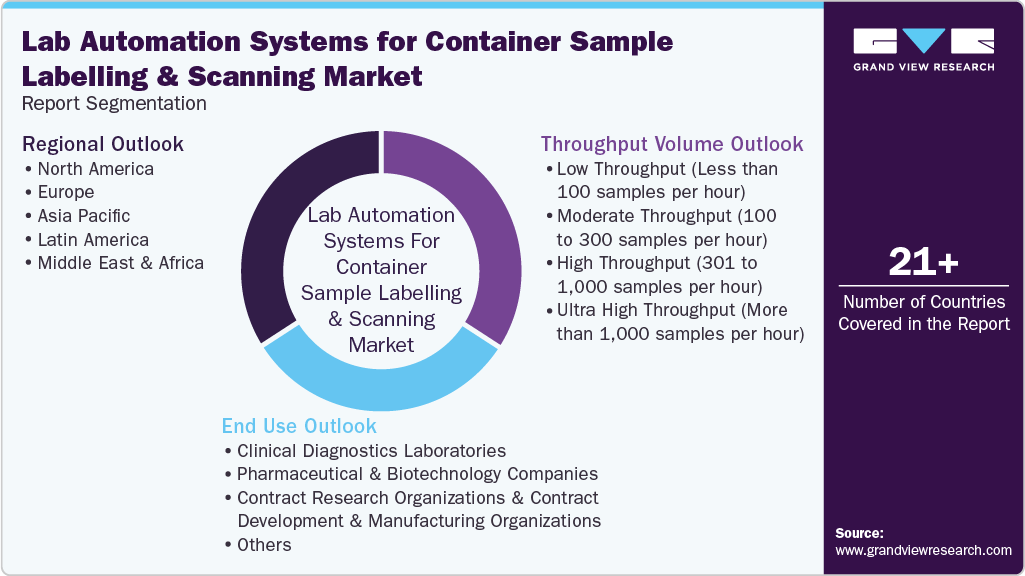
This report forecasts revenue growth and provides an analysis on the latest trends in each of the sub-segments from 2021 to 2033. For this report, Grand View Research has segmented the global lab automation systems for container sample labelling & scanning market based on product, throughput volume, end-use, and region:
 To learn more about this report, Download Free Sample Report
 -
Product Outlook (Revenue, USD Million, 2021 - 2033), (Volume in 00’ Units)
-
Label Printing Systems
-
Benchtop Print-and-Apply
-
Thermal Transfer & Direct Thermal Label Printing Systems
-
Standalone Tube/Vial Label Printers
-
-
Direct-to-Container Inkjet Printing Systems
-
Laser Engraving & Permanent Marking Systems
-
Barcode, RFID & Scanning Systems
-
Barcode scanners and Verification systems
-
Sample ID software-linked scanners
-
-
Integrated Identification and Handling Systems
-
Tube processors
-
Robotic sample ID and handling systems
-
-
-
Throughput Volume Outlook (Revenue, USD Million, 2021 - 2033), (Volume in 00’ Units)
-
Low Throughput (Less than 100 samples per hour)
-
Moderate Throughput (100 to 300 samples per hour)
-
High Throughput (301 to 1,000 samples per hour)
-
Ultra High Throughput (More than 1,000 samples per hour)
-
-
End Use Outlook (Revenue, USD Million, 2021 - 2033), (Volume in 00’ Units)
-
Clinical Diagnostics Laboratories
-
Pharmaceutical & Biotechnology Companies
-
Contract Research Organizations and Contract Development & Manufacturing Organizations
-
Other End Users (Biobanks & Biorepositories, Forensic laboratories, Academic & Research Institutes, etc.)
-
-
Regional Outlook (Revenue, USD Million, 2021 - 2033), (Volume in 00’ Units)
-
North America
-
U.S.
-
Canada
-
Mexico
-
-
Europe
-
UK
-
Germany
-
France
-
Italy
-
Spain
-
Denmark
-
Sweden
-
Norway
-
-
Asia Pacific
-
Japan
-
China
-
India
-
Australia
-
Thailand
-
South Korea
-
-
Latin America
-
Brazil
-
Argentina
-
-
Middle East and Africa (MEA)
-
South Africa
-
Saudi Arabia
-
UAE
-
Kuwait
-
-
Research Methodology
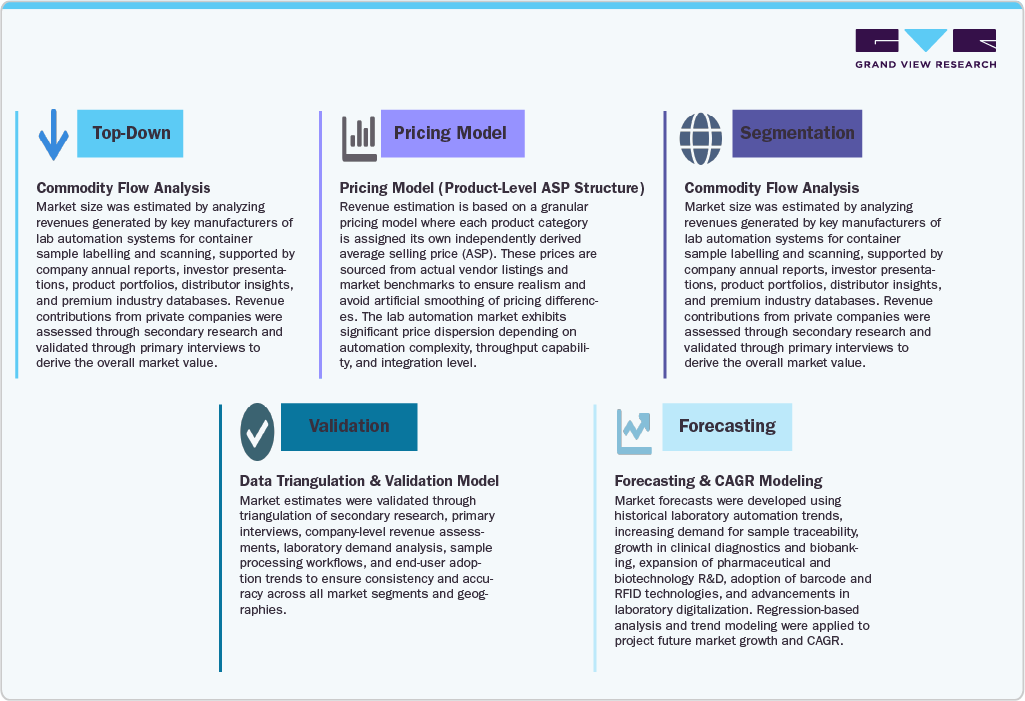
The lab automation systems for container sample labelling & scanning market figures in this report are based on a proven research process that combines executive interviews with secondary research from proprietary databases, company filings, and recognized regulatory and institutional sources. Market size is built through value-chain sizing-reconciling supply-side and demand-side estimates-and triangulated with bottom-up and top-down approaches. Every estimate passes multiple levels of expert validation before publication, with each lab automation systems for container sample labelling & scanning segment quantified using the revenue-capture definitions in the table below.
Segment Definition
Segment- Product
Revenue Capture Definition
Label Printing Systems
Revenue generated from automated systems used to print and apply identification labels to laboratory containers such as tubes, vials, microplates, and specimen containers. The segment encompasses benchtop print-and-apply systems, thermal transfer and direct thermal label printing systems, and standalone tube/vial label printers that facilitate accurate sample identification, traceability, and laboratory workflow automation while minimizing manual labeling errors.
Direct-to-Container Inkjet Printing Systems
This segment captures income from inkjet-based systems that print variable information, including barcodes, QR codes, alphanumeric text, and sample identifiers, directly onto laboratory containers without the use of adhesive labels. These solutions improve labeling durability, reduce consumable usage, and support automated laboratory workflows.
Laser Engraving & Permanent Marking Systems
Market value in this category stems from laser-based systems that permanently engrave identification information onto laboratory containers. These systems provide highly durable markings that withstand extreme storage conditions, chemical exposure, sterilization processes, and long-term sample preservation, making them suitable for regulated laboratory environments.
Barcode, RFID & Scanning Systems
Revenue comes from automated identification and tracking solutions that capture, verify, and manage sample information throughout laboratory workflows. The segment includes barcode scanners and verification systems, as well as software-linked sample identification scanners integrated with laboratory information management systems (LIMS) and RFID-based tracking platforms to enable real-time sample traceability and workflow management.
Integrated Identification and Handling Systems
This segment reflects earnings from fully automated platforms that combine sample identification with container handling, sorting, and processing functions. The category includes automated tube processors and robotic sample identification and handling systems that streamline specimen registration, labeling verification, tracking, and movement across high-throughput laboratory environments while reducing manual intervention and operational errors.
Segment- Throughput Volume
Revenue Capture Definition
Low Throughput (Less than 100 samples per hour)
Revenue generated from sample labeling and scanning systems designed for laboratories processing relatively small specimen volumes. These systems are commonly deployed in research laboratories, specialty diagnostic facilities, and institutions where flexibility and cost efficiency are prioritized over processing speed.
Moderate Throughput (100 to 300 samples per hour)
This segment captures income from automation systems that handle medium-volume laboratory workflows. Such solutions provide an optimal balance between processing capacity, automation, and operational efficiency for routine diagnostic testing and research applications.
High Throughput (301 to 1,000 samples per hour)
Market value in this category stems from automated labeling and scanning platforms developed for laboratories with high specimen volumes requiring rapid processing, continuous sample tracking, and seamless integration with laboratory automation systems.
Ultra High Throughput (More than 1,000 samples per hour)
Revenue originates from advanced automation systems engineered for large-scale laboratory operations that process thousands of samples daily. These solutions support continuous, high-speed identification, labeling, verification, and specimen tracking in centralized diagnostic laboratories, pharmaceutical manufacturing, and biobank facilities.
Segment- End Use
Revenue Capture Definition
Clinical Diagnostics Laboratories
Revenue is generated from laboratory automation systems used by clinical diagnostic laboratories for specimen labeling, barcode generation, sample verification, tracking, and workflow automation to improve testing accuracy, regulatory compliance, and turnaround time.
Pharmaceutical & Biotechnology Companies
This segment captures income from labeling and scanning systems utilized by pharmaceutical and biotechnology companies to support drug discovery, biologics development, clinical research, quality control, manufacturing, and laboratory sample management activities.
Contract Research Organizations and Contract Development & Manufacturing Organizations
Market value in this category stems from automation solutions deployed by CROs, CDMOs, and CMOs for sample identification, tracking, processing, and documentation across outsourced research, analytical testing, clinical trials, and commercial manufacturing workflows.
Other End Users (Biobanks & Biorepositories, Forensic laboratories, Academic & Research Institutes, etc.)
Revenue originates from laboratory automation systems used by organizations outside the primary end-user categories, including biobanks, biorepositories, forensic laboratories, academic and research institutes, government laboratories, and other facilities requiring secure sample identification, traceability, and inventory management throughout the sample lifecycle.
Estimation Model
 To learn more about this report, Download Free Sample Report
 Delivered Customizations
This report has been delivered with the following In-depth customizations
Client Request
Customization Delivered
Value Adds
Cross-Segmentation Analysis by Product & End Use
Detailed cross-segmentation across products (label printing, direct-to-container printing, laser marking, barcode/RFID scanning, and integrated identification systems), and end-use settings including clinical laboratories, pharmaceutical & biotechnology companies, CRO/CDMOs, and research institutions. Includes customized market sizing in USD Million and Unit Volume (00' Units) for selected segment combinations.
Identifies the highest-growth product-throughput combinations, supports product portfolio optimization, evaluates laboratory automation demand across customer groups, and enables targeted commercialization and investment strategies.
Regional Installation Base & Unit Volume Demand Assessment
Customized country- and regional-level analysis covering installed base, annual equipment shipments, replacement demand, laboratory automation adoption, and market forecasts for both revenue and unit volume (00' Units). Assessment includes laboratory infrastructure, regulatory environment, diagnostic testing volumes, and life science research activity across key geographies.
Enables clients to prioritize high-demand markets, forecast equipment sales and replacement opportunities, optimize regional distribution strategies, and align manufacturing capacity with future unit demand.
Competitive Benchmarking & Laboratory Automation Technology Assessment
Comprehensive benchmarking of key manufacturers based on product portfolio, labeling and scanning technologies, throughput capabilities, automation integration, pricing strategy, installed base, distribution network, software interoperability, strategic partnerships, and innovation pipeline. Includes comparison of equipment shipments, market share estimates, and technology positioning.
Helps clients assess competitive positioning, identify technology gaps and whitespace opportunities, benchmark product performance, support pricing and partnership strategies, and strengthen long-term market expansion plans.
Frequently Asked Questions About This Report
The global lab automation systems for container sample labelling & scanning market size was valued at USD 783.0 million in 2025 and is estimated at USD 846.4 million for 2026.
The lab automation systems for container sample labelling & scanning market is driven by the increasing need for accurate sample identification, traceability, and error reduction across laboratories. Growing adoption of high-throughput workflows, biobanking, and clinical research activities is further increasing demand for automated labelling and scanning solutions. In addition, advancements in laboratory information management systems (LIMS) integration are supporting workflow optimization and operational efficiency.
North America dominated with a 37.2% revenue share in 2025.
Asia Pacific is the fastest-growing region over the forecast period.
The barcode, RFID & scanning systems segment led with a 51.6% revenue share in 2025, while integrated identification and handling systems segment is the fastest growing product.
The high throughput (301 to 1,000 samples per hour) segment led with a 40.7% revenue share in 2025, while low throughput (less than 100 samples per hour) segment is the fastest growing throughput volume.
The clinical diagnostics laboratories segment led with a 41.6% revenue share in 2025, while contract research organizations and contract development & manufacturing organizations segment is the fastest growing end-use.
Key players include HTI Automation GmbH, Scinomix; Azenta US Inc., Tubewriter, LLC, SPT Labtech Ltd, Nautilus Systems, Labman Automation Ltd, Brady Worldwide, Inc., Micronic; AFYS3G, Thermo Fisher Scientific, Zebra Technologies Corp., Tecan Group AG, BD, and Sartorius AG.
The global lab automation systems for container sample labelling & scanning market is expected to grow at a CAGR of 8.7% from 2026 to 2033, reaching USD 1,519.5 million by 2033.
About the Author(s)
Biotechnology Research Team
Healthcare · BiotechnologyThis report was authored by the biotechnology research team at Grand View Research - comprising two research analysts, one senior research analyst, and one industry expert - with specialized expertise in the biotechnology segment of the healthcare industry. All findings are based on proprietary healthcare databases, executive interviews, and regulatory analysis, subject to internal peer review prior to publication.
Last Updated:
Speak to Analyst

Customize this report to your needs - add regions, segments, or data points, with 20% free customization.
Or view our licence options:


ISO 9001:2015 & 27001:2022 Certified
We are GDPR and CCPA compliant! Your transaction & personal information is safe and secure. For more details, please read our privacy policy.


