
- Home
- »
- Animal Health
- »
-
Livestock Health Market Size And Share Report, 2026-2033GVR Report cover

Livestock Health Market (2026 - 2033)
Size, Share & Trends Analysis Report By Product (Biologics, Diagnostics, Medicinal Feed Additives, Pharmaceuticals), By Animal (Poultry, Swine, Cattle, Sheep & Goats, Fish), By Distribution Channel, By End Use, By Region, And Segment Forecasts
Market Size, 2025
$43.0BMarket Estimate, 2026
$47.1BMarket Forecast, 2033
$96.6BCAGR, 2026–2033
10.8%Livestock Health Market Summary
The global livestock health market size was valued at USD 43.0 billion in 2025 and is projected to grow from USD 47.1 billion in 2026 to USD 96.6 billion by 2033, at a CAGR of 10.8% from 2026 to 2033. North America dominated the livestock health market with the largest revenue share of 33.0% in 2025. Leading factors driving the market growth are rising disease burden and zoonotic threats, increased sustainability and climate-resilient livestock production, technological advancement in diagnostics and preventive care, growing government support, policy alignment, and global collaboration.
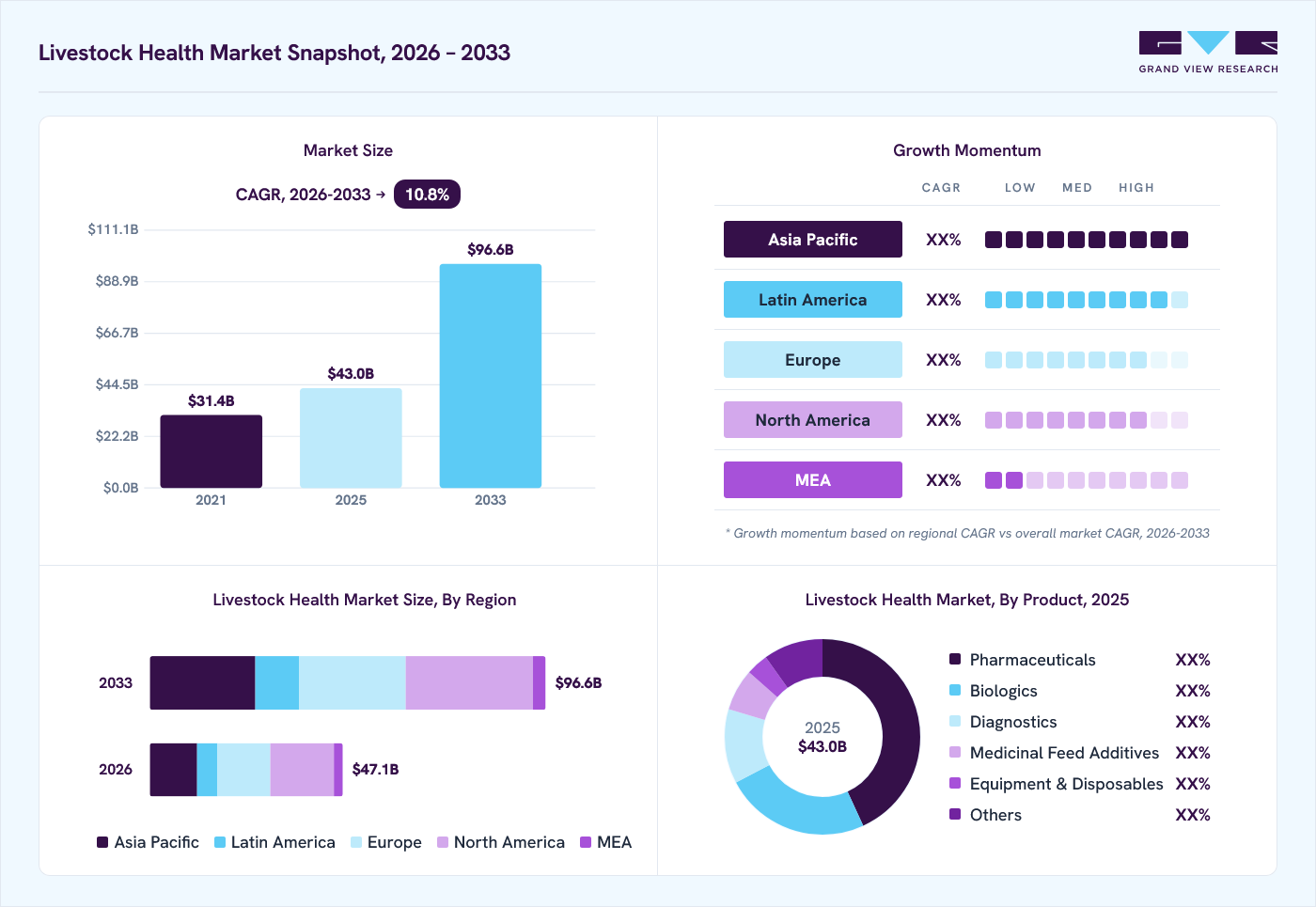 Source: Grand View Research, IR Documents, Primary Interviews, Paid DatabasesTo learn more about this report,
 Download Free Sample Report
Key Market Trends & Insights
- By product: Pharmaceuticals segment held the largest market share of 43.1% in 2025.
- By animal type: Cattle segment held the largest market share of 37.7% in 2025.
- By end use: Veterinary hospitals & clinics segment held the largest market share of 71.3% in 2025.
- By distribution channel: Hospital/clinic pharmacy segment held the largest market share of 49.8% in 2025.
Regional Highlights
- Largest regional market: North America (33.0% revenue share, 2025)
- Fastest-growing regional market: Asia Pacific (highest CAGR, 2026-2033)
- By country: The U.S. held the largest market share in 2025
Market Size & Forecast
- Market size in 2025: USD 43.0 Billion
- Estimated market size in 2026: USD 47.1 Billion
- Projected market size by 2033: USD 96.6 Billion
- CAGR (2026-2033): 10.8%
Three ways to get this report
Buy it, customize it, or ask a question.Ask an Analyst
Analyst response in 1 business day
- AccessReport author, directly
- Reply timeWithin 1 working day
- No sales callDirect answer only
- FormatEmail reply
- CostFree, no cost
Get the Full Report
What the study covers
- FormatsPDF · Excel · Dashboard
- Timeline2026–2033 annual, 2025 base
- Coverage20+ countries, 5 regions
- Companies10+ key players profiled
Customize the Report
20% free customization
- IncludeCountries, segments, points
- TailorTo your product definition
- ExtendDeeper competitor detail
- OrA fully bespoke study
- Turnaround5–10 working days
The global market is witnessing robust expansion, primarily influenced by the escalating burden of infectious and zoonotic diseases and the rapid evolution of diagnostic and preventive technologies. These two dynamics are redefining animal health management practices, shaping government policy, and steering investments toward innovative, data-driven, and sustainable livestock care solutions worldwide. The growing incidence of transboundary and zoonotic diseases has become a defining factor in driving the demand for advanced veterinary interventions. Persistent outbreaks of conditions such as avian influenza, foot-and-mouth disease (FMD), African swine fever, and coccidiosis continue to disrupt livestock production systems, posing substantial risks to food security and international trade. In response, both public and private sectors are intensifying efforts to enhance disease surveillance, vaccination coverage, and biosecurity infrastructure.The U.S. Department of Agriculture’s allocation of over USD 800 million to combat H5N1 exemplifies the increasing scale of government intervention to contain animal disease threats. Similar measures are being implemented across Latin America, the Middle East, and Africa, where regional authorities are strengthening early warning systems and veterinary response capabilities. Moreover, the growing emphasis on the One Health framework, linking animal, human, and environmental health, has promoted cross-sector collaboration, developing novel vaccines, diagnostic tools, and antimicrobial alternatives designed to curb both animal and public health risks.
 To learn more about this report, Download Free Sample Report
Concurrently, technological advancements in diagnostics and preventive medicine are revolutionizing livestock management. The emergence of molecular diagnostics, AI-driven health monitoring, biosensors, and portable testing devices has enabled earlier detection and more efficient containment of diseases. In Europe, for example, technologies such as Boehringer Ingelheim’s SoundTalks respiratory monitoring system and Lely’s Zeta calving sensor are transforming on-farm disease management by providing continuous, real-time insights into herd health. Likewise, in the Asia Pacific region, deploying advanced imaging platforms such as Esaote’s Magnifico Vet MRI underscores the region’s growing investment in precision veterinary diagnostics. Digital platforms now facilitate data integration across farms, laboratories, and regulatory agencies, creating a more coordinated ecosystem for disease tracking and control.
Collectively, the interplay between increasing disease pressure and technological innovation is reshaping the global livestock health landscape. The industry is steadily transitioning from a reactive treatment model to one centered on prevention, precision, and predictive health management. As global demand for animal protein rises and biosecurity concerns intensify, these trends are expected to underpin long-term growth, resilience, and sustainability in the livestock health sector.
Key U.S. Regulatory Bodies Responsible For Approval Of Different Types Of Products
Product Category
Regulatory Body
Key Pathways
Veterinary Pharmaceuticals
FDA-CVM
NADA, ANADA, CNADA, INAD, EUA, Indexing
Prescription / OTC / VFD Drugs
FDA-CVM
Labeling classification during approval
Compounded Drugs (Bulk Substances)
FDA-CVM
GFI #256 - limited enforcement discretion
Vaccines / Biologics
USDA-CVB
Pre-market license under Virus-Serum-Toxin Act
In-vitro Diagnostics (pathogen-based)
USDA-CVB
Regulated if used at point of care for infectious agents
Lab Tests (non-infectious)
Not regulated
Routine tests (CBC, chemistry, hormones)
Supplements / Nutraceuticals
FDA-CVM (discretionary)
No formal approval; subject to labeling oversight
Cell/Tissue Therapies
FDA or USDA
Depends on primary mechanism of action
Ectoparasiticides
EPA or FDA
EPA for topical/environment; FDA if systemic
Market Dynamics
The livestock health market is primarily driven by the increasing prevalence of infectious and transboundary animal diseases, rising demand for animal-derived protein, and the growing emphasis on preventive healthcare to improve livestock productivity. Frequent outbreaks of diseases such as avian influenza, foot-and-mouth disease, and African swine fever have intensified investments in vaccination programs, diagnostics, therapeutics, and biosecurity infrastructure. Furthermore, the increasing adoption of livestock management software and digital herd management platforms is transforming animal health management by enabling real-time monitoring, electronic recordkeeping, and data-driven decision-making. Integrated software solutions, combined with AI-powered analytics, wearable sensors, and connected farm management systems, support early disease detection, optimize treatment planning, and improve operational efficiency while reducing production losses.
Moreover, the regulatory environment plays a pivotal role in shaping the livestock health market by ensuring product safety, efficacy, quality, and disease control. Veterinary pharmaceuticals, biologics, and vaccines are subject to stringent approval processes by regulatory authorities such as the U.S. FDA Center for Veterinary Medicine (FDA-CVM) and the USDA Center for Veterinary Biologics (USDA-CVB), while antimicrobial stewardship policies and manufacturing quality standards continue to become more rigorous worldwide. Governments are also promoting harmonized regulations, enhanced disease surveillance, traceability systems, and biosecurity protocols to facilitate international livestock trade and strengthen food security.
The steady rise in animal protein consumption is driving demand for livestock health products and services as producers seek to improve productivity, minimize disease-related losses, and ensure a consistent supply of meat and eggs. According to an article published by U.S. Department of Agriculture in June 2026, per capita availability of beef, pork, broilers, and turkey is projected to increase from 228.8 pounds in 2026 to 229.4 pounds in 2027, while egg availability is expected to rise from 22.5 dozen to 22.9 dozen per person during the same period. Broiler meat, the most consumed animal protein in the U.S., is forecast to increase from 105.6 pounds per capita in 2026 to 106.5 pounds in 2027, highlighting continued expansion in poultry production. As livestock producers increases production to meet this growing demand, investments in vaccines, pharmaceuticals, diagnostics, feed additives, and biosecurity solutions are expected to increase, supporting the growth of the livestock health market.Also, rising global demand for high-quality animal protein is encouraging livestock producers to adopt preventive healthcare strategies that improve herd productivity and reduce production risks. Greater emphasis on disease prevention, reproductive efficiency, and feed optimization is increasing the need for routine vaccination programs, advanced diagnostics, nutritional supplements, and herd health management solutions. This shift toward productivity-focused livestock farming is expected to create sustained demand for innovative animal health products and services, supporting long-term market expansion.
The high cost of advanced livestock health technologies and their uneven availability across regions remain key restraints on market growth. Innovative solutions such as molecular diagnostics, AI-enabled herd monitoring, wearable sensors, precision livestock management systems, and next-generation vaccines often require significant upfront investment, specialized infrastructure, and skilled personnel. While large commercial livestock operations are increasingly adopting these technologies, smallholder farmers and producers in developing regions often face financial and infrastructure constraints that limit access. This disparity in technology adoption slows the widespread implementation of precision livestock health management and restricts the overall growth potential of the livestock health market.The increasing adoption of precision livestock technologies presents a significant growth opportunity for the livestock health market. For instance, according to an article published by Beef magazine in April 2025, growing use of electronic identification (EID) tags, AI-powered herd management software, machine vision systems, smart feeding technologies, and genomic testing is enabling livestock producers to monitor animal health, improve disease traceability, optimize feed efficiency, and make data-driven management decisions. As these technologies become more practical, affordable, and integrated into commercial farming operations, demand for complementary livestock health products including diagnostics, vaccines, therapeutics, and digital health platforms is expected to increase. The continued shift toward precision livestock farming creates opportunities for animal health companies to develop connected, technology-enabled solutions that enhance productivity, reduce disease risks, and improve overall herd performance.Market Concentration & Characteristics
The global livestock health industry exhibits moderate to high concentration, with leading players such as Zoetis, Merck Animal Health, Boehringer Ingelheim, Elanco, and Ceva Santé Animale dominating through extensive product portfolios and global distribution networks. Smaller biotechnology firms and regional manufacturers contribute niche innovations but often partner with or are acquired by larger companies to scale commercialization and regulatory reach.
Innovation in the livestock health sector is accelerating, driven by advancements in biologics, vaccines, diagnostics, and precision livestock technologies. The industry increasingly focuses on developing sustainable solutions, such as methane-reducing feed additives, next-generation vaccines, and AI-assisted monitoring systems that enhance productivity while addressing environmental and welfare concerns.
 To learn more about this report, Download Free Sample Report
Mergers, acquisitions, and strategic alliances remain central to market consolidation and portfolio diversification. Recent transactions such as Zoetis’ divestiture of medicated feed additives and Ceva’s acquisitions in Latin America reflect a specialization and geographic expansion trend. M&A activity is also facilitating entry into emerging markets and accelerating R&D capabilities in biologics and digital health.
Regulatory frameworks exert a significant influence on market dynamics, shaping product approval timelines, manufacturing standards, and biosecurity compliance. Increasing harmonization across regions, coupled with stringent oversight on antimicrobial use and vaccine quality, is fostering transparency and strengthening global trade readiness. However, regulatory disparities in developing regions continue to pose operational challenges.
While traditional pharmaceuticals remain dominant, substitutes such as probiotics, phytogenic additives, and immunomodulators are gaining prominence as alternatives to antibiotics and chemical-based treatments. These products are aligned with global antimicrobial resistance (AMR) reduction goals and consumer preferences for natural, residue-free livestock health solutions.
The market is expanding both geographically and technologically, driven by rising demand for animal protein, sustainability mandates, and the digitalization of veterinary services. Companies are investing in local manufacturing, precision farming tools, and integrated care platforms to enhance access and efficiency, particularly in the Asia Pacific, Latin America, and the Middle East, where livestock production is rapidly scaling.
Analyst Perspective
The livestock health market is expected to maintain strong long-term growth, supported by increasing investments in precision animal health, preventive veterinary care, and sustainable livestock production. Growing adoption of AI-enabled diagnostics, digital herd management platforms, biologics, and next-generation vaccines is creating significant opportunities for integrated animal health solutions. Emerging markets in Asia Pacific, Latin America, and the Middle East are expected to drive growth due to expanding livestock production, improving veterinary infrastructure, and supportive government initiatives. Despite challenges related to antimicrobial resistance, regulatory compliance costs, and limited healthcare access in some regions, continued innovation, public-private collaborations, and rising demand for sustainable livestock management practices are expected to support long-term market expansion.
Animal Type Insights
Based on animal type, the cattle segment led the market with the largest revenue share of 37.7% in 2025. This is driven by cattle's economic importance, their scale in commercial farming, and their susceptibility to infectious and metabolic diseases. Ongoing preventive healthcare, therapeutics, and vaccination programs are critical to maintaining productivity and reducing economic losses in this segment.
The sheep and goats segment is expected to register a lucrative growth rate during the forecast period. Expansion of small ruminant farming in regions such as the Asia Pacific, Latin America, and the Middle East, combined with rising demand for mutton, goat milk, and related by-products, is driving increased adoption of veterinary therapeutics and preventive healthcare solutions. Government-led vaccination programs and biosecurity initiatives further support the growth of this segment.
Product Insights
Based on product, the pharmaceuticals segment led the market with the largest revenue share of 43.1% in 2025. This dominance is primarily due to the widespread use of parasiticides, antibiotics, and therapeutic formulations to prevent and treat infectious diseases in cattle, poultry, swine, and small ruminants. Continuous R&D in biologics, long-acting injectables, and precision therapeutics is strengthening this segment, meeting growing demand for disease control and productivity enhancement in commercial livestock operations.
The others segment, comprising veterinary telehealth, veterinary software, and livestock monitoring solutions, is expected to grow the fastest at a rate of about 12.19% in the near future. The increasing adoption of IoT-enabled monitoring systems, wearable sensors, and digital herd management tools drives disease detection and farm-level decision-making efficiency. These technologies also support early intervention and preventive care, which is becoming critical as livestock operations scale in emerging and developed regions.
End Use Insights
Based on end use, the veterinary hospitals & clinics segment led the market with the largest revenue share of 71.3% in 2025, serving as primary centers for disease diagnosis, preventive care, and livestock treatment. Their professional oversight ensures correct vaccine administration, effective therapeutics, and proper diagnostic use, thereby reducing disease-related losses.
Point-of-care testing and in-house testing is expected to grow at the highest CAGR from 2025 to 2033. On-farm diagnostic solutions allow rapid detection of infectious and metabolic diseases, enabling immediate corrective actions. Integrating portable molecular tests and AI-driven monitoring systems further enhances farm-level disease management and operational efficiency in livestock operations.
Distribution Channel Insights
Based on distribution channel, hospital/clinic pharmacy segment led the market with the largest revenue share of 49.8% in 2025 as the primary channel for livestock health products. These channels ensure proper administration of prescription medications, vaccines, and therapeutics under professional supervision. They also provide critical access to diagnostic kits and biosecurity solutions that are essential for disease management in commercial livestock operations.
 To learn more about this report, Download Free Sample Report
The e-commerce segment is projected to witness the fastest growth in the forecast period, driven by rising internet penetration, digital adoption among farmers, and demand for timely delivery of livestock health products. Online platforms facilitate the procurement of vaccines, feed additives, and diagnostics, particularly in remote or underserved farming regions, enabling faster intervention and improved herd health.
Regional Insights
North America dominated the livestock health market with the largest revenue share of 33.0% in 2025. This can be attributed to increasing livestock production and adopting preventive healthcare measures across cattle, poultry, and swine. Technological advancements, including AI-based herd monitoring, biosensors, and digital diagnostics, enhance disease detection and management. Government initiatives and emergency funding strengthen biosecurity and disease surveillance, particularly in the U.S. and Canada. Sustainability trends, such as feed additives for methane reduction, further accelerate the adoption of innovative solutions.
 To learn more about this report, Download Free Sample Report
U.S. Livestock Health Market Trends
The livestock health market in the U.S. held the largest share in the North America region in 2025. The dominant share can be attributed to strong demand for vaccines, antibiotics, feed additives, and novel therapeutics. Investments in emergency disease management, such as the USDA’s H5N1 funding, reinforce preventive care and outbreak preparedness. Technological innovation improves productivity, including precision microbiome solutions, AI-assisted diagnostics, and immunotherapies. Public-private partnerships and regulatory support enhance access to advanced veterinary products and services for large-scale livestock operations..
Europe Livestock Health Market Trends
The livestock health market in Europe held the second-largest share of the animal health market in 2024. The region is expected to experience consistent growth over the forecast period owing to high demand for meat and dairy products and the need for preventive healthcare in large-scale livestock operations. R&D investment in vaccines, biologics, and diagnostics drives continuous innovation. Regulatory frameworks and welfare standards ensure disease control and safe production. AI, sensor-based monitoring, and farm management technologies improve herd health and operational efficiency. Cross-border collaborations and digital platforms further support market growth.
The UK livestock health market held the largest share in the European market in 2024. Digital and sensor-based technologies for herd monitoring and integrated preventive healthcare programs drive the region. Strategic collaborations, such as swine monitoring systems and vaccine partnerships, enhance disease detection and farm management. Welfare regulations and sustainability requirements increase the adoption of therapeutics and diagnostics. The market benefits from strong R&D activity in vaccines, biologics, and precision livestock tools, supporting efficiency and productivity.
The livestock health market in Germany is anticipated to grow constantly, supported by strong research infrastructure, technological innovation, and the adoption of precision monitoring tools. Investment in vaccines, biologics, and AI-assisted diagnostics drives disease control and productivity. International collaborations for therapeutic development and monoclonal antibody research strengthen capabilities. Regulatory support for animal welfare and biosecurity ensures high-quality production. Digital herd management and early detection technologies enhance farm-level efficiency.
Asia Pacific Livestock Health Market Trends
The livestock health market in the Asia Pacific is expected to grow at a lucrative rate during the forecast period. The market is driven by rising demand for protein, expanding livestock populations, and the need for preventive healthcare. Government vaccination programs and disease outbreak management, such as for swine flu, support market growth. Adoption of advanced diagnostics, MRI/CT imaging, and AI-assisted monitoring improves disease detection and treatment outcomes. Increasing awareness of animal welfare and sustainable practices encourages the adoption of innovative therapeutics and feed additives. Regional collaborations and investments in veterinary infrastructure further accelerate growth.
India livestock health marketis witnessing a surge in demand for veterinary products and services to address existing and emerging diseases in animals. The country is driven by increasing livestock populations, rising protein consumption, and government-backed preventive healthcare initiatives. Vaccines, feed additives, and therapeutics are in growing demand to maintain productivity and control disease outbreaks. Technological adoption improves farm efficiency, including point-of-care diagnostics and digital herd management. Public-private partnerships and rural veterinary programs enhance accessibility and adoption across large-scale and smallholder farms. Regulatory support and awareness campaigns further strengthen preventive care uptake.
Latin America Livestock Health Market Trends
The livestock health market in Latin America is expected to grow over the forecast period, owing to large-scale cattle, poultry, and swine production and rising protein demand. Preventive healthcare, vaccines, feed additives, and diagnostics are increasingly adopted to manage endemic diseases such as foot-and-mouth disease and avian influenza. Strategic partnerships, acquisitions, and regional expansions by global players enhance product access. Government support for vaccination campaigns, biosecurity, and disease surveillance further strengthens market growth. Consumer demand for sustainable and efficient production practices also encourages technological adoption.
Brazil livestock health market accounts for a higher revenue share in Latin America. This can mainly be attributed to its position as one of the global leaders in cattle, poultry, and swine production. Strong demand for beef, dairy, and poultry products necessitates ongoing preventive healthcare and therapeutics. Government biosecurity measures, vaccination programs, and outbreak management initiatives support disease control. Adopting diagnostics, vaccines, and feed additives ensures productivity and reduces economic losses. Strategic investments and collaborations by global and domestic companies enhance market reach and technological integration.
Middle East & Africa Livestock Health Market Trends
The livestock health market in the MEA is shaped by preventive healthcare adoption, food security goals, and disease control initiatives. Investment in veterinary infrastructure, vaccines, and biosecurity programs supports herd health management. AI-driven monitoring and digital diagnostics are increasingly implemented to improve farm efficiency. Rising urbanization, modernization of livestock practices, and public-private collaborations enhance market growth. Regulatory harmonization ensures wider adoption of advanced therapeutics and preventive solutions.
South Africa livestock health market growth is driven by preventive care and biosecurity programs targeting cattle, poultry, and small ruminants. Recurring outbreaks of endemic diseases like foot-and-mouth disease have increased demand for vaccines, diagnostics, and therapeutics. Adoption of on-farm monitoring systems and point-of-care testing improves herd management. Government investment in veterinary infrastructure and partnerships strengthens disease surveillance and animal welfare standards. Increasing awareness of sustainable livestock practices is further driving the adoption of innovative solutions.
Key Livestock Health Company Insights
The global market is dominated by major players such as Zoetis, Elanco, Boehringer Ingelheim, Merck Animal Health, Ceva Santé Animale, and HIPRA, holding a significant market share. These companies lead through strong R&D pipelines, innovative vaccines, biologics, feed additives, and precision livestock solutions. Strategic partnerships, acquisitions, and regional expansions are common strategies to strengthen market presence and distribution networks. Continuous investment in digital diagnostics, AI-assisted monitoring, and preventive healthcare solutions further reinforces their leadership. Emerging players focusing on niche therapeutics, microbiome-based products, and telehealth solutions contribute to competitive dynamics and market growth.
Key Livestock Health Companies:
The following are the leading companies in the livestock health market.
- Zoetis
- Ceva Santé Animale
- Merck & Co., Inc.
- Vetoquinol S.A.
- Boehringer Ingelheim Gmbh
- Elanco
- Virbac
- Mars Inc.
- Dechra Pharmaceuticals Plc
- Idexx Laboratories, Inc.
Competitive Benchmarking
Category
Operating Strategies
Competitive Edge
Weakness
Established Players
(Zoetis; Ceva Santé Animale; Merck & Co., Inc.; Vétoquinol S.A.; Boehringer Ingelheim GmbH; Elanco; Virbac; Mars Inc.; Dechra Pharmaceuticals plc; IDEXX Laboratories, Inc.)
- Established companies focus on delivering integrated livestock health solutions through vaccines, pharmaceuticals, diagnostics, medicated feed additives, and digital herd health management tools for cattle, poultry, swine, sheep, goats, and aquaculture. They strengthen their market position through continuous product innovation, biologics development, strategic acquisitions, expansion of manufacturing facilities, precision livestock technologies, veterinary training programs, and collaborations with governments, producer organizations, and commercial farms.
- Leading companies benefit from diversified animal health portfolios, strong global manufacturing and distribution capabilities, extensive regulatory expertise, well-established relationships with veterinarians and livestock producers, and robust R&D investments. Their ability to provide integrated disease prevention, diagnostics, and therapeutic solutions, supported by technical services and digital monitoring platforms, enables high customer retention and long-term market leadership.
- Established companies face challenges from stringent regulatory approvals, antimicrobial stewardship regulations, fluctuating livestock populations, disease outbreaks affecting animal movement and trade, rising manufacturing costs, and pricing pressure from generic alternatives. Compliance with varying animal health policies across countries and increasing demand for sustainable livestock production may also impact profitability.
Emerging Players
(Hester Biosciences Ltd.; HIPRA; Phibro Animal Health Corporation; Biogénesis Bagó; Indian Immunologicals Ltd.; Ashish Life Science Pvt. Ltd.)
- Emerging companies primarily focus on affordable vaccines, generic veterinary pharmaceuticals, nutritional supplements, rapid diagnostics, and preventive healthcare products tailored to regional livestock diseases. They compete through localized manufacturing, contract production, flexible pricing, distributor partnerships, and expansion into underserved livestock-producing regions while emphasizing customer-centric technical support and faster commercialization.
- Emerging companies compete through operational flexibility, competitive pricing, regional market expertise, customized livestock healthcare solutions, and rapid response to local disease outbreaks. Their focus on niche livestock products, localized manufacturing, and close collaboration with veterinary professionals enables them to build a strong presence in developing agricultural markets.
- Emerging companies often have limited manufacturing capacity, lower international brand recognition, smaller distribution networks, and fewer financial resources for large-scale R&D and regulatory approvals. They may also face challenges in expanding internationally, scaling production, competing against multinational companies, and maintaining consistent product quality across multiple markets.
Recent Developments
-
In July 2025, Merck Animal Health received U.S. FDA approval for EXZOLT, a novel fluralaner oral solution designed to control northern fowl mites in chickens. EXZOLT targets mite nervous systems effectively and is safe for both laying hens and replacement chickens.
-
In June 2025, Zoetis introduced AI Masses for its Vetscan Imagyst analyzer, enhancing AI-based detection of neoplastic cells to support rapid and accurate veterinary diagnostics. This feature expands Vetscan Imagyst to seven testing applications, making it the most advanced AI veterinary analyzer.
-
In February 2025, Vaksindo partnered with Iraq’s veterinary authorities to support FMD control through vaccines, technical support, and knowledge exchange as part of its Middle East expansion strategy.
Livestock Health Market Report Scope
Report Attribute
Details
Market size in 2025
USD 43.0 billion
Estimated market size in 2026
USD 47.1 billion
Projected market size by 2033
USD 96.6 billion
Growth rate
CAGR of 10.8% from 2026 to 2033
Historical data
2021 - 2024
Forecast period
2026 - 2033
Quantitative units
Revenue in USD million/billion and CAGR from 2026 to 2033
Report coverage
Revenue forecast, company ranking, competitive landscape, growth factors, and trends
Segments covered
Animal type, product, end use, distribution channel, region
Regional scope
North America; Europe; Asia Pacific; Latin America; MEA
Country scope
U.S.; Canada; Mexico; Germany; UK; France; Italy; Spain; Russia, Netherlands, Switzerland, Ireland, Poland, Norway; Denmark; Sweden; China; Japan; Indonesia, Malaysia, Singapore, Philippines, India; South Korea; Australia; Thailand; Brazil; Colombia, Argentina; Saudi Arabia; South Africa; UAE; Turkey, Iran, Israel, Kuwait; Oman; Qatar.
Key companies profiled
Zoetis; Ceva Santé Animale; Merck & Co., Inc.; Vetoquinol S.A.; Boehringer Ingelheim GmbH; Elanco; Virbac; Mars Inc.; Dechra Pharmaceuticals plc; IDEXX Laboratories, Inc.
Customization scope
Free report customization (equivalent up to 8 analysts' working days) with purchase. Addition or alteration to country, regional & segment scope.
Pricing and purchase options
Avail customized purchase options to meet your exact research needs. Explore purchase options
Global Livestock Health Market Report Segmentation
This report forecasts revenue growth at global, regional, and country levels and provides an analysis of the latest industry trends in each of the sub-segments from 2021 to 2033. For this study, Grand View Research has segmented the global livestock health market report based on product, animal, distribution channel, end use, and region:
-
Animal Type Outlook (Revenue, USD Million, 2021 - 2033)
-
Poultry
-
Swine
-
Cattle
-
Sheep & Goats
-
Fish
-
-
Product Outlook (Revenue, USD Million, 2021 - 2033)
-
Biologics
-
Vaccines
-
Modified/ Attenuated Live
-
Inactivated (Killed)
-
Other Vaccines
-
-
Other Biologics
-
-
Pharmaceuticals
-
Parasiticides
-
Anti-infectives
-
Anti-inflammatory
-
Analgesics
-
Others
-
-
Medicinal Feed Additives
-
Diagnostics
-
Consumables, reagents and kits
-
Instruments and devices
-
-
Equipment & Disposables
-
Critical Care Consumables
-
Anesthesia Equipment
-
Fluid Management Equipment
-
Temperature Management Equipment
-
Rescue & Resuscitation Equipment
-
Research Equipment
-
Patient Monitoring Equipment
-
-
Others
-
Veterinary Telehealth
-
Veterinary Software
-
Livestock Monitoring
-
-
-
Distribution Channel Outlook (Revenue, USD Million, 2021 - 2033)
-
Retail
-
E-Commerce
-
Hospital/ Clinic Pharmacy
-
-
End Use Outlook (Revenue, USD Million, 2021 - 2033)
-
Veterinary Reference Laboratories
-
Point-of-care Testing/In-house Testing
-
Veterinary Hospitals & Clinics
-
Others
-
-
Regional Outlook (Revenue, USD Million, 2021 - 2033)
-
North America
-
U.S.
-
Canada
-
Mexico
-
-
Europe
-
UK
-
Germany
-
France
-
Italy
-
Spain
-
Netherlands
-
Switzerland
-
Sweden
-
Denmark
-
Norway
-
Russia
-
Ireland
-
Poland
-
-
Asia Pacific
-
Japan
-
China
-
India
-
Indonesia
-
Thailand
-
Australia
-
South Korea
-
Philippines
-
Malaysia
-
Singapore
-
-
Latin America
-
Brazil
-
Argentina
-
-
Middle East & Africa
-
South Africa
-
Saudi Arabia
-
Turkey
-
UAE
-
Kuwait
-
Egypt
-
Iran
-
Israel
-
-
Research Methodology
The livestock health market figures in this report are based on a proven research process that combines executive interviews with secondary research from proprietary databases, company filings, and recognized regulatory and institutional sources. Market size is built through value-chain sizing - reconciling supply-side and demand-side estimates - and triangulated with bottom-up and top-down approaches. Every estimate passes multiple levels of expert validation before publication, with each livestock health segment quantified using the revenue-capture definitions in the table below.
Segment Definition
Segment - Animal Type
Revenue Capture Definition
Poultry
Revenue generated from products and services developed for the prevention, diagnosis, monitoring, and treatment of diseases in poultry, including chickens, ducks, turkeys, and other commercial birds.
Swine
Revenue derived from animal health solutions supplied for disease control, vaccination, diagnostics, and therapeutic care in pigs across breeding, nursery, and finishing operations.
Cattle
Revenue earned through the sale of livestock healthcare products and veterinary services intended to maintain the health and productivity of dairy and beef cattle.
Sheep & Goats
Revenue generated from healthcare interventions, pharmaceuticals, biologics, diagnostics, and veterinary support used for disease management in sheep and goats.
Fish
Revenue contributed by aquatic animal health products, vaccines, diagnostics, therapeutics, and monitoring solutions utilized in aquaculture and commercial fish farming.
Segment - Product
Revenue Capture Definition
Biologics
Revenue generated from biological animal health products, including vaccines, immunological, and other biologically derived solutions used to prevent and control diseases in livestock.
Vaccines
Revenue generated from veterinary vaccines administered to livestock for protection against infectious diseases and improvement of herd immunity.
Modified/ Attenuated Live
Revenue earned from live attenuated vaccines formulated with weakened pathogens to stimulate long-lasting immune responses in food-producing animals.
Inactivated (Killed)
Revenue generated from killed vaccines containing inactivated pathogens used to provide safe and effective disease prevention in livestock populations.
Other Vaccines
Revenue derived from recombinant, vector-based, DNA, toxoid, and other specialized veterinary vaccines designed for livestock disease prevention.
Other Biologics
Revenue generated from non-vaccine biological products, including antisera, immunomodulators, monoclonal antibodies, and similar veterinary biologics.
Pharmaceuticals
Revenue generated from veterinary medicinal products prescribed or administered for the treatment, prevention, and management of diseases and health conditions in livestock.
Parasiticides
Revenue generated from antiparasitic products used to eliminate or control internal and external parasites affecting livestock health and productivity.
Anti-infectives
Revenue earned from antimicrobial therapies, including antibiotics, antivirals, and antifungals, utilized to treat infectious diseases in production animals.
Anti-inflammatory
Revenue generated from veterinary anti-inflammatory medications used to reduce inflammation associated with infections, injuries, and chronic health conditions in livestock.
Analgesics
Revenue derived from pain management medications administered to livestock during surgical procedures, injury recovery, or disease treatment.
Others
Revenue generated from veterinary pharmaceutical products not classified under major therapeutic categories, including metabolic regulators, hormones, and supportive therapies.
Diagnostics
Revenue generated from diagnostic products and technologies used to detect, monitor, and confirm diseases, pathogens, and health conditions in livestock.
Consumables, reagents and kits
Revenue earned from diagnostic consumables, laboratory reagents, assay kits, and test cartridges utilized in veterinary disease detection.
Instruments and devices
Revenue generated from diagnostic analyzers, imaging systems, molecular testing platforms, and laboratory devices employed for livestock health assessment.
Equipment & Disposables
Revenue generated from veterinary equipment and disposable medical supplies utilized during livestock diagnosis, treatment, monitoring, and surgical procedures.
Critical Care Consumables
Revenue generated from disposable products such as tubing, catheters, syringes, filters, and related consumables required for intensive veterinary care.
Anesthesia Equipment
Revenue earned from anesthesia delivery systems, vaporizers, ventilators, and associated equipment used during veterinary surgical procedures for livestock.
Fluid Management Equipment
Revenue generated from infusion pumps, fluid administration systems, and related equipment designed for hydration and therapeutic fluid delivery in animals.
Temperature Management Equipment
Revenue generated from veterinary warming, cooling, and thermal regulation equipment used to maintain optimal body temperature during treatment and recovery.
Rescue & Resuscitation Equipment
Revenue derived from emergency veterinary equipment used for cardiopulmonary resuscitation, oxygen therapy, airway management, and critical interventions.
Research Equipment
Revenue generated from laboratory and research equipment utilized in livestock health studies, vaccine development, and veterinary biomedical research.
Patient Monitoring Equipment
Revenue earned from veterinary monitoring systems measuring physiological parameters such as heart rate, respiration, blood pressure, oxygen saturation, and body temperature.
Medicinal Feed Additives
Revenue generated from medicated feed additives formulated to improve livestock health, prevent diseases, enhance productivity, and support nutritional management.
Veterinary Telehealth
Revenue generated from virtual veterinary consultation platforms, remote advisory services, digital disease management, and telemedicine solutions for livestock producers.
Veterinary Software
Revenue generated from software platforms supporting livestock health management, electronic medical records, farm operations, diagnostics, inventory management, and analytics.
Livestock Monitoring
Revenue derived from wearable sensors, tracking devices, precision livestock technologies, and digital monitoring systems used to assess animal health, behavior, and productivity.
Segment - End Use
Revenue Capture Definition
Veterinary Reference Laboratories
Revenue generated from laboratory-based diagnostic testing services performed by specialized veterinary reference laboratories for livestock disease identification and surveillance.
Point-of-care Testing/In-house Testing
Revenue earned from rapid diagnostic tests and in-house testing solutions conducted directly at veterinary clinics, farms, or production facilities for immediate clinical decision-making.
Veterinary Hospitals & Clinics
Revenue generated from livestock healthcare products, diagnostics, therapeutics, and medical services utilized across veterinary hospitals and clinical practices.
Others
Revenue generated from animal health products and services supplied to academic institutions, government laboratories, research organizations, breeding centers, and other end users.
Segment - Distribution Channel
Revenue Capture Definition
Retail
Revenue generated through the sale of livestock health products via veterinary supply stores, agricultural retailers, cooperatives, and authorized distributors.
E-Commerce
Revenue derived from online sales of livestock pharmaceuticals, biologics, diagnostics, equipment, and related animal healthcare products through digital platforms.
Hospital/ Clinic Pharmacy
Revenue generated from livestock healthcare products dispensed directly through veterinary hospital and clinic pharmacies during the course of animal treatment.
Estimation Model
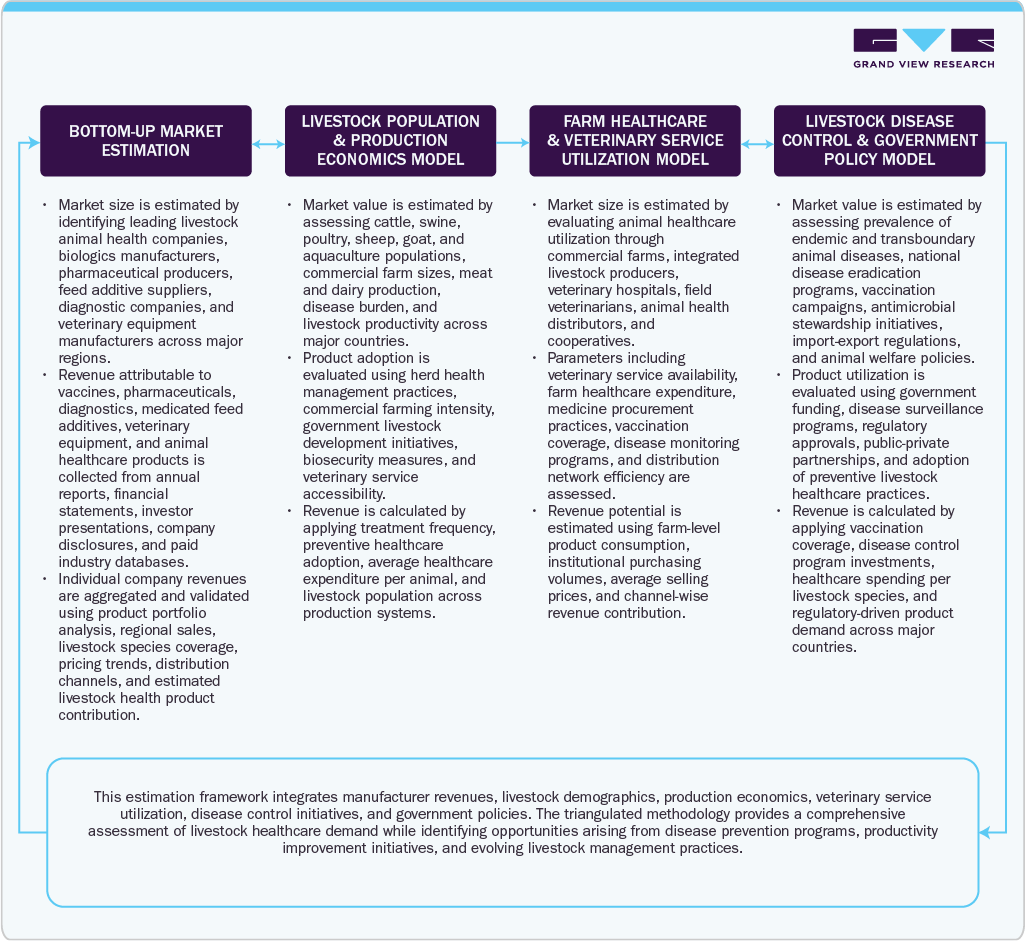 To learn more about this report, Download Free Sample Report
Delivered Customizations
This report has been delivered with the following In-depth customizations
Client Request
Customization Delivered
Value Adds
Livestock Health Industry Outlook & Value Chain Assessment
Conducted a comprehensive evaluation of the livestock health ecosystem covering animal health manufacturers, biologics and pharmaceutical companies, diagnostic providers, feed additive suppliers, veterinary service providers, distributors, commercial farms, producer organizations, and regulatory authorities. Assessed disease management practices, livestock production trends, animal health expenditure, biosecurity initiatives, and market outlook across key regions.
Delivers comprehensive insights into the livestock health value chain, industry structure, regulatory landscape, and emerging growth opportunities, enabling stakeholders to make informed investment and strategic planning decisions.
Product Segment & Competitive Intelligence Analysis
Performed benchmarking of leading companies across biologics, pharmaceuticals, diagnostics, veterinary equipment & disposables, medicinal feed additives, and other livestock health products. Evaluated product portfolios, innovation capabilities, manufacturing footprint, distribution strength, strategic collaborations, pricing strategies, species coverage, and competitive positioning across global and regional markets.
Enables companies to identify competitive advantages, benchmark product offerings, uncover portfolio expansion opportunities, optimize pricing strategies, and strengthen long-term competitive positioning.
Regional Growth & End-user Market Opportunity Assessment
Assessed regional opportunities by analyzing livestock population, commercial farming intensity, disease prevalence, veterinary healthcare infrastructure, government animal health initiatives, trade regulations, and adoption of preventive healthcare across North America, Europe, Asia Pacific, Latin America, and the Middle East & Africa. Identified priority countries, end-user demand, and recommended market entry and regional expansion strategies.
Assists organizations in prioritizing high-growth geographies, optimizing distribution and commercialization strategies, strengthening regional presence, and allocating investments effectively while minimizing regulatory and operational risks.
Frequently Asked Questions About This Report
The global livestock health market size was valued at USD 43.0 billion in 2025 and is estimated at USD 47.1 billion for 2026.
The global livestock health market is expected to grow at a CAGR of 10.8% from 2026 to 2033, reaching USD 96.6 billion in 2033.
Key factors include rising disease burden and zoonotic threats; increased sustainability and climate-resilient livestock production; technological advancements in diagnostics and preventive care; growing government support; policy alignment; and global collaboration.
North America dominated with a 33.0% revenue share in 2025.
The pharmaceuticals segment led with a 43.1% revenue share in 2025, while the others is the fastest-growing segment.
The cattle segment led with a 37.7% revenue share in 2025, while the sheep & goat is the fastest-growing segment.
The hospital/clinic pharmacy segment held the largest revenue share of 49.8% in 2025, while the e-commerce is the fastest-growing segment.
Key players include Zoetis; Ceva Santé Animale; Merck & Co., Inc.; Vetoquinol S.A.; Boehringer Ingelheim GmbH; Elanco; Virbac; Mars Inc.; Dechra Pharmaceuticals plc; IDEXX Laboratories, Inc.
Asia Pacific is the fastest-growing region over the forecast period.
About the Author(s)
Animal Health Research Team
Healthcare · Animal HealthThis report was authored by the animal health research team at Grand View Research - comprising two research analysts, one senior research analyst, and one industry expert - with specialized expertise in the animal health segment of the healthcare industry. All findings are based on proprietary healthcare databases, executive interviews, and regulatory analysis, subject to internal peer review prior to publication.
Last Updated:
Speak to Analyst

Customize this report to your needs - add regions, segments, or data points, with 20% free customization.
Or view our licence options:


ISO 9001:2015 & 27001:2022 Certified
We are GDPR and CCPA compliant! Your transaction & personal information is safe and secure. For more details, please read our privacy policy.


