
- Home
- »
- Consumer F&B
- »
-
Matcha Market Size, Share And Growth Report, 2026-2033GVR Report cover

Matcha Market (2026 - 2033)
Size, Share & Trends Analysis Report By Grade (Ceremonial, Classic, Culinary), By Application (Regular Tea, Matcha Beverages, Food, Personal Care), By Distribution Channel (Hypermarket / Supermarket), By Region, And Segment Forecasts
Market Size, 2025
$5.1BMarket Estimate, 2026
$5.5BMarket Forecast, 2033
$8.9BCAGR, 2026–2033
7.1%Matcha Market Summary
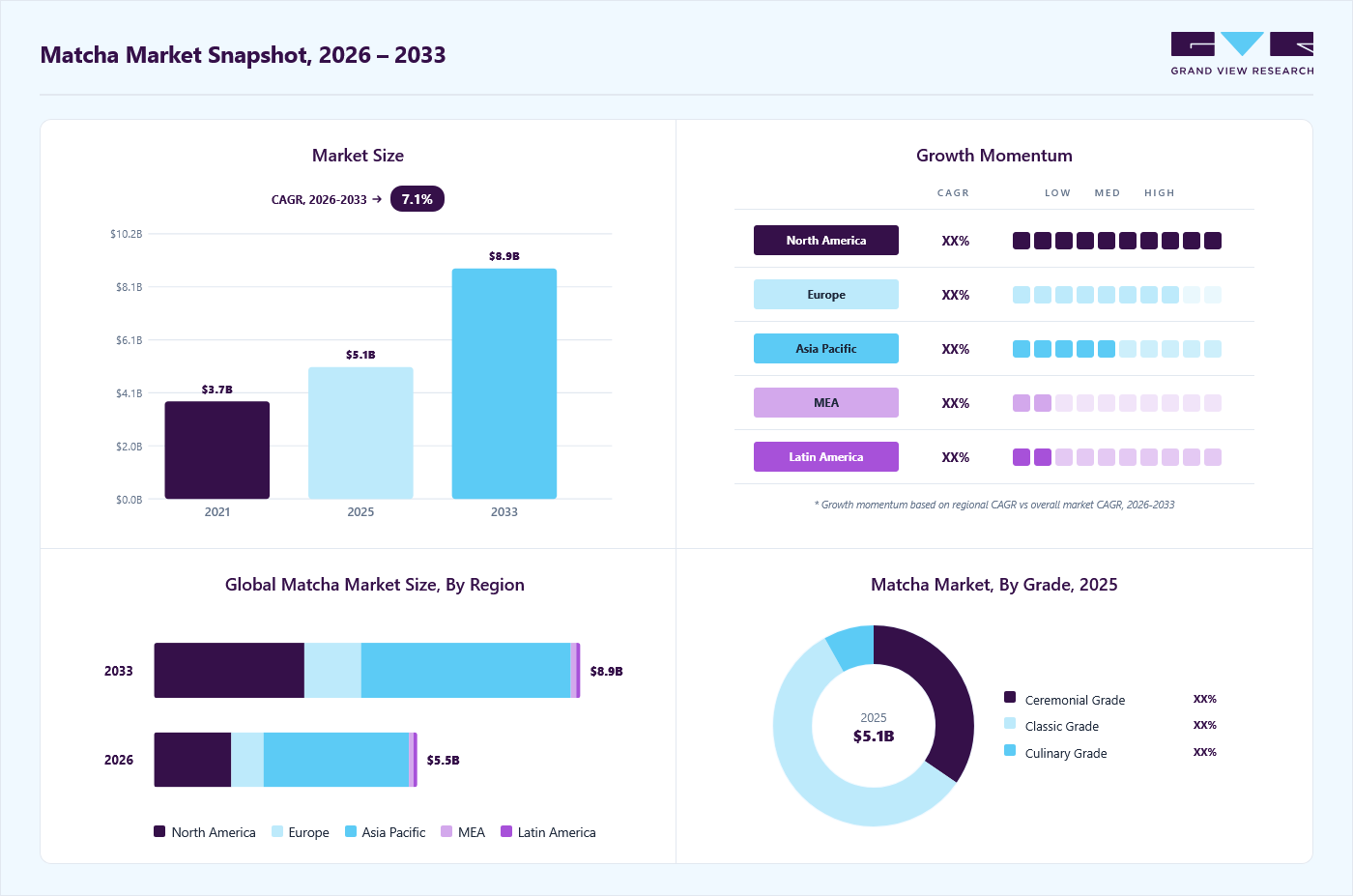
The global matcha market size was valued at USD 5.1 billion in 2025 and is projected to grow from USD 5.5 billion in 2026 to USD 8.9 billion by 2033, at a CAGR of 7.1% from 2026 to 2033. The market in Asia Pacific dominated with a revenue share of 56.0% in 2025. Growing health consciousness, coupled with consumer awareness of the product's health benefits, is expected to drive the market over the forecast period.
 Source: Grand View Research, IR Documents, Primary Interviews, Paid DatabasesTo learn more about this report,
 Download Free Sample Report
 Key Market Trends & Insights
- By grade: Classic grade segment held the largest market share of 57.3% in 2025.
- By application: Regular tea segment held the largest market share of 52.2% in 2025.
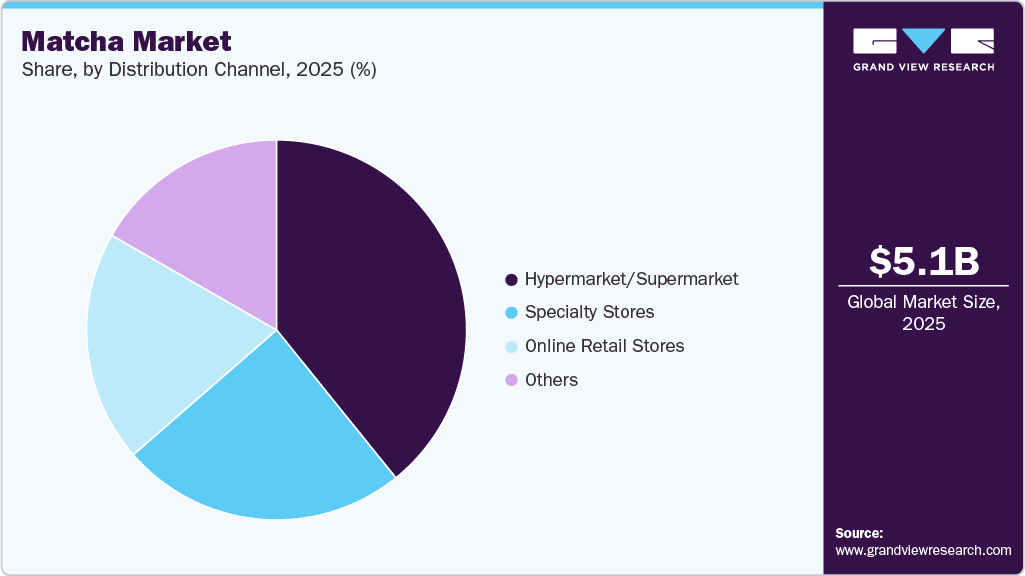
- By distribution channel: Hypermarket/supermarket segment held the largest market share of 39.2% in 2025.
Regional Highlights
- Largest regional market: Asia Pacific (56.0% revenue share, 2025)
- By country: China held the largest market share in 2025
Market Size & Forecast
- Market size in 2025: USD 5.1 Billion
- Estimated market size in 2026: USD 5.5 Billion
- Projected market size by 2033: USD 8.9 Billion
- CAGR (2026-2033): 7.1%
Three ways to get this report
Buy it, customize it, or ask a question.Ask an Analyst
Analyst response in 1 business day
- AccessReport author, directly
- Reply timeWithin 1 working day
- No sales callDirect answer only
- FormatEmail reply
- CostFree, no cost
Get the Full Report
What the study covers
- FormatsPDF · Excel · Dashboard
- Timeline2026–2033 annual, 2025 base
- Coverage20+ countries, 5 regions
- Companies10+ key players profiled
Customize the Report
20% free customization
- IncludeCountries, segments, points
- TailorTo your product definition
- ExtendDeeper competitor detail
- OrA fully bespoke study
- Turnaround5–10 working days
Matcha is an unprocessed green tea rich in antioxidants, especially catechins, which are associated with better metabolism, a lower risk of chronic diseases, and improved cognitive function. The expansion of matcha in food, bakery, and dessert applications is significantly driving market growth. Food manufacturers and cafés are increasingly incorporating matcha into products such as cakes, cookies, pastries, chocolates, and ice cream due to its distinctive flavor, natural green color, and perceived health benefits. Its versatility enables brands to create innovative, premium offerings that appeal to health-conscious, trend-driven consumers. As a result, the growing use of matcha as a functional and aesthetic ingredient in the food and dessert industry continues to drive global demand.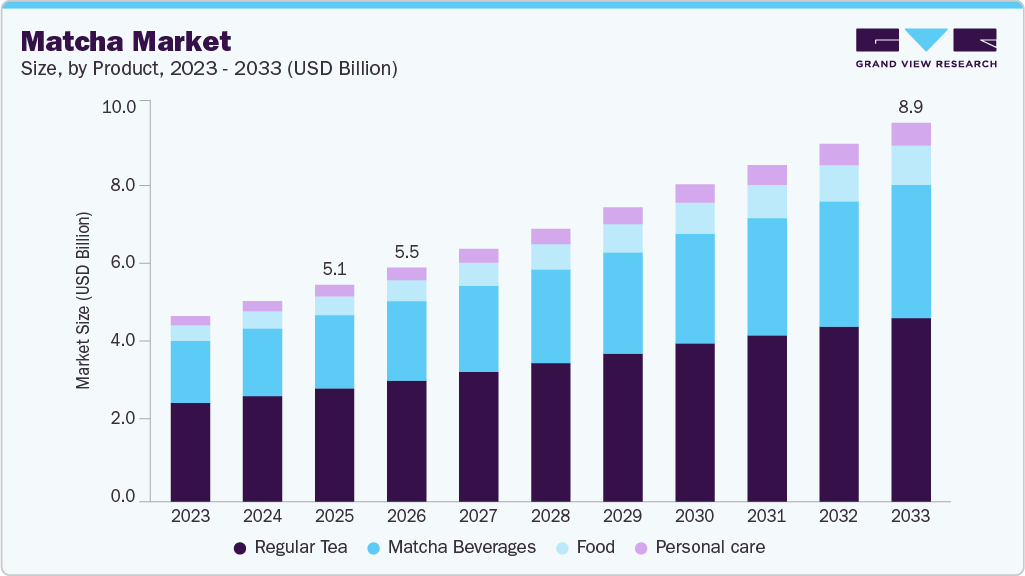 To learn more about this report, Download Free Sample Report
 Exports of matcha from Japan have grown significantly in recent years, reflecting rising global demand. In 2024, Japan exported 5,092 tons of matcha, an 18.7% increase from the previous year, while total export value reached approximately USD 185 million, a 25.9% year-on-year increase. The U.S., Germany, Malaysia, Thailand, and Taiwan were the leading export destinations, collectively accounting for about 65.7% of Japan’s total matcha exports, underscoring strong international demand for matcha across major markets.
 To learn more about this report, Download Free Sample Report
 The product has a high content of antioxidants, vitamins, minerals, and amino acids. The oxygen radical absorbance capacity (ORAC) count of the product is estimated to be 1,384 units per gram, which is higher than the average ORAC count of 94 units per gram of other nutritious fruits and vegetables, such as pomegranates, goji berry, walnuts, broccoli, spinach, and blueberries.
The anti-oxidant composition of the product enables it to prevent various chronic diseases and provide protection from the harmful effects of UV radiation. The antioxidants present in the product, known as EGCG (epigallocatechin gallate), can prevent various types of cancer including brain, bladder, prostate, and cervix. It prevents the proliferation of malignant cells and thus regulates angiogenesis and metastasis.
The amino acid content in the product is approximately five folds higher than regular black and green tea. The amino acid ‘L-theanine’ present in the product has the potential to reduce stress and promote a state of relaxation; enhance mental alertness and mental calmness; and prevent chronic diseases, including type-2 diabetes and gastrointestinal problems.
The superior health benefits of the product have accelerated its acceptance among consumers across the globe. The worldwide incidence of lifestyle diseases has motivated consumers to increase the intake of healthy and nutrient-rich food and beverages in their diet. This, in turn, is expected to increase the product demand owing to their nutrient composition.
Consumer Insights
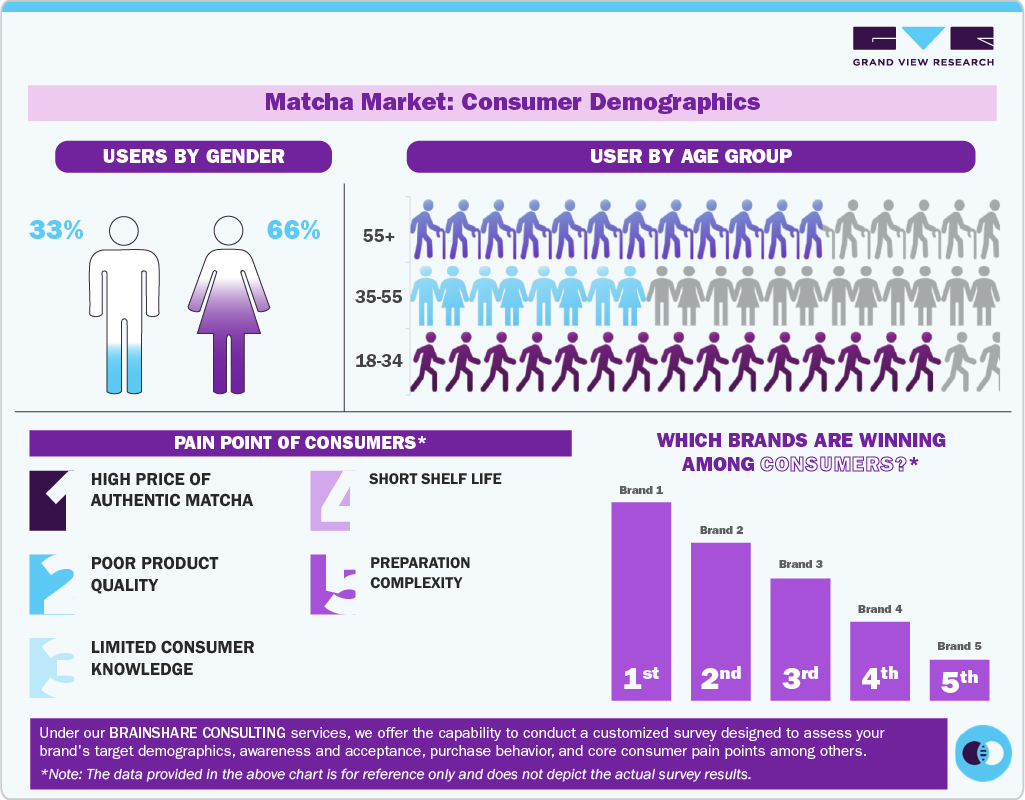
The growing focus on health and wellness strongly influences demand for matcha. Consumers are increasingly choosing foods and beverages that offer functional benefits, and matcha is valued for its high antioxidant content, L-theanine, and natural caffeine. These properties are associated with improved energy, focus, and overall well-being, making matcha a popular alternative to traditional caffeinated drinks such as coffee.
 To learn more about this report, Download Free Sample Report
 Modern consumers are showing a clear preference for natural, organic, and minimally processed ingredients. Matcha aligns with the clean-label movement because it is a simple, additive-free tea. As a result, demand for premium and ceremonial-grade matcha has increased, particularly among consumers who prioritize quality, authenticity, and sustainably sourced products.
Matcha-based beverages have become a major trend in consumption, especially in cafés and specialty beverage chains. Products such as matcha lattes, smoothies, and ready-to-drink matcha drinks appeal to consumers looking for both convenience and functional benefits. The availability of matcha beverages in cafés, restaurants, and retail outlets has made it easier for consumers to incorporate matcha into their daily routines.
Social media platforms have significantly contributed to matcha's popularity. Its bright green color and visually appealing presentation make matcha drinks and desserts highly shareable online. Influencer promotions, café culture, and viral social media trends have increased consumer awareness and curiosity, particularly among younger consumers such as millennials and Gen Z.
Grade Insights
Classic matcha segment held the revenue share of 57.3% in 2025, due to its perfect balance of flavor, cost, and versatility. Moreover, the smooth texture and enjoyable taste of classic grade make it very adaptable. It can be traditionally consumed as a tea or mixed into lattes, smoothies, and baked goods for enjoyment. This flexibility appeals to a wider range of people preferring to include matcha in their everyday lives. Moreover, Classic grade, in contrast to ceremonial grade, is more affordable for everyday use and stands out with its brighter color and more delicate sweetness. This perfect blend of price and quality makes classic grade suitable for beginners and for various purposes.
 To learn more about this report, Download Free Sample Report
 Culinary matcha industry is estimated to witness a CAGR of 9.9% from 2026 to 2033. The growing trend of experimenting with unique and flavorful food and beverages is fostering a demand for versatile ingredients such as culinary-grade matcha. It is used for baking and cooking due to its less vibrant color and slightly more bitter taste. In addition, affordability compared to higher-quality grades makes it an appealing choice for food service businesses and bakeries looking to add a bright green color and delicate matcha flavor to their products without a substantial increase in costs.
Application Insights
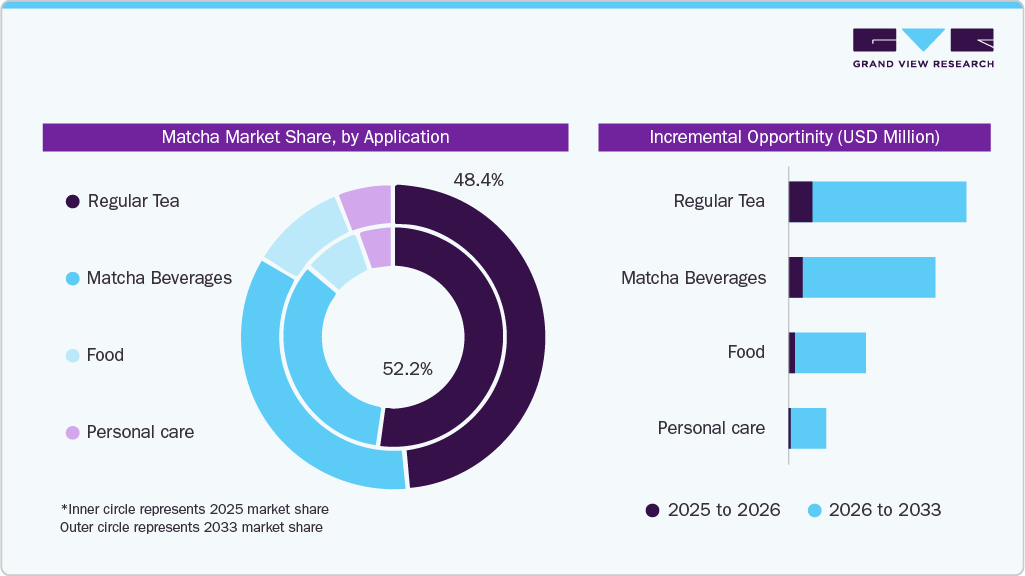
The regular tea application held the revenue share of 52.2% of the matcha industry in 2025. Regular tea is a recognized form of hot drink and appeals to long-time tea drinkers looking for a fresh and stimulating taste. Furthermore, integrating matcha tea into their daily schedules also fits with the increasing focus on proactive healthcare and overall health. Moreover, the sensory aspect of consuming matcha tea and the traditional tea ceremony rituals enhance the cultural and mindful experience, contributing to the increasing popularity of matcha tea in everyday tea consumption.
 To learn more about this report, Download Free Sample Report
 The food application is estimated to witness a CAGR of 9.5% from 2026 to 2033, due to rising consumer preference to include functional and flavorful ingredients in their diets. Matcha's special combination of nutrients, high in antioxidants and offering potential health advantages, fits well with this trend. In addition, the growing innovation in the food processing sector is leading to a wide variety of food items containing matcha, including baked goods, desserts, savory dishes, and snacks. In addition, the increasing impact of social media, is generating excitement about matcha-infused culinary creations.
Distribution Channel Insights
The sales of matcha through hypermarket/supermarket held the revenue share of 39.2% in 2025. This is attributable to several factors, including their high foot traffic and wide reach, which cater to a diverse range of consumers and producers. Additionally, supermarkets and hypermarkets usually offer a wide range of brands and products, including ceremonial-grade matcha, traditional tea, culinary-grade matcha for baking, and ready-to-drink beverages. Moreover, hypermarkets and supermarkets offer streamlined distribution systems, enabling them to reach a broad audience efficiently.
 To learn more about this report, Download Free Sample Report
 The sales of matcha through online retail store is estimated to witness a CAGR of 9.6% from 2026 to 2033, due to factors such as convenience, information accessibility, targeted marketing, subscription models, and global reach. Online retail offers convenience and accessibility. Consumers can explore a wide range of products from different brands and origins around the world, regardless of geographical boundaries.
Regional Insights
The matcha industry in Asia Pacific held the largest revenue share of 56.0% in 2025. The Asia Pacific region, particularly Japan, has a strong cultural connection with Matcha, where it has been traditionally used in tea ceremonies and daily tea consumption for centuries. This cultural heritage continues to support steady demand for matcha across the region while also promoting premium and ceremonial-grade products. In addition, Japan remains the leading producer of matcha raw material, with approximately 5,336 tonnes of tencha (the tea leaves used to produce matcha) harvested in 2024, reflecting the country’s central role in global matcha supply.
 To learn more about this report, Download Free Sample Report
 China Matcha Market Trends
The matcha market in China is estimated to witness a significant growth from 2026 to 2033. Chinese consumers are increasingly shifting toward healthier beverage options, boosting demand for matcha due to its antioxidant content and natural energy benefits. As awareness of wellness and nutrition increases, matcha is becoming a preferred alternative to sugary drinks and high-caffeine beverages, particularly among urban consumers and young professionals.
The matcha market in Japan is expected to grow significantly 2026 to 2033. Japan has seen a significant increase in matcha exports driven by growing demand from international markets, particularly the United States and Europe. In 2024, Japan exported 5,092 tons of matcha, representing a significant year-on-year increase, as global consumers increasingly adopted matcha in beverages, desserts, and health products
North America Matcha Market Trends
The matcha industry in North America held the revenue share of 28.5% in 2025. Increasing consumer awareness about health and wellness is a major trend shaping the North American matcha market. Matcha is widely recognized for its high antioxidant content, particularly catechins such as EGCG, which are associated with benefits such as improved metabolism, energy, and immunity. As consumers shift away from sugary beverages and seek natural energy sources, matcha is increasingly adopted as a healthier alternative to coffee and conventional drinks.
Matcha has become a trend in U.S. cafés and specialty coffee shops, where drinks such as matcha lattes, iced matcha, and matcha smoothies are widely offered. The beverage’s vibrant color and customizable flavor profile make it popular among consumers and social media audiences, further accelerating demand across café chains and independent coffee shops. Thus, the matcha market in the U.S. has grown in recent years.
The matcha market in Canada is estimated to witness a significant CAGR from 2026 to 2033. Matcha is increasingly used beyond traditional tea consumption in Canada. Food manufacturers and restaurants are incorporating matcha into bakery products, desserts, energy bars, and ready-to-drink beverages, expanding its role as a functional ingredient. This diversification across food and beverage categories is broadening the market and attract new consumers.
Europe Matcha Market Trends
The matcha market in Europe is estimated to witness a CAGR of 8.4% from 2026 to 2033. European consumers are increasingly focusing on healthy lifestyles and functional foods. Matcha is perceived as a nutrient-rich beverage with antioxidant properties, metabolism-boosting effects, and natural caffeine, making it attractive to health-conscious consumers. As a result, matcha is increasingly adopted as a healthier alternative to traditional caffeinated drinks.
The matcha market in UK is significantly growing. Matcha drinks such as matcha lattes, iced matcha, and specialty beverages are rapidly gaining popularity across UK cafés and coffee chains. Sales [PJ2] of matcha drinks more than doubled in some months of 2025, reaching about 1.6 million drinks sold and over Euro 7 million in sales during peak periods. The number of cafés offering matcha drinks has also grown significantly, helping mainstream adoption.
The matcha market in Germany is estimated to witness a growth from 2026 to 2033. Germany has one of the strongest organic food markets in Europe, which is significantly influencing matcha demand. Consumers increasingly prefer organic, natural, and minimally processed products, making organic matcha one of the fastest-growing segments in the country. The popularity of clean-label and functional foods is therefore driving steady adoption of matcha.
Central & South America Matcha Market Trends
The matcha market in Central and South America is estimated to witness a CAGR of 1.9% from 2026 to 2033. Consumers are increasingly adopting healthier beverages as alternatives to sugary drinks and traditional caffeinated beverages. Matcha is gaining popularity due to its high antioxidant content, perceived energy-boosting properties, and association with natural and functional nutrition.
Middle East & Asia Matcha Market Trends
The matcha market in the Middle East and Asia is estimated to witness a CAGR of 2.3% from 2026 to 2033. Matcha is often positioned as a premium product, with strong demand for ceremonial-grade and organic varieties among affluent consumers. Premium matcha products are widely sold through specialty tea stores, boutique cafés, and upscale supermarkets.
Key Matcha Company Insights
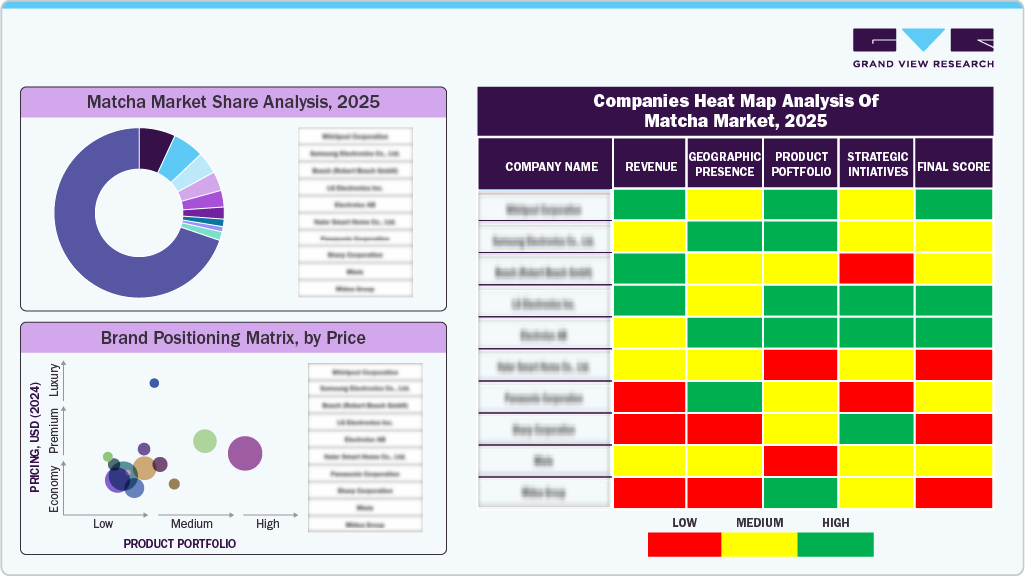
The global matcha market includes a mix of established tea producers and emerging specialty brands that continue to innovate in product quality, processing techniques, and product applications to meet evolving consumer preferences. Leading companies focus on sourcing high-quality tea leaves, maintaining authentic production methods, and offering premium grades such as ceremonial and organic matcha to attract health-conscious consumers. By expanding distribution through supermarkets, specialty tea stores, cafés, and e-commerce platforms, these players ensure broader product accessibility and global market reach. In addition, strategic collaborations with food and beverage brands enable companies to introduce matcha-based products, such as beverages, desserts, and functional foods, thereby catering to diverse consumer segments and capitalizing on the growing demand for wellness-oriented ingredients worldwide.
 To learn more about this report, Download Free Sample Report
 Key Matcha Companies:
The following key companies have been profiled for this study on the match market.
- Aiya America Inc.
- The AOI Tea Company
- Ippodo Tea USA
- Vivid Vitality Ltd
- DoMatcha
- Encha
- Garden To Cup Organics
- TEAJA Organic
- Midori Spring
- Jade Monk
Recent Developments
-
In October 2025, OAKBERRY expanded its menu in the United States by launching a new matcha base for its signature layered cups. The product was prepared in-house using simple ingredients such as coconut milk, water, matcha, and agave, and was designed as a convenient, energizing superfood option for consumers.
-
In September 2025, the Clean Jeju Green Tea Agricultural Cooperative Sumang announced plans to expand into global markets by promoting its premium matcha and hojicha products grown on Jeju Island. The cooperative introduced high-quality matcha produced in Jeju’s unique natural environment and aimed to strengthen international distribution while increasing direct-to-consumer sales through online and e-commerce platforms.
-
In July 2025, Matcha Magic, a health-focused matcha café brand, announced a nationwide expansion across the United States. The company launched its first franchise location at Louisiana State University and also opened new outlets in several Seattle neighborhoods as part of its growth strategy. The brand planned to open around 20 corporate and franchise locations over the next two years to meet increasing consumer demand for matcha beverages and wellness-focused drinks.
Matcha Market Report Scope
Report Attribute
Details
Market size in 2025
USD 5.1 billion
Estimated Market size in 2026
USD 5.6 billion
Projected Market size by 2033
USD 8.9 billion
Growth rate
CAGR of 7.1% from 2026 to 2033
Actual data
2021 - 2025
Forecast period
2026 - 2033
Quantitative units
Revenue in USD Million/Billion, Volume in tons, and CAGR from 2026 to 2033
Report coverage
Revenue forecast, company ranking, competitive landscape, growth factors, and trends
Segments covered
Grade, application, distribution channel, region
Regional scope
North America; Europe; Asia Pacific; Central & South America; The Middle East & Africa
Country scope
U.S.; Canada; Mexico; UK; Germany; Italy; Spain; China; India; Japan; South Korea; Brazil; UAE; South Africa
Key companies profiled
Aiya America Inc.; The AOI Tea Company; Ippodo Tea USA; Vivid Vitality Ltd; DoMatcha; Encha; Garden To Cup Organics; TEAJA Organic; Midori Spring; Jade Monk
Customization scope
Free report customization (equivalent up to 8 analysts working days) with purchase. Addition or alteration to country, regional & segment scope
Pricing and purchase options
Avail customized purchase options to meet your exact research needs. Explore purchase options
Global Matcha Market Report Segmentation
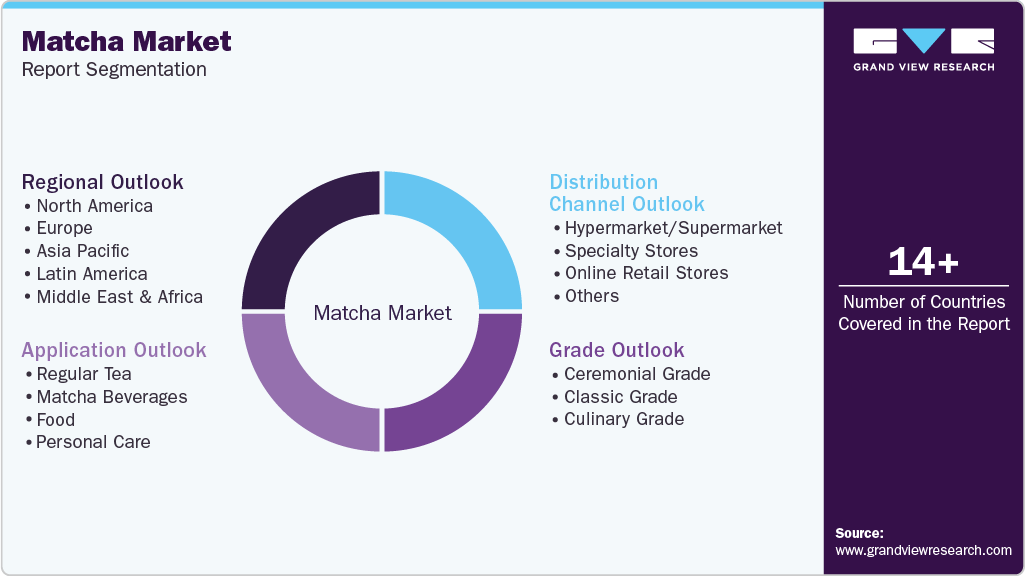
This report forecasts revenue growth at global regional, and country levels and provides an analysis of the latest industry trends in each of the sub-segments from 2021 to 2033. For this study, Grand View Research has segmented the global matcha market report based on grade, application, distribution channel, and region:
 To learn more about this report, Download Free Sample Report
 -
Grade Outlook (Volume, Tons; Revenue, USD Million, 2021 - 2033)
-
Ceremonial Grade
-
Classic Grade
-
Culinary Grade
-
-
Application Outlook (Volume, Tons; Revenue, USD Million, 2021 - 2033)
-
Regular tea
-
Matcha beverages
-
Food
-
Personal Care
-
-
Distribution Channel Outlook (Volume, Tons; Revenue, USD Million, 2021 - 2033)
-
Hypermarket/Supermarket
-
Specialty Stores
-
Online Retail Stores
-
Others
-
-
Regional Outlook (Volume, Tons; Revenue, USD Million, 2021 - 2033)
-
North America
-
U.S.
-
Canada
-
Mexico
-
-
Europe
-
Germany
-
UK
-
France
-
Italy
-
Spain
-
-
Asia Pacific
-
China
-
Japan
-
India
-
South Korea
-
-
Latin America
-
Brazil
-
-
Middle East and Africa (MEA)
-
UAE
-
South Africa
-
-
Frequently Asked Questions About This Report
The global matcha market size was estimated at USD 5.1 billion in 2025 and is expected to reach USD 5.5 billion in 2026.
The global matcha market is expected to grow at a compound annual growth rate of 7.1% from 2026 to 2033 to reach USD 8.9 billion by 2033.
Some key players operating in the matcha market include AIYA America, The AOI Tea Company, Ippodo Tea Co., Ltd., DoMatcha, Encha, Midori Spring Ltd., and Vivid Vitality Ltd.
Key factors that are driving the market growth include growing health consciousness, coupled with consumer awareness regarding health benefits of the product.
The classic matcha segment led with a 57.3% revenue share in 2025, while the culinary matcha segment is estimated to witness a CAGR of 9.9% from 2026 to 2033.
The regular tea segment led with a 52.2% revenue share in 2025, while the food application segment is estimated to witness a CAGR of 9.5% from 2026 to 2033
The hypermarket/supermarket segment led with a 39.2% revenue share in 2025, while the online retail store segment is estimated to witness a CAGR of 9.6% from 2026 to 2033.
Asia Pacific dominated the matcha market with a share of 56.0% in 2019. This is attributable to rising demand for low-calorie beverages with detoxifying and energy-enhancing properties have propelled the product demand in various beverages including lattes, smoothies, juices, and mocktails.
About the Author(s)
Consumer F&B Research Team
Consumer Goods · Consumer F&BThis report was authored by the consumer f&b research team at Grand View Research - comprising two research analysts, one senior research analyst, and one industry expert - with specialized expertise in the consumer f&b segment of the consumer goods industry. All findings are based on proprietary consumer goods databases, executive interviews, and regulatory analysis, subject to internal peer review prior to publication.
Last Updated:
Speak to Analyst

Customize this report to your needs - add regions, segments, or data points, with 20% free customization.
Or view our licence options:


ISO 9001:2015 & 27001:2022 Certified
We are GDPR and CCPA compliant! Your transaction & personal information is safe and secure. For more details, please read our privacy policy.


