
- Home
- »
- Medical Devices
- »
-
Medical Face Shield Market Size & Share Report, 2026-2033GVR Report cover

Medical Face Shield Market (2026 - 2033)
Size, Share & Trends Analysis Report By Product (Standard Face Shields, Wraparound / Extended-Coverage Face Shields), By Usability (Disposable Face, Reusable Face), By Shield Material, By End-use, By Region, And Segment Forecasts
Market Size, 2025
$255.9MMarket Estimate, 2026
$268.5MMarket Forecast, 2033
$389.3MCAGR, 2026–2033
5.5%Medical Face Shield Market Summary
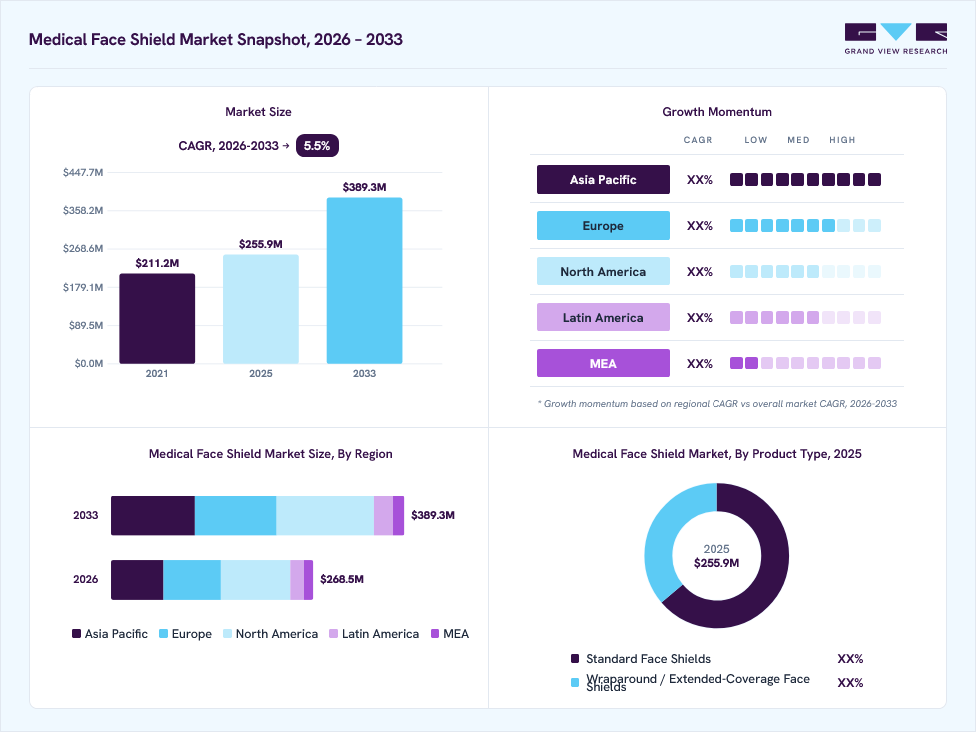
The global medical face shield market size was valued at USD 255.9 million in 2025 and is projected to grow from USD 268.5 million in 2026 to USD 389.3 million by 2033, at a CAGR of 5.5% from 2026 to 2033. North America dominated the market, accounting for the largest revenue share of 34.5% in 2025. The medical face shield market is shaped by healthcare worker safety requirements, infection-control practices, and the need for protection against respiratory droplets, blood splashes, and other potentially infectious materials during clinical procedures.
 Source: Grand View Research, IR Documents, Primary Interviews, Paid DatabasesTo learn more about this report,
 Download Free Sample Report
Key Market Trends & Insights
- By product: Standard face shields segment led the market, accounting for 63.8% of revenue in 2025.
- By usability: Disposable face shields segment led the market with the largest revenue share of 70.8% in 2025.
- By shield material: PET / PETG segment led the market with the largest revenue share of 51.5% in 2025.
- By end-use: Hospitals segment led the market with the largest revenue share of 54.9% in 2025.
Regional Highlights
- Largest regional market: North America (34.5% revenue share, 2025)
- Fastest-growing regional market: Asia Pacific (highest CAGR, 2026-2033)
Market Size & Forecast
- Market Size in 2025: USD 255.9 million
- Estimated market size in 2026: USD 268.5 million
- Projected Market Size by 2033: USD 389.3 million
- CAGR (2026-2033): 5.5%
Prism AI by Grand View Research Free to tryAsk a question about the medical face shield marketTry asking✓Every figure cited from GVR research Prefer the report? Download free sample →
Demand for face shields is supported in emergency care, surgery, dentistry, laboratory work, and other environments involving close patient contact or splash hazards. Product development is focused on improving optical clarity, lightweight construction, anti-fog performance, comfort, adjustability, and compatibility with masks, respirators, eyewear, and other personal protective equipment.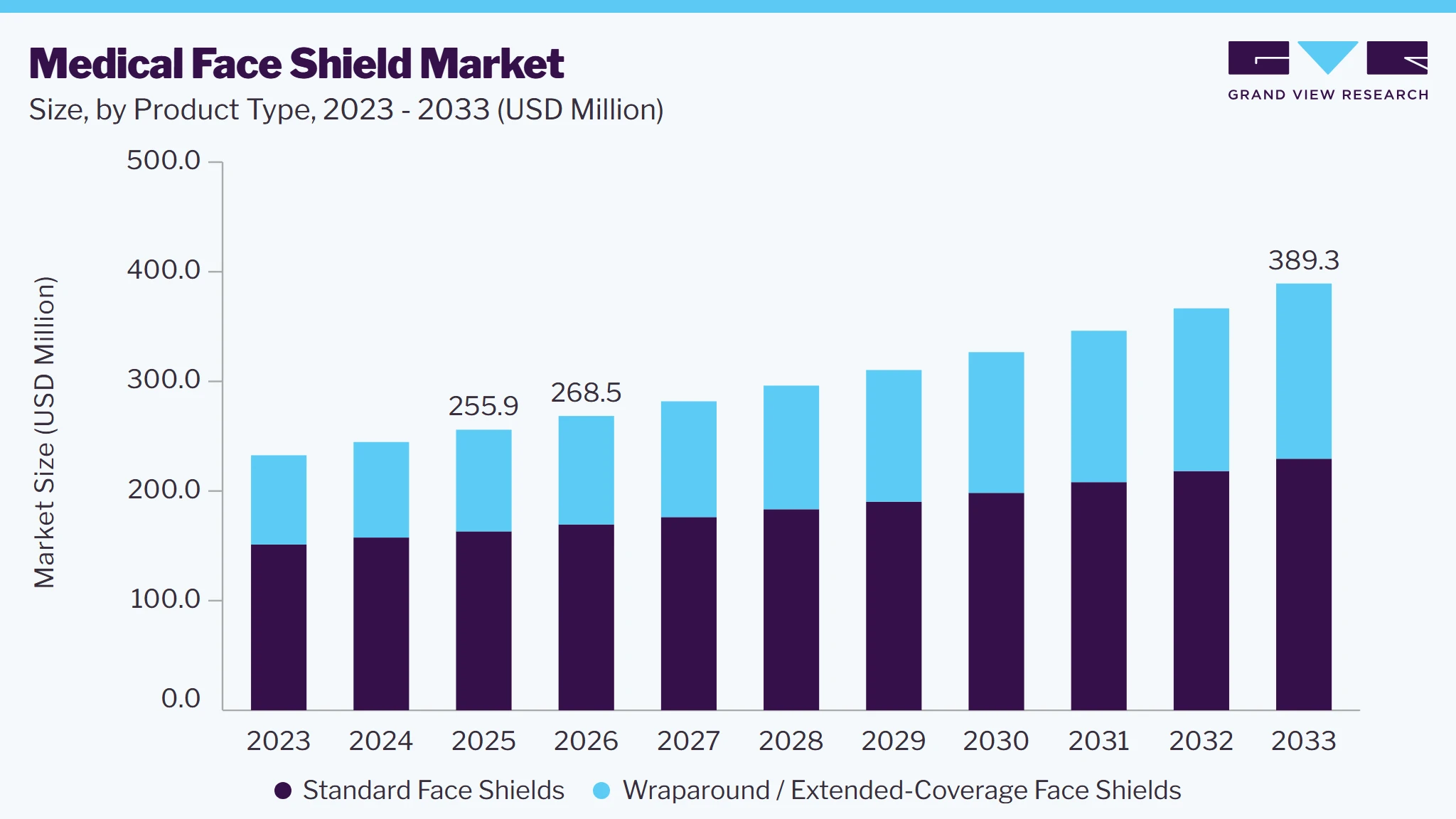 To learn more about this report, Download Free Sample Report
Stronger infection prevention and control practices are supporting the medical face shield market as healthcare facilities place greater emphasis on protecting healthcare workers from exposure to respiratory droplets, blood, body fluids, and other potentially infectious materials during patient care. Face shields provide an additional facial barrier and can complement masks, respirators, protective gowns, and gloves, particularly during procedures with splash or aerosol risks. Hospitals, dental clinics, emergency departments, laboratories, and surgical settings are therefore incorporating face shields into broader personal protective equipment protocols. Greater attention to infection-control compliance is also encouraging healthcare institutions to maintain adequate PPE inventories and adopt products with features such as anti-fogging, clear visibility, comfortable headbands, and compatibility with other protective equipment. This sustained focus on occupational safety and infection prevention supports recurring institutional procurement and contributes to market demand.
For instance, in January 2025, CDC infection-control guidance recommended appropriate PPE for healthcare procedures that may produce splashes or sprays. It stated that procedures such as bronchoscopy, endotracheal suctioning, and invasive vascular procedures require a face shield or a mask with goggles when exposure to blood, body fluids, or respiratory secretions is expected.
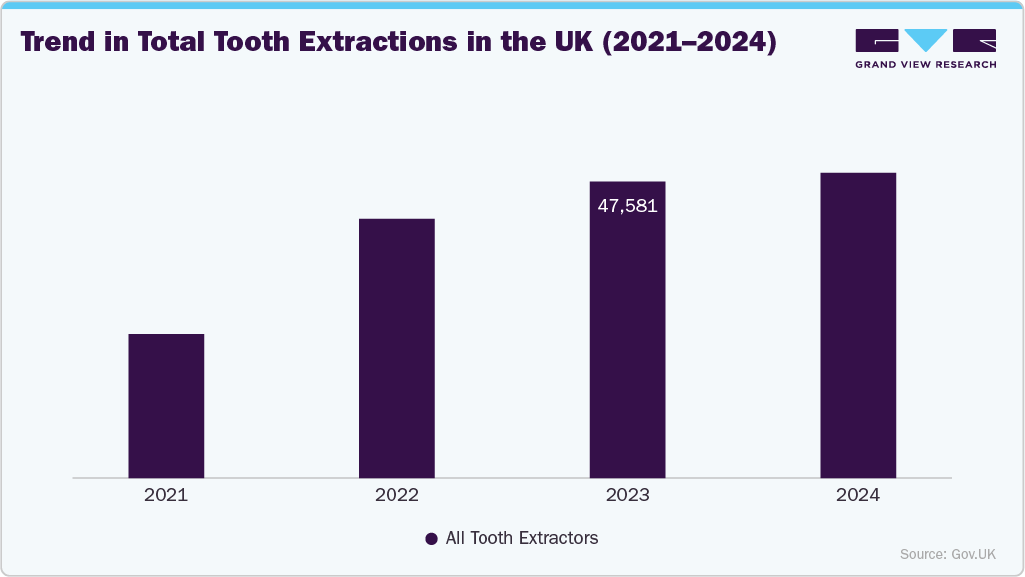
The rising volume of tooth extraction procedures can support growth in the medical face shield market, as extractions involve direct manipulation of oral tissues and can expose dental professionals to blood, saliva, and other potentially infectious materials. Surgical extractions may also involve tissue incisions, bone removal, tooth sectioning, and suturing, creating situations in which splashes or spatter can occur. CDC guidance recommends that dental healthcare personnel use eye protection with side shields or a face shield during procedures likely to generate splashes or sprays of blood or body fluids. As dental practices perform more routine and surgical extractions, the need for protective equipment during these procedures supports recurring demand for medical face shields among dentists, oral surgeons, dental assistants, and other dental staff.
 To learn more about this report, Download Free Sample Report
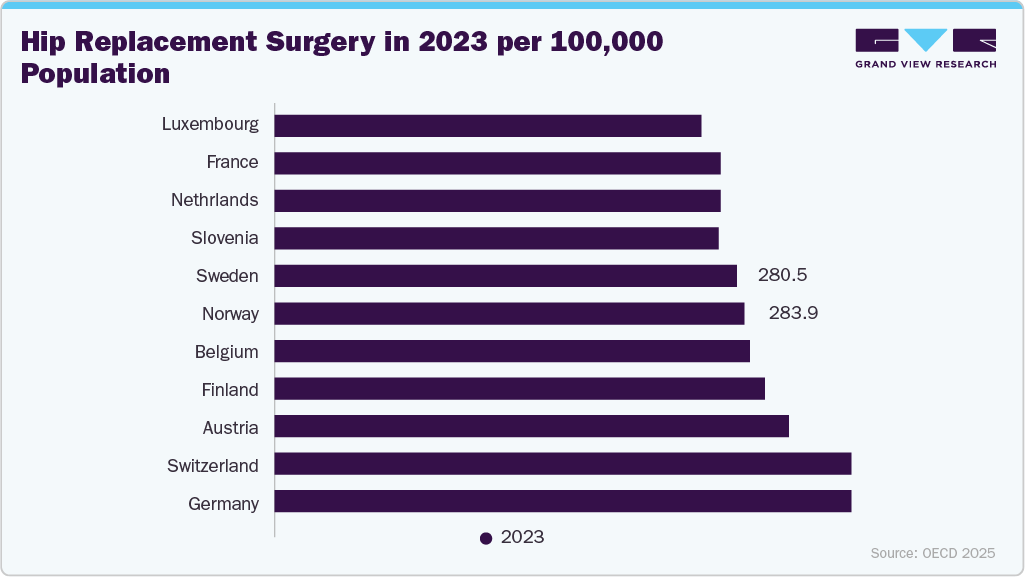
The rise in orthopedic surgeries supports the medical face shield market, as orthopedic procedures involve direct exposure to blood, body fluids, and surgical splashes, particularly during invasive operations such as joint replacement, fracture fixation, and trauma surgery. Procedures involving cutting, drilling, irrigation, or other surgical instruments can create situations where fluids may reach the face and eyes of healthcare personnel. CDC guidance for orthopedic and pain-management settings recommends appropriate PPE based on the expected exposure. It specifies the use of mouth, nose, and eye protection during procedures likely to generate splashes or sprays of blood or body fluids.
According to data published by the OECD in 2025, the graph and table below show hip replacement surgeries per 100,000 population in 2023.
 To learn more about this report, Download Free Sample Report
Market Dynamics
Stronger infection prevention and control practices across hospitals, dental clinics, ambulatory care centers, laboratories, and surgical settings support the Medical Face Shield Market. Healthcare facilities use face shields as part of personal protective equipment when healthcare personnel may encounter splashes or sprays of blood, saliva, respiratory secretions, or other potentially infectious materials. The CDC recommends face shields or appropriate eye and face protection during procedures that can generate exposures, while dental guidance specifically identifies procedures involving spray and spatter from instruments such as handpieces and ultrasonic scalers.
The expansion of healthcare infrastructure supports the Medical Face Shield Market by increasing the number of hospitals, surgical centers, dental clinics, ambulatory care facilities, and other healthcare settings where healthcare workers require personal protective equipment. As these facilities add patient-care capacity and conduct a broader range of medical procedures, the need for protective equipment also expands among doctors, nurses, dentists, technicians, and other healthcare personnel. Face shields are an important form of facial protection when workers may be exposed to infectious materials, splashes, or sprays during patient care.
The availability of alternative protective equipment, such as protective goggles, safety glasses, surgical masks, and respirators, can restrain the Medical Face Shield Market. Healthcare facilities may select these products based on the type of procedure, expected exposure, comfort, and institutional PPE protocols. Goggles can provide effective eye protection for splashes and sprays, while masks and respirators address respiratory protection requirements. In situations where broad facial coverage is unnecessary, healthcare professionals may prefer lighter, less bulky options. This product substitution can reduce the frequency with which face shields are selected as the primary form of facial protection, particularly for routine patient-care activities with limited splash or spray exposure.
The development of anti-fog and high-visibility face shields presents an opportunity for the Medical Face Shield Market by addressing common challenges associated with conventional face protection. Fogging can obstruct healthcare workers' vision during procedures, limiting visibility and affecting precision, communication, and comfort. Manufacturers can address these issues through anti-fog coatings, improved optical clarity, wider viewing areas, ventilation features, and lightweight designs. These improvements can make face shields more suitable for prolonged use in surgical, dental, emergency, intensive-care, and other procedure-intensive environments. Products that provide clearer vision while maintaining facial protection can encourage healthcare facilities to adopt higher-performance face shields and replace basic models.
For instance, in 2025, MeGUARD introduced a medical-surgical face guard featuring a dual-sided anti-fog film, high transparency, glare reduction, and a lift-up design. The product was designed to maintain clear vision while protecting healthcare workers from splashes of blood and other fluids during surgical procedures. This development demonstrates continued product innovation toward clearer, more comfortable, and higher-performance face protection, creating opportunities for premium medical face shields.
Market Concentration & Characteristics
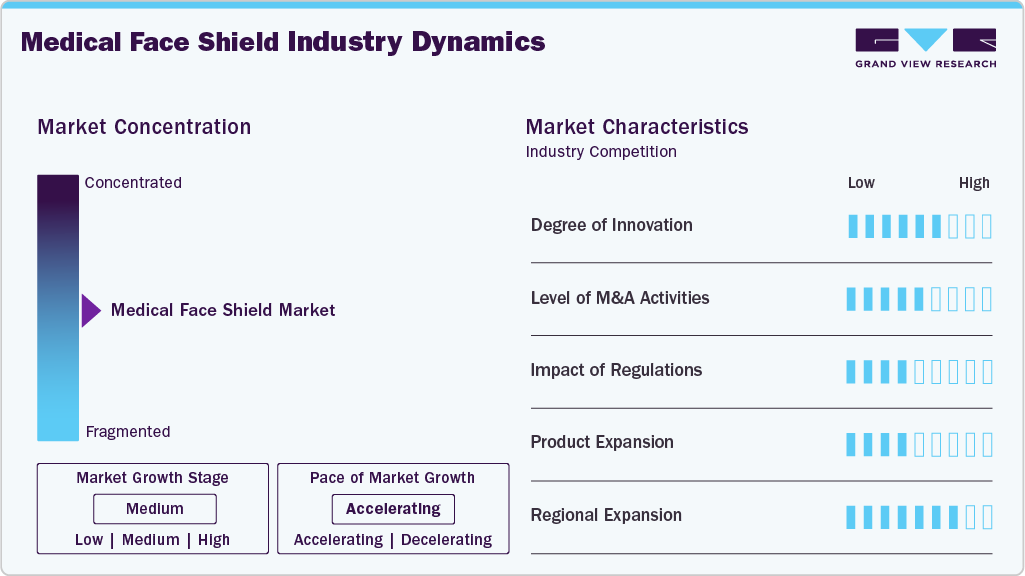
The medical face shield market is characterized by its role as an adjunctive personal protective equipment used to protect healthcare workers from splashes, sprays, and spatter of blood, body fluids, saliva, and respiratory secretions. Demand is distributed across hospitals, dental clinics, surgical centers, laboratories, ambulatory care facilities, and other healthcare settings, with usage determined largely by the exposure risk associated with specific procedures. Product differentiation is based on visor material, optical clarity, anti-fog properties, coverage area, lightweight construction, adjustability, comfort, and disposable or reusable design. Full-face shields that cover the forehead, chin, and sides of the face provide broader protection and can be used alongside masks or respirators.
Improvements in materials technology, ergonomic design, optical performance, and infection-control features drive innovation in the medical face shield market. Manufacturers are developing lightweight, impact-resistant materials that enhance protection while reducing user fatigue during prolonged procedures. Innovations also include anti-fog and anti-scratch coatings, improved optical clarity, adjustable headbands, enhanced ventilation, and wraparound designs that provide broader facial coverage. Reusable shields with replaceable visors support sustainability and cost efficiency, while disposable sterile variants are being designed for environments that require stringent infection-control protocols. Integration with prescription eyewear, surgical masks, respirators, and other personal protective equipment is also improving compatibility and usability.
 To learn more about this report, Download Free Sample Report
Mergers and acquisitions in the medical face shield market are supporting portfolio expansion, broader PPE capabilities, manufacturing scale, and stronger access to healthcare customers. Companies are using acquisitions to combine complementary protective-product technologies, strengthen supply chains, expand geographic coverage, and offer integrated infection-control solutions. These activities also support cross-selling across facial protection, protective eyewear, gloves, apparel, and other healthcare PPE categories. Strategic consolidation is therefore contributing to a broader and more diversified product ecosystem, enabling manufacturers to strengthen their competitive positioning and respond to healthcare demand for comprehensive personal protection solutions.
-
For instance, in July 2024, Ansell completed the acquisition of Kimberly-Clark’s Personal Protective Equipment business, adding established PPE brands and expanding its portfolio of protection solutions across healthcare, laboratory, cleanroom, and industrial applications.
Regulatory requirements significantly impact the medical face shield market by establishing standards for product safety, protective performance, labeling, materials, and manufacturing quality. Medical face shields intended for healthcare use must comply with applicable PPE or medical-device requirements, which encourages manufacturers to validate characteristics such as fluid resistance, facial coverage, optical clarity, durability, and usability. In the U.S., medical PPE is subject to FDA requirements and recognized performance standards, while European markets follow PPE requirements covering aspects such as field of vision, optical neutrality, anti-fog performance, and compatibility with corrective eyewear.
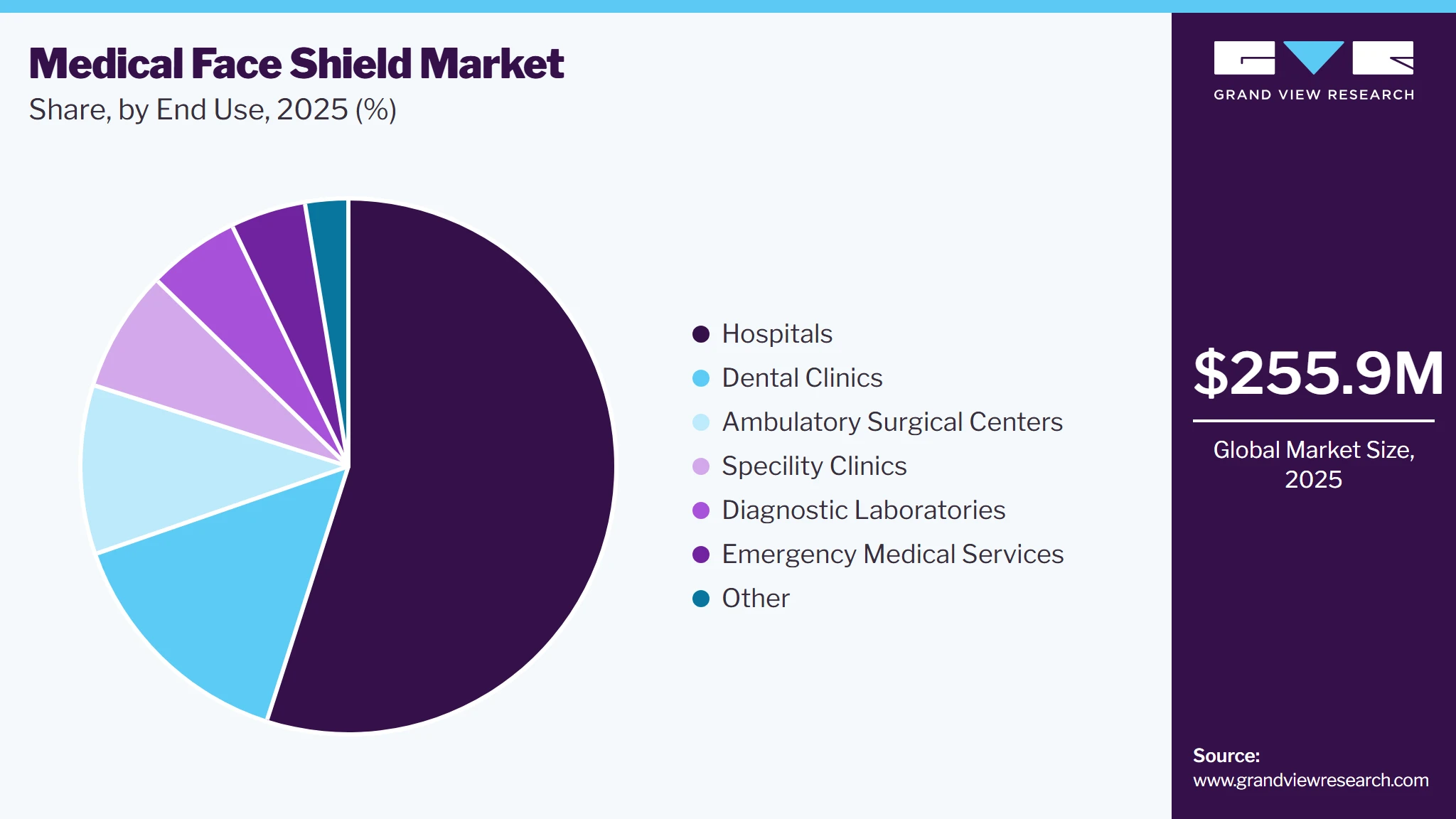
The medical face shield market has a concentrated end-user base, with hospitals representing a major source of demand due to their broad use across operating rooms, intensive care units, emergency departments, dental and ENT procedures, interventional settings, and other areas where splash or aerosol exposure can occur. Healthcare professionals such as surgeons, nurses, anesthesiologists, emergency staff, and other frontline personnel are key users, while ambulatory surgical centers, specialty clinics, diagnostic facilities, and laboratories provide additional demand. Face shields are also used alongside masks, respirators, and other PPE, making procurement decisions closely linked to institutional infection-control protocols and workplace safety requirements.
Analyst Perspective
The medical face shield market is competitive and product-focused, with manufacturers differentiating through protection, comfort, visibility, material quality, and suitability for diverse healthcare environments. Competition is shaped by the availability of disposable and reusable designs, anti-fog performance, optical clarity, splash resistance, lightweight construction, and adjustable headgear. Established manufacturers benefit from broad healthcare product portfolios, established procurement relationships, and extensive distribution networks, while specialized and regional suppliers compete through cost efficiency, customization, shorter lead times, and application-specific designs. Surgical and procedural applications remain important areas of competition, where face shields must provide reliable facial protection without compromising visibility or mobility during prolonged procedures.
Product Insights
Based on product, the standard face shields segment led the market, accounting for 63.8% of revenue in 2025, supported by their broad applicability across hospitals, clinics, dental settings, laboratories, and emergency care environments. Their simple design provides effective facial coverage against droplets, splashes, and other potentially hazardous materials while remaining compatible with masks, respirators, and prescription eyewear. Standard configurations are also favored for routine healthcare activities because they are lightweight, easy to wear, simple to clean when reusable, and available in disposable formats.
Wraparound / extended-coverage face shields represent the fastest-growing segment within the product category, driven by demand for broader facial protection during procedures involving substantial splash, aerosol, or fluid exposure. Their extended coverage around the sides of the face provides additional protection compared with conventional front-facing designs, making them suitable for surgical procedures, dental treatments, emergency care, and other higher-exposure environments. Healthcare professionals also value these designs for reducing exposure around the temples and peripheral facial areas while maintaining visibility. Product development focused on improved ergonomics, anti-fog performance, lightweight materials, and compatibility with other personal protective equipment is supporting adoption.
Usability Insights
Based on usability, the disposable face shields segment led the market with the largest revenue share of 70.8% in 2025. Convenience, hygienic handling, and suitability for high-throughput healthcare environments. Hospitals, emergency departments, dental clinics, and diagnostic facilities can use a fresh shield for individual procedures or patients, reducing the need for cleaning, disinfection, and storage. Their compatibility with established infection-control workflows also supports routine procurement in settings where rapid turnover of protective equipment is important. Disposable designs are particularly relevant for procedures involving exposure to blood, body fluids, respiratory droplets, and other contaminants.
Reusable face shields represent the fastest-growing segment within the usability category, driven by healthcare facilities seeking cost-efficient, resource-conscious protective equipment solutions. These shields can be cleaned, disinfected, and reused across multiple procedures, reducing the need for replacements compared with single-use alternatives. Product improvements in durable visor materials, adjustable headbands, ergonomics, anti-fog coatings, and replaceable visors are enhancing their suitability for prolonged clinical use. Reusable designs are also gaining relevance as healthcare organizations place greater attention on reducing plastic waste and optimizing personal protective equipment procurement.
Shield Material Insights
Based on shield material, the PET / PETG segment led the market with the largest revenue share of 51.5% in 2025. It is a combination of optical clarity, lightweight construction, flexibility, and cost efficiency. These materials are suitable for producing transparent shields that provide broad facial coverage while maintaining clear visibility during clinical activities. PET and PETG are also well-suited to high-volume manufacturing, making them attractive for disposable face shields used across hospitals, dental clinics, emergency services, and diagnostic settings. Their ease of thermoforming allows manufacturers to produce different shield shapes and coverage profiles while maintaining relatively simple production processes.
Polycarbonate represents the fastest-growing segment within the shield material category, driven by its superior durability, impact resistance, and suitability for repeated clinical use. Compared with thinner disposable materials, polycarbonate can provide a stronger protective barrier while maintaining good optical clarity, making it particularly suitable for reusable face shields and demanding healthcare environments. Its resistance to cracking and deformation supports a longer product life, while compatibility with advanced coatings can enhance resistance to scratches and fogging. Polycarbonate shields are gaining relevance in surgical settings, dental procedures, emergency care, and other applications where repeated handling and extended wear place greater demands on protective equipment.
End-use Insights
Based on end-use, the hospitals segment led the market with the largest revenue share of 54.9% in 2025. Face shields are used across surgical departments, emergency rooms, intensive care units, dental services, laboratories, and other high-exposure areas where healthcare professionals may encounter blood, body fluids, respiratory droplets, and splashes. The large healthcare workforce, continuous patient flow, and diverse procedural requirements support recurring procurement of face shields. Hospitals also maintain established infection-prevention protocols that encourage the use of facial protection alongside masks, gowns, gloves, and other protective equipment.
 To learn more about this report, Download Free Sample Report
Ambulatory Surgical Centers (ASCs) represent the fastest-growing segment within the end-use category, supported by the expansion of outpatient procedures and the shift toward shorter-stay surgical care. ASCs perform a wide range of procedures where healthcare personnel require protection from blood, fluids, droplets, and splashes, creating recurring demand for medical face shields. Their focus on efficient operating-room workflows also favors lightweight, comfortable, and easy-to-use protective equipment that can be rapidly deployed during procedures. The adoption of minimally invasive and same-day surgical approaches further expands the number of clinical environments requiring facial protection.
Regional Insights
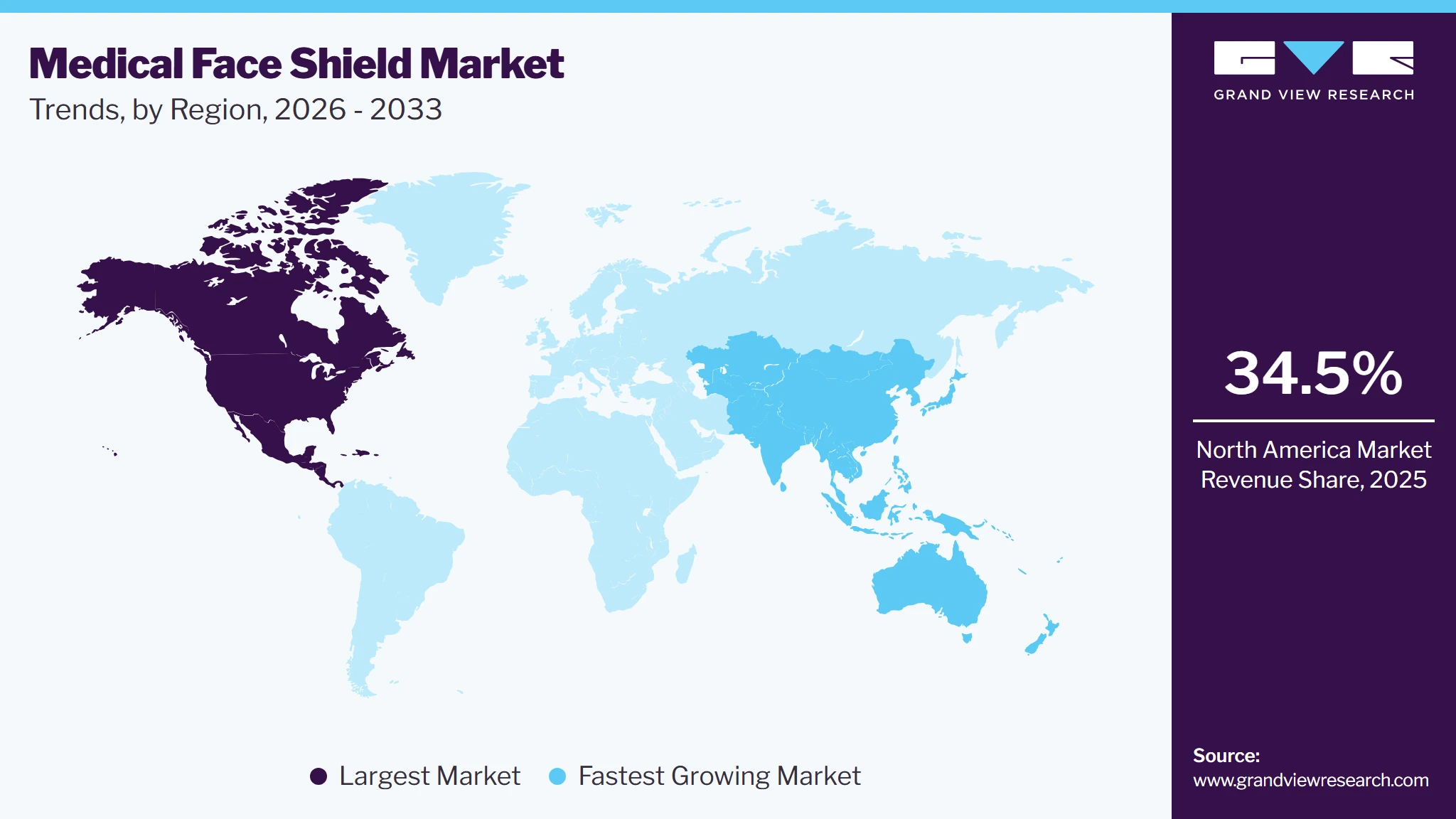
North America dominated the medical face shield market with the largest revenue share of 34.5% in 2025. The extensive healthcare infrastructure, substantial healthcare spending, and strong emphasis on infection prevention and occupational protection. Demand is driven by hospitals, surgical centers, dental facilities, emergency care settings, and other clinical environments where healthcare workers require protection from blood, bodily fluids, splashes, and potentially infectious materials. The U.S. remains a key regional market, supported by established regulatory requirements for medical face shields and continued attention to healthcare-worker safety. Product development is also shifting toward improved optical clarity, anti-fog performance, lightweight construction, and compatibility with other PPE, encouraging replacement and product differentiation.
 To learn more about this report, Download Free Sample Report
U.S. Medical Face Shield Market Trends
The U.S. medical face shield market is supported by its extensive hospital infrastructure, high healthcare utilization, and strong focus on infection prevention and occupational safety. The presence of a large and diverse hospital network creates a broad customer base for medical face shields across operating rooms, emergency departments, intensive care units, dental facilities, and other clinical environments. The expansion and modernization of hospitals also support demand as healthcare facilities strengthen their infection-control protocols and equip staff with appropriate protective equipment. Face shields are used to protect against blood, bodily fluids, splashes, and other exposure risks, particularly during procedures involving close patient contact. Preferences for lightweight designs, anti-fog surfaces, clear optical performance, and compatibility with masks and respirators further support demand.
Number of Hospitals, Staffed Hospital Beds, and Admissions in the U.S.
Hospital Category
2024
2023
Total Number of All U.S. Hospitals
6,100
6,093
U.S. Community Hospitals
5,121
5,112
Nongovernment Not-for-Profit Community Hospitals
2,984
2,978
Investor-Owned (For-Profit) Community Hospitals
1,224
1,214
State and Local Government Community Hospitals
913
920
Federal Government Hospitals
210
207
Nonfederal Psychiatric Hospitals
656
654
Other Hospitals
113
120
Source: American Hospital Association 2026, 2025
Europe Medical Face Shield Market Trends
Well-established healthcare systems, strong occupational safety practices, and structured infection prevention protocols across hospitals and clinical facilities support the Europe medical face shield market. European healthcare providers place strong emphasis on protective equipment for procedures involving exposure to blood, bodily fluids, splashes, and infectious materials, creating demand for facial protection across surgical, dental, emergency, laboratory, and other high-contact environments. The region’s regulatory framework also encourages manufacturers to improve product performance, with requirements addressing aspects such as field of vision, optical quality, anti-fog properties, ergonomic fit, and compatibility with spectacles.
TheUKmedical face shield market is supported by strong infection-prevention practices across NHS hospitals and other healthcare settings. Clinical staff are expected to assess exposure risks before procedures and use appropriate eye and face protection when contact with blood, bodily fluids, or respiratory hazards is anticipated. This creates consistent demand for face shields and visors across surgical theatres, emergency care, aerosol-generating procedures, and other high-exposure activities. The UK healthcare system also emphasizes products that meet relevant standards and can be safely decontaminated when used as a reusable item, encouraging demand for durable, comfortable, and easy-to-clean designs. Continued attention to infection-control compliance, occupational safety, and preparedness for infectious diseases supports the adoption of medical face shields across hospitals and clinical facilities.
The Germany medical face shield market is supported by a large hospital-based healthcare system, substantial surgical activity, and well-established infection-prevention practices. Surgical procedures create demand for facial protection because healthcare professionals may encounter blood, bodily fluids, tissue particles, and other splash hazards during invasive interventions. German infection-control guidance emphasizes specific precautions during surgery and the use of appropriate protective equipment according to the exposure risk. Demand also extends to emergency care, interventional procedures, endoscopy, dentistry, intensive care, and other clinical activities involving close patient contact. Germany’s structured hospital-hygiene framework, supported by KRINKO and the Robert Koch Institute, further reinforces the use of appropriate personal protective equipment in healthcare facilities.
Asia Pacific Medical Face Shield Market Trends
The Asia Pacific medical face shield market is expanding on the back of healthcare infrastructure development, higher surgical and procedural volumes, and stronger emphasis on infection prevention across hospitals, clinics, dental facilities, and diagnostic centers. China and India are key contributors because of their large healthcare systems, expanding hospital networks, and domestic manufacturing capabilities for medical protective equipment. Japan, South Korea, and Australia support demand for higher-specification face shields featuring anti-fog properties, improved optical clarity, lightweight designs, and enhanced splash protection.
Japan’s medical face shield market is supported by its aging population, which is contributing to greater demand for healthcare services, hospital treatment, and surgical procedures. The growing proportion of older adults is associated with higher requirements for cataract surgery, orthopedic procedures, cardiovascular interventions, cancer-related surgeries, and other age-related treatments, creating regular demand for protective equipment used by surgeons, nurses, and other healthcare personnel. Japan’s advanced hospital infrastructure and established infection-control practices further support the use of face shields during procedures where exposure to blood, bodily fluids, splashes, or aerosols is possible. Demand is also driven by outpatient and minimally invasive procedures, in which lightweight, anti-fog, optically clear, and comfortable face shields can improve visibility and facilitate prolonged use.
-
According to the World Economic Forum, Japan's Ministry of Internal Affairs and Communications reported that, as of 2024, the country had a record 36.25 million people aged 65 and over, accounting for 29.3% of the total population. This share is projected to rise to 34.8% in 2040 and 36.3% in 2045. Japan's proportion of elderly residents is already far higher than second-ranked Martinique (25.3%), making it the world's most aged society.
India medical face shield market is being supported by the expansion of hospital capacity, broader access to tertiary care, and the growing volume of surgical and diagnostic services. Government-led healthcare infrastructure programs are adding large hospitals and upgrading medical colleges with super-specialty departments, operating theatres, and additional beds, creating more points of use for protective equipment. India’s aging demographic is also shaping healthcare demand, with the population aged 60 and above accounting for about 11% in 2024 and projected to reach 21% by 2050. This demographic shift supports procedures related to cataracts, orthopedics, cardiovascular conditions, oncology, and other age-associated disorders. Public healthcare standards emphasize infrastructure, equipment, and service quality across hospitals and primary and community healthcare facilities, supporting structured PPE use.
Latin America Medical Face Shield Market Trends
The Latin America medical face shield market is supported by healthcare infrastructure modernization, expansion of surgical and outpatient services, and a stronger emphasis on infection prevention across hospitals and clinical facilities. Brazil, Argentina, and other countries are investing in healthcare facilities and upgrading operating rooms and procedural areas, increasing demand for protective equipment during surgeries, emergency care, dentistry, intensive care, and diagnostic procedures. The region’s aging population and growing burden of chronic diseases are also contributing to demand for medical interventions, including procedures where healthcare workers require protection from blood, bodily fluids, splashes, and aerosols. Healthcare providers are placing greater attention on occupational safety and standardized infection-control practices, supporting the adoption of face shields alongside masks, gowns, gloves, and eye protection.
Middle East And Africa Medical Face Shield Market Trends
The Middle East and Africa medical face shield market is supported by hospital expansion, and the growing volume and complexity of surgical procedures across the region. The expansion of general surgery, orthopedic procedures, cardiovascular interventions, obstetric and gynecological surgeries, trauma care, and other invasive procedures is creating a broader need for protective equipment that reduces healthcare workers’ exposure to blood, body fluids, and surgical splashes. In the Middle East, investments in advanced hospitals, specialty centers, and private healthcare facilities are strengthening surgical capacity, while improvements in operating-room standards are supporting the adoption of face shields alongside masks, gowns, and other protective equipment.
For instance, Saudi Arabia’s Vision 2030, particularly through the Health Sector Transformation Program (HSTP), is supporting the development of healthcare infrastructure, improved access to medical services, and higher standards of healthcare quality and safety. The HSTP is explicitly identified as one of the realization programs of Saudi Vision 2030 and focuses on restructuring the healthcare system, improving service quality and efficiency, and expanding access to healthcare services.
Key Medical Face Shield Company Insights
Key medical face shield manufacturers are significantly shaping the market by focusing on improved protection, comfort, visibility, and usability across healthcare settings. Product developments such as lightweight materials, anti-fog coatings, enhanced optical clarity, adjustable headbands, splash-resistant designs, and extended facial coverage are strengthening the functionality of medical face shields. Manufacturers are also emphasizing ergonomic designs that support prolonged use during surgical procedures, emergency care, dental treatments, and other clinical activities. In addition, improvements in disposable and reusable configurations are enabling healthcare facilities to select products according to infection-control requirements and procurement needs.
Key Medical Face Shield Companies
The following key companies have been profiled for this study on the medical face shield market.
-
(Solventum)3M
-
Cardinal Health
-
Mölnlycke Health Care
-
AlphaProTech
-
Dukal, LLC
-
Tecman Advanced Healthcare Products
-
Weigao Medical International Co., Ltd
-
VMG
-
Wujiang TTK
-
Prestige Medical
-
TIDI Products (TJC, L.P.)
-
Dynarex Corporation
-
Medline
-
Keystone Vet
Competitive Benchmarking
Category
Operating Strategies
Competitive Edge
Weakness
Established Players (Solventum (3M), Cardinal Health, Mölnlycke Health Care, AlphaProTech, Dukal, LLC, Medline, TIDI Products (TJC, L.P.), Dynarex Corporation)
- Established players focus on broad healthcare portfolios, scalable manufacturing, regulatory compliance, and dependable supply to institutional healthcare customers.
- Companies emphasize product standardization, procurement partnerships, distribution coverage, and continuous improvements in comfort, visibility, and protective performance.
- Strong healthcare relationships, extensive distribution networks, manufacturing capabilities, and established brand recognition provide access to hospitals and clinical facilities.
- Product development expertise enables advanced face shields featuring anti-fog properties, lightweight materials, ergonomic designs, and enhanced splash protection.
- Large-scale operations can lead to slower responses to niche requirements and localized demand compared with smaller, specialized manufacturers.
- Higher operating costs and premium product positioning can limit competitiveness against low-cost regional and private-label suppliers.
Emerging Players (Tecman Advanced, Healthcare Products, Weigao Medical International Co., Ltd., Wujiang TTK,)
- Emerging players focus on application-specific products, flexible manufacturing, competitive pricing, and customization to address diverse requirements across healthcare facilities.
- Companies strengthen regional distribution, expand product availability, and target underserved healthcare segments through responsive customer service and shorter supply cycles.
- Greater operational flexibility enables emerging players to respond quickly to changing procurement requirements and specialized healthcare applications.
- Competitive pricing, localized manufacturing capabilities, and customized product designs help attract cost-conscious hospitals, clinics, and distributors.
- Limited brand recognition and smaller distribution networks can restrict access to large hospital systems and international procurement contracts.
- Lower manufacturing scale and fewer resources for research, regulatory expansion, and marketing can constrain broader market penetration.
Recent Developments
-
In January 2026, Medline officially opened a new office in Riyadh, Saudi Arabia, strengthening its regional healthcare operations and customer support capabilities. The facility brings together management, business development, product management, regulatory affairs, and human resources functions, with initial support focused on surgical procedure trays, operating-room solutions, wound care, urology, and respiratory products.
-
January 2026, The Vision Council announced the publication of ANSI/ISEA Z87.1-2025, the revised American National Standard for Occupational and Educational Personal Eye and Face Protection Devices. The updated standard establishes requirements for the design, testing, marking, selection, care, and use of eye and face protection against hazards such as impact, non-ionizing radiation, and liquid splashes in occupational and educational environments. Key updates include a cross-reference to ANSI/ISEA Z87.62-2021 for protection against blood and other potentially infectious materials, expanded product-marking requirements, and clarified provisions for impact testing, lens haze, and minimum coverage.
-
April 2024, 3M completed the planned spin-off of its healthcare business, formally launching Solventum Corporation as an independent company. Solventum began trading on the New York Stock Exchange under the ticker SOLV, marking the separation of 3M’s healthcare operations into a standalone business. The transaction was intended to allow both 3M and Solventum to pursue their respective growth strategies and capital allocation priorities independently. As part of the spin-off, eligible 3M shareholders received one Solventum share for every four 3M shares held as of the March 18, 2024, record date. 3M retained a 19.9% ownership interest in Solventum following the separation.
Medical Face Shield Market Report Scope
Report Attribute
Details
Market size in 2025
USD 255.9 million
Estimated market size in 2026
USD 268.5 million
Projected market size by 2033
USD 389.3 million
Growth rate
CAGR of 5.5% from 2026 to 2033
Base year for estimation
2025
Historical data
2021 - 2024
Forecast period
2026 - 2033
Quantitative units
Revenue in USD million/billion, and CAGR from 2026 to 2033
Report coverage
Revenue forecast, company ranking, competitive landscape, growth factors, and trends
Segments covered
Product, usability, shield material, end-use, region
Regional scope
North America; Europe; Asia Pacific; Latin America; MEA
Country scope
U.S.; Canada; Mexico; Germany; UK; France; Italy; Spain; Norway; Denmark; Sweden; China; Japan; India; South Korea; Australia; Thailand; Brazil; Argentina; Saudi Arabia; South Africa; UAE; Kuwait
Key companies profiled
(Solventum) 3M; Cardinal Health; Mölnlycke Health Care; AlphaProTech; Dukal, LLC; Tecman Advanced Healthcare Products; Weigao Medical International Co., Ltd.; Wujiang TTK; TIDI Products (TJC, L.P.); Dynarex Corporation; Medline
Customization scope
Free report customization (equivalent up to 8 analysts' working days) with purchase. Addition or alteration to country, regional & segment scope.
Pricing and purchase options
Avail customized purchase options to meet your exact research needs. Explore purchase options
Global Medical Face Shield Market Report Segmentation
This report forecasts revenue growth at regional and country levels and provides an analysis of the latest industry trends in each of the sub-segments from 2021 to 2033. For this study, Grand View Research has segmented the global medical face shield market report based on product, usability, shield material, end-use, and region.
-
Product Outlook (Revenue, USD Million, 2021 - 2033)
-
Standard Face Shields
-
Wraparound / Extended-Coverage Face Shields
-
-
Shield Usability Outlook (Revenue, USD Million, 2021 - 2033)
-
Disposable Face Shields
-
Reusable Face Shields
-
With Replaceable Visor
-
Without Replaceable Visor
-
-
-
Shield Material Outlook (Revenue, USD Million, 2021 - 2033)
-
PET / PETG
-
Polycarbonate
-
Acetate
-
Others
-
-
End-use Outlook (Revenue, USD Million, 2021 - 2033)
-
Hospitals
-
Dental Clinics
-
Ambulatory Surgical Centers (ASCs)
-
Specialty Clinics
-
Diagnostic Laboratories
-
Emergency Medical Services (EMS)
-
Others
-
-
Region Outlook (Revenue, USD Million, 2021 - 2033)
-
North America
-
U.S.
-
Canada
-
Mexico
-
-
Europe
-
UK
-
Germany
-
France
-
Italy
-
Spain
-
Norway
-
Denmark
-
Sweden
-
-
Asia Pacific
-
China
-
Japan
-
South Korea
-
Thailand
-
Australia
-
India
-
-
Latin America
-
Brazil
-
Argentina
-
-
MEA
-
South Africa
-
Saudi Arabia
-
UAE
-
Kuwait
-
-
Research Methodology
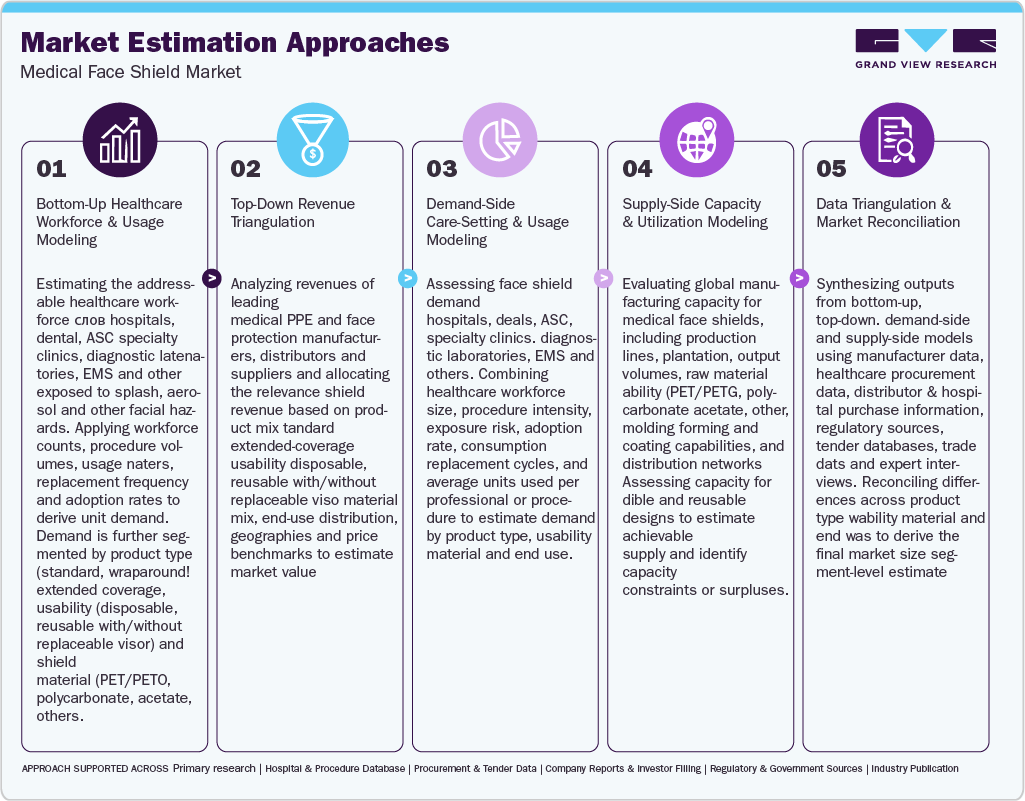
The medical face shield market figures in this report are based on a proven research process that combines executive interviews with secondary research from proprietary databases, company filings, and recognized regulatory and institutional sources. Market size is built through value-chain sizing-reconciling supply-side and demand-side estimates-and triangulated with bottom-up and top-down approaches. Every estimate passes multiple levels of expert validation before publication, with each medical face shield segment quantified using the revenue-capture definitions in the table below.
Segment Definition
Product
Revenue Capture Definition
Standard Face Shields
Revenue capture for this segment is defined as sales of standard face shields, which provide direct facial coverage from the forehead to the chin for general protection against splashes, fluid droplets, and non-hazardous contaminants in healthcare, clinical, and institutional settings.
Wraparound / Extended-Coverage
Face Shields
This financial metric measures total gross revenue derived from specialty visors featuring curved lateral designs or elongated neck guards to provide comprehensive side-to-side and downward splash protection during high-risk surgical, dental, and aerosol-generating medical procedures.
Estimation Model
 To learn more about this report, Download Free Sample Report
Delivered Customizations
This report has been delivered with the following In-depth customizations
Client Request
Customization Delivered
Value Adds
ASP and Volume Analysis (Historical & Forecast)
Comprehensive ASP (Average Selling Price) and volume analysis for medical face shields across the forecast period, segmented by product type (standard face shields and wraparound/extended-coverage face shields), usability (disposable and reusable), reusable configuration (with and without replaceable visor), shield material (PET/PETG, polycarbonate, acetate, and others), end use, and geography. Includes historical pricing trends, procurement models, replacement cycles, utilization rates, product lifespan, regulatory requirements, and forward-looking forecasts based on healthcare worker demand, surgical procedures, infection-control requirements, and healthcare infrastructure expansion.
Enables accurate revenue forecasting, pricing strategy optimization, procurement planning, identification of premium product opportunities, evaluation of material and design shifts, assessment of regional adoption patterns, and investment decision-making for manufacturers and investors.
Procedure Volume and Patient Population Analysis
Detailed assessment of healthcare professionals, clinical settings, and procedures requiring medical face shields, including surgery, emergency care, dentistry, interventional procedures, diagnostic imaging, and other healthcare applications. Includes segmentation by procedure volumes, healthcare-worker exposure, surgical activity, patient volumes, hospital capacity, operating rooms, emergency departments, dental facilities, ambulatory surgical centers, and regional healthcare infrastructure.
Supports demand forecasting, estimation of addressable healthcare-professional populations, identification of high-use clinical segments, capacity planning for hospitals and healthcare facilities, evaluation of regional opportunities, and long-term market sizing based on procedure growth and infection-prevention requirements.
Competitive Benchmarking and Market Share Analysis
Comprehensive competitive assessment of leading medical face shield manufacturers, including product portfolio benchmarking, ASP comparison, shield material and design assessment, coverage and protection-level comparison, ergonomic design evaluation, regulatory approvals, distribution network analysis, regional market share assessment, innovation pipeline, strategic partnerships, acquisitions, product launches, and positioning across major geographic markets.
Enables competitive positioning, market gap identification, technology and product benchmarking, pricing optimization, product differentiation, partnership and acquisition evaluation, commercialization strategy development, and geographic expansion planning for established and emerging market participants.
Frequently Asked Questions About This Report
The global medical face shield market size was valued at USD 255.9 million in 2025 and is estimated at USD 268.5 million for 2026.
The global medical face shield market is expected to grow at a CAGR of 5.5% from 2026 to 2033, reaching USD 389.3 million.
The standard face shields segment led with a 63.8% revenue share in 2025, while wraparound / extended-coverage face shields are the fastest-growing segment.
North America dominated the medical face shield market, accounting for 34.5% of revenue in 2025.
Infection-control requirements, occupational exposure to blood and body-fluid splashes, growth in surgical and dental procedures, adoption of PPE in healthcare settings, demand for reusable and disposable protective equipment, and regulatory requirements for worker protection drive the medical face shield market. Face shields also provide broader facial coverage than conventional eye protection.
(Solventum) 3M, Cardinal Health, Mölnlycke Health Care, AlphaProTech, Dukal, LLC, Tecman Advanced Healthcare Products, Weigao Medical International Co., Ltd., Wujiang TTK, TIDI Products (TJC, L.P.), Dynarex Corporation, Medline, among others.
Asia Pacific is the fastest-growing region over the forecast period.
The disposable face shields segment led with a 70.8% revenue share in 2025, while the reusable face shields segment is the fastest-growing.
The PET / PETG segment led with a 51.5% revenue share in 2025, while the polycarbonate segment is the fastest-growing.
About the Author(s)
Medical Devices Research Team
Healthcare · Medical DevicesThis report was authored by the medical devices research team at Grand View Research - comprising two research analysts, one senior research analyst, and one industry expert - with specialized expertise in the medical devices segment of the healthcare industry. All findings are based on proprietary healthcare databases, executive interviews, and regulatory analysis, subject to internal peer review prior to publication.
Last Updated:
Speak to Analyst

Customize this report to your needs - add regions, segments, or data points, with 20% free customization.
Or view our licence options:


ISO 9001:2015 & 27001:2022 Certified
We are GDPR and CCPA compliant! Your transaction & personal information is safe and secure. For more details, please read our privacy policy.


