
- Home
- »
- Clinical Diagnostics
- »
-
Membrane Chromatography Market Size, Share Report 2033GVR Report cover

Membrane Chromatography Market (2026 - 2033)
Size, Share & Trends Analysis Report By Product (Capsules Cassette & Cartridges, Syringe Filters, Membrane Filters), By Technique, By End-use, By Region, And Segment Forecasts
Market Size, 2025
$371.5MMarket Estimate, 2026
$427.2MMarket Forecast, 2033
$1,281.7MCAGR, 2026–2033
17.0%Membrane Chromatography Market Summary
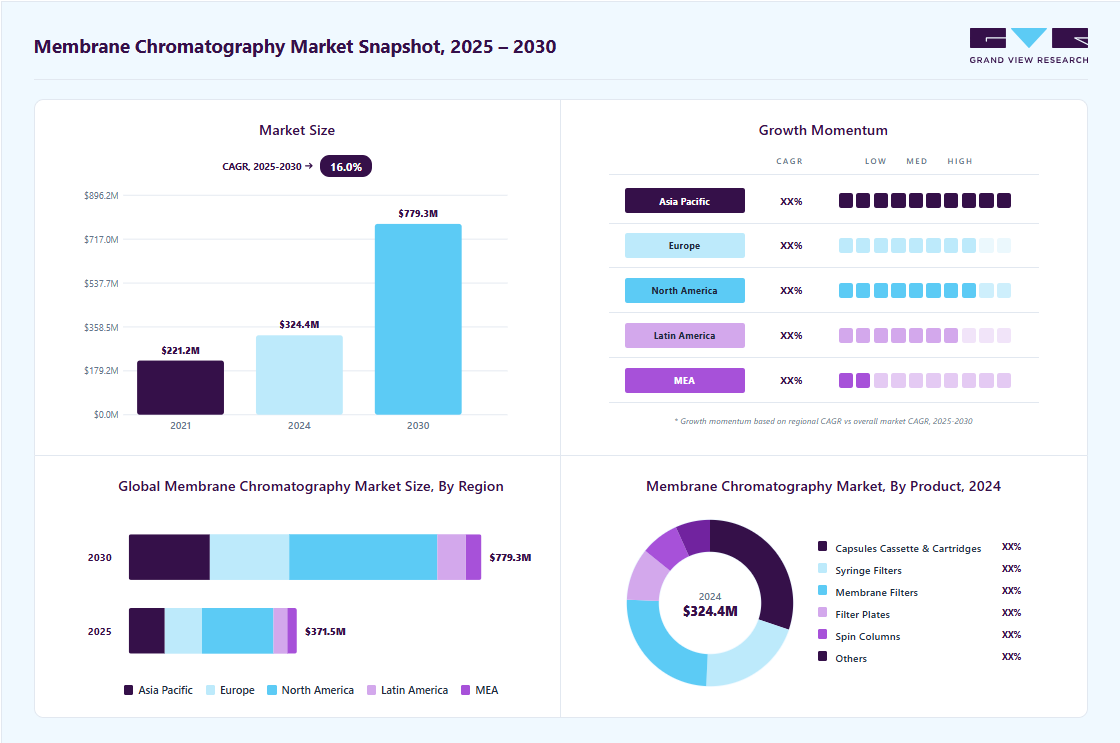
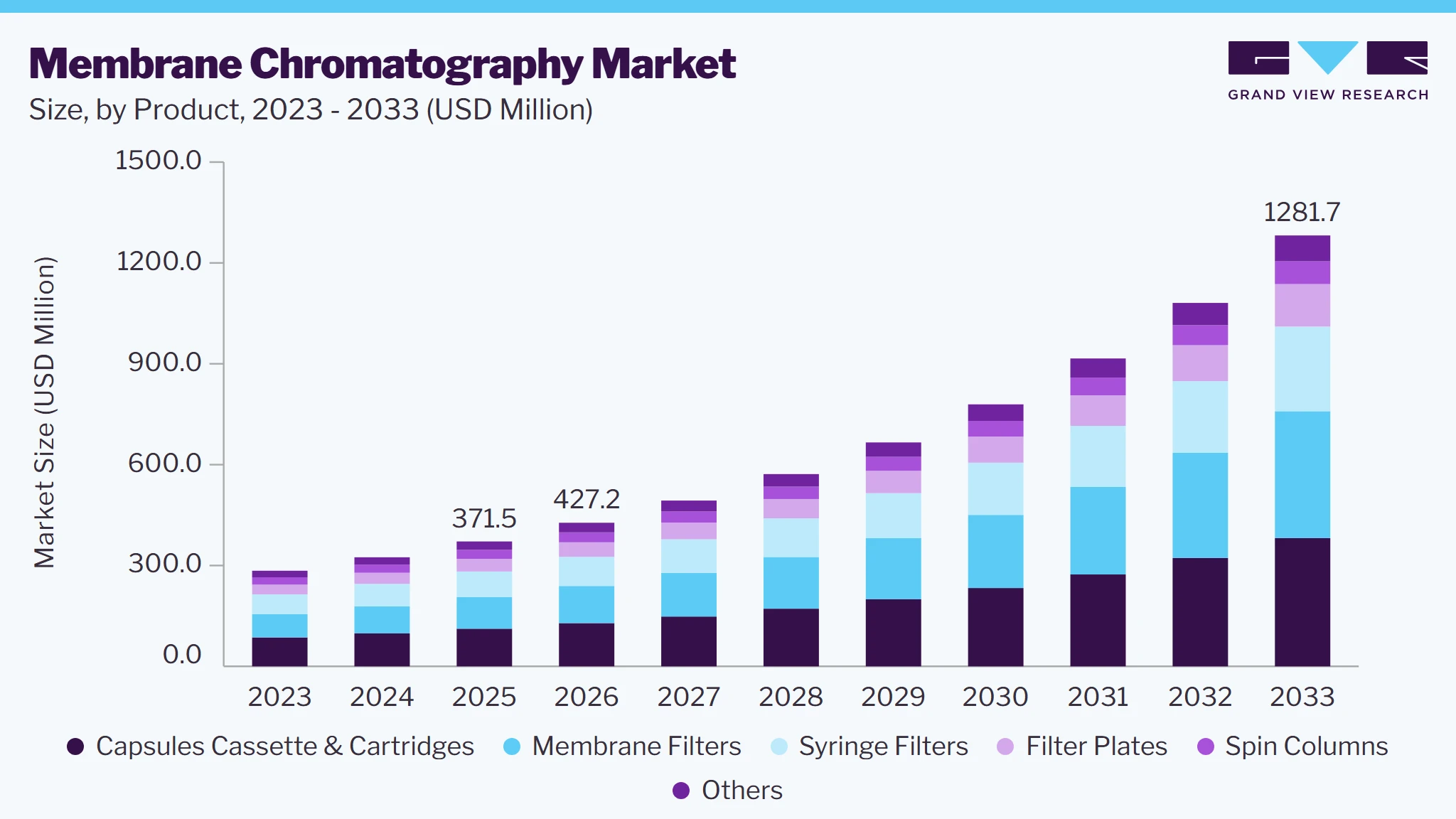
The global membrane chromatography market size was valued at USD 371.5 million in 2025 and is projected to grow from USD 427.2 million in 2026 to USD 1,281.7 million by 2033, at a CAGR of 17.0% from 2026 to 2033. North America market dominated, with a revenue share of 42.5% in 2025. The membrane chromatography market has experienced robust growth, primarily driven by the increasing demand for biopharmaceuticals and a heightened regulatory focus on cleaning validation for downstream purification processes.
 Source: Grand View Research, IR Documents, Primary Interviews, Paid DatabasesTo learn more about this report,
 Download Free Sample Report
Key Market Trends & Insights
- By product: Capsules Cassette & Cartridges segment led the market with the largest revenue share of 30.1% in 2025.
- By technique: Ion Exchange Membrane Chromatography segment led the market with the largest revenue share of 47.4% in 2025.
- By end-use: Pharmaceutical and Biotechnology Companies segment led the market with the largest revenue share of 53.1% in 2025.
Regional Highlights
- Largest regional market: North America (42.5% revenue share, 2025)
- Fastest-growing regional market: Asia Pacific (highest CAGR, 2026-2033)
- By country: The U.S. held the largest market share in 2025.
Market Size & Forecast
- Market size in 2025: USD 371.5 Million
- Estimated market size in 2026: USD 427.2 Million
- Projected market size by 2033: USD 1,281.7 Million
- CAGR (2026-2033): 17.0%
Three ways to get this report
Buy it, customize it, or ask a question.Ask an Analyst
Analyst response in 1 business day
- AccessReport author, directly
- Reply timeWithin 1 working day
- No sales callDirect answer only
- FormatEmail reply
- CostFree, no cost
Get the Full Report
What the study covers
- FormatsPDF · Excel · Dashboard
- Timeline2026–2033 annual, 2025 base
- Coverage20+ countries, 5 regions
- Companies10+ key players profiled
Customize the Report
20% free customization
- IncludeCountries, segments, points
- TailorTo your product definition
- ExtendDeeper competitor detail
- OrA fully bespoke study
- Turnaround5–10 working days
As biopharmaceutical purification becomes more scrutinized, the need for efficient, cost-effective solutions has led to a surge in membrane chromatography usage. This technology offers significant advantages over traditional column chromatography, including higher binding capacities and reduced buffer consumption, which are critical for optimizing biopharmaceutical production.
Scalability and ease of use further enhance the appeal of membrane chromatography, particularly for large biomolecules such as monoclonal antibodies and viral vectors, which are pivotal in therapeutic and vaccine production. The rise in demand for biologics is compounded by stringent regulatory standards for purity and safety, compelling companies in the bioprocessing industry to adopt advanced purification technologies such as membrane chromatography. This shift is supported by forecasts indicating that the biopharmaceutical market is expected to grow substantially, necessitating innovative purification methods to maintain quality and compliance.
 To learn more about this report, Download Free Sample Report
Regulatory approvals for biopharmaceutical manufacturing are also fueling market growth. For instance, in April 2024, Boehringer Ingelheim Biopharmaceuticals China successfully passed pre-approval inspections conducted by both the European Medicines Agency and the U.S. Food and Drug Administration. Such achievements highlight the capacity of companies to meet regulatory demands, thereby encouraging further investments in purification technologies. As regulatory bodies increasingly endorse biopharmaceuticals aimed at addressing diverse medical conditions, the demand for membrane chromatography continues to rise.
In addition to regulatory factors, robust R&D expenditures in the biopharmaceutical sector are propelling market expansion. The International Federation of Pharmaceutical Manufacturers & Associations reported that the biopharmaceutical industry’s annual R&D spending exceeds USD 202 billion, significantly outpacing sectors such as aerospace and defense by 7.3 times. This trend underlines the sector’s commitment to innovation and underscores the growing number of product launches, including Waters Corporation’s introduction of the XBridge Premier GTx BEH SEC columns in August 2023, tailored for gene therapy applications. Such innovations epitomize the advancements that membrane chromatography brings to the biopharmaceutical landscape, driving efficiency and supporting the industry’s rapid evolution.
Market Dynamics
The membrane chromatography market is supported by the growing demand for faster, flexible, and efficient downstream purification solutions across biopharmaceutical manufacturing. Pharmaceutical and biotechnology companies are increasingly adopting membrane-based separation technologies to reduce processing time, improve productivity, and support the purification of monoclonal antibodies, recombinant proteins, viral vectors, nucleic acids, and other complex biologics. Compared with conventional packed-bed chromatography, membrane chromatography enables convective flow through functionalized pores, allowing operation at higher flow rates and shorter residence times. The market is also benefiting from the expansion of single-use bioprocessing, as ready-to-use capsules, cassettes, cartridges, membrane filters, and other disposable formats can reduce column-packing requirements, cleaning procedures, validation workloads, and cross-contamination risks. Increasing investment in cell and gene therapies and specialized antibody-based products is further creating demand for advanced ion exchange, affinity, and hydrophobic interaction membrane solutions. For instance, in March 2026, W. L. Gore & Associates, Inc., a global materials science company, announced collaborations with customized ligand partners to develop a new range of affinity membrane chromatography products beyond Protein A-based solutions. The company stated that these products are being designed to improve purification productivity, scalability, cost-effectiveness, and process-risk management across cell and gene therapies and specialized antibody-based therapies. This development highlights the industry’s shift toward higher-value, modality-specific membrane platforms that can support applications from research and process development through clinical and GMP-scale manufacturing.
The growing production of biologics and advanced therapies is acting as an important driver for the membrane chromatography market because these products require highly controlled downstream purification to achieve the required purity, potency, and safety. Monoclonal antibodies, antibody-drug conjugates, recombinant proteins, vaccines, plasmid DNA, messenger RNA, viral vectors, and cell and gene therapies generate complex process streams containing host-cell proteins, residual DNA, aggregates, endotoxins, viruses, and other impurities. As more biologic products advance from clinical development into commercial manufacturing, pharmaceutical and biotechnology companies require purification platforms that can process diverse biomolecules rapidly while maintaining product recovery. For example, The U.S. Food and Drug Administration reported that its Center for Drug Evaluation and Research approved 50 novel drugs in 2024. In 2025, CDER approved 46 novel drugs, comprising 34 new molecular entities and 12 biologics; half of the total approvals also received orphan-drug designation. Membrane chromatography is well positioned to benefit from this expansion because it uses convective transport through functionalized membrane pores, enabling shorter residence times and higher flow rates than processes that depend primarily on diffusion into porous resin beads. This characteristic is particularly valuable for large biological entities such as adeno-associated viruses, lentiviral vectors, virus-like particles, nucleic acids, and large proteins.
The strong installed base and regulatory familiarity of resin chromatography is hampering growth of the membrane chromatography market because biopharmaceutical manufacturers generally avoid replacing validated purification operations unless the technical and financial benefits clearly outweigh the change-management risk. Packed-bed resin columns particularly Protein A, ion-exchange, and hydrophobic-interaction systems have been used for decades in monoclonal antibody and recombinant-protein manufacturing. Existing facilities already have chromatography skids, reusable columns, resin-handling procedures, cleaning cycles, process-control strategies, trained operators, supplier agreements, and regulatory documentation built around these platforms. This installed infrastructure reduces the immediate economic incentive to adopt membrane devices, even when membranes offer faster flow rates and simpler single-use operation.
The development of next-generation affinity membrane chromatography represents an important growth opportunity for the membrane chromatography market because it can expand membrane-based purification from primarily polishing and impurity-removal applications into higher-value biomolecule capture steps. Affinity chromatography uses an immobilized ligand that selectively binds a target molecule, allowing manufacturers to separate the desired product from a complex feed stream with comparatively high specificity. Protein A resin chromatography is already widely used for monoclonal antibody capture, but conventional packed-bed systems can become downstream bottlenecks as upstream cell-culture titers increase. Membrane-based affinity devices address this challenge through convective mass transfer, in which the process fluid flows directly through functionalized membrane pores. This enables shorter residence times, rapid cycling, lower pressure requirements, and smaller equipment footprints than diffusion-dependent bead-based chromatography. These characteristics are commercially attractive for pharmaceutical and biotechnology companies seeking to intensify purification, reduce processing time, and support flexible single-use production.
Analyst Perspective
The membrane chromatography market is evolving from a specialized downstream polishing segment into a broader bioprocessing platform that can support product capture, impurity clearance, process intensification, and the purification of emerging therapeutic modalities. From an analyst’s perspective, the market’s long-term attractiveness is closely linked to the continued expansion of biologics manufacturing and the industry’s need to remove downstream bottlenecks created by higher upstream titres. As monoclonal antibodies, antibody-drug conjugates, recombinant proteins, vaccines, viral vectors, and nucleic acid-based therapies move through clinical and commercial production, manufacturers require purification technologies that can deliver high throughput without proportionately increasing facility size, processing time, and operational complexity.
Product Insights
Based on product, the capsules cassette & cartridges segment led the market with the largest revenue share of 30.1% in 2025. Various growth factors drive the demand for capsules and cartridges in the membrane chromatography market. These components offer significant advantages in scalability, efficiency, and ease of use compared to traditional chromatography techniques. They enable faster processing times, higher throughput, and reduced costs associated with purification processes in biopharmaceutical manufacturing. Moreover, the increasing adoption of single-use technologies across the biopharmaceutical industry is a key driver, as it minimizes the risk of cross-contamination and simplifies cleaning validation processes.
Membrane filters are expected to grow at the fastest CAGR of 18.2% over the forecast period. It offers precise molecular separation capabilities, crucial for purifying biomolecules in biopharmaceutical production. Their ability to selectively separate target molecules based on size, charge, and hydrophobicity contributes to higher purity and yield, which is essential for meeting stringent regulatory requirements. Moreover, advancements in membrane technology, such as improvements in membrane materials, pore size distribution, and surface chemistry, continue to enhance filtration efficiency and performance. The trend towards single-use technologies in bioprocessing further boosts the adoption of membrane filters due to their disposability, which reduces operational complexity and lowers the risk of contamination. These factors collectively drive the growth of membrane filters in the membrane chromatography market, positioning them as pivotal components in modern biopharmaceutical manufacturing processes.
Technique Insights
Based on technique, the ion exchange membrane chromatography segment led the market with the largest revenue share of 47.4% in 2025. The growth is attributed to its less invasive properties and affordable post and pre-procedure cost of endoscopy devices are the major factors anticipated to boost the market growth over the forecast period. For instance, wireless capsule endoscopy (WCE) is a cutting-edge medical technology that revolutionizes the way gastrointestinal disorders are diagnosed and monitored. One of the primary advantages of WCE is its non-invasive nature. Unlike traditional endoscopic procedures that require sedation and insertion of a flexible tube through the mouth or rectum, WCE involves swallowing a capsule, eliminating discomfort and risks associated with invasive techniques.
Affinity membrane chromatography is expected to register significant growth over the forecast period due to its efficient purification of biomolecules, lower pressure drops facilitating faster processing, and cost-effectiveness, as membrane systems reduce operational costs compared to traditional resin-based methods. Moreover, the simplicity and flexibility of this technique streamline laboratory and manufacturing processes, while its sustainable attributes align with the biopharmaceutical industry’s focus on environmental responsibility.
End Use Insights
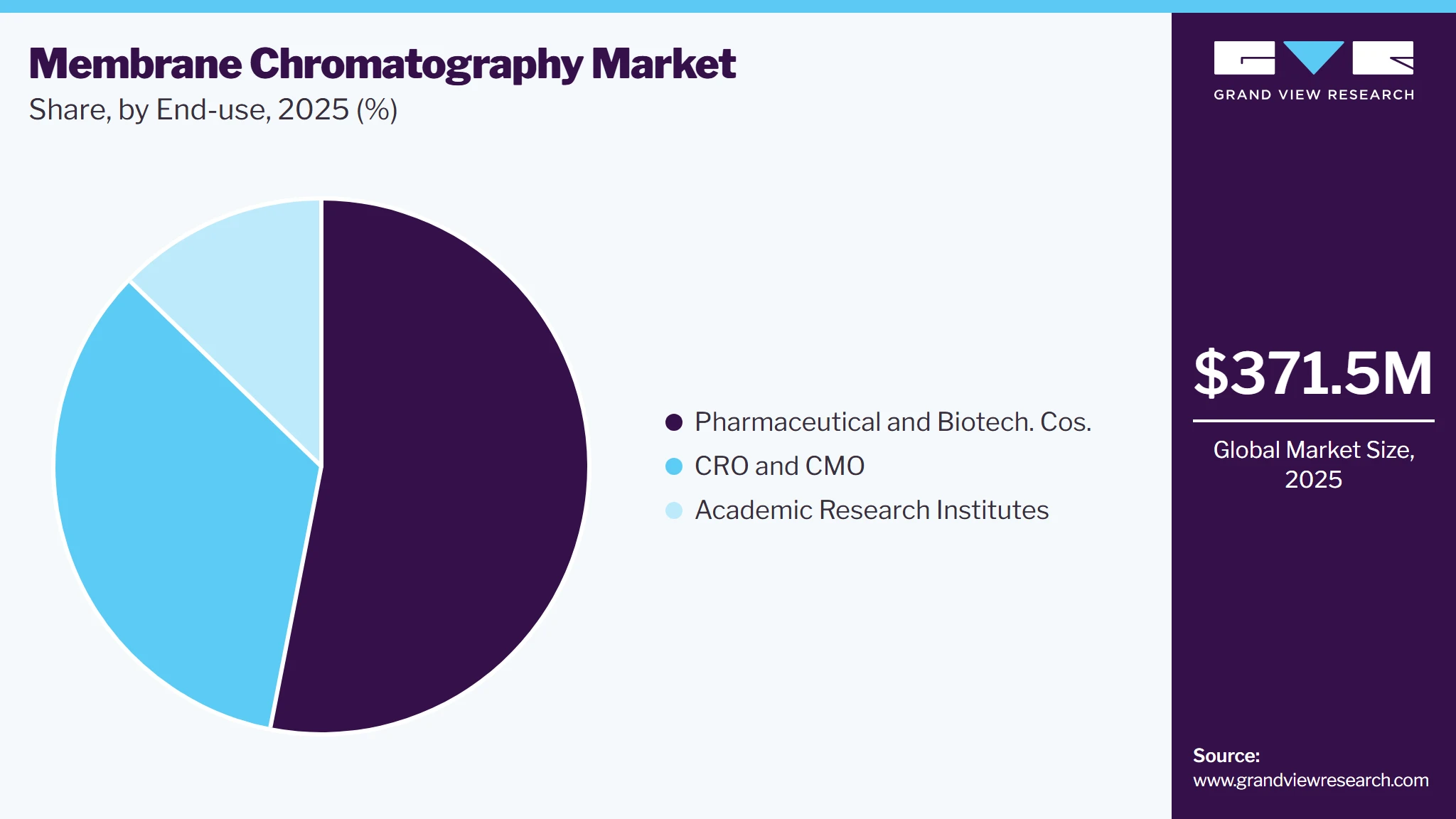
Based on end-use, the pharmaceutical and biotechnology companies segment led the market with the largest revenue share of 53.1% in 2025. The rising demand for biopharmaceutical products such as vaccines, monoclonal antibodies, and gene therapies requires efficient and scalable purification methods, with membrane chromatography being particularly effective. Companies are heavily investing in research and development to enhance downstream processing efficiency, reduce costs, and improve product quality, leading to increased adoption of membrane chromatography techniques. Moreover, strict regulatory requirements for product purity and safety are driving pharmaceutical and biotechnology firms to embrace advanced purification technologies, further boosting the market. The shift towards personalized medicine and the production of smaller, more specialized batches of biopharmaceuticals also favors the flexibility and efficiency offered by membrane chromatography.
 To learn more about this report, Download Free Sample Report
The CRO and CMO segment is projected to grow at the fastest rate of 17.1% over the forecast period. CROs and CMOs provide specialized services that include drug development, manufacturing, and testing, enabling biopharmaceutical companies to outsource key aspects of their production processes. The increasing complexity and specificity of biopharmaceutical products, such as monoclonal antibodies and cell and gene therapies, require advanced and efficient purification methods, driving these organizations to adopt membrane chromatography technologies.
Regional Insights
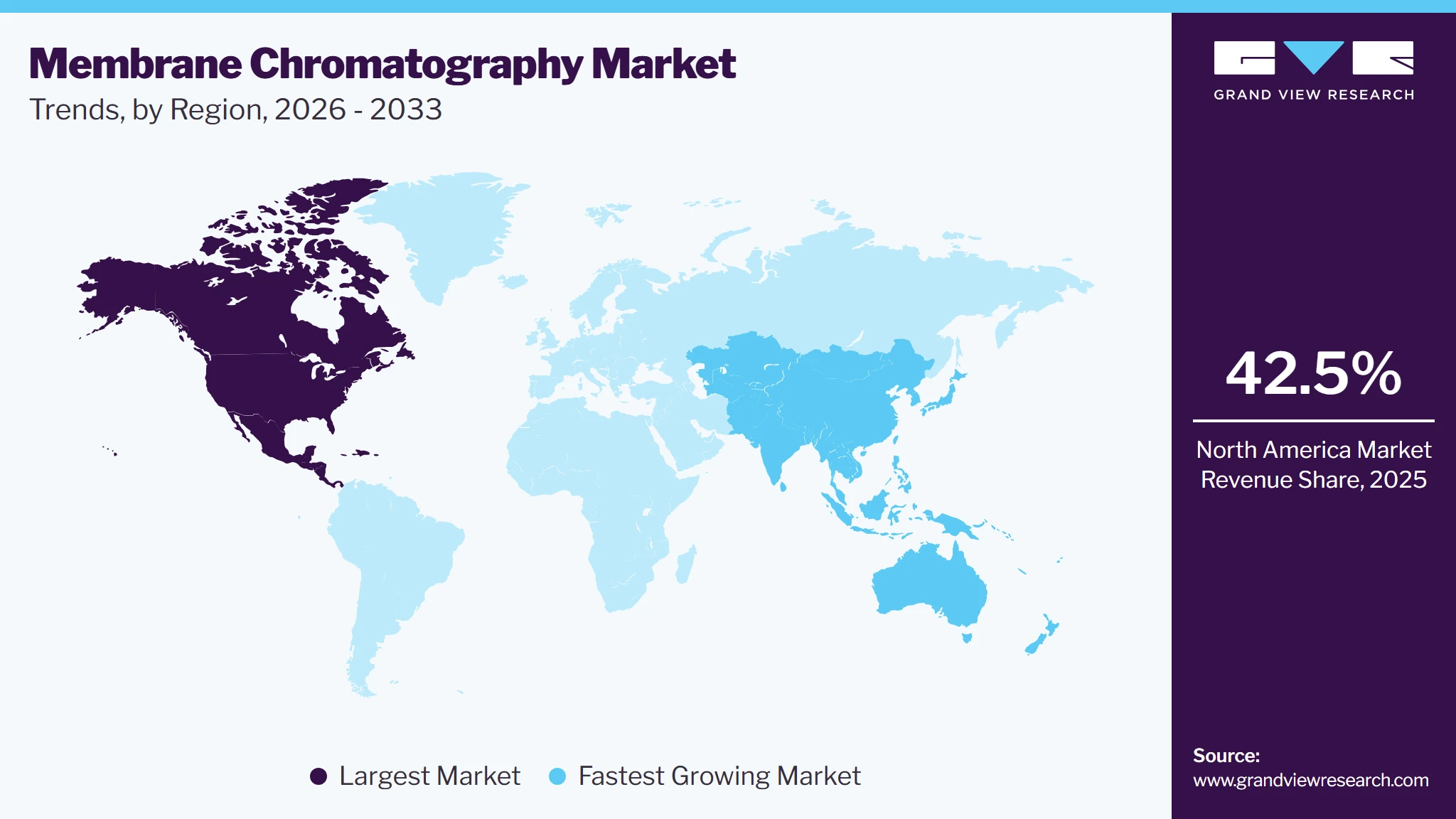
North America dominated the Membrane Chromatography Market with the largest revenue share of 42.5% in 2025, owing to the growing investments in research and development activities related to membrane chromatography. These investments fuel innovation, drive technological advancements, and enhance the competitiveness of the region’s biopharmaceutical industry. Moreover, the well-established healthcare sector in North America provides a solid presence for the growth of membrane chromatography technologies.
 To learn more about this report, Download Free Sample Report
U.S. Membrane Chromatography Market Trends
The Membrane Chromatography Market in the U.S. held the largest share in the North America region in 2025. The growing presence of emerging pharmaceutical companies in the U.S. market is fueling the expansion of the membrane chromatography market. As these companies continue to innovate and bring new therapies to market, the demand for efficient purification technologies, including membrane chromatography, is expected to rise significantly.
Europe Membrane Chromatography Market Trends
Europe membrane chromatography market held substantial market share in 2024 owing to the expanding portfolio in membrane chromatography. For instance, in February 2022, Sartorius AG strengthened its chromatography capabilities by acquiring Novasep’s chromatography division. This strategic move enables Sartorius to access a portfolio tailored for smaller biomolecules such as peptides, oligonucleotides, and insulin, as well as advanced systems for continuous biologics manufacturing. By incorporating Novasep’s offerings, Sartorius aims to diversify its revenue streams and strengthen its position as a leading provider of chromatography solutions.
Asia Pacific Membrane Chromatography Market Trends
Asia Pacific membrane chromatography market is expected to register the fastest CAGR of 17.7% in the forecast period. The market is witnessing a shift towards advanced technologies and innovative products to meet the growing need for high-resolution separation techniques. Moreover, stringent regulations regarding drug safety and quality control contribute to the expansion of the membrane chromatography market in the Asia Pacific. Companies operating in this market are focusing on strategic collaborations, product launches, and expansions to strengthen their market presence and cater to the diverse requirements of customers in the regions.
Key Membrane Chromatography Company Insights
Some key companies operating in the market include 3M; Asahi Kasei Corporation; Danaher Corporation; Merck KGaA; Cole-Parmer Instrument Company, LLC; among others. Companies in this market focus on research and development, strategic partnerships, and product launches. Their commitment to advancing care through technological innovations has contributed to their substantial market share.
-
Asahi Kasei Corporation offers state-of-the-art membrane filtration systems such as Microza, which utilize hollow-fiber membranes for reliable antibiotic purification and water for injection (WFI) production.
-
Merck KGaA provides innovative membrane technologies that enhance separation and purification processes. Their solutions support the production of high-quality biologics while ensuring regulatory compliance in life sciences.
Key Membrane Chromatography Companies
The following key companies have been profiled for this study on the membrane chromatography market.
-
3M
-
Asahi Kasei Corporation
-
Danaher Corporation
-
Merck KGaA
-
Cole-Parmer Instrument Company, LLC
-
Thermo Fisher Scientific Inc.
-
Sartorius AG
-
Air Products Inc.
-
Purilogics
-
Restek Corporation
Competitive Benchmarking
Category
Operating Strategies
Competitive Edge
Weakness
Well-Established Players (3M, Asahi Kasei Corporation; Danaher Corporation; Merck KGaA; Thermo Fisher Scientific Inc.; Sartorius AG)
Focus on expanding integrated downstream-processing portfolios through membrane chemistry innovation, scalable capsule and cartridge platforms, single-use system integration, and application-specific solutions for monoclonal antibodies, recombinant proteins, viral vectors, vaccines, and nucleic acids. These companies commonly pursue acquisitions, technology partnerships, global manufacturing expansion, regulatory-support services, and cross-selling through broader filtration, chromatography, and bioprocessing portfolios.
Strong global brands, broad installed customer bases, established relationships with pharmaceutical and biotechnology manufacturers, extensive regulatory and validation expertise, and large technical-service networks. Their diversified portfolios allow customers to source membranes, chromatography systems, filtration products, analytical tools, and process-support services from a single supplier.
Large organizational structures can slow product-development and customer-response cycles. Membrane chromatography may represent only one part of a broad bioprocessing portfolio, which can reduce focus on highly specialized applications. Premium product pricing and dependence on standardized global platforms may also make these suppliers less flexible for small biotechnology firms or customized purification requirements.
Emerging Players (Cobetter, Purilogics; Cole-Parmer Instrument Company, LLC; Restek Corporation)
Concentrate on differentiated membrane architectures, high-capacity ligands, rapid-cycle purification, and niche applications that are not fully addressed by conventional resin systems. Their strategies often include collaboration with biotechnology companies, ligand developers, academic laboratories, and larger equipment suppliers; targeted product launches; custom membrane development; and penetration of advanced-therapy workflows such as viral-vector, plasmid DNA, and specialized protein purification
Greater specialization enables faster innovation, more flexible product customization, and closer engagement with customers developing novel biologics and advanced therapies. Emerging companies can focus on unresolved challenges such as high-throughput capture, large-particle purification, compact single-use devices, and lower-cost process intensification.
Limited financial resources, smaller manufacturing capacity, weaker global distribution, and lower brand recognition can restrict commercial adoption. These companies may face challenges in generating extensive regulatory documentation, ensuring consistent GMP supply, scaling from laboratory to commercial production, and providing worldwide technical support.
Recent Developments
-
In September 2024, Sartorius launched Vivaflow Tangential Flow Filtration Cassettes to enhance laboratory efficiency, simplifying ultrafiltration and diafiltration processes while significantly reducing operational costs and user effort.
-
In June 2024, Asahi Kasei launched a membrane system for producing water for injection, significantly enhancing water quality while reducing CO2 emissions and production costs compared to conventional distillation methods.
-
In April 2024, Merck announced an approximately USD 300 million investment in a new Life Science Research Center in Darmstadt, enhancing biopharmaceutical development as part of an investment program by 2025.
-
In March 2024, 3M’s Board approved the spin-off of its Health Care business, named Solventum Corporation, scheduled for April 1, 2024, with stock trading under the symbol ‘SOLV.’
-
In February 2024, Thermo Fisher Scientific launched the Dionex Inuvion Ion Chromatography System, enhancing laboratories’ capabilities for ion analysis, while offering reconfigurable workflows and compact design for various applications.
Membrane Chromatography Market Report Scope
Report Attribute
Details
Market size in 2025
USD 371.5 million
Estimated market size in 2026
USD 427.2 million
Projected market size by 2033
USD 1,281.7 million
Growth rate
CAGR of 17.0% from 2026 to 2033
Historical data
2021 - 2024
Forecast period
2026 - 2033
Quantitative units
Revenue in USD million/billion and CAGR from 2026 to 2033
Report coverage
Revenue forecast, company ranking, competitive landscape, growth factors, and trends
Segments covered
Product, technique,end-use, region
Regional scope
North America; Europe; Asia Pacific; Latin America; MEA
Country scope
U.S.; Canada; Mexico; Germany; UK; France; Italy; Spain; Denmark; Sweden; Norway; Japan; China; India; South Korea; Australia; Thailand; Brazil; Argentina; South Africa; Saudi Arabia; UAE; and Kuwait
Key companies profiled
3M, Asahi Kasei Corporation, Danaher Corporation, Merck KGaA, Cole-Parmer Instrument Company, LLC, Thermo Fisher Scientific Inc., Sartorius AG, Air Products Inc., Purilogics, Restek Corporation
Customization scope
Free report customization (equivalent up to 8 analysts' working days) with purchase. Addition or alteration to country, regional & segment scope.
Pricing and purchase options
Avail customized purchase options to meet your exact research needs. Explore purchase options
Global Membrane Chromatography Market Report Segmentation
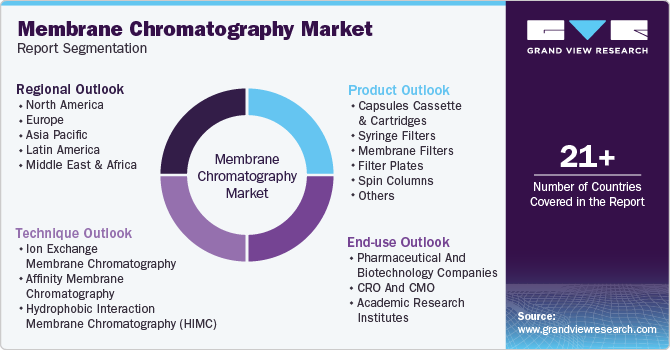
This report forecasts revenue growth at global, regional, and country levels and provides an analysis of the latest industry trends in each of the sub-segments from 2021 to 2033. For this study, Grand View Research has segmented the global membrane chromatography market report based on product, technique, end use, and region:
 To learn more about this report, Download Free Sample Report
-
Product Outlook (Revenue, USD Million, 2021 - 2033)
-
Capsules Cassette & Cartridges
-
Syringe Filters
-
Membrane Filters
-
Filter Plates
-
Spin Columns
-
Others
-
-
Technique Outlook (Revenue, USD Million, 2021 - 2033)
-
Ion Exchange Membrane Chromatography
-
Affinity Membrane Chromatography
-
Hydrophobic Interaction Membrane Chromatography (HIMC)
-
-
End use Outlook (Revenue, USD Million, 2021 - 2033)
-
Pharmaceutical and Biotechnology Companies
-
CRO and CMO
-
Academic Research Institutes
-
-
Regional Outlook (Revenue, USD Million, 2021 - 2033)
-
North America
-
U.S.
-
Canada
-
Mexico
-
-
Europe
-
UK
-
Germany
-
France
-
Italy
-
Spain
-
Norway
-
Sweden
-
Denmark
-
-
Asia Pacific
-
Japan
-
China
-
India
-
Australia
-
South Korea
-
Thailand
-
-
Latin America
-
Brazil
-
Argentina
-
-
Middle East & Africa
-
South Africa
-
Saudi Arabia
-
UAE
-
Kuwait
-
-
Research Methodology
The membrane chromatography market figures in this report are based on a proven research process that combines executive interviews with secondary research from proprietary databases, company filings, and recognized regulatory and institutional sources. Market size is built through value-chain sizing-reconciling supply-side and demand-side estimates-and triangulated with bottom-up and top-down approaches. Every estimate passes multiple levels of expert validation before publication, with each membrane chromatography segment quantified using the revenue-capture definitions in the table below.
Segment Definition
Segment - Product
Revenue capture definition
Capsules Cassette & Cartridges
Revenue is captured from the sale of preassembled membrane chromatography devices supplied in capsule, cassette, or cartridge formats for process development, clinical production, and commercial biomanufacturing. This includes single-use and reusable devices used for biomolecule capture, flow-through polishing, contaminant removal, and viral clearance.
Syringe Filters
Revenue is derived from disposable syringe-mounted membrane devices used for small-volume sample clarification, purification, buffer preparation, and laboratory-scale chromatographic separation.
Membrane Filters
Revenue is captured from flat-sheet, disc, and other standalone functionalized membrane products used for laboratory and process-scale chromatographic separation. This includes ion exchange, affinity, and hydrophobic interaction membranes used for product capture, impurity removal, polishing, and sample preparation.
Filter Plates
Revenue is generated from multiwell membrane filter plates used for high-throughput purification, screening, sample preparation, and process-development studies. These products are commonly sold to pharmaceutical laboratories, biotechnology companies, CROs, CMOs, and academic institutes for parallel evaluation of membrane chemistries, buffer conditions, binding capacity, and product recovery.
Spin Columns
Revenue is derived from disposable centrifugal membrane chromatography columns used for rapid, small-scale purification of proteins, antibodies, nucleic acids, and other biomolecules.
Others
Revenue is captured from membrane chromatography products not included in the major categories, such as membrane discs, sheets, modules, laboratory kits, custom assemblies, prototype devices, accessories, holders, connectors, and specialized high-throughput or microfluidic formats.
Segment - Technique
Revenue capture definition
Ion Exchange
Membrane Chromatography
Revenue is captured from anion exchange and cation exchange membrane devices, consumables, and related services used to separate biomolecules according to differences in electrical charge.
Affinity Membrane Chromatography
Revenue is derived from membrane devices functionalized with selective ligands that bind specific target molecules. This includes Protein A membranes for monoclonal antibody capture and customized affinity membranes for antibody fragments, recombinant proteins, viral vectors, nucleic acids, enzymes, and other specialized biotherapeutics
Hydrophobic Interaction
Membrane Chromatography (HIMC)
Revenue is captured from membrane products that separate biomolecules according to differences in surface hydrophobicity under controlled salt conditions. The segment includes products used for protein purification, aggregate removal, intermediate purification, polishing, and separation of closely related biomolecular species.
Segment - End-use
Revenue capture definition
Pharmaceutical and
Biotechnology Companies
Revenue is generated from the procurement of membrane chromatography instruments, capsules, cassettes, cartridges, filters, plates, spin columns, and related services by companies engaged in the development and manufacturing of biologics, vaccines, monoclonal antibodies, recombinant proteins, cell and gene therapies, viral vectors, and nucleic acid-based therapeutics.
CRO and CMO
Revenue is captured from contract research and contract manufacturing organizations purchasing membrane chromatography products and services to support outsourced analytical development, purification process development, clinical production, technology transfer, and commercial manufacturing
Academic Research Institutes
Revenue is derived from universities, government laboratories, teaching hospitals, and research institutes purchasing small-scale membrane chromatography products for basic research, biomolecule purification, assay development, protein characterization, nucleic acid isolation, and translational studies.
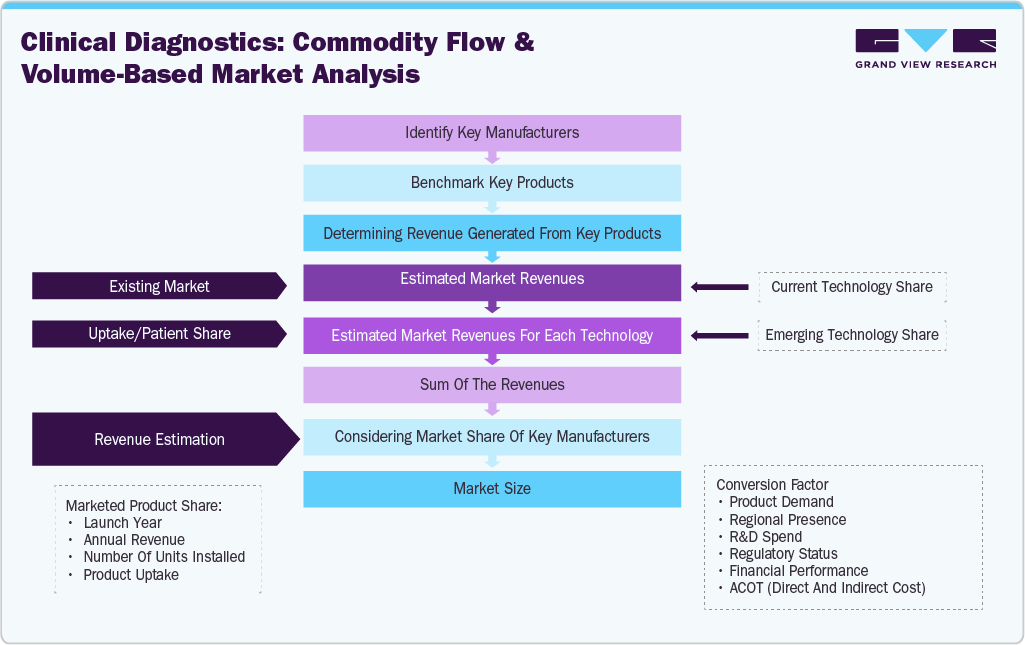
Estimation Model
The membrane chromatography market size was estimated using a bottom up approach by identifying key manufacturers, benchmarking their membrane chromatography product portfolios, and assessing revenues generated from membrane chromatography products across major technologies. Market revenues were further validated by analyzing technology wise adoption, patient testing volumes, and the market share of leading manufacturers, followed by aggregation of segment level revenues to derive the overall market size.
 To learn more about this report, Download Free Sample Report
Delivered Customizations
This report has been delivered with the following In-depth customizations
Client Request
Customization Delivered
Value Adds
Membrane Chromatography Competitive Landscape & Technology Assessment - Ion Exchange, Affinity, Hydrophobic Interaction and Single-use Formats
Assessed the global membrane chromatography ecosystem across membrane manufacturers, bioprocessing suppliers, pharmaceutical and biotechnology companies, CROs, CMOs, and academic research institutes. Evaluated capsules, cassettes, cartridges, membrane filters, filter plates, syringe filters, spin columns, and specialized membrane devices used in biomolecule capture, flow-through polishing, contaminant removal, viral clearance, and process development.
Enabled benchmarking of well-established and specialized market participants, identified innovation opportunities in high-capacity membranes, rapid-cycle purification, single-use downstream processing, and advanced affinity ligands, and mapped competitive positioning across monoclonal antibodies, recombinant proteins, viral vectors, vaccines, nucleic acids, and other biologics.
Membrane Chromatography Regulatory, Validation, Bioprocess Integration & Commercialization Assessment
Analyzed evolving regulatory and validation requirements for membrane chromatography products across major biopharmaceutical markets, including extractables and leachables evaluation, ligand leaching, viral clearance validation, process comparability, cleaning and sanitization, GMP documentation, scalability, and post-approval manufacturing changes.
Supported regulatory and commercialization risk assessment, identified validation and technology-transfer challenges, evaluated the impact of process changes on product quality and comparability, and provided strategic direction on regulatory readiness, scale-up, facility integration, supplier qualification, and adoption in clinical and commercial manufacturing.
Comprehensive Membrane Chromatography Innovation & Downstream Processing Technology Assessment
Evaluated advancements in ion exchange membrane chromatography, Protein A and customized affinity membranes, hydrophobic interaction membranes, convective mass-transfer systems, rapid-cycling devices, continuous processing, and high-throughput screening tools.
Highlighted high-growth innovation areas, identified technologies improving throughput, productivity, process flexibility, and facility utilization, and assessed competitive positioning across capture and polishing applications.
Frequently Asked Questions About This Report
Key factors that are driving the market growth include the rising demand for biopharmaceuticals and the growing regulatory focus on the cleaning validation of downstream purification processes.
Asia Pacific is the fastest-growing region over the forecast period.
Capsules Cassette & Cartridges segment led the market with the largest revenue share of 30.1% in 2025.
Ion Exchange Membrane Chromatography segment led the market with the largest revenue share of 47.4% in 2025.
The global membrane chromatography market size was valued at USD 371.5 million in 2025 and is estimated at USD 427.2 million in 2026.
The global membrane chromatography market is expected to grow at a CAGR of 17.0% from 2026 to 2033, reaching USD 1,281.7 million by 2033.
North America market dominated, with a revenue share of 42.5% in 2025.
Key players include 3M; Asahi Kasei; Danaher Corporation; Merck KGaA; Cole-Parmer; Thermo Fisher Scientific Inc.; Sartorius AG; Membrane Solutions; Purilogics; Restek Corporation.
Pharmaceutical and Biotechnology Companies segment led the market with the largest revenue share of 53.1% in 2025.
About the Author(s)
Clinical Diagnostics Research Team
Healthcare · Clinical DiagnosticsThis report was authored by the clinical diagnostics research team at Grand View Research - comprising two research analysts, one senior research analyst, and one industry expert - with specialized expertise in the clinical diagnostics segment of the healthcare industry. All findings are based on proprietary healthcare databases, executive interviews, and regulatory analysis, subject to internal peer review prior to publication.
Last Updated:
Speak to Analyst

Customize this report to your needs - add regions, segments, or data points, with 20% free customization.
Or view our licence options:


ISO 9001:2015 & 27001:2022 Certified
We are GDPR and CCPA compliant! Your transaction & personal information is safe and secure. For more details, please read our privacy policy.


