
- Home
- »
- Medical Devices
- »
-
Microsutures Market Size, Share & Growth Report, 2026-2033GVR Report cover

Microsutures Market (2026 - 2033)
Size, Share & Trends Analysis Report By Product (Absorbable, Non-Absorbable), By Surgery (General Surgery, Ophthalmology, Neurosurgery), By End Use, By Material (Hospitals, Ambulatory Surgery Center (ASC)), By Region, And Segment Forecasts
Market Size, 2024
$329.1MMarket Estimate, 2026
$340.2MMarket Forecast, 2033
$431.4MCAGR, 2025–2033
3.5%Microsutures Market Summary
The global microsutures market size was valued at USD 329.1 million in 2025 and is projected to grow from USD 340.2 million in 2026 to USD 431.4 million by 2033, at a CAGR of 3.5% from 2026 to 2033. North America dominated the global market, accounting for the largest revenue share of 39.3% in 2025. This market growth is largely attributed to advancements in minimally invasive surgical techniques, the increasing prevalence of chronic diseases requiring precise wound management, and the growth of medical tourism.
Key Market Trends & Insights
- By product type: Non-absorbable segment held the largest revenue share in 2025.
- By end use: Hospital segments held the largest revenue share in 2025.
- By material: Nylon segment held the largest share of the microsutures industry in 2025.
Regional Highlights
- Largest regional market: North America (39.3% revenue share, 2025)
- Fastest-growing regional market: Asia Pacific (highest CAGR, 2026-2033)
- By country: The U.S pet longevity therapeutics industry is a major contributor to the global market.
Market Size & Forecast
- Market size in 2025: USD 329.1 Million
- Estimated market size in 2026: USD 340.2 Million
- Projected market size by 2033: USD 431.4 Million
- CAGR (2026-2033): 3.5%
Three ways to get this report
Buy it, customize it, or ask a question.Ask an Analyst
A direct answer, usually in 1 working day
- AccessReport author, directly
- Reply timeWithin 1 working day
- No sales callDirect answer only
- FormatEmail reply
- CostFree, no cost
Get the Full Report
What the study covers
- FormatsPDF · Excel · Dashboard
- Timeline2025–2033 annual, 2024 base
- Coverage20+ countries, 5 regions
- Companies10+ key players profiled
Customize the Report
20% free customization
- IncludeCountries, segments, points
- TailorTo your product definition
- ExtendDeeper competitor detail
- OrA fully bespoke study
- Turnaround5–10 working days
The growing demand for cosmetic and reconstructive surgeries further drives the adoption of microsutures, as they enable fine, less noticeable stitches, resulting in better aesthetic outcomes. In addition, technological innovations in suture materials, such as biodegradable and high-strength sutures, enhance the efficiency and safety of procedures, encouraging their widespread use.
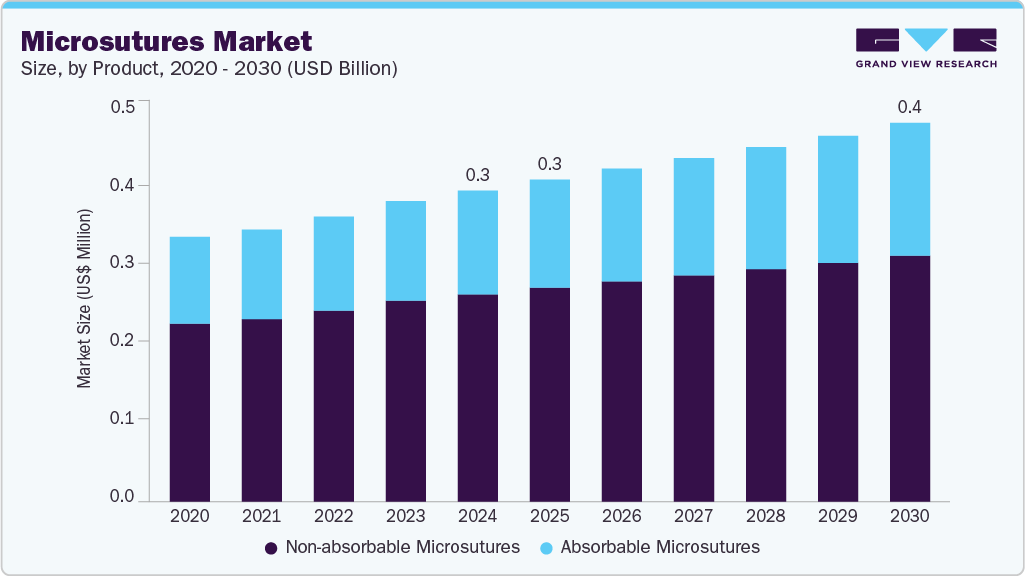 Source: Grand View Research, IR Documents, Primary Interviews, Paid DatabasesTo learn more about this report,
 Download Free Sample Report
 The growing number of surgical procedures, mainly cosmetic and plastic surgeries, has fueled the demand in the microsutures industry. For instance, according to the Global Survey 2024, Eyelid surgery is for the first time the most common surgical procedure in 2024, replacing liposuction, followed by breast augmentation, scar revision, and rhinoplasty. The most popular non-surgical procedures were botulinum toxin, hyaluronic acid (filler), hair removal, non-surgical skin tightening, and chemical peels. These increased procedures directly affect the demand for sutures, which play a significant role in wound closure and post-surgery recovery.Beyond cosmetic surgeries, demand for sutures is also driven by essential medical procedures such as cesarean sections, orthopedic surgeries, and cardiovascular interventions, further expanding the market’s growth potential.
Number of worldwide surgical procedures performed by plastic surgeons, 2019-2023
Rank
Surgical Procedure
Total Procedures (2023)
% of Total Surgical Procedures
Total Procedures (2022)
Total Procedures (2019)
% Change 2023 vs. 2022
% Change 2023 vs. 2019
1
Liposuction
2,237,966
14.2%
2,303,929
1,704,786
-2.9%
31.3%
2
Breast Augmentation
1,892,777
12.0%
2,174,616
1,795,551
-13.0%
5.4%
3
Eyelid Surgery
1,746,946
11.0%
1,409,103
1,259,839
24.0%
38.7%
4
Abdominoplasty
1,153,539
7.3%
1,180,623
924,031
-2.3%
24.8%
5
Rhinoplasty
1,148,559
7.3%
944,468
821,890
21.6%
39.7%
6
Breast Lift
903,266
5.7%
955,026
741,284
-5.4%
21.9%
7
Lip Enhancement/Perioral Procedure
901,991
5.7%
699,264
N/A
29.0%
N/A
8
Buttock Augmentation
771,333
4.9%
820,762
479,451
-6.0%
60.9%
9
Fat Grafting - Face
741,061
4.7%
648,894
598,823
14.2%
23.8%
10
Breast Reduction
686,125
4.3%
632,860
600,219
8.4%
14.3%
11
Face Lift
646,482
4.1%
541,491
448,485
19.4%
44.1%
12
Neck Lift
452,639
2.9%
400,593
260,747
13.0%
73.6%
13
Brow Lift
386,427
2.4%
352,324
270,917
9.7%
42.6%
14
Gynecomastia
352,302
2.2%
305,340
273,344
15.4%
28.9%
15
Breast Implant Removal
335,939
2.1%
320,765
229,680
4.7%
46.3%
16
Ear Surgery
327,990
2.1%
303,906
288,905
7.9%
13.5%
17
Upper Arm Lift
244,977
1.5%
204,011
168,289
20.1%
45.6%
18
Labiaplasty
189,058
1.2%
194,086
164,667
-2.6%
14.8%
19
Facial Bone Contouring
153,749
1.0%
138,115
108,536
11.3%
41.7%
20
Thigh Lift
146,264
0.9%
113,746
93,334
28.6%
56.7%
21
Lower Body Lift
128,998
0.8%
123,123
75,895
4.8%
70.0%
22
Buttock Lift
110,167
0.7%
95,174
54,894
15.8%
100.7%
23
Vaginal Rejuvenation
84,495
0.5%
70,645
N/A
19.6%
N/A
24
Upper Body Lift
70,306
0.4%
54,120
N/A
29.9%
N/A
Total Surgical Procedures
15,813,353
-
14,986,982
11,363,569
5.5%
39.2%
Source: International Society of Aesthetic Plastic Surgery, Grand View Research (ISAPS)
Top 5 aesthetic surgical procedures worldwide in 2024
Rank
Procedure
Number of Procedures
Change vs 2023
1
Eyelid Surgery
2,115,360
13.40%
2
Liposuction
2,087,189
-12.60%
3
Breast Augmentation
1,658,615
-17.50%
4
Scar Revision
1,156,446
-
5
Rhinoplasty
1,083,631
-9.80%
Source: ISPAS 2024
Advancements in suture technology significantly drive demand in the microsutures market by improving surgical outcomes and patient recovery. Innovations such as biodegradable and absorbable materials, and enhanced knot security.
The increasing prevalence of chronic diseases and traumatic injuries, such as ophthalmic injuries, is a primary driver of the global microsuture market. Improving health systems, advances in surgical technology, and an aging population have led to increased surgical procedures across specialties. For instance, according to the American Academy of Ophthalmology report published in 2025, work-related eye injuries are alarmingly prevalent. The U.S. Bureau of Labor Statistics reports that approximately 20,000 eye injuries happen annually in the workplace, many of which result in missed days of work for recovery. These injuries vary from minor eye strain to serious trauma that can lead to permanent damage or vision loss.
Medical Tourism, Percent of Patients Attending from Other Countries
Worldwide
Average
Colombia
35.9%
Mexico
35.1%
Turkey
30.7%
Thailand
25.4%
Peru
15.9%
Malaysia
14.6%
Spain
14.9%
Brazil
14.2%
Source: International Society of Aesthetic Plastic Surgery (ISAPS)
The rise in road accidents worldwide is a significant driver of the microsutures industry. With increasing traffic-related injuries, such as deep lacerations, fractures, and internal injuries, the demand for quick surgical intervention and wound closure is higher. According to the World Health Organization (WHO), approximately 1.19 million people die each year from road traffic crashes. Although they account for only 60% of the world's vehicles, low- and middle-income nations account for 92% of global road deaths. The rising rate of road accidents, particularly in these regions, drives demand for sutures to effectively manage injuries resulting from them. Moreover, ongoing innovations in the market enhance patient outcomes by reducing healing times, minimizing scarring, and reducing the risk of infection, further fueling demand for sutures in trauma care.
Market Concentration & Characteristics
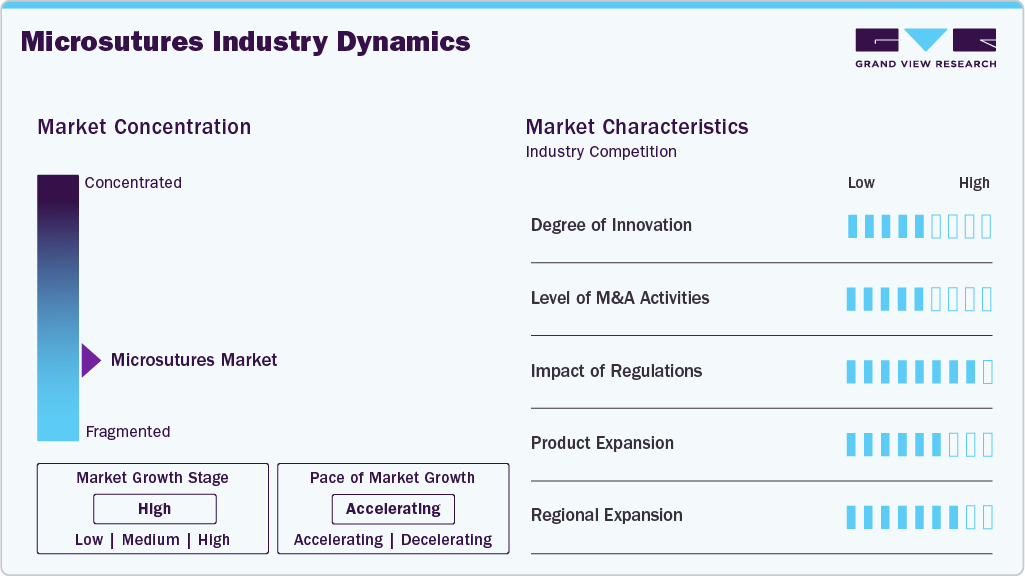
The microsutures market is characterized by the presence of leading global medical device companies alongside smaller specialized and regional players, with major companies holding significant market share due to strong brand recognition, advanced product portfolios, and extensive distribution networks. The industry is shaped by continuous mergers, acquisitions, and strategic collaborations aimed at expanding technological capabilities and geographic reach. It is highly driven by innovation, precision, and strict regulatory compliance, with manufacturers focusing on advanced materials such as biodegradable, antimicrobial, and high-strength sutures to meet evolving surgical needs. Demand is closely linked to the volume of surgical procedures, including ophthalmic, cardiovascular, and plastic surgeries, ensuring steady growth. In addition, the increasing adoption of minimally invasive techniques and the availability of alternative wound closure solutions, such as tissue adhesives, are further increasing competition and driving ongoing product innovation in the market.
 To learn more about this report, Download Free Sample Report
 The microsutures market exhibits a moderate to high degree of innovation, driven by advancements in materials and suturing techniques. Recent developments include the use of ultra-thin, biocompatible materials that improve healing and reduce scarring. Innovation is also evident in the design of precision-engineered sutures that enhance accuracy and minimize tissue trauma. Ongoing research and technological improvements continue to push the boundaries of microsuture performance and applications.
-
In October 2025, Mesh Suture, Inc. (MSi) announced that it had secured two major regulatory certifications, the European Union Medical Device Regulation (EU MDR) and Medical Device Single Audit Program (MDSAP) for its flagship DURAMESH product. These milestones highlight the company’s commitment to meeting global safety, quality, and compliance standards for surgical closure technologies.
The merger and acquisition activity in the microsutures industry has been steadily increasing, driven by technological advancements and the growing demand for minimally invasive surgical procedures. Major industry players are engaging in strategic acquisitions to expand their product portfolios and strengthen their market presence. This consolidation trend is also motivated by the desire to access new markets and enhance research and development capabilities. The level of mergers and acquisitions in the microsuture market indicates a dynamic and competitive landscape focused on innovation and growth.
-
In March 2024, Eurazeo signed an agreement to sell the entire share capital of Peters Surgical to Advanced Medical Solutions Group plc. The proposed acquisition aims to strengthen AMS’s position in tissue-healing and surgical solutions by expanding its portfolio to include sutures, surgical glues, and hemostasis products.
Regulatory frameworks play a pivotal role in shaping the development and commercialization of sutures, ensuring safety, efficacy, and market confidence. In the U.S., microsutures are classified as class II medical devices, and the FDA mandates that certain types of sutures, including absorbable and non-absorbable options, undergo a 510(k) premarket notification process to demonstrate their equivalence to existing products. More complex microsuture types, especially those with antimicrobial coatings or smart functionalities, may require stricter Premarket Approval (PMA), which includes clinical trials to validate safety and performance. Such regulation can increase development time and cost, but it is essential to confirm safety and reliability in sutures and instill confidence in the market.
The microsutures market is witnessing significant regional expansion, driven by the growing number of minimally invasive procedures. North America and Europe remain dominant, supported by established healthcare systems, high adoption of advanced medical technologies, and continuous research in surgical techniques. However, the Asia-Pacific is now a key growth region with expanding healthcare access, rising awareness of surgical wound care, and growing demand for advanced microsuture products. Continued development of healthcare infrastructure and the mounting emphasis on quality care will continue to drive regional market growth.
Product Insights
The non-absorbable microsuture segment captured the largest share of the microsutures industry in 2025, driven by its durability and long-lasting wound support, which are essential in procedures requiring extended fixation or reinforcement. Non-absorbable sutures, such as nylon, are preferred when permanent or prolonged tissue stability is required, as in cardiovascular or orthopedic surgeries. Their ability to maintain strength over time reduces the risk of wound dehiscence and ensures optimal healing in complex or high-tension wounds. In addition, advancements in manufacturing and material quality have enhanced the performance of non-absorbable sutures, making them a reliable choice among surgeons, thus driving the segment’s dominance in the market.
The absorbable segment is the fastest growing in the microsutures market due to its numerous advantages over non-absorbable sutures. Absorbable microsutures eliminate the need for removal, reducing patient discomfort and the risk of infection, making them particularly appealing for delicate, minimally invasive procedures. Advances in biodegradable materials such as polyglycolic acid and polyglactin have improved the strength, flexibility, and predictability of absorption timelines, further boosting their popularity. In addition, the increasing preference for faster, more efficient surgical interventions and the growing demand for cosmetically favorable outcomes are driving the rapid adoption of absorbable microsutures, thereby fueling their market growth. Some of the most common absorbable microsutures are made of Polyglycolic Acid (PGA) and polydioxanone.
Surgery Insights
The general surgery segment held the largest market share in 2025, driven by its widespread use across a range of surgical procedures, including wound closure, gastrointestinal procedures, and vascular repairs. Microsutures used in general surgery are essential for achieving precise, minimally invasive, and secure closures, which are critical for patient recovery and reducing complications. In addition, the growing number of surgeries worldwide, advancements in minimally invasive techniques, and the demand for high-quality sutures that minimize tissue trauma have driven the adoption of microsutures in this segment. The versatility, reliability, and proven clinical benefits of microsutures in general surgery procedures make this segment the leading contributor to the market, driving innovation and higher demand within this field.
The neurosurgery segment of the microsutures market is expected to grow at a significant CAGR during the forecast period. Neurosurgical procedures often require highly precise and minimally invasive techniques to treat delicate neural tissues, which demand specialized sutures with superior strength and minimal tissue trauma. Advances in neurosurgical technology, along with an increasing prevalence of neurological disorders such as brain tumors, traumatic brain injuries, and neurodegenerative diseases, are driving the demand for advanced microsurgical tools and sutures. In addition, the growing adoption of minimally invasive neurosurgical techniques requires the use of finer, more sutures to achieve better patient outcomes and faster recovery times. According to the report published by The Trustees of the University of Pennsylvania, approximately 5.3 million Americans-more than 2% of the U.S. population-are living with a disability caused by traumatic brain injury (TBI). According to the same source, each year, approximately 2 million Americans experience some form of traumatic brain injury. Hence, the growing prevalence of neurological disorders is fueling the microsuture market.
Material Insights
The nylon segment held the largest share of the microsutures industry in 2025, due to its excellent strength, durability, and biocompatibility. Nylon sutures are known for their high tensile strength, which ensures secure wound closure, especially in delicate or small tissues. In addition, nylon's flexibility and knot security make it a preferred choice among surgeons for various surgical procedures, including ophthalmic, cardiovascular, and neurological surgeries. Its relatively low tissue reactivity and ease of handling further contribute to its widespread adoption. As a result, nylon remains the material of choice in many microsuture applications, driving its dominance in the market.
The Polyglycolic Acid (PGA) segment is expected to grow at the fastest CAGR over the forecast period, driven by its superior biocompatibility, predictable degradation profile, and excellent tensile strength. PGA sutures are absorbable, eliminating the need for suture removal and reducing the risk of infection or complications associated with non-absorbable materials. Their rapid absorption rate aligns well with the healing process, making them ideal for a wide range of surgical procedures, especially delicate or minimally invasive procedures. In addition, advancements in manufacturing technologies have improved the quality and performance of PGA sutures, further driving their adoption and accelerating their market growth.
End Use Insights
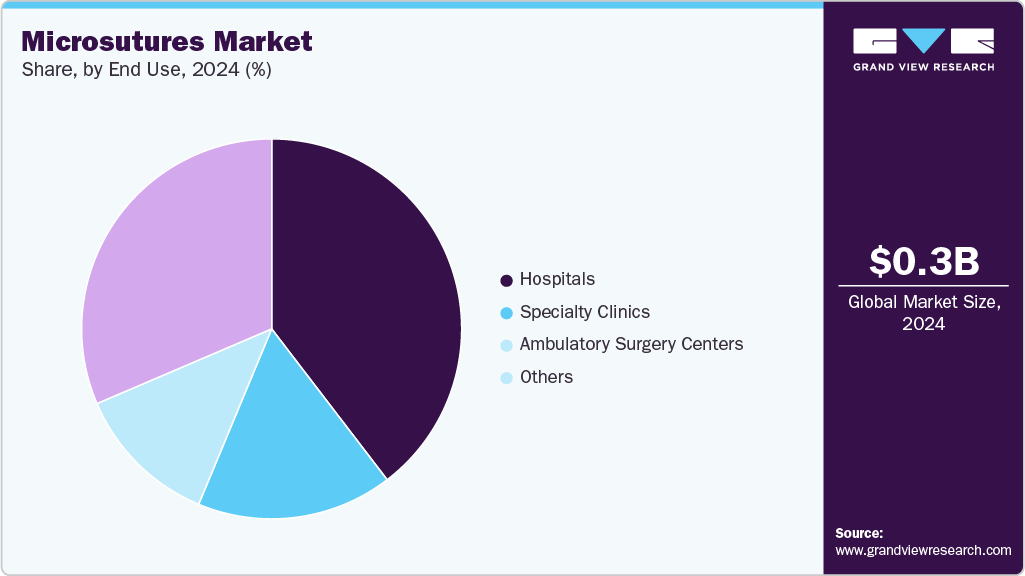
The hospitals segment held the largest share of the microsutures industry in 2025, driven by the high volume of surgical procedures performed in hospital settings. Hospitals are key centers for emergency surgeries, trauma care, and complex medical procedures, all of which require precise and reliable suturing for wound closure and healing. Moreover, the rising demand for specialized wound care, particularly in critical care units, has solidified the dominance of clinics and hospitals in the market.
 To learn more about this report, Download Free Sample Report
 The specialty clinics segment is expected to grow at the fastest CAGR during the forecast period, driven by the increasing prevalence of eye disorders and the rising demand for advanced surgical procedures. Advances in technology and techniques have made microsurgical procedures, such as cataract surgery, retinal repair, and corneal transplants, more precise and effective, driving the adoption of specialized microsutures. In addition, the growing focus on minimally invasive techniques in ophthalmology has increased demand for high-quality, fine sutures that improve healing and visual outcomes. As the global population ages and eye health awareness improves, ophthalmic clinics are investing in specialized microsurgical tools, further accelerating the segment growth.
Regional Insights
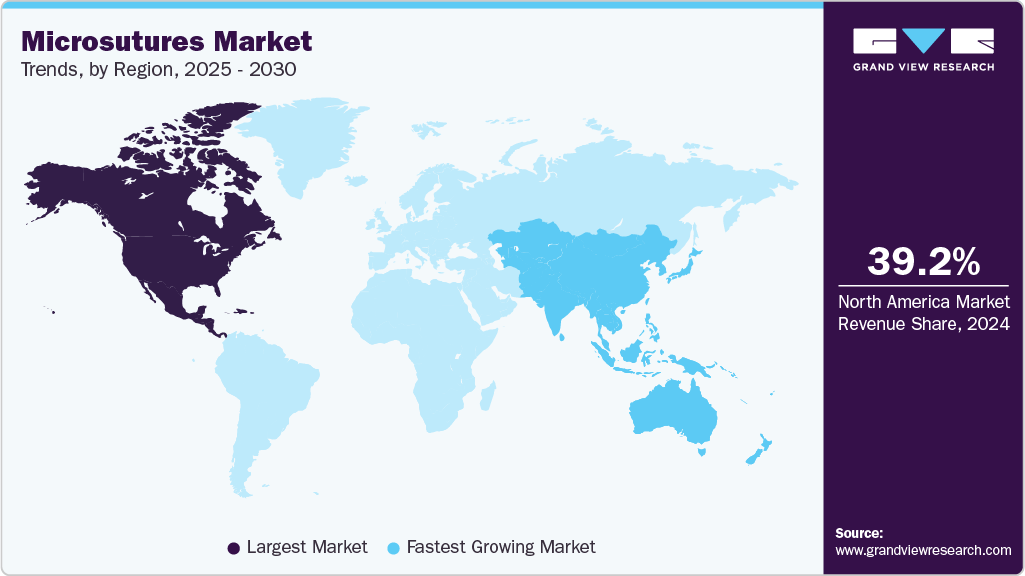
The North America microsutures market held the largest share in 2025, driven by a combination of factors, including a well-established healthcare infrastructure, a growing number of eyelid and breast augmentation surgical procedures, high healthcare spending, and increasing demand for advanced wound care solutions. The region's strong focus on innovation, research, and development in medical devices, including sutures, has further contributed to its dominant market position. The presence of key industry players and strong healthcare policies supporting access to advanced treatment options are also significant drivers of market growth in the region.
 To learn more about this report, Download Free Sample Report
 U.S. Microsutures Market Trends
The U.S. dominated the North America microsutures industry in 2025. The demand for microsutures in the U.S. is growing steadily, driven by factors such as an aging population, an increase in surgical procedures, and the growing demand for cosmetic and plastic surgeries, which often require surgical interventions. According to the ISAPS report, total surgical procedures (cosmetic) performed in 2024 were 1,999,528, among which the number of eyelid surgeries performed was 114,030. Some of the most common procedures performed included liposuction, breast augmentation, abdominoplasty, breast lift, and eyelid surgery. Moreover, continuous innovations in suture materials and techniques further fuel market growth. As a result, the U.S. market is expected to continue to grow in the coming years. In addition, according to a report published by the U.S. Department of Labor, more than 890,000 workplace injuries occurred in calendar year 2023. Hence, growing workplace injuries are further fueling the market growth in the country.
Europe Microsutures Market Trends
Europe represents a key growth region for the suture industry, driven by advancements in medical technology and increasing demand for minimally invasive surgical procedures. Microsutures, characterized by their small size and precision, are essential in various medical fields such as ophthalmology, dermatology, and cosmetic surgery. The rising prevalence of chronic diseases, an aging population, and the expanding cosmetic surgery sector are key drivers of market growth in Europe. In addition, the adoption of innovative materials and techniques, along with a growing emphasis on patient safety and improved surgical outcomes, further drives market growth. Major players are investing in research and development to introduce advanced microsuture products, thereby enhancing their market presence.
The microsuture market in Germany is primarily driven by the increasing adoption of minimally invasive surgical procedures, advancements in medical technology, and the rising prevalence of chronic and lifestyle-related health conditions that require precise surgical interventions. Moreover, Germany's strong healthcare infrastructure and focus on high-quality medical care encourage the adoption of innovative surgical tools, such as microsutures. The growing geriatric population, which often requires delicate and complex surgeries, further fuels demand. In addition, partnerships between medical device manufacturers and healthcare providers, along with favorable regulatory frameworks, support product innovation and market expansion in the microsuture segment. For instance, according to the ISAPS report, the total number of surgical procedures performed in 2024 was 626,215, among which the most common procedures were liposuction (111,711), eyelid surgery (78,409), breast augmentation (70,128), and abdominoplasty (38,940).
Asia Pacific Microsutures Market Trends
Asia Pacific is expected to grow at a notable CAGR over the forecast period, driven by an aging population, rising surgical procedures, and the rising prevalence of chronic diseases. The region's expanding healthcare infrastructure, coupled with advancements in medical technologies. For instance, in August 2024, AIIMS Jammu, in collaboration with Ethicon (Johnson & Johnson), conducted a Surgical Skills Course and Workshop in Jammu and Kashmir. The event aimed to enhance surgical skills and training. This event highlights the region's ongoing efforts to improve surgical practices, further driving the demand for quality suture products.
The microsutures market in China is driven by the country's rapidly evolving healthcare system, rising surgical volumes, and growing awareness of advanced medical treatments. With ongoing urbanization and improvements in healthcare access, more patients are undergoing surgical interventions, including plastic surgery, increasing demand for reliable wound closure solutions. The government's continued investment in public health infrastructure and medical education also supports the adoption of modern surgical techniques that require high-quality microsutures.
Latin America Microsutures Market Trends
The Latin America microsutures industry is experiencing steady growth, supported by improvements in healthcare access, rising investments in hospital infrastructure, and a growing number of surgical procedures across the region. Countries such as Brazil and Argentina are expanding public and private healthcare services, thereby increasing demand for surgical supplies, including microsutures. Moreover, the rising burden of chronic diseases and trauma cases is leading to a greater need for both emergency and elective surgeries. Efforts to modernize medical practices, train healthcare professionals, and adopt advanced surgical techniques also contribute to the growing use of high-quality microsuture products across the region.
Middle East and Africa (MEA) Microsutures Market Trends
The microsuture industry in the Middle East and Africa (MEA) is emerging, characterized by moderate growth driven by rising healthcare investments and surgical procedures. Countries such as the UAE, Saudi Arabia, and South Africa are leading the way, with expanding healthcare infrastructure and a growing demand for surgical interventions. However, in many parts of Africa, particularly in Sub-Saharan Africa, significant hurdles remain. Limited access to advanced medical technologies and economic challenges often lead to the wider adoption of modern suturing materials. Despite these challenges, the region presents significant opportunities for growth, with international collaborations and investments aimed at improving healthcare access and quality.
Saudi Arabia's microsutures market continues to grow steadily, supported by the country's broader healthcare transformation, driven by initiatives such as Vision 2030, which emphasize expanding access to quality medical care and enhancing local healthcare capabilities. The government is investing heavily in hospital infrastructure, medical education, and the localization of medical device manufacturing, all of which are expected to increase demand for surgical supplies, including microsutures. Moreover, rising elective surgeries, cosmetic procedures, and medical tourism fuel market growth. With an increasing focus on modern surgical practices and international partnerships to bring advanced technologies, Saudi Arabia is positioning itself as a growing hub in the Middle East.
Key Microsutures Company Insights
Corza Medical, Baxter, AD Surgical, Ethicon (Johnson & Johnson), Kono Seisakusho Group, Suturex, AROSurgical Instruments, Bear Medic Corporation, and Altomed are some of the major players in the microsutures industry. Companies are expanding their microsuture portfolios to gain a competitive advantage in the coming years.
Key Microsutures Companies:
The following key companies have been profiled for this study on the microsutures market.
- Corza Medical
- Baxter
- AD Surgical
- Ethicon (Johnson & Johnson)
- Kono Seisakusho Group
- Suturex
- AROSurgical Instruments
- Bear Medic Corporation
- Altomed
- Unisur Lifecare
Recent Developments
-
April 2026, Medical Microinstruments, Inc. (MMI) announced the commercial launch of the world’s first microsurgical suture specifically designed for robotic applications in the United States. Developed in collaboration with Kono Seisakusho Co., Ltd. (Crownjun), the new robotic suture is purpose-built for use with the Symani Surgical System, marking a significant advancement in robotic microsurgery.[AD14]
-
In October 2024, Corza Medical launched its new Onatec ophthalmic microsurgical sutures during the American Academy of Ophthalmology (AAO) conference in Chicago in October 2024. These sutures are designed with advanced precision, utilizing high-tempered stainless-steel needles that enhance bending resistance and durability. The automated manufacturing process ensures precise needle geometry, enabling delicate handling of fine tissues during ophthalmic procedures.
-
In February 2024, Novo Integrated Sciences' subsidiary, Clinical Consultants International (CCI), signed a Consulting Services Agreement with Futura Surgicare Pvt Ltd, an India-based manufacturer of surgical products. The partnership aims to assist Futura in obtaining U.S. FDA 510(k) approvals for its advanced surgical products and to introduce high-quality Dolphin Sutures and mesh products to the North American healthcare market. This collaboration seeks to offer cost-effective surgical solutions and improve patient care in the U.S.
Microsutures Market Report Scope
Report Attribute
Details
Market size in 2025
USD 329.1 million
Estimated Market size in 2026
USD 340.2 million
Projected Market size by 2033
USD 431.4million
Growth rate
CAGR of 3.5% from 2026 to 2033
Actual data
2021 - 2025
Forecast period
2026 - 2033
Quantitative units
Revenue in USD million and CAGR from 2026 to 2033
Report coverage
Revenue forecast, company ranking, competitive landscape, growth factors, and trends
Segments covered
Product, surgery, end use, material, and region
Regional scope
North America; Europe; Asia Pacific; Latin America; MEA
Country scope
U.S.; Canada; Mexico; Germany; UK; France; Italy; Spain; Denmark; Sweden; Norway; China; Japan; India; South Korea; Australia; Brazil; Argentina; South Africa; UAE; Kuwait; Saudi Arabia
Key companies profiled
Corza Medical; Baxter; AD Surgical; Ethicon (Johnson & Johnson); Kono Seisakusho Group; Suturex; AROSurgical Instruments; Bear Medic Corporation; Altomed; Unisur Lifecare
Customization scope
Free report customization (equivalent to up to 8 analysts working days) with purchase. Addition or alteration to country, regional & segment scope.
Pricing and purchase options
Avail customized purchase options to meet your exact research needs. Explore purchase options
Global Microsutures Market Report Segmentation
This report forecasts revenue growth at the global, regional, and country levels and provides an analysis of the latest industry trends across sub-segments from 2021 to 2033. For this study, Grand View Research has segmented the global microsutures market report based on product, surgery, end use, material, and region:
-
Product Outlook (Revenue, USD Million, 2021 - 2033)
-
Absorbable
-
Non-absorbable
-
-
Surgery Outlook (Revenue, USD Million, 2021 - 2033)
-
General Surgery
-
Ophthalmology
-
Plastic and Reconstructive Surgery
-
Neurosurgery
-
Cardiovascular Surgery
-
Transplantation
-
Gynecological Surgery
-
Others
-
-
End Use Outlook (Revenue, USD Million, 2021 - 2033)
-
Hospitals
-
Ambulatory Surgery Center (ASC)
-
Specialty Clinics
-
Ophthalmic and Eye Surgery Clinics
-
Plastic and Reconstructive Surgery Clinics
-
Fertility Clinics
-
Dental Clinics
-
-
Others
-
-
Material Outlook (Revenue, USD Million, 2021 - 2033)
-
Nylon
-
Polyglycolic Acid (PGA)
-
Polydioxanone
-
Others
-
-
Regional Outlook (Revenue, USD Million, 2021 - 2033)
-
North America
-
U.S.
-
Canada
-
Mexico
-
-
Europe
-
Germany
-
UK
-
France
-
Italy
-
Spain
-
Denmark
-
Sweden
-
Norway
-
-
Asia Pacific
-
China
-
Japan
-
India
-
South Korea
-
Australia
-
Thailand
-
-
Latin America
-
Brazil
-
Argentina
-
-
Middle East and Africa (MEA)
-
South Africa
-
Saudi Arabia
-
Kuwait
-
UAE
-
-
Frequently Asked Questions About This Report
North America dominated with a 39.3% revenue share in 2025.
The hospitals segment held the largest revenue share in 2025, while specialty clinics is the fastest-growing segment.
The nylon segment held the largest revenue share in 2025, while polyglycolic acid (PGA) is the fastest-growing material.
General surgery segment held the largest share in 2025.
The global microsutures market size was valued at USD 329.1 million in 2025 and is estimated at USD 340.2 million for 2026.
The global microsutures market is expected to grow at a CAGR of 3.5% from 2026 to 2033, reaching USD 431.4 million by 2033.
The non-absorbable microsutures segment accounted for the largest market share of 66.6% in 2025, driven by a combination of factors, including a well-established healthcare infrastructure, a growing number of eyelid and breast augmentation surgical procedures, high healthcare spending, and increasing demand for advanced wound care solutions.
Key players include Corza Medical; Baxter; AD Surgical; Ethicon (Johnson & Johnson); Kono Seisakusho Group; Suturex; AROSurgical Instruments; Bear Medic Corporation; Altomed; Unisur Lifecare.
The microsutures market growth is largely attributed to increasing volume of microsurgical and minimally invasive procedures, increasing prevalence of chronic diseases requiring precise wound management, growing demand for cosmetic and reconstructive surgeries requiring precision wound closure, advancements in biocompatible, absorbable, and antimicrobial suture materials and expanding medical tourism industry.
About the Author(s)
Medical Devices Research Team
Healthcare · Medical DevicesThis report was authored by the medical devices research team at Grand View Research - comprising two research analysts, one senior research analyst, and one industry expert - with specialized expertise in the medical devices segment of the healthcare industry. All findings are based on proprietary healthcare databases, executive interviews, and regulatory analysis, subject to internal peer review prior to publication.
Last Updated:
Speak to Analyst

Customize this report to your needs - add regions, segments, or data points, with 20% free customization.
Or view our licence options:


ISO 9001:2015 & 27001:2022 Certified
We are GDPR and CCPA compliant! Your transaction & personal information is safe and secure. For more details, please read our privacy policy.


