
- Home
- »
- Biotechnology
- »
-
Middle East Biobanks Market Size, Industry Report, 2033GVR Report cover

Middle East Biobanks Market (2025 - 2033) Size, Share & Trends Analysis Report By Product & Services, By Biospecimen (Human Tissues, Human Organs), By Biobanks (Real/Physical Biobanks, Virtual Biobanks), By Application, By Country, And Segment Forecasts
Middle East Biobanks Market Summary
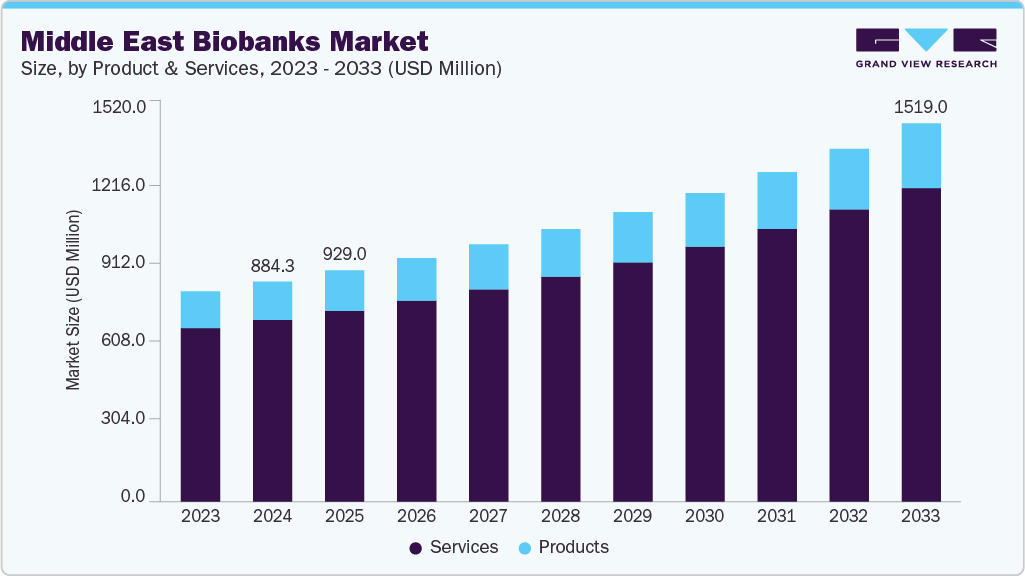
The Middle East biobanks market size was estimated at USD 0.884 billion in 2024 and is projected to reach USD 1.52 billion by 2033, growing at a CAGR of 6.34% from 2025 to 2033. This growth is driven by rising investments in precision medicine, increasing prevalence of chronic and genetic diseases, and government-led initiatives to strengthen healthcare infrastructure. Moreover, the region’s growing focus on genomic research, personalized therapies, and collaborations with international biobanking networks further accelerates market expansion.
 Source: Grand View Research, IR Documents, Primary Interviews, Paid DatabasesTo learn more about this report,
 Download Free Sample Report
 Growth of Personalized Medicine and Genomics
The increasing adoption of personalized medicine and genomic research is a major factor driving the biobanks market in the Middle East. Precision medicine requires access to high-quality, patient-specific biological samples and corresponding clinical data to develop therapies tailored to individual genetic profiles. Biobanks are critical repositories that store these samples, enabling researchers and healthcare providers to study disease mechanisms, identify biomarkers, and design effective, targeted treatment strategies. The demand in the Middle East is particularly strong due to unique genetic variations and the high prevalence of inherited disorders, making region-specific biobank resources essential for therapeutic development and clinical research.
Major Biobanks of the Middle East
Biobank Name
Description
King Faisal Specialist Hospital & Research Centre Biobank
Large-scale repository for genomic and clinical research.
King Abdullah International Medical Research Center (KAIMRC) Biobank
Linked to the National Guard Health Affairs, supporting genomic medicine.
Abu Dhabi Biobank
It includes cord blood bank and HLA typing services.
Al Ain Biobank
One of the first academic biobanks, with a plant biobank also attached.
HMC Tissue Biobank
It focused on cancer and other disease-related tissues.
Dasman Diabetes Institute Biobank
It focused on diabetes and metabolic disease samples.
Bahrain National Genome Center & Biobank
It supports national genomic medicine initiatives.
Source: Secondary Research, Grand View Research
Biobanks are pivotal in accelerating genomic research and supporting regional clinical applications. By providing organized, high-quality biological samples, biobanks allow for large-scale studies, such as population genomics, rare disease research, and drug response analysis. This facilitates the development of novel therapies, personalized treatment protocols, and predictive diagnostics. Moreover, integrating advanced genomic sequencing technologies and bioinformatics platforms has enhanced the utility of biobanks, making them indispensable tools for research institutions and healthcare providers. As personalized medicine continues to expand in the Middle East, the reliance on biobanks is expected to grow correspondingly, driving market demand.
Increasing R&D in Biotechnology and Pharmaceuticals
The growing focus on research and development within the biotechnology and pharmaceutical sectors is a significant driver of the Middle East biobanks industry. Biobanks provide a structured and secure repository for biological samples, essential for drug discovery, preclinical studies, and clinical trials. Access to well-characterized specimens allows researchers to study disease pathways, identify potential therapeutic targets, and evaluate drug efficacy and safety, accelerating the overall R&D process. In regions like the Middle East, where pharmaceutical and biotech investments are rapidly increasing, biobanks are becoming critical infrastructure for supporting innovative healthcare solutions.
Biobanks not only support internal R&D but also enable collaborations between research institutes, pharmaceutical companies, and clinical centers. By offering standardized and high-quality biological samples, they reduce the time and cost associated with sample collection and handling, improving the efficiency of multicenter studies and international research projects. Moreover, integrating advanced data analytics, bioinformatics, and sample tracking technologies enhances the value of biobank resources for biomarker discovery, personalized therapy development, and translational research. As the Middle East invests in biotechnology and pharmaceutical research, the demand for biobanking services is expected to grow steadily, fueling market expansion.
Market Concentration & Characteristics
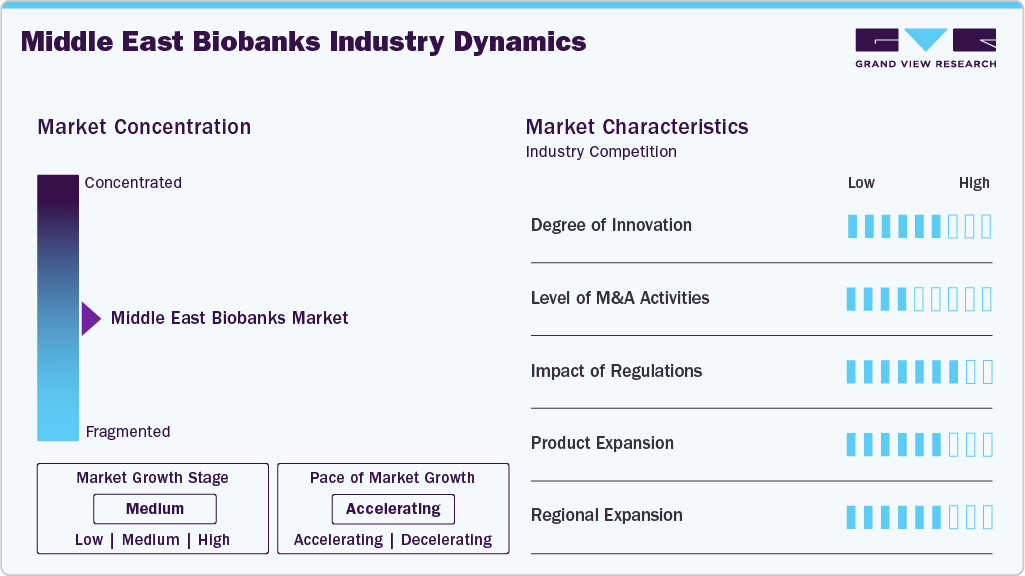
The Middle East biobanks industry is witnessing significant innovation, driven by large-scale genomic initiatives, AI integration, and advanced biobanking infrastructure. Programs like the UAE’s Emirati Genome Programme and Qatar Genome Programme generate comprehensive genetic datasets supporting precision medicine and attracting global pharmaceutical collaborations. Incorporating AI enhances data analysis, enabling faster and more accurate research outcomes, while investments in robust biobank infrastructure and regional collaborations strengthen the ecosystem. For instance, in January 2025, King Faisal Specialist Hospital & Research Centre in Saudi Arabia modernized its Biobank Center, advancing personalized medicine through enhanced biospecimen storage, integrated technologies, and alignment with Saudi Vision 2030 healthcare goals.
The level of M&A activity in the biobanks market in the Middle East is relatively low, with limited direct consolidation among biobank operators. The most notable example is the creation of Abu Dhabi-based M42, formed through the merger of Mubadala Health and AI group G42, which now oversees large-scale genomics and biobanking initiatives. Beyond this, most regional merger and acquisition activity has occurred in adjacent healthcare areas such as pharmaceutical distribution, diagnostics, and healthcare infrastructure, reflecting a broader strategy to strengthen precision medicine and data-driven healthcare rather than direct biobank consolidation.
 To learn more about this report, Download Free Sample Report
 Regulations strongly influence the Middle East biobanks industry by ensuring ethical sample collection, data privacy, and compliance with global standards. Robust frameworks in countries like the UAE and Qatar boost trust and attract international collaborations, while regulatory gaps in other nations pose challenges. Overall, clear and harmonized regulations serve as both safeguards and growth drivers for the market.
Product expansion in the biobanks industry in the Middle East focuses on advanced storage solutions, digital data platforms, and value-added services like sequencing and analytics. For instance, in January 2023, Hamad Medical Corporation, in collaboration with Qatar BioBank, launched Phase One of its Tissue Biobank Service in Qatar, enhancing research capabilities and advancing patient care through high-quality tissue sample access. This diversification supports precision medicine goals and attracts global partnerships.
National genome programs and rising investment in healthcare infrastructure fuel regional expansion in the Middle East market. Countries such as the UAE, Qatar, and Saudi Arabia are establishing large-scale biobanks, while collaborations with global partners are helping expand capacity and expertise. For instance, in February 2022, Qatar Biobank in Doha hosted a UK precision medicine delegation to explore collaboration opportunities, showcasing advanced technologies and strengthening its position as a leading international biobank for medical research. This cross-border growth strengthens regional research networks, supports precision medicine, and positions the Middle East as a hub for biobanking innovation.
Product & Services Insights
The services segment led the market in 2024, capturing the largest revenue share, and it is projected to grow at the fastest CAGR over the forecast period. The increasing demand for sample collection, processing, storage, advanced data management, and value-added services such as genetic sequencing and customized research support fuels growth. The rise of precision medicine, large-scale genome programs, and collaborations with pharmaceutical and biotech companies further strengthen this segment’s dominance, making services a key driver of biobanking market expansion in the region.
The product segment is anticipated to grow at a significant CAGR during the forecast period, driven by rising demand for advanced biobanking equipment such as cryogenic storage systems, consumables, and Laboratory Information Management Systems (LIMS). Continuous technological advancements, coupled with the adoption of automation and AI-enabled platforms, enhance efficiency and reliability in sample storage and analysis. This growth is further supported by increasing investments in healthcare infrastructure and establishing large-scale genome projects across the Middle East.
Biospecimen Insights
The human tissues segment captured the largest revenue share of 38.80% in 2024, owing to a rising demand for tissue samples in disease research, drug discovery, and personalized medicine. The increasing focus on cancer studies, regenerative medicine, and biomarker identification has further fueled the need for well-preserved human tissue samples. Moreover, expanding biobank initiatives across the Middle East and collaborations with global research organizations are strengthening this segment’s dominance and driving sustained growth.
The stem cells segment is expected to grow fastest during the forecast period, driven by their expanding applications in regenerative medicine, cell-based therapies, and clinical research. Increasing investments in advanced stem cell banking and rising awareness about their therapeutic potential for treating chronic and genetic disorders are accelerating adoption. For instance, in July 2025, the Abu Dhabi Biobank in the UAE completed HLA typing of stored stem cell samples, advancing local transplantation capabilities and preparing to launch a new state-of-the-art facility in Masdar City. Moreover, government-led healthcare initiatives and collaborations with research institutions in the Middle East further boost demand, positioning stem cells as a key growth driver in the biobanks market.
Biobanks Insights
The physical/real biobanks segment dominated the market in 2024, accounting for the largest revenue share, owing to the high demand for on-site storage of biological samples such as tissues, stem cells, blood, and DNA. The growing number of hospitals, research centers, and genome programs establishing dedicated biobanking facilities has further strengthened this segment’s position. Moreover, advancements in cryogenic storage infrastructure and the integration of digital tracking systems enhance efficiency and reliability, reinforcing the dominance of physical biobanks in the region.
The virtual biobanks segment is expected to witness the fastest CAGR over the forecast period, supported by the rising adoption of digital platforms for managing and sharing biospecimen data. These biobanks enable remote access to sample information, streamline collaboration among research institutions, and enhance data-driven studies in genomics and precision medicine. Increasing integration of AI, cloud computing, and big data analytics further accelerates the shift toward virtual biobanking, making it a vital growth area in the region’s evolving healthcare ecosystem.
Application Insights
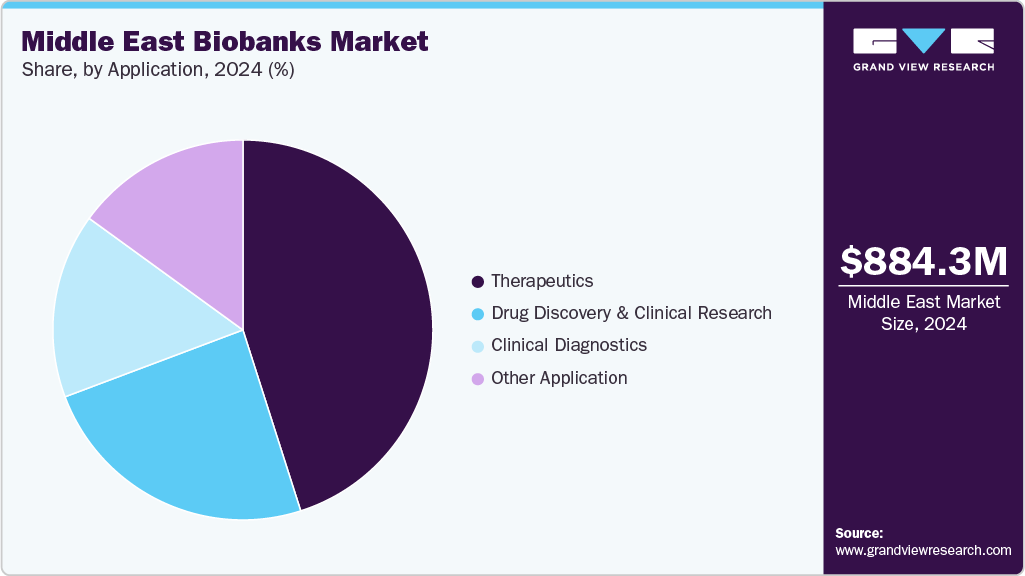
The therapeutics application segment dominated the market with the largest revenue share of 45.07% in 2024, driven by the growing use of biobank samples in developing targeted therapies, regenerative medicine, and advanced treatment approaches. Rising prevalence of chronic and genetic diseases in the Middle East, coupled with large-scale genome projects, has accelerated the demand for high-quality biospecimens to support therapeutic innovations.
 To learn more about this report, Download Free Sample Report
 The clinical diagnostics segment is anticipated to witness significant growth over the forecast period, driven by the rising demand for early disease detection, personalized treatment planning, and precision medicine. The increasing use of biobank samples in genetic testing, biomarker discovery, and companion diagnostics is fueling this expansion. Moreover, national genome programs and the integration of advanced technologies such as AI and next-generation sequencing enhance diagnostic capabilities, positioning this segment as a key contributor to the market’s future growth.
Country Insights
The biobanks industry in Kuwait is gaining momentum, driven by the country's focus on tackling chronic diseases and advancing precision medicine. The Dasman Diabetes Institute's biobank serves as a cornerstone, housing one of the country's largest collections of biological samples to support extensive research on diabetes, genetic disorders, and related health challenges. Growing government investment in healthcare modernization and initiatives to strengthen genomics and biomedical research further shape Kuwait's biobanking landscape. These efforts are positioning the nation to play a greater role in regional collaborations, with biobanks increasingly contributing to clinical diagnostics, biomarker discovery, and the development of targeted therapies.
The UAE biobanks industry is growing rapidly and is driven by large-scale genomic initiatives and advanced infrastructure investments. A key milestone is the Emirati Genome Programme, led by Abu Dhabi’s M42, which has already sequenced hundreds of thousands of genomes to build one of the world’s most comprehensive national genetic databases. In Dubai, the Al Jalila Foundation, collaborating with the Dubai Health Authority and Mohammed Bin Rashid University of Medicine and Health Sciences, launched the nation’s first robotic biobank, capable of cryogenically storing millions of biological samples. These initiatives highlight the UAE’s strategy to integrate genomics, artificial intelligence, and precision medicine into its healthcare system, positioning it as a regional biomedical research and innovation hub. For instance, in March 2025, Abu Dhabi Biobank in the UAE launched private cord blood banking services, offering affordable, locally stored stem cell preservation with advanced facilities in Masdar City to support personalized and preventive healthcare.
Key Middle East Biobanks Company Insights
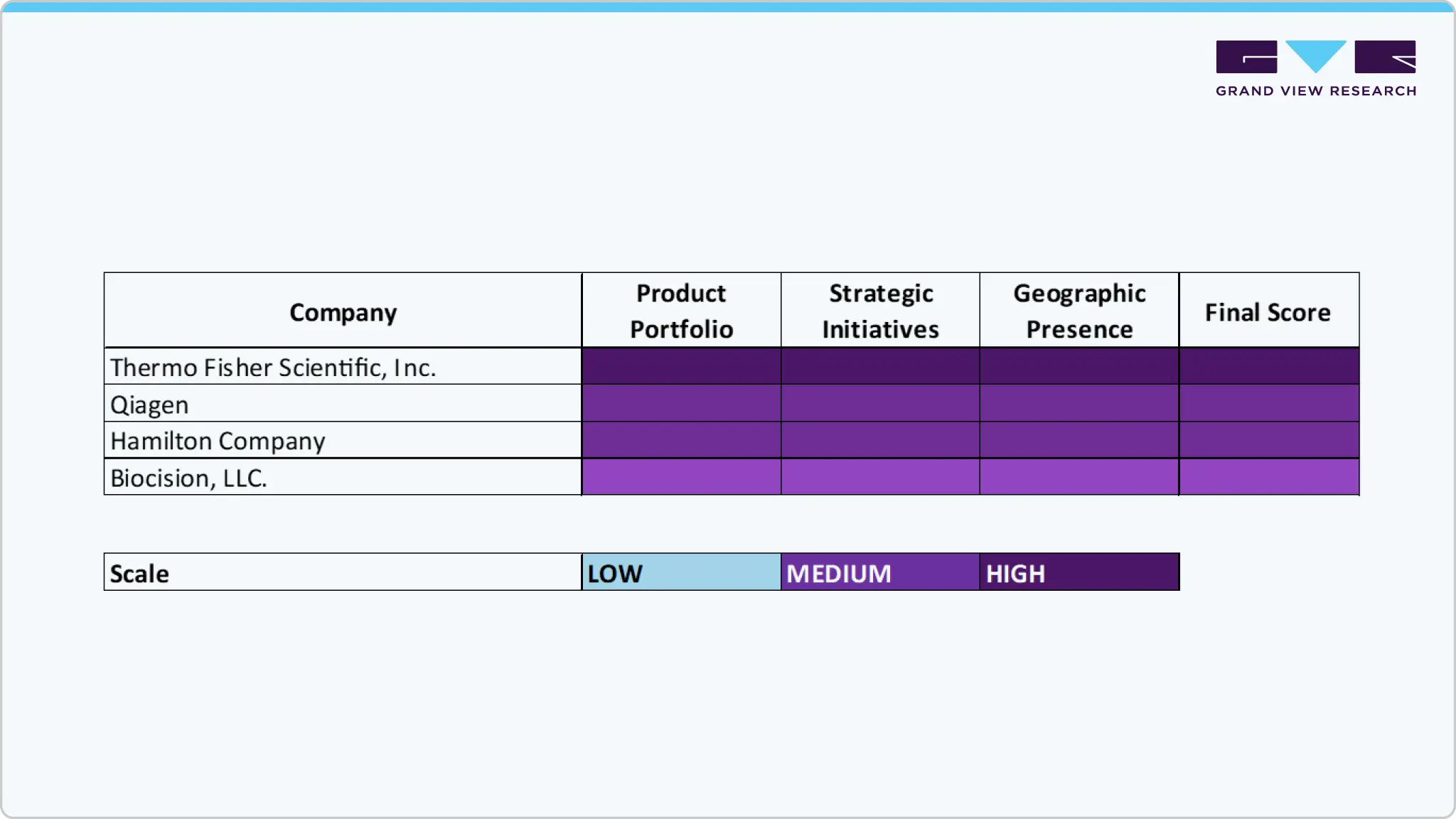
The Middle East biobanks industry is shaped by several established players that dominate through broad product portfolios, strategic collaborations, and sustained investments in healthcare innovation. Leading companies such as Thermo Fisher Scientific Inc., Merck KGaA, Qiagen, Hamilton Company, Tecan Trading AG, Danaher Corporation, and Becton, Dickinson and Company (BD) maintain strong market presence by offering advanced biobanking equipment, storage solutions, and integrated laboratory systems that support large-scale genomic and clinical research initiatives across the region.
Specialized firms, including Biocision LLC, Taylor-Wharton, Charles River Laboratories, Lonza, and Stemcell Technologies, are expanding their footprint by delivering innovative sample preservation technologies, cell storage systems, and high-quality biospecimen services tailored to the needs of research institutions, pharmaceutical companies, and hospitals. Similarly, Biovault Family, Promocell GmbH, and Precision Cellular Storage Ltd. (Virgin Health Bank) strengthen the market by focusing on stem cell and cord blood banking services, providing families and clinicians access to personalized medicine applications.
 To learn more about this report, Download Free Sample Report
 The Middle East biobanks industry reflects a dynamic interplay of global expertise and regional innovation. Strategic alliances, investments in robotic and virtual biobanking, and rising interest in stem cell preservation continue to fuel competition. Companies integrating advanced technologies with customer-centric and ethically aligned solutions are best positioned to drive long-term value in this rapidly evolving market.
Key Middle East Biobanks Companies:
- Thermo Fisher Scientific Inc.
- Merck KGaA
- Qiagen
- Danaher Corporation
- Becton, Dickinson, and Company (BD)
- Taylor-Wharton
- Charles River Laboratories
- Lonza
- Stemcell Technologies
- Biovault Family
Three ways to get this report
Buy it, customize it, or ask a question.Ask an Analyst
Analyst response in 1 business day
- AccessReport author, directly
- Reply timeWithin 1 working day
- No sales callDirect answer only
- FormatEmail reply
- CostFree, no cost
Get the Full Report
What the study covers
- FormatsPDF · Excel · Dashboard
- Timeline2025–2033 annual, 2024 base
- Coverage20+ countries, 5 regions
- Companies10+ key players profiled
Customize the Report
20% free customization
- IncludeCountries, segments, points
- TailorTo your product definition
- ExtendDeeper competitor detail
- OrA fully bespoke study
- Turnaround5–10 working days
Recent Developments
-
In July 2025, Covaris partnered with Hamilton Company to introduce the automated TruXTRAC FFPE SMART Solution, a technology relevant to Middle East biobanks seeking scalable, high-quality nucleic acid extraction to advance precision medicine and large-scale research.
-
In January 2024, Qiagen expanded its Middle East presence by opening regional headquarters in Riyadh, Saudi Arabia, signing an MoU with the Saudi Ministry of Health, and securing Oman’s nationwide tuberculosis screening tender with QuantiFERON-TB Gold Plus tests.
Middle East Biobanks Market Report Scope
Report Attribute
Details
Market size value in 2025
USD 0.929 billion
Revenue forecast in 2033
USD 1.52 billion
Growth rate
CAGR of 6.34% from 2025 to 2033
Base year for estimation
2024
Historical data
2021 - 2023
Forecast period
2025 - 2033
Quantitative units
Revenue in USD million/billion and CAGR from 2025 to 2033
Report coverage
Revenue forecast, company ranking, competitive landscape, growth factors, and trends
Segments covered
Product, biospecimen, biobanks, application, and country
Country scope
Saudi Arabia; UAE; Kuwait;Qatar; Oman; Rest of MEA
Key companies profiled
Thermo Fisher Scientific Inc.; Merck KGaA; Qiagen; Danaher Corporation; Becton, Dickinson, and Company (BD); Taylor-Wharton; Charles River Laboratories; Lonza; Stemcell Technologies; Biovault Family
Customization scope
Free report customization (equivalent up to 8 analyst’s working days) with purchase. Addition or alteration to country, regional & segment scope.
Pricing and purchase options
Avail customized purchase options to meet your exact research needs. Explore purchase options
Middle East Biobanks Market Report Segmentation
This report forecasts revenue growth and provides an analysis on the latest trends in each of the sub-segments from 2021 to 2033. For this report, Grand View Research has segmented the Middle East biobanks market report based on product & services, biospecimen, biobanks, application, and country.
-
Product & Services Outlook (Revenue, USD Million, 2021 - 2033)
-
Product
-
Biobanking Equipment
-
Temperature Control Systems
-
Freezers & Refrigerators
-
Cryogenic Storage Systems
-
Thawing Equipment
-
-
Incubators & Centrifuges
-
Alarms & Monitoring Systems
-
Accessories & Other Equipment
-
-
Biobanking Consumables
-
Laboratory Information Management Systems
-
-
Services
-
Biobanking & Repository
-
Lab processing
-
Qualification/ Validation
-
Cold Chain Logistics
-
Other Services
-
-
-
Biospecimen Outlook (Revenue, USD Million, 2021 - 2033)
-
Human Tissues
-
Human Organs
-
Stem Cells
-
Adult Stem Cells
-
Embryonic Stem Cells
-
IPS Cells
-
Other Stem Cells
-
-
Other Biospecimens
-
-
Biobanks Outlook (Revenue, USD Million, 2021 - 2033)
-
Physical/Real Biobanks
-
Tissue Biobanks
-
Population Based Biobanks
-
Genetic (DNA/RNA)
-
Disease Based Biobanks
-
-
Virtual Biobanks
-
-
Application Outlook (Revenue, USD Million, 2021 - 2033)
-
Therapeutics
-
Drug Discovery & Clinical Research
-
Clinical Diagnostics
-
Other Applications
-
-
Country Outlook (Revenue, USD Million, 2021 - 2033)
-
Middle East
-
Saudi Arabia
-
UAE
-
Kuwait
-
Qatar
-
Oman
-
Rest of Middle East
-
-
Frequently Asked Questions About This Report
The biobanks industry is gaining momentum in Kuwait, driven by the country's focus on tackling chronic diseases and advancing precision medicine. The Dasman Diabetes Institute's biobank serves as a cornerstone, housing one of the country's largest collections of biological samples to support extensive research on diabetes, genetic disorders, and related health challenges.
Some key players operating in the Middle East biobanks market include Thermo Fisher Scientific Inc.; Merck KGaA; Qiagen; Danaher Corporation; Becton, Dickinson, and Company (BD); Taylor-Wharton; Charles River Laboratories; Lonza; Stemcell Technologies; Biovault Family
The growth is driven by rising investments in precision medicine, increasing prevalence of chronic and genetic diseases, and government-led initiatives to strengthen healthcare infrastructure. Moreover, the region’s growing focus on genomic research, personalized therapies, and collaborations with international biobanking networks further accelerates market expansion.
The Middle East biobanks market size was estimated at USD 884.3 million in 2024 and is expected to reach USD 929.0 million in 2025
The Middle East biobanks market is expected to grow at a compound annual growth rate of 6.34% from 2025 to 2033 to reach USD 1.52 billion by 2033.
About the Author(s)
Biotechnology Research Team
Healthcare · BiotechnologyThis report was authored by the biotechnology research team at Grand View Research - comprising two research analysts, one senior research analyst, and one industry expert - with specialized expertise in the biotechnology segment of the healthcare industry. All findings are based on proprietary healthcare databases, executive interviews, and regulatory analysis, subject to internal peer review prior to publication.
Last Updated:
Speak to Analyst

Customize this report to your needs - add regions, segments, or data points, with 20% free customization.
Or view our licence options:


ISO 9001:2015 & 27001:2022 Certified
We are GDPR and CCPA compliant! Your transaction & personal information is safe and secure. For more details, please read our privacy policy.


