Middle East Chocolate Market Summary
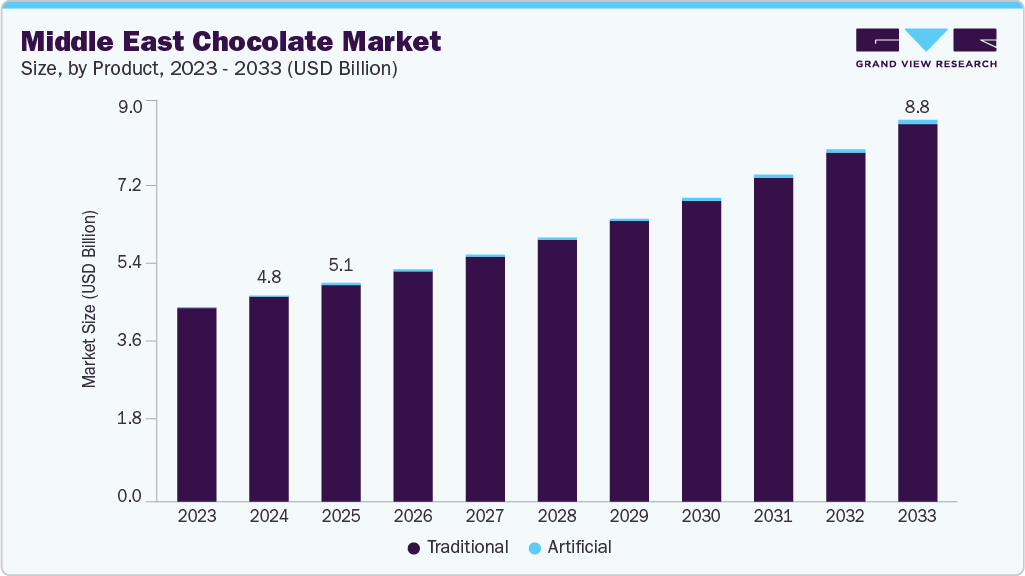
The Middle East chocolate market size was estimated at USD 4.78 billion in 2024 and is projected to reach USD 8.84 billion in 2033, growing at a CAGR of 7.2% from 2025 to 2033. Rising demand for premium and luxury chocolates, expanding retail and e-commerce channels, youthful demographics and gifting culture, health-conscious innovations, and tourism and expatriate population growth are some factors that are driving the industry.
Key Market Trends & Insights
- The UAE chocolate market is growing at a CAGR of 8.4% in 2024.
- By product, the traditional chocolate segment dominated the market and accounted for a market revenue share of 99.3% in 2024.
- By distribution channel, sales through supermarket & hypermarket channels accounted for the largest market revenue share in 2024.
Market Size & Forecast
- 2024 Market Size: USD 4.78 Billion
- 2033 Projected Market Size: USD 8.84 Billion
- CAGR (2025-2033): 7.2%
The Middle East market is witnessing strong growth fueled by rising premium and luxury offerings. Consumers in GCC countries such as the UAE and Saudi Arabia are increasingly drawn to artisanal, imported, and high-quality chocolate products that symbolize indulgence and sophistication. Higher disposable incomes, greater exposure to international brands, and an aspiration toward luxury lifestyles drive this trend. Premium chocolates are also perceived as suitable for gifting during festive occasions and corporate events, further enhancing their appeal. As a result, global and regional manufacturers are expanding their premium product portfolios to capture this growing segment.
The rapid development of retail and e-commerce channels has significantly boosted chocolate sales across the Middle East. The growth of modern trade outlets, supermarkets, hypermarkets, and specialty confectionery stores has made diverse chocolate varieties more accessible to consumers. In addition, duty-free outlets at international airports play a crucial role in promoting luxury and gift-oriented chocolate purchases. At the same time, online platforms and food delivery apps are reshaping consumer buying habits by offering convenience, promotional discounts, and a wider assortment of global brands. This omnichannel expansion allows manufacturers to reach new customer segments and strengthen overall regional market penetration.
Consumer Insights for Middle East Chocolate
Consumers in the Middle East are displaying strong preferences toward premium, indulgent, and international chocolate brands, reflecting the influence of rising disposable incomes and a growing aspiration for luxury experiences. Chocolates are increasingly purchased for personal consumption and as gifts, particularly during cultural and religious festivals such as Ramadan, Eid, and weddings, where exchanging chocolates has become a socially valued tradition. Young consumers are central in driving demand, as they are more experimental, brand-conscious, and influenced by global lifestyle trends. This youthful demographic also favors innovative flavors, limited-edition launches, and attractive packaging, which elevate the product’s appeal.
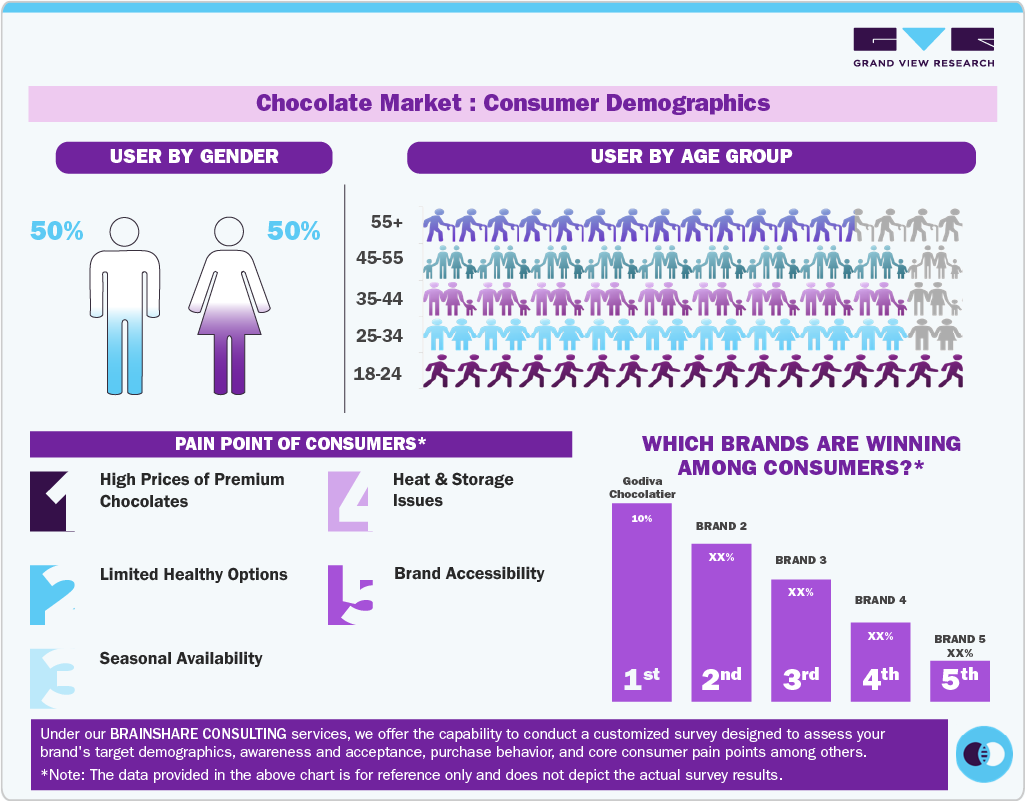
Health-conscious consumer behavior is shaping the market, with a rising interest in sugar-free, low-calorie, dark chocolate products aligning with wellness goals. Many buyers increasingly scrutinize ingredient lists, seeking natural, organic, or functional formulations with added nutritional benefits. At the same time, purchasing behavior is shifting with the expansion of e-commerce platforms and food delivery services, which allow convenient access to a wide assortment of global and regional brands. Online promotions, flash sales, and digital marketing campaigns significantly influence buying decisions, especially among younger audiences. This blend of indulgence, health awareness, and digital engagement defines evolving chocolate consumption patterns in the Middle East.
Product Insights
The traditional chocolate segment dominated the market, accounting for a market revenue share of over 99.3% in 2024. This strong performance reflects the region’s deep-rooted preference for classic chocolate varieties such as milk, dark, and white chocolate offered by established international and regional brands. Consumers in the Middle East view traditional chocolate as both an everyday indulgence and a popular gifting option during festivals, weddings, and social gatherings. Its wide availability across supermarkets, convenience stores, and duty-free outlets further strengthens demand. Despite the rising interest in organic, sugar-free, and functional chocolates, traditional chocolate has an overwhelming market presence.
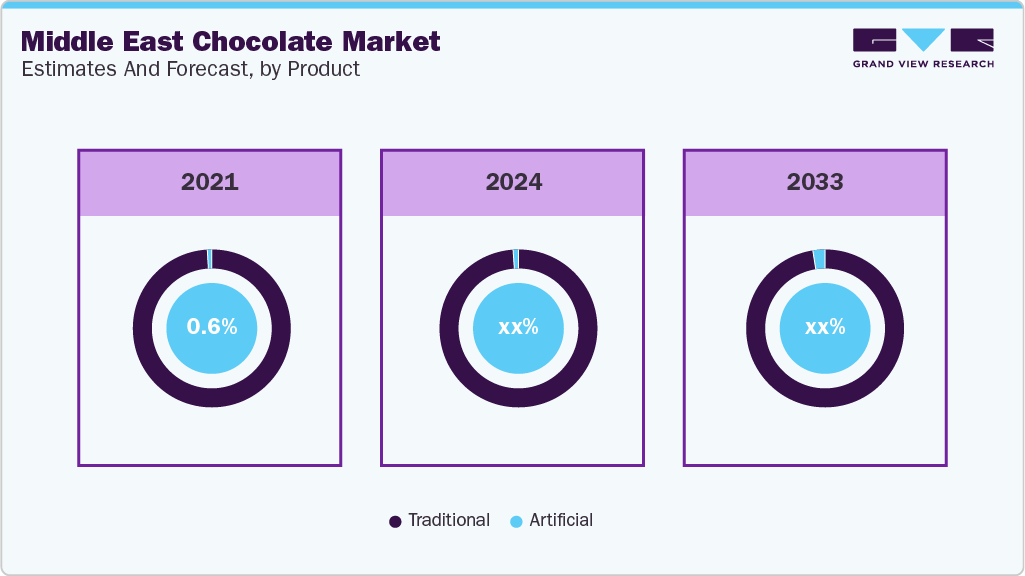
The artificial chocolate segment is anticipated to register the fastest CAGR of 11.7% from 2025 to 2033. This growth is driven by rising demand for affordable alternatives to traditional chocolate, particularly among price-sensitive consumers in developing economies within the region. Artificial chocolates, which often use substitutes for cocoa butter and other ingredients, appeal to consumers looking for lower-cost options without compromising taste. Increased availability through local manufacturers, retail chains, and small convenience stores further fuels this demand. Moreover, the strategic marketing of chocolate, emphasizing affordability and accessibility, is expected to strengthen segment growth.
Distribution Channel Insights
Sales of chocolate through supermarkets & hypermarkets accounted for a market share of 55.6% in 2024. The dominance of these outlets is attributed to their extensive product assortments, attractive discounts, and ability to cater to bulk purchasing needs, especially during festive seasons such as Ramadan and Eid. Consumers prefer supermarkets and hypermarkets for chocolate purchases because of convenience, variety, and the availability of international and regional brands under one roof. Furthermore, these outlets invest heavily in in-store promotions and effective marketing of chocolate, further stimulating impulse buying and strengthening their market position.
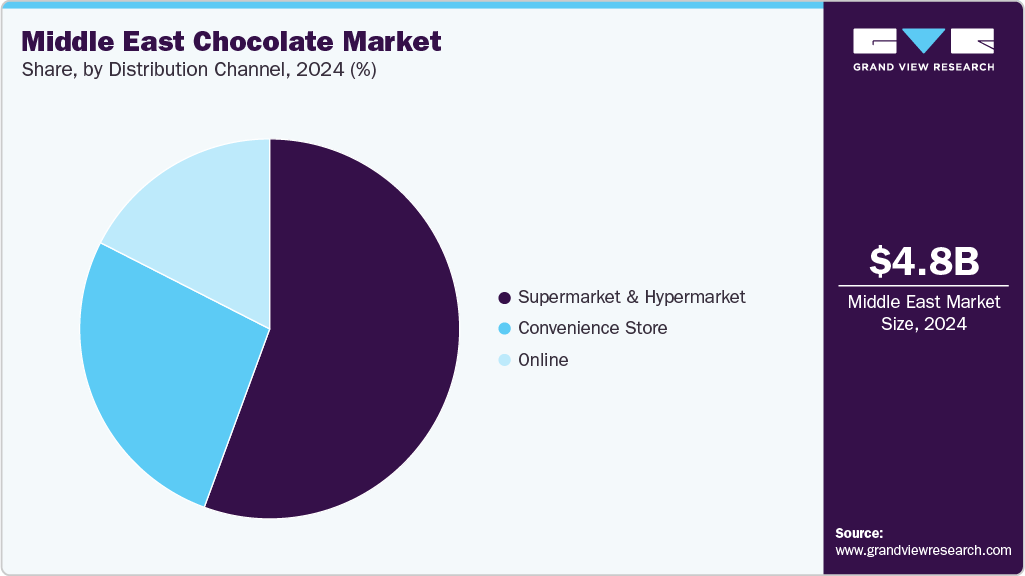
The online distribution channel is expected to register the fastest CAGR of 7.7% during the forecast period from 2025 to 2033. Growth is driven by rising internet penetration, increasing smartphone usage, and consumer preference for convenient shopping experiences. E-commerce platforms and food delivery apps provide access to various global and local chocolate brands, often supported by promotional discounts, subscription models, and seasonal offers. In addition, digital marketing of chocolate through social media campaigns, influencer collaborations, and personalized recommendations plays a critical role in attracting younger consumers and driving online sales momentum across the region.
Country Insights
UAE Chocolate Market Trends
The UAE chocolate market is experiencing steady growth with a CAGR of 8.4% from 2025 to 2033. This growth is driven by rising consumer demand for premium and innovative products. A growing expatriate population with diverse tastes has encouraged international brands to introduce various flavors and formats, including organic, sugar-free, and luxury chocolates. Increasing gifting culture during festivals such as Eid, Ramadan, and Valentine’s Day continues to boost seasonal sales. Tourism also plays a significant role, as duty-free outlets at major airports drive international chocolate purchases. Moreover, strong retail expansion, including supermarkets, hypermarkets, and specialty stores, along with aggressive marketing by global and local players, further supports market development.
Saudi Arabia Chocolate Market Trends
The chocolate market in Saudi Arabia is expected to expand significantly, which is supported by rising disposable incomes and the growing preference for indulgent confectionery among young consumers. The country’s large youth population and urbanization have created strong demand for convenient snacking options, with chocolates positioned as affordable luxury items. Moreover, the government’s Vision 2030 initiatives to boost retail, entertainment, and e-commerce have enhanced product accessibility, while global players are investing in localized flavors to meet consumer preferences. These factors collectively position Saudi Arabia as a growth engine for the region’s chocolate industry. Increasing availability of sugar-free, dark, and functional chocolates also aligns with growing health-conscious preferences. In addition, expanding modern retail infrastructure, online sales platforms, and international brand penetration are enhancing product accessibility, making Saudi Arabia one of the region’s most lucrative chocolate markets.
Key Middle East Chocolate Company Insights
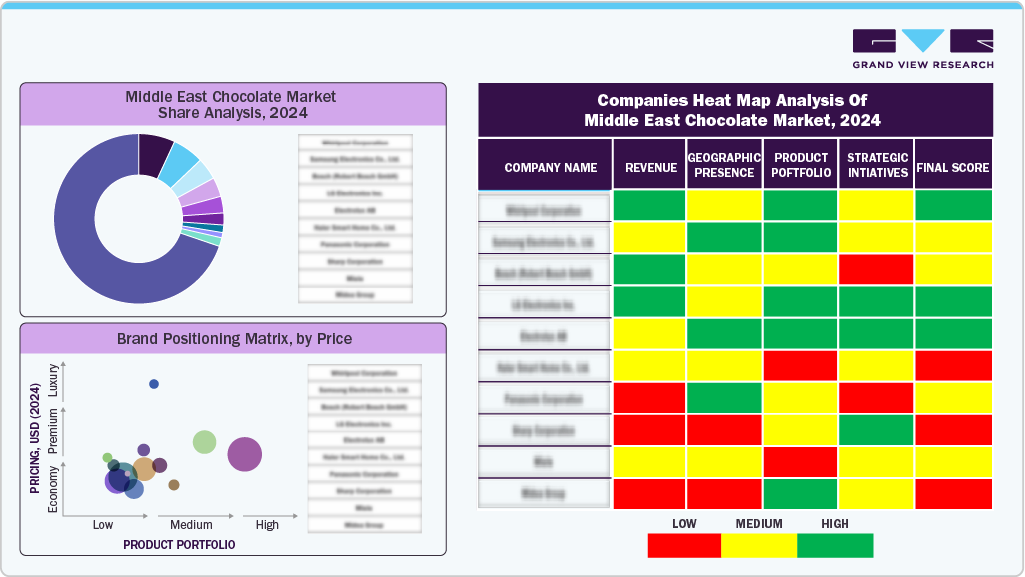
Leading companies in the Middle East market focus on product innovation, premium offerings, and expanding retail networks to strengthen their market presence. Global players dominate with established brands, while regional companies leverage cultural appeal and gifting traditions to capture consumer loyalty and sustain competitive advantage across the region.
Key Middle East Chocolate Companies:
- Nestlé S.A.
- Mondelēz International
- Mars, Incorporated
- Ferrero
- Chocoladefabriken Lindt & Sprüngli AG
- GODIVA Chocolatier
- Al Nassma Chocolate LLC
- Patchi
- Gandour
- THE HERSHEY COMPANY
Recent Developments
-
In August 2025, Fadaella Foods launched its premium chocolate line, Fadaella Chocs, featuring classic, coffee, white, and strawberry variants. The launch expanded its global snack portfolio, emphasized ethical sourcing, and strengthened presence across Africa, the Middle East, and Europe.
-
In May 2025, Conrad Abu Dhabi launched a new chocolate bar concept, offering guests bespoke chocolate creations paired with luxurious experiences. The initiative showcased gourmet craftsmanship and elevated Conrad’s culinary portfolio, reinforcing the brand’s differentiation strategy in the high-end hospitality segment.
-
In May 2025, Dubai-based chef Nouel Catis entered into an exclusive collaboration with Al Baleed Resort Salalah by Anantara. The partnership yielded the “Anantara Khareef Chocolate,” a limited-edition confection inspired by Dhofar’s heritage, using frankincense and coconut katayef. Serving ran from June to August 2025.
-
In December 2024, Dubai's viral kunafa chocolates captivated global audiences by blending pistachio praline with crispy kataifi pastry. Originating from Fix Dessert Chocolatier, the trend quickly spread through social media, inspiring brands like Lindt to create their own versions, signaling a significant shift in dessert innovation.
Middle East Chocolate Market Report Scope
|
Report Attribute
|
Details
|
|
Market size in 2025
|
USD 5.06 billion
|
|
Revenue forecast in 2033
|
USD 8.84 billion
|
|
Growth rate
|
CAGR of 7.2% from 2025 to 2033
|
|
Actual data
|
2021 - 2024
|
|
Forecast period
|
2025 - 2033
|
|
Quantitative units
|
Revenue in USD million/billion, and CAGR from 2025 to 2033
|
|
Report coverage
|
Revenue forecast, company ranking, competitive landscape, growth factors, and trends
|
|
Segments covered
|
Product, distribution channel, country
|
|
Country scope
|
UAE; Saudi Arabia; Kuwait
|
|
Key companies profiled
|
Nestlé S.A.; Mondelēz International; Mars, Incorporated; Ferrero; Chocoladefabriken Lindt & Sprüngli AG; GODIVA Chocolatier; Al Nassma Chocolate LLC; Patchi; Gandour; THE HERSHEY COMPANY
|
|
Customization scop
|
Free report customization (equivalent up to 8 analysts’ working days) with purchase. Addition or alteration to country, regional & segment scope.
|
|
Pricing and purchase options
|
Avail customized purchase options to meet your exact research needs. Explore purchase options
|
Middle East Chocolate Market Report Segmentation
This report forecasts revenue growth at country levels and provides an analysis of the latest trends and opportunities in each of the sub-segment from 2021 to 2033. For this study, Grand View Research has segmented the Middle East chocolate market report based on product, distribution channel, and country:
-
Product Outlook (Revenue, USD Billion, 2021 - 2033)
-
Distribution Channel Outlook (Revenue, USD Billion, 2021 - 2033)
-
Country Outlook (Revenue, USD Billion, 2021 - 2033)
Frequently Asked Questions About This Report
b. The Middle East chocolate market size was estimated at USD 4.78 billion in 2024 and is expected to reach USD 5.06 billion in 2025.
b. The Middle East chocolate market is expected to grow at a compounded annual growth rate of 7.2% from 2025 to 2033 to reach USD 8.84 billion by 2033.
b. The traditional chocolate segment dominated the Middle East chocolate market with a share of over 99% in 2024. Consumers in the Middle East view traditional chocolate as both an everyday indulgence and a popular gifting option during festivals, weddings, and social gatherings.
b. Some key players operating in the Middle East chocolate market include Nestlé S.A.; Mondelēz International; Mars, Incorporated; Ferrero; Chocoladefabriken Lindt & Sprüngli AG; GODIVA Chocolatier; Al Nassma Chocolate LLC; Patchi; Gandour; and THE HERSHEY COMPANY
b. Rising demand for premium and luxury chocolates, expanding retail and e-commerce channels, youthful demographics and gifting culture, health-conscious innovations, and tourism and expatriate population growth are some factors that are driving the industry.

 Download Sample Report
















